Skip to content

Patients › General-Health

Compreendendo Seus Exames de Imagem (Raio-X, Ultrassonografia, Ressonância Magnética, Tomografia Computadorizada)

PDF

What X-rays, ultrasound, MRI and CT each show, and why your surgeon chooses one over another.
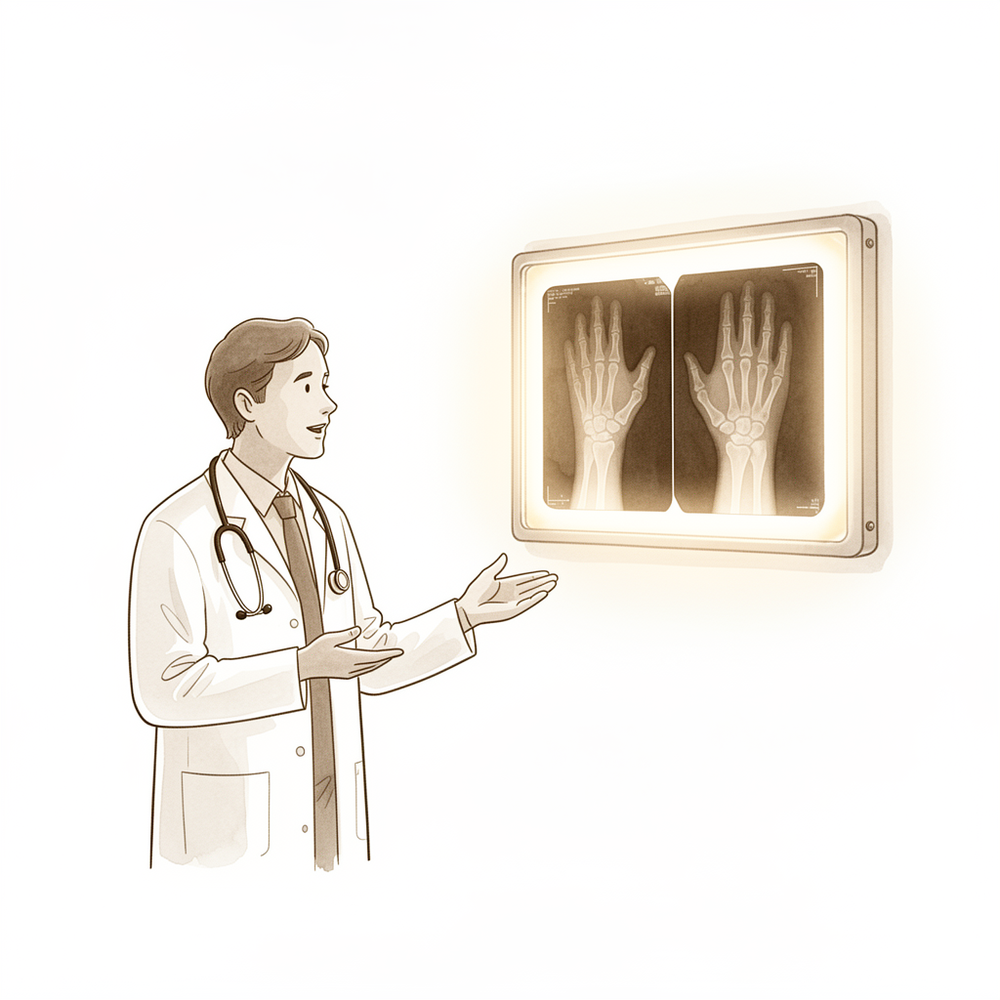
Um médico explicando uma radiografia da mão em uma tela de visualização para um paciente.
Diferentes exames de imagem mostram coisas diferentes — seu cirurgião escolhe o mais adequado para a questão e explica o que ele revela. Kieran Hirpara 4.0

Esta página foi traduzida automaticamente e ainda não foi verificada por um médico. A versão em inglês é a versão oficial.

Quando o seu cirurgião solicita um exame de imagem, pode parecer uma sopa de letras: raio-X, ultrassonografia, ressonância magnética (RM) e tomografia computadorizada (TC). Cada um é uma ferramenta diferente que mostra algo distinto, um pouco como a diferença entre uma fotografia, um vídeo e um modelo 3D. Nenhum deles é simplesmente "melhor" que os outros; a escolha correta depende inteiramente do que precisamos visualizar. Saber para que cada exame é mais útil reduz significativamente a confusão nas instruções recebidas e ajuda a compreender por que às vezes solicitamos mais de um.

Por que diferentes exames? Cada um visualiza algo diferente

O ponto mais importante a compreender é que cada tipo de exame é adequado a um tipo específico de tecido. Osso, tendões, ligamentos, cartilagem e nervos aparecem de maneira distinta, e nenhum exame único os visualiza todos perfeitamente. Um raio-X é excelente para o osso, mas praticamente não visualiza tendões; uma ultrassonografia mostra os tendões de forma nítida, mas não consegue visualizar o interior profundo de uma articulação. Portanto, ao escolhermos um exame, estamos realmente formulando uma pergunta: o problema está no osso, nos tecidos moles ou em ambos? A resposta determina a ferramenta a ser utilizada.

É também por essa razão que você pode realizar um exame e, em seguida, ser encaminhado para outro. Isso geralmente não significa que houve algum erro no primeiro exame; significa que refinamos a pergunta e agora precisamos de um tipo diferente de imagem para respondê-la.

Raio-X — a imagem dos ossos

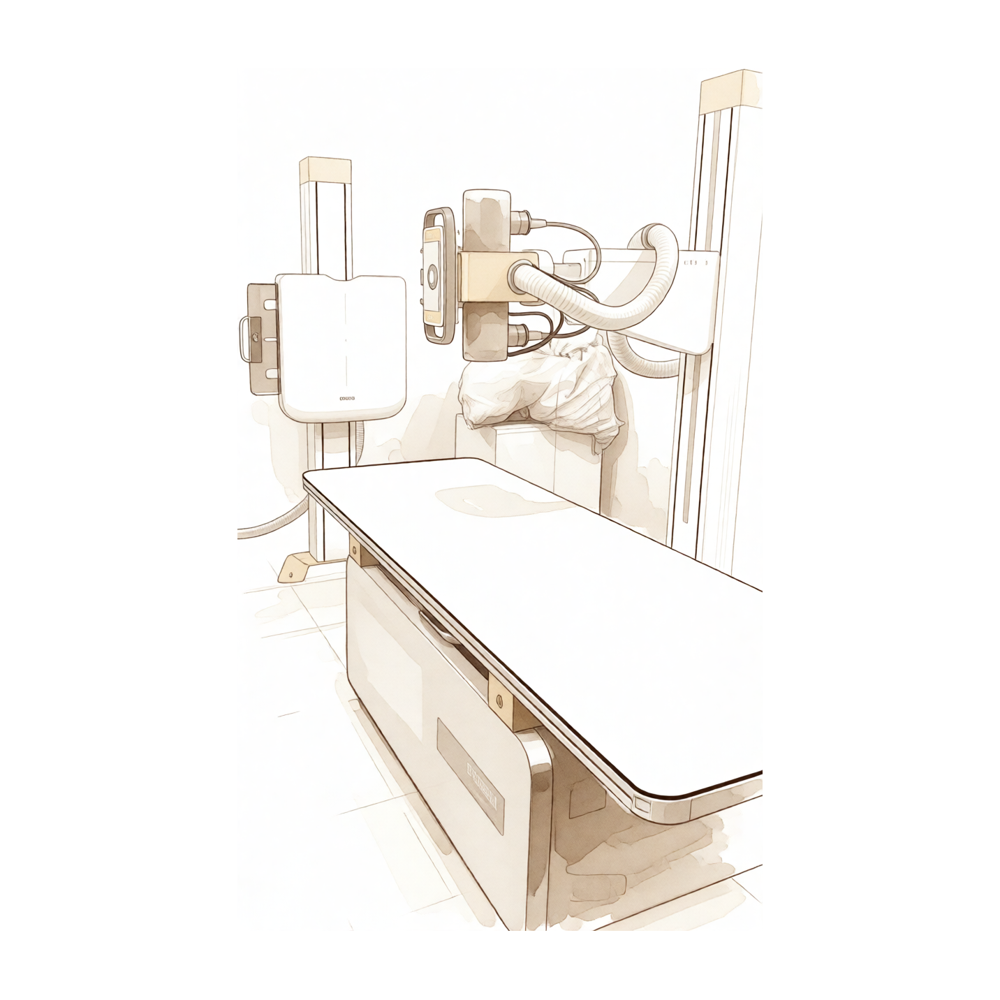
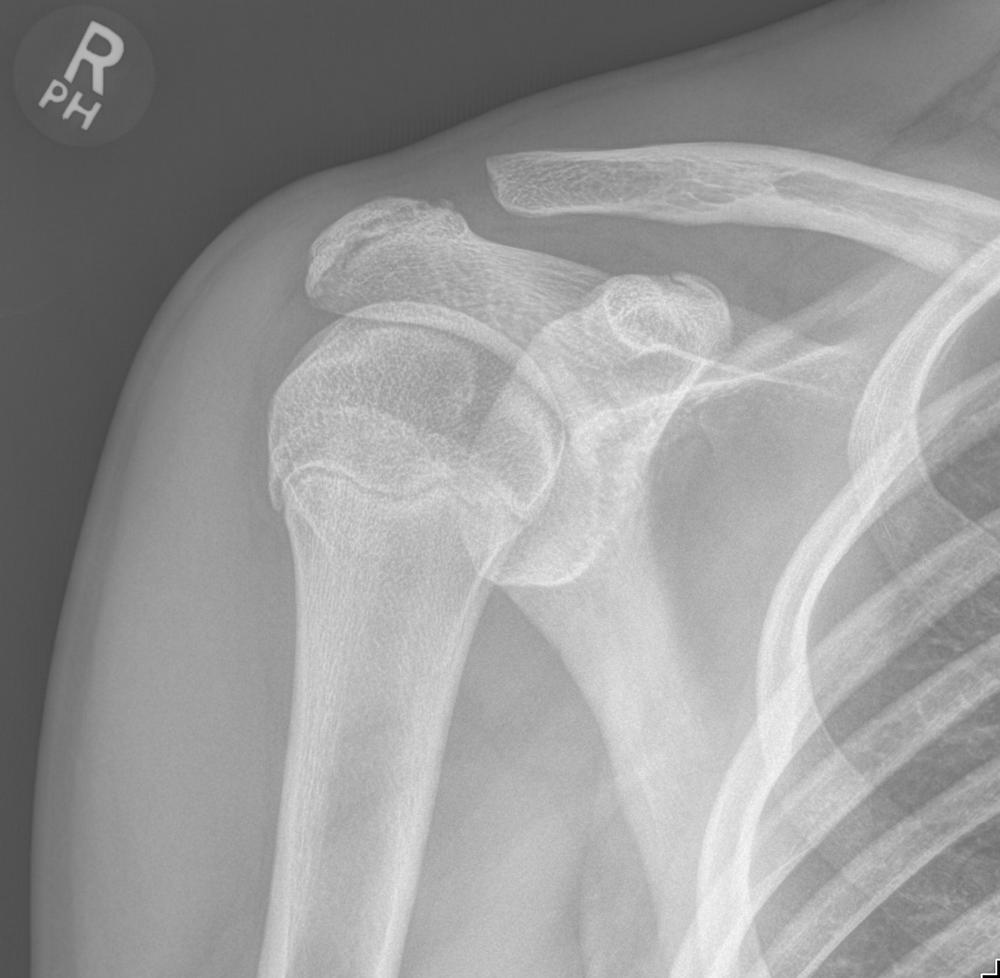
O raio-X é o exame de imagem mais rápido e familiar, e continua sendo o primeiro teste para a maioria dos problemas ósseos. Ele emite uma pequena quantidade de radiação através da área, e o osso denso aparece claramente em branco, o que o torna excelente para identificar fraturas (ossos quebrados), artrite, o alinhamento dos ossos e luxações. É rápido, de baixo custo e amplamente disponível, e a dose de radiação é pequena.

Como funciona realmente. Os raios-X são produzidos dentro de um pequeno tubo de um lado do seu corpo: a eletricidade arranca elétrons de um filamento aquecido e os dispara contra um alvo metálico, e, ao colidirem e pararem, essa energia é liberada na forma de raios-X, uma forma de "luz" de altíssima energia que, ao contrário da luz comum, atravessa diretamente os tecidos moles. (Eles pertencem à mesma família de radiação que os raios gama, mas são produzidos por esses elétrons, e não a partir do núcleo do átomo.) À medida que o feixe atravessa o seu corpo, o osso denso absorve muito mais dele do que os tecidos moles ou o ar. Um detector plano no lado oposto registra quanto passou em cada ponto: onde muitos raios-X chegam, a imagem é preta; onde poucos chegam (atrás do osso), é branca, e esse mapa de sombras é a imagem.

Sua limitação é o lado oposto de sua vantagem: os raios-X visualizam bem os ossos, mas mostram os tecidos moles (tendões, ligamentos e cartilagem) apenas como sombras cinzentas vagas. Portanto, um raio-X normal não descarta uma lesão de tecido mole; ele simplesmente nos informa que o osso parece íntegro, o que muitas vezes é exatamente a tranquilização de que precisamos inicialmente.

Ultrassonografia — uma visão em tempo real dos tecidos moles próximos à superfície

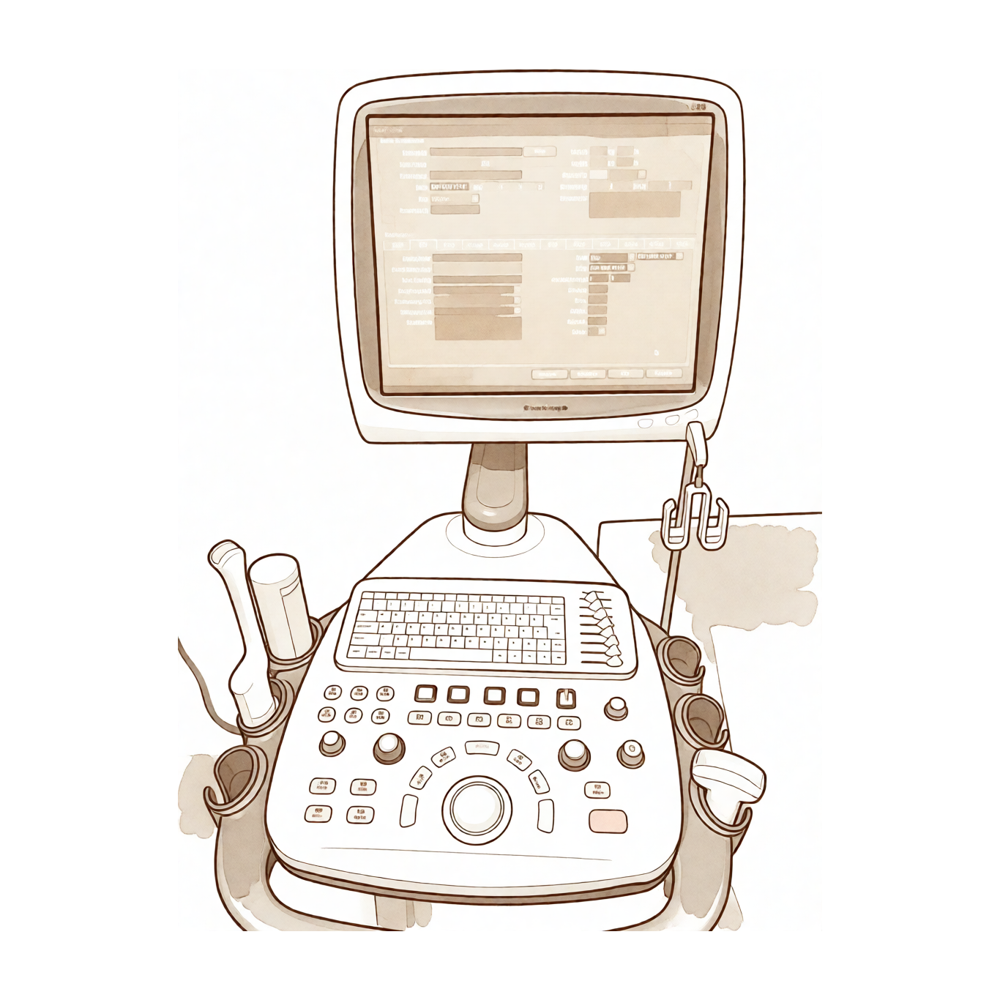
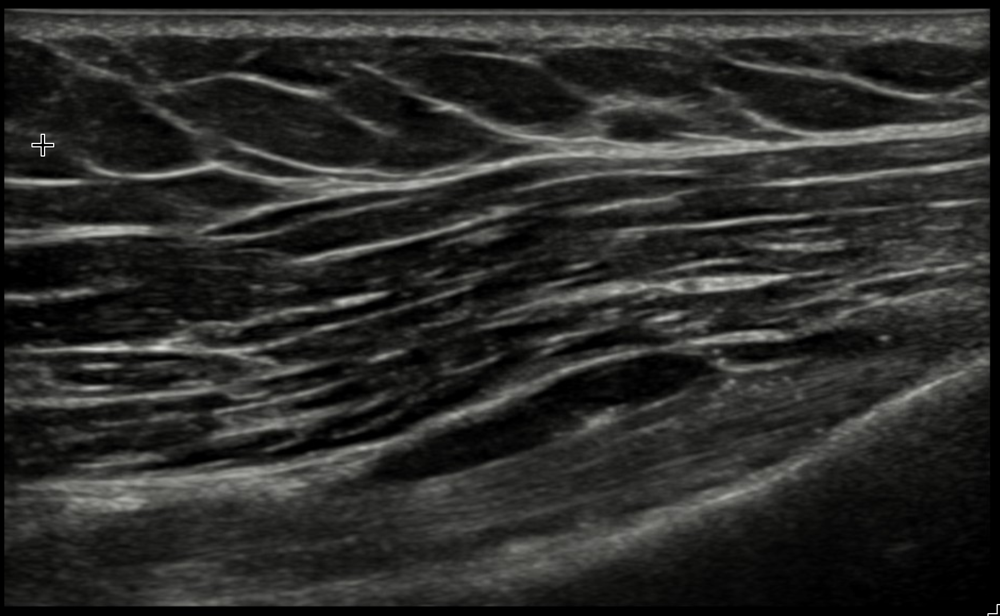
A ultrassonografia utiliza ondas sonoras de alta frequência em vez de radiação, portanto, não há nenhuma dose de radiação. Um pequeno transdutor é movido sobre a pele com um pouco de gel, e é particularmente eficaz para mostrar tecidos moles que estão relativamente próximos da superfície: tendões, cistos sinoviais, bolsas de fluido e inflamação.

Como funciona. O transdutor contém cristais que vibram quando um pequeno pulso elétrico é aplicado a eles (efeito piezoelétrico), emitindo pulsos de som com frequência muito alta para ser ouvido no corpo. Cada vez que um pulso atravessa uma interface entre dois tecidos diferentes, parte dele reflete de volta. O transdutor então muda para o modo de "escuta" e detecta esses ecos. O equipamento mede quanto tempo cada eco leva para retornar (o que indica a profundidade dessa interface) e a intensidade do eco (o que determina o brilho da imagem), e compilha milhares dessas leituras a cada segundo para formar a imagem em tempo real. Direcionado ao sangue em fluxo, também pode ler a mudança na frequência dos ecos retornados (efeito Doppler) para visualizar e até medir o fluxo sanguíneo.

Sua característica especial é que funciona em tempo real. Como podemos observar a imagem ao vivo, podemos pedir que você mova a mão ou o ombro e observar um tendão deslizando conforme acontece, algo que uma imagem estática não consegue mostrar. Isso a torna muito útil para problemas tendíneos ao redor do punho, mão e ombro. O principal ponto a saber é que a ultrassonografia é dependente do operador: a qualidade depende da habilidade da pessoa que segura o transdutor, e ela não consegue visualizar o interior profundo de uma articulação ou atravessar o osso.

Ressonância Magnética — o versátil detalhista para tecidos moles e ossos

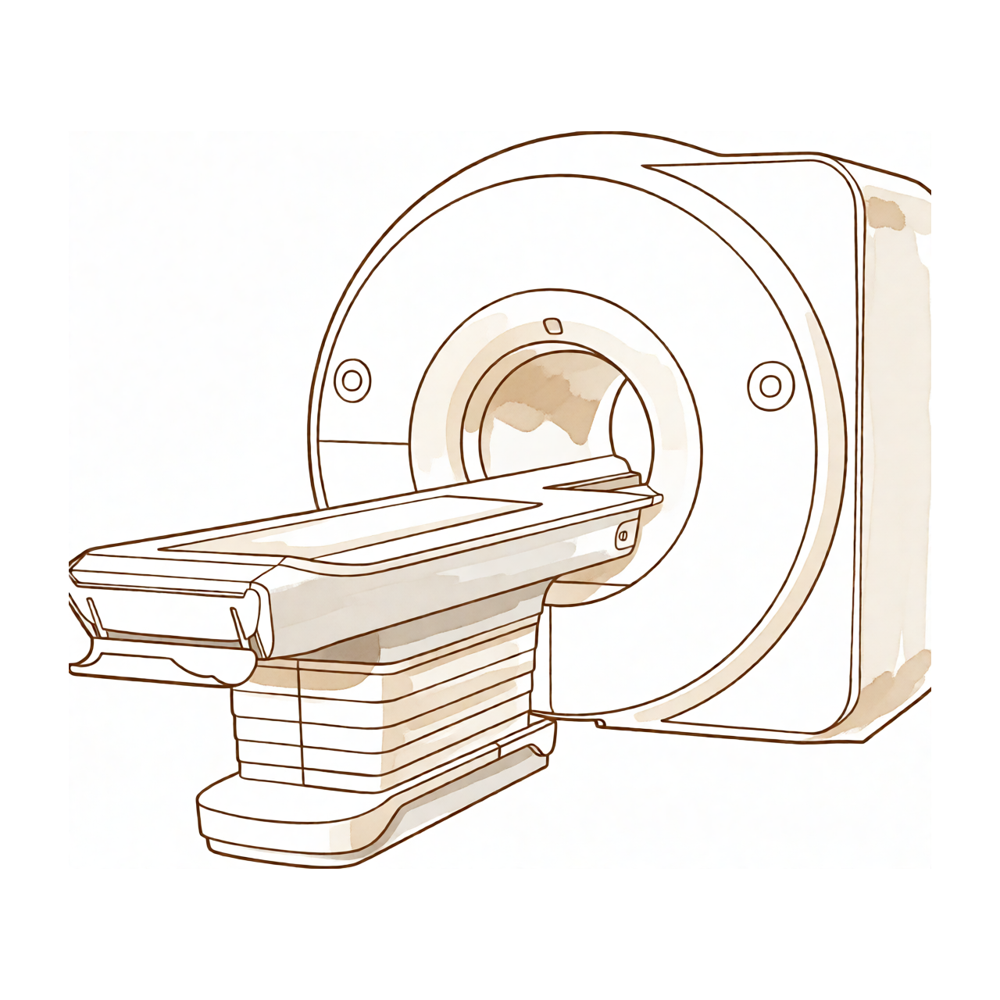
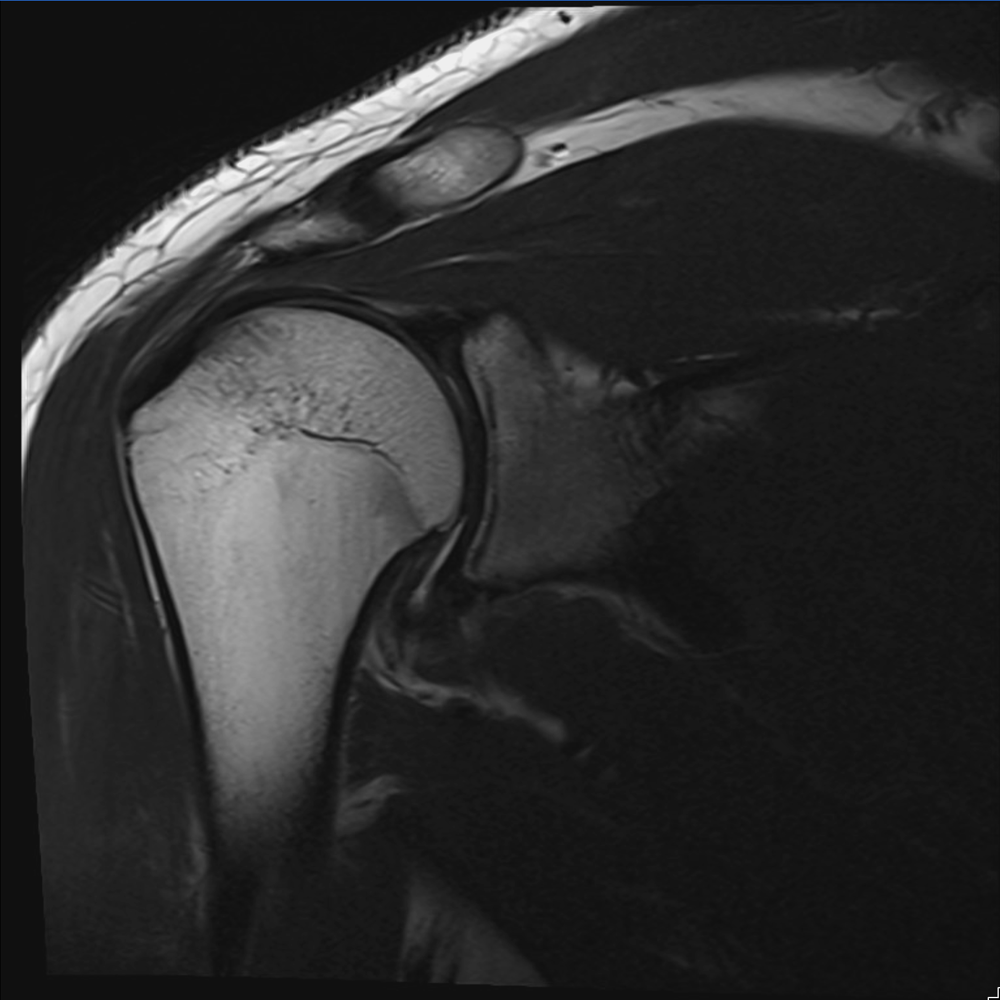
A RM utiliza um ímã potente (sem radiação) para produzir imagens notavelmente detalhadas. É o método versátil, pois mostra tanto os tecidos moles quanto os ossos com grande detalhe: ligamentos, cartilagem, nervos, medula óssea e até fraturas ocultas que não se evidenciam numa radiografia simples. Quando estamos a planear uma cirurgia ou a investigar um problema que as outras imagiologias não conseguem definir com precisão, a RM é frequentemente o exame decisivo.

Como funciona na prática. O seu corpo é composto maioritariamente por água e gordura, o que significa que está repleto de hidrogénio, e o núcleo de um átomo de hidrogénio é um único protão que gira como um pequeno íman. Normalmente, estes prótons apontam em todas as direções, mas dentro do potente campo magnético do equipamento, alinham-se com ele e oscilam, ou precessionam, a uma taxa precisa determinada pela intensidade do campo. O equipamento emite então um pulso de radiofrequência sintonizado exatamente nessa taxa, o que desalinha os prótons e transfere energia para eles. Quando o pulso termina, os prótons relaxam e voltam a alinhar-se, libertando essa energia na forma de um fraco sinal de rádio que as bobinas receptoras captam. Diferentes tecidos libertam os seus sinais a velocidades diferentes, e é isso que cria o contraste entre, por exemplo, a cartilagem, o líquido e o osso. Gradientes do campo magnético indicam a origem de cada sinal no corpo, e um método matemático chamado transformada de Fourier converte o conjunto de sinais recolhidos na imagem detalhada.

Alguns aspetos práticos valem a pena conhecer para evitar surpresas:

  • O exame demora mais tempo, geralmente entre 20 a 40 minutos, e é necessário permanecer bastante imóvel para obter imagens nítidas.
  • Deita-se dentro de um túnel, e a máquina é ruidosa, produzindo sons de batidas e estrondos durante o funcionamento. Ser-lhe-ão fornecidos tampões auriculares ou auscultadores.
  • Se for muito claustrofóbico, informe-nos com antecedência; existem formas de tornar o exame mais confortável e, por vezes, um equipamento diferente ou uma sedação ligeira podem ajudar.
  • Se tiver certos implantes metálicos (como um marcapassos, ou material de osteossíntese metálico antigo), informe-nos. Muitos implantes, como placas e parafusos, são perfeitamente seguros, mas nós verificamos sempre primeiro, por isso mencione qualquer coisa que tenha.

TC — Detalhe 3D para ossos complexos

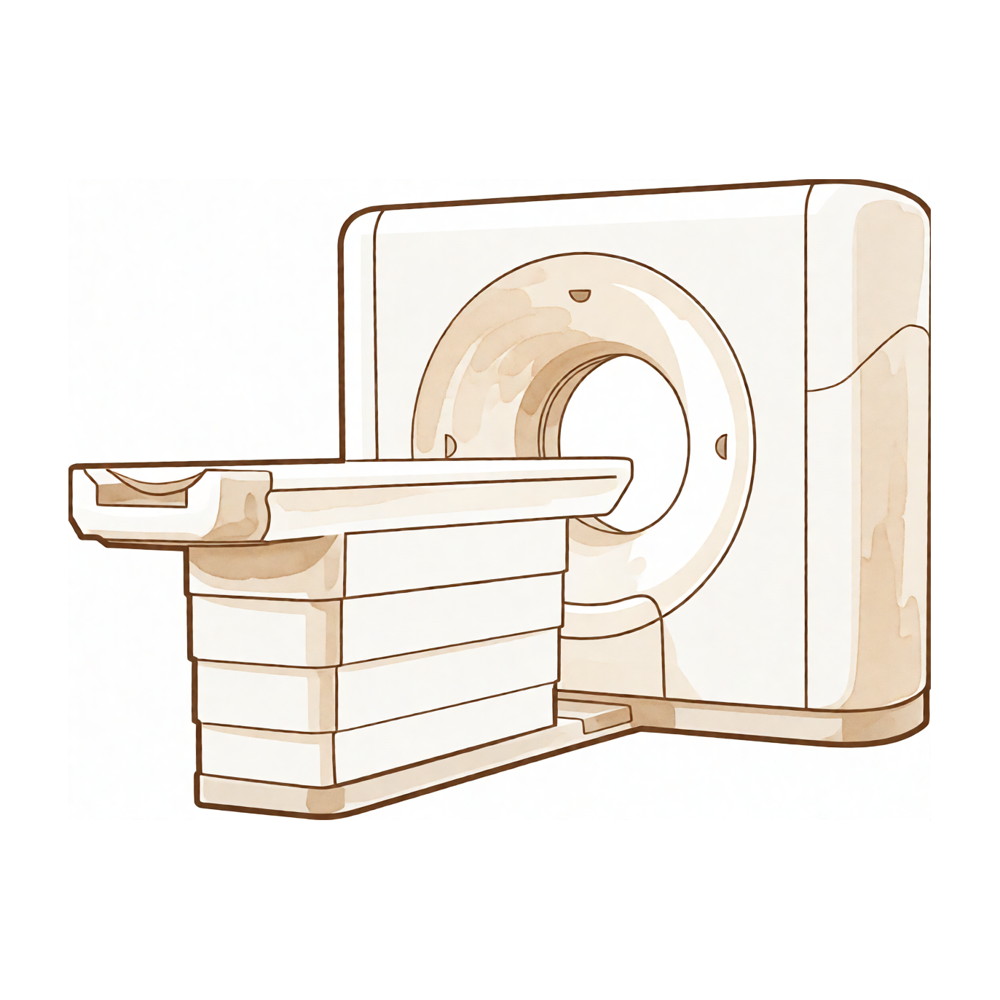
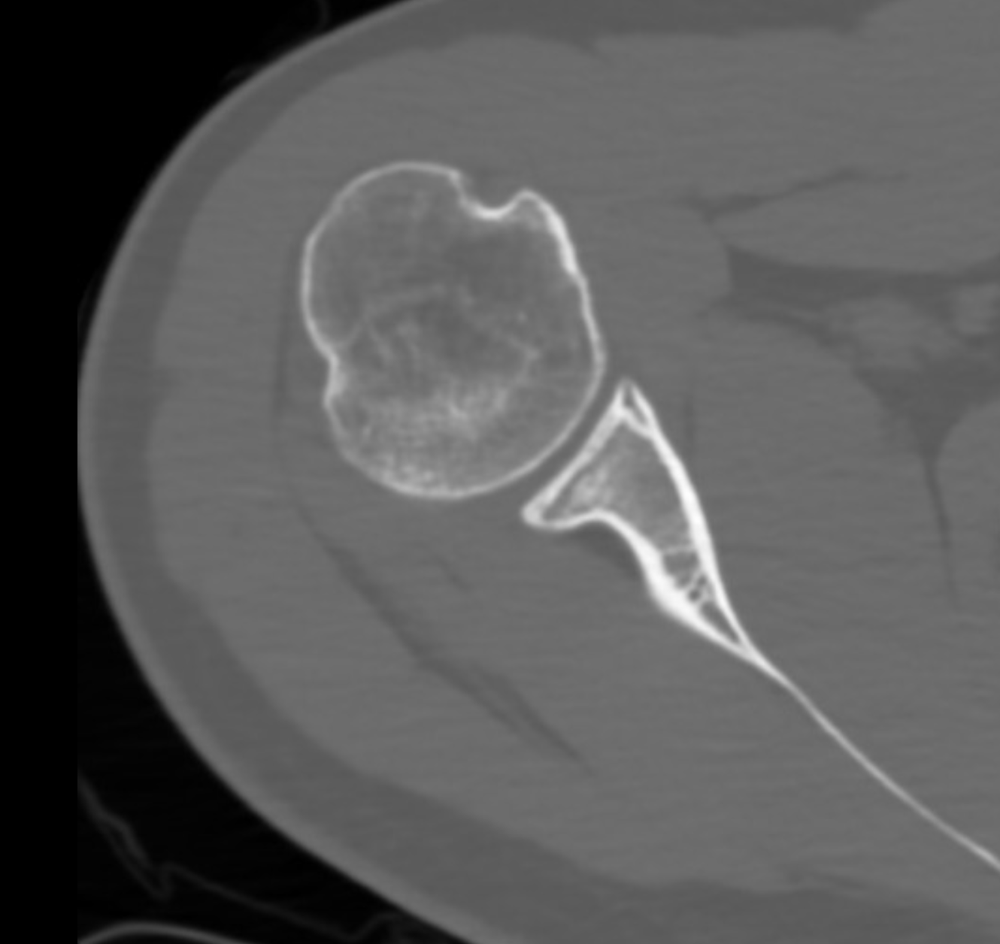
Uma tomografia computadorizada (TC) realiza muitas radiografias de diferentes ângulos e um computador as processa para gerar cortes transversais detalhados e até mesmo um modelo 3D. Assim como uma radiografia simples, ela é baseada na imagem do osso, mas com muito mais detalhe, o que a torna excelente para fraturas complexas (onde o osso se fragmenta em várias peças) e para o planejamento cirúrgico em três dimensões. Para fraturas difíceis ao redor do punho, cotovelo ou ombro, a TC pode mostrar exatamente como os fragmentos estão posicionados, permitindo-nos planejar a reparação com precisão.

Como funciona na prática. Um aparelho de TC é essencialmente uma máquina de raios-X giratória: um tubo de raios-X e um anel de detectores giram ao redor do paciente enquanto este se move lentamente através da abertura em forma de rosquinha, capturando imagens de raios-X de centenas de ângulos. Por si só, cada imagem é apenas uma sombra plana, mas um computador combina todas elas, calculando exatamente a densidade dos tecidos em cada ponto, para reconstruir "fatias" em corte transversal que podem ser empilhadas em um modelo 3D.

A contrapartida é que utiliza mais radiação do que uma radiografia simples, por isso a solicitamos apenas quando esse detalhamento adicional altera genuinamente o plano de tratamento.

Um tipo diferente de teste — estudos de nervos

Nem todo teste é uma imagem. Se a preocupação é um nervo (formigamento, dormência ou fraqueza), podemos solicitar estudos de condução nervosa ou um EMG. Em vez de fotografar o corpo, esses exames medem o funcionamento real dos nervos e músculos, enviando pequenos sinais elétricos ao longo de um nervo e registrando a resposta. Eles respondem a uma pergunta completamente diferente. Você pode ler mais em nossa página de testes de nervos e estudos de condução.

Juntando as peças — o que esperar

A mensagem tranquilizadora é que a equipe escolhe o exame com base exatamente no que precisamos visualizar, e a maioria dos exames é rápida e indolor. Um raio-X ou ultrassom frequentemente é tudo o que é necessário; uma ressonância magnética (RM) ou tomografia computadorizada (TC) é indicada quando precisamos de detalhes mais finos ou de um planejamento cirúrgico. Seja qual for o exame, os resultados serão explicados em linguagem clara, juntamente com o que significam para o seu tratamento.

Se desejar, estas são boas perguntas para fazer:

  • O que este exame está procurando e qual tecido ele mostra?
  • Precisarei de mais algum exame após este e, aproximadamente, quanto tempo levará?
  • Há algo que eu deva mencionar antes: claustrofobia, implantes metálicos ou gravidez?
  • Quando e como os resultados serão explicados?

Não há perguntas tolas aqui. Entender por que um determinado exame foi escolhido frequentemente torna todo o processo consideravelmente menos intimidante.

Em profundidade

Esta seção avança para uma explicação mais detalhada, de nível estudantil. Não é necessária para compreender seus resultados, mas, se você tiver curiosidade sobre como cada máquina realmente produz sua imagem, continue lendo.

Raio X e TC: sombras de densidade

Um raio X é um feixe que atravessa o corpo e é mais absorvido pelo tecido denso (osso) do que pelo tecido mole ou pelo ar. O que atinge o detector é efetivamente uma sombra: o osso aparece branco, o ar preto e o tecido mole cinza. Uma tomografia computadorizada (TC) é simplesmente a aquisição de muitos raios X de todos os ângulos, processados computacionalmente em "cortes" seccionais, fornecendo detalhes ósseos em 3D. Ambos utilizam radiação ionizante (uma TC utiliza muito mais do que um único raio X), razão pela qual devem ser empregados com critério.

Ultrassonografia: ouvindo os ecos

Um transdutor de ultrassonografia emite pulsos de som de alta frequência no corpo e capta os ecos que refletem nas interfaces dos tecidos. Um computador converte o tempo e a intensidade desses ecos em uma imagem em movimento em tempo real. Não utiliza radiação e, por ser em tempo real, é excelente para avaliar tecidos moles superficiais e observar a movimentação das estruturas, por exemplo, o deslizamento de um tendão ou a abertura de uma ruptura tendinosa durante o movimento.

Ressonância Magnética: átomos de hidrogênio em rotação

Uma RM utiliza um ímã potente e ondas de rádio para perturbar os átomos de hidrogênio no corpo (principalmente na água e na gordura) e, em seguida, capta o sinal fraco que eles emitem ao retornar ao equilíbrio. Diferentes tecidos emitem esse sinal em taxas distintas e, ao cronometrar a medição, o exame pode ser "ponderado" para realçar diferentes estruturas: uma ponderação em T2 torna o líquido hiperintenso, razão pela qual edema, inflamação e muitas lesões se destacam; uma ponderação em T1 mostra a anatomia e a gordura. O resultado é um detalhamento excepcional dos tecidos moles (ligamentos, cartilagem, discos, medula óssea) sem radiação ionizante.

Por que a escolha do exame de imagem é importante

Cada método "visualiza" algo diferente, portanto, o melhor exame depende da questão a ser respondida: alinhamento ósseo ou fratura (radiografia), tendão em movimento próximo à superfície (ultrassonografia), anatomia óssea complexa (tomografia computadorizada) ou detalhes dos tecidos moles e da medula óssea (ressonância magnética). A resposta correta geralmente vem da escolha da ferramenta adequada, e não da realização de todos os exames.


Creative Commons BY-NC 4.0

CC Creative Commons licence
BY Attribution — you must credit the source
NC NonCommercial — not for commercial use

Attribution-NonCommercial 4.0 International


Creative Commons Corporation ("Creative Commons") is not a law firm and does not provide legal services or legal advice. Distribution of Creative Commons public licenses does not create a lawyer-client or other relationship. Creative Commons makes its licenses and related information available on an "as-is" basis. Creative Commons gives no warranties regarding its licenses, any material licensed under their terms and conditions, or any related information. Creative Commons disclaims all liability for damages resulting from their use to the fullest extent possible.

Using Creative Commons Public Licenses

Creative Commons public licenses provide a standard set of terms and conditions that creators and other rights holders may use to share original works of authorship and other material subject to copyright and certain other rights specified in the public license below. The following considerations are for informational purposes only, are not exhaustive, and do not form part of our licenses.

Considerations for licensors: Our public licenses are intended for use by those authorized to give the public permission to use material in ways otherwise restricted by copyright and certain other rights. Our licenses are irrevocable. Licensors should read and understand the terms and conditions of the license they choose before applying it. Licensors should also secure all rights necessary before applying our licenses so that the public can reuse the material as expected. Licensors should clearly mark any material not subject to the license. This includes other CC- licensed material, or material used under an exception or limitation to copyright. More considerations for licensors: wiki.creativecommons.org/Considerations_for_licensors

Considerations for the public: By using one of our public licenses, a licensor grants the public permission to use the licensed material under specified terms and conditions. If the licensor's permission is not necessary for any reason--for example, because of any applicable exception or limitation to copyright--then that use is not regulated by the license. Our licenses grant only permissions under copyright and certain other rights that a licensor has authority to grant. Use of the licensed material may still be restricted for other reasons, including because others have copyright or other rights in the material. A licensor may make special requests, such as asking that all changes be marked or described. Although not required by our licenses, you are encouraged to respect those requests where reasonable. More considerations for the public: wiki.creativecommons.org/Considerations_for_licensees


Creative Commons Attribution-NonCommercial 4.0 International Public License

By exercising the Licensed Rights (defined below), You accept and agree to be bound by the terms and conditions of this Creative Commons Attribution-NonCommercial 4.0 International Public License ("Public License"). To the extent this Public License may be interpreted as a contract, You are granted the Licensed Rights in consideration of Your acceptance of these terms and conditions, and the Licensor grants You such rights in consideration of benefits the Licensor receives from making the Licensed Material available under these terms and conditions.

Section 1 -- Definitions.

a. Adapted Material means material subject to Copyright and Similar Rights that is derived from or based upon the Licensed Material and in which the Licensed Material is translated, altered, arranged, transformed, or otherwise modified in a manner requiring permission under the Copyright and Similar Rights held by the Licensor. For purposes of this Public License, where the Licensed Material is a musical work, performance, or sound recording, Adapted Material is always produced where the Licensed Material is synched in timed relation with a moving image.

b. Adapter's License means the license You apply to Your Copyright and Similar Rights in Your contributions to Adapted Material in accordance with the terms and conditions of this Public License.

c. Copyright and Similar Rights means copyright and/or similar rights closely related to copyright including, without limitation, performance, broadcast, sound recording, and Sui Generis Database Rights, without regard to how the rights are labeled or categorized. For purposes of this Public License, the rights specified in Section 2(b)(1)-(2) are not Copyright and Similar Rights.

d. Effective Technological Measures means those measures that, in the absence of proper authority, may not be circumvented under laws fulfilling obligations under Article 11 of the WIPO Copyright Treaty adopted on December 20, 1996, and/or similar international agreements.

e. Exceptions and Limitations means fair use, fair dealing, and/or any other exception or limitation to Copyright and Similar Rights that applies to Your use of the Licensed Material.

f. Licensed Material means the artistic or literary work, database, or other material to which the Licensor applied this Public License.

g. Licensed Rights means the rights granted to You subject to the terms and conditions of this Public License, which are limited to all Copyright and Similar Rights that apply to Your use of the Licensed Material and that the Licensor has authority to license.

h. Licensor means the individual(s) or entity(ies) granting rights under this Public License.

i. NonCommercial means not primarily intended for or directed towards commercial advantage or monetary compensation. For purposes of this Public License, the exchange of the Licensed Material for other material subject to Copyright and Similar Rights by digital file-sharing or similar means is NonCommercial provided there is no payment of monetary compensation in connection with the exchange.

j. Share means to provide material to the public by any means or process that requires permission under the Licensed Rights, such as reproduction, public display, public performance, distribution, dissemination, communication, or importation, and to make material available to the public including in ways that members of the public may access the material from a place and at a time individually chosen by them.

k. Sui Generis Database Rights means rights other than copyright resulting from Directive 96/9/EC of the European Parliament and of the Council of 11 March 1996 on the legal protection of databases, as amended and/or succeeded, as well as other essentially equivalent rights anywhere in the world.

l. You means the individual or entity exercising the Licensed Rights under this Public License. Your has a corresponding meaning.

Section 2 -- Scope.

a. License grant.

1. Subject to the terms and conditions of this Public License, the Licensor hereby grants You a worldwide, royalty-free, non-sublicensable, non-exclusive, irrevocable license to exercise the Licensed Rights in the Licensed Material to:

a. reproduce and Share the Licensed Material, in whole or in part, for NonCommercial purposes only; and

b. produce, reproduce, and Share Adapted Material for NonCommercial purposes only.

2. Exceptions and Limitations. For the avoidance of doubt, where Exceptions and Limitations apply to Your use, this Public License does not apply, and You do not need to comply with its terms and conditions.

3. Term. The term of this Public License is specified in Section 6(a).

4. Media and formats; technical modifications allowed. The Licensor authorizes You to exercise the Licensed Rights in all media and formats whether now known or hereafter created, and to make technical modifications necessary to do so. The Licensor waives and/or agrees not to assert any right or authority to forbid You from making technical modifications necessary to exercise the Licensed Rights, including technical modifications necessary to circumvent Effective Technological Measures. For purposes of this Public License, simply making modifications authorized by this Section 2(a) (4) never produces Adapted Material.

5. Downstream recipients.

a. Offer from the Licensor -- Licensed Material. Every recipient of the Licensed Material automatically receives an offer from the Licensor to exercise the Licensed Rights under the terms and conditions of this Public License.

b. No downstream restrictions. You may not offer or impose any additional or different terms or conditions on, or apply any Effective Technological Measures to, the Licensed Material if doing so restricts exercise of the Licensed Rights by any recipient of the Licensed Material.

6. No endorsement. Nothing in this Public License constitutes or may be construed as permission to assert or imply that You are, or that Your use of the Licensed Material is, connected with, or sponsored, endorsed, or granted official status by, the Licensor or others designated to receive attribution as provided in Section 3(a)(1)(A)(i).

b. Other rights.

1. Moral rights, such as the right of integrity, are not licensed under this Public License, nor are publicity, privacy, and/or other similar personality rights; however, to the extent possible, the Licensor waives and/or agrees not to assert any such rights held by the Licensor to the limited extent necessary to allow You to exercise the Licensed Rights, but not otherwise.

2. Patent and trademark rights are not licensed under this Public License.

3. To the extent possible, the Licensor waives any right to collect royalties from You for the exercise of the Licensed Rights, whether directly or through a collecting society under any voluntary or waivable statutory or compulsory licensing scheme. In all other cases the Licensor expressly reserves any right to collect such royalties, including when the Licensed Material is used other than for NonCommercial purposes.

Section 3 -- License Conditions.

Your exercise of the Licensed Rights is expressly made subject to the following conditions.

a. Attribution.

1. If You Share the Licensed Material (including in modified form), You must:

a. retain the following if it is supplied by the Licensor with the Licensed Material:

i. identification of the creator(s) of the Licensed Material and any others designated to receive attribution, in any reasonable manner requested by the Licensor (including by pseudonym if designated);

ii. a copyright notice;

iii. a notice that refers to this Public License;

iv. a notice that refers to the disclaimer of warranties;

v. a URI or hyperlink to the Licensed Material to the extent reasonably practicable;

b. indicate if You modified the Licensed Material and retain an indication of any previous modifications; and

c. indicate the Licensed Material is licensed under this Public License, and include the text of, or the URI or hyperlink to, this Public License.

2. You may satisfy the conditions in Section 3(a)(1) in any reasonable manner based on the medium, means, and context in which You Share the Licensed Material. For example, it may be reasonable to satisfy the conditions by providing a URI or hyperlink to a resource that includes the required information.

3. If requested by the Licensor, You must remove any of the information required by Section 3(a)(1)(A) to the extent reasonably practicable.

4. If You Share Adapted Material You produce, the Adapter's License You apply must not prevent recipients of the Adapted Material from complying with this Public License.

Section 4 -- Sui Generis Database Rights.

Where the Licensed Rights include Sui Generis Database Rights that apply to Your use of the Licensed Material:

a. for the avoidance of doubt, Section 2(a)(1) grants You the right to extract, reuse, reproduce, and Share all or a substantial portion of the contents of the database for NonCommercial purposes only;

b. if You include all or a substantial portion of the database contents in a database in which You have Sui Generis Database Rights, then the database in which You have Sui Generis Database Rights (but not its individual contents) is Adapted Material; and

c. You must comply with the conditions in Section 3(a) if You Share all or a substantial portion of the contents of the database.

For the avoidance of doubt, this Section 4 supplements and does not replace Your obligations under this Public License where the Licensed Rights include other Copyright and Similar Rights.

Section 5 -- Disclaimer of Warranties and Limitation of Liability.

a. UNLESS OTHERWISE SEPARATELY UNDERTAKEN BY THE LICENSOR, TO THE EXTENT POSSIBLE, THE LICENSOR OFFERS THE LICENSED MATERIAL AS-IS AND AS-AVAILABLE, AND MAKES NO REPRESENTATIONS OR WARRANTIES OF ANY KIND CONCERNING THE LICENSED MATERIAL, WHETHER EXPRESS, IMPLIED, STATUTORY, OR OTHER. THIS INCLUDES, WITHOUT LIMITATION, WARRANTIES OF TITLE, MERCHANTABILITY, FITNESS FOR A PARTICULAR PURPOSE, NON-INFRINGEMENT, ABSENCE OF LATENT OR OTHER DEFECTS, ACCURACY, OR THE PRESENCE OR ABSENCE OF ERRORS, WHETHER OR NOT KNOWN OR DISCOVERABLE. WHERE DISCLAIMERS OF WARRANTIES ARE NOT ALLOWED IN FULL OR IN PART, THIS DISCLAIMER MAY NOT APPLY TO YOU.

b. TO THE EXTENT POSSIBLE, IN NO EVENT WILL THE LICENSOR BE LIABLE TO YOU ON ANY LEGAL THEORY (INCLUDING, WITHOUT LIMITATION, NEGLIGENCE) OR OTHERWISE FOR ANY DIRECT, SPECIAL, INDIRECT, INCIDENTAL, CONSEQUENTIAL, PUNITIVE, EXEMPLARY, OR OTHER LOSSES, COSTS, EXPENSES, OR DAMAGES ARISING OUT OF THIS PUBLIC LICENSE OR USE OF THE LICENSED MATERIAL, EVEN IF THE LICENSOR HAS BEEN ADVISED OF THE POSSIBILITY OF SUCH LOSSES, COSTS, EXPENSES, OR DAMAGES. WHERE A LIMITATION OF LIABILITY IS NOT ALLOWED IN FULL OR IN PART, THIS LIMITATION MAY NOT APPLY TO YOU.

c. The disclaimer of warranties and limitation of liability provided above shall be interpreted in a manner that, to the extent possible, most closely approximates an absolute disclaimer and waiver of all liability.

Section 6 -- Term and Termination.

a. This Public License applies for the term of the Copyright and Similar Rights licensed here. However, if You fail to comply with this Public License, then Your rights under this Public License terminate automatically.

b. Where Your right to use the Licensed Material has terminated under Section 6(a), it reinstates:

1. automatically as of the date the violation is cured, provided it is cured within 30 days of Your discovery of the violation; or

2. upon express reinstatement by the Licensor.

For the avoidance of doubt, this Section 6(b) does not affect any right the Licensor may have to seek remedies for Your violations of this Public License.

c. For the avoidance of doubt, the Licensor may also offer the Licensed Material under separate terms or conditions or stop distributing the Licensed Material at any time; however, doing so will not terminate this Public License.

d. Sections 1, 5, 6, 7, and 8 survive termination of this Public License.

Section 7 -- Other Terms and Conditions.

a. The Licensor shall not be bound by any additional or different terms or conditions communicated by You unless expressly agreed.

b. Any arrangements, understandings, or agreements regarding the Licensed Material not stated herein are separate from and independent of the terms and conditions of this Public License.

Section 8 -- Interpretation.

a. For the avoidance of doubt, this Public License does not, and shall not be interpreted to, reduce, limit, restrict, or impose conditions on any use of the Licensed Material that could lawfully be made without permission under this Public License.

b. To the extent possible, if any provision of this Public License is deemed unenforceable, it shall be automatically reformed to the minimum extent necessary to make it enforceable. If the provision cannot be reformed, it shall be severed from this Public License without affecting the enforceability of the remaining terms and conditions.

c. No term or condition of this Public License will be waived and no failure to comply consented to unless expressly agreed to by the Licensor.

d. Nothing in this Public License constitutes or may be interpreted as a limitation upon, or waiver of, any privileges and immunities that apply to the Licensor or You, including from the legal processes of any jurisdiction or authority.


Creative Commons is not a party to its public licenses. Notwithstanding, Creative Commons may elect to apply one of its public licenses to material it publishes and in those instances will be considered the “Licensor.” The text of the Creative Commons public licenses is dedicated to the public domain under the CC0 Public Domain Dedication. Except for the limited purpose of indicating that material is shared under a Creative Commons public license or as otherwise permitted by the Creative Commons policies published at creativecommons.org/policies, Creative Commons does not authorize the use of the trademark "Creative Commons" or any other trademark or logo of Creative Commons without its prior written consent including, without limitation, in connection with any unauthorized modifications to any of its public licenses or any other arrangements, understandings, or agreements concerning use of licensed material. For the avoidance of doubt, this paragraph does not form part of the public licenses.

Creative Commons may be contacted at creativecommons.org.