Patients › Elbow
Liberação de cotovelo rígido (Artrolise)
Por que esta cirurgia foi recomendada
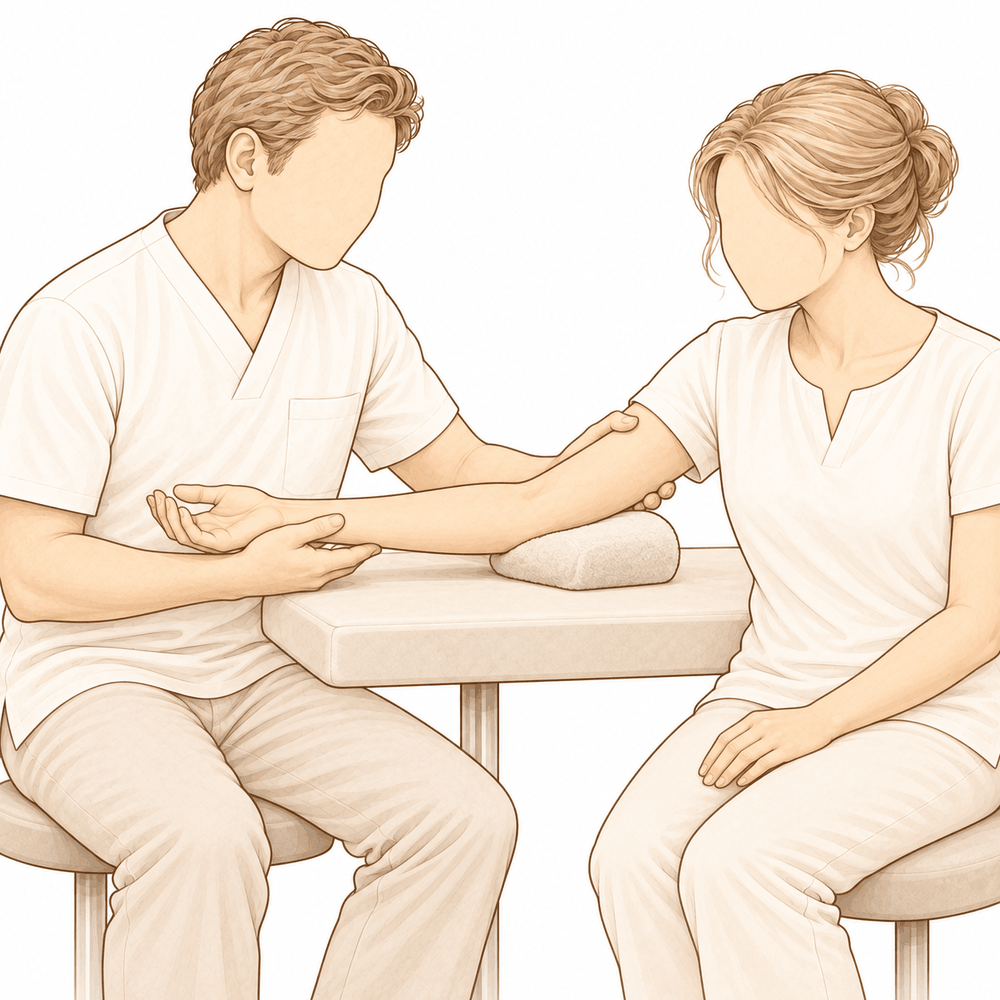
O Dr. Kieran Hirpara, cirurgião de membros superiores no Mater Private Hospital Rockhampton, começa sempre pelas opções menos invasivas adequadas ao seu caso. Geralmente, os pacientes são encaminhados à nossa clínica pelo médico de família; caso um fisioterapeuta tenha sugerido que você nos procure, ainda assim será necessário um encaminhamento do seu médico de família para ter direito ao reembolso do Medicare. Na sua consulta, colhemos o histórico clínico, examinamos o cotovelo e solicitamos exames de imagem, se necessário. Um cotovelo rígido muitas vezes melhora com o tempo e com o uso, por isso geralmente tentamos primeiro tratamentos não cirúrgicos. Isso pode incluir fisioterapia, uso de talas ou injeções ao longo de 6 a 12 semanas. A cirurgia é considerada quando esse tratamento não produz melhoria suficiente.
A liberação do cotovelo rígido, também chamada de artrolise, é uma cirurgia que libera o tecido cicatricial e tenso ao redor do cotovelo, permitindo que a articulação volte a se mover. Recomendamos esse procedimento quando a rigidez ainda limita suas atividades após o tratamento não cirúrgico. Ele apresenta melhores resultados quando a superfície articular ainda está lisa e com formato normal. O objetivo é obter um ganho duradouro de amplitude de movimento e reduzir a dor, facilitando assim as tarefas diárias.
Antes da operação
Após a programação da cirurgia, há alguns detalhes práticos a serem resolvidos. Você receberá instruções sobre quando parar de comer e beber: isso deve ser sete horas antes da operação. Pedimos que o jejum dure sete horas em vez de seis para que, caso a agenda cirúrgica avance, possamos antecipar seu procedimento. O cirurgião informará quais dos seus medicamentos habituais devem ser suspensos e quando, e você deve trazer uma lista completa deles consigo. Providencie alguém para levá-lo para casa após a cirurgia. No dia da operação, use roupas largas e confortáveis. Sempre são feitas radiografias para planejar a cirurgia; um exame de tomografia computadorizada pode ser necessário caso a rigidez envolva os ossos. Se você tiver outras condições médicas, talvez seja preciso realizar exames de sangue ou uma avaliação com o anestesista.
No dia da cirurgia
Você chega à unidade de admissão cirúrgica do hospital, onde será registrado e preparado para a sala de operações. Lá, conhece o anestesista. Esta cirurgia é realizada sob anestesia geral. Às vezes, um bloqueio nervoso regional é adicionado para alívio da dor pós-operatória; o anestesista conversará com você sobre isso no próprio dia. Em seguida, você é levado para a sala de operações, onde a cirurgia é realizada.
Você acorda na sala de recuperação, onde as enfermeiras monitoram você enquanto a anestesia vai passando. Assim que sua condição se estabiliza, você é encaminhado para o quarto ou liberado para ir para casa, dependendo do procedimento e da sua recuperação.
O que envolve a operação
Existem mais de uma forma de liberar um cotovelo rígido; o cirurgião escolherá o método mais adequado para o seu caso. Algumas liberações são feitas por cirurgia minimamente invasiva, utilizando pequenos cortes e uma câmera fina. Outras são realizadas por meio de um ou dois cortes abertos, às vezes com 3 a 5 cm de comprimento, no lado interno ou externo do cotovelo. Em casos de cotovelos muito rígidos, pode-se fazer um corte na parte posterior do cotovelo para alcançar ambos os lados.
Uma vez dentro da articulação, o cirurgião libera a cápsula tensa, que é a “capa” de tecido que envolve a articulação. Os esporões ósseos que impedem o movimento são removidos, assim como quaisquer fragmentos soltos de osso ou cartilagem presentes na articulação. Se um nervo localizado no lado interno do cotovelo estiver comprimido por tecido cicatricial, ele pode ser libertado desse “túnel” de tecido ou reposicionado em local onde não corra risco de ser esticado. Caso a superfície articular esteja muito desgastada, existem outras opções, como revestir o osso com tecido mole ou substituir as superfícies articulares por peças metálicas e plásticas. Às vezes, instala-se uma estrutura articulada no cotovelo para manter a articulação em boa posição durante a cicatrização.
Ao final, os cortes são fechados com pontos de sutura e cobertos por um curativo. Você deverá manter esse curativo por cerca de 10 dias, conforme descrito na seção de recuperação.
Após a operação
Você acorda na sala de recuperação e depois é levado para o quarto. As enfermeiras verificarão seu cotovelo, sua mão e como você está se sentindo. O alívio da dor será administrado conforme necessário; avise as enfermeiras se sentir desconforto no cotovelo. O cotovelo será envolto em uma compressa macia, e você poderá ir para casa com o braço preso em uma tipoia para maior conforto. Logo após, você poderá levantar-se da cama e caminhar; as enfermeiras ajudarão na primeira vez. Sua mão, pulso e ombro podem se mover livremente enquanto o cotovelo se recupera. Alguém deve ficar com você nas primeiras 24 horas após voltar para casa. Sua equipe informará se você poderá ir para casa no mesmo dia ou se precisará ficar uma noite no hospital. Deixamos a compressa no local por cerca de 10 dias; por favor, não a retire antes disso, a menos que receba instruções em contrário. Trocamos ou retiramos a compressa quando o examinarmos.
Recuperação
Nos primeiros dias e semanas, seu cotovelo ficará dolorido e inchado. Isso é normal após a cirurgia. Descansar, manter a mão elevada e tomar os analgésicos conforme prescrito ajudarão a aliviar o desconforto. O inchaço diminui gradualmente, e à medida que isso acontece, o cotovelo geralmente fica menos tenso.
Você irá para casa com o braço preso em uma tipoia para maior conforto. Pode parar de usá-la assim que não for mais necessária. Sua mão, pulso e ombro devem permanecer em movimento livre desde o início. A fisioterapia pós-cirúrgica será conduzida por Ruby Doolan, da Extend Rehabilitation. Ruby orientará seus exercícios e confeccionará qualquer tipo de órtese de que você precisar. Os exercícios constituem a parte principal da recuperação; segui-los corretamente é mais importante do que qualquer outra coisa. Você manterá o curativo por cerca de 10 dias; nós o trocaremos ou retiraremos na sua próxima consulta.
As atividades cotidianas serão retomadas aos poucos. No início, você precisará de ajuda para cozinhar, se vestir e carregar objetos. À medida que o movimento retorna e o inchaço diminui, conseguirá realizar mais tarefas com o braço operado. Assim que seu cirurgião autorizar, poderá voltar a dirigir; nosso guia sobre dirigir após cirurgia no membro superior explica as regras aplicáveis, como não dirigir enquanto o braço estiver na tipoia e não estar sob efeito de analgésicos fortes.
A recuperação varia de pessoa para pessoa. Seu cronograma pode ser diferente, e seu cirurgião e fisioterapeuta o guiarão durante todo o processo.
O que pode dar errado
A maioria dos pacientes se recupera bem, mas, ocasionalmente, podem surgir problemas. O seu cirurgião e a equipe o monitoram de perto para detectar qualquer problema precocemente.
Quanto mais tempo o cotovelo permanecer rígido, maior a probabilidade de ocorrerem problemas após a liberação da articulação. Se o seu cotovelo estiver rígido há muito tempo, o cirurgião discutirá esse ponto com você antes de tomar uma decisão.
Algumas pessoas percebem, após a cirurgia, formigamento, dormência ou fraqueza nos dedos mindinho e anular. Isso se deve ao nervo localizado na parte interna do cotovelo. Nem sempre é possível prever quem apresentará esse efeito. Caso note essas sensações, mencione-as na próxima consulta ou ligue para a clínica se elas surgirem de repente.
Cotovelos que já sofreram lesões anteriormente têm maior risco de infecção profunda posteriormente. Fique atento a vermelhidão que se espalha a partir da incisão, calor na área, aumento do inchaço ou dor profunda e latejante que não melhora com analgésicos comuns. Você também pode sentir febre ou mal-estar geral. Caso observe algum desses sinais, ligue imediatamente para a clínica ou vá ao pronto-socorro, se for fora do horário de atendimento.
Se a sua cirurgia envolver a fixação de uma estrutura articulada no cotovelo, há alguns pontos adicionais a considerar. Essa estrutura aumenta a perda sanguínea durante a operação, o tempo de permanência no centro cirúrgico e no hospital. Além disso, há uma pequena chance de a articulação se tornar instável ou frouxa. O cirurgião explicará como isso afeta sua internação e recuperação.
Se você já passou por outras cirurgias nesse cotovelo, o risco de infecção profunda aumenta ainda mais. O mesmo vale para operações mais complexas. O cirurgião avaliará todos esses fatores com você previamente.
Lesões crônicas no cotovelo também podem alterar o funcionamento da articulação. Pele cicatrizada, ossos que se consolidaram em posição errada, cartilagem danificada, ossos extras, ligamentos frouxos ou tensos, nervos comprimidos e músculos cicatrizados podem influenciar o movimento do cotovelo. O cirurgião verificará esses aspectos ao planejar a operação.
A tabela de complicações nesta página apresenta as taxas típicas, caso você queira informações mais específicas.
Quando nos contactar
Contacte-nos se notar febre, vermelhidão que se espalha ao redor da ferida, secreção da ferida ou dor que continua a piorar. Dirija-se às urgências se sentir dor intensa e súbita, inchaço ou dor na panturrilha, ou dificuldade em respirar. Contacte-nos imediatamente se a sua mão ou dedos ficarem dormentes ou pálidos, ou se não conseguir mover o braço. Se surgir de repente formigueiro ou dormência nos dedos mindinho e anelar, ligue para a clínica em vez de aguardar a próxima consulta.
Em maior profundidade
Advanced reading: the deeper science (optional)
Esta seção vai além do que você precisa saber para tomar decisões sobre o próprio tratamento. Vale a pena ler mais sobre a liberação do cotovelo rígido, pois as evidências apontam para algo incomum: a escolha que a maioria dos pacientes questiona — cirurgia minimamente invasiva ou aberta — parece ser menos importante do que a extensão da cirurgia realizada; além disso, o verdadeiro “inimigo” da operação é o mesmo processo que causou a rigidez desde o início.
A questão não é se se deve optar pela técnica aberta ou artroscópica
Uma revisão sistemática e meta-análise envolvendo 4.311 pacientes com rigidez pós-traumática do cotovelo comparou a artrolyse aberta com a artroscópica, concluindo que os resultados gerais foram comparáveis [1]. A conclusão foi que a experiência do cirurgião e as condições específicas do paciente são fatores mais relevantes do que a própria técnica utilizada [1].
Trata-se de uma afirmação excepcionalmente direta para uma revisão sistemática; por isso, merece ser levada ao pé da letra. Essa é uma cirurgia tecnicamente complexa, realizada nas proximidades de três nervos principais, numa articulação cuja capacidade de movimento já está reduzida devido à contratura a ser tratada. O domínio da técnica cirúrgica por parte do médico tem maior influência nos resultados do que a escolha da abordagem em si.
Menos cirurgias, menos problemas
Uma revisão sistemática anterior envolvendo 798 pacientes chegou a uma conclusão que se manteve válida: o número de complicações parece aumentar conforme a extensão do procedimento cirúrgico. Por isso, a recomendação é tratar o paciente da forma menos invasiva possível [2]. Os autores avaliaram essa recomendação de forma moderada; a literatura científica ainda não é suficiente para se chegar a uma conclusão estatística definitiva, mas a tendência geral é consistente.
Essa é a tensão central em qualquer intervenção cirúrgica: uma liberação mais completa dos tecidos permite maior amplitude de movimento durante a operação, porém gera maior trauma nos tecidos moles, mais sangramento na articulação e maior estímulo inflamatório — fatores que favorecem o retorno da rigidez articular.
A ossificação heterotópica é algo que deve ser prevenido
A ossificação heterotópica, na qual osso se forma em tecidos moles que deveriam permanecer flexíveis, é o mecanismo responsável pelo reendurecimento do cotovelo após procedimentos cirúrgicos. A profilaxia com anti-inflamatórios é considerada padrão, embora as evidências científicas que a sustentam sejam menos robustas do que a prática clínica sugere.
Uma meta-análise envolvendo 622 pacientes, comparando anti-inflamatórios seletivos para COX-2 com os não seletivos após cirurgia por trauma no cotovelo, constatou que ambos reduzem efetivamente o risco de ossificação heterotópica. Contudo, comparações diretas entre esses medicamentos não revelaram diferenças estatisticamente significativas, e a força geral das evidências é baixa [3]. Portanto: a profilaxia parece valer a pena, a escolha do fármaco não parece ter grande impacto, e a confiabilidade das evidências é limitada.
O contexto clínico ajuda a definir as expectativas. Após artroplastia total do cotovelo, a ossificação heterotópica é uma complicação pouco comum; na maioria dos casos em que ocorre, os pacientes permanecem assintomáticos e não necessitam de intervenção cirúrgica. Por esse motivo, a literatura científica não recomenda a profilaxia rotineira nesse tipo de cirurgia [4]. O risco de desenvolver esse problema não é uniforme em todas as cirurgias do cotovelo; ele é mais frequente em casos de trauma e em procedimentos que envolvem liberações extensas de tecidos.
Uma intervenção que não produz o efeito esperado
O ácido tranexâmico reduz o sangramento em muitas cirurgias ortopédicas; portanto, diminuir o sangramento em um cotovelo recém-operado pareceria contribuir para a redução da rigidez articular. Uma meta-análise envolvendo 660 pacientes constatou que o ácido tranexâmico realmente pode reduzir o volume de sangramento durante a artrolise aberta do cotovelo, mas não influencia a amplitude final de movimento nem os índices de dor [5].
Esse é um exemplo claro de como um mecanismo aparentemente lógico não gera o resultado desejado, além de servir como lembrete de que “menos sangramento” é apenas um indicador indireto, e não o resultado final que realmente importa.
O que realmente determina o resultado do tratamento
Nada na literatura disponível sugere a existência de um atalho técnico. Os indícios consistentes indicam que a cirurgia deve ser tão pequena quanto necessário, que a profilaxia contra a ossificação heterotópica é válida e que a amplitude de movimento obtida durante a cirurgia só é mantida por meio da reabilitação subsequente. O cotovelo tem uma tendência incomum a ficar rígido; os meses que se seguem à liberação da articulação são, no mínimo, tão importantes quanto a própria cirurgia.
Referências
[1] Khorram R, Ghayyad K, Vafadar R, Borazjani R, Nezameslami A, Huffman GR, et al. Tratamentos cirúrgicos da rigidez pós-traumática do cotovelo: uma revisão sistemática e meta-análise. J Shoulder Elbow Surg. 2026;35(1):387-407. https://doi.org/10.1016/j.jse.2025.05.004
[2] Kodde IF, van Rijn J, van den Bekerom MP, Eygendaal D. Tratamento cirúrgico da rigidez pós-traumática do cotovelo: uma revisão sistemática. J Shoulder Elbow Surg. 2013;22(4):574-80. https://doi.org/10.1016/j.jse.2012.11.010
[3] Ahmad A, Khorram R, Ghayyad K, Amin V, Kachooei AR, Huffman GR, et al. Profilaxia pós-operatória com anti-inflamatórios não esteroidais para prevenir a ossificação heterotópica no cotovelo: uma revisão sistemática e meta-análise comparando inibidores seletivos e não seletivos da COX-2. JSES Rev Rep Tech. 2026;6(2):100628. https://doi.org/10.1016/j.xrrt.2025.100628
[4] Liu EY, Hildebrand A, Horner NS, Athwal GS, Khan M, Alolabi B. Ossificação heterotópica após artroplastia total do cotovelo: uma revisão sistemática. J Shoulder Elbow Surg. 2019;28(3):587-95. https://doi.org/10.1016/j.jse.2018.10.003
[5] Nejat MH, Khayami A, Daliri M, Ebrahimzadeh MH, Sadeghi M, Moradi A. O ácido tranexâmico reduz a hemorragia e a dor na artrolise aberta do cotovelo? Uma revisão sistemática e meta-análise. BMC Musculoskelet Disord. 2023;24(1). https://doi.org/10.1186/s12891-023-06835-7
Evidence & references
This is the clinical evidence summary written for health professionals. It is technical, and it lists the research this page was built from. You do not need to read it to understand your treatment or to make a decision about it.
Overview
- In the setting of failed nonsurgical treatment of the stiff elbow, surgical release can yield sustained improvement of range of motion and patient quality of life [1].
- Treatment choices for elbow stiffness must consider non-surgical management and various surgical options including arthroscopic or open capsular release, arthroplasty, and elbow replacement [2].
- Arthroscopic capsular release of the elbow is effective for restoring a functional arc of motion in the short term in most patients with extrinsic contractures [3].
- Arthroscopic elbow contracture release can improve function and range of motion, though outcomes may vary based on preoperative patient characteristics [4].
- Current literature provides state-of-the-art guidance on the management regarding prevention, evaluation, and treatment of elbow stiffness [5].
- Patients with stiff elbows who underwent arthroscopic arthrolysis achieved satisfactory clinical outcomes very early postoperatively [7].
- Current treatment options for post-traumatic elbow stiffness range from conservative to surgical, with varying rates of success, invasiveness, and complications [8].
- A multinational initiative provides the first comprehensive clinical practice guideline for open arthrolysis in adult posttraumatic elbow stiffness [9].
- A subset of pediatric patients with persistent stiffness following medial epicondyle fractures may benefit from additional interventions, including intensive therapy, transposition of the ulnar nerve, and open capsular release [13].
- In most cases, the current use of arthroscopy by experienced surgeons will produce results superior to those of open release given the proper indications [14].
- The use of a hinged external fixator in open arthrolysis for posttraumatic elbow stiffness may result in short-term improvements in flexion-extension range of motion [16].
- The use of a hinged external fixator in open arthrolysis for posttraumatic elbow stiffness is accompanied by increased blood loss, longer operative time, extended hospitalization, and higher costs [16].
- The dual mediolateral mini-open technique allows for a safe and effective release of stiff elbows through small incisions of 3–5 cm in length [18].
Anatomy & Pathophysiology
Bony Anatomy
- The elbow is a trocho-ginglymoid joint consisting of medial and lateral articulations that provide bony stability [28].
- The medial articulation involves the trochlea and the ulna within the greater sigmoid notch, forming the ulnohumeral hinged portion [28].
- The ulnohumeral articulation features highly congruent anatomy through almost 180° of articular contact, except for a bare area of the greater sigmoid notch devoid of cartilage [28].
- The coronoid process has medial and lateral facets that buttress the trochlea anteriorly [28].
- The sublime tubercle is located just distal and medial to the coronoid and serves as the attachment site for the anterior bundle of the medial ulnar collateral ligament [28].
- The lateral articulation involves the capitellum and radial head, forming the radiocapitellar joint [28].
- The radius is held in close approximation to the ulna at the proximal radioulnar joint by the annular ligament [28].
- The radial head is a concave elliptical structure covered with articular cartilage along the radiocapitellar joint and approximately 270° of the articular margin [28].
- The distal humeral articulation is angled 30° from the longitudinal axis [28].
- The axis of rotation is angulated 5° to 7° in the coronal plane relative to the epicondylar axis, with the medial side more distal than the lateral side [28].
- The ulna medially bends approximately 8° at 8 cm from the tip of the olecranon [28].
- The articulation to the tip of the coronoid is approximately 30° from the long axis of the ulna in the sagittal plane [28].
Ligaments and Soft Tissue
- Elbow stability is determined by primary stabilizers (ulnohumeral articulation, MUCL, LUCL complex) and secondary stabilizers (radiocapitellar articulation, common flexor tendon, common extensor tendon, joint capsule) [25].
- The medial ulnar collateral ligament is the primary valgus stabilizer of the elbow [29].
- The anterior bundle of the medial ulnar collateral ligament is the most important component for stability [29].
- The posterior bundle of the medial ulnar collateral ligament becomes taut at flexion beyond 120 degrees [29].
- The lateral ulnar collateral ligament serves as the posterolateral stabilizer of the elbow [29].
- Osborne’s ligament stabilizes the ulnar nerve in the cubital tunnel [29].
- The ligament of Struthers is a variant anatomy arising from the supracondylar process to attach to the medial epicondyle and is a potential site of median nerve compression [29].
- The joint capsule allows maximum distension at approximately 70 to 80 degrees of flexion [29].
- The anterior capsule attaches at a point approximately 6 mm distal to the tip of the coronoid [29].
- Tensile forces are present at the medial elbow, while compressive forces are present at the lateral elbow [29].
Muscles
- The brachialis is the strongest elbow flexor and attaches to the coronoid 11 mm distal to the tip [29].
- The biceps brachii inserts at the ulnar margin of the radial tuberosity and acts as a powerful supinator of the forearm [29].
- The triceps brachii is the primary elbow extensor and inserts on the olecranon process [29].
- The mobile wad consists of the brachioradialis, extensor carpi radialis longus, and extensor carpi radialis brevis [29].
- The flexor-pronator mass includes the pronator teres, flexor carpi radialis, palmaris longus, flexor carpi ulnaris, and flexor digitorum superficialis [29].
Pathophysiology and Functional Range
- The normal elbow has a range of motion from 0° to 140° from extension to flexion [25].
- The normal elbow has a range of motion of 75° in pronation and 85° in supination [25].
- A functional arc of motion for the elbow is 100° for flexion and extension [25].
- A functional arc of motion for the elbow is 100° for forearm rotation [25].
- Successful intervention for a stiff elbow depends on the quality of the joint and the extent of soft tissue damage [11].
- The functional arc of motion serves as a frame of reference rather than an absolute goal for stiff elbow treatment [11].
- Treatment of the stiff elbow requires a thorough understanding of normal anatomy and etiological factors to develop effective strategies [10].
Classification
- The S.T.I.F. classification system highlights the aetiology of elbow stiffness [51].
- The S.T.I.F. classification system provides a framework to better understand the natural history of elbow stiffness [51].
- The S.T.I.F. classification system provides a framework to direct surgical management of elbow stiffness [51].
- The S.T.I.F. classification system provides a framework to predict clinical outcomes for elbow stiffness [51].
- Influencing factors must be taken into consideration for proper surgical indication and prognosis when using the S.T.I.F. classification system [51].
- The S.T.I.F. classification system is beneficial for research because identifying homogenous patterns of stiffness allows for more appropriate comparison between different treatment options [51].
- Based on the S.T.I.F. classification system, a treatment algorithm can be proposed that includes the severity of the disorders as a guide to surgical treatment [51].
- Based on the S.T.I.F. classification system, a treatment algorithm can be proposed that includes the severity of the disorders as a guide to the preferred operative approach (open or scope) [51].
- The prevalent types of stiffness identified by the S.T.I.F. classification system could be applied in the future to Artificial Intelligence to help in diagnosing the cause of elbow stiffness [51].
Clinical Presentation
- Elbow stiffness is a challenging problem with no ideal management solution [6].
- Elbow contracture is challenging to treat, and therefore prevention is of paramount importance [17].
- Restoration of joint motion in the posttraumatic stiff elbow can be a difficult, time-consuming, and costly challenge [15].
- Successful intervention for stiff elbow depends on the quality of the joint and the extent of soft tissue damage [11].
- The functional arc of motion serves as a frame of reference rather than an absolute goal for stiff elbow intervention [11].
- Conservative treatment is indicated for patients that have elbow stiffness due to heterotopic ossification for less than six months [22].
- Current non-surgical treatment measures for elbow stiffness due to heterotopic ossification include physical therapy and manipulation under anesthesia in order to restore the range of motion of the involved joint [22].
- Non-surgical options for heterotopic ossification have limited effects and can be used mainly in cases that cause a small limitation of range of motion [22].
- Surgical options are necessary if nonoperative management fails to restore the elbow function and range of motion after 6 months in patients with heterotopic ossification [22].
- Surgical excision of ectopic bone and contracture release, if present, are the most common surgical options in elbow heterotopic ossification management [22].
- Arthroscopic elbow contracture release can improve function and range of motion, although outcomes may vary based on preoperative patient characteristics [4].
- Although both open and arthroscopic techniques may produce satisfactory results, the current use of arthroscopy by experienced surgeons will produce results superior to those of open release given the proper indications [14].
- Operative management of pediatric elbow contractures is effective [23].
- Patients undergoing operative management of elbow stiffness secondary to heterotopic ossification maintained substantial reductions in pain, improvement in elbow range of motion, and increased overall elbow function [12].
- Treatment of bony encasement of the ulnar nerve secondary to heterotopic ossification of the elbow leads to superior range of motion, improved or resolved ulnar neuropathy, and good to excellent long-term functional outcomes [24].
- Delayed-onset anterior interosseous nerve palsy can develop one week after open elbow contracture release, likely due to a stretch injury [26].
Investigations
History and Physical Examination
- The history for elbow stiffness evaluation includes the duration of the contracture, initial injury, previous surgical procedures, trials of splinting/therapy/injections, surgical complications, and patient work/life demands [34].
- Physical examination must assess the function of the shoulder, wrist, and hand [34].
- The soft tissue surrounding the elbow should be examined for previous skin incisions, grafts, eschar, or infection [34].
- Active and passive flexion, extension, supination, and pronation should be evaluated using a goniometer for accurate measurement [34].
- The contralateral elbow should be examined for comparison during range of motion assessment [34].
- If the elbow has less than 90° to 100° of flexion, the posterior bundle of the medial collateral ligament is contracted and must be released to restore flexion [34].
- Pain assessment during the mid-arc or at terminal ends of motion helps distinguish intrinsic disease from contracture, as mid-arc pain is more common with intrinsic disease and may not improve with contracture release alone [34].
- The ulnar nerve is of utmost importance in the neurovascular examination due to its anatomic proximity to the elbow [34].
- Electromyography and nerve conduction velocity studies should be performed if there is any question about neurologic dysfunction [34].
- An assessment for ulnar nerve subluxation should be performed, as subluxation is a relative contraindication for arthroscopic procedures due to the risk of iatrogenic nerve injury [34].
- The surgeon must verify if the ulnar nerve has been transposed if there is a history of prior surgical procedures [34].
- Successful intervention for stiff elbow depends on the quality of the joint and the extent of soft tissue damage, with the functional arc of motion serving as a frame of reference rather than an absolute goal [11].
Imaging
- Radiographs should always be obtained for the evaluation of elbow stiffness [34].
- Standard radiographic views include AP, lateral, and oblique views, with serial radiography used as follow-up when heterotopic ossification is present [34].
- Primary bony landmarks assessed on radiographs include the ulnohumeral joint, coronoid process, radial head, capitellum, radiocapitellar joint, olecranon tip, coronoid/olecranon fossae, and trochlear ridge [34].
- CT is helpful for assessing malunion architecture and the location and pattern of osteophytes or loose bodies [34].
- Three-dimensional CT is used to check for heterotopic ossification [34].
- CT is not necessary when the stiffness is entirely soft-tissue related, but is beneficial if any joint incongruity or abnormal bony anatomy is present [34].
- MRI can be used to evaluate ligaments and tendons but is rarely indicated for elbow stiffness [34].
- The normal elbow has a range of motion from 0° to 140° from extension to flexion and 75° and 85° in pronation and supination respectively [25].
- A functional arc in each plane is 100° for flexion and extension and forearm rotation [25].
- Elbow stability is determined by primary stabilizers (ulnohumeral articulation, MUCL, LUCL) and secondary stabilizers (radiocapitellar articulation, common flexor tendon, common extensor tendon, joint capsule) [25].
Treatment
General Principles and Indications
- Elbow stiffness is a challenging problem with no ideal management solution; however, functional improvements can be achieved with both nonsurgical and surgical strategies [6].
Arthroscopic Release
- Arthroscopic elbow contracture release can improve function and range of motion; however, outcomes may vary based on preoperative patient characteristics [4].
- Although both open and arthroscopic techniques may produce satisfactory results, the authors believe that in most cases the current use of arthroscopy by experienced surgeons will produce results superior to those of open release given the proper indications [14].
- Additional peripheral nerve block combined with a postoperative nerve block catheter in arthroscopic arthrolysis in cases of elbow stiffness may be an opportunity to enhance postoperative outcomes by achieving better functional ROM, perhaps through reduced postoperative pain [48].
Open Release and Techniques
- This multinational initiative provides the first comprehensive clinical practice guideline for open arthrolysis in adult posttraumatic elbow stiffness [9].
- The use of a hinged external fixator in open arthrolysis for posttraumatic elbow stiffness may result in short-term improvements in flexion-extension range of motion but is accompanied by increased blood loss, longer operative time, extended hospitalization, and higher costs [16].
- The most common reason for a failed contracture release is a failure on the part of the surgeon to abandon an orthodox method in favor of a less assured technique or to use a single anatomic approach to the joint when the potential gain in motion is not achieved at the time of surgery [40].
- The operative contracture release requires a progressive, adaptive surgical approach, and the surgeon must safely increase the exposure in order to excise the offending fibrosis on nearly all aspects of the joint, anteroposterior and mediolateral [40].
- If an uncomplicated, simple dislocation has caused a 30-degree flexion contracture, arthroscopic capsular excision may be sufficient [40].
- The best care for a given patient with a contracture is the most minimal necessary surgery, including minimal anatomic exposure, and rehabilitation to achieve the desired result [40].
- A patient with a range of 40 to 105 degrees and heterotopic ossification will usually require exposure of the capsule for complete excision from both the medial and lateral approaches but not necessarily hinged fixation [40].
- In a circumstance with more massive heterotopic ossification, hinged external fixation may be necessary to stabilize the elbow postoperatively and permit immediate motion with intermittent passive stretch [40].
- The surgeon should be prepared to extend the exposure or approach the joint from an additional direction if full passive motion is not achieved on the operating table [40].
- In older patients with suspected cartilage damage or avascular bone, total elbow replacement should be available and discussed before surgery [40].
Outcomes and Complications
- Overall, patients maintained substantial reductions in pain, improvement in elbow range of motion, and increased overall elbow function after operative management of elbow stiffness secondary to heterotopic ossification [12].
- The gain in range of motion for open arthrolysis was 51° [19].
- The gain in range of motion for arthroscopic arthrolysis was 40° [19].
- The gain in range of motion for open arthrolysis with external fixation was 88° [19].
- The gain in range of motion for open arthrolysis with distraction arthroplasty was 56° [19].
- The average percentage of complications for open arthrolysis was 23% [19].
- The average percentage of complications for arthroscopic arthrolysis was 5% [19].
- The average percentage of complications for open arthrolysis with external fixation was 73% [19].
- The average percentage of complications for open arthrolysis with distraction arthroplasty was 58% [19].
Complications
- The use of a hinged external fixator in open arthrolysis is accompanied by increased blood loss [16].
- The use of a hinged external fixator in open arthrolysis is accompanied by longer operative time [16].
- The use of a hinged external fixator in open arthrolysis is accompanied by extended hospitalization [16].
- The use of a hinged external fixator in open arthrolysis is accompanied by higher costs [16].
- Current treatment options for post-traumatic elbow stiffness have varying rates of complications [8].
Recovery
- Surgical release of the stiff elbow can yield sustained improvement of range of motion and patient quality of life in the setting of failed nonsurgical treatment [1].
- Arthroscopic capsular release is effective for restoring a functional arc of motion in the short term in most patients with extrinsic contractures [3].
- Functional improvements can be achieved with both nonsurgical and surgical strategies for elbow stiffness [6].
- Treatment for bony encasement of the ulnar nerve secondary to heterotopic ossification of the elbow leads to superior range of motion, improved or resolved ulnar neuropathy, and good to excellent long-term functional outcomes [24].
Key Evidence
- [L5] In the setting of failed nonsurgical treatment of the stiff elbow, surgical release can yield sustained improvement of ROM and patient quality of life. [1] (10.5435/jaaos-d-14-00051)
- [L5] Treatment choices must consider non-surgical management and various surgical options including arthroscopic or open capsular release, arthroplasty, and elbow replacement. [2] (10.1016/j.jisako.2023.10.009)
- [L5] Arthroscopic capsular release of the elbow is effective for restoring a functional arc of motion in the short term in most patients with extrinsic contractures. [3] (10.5435/00124635-201105000-00004)
- [L4] Arthroscopic elbow contracture release can improve function and range of motion; however, outcomes may vary based on preoperative patient characteristics. [4] (10.1016/j.jseint.2026.101621)
- [L4] This paper reviews the current literature and provides state-of-the-art guidance on the management regarding prevention, evaluation, and treatment of elbow stiffness. [5] (10.1530/eor-23-0039)
- [L4] Elbow stiffness is a challenging problem with no ideal management solution; however, functional improvements can be achieved with both nonsurgical and surgical strategies, and recent advancements in biology and pathology may lead to future breakthroughs in prevention and treatment. [6] (10.1016/j.jhsa.2013.06.007)
- [L1] Patients with stiff elbows who underwent arthroscopic arthrolysis achieved satisfactory clinical outcomes very early postoperatively. [7] (10.1016/j.jse.2024.06.009)
- [L5] Current treatment options for post-traumatic elbow stiffness range from conservative to surgical, with varying rates of success, invasiveness, and complications. [8] (10.1177/1758573218793903)
- [L5] This multinational initiative provides the first comprehensive clinical practice guideline for open arthrolysis in adult posttraumatic elbow stiffness. [9] (10.1016/j.jse.2025.07.015)
- [L5] Treatment of the stiff elbow requires a thorough understanding of normal anatomy and etiological factors to develop effective strategies. [10] (10.1016/j.jisako.2023.10.006)
- [L5] Successful intervention for stiff elbow depends on the quality of the joint and the extent of soft tissue damage, with the functional arc of motion serving as a frame of reference rather than an absolute goal. [11] (10.1016/j.jisako.2023.09.002)
- [L4] Overall, patients maintained substantial reductions in pain, improvement in elbow range of motion, and increased overall elbow function. [12] (10.1016/j.jse.2024.11.019)
- [L4] A subset of pediatric patients with persistent stiffness following medial epicondyle fractures may benefit from additional interventions, including intensive therapy, transposition of the ulnar nerve, and open capsular release. [13] (10.1016/j.jhsg.2023.07.002)
- [L5] Although both open and arthroscopic techniques may produce satisfactory results, the authors believe that in most cases the current use of arthroscopy by experienced surgeons will produce results superior to those of open release given the proper indications. [14] (10.1016/j.jse.2010.11.029)
- [L4] Restoration of joint motion in the posttraumatic stiff elbow can be a difficult, time-consuming, and costly challenge. [15] (10.1016/j.jhsa.2007.09.015)
- [L3] The use of a hinged external fixator in open arthrolysis for posttraumatic elbow stiffness may result in short-term improvements in flexion-extension range of motion but is accompanied by increased blood loss, longer operative time, extended hospitalization, and higher costs. [16] (10.1186/s12891-024-08167-6)
- [L5] Elbow contracture is challenging to treat, and therefore prevention is of paramount importance. [17] (10.1016/j.jhsa.2009.02.020)
- [L4] The dual mediolateral mini-open technique allows for a safe and effective release of stiff elbows through small incisions of 3–5 cm in length. [18] (10.1186/s13018-025-06288-9)
- [L4] [19] (10.1016/j.jse.2012.11.010)
- [L4] [22] (10.3390/life13122358)
- [L1] Operative management of pediatric elbow contractures is effective. [23] (10.1016/j.jhsa.2024.01.010)
- [L4] This treatment approach leads to superior range of motion, improved or resolved ulnar neuropathy, and good to excellent long-term functional outcomes. [24] (10.1016/j.jse.2023.12.003)
- [Case_report] The authors describe a case of delayed-onset anterior interosseous nerve palsy developing one week after open elbow contracture release, likely due to a stretch injury. [26] (10.5397/cise.2022.00899)
- [L3] Additional peripheral nerve block combined with a postoperative nerve block catheter in arthroscopic arthrolysis in cases of elbow stiffness may be an opportunity to enhance postoperative outcomes by achieving better functional ROM, perhaps through reduced postoperative pain. [48] (10.1016/j.jseint.2024.10.009)
- [L5] [51] (10.1016/j.jisako.2023.10.011)
References
[1] Open Surgical Release for Contractures of the Elbow. Journal of the American Academy of Orthopaedic Surgeons. 2015. DOI: 10.5435/jaaos-d-14-00051
[2] Elbow stiffness: Arthritis and heterotopic ossification. Journal of ISAKOS. 2024. DOI: 10.1016/j.jisako.2023.10.009
[3] Arthroscopic Management of the Stiff Elbow. American Academy of Orthopaedic Surgeon. 2011. DOI: 10.5435/00124635-201105000-00004
[4] Preoperative risk factors associated with patient outcomes following arthroscopic elbow contracture release. JSES International. 2026. DOI: 10.1016/j.jseint.2026.101621
[5] Management of the stiff elbow: a literature review. EFORT Open Reviews. 2023. DOI: 10.1530/eor-23-0039
[6] Prevention and Treatment of Elbow Stiffness: A 5-Year Update. The Journal of Hand Surgery. 2013. DOI: 10.1016/j.jhsa.2013.06.007
[7] Does tranexamic acid reduce elbow swelling and improve early function following arthroscopic arthrolysis? A double-blind randomized controlled trial. Journal of Shoulder and Elbow Surgery. 2024. DOI: 10.1016/j.jse.2024.06.009
[8] Post-traumatic elbow stiffness: Pathogenesis and current treatments. Shoulder & Elbow. 2018. DOI: 10.1177/1758573218793903
[9] Clinical guideline on the open arthrolysis for post-traumatic elbow stiffness in adult patients. Journal of Shoulder and Elbow Surgery. 2026. DOI: 10.1016/j.jse.2025.07.015
[10] The examination and treatment of soft tissue contracture of the elbow. Journal of ISAKOS. 2024. DOI: 10.1016/j.jisako.2023.10.006
[11] Elbow stiffness: Interview with professor Bernard Morrey. Journal of ISAKOS. 2024. DOI: 10.1016/j.jisako.2023.09.002
[12] Assessing long-term outcomes after operative management of elbow stiffness secondary to heterotopic ossification. Journal of Shoulder and Elbow Surgery. 2025. DOI: 10.1016/j.jse.2024.11.019
[13] Outcomes of Therapy and Ulnar Nerve Transposition for Elbow Stiffness After Pediatric Medial Epicondyle Fractures. Journal of Hand Surgery Global Online. 2023. DOI: 10.1016/j.jhsg.2023.07.002
[14] Arthroscopic management of the post-traumatic stiff elbow. Journal of Shoulder and Elbow Surgery. 2011. DOI: 10.1016/j.jse.2010.11.029
[15] The Posttraumatic Stiff Elbow: A Review of the Literature. The Journal of Hand Surgery. 2007. DOI: 10.1016/j.jhsa.2007.09.015
[16] Comparative study of open elbow arthrolysis with and without hinge external fixation for the treatment of post-traumatic elbow stiffness. BMC Musculoskeletal Disorders. 2024. DOI: 10.1186/s12891-024-08167-6
[17] Prevention and Treatment of Elbow Stiffness. The Journal of Hand Surgery. 2009. DOI: 10.1016/j.jhsa.2009.02.020
[18] Dual mediolateral mini-open technique for the release of elbow contracture. Journal of Orthopaedic Surgery and Research. 2025. DOI: 10.1186/s13018-025-06288-9
[19] Surgical treatment of post-traumatic elbow stiffness: a systematic review. Journal of Shoulder and Elbow Surgery. 2013. DOI: 10.1016/j.jse.2012.11.010
[22] Heterotopic Ossification around the Elbow Revisited. Life. 2023. DOI: 10.3390/life13122358
[23] Clinical Outcomes Following Surgical Management of Post-Traumatic Elbow Contractures in the Pediatric Age Group: A Meta-Analysis and Systematic Review. The Journal of Hand Surgery. 2025. DOI: 10.1016/j.jhsa.2024.01.010
[24] Bony encasement of the ulnar nerve secondary to heterotopic ossification of the elbow: an evaluation of long-term outcomes. Journal of Shoulder and Elbow Surgery. 2024. DOI: 10.1016/j.jse.2023.12.003
[25] Orthopaedic Knowledge Update 13 Ebook Without Multimedia. Anatomy, Biomechanics, Physical Examination, and Imaging of the Elbow > Summary and Conclusions.
[26] Anterior interosseous nerve palsy in the early postoperative period after open capsular release for elbow stiffness: a case report. Clinics in Shoulder and Elbow. 2023. DOI: 10.5397/cise.2022.00899
[28] Orthopaedic Knowledge Update 13 Ebook Without Multimedia. Anatomy, Biomechanics, Physical Examination, and Imaging of the Elbow > Anatomy > Bony Anatomy.
[29] Miller S Review Of Orthopaedics. SECTION 16 PATELLAR TRACKING IN TOTAL KNEE ARTHROPLASTY > TABLE 2.3 Shoulder Spaces.
[34] Aaos Comprehensive Orthopaedic Review 3. Elbow Stiffness* > IV. Evaluation.
[40] Green S Operative Hand Surgery. Classifying the Contracture and Matching the Operative Plan.
[48] A comparative analysis of short-term results in range of motion following arthroscopic arthrolysis with vs. without peripheral nerve block in cases of elbow stiffness. JSES International. 2025. DOI: 10.1016/j.jseint.2024.10.009
[51] Classification of elbow stiffness. Journal of ISAKOS. 2024. DOI: 10.1016/j.jisako.2023.10.011