Patients › Rehabilitation
Artroplastia da articulação MCP
Um plano de recuperação orientado pela terapia da mão após a substituição da articulação metacarpofalangeana com silicone (Swanson), baseado numa tala de extensão dinâmica que mantém as articulações retas e ligeiramente voltadas para a radial, permitindo ao mesmo tempo a flexão precoce — o que remodela as articulações na posição correta e corrige o desvio ulnar.
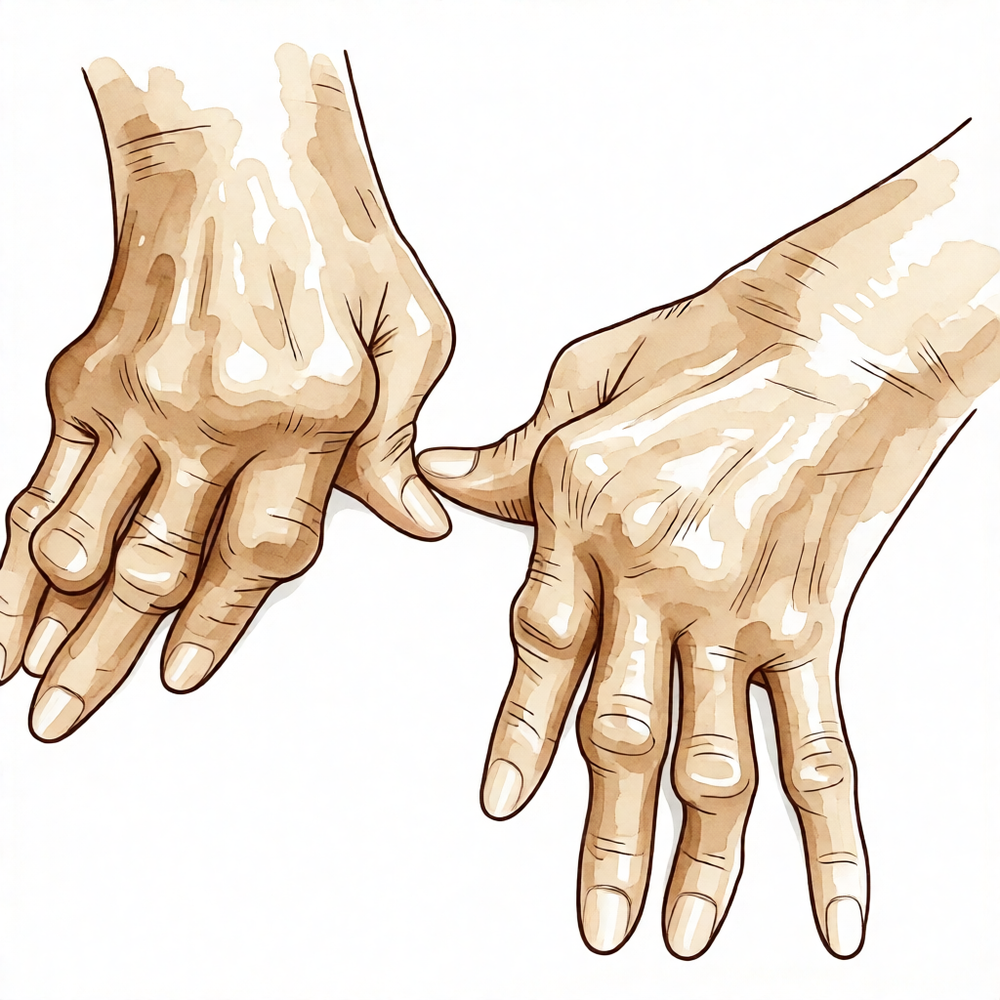
Este protocolo orienta sua recuperação após a substituição das articulações dos dedos por implantes de silicone (tipo Swanson) – as articulações metacarpofalângicas ou “MCP” – realizada pelo Dr. Kieran Hirpara no Mater Private Hospital Rockhampton. Ele começa com um programa de exercícios para ser feito em casa, seguido pelo protocolo clínico estruturado destinado ao seu terapeuta de mão: leve esta página ou seu arquivo PDF à sua primeira sessão de terapia, para que a reabilitação seja devidamente coordenada. O terapeuta poderá ajustar o plano conforme a evolução da sua recuperação.
Esta é uma recuperação que exige intensa atuação do terapeuta de mão e o uso de talas. A tala dinâmica e os exercícios diários não são opcionais; são os meios pelos quais as novas articulações são moldadas para assumir uma posição reta e correta. O resultado final depende muito da sua adesão rigorosa ao uso das talas e à execução dos movimentos.
Caso tenha alguma dúvida ou preocupação quanto à ferida pós-cirúrgica, entre em contato com o consultório. Geralmente é útil tirar uma foto da ferida e enviá-la por e-mail para análise.
O que esperar
As articulações dos nós dos dedos podem se desgastar, tornar-se dolorosas e ficar gravemente deformadas, principalmente na artrite reumatoide, na qual os dedos se desviam para o lado do dedo mindinho (desvio ulnar) e as bases dos dedos deslizam em direção à palma da mão (subluxação volar); também podem se desgastar devido à artrose. Nesta cirurgia, a articulação desgastada é removida e substituída por um espaçador de silicone flexível (o clássico implante Swanson). Os objetivos são aliviar a dor, corrigir o desvio ulnar e a flacidez dos nós dos dedos (deficiência da extensão), além de restaurar um arco de flexão funcional.
O implante não é uma articulação rígida; ele atua como um espaçador flexível enquanto uma nova camada de tecido (uma “cápsula”) se forma ao seu redor nas primeiras semanas. O objetivo da reabilitação é justamente fazer com que essa cápsula se forme com os dedos mantidos retos e corrigidos, e não desviados. É por isso que a tala e os movimentos precoces são tão importantes.
A recuperação, portanto, se baseia numa tala dinâmica de extensão, geralmente aplicada nos primeiros dias após a cirurgia:
- Em repouso, a tala mantém os nós dos dedos retos e puxa-os suavemente para o lado do polegar (desvio radial), contrabalançando o antigo desvio ulnar.
- Dentro da tala, o paciente realiza movimentos ativos controlados de flexão dos nós dos dedos contra laços elásticos macios, que devolvem os dedos à posição reta. Esses movimentos precoces (mas apenas nessa posição protegida e corrigida) ajudam a formar corretamente a nova cápsula e evitam a rigidez articular.
A tala dinâmica deve ser usada quase continuamente por cerca de seis semanas; depois disso, passa-se para uma tala de repouso ou noturna, acrescentando-se exercícios de fortalecimento gradualmente. A função manual leve retorna nas primeiras semanas; a maioria dos pacientes volta à maioria das atividades cotidianas por volta dos três meses, com o resultado final se consolidando ao longo de vários meses adicionais.
Precauções e limitações
- Use a sua tala de extensão dinâmica conforme orientado: dia e noite durante as primeiras seis semanas, aproximadamente. Ela mantém a correção obtida; retirá-la com muita frequência pode fazer com que a desviação volte a ocorrer.
- NÃO permita que os seus dedos voltem a desviar-se para o lado do dedo mindinho. Todos os exercícios visam orientá-los no outro sentido, em direção ao polegar.
- NÃO realize apertos fortes, pinçamentos ou levantamento de cargas pesadas nos primeiros tempos: um aperto vigoroso faz os dedos desviarem-se para a direção ulnar e sobrecarrega as novas articulações antes que elas fiquem estáveis. O fortalecimento só deve ser iniciado após autorização do seu terapeuta da mão.
- Mantenha o polegar, o punho e as pontas dos dedos em movimento desde o início; utilize a mão para tarefas cotidianas leves, dentro do limite do conforto.
- Fique atento a sinais de infeção na ferida (vermelhidão crescente, calor, inchaço ou secreção) e contacte o consultório se tiver alguma dúvida; infeções ao redor do implante são raras, mas é fundamental detetá-las precocemente.
Para orientações sobre cuidados com a ferida, inchaço e cicatrização, consulte o guia de cuidados com a ferida do consultório.
Seus exercícios
Kieran Hirpara 4.0
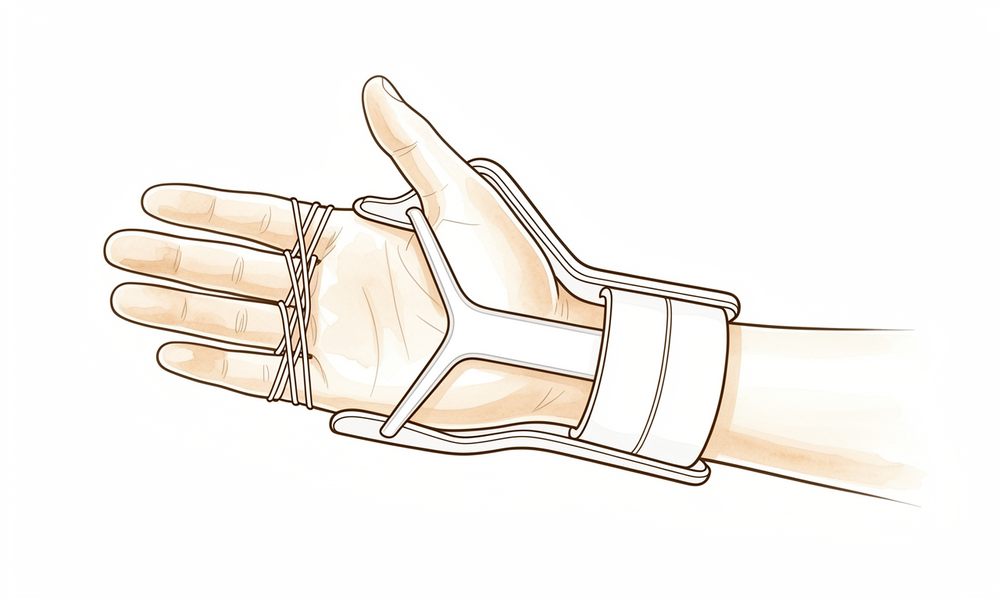
Usar a sua tala dinâmica
Sua tala de extensão dinâmica faz o trabalho de proteção por você: em repouso, ela mantém os nós dos dedos esticados e puxados suavemente em direção ao lado do polegar (lado radial), corrigindo o desvio pré-existente. Use-a conforme orientado — dia e noite, durante as primeiras seis semanas aproximadamente — retirando-a apenas para lavar as mãos e para realizar os exercícios permitidos pelo seu terapeuta da mão fora da tala. As alças nos dedos devem ficar confortáveis; avise seu terapeuta caso algo esteja causando atrito ou aperto.
Usar continuamente por aproximadamente 6 semanas; depois, à noite e em repouso, conforme orientação.
Kieran Hirpara 4.0
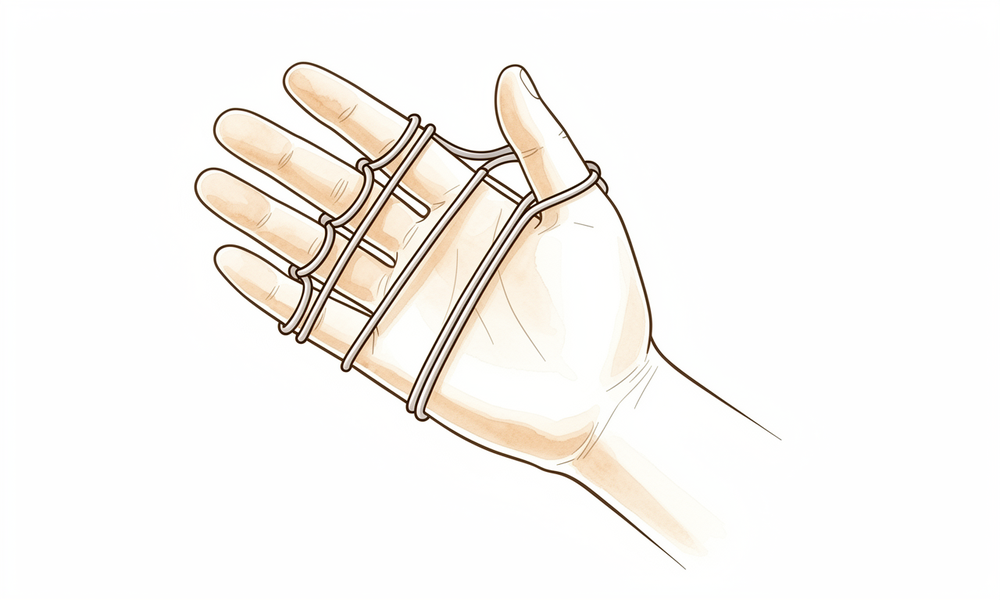
Flexão controlada dos nós dos dedos na tala
Enquanto estiver usando a tala, dobre suavemente os dedos para baixo nos nós dos dedos, puxando contra as alças elásticas; em seguida, relaxe e deixe que a tala os estenda novamente. Esse movimento controlado e precoce é o que ajuda a formar a cápsula de cicatrização ao redor das novas articulações na posição correta. Faça os movimentos de maneira suave e pare antes de sentir dor — você está orientando a articulação, não forçando-a.
10 flexões por hora enquanto estiver acordado, dentro da tala, conforme orientação.
Kieran Hirpara 4.0
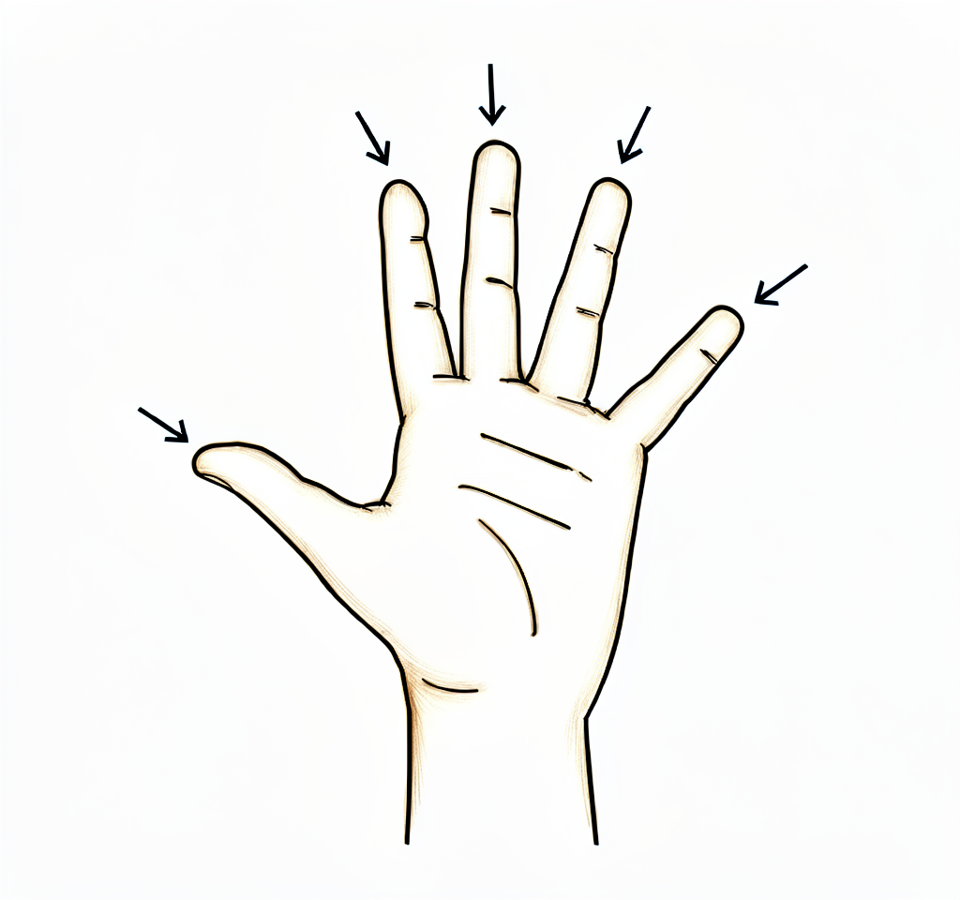
Extensão ativa (elevação dos nós dos dedos)
Trabalhe para endireitar completamente os nós dos dedos por conta própria — levante os dedos até ficarem na mesma altura. Após a cirurgia, os nós dos dedos tendem a cair (o chamado “atraso na extensão”), por isso levantá-los ativamente garante que os tendões responsáveis pelo endireitamento continuem a deslizar e ajuda a manter a correção obtida. O seu fisioterapeuta iniciará esse exercício com o uso da tala e, posteriormente, fará a progressão para fora dela.
10 elevações, várias vezes ao dia, conforme orientação.
Kieran Hirpara 4.0
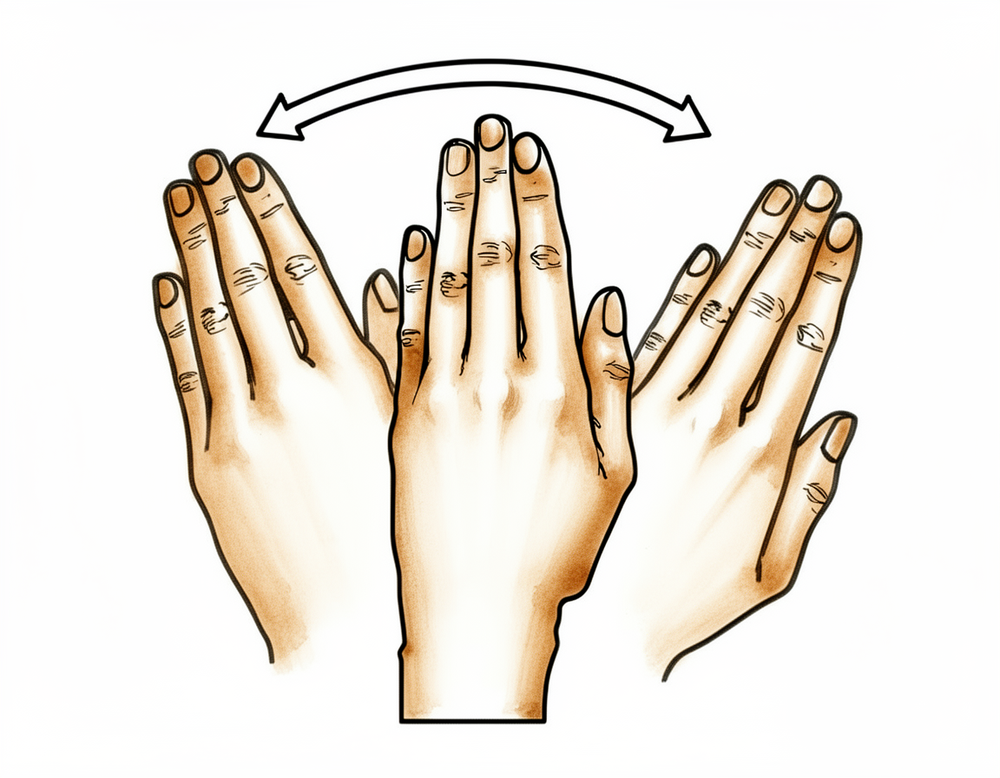
Movimento dos dedos em direção ao polegar (lado radial)
Guie suavemente os dedos em direção ao polegar (na direção radial) — no sentido oposto ao desvio anterior. Você pode usar a outra mão para ajudar ou deslizar as pontas dos dedos sobre uma mesa em direção ao polegar. Isso reeduca os dedos para se alinharem corretamente e é a correção fundamental na base de todo este protocolo. Nunca permita que eles voltem a se desviar para o outro lado.
10 vezes, várias vezes ao dia, conforme orientação.
Kieran Hirpara 4.0
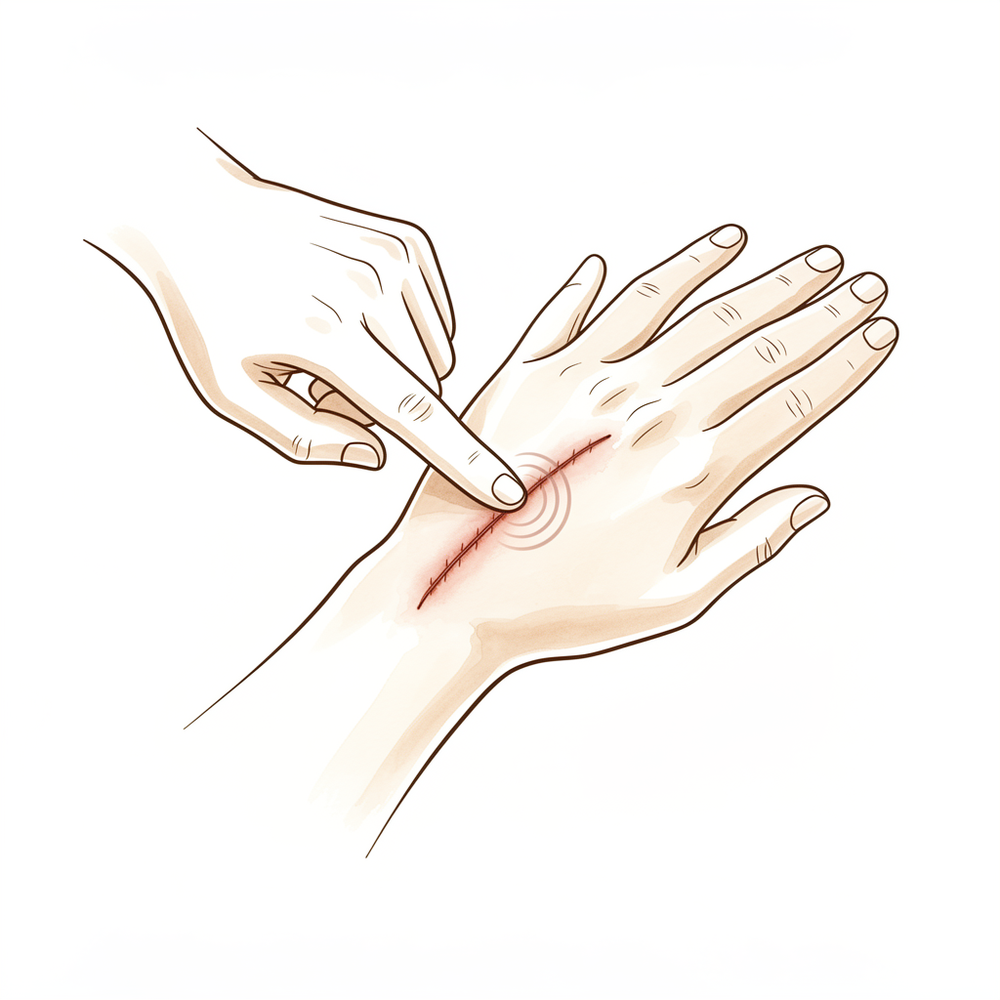
Cuidados com as cicatrizes
Assim que as feridas estiverem totalmente cicatrizadas e o terapeuta autorizar, massageie as cicatrizes na parte de trás da mão com um pouco de creme neutro, fazendo pequenos círculos firmes por alguns minutos. Isso mantém as cicatrizes macias e evita que a pele adira aos tendões, permitindo que os dedos se movam com mais liberdade.
Alguns minutos, 2-3 vezes ao dia, após a cicatrização.
Kieran Hirpara 4.0
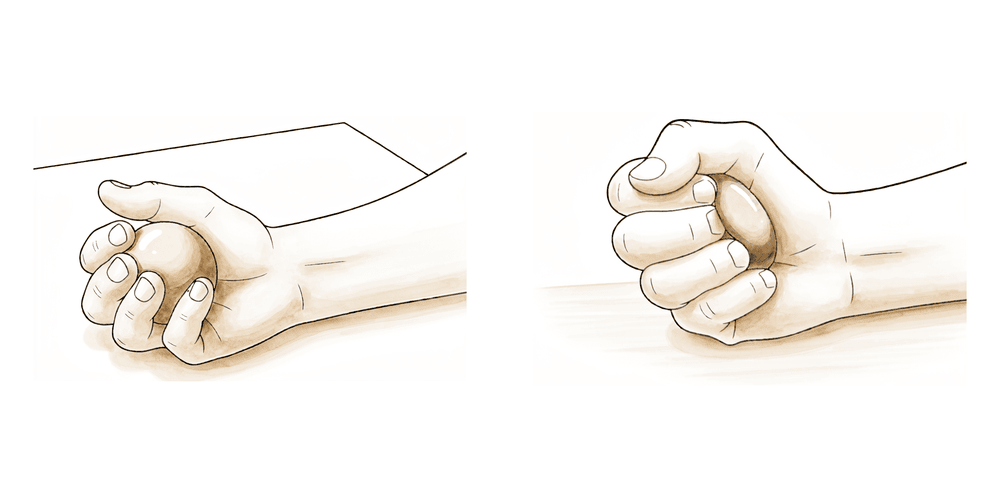
Fortalecimento da preensão (posteriormente)
Um exercício posterior — somente depois que o seu terapeuta da mão autorizar o fortalecimento, geralmente a partir de cerca de doze semanas. Aperte suavemente uma bola macia ou massa terapêutica e depois solte. Aumente aos poucos. Este exercício fica para mais tarde porque apertar com força empurra os dedos em direção ao desvio ulnar e sobrecarrega as novas articulações antes que a cápsula esteja forte — por isso é sempre o último a ser iniciado.
Conforme orientação do seu terapeuta da mão (apenas a partir de ~12 semanas)
Estes são os exercícios descritos no seu folheto informativo. Comece a realizá-los somente sob orientação do Dr. Hirpara e do seu terapeuta ocupacional, respeitando sempre os limites e a amplitude de movimento que lhe foram indicados. No início, todos os exercícios devem ser feitos com a órtese dinâmica: flexão controlada contra as alças, extensão ativa dos dedos e movimentos suaves dos dedos em direção ao polegar para manter a correção obtida. O cuidado com a cicatriz deve começar somente após a cicatrização das feridas; o fortalecimento da preensão é uma etapa posterior e só deve ser iniciado após autorização expressa. Interrompa qualquer exercício que cause dor aguda nas articulações dos dedos.
Seu protocolo clínico
O restante desta página descreve o protocolo clínico em etapas para a reabilitação após artroplastia da articulação MCP com silicone (Swanson). Esta seção deve ser entregue ao seu terapeuta de mão; cada fase começa com uma explicação simples, em linguagem acessível, sobre o que está ocorrendo. O princípio fundamental é que a nova cápsula da articulação MCP se remodela ao redor do implante na posição em que ela for mantida; portanto, a tala e os exercícios devem manter as articulações em extensão com leve desvio radial, permitindo simultaneamente flexão ativa controlada precoce, de modo a reconfigurar as articulações na posição correta e reverter o desvio ulnar.
Antes de iniciar o tratamento, verifique o relatório cirúrgico do paciente e seu histórico médico; consulte também o cirurgião responsável quanto ao diagnóstico (reumatóide ou osteoartrite), às reconstruções de tecidos moles realizadas (reforço do ligamento colateral radial, liberação dos músculos intrínsecos ulnares, centralização do extensor / transferência cruzada dos músculos intrínsecos) e à correção e amplitude de movimento alcançadas durante a cirurgia. A mão reumatóide tende a sofrer desvios e recidivas com maior facilidade do que a mão osteoartrítica, exigindo, portanto, um uso especialmente cuidadoso da tala com desvio radial. O protocolo abaixo presume o uso padrão da tala dinâmica de extensão com suporte lateral.
Fase I — tala de extensão dinâmica com movimentação controlada precoce (semanas 0 a ~6)
As primeiras seis semanas constituem o período decisivo: nesse período, a cápsula se forma ao redor do implante, e a tala dinâmica determina a posição em que essa cápsula se desenvolverá. Instale uma tala dinâmica de extensão para as articulações MCP, baseada no antebraço, preferencialmente nos primeiros 3-5 dias. Em repouso, ela mantém as articulações MCP em extensão total, com as falanges proximais ligeiramente desviadas para a radial (corrigindo o antigo desvio ulnar); as alças da tala apoiam-se nas falanges proximais, e a tensão elástica permite uma flexão ativa controlada, retornando depois os dedos à posição de extensão. O paciente deve realizar flexão ativa controlada das articulações MCP dentro da tala a cada hora em que estiver acordado. O punho e as articulações interfalangeanas permanecem livres para movimentação.
Para o seu terapeuta da mão:
Instruções e precauções - Instale e ajuste a tala dinâmica de extensão: as articulações MCP devem ficar em extensão com leve desvio radial; as alças devem ser colocadas nas falanges proximais, exercendo tração radial para contrabalançar o desvio ulnar. - A tala deve ser usada continuamente (dia e noite) por cerca de 6 semanas, sendo retirada apenas para higiene e exercícios supervisionados. - Proibido o aperto forte, a pinça ou qualquer carga lateral na direção ulnar, pois isso reproduziria as forças deformantes. - Proteja qualquer reconstrução de tecidos moles (ligamento colateral radial ou equilíbrio dos músculos intrínsecos): evite sempre forçar o desvio ulnar. - Mantenha o polegar, o punho e as articulações interfalangeanas móveis; permita apenas uso leve e sem carga da mão.
Manejo clínico - Ferida: siga as orientações para curativos; monitore sinais de infecção (já que há implante presente). - Edema: mantenha o membro elevado, realize massagem retrógrada suave e aplique compressão leve conforme tolerado. - Exercícios: flexão ativa controlada das articulações MCP dentro da tala, contra a resistência das alças, visando desenvolver um arco de flexão útil (objetivo: alcançar o arco definido pelo cirurgião intraoperativamente, geralmente até ~70 graus nas articulações MCP do dedo indicador ao mindinho); a extensão passiva total deve ser alcançada graças à ação da tala; também realize extensão ativa das articulações MCP (para corrigir o atraso na extensão) e reeducação do desvio radial (guiando os dedos em direção ao polegar); mantenha amplitude de movimento livre nas articulações interfalangeanas e no punho.
Critérios para avançar para a fase seguinte - Cicatrização da ferida; edema controlado; surgimento de um arco de flexão ativa, mantendo-se a extensão completa e o alinhamento radial corrigido por volta da sexta semana.
Fase II — retirada progressiva da tala e consolidação da correção (semanas ~6 a ~12)
A partir de aproximadamente seis semanas, a cápsula articular começa a amadurecer, e a tala dinâmica é substituída por uma tala de extensão para uso noturno/descanso (geralmente mantida até cerca de 12 semanas; em pacientes reumáticos, que têm maior tendência à recorrência, ela é usada à noite por mais tempo). O movimento ativo sem a tala é progressivamente estimulado, sempre priorizando a extensão e o alinhamento radial. O uso funcional leve é permitido; porém, o aperto forte e a pinça continuam proibidos.
Para o seu terapeuta da mão:
Avaliações - Amplitude de flexão/extensão ativa e passiva das articulações MCP; atraso na extensão; desvio ulnar (comparar com a correção obtida durante a cirurgia); dor e inchaço; avaliação da ferida e da cicatriz
Instruções e precauções - Retirar progressivamente a tala dinâmica; manter uma tala de extensão para uso noturno/descanso até cerca de 12 semanas (por mais tempo à noite em pacientes reumáticos) - Continuar evitando o aperto forte, a pinça e qualquer carga que cause desvio ulnar - Manter rigorosamente o alinhamento radial; a recorrência do desvio ulnar é a principal causa de falha no tratamento a longo prazo
Tratamento - Exercícios: promover progressivamente a flexão/extensão ativa e ativa-assistida das articulações MCP sem a tala; prosseguir com exercícios para corrigir o atraso na extensão e reeducar o desvio radial; iniciar cuidados com a cicatriz após sua completa cicatrização; realizar tarefas funcionais leves, respeitando os limites de conforto e evitando movimentos que induzam desvio ulnar
Critérios para avançar para a fase seguinte - Correção estável (mínimo desvio ulnar recorrente, atraso na extensão dentro dos limites aceitáveis) com cápsula em processo de amadurecimento; amplitude funcional confortável; dor controlada
Fase III — fortalecimento e retorno às atividades (a partir da semana 12)
Quando a cápsula articular já está resistente e o alinhamento é mantido (por volta da 12ª semana), inicia-se, de forma gradual e cautelosa, o fortalecimento, pois a força de preensão pode provocar desvio ulnar. A força muscular e o resultado funcional final continuam a melhorar ao longo de vários meses.
Para o seu terapeuta ocupacional:
Avaliações - Comparação da força de preensão/pinça com o lado contralateral e com os valores pré-operatórios; manutenção do arco de movimento, da extensão e do alinhamento sob carga; testes funcionais e específicos para cada tarefa
Instruções e precauções - Inicie o fortalecimento progressivo da preensão a partir da semana 12, aumentando a carga de forma gradual - Oriente o paciente quanto a padrões de preensão que não induzam desvio ulnar; mantenha o uso da órtese noturna conforme indicado, especialmente em casos de artrite reumatoide - Estabeleça expectativas realistas: o objetivo é alívio da dor, correção da posição e manutenção de um arco de movimento funcional, não necessariamente uma força de preensão normal ou elevada
Tratamento - Exercícios: fortalecimento progressivo com massa de modelar ou bolas, controle isométrico das articulações metacarpofalangeanas, fortalecimento funcional; continue os exercícios de mobilidade e correção de qualquer déficit de extensão ou desvio de alinhamento - Considere a alta terapêutica quando o alinhamento estiver estável, o arco de movimento adequado e o paciente conseguir realizar as atividades diárias; forneça orientações sobre o uso prolongado da órtese noturna e medidas de proteção articular - Encaminhe novamente ao médico responsável caso ocorra piora do alinhamento, perda do arco de movimento ou suspeita de problemas com o implante
Critérios para alta - Alinhamento corrigido e estável, arco de movimento funcional sem dor, força de preensão suficiente para as atividades diárias, rotina eficaz de proteção articular e uso adequado da órtese noturna
Voltando ao trabalho e às atividades
O uso leve e cotidiano da mão (comer, escrever, cuidados pessoais básicos) é incentivado desde o início, desde que feito com conforto e evitando apertões fortes, pinçamentos e qualquer tensão lateral (ulnar) nos dedos. Planeje usar a tala dinâmica quase o tempo todo durante as primeiras seis semanas; isso limitará tarefas que exigem o uso de ambas as mãos ou esforço físico intenso; providencie ajuda conforme necessário. A retomada da direção só será permitida quando você conseguir controlar o veículo com segurança e estiver sem a tala dinâmica para dirigir (geralmente por volta da sexta semana), conforme confirmado na sua consulta de acompanhamento.
O fortalecimento muscular e o uso mais intenso da mão só devem ser iniciados por volta da décima segunda semana, sendo progredidos gradualmente sob orientação do seu terapeuta da mão. A maioria das pessoas retorna à maioria das atividades diárias por volta dos três meses; o resultado final (conforto, alinhamento e amplitude de movimento útil) continua a se aperfeiçoar ao longo de vários meses adicionais. A evolução do tratamento é avaliada pelo Dr. Hirpara e pelo seu terapeuta da mão com base na correção e no funcionamento da mão, e não apenas pelo calendário. O retorno a trabalhos manuais mais pesados ou repetitivos segue os mesmos critérios de progressão, com orientações para proteger as articulações e manter os resultados obtidos a longo prazo.
Após seguir este protocolo
Este protocolo complementa as orientações gerais de recuperação fornecidas pela clínica: consulte controle da dor pós-operatória, cuidados com a ferida e tratamento das cicatrizes. O plano em fases descrito acima reflete o regime de reabilitação tradicional do tipo Swanson, utilizado após artroplastia de MCP com silicone; sua recuperação continuará sendo acompanhada individualmente pelo Dr. Hirpara e pelo seu terapeuta da mão, conforme a evolução e correção do seu estado clínico.
Evidence & references
This is the clinical evidence summary written for health professionals. It is technical, and it lists the research this page was built from. You do not need to read it to understand your treatment or to make a decision about it.
Silicone (Swanson) MCP Joint Arthroplasty — Procedure Outcomes & Post-operative Rehabilitation
Topic scope: post-operative rehabilitation after silicone (Swanson) replacement of the metacarpophalangeal (MCP) joints — flexible silicone-elastomer spacer arthroplasty of the knuckle joints, most often for the rheumatoid hand with ulnar drift and volar subluxation, and less commonly for MCP osteoarthritis. This is a resection-replacement with soft-tissue rebalancing, not a simple decompression: the deforming forces that destroyed the joint (ulnar drift, extensor subluxation, intrinsic tightness) are still present, so the rehabilitation is an active, splint-driven re-shaping programme, not a rest-and-protect pathway.
Defining principle of the rehab here: a silicone MCP implant is a flexible spacer around which a new fibrous capsule ("encapsulation") forms over the first weeks — and that capsule remodels in whatever position the hand is held. The classic post-operative regime therefore uses a dynamic extension outrigger splint that holds the MCPs in extension with slight radial deviation (opposing the ulnar drift) while permitting early controlled active flexion against elastic loops. Move early, but only in the corrected position: this is what reverses the drift and builds a functional flexion arc. The single biggest branch point is the diagnosis — the rheumatoid hand drifts and recurs far more readily than the osteoarthritic hand and warrants more diligent, more prolonged radial-deviation splinting.
A. PROCEDURE OUTCOMES (rheumatoid and osteoarthritis)
Silicone MCP arthroplasty is a deformity-correcting, pain-relieving operation rather than a motion- or strength-restoring one. Its great strength is reliable correction of alignment and relief of pain; its accepted limitations are a modest final arc, gradual implant fracture over years, and—in rheumatoid hands—a tendency to recurrent drift.
- In rheumatoid arthritis it produces durable improvement in deformity, appearance and patient-reported function. The multicentre prospective SARA (Silicone Arthroplasty in Rheumatoid Arthritis) cohort compared 70 surgical with 93 non-surgical RA patients with severe MCP deformity: the surgical group showed significant, sustained gains in the Michigan Hand Outcomes Questionnaire and in ulnar deviation, extensor lag and arc of motion, maintained at 1 year, at long-term (3-year) follow-up, and out to 7 years, whereas the non-surgical cohort did not improve [Chung 2009; Chung 2012; Chung 2017]. Moderate–strong (prospective comparative cohort; not randomised).
- Correction of ulnar drift and extensor lag is the headline result; arc and grip gains are modest. Series consistently report large reductions in ulnar deviation and extensor lag with a re-centred, more functional arc (commonly a final arc on the order of ~40–50° centred nearer extension), with grip strength only modestly changed. The operation buys alignment, pain relief and hand appearance/function, not power [Goldfarb & Dovan 2006; Rizzo 2011; Kirschenbaum 1993]. Moderate.
- For MCP osteoarthritis, long-term results are favourable and durable. A long-term series of silicone MCP arthroplasty for OA reported lasting pain relief and satisfactory function, with better-preserved bone stock and less recurrent deforming force than the rheumatoid hand [Morrell & Weiss 2018]. Moderate.
- Implant fracture accrues with time but is often clinically silent. Long-term radiographic follow-up shows implant fracture rates rising over the years, yet many fractured implants remain asymptomatic and revision is driven by symptoms/instability rather than radiographic fracture alone [Koenuma 2024; Kirschenbaum 1993]. Moderate.
- Revision is uncommon but defined, most often for recurrent deformity, implant fracture/instability or infection; revision MCP arthroplasty is feasible but technically demanding with poorer results than primary surgery [Wagner 2019; Carlson Strother 2023]. Moderate.
B. REHABILITATION / THERAPY EVIDENCE
The central rehab questions are (1) which splint regime, and (2) does adding continuous passive motion or particular splint variants change the outcome. The evidence base is dominated by a strong heritage regime (Swanson-style dynamic extension splinting) supported mostly by expert consensus and low-level studies, with the few controlled comparisons failing to show benefit from add-ons. The rehabilitation is nonetheless indispensable — it is integral to the operation, not an optional adjunct.
- The standard regime is a dynamic extension outrigger splint with early controlled motion. Fitted within the first few days, it holds the MCPs in extension and slight radial deviation at rest and permits active flexion against finger slings, worn essentially continuously for ~6 weeks then weaned to night/rest splinting. The shared aim across published regimes is to encourage MCP flexion and extension without recurrence of flexion contracture or ulnar deviation while the capsule encapsulates the implant in a corrected position [Goldfarb & Dovan 2006; Massy-Westropp Cochrane 2008]. Consensus / heritage — widely practised, low-level evidence.
- Adding continuous passive motion (CPM) to dynamic splinting does not help. The Cochrane review identified a single small controlled trial (22 participants) comparing dynamic splinting ± CPM and concluded CPM is not effective at increasing motion or strength after MCP arthroplasty (controls actually gained more motion); it rated the evidence "silver level" and called for well-designed RCTs given wide practice variation [Massy-Westropp Cochrane 2008]. Moderate (Cochrane SR of low-certainty primary evidence).
- A static-splint alternative achieves comparable correction in small studies. A prospective series using alternating static flexion/extension splints (rather than a dynamic outrigger) reported improved total active arc (21.6°→47.2°) and corrected ulnar deviation (30.4°→9.7°), suggesting the position held and active motion matter more than the specific splint mechanism [Burr/Massy-Westropp J Hand Ther 2002]. Weak (small prospective cohort).
- The specific dynamic-splint protocol has not been shown superior to simpler regimes in controlled comparison. A randomised study found no clear added value of dynamic splinting over a simpler post-operative regime for MCP replacement, reinforcing that the dynamic outrigger is a sound, traditional default rather than a proven optimum [Delaney 2003]. Weak–moderate (small RCT).
Recovery trajectory (expected, evidence-anchored)
| Phase | Window | Splint / position | Hand-therapist focus | Strength / load | Notes |
|---|---|---|---|---|---|
| I — Dynamic extension splint + early controlled motion | Week 0–~6 | Dynamic extension outrigger worn day & night; MCPs in extension + slight radial deviation | Controlled active MCP flexion within the splint (toward the surgeon's arc, often up to ~70°); active extension (correct extensor lag); radial-deviation re-education; free IP/wrist; oedema control | Light unloaded use only; no grip/pinch, no ulnar load | Capsule forms now — position held = position kept. Rheumatoid hands need the most diligent radial pull |
| II — Wean to night/rest splint, consolidate correction | Week ~6–12 | Wean dynamic splint → night/resting extension splint (longer at night in RA) | Progress active/active-assisted flexion–extension out of splint, biased to extension + radial; scar massage once healed; preserve correction | Still no strong grip/pinch; light functional tasks | Recurrent ulnar drift is the main late failure — guard alignment |
| III — Strengthening & return | Week ~12+ | Night splint as indicated (esp. RA) | Graded putty/ball grip and pinch, isometric MCP control, functional/task strengthening | Begin grip strengthening ~8–12 wk, build gradually; coach non-ulnar-deviating grip | Most everyday activity by ~3 months; alignment/comfort/arc settle over several more months |
(Phase windows mirror the patient protocol; they are typical, heritage-based guides — not trial-derived deadlines.)
C. KEY CONTROVERSIES / EVIDENCE QUALITY
- Heritage regime, modest evidence. The Swanson-style dynamic extension outrigger with early controlled motion is deeply established and near-universally taught, but its supporting evidence is largely expert consensus and small/low-level studies. The defensible position is to follow the heritage regime faithfully while acknowledging its evidence tier [Goldfarb & Dovan 2006; Massy-Westropp Cochrane 2008]. Consensus.
- Which splint? Dynamic outrigger vs alternating static splints vs simpler regimes give broadly similar correction in small studies; CPM adds nothing. What matters is holding the MCPs in extension + radial deviation while moving early — the mechanism of the splint is secondary [Massy-Westropp Cochrane 2008; Burr 2002; Delaney 2003]. Weak–moderate.
- Rheumatoid vs osteoarthritis. The rheumatoid hand has ongoing deforming forces (tendon subluxation, intrinsic tightness, soft-tissue laxity) and recurs, demanding more prolonged radial-deviation/night splinting and joint protection; the osteoarthritic hand has better bone and soft tissue and a more durable correction [Morrell & Weiss 2018; Rizzo 2011]. Moderate.
- Realistic goals. The operation reliably delivers pain relief, corrected alignment and a functional arc, not a normal or powerful hand. Mis-set expectations (large grip gains) are a common source of dissatisfaction [Chung patient-expectations 2015; SARA cohort]. Moderate.
- Implant fracture ≠ failure. Radiographic implant fracture accrues over years but is frequently asymptomatic; revision is symptom-driven. Counsel accordingly rather than revising on imaging alone [Koenuma 2024; Wagner 2019]. Moderate.
D. EVIDENCE STRENGTH FLAGS (summary)
- MODERATE–STRONG: silicone MCP arthroplasty improves deformity, alignment (ulnar deviation, extensor lag), MHQ and arc versus non-surgical care in severe rheumatoid MCP disease, durable to 7 years (SARA prospective cohort — comparative, not randomised).
- MODERATE: correction-over-power outcome profile; favourable long-term OA results; time-related implant fracture (often asymptomatic); defined but uncommon revision rate; greater recurrence in rheumatoid than osteoarthritic hands.
- WEAK / CONSENSUS / HERITAGE: the specific dynamic-extension-outrigger + early-controlled- flexion + radial-deviation rehabilitation programme (strong heritage, low-level evidence; CPM shown unhelpful; dynamic vs static vs simpler regimes not clearly differentiated); exact phase timings (typical, not trial-derived).
CITATIONS
RAG corpus (180,000+ Orthopaedic articles)
- Kirschenbaum D, Schneider LH, Adams DC, et al. Arthroplasty of the metacarpophalangeal joints with use of silicone-rubber implants in patients who have rheumatoid arthritis. Long-term results. J Bone Joint Surg Am. 1993;75(1):3-12. DOI: 10.2106/00004623-199301000-00002
- Goldfarb CA, Dovan TT. Rheumatoid arthritis: silicone metacarpophalangeal joint arthroplasty indications, technique, and outcomes. Hand Clin. 2006;22(2):177-188. DOI: 10.1016/j.hcl.2006.02.001
- Rizzo M. Metacarpophalangeal joint arthritis. J Hand Surg Am. 2011;36(2):345-353. DOI: 10.1016/j.jhsa.2010.11.035
- Morrell NT, Weiss AC. Silicone metacarpophalangeal arthroplasty for osteoarthritis: long-term results. J Hand Surg Am. 2018;43(3):229-233. DOI: 10.1016/j.jhsa.2017.10.010
- Koenuma N, Ikari K, Oh K, et al. Long-term implant fracture rates following silicone metacarpophalangeal joint arthroplasty in rheumatoid arthritis. J Hand Surg Am. 2024. DOI: 10.1016/j.jhsa.2024.01.009
- Wagner ER, Houdek MT, Packard B, et al. Revision metacarpophalangeal arthroplasty: a longitudinal study of 128 cases. J Am Acad Orthop Surg. 2019. DOI: 10.5435/JAAOS-D-17-00042
- Carlson Strother CR, Moran SL, Rizzo M. Small joint arthroplasty of the hand: an update on indications, outcomes, and complications. J Am Acad Orthop Surg. 2023;31(15):e739-e749. DOI: 10.5435/JAAOS-D-23-00034
- Blazar PE, Gancarczyk SM, Simmons BP. Rheumatoid hand and wrist surgery: soft tissue principles and management of digital pathology. J Am Acad Orthop Surg. 2019;27(21):e924-e933. DOI: 10.5435/JAAOS-D-17-00608
- Naniwa S, Nishida K, Nasu Y, et al. A comparative study of short-term outcomes between INTEGRA and AVANTA silicone implants for metacarpophalangeal joints in patients with rheumatoid arthritis. J Hand Surg Am. 2026. DOI: 10.1016/j.jhsa.2026.04.003
MCP arthroplasty outcomes & rehabilitation literature (URLs)
- Chung KC, Burns PB, Wilgis EFS, et al. A multicenter clinical trial in rheumatoid arthritis comparing silicone metacarpophalangeal joint arthroplasty with medical treatment. J Hand Surg Am. 2009;34(5):815-823. DOI: 10.1016/j.jhsa.2009.01.018 — https://pmc.ncbi.nlm.nih.gov/articles/PMC4381953/
- Chung KC, Burns PB, Kim HM, et al. Long-term followup for rheumatoid arthritis patients in a multicenter outcomes study of silicone metacarpophalangeal joint arthroplasty. Arthritis Care Res (Hoboken). 2012;64(9):1292-1300. DOI: 10.1002/acr.21705 — https://pubmed.ncbi.nlm.nih.gov/22511483/
- Burns PB, Zhong L, Chung KC. Seven-year outcomes of the Silicone Arthroplasty in Rheumatoid Arthritis (SARA) prospective cohort study. Arthritis Care Res (Hoboken). 2017. DOI: 10.1002/acr.23105 — https://pmc.ncbi.nlm.nih.gov/articles/PMC5376377/
- Chung KC, Burns PB, et al. Patient expectations and long-term outcomes in rheumatoid arthritis patients: results from the SARA study. Clin Rheumatol. 2015;34(4):641-651. DOI: 10.1007/s10067-014-2775-z — https://pubmed.ncbi.nlm.nih.gov/25267562/
- Massy-Westropp N, Johnston RV, Hill C. Post-operative therapy for metacarpophalangeal arthroplasty. Cochrane Database Syst Rev. 2008;(1):CD003522. DOI: 10.1002/14651858.CD003522.pub2 — https://pmc.ncbi.nlm.nih.gov/articles/PMC8715905/
- Burr N, Pratt AL, Stott D. An alternative splinting and rehabilitation protocol for metacarpophalangeal joint arthroplasty in patients with rheumatoid arthritis. J Hand Ther. 2002;15(1):41-47. DOI: 10.1053/hanthe.2002.v15.01541 — https://pubmed.ncbi.nlm.nih.gov/11866351/
- Delaney R, Trail IA, Nuttall D. Value of dynamic splinting after replacement of the metacarpophalangeal joint in patients with rheumatoid arthritis. Scand J Plast Reconstr Surg Hand Surg. 2003;37(4):232-233. DOI: 10.1080/02844310310005658 — https://pubmed.ncbi.nlm.nih.gov/12755512/