Patients › Rehabilitation
Fixação do escafoide
Um plano de recuperação protegido após a fixação cirúrgica de uma fratura do escafoide com um parafuso de compressão sem cabeça, que permite retomar os movimentos do punho precocemente, sob a proteção do parafuso, enquanto o osso, de cicatrização lenta, se consolida; posteriormente, desenvolve-se a força de preensão. O retorno a atividades de carga e esportes de contato só deve ocorrer após a confirmação da união óssea.
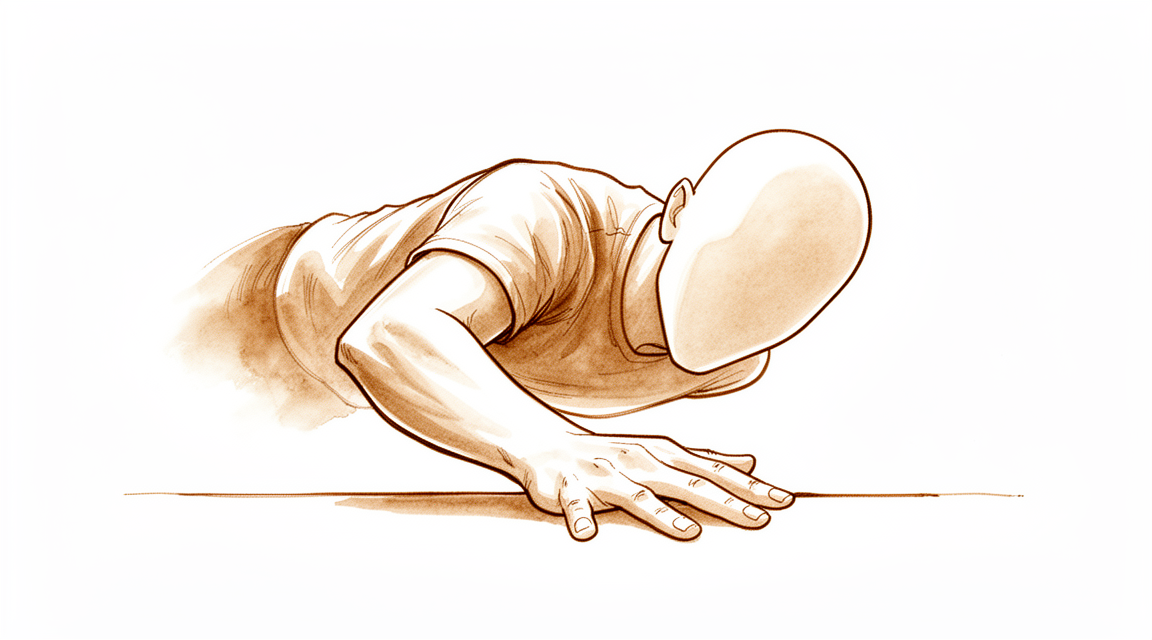
Este protocolo orienta sua recuperação após a fixação cirúrgica de uma fratura do escafoide (uma ruptura no pequeno osso em forma de barco localizado no interior do punho, fixado por um parafuso de compressão sem cabeça inserido internamente) realizada pelo Dr. Kieran Hirpara no Mater Private Hospital Rockhampton. Ele começa com um programa de exercícios domiciliares, seguido pelo protocolo clínico estruturado elaborado para seu terapeuta de mão. Leve esta página ou seu arquivo PDF à sua primeira sessão de terapia, para que a reabilitação seja devidamente coordenada. Seu terapeuta de mão poderá ajustar o plano conforme a natureza da fratura, o método de fixação utilizado e o andamento da sua recuperação.
Caso tenha alguma dúvida ou preocupação quanto à ferida cirúrgica, entre em contato com o consultório. Geralmente, é útil tirar uma foto da ferida e enviá-la por e-mail para análise.
O que esperar
O escafoide é um osso pequeno localizado na base do punho, conectando as duas fileiras de ossos do punho. Ele possui um suprimento sanguíneo frágil e incomum, que flui em direção contrária, de uma extremidade à outra; por isso, uma fratura no escafoide cicatriza lentamente e, se não for tratada, às vezes não chega a unir-se (chamada de não-união). A fixação do escafoide mantém os dois fragmentos ósseos firmemente unidos por meio de um único parafuso de compressão sem cabeça, totalmente inserido dentro do osso; não há nada para sentir ou remover. Esse parafuso comprime os fragmentos, o que favorece a cicatrização e permite que o punho comece a se mover mais cedo do que em casos de fraturas tratadas apenas com gesso. Caso a fratura seja antiga ou não tenha se unido, um pequeno pedaço de enxerto ósseo (geralmente retirado do osso do antebraço próximo) pode ser adicionado para estimular a cicatrização; isso pode tornar o plano de recuperação inicial um pouco mais cauteloso.
O conceito central dessa recuperação é que o parafuso mantém os fragmentos unidos enquanto o osso cicatriza lentamente. Como o escafoide cicatriza devagar, os marcos dessa recuperação são definidos conforme a evolução da cicatrização óssea, e não apenas pelo calendário. Geralmente, o cirurgião confirma que a fratura se uniu (“união óssea”) por meio de radiografia e, muitas vezes, de tomografia computadorizada, antes de autorizar cargas maiores e a prática de esportes. A rapidez com que você progredirá depende do tipo e da localização da fratura (fraturas próximas à extremidade superior do escafoide, chamada de “polo proximal”, ou casos prévios de não-união exigem maior cautela) e da estabilidade da fixação.
Os movimentos são liberados em etapas cuidadosas: movimentos dos dedos e do polegar são permitidos imediatamente; movimentos suaves do punho, após autorização do terapeuta; exercícios de preensão e fortalecimento, apenas após a união óssea; e o retorno a esportes com carga ou contato físico é o último passo. Como a consolidação da fratura continua por meses, cargas maiores e a prática esportiva são reintroduzidas gradualmente, e não de uma só vez.
Precauções e limitações
- Use a tala ou gesso conforme orientado e mantenha-o seco. O Dr. Hirpara e o seu fisioterapeuta da mão informarão quando você poderá retirá-lo para fazer exercícios e quando poderá deixá-lo de lado.
- NÃO aperte com força, levante, carregue ou empurre usando o punho até que lhe seja informado que a fratura já consolidou; apertar e aplicar carga sobrecarregam o osso escafóide e o parafuso enquanto o osso ainda está cicatrizando.
- Evite forçar o punho a atingir a extensão total para trás e evite movimentos extremos nos primeiros dias; faça os movimentos de forma gradual, sem forçar até os limites.
- NÃO volte a praticar esportes de contato, com colisões ou que exijam carga (nem academia, levantamento de pesos, flexões, esportes com raquetes ou bastões) até que o cirurgião confirme que o osso já se uniu e lhe dê autorização; isso geralmente leva meses, não semanas.
- Mantenha os dedos, o polegar, o cotovelo e o ombro em movimento desde o início para evitar rigidez; utilize a mão para tarefas cotidianas leves, dentro do conforto, desde que não envolvam apertar, levantar ou forçar o punho.
- Caso tenha sido utilizado enxerto ósseo para tratar uma não união, espere um cronograma mais cauteloso; siga rigorosamente o plano específico indicado pelo seu cirurgião e fisioterapeuta.
Para orientações sobre cuidados com a ferida, inchaço e cicatrização, consulte o guia de cuidados com a ferida do consultório.
Seus exercícios
Kieran Hirpara 4.0
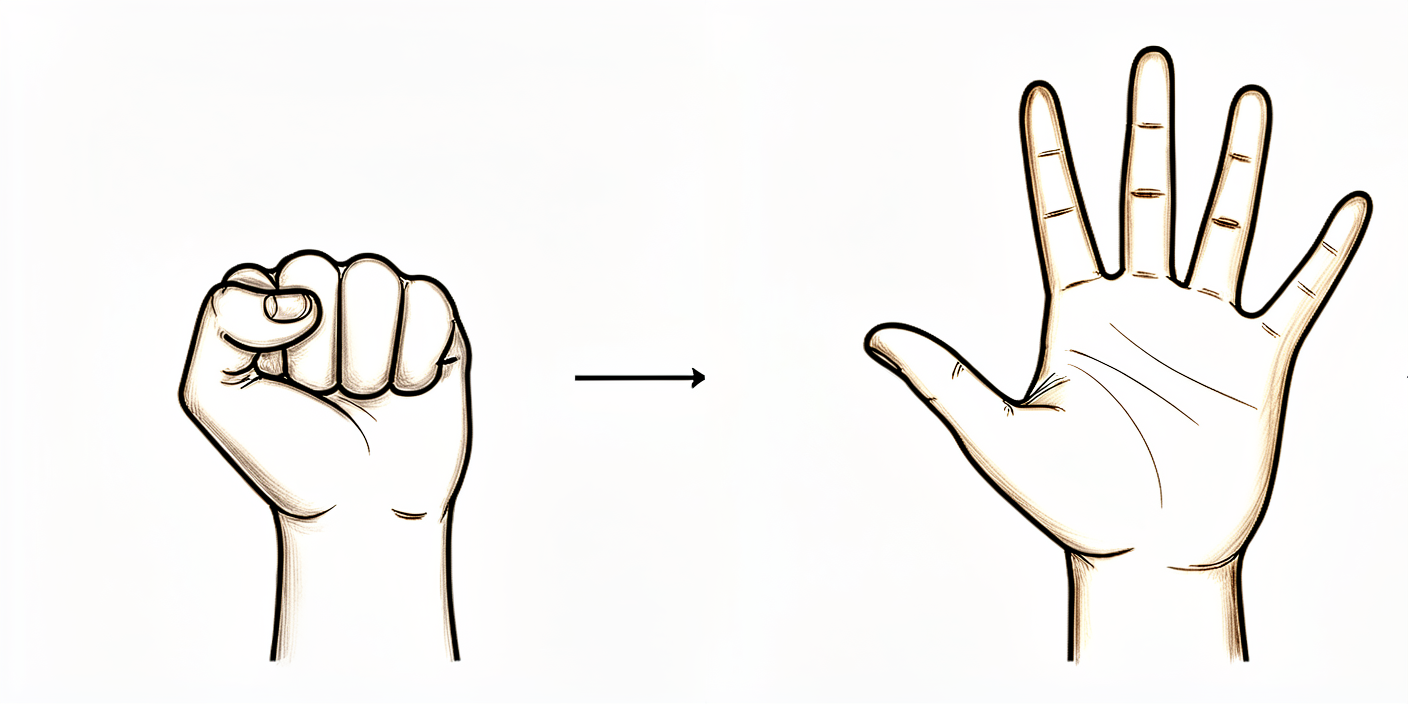
Movimento dos dedos e do polegar
Desde os primeiros dias, mantenha os dedos e o polegar em movimento para evitar que fiquem rígidos. Faça um punho fechado suavemente, depois estique os dedos completamente, tocando o polegar na ponta de cada dedo, um por um. Enquanto faz isso, mantenha o próprio punho imóvel dentro da tala ou gesso. Isso é seguro desde o início — ajuda a manter a mão flexível sem prejudicar a cicatrização do escafoide.
10 vezes cada um, várias vezes ao dia, desde o primeiro dia.
Kieran Hirpara 4.0
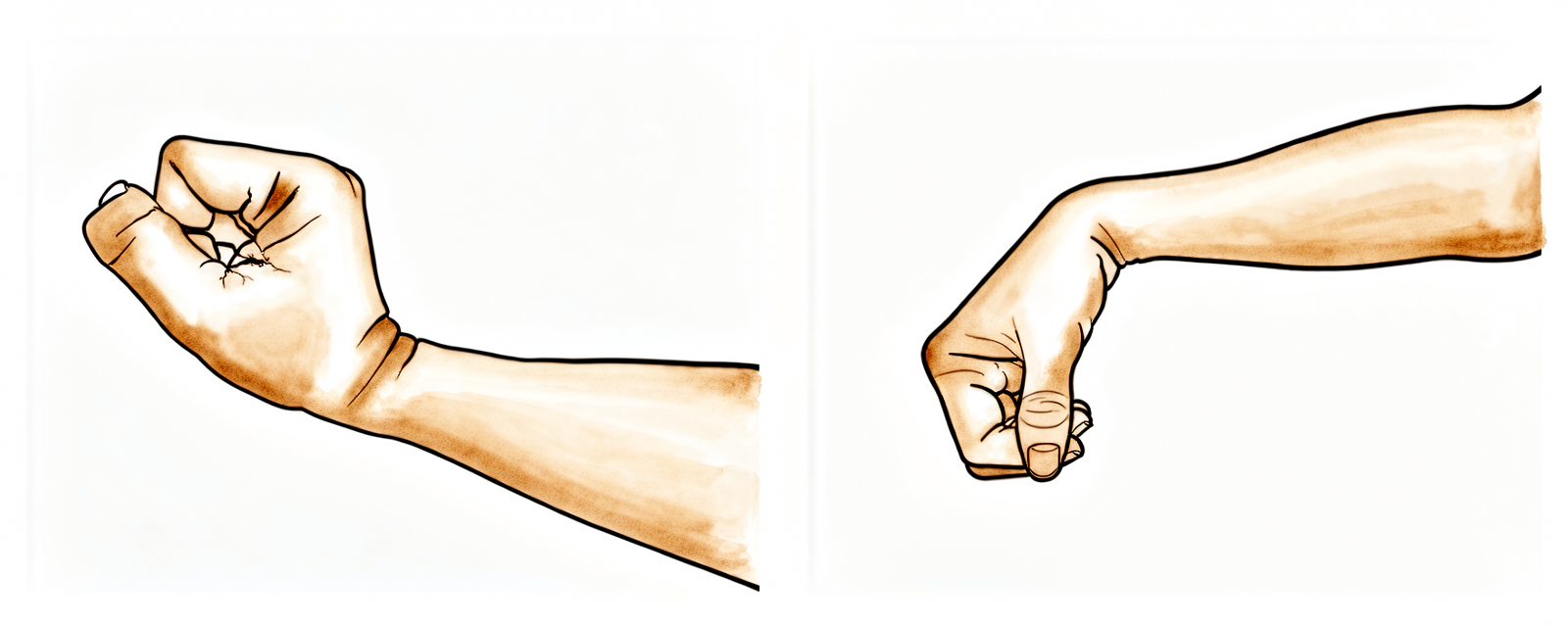
Movimento do punho (quando permitido)
Assim que o terapeuta da mão autorizar — geralmente poucas semanas após a cirurgia, dependendo do tipo de fratura e do método de fixação — comece a mover o punho suavemente: flexione-o para cima e para baixo, depois incline-o para os lados, sempre devagar e dentro de uma amplitude confortável e sem dor. NÃO force o movimento até o limite e NÃO tente realizar a flexão total para trás (extensão) nos primeiros dias. O terapeuta informará quando você pode começar e até onde pode ir.
10 vezes em cada direção, 2-3 vezes ao dia, somente após autorização.
Kieran Hirpara 4.0
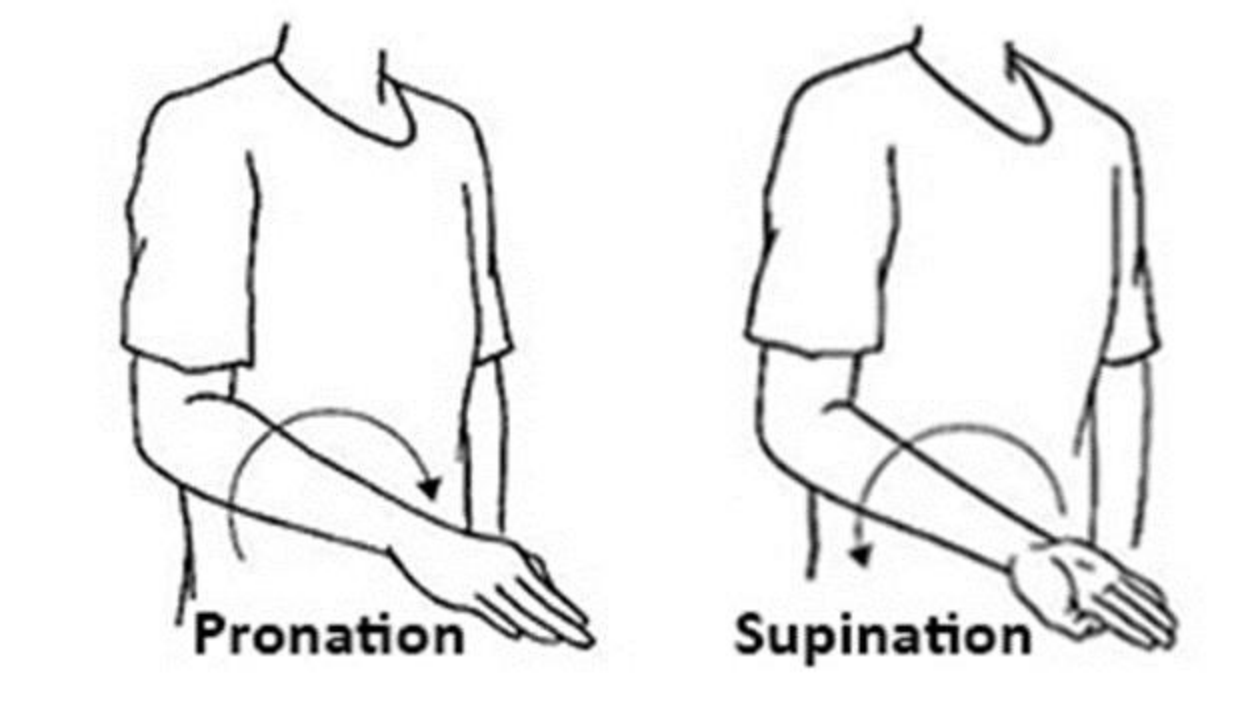
Rotação do antebraço (palma da mão para cima / palma da mão para baixo)
Com o cotovelo encostado ao corpo e dobrado em um ângulo reto, vire suavemente a palma da mão para cima, em direção ao teto, e depois para baixo, em direção ao chão. Faça isso de maneira lenta e tranquila. Esse movimento mantém o antebraço flexível e não sobrecarrega o osso escafoide; por isso, geralmente pode ser iniciado precocemente — siga as orientações do seu terapeuta de mão.
10 vezes em cada direção, 2-3 vezes ao dia.
Kieran Hirpara 4.0
Cuidados com as cicatrizes
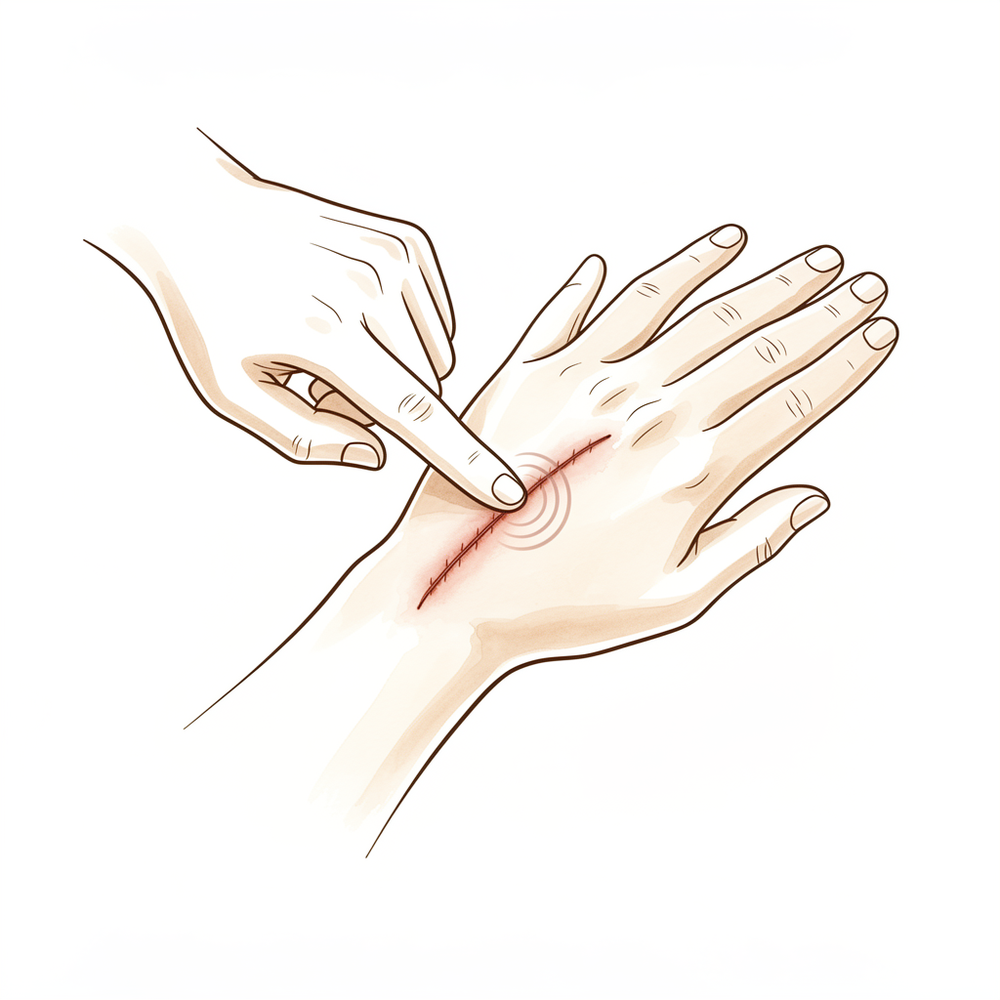
Após a ferida estar totalmente cicatrizada e sem crostas, massageie a cicatriz por um ou dois minutos com um pouco de hidratante sem perfume, fazendo pequenos círculos firmes. Isso mantém a cicatriz macia e menos sensível. Caso o parafuso tenha sido inserido através de um pequeno corte, a cicatriz será mínima; mesmo assim, esse cuidado continua sendo benéfico.
1-2 minutos, duas vezes ao dia, após a cicatrização da ferida.
Kieran Hirpara 4.0
Fortalecimento da preensão (após consolidação óssea)
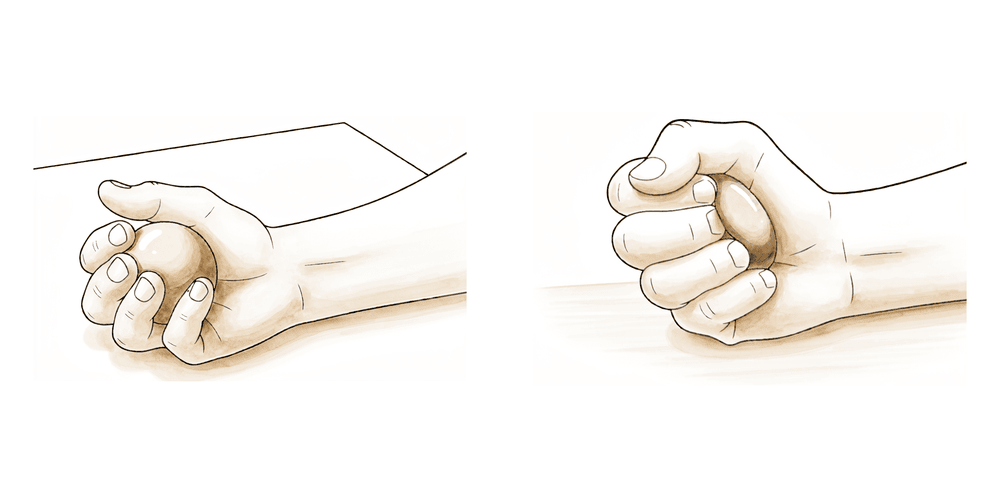
Um exercício posterior — somente após a consolidação da fratura e quando o terapeuta da mão iniciar o fortalecimento (geralmente não antes de 8 a 12 semanas, conforme confirmado por exames de imagem). Aperte uma bola macia ou massa terapêutica, mantenha a pressão por alguns instantes e depois relaxe. Prossiga de forma gradual. A força de preensão deve ser limitada até que o osso esteja completamente consolidado, pois apertar com muita força sobrecarrega o escafoide e o parafuso; além disso, a recuperação do escafoide é lenta.
Conforme orientação do seu terapeuta de mão (apenas após confirmação da consolidação óssea)
Estes são os exercícios contidos no seu folheto informativo. Comece a realizá-los somente sob orientação do Dr. Hirpara e do seu terapeuta ocupacional, respeitando sempre os limites e a amplitude de movimento que lhe foram indicados. Os exercícios iniciais visam manter os dedos, o polegar e o antebraço em movimento, sem sobrecarregar o osso escafóide em processo de cicatrização; movimentos suaves do punho devem ser introduzidos apenas quando o terapeuta autorizar. O fortalecimento da preensão faz parte de uma fase posterior e só deve ser iniciado após confirmação de que o osso já se uniu. Interrompa qualquer exercício que cause dor intensa no punho e informe imediatamente o seu terapeuta.
Seu protocolo clínico
O restante desta página descreve o protocolo clínico em etapas para a reabilitação após a fixação do escafoide com um parafuso de compressão sem cabeça. Esta seção deve ser entregue ao terapeuta de mão do paciente; cada fase começa com uma explicação simples, em linguagem acessível, sobre o que está ocorrendo. O escafoide cicatriza lentamente devido ao seu suprimento sanguíneo retrógrado precário; portanto, a progressão do tratamento depende da consolidação óssea e é condicionada à estabilidade da fixação e ao tipo de fratura: a fixação rígida com parafuso de uma fratura aguda na região da cintura permite movimentos de punho protegidos mais cedo, enquanto fraturas no polo proximal, não consolidações e casos com enxerto ósseo exigem um procedimento mais conservador.
Antes de iniciar o tratamento, verifique o relatório cirúrgico e o histórico médico do paciente, e consulte o cirurgião responsável sobre o padrão da fratura (na região da cintura ou no polo proximal), se a fratura foi aguda ou uma não consolidação, se foi utilizado enxerto ósseo, a estabilidade da fixação e o momento planejado para exames de imagem que confirmem a consolidação. O terapeuta de mão seguirá o plano adequado ao tipo específico de fratura e fixação. Os prazos abaixo são orientações típicas para uma fratura aguda na região da cintura, estável e fixada com parafuso; para fraturas no polo proximal, não consolidações ou casos com enxerto ósseo, recomenda-se uma progressão mais cautelosa.
Fase I – mobilização precoce protegida (semanas 0 a 2)
Nas primeiras semanas, deve-se proteger a ferida e a fixação, mantendo ao mesmo tempo a mobilidade da mão. O punho fica imobilizado em uma tala ou gesso curto; os dedos, o polegar e o antebraço podem mover-se livremente desde o primeiro dia. A avaliação da ferida costuma ser feita por volta da segunda semana, quando se inicia a terapia formal.
Para o seu fisioterapeuta:
Instruções e precauções - Imobilize o punho com uma tala ou gesso curto conforme orientação do cirurgião; mantenha-o seco; retire apenas com autorização médica - Realize imediatamente movimentos ativos completos de dedos, polegar, cotovelo e ombro para prevenir rigidez - Proibido realizar qualquer tipo de aperto, levantamento, suporte de peso ou empuxo através do punho - Evite extensão forçada ou além dos limites fisiológicos do punho
Manejo - Ferida: troque os curativos cirúrgicos conforme orientação; monitore sinais de infecção; avaliação da ferida por volta da 2ª semana - Edema: mantenha o membro elevado, realize bombeamento manual suave da mão e aplique gelo conforme necessário - Exercícios: flexão-extensão ativa dos dedos e polegar; movimentos de oposição do polegar; rotação suave do antebraço; mobilidade do ombro e cotovelo
Critérios para avançar para a fase seguinte - Ferida cicatrizada ou em processo de cicatrização; dor controlada; autorização do cirurgião para iniciar movimentos do punho
Fase II – mobilização protegida do punho (semanas 2 a 8, após comprovação da união óssea)
A partir de aproximadamente duas semanas (no caso de fratura aguda do punho estável e fixada com parafuso), inicia-se um movimento ativo suave do punho dentro de uma amplitude confortável e indolor, sob a proteção do parafuso. A amplitude de movimento é aumentada gradualmente; porém, a extensão até o limite da amplitude e qualquer tipo de carga ainda são evitados. Em casos de fraturas na região do polo proximal, não união óssea ou fixações com enxerto ósseo, mantém-se a imobilização protetora por mais tempo, iniciando-se a mobilização posteriormente, conforme orientação do cirurgião.
Para o seu terapeuta da mão:
Avaliações - Amplitude de movimento ativo do punho, dor, inchaço; avaliação da ferida/ Cicatrização; comunicação com o cirurgião sobre exames de imagem e estado da união óssea
Instruções e precauções - Iniciar movimentos ativos suaves de flexão-extensão do punho e desvio radial-ulnar dentro de uma amplitude indolor; aumentar gradualmente essa amplitude - Evitar extensão máxima ou forçada do punho e qualquer tipo de carga - Não realizar fortalecimento da preensão, não suportar cargas nem realizar atividades com resistência até que a união óssea seja confirmada - Manter a amplitude de movimento completa dos dedos e antebraço; iniciar o tratamento da cicatriz após a cicatrização
Manejo - Exercícios: movimentos ativos e assistidos de amplitude do punho dentro do limite do conforto; manter exercícios de amplitude dos dedos, polegar e antebraço; controle do edema e tratamento da cicatriz - Utilizar talas entre as sessões de exercícios no início desta fase, se indicado; a redução da imobilização deve seguir orientação do cirurgião
Critérios para avançar para a fase seguinte - União óssea comprovada por exames radiográficos (geralmente confirmada por TC), conforme avaliação do cirurgião; amplitude de movimento do punho confortável e controlada; dor mínima. Todos esses critérios devem ser atendidos antes de iniciar qualquer programa de fortalecimento.
Fase III – Fortalecimento e retorno às atividades (após confirmação da consolidação da fratura)
Uma vez que o cirurgião confirma que a fratura se consolidou (geralmente após 8 a 12 semanas no caso de fraturas agudas da região da cintura, e mais tarde para fraturas do polo proximal e não consolidações), inicia-se o fortalecimento, de forma gradual: primeiro exercícios de preensão e uso de massa de modelar; depois, fortalecimento progressivo do punho e do antebraço com resistência; por fim, exercícios com carga e específicos para esportes. O retorno a esportes de contato, colisão ou com carga é baseado em critérios clínicos e na consolidação da fratura; geralmente não ocorre antes de três a quatro meses, e muitas vezes mais tarde no caso de fraturas de maior risco.
Para o seu terapeuta da mão:
Avaliações - Força de preensão e pinça em comparação ao lado contralateral; amplitude de movimento do punho; resposta à carga em termos de dor e inchaço; testes funcionais e específicos para esportes/trabalho, conforme apropriado
Instruções e precauções - Inicie o fortalecimento de preensão e uso de massa de modelar somente após confirmação da consolidação pela cirurgião; aumente a carga gradualmente. - Adicione fortalecimento progressivo do punho e do antebraço com resistência; depois, exercícios com carga controlada e em cadeia fechada. - O retorno a esportes de contato/colisão/com carga depende da consolidação da fratura e de critérios clínicos; geralmente não ocorre antes de aproximadamente 3-4 meses, e mais tarde no caso de fraturas do polo proximal ou não consolidações. Em atletas, sob orientação cirúrgica, pode-se utilizar uma tala ou gesso protetor para um retorno supervisionado mais precoce.
Tratamento - Exercícios: fortalecimento progressivo de preensão/uso de massa de modelar → fortalecimento do punho e antebraço com resistência (faixas elásticas → pesos leves) → exercícios com carga e específicos para esportes; mantenha também os exercícios de mobilidade, se ainda necessários. - Considere a alta terapêutica quando a força muscular estiver quase simétrica e houver recuperação funcional adequada. - Encaminhe novamente ao cirurgião responsável caso a recuperação estagne, a dor persista ou haja dúvidas quanto à consolidação da fratura (considerar atraso na consolidação, não consolidação ou necrose avascular).
Critérios para retorno ao esporte - Consolidação da fratura confirmada pelo cirurgião; amplitude de movimento completa e sem dor; força de preensão quase simétrica; capacidade de realizar cargas e movimentos específicos do esporte sem dor.
Voltando ao trabalho e às atividades
O uso leve e cotidiano da mão (comer, escrever, vestir-se, cuidados pessoais leves) é incentivado desde o início, desde que feito dentro do limite do conforto e sem exigir apertar, levantar objetos ou forçar o punho. Trabalhos de escritório e outras atividades leves que não exigem esforço físico geralmente podem ser retomados precocemente, às vezes já na primeira ou segunda semana, com tarefas adaptadas; já os trabalhos mais pesados que sobrecarregam o punho devem ser adiados até que a fratura tenha consolidado, sendo então retomados gradualmente.
Como é necessário ter controle seguro do veículo, não dirija enquanto estiver usando gesso ou tala que impeçam o controle seguro do volante, ou enquanto o punho não permitir manobras e apertos seguros. A volta à direção só ocorre após a retirada do gesso restritivo e quando você puder controlar o carro com confiança e segurança, conforme confirmado na consulta de acompanhamento. Planeje contar com ajuda para o transporte nas primeiras semanas.
Atividades que exigem carga sobre o punho (apertar com força, levantar, empurrar, pressionar ou puxar) só devem ser retomadas após o cirurgião confirmar a consolidação óssea, sendo então introduzidas gradualmente. O retorno a esportes de contato, com colisões e que envolvem carga física depende da consolidação da fratura; geralmente só é possível após três a quatro meses, e, em casos de fraturas na região proximal do polegar ou não consolidação, ainda mais tarde. Essa volta é baseada na comprovação da cicatrização, na recuperação de amplitude de movimento sem dor e na obtenção de força de preensão adequada e simétrica, conforme avaliação do Dr. Hirpara e do seu terapeuta de mão – e não apenas pelo tempo decorrido.
Após seguir este protocolo
Este protocolo complementa as orientações gerais de recuperação fornecidas pela clínica: consulte controle da dor pós-operatória, cuidados com a ferida e tratamento das cicatrizes. O plano em fases descrito acima baseia-se nas diretrizes de reabilitação publicadas para casos de fixação do escafoide; sua recuperação será acompanhada individualmente pelo Dr. Hirpara e pelo seu fisioterapeuta, considerando o tipo de fratura, o método de fixação e o processo de cicatrização do seu punho.
Evidence & references
This is the clinical evidence summary written for health professionals. It is technical, and it lists the research this page was built from. You do not need to read it to understand your treatment or to make a decision about it.
Scaphoid Fixation — Fracture Fixation Outcomes & Post-operative Rehabilitation (Headless Compression Screw ± Bone Graft)
Topic scope: post-operative rehabilitation after internal fixation of a scaphoid fracture with a buried headless compression screw — percutaneous or open, for an acute fracture or for a nonunion (the latter usually with bone graft, e.g. distal-radius cancellous or vascularised graft). This is a fixation of a slow-healing bone, not a soft-tissue repair: rehabilitation is paced by bone union rather than by tendon/ligament healing windows, and the central tension is between the early-motion advantage that rigid screw fixation buys and the scaphoid's biological tendency to heal slowly and, when neglected, to fail to unite.
Defining principle of the rehab here: the scaphoid has a tenuous retrograde blood supply (it fills from distal to proximal), so it heals slowly and the proximal pole is at risk of delayed union, nonunion and avascular necrosis. A headless compression screw compresses and stabilises the fracture, which is what permits earlier protected wrist motion than a cast alone and earlier return to work/sport in suitable fractures. But the construct does not change the bone's biology: grip, loading and contact sport remain union-gated — held back until the surgeon confirms healing, commonly on CT. Progression is therefore fixation- and fracture-dependent: a stable, screw-fixed acute waist fracture mobilises early; a proximal-pole fracture, a nonunion, or a bone-grafted case is treated more cautiously. The hand therapist follows the plan for the specific fracture and fixation.
A. FIXATION OUTCOMES (acute fixation, and nonunion fixation with graft)
Headless compression screw fixation is a reliable operation with high union rates; the principal debates are who should be fixed acutely (vs cast) and how aggressively to mobilise, not whether the screw works.
- Headless compression screws give high union rates and earlier mobilisation. Internal fixation of scaphoid fractures with headless compression screws achieves high union in both non-displaced and displaced fractures, with the added benefits of earlier mobilisation and earlier return to work and sport compared with cast treatment [Fowler & Ilyas, Hand Clin 2010; Fowler & Hughes, Clin Sports Med 2015]. Moderate (narrative/technique reviews + cohort).
- Percutaneous screw fixation unites faster than cast for acute waist fractures. A randomised trial of 60 acute scaphoid-waist fractures found percutaneous Acutrak screw fixation reached union significantly faster than cast immobilisation (~9.2 vs ~13.9 weeks), with a trend to fewer nonunions [Bond et al., J Bone Joint Surg Br 2008]. Moderate–strong (RCT, single-centre).
- But surgery vs cast for minimally displaced waist fractures gives equivalent long-term function at the cost of more complications. The pragmatic multicentre SWIFFT RCT (bicortical, ≤2 mm displaced waist fractures) found no meaningful difference in wrist function between early surgical fixation and cast immobilisation (with fixation reserved for the cast fractures that failed to unite), while surgery carried more complications. Systematic reviews/meta-analyses concur: surgery favours union but raises complication risk, with ROM, grip and arthritis rates not significantly different [Dias et al., SWIFFT, Lancet 2020; Alshryda et al., The Surgeon 2012; Modi et al., Injury 2009; Rhemrev et al., Injury 2009]. Strong (RCT + SRs).
- Nonunion fixation with bone graft restores union in most cases but heals slower. Scaphoid nonunions treated with screw fixation and bone grafting (non-vascularised distal-radius, vascularised distal-radius, or two-screw constructs) achieve union in the large majority, with proximal-pole and avascular cases the hardest. Acute fixation unites ~100% vs chronic/nonunion ~87% in pooled experience [Garcia et al., J Hand Surg Am 2014; Ribak et al., Int Orthop 2009; Kim et al., Orthop Traumatol Surg Res 2018; Wu et al., Bone Joint J 2022; Simonian & Trumble, JAAOS 1994]. Moderate (cohort/SR).
- The elite/competitive athlete is a distinct decision. Early screw fixation is often favoured in athletes to compress the fracture, shorten immobilisation and enable earlier (often splinted) return to play, accepting the surgical risk for the time advantage [Belsky et al., Hand Clin 2012; Fowler & Hughes, Clin Sports Med 2015]. Moderate (expert/cohort).
B. REHABILITATION / THERAPY EVIDENCE
The rehab questions are (1) how soon to mobilise the wrist after rigid fixation, (2) when to permit loading/grip, and (3) when to confirm union and clear sport. The evidence supports early protected motion under the screw but keeps strengthening and sport union-gated, with proximal-pole/nonunion cases handled more conservatively.
- Rigid screw fixation permits earlier protected wrist motion than cast-alone. The mechanical rationale is that compression across the fracture confers stability, allowing the wrist to begin gentle motion while the bone unites; reported acute-fixation pathways start gentle mobilisation early with a ~2-week wound/therapy review and ~6-week radiographic check [Fowler & Ilyas, Hand Clin 2010; Fowler & Hughes, Clin Sports Med 2015]. Moderate (technique/expert).
- Union is the gate for loading — and it is slow and imaging-confirmed. Reported time to union ranges ~7–16 weeks depending on healing criteria, fracture site and population (athletes vs general), and CT is frequently used to confirm union before clearing loading and sport because plain films overestimate healing [Ecker, Hand Clin 2017 (scaphoid union); Fowler & Hughes, Clin Sports Med 2015]. Moderate.
- Proximal-pole fractures, nonunions and grafted cases progress more slowly. The proximal pole's poor vascularity means later union and a more cautious return; arthroscopic and open grafting series for nonunion report union but over longer timeframes [Wu et al., Bone Joint J 2022; Shih et al., J Orthop Surg Res 2023; Garcia et al., J Hand Surg Am 2014]. Moderate (cohort).
- Percutaneous/antegrade technique is a safe route that supports the early-motion pathway. The percutaneous antegrade approach minimises soft-tissue insult and supports the earlier-mobilisation rationale in suitable fractures [Weinberg et al., Injury 2009]. Moderate (cohort).
Recovery trajectory (expected, evidence-anchored)
| Phase | Window | Restraint | Hand use / therapy focus | Strength / load | Notes |
|---|---|---|---|---|---|
| I — Protected early motion | Week 0–2 | Wrist splint/short cast; no wrist loading | Immediate active finger/thumb/elbow/shoulder ROM; oedema control; wound review ~2 wk | None through the wrist | Hand kept supple; scaphoid undisturbed |
| II — Protected wrist mobilisation | Week 2–8 (union-gated) | No grip/loading; avoid end-range/forced extension | Gentle active wrist flexion-extension and deviation in pain-free range; gradual progression; forearm rotation; scar massage once healed | No resisted/grip work | For stable, screw-fixed acute waist fractures. Proximal-pole/nonunion/grafted: immobilise longer, mobilise later |
| III — Strengthening & return | After confirmed union (commonly ~8–12 wk acute waist; later for proximal pole/nonunion) | Restrictions lifted on union | Grip/putty → progressive resisted wrist/forearm → loaded & sport-specific | Graded to symmetrical grip | Contact/load sport union-gated, typically not before ~3–4 months, later for high-risk fractures; CT often confirms union |
(Phase windows are typical guides for a stable screw-fixed acute waist fracture, not trial-derived deadlines; proximal-pole, nonunion and bone-grafted fixations are paced more conservatively by the surgeon and hand therapist.)
C. KEY CONTROVERSIES / EVIDENCE QUALITY
- Screw fixation vs cast for the acute minimally displaced waist fracture. Fixation unites faster (Bond RCT: ~9 vs ~14 weeks) and returns athletes/workers sooner, but SWIFFT and meta-analyses show equivalent long-term wrist function with more complications from surgery for minimally displaced waist fractures. The defensible position is selective fixation (displacement, proximal pole, high-demand athlete/worker, patient preference) rather than routine surgery for every undisplaced waist fracture [Dias SWIFFT Lancet 2020; Bond JBJS Br 2008; Alshryda Surgeon 2012; Modi/Rhemrev Injury 2009]. Strong evidence of functional equivalence; moderate on the complication trade-off.
- Early motion vs continued immobilisation after fixation. Rigid compression is the rationale for earlier protected wrist motion than cast-alone, and reported pathways mobilise early — but there is no high-certainty trial defining the optimal mobilisation schedule, so timing is surgeon/ therapist protocol and fracture-dependent. Weak–moderate (mechanism strong, scheduling consensus).
- When is it united — and what confirms it. Time to union is wide (~7–16 weeks) and plain radiographs overestimate healing; CT is commonly used to confirm union before clearing loading and sport, which is the true gate for progression [Ecker Hand Clin 2017]. Moderate.
- Return-to-sport timing. Union-gated and fracture-dependent; competitive athletes may return earlier in a protective splint/cast at surgeon discretion, accepting risk, whereas proximal-pole and nonunion cases return later. Reported real-world return is typically months, not weeks [Belsky Hand Clin 2012; Fowler & Hughes Clin Sports Med 2015]. Moderate (expert/cohort).
- Nonunion and proximal-pole biology. The retrograde blood supply drives delayed union, nonunion and AVN risk; grafting (cancellous, corticocancellous, or vascularised) addresses biology but lengthens the timeline. Persistent pain or doubtful union warrants reassessment rather than more loading [Garcia JHS Am 2014; Ribak Int Orthop 2009; Kim OTSR 2018; Wu BJJ 2022; Simonian & Trumble JAAOS 1994]. Moderate.
D. EVIDENCE STRENGTH FLAGS (summary)
- STRONG (RCT / SR): equivalent long-term wrist function from surgery vs cast for minimally displaced acute waist fractures, with more complications from surgery (SWIFFT + meta-analyses); faster union with percutaneous screw fixation than cast (Bond RCT, ~9 vs ~14 weeks).
- MODERATE: high union rates and earlier mobilisation/return with headless compression screws; nonunion union rates with screw + bone graft (acute ~100% vs chronic ~87%); wide ~7–16-week union window and CT confirmation of union; athlete-specific early/splinted return.
- WEAK / CONSENSUS: the specific early protected-motion, union-gated phase schedule (mechanistically rationalised by rigid compression; exact timings are surgeon/hand-therapist protocol and fracture-dependent, not trial-derived); precise return-to-sport months.
CITATIONS
RAG corpus (180,000+ Orthopaedic articles)
- Fowler JR, Ilyas AM. Headless compression screw fixation of scaphoid fractures. Hand Clin. 2010. PMID: 20670800. DOI: 10.1016/j.hcl.2010.04.005
- Fowler JR, Hughes TB. Scaphoid fractures. Clin Sports Med. 2015. PMID: 25455395. DOI: 10.1016/j.csm.2014.09.011
- Belsky MR, Leibman MI, Ruchelsman DE. Scaphoid fracture in the elite athlete. Hand Clin. 2012. PMID: 22883862. DOI: 10.1016/j.hcl.2012.05.005
- Ecker J. Scaphoid union. Hand Clin. 2017. PMID: 28991580. DOI: 10.1016/j.hcl.2017.07.001
- Bond CD, Shin AY, McBride MT, Dao KD. Percutaneous screw fixation versus conservative treatment for fractures of the waist of the scaphoid: a prospective randomised study. J Bone Joint Surg Br. 2008. PMID: 18160502. DOI: 10.1302/0301-620X.90B1.19767
- Alshryda S, Shah A, Odak S, et al. Acute fractures of the scaphoid bone: systematic review and meta-analysis. The Surgeon. 2012. PMID: 22595773. DOI: 10.1016/j.surge.2012.03.004
- Modi CS, Nancoo T, Powers D, et al. Operative versus nonoperative treatment of acute undisplaced and minimally displaced scaphoid waist fractures — a systematic review. Injury. 2009. PMID: 19195652. DOI: 10.1016/j.injury.2008.07.030
- Rhemrev SJ, van Leerdam RH, Ootes D, et al. Non-operative treatment of non-displaced scaphoid fractures may be preferred. Injury. 2009. PMID: 19324359. DOI: 10.1016/j.injury.2008.10.028
- Weinberg AM, Pichler W, Grechenig S, et al. The percutaneous antegrade scaphoid fracture fixation — a safe method? Injury. 2009. PMID: 19380132. DOI: 10.1016/j.injury.2008.12.016
- Garcia RM, Leversedge FJ, Aldridge JM, et al. Scaphoid nonunions treated with 2 headless compression screws and bone grafting. J Hand Surg Am. 2014;39(7). PMID: 24793227. DOI: 10.1016/j.jhsa.2014.02.030
- Ribak S, Medina CEG, Mattar R, et al. Treatment of scaphoid nonunion with vascularised and nonvascularised dorsal bone grafting from the distal radius. Int Orthop. 2009. PMID: 19730861. DOI: 10.1007/s00264-009-0862-6
- Kim J, Yoon J, Baek H. Corticocancellous bone graft vs cancellous bone graft for the management of unstable scaphoid nonunion. Orthop Traumatol Surg Res. 2018. PMID: 29258960. DOI: 10.1016/j.otsr.2017.11.011
- Wu F, Zhang Y, Liu B. Arthroscopic bone graft and fixation for proximal scaphoid nonunions. Bone Joint J. 2022. PMID: 35909374. DOI: 10.1302/0301-620X.104B8.BJJ-2022-0198.R1
- Shih Y, Wu C, Shih J. Arthroscopic treatment of stable nonunion, unstable nonunion, or nonunion of the scaphoid with early degenerative radioscaphoid arthritis. J Orthop Surg Res. 2023. PMID: 36804865. DOI: 10.1186/s13018-023-03609-8
- Simonian PT, Trumble TE. Scaphoid nonunion. J Am Acad Orthop Surg. 1994. PMID: 10709008. DOI: 10.5435/00124635-199407000-00001
Scaphoid fixation / rehabilitation literature (URLs)
- Dias JJ, Brealey SD, Fairhurst C, et al. Surgery versus cast immobilisation for adults with a bicortical fracture of the scaphoid waist (SWIFFT): a pragmatic, multicentre, open-label, randomised superiority trial. Lancet. 2020. DOI: 10.1016/S0140-6736(20)30931-4. https://doi.org/10.1016/S0140-6736(20)30931-4
- SWIFFT protocol — Scaphoid Waist Internal Fixation for Fractures Trial. PMC. https://www.ncbi.nlm.nih.gov/pmc/articles/PMC4893284/
- Bond CD, Shin AY, McBride MT, Dao KD. Percutaneous screw fixation versus conservative treatment for fractures of the waist of the scaphoid. J Bone Joint Surg Br. 2008. PubMed. https://pubmed.ncbi.nlm.nih.gov/18160502/
- The headless compression screw — technical challenges in scaphoid fracture fixation. PMC. https://pmc.ncbi.nlm.nih.gov/articles/PMC4796528/
- Arthroscopic-assisted screw fixation of scaphoid waist fractures vs conservative treatment — randomised trial, minimum 4-year follow-up. PubMed. https://pubmed.ncbi.nlm.nih.gov/25913660/
- Non-operative treatment versus percutaneous fixation for minimally displaced scaphoid waist fractures in high-demand young manual workers. PMC. https://pmc.ncbi.nlm.nih.gov/articles/PMC4244556/