Patients › Rehabilitation
Liberação capsular
Rehabilitation after arthroscopic capsular release for frozen shoulder — early in-hospital program and the outpatient phases that keep the range won at surgery.
Este protocolo descreve a reabilitação após uma liberação capsular artroscópica realizada pelo Dr. Kieran Hirpara no Mater Private Hospital Rockhampton, abrangendo tanto os cuidados no hospital quanto as etapas nas semanas e meses seguintes. Leve esta página ou seu PDF à sua primeira sessão de fisioterapia para garantir que a reabilitação seja coordenada adequadamente. Seu fisioterapeuta guiará seu progresso individualmente através das fases abaixo, conforme a mobilidade do seu ombro.
Caso tenha alguma dúvida ou preocupação quanto à ferida cirúrgica, entre em contato com o consultório. Geralmente é útil tirar uma foto da ferida e enviá-la por e-mail para análise.
O que esperar
A liberação capsular é uma cirurgia indicada para ombros rígidos (ombro congelado), e isso muda completamente a abordagem da reabilitação. Na maioria das cirurgias de ombro, algo é reparado — como um tendão ou um ligamento rompido — e o objetivo inicial é proteger esse reparo, por isso o paciente usa uma tipóia e limita os movimentos. Esta cirurgia é o oposto disso: nada foi suturado e não há nada a ser protegido. O cirurgião liberou a cápsula articular contraída e cicatricial e movimentou o ombro em toda a sua amplitude enquanto o paciente estava sob anestesia; portanto, o resultado da cirurgia é justamente essa mobilidade. A partir do momento em que o paciente acorda, a meta da reabilitação é manter essa mobilidade antes que o ombro volte a ficar rígido.
Isso significa que não há período de proteção nem restrições de movimento. O paciente começa a movimentar o ombro imediatamente, tanto por conta própria quanto usando o outro braço para auxiliar; além disso, deve manter essa amplitude de movimento em todas as direções, várias vezes ao dia.
Os exercícios envolvem três tipos de movimentos; sua equipe médica indicará quais se aplicam a você:
- Movimento passivo: o ombro permanece totalmente relaxado, enquanto o outro braço, uma vara ou um sistema de polias realiza todo o movimento.
- Movimento ativo-assistido: o paciente move o braço por conta própria, com alguma ajuda do outro braço ou de algum objeto.
- Movimento ativo: o paciente move o braço por sua própria força, sem nenhum auxílio.
Por que não se usa tipoia
Após a liberação capsular, não há necessidade de tipoia para proteger a região, e manter o ombro imóvel acaba sendo contraproducente. Se deixado em repouso, o ombro recém-libertado simplesmente volta a ficar rígido. Essa re-rigidez é a principal razão pela qual a cirurgia pode não atingir os resultados esperados; porém, pode ser amplamente evitada com movimentos precoces e frequentes.
Portanto, ao contrário do que acontece após uma reparação, não é necessário dormir com tipoia, não se deve manter o braço imóvel, e não há nenhum movimento proibido. Você deve usar o braço livremente e ampliar sua amplitude de movimento em todas as direções, inclusive girando o braço para fora, já a partir do primeiro dia. A tipoia simples é oferecida apenas para conforto a curto prazo e para evitar que o braço sofra impactos durante atividades diárias; porém, use-a o mínimo possível e não permita que ela o leve a manter o ombro parado.
Pontos principais
- Mantenha os movimentos. Comece desde já a usar o braço para tarefas cotidianas como lavar, vestir-se e comer. A movimentação ajuda a manter a amplitude que foi recuperada na cirurgia.
- Estenda a amplitude de movimento em todas as direções. Estique até sentir um desconforto firme, mas não dor intensa; leve o ombro ao seu limite em todos os planos, incluindo a rotação externa do braço. Após esta cirurgia, não há restrições quanto aos limites de movimento.
- Faça alongamentos pequenos e frequentes. Um programa de alongamento curto, realizado várias vezes ao dia, é mais eficaz do que uma única sessão longa. A rigidez tende a retornar entre as sessões; por isso, a frequência é importante.
- Controle a dor para conseguir se mover. Tome analgésicos antes dos exercícios e das sessões de fisioterapia. O bom controle da dor é essencial para permitir os alongamentos. Muitas pessoas acham útil usar calor antes do alongamento e gelo depois.
- Faça fisioterapia com frequência. Nos primeiros seis semanas, procure fazer pelo menos duas sessões por semana. Leve esta página consigo na sua primeira consulta.
- Não dirija por seis semanas. Isso vale para qualquer cirurgia no ombro; mesmo que você retire a tipoia quase imediatamente, seu cirurgião só autorizará a direção na avaliação dos seis semanas.
Geralmente, um esteroide é injetado na articulação durante a cirurgia para reduzir a inflamação e a tendência à rigidez posterior.
No hospital — os seus primeiros exercícios
Kieran Hirpara 4.0
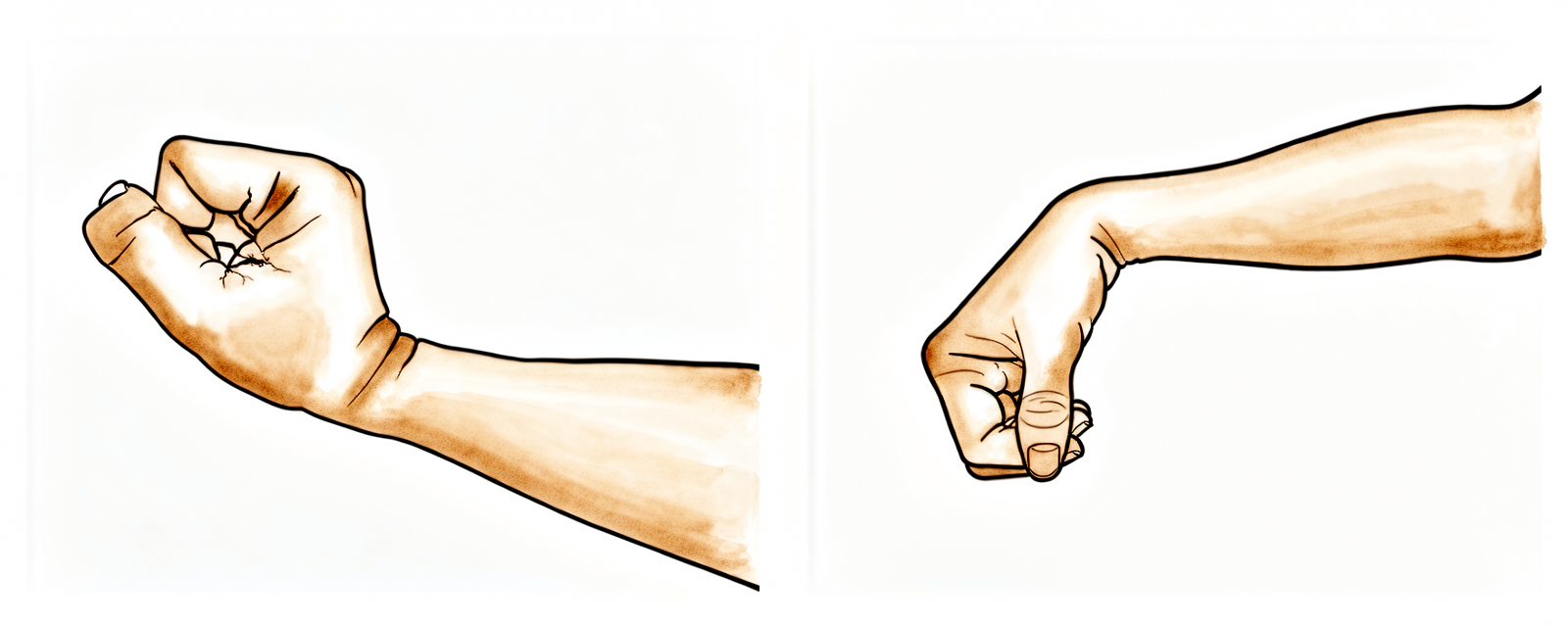
Movimento do punho
Mantenha a mão em movimento, dobrando o punho para a frente, para trás e para os lados.
10 vezes, 3 vezes por dia.
Kieran Hirpara 4.0
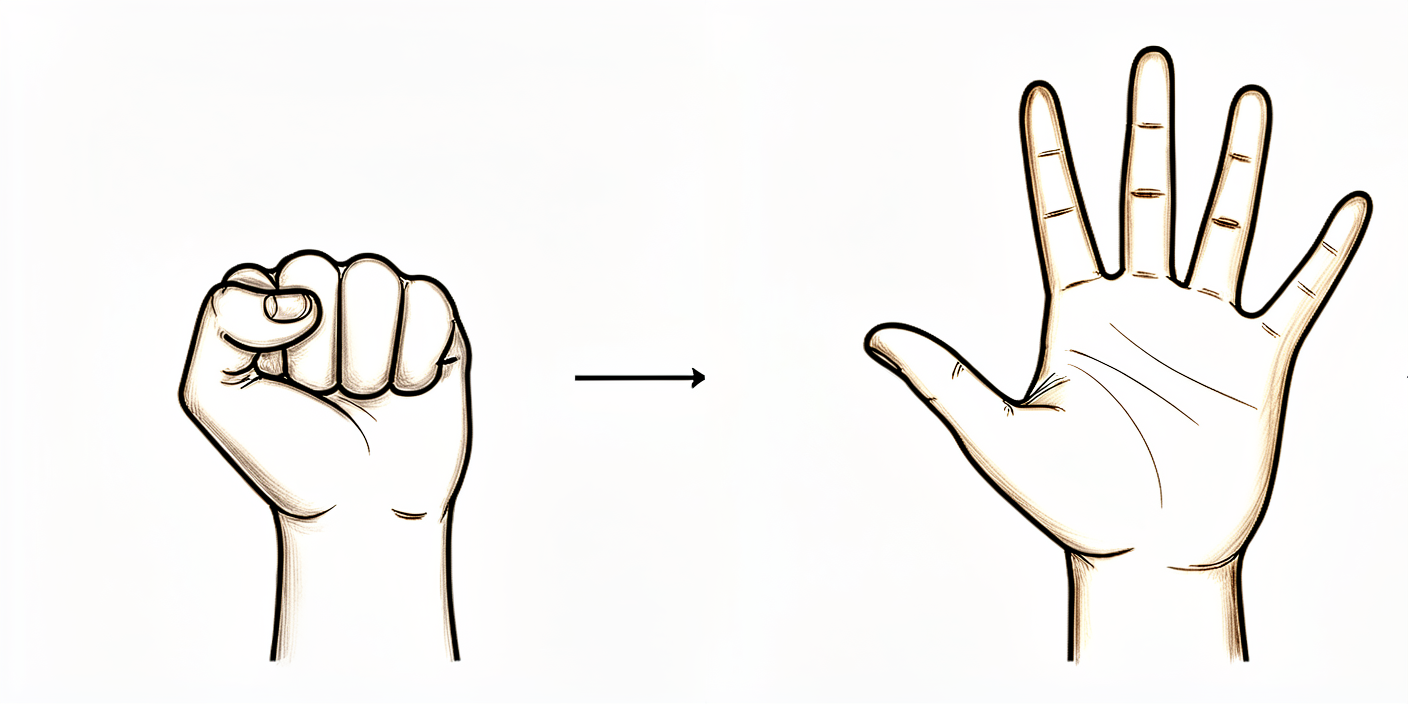
Abrir e fechar a mão
Mantenha a mão e os dedos em movimento, abrindo e fechando-os ou apertando uma bola macia.
10 vezes, 3 vezes por dia.
Kieran Hirpara 4.0
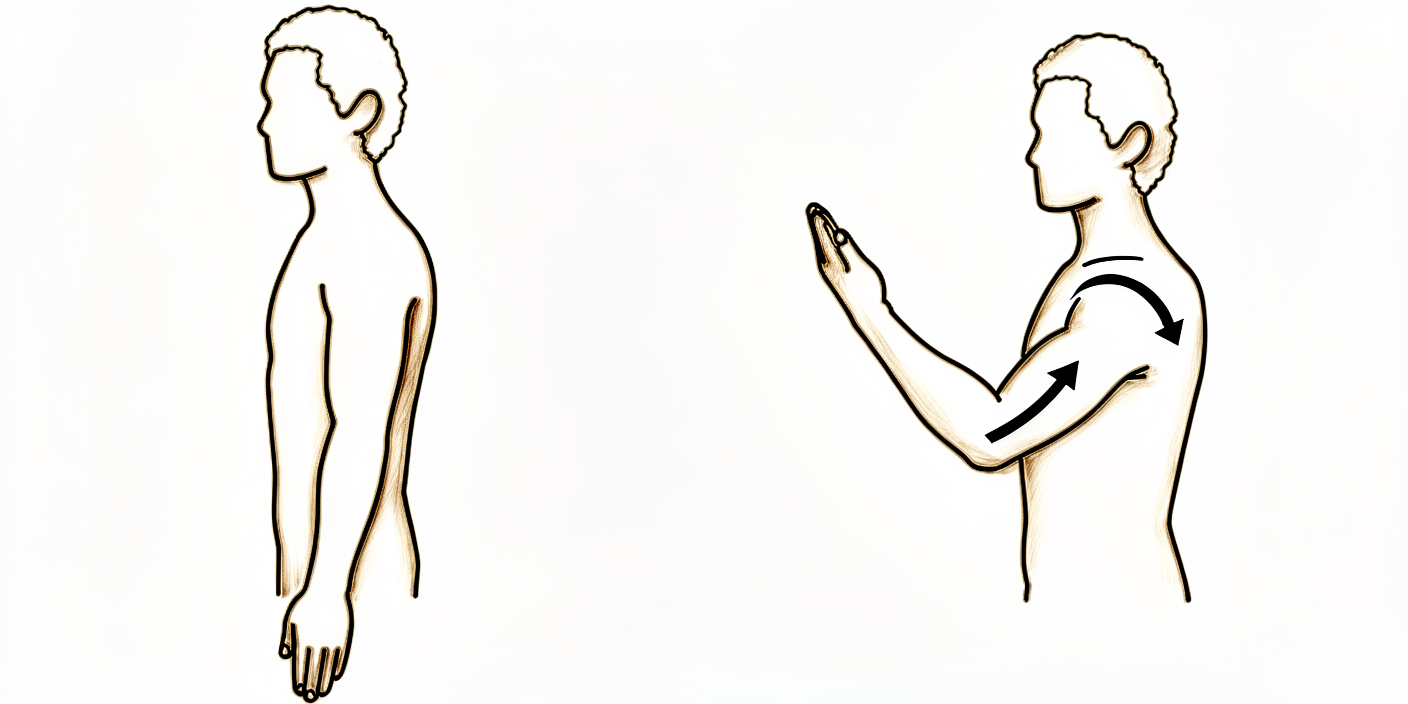
Flexão do cotovelo
Flexione e estenda o cotovelo.
10 vezes, 3 vezes por dia.
Kieran Hirpara 4.0
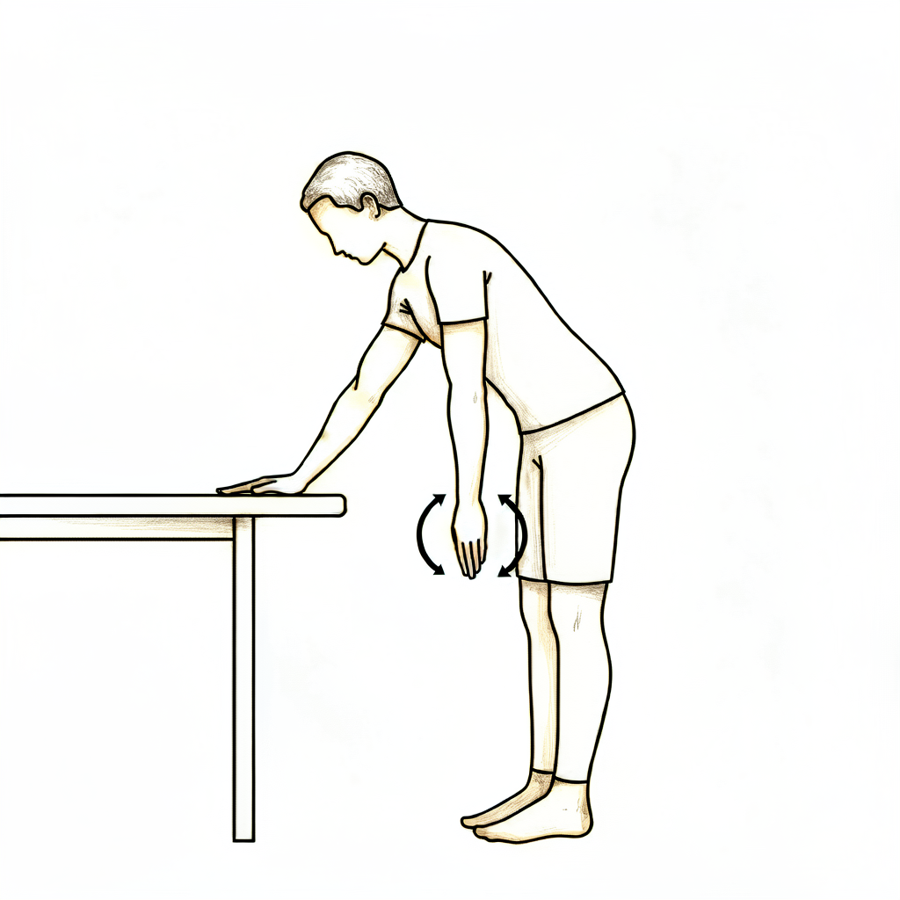
Pêndulos
Este é um exercício passivo e relaxante. Incline-se para a frente e deixe o braço pendurado, completamente relaxado. Use o movimento do corpo para balançar suavemente o braço em pequenos círculos, no sentido horário e anti-horário, para frente e para trás. Deixe que o peso do braço faça o trabalho, mantendo os músculos do ombro relaxados.
Cerca de 30 segundos em cada direção, 3 vezes por dia.
Kieran Hirpara 4.0
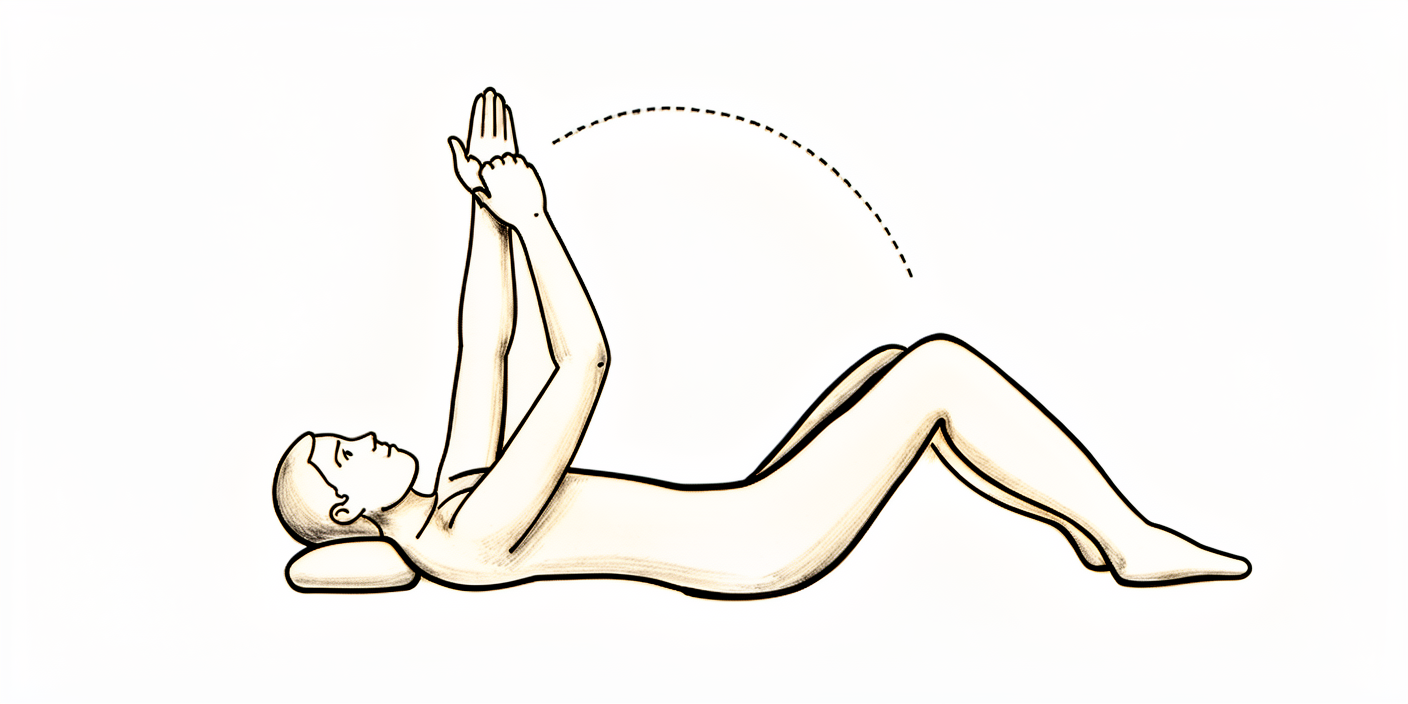
Flexão anterior assistida (deitado)
Se preferir, deite-se de costas e segure uma vara (ou uma toalha enrolada) com as duas mãos. Use o braço saudável para levantar o braço operado acima da cabeça, até onde for confortável, e depois abaixe-o lentamente. A cada vez, faça um movimento de alongamento firme.
10 vezes, 3 vezes por dia.
Kieran Hirpara 4.0
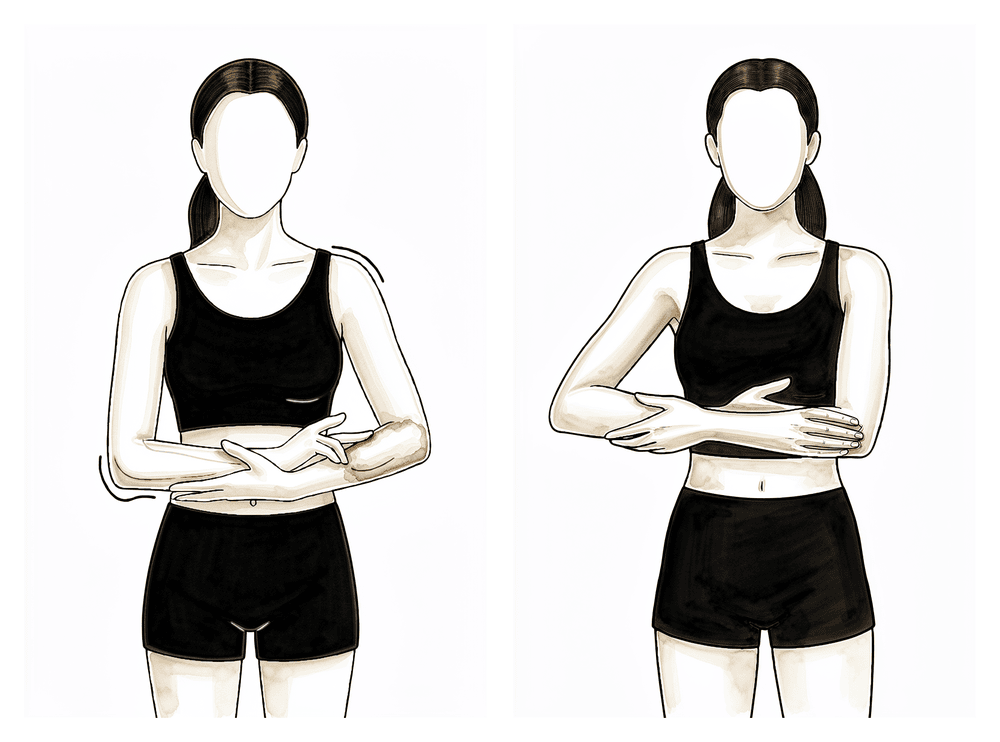
Abdução assistida (tipo “berço”)
Segure o braço operado com o outro braço, apoiando-o sob o cotovelo, e balance-o suavemente para o lado e para trás, como se estivesse embalando um bebê. A cada vez, estique-o firmemente para o lado.
10 vezes, 3 vezes por dia.
Kieran Hirpara 4.0
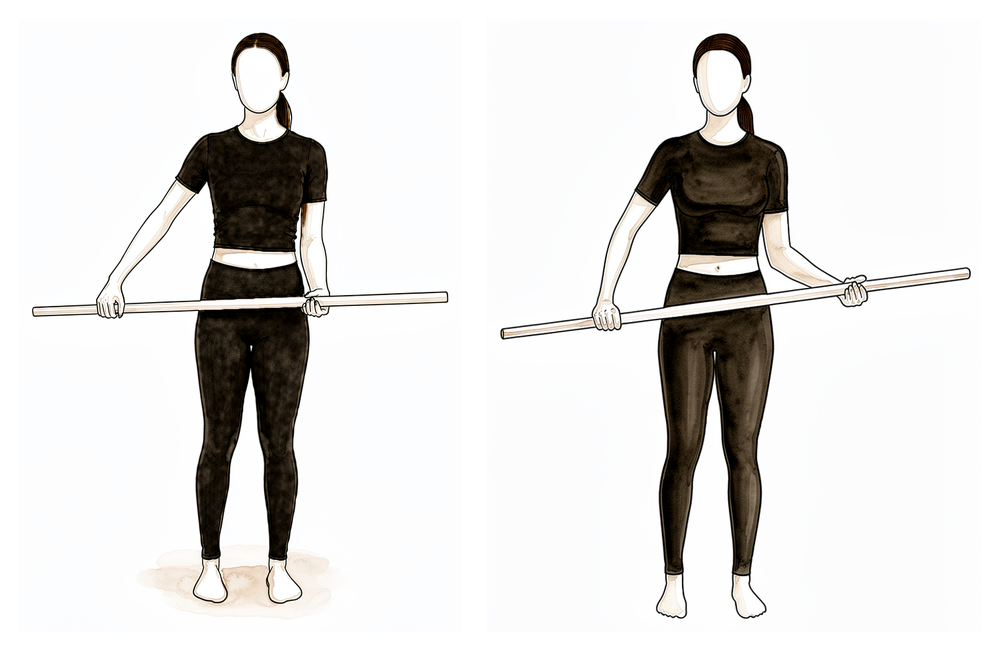
Rotação externa assistida com uma vara
Deite-se de costas, com o cotovelo junto ao corpo e dobrado a 90 graus. Segure uma vara com as duas mãos e use o braço saudável para empurrar a mão do braço operado para fora, fazendo a rotação do ombro. Vá até atingir um alongamento firme: após esta cirurgia, não há limite para até onde você pode esticar, portanto aproveite para aumentar a amplitude de movimento.
10 vezes, 3 vezes por dia.
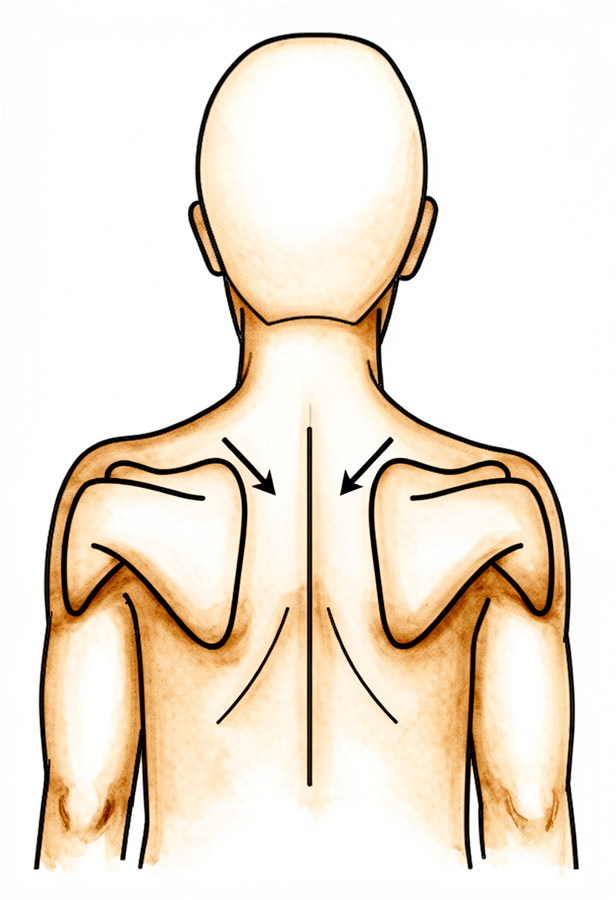
Kieran Hirpara 4.0
Ativação do trapézio inferior
Aperte as escápulas para baixo e para junto uma da outra, mantenha a posição e depois relaxe.
Mantenha por 5 segundos, 5 vezes; repita 3 vezes ao dia.
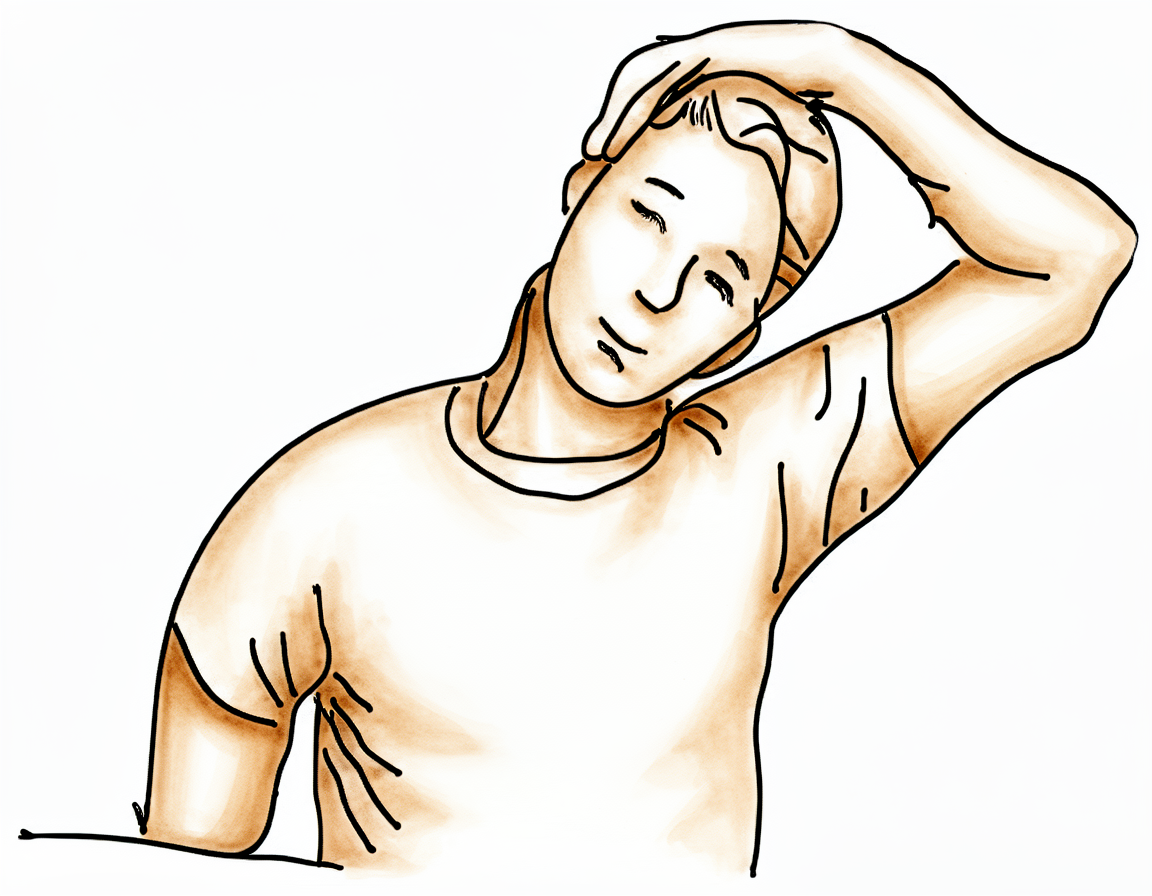
Kieran Hirpara 4.0
Alongamento do trapézio superior
Use o seu braço saudável para levar a orelha suavemente em direção ao ombro, afastando-a do lado operado, até sentir um alongamento na lateral do pescoço.
Mantenha por 10 segundos, 3 vezes; repita 3 vezes por dia.
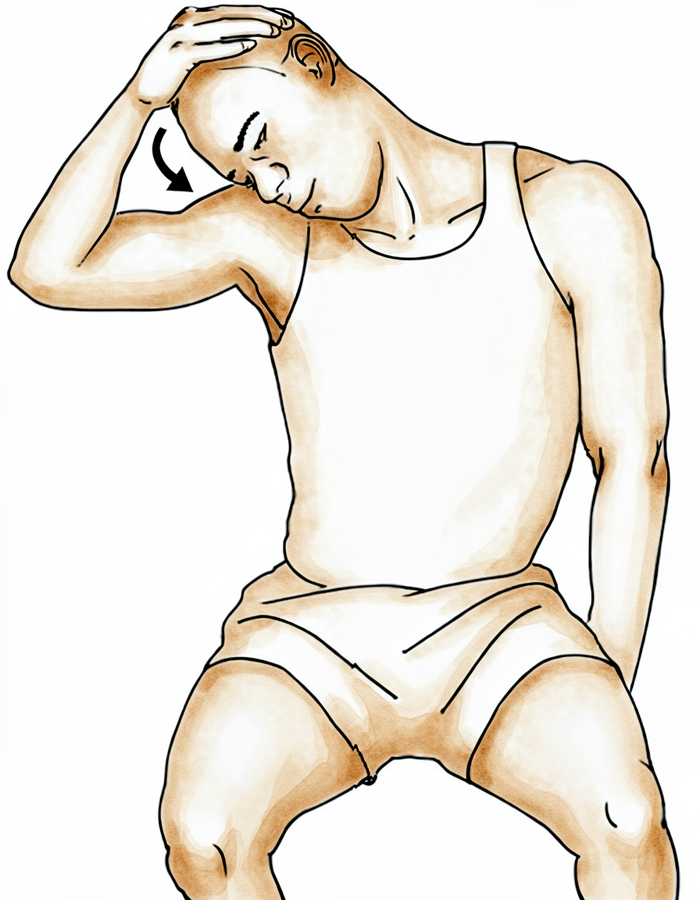
Kieran Hirpara 4.0
Alongamento do levantador da escápula
Use o seu braço bom para levar o nariz em direção à axila do lado oposto, até sentir um alongamento na base do pescoço.
Mantenha por 10 segundos, 3 vezes; repita 3 vezes por dia.
Um fisioterapeuta irá atendê-lo no hospital e fará com que você inicie os exercícios abaixo antes de ir para casa. Eles mantêm a mão, o cotovelo e o ombro em movimento, além de começar imediatamente a ampliar a amplitude de movimento do ombro. Tome algum analgésico antes para poder se movimentar livremente. Execute-os conforme orientado pela sua equipe e continue fazendo-os em casa.
Sua reabilitação ambulatorial
Após uma liberação capsular, a reabilitação segue um caminho oposto ao das cirurgias de reparo de tendões: não há nada a ser protegido, portanto todo o esforço deve ser direcionado para manter a mobilidade. Nas primeiras semanas, é muito provável que o ombro volte a ficar rígido; por isso, a fisioterapia começa imediatamente, com frequência regular, e prossegue por alguns meses até que sua amplitude de movimento se torne estável. As fases abaixo seguem o padrão dos protocolos de reabilitação publicados para essa cirurgia. Os intervalos de semanas são apenas orientativos, não fixos: seu fisioterapeuta ajustará o progresso conforme a evolução do movimento do seu ombro, e não com base no calendário.
Visão geral do processo:
- Fase I — Reabilitação inicial: aproximadamente as duas primeiras semanas
- Fase II — Manutenção e restauração da amplitude de movimento: da 2ª à 6ª semana
- Fase III — Fortalecimento: da 6ª à 12ª semana
- Fase IV — Retorno às atividades plenas: a partir da 12ª semana
Por volta da terceira semana, os movimentos abaixo da altura do ombro geralmente se tornam mais confortáveis, e a maior parte da amplitude de movimento já é recuperada; porém, levantar o braço acima da cabeça ainda costuma ser desconfortável. Após cerca de três meses, a maioria dos pacientes percebe que os sintomas já diminuíram bastante, e a melhora tende a persistir por seis a nove meses, às vezes até um ano.
Fase I — Reabilitação inicial (Semana 0–2)
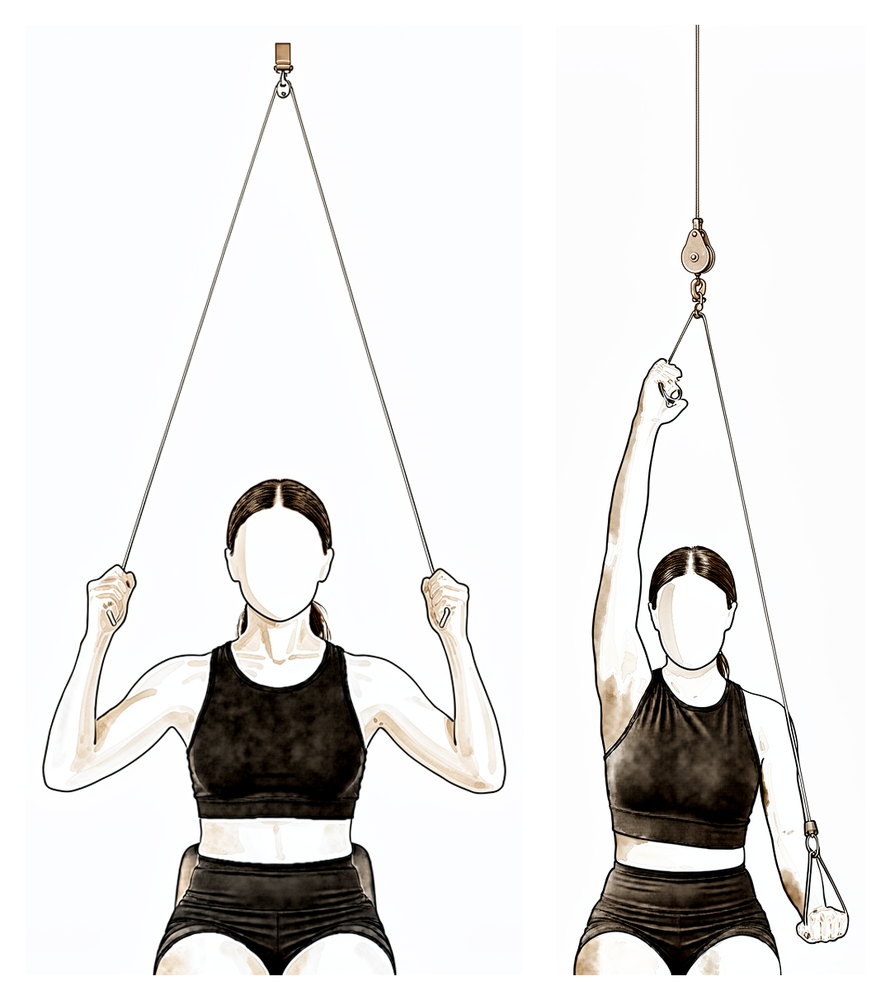
Kieran Hirpara 4.0
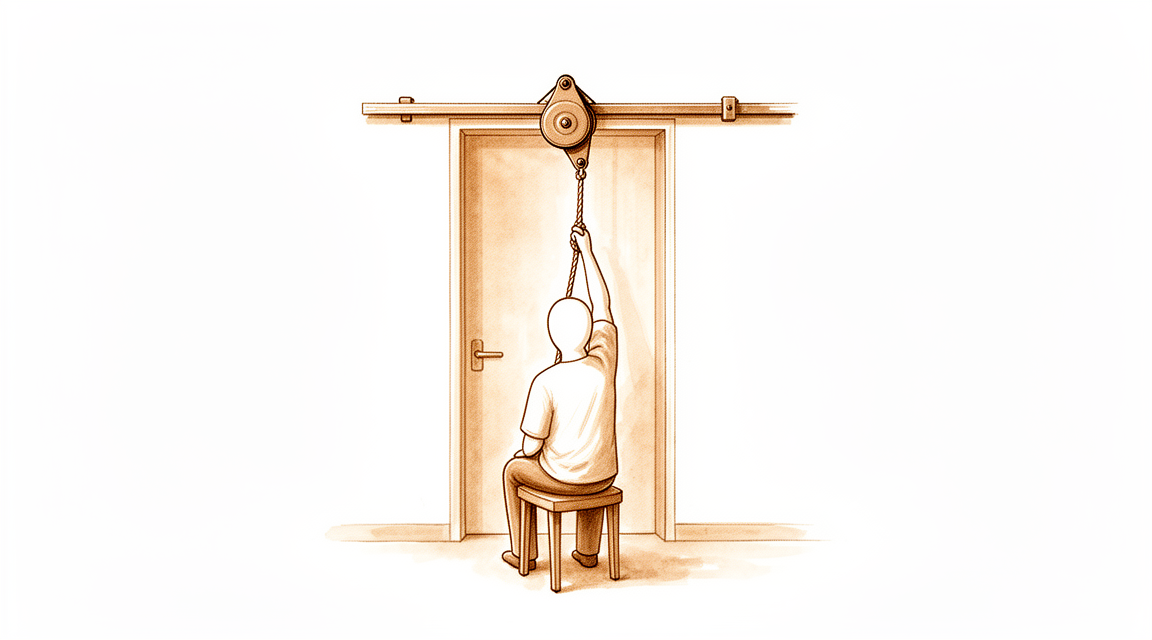
Polia de porta
Sente-se debaixo de uma polia de porta, segurando uma alça em cada mão. Puxe para baixo com o braço saudável, de modo a elevar o braço operado acima da cabeça tanto quanto for possível, e depois abaixe-o lentamente. A cada vez, procure sentir um alongamento firme, mas sem dor intensa.
10 vezes, 3 a 4 vezes ao dia
Kieran Hirpara 4.0
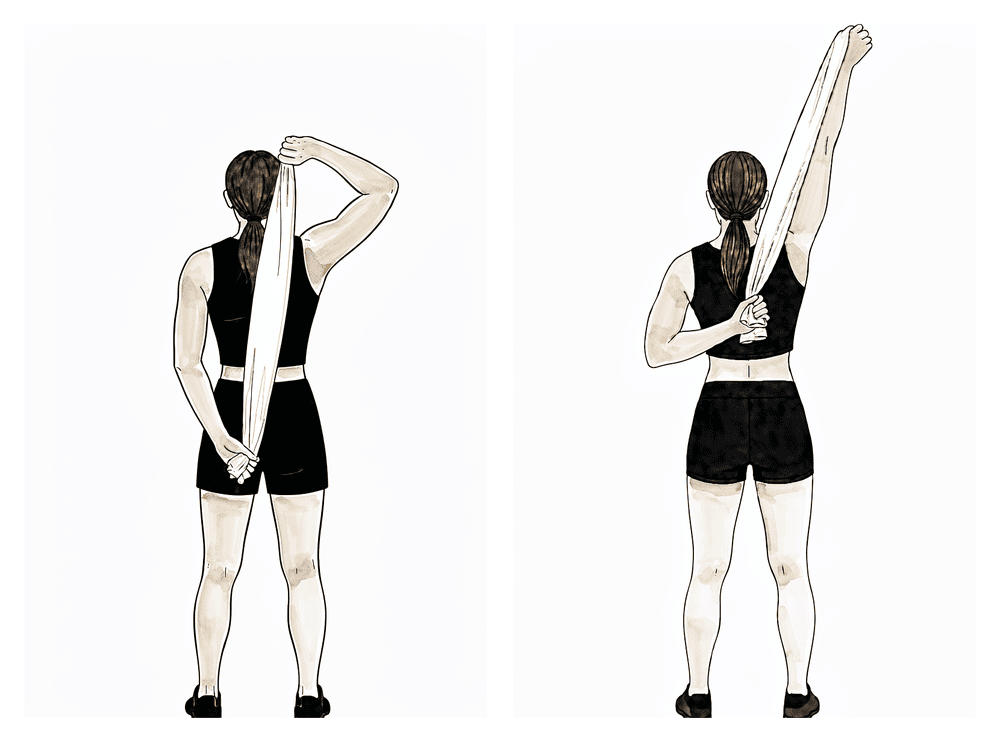
Alongamento atrás das costas com toalha
Segure uma toalha atrás das costas, com a mão operada para baixo; use a outra mão para puxar a mão inferior para cima, ao longo das costas, até onde for possível. Mantenha o alongamento de forma firme e, em seguida, solte: o alongamento deve diminuir logo em seguida.
10 vezes, 3 a 4 vezes ao dia
Kieran Hirpara 4.0
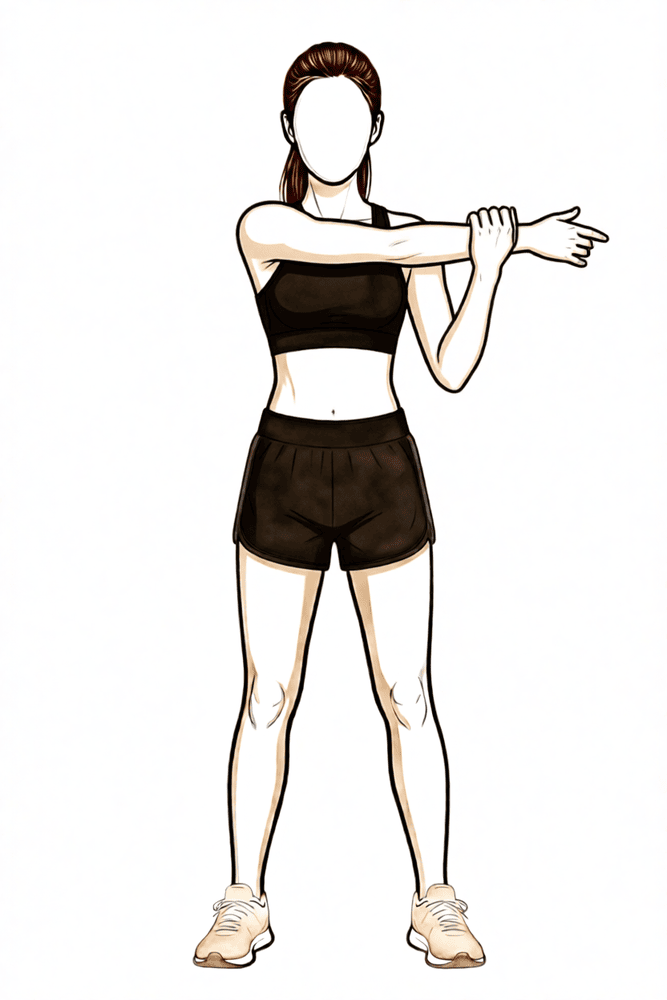
Alongamento cruzado do corpo
Use a sua mão boa para levar o braço operado até o peito, até sentir um alongamento firme na parte posterior do ombro; em seguida, solte-o.
10 vezes, 3 a 4 vezes ao dia
Kieran Hirpara 4.0
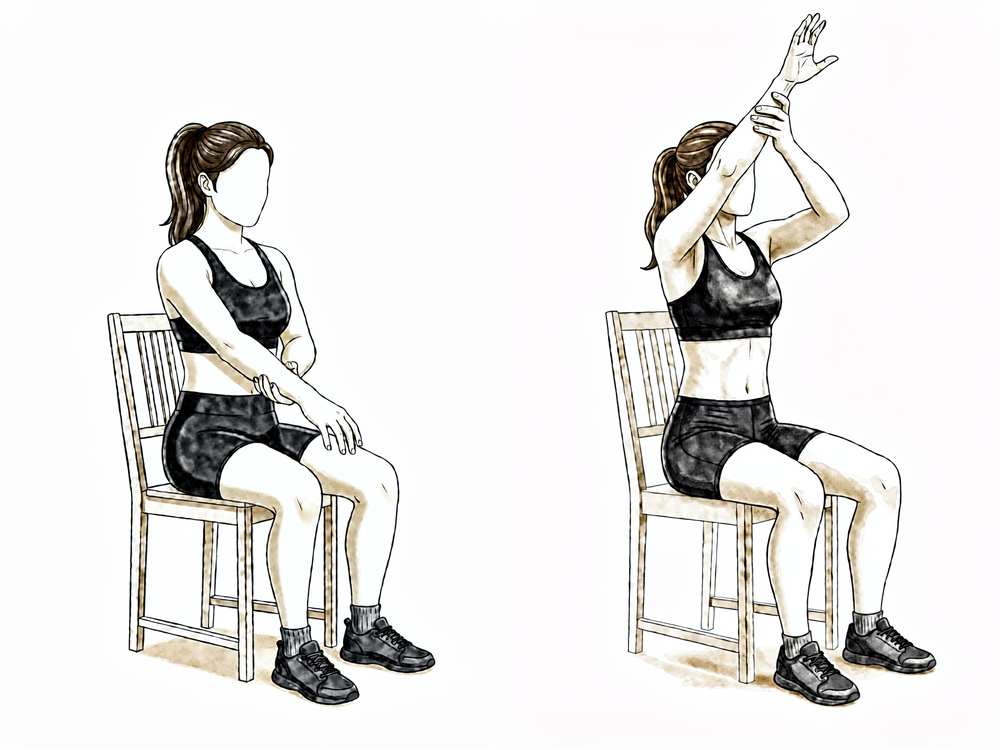
Elevação anterior assistida (em posição sentada)
Sente-se e incline-se ligeiramente para a frente; apoie o antebraço operado com a mão sã e use-a para levantar o braço operado para a frente e para cima, até onde lhe for confortável, depois abaixe-o lentamente. Deixe o braço são fazer todo o trabalho, para que o ombro operado permaneça relaxado.
Conforme orientado pelo seu fisioterapeuta
O objetivo destas duas primeiras semanas é simples: não perder a amplitude de movimento adquirida na cirurgia. Você deve continuar fazendo os exercícios realizados no hospital em casa, várias vezes ao dia, e acrescentar alongamentos que levem o ombro ao seu limite em todas as direções. O bom controle da dor é essencial para isso; portanto, continue tomando analgésicos antes dos exercícios e das sessões de fisioterapia. Use calor antes dos alongamentos e gelo depois, caso isso lhe traga alívio. Utilize o braço para atividades cotidianas leves, como lavar as mãos, vestir-se e comer. Leve cada alongamento até o ponto de desconforto moderado, nunca até a dor intensa; lembre-se de que não há nenhuma direção que deva evitar.
Estará pronto para a próxima fase quando… você conseguir realizar o programa de exercícios em casa com confiança e de forma independente, várias vezes ao dia; quando a dor estiver controlada o suficiente para permitir os alongamentos; e quando mantiver a amplitude de movimento que o ombro tinha após a cirurgia.
Fase II — Manutenção e restauração da amplitude de movimento (Semana 2–6)
Kieran Hirpara 4.0
Rotação externa com vara (amplitude completa)
Continue a rotação externa assistida por uma vara, iniciada no hospital, agora avançando mais à medida que a amplitude de movimento se liberta. Com o cotovelo junto ao corpo, gire o antebraço para fora o máximo possível. Continue levando o movimento até o seu limite máximo: ampliar essa amplitude é justamente o objetivo da cirurgia.
10 vezes, 3 a 4 vezes ao dia
Kieran Hirpara 4.0
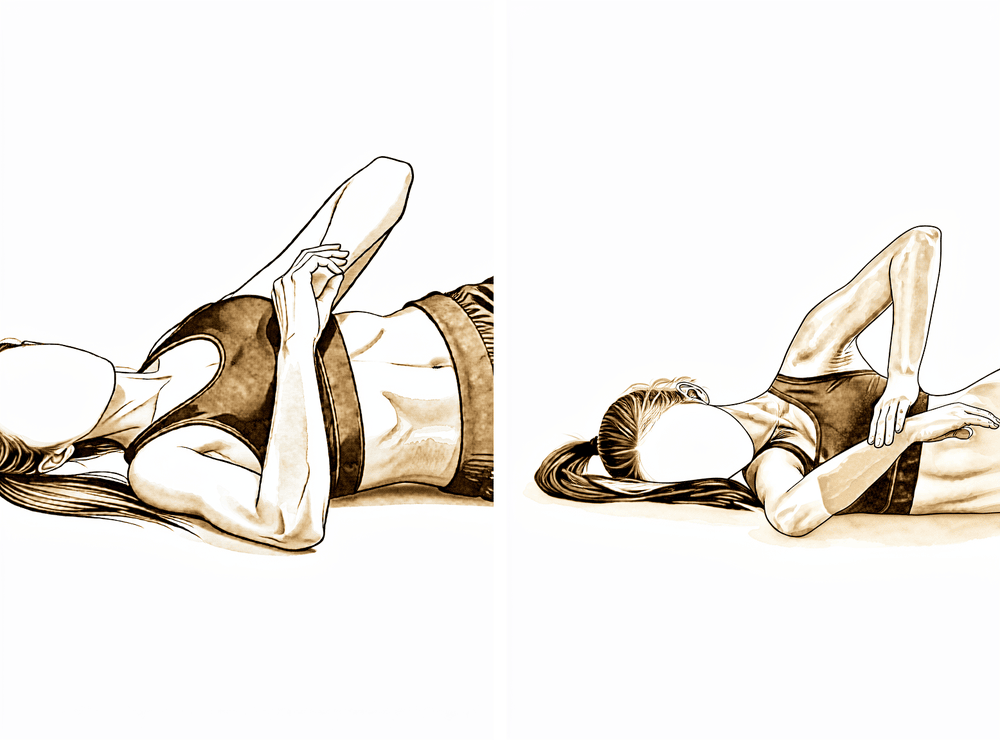
Alongamento do tipo “dorminhoco”
Deite-se sobre o lado operado, com o braço estendido à frente e o cotovelo dobrado. Use a mão saudável para pressionar suavemente o antebraço em direção à cama, até sentir um alongamento profundo no ombro; em seguida, relaxe a pressão.
Mantenha por 20 a 30 segundos, 3 vezes; 3 a 4 vezes ao dia.
Nesta fase, continuam a fisioterapia frequente e o programa de alongamentos em casa, realizados várias vezes ao dia, para que a amplitude de movimento obtida na cirurgia não se perca e continue a melhorar. Os exercícios evoluem de movimentos assistidos para movimentos ativos do braço em todas as direções; o fisioterapeuta pode ainda aplicar mobilizações articulares manuais para auxiliar nesse processo. Continue a aumentar a amplitude de movimento em todos os planos, incluindo a rotação externa, até o seu limite máximo. Utilize o braço normalmente para atividades cotidianas leves.
Estará pronto para a fase seguinte quando… a amplitude de movimento adquirida na cirurgia for mantida ou ainda estiver melhorando, os movimentos abaixo da altura dos ombros forem confortáveis e a dor tiver diminuído o suficiente para iniciar exercícios de resistência suaves.
Fase III — Fortalecimento (Semana 6–12)
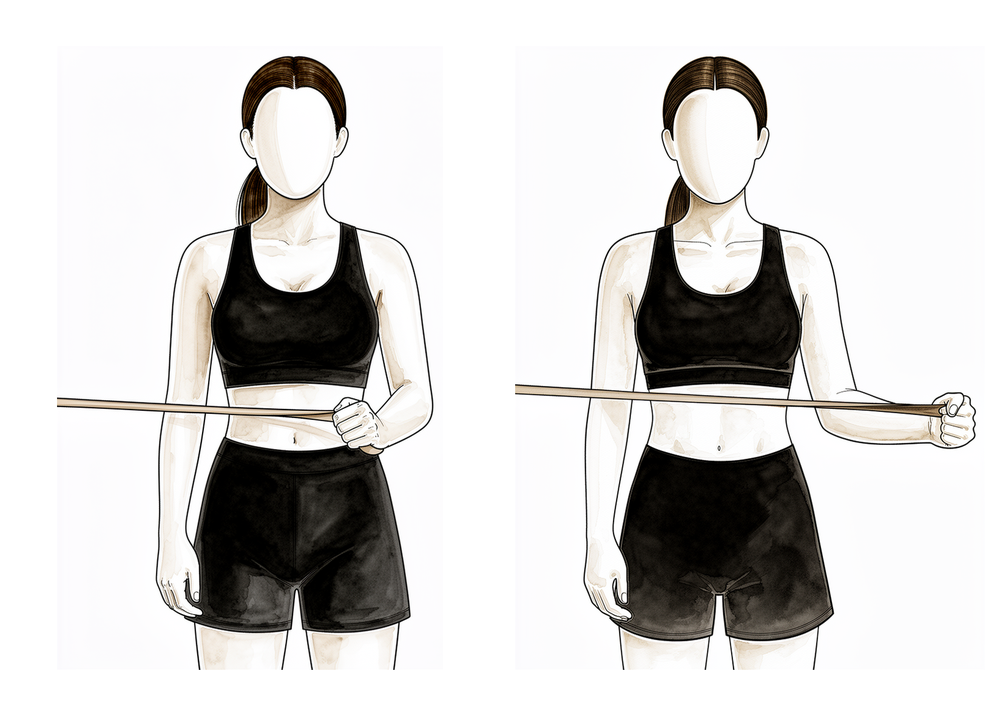
Kieran Hirpara 4.0
Rotação externa com faixa elástica
Fique em pé com o cotovelo pressionado contra o corpo e dobrado a 90 graus, segurando uma faixa elástica fixada na altura da cintura. Mantendo o cotovelo junto ao corpo, gire o antebraço para fora contra a resistência da faixa e depois volte lentamente à posição inicial.
2 a 3 séries de 10 a 15 repetições, 5 dias por semana.
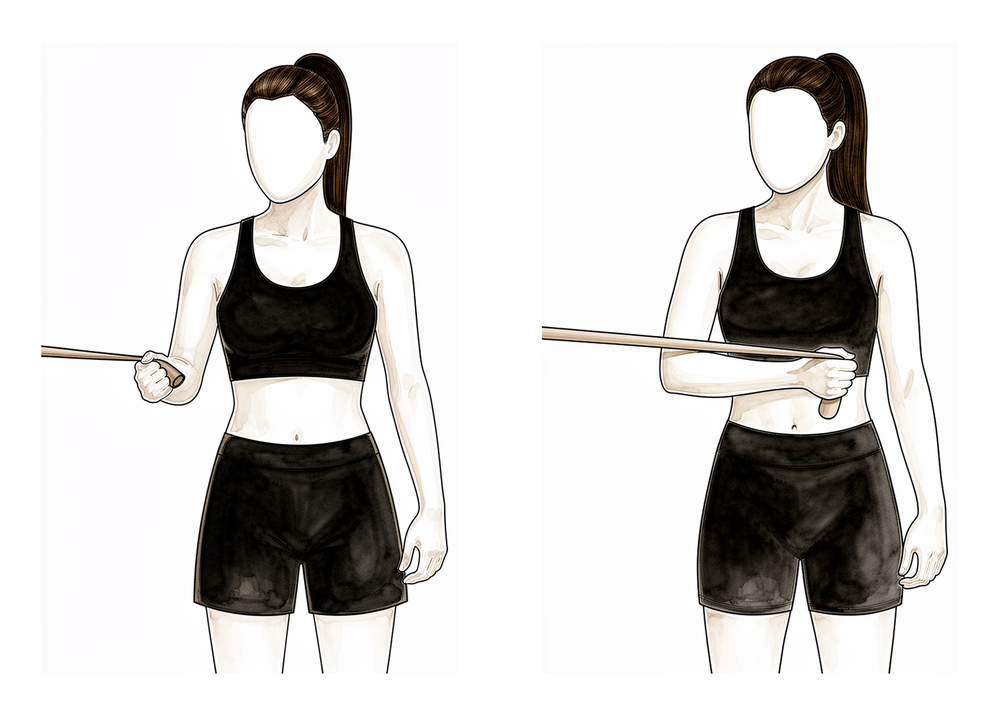
Kieran Hirpara 4.0
Rotação interna com faixa elástica
Com o cotovelo pressionado contra o corpo, segure uma faixa fixada em um lado e gire o antebraço para dentro, em direção ao corpo, contra a resistência da faixa; em seguida, volte lentamente à posição inicial.
2 a 3 séries de 10 a 15 repetições, 5 dias por semana.
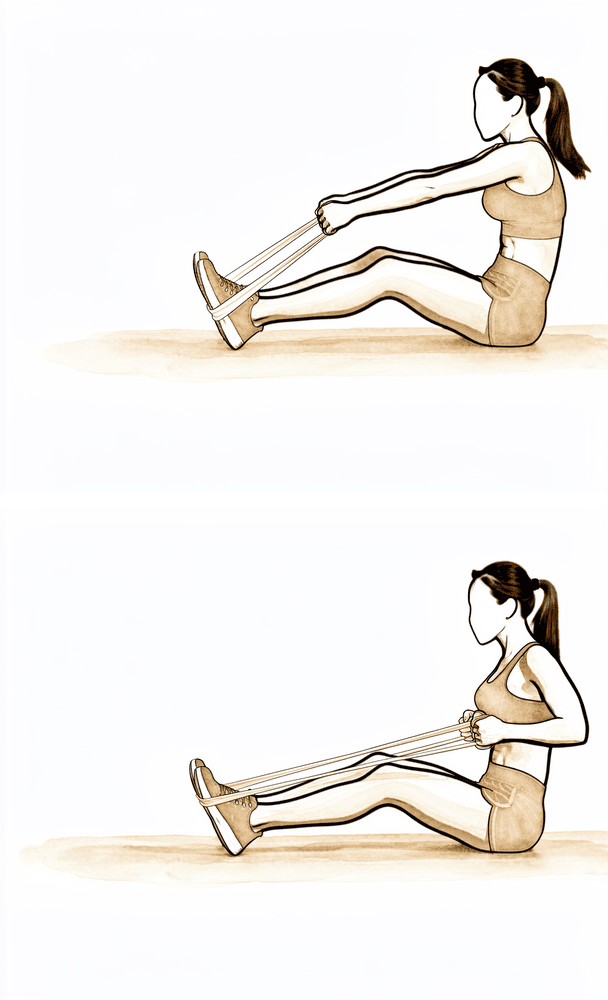
Kieran Hirpara 4.0
Remada baixa
Segure uma faixa à sua frente, na altura da cintura. Mantendo o braço razoavelmente esticado, puxe-o para trás e para baixo em direção ao quadril, contraindo a escápula para baixo e para trás; em seguida, volte lentamente à posição inicial.
2 a 3 séries de 10 a 15 repetições, 5 dias por semana.
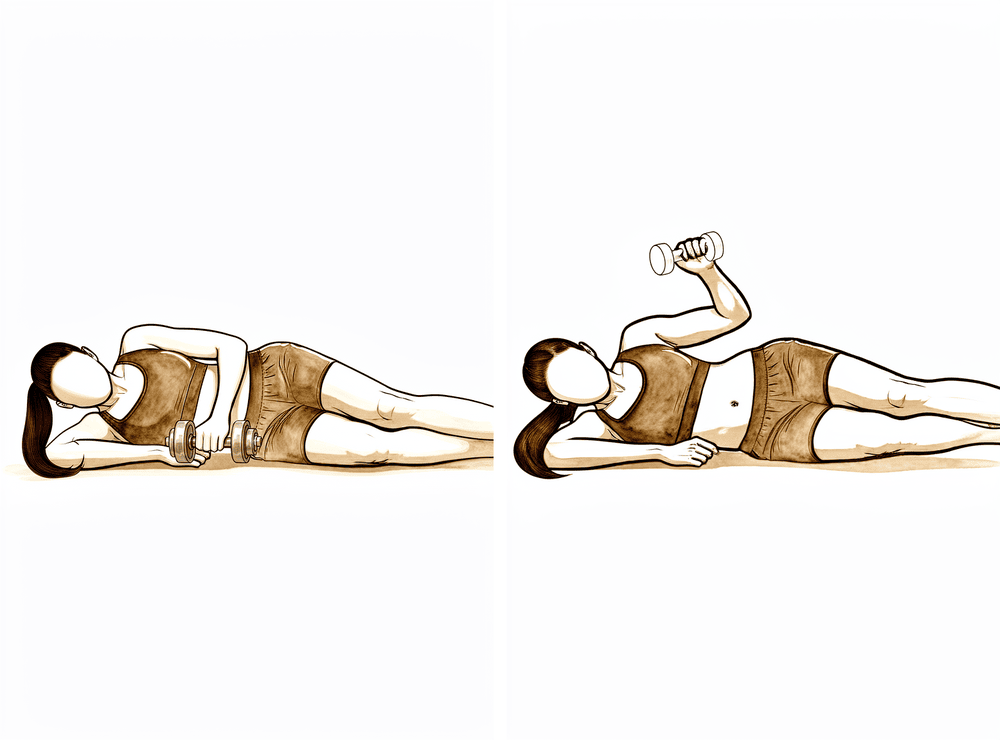
Kieran Hirpara 4.0
Rotação externa em decúbito lateral (peso leve)
Deite-se sobre o lado saudável, com o cotovelo operado dobrado a 90 graus e encostado ao corpo, segurando um peso leve (cerca de 0,5 a 1,5 kg). Gire o antebraço para cima e depois abaixe-o lentamente: o movimento lento de descida é o mais importante. Mantenha todo o movimento abaixo da altura dos ombros.
2 a 3 séries de 10 a 15 repetições, com carga baixa.
Com a amplitude de movimento já estabilizada, a atenção volta-se para o fortalecimento do ombro. Os alongamentos diários devem ser mantidos durante toda esta fase, pois o fortalecimento jamais deve comprometer a amplitude de movimento que você conquistou. Os exercícios de resistência começam de forma suave, utilizando faixas elásticas e pesos leves para os músculos da coifa dos rotadores e da escápula, com cargas baixas e maior número de repetições. As atividades cotidianas normais geralmente já foram retomadas, e atividades recreativas mais leves também costumam ser retomadas nesta fase, conforme orientação do seu fisioterapeuta.
Você estará pronto para a próxima fase quando… tiver movimentação completa, ou quase completa, sem dor em todas as direções, e conseguir realizar os exercícios de fortalecimento sem provocar piora da dor ou perda da amplitude de movimento.
Fase IV — Retorno às atividades plenas (a partir da semana 12)
A fase final consiste no retorno gradual a atividades mais pesadas, tarefas acima da cabeça e prática esportiva. A reabilitação formal costuma durar de três a quatro meses no total; porém, a melhora do ombro continua bem depois disso: a maioria das pessoas continua ganhando conforto e confiança ao longo de seis a nove meses, às vezes até um ano. Vale a pena manter uma breve rotina de alongamentos até que a amplitude de movimento se normalize sem necessidade de exercícios formais. A progressão deve ser guiada pela sua percepção; portanto, se rigidez ou dor começarem a reaparecer, o correto é reduzir a intensidade das atividades e recuperar a amplitude de movimento, em vez de deixar o ombro em repouso.
Retorno às atividades
A maioria das pessoas volta às atividades diárias normais e a diversos tipos de trabalho em quatro a seis semanas, pois a recuperação nesse caso depende da manutenção da amplitude de movimento, e não da espera pela cicatrização dos tecidos. Trabalhos mais pesados e atividades físicas intensas, bem como esportes que exigem movimentos acima da cabeça, são retomados gradualmente nas semanas e meses seguintes, à medida que a força muscular retorna. Caso, a qualquer momento, o ombro comece a ficar rígido novamente, considere isso um sinal para intensificar os alongamentos e procurar seu fisioterapeuta, em vez de descansar.
Os seus exercícios
Estes são os exercícios descritos no seu folheto informativo. Comece a realizá-los conforme orientado pelo Dr. Hirpara e pelo seu fisioterapeuta. Após uma liberação capsular, não há nada a ser protegido por meio de reparo; portanto, manter o ombro imóvel acaba sendo contraproducente — o ombro liberado simplesmente volta a ficar rígido entre as sessões. É por isso que a lista de exercícios é longa e por que fazer poucos exercícios com frequência é melhor do que uma única sessão prolongada: os primeiros movimentos de punho, mão e cotovelo, além dos movimentos pendulares, mantêm todo o braço flexível; os alongamentos assistidos (flexão deitado, abdução em “berço”, rotação externa com bastão) preservam a amplitude de movimento obtida na cirurgia; os exercícios com faixa elástica e de controle escapular são acrescentados posteriormente para desenvolver maior controle muscular. A frequência é mais importante do que a intensidade. Interrompa qualquer exercício que cause dor aguda, em vez de apenas uma sensação de alongamento.
Após seguir o seu protocolo
As fases ambulatoriais descritas acima foram adaptadas de protocolos de reabilitação publicados para a liberação capsular artroscópica; os marcos de recuperação também foram extraídos das mesmas fontes. Os intervalos de semanas indicados são típicos, mas não fixos; a sua reabilitação contínua será orientada individualmente pelo seu fisioterapeuta, em conjunto com a clínica, conforme a evolução da mobilidade do seu ombro. Esta página complementa as orientações gerais de recuperação fornecidas pela clínica: consulte controle da dor pós-operatória e cuidados com a ferida. Quanto à própria cirurgia e à condição que ela trata, veja liberação capsular e ombro congelado.
Evidence & references
This is the clinical evidence summary written for health professionals. It is technical, and it lists the research this page was built from. You do not need to read it to understand your treatment or to make a decision about it.
Adhesive Capsulitis (Frozen Shoulder) — Non-operative Staged Management & Post-operative Rehabilitation (Capsular Release)
Topic scope: Both (A) non-operative staged management of primary/secondary adhesive capsulitis (freezing -> frozen -> thawing), including physiotherapy, intra-articular steroid and hydrodilatation; and (B) post-operative rehabilitation after arthroscopic capsular release (ACR).
Defining principle of surgical rehab here (the inversion): Unlike virtually every other shoulder operation -- where a repair (cuff, labrum, pec major, instability) must be protected with a sling and ROM is restricted to avoid disrupting healing tissue -- frozen-shoulder release rehab is the OPPOSITE: the goal is to prevent re-formation of the capsular contracture. So the protocol is immediate, aggressive ROM, usually NO sling, passive + active ROM starting the same day or day 1, with stretching to the end of the freshly gained range. Delay or immobilisation is the enemy (re-stiffening), not the protector. This is the single most important point distinguishing this protocol from the others in this audit.
A. NON-OPERATIVE STAGED MANAGEMENT
Natural history / staging (consensus, weak evidence -- descriptive, no RCT)
Frozen shoulder is self-limiting in most but typically lasts 12-18 months across 3 clinical stages (Reeves' classic model; staging boundaries overlap and are not sharply separable in practice -- flagged as weak/consensus evidence; the original Reeves model was a single prospective cohort of 49 patients, not an RCT) [Brigham SOC; Chan 2017; Reeves 1975 via Willmore 2020]:
| Stage | Name | Typical duration | Clinical picture | Management emphasis |
|---|---|---|---|---|
| 1 | Freezing (painful/inflammatory) | 2-9 months | Diffuse constant pain, worse at night; progressive ROM loss in a capsular pattern (ER > ABD > flexion > IR); loss of passive ER with arm at side is the hallmark | Pain control; intra-articular steroid; gentle ROM within pain limits -- do NOT force end-range while highly inflamed |
| 2 | Frozen (adhesive/stiff) | 4-12 months | Pain subsides to dull ache; stiffness dominant; marked functional loss | Restore motion: stretching, joint mobilisation grades III-IV, hydrodilatation; consider surgery if recalcitrant |
| 3 | Thawing | 6-9 months (Brigham) | Gradual spontaneous return of motion | Progressive ROM + strengthening; PT 2-3x/week |
(Stage durations from Brigham Standard of Care 2010 and Chan 2017: freezing 2-9 mo, frozen 4-12 mo, thawing 6-9 mo.)
Stepped non-operative interventions
- Education / "supervised neglect" + analgesia -- many resolve with reassurance, activity modification and analgesia alone (Codman; Hsu 2011 review). Weak (cohort/expert).
- Physiotherapy -- pendulum, PROM/AAROM/AROM, capsular stretching, joint mobilisation (grades I-II early for pain, III-IV later for tissue extensibility), scapular/posture work. Brigham: PT 1-2x/week in early stages (mainly HEP instruction), 2-3x/week in thawing. PT is best supported as an adjunct to mobilisation/injection/distension, not as a stand-alone cure (Itoi 2016 Current Concepts; Kelley/McClure/Leggin JOSPT 2009 guidance). Moderate; intensity/timing debated. Intensity caveat: end-range/high-intensity stretching is appropriate in the frozen/thawing phase but can be counter-productive in the acutely inflamed freezing phase -- match intensity to irritability (Kelley 2009).
- Intra-articular corticosteroid (glenohumeral) -- superior to placebo and to physiotherapy for short-term (up to 4-12 weeks) pain and function; benefit wanes after ~3 months. Strong for short term (multiple RCTs; Koh 2016 systematic review of 10 RCTs; Cochrane Buchbinder shoulder injection review). BESS pathway: GH steroid recommended for short-term symptom control; long-term (>3 mo) benefit not demonstrated (Rupani/Gwilym BESS 2025). Earlier injection (freezing phase) is the rationale -- steroid targets the inflammatory component.
- Hydrodilatation (distension arthrography) -- distends/ruptures the contracted capsule with saline +/- steroid +/- LA. A controlled, image-guided alternative to surgery. RCT/meta-analytic evidence is mixed: generally produces a transient functional/ROM gain, with no clear superiority over IA steroid alone in several network meta-analyses (Wu 2017 SR/MA of RCTs; Lin 2018 network MA). Some evidence hydrodilatation + steroid > steroid alone in refractory cases (Lee 2017 RCT). Low rate of needing later surgery after distension arthrogram (Nicholson 2020). Moderate; conflicting.
B. POST-OPERATIVE REHABILITATION (the "immediate aggressive ROM" protocols)
Surgery is reserved for cases recalcitrant to >=3-6 months of adequate non-operative care (Struyf 2024; Mullen 2025).
Arthroscopic capsular release (ACR)
- Controlled, direct-vision release of the contracted capsule (rotator interval, CHL, anterior +/- inferior +/- 360 degree capsulotomy; care re axillary nerve inferiorly). Allows graded release with a low risk of iatrogenic fracture or cuff tear (Kanbe 2018, n=255; Jerosch 2001 360 degree release). Achieves reliable gains in final forward elevation and may shorten recovery (most improved by ~4 months -- McAllister/CORR Insights 2025; Saade 2023 MA favoured ACR for AFE). A gentle, controlled manipulation is often performed as part of the arthroscopic release to confirm the gained range.
Consensus POST-OP phased timeline (applies after arthroscopic capsular release)
The hallmark is immediate motion, no protective sling, same-day/day-1 ROM to hold the range just won in theatre.
| Phase | Window | Sling | ROM | Active ROM | Strengthening | Notes |
|---|---|---|---|---|---|---|
| 0 -- Immediate | Day 0-1 (same day) | NO sling (or sling only briefly for comfort/analgesia, discarded fast) | Full passive ROM immediately; PT-assisted forward flexion + ER begun day 1; +/- continuous passive motion (CPM); pendulums; patient does HEP several times/day | AAROM/AROM started day 1 alongside PROM (no protected period) | -- | Intra-articular steroid often injected at time of release to damp post-op inflammatory re-stiffening |
| 1 -- Early | Week 0-2 | None | Aggressive PROM/AAROM to maintain gained range; stretch into end-range daily; hold ER/ABD/flexion | Active motion continued | Light scapular/rotator-cuff activation as pain allows | Pain control critical to allow the patient to move -- adequate analgesia / interscalene block / oral steroid taper |
| 2 -- Strengthening | Week 2-6 | None | Continue to full ROM | Full AROM goal | Rotator cuff + scapular strengthening begins ~week 2 (Kanbe protocol) | Most back to normal daily activity / work by 4-6 weeks |
| 3 -- Return to function | ~6 weeks-3 months | None | Maintain full ROM | Full | Progressive strengthening to full | Recurrence of stiffness is the main failure mode -> continued HEP emphasised |
Representative published protocol (Kanbe 2018, J Orthop Surg Res, n=255, ACR): "passive, assisted-active and stooping (pendulum) exercises for forward flexion and external rotation commenced 1 day after surgery... after 2 weeks of passive exercise, patients began active exercise to strengthen the rotator cuff and scapular stabilisers... after 4-6 weeks patients returned to normal work without limitation." Many ACR series add an intra-articular steroid + controlled manipulation at the index procedure (Filip Struyf 2024; PMC5137660).
Post-surgical physiotherapy is universally agreed to be essential but is under-standardised -- there is no high-level RCT defining the optimal post-release regimen; protocols are consensus/expert and vary widely (Willmore 2020 Shoulder & Elbow, "Post-surgical physiotherapy in frozen shoulder: a review"). Weak/consensus.
KEY CONTROVERSIES
- Evidence base for arthroscopic release. ACR gives a controlled, direct-vision release with a low iatrogenic fracture/cuff-tear risk and reliable gains in final elevation. Systematic reviews show consistently acceptable results, though there is no definitive RCT defining the optimal technique (Saade 2023 MA; McAllister 2025). Weak/moderate evidence (large cohorts).
- Steroid timing. Strong short-term benefit (<12 wk) but no durable >3-month benefit; debate over injecting early (freezing/inflammatory phase) vs reserving for refractory cases (Koh 2016; Rupani/Gwilym BESS 2025; Lin 2018).
- Aggressive vs gentle physiotherapy. High-intensity end-range stretching helps in the frozen/thawing phases but may worsen pain and prolong the condition if applied to the acutely inflamed freezing phase -- "intensity should match irritability" (Kelley/McClure 2009; Itoi 2016). Post-operatively, by contrast, aggressive immediate ROM is mandatory to prevent re-stiffening.
- Hydrodilatation worth it? Transient benefit only and not clearly better than IA steroid alone in pooled RCT data (Wu 2017; Lin 2018), though some refractory-case RCT support (Lee 2017) and a low rate of needing later surgery (Nicholson 2020).
- Does anything change the natural history? No intervention is proven to shorten the overall 12-18 month course in the highest-quality reviews; most accelerate symptom relief rather than alter end-point (Rookmoneea 2010 JBJS Br; Hsu 2011). Strong (negative).
EVIDENCE STRENGTH FLAGS (summary)
- STRONG (RCT / SR-MA): IA corticosteroid short-term benefit (Koh 2016 SR of 10 RCTs; Cochrane); hydrodilatation = transient, not superior to steroid (Wu 2017 SR-MA of RCTs; Lin 2018 network MA).
- MODERATE: end-range/scapular mobilisation (Yang 2012 RCT); ACR clinical outcomes (large cohorts -- Kanbe 2018 n=255; Jerosch 2001).
- WEAK / CONSENSUS ONLY: 3-stage natural-history model & stage durations (Reeves cohort, descriptive); the post-operative rehab protocol itself (no defining RCT; expert/consensus -- Willmore 2020); optimal ACR technique (published series are heterogeneous).
CITATIONS
RAG corpus (180,000+ Orthopaedic articles)
- Guyver P, Bruce D, Rees J. Frozen shoulder -- a stiff problem that requires a flexible approach. Maturitas. 2014.
- Kim J, Gahlot N, Park HB. Frozen shoulder: a narrative review of current treatment concepts and the underlying scientific evidence. Clinics in Shoulder and Elbow. 2025;28(4).
- Hsu JE, Anakwenze OA, Warrender WJ, et al. Current review of adhesive capsulitis. J Shoulder Elbow Surg. 2011;20(3):502-514.
- Koh KH. Corticosteroid injection for adhesive capsulitis in primary care: a systematic review of randomised clinical trials. Singapore Med J. 2016.
- Rupani N, Gwilym SE. British Elbow and Shoulder Society patient care pathway: Frozen shoulder. Shoulder & Elbow. 2025;17(4).
- Sheridan MA, Hannafin JA. Upper Extremity: Emphasis on Frozen Shoulder. Orthop Clin North Am. 2006.
- Chan H, Pua P, How C. Physical therapy in the management of frozen shoulder. Singapore Med J. 2017.
- Willmore EG, Millar NL, van der Windt D. Post-surgical physiotherapy in frozen shoulder: a review. Shoulder & Elbow. 2020;14(4).
- Lamplot JD, Lillegraven O, Brophy RH. Outcomes from conservative treatment of shoulder idiopathic adhesive capsulitis... Orthop J Sports Med. 2018.
- Itoi E, Arce G, Bain GI, et al. Shoulder Stiffness: Current Concepts and Concerns. Arthroscopy. 2016;32(7).
- Kanbe K. Clinical outcome of arthroscopic capsular release for frozen shoulder: essential technical points in 255 patients. J Orthop Surg Res. 2018;13(1). (post-op protocol: day-1 ROM, 4-6 wk RTW)
- Jerosch J. 360 degree arthroscopic capsular release in patients with adhesive capsulitis... Knee Surg Sports Traumatol Arthrosc. 2001;9(3).
- McAllister NB. CORR Insights: Releasing forces in adhesive capsulitis... Clin Orthop Relat Res. 2025.
- Saade F, van Rooij F, Saffarini M, et al. Management of shoulder stiffness following rotator cuff repair: a systematic review and meta-analysis. JSES Rev Rep Tech. 2023.
- Wu W, Chang K, Han D, et al. Effectiveness of glenohumeral joint dilatation for treatment of frozen shoulder: a systematic review and meta-analysis of RCTs. Sci Rep. 2017. (SR-MA of RCTs)
- Lin M, Hsiao M, Tu Y, et al. Comparative efficacy of intra-articular steroid injection and distension... a systematic review and network meta-analysis. Arch Phys Med Rehabil. 2018. (network MA)
- Lee D, Yoon S, Lee MY, et al. Capsule-preserving hydrodilatation with corticosteroid vs corticosteroid alone in refractory adhesive capsulitis: a randomized controlled trial. Arch Phys Med Rehabil. 2017. (RCT)
- Nicholson JA, Slader B, Martindale A, et al. Distension arthrogram in the treatment of adhesive capsulitis has a low rate of repeat intervention. Bone Joint J. 2020;102-B(5).
- Uppal HS. Frozen shoulder: a systematic review of therapeutic options. World J Orthop. 2015.
- Mullen JP, Hauer TM, Lau EN, et al. Adhesive capsulitis of the shoulder. Arthroscopy. 2025;41(7).
- Yang J, Jan M, Chang C, et al. Effectiveness of the end-range mobilization and scapular mobilization approach... a randomized control trial. Manual Therapy. 2012. (RCT)
- Rookmoneea M, et al. The effectiveness of interventions in the management of patients with primary frozen shoulder. J Bone Joint Surg Br. 2010;92-B(9).
- Struyf F. Frozen Shoulder. 2024 (surgical indication & post-op steroid + controlled manipulation).
Published rehab protocols (URLs)
- Brigham & Women's Hospital -- Standard of Care: Shoulder Adhesive Capsulitis (Dept of Rehabilitation Services, 2010): https://www.brighamandwomens.org/assets/BWH/patients-and-families/rehabilitation-services/pdfs/shoulder-adhesive-capsulitis.pdf (source for the 12-18 mo / 3-stage durations, capsular pattern, PT frequency 1-2x/wk early & 2-3x/wk thawing, mobilisation grades, steroid 4-6 wk short-term benefit).
- BESS (British Elbow & Shoulder Society) Frozen Shoulder patient care pathway -- Rupani & Gwilym, Shoulder & Elbow 2025 (GH steroid short-term only, no >3 mo benefit).
- Kanbe 2018 ACR open-access (post-op day-1 ROM protocol): https://pmc.ncbi.nlm.nih.gov/articles/PMC5857121/
- ChoosePT / APTA patient guide to frozen shoulder (lay phased overview): https://www.choosept.com/guide/physical-therapy-guide-frozen-shoulder-adhesive-capsulitis