Patients › Rehabilitation
Artroscopia do punho
Um plano de recuperação após a cirurgia minimamente invasiva (artroscópica) do punho, em que o ritmo depende do que foi feito no interior: uma limpeza (desbridamento, sinovectomia, cisto sinovial ou regularização do TFCC central) permite movimento precoce e um retorno rápido, enquanto um reparo do TFCC protege a rotação do antebraço numa tala ou gesso por cerca de quatro a seis semanas antes de o movimento e a força serem reconstruídos.
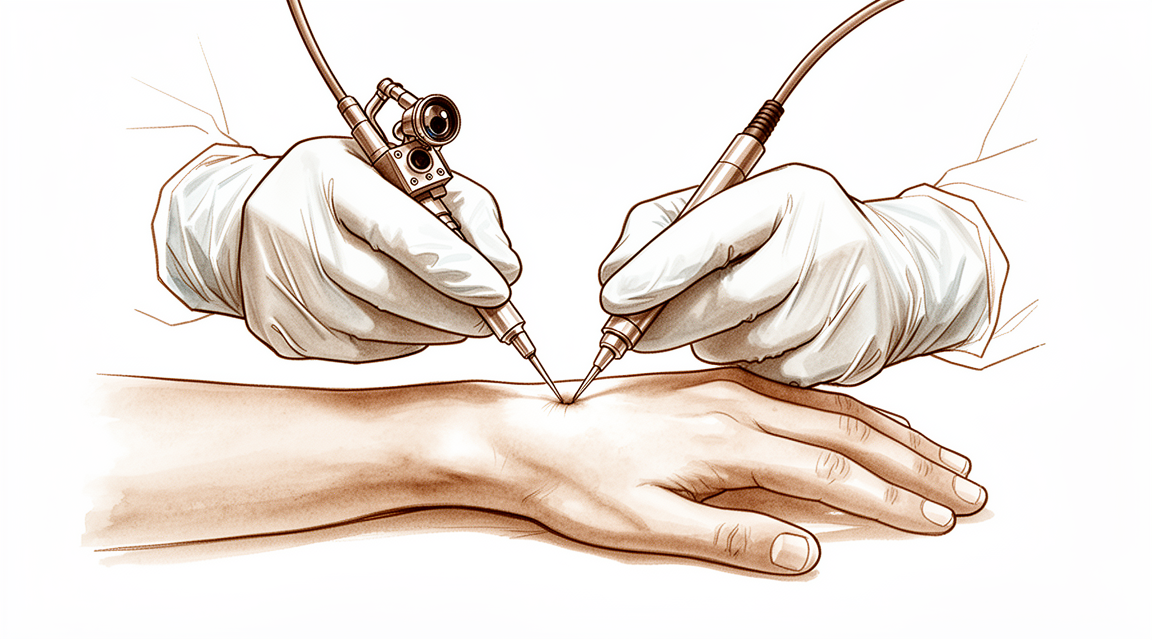
Este protocolo orienta sua recuperação após a cirurgia minimamente invasiva (artroscópica) do punho realizada pelo Dr. Kieran Hirpara no Mater Private Hospital Rockhampton. A artroscopia do punho é feita por meio de algumas incisões minúsculas (portais) na parte de trás do punho, por isso a pele cicatriza rapidamente; contudo, o ritmo da sua recuperação depende do que foi feito no interior da articulação. O processo começa com o seu programa de exercícios domiciliares, seguido pelo protocolo clínico estruturado elaborado para o seu terapeuta da mão. Leve esta página ou o seu PDF à primeira sessão de terapia, para que a reabilitação seja coordenada e o terapeuta siga o plano adequado à sua cirurgia. O terapeuta poderá ajustar o plano conforme a evolução da sua recuperação.
Caso tenha alguma preocupação quanto às feridas após a cirurgia, entre em contato com o consultório. Muitas vezes é útil tirar uma foto da ferida e enviá-la por e-mail para avaliação.
O que esperar
Na artroscopia do punho, o cirurgião trabalha no interior do punho através de pequenos portais, utilizando uma câmera minúscula e instrumentos finos. Como os cortes são pequenos, a pele e os tecidos moles cicatrizam rapidamente, mas é o interior do punho que define o cronograma, e existem dois caminhos de recuperação bem distintos:
-
Procedimento de limpeza (desbridamento, sinovectomia, remoção de cisto sinovial dorsal ou regularização do TFCC central). Nesse caso, nada que precise de proteção é suturado; o tecido danificado ou inflamado é simplesmente aparado ou removido. Assim, a imobilização é breve (muitas vezes basta um curativo macio ou uma tala curta para conforto), os movimentos do punho começam em poucos dias e a volta à maioria das atividades ocorre ao longo de algumas semanas. A parte central do TFCC (a “almofada” no lado do punho do dedo mínimo) não possui suprimento sanguíneo e não cicatriza se for suturada; por isso, quando há ruptura nessa região, ela é aparada em vez de reparada, e esse procedimento se comporta como uma limpeza.
-
Reparo do TFCC (sutura de uma ruptura periférica ou foveal). A borda externa do TFCC possui suprimento sanguíneo e pode cicatrizar; portanto, quando a ruptura ocorre nessa área, ela é reparada, e esse reparo precisa ser protegido. O maior fator de estresse sobre um reparo do TFCC em cicatrização é a rotação do antebraço (virar a palma da mão para cima e para baixo). Por esse motivo, o punho e o antebraço ficam em repouso numa tala ou num gesso tipo Muenster (acima do cotovelo) por cerca de quatro a seis semanas; isso permite dobrar o cotovelo, mas bloqueia a rotação do antebraço, que tracionaria o reparo. Em seguida, o movimento e depois a força são recuperados em etapas cuidadosas, e a recuperação completa leva cerca de três meses ou mais.
Em ambos os caminhos, os dedos são movimentados desde o início (não foram operados), o inchaço é controlado e as pequenas cicatrizes dos portais são cuidadas. Seu terapeuta da mão seguirá o plano correspondente ao que foi realmente feito no seu punho; se não tiver certeza de qual caminho está seguindo, pergunte ao Dr. Hirpara ou verifique a descrição da sua cirurgia.
Precauções e limitações
- Mantenha os dedos em movimento desde o início: feche a mão e estenda os dedos completamente, várias vezes ao dia. Isso é sempre permitido e evita rigidez e inchaço.
- Siga o plano correspondente ao que foi feito. Após uma limpeza, movimentos suaves do punho começam em poucos dias. Após um reparo do TFCC, o punho e o antebraço permanecem protegidos numa tala ou gesso e você NÃO deve girar o antebraço (palma para cima / palma para baixo) até que o terapeuta da mão autorize (cerca de quatro a seis semanas).
- Após um reparo do TFCC, NÃO force nem aplique carga na rotação do antebraço, e NÃO aperte com força nem levante peso até receber autorização; rotação e carga são exatamente o que sobrecarrega o reparo.
- Mantenha os portais limpos e secos até cicatrizarem; NÃO os deixe de molho nem os esfregue. Cuide das pequenas cicatrizes depois de cicatrizadas.
- NÃO dirija enquanto o punho estiver com tala ou gesso, ou enquanto não conseguir controlar o volante com segurança; providencie ajuda com o transporte nas primeiras semanas.
- Use a mão para tarefas cotidianas leves, dentro do conforto, desde que não envolvam os movimentos ou as cargas que lhe foram orientados a evitar.
Para orientações sobre cuidados com a ferida, inchaço e cicatrizes, consulte o guia de cuidados com feridas do consultório.
Seus exercícios
Kieran Hirpara 4.0
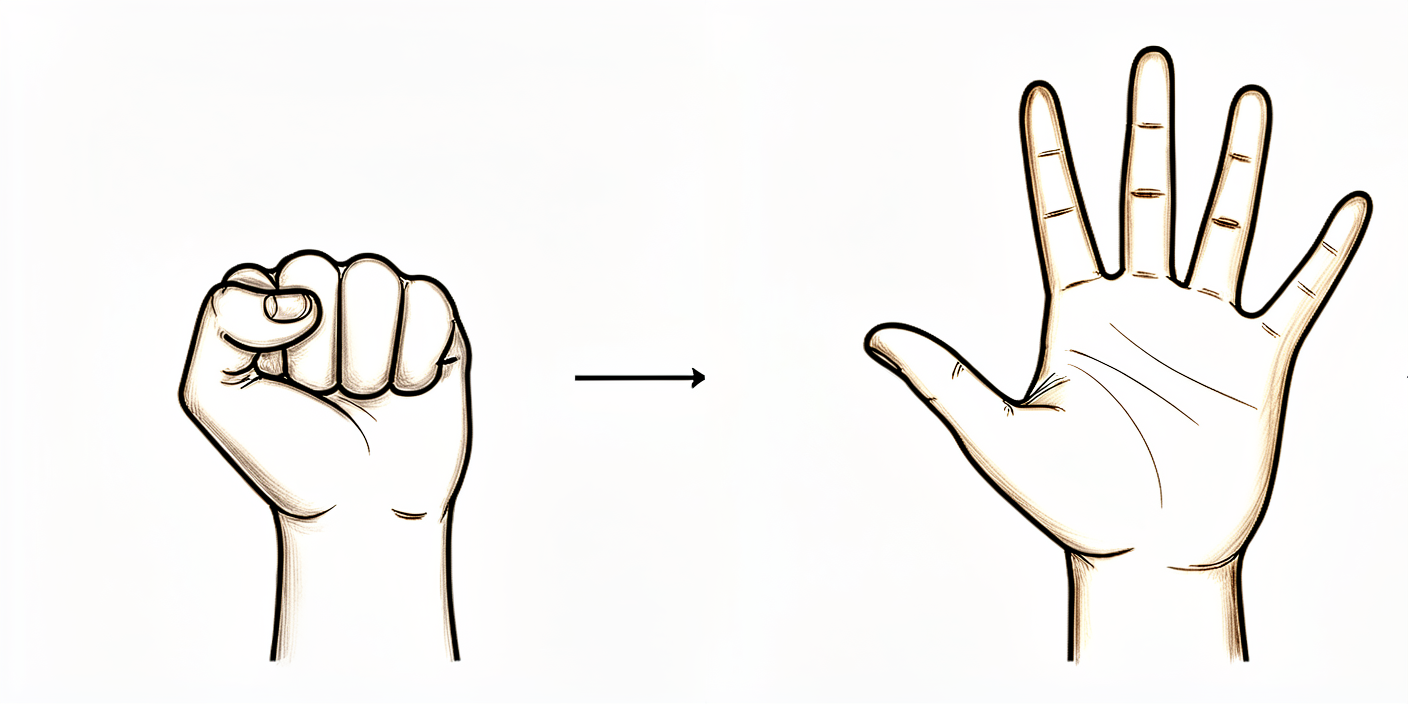
Movimento dos dedos (inicial)
Desde o primeiro ou segundo dia, feche lentamente a mão por completo e depois estenda os dedos totalmente. Os dedos não fazem parte do que foi reparado, por isso mantê-los em movimento é incentivado desde o início — isso controla o inchaço e evita que a mão fique rígida. Faça isso mesmo enquanto o punho estiver em repouso numa tala ou gesso.
10 vezes, várias vezes ao dia, desde o início
Kieran Hirpara 4.0
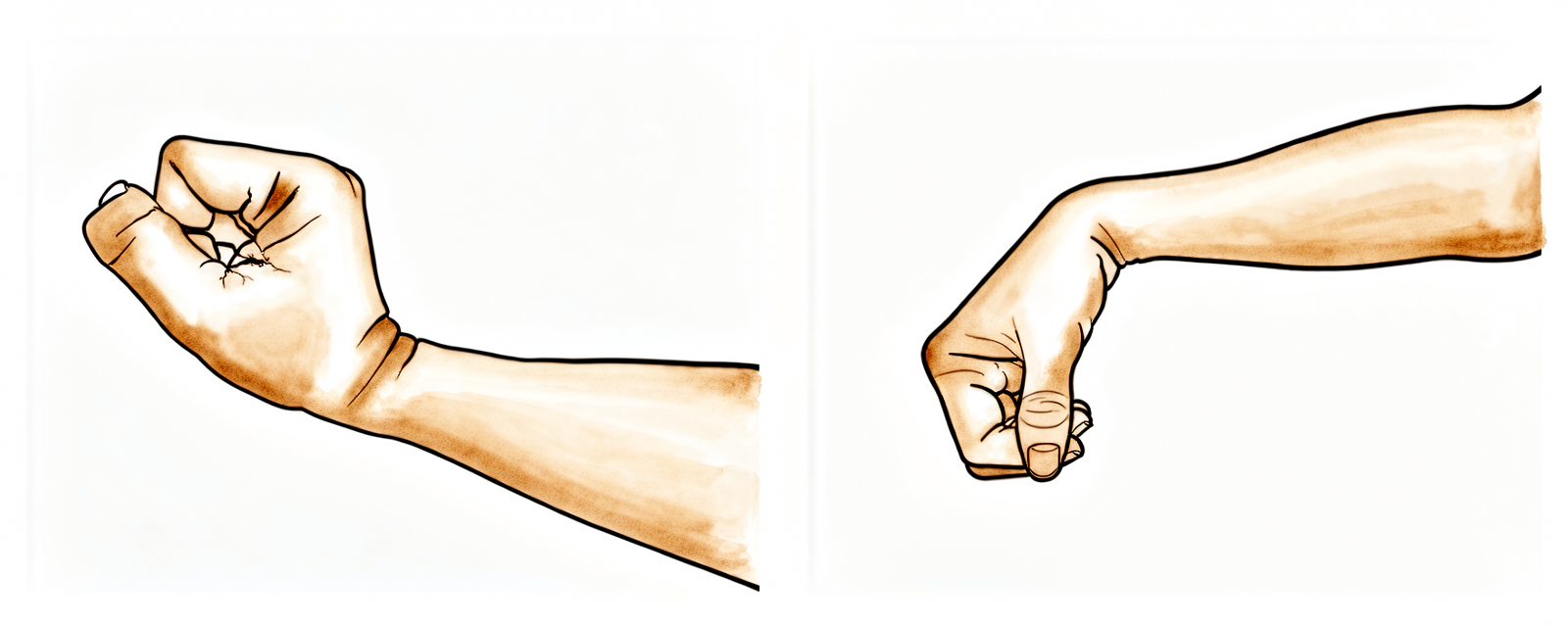
Movimento do punho (conforme o seu plano)
Se você fez uma limpeza (desbridamento, sinovectomia ou remoção de cisto sinovial), dobrar suavemente o punho para cima e para baixo — e de um lado para o outro — geralmente começa em poucos dias, assim que o conforto permitir. Se você fez um reparo do TFCC, o punho fica primeiro em repouso numa tala ou gesso, e o movimento do punho começa mais tarde, somente quando o seu terapeuta da mão o iniciar. Mantenha-se sempre dentro da amplitude que lhe foi indicada.
10 vezes em cada direção, 2–3 vezes ao dia, depois de iniciado
Kieran Hirpara 4.0
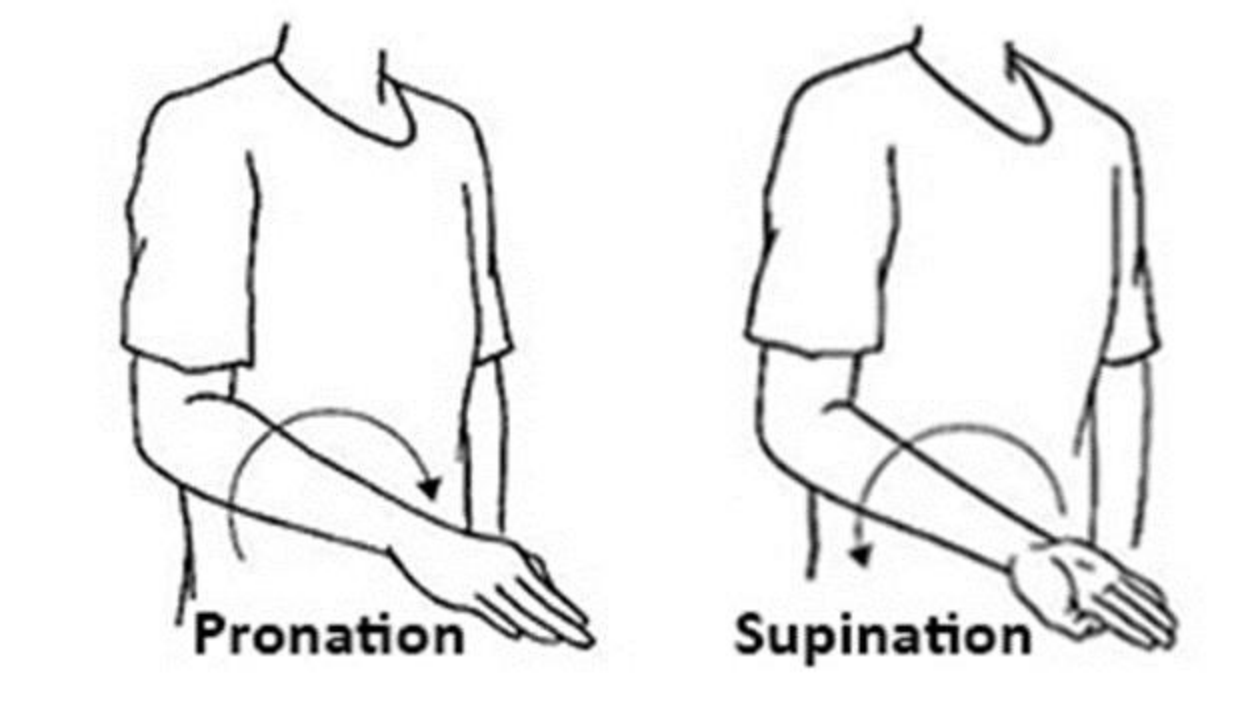
Rotação do antebraço — palma para cima / palma para baixo (conforme o seu plano)
Com o cotovelo junto ao corpo, vire suavemente a palma da mão para cima, em direção ao teto, e depois para baixo, em direção ao chão. Após uma limpeza, isso geralmente pode começar cedo. Após um reparo do TFCC, este é o ÚLTIMO movimento a ser liberado — girar o antebraço sobrecarrega o reparo, por isso ele é bloqueado numa tala ou gesso por cerca de quatro a seis semanas e depois reintroduzido gradualmente. Faça isso somente depois que o seu terapeuta da mão o liberar.
10 vezes em cada direção, 2–3 vezes ao dia, depois de liberado
Kieran Hirpara 4.0
Cuidados com as cicatrizes e os portais
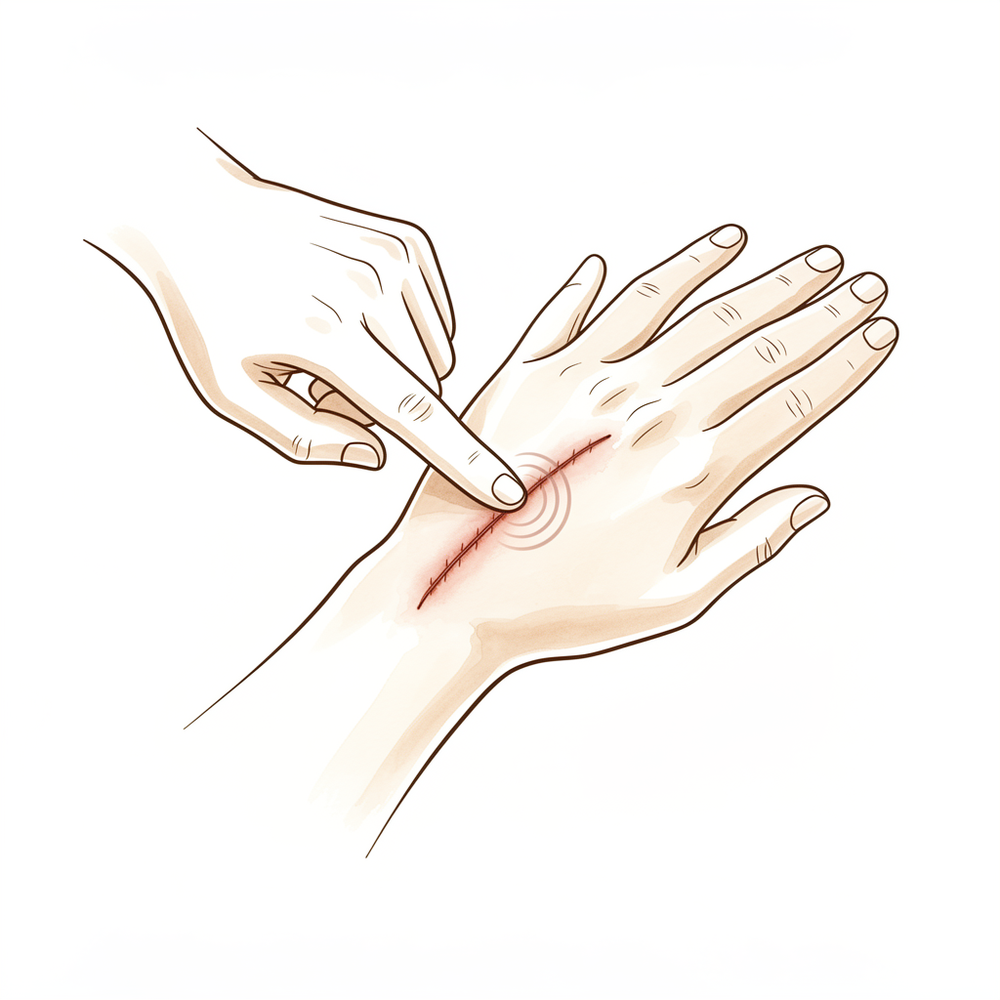
Quando as pequenas feridas dos portais estiverem totalmente cicatrizadas e secas, massageie cada pequena cicatriz com a ponta do dedo, usando um hidratante simples, em pequenos círculos. Os portais artroscópicos são minúsculos, mas podem parecer repuxados ou sensíveis — massagem suave e leves batidinhas (dessensibilização) mantêm a pele flexível e aliviam qualquer sensibilidade.
Alguns minutos, 2–3 vezes ao dia, depois que as feridas cicatrizarem
Kieran Hirpara 4.0
Fortalecimento da preensão (mais tarde)
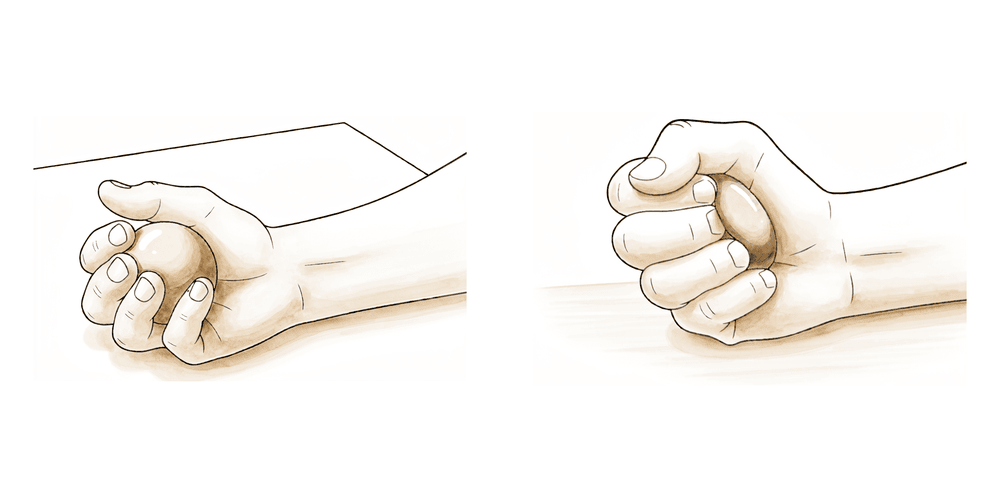
Um exercício para MAIS TARDE — somente quando o seu terapeuta da mão o iniciar. Aperte uma bola macia ou massa terapêutica, mantenha brevemente e depois relaxe. Após uma limpeza, a preensão leve costuma começar em cerca de duas semanas; após um reparo do TFCC, o fortalecimento espera até cerca de oito semanas, quando o movimento já tiver voltado. Aumente o esforço gradualmente e pare se sentir dor aguda.
10–15 apertos, 2–3 vezes ao dia, quando liberado
Estes são os exercícios do seu folheto. Comece-os somente conforme orientação do Dr. Hirpara e do seu terapeuta da mão, respeitando a amplitude e os limites que lhe foram indicados. O movimento dos dedos e o controle do inchaço começam desde o início para todos. O movimento do punho, a rotação do antebraço e a preensão dependem do que foi feito: começam cedo após uma limpeza, mas são adiados após um reparo do TFCC (especialmente a rotação do antebraço, que é o último movimento a ser liberado). Os cuidados com as cicatrizes e os portais começam assim que as pequenas feridas cicatrizarem. Interrompa qualquer exercício que cause dor aguda.
Seu protocolo clínico
O restante desta página é o protocolo clínico em fases para a reabilitação após artroscopia do punho. Esta seção deve ser entregue ao terapeuta da mão, e cada fase começa com uma explicação em linguagem simples sobre o que está acontecendo. O protocolo se divide conforme o que foi feito. Uma limpeza diagnóstica ou terapêutica (desbridamento, sinovectomia, excisão de cisto sinovial dorsal, desbridamento condral ou escafolunar, desbridamento do TFCC central) segue o caminho de mobilização precoce. Um reparo do TFCC periférico/foveal segue o caminho de rotação protegida, porque a rotação do antebraço aplica carga sobre o reparo. Confirme sempre, pela descrição cirúrgica e com o cirurgião responsável, qual caminho se aplica.
Antes do tratamento, verifique a descrição cirúrgica e o histórico médico do paciente e converse com o cirurgião responsável sobre o procedimento realizado (desbridamento puro/sinovectomia/cisto sinovial/desbridamento do TFCC central vs reparo periférico/foveal do TFCC), eventual instabilidade associada da articulação radioulnar distal (DRUJ) e a imobilização prescrita. Os dois caminhos abaixo diferem principalmente quanto ao tempo em que a rotação do antebraço é protegida.
Caminho A — Limpeza (desbridamento / sinovectomia / cisto sinovial / desbridamento do TFCC central): mobilização precoce
O caminho da limpeza remove ou apara tecido sem criar uma estrutura que precise de proteção; portanto, o objetivo é restaurar o movimento precocemente e evitar a rigidez. A imobilização é breve e serve apenas para conforto.
Fase I — mobilização precoce (semanas 0 a 2)
As primeiras semanas servem para acalmar o inchaço e a dor, enquanto o movimento começa quase imediatamente.
Para o seu terapeuta da mão:
Orientações e precauções - A imobilização é um curativo macio ou uma tala curta apenas para conforto, geralmente por até ~2 semanas; sem restrição de rotação em desbridamento central puro/sinovectomia/cisto sinovial - Dedos, polegar e (quando confortável) punho se movimentam desde o primeiro dia - Manter os portais limpos e secos até a cicatrização
Tratamento - Edema: elevação, bombeamento suave dos dedos, gelo conforme necessário - Exercícios: ADM ativa completa dos dedos e do polegar desde o início; flexão/extensão ativa do punho e desvio radial/ulnar conforme o conforto nos primeiros dias; pronação/supinação do antebraço suave conforme o conforto - Ferida: curativos dos portais conforme orientação; monitorar sinais de infecção
Critérios para progredir - Portais cicatrizados; inchaço diminuindo; ADM precoce confortável
Fase II — restauração do movimento e início do fortalecimento (semanas 2 a 6)
O movimento é normalizado e um fortalecimento leve é acrescentado assim que a amplitude estiver confortável.
Para o seu terapeuta da mão:
Avaliações - ADM ativa e passiva do punho e rotação do antebraço; preensão; dor e inchaço; revisão das cicatrizes/portais
Tratamento - Exercícios: progredir para ADM completa do punho e do antebraço; iniciar fortalecimento leve de preensão e com massa terapêutica a partir de cerca de 2 semanas; iniciar dessensibilização e massagem das cicatrizes/portais após a cicatrização - Progredir o uso funcional da mão conforme o conforto
Critérios para progredir - ADM quase completa e sem dor; inchaço resolvido; preensão em progresso
Fase III — fortalecimento e retorno (semana 6 em diante)
A força e a tolerância às tarefas são reconstruídas; a maioria dos pacientes retorna à atividade normal ao longo de algumas semanas. Observe que a limpeza proporciona alívio confiável dos sintomas, mas esse alívio não é garantido na dor ulnar difusa ou refratária; alinhe as expectativas quando a dor não for localizada.
Para o seu terapeuta da mão:
Tratamento - Exercícios: fortalecimento progressivo da preensão e do antebraço/punho; carga específica para tarefas e trabalho - Retorno a atividades leves/à maioria das atividades tipicamente em 2–6 semanas; cargas manuais ou esportivas mais pesadas conforme a tolerância e com base em critérios - Considerar a alta quando a força estiver quase simétrica e a função restaurada
Caminho B — Reparo periférico / foveal do TFCC: rotação protegida
O reparo sutura novamente a borda externa (vascularizada) do TFCC. Como a rotação do antebraço sobrecarrega o reparo, o antebraço é protegido numa tala ou gesso tipo Muenster (acima do cotovelo) (que permite flexão/extensão do cotovelo, mas bloqueia a pronação/supinação) por cerca de quatro a seis semanas. Em seguida, o movimento e depois a força são retomados de forma gradual.
Fase I — imobilização protegida (semanas 0 a 6)
O reparo é protegido contra carga rotacional enquanto os dedos permanecem móveis. As práticas variam, mas o padrão mais comum é a imobilização do antebraço em posição neutra a ligeira supinação por cerca de seis semanas; usa-se um gesso ou tala acima do cotovelo (Muenster) quando a rotação precisa ser firmemente controlada.
Para o seu terapeuta da mão:
Orientações e precauções - Imobilizar para proteger a rotação do antebraço: tala ou gesso Muenster/acima do cotovelo (cotovelo livre, rotação do antebraço bloqueada), antebraço em posição neutra a ligeira supinação, por ~4–6 semanas (geralmente 6) - Nenhuma pronação/supinação ativa ou passiva do antebraço nesta fase - ADM completa dos dedos e do polegar desde o primeiro dia; ADM suave do ombro - Manter os portais limpos e secos; monitorar sinais de infecção
Tratamento - Edema: elevação, bombeamento dos dedos, gelo conforme necessário - Exercícios: ADM ativa dos dedos/polegar; flexão/extensão do cotovelo isolada se o gesso Muenster permitir; nenhuma carga no punho ou na rotação do antebraço - Ferida/cicatriz: cuidados com os portais; iniciar o trabalho na cicatriz após a cicatrização
Critérios para progredir - ~4–6 semanas decorridas; reparo protegido; portais cicatrizados; dedos flexíveis
Fase II — movimento gradual (semanas 6 a 8)
O gesso/tala é retirado e o movimento é reconstruído, introduzindo a rotação do antebraço por último e de forma gradual, pois é o movimento que sobrecarregava o reparo.
Para o seu terapeuta da mão:
Avaliações - ADM do punho e do antebraço; dor e inchaço; revisão da cicatriz
Tratamento - Exercícios: iniciar flexão/extensão ativa do punho e desvio radial/ulnar; reintroduzir gradualmente a pronação/supinação do antebraço dentro do conforto, aumentando o arco de rotação ao longo das semanas seguintes em vez de forçá-lo - Continuar a dessensibilização das cicatrizes/portais
Critérios para progredir - ADM do punho e do antebraço confortável e em melhora; dor diminuindo
Fase III — fortalecimento e retorno (semanas 8 a 12+ e além)
O fortalecimento começa quando cerca de 70–100% do movimento do punho e do antebraço foi restaurado; depois, a carga e a tolerância às tarefas são aumentadas gradualmente.
Para o seu terapeuta da mão:
Avaliações - Força de preensão e do antebraço em comparação com o outro lado; resposta de dor/inchaço à carga; testes funcionais e específicos para trabalho/esporte
Tratamento - Exercícios: iniciar o fortalecimento da preensão e do antebraço/punho a partir de cerca de 8 semanas, após recuperar 70–100% da ADM; progredir para carga resistida gradual e específica para tarefas - O retorno ao esporte/trabalho mais pesado é baseado em critérios, tipicamente por volta de três meses (variação de ~3–4+ meses conforme a demanda) - Considerar a alta quando a força estiver quase simétrica e a função restaurada; encaminhar de volta ao médico responsável se a recuperação estagnar ou a instabilidade da DRUJ voltar
Retorno ao trabalho e às atividades
O uso leve da mão no dia a dia (comer, escrever, cuidados pessoais leves) é incentivado desde o início, dentro do conforto, desde que respeite os limites que lhe foram dados. Você pode voltar a dirigir quando estiver sem qualquer tala ou gesso e conseguir controlar o volante com segurança, conforme confirmado na sua consulta de revisão; planeje ter ajuda com o transporte nas primeiras semanas.
A rapidez do seu retorno depende do que foi feito. Após uma limpeza (desbridamento, sinovectomia, remoção de cisto sinovial ou regularização do TFCC central), a maioria das pessoas retoma as atividades leves normais em duas a seis semanas, aumentando a carga conforme o conforto permitir. Após um reparo do TFCC, a rotação do antebraço é protegida por cerca de quatro a seis semanas, o fortalecimento começa por volta de oito semanas e o retorno ao esporte ou a trabalhos manuais mais pesados costuma ocorrer por volta de três meses, avaliado pela recuperação do movimento e de uma força adequada e simétrica, e não apenas pelo calendário, sendo decidido em conjunto pelo Dr. Hirpara e pelo seu terapeuta da mão.
Após o seu protocolo
Este protocolo complementa as orientações gerais de recuperação do consultório: consulte controle da dor pós-operatória, cuidados com feridas e tratamento de cicatrizes. Se a sua cirurgia envolveu a articulação radioulnar distal ou se você não tiver certeza de qual caminho se aplica, o protocolo de hemirressecção da articulação radioulnar distal (DRUJ) é um protocolo relacionado. O plano em fases acima reflete diretrizes de reabilitação publicadas após artroscopia do punho e cirurgia do TFCC, e a sua recuperação contínua é orientada individualmente pelo Dr. Hirpara e pelo seu terapeuta da mão de acordo com a evolução do seu punho.
Evidence & references
This is the clinical evidence summary written for health professionals. It is technical, and it lists the research this page was built from. You do not need to read it to understand your treatment or to make a decision about it.
Wrist Arthroscopy — Procedure Outcomes & Post-operative Rehabilitation (Diagnostic / Therapeutic Keyhole Wrist Surgery)
Topic scope: post-operative rehabilitation after arthroscopic wrist surgery through small dorsal portals — covering debridement (central TFCC, chondral, scapholunate), synovectomy, dorsal ganglion excision, and peripheral/foveal TFCC repair. The defining feature of this topic is that a single operative approach (keyhole access) covers procedures with opposite rehabilitation needs: a clean-up creates nothing to protect and follows an early-motion pathway, whereas a repair creates a construct loaded by forearm rotation and must be protected. The rehabilitation pathway is therefore gated by what was done, not by the fact that arthroscopy was used.
Defining principle of the rehab here: wrist arthroscopy is a route, not a single operation. Where tissue is only removed (debridement of an avascular central TFCC tear, synovectomy, a dorsal ganglion, a chondral or scapholunate tidy-up), nothing has been reconstructed — immobilisation is brief and for comfort, wrist motion begins within days, and return is measured in weeks. Where the vascularised peripheral or foveal TFCC is repaired, the dominant stress on the construct is forearm rotation (pronation/supination), so the forearm is protected — typically a splint or Muenster (above-elbow) cast that frees the elbow but blocks rotation — for about 4–6 weeks, after which motion and then strength are graded back over roughly three months. The single branch point a therapist must establish from the operation note is debridement-class vs repair-class, and within repair, how long rotation is to be protected. The rehabilitation evidence itself is low-level and heterogeneous — protocols rest on biology, surgeon preference and expert/therapist consensus more than on trials.
A. PROCEDURE OUTCOMES (debridement / synovectomy / ganglion vs TFCC repair)
Wrist arthroscopy is both the diagnostic gold standard and the therapeutic workhorse for intra-articular ulnar-sided wrist pathology. The principal outcome split is between clean-up procedures and repair.
- Wrist arthroscopy is a versatile, low-morbidity platform. Through small dorsal portals it permits direct inspection and treatment of TFCC tears, chondral lesions, synovitis and ganglia, with the keyhole approach giving fast soft-tissue healing and small scars [Gupta, Bozentka, Osterman — JAAOS 2001, DOI 10.5435/00124635-200105000-00006]. Narrative/mechanistic.
- Arthroscopic debridement of central (Palmer 1A) TFCC tears relieves symptoms in well-selected, focal cases. The central disc is avascular and cannot heal if sutured, so trimming is the rational treatment; classic and long-term series report good symptom relief and durable function in suitable patients [Osterman — Arthroscopy 1990, DOI 10.1016/0749-8063(90)90012-3; Soreide et al., 19-year follow-up — HAND 2017, DOI 10.1177/1558944717708029]. Moderate–weak (case series, long follow-up).
- Debridement is unreliable for diffuse, non-focal ulnar-sided wrist pain. Where pain is recalcitrant and not clearly localised to a focal central tear, simple arthroscopic debridement has little useful value on the clinical course — a caution against over-attributing diffuse ulnar wrist pain to a debridable lesion [Nishizuka et al. — Bone Joint J 2013, DOI 10.1302/0301-620x.95b12.31918]. Moderate (prospective cohort).
- Peripheral/foveal TFCC repair restores DRUJ stability and gives good outcomes when the rim is repairable. All-arthroscopic and arthroscopic-assisted repair techniques (e.g. FasT-Fix, all-inside suture) report reliable pain relief, return of grip and high return-to-activity rates in vascularised peripheral tears, especially with DRUJ instability [Yao, Dantuluri, Osterman — Arthroscopy 2007, DOI 10.1016/j.arthro.2007.02.010; Yao — Hand Clin 2011, DOI 10.1016/j.hcl.2011.05.004]. Moderate–weak (technique series).
- Procedure choice is driven by tear location and DRUJ stability. Central tears → debridement; peripheral/foveal tears, particularly with DRUJ instability → repair. In ulnar-positive wrists, peripheral repair may be combined with or weighed against ulnar shortening osteotomy [Papapetropoulos et al. — J Hand Surg Am 2010, DOI 10.1016/j.jhsa.2010.06.015]. Moderate.
- Arthroscopic dorsal ganglion excision gives recurrence rates comparable to (or, in some series, better than) open excision, with the keyhole advantage of faster recovery and smaller scars. Arthroscopic resection reliably removes the cyst and addresses the stalk at its capsular origin [Nishikawa et al. — J Hand Surg Br 2001, DOI 10.1054/jhsb.2001.0620; Luchetti et al. — J Hand Surg Br 2000, DOI 10.1054/jhsb.1999.0290; Konigsberg et al. — HAND 2021, DOI 10.1177/15589447211003184; Suen, Fung, Lung — ISRN Orthop 2013, DOI 10.1155/2013/940615]. Moderate–weak (retrospective comparison + series).
B. REHABILITATION / THERAPY EVIDENCE
The central rehab question is how long, and against what, to protect the wrist — and the answer is set entirely by the procedure. The evidence base for the rehabilitation (as opposed to the surgery) is low-level and markedly heterogeneous, with no level-1 protocol and wide variation in immobilisation and progression timings; recommendations are best regarded as biologically-rationalised, consensus-driven guides rather than trial-proven schedules.
- Clean-up procedures follow an early-motion pathway. After debridement, synovectomy or ganglion excision there is no construct to protect: immobilisation is a soft dressing or short splint for comfort (≈2 weeks at most), wrist motion begins within days, and light grip strengthening is added at around 2 weeks. Return to most activity is measured in weeks (≈2–6) [How-we-treat reviews and technique series; consistent across sources]. Weak–moderate (consensus + series).
- TFCC repair protects forearm rotation, not just the wrist. Because pronation/supination is the dominant load on a peripheral/foveal repair, the forearm is immobilised — commonly a splint or Muenster/above-elbow cast that frees the elbow but blocks rotation — for about 4–6 weeks (six is the most commonly reported figure), in neutral to slight supination [scoping review of arthroscopic peripheral TFCC repair rehabilitation, PMC12274733; Australian hand-therapist survey of foveal-repair rehabilitation, J Hand Ther 2024]. Weak–moderate (scoping review + survey of practice).
- Forearm rotation is re-introduced last and graded. After the protected phase, wrist flexion/extension and deviation are restored first, with pronation/supination re-introduced gradually because it is the motion that stressed the repair. Strengthening typically begins once 70–100% of wrist and forearm ROM is regained (around 8 weeks) [scoping review PMC12274733]. Weak (consensus from heterogeneous protocols).
- Rehabilitation protocols are heterogeneous and lack consensus. Across studies, complete immobilisation ranged 1–8 weeks (forearm most commonly 6), ROM commencement and strengthening start varied widely (strengthening 3–12 weeks), and authors explicitly call for level-1 evidence. The practical implication is to follow the operating surgeon's prescription for the specific repair rather than a fixed universal schedule [scoping review PMC12274733; Australian hand-therapist survey]. Weak (the evidence's own conclusion).
Recovery trajectory (expected, evidence-anchored)
| Phase | Window | Restraint | Hand use / therapy focus | Strength / load | Notes |
|---|---|---|---|---|---|
| Clean-up I — early motion | Week 0–2 | Soft dressing / short splint for comfort | Fingers move day 1; early wrist flexion/extension, deviation and gentle forearm rotation within days; portal care | Light functional use | No construct to protect; rotation not restricted for central debridement/synovectomy/ganglion |
| Clean-up II–III — restore & return | Week 2–6+ | Restrictions lifted | Full wrist/forearm ROM; scar/portal desensitisation once healed | Light grip/putty from ~2 wk, graded loading thereafter | Return to most activity 2–6 wk; debridement unreliable for diffuse (non-focal) ulnar pain |
| Repair I — protected immobilisation | Week 0–6 | Forearm rotation blocked (splint / Muenster cast, neutral–slight supination) | Full finger/thumb ROM day 1; elbow flexion/extension if Muenster permits; no pronation/supination | None to the repair | ~4–6 wk (commonly 6); rotation is the dominant repair load |
| Repair II — graded motion | Week 6–8 | Rotation re-introduced gradually | Active wrist flexion/extension & deviation; forearm rotation re-introduced last and built up | Light, no resisted load yet | Restore motion before strength |
| Repair III — strengthen & return | Week 8–12+ | Load progressed by criteria | Grip/forearm strengthening once 70–100% ROM regained; task-specific loading | Strengthening from ~8 wk; graded resisted load | Return to sport/heavy work ~3 months (range ~3–4+); grip ~85% of opposite side, ~87% return to pre-injury activity |
(Phase windows mirror the precautions and recovery structure in the patient protocol; they are typical, consensus-derived guides — not trial-derived deadlines, and the surgeon's prescription overrides them.)
C. KEY CONTROVERSIES / EVIDENCE QUALITY
- Debridement vs repair is decided by tear location and DRUJ stability, not access. Central (avascular) tears are trimmed; peripheral/foveal (vascularised) tears, especially with DRUJ instability, are repaired. The same keyhole approach therefore launches opposite rehab pathways — the therapist must establish which from the operation note. Strong biological rationale, moderate clinical evidence.
- Debridement is not a panacea for ulnar wrist pain. It relieves focal central-tear symptoms but has little value for diffuse, recalcitrant ulnar-sided pain — a key expectation-setting point [Nishizuka 2013]. Moderate.
- How long to protect forearm rotation after repair is unsettled. Reported immobilisation ranges 1–8 weeks (forearm most commonly 6); there is no level-1 consensus, and practice (including Australian hand-therapist practice) varies. The defensible position is to protect rotation ~4–6 weeks and follow the operating surgeon. Weak (heterogeneous).
- Arthroscopic vs open ganglion excision. Recurrence is broadly comparable, with arthroscopy offering faster recovery and smaller scars; the evidence is retrospective rather than randomised [Konigsberg 2021; Nishikawa 2001; Luchetti 2000]. Moderate–weak.
- The rehabilitation evidence base is the weak link, not the surgery. Outcome studies of the operations outnumber and outrank the rehabilitation studies; rehab timings are biologically and consensus-driven, and the literature itself calls for level-1 trials [scoping review PMC12274733]. Weak.
D. EVIDENCE STRENGTH FLAGS (summary)
- MODERATE: versatility and low morbidity of wrist arthroscopy as a diagnostic/therapeutic platform; symptom relief from debridement of focal central TFCC tears (with long-term series); limited value of debridement for diffuse ulnar wrist pain; comparable recurrence of arthroscopic vs open dorsal ganglion excision; good outcomes of peripheral/foveal TFCC repair when the rim is repairable.
- WEAK / CONSENSUS: the specific rehabilitation schedules — clean-up early-motion (~2-wk comfort splint, motion within days, return 2–6 wk) and repair protected-rotation (splint/Muenster ~4–6 wk, ROM then strength from ~8 wk, return ~3 months). Immobilisation duration and progression timings are heterogeneous across the literature with no level-1 consensus; figures are typical guides, and the operating surgeon's prescription governs.
- EXPECTATION-SETTING (natural history): grip recovers to ≈85% of the opposite side and ≈87% of patients return to pre-injury activity after TFCC repair; debridement of diffuse (non-focal) ulnar wrist pain may not relieve symptoms.
CITATIONS
RAG corpus (180,000+ Orthopaedic articles)
- Wrist arthroscopy: principles and clinical applications. J Am Acad Orthop Surg. 2001. DOI: 10.5435/00124635-200105000-00006
- Arthroscopic debridement of triangular fibrocartilage complex tears. Arthroscopy. 1990. DOI: 10.1016/0749-8063(90)90012-3
- Arthroscopic-assisted resection of triangular fibrocartilage complex lesions: a 19-year follow-up. HAND. 2017. DOI: 10.1177/1558944717708029
- Simple debridement has little useful value on the clinical course of recalcitrant ulnar wrist pain. Bone Joint J. 2013. DOI: 10.1302/0301-620x.95b12.31918
- A novel technique of all-inside arthroscopic triangular fibrocartilage complex repair. Arthroscopy. 2007. DOI: 10.1016/j.arthro.2007.02.010
- All-arthroscopic repair of peripheral triangular fibrocartilage complex tears using FasT-Fix. Hand Clin. 2011. DOI: 10.1016/j.hcl.2011.05.004
- Management of peripheral triangular fibrocartilage complex tears in the ulnar positive patient: arthroscopic repair versus ulnar shortening osteotomy. J Hand Surg Am. 2010. DOI: 10.1016/j.jhsa.2010.06.015
- Arthroscopic diagnosis and treatment of dorsal wrist ganglion. J Hand Surg Br. 2001. DOI: 10.1054/jhsb.2001.0620
- Arthroscopic resection of dorsal wrist ganglia and treatment of recurrences. J Hand Surg Br. 2000. DOI: 10.1054/jhsb.1999.0290
- Recurrence rates of dorsal wrist ganglion cysts after arthroscopic versus open surgical excision: a retrospective comparison. HAND. 2021. DOI: 10.1177/15589447211003184
- Treatment of ganglion cysts. ISRN Orthop. 2013. DOI: 10.1155/2013/940615
Wrist arthroscopy / TFCC rehabilitation literature (URLs)
- Clinical and functional outcomes of rehabilitation strategies following arthroscopic repair of chronic isolated peripheral TFCC tears: a scoping review. J Orthop. 2025. PMC. https://pmc.ncbi.nlm.nih.gov/articles/PMC12274733/
- Current rehabilitation recommendations following primary triangular fibrocartilage complex foveal repair surgery: a survey of Australian hand therapists. J Hand Ther. 2024. https://www.jhandtherapy.org/article/S0894-1130(23)00117-5/fulltext
- TFCC injuries: how we treat? J Clin Orthop Trauma / PMC. 2020. https://pmc.ncbi.nlm.nih.gov/articles/PMC7384326/
- Review and update on the management of triangular fibrocartilage complex injuries in professional athletes. World J Orthop. 2024. https://www.wjgnet.com/2218-5836/full/v15/i2/110.htm
- Arthroscopic-assisted repair of the triangular fibrocartilage complex. J Hand Surg Glob Online. 2024. https://www.jhsgo.org/article/S2589-5141(24)00066-5/fulltext