Patients › Rehabilitation
Artroplastia por hemirreseção da articulação radioulnar distal
Um plano de recuperação após a artroplastia por hemirreseção e interposição da articulação radioulnar distal, procedimento no qual a parte desgastada da cabeça do ulna é parcialmente removida para restaurar a rotação indolor do antebraço. Após um breve período de proteção, a prioridade é iniciar a rotação do antebraço (movimentar a palma da mão para cima e para baixo), acrescentando gradualmente cargas maiores.
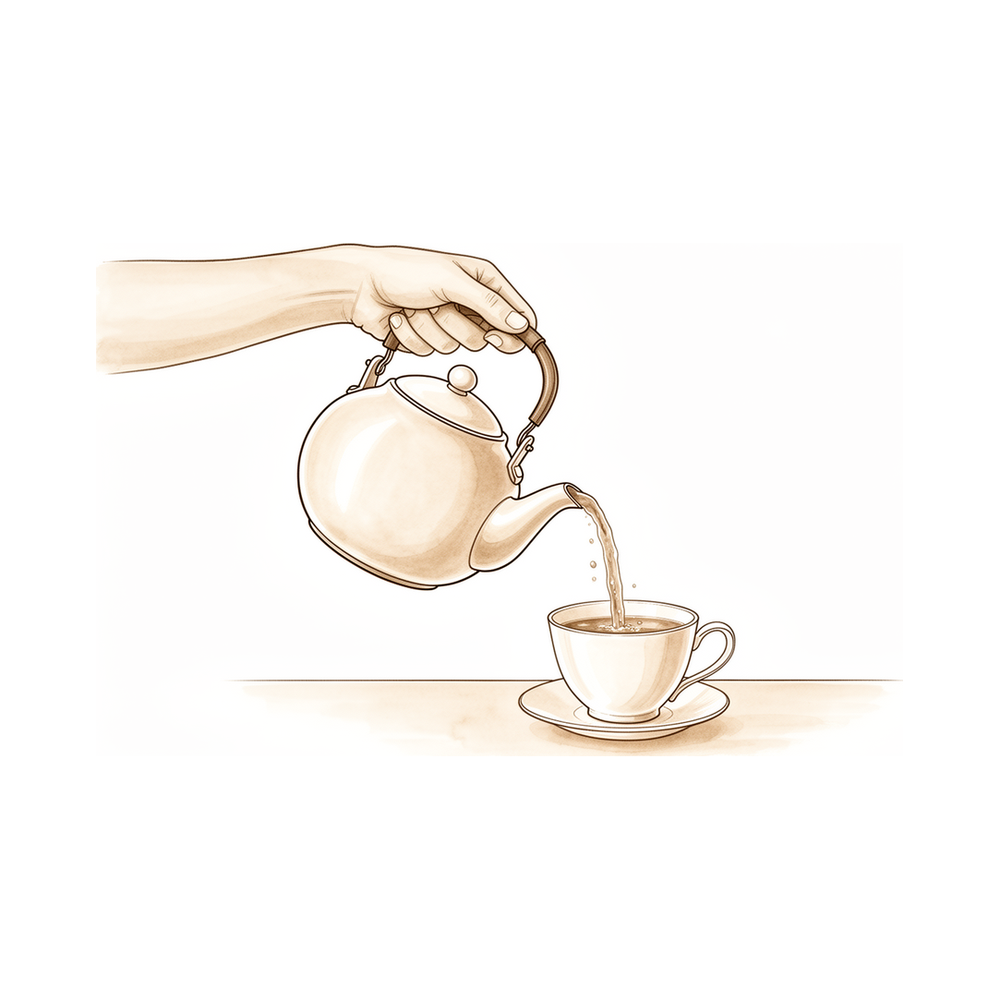
Este protocolo orienta sua recuperação após a hemirreseção e artroplastia por interposição da articulação radioulnar distal (DRUJ), procedimento que remodela a extremidade desgastada do antebraço para restaurar uma rotação confortável e sem dor; o cirurgião responsável é o Dr. Kieran Hirpara, no Mater Private Hospital Rockhampton. O processo começa com um programa de exercícios domiciliares, seguido pelo protocolo clínico estruturado elaborado para seu terapeuta de mão; leve esta página ou seu arquivo PDF à sua primeira sessão de terapia, para que a reabilitação seja devidamente coordenada. Seu terapeuta poderá ajustar o plano conforme a evolução da sua recuperação.
Caso tenha alguma dúvida ou preocupação quanto à ferida cirúrgica, entre em contato com o consultório. Geralmente é útil tirar uma foto da ferida e enviá-la por e-mail para análise.
O que esperar
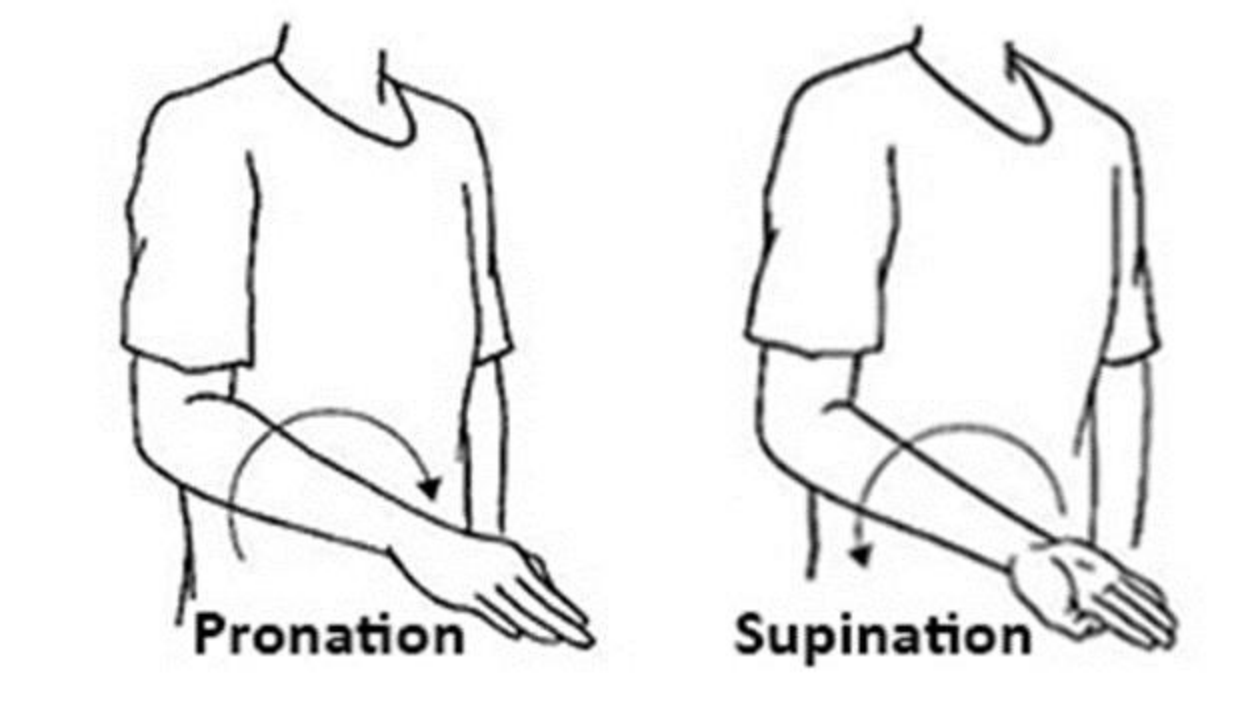
A articulação radioulnar distal (ARUD) é a pequena articulação próxima ao punho, do lado do dedo mindinho, onde os dois ossos do antebraço (o rádio e a ulna) se encontram. É essa articulação que permite girar o antebraço, colocando a palma da mão para cima (supinação) ou para baixo (pronação). Quando essa articulação se desgasta e torna-se artrítica, o movimento de rotação do antebraço torna-se doloroso.
Na artroplastia por hemirreseção, apenas a parte desgastada e artrítica da cabeça da ulna é removida (uma remoção parcial: “hemi” significa metade); em seguida, um pequeno pedaço do próprio tecido mole do paciente é inserido no espaço resultante para evitar o atrito entre as superfícies articulares. Essa cirurgia preserva as principais estruturas estabilizadoras, incluindo o TFCC (a rede de cartilagem e ligamentos que sustenta o punho nesse lado), o estiloide ulnar e as inserções de tecidos moles, garantindo assim o suporte à extremidade da ulna. É isso que a diferencia da remoção total da cabeça da ulna (procedimento de Darrach).
Como as superfícies articulares são simplesmente remodeladas, e não reparadas ou reconstruídas, não há tendões ou ligamentos que precisem cicatrizar sob proteção por meses. O objetivo dessa operação é proporcionar rotação do antebraço sem dor; por isso, a parte mais importante da reabilitação é retomar esse movimento o quanto antes. Após um breve período de proteção com uma tala, para que os tecidos moles se estabilizem, a recuperação da capacidade de girar o antebraço (palma para cima e para baixo) torna-se o foco principal. A força e a carga maior são introduzidas gradualmente depois disso.
Precauções e limitações
- Durante as primeiras duas a três semanas, use a tala conforme orientado; ela limita suavemente a rotação do antebraço enquanto o tecido interposto se estabiliza. Mantenha os dedos e, quando permitido, o pulso em movimento durante esse período.
- Após a retirada da tala, dê prioridade à rotação do antebraço, sempre sem dor e sem carga. No início, realize esses movimentos com a mão vazia, sem resistência de peso.
- NÃO submeta o antebraço a esforços rotacionais nos primeiros tempos: evite abrir potes, torcer panos, usar chaves de fenda ou carregar sacolas pesadas do lado operado, até que o fortalecimento muscular seja autorizado (geralmente após seis a oito semanas).
- Fique atento a qualquer dor ou sensação de instabilidade no lado do dedo mínimo do pulso ao empurrar ou carregar peso com o antebraço, pois é justamente essa região que foi operada. Informe seu fisioterapeuta especializado em mão; não persista no movimento se houver desconforto.
- Desde o início, mantenha os dedos, o polegar, o cotovelo e o ombro em movimento livre. Você pode utilizar a mão para tarefas cotidianas leves, desde que não envolvam torções forçadas ou cargas excessivas.
Para orientações sobre cuidados com a ferida, inchaço e cicatrização, consulte o guia de cuidados com a ferida do consultório.
Seus exercícios
Kieran Hirpara 4.0
Rotação do antebraço (palma da mão para cima / palma da mão para baixo)
Este é o exercício principal — é o movimento que a cirurgia visa restaurar. Com o cotovelo colado ao corpo e dobrado em um ângulo reto (de modo que o ombro não possa influenciar o movimento), vire suavemente a palma da mão para cima, em direção ao teto, e depois abaixe-a lentamente em direção ao chão. Faça o movimento apenas até onde for confortável. Comece a praticá-lo quando o Dr. Hirpara e o fisioterapeuta de mão autorizarem a retirada da tala para exercícios — geralmente após duas a três semanas — e faça desse exercício sua prioridade a partir de então.
10 vezes em cada direção, 3-4 vezes ao dia, amplitude de movimento sem dor.
Kieran Hirpara 4.0
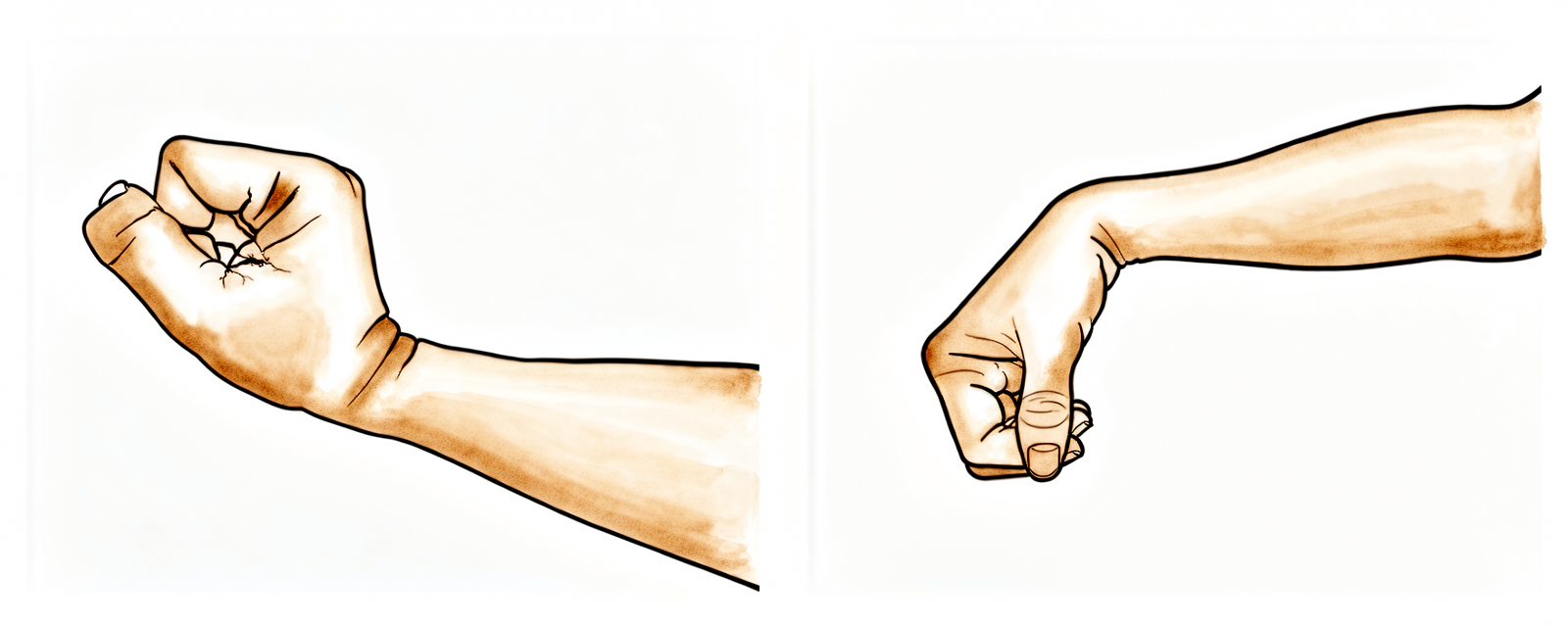
Movimento do pulso (flexão e extensão)
Flexione suavemente o pulso para a frente (palma voltada para o antebraço) e para trás (dorso da mão voltado para o antebraço), mantendo o movimento lento e dentro dos limites do conforto. Isso evita que o pulso fique rígido enquanto a porção distal da ulna se estabiliza. No início, faça os movimentos com delicadeza e não force até o limite da amplitude.
10 vezes em cada direção, 2-3 vezes ao dia.
Kieran Hirpara 4.0
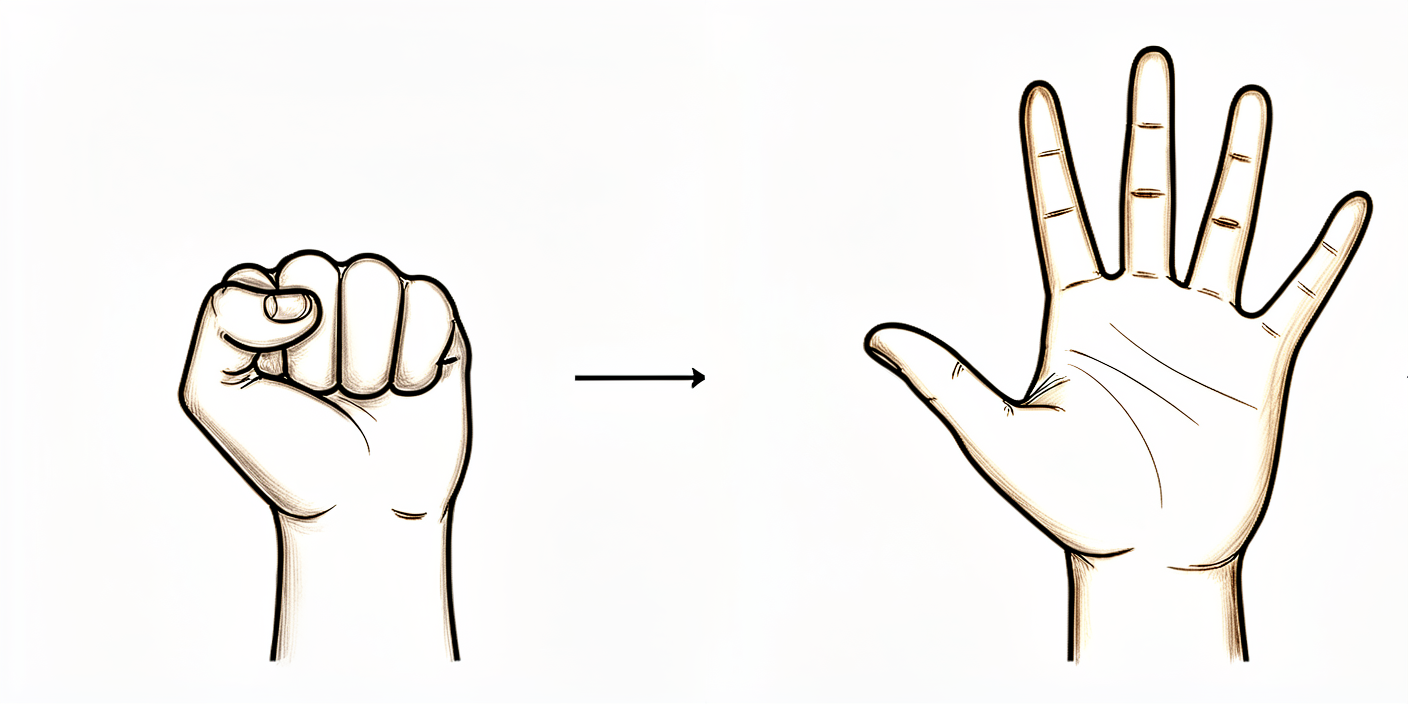
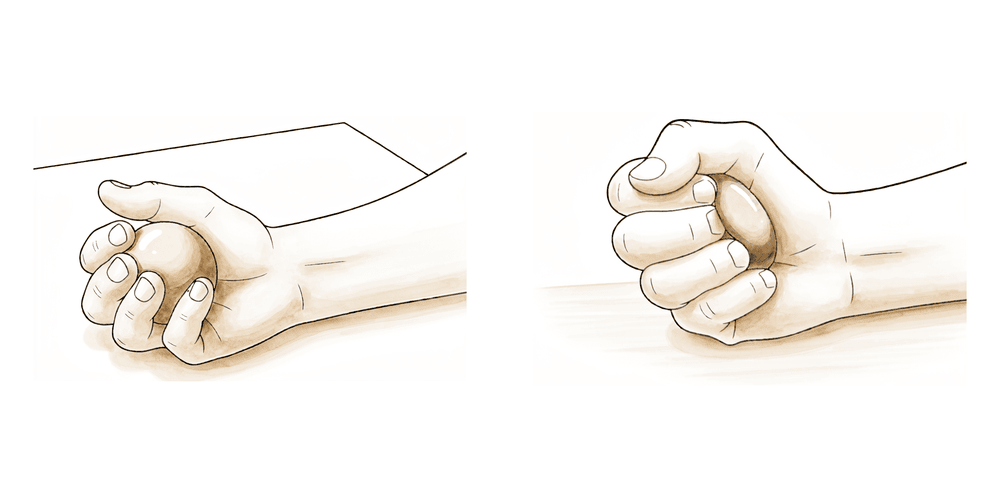
Movimentação dos dedos (fazer um punho fechado completamente e esticar)
Comece isso já no primeiro dia. Faça um punho fechado e firme, depois abra a mão e estique os dedos completamente. Manter os dedos em movimento desde cedo evita a rigidez e ajuda na drenagem do inchaço. Faça isso várias vezes ao dia, mesmo enquanto o antebraço ainda estiver na tala.
10 vezes, a cada duas horas enquanto estiver acordado.
Kieran Hirpara 4.0
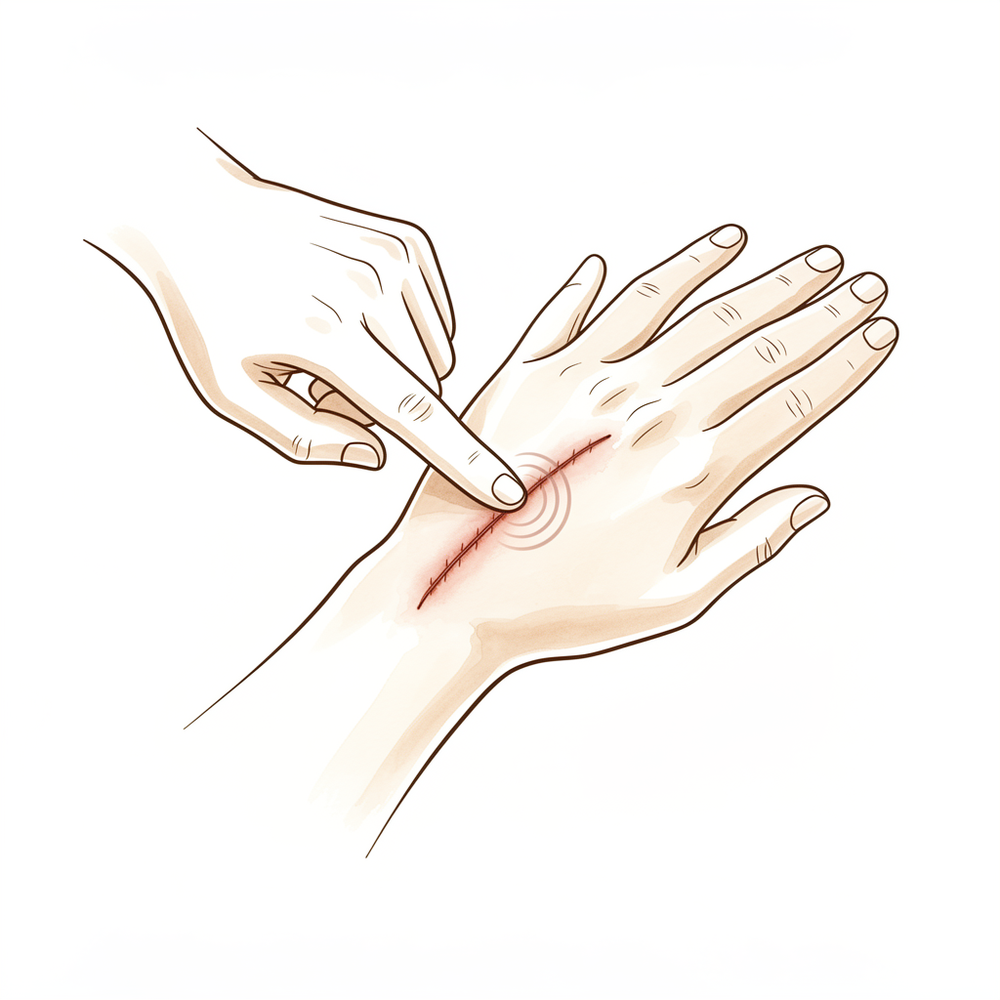
Massagem nas cicatrizes
Assim que a ferida estiver totalmente cicatrizada e não houver mais crostas (geralmente após três a quatro semanas), aplique uma pequena quantidade de hidratante comum na cicatriz, massageando em círculos firmes por alguns minutos. Isso amacia a cicatriz e ajuda a pele e os tendões sobre a extremidade distal da ulna a se moverem livremente. Interrompa a massagem caso a ferida ainda não esteja completamente fechada.
2-3 minutos, duas vezes ao dia, após a cicatrização da ferida.
Kieran Hirpara 4.0
Fortalecimento da preensão e da rotação (posteriormente)
Um exercício posterior — somente após o Dr. Hirpara e o seu fisioterapeuta de mão autorizarem o fortalecimento, geralmente a partir da sexta à oitava semana. Aperte uma bola macia ou massa de modelar para recuperar a força de preensão, e gire o antebraço para cima e para baixo contra uma resistência leve (por exemplo, um peso leve segurado como se fosse um martelo). Aumente gradualmente a resistência ao longo de várias semanas. Interrompa o exercício caso girar o antebraço sob carga cause dor no lado do dedo mínimo do pulso.
Conforme orientação do seu terapeuta ocupacional (apenas a partir de ~6-8 semanas).
Estes são os exercícios descritos no seu folheto informativo. Comece-os somente sob orientação do Dr. Hirpara e do seu terapeuta ocupacional, respeitando os limites e a amplitude de movimento que lhe foram indicados. O movimento dos dedos deve ser iniciado imediatamente. A rotação do antebraço (o exercício central desta reabilitação) e o movimento do punho só devem ser iniciados após a retirada da tala, geralmente após duas a três semanas; a partir daí, a rotação torna-se o foco principal. A massagem da cicatriz deve ser feita somente quando a ferida estiver totalmente curada. O fortalecimento da preensão e da rotação pertence a uma fase posterior e só deve ser iniciado após autorização médica específica. Interrompa qualquer exercício que cause dor intensa no lado do dedo mindinho do punho.
Seu protocolo clínico
O restante desta página descreve o protocolo clínico em etapas para a reabilitação após a hemirreseção com interposição na artroplastia da articulação radioulnar distal. Esta seção deve ser entregue ao seu terapeuta de mão; cada fase começa com uma explicação simples, em linguagem acessível, sobre o que está ocorrendo. Trata-se de um procedimento de remodelação articular (artroplastia), não de reparo: não há estrutura sob tensão que precise ser protegida por meses. A restrição imposta é breve: um período curto de imobilização com tala para permitir a adaptação do tecido interposicionado e da cápsula articular; após isso, a prioridade explícita é o restabelecimento precoce da rotação do antebraço, pois essa é a função que o procedimento visa restaurar. A principal carga a ser respeitada ao longo do processo é a carga rotacional sobre a ulna distal, pois é ela que gera instabilidade dolorosa do coto ulnar e a convergência radioulnar.
Antes de iniciar o tratamento, verifique o relatório cirúrgico do paciente e seu histórico médico; consulte também o cirurgião responsável sobre eventuais procedimentos concomitantes (reparo do TFCC, osteotomia do rádio distal, neurectomia do nervo interósseo posterior, reconstrução dos tendões extensores), a estabilidade do coto ulnar avaliada intraoperatoriamente, além da tala prescrita e do limite de rotação permitido. A realização simultânea de reparo do TFCC ou osteotomia do rádio distal prolonga o período de proteção; já a hemirreseção isolada, indicada para artrite degenerativa ou pós-traumática, segue o caminho mais curto descrito abaixo. O Dr. Hirpara preserva o TFCC, o estiloide ulnar e as inserções dos tecidos moles da ulna, garantindo assim o suporte adequado ao segmento distal da ulna; por isso, a reabilitação pode focar desde cedo na rotação.
Fase I — estabilização protegida com tala (semanas 0 a 2-3)
Nas duas ou três primeiras semanas, protege-se a interposição de tecidos moles e a cápsula articular, mantendo o restante do membro em movimento. O antebraço permanece imobilizado numa tala (geralmente uma tala acima do cotovelo do tipo Muenster ou gesso que limita a rotação do antebraço), removida apenas para higiene e, no final desta fase, para as primeiras rotações suaves. Os dedos devem ser movimentados desde o primeiro dia.
Para o seu terapeuta da mão:
Instruções e precauções - Imobilizar com a tala prescrita (tipo acima do cotovelo/Muenster ou conforme indicação do cirurgião), limitando a rotação do antebraço; removê-la apenas para higiene e para os exercícios autorizados - Proibir qualquer rotação do antebraço com carga; não permitir suporte de peso nem torções no antebraço operado - Assegurar ao paciente que a fraqueza inicial na preensão e o inchaço no lado ulnar são esperados
Manejo - Ferida: aplicar curativos cirúrgicos conforme orientação; monitorar sinais de infecção - Edema: elevar o membro, realizar movimentos suaves com a mão e aplicar gelo conforme necessário - Exercícios: movimentação ativa dos dedos, polegar e (se não impedida pela tala) amplitude de movimento do ombro desde o primeiro dia; realizar movimentos suaves de flexão/extensão do cotovelo conforme permitido pela tala; introduzir rotação ativa suave e indolor do antebraço nos últimos dias desta fase, caso o cirurgião autorize a remoção antecipada da tala
Critérios para avançar para a fase seguinte - Ferida em processo de cicatrização; período de uso da tala concluído (aproximadamente 2-3 semanas para hemireseção isolada); autorização do cirurgião para iniciar movimentos ativos
Fase II — rotação inicial do antebraço (a prioridade) (semanas 2-3 a 6)
Esta é a fase decisiva. Após a retirada da tala, a pronação e supinação ativas tornam-se o foco principal da reabilitação: de forma suave, frequente, sem dor e sem carga. O movimento do punho também é incorporado. A rotação é a função restaurada pela cirurgia; portanto, deve ser estimulada ativamente nesta fase, enquanto a carga ainda é evitada.
Para o seu fisioterapeuta:
Avaliações - Pronação/supinação ativa e passiva do antebraço (objetivo: alcançar aproximadamente 80° em cada direção, conforme relatos em estudos); amplitude de movimento do punho e dos dedos; dor no lado ulnar do punho; edema; avaliação da ferida e da cicatriz
Instruções e precauções - A rotação do antebraço é a prioridade: pronação/supinação ativas frequentes, sem dor e sem carga; o cotovelo deve ficar junto ao corpo para isolar o antebraço - Não realizar rotação com resistência ou carga, nem tarefas que exijam aperto forte ou torção até aproximadamente a semana 6-8 - Algumas talas limitam ainda mais a rotação nos extremos de amplitude por algumas semanas após a retirada do gesso; respeitar quaisquer restrições prescritas
Tratamento - Exercícios: foco principal na pronação/supinação ativa e assistida; flexão/extensão do punho e desvio radial/ulnar ativos; manter a amplitude de movimento dos dedos e exercícios de preensão (sem resistência ainda); iniciar cuidados com a cicatriz após a completa cicatrização da ferida - Utilizar modalidades terapêuticas para controle do edema e da cicatriz, conforme necessário
Critérios para avançar para a fase seguinte - Rotação ativa do antebraço quase completa, sem dor e sob controle; ferida totalmente cicatrizada; dor ≤3/10; ausência de dor no lado ulnar durante movimentos suaves de rotação
Fase III — fortalecimento e retorno às atividades (semanas 6-8 e seguintes)
Após a restauração da rotação e ausência de dor, inicia-se o fortalecimento de forma gradual: primeiro a força de preensão, depois a rotação do antebraço sob carga, observando especialmente qualquer instabilidade dolorosa do coto ulnar ou convergência radio-ulnar sob carga. O retorno a atividades mais pesadas e ao esporte é baseado em critérios específicos.
Para o seu terapeuta da mão:
Avaliações - Força de preensão comparada ao lado contralateral (os resultados indicam recuperação para cerca de 85-90% do valor do lado oposto); força de rotação do antebraço e presença de dor ou instabilidade na rotação sob carga; testes funcionais e específicos para o trabalho/esporte, conforme necessário
Instruções e precauções - Iniciar com preensão resistida, seguida de rotação do antebraço sob carga gradual (por exemplo, girar um martelo com peso leve), a partir da sexta à oitava semana; aumentar a carga lentamente - Ficar atento à instabilidade dolorosa do coto ulnar ou convergência radio-ulnar sob carga axial ou rotacional: caso ocorra, reduzir a carga e consultar o cirurgião
Tratamento - Exercícios: fortalecimento progressivo da preensão e uso de massa de modelar; rotação prono-supinadora resistida em graus crescentes (leve → moderada); cargas específicas para tarefas cotidianas; prosseguir com exercícios para manutenção da amplitude de movimento - Considerar a alta terapêutica quando a rotação e a força de preensão estiverem funcionais, quase simétricas e com bom retorno de funcionalidade - Encaminhar novamente ao médico responsável caso a recuperação estagne ou persista dor no lado ulnar sob carga, sugerindo instabilidade ou convergência do coto
Critérios para retorno às atividades com carga/esporte - Força de preensão e rotação quase simétricas; rotação sob carga sem dor; ausência de instabilidade nos testes funcionais
Voltando ao trabalho e às atividades
O uso leve e cotidiano da mão (comer, escrever, cuidados pessoais simples) é incentivado desde o início, dentro do limite do conforto, desde que não envolva torções forçadas ou com carga do antebraço. Como o seu antebraço está imobilizado inicialmente e você precisa controlar com segurança o volante (inclusive girá-lo), planeje contar com ajuda para o transporte nas primeiras semanas; a volta à direção só ocorre após a retirada da tala e quando você conseguir girar o antebraço de forma confortável e segura para dirigir, conforme confirmado na consulta de acompanhamento.
Tarefas que exigem torção com carga (abrir potes difíceis de abrir, torcer objetos, usar um parafusadeira, carregar sacolas pesadas com esse lado do corpo) devem ser evitadas até que o fortalecimento muscular seja autorizado (geralmente por volta da sexta à oitava semana), sendo então introduzidas gradualmente. O retorno a trabalhos manuais mais pesados e a práticas esportivas segue o mesmo critério progressivo e depende da recuperação de uma rotação do antebraço e força de preensão quase simétricas, sem dor, conforme avaliação do Dr. Hirpara e do seu terapeuta da mão — e não apenas com base no calendário.
Após seguir este protocolo
Este protocolo complementa as orientações gerais de recuperação fornecidas pelo consultório; consulte controle da dor pós-operatória, cuidados com a ferida e tratamento das cicatrizes. Caso o seu problema na articulação radioulnar distal tenha surgido após uma fratura do rádio, o protocolo de fixação de fratura do rádio distal também será útil. O plano em fases descrito acima baseia-se nas diretrizes de reabilitação publicadas após a hemirreseção da articulação radioulnar distal; a evolução da sua recuperação será acompanhada individualmente pelo Dr. Hirpara e pelo seu fisioterapeuta, conforme o progresso do seu antebraço.
Evidence & references
This is the clinical evidence summary written for health professionals. It is technical, and it lists the research this page was built from. You do not need to read it to understand your treatment or to make a decision about it.
DRUJ Hemiresection-Interposition Arthroplasty (Bowers) — Procedure Outcomes & Post-operative Rehabilitation
Topic scope: post-operative rehabilitation after hemiresection-interposition arthroplasty (HIT) of the distal radioulnar joint (DRUJ) — the Bowers procedure — for painful DRUJ arthritis (degenerative, post-traumatic, or inflammatory). The arthritic portion of the ulnar head is partially resected and a soft-tissue spacer is interposed, preserving the TFCC, ulnar styloid and ulnar soft-tissue attachments so the distal ulna remains supported. This is a joint-reshaping arthroplasty, not a repair or reconstruction: the rehab is therefore an early-rotation pathway built around a short protected settling phase, then prioritised restoration of forearm pronation/supination, then graded loading — not months of construct protection.
Defining principle of the rehab here: the operation exists to restore pain-free forearm rotation, and nothing is sutured under tension that must heal protected for months. The deliberate restraint is a brief splinted phase (commonly an above-elbow / Muenster-type splint limiting forearm rotation for ~2-3 weeks in the isolated case) to let the soft-tissue interposition and capsule settle. After that, early active pronation/supination is the explicit priority — rotation is the function the operation restores. The single load to respect throughout is rotational/axial loading of the distal ulna, which provokes the characteristic failure mode: painful ulnar-stump instability and radioulnar convergence. The main branch point that lengthens the protected phase is a concurrent procedure (TFCC repair, distal radius osteotomy, extensor reconstruction).
A. PROCEDURE OUTCOMES (hemiresection-interposition arthroplasty)
The Bowers HIT is a long-established, generally reliable salvage for the arthritic DRUJ. The evidence base is level IV (retrospective cohorts and case series, no randomised trials), but it is consistent across decades: most patients gain durable pain relief and improved, stable forearm rotation, with the principal residual concern being ulnar-stump instability / radioulnar convergence under load.
- The original Bowers series established the procedure and its rationale. Bowers' 1985 description (38 patients, mean ~2.5 yr) reported stable, painless rotation in the great majority — in rheumatoid patients ~85% achieved stable painless rotation (pronation ~84°, supination ~77°), and degenerative/post-traumatic patients achieved painless rotation averaging ~80° in each direction. The technique was explicitly designed to preserve the functional ulnocarpal ligament complex [Bowers, J Hand Surg Am 1985]. Level IV (foundational case series).
- Long-term outcomes are durable but with a defined complication rate. A long-term cohort (66 patients, mean follow-up 8.6 years) reported low residual pain (median NRS 1/10), an overall complication rate of ~14% and reoperation ~8%; reported complications included stylocarpal impingement, ulnar subluxation, exostoses and tendon rupture. Inflammatory-arthritis patients had lower pain than post-traumatic patients (median 0 vs 5). The same series found PIN neurectomy associated with improved pain scores [HIT long-term outcome study, Hand (N Y) 2019]. Level IV (cohort).
- Forearm rotation, grip and pain all improve measurably. A capsuloretinacular HIT series (21 wrists, mean ~2 yr 10 mo) reported significant gains: pronation 56.8°→83.0°, supination 60.0°→82.0°, grip 66.0%→87.4% of the contralateral side, VAS pain 62→23 mm, DASH 37.7→25.0, PRWE 48.1→24.4, with no post-operative DRUJ instability reported in that series [HIT capsuloretinacular series, J Wrist Surg 2023]. Level IV (cohort).
- HIT sits within a family of DRUJ salvage options (Darrach distal ulna resection, Sauvé-Kapandji arthrodesis-pseudarthrosis, matched/hemiresection variants, and ulnar-head implant arthroplasty), each with its own instability/convergence profile; HIT's selling point is preservation of the ulnar support structures to reduce stump instability versus a formal Darrach [Bowers 1985; Glowacki, Hand Clin 2005; Chidgey, JAAOS 1995; Rekant, Hand Clin 2012; Murray, Hand Clin 2011]. Mechanistic / narrative-review.
B. REHABILITATION / THERAPY EVIDENCE
There is no trial-level evidence for any specific rehabilitation regimen after DRUJ HIT. Protocols are surgeon- and technique-derived expert consensus, reported as the post-operative methods of the outcome series and operative-technique articles above. The consensus is consistent on its key features.
- A brief protected settling phase, not prolonged immobilisation. In the isolated hemiresection (no distal radius osteotomy, no TFCC repair), a long-arm plaster splint for ~10 days followed by a removable Muenster splint for a further 2-3 weeks is typical; cohort series report an upper-arm cast ~3 weeks then a forearm cast 1-2 weeks. Where a distal radius osteotomy or TFCC repair is added, immobilisation is longer (e.g. a long-arm cast in ~45° supination for ~4 weeks) [Pillukat & van Schoonhoven, Oper Orthop Traumatol 2009; HIT capsuloretinacular series, J Wrist Surg 2023]. Weak / expert consensus.
- Early forearm rotation is the explicit priority once protection ends. The whole point of the operation is rotation, so active pronation/supination is pursued early and frequently. Some protocols further limit end-range rotation by splint for ~4 more weeks after the cast comes off before unrestricted motion and load [Pillukat & van Schoonhoven 2009]. Weak / expert consensus.
- Loading is added last, watching for the characteristic failure mode. Range and load are returned to normal after the rotation-limited window; the specific thing to watch is painful ulnar-stump instability and radioulnar convergence under axial/rotational load, which is the biomechanically demonstrated weak point of distal-ulna procedures [Sauerbier et al., J Hand Surg Br 2002; Douglas et al., J Hand Surg Am 2014; Barret et al., Orthop Traumatol Surg Res 2020]. Mechanistic (biomechanical) + consensus.
- Finger, thumb, elbow and shoulder motion from day one is standard to prevent stiffness, as in any forearm/wrist immobilisation pathway. Consensus.
Recovery trajectory (expected, evidence-anchored)
| Phase | Window | Restraint | Hand use / therapy focus | Strength / load | Notes |
|---|---|---|---|---|---|
| I — Protected settling | Week 0 to 2-3 | Splint limiting forearm rotation (Muenster / above-elbow type) | Active finger/thumb/shoulder ROM from day 1; elbow ROM as splint allows; first gentle pain-free rotation toward end of phase | None through forearm | Longer if concurrent TFCC repair or distal radius osteotomy (cast in supination ~4 wk) |
| II — Early forearm rotation (priority) | Week 2-3 to 6 | Unloaded; some protocols cap end-range rotation a few more weeks | Active pronation/supination as the main focus, elbow tucked; add wrist ROM; finger/grip ROM; scar massage once healed | No resisted/loaded rotation, no heavy grip | Target restoration toward ~80° each direction; pain-free is the rule |
| III — Strengthening & return | Week 6-8+ | Restrictions lifted progressively | Resisted grip first, then graded loaded rotation (hammer turns); task-specific loading | Build load slowly; grip recovers toward ~85-90% contralateral | Watch for ulnar-stump instability / radioulnar convergence under load |
(Phase windows mirror the precautions and phase tables in the patient protocol; they are typical expert-consensus guides, not trial-derived deadlines, and lengthen with concurrent procedures.)
C. KEY CONTROVERSIES / EVIDENCE QUALITY
- HIT vs Darrach. The Darrach (complete distal ulna resection) is simpler but sacrifices the ulnar support structures and is more prone to painful proximal ulnar-stump instability and radioulnar convergence, especially in younger, higher-demand or post-traumatic patients. HIT preserves the TFCC/styloid/attachments to mitigate this — but biomechanical work shows HIT also converges under load, just to a different degree, so convergence is a spectrum, not a HIT-vs-Darrach binary [Sauerbier et al., J Hand Surg Br 2002; Douglas et al., J Hand Surg Am 2014]. Darrach remains reasonable in low-demand/elderly patients. *Moderate (biomechanical
- cohort).*
- HIT vs Sauvé-Kapandji. Sauvé-Kapandji fuses the DRUJ and creates a controlled proximal pseudarthrosis, preserving the ulnar head/buttress for the carpus; it is often favoured where ulnar translation of the carpus is a concern (e.g. rheumatoid), but it too can develop painful proximal-stump instability. Long-term Sauvé-Kapandji and modified-Sauvé-Kapandji series report durable function with that caveat [Reissner et al., J Hand Surg Eur 2021; Zimmermann et al., Arch Orthop Trauma Surg 2003]. Choice is patient- and pathology-specific, not evidence-mandated. Moderate.
- HIT vs ulnar-head (implant) replacement. Implant ulnar-head arthroplasty is an alternative — particularly for failed resection/instability salvage — restoring a load-bearing buttress, but it adds implant-specific complications. Long-term implant series report good outcomes; it is increasingly used to rescue a painful, unstable stump after resection-type procedures [Kakar et al., J Hand Surg Am 2010; Adams, Hand Clin 2010; Watts et al., Hand Clin 2010; Rekant, Hand Clin 2012]. Moderate.
- The rehab regimen itself is consensus, not trial-derived. No RCT compares immobilisation length, rotation timing or loading progression after HIT. The "brief protection → early rotation → graded load" structure is inferred from technique articles and the methods of level-IV outcome series. Exact phase timings are typical, not deadlines, and shift with concurrent procedures. Weak / expert consensus.
- Patient selection drives results. Inflammatory-arthritis patients report lower residual pain than post-traumatic patients in long-term follow-up; adjunct PIN neurectomy is associated with better pain scores. Both point to outcome being substantially a selection/technique matter, not a rehab one [HIT long-term cohort, Hand 2019]. Moderate (within level-IV data).
D. EVIDENCE STRENGTH FLAGS (summary)
- STRONG (RCT / SR): none. There are no randomised trials of DRUJ HIT or of its rehabilitation.
- MODERATE: the biomechanical basis of radioulnar convergence / ulnar-stump instability under load across distal-ulna procedures (cadaveric studies); the comparative trade-offs among HIT / Darrach / Sauvé-Kapandji / ulnar-head replacement (consistent cohort + mechanistic data).
- LEVEL IV (cohort / case series — the outcome evidence): pain relief, grip recovery (~85-90% contralateral), pronation/supination gains (toward ~80° each), ~14% complication and ~8% reoperation rates, durability to ~8-9 years. Consistent but uncontrolled and surgeon-reported.
- WEAK / EXPERT CONSENSUS (the rehab regimen): the specific brief-protection → early-rotation → graded-load programme, the Muenster/above-elbow splint choice, the ~2-3 week protected window, and all exact phase timings — derived from technique articles and the methods sections of level-IV series, lengthened by concurrent procedures. No comparative rehab evidence exists.
CITATIONS
RAG corpus (180,000+ Orthopaedic articles)
- Glowacki KA. Hemiresection arthroplasty of the distal radioulnar joint. Hand Clin. 2005. DOI: 10.1016/j.hcl.2005.08.002
- Sauerbier M, Fujita M, Hahn ME, et al. The dynamic radioulnar convergence of the Darrach procedure and the ulnar head hemiresection interposition arthroplasty: a biomechanical study. J Hand Surg Br. 2002. DOI: 10.1054/jhsb.2002.0763
- Douglas KC, Parks BG, Tsai MA, et al. The biomechanical stability of salvage procedures for distal radioulnar joint arthritis. J Hand Surg Am. 2014. DOI: 10.1016/j.jhsa.2014.03.028
- Barret H, Lazerges C, Chammas P, et al. Modification of matched distal ulnar resection for distal radio-ulnar joint arthropathy: analysis of distal instability and radio-ulnar convergence. Orthop Traumatol Surg Res. 2020. DOI: 10.1016/j.otsr.2020.07.008
- Chidgey LK. The distal radioulnar joint: problems and solutions. J Am Acad Orthop Surg. 1995. DOI: 10.5435/00124635-199503000-00005
- Murray PM. Current concepts in the treatment of rheumatoid arthritis of the distal radioulnar joint. Hand Clin. 2011. DOI: 10.1016/j.hcl.2010.10.002
- Lee SK, Hausman MR. Management of the distal radioulnar joint in rheumatoid arthritis. Hand Clin. 2005. DOI: 10.1016/j.hcl.2005.08.009
- Ozer K. Management of complications of distal radioulnar joint. Hand Clin. 2015. DOI: 10.1016/j.hcl.2014.12.003
- Zimmerman RM, Jupiter JB. Instability of the distal radioulnar joint. J Hand Surg Eur Vol. 2014. DOI: 10.1177/1753193414527052
- Rekant M. Distal ulna arthroplasties. Hand Clin. 2012. DOI: 10.1016/j.hcl.2012.08.016
- Watts AC, Hayton MJ, Stanley JK. Salvage of failed distal radioulnar joint reconstruction. Hand Clin. 2010. DOI: 10.1016/j.hcl.2010.05.004
- Kakar S, Swann R, Perry K, et al. Distal radioulnar joint implant arthroplasty: a long-term outcome analysis. J Hand Surg Am. 2010. DOI: 10.1016/j.jhsa.2010.05.010
- Adams BD. Complications of wrist arthroplasty. Hand Clin. 2010. DOI: 10.1016/j.hcl.2010.01.006
- Reissner L, Schweizer A, Unterfrauner I, et al. Long-term results of the Sauvé-Kapandji procedure. J Hand Surg Eur Vol. 2021. DOI: 10.1177/17531934211004459
- Zimmermann R, Gschwentner M, Arora R, et al. Treatment of distal radioulnar joint disorders with a modified Sauvé-Kapandji procedure: long-term outcome with special attention to the DASH questionnaire. Arch Orthop Trauma Surg. 2003. DOI: 10.1007/s00402-003-0529-5
- Nypaver C, Bozentka DJ. Distal radius fracture and the distal radioulnar joint. Hand Clin. 2021. DOI: 10.1016/j.hcl.2021.02.011
- Pillukat T, van Schoonhoven J. Die Hemiresektions-Interpositionsarthroplastik des distalen Radioulnargelenks nach Bowers [The hemiresection-interposition arthroplasty of the distal radioulnar joint]. Oper Orthop Traumatol. 2009. DOI: 10.1007/s00064-009-1913-2
DRUJ hemiresection literature (URLs)
- Bowers WH. Distal radioulnar joint arthroplasty: the hemiresection-interposition technique. J Hand Surg Am. 1985;10(2):169-178. https://www.jhandsurg.org/article/S0363-5023(85)80100-3/abstract (PMID: 3980927)
- Hemiresection interposition arthroplasty of the distal radioulnar joint: a long-term outcome study. Hand (N Y). 2019. DOI: 10.1177/1558944719873430. https://pmc.ncbi.nlm.nih.gov/articles/PMC8461192/
- Hemiresection capsuloretinacular interposition arthroplasty for distal radioulnar joint osteoarthritis. J Wrist Surg. 2023. DOI: 10.1055/s-0043-1771341. https://pmc.ncbi.nlm.nih.gov/articles/PMC11606672/
- Mid- to long-term functional results after Bowers' hemiresection interposition arthroplasty of the distal radio-ulnar joint. PubMed. https://pubmed.ncbi.nlm.nih.gov/35238965/
- Pillukat T, van Schoonhoven J. The hemiresection-interposition arthroplasty of the distal radioulnar joint (operative technique). Oper Orthop Traumatol. 2009. https://link.springer.com/article/10.1007/s00064-009-1913-2 (PMID: 20058126)
- Ulnar head hemiresection with interposition and extensor reconstruction — surgical technique. OrthOracle. https://www.orthoracle.com/library/ulnar-head-hemiresection-with-interposition-and-extensor-reconstruction/