Skip to content

Patients › General-Health

Como os Tendões Funcionam e Cicatrizam

PDF

Esta página foi traduzida automaticamente e ainda não foi verificada por um médico. A versão em inglês é a versão oficial.

Os tendões são os cabos do corpo, cordas resistentes que conectam o músculo ao osso e transmitem a tração muscular para o movimento. Quando você dobra um dedo ou levanta o braço, são os tendões que realizam o trabalho de transferir essa força através da articulação. Os tendões são fortes, mas cicatrizam lentamente e de maneira específica, e nem todos os tendões cicatrizam da mesma forma. Um tendão flexor do dedo cortado e um tendão do manguito rotador rompido no ombro seguem histórias de cicatrização bastante diferentes, razão pela qual sua cirurgia e reabilitação são tão distintas. Esta página explica, em linguagem clara, o que são os tendões e como eles se regeneram, e depois aprofunda-se na biologia para os curiosos, incluindo por que um reparo de tendão flexor fica mais fraco antes de ficar mais forte, e por que o manguito rotador se une ao osso da maneira como o faz.

O que é um tendão e qual é a sua função

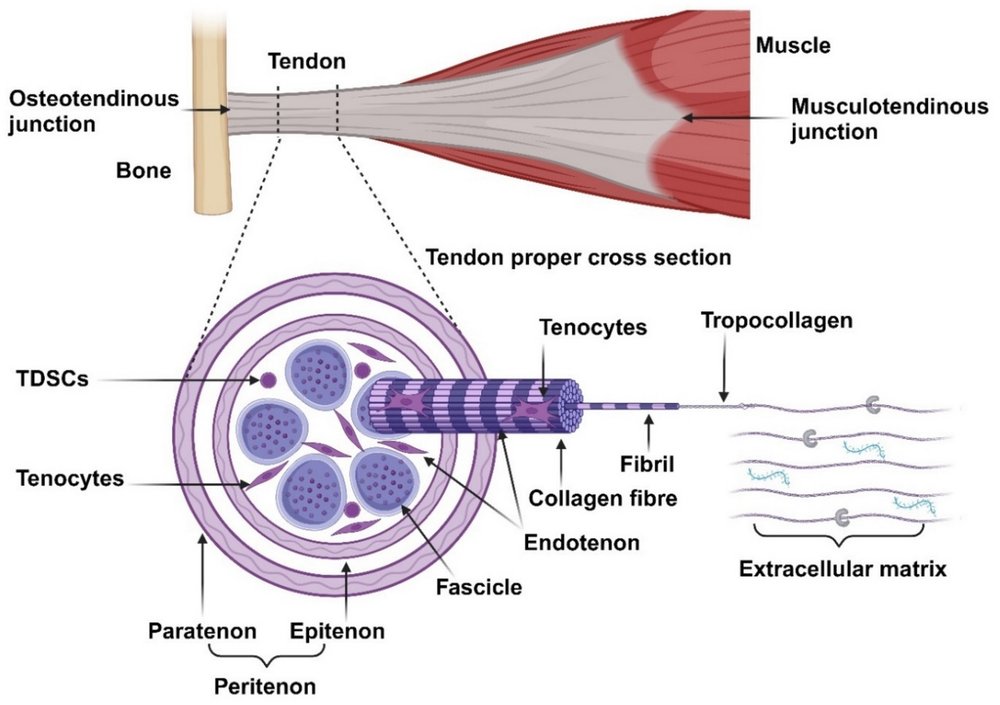
Um tendão é uma corda composta principalmente por colágeno (a mesma proteína resistente que confere flexibilidade aos ossos), organizada em feixes alinhados que seguem a linha de tração. Uma extremidade funde-se com o músculo; a outra ancora-se no osso. A sua função é simples, mas vital: transmitir a força gerada pelo músculo ao osso, permitindo o movimento da articulação. Alguns tendões também precisam de deslizar: os tendões flexores que dobram os dedos deslizam para a frente e para trás através de túneis estreitos sempre que se faz um punho.

Os tendões são tecido vivo, mas apenas por pouco: possuem relativamente poucas células e um suprimento sanguíneo escasso em comparação com o músculo ou a pele. Essa é uma das principais razões pelas quais cicatrizam lentamente.

Como os tendões cicatrizam

Quando um tendão é cortado ou rompido, ele cicatriza em três fases sobrepostas, assim como outros tecidos:

  1. Inflamação (primeira semana). Forma-se um coágulo e as células de reparo migram para o local. Nesta fase, a junção é mantida principalmente pelos pontos cirúrgicos; o próprio tendão contribui com muito pouca resistência.
  2. Reparo (semanas). As células depositam novo colágeno através do espaço, mas ele está desorganizado e é frágil inicialmente, semelhante a um feixe de fios amarrado às pressas em vez de uma corda bem estruturada.
  3. Remodelação (meses). Com o tempo e o uso suave, esse colágeno desorganizado é gradualmente substituído e realinhado ao longo da linha de tração, e o tendão recupera sua resistência. Isso continua por muitos meses, frequentemente até um ano ou mais.

Um ponto fundamental: o tendão cicatriza principalmente pela formação de cicatriz, e não pelo crescimento perfeito do tecido original. O trecho reparado nunca fica tão íntegro quanto o original, razão pela qual a reabilitação cuidadosa e a paciência são tão importantes.

O que ajuda um tendão a cicatrizar

  • A quantidade certa de movimento. Os tendões respondem à carga. Exercícios controlados e graduais (orientados por um cirurgião de mão ou fisioterapeuta) indicam ao colágeno em cicatrização como se organizar. Demasiado, demasiado cedo, rompe a reparação; demasiado pouco leva à rigidez e a um tendão aderido por tecido cicatricial.
  • Proteger a reparação precocemente. Uma reparação tendinosa recente é frágil durante semanas, mesmo quando parece estar bem; siga as limitações do seu talabarte e das atividades para evitar que se separe.
  • Boa saúde geral. Não fumar, controlar a diabetes e evitar esteroides desnecessários ajudam; o fumo, em particular, prejudica a cicatrização tendinosa.
  • Tempo. O tendão é um tecido lento. A força real demora meses, não semanas.

Em profundidade

Esta seção aprofunda a explicação biológica em um nível mais detalhado, adequado ao ensino acadêmico. Não é necessário para compreender uma lesão tendinosa ou seu tratamento, mas, se você tiver curiosidade sobre como os tendões realmente funcionam e por que um tendão do dedo e um tendão do ombro cicatrizam de maneira tão diferente, continue a leitura.

Tendão como tecido vivo

Um tendão é estruturado como uma hierarquia de colágeno, semelhante a uma corda feita de fios cada vez menores. As moléculas de colágeno agrupam-se em fibrilas, as fibrilas em fibras, as fibras em fascículos e os fascículos formam o tendão como um todo; em cada nível, uma fina envoltura de tecido conjuntivo (o endotenão e o epitenão em torno do tendão inteiro) conduz os pequenos vasos sanguíneos e nervos. O colágeno é predominantemente do tipo I, excepcionalmente resistente à tensão e disposto quase perfeitamente paralelo à direção da tração.

Em repouso, as fibras apresentam um padrão ondulado e crimpado. Quando se aplica uma carga inicial a um tendão, este crimp alinha-se, o que explica por que um tendão é ligeiramente elástico no início da tração, antes de se tornar rígido e forte (possui uma pequena capacidade de deformação interna). O tendão é também viscoelástico: comporta-se de forma diferente consoante a velocidade com que é carregado (torna-se mais rígido quando carregado rapidamente) e sofre fluência (alongamento) lentamente sob uma carga sustentada.

As células vivas são os tenócitos, células fusiformes esparsas dispostas entre os feixes de colágeno. Mantêm e renovam muito lentamente a matriz. Como as células e os vasos sanguíneos são relativamente escassos, e algumas regiões de certos tendões são genuinamente hipovasculares (zonas de "limite" com um suprimento sanguíneo deficiente), a cicatrização do tendão é lenta, e são exatamente nessas zonas com fraco suprimento sanguíneo que alguns tendões tendem a romper e a cicatrizar mal.

Como os tendões cicatrizam — e por que isso ocorre principalmente por meio de cicatriz

As três fases acima, em mais detalhes: uma fase inflamatória (aproximadamente na primeira semana) que remove detritos e recruta células; uma fase proliferativa (cerca de uma a três semanas) na qual as células produzem grandes quantidades de colágeno tipo III desorganizado, de rápida deposição, porém mecanicamente fraco; e uma longa fase de remodelação (meses, até cerca de 18 meses) na qual esse colágeno tipo III é gradualmente substituído por colágeno tipo I forte e alinhado, entrelaçado e orientado ao longo da linha de carga.

O conceito crucial é que isso é reparação por cicatriz, não regeneração. O corpo preenche o defeito em vez de recriar o tendão original, perfeitamente organizado. O que transforma essa cicatriz inicial fraca em algo forte e alinhado é a carga mecânica. Essa é toda a justificativa por trás da reabilitação moderna dos tendões: força controlada, aplicada no momento certo, instrui literalmente a cicatriz a se tornar tendão.

Cicatrização dos tendões flexores: intrínseca vs. extrínseca, e o trabalho da flexão

Os tendões flexores que dobram os seus dedos são um caso especial, pois têm de deslizar através de um túnel apertado (a bainha flexora, com as suas polias) para funcionar. Isso cria uma tensão no cerne da cirurgia dos flexores e duas formas diferentes pelas quais o tendão pode cicatrizar:

  • A cicatrização intrínseca provém das próprias células do tendão, alimentadas pelo líquido sinovial no interior da bainha e por dobras de pequenos vasos sanguíneos chamadas vincula. O tendão flexor é alimentado em grande parte não por vasos sanguíneos, mas por esse líquido sinovial, que é bombeado ativamente para o tendão (um processo chamado imbibição) cada vez que o dedo dobra e estica; assim, o próprio movimento alimenta o tendão em cicatrização. A cicatrização intrínseca une o tendão novamente sem o colar aos tecidos circundantes, permitindo que continue a deslizar.
  • A cicatrização extrínseca provém de células e de tecido cicatricial que invadem a partir do exterior, da bainha e dos tecidos circundantes. Também cicatriza o tendão, mas cola-o ao seu túnel, formando aderências que impedem o deslizamento, impedindo assim que o dedo dobre ou estique completamente.

A reparação moderna combinada com movimento precoce e controlado visa inclinar o equilíbrio em direção à cicatrização intrínseca e afastar-se das aderências.

É aqui que entra o trabalho da flexão: a força que o músculo tem de gerar para efetivamente flexionar o dedo. Não é apenas o peso a ser movido; é a resistência ao deslizamento do tendão: o atrito na bainha, o volume da própria reparação, o inchaço pós-operatório e as polias apertadas tudo contribuem para isso. Se o trabalho da flexão (a resistência) aumentar além do que a reparação consegue suportar, a reparação abre ou rompe, ou o dedo simplesmente não se move e instalam-se as aderências. Assim, o cirurgião está a equilibrar duas exigências concorrentes: uma reparação forte o suficiente para tolerar o movimento precoce, mas suficientemente fina e lisa para deslizar com um baixo trabalho de flexão. O movimento precoce só funciona se ambos os objetivos forem alcançados.

Por que um reparo do flexor fica mais fraco antes de ficar mais forte

Aqui está a parte contra-intuitiva que explica todo o cronograma cauteloso de reabilitação. Um reparo de tendão não fica mais forte de forma constante a partir do primeiro dia. Ele segue uma curva em U:

  • Nos primeiros dias, praticamente toda a força vem da sutura; o próprio tecido do tendão adiciona quase nada.
  • Ao longo das primeiras uma a três semanas, as extremidades cortadas do tendão realmente amolecem: o corpo reabsorve e remodela o colágeno exatamente no local do reparo antes que o novo colágeno amadureça. Portanto, toda a construção atinge seu ponto mais fraco nas primeiras semanas (geralmente por volta do final da primeira semana até a terceira), mesmo que a ferida pareça cicatrizada e o dedo pareça estar bem.
  • Depois, a força aumenta. À medida que o colágeno tipo III desorganizado é substituído pelo colágeno tipo I alinhado e reticulado, o reparo recupera e depois excede sua força inicial, atingindo nível suficiente para a maioria das atividades diárias por volta das 12 semanas e continuando a amadurecer por muitos meses.

Essa queda é a razão pela qual a terapia da mão é tão cuidadosamente escalonada, e por que "parece estar bem em três semanas" é uma armadilha: esse é frequentemente o momento em que o reparo está mais vulnerável. O movimento suave e controlado na fase inicial mantém o deslizamento do tendão (favorecendo a cicatrização intrínseca) e alinha o novo colágeno sem sobrecarregar um reparo que, biologicamente, está em seu ponto mais fraco. As rupturas tendíneas após o reparo concentram-se nessas primeiras semanas vulneráveis exatamente por essa razão.

Cicatrização tendão-óssea: o manguito rotador e a entese

Um rompimento do manguito rotador é um problema completamente diferente, pois, neste caso, o tendão precisa se cicatrizar de volta ao osso, e a junção entre o tendão e o osso é uma estrutura notável chamada entese.

Em tecido saudável, a entese é uma transição graduada, construída aproximadamente em quatro zonas: tendão → fibrocartilagem não calcificada → fibrocartilagem calcificada → osso. Este gradiente suave, que vai do tendão macio e flexível ao osso duro e rígido, distribui o estresse, evitando que o tendão macio seja simplesmente arrancado do osso duro em uma fronteira abrupta.

O problema é que, uma vez rompido, o corpo não consegue reconstruir aquela entese graduada. Um manguito reparado cicatriza por meio de uma cicatriz fibrovascular entre o tendão e o osso, mecanicamente mais fraca do que a transição original de quatro zonas, sendo esta uma das razões pelas quais os reparos do manguito rotador podem reromper apesar de uma cirurgia bem realizada.

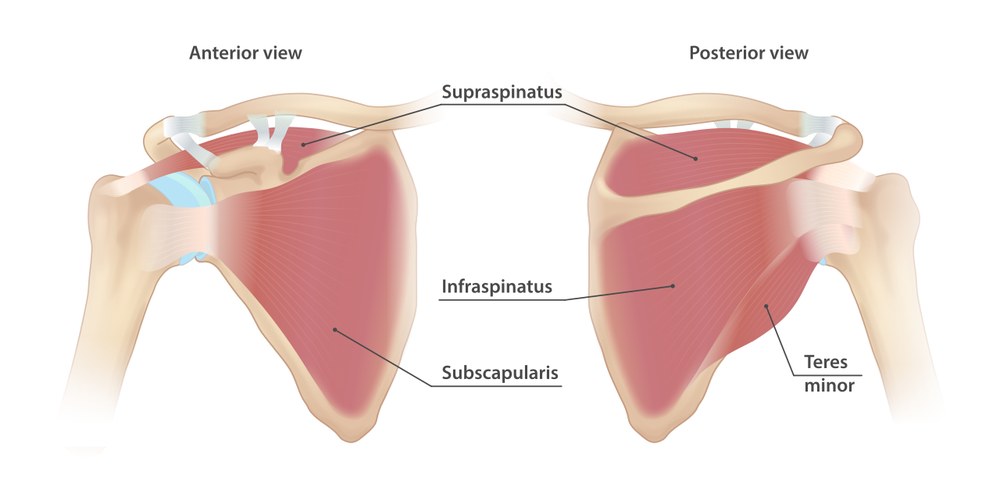
Também é importante destacar que a maioria dos rompimentos do manguito rotador são degenerativos, e não puramente traumáticos: com o avançar da idade, o tendão, particularmente em uma "zona crítica" relativamente pouco vascularizada, a cerca de um centímetro do local onde o tendão do supraespinhal se encontra com o osso, enfraquece, desfibra e rompe com pouco ou nenhum trauma (rompimentos verdadeiros do manguito são raros antes dos 50 anos). A cirurgia reativa o tendão à sua "pegada" óssea, mas o procedimento enfrenta o envelhecimento e, frequentemente, tecido de qualidade geralmente deficiente. Portanto, a cicatrização do manguito é fundamentalmente limitada pela biologia: a operação restaura a anatomia, mas se a junção tendão-ósseo cicatriza verdadeiramente depende da qualidade do tendão, do tamanho do rompimento, da idade, do tabagismo, do diabetes e de como o reparo é protegido e submetido a carga. Este é o extremo oposto do espectro em relação a um corte limpo dos flexores em uma mão jovem: mesmo tecido, problema de cicatrização muito diferente.

O que ajuda e prejudica a cicatrização dos tendões

  • Carga, corretamente dosada. A carga controlada e progressiva é a ferramenta mais poderosa para fortalecer o tendão e melhorar seu alinhamento. Carga excessiva e precoce rompe o reparo; carga insuficiente causa rigidez e aderências. A arte da reabilitação está na dosagem.
  • Suprimento sanguíneo. Tendões bem vascularizados cicatrizam melhor; zonas hipóxicas de "zona de fronteira" (como em partes do manguito rotador) cicatrizam pior.
  • Tabagismo, diabetes, corticosteroides e idade prejudicam a cicatrização dos tendões e aumentam o risco de ruptura e retrorompe.
  • Tempo. O tendão é um tecido de cicatrização lenta; a força significativa leva meses, e o remodelamento completo pode ultrapassar um ano.

Veja também


Creative Commons BY-NC 4.0

CC Creative Commons licence
BY Attribution — you must credit the source
NC NonCommercial — not for commercial use

Attribution-NonCommercial 4.0 International


Creative Commons Corporation ("Creative Commons") is not a law firm and does not provide legal services or legal advice. Distribution of Creative Commons public licenses does not create a lawyer-client or other relationship. Creative Commons makes its licenses and related information available on an "as-is" basis. Creative Commons gives no warranties regarding its licenses, any material licensed under their terms and conditions, or any related information. Creative Commons disclaims all liability for damages resulting from their use to the fullest extent possible.

Using Creative Commons Public Licenses

Creative Commons public licenses provide a standard set of terms and conditions that creators and other rights holders may use to share original works of authorship and other material subject to copyright and certain other rights specified in the public license below. The following considerations are for informational purposes only, are not exhaustive, and do not form part of our licenses.

Considerations for licensors: Our public licenses are intended for use by those authorized to give the public permission to use material in ways otherwise restricted by copyright and certain other rights. Our licenses are irrevocable. Licensors should read and understand the terms and conditions of the license they choose before applying it. Licensors should also secure all rights necessary before applying our licenses so that the public can reuse the material as expected. Licensors should clearly mark any material not subject to the license. This includes other CC- licensed material, or material used under an exception or limitation to copyright. More considerations for licensors: wiki.creativecommons.org/Considerations_for_licensors

Considerations for the public: By using one of our public licenses, a licensor grants the public permission to use the licensed material under specified terms and conditions. If the licensor's permission is not necessary for any reason--for example, because of any applicable exception or limitation to copyright--then that use is not regulated by the license. Our licenses grant only permissions under copyright and certain other rights that a licensor has authority to grant. Use of the licensed material may still be restricted for other reasons, including because others have copyright or other rights in the material. A licensor may make special requests, such as asking that all changes be marked or described. Although not required by our licenses, you are encouraged to respect those requests where reasonable. More considerations for the public: wiki.creativecommons.org/Considerations_for_licensees


Creative Commons Attribution-NonCommercial 4.0 International Public License

By exercising the Licensed Rights (defined below), You accept and agree to be bound by the terms and conditions of this Creative Commons Attribution-NonCommercial 4.0 International Public License ("Public License"). To the extent this Public License may be interpreted as a contract, You are granted the Licensed Rights in consideration of Your acceptance of these terms and conditions, and the Licensor grants You such rights in consideration of benefits the Licensor receives from making the Licensed Material available under these terms and conditions.

Section 1 -- Definitions.

a. Adapted Material means material subject to Copyright and Similar Rights that is derived from or based upon the Licensed Material and in which the Licensed Material is translated, altered, arranged, transformed, or otherwise modified in a manner requiring permission under the Copyright and Similar Rights held by the Licensor. For purposes of this Public License, where the Licensed Material is a musical work, performance, or sound recording, Adapted Material is always produced where the Licensed Material is synched in timed relation with a moving image.

b. Adapter's License means the license You apply to Your Copyright and Similar Rights in Your contributions to Adapted Material in accordance with the terms and conditions of this Public License.

c. Copyright and Similar Rights means copyright and/or similar rights closely related to copyright including, without limitation, performance, broadcast, sound recording, and Sui Generis Database Rights, without regard to how the rights are labeled or categorized. For purposes of this Public License, the rights specified in Section 2(b)(1)-(2) are not Copyright and Similar Rights.

d. Effective Technological Measures means those measures that, in the absence of proper authority, may not be circumvented under laws fulfilling obligations under Article 11 of the WIPO Copyright Treaty adopted on December 20, 1996, and/or similar international agreements.

e. Exceptions and Limitations means fair use, fair dealing, and/or any other exception or limitation to Copyright and Similar Rights that applies to Your use of the Licensed Material.

f. Licensed Material means the artistic or literary work, database, or other material to which the Licensor applied this Public License.

g. Licensed Rights means the rights granted to You subject to the terms and conditions of this Public License, which are limited to all Copyright and Similar Rights that apply to Your use of the Licensed Material and that the Licensor has authority to license.

h. Licensor means the individual(s) or entity(ies) granting rights under this Public License.

i. NonCommercial means not primarily intended for or directed towards commercial advantage or monetary compensation. For purposes of this Public License, the exchange of the Licensed Material for other material subject to Copyright and Similar Rights by digital file-sharing or similar means is NonCommercial provided there is no payment of monetary compensation in connection with the exchange.

j. Share means to provide material to the public by any means or process that requires permission under the Licensed Rights, such as reproduction, public display, public performance, distribution, dissemination, communication, or importation, and to make material available to the public including in ways that members of the public may access the material from a place and at a time individually chosen by them.

k. Sui Generis Database Rights means rights other than copyright resulting from Directive 96/9/EC of the European Parliament and of the Council of 11 March 1996 on the legal protection of databases, as amended and/or succeeded, as well as other essentially equivalent rights anywhere in the world.

l. You means the individual or entity exercising the Licensed Rights under this Public License. Your has a corresponding meaning.

Section 2 -- Scope.

a. License grant.

1. Subject to the terms and conditions of this Public License, the Licensor hereby grants You a worldwide, royalty-free, non-sublicensable, non-exclusive, irrevocable license to exercise the Licensed Rights in the Licensed Material to:

a. reproduce and Share the Licensed Material, in whole or in part, for NonCommercial purposes only; and

b. produce, reproduce, and Share Adapted Material for NonCommercial purposes only.

2. Exceptions and Limitations. For the avoidance of doubt, where Exceptions and Limitations apply to Your use, this Public License does not apply, and You do not need to comply with its terms and conditions.

3. Term. The term of this Public License is specified in Section 6(a).

4. Media and formats; technical modifications allowed. The Licensor authorizes You to exercise the Licensed Rights in all media and formats whether now known or hereafter created, and to make technical modifications necessary to do so. The Licensor waives and/or agrees not to assert any right or authority to forbid You from making technical modifications necessary to exercise the Licensed Rights, including technical modifications necessary to circumvent Effective Technological Measures. For purposes of this Public License, simply making modifications authorized by this Section 2(a) (4) never produces Adapted Material.

5. Downstream recipients.

a. Offer from the Licensor -- Licensed Material. Every recipient of the Licensed Material automatically receives an offer from the Licensor to exercise the Licensed Rights under the terms and conditions of this Public License.

b. No downstream restrictions. You may not offer or impose any additional or different terms or conditions on, or apply any Effective Technological Measures to, the Licensed Material if doing so restricts exercise of the Licensed Rights by any recipient of the Licensed Material.

6. No endorsement. Nothing in this Public License constitutes or may be construed as permission to assert or imply that You are, or that Your use of the Licensed Material is, connected with, or sponsored, endorsed, or granted official status by, the Licensor or others designated to receive attribution as provided in Section 3(a)(1)(A)(i).

b. Other rights.

1. Moral rights, such as the right of integrity, are not licensed under this Public License, nor are publicity, privacy, and/or other similar personality rights; however, to the extent possible, the Licensor waives and/or agrees not to assert any such rights held by the Licensor to the limited extent necessary to allow You to exercise the Licensed Rights, but not otherwise.

2. Patent and trademark rights are not licensed under this Public License.

3. To the extent possible, the Licensor waives any right to collect royalties from You for the exercise of the Licensed Rights, whether directly or through a collecting society under any voluntary or waivable statutory or compulsory licensing scheme. In all other cases the Licensor expressly reserves any right to collect such royalties, including when the Licensed Material is used other than for NonCommercial purposes.

Section 3 -- License Conditions.

Your exercise of the Licensed Rights is expressly made subject to the following conditions.

a. Attribution.

1. If You Share the Licensed Material (including in modified form), You must:

a. retain the following if it is supplied by the Licensor with the Licensed Material:

i. identification of the creator(s) of the Licensed Material and any others designated to receive attribution, in any reasonable manner requested by the Licensor (including by pseudonym if designated);

ii. a copyright notice;

iii. a notice that refers to this Public License;

iv. a notice that refers to the disclaimer of warranties;

v. a URI or hyperlink to the Licensed Material to the extent reasonably practicable;

b. indicate if You modified the Licensed Material and retain an indication of any previous modifications; and

c. indicate the Licensed Material is licensed under this Public License, and include the text of, or the URI or hyperlink to, this Public License.

2. You may satisfy the conditions in Section 3(a)(1) in any reasonable manner based on the medium, means, and context in which You Share the Licensed Material. For example, it may be reasonable to satisfy the conditions by providing a URI or hyperlink to a resource that includes the required information.

3. If requested by the Licensor, You must remove any of the information required by Section 3(a)(1)(A) to the extent reasonably practicable.

4. If You Share Adapted Material You produce, the Adapter's License You apply must not prevent recipients of the Adapted Material from complying with this Public License.

Section 4 -- Sui Generis Database Rights.

Where the Licensed Rights include Sui Generis Database Rights that apply to Your use of the Licensed Material:

a. for the avoidance of doubt, Section 2(a)(1) grants You the right to extract, reuse, reproduce, and Share all or a substantial portion of the contents of the database for NonCommercial purposes only;

b. if You include all or a substantial portion of the database contents in a database in which You have Sui Generis Database Rights, then the database in which You have Sui Generis Database Rights (but not its individual contents) is Adapted Material; and

c. You must comply with the conditions in Section 3(a) if You Share all or a substantial portion of the contents of the database.

For the avoidance of doubt, this Section 4 supplements and does not replace Your obligations under this Public License where the Licensed Rights include other Copyright and Similar Rights.

Section 5 -- Disclaimer of Warranties and Limitation of Liability.

a. UNLESS OTHERWISE SEPARATELY UNDERTAKEN BY THE LICENSOR, TO THE EXTENT POSSIBLE, THE LICENSOR OFFERS THE LICENSED MATERIAL AS-IS AND AS-AVAILABLE, AND MAKES NO REPRESENTATIONS OR WARRANTIES OF ANY KIND CONCERNING THE LICENSED MATERIAL, WHETHER EXPRESS, IMPLIED, STATUTORY, OR OTHER. THIS INCLUDES, WITHOUT LIMITATION, WARRANTIES OF TITLE, MERCHANTABILITY, FITNESS FOR A PARTICULAR PURPOSE, NON-INFRINGEMENT, ABSENCE OF LATENT OR OTHER DEFECTS, ACCURACY, OR THE PRESENCE OR ABSENCE OF ERRORS, WHETHER OR NOT KNOWN OR DISCOVERABLE. WHERE DISCLAIMERS OF WARRANTIES ARE NOT ALLOWED IN FULL OR IN PART, THIS DISCLAIMER MAY NOT APPLY TO YOU.

b. TO THE EXTENT POSSIBLE, IN NO EVENT WILL THE LICENSOR BE LIABLE TO YOU ON ANY LEGAL THEORY (INCLUDING, WITHOUT LIMITATION, NEGLIGENCE) OR OTHERWISE FOR ANY DIRECT, SPECIAL, INDIRECT, INCIDENTAL, CONSEQUENTIAL, PUNITIVE, EXEMPLARY, OR OTHER LOSSES, COSTS, EXPENSES, OR DAMAGES ARISING OUT OF THIS PUBLIC LICENSE OR USE OF THE LICENSED MATERIAL, EVEN IF THE LICENSOR HAS BEEN ADVISED OF THE POSSIBILITY OF SUCH LOSSES, COSTS, EXPENSES, OR DAMAGES. WHERE A LIMITATION OF LIABILITY IS NOT ALLOWED IN FULL OR IN PART, THIS LIMITATION MAY NOT APPLY TO YOU.

c. The disclaimer of warranties and limitation of liability provided above shall be interpreted in a manner that, to the extent possible, most closely approximates an absolute disclaimer and waiver of all liability.

Section 6 -- Term and Termination.

a. This Public License applies for the term of the Copyright and Similar Rights licensed here. However, if You fail to comply with this Public License, then Your rights under this Public License terminate automatically.

b. Where Your right to use the Licensed Material has terminated under Section 6(a), it reinstates:

1. automatically as of the date the violation is cured, provided it is cured within 30 days of Your discovery of the violation; or

2. upon express reinstatement by the Licensor.

For the avoidance of doubt, this Section 6(b) does not affect any right the Licensor may have to seek remedies for Your violations of this Public License.

c. For the avoidance of doubt, the Licensor may also offer the Licensed Material under separate terms or conditions or stop distributing the Licensed Material at any time; however, doing so will not terminate this Public License.

d. Sections 1, 5, 6, 7, and 8 survive termination of this Public License.

Section 7 -- Other Terms and Conditions.

a. The Licensor shall not be bound by any additional or different terms or conditions communicated by You unless expressly agreed.

b. Any arrangements, understandings, or agreements regarding the Licensed Material not stated herein are separate from and independent of the terms and conditions of this Public License.

Section 8 -- Interpretation.

a. For the avoidance of doubt, this Public License does not, and shall not be interpreted to, reduce, limit, restrict, or impose conditions on any use of the Licensed Material that could lawfully be made without permission under this Public License.

b. To the extent possible, if any provision of this Public License is deemed unenforceable, it shall be automatically reformed to the minimum extent necessary to make it enforceable. If the provision cannot be reformed, it shall be severed from this Public License without affecting the enforceability of the remaining terms and conditions.

c. No term or condition of this Public License will be waived and no failure to comply consented to unless expressly agreed to by the Licensor.

d. Nothing in this Public License constitutes or may be interpreted as a limitation upon, or waiver of, any privileges and immunities that apply to the Licensor or You, including from the legal processes of any jurisdiction or authority.


Creative Commons is not a party to its public licenses. Notwithstanding, Creative Commons may elect to apply one of its public licenses to material it publishes and in those instances will be considered the “Licensor.” The text of the Creative Commons public licenses is dedicated to the public domain under the CC0 Public Domain Dedication. Except for the limited purpose of indicating that material is shared under a Creative Commons public license or as otherwise permitted by the Creative Commons policies published at creativecommons.org/policies, Creative Commons does not authorize the use of the trademark "Creative Commons" or any other trademark or logo of Creative Commons without its prior written consent including, without limitation, in connection with any unauthorized modifications to any of its public licenses or any other arrangements, understandings, or agreements concerning use of licensed material. For the avoidance of doubt, this paragraph does not form part of the public licenses.

Creative Commons may be contacted at creativecommons.org.