Patients › Rehabilitation
Descompressão do nervo supraescapular
Rehabilitation after isolated arthroscopic suprascapular nerve decompression, with honest framing of nerve recovery.
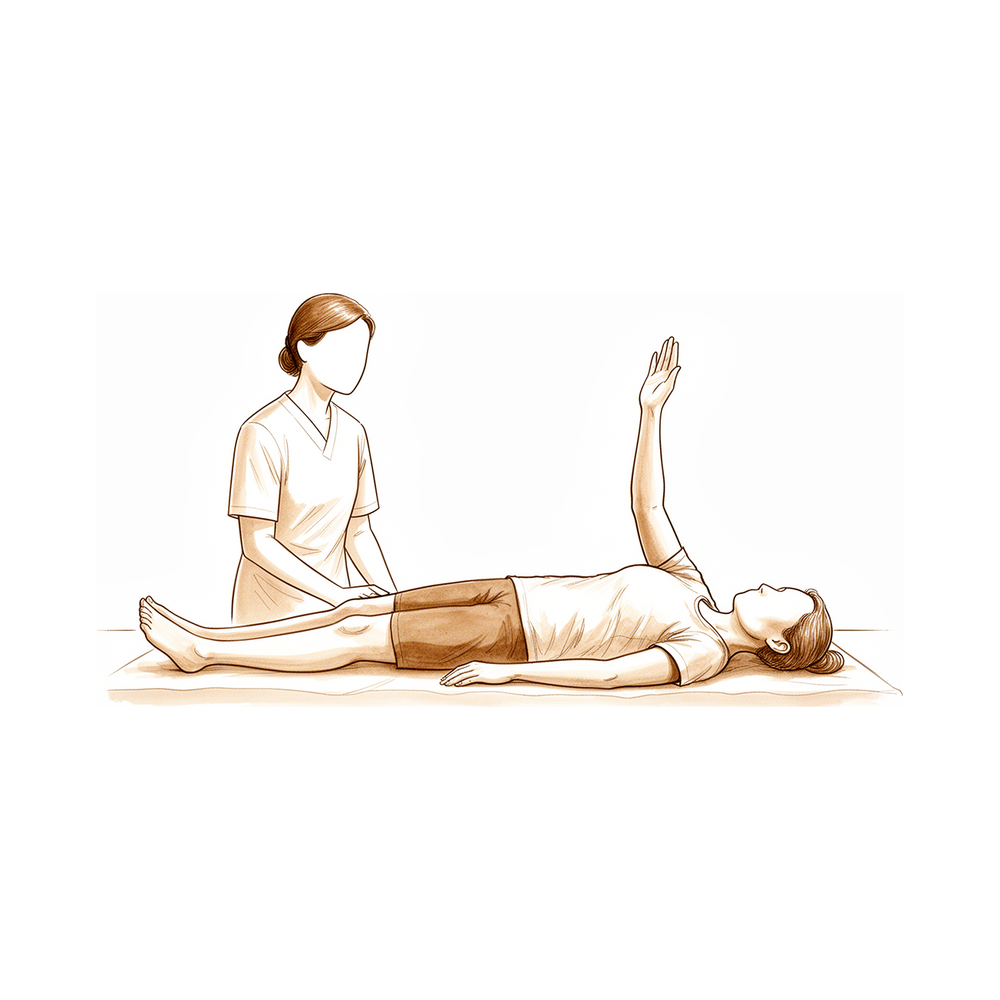
Este protocolo descreve a reabilitação após uma descompressão artroscópica isolada do nervo supraescapular realizada pelo Dr. Kieran Hirpara no Mater Private Hospital Rockhampton: trata-se da liberação do nervo no entalhe supraescapular e/ou no entalhe espinoglenoide, sem qualquer outro procedimento de reparo. Leve esta página ou o seu PDF na sua primeira sessão de fisioterapia, para que a reabilitação seja devidamente coordenada. O seu fisioterapeuta guiará individualmente a evolução da reabilitação através das fases abaixo, conforme a recuperação do seu ombro.
Importante: por favor, leia primeiro. A descompressão do nervo supraescapular costuma ser realizada em conjunto com o reparo do manguito rotador. Este protocolo aplica-se apenas à descompressão isolada. Caso a sua cirurgia também tenha incluído o reparo do manguito rotador, siga o protocolo de reparo do manguito rotador: o tendão reparado exige um ritmo de recuperação mais lento, e esse protocolo tem prioridade sobre este. Se não tiver certeza de qual procedimento foi realizado, consulte o consultório antes de iniciar a reabilitação.
Caso tenha alguma dúvida ou preocupação quanto à ferida cirúrgica, entre em contato com o consultório. Geralmente, é útil tirar uma foto da ferida e enviá-la por e-mail para análise.
O que esperar
Quando o nervo é liberado isoladamente, não há necessidade de proteger nenhum tendão que precise ser reparado; portanto, a reabilitação pode avançar rapidamente. A tipoia é usada apenas para conforto e por um período breve (geralmente na primeira semana, e no máximo duas semanas); depois que o ombro se estabiliza, ela deve ser retirada sempre que possível. Movimentos suaves são iniciados precocemente, conforme a tolerância ao desconforto; a maioria das pessoas retorna às atividades diárias normais em poucas semanas.
A recuperação do próprio nervo segue seu próprio cronograma, independente dos movimentos do ombro. A cirurgia alivia a pressão sobre o nervo; a dor decorrente dessa pressão costuma diminuir relativamente rápido. Já a recuperação da força muscular e do volume dos músculos inervados por esse nervo (o supraespinhoso e o infraespinhoso, localizados na escápula) é mais lenta e ocorre ao longo de meses. O grau de recuperação da força e do volume muscular varia de pessoa para pessoa: em alguns, a recuperação é total; em outros, é parcial; e um problema nervoso de longa data pode não se recuperar plenamente. A fisioterapia inclui exercícios específicos para reativar esses músculos à medida que o nervo se recupera. Seu fisioterapeuta e a equipe médica orientarão sobre o que esperar no seu caso.
Fase I — Movimentação precoce (Semana 0–2)
Kieran Hirpara 4.0
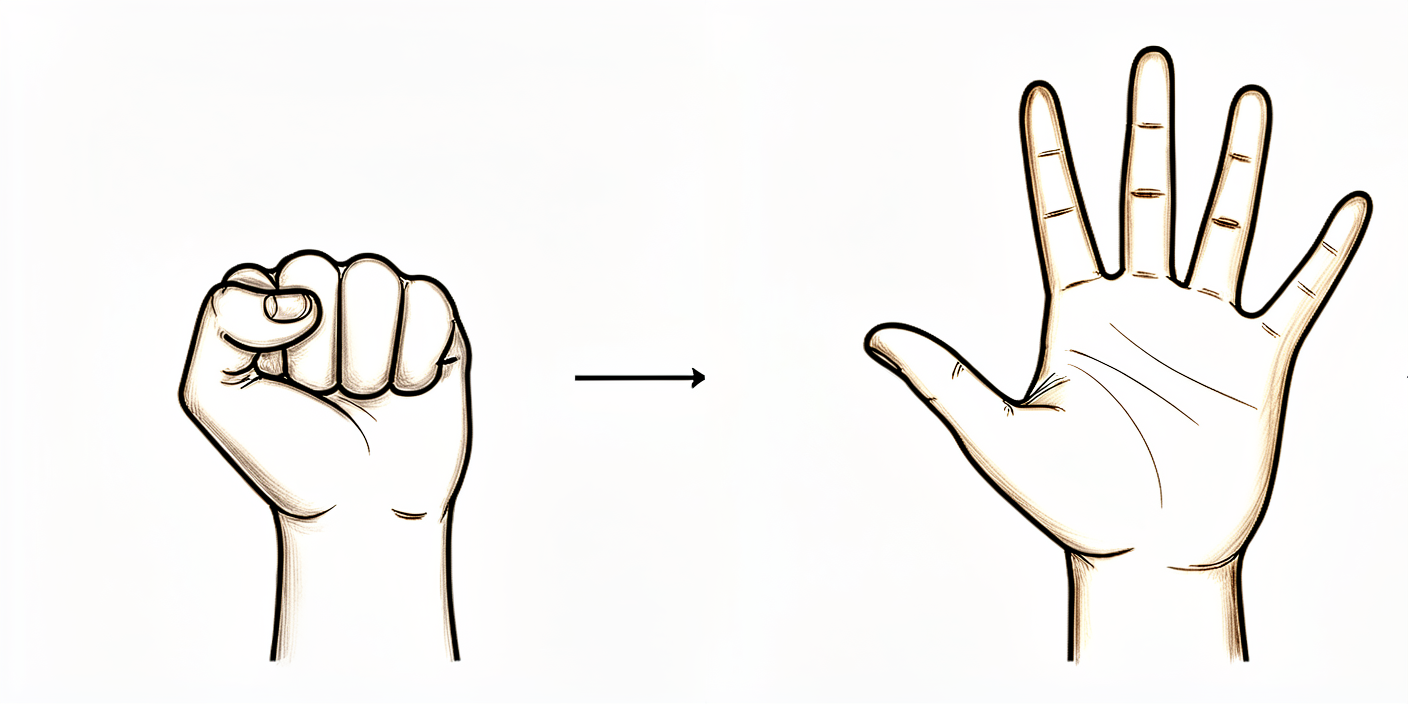
Abrir e fechar a mão
Mantenha a mão e os dedos em movimento, abrindo e fechando-os ou apertando uma bola macia. Comece isso imediatamente para manter a mão ativa enquanto o ombro se recupera.
Conforme orientado pelo seu fisioterapeuta
Kieran Hirpara 4.0
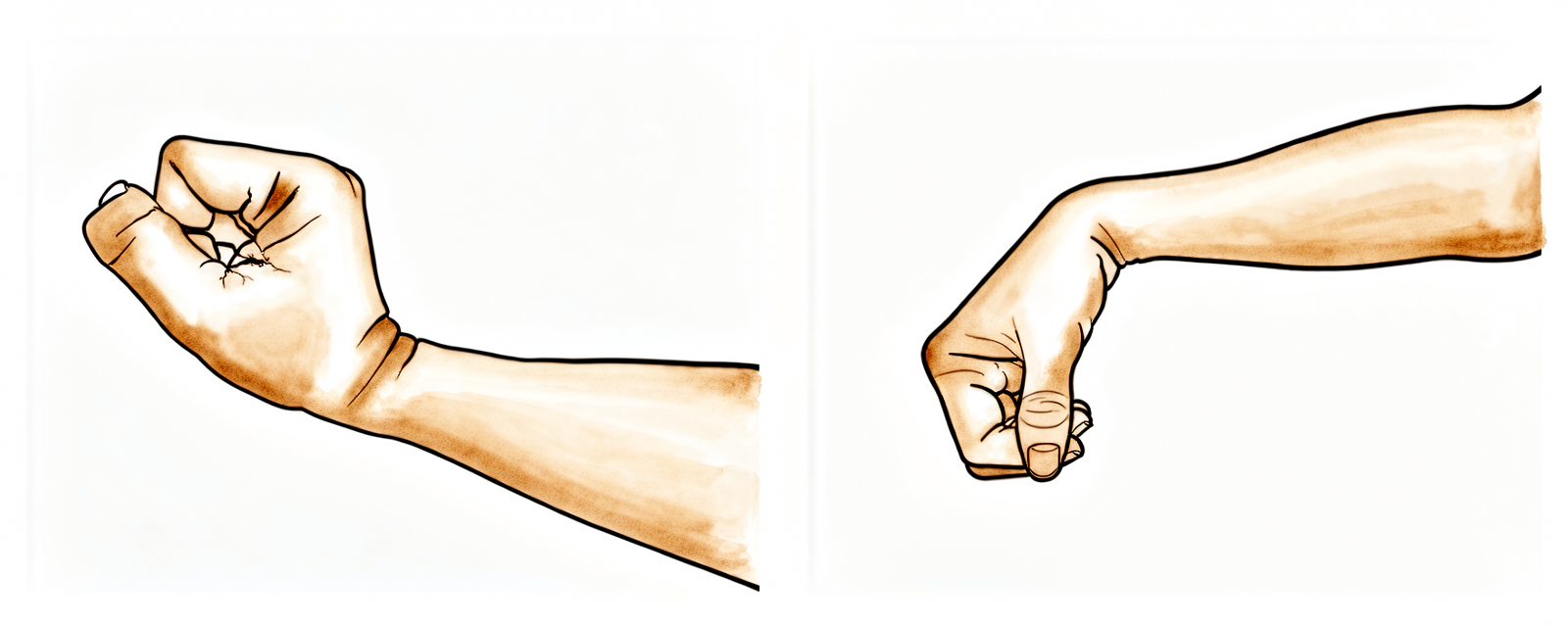
Movimento do punho
Mantenha o pulso em movimento, dobrando-o para a frente, para trás e para os lados. Faça isso com o braço fora da tipóia, juntamente com os movimentos da mão e do cotovelo.
Conforme orientado pelo seu fisioterapeuta
Kieran Hirpara 4.0
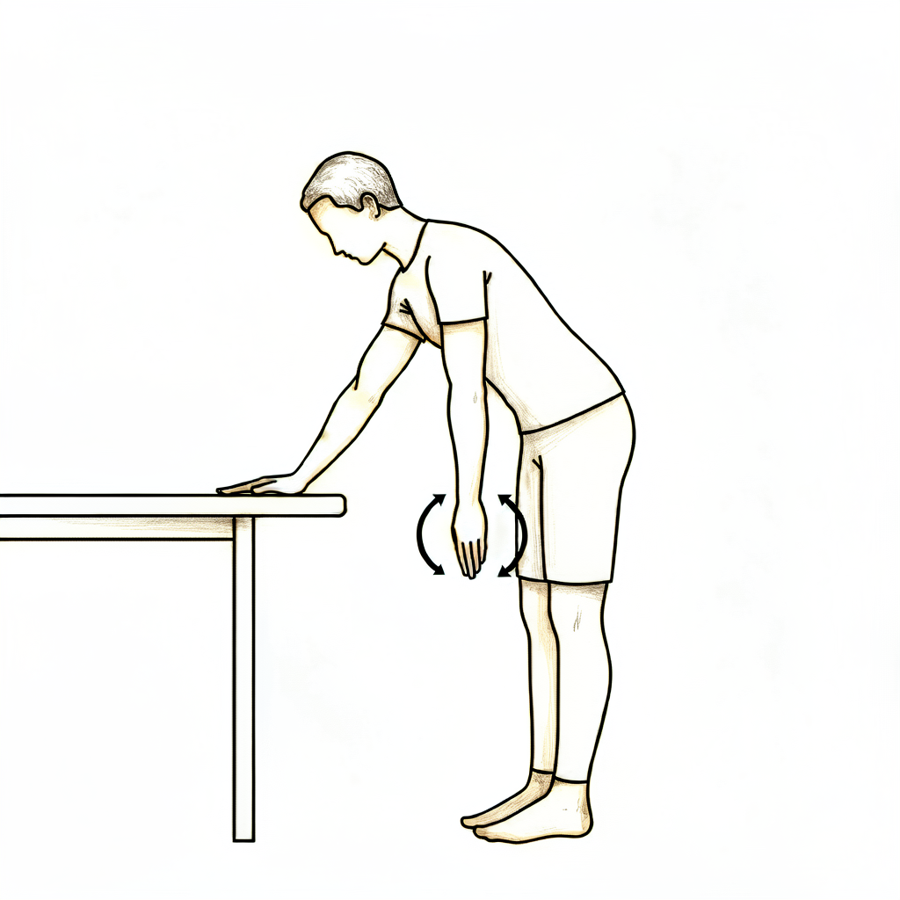
Exercício do pêndulo
Incline-se para a frente pela cintura e deixe o braço operado pender suavemente para longe do corpo. Faça o braço descrever pequenos círculos, de forma relaxada — o movimento deve vir do corpo, não dos músculos do ombro. Mantenha o movimento dentro de uma amplitude confortável e sem dor.
Conforme orientado pelo seu fisioterapeuta
Kieran Hirpara 4.0
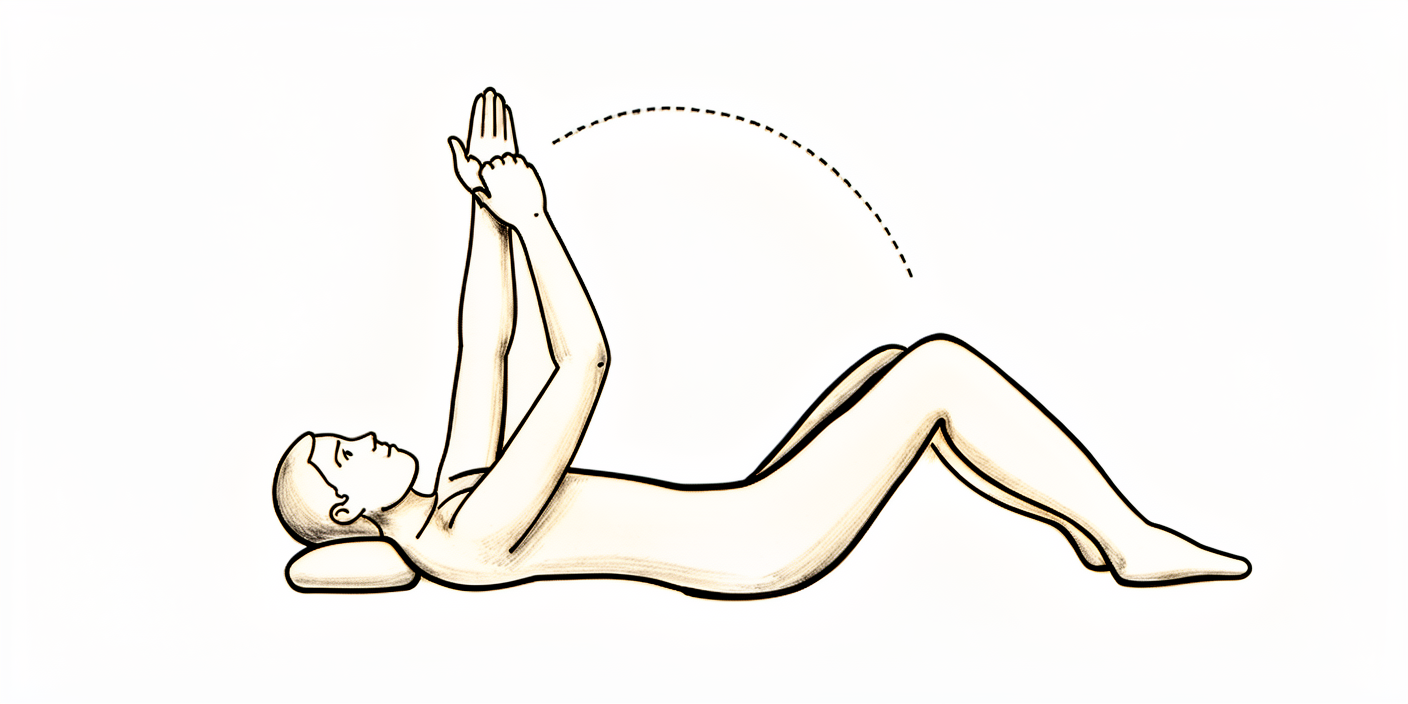
Elevação assistida (deitado)
Deite-se de costas e use o braço saudável para ajudar a levantar o braço operado para cima; em seguida, abaixe-o novamente, mantendo o apoio do braço saudável. Mova-se apenas dentro de uma amplitude confortável e sem dor — o objetivo é um movimento suave e precoce, não alcançar a máxima amplitude a qualquer custo.
Conforme orientado pelo seu fisioterapeuta
Kieran Hirpara 4.0
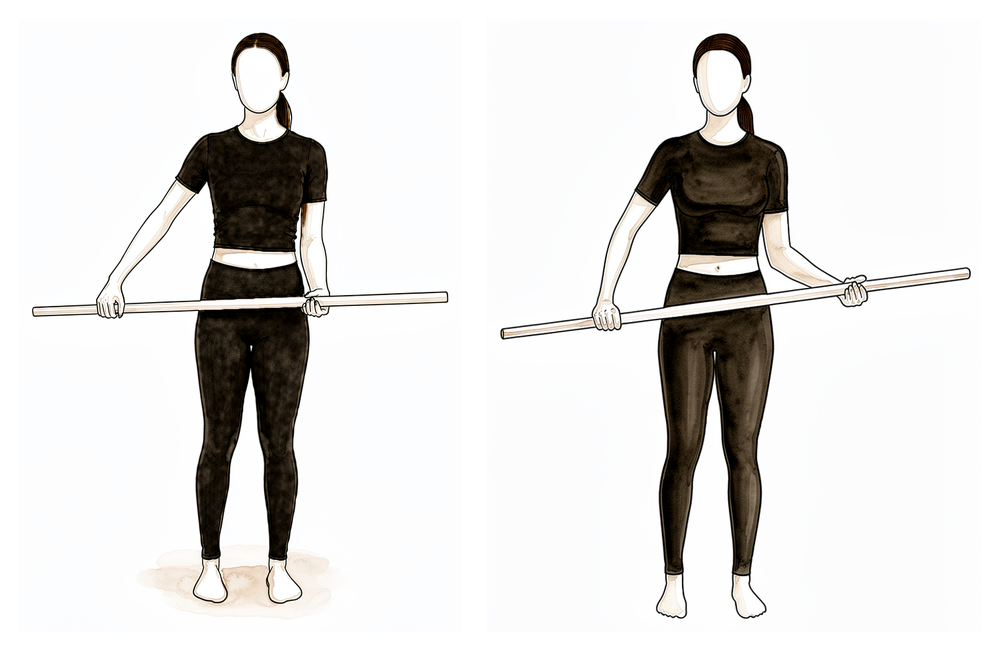
Rotação externa assistida com bastão
Deite-se de costas, segurando uma vara ou bengala com as duas mãos, com os cotovelos dobrados em ângulo reto e junto ao corpo. Use o braço saudável para empurrar suavemente o antebraço operado para fora, afastando-o do corpo, e depois traga-o de volta à posição original. Mantenha o movimento confortável e sem dor.
Conforme orientado pelo seu fisioterapeuta
Kieran Hirpara 4.0
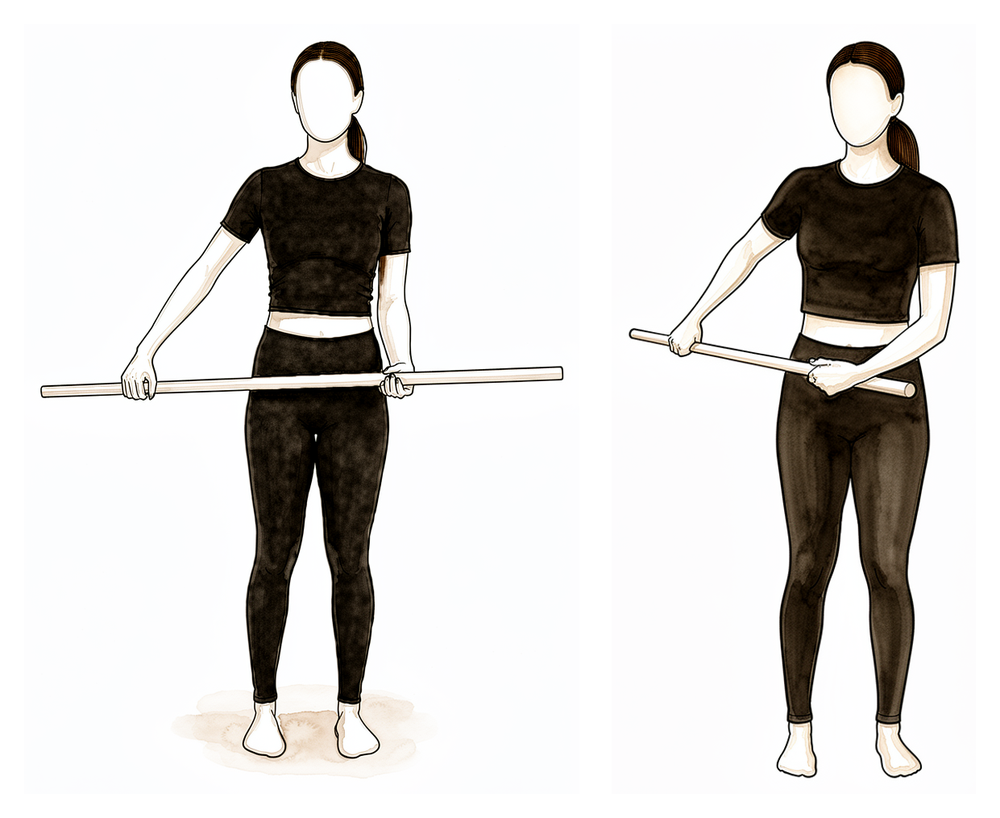
Rotação interna assistida com bastão
Segure uma vareta atrás das costas com as duas mãos. Use o braço saudável para guiar suavemente a mão operada para cima, em direção às costas, e depois abaixe-a devagar. Isso restaura a rotação medial de forma confortável desde o início — faça isso apenas dentro de uma faixa que não cause dor.
Conforme orientado pelo seu fisioterapeuta
Kieran Hirpara 4.0
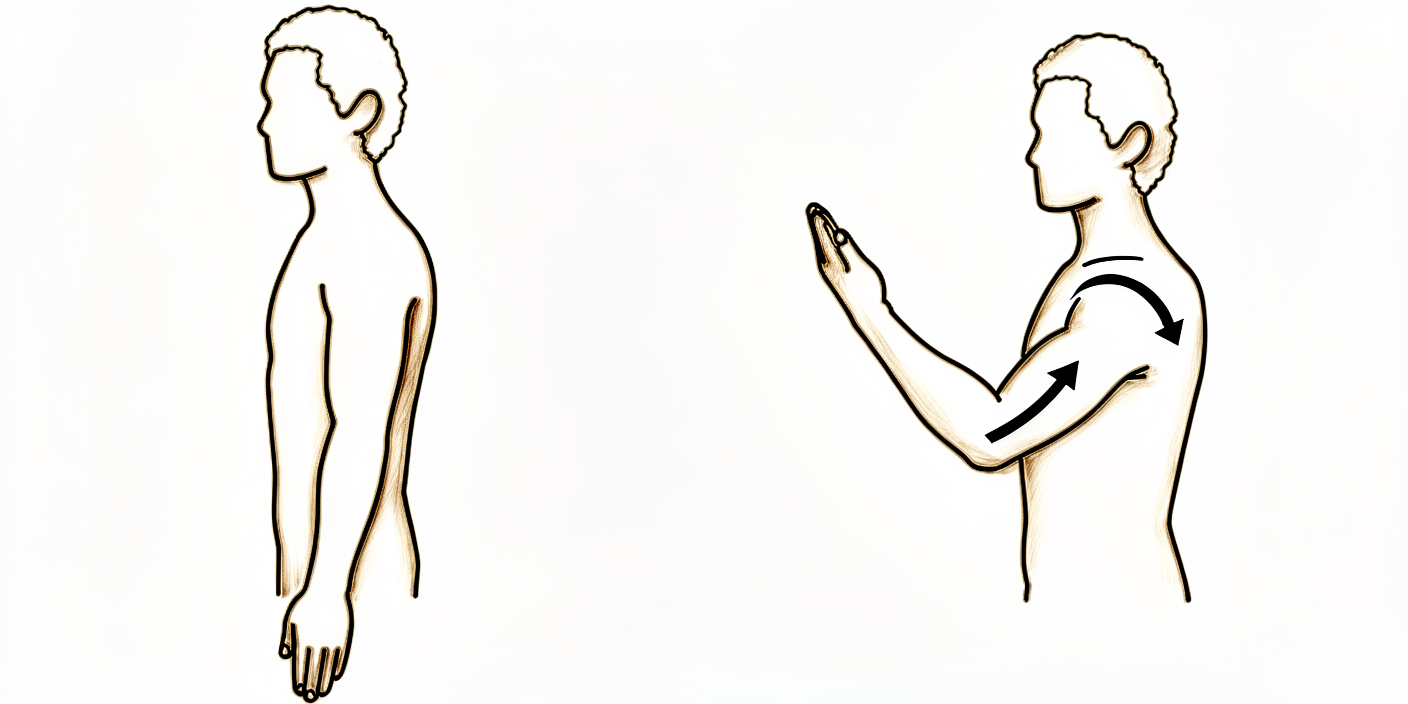
Flexão do cotovelo
Dobre e estenda o cotovelo em toda a sua amplitude de movimento. Mantenha a mão, o punho e o cotovelo em movimento desde o início, para que o restante do braço permaneça flexível enquanto o ombro se estabiliza.
Conforme orientado pelo seu fisioterapeuta
Kieran Hirpara 4.0
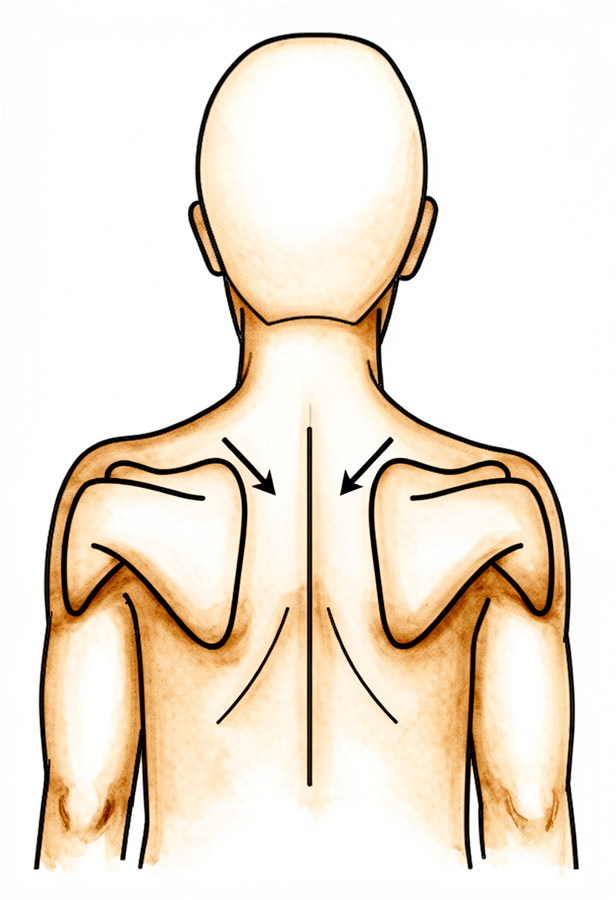
Posicionamento da escápula
Sentado ou em pé, puxe suavemente as escápulas para trás e para baixo, afastando-as das orelhas. Mantenha a posição por alguns segundos e depois relaxe. Nos primeiros dias, faça esse exercício conforme lhe parecer confortável.
Conforme orientado pelo seu fisioterapeuta
Kieran Hirpara 4.0
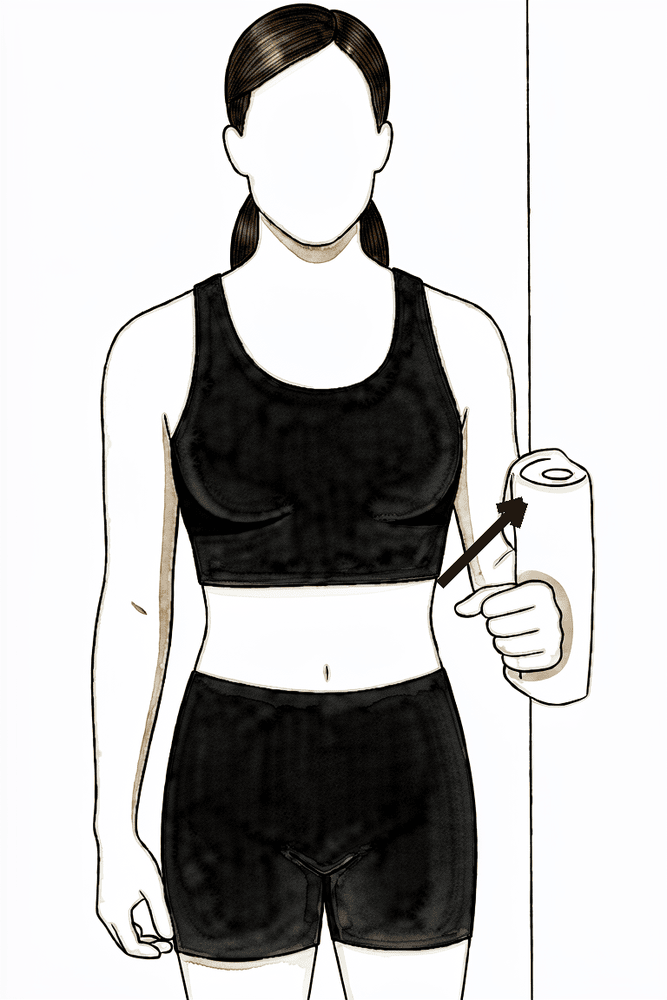
Fixação isométrica do deltoide
Fique de lado em relação à parede, com o cotovelo operado junto ao corpo. Pressione suavemente a parte externa do braço contra a parede, como se quisesse levantá-lo para o lado, sem realmente mover o braço. Mantenha essa posição por alguns segundos e depois relaxe. Isso estimula suavemente o deltoide sem causar movimento, conforme o seu conforto permitir.
Conforme orientado pelo seu fisioterapeuta
O principal objetivo é o conforto e a realização de movimentos suaves e precoces. A tipóia serve apenas para proporcionar conforto; deve ser retirada sempre que possível, assim que o ombro se estabilizar. Não é necessário dormir com ela. Não deve dirigir por pelo menos seis semanas após qualquer cirurgia no ombro, mesmo após a retirada da tipóia; o cirurgião autorizará a volta à direção, geralmente na consulta de acompanhamento aos seis dias. Nos primeiros dias, tome os analgésicos regularmente para que possa começar a movimentar o braço. Mantenha a mão, o pulso e o cotovelo em movimento desde o início, iniciando também movimentos suaves do ombro dentro de uma amplitude confortável, conforme orientação.
Para o seu fisioterapeuta:
Objetivos
- Conforto e proteção da ferida
- Movimentação precoce e suave dentro de limites indolores
- Manutenção da mobilidade da mão, pulso e cotovelo
Conduta
- Tipóia apenas para conforto, geralmente até o 7º dia pós-operatório (podendo ser mantida por até duas semanas, se necessário para conforto); deve ser retirada conforme melhora dos sintomas
- Movimentação suave e precoce conforme tolerância: exercícios pendulares, elevação passiva e assistida, rotação externa e interna, flexão/extensão do cotovelo
- Contração isométrica do deltoide e da escápula, conforme conforto do paciente
- Uso de analgésicos antes dos exercícios; crioterapia para alívio da dor, conforme necessário
Precauções
- Manter a movimentação inicial dentro de uma amplitude confortável e indolor
- Proibido levantar pesos, empurrar ou puxar com força
- Proibido dirigir por seis semanas (aplica-se a qualquer cirurgia no ombro)
Critérios para avançar para a fase seguinte
- Dor controlada e em processo de melhora
- Cicatrização da ferida satisfatória
- Tolerância à movimentação precoce
Fase II — Amplitude de movimento e reativação muscular (Semana 2–6)
Kieran Hirpara 4.0
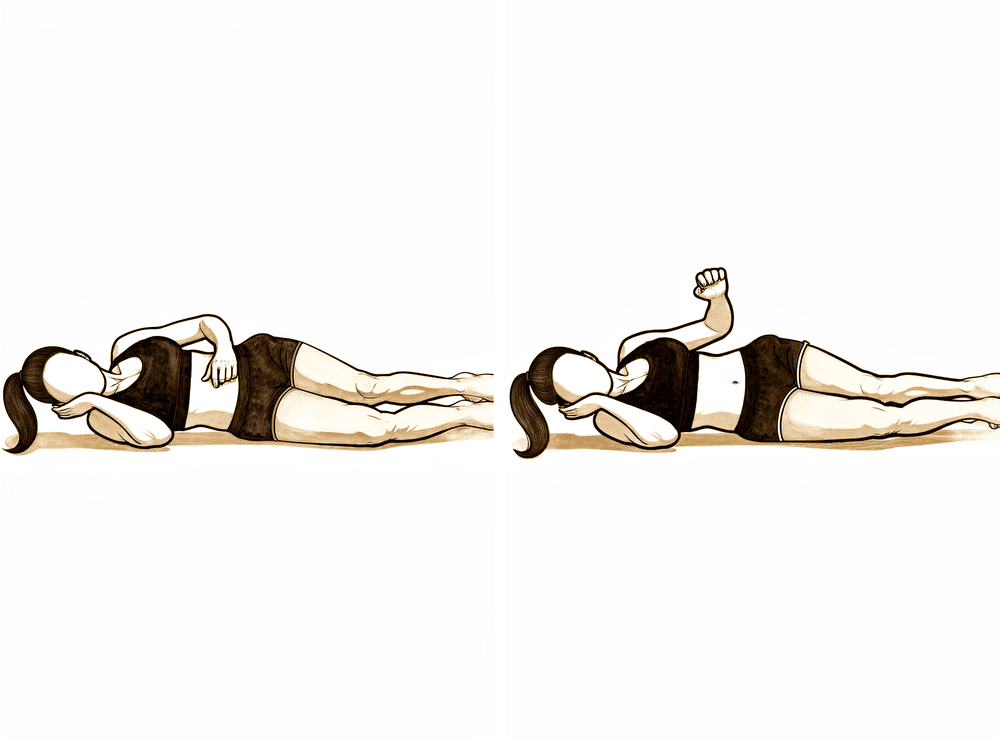
Rotação externa em decúbito lateral
Deite-se sobre o lado não operado, dobrando o cotovelo superior em um ângulo reto e mantendo-o junto ao corpo. Com o cotovelo ainda junto ao corpo, gire o antebraço para cima, em direção ao teto, e depois abaixe-o de forma controlada. Essa rotação externa sem dor ajuda a reativar os músculos inervados pelo nervo.
Conforme orientado pelo seu fisioterapeuta
Kieran Hirpara 4.0
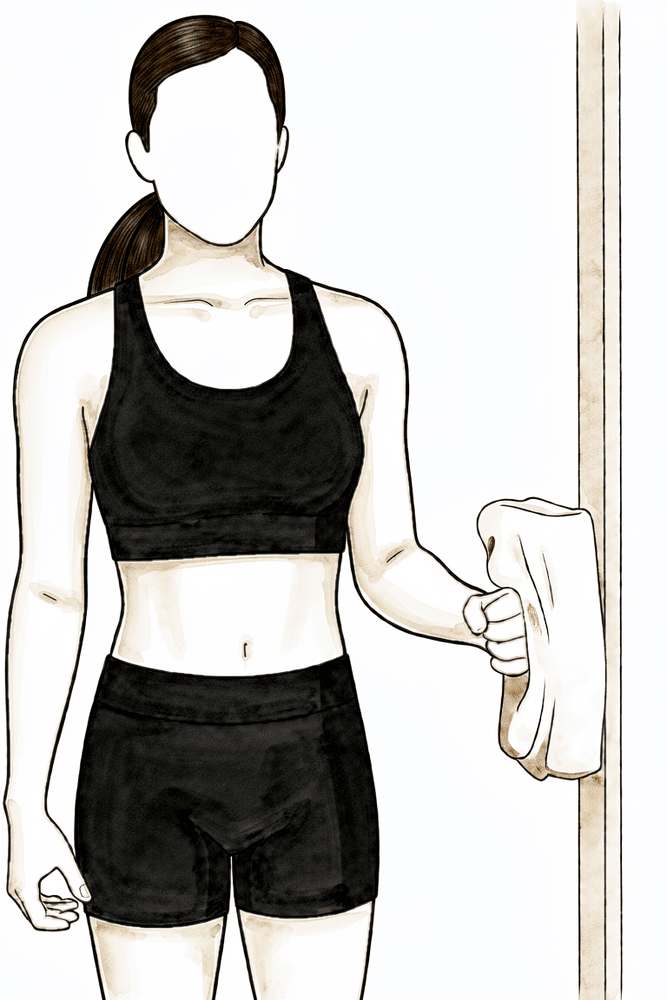
Rotação externa isométrica
Fique em pé com o cotovelo pressionado contra o corpo e dobrado em um ângulo reto, com o dorso da mão encostado numa parede ou na moldura de uma porta. Pressione suavemente para fora contra a superfície, sem mover o braço; mantenha essa posição por alguns segundos e depois relaxe. Este é o ponto de partida para reativar os músculos inervados pelo nervo, antes de utilizar uma faixa elástica.
Conforme orientado pelo seu fisioterapeuta
Kieran Hirpara 4.0
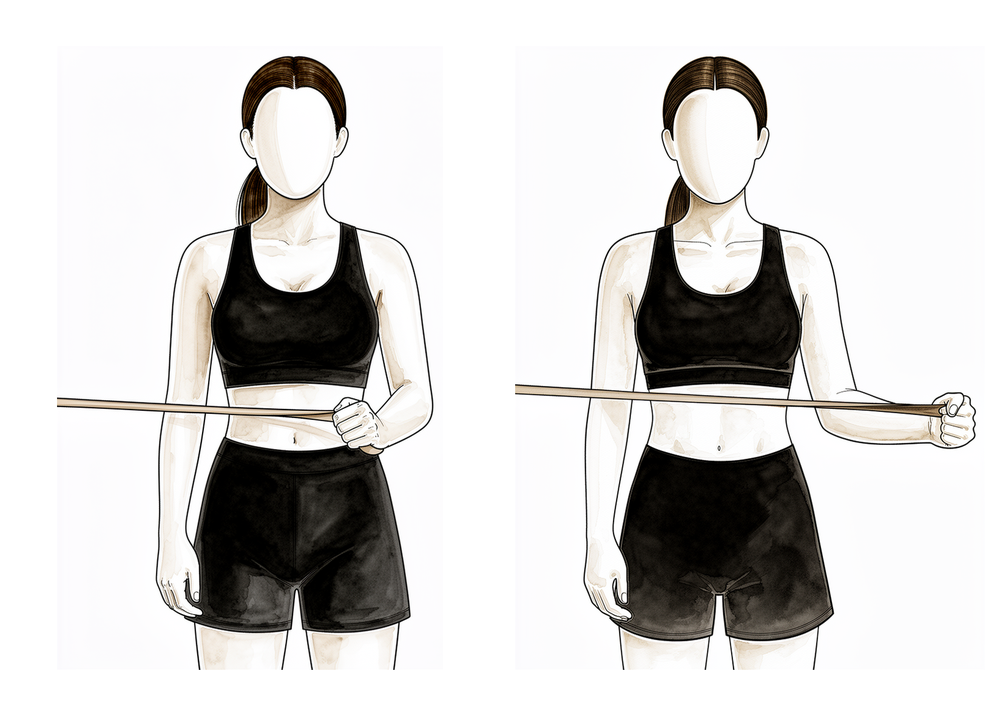
Rotação externa com faixa elástica
Fique em pé com o cotovelo pressionado contra o corpo e dobrado em um ângulo reto, segurando uma faixa elástica fixada na altura da cintura. Mantendo o cotovelo junto ao corpo, gire o antebraço para fora contra a resistência da faixa e depois volte lentamente à posição inicial. Baixa resistência e maior número de repetições: essa é a principal atividade de rotação externa para reativar o músculo infraespinhoso à medida que o nervo se recupera.
Carga baixa, número maior de repetições; conforme orientação do seu fisioterapeuta.
Kieran Hirpara 4.0
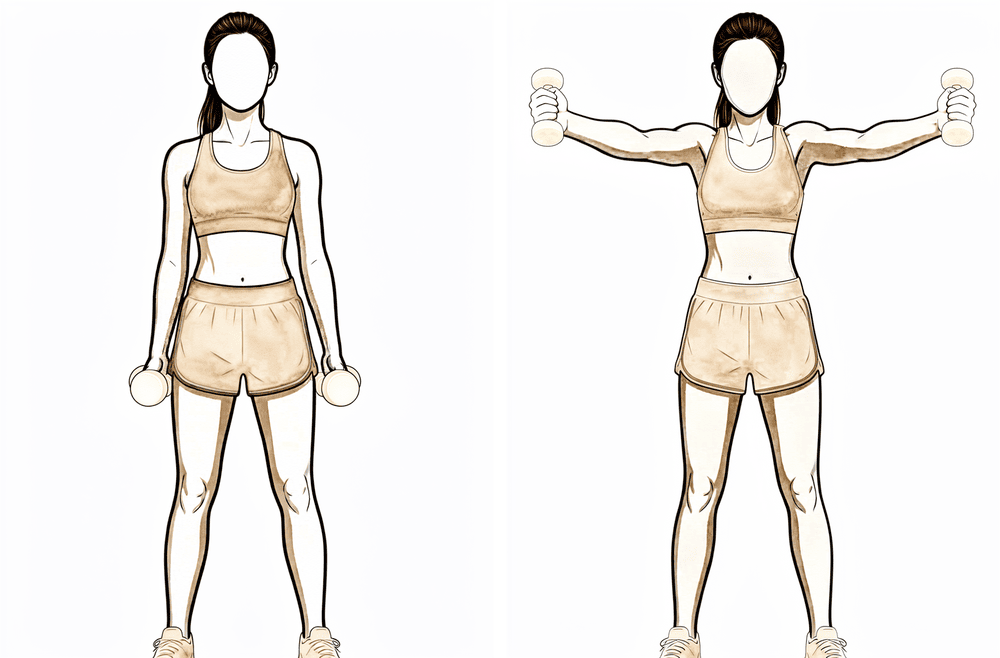
Elevação no plano da escápula com polegar para cima (“lata cheia”)
Fique em pé e levante o braço operado para a frente e ligeiramente para o lado, com o polegar apontando para cima, como se estivesse segurando uma lata cheia; eleve até cerca da altura do ombro e depois abaixe-o de forma controlada. Este exercício ativa o músculo supraespinhoso — um dos músculos inervados pelo nervo — e deve ser realizado respeitando o ritmo de recuperação, sem forçar.
Carga baixa, número maior de repetições; conforme orientação do seu fisioterapeuta.
Com o uso do sling suspenso, esta fase visa restaurar a amplitude de movimento completa e iniciar um fortalecimento leve, incluindo exercícios específicos para reativar o músculo supraespinhoso e o infraespinhoso à medida que o nervo se recupera. A maioria das pessoas retorna às suas atividades diárias normais durante esta fase. O progresso deve ser guiado pelo conforto, e não pelo calendário.
Para o seu fisioterapeuta:
Objetivos
- Amplitude de movimento ativa completa em todos os planos
- Início do fortalecimento leve e reativação do manguito rotador (supraespinhoso/infraespinhoso)
- Autonomia nas atividades da vida diária
Manejo
- Alcançar amplitude de movimento ativa completa em todas as direções
- Iniciar fortalecimento leve por volta da 2ª semana: exercícios isométricos evoluindo para o uso de faixas elásticas para o manguito rotador, deltoide e estabilizadores da escápula, com carga baixa e maior número de repetições
- Dar atenção especial à rotação externa sem dor, bem como à reativação do supraespinhoso e infraespinhoso conforme a recuperação do nervo
- Retorno gradual às atividades diárias normais, geralmente por volta da 4ª semana
Precauções
- O fortalecimento deve permanecer dentro de uma faixa confortável; não deve provocar dor persistente
- Evitar empurrões fortes, puxões e levantamento de cargas pesadas enquanto a força muscular se recupera
- A força retorna gradualmente: os exercícios de reativação devem ser adaptados à velocidade de recuperação do nervo, sem forçar
Critérios para avançar para a fase seguinte
- Amplitude de movimento ativa completa ou quase completa, sem dor
- Tolerância ao fortalecimento leve sem surgimento de dor ou desconforto
Fase III — Fortalecimento e retorno às atividades (Semana 6–12 e posteriormente)
Kieran Hirpara 4.0
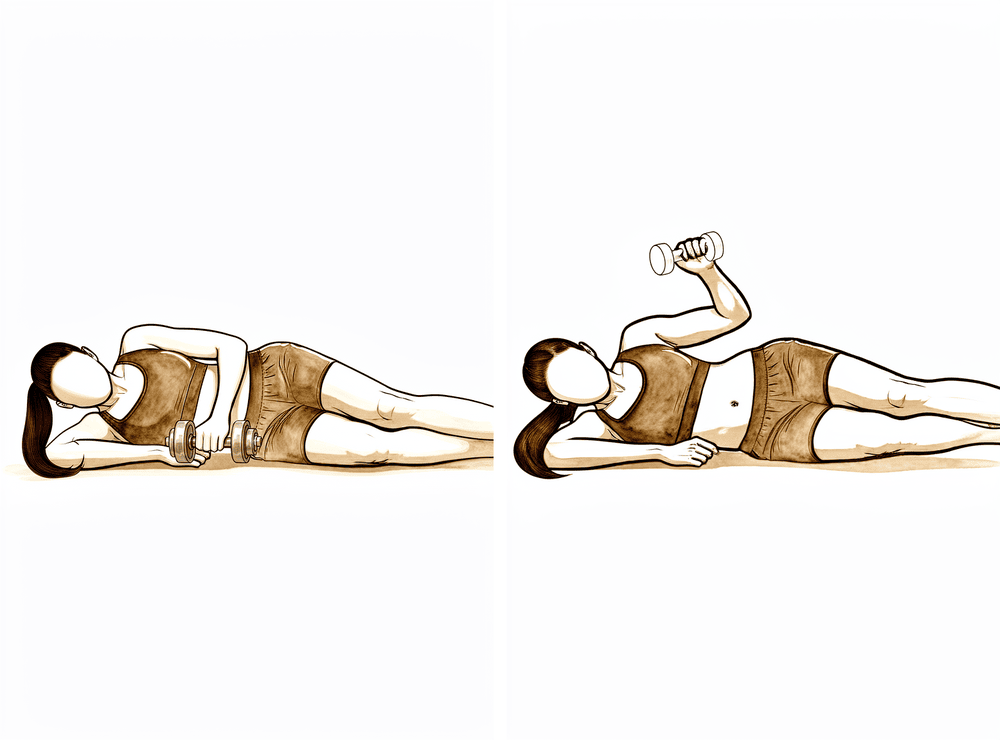
Rotação externa em decúbito lateral com carga
A partir da 12ª semana aproximadamente, realiza-se a mesma rotação em decúbito lateral, segurando um peso leve: o cotovelo deve ficar dobrado em ângulo reto e junto ao corpo; em seguida, gire o antebraço para cima, em direção ao teto, e abaixe-o lentamente. Esse exercício isola os músculos que são inervados pelo nervo em processo de recuperação — o avanço deve ser proporcional à recuperação do nervo, sem pressão excessiva.
Conforme orientado pelo seu fisioterapeuta
Kieran Hirpara 4.0
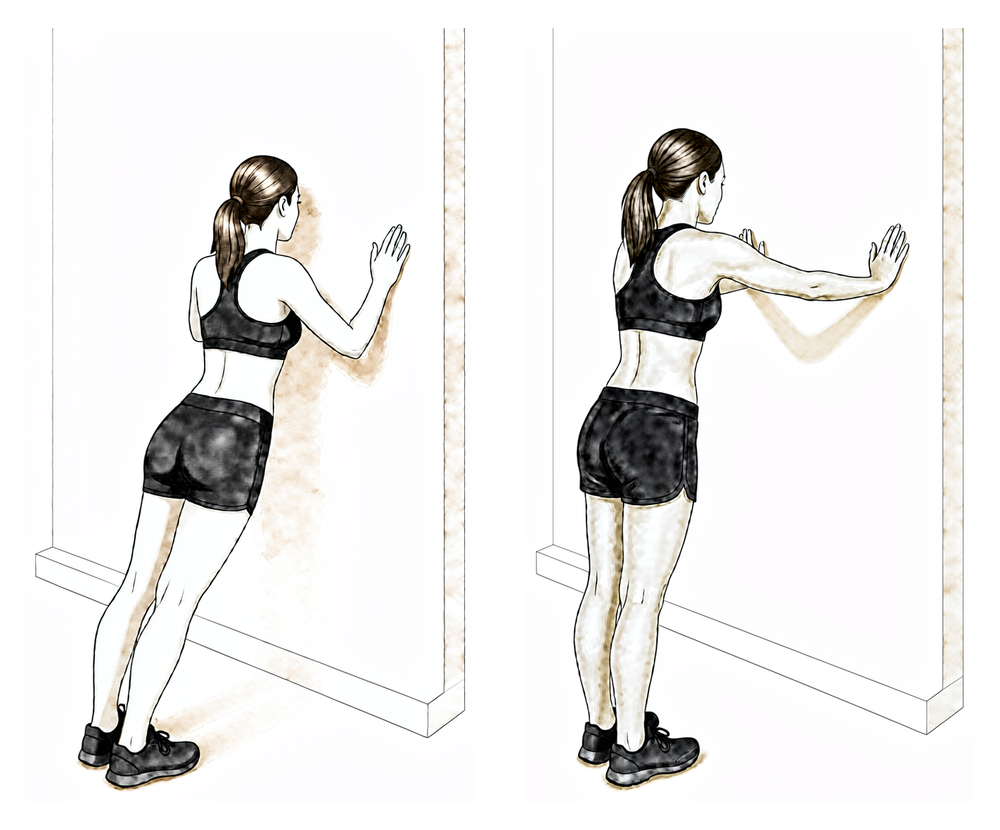
Flexão com variação extra
A partir de aproximadamente seis semanas, ao fazer flexões encostado numa parede, num banco ou no chão (progressivamente), empurre até o topo e depois continue pressionando um pouco mais, de modo que a parte superior das costas se arqueie e as escápulas se afastem uma da outra. Este é um exercício de cadeia fechada que desenvolve o controle das escápulas, auxiliando na estabilização do manguito rotador.
Conforme orientado pelo seu fisioterapeuta
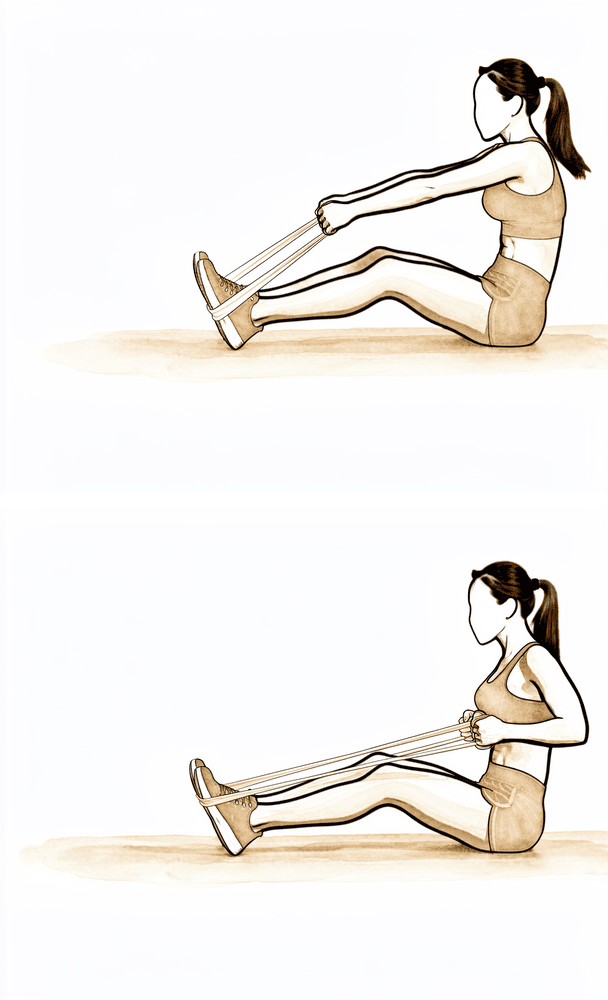
Kieran Hirpara 4.0
Remada baixa
Segure uma faixa à altura da cintura, à sua frente. Mantendo o braço razoavelmente esticado, puxe-o para trás e para baixo, em direção ao quadril, contraindo a escápula para baixo e para trás; em seguida, volte lentamente à posição inicial. Trata-se de um exercício de resistência progressiva que fortalece os músculos da escápula que dão suporte ao manguito rotador.
Conforme orientado pelo seu fisioterapeuta
A partir de aproximadamente seis semanas, o fortalecimento pode ser realizado sem restrições específicas, visando o retorno a tarefas acima da cabeça, trabalhos mais pesados e prática esportiva. O fortalecimento isolado do músculo supraespinhoso e do infraespinhoso é intensificado à medida que o nervo continua a se recuperar, processo que geralmente se estende por vários meses.
Para o seu fisioterapeuta:
Objetivos
- Fortalecimento completo sem restrições
- Retorno gradual a atividades acima da cabeça, trabalhos mais pesados e esportes
- Continua recuperação da força do manguito rotador à medida que o nervo se recupera
Conduta
- A partir da semana 6, progrida para um fortalecimento completo, incluindo exercícios em cadeia fechada e com resistência progressiva
- A partir da semana 12, intensifique o fortalecimento isolado do supraespinhoso e do infraespinhoso
- Planeje o retorno gradual às atividades acima da cabeça e aos esportes; as tarefas mais leves acima da cabeça costumam ser retomadas durante esta fase, e o retorno aos esportes deve ser feito de forma gradual nas semanas e meses seguintes, conforme a força muscular se recupera e sem dor
- Mantenha um programa de manutenção, já que o nervo e os músculos continuam a se recuperar
Precauções
- A progressão do tratamento deve ser guiada pelos sintomas
- A força e a massa muscular dos músculos afetados podem continuar a melhorar por vários meses; a recuperação pode ser parcial: ajuste as expectativas e evite sobrecarregar os músculos enquanto a força ainda estiver incompleta
Após o cumprimento do seu protocolo
As fases descritas acima foram adaptadas de artigos técnicos e estudos clínicos publicados sobre a descompressão artroscópica do nervo supraescapular. Os intervalos de semanas indicados são típicos, mas não fixos; a sua reabilitação contínua será orientada individualmente pelo seu fisioterapeuta, em colaboração com a clínica, conforme a recuperação do seu ombro e do nervo. Esta página complementa as orientações gerais de recuperação fornecidas pela clínica; consulte gestão da dor pós-operatória e cuidados com a ferida. Quanto à própria cirurgia e à condição que ela trata, consulte descompressão do nervo supraescapular. As evidências científicas que sustentam este protocolo (estudos sobre alívio da dor e recuperação da força após a descompressão do nervo) estão resumidas na seção de evidências, disponível em formato PDF no topo desta página.
Evidence & references
This is the clinical evidence summary written for health professionals. It is technical, and it lists the research this page was built from. You do not need to read it to understand your treatment or to make a decision about it.
Suprascapular Nerve Decompression — Post-operative Rehabilitation (Arthroscopic Release)
Topic scope: Post-operative rehabilitation after an isolated arthroscopic suprascapular nerve decompression / release — release of the nerve at the suprascapular notch (division of the transverse/superior scapular ligament) and/or the spinoglenoid notch, performed for nerve entrapment, often with excision of an associated paralabral / spinoglenoid ganglion cyst. This page covers the isolated decompression only; when the procedure is combined with a rotator cuff repair the slower, protected rotator-cuff-repair pathway takes precedence.
Defining principle of the rehab here: decompression relieves pressure on a nerve and creates no construct that needs months of protection — there is no tendon repair or capsular reconstruction to safeguard. So (like a debridement/decompression, and unlike a cuff repair or labral repair) this is an early-movement pathway: a short sling for comfort only (about the first week, two at most), early range of motion as comfort allows, and return to daily activities within a few weeks. The crucial separate timeline is the nerve itself: the compression pain often settles relatively quickly, but recovery of strength and bulk in the muscles the nerve supplies (supraspinatus and infraspinatus) is paced over weeks to months and is frequently only partial — functional recovery follows the nerve, not the calendar. The single branch point is whether a rotator cuff repair was also performed — if so, the recovery converts to the protected rotator-cuff-repair pathway.
The procedure
The suprascapular nerve can be entrapped at two fibro-osseous tunnels as it crosses the scapula: the suprascapular notch (under the superior transverse scapular ligament — entrapment here affects both supraspinatus and infraspinatus) and the spinoglenoid notch (under the spinoglenoid ligament — entrapment here is more selective for the infraspinatus). A paralabral ganglion cyst, often arising from a posterosuperior labral tear, is a common space-occupying cause at the spinoglenoid notch.
Arthroscopic decompression releases the offending ligament (and decompresses/excises any cyst); where the cyst arises from a labral tear, the labral source may be addressed at the same sitting. Because the operation removes a compressive lesion rather than creating a repair, there is no healing construct that dictates a protected immobilisation period — the rehab is governed by comfort and by the nerve's own recovery.
Evidence by theme
Pain relief is the most reliable benefit
Across cohorts and a systematic review, decompression gives good pain relief and functional improvement in the majority. In a retrospective series of 112 arthroscopic decompressions, VAS pain fell from a mean of 6.5 to 2.9 (p < 0.0001) at a mean follow-up of ~9 months, with no neurovascular injuries, infections or fractures [112-patient series, PMC6994808]. A 2018 systematic review of decompression outcomes reported broad improvements in patient-reported scores and high rates of return to sport/duty [systematic review, JSES 2018, DOI 10.1016/j.jse.2017.09.025]. A volleyball-player cohort and a spinoglenoid-notch technique series likewise report reliable return of arm function [Brzoska 2023; Plancher 2021]. Moderate (cohorts + SR of level III–IV studies).
Strength recovery follows the nerve — slower, and often incomplete
This is the key counselling point. The same 112-patient series showed measurable strength gains (supraspinatus 3.3 → 4.9; infraspinatus 3.3 → 4.8 on the 0–5 scale) but over months, not weeks [PMC6994808]. A systematic review of motor recovery after notch decompression found that full strength was NOT regained in the majority (~60%) of reported cases, and that established fatty (structural) muscle degeneration generally did not reverse — "patients should be informed about this" [motor-recovery SR, PubMed 32392599]. Open spinoglenoid-notch series report better external- rotation strength figures (e.g. ~66% regaining full ER strength) for cyst-related entrapment, where the lesion is discrete and recovery potential higher [open decompression, PubMed 23664748]. Earlier diagnosis and decompression, and a discrete compressive cause (cyst) rather than chronic idiopathic entrapment, predict more complete muscular recovery. Moderate–weak; consistent direction across studies.
Ganglion-cyst vs idiopathic entrapment
Cyst-related entrapment (a removable, space-occupying cause) tends to do well — decompression removes the cause and electrodiagnostic recovery of the nerve has been documented post- decompression [Feinberg 2019, Muscle Nerve]. Chronic idiopathic entrapment, longstanding denervation, and established fatty infiltration carry a more guarded prognosis for strength return. This distinction underlies the variable, partly-incomplete recovery seen in the pooled literature. Weak (case series / mechanistic).
The rehabilitation protocol itself is consensus/expert
The phased post-op programme below is drawn from published technique papers and patient-guidance protocols, not from a rehabilitation RCT — there is no trial defining the optimal post- decompression regimen. Phase timings are typical, not trial-derived. Weak/consensus.
Phased post-op timeline (isolated decompression — no cuff repair)
| Phase | Window | Sling | ROM / use | Strengthening | Notes |
|---|---|---|---|---|---|
| I — Early movement | Week 0–2 | Comfort only, ~first week (up to 2 wk), off ASAP; not worn to sleep | Early gentle ROM as comfort allows — pendulums, passive/active-assisted elevation, ER/IR, elbow flexion/extension; keep hand/wrist/elbow moving from day 1 | Isometric deltoid + scapular setting as comfortable | Settle post-op flare; no driving while in sling; no heavy lifting/forceful push-pull |
| II — Range & muscle reactivation | Week 2–6 | Off | Progress to full active ROM in all planes | Light strengthening from ~wk 2 (isometric → band), low-load/high-rep cuff, deltoid, scapular stabilisers; particular attention to pain-free ER and to reactivating supraspinatus/infraspinatus as the nerve recovers | Most return to normal daily activities (~wk 4); progress guided by comfort, not calendar |
| III — Strengthening / return | Week 6–12 and beyond | Off | Full ROM maintained | Full strengthening without restriction from ~wk 6; isolated supraspinatus/infraspinatus strengthening advanced from ~wk 12; staged return to overhead work and sport | Strength + muscle bulk may keep recovering over several months and may be only partial — pace expectations to the nerve |
Branch point — if a rotator cuff repair was also performed: recovery converts to the protected rotator-cuff-repair pathway (sling ~6 weeks, ROM restrictions, strengthening deferred). The surgeon confirms which pathway applies.
Key controversies / evidence quality
- Strength recovery is the honest weak point. Decompression reliably relieves pain but does not reliably restore full strength — a systematic review found ~60% of cases fell short of full strength recovery, and fatty muscle degeneration generally did not reverse [PubMed 32392599]. This is the single most important thing to counsel before surgery. Moderate (SR of level III–IV).
- Evidence is small cohorts and case series. The largest single series is ~112 patients; most are < 30; the systematic reviews pool level III–IV studies. There is no RCT for isolated decompression rehab, and no rehab trial at all. Weak overall evidence base — stated honestly.
- Indication / patient selection. When to decompress (especially for asymptomatic or mildly symptomatic cysts, or chronic idiopathic entrapment with established atrophy) remains debated — reflected in editorial commentary in the corpus ("should you have the nerve to do it?", Arthroscopy 2021, DOI 10.1016/j.arthro.2020.12.192). Consensus/expert.
- The rehab protocol is consensus, drawn from technique papers and surgeon patient-guidance documents rather than a rehab trial — phase timings are typical, not trial-derived.
Evidence-strength flags (summary)
- MODERATE (cohorts + SR): decompression relieves pain and improves function in the majority (112-patient series VAS 6.5→2.9; 2018 JSES SR; volleyball-player cohort).
- MODERATE–WEAK (SR of level III–IV): strength recovery is slower and often incomplete (~60% short of full strength; fatty degeneration usually does not reverse — motor-recovery SR).
- WEAK (case series / mechanistic): cyst-related entrapment outperforms chronic idiopathic entrapment; earlier decompression predicts fuller recovery; documented electrodiagnostic nerve recovery post-release.
- WEAK / CONSENSUS: the post-operative rehabilitation protocol itself (technique papers + surgeon patient-guidance; no defining rehab RCT).
Citations
RAG corpus (180,000+ Orthopaedic articles)
- Clinical outcomes of suprascapular nerve decompression. J Shoulder Elbow Surg. 2011. DOI: 10.1016/j.jse.2010.10.032
- Clinical outcomes of suprascapular nerve decompression: a systematic review. J Shoulder Elbow Surg. 2018. DOI: 10.1016/j.jse.2017.09.025
- Arthroscopic Decompression of the Suprascapular Nerve at the Spinoglenoid Notch and Suprascapular Notch Through the Subacromial Space. Arthroscopy. 2009. DOI: 10.1016/j.arthro.2008.10.024
- Arthroscopic suprascapular nerve decompression: indications and surgical technique. J Shoulder Elbow Surg. 2010. DOI: 10.1016/j.jse.2010.01.006
- Suprascapular neuropathy: what does the literature show? J Shoulder Elbow Surg. 2012. DOI: 10.1016/j.jse.2011.11.033
- The Evaluation and Management of Suprascapular Neuropathy. J Am Acad Orthop Surg. 2020. DOI: 10.5435/jaaos-d-19-00526
- Suprascapular Neuropathy. J Bone Joint Surg Am. 2010. DOI: 10.2106/jbjs.i.01743
- Outcomes of Arthroscopic Nerve Release in Patients Treated for Large or Massive Rotator Cuff Tears and Associated Suprascapular Neuropathy: A Prospective, Randomized, Double-Blinded Clinical Trial. Am J Sports Med. 2021. DOI: 10.1177/03635465211021834
- Editorial Commentary: Suprascapular Nerve Decompression Can Be Effective, But Should You Have the Nerve to Do It? Arthroscopy. 2021. DOI: 10.1016/j.arthro.2020.12.192
- Complete Fatty Infiltration of Intact Rotator Cuffs Caused by Suprascapular Neuropathy. Arthroscopy. 2014. DOI: 10.1016/j.arthro.2014.01.010
Literature (URLs)
- A retrospective review of 112 patients undergoing arthroscopic suprascapular nerve decompression (VAS 6.5→2.9; supraspinatus/infraspinatus strength gains; no neurovascular/infective/fracture complications). PMC. https://pmc.ncbi.nlm.nih.gov/articles/PMC6994808/
- Motor Recovery of the Suprascapular Nerve after Arthroscopic Decompression in the Scapular Notch — a Systematic Review (~60% do not regain full strength; fatty degeneration generally not reversed). PubMed. https://pubmed.ncbi.nlm.nih.gov/32392599/
- Suprascapular nerve entrapment isolated to the spinoglenoid notch: surgical technique and results of open decompression (~66% regained full ER strength). PubMed. https://pubmed.ncbi.nlm.nih.gov/23664748/
- Arthroscopic release of suprascapular nerve entrapment at the suprascapular notch: technique and preliminary results. PubMed. https://pubmed.ncbi.nlm.nih.gov/17210425/
- Compression of the suprascapular nerve by a ganglion cyst of the spinoglenoid notch: the arthroscopic solution. PubMed. https://pubmed.ncbi.nlm.nih.gov/14595536/
Published protocols / technique papers (basis for the phase structure)
- Plancher KD, Evely TB, Brite JE, Briggs KK, Petterson SC. Endoscopic/arthroscopic decompression of the suprascapular nerve at the spinoglenoid notch: indications and surgical technique. JSES Rev Rep Tech. 2021;1(3):198-206. https://www.sciencedirect.com/science/article/pii/S2666639121000250
- Harkin WE, Kerzner B, Scanaliato J, et al. Open Suprascapular Nerve Decompression at the Spinoglenoid Notch. Arthrosc Tech. 2024;13(9):103051. https://pmc.ncbi.nlm.nih.gov/articles/PMC11411363/
- Brzoska R, Laprus H, Klaptocz P, et al. Arm Function After Arthroscopic Decompression of the Suprascapular Nerve at the Spinoglenoid Notch and Suprascapular Notch in Volleyball Players. Orthop J Sports Med. 2023;11(2):23259671221147892. https://pmc.ncbi.nlm.nih.gov/articles/PMC9974621/
- Feinberg JH, Mehta P, Gulotta LV, et al. Electrodiagnostic evidence of suprascapular nerve recovery after decompression. Muscle Nerve. 2019;59(2):247-249. https://pubmed.ncbi.nlm.nih.gov/30291636/