Patients › Rehabilitation
Liberação do túnel cubital
Recuperação após descompressão cirúrgica do nervo ulnar no cotovelo, abrangendo tanto a liberação in situ (simples) quanto a transposição anterior.
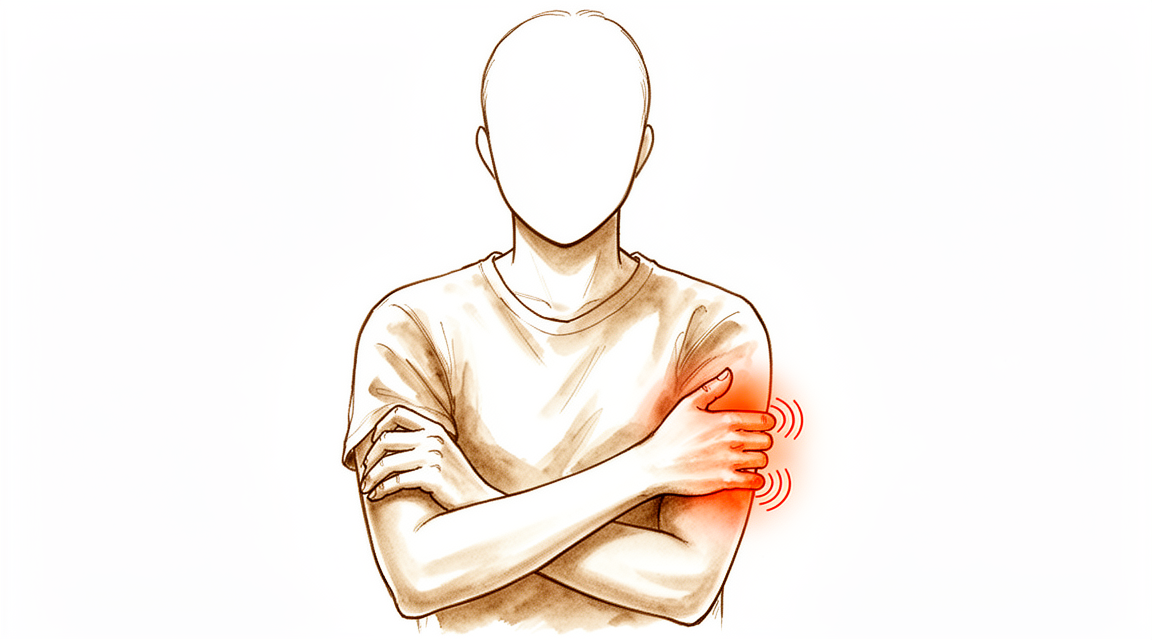
Este protocolo orienta sua recuperação após a liberação cirúrgica do nervo ulnar no cotovelo (liberação do túnel cubital) realizada pelo Dr. Kieran Hirpara no Mater Private Hospital Rockhampton. Ele explica o que esperar, as precauções nas primeiras semanas e os exercícios que ajudam o nervo a deslizar livremente enquanto tudo se estabiliza. Leve esta página ou seu PDF ao seu fisioterapeuta ou terapeuta da mão para que a reabilitação seja coordenada. O terapeuta poderá ajustar o plano conforme sua recuperação avançar.
Caso tenha alguma dúvida ou preocupação quanto à ferida pós-cirúrgica, entre em contato com o consultório. Geralmente é útil tirar uma foto da ferida e enviá-la por e-mail para análise.
Duas cirurgias diferentes, duas recuperações ligeiramente distintas. O nervo ulnar pode ser liberado de duas maneiras principais, e a técnica utilizada influencia as precauções iniciais:
- Descompressão in situ (simples): o nervo é liberado no local onde se encontra, sem ser movido. Esta é a cirurgia padrão realizada pelo Dr. Hirpara, e a recuperação é rápida: movimentos completos e suaves do cotovelo podem ser iniciados precocemente. Não é necessário usar uma órtese rígida.
- Transposição anterior (submuscular) (o nervo é deslocado e reencaminhado para uma posição mais protegida na frente do cotovelo): realizada apenas nos casos menos comuns em que o nervo sofre subluxação ou deslocamento sobre a proeminência óssea (epicôndilo medial) ao dobrar o cotovelo. Nesse caso, é preciso maior cuidado nas primeiras semanas, evitando movimentos extremos de flexão e extensão do cotovelo enquanto o nervo e os tecidos moles se acomodam na nova posição. Pode-se usar uma tipoia simples apenas para maior conforto.
Siga as orientações abaixo conforme a cirurgia que realizou: descompressão in situ na maioria dos casos, e transposição quando o nervo era instável.
O que esperar
Para orientações sobre o cuidado de feridas, inchaço e cicatrizes, consulte o guia de cuidados com feridas do consultório.
O objetivo da cirurgia é aliviar a pressão sobre o nervo ulnar (o nervo responsável pela sensibilidade dos dedos mindinho e anular, além de controlar muitos dos pequenos músculos da mão). Uma vez aliviada a pressão, o nervo começa a se recuperar, porém a regeneração nervosa é um processo lento.
A rapidez com que os sintomas melhoram depende muito do tempo durante o qual o nervo esteve comprimido e do grau de irritação que apresentava antes da cirurgia. A formigamento e a sensação de “pinos e agulhas” costumam desaparecer primeiro, às vezes em dias ou semanas. Já a dormência e a força da mão levam mais tempo para se recuperar (geralmente meses), e o resultado final pode continuar melhorando por até um ano ou mais após a operação. Nos casos em que o nervo esteve muito irritado por um longo período, parte da dormência ou fraqueza pode não se recuperar totalmente; nesses casos, a cirurgia tem como objetivo impedir que a situação piore e dar ao nervo a melhor chance de recuperação.
Ao comparar as duas técnicas cirúrgicas, revisões abrangentes de estudos publicados mostraram que a descompressão simples in situ e a transposição anterior produzem resultados gerais semelhantes, sendo que a descompressão simples tende a apresentar menos complicações relacionadas a feridas e tecidos moles [1][2]. A escolha entre uma ou outra técnica será feita pelo seu cirurgião, com base nas condições do seu nervo e do seu cotovelo.
Precauções e limitações
É recomendado o uso leve e funcional da mão para tarefas cotidianas, como cuidados pessoais, alimentação, vestir-se, escrever e digitar, desde o início, dentro dos limites do conforto.
As restrições iniciais dependem do tipo de cirurgia realizada:
- Após descompressão in situ (cirurgia padrão): recomenda-se movimentar suavemente o cotovelo, antebraço, punho e mão desde cedo, para manter a movimentação do nervo. Não é necessário usar órtese. Mantenha os esforços de levantamento, preensão e suporte de peso pelo braço leves durante as primeiras seis semanas, aumentando gradualmente depois.
- Após transposição anterior (somente se o nervo estiver instável): o cotovelo deve ser protegido nas primeiras semanas; evite forçar a flexão ou extensão completa, bem como manter o cotovelo dobrado por longos períodos, enquanto o nervo se adapta à nova posição. Pode-se usar uma tipoia simples apenas para maior conforto. Os exercícios de deslizamento do nervo começam um pouco mais tarde do que após a descompressão simples (geralmente entre duas e três semanas). Assim como na descompressão in situ, mantenha os esforços de levantamento e resistência leves nas primeiras seis semanas, aumentando gradualmente depois.
Como orientação geral, os exercícios de levantamento e fortalecimento com resistência devem ser leves até cerca de seis semanas, quando então podem ser aumentados gradualmente [3][4].
Apoiar o cotovelo em superfícies duras exerce pressão diretamente sobre o nervo; portanto, essa prática deve ser evitada durante o período de recuperação.
Após a cicatrização da ferida, a massagem da cicatriz ajuda a manter a pele e os tecidos ao redor do nervo flexíveis. A página cuidados com a ferida traz mais informações sobre o manejo das cicatrizes.
Os exercícios listados no folheto devem ser executados conforme descrito em cada cartão. Comece-os sob orientação do Dr. Hirpara e do seu fisioterapeuta; a data de início dos exercícios de deslizamento do nervo e quaisquer restrições de amplitude de movimento do cotovelo dependem do tipo de cirurgia realizada.
Seus exercícios
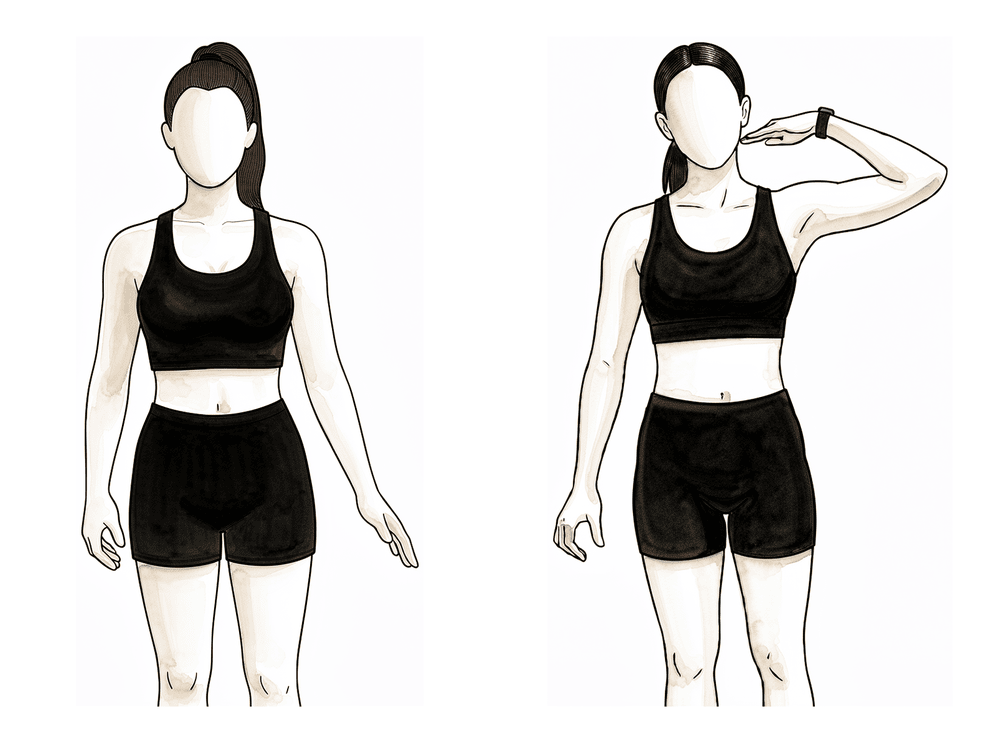
Kieran Hirpara 4.0
Deslizamentos do nervo ulnar
Esses movimentos suaves permitem que o nervo ulnar deslize livremente, evitando que ele fique aderido ao tecido em processo de cicatrização. Execute cada movimento de forma suave, indo apenas até onde for confortável: uma leve sensação de tração ou formigamento é normal, mas interrompa o movimento antes de sentir qualquer dor aguda ou forte sensação de “formigamento”. Nunca force o alongamento. Comece apenas quando o seu cirurgião ou fisioterapeuta autorizar (geralmente isso acontece mais tarde, caso tenha sido feita uma transposição do nervo — veja as precauções abaixo).
5 repetições lentas, 2–3 vezes por dia
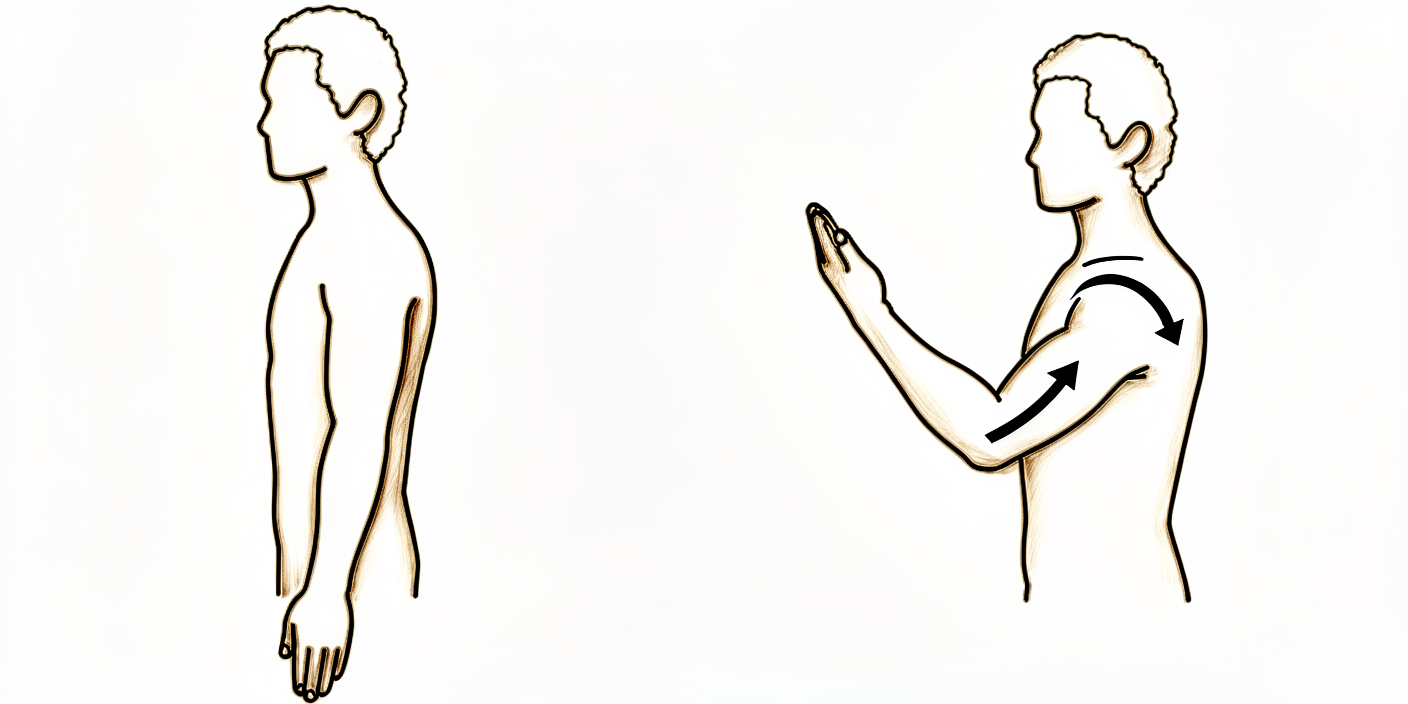
Kieran Hirpara 4.0
Flexão do cotovelo (flexão)
Com o braço apoiado, dobre o cotovelo suavemente para levar a mão até o ombro e, em seguida, abaixe-a novamente. Faça os movimentos dentro de uma amplitude confortável. Caso tenha feito uma transposição, o cirurgião pode pedir que você evite dobrar o cotovelo completamente nas primeiras semanas — siga o limite que lhe foi indicado.
10 repetições, 3–4 vezes ao dia, dentro da faixa permitida para você.
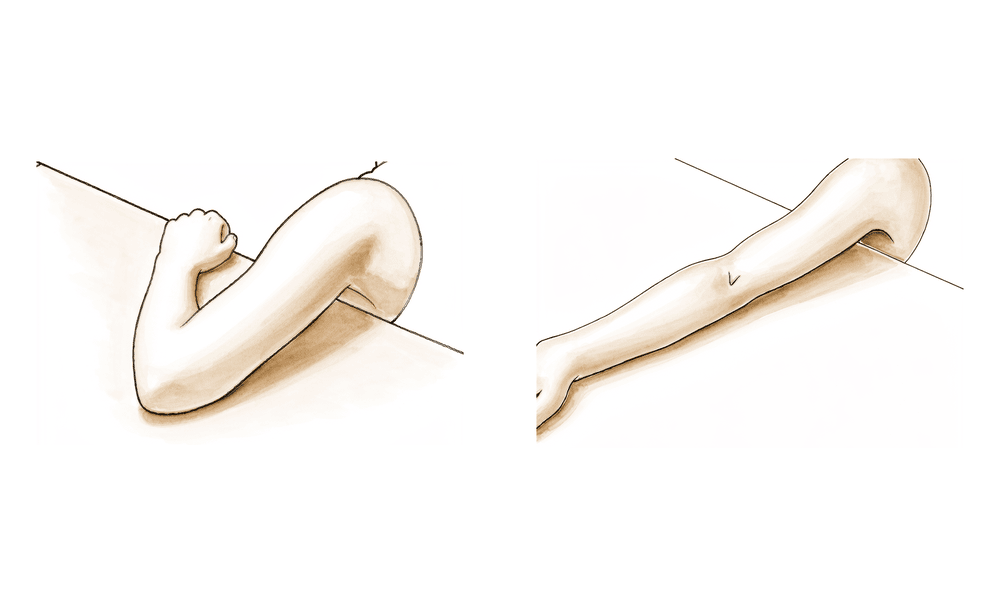
Kieran Hirpara 4.0
Extensão do cotovelo (endireitamento)
A partir de uma posição flexionada, estique suavemente o cotovelo até o limite do conforto, e depois volte à posição inicial. Caso tenha passado por uma transposição, evite esticar completamente o cotovelo nas primeiras semanas, se o seu cirurgião assim recomendou — limite-se à amplitude de movimento confortável que ele indicou.
10 repetições, 3–4 vezes por dia, dentro do intervalo permitido.
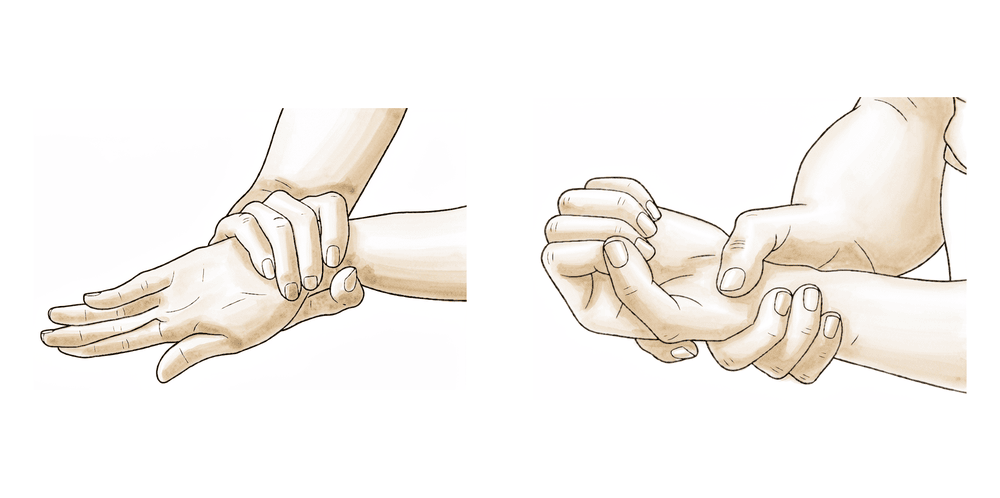
Kieran Hirpara 4.0
Rotação do antebraço
Com o cotovelo junto ao corpo e dobrado em ângulo reto, gire lentamente a palma da mão para cima, em direção ao teto, e depois para baixo, em direção ao chão. Mantenha o cotovelo sempre encostado ao corpo.
10 vezes em cada direção, 3–4 vezes por dia.
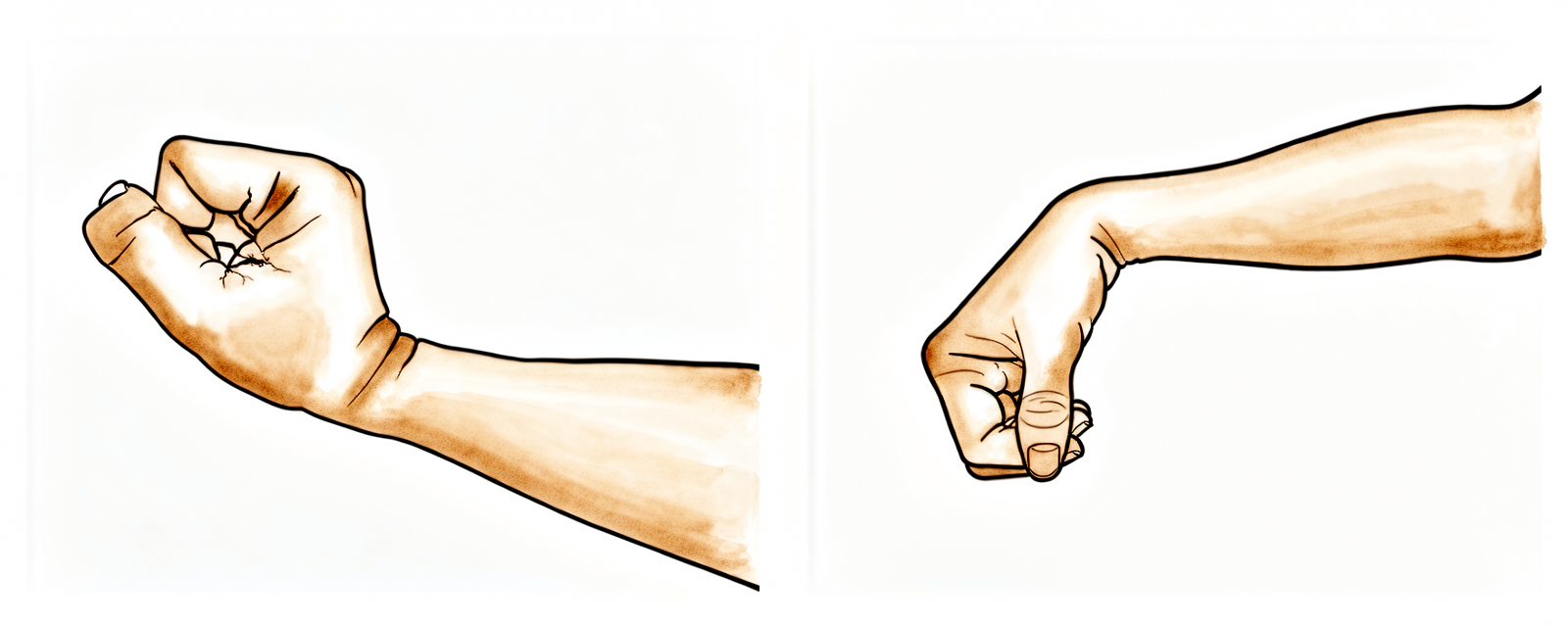
Kieran Hirpara 4.0
Movimento do punho e dos dedos
Flexione suavemente o pulso para cima e para baixo, e abra e feche os dedos completamente, formando um punho frouxo e depois espalhando os dedos. Isso mantém todo o membro em movimento e ajuda a reduzir o inchaço e a rigidez enquanto o cotovelo se recupera.
10 de cada, várias vezes ao dia.
Comece a realizar os exercícios abaixo somente sob orientação do Dr. Hirpara e do seu terapeuta ocupacional, respeitando os limites e a amplitude de movimento que lhe foram indicados. Os deslizamentos do nervo ulnar são os mais importantes — eles permitem que o nervo continue se movendo em sua nova posição, evitando a formação de cicatrizes; esses exercícios devem ser iniciados logo no início. A flexão, extensão do cotovelo e a rotação do antebraço impedem o endurecimento do cotovelo, enquanto os movimentos do punho e dos dedos mantêm todo o restante funcional. Evite ficar por longos períodos com o cotovelo totalmente dobrado, pois isso é o que, inicialmente, irrita o nervo. Interrompa qualquer exercício que cause dor aguda ou sensação de choque elétrico ao longo do antebraço, indo até os dedos mindinho e anular.
Voltando ao trabalho e às atividades
A maioria das pessoas retorna a trabalhos de escritório ou atividades leves em uma ou duas semanas; já para funções mais pesadas, repetitivas ou manuais, geralmente são necessárias de quatro a oito semanas. Você estará pronto para realizar uma determinada tarefa quando a ferida suportar o contato e a pressão envolvidos, e quando puder executá-la confortavelmente respeitando as precauções mencionadas acima. Caso seu trabalho seja pesado, envolva o apoio do cotovelo ou o uso de ferramentas vibratórias, mencione isso na consulta pós-operatória para que se elabore um plano (incluindo eventuais adaptações nas tarefas).
O retorno à direção costuma ocorrer por volta de duas a três semanas, após a retirada da tipóia e quando você consegue controlar o veículo e reagir em situações de emergência sem sentir dor. Para voltar a praticar esportes ou atividades que exigem movimentos acima da cabeça, geralmente são necessárias de seis a doze semanas.
A recuperação do nervo segue um cronograma próprio, mais lento. O formigamento costuma desaparecer primeiro, em dias ou semanas; já a dormência e a força muscular continuam a melhorar ao longo de vários meses, podendo apresentar progresso por até um ano. Nos casos em que o nervo ficou muito comprimido por um período prolongado, parte da dormência ou da fraqueza pode não se recuperar totalmente; nesses casos, a cirurgia tem como objetivo impedir que a situação piore.
Após seguir este protocolo
Este protocolo complementa as orientações gerais de recuperação fornecidas pela clínica: consulte controle da dor pós-operatória, cuidados com a ferida e noções básicas sobre a fisioterapia da mão. O plano em fases descrito acima está alinhado com as evidências científicas sobre a descompressão do nervo ulnar no cotovelo; sua recuperação continua sendo acompanhada individualmente pelo seu fisioterapeuta ou terapeuta da mão, conforme a evolução do seu nervo e do cotovelo.
Referências
[1] Said J, Van Nest D, Foltz C, et al. Descompressão in situ do nervo ulnar versus transposição para a síndrome do túnel cubital idiopática: uma meta-análise atualizada. J Hand Microsurg. 2019;11(1):18–27. https://pmc.ncbi.nlm.nih.gov/articles/PMC6431285/ [2] Macadam SA, Gandhi R, Bezuhly M, Lefaivre KA. Descompressão simples versus transposição subcutânea anterior e submuscular do nervo ulnar na síndrome do túnel cubital: uma meta-análise. J Hand Surg Am. 2008;33(8):1314.e1–12. https://pubmed.ncbi.nlm.nih.gov/18929194/ [3] Caliandro P, La Torre G, Padua R, Giannini F, Padua L. Tratamento da neuropatia ulnar no cotovelo. Cochrane Database Syst Rev. 2016;11:CD006839. https://www.cochranelibrary.com/cdsr/doi/10.1002/14651858.CD006839.pub4/full [4] Andrews K, Rowland A, Pranjal A, Ebraheim N. Síndrome do túnel cubital: anatomia, apresentação clínica e tratamento. J Orthop. 2018;15(3):832–836. https://pmc.ncbi.nlm.nih.gov/articles/PMC6082832/
Evidence & references
This is the clinical evidence summary written for health professionals. It is technical, and it lists the research this page was built from. You do not need to read it to understand your treatment or to make a decision about it.
Cubital Tunnel Release — Post-operative Rehabilitation (In-situ Decompression vs Anterior Transposition)
Topic scope: post-operative rehabilitation after surgical decompression of the ulnar nerve at the elbow. The single defining branch point is the operative technique: (A) in-situ (simple) decompression — an early-full-motion pathway; versus (B) anterior transposition (subcutaneous or submuscular) — a protected early phase that avoids end-range elbow flexion/extension for the first few weeks to protect the transposed nerve and its soft-tissue bed.
Defining principle of the rehab here: decompression relieves pressure on a nerve; it does not, by itself, create a load-bearing repair that needs months of protection. So the rehab is fundamentally an early-motion, nerve-glide pathway aimed at preventing perineural adhesion while the nerve recovers on its own (slow) biological timeline. The one variable that changes the early phase is whether the nerve was transposed — a transposed nerve sits in a new bed and end-range elbow excursion is restricted briefly to protect it, so nerve glides start later and elbow ROM is capped for a few weeks. Phase timings below are typical of published surgeon protocols and institutional consensus rather than trial-derived.
A. PROCEDURE CHOICE & OUTCOME EQUIVALENCE
- In-situ decompression and anterior transposition give equivalent clinical outcomes. Multiple meta-analyses of RCTs and comparative series find no significant difference in motor nerve conduction velocity or clinical outcome scores between simple decompression and transposition for idiopathic cubital tunnel syndrome. Strong (multiple SR/meta-analyses).
- Simple decompression carries a lower complication burden (wound, soft-tissue, devascularisation risk), and is often preferred where the nerve is stable and does not subluxate. Moderate–strong.
- Transposition is selected for nerve instability/subluxation, prior failed in-situ release, bony deformity, or a hostile cubital tunnel floor — surgeon's intra-operative judgement. Consensus.
- Endoscopic vs open in-situ decompression show comparable outcomes; choice does not change the rehab pathway (both early-motion). Moderate (SR).
B. POST-OPERATIVE REHABILITATION
Common principles (both pathways)
- Early digital, wrist and shoulder motion from day 1 to prevent stiffness and oedema.
- Ulnar nerve gliding to prevent perineural adhesion — timing differs by pathway (see below).
- No elbow leaning / direct pressure over the nerve during recovery.
- Wound: suture removal ~10–14 days; scar massage and desensitisation once healed.
- Nerve recovery is slow and graded: paraesthesia often improves first (days–weeks); numbness and intrinsic strength lag (months); final outcome continues to ~12 months. DASH, clinical findings and NCV improve postoperatively, with significant early gains by ~1 month in cohort data. Pre-operative severity/chronicity is the dominant predictor of incomplete recovery.
Phased timeline (typical of published surgeon protocols)
| Phase | In-situ (simple) decompression | Anterior transposition (SC / submuscular) |
|---|---|---|
| Week 0–2 | Soft dressing; early active full elbow ROM + digit/wrist/shoulder ROM; light ADLs | Splint/sling for comfort/protection (often elbow ~semi-flexed early); avoid end-range flexion AND extension, and avoid sustained/prolonged elbow flexion; digit/wrist/shoulder ROM |
| Week 2–6 | Progress to full unrestricted active ROM; scar massage + desensitisation once healed; nerve glides as tolerated | Suture out ~10–14d; gradually restore elbow ROM within set limits; scar/desensitisation; introduce nerve glides — typically deferred to this window |
| Week ~6+ | Strengthening / lifting built up as tolerated; return to full activity | Restrictions usually lifted ~6 wk; resistance strengthening from ~6 wk; build up gradually |
Dr Hirpara's practice parameters:
- Default operation = in-situ (simple) decompression; anterior submuscular transposition is reserved for a nerve that subluxates over the medial epicondyle. No rigid brace is used.
- Early elbow ROM: full active elbow motion from day 1 after in-situ decompression. After a transposition the elbow is protected from end-range flexion/extension for the first few weeks (a simple sling for comfort only — no rigid brace).
- Nerve glides: start early/as-tolerated after in-situ; start around 2–3 weeks after a transposition.
- Lifting: kept light (around ≤2 kg) for the first ~6 weeks, then resistance strengthening is built up gradually.
- Nerve recovery: paraesthesia settles first (days–weeks); numbness and intrinsic strength recover over months and can keep improving to ~12 months. Pre-operative severity/chronicity is the dominant predictor — long-standing severe compression may not fully recover, and surgery then aims to halt progression.
C. KEY CONTROVERSIES / EVIDENCE QUALITY
- Procedure equivalence is well supported (multiple meta-analyses); the complication-profile advantage of simple decompression drives the "in-situ first unless unstable" stance. Strong.
- The post-op rehab protocol itself is consensus/expert — drawn from surgeon patient-guidance protocols, not a rehab RCT. Phase timings are typical, not trial-derived. Weak/consensus.
- Nerve-glide evidence is stronger as a non-operative and adhesion-prevention measure than as a proven post-operative outcome-changer; biomechanical and clinical work supports gliding to reduce excursion-related symptoms. Moderate.
D. EVIDENCE STRENGTH FLAGS (summary)
- STRONG (SR / meta-analysis): clinical-outcome equivalence of in-situ decompression vs anterior transposition; lower complication rate with simple decompression.
- MODERATE (cohorts / SR): endoscopic vs open in-situ equivalence; post-op DASH/NCV improvement with early gains by ~1 month; nerve-gliding rationale.
- WEAK / CONSENSUS: the post-operative rehabilitation protocol (surgeon patient-guidance documents; no defining rehab RCT) — including the transposition early-ROM cap, nerve-glide start date, and the ~6-week lifting/strengthening threshold.
CITATIONS
RAG corpus (180,000+ Orthopaedic articles)
- Open vs retractor-endoscopic in-situ decompression of the ulnar nerve in cubital tunnel syndrome. Neurosurgery. DOI: 10.1227/neu.0b013e3182846dbd
- Randomized, prospective study comparing ulnar neurolysis in situ with submuscular transposition. Neurosurgery. DOI: 10.1227/01.neu.0000194847.04143.a1
- Open versus endoscopic in situ decompression in cubital tunnel syndrome: a systematic review. Int J Surg. 2016. DOI: 10.1016/j.ijsu.2016.09.012
- Simple decompression vs. subcutaneous anterior transposition of the ulnar nerve (2025). J Hand Surg Glob Online / XRRT. DOI: 10.1016/j.xrrt.2025.100630
- Cubital tunnel syndrome: current concepts. Curr Rev Musculoskelet Med. 2020. DOI: 10.1007/s12178-020-09650-y
- Predictors of surgical revision after in situ decompression of the ulnar nerve. J Shoulder Elbow Surg. 2015. DOI: 10.1016/j.jse.2014.12.015
- Clinical outcomes of ulnar nerve gliding exercise in the nonoperative treatment of cubital tunnel syndrome. JSES Int. 2025. DOI: 10.1016/j.jseint.2025.02.001
- Biomechanical analysis of ulnar nerve gliding and elongation. Clin Shoulder Elbow. 2024. DOI: 10.5397/cise.2024.00934
- Postoperative improvement in DASH score, clinical findings and nerve conduction velocity in cubital tunnel syndrome. Sci Rep. 2016. DOI: 10.1038/srep27497
Comparative-effectiveness literature (URLs)
- Said J, et al. Ulnar nerve in situ decompression versus transposition for idiopathic cubital tunnel syndrome: an updated meta-analysis. J Hand Microsurg. 2019. https://pmc.ncbi.nlm.nih.gov/articles/PMC6431285/
- Macadam SA, et al. Simple decompression versus anterior subcutaneous and submuscular transposition of the ulnar nerve: a meta-analysis. J Hand Surg Am. 2008. https://pubmed.ncbi.nlm.nih.gov/18929194/
- Caliandro P, et al. Treatment for ulnar neuropathy at the elbow. Cochrane Database Syst Rev. 2016;CD006839. https://www.cochranelibrary.com/cdsr/doi/10.1002/14651858.CD006839.pub4/full
- Andrews K, et al. Cubital tunnel syndrome: anatomy, clinical presentation, and management. J Orthop. 2018. https://pmc.ncbi.nlm.nih.gov/articles/PMC6082832/
Published rehab protocols (patient-guidance — basis for the phase structure)
- University of Virginia Orthopaedics — Cubital Tunnel Release, In-situ Rehabilitation Guidelines. https://med.virginia.edu/orthopaedic-surgery/wp-content/uploads/sites/242/2024/09/Cubital-tunnel-release-in-situ.pdf
- University of Virginia Orthopaedics — Cubital Tunnel Release, Anterior Subcutaneous Transposition. https://med.virginia.edu/orthopaedic-surgery/wp-content/uploads/sites/242/2024/09/Cubital-tunnel-release-anterior-subcutaneous-transposition.pdf
- AAOS OrthoInfo — Cubital Tunnel Release (patient recovery expectations). https://orthoinfo.aaos.org/en/treatment/cubital-tunnel-release/