Patients › Rehabilitation
Fixação do úmero proximal (Redução aberta e fixação interna)
Rehabilitation after locking-plate fixation of a proximal humerus fracture, gated on radiographic healing at review.
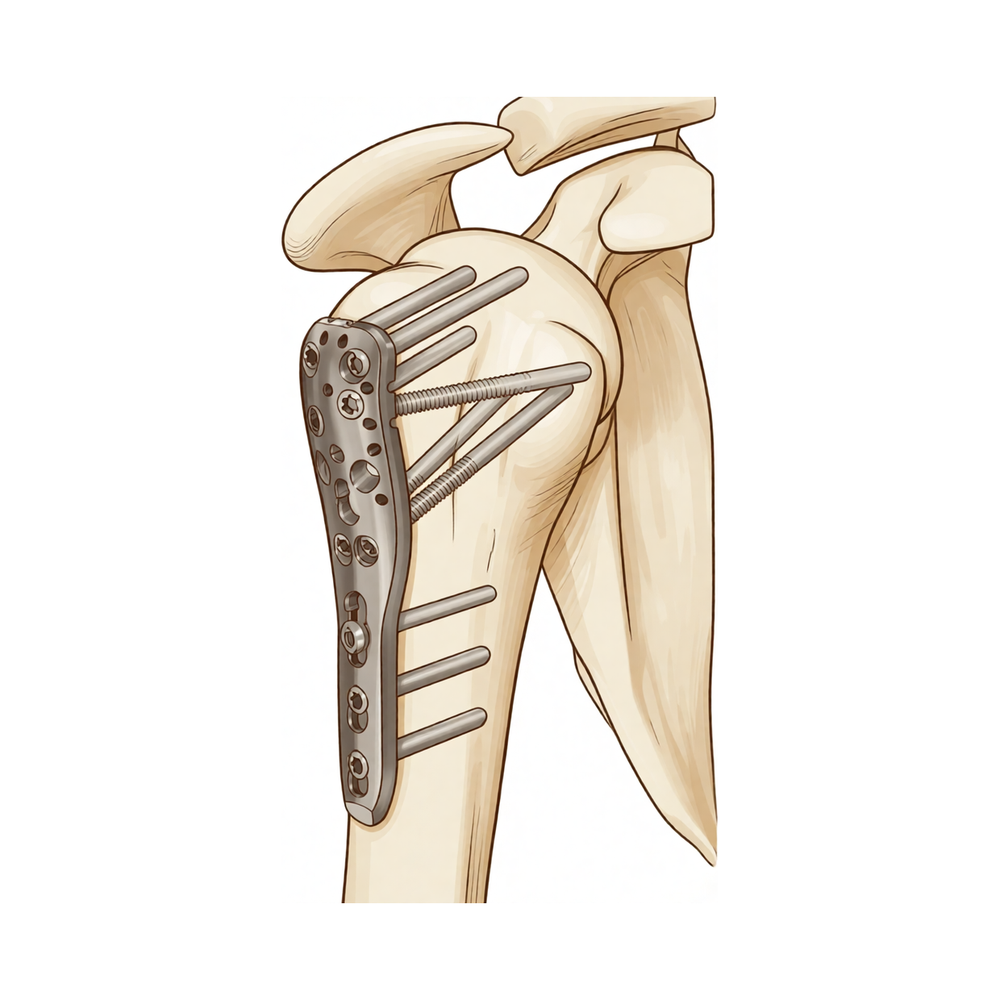
Este protocolo descreve a reabilitação após a fixação cirúrgica de uma fratura do úmero proximal (uma ruptura do osso do braço próximo ao ombro, reparada com placa bloqueante e parafusos, por meio de redução aberta e fixação interna – ORIF) com o Dr. Kieran Hirpara no Mater Private Hospital Rockhampton. Leve esta página ou seu PDF à sua primeira sessão de fisioterapia para que a reabilitação seja devidamente coordenada. O progresso da reabilitação será determinado individualmente pelo seu fisioterapeuta, conforme as fases abaixo, dependendo da cicatrização da fratura.
Caso tenha alguma dúvida ou preocupação quanto à ferida pós-cirúrgica, entre em contato com o consultório. Geralmente, é útil tirar uma foto da ferida e enviá-la por e-mail para análise.
O que esperar
A reabilitação após a fixação de uma fratura difere da reabilitação após a maioria das cirurgias programadas no ombro. A placa e os parafusos mantêm o osso quebrado na posição correta, mas o próprio osso ainda precisa cicatrizar; a velocidade dessa cicatrização varia bastante de pessoa para pessoa. Por esse motivo, o cronograma abaixo serve apenas como guia típico, e não como um plano fixo: cada avanço no programa depende tanto do número de semanas desde a cirurgia quanto da forma como a fratura está cicatrizando nos exames de raio-X, conforme avaliado nas consultas com o Dr. Hirpara. Não avance para a próxima fase apenas com base no calendário; aguarde a avaliação médica.
Há ainda um outro fator que torna essa cirurgia diferente. As protuberâncias ósseas na parte superior do úmero (as tuberosidades) são os pontos de fixação dos tendões do manguito rotador; em muitas fraturas do úmero proximal, esses fragmentos fazem parte da fratura e são fixados de volta com a placa ou pontos de sutura. Exercitar os músculos do manguito rotador de forma excessiva ou muito cedo pode puxar esses fragmentos antes que estejam devidamente consolidados. Com uma placa de travamento moderna, a fixação já é forte desde o primeiro dia; por isso, recomenda-se movimentação suave desde o início: você pode realizar movimentos ativos assistidos ou movimentos ativos suaves, dentro dos limites da ausência de dor, elevando o braço. O cuidado deve ser tomado quanto à carga exercida sobre o manguito rotador: caso as tuberosidades não façam parte da fratura ou estejam bem fixadas, o cirurgião pode autorizar o início precoce de rotações ativas e exercícios do manguito; por outro lado, quando as tuberosidades estão envolvidas na fratura e em processo de cicatrização, os exercícios ativos do manguito rotador e a rotação externa forçada são adiados por um pouco mais de tempo. O Dr. Hirpara informará qual dessas situações se aplica a você.
O seu programa de exercícios inclui três tipos de movimentos; sua equipe indicará quais se aplicam a você:
- Amplitude de movimento ativa: movimentos permitidos sem qualquer auxílio.
- Amplitude de movimento ativa assistida: uso do outro braço ou de algum objeto para ajudar a mover o braço.
- Amplitude de movimento passiva: o braço permanece completamente relaxado; o outro braço ou alguma força externa realiza 100% do movimento.
Após a cirurgia, seu braço ficará imobilizado em uma tipoia. Use-a o tempo todo durante as primeiras três semanas aproximadamente, e depois vá retirando-a aos poucos nas semanas seguintes, conforme se sentir confortável. Os protocolos publicados indicam em média três semanas de imobilização, e as evidências científicas favorecem movimentação mais precoce em vez de períodos prolongados com a tipoia. Não é necessário dormir com ela; retire-a várias vezes ao dia para fazer os exercícios, para lavar-se e vestir-se, e, quando estiver sentado tranquilamente em casa, pode deixar o braço fora da tipoia. Não dirija por pelo menos seis semanas após qualquer cirurgia no ombro; o cirurgião autorizará a volta à direção, geralmente na consulta de seis semanas.
Visão geral do processo:
- Fase I — Proteção e movimentação inicial: semanas 0–6
- Fase II — Recuperação da movimentação ativa: semanas 6–12
- Fase III — Fortalecimento: aproximadamente entre os 3 e 4½ meses
- Fase IV — Retorno às atividades plenas: a partir de 4½ a 6 meses
Fase I — Proteção e movimentação precoce (Semanas 0–6)
Kieran Hirpara 4.0
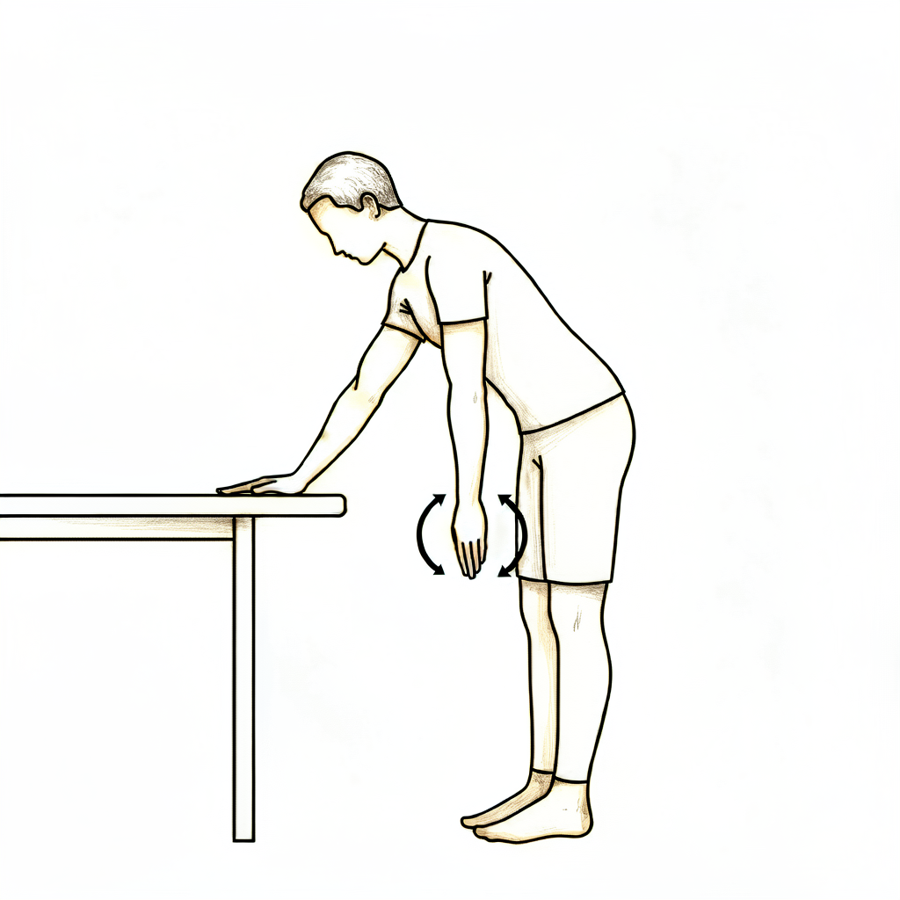
Exercícios pendulares
Incline-se para a frente, apoiando-se na mesa com a outra mão, e deixe o braço operado pendurado de forma relaxada. Faça pequenos círculos — primeiro no sentido horário, depois no anti-horário — balançando o corpo suavemente. O braço se move passivamente; o movimento vem do corpo, não dos músculos do ombro.
Várias vezes ao dia
Kieran Hirpara 4.0
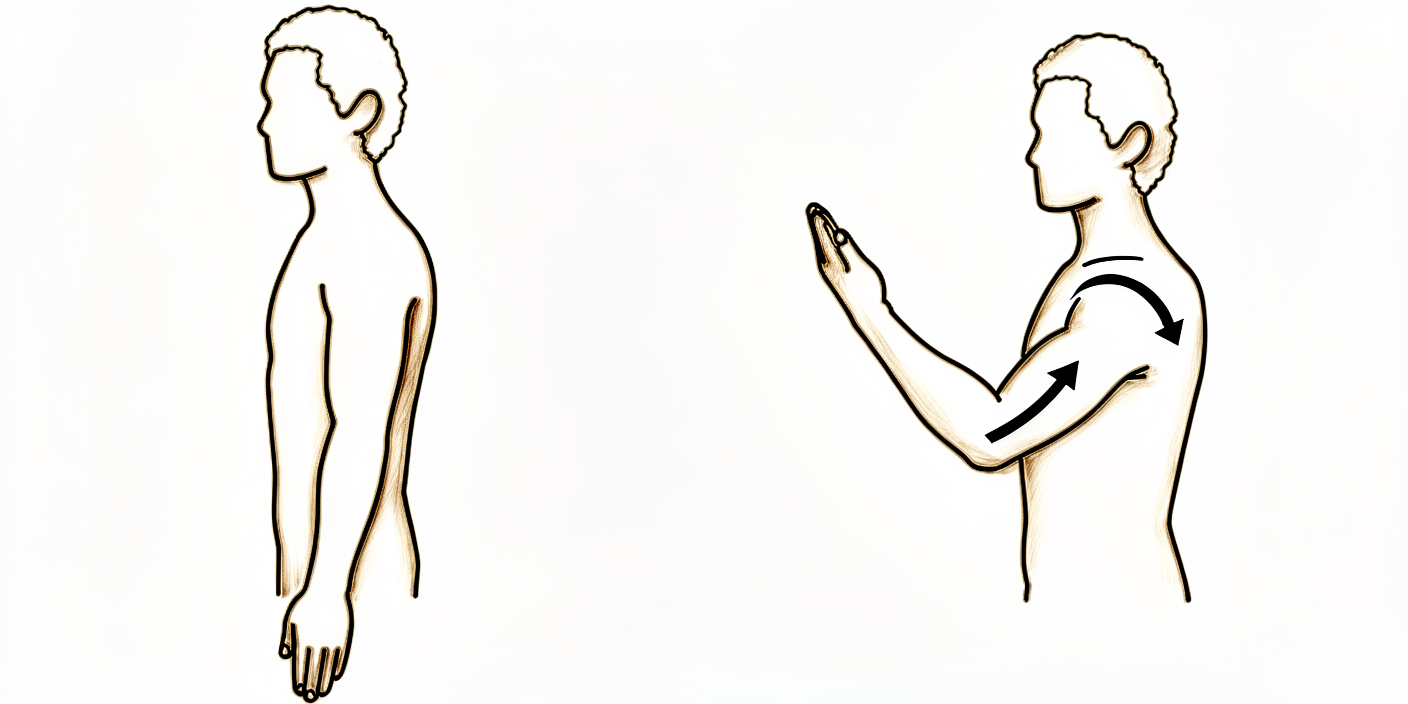
Flexões ativas do cotovelo
Com o braço fora da tipóia e a parte superior do braço apoiada ao lado do corpo, dobre o cotovelo o máximo que puder confortavelmente, depois estenda-o completamente. Apenas o cotovelo deve se mover; mantenha o ombro imóvel e o braço ao lado do corpo.
Várias vezes ao dia
Kieran Hirpara 4.0
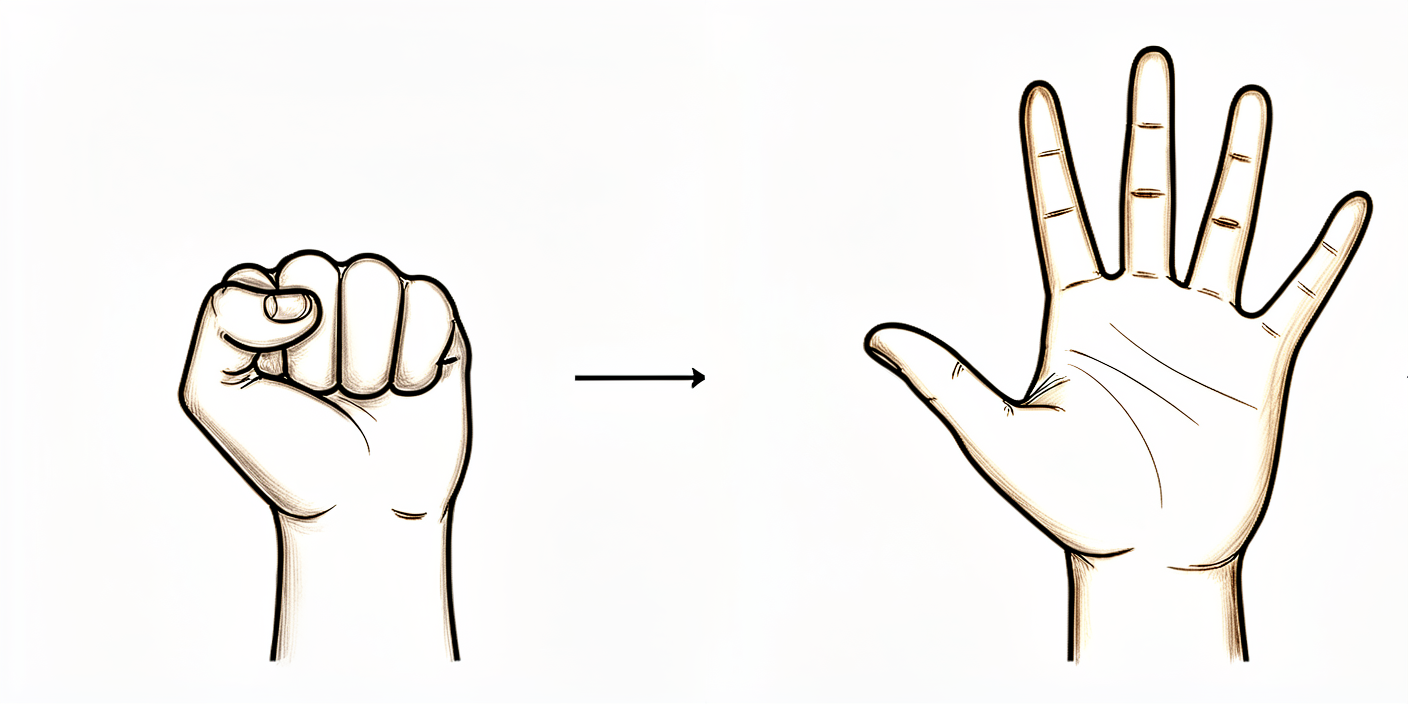
Apertar bolas
Com o braço apoiado, aperte uma bola macia ou faça um punho fechado, depois abra a mão completamente. Mantenha os dedos, o pulso e a mão em movimento sempre que o braço estiver fora da tipóia.
Várias vezes ao dia
Kieran Hirpara 4.0
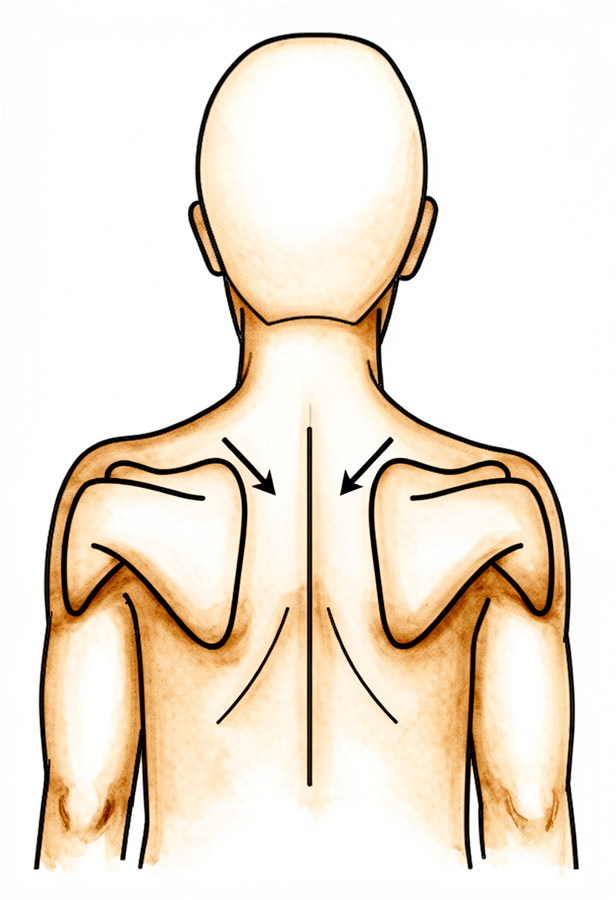
Posicionamento da escápula
Sentado ou em pé, puxe suavemente as escápulas para baixo e para trás, sem mover os braços; mantenha essa posição por alguns segundos e depois relaxe. Mantenha as orelhas, os ombros e os quadris alinhados.
Conforme orientado pelo seu fisioterapeuta
Kieran Hirpara 4.0
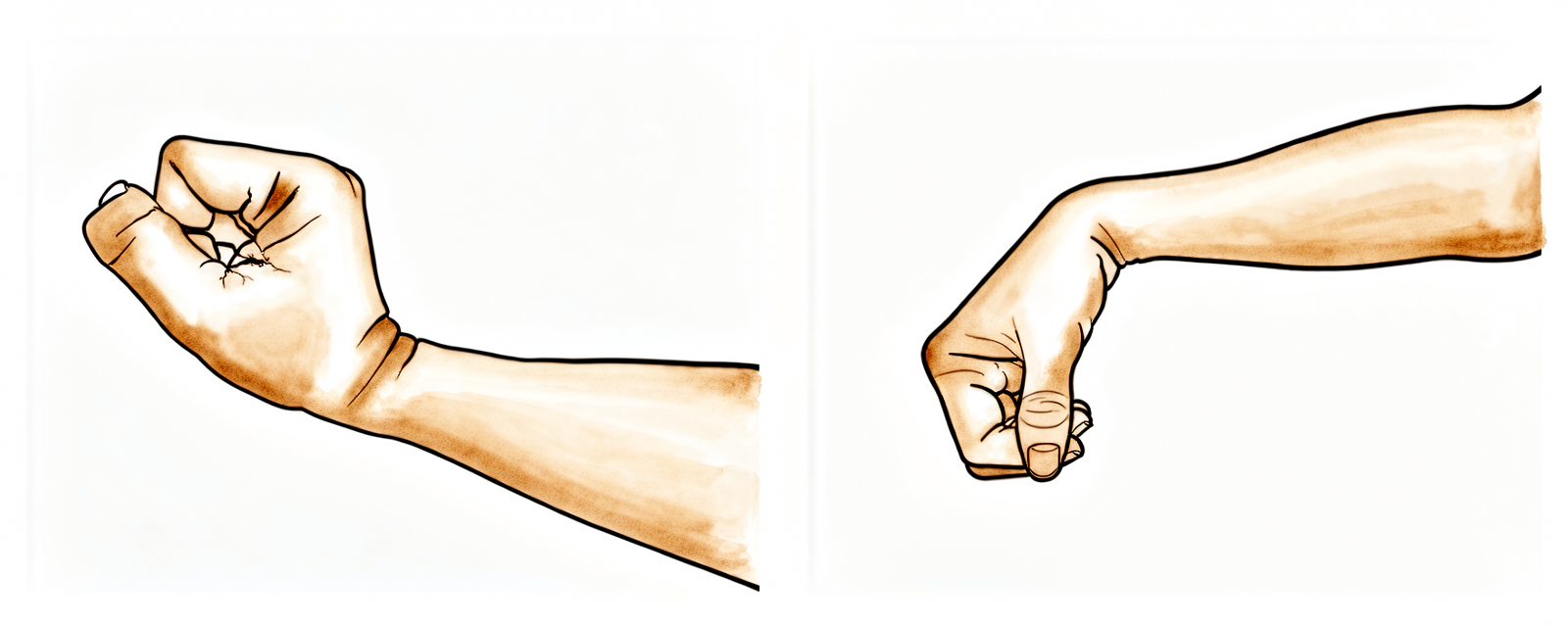
Movimentos do punho
Com o braço fora da tipóia, continue movimentando o pulso, dobrando-o para a frente, para trás e suavemente para os lados. Isso mantém todo o braço em atividade, enquanto o ombro permanece protegido.
Várias vezes ao dia
Kieran Hirpara 4.0
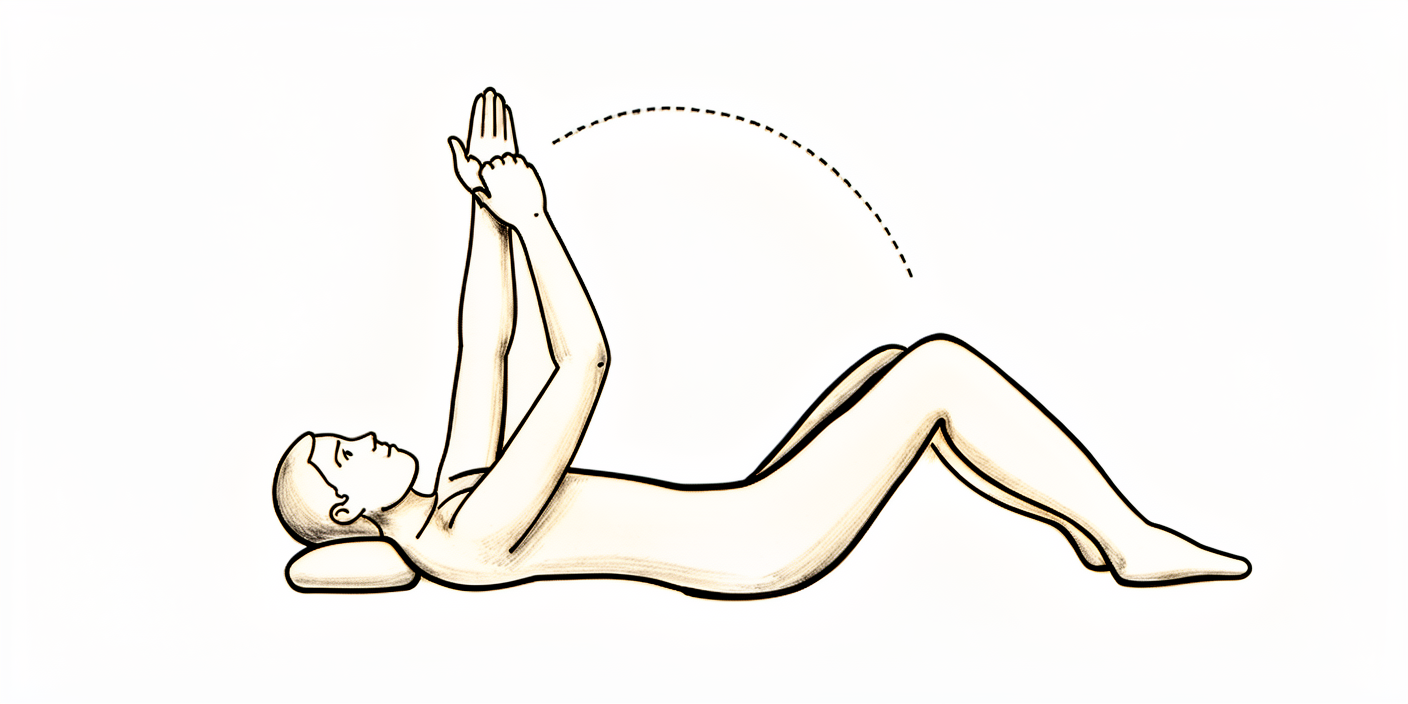
Elevação anterior assistida (deitado)
Deite-se de costas e use o braço saudável para ajudar a levantar o braço operado à sua frente; em seguida, abaixe-o lentamente, mantendo o apoio do braço saudável. Deitar-se de costas permite que a gravidade auxilie, facilitando os primeiros movimentos de elevação. Mantenha o movimento dentro de uma amplitude confortável e sem dor; interrompa o exercício assim que sentir alguma resistência — não force o movimento.
Várias vezes ao dia, dentro de uma faixa sem dor
Kieran Hirpara 4.0
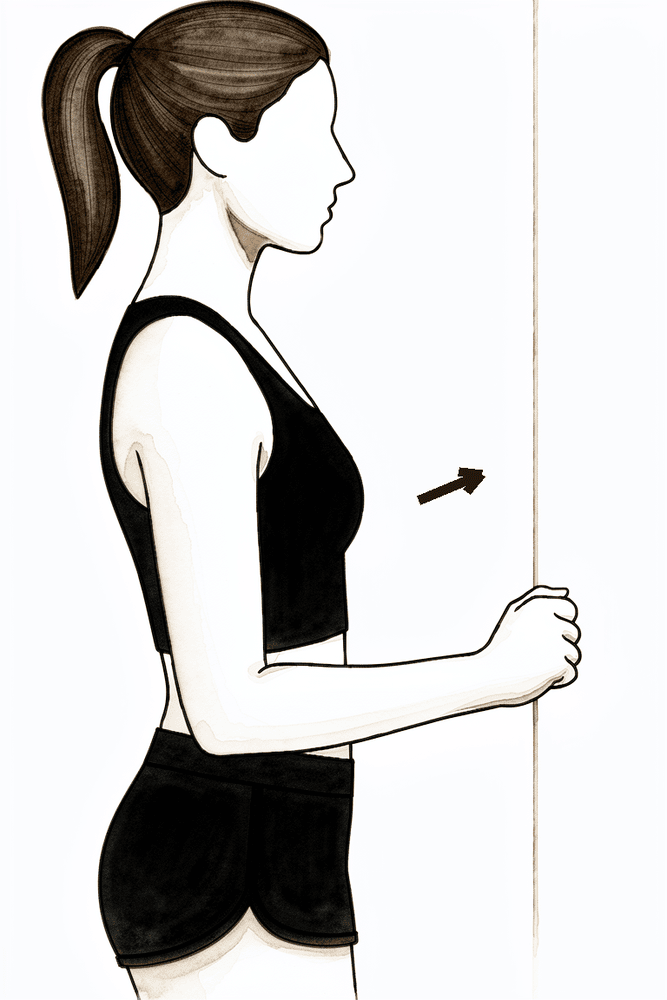
Isométrica de elevação anterior suave
Fique de pé de frente para uma parede, com o braço operado ao lado do corpo e o punho levemente fechado encostado na parede à sua frente. Pressione suavemente a mão contra a parede, sem mover o braço; mantenha essa posição por alguns segundos e depois relaxe. Esse exercício ativa os músculos responsáveis pela elevação do ombro, sem sobrecarregar a fratura em processo de cicatrização. Faça-o apenas se o seu fisioterapeuta já tiver indicado esse exercício para você.
Conforme orientado pelo seu fisioterapeuta
As primeiras seis semanas têm como objetivo proteger a fratura fixada, evitando ao mesmo tempo a rigidez do restante do braço e da própria articulação do ombro. Como a placa de fixação mantém o osso firmemente no lugar desde o início, recomenda-se uma movimentação suave desde cedo, em vez de aguardar seis semanas. Um fisioterapeuta iniciará exercícios suaves antes de você ir para casa: exercícios pendulares (deixar o braço pendurado e balançar suavemente, movendo o corpo) e movimentação do cotovelo, punho e mão fora da tipóia, várias vezes ao dia. Desde o início, dentro de uma amplitude confortável e sem dor, você pode começar a mover o braço com auxílio da outra mão (movimento ativo-assistido) e, suavemente, por conta própria (movimento ativo), elevando-o à frente do corpo conforme lhe for possível. O cuidado deve ser redobrado quanto à carga sobre o manguito rotador: evite forçar o braço para fora (rotação externa) e não realize exercícios de resistência para o manguito rotador até que as tuberosidades estejam curadas, conforme confirmado pelo Dr. Hirpara. Use gelo para aliviar a dor e tome os analgésicos antes dos exercícios e das sessões de fisioterapia.
Para o seu fisioterapeuta:
Objetivos
- Proteger a fixação óssea e otimizar a consolidação da fratura
- Controlar a dor e o inchaço
- Estabelecer movimentos ativos-assistidos, evoluindo para elevação ativa dentro de uma amplitude sem dor
- Manter a amplitude total de movimento do pescoço, cotovelo, punho e mão
Condutas
- Uso contínuo da tipóia por cerca de 3 semanas, reduzindo gradualmente conforme conforto permitir (conforme recomendações da literatura); retirar a tipóia várias vezes ao dia para exercícios e higiene; não é necessária durante o repouso na cama
- Exercícios pendulares/Codman várias vezes ao dia
- Movimentos ativos-assistidos e elevação ativa suave, dentro de uma amplitude confortável e sem dor, desde o início, caso a fixação seja estável; iniciar na posição supina e progredir para a posição ereta conforme o controle muscular permitir; ampliar a amplitude conforme o conforto permitir
- Movimentação passiva conforme necessário, quando o movimento ativo ainda não for tolerado: elevação frontal no plano escapular até cerca de 90°, rotação interna até o abdômen (não atrás das costas)
- Rotação externa mantida inicialmente em aproximadamente 30–40°, com o braço ao lado do corpo; o cirurgião poderá aumentar esse valor nos casos em que as tuberosidades não foram afetadas ou já estejam bem fixadas
- Movimentação ativa do pescoço, cotovelo, punho e mão fora da tipóia; exercícios de apertar bola para fortalecer a preensão
- Exercícios de estabilização e mobilidade escapular (elevação, depressão, retração e protração)
- Exercícios isométricos suaves do deltoide e músculos periescapulares podem ser introduzidos conforme o conforto permitir
- Crioterapia e analgesia antes das sessões; mobilização e dessensibilização da cicatriz após a cicatrização completa
Precauções
- Evite rotação externa forçada ou com resistência, bem como cargas pesadas sobre o manguito rotador até que a consolidação das tuberosidades seja confirmada (sob orientação do cirurgião); movimentos ativos dentro de uma amplitude sem dor são permitidos
- Não realize rotação interna atrás das costas; evite abdução no plano coronal
- Mantenha os movimentos iniciais sem dor: devem ser suaves e confortáveis, nunca forçados
- Não levante cargas superiores a 0.5–1 kg com o braço operado
- Não realize nenhum tipo de carga de peso com o braço operado (não empurre-se para cima a partir de uma cadeira ou cama)
- Proibido dirigir por seis semanas (aplica-se a qualquer cirurgia no ombro)
- Evite movimentos forçados ou que provoquem dor na amplitude máxima de movimento
Critérios para progressão
- Evidência radiográfica de progresso na consolidação óssea, confirmada na avaliação com o Dr. Hirpara por volta da 6ª semana
- Controle adequado da dor
- Manutenção da amplitude total de movimento do cotovelo, punho e mão
- Capacidade de realizar movimentos ativos-assistidos e ativos dentro de uma amplitude sem dor
Fase II — Recuperação do movimento ativo (Semanas 6–12)
Kieran Hirpara 4.0
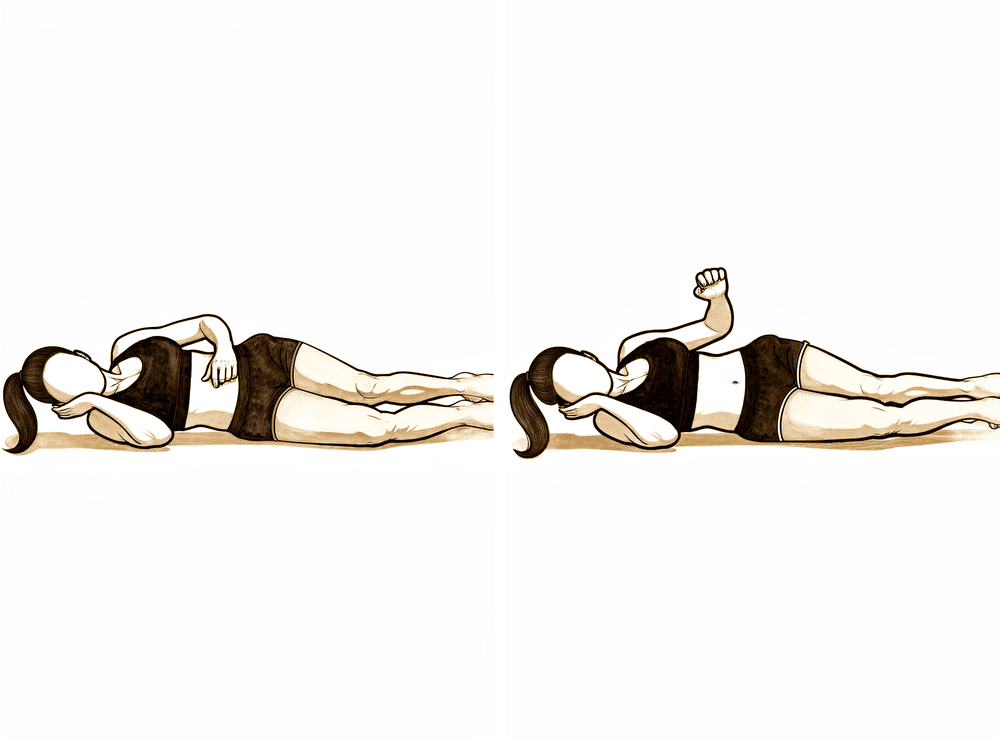
Rotação externa em decúbito lateral
Deite-se sobre o lado não operado, com o braço operado por cima; dobre o cotovelo a 90 graus e mantenha-o junto ao corpo. Mantendo o cotovelo junto ao corpo, gire o antebraço para cima, afastando-o do abdômen, até o limite do conforto, e depois abaixe-o de forma controlada. Não use nenhum peso adicional — o braço deve se mover apenas pela sua própria força.
Conforme orientado pelo seu fisioterapeuta
Kieran Hirpara 4.0
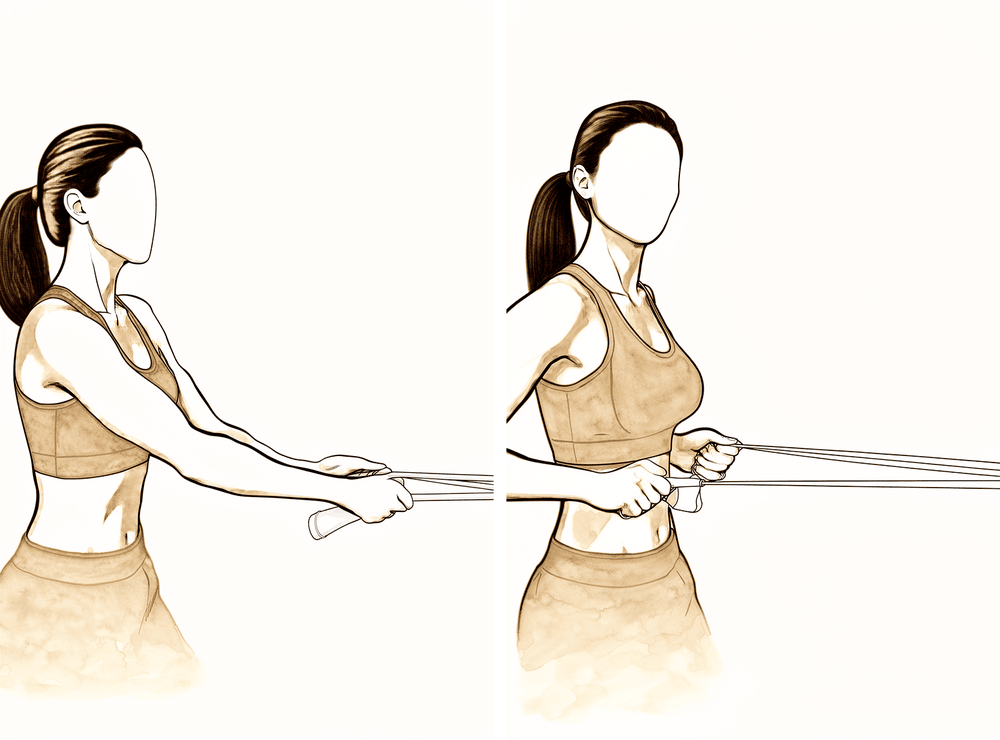
Remada baixa com faixa elástica
Fixe uma faixa elástica à sua frente, na altura da cintura. Em pé, puxe a faixa em direção a si, levando a escápula suavemente para baixo e para trás; em seguida, solte-a com controle. Mantenha a resistência leve.
Conforme orientado pelo seu fisioterapeuta
Kieran Hirpara 4.0
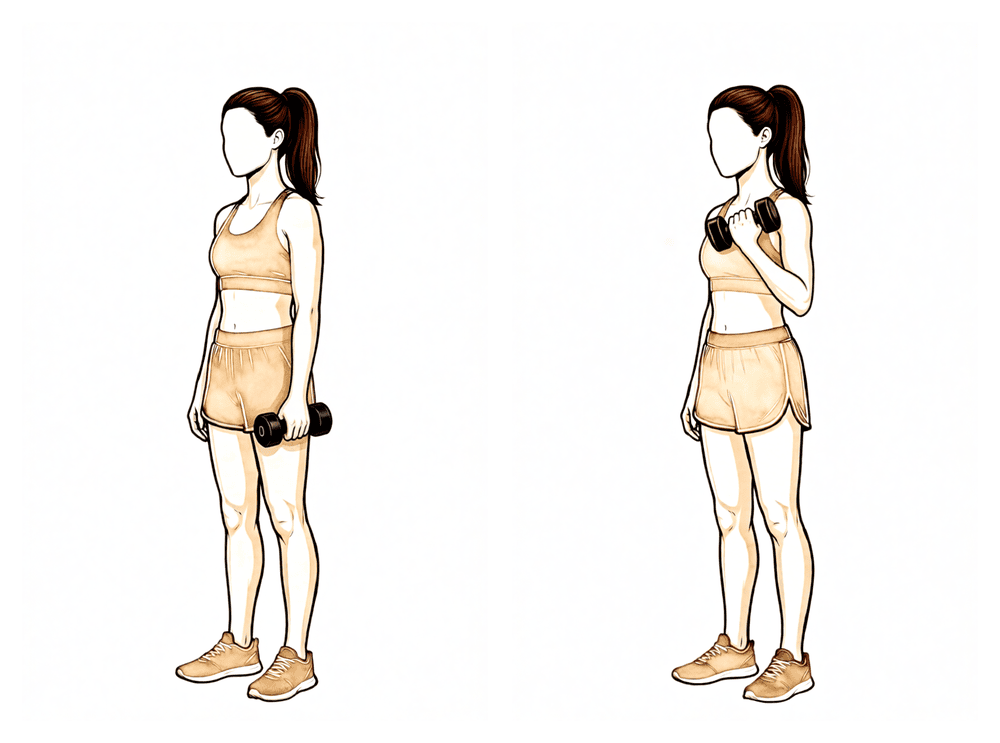
Flexões de bíceps
Segurando um peso leve com a palma da mão virada para cima, dobre o cotovelo para aproximar o peso do ombro e, em seguida, abaixe-o lentamente. Mantenha o braço imóvel ao lado do corpo, e certifique-se de que o peso permaneça leve — não deve ultrapassar 1–2 kg nesta fase.
Conforme orientado pelo seu fisioterapeuta
Kieran Hirpara 4.0
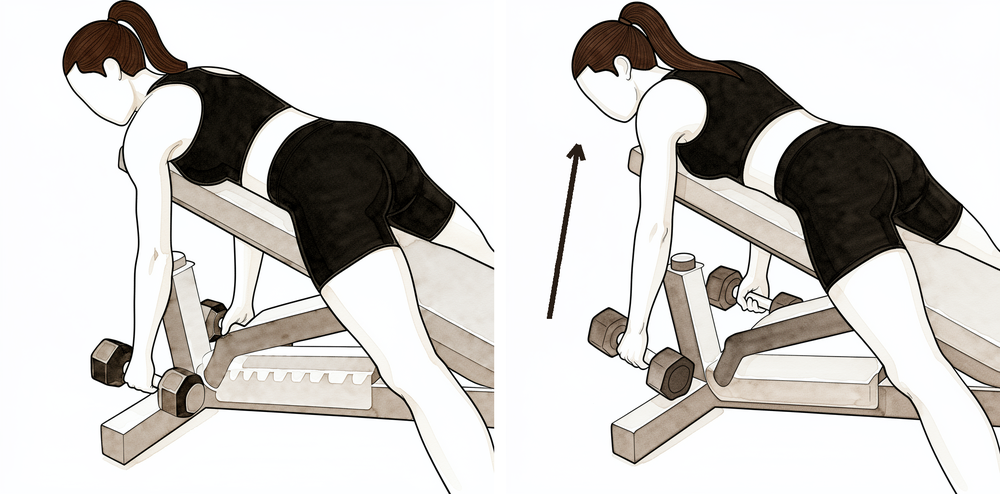
Remadas com apoio
Incline-se para a frente, apoiando o braço saudável numa mesa, de modo que o braço operado fique pendurado com um peso leve. Retraia a escápula e levante o peso em direção ao quadril; em seguida, abaixe-o de forma controlada. Mantenha o tronco estável — o movimento deve vir da escápula e do braço, não das costas.
Conforme orientado pelo seu fisioterapeuta
Kieran Hirpara 4.0
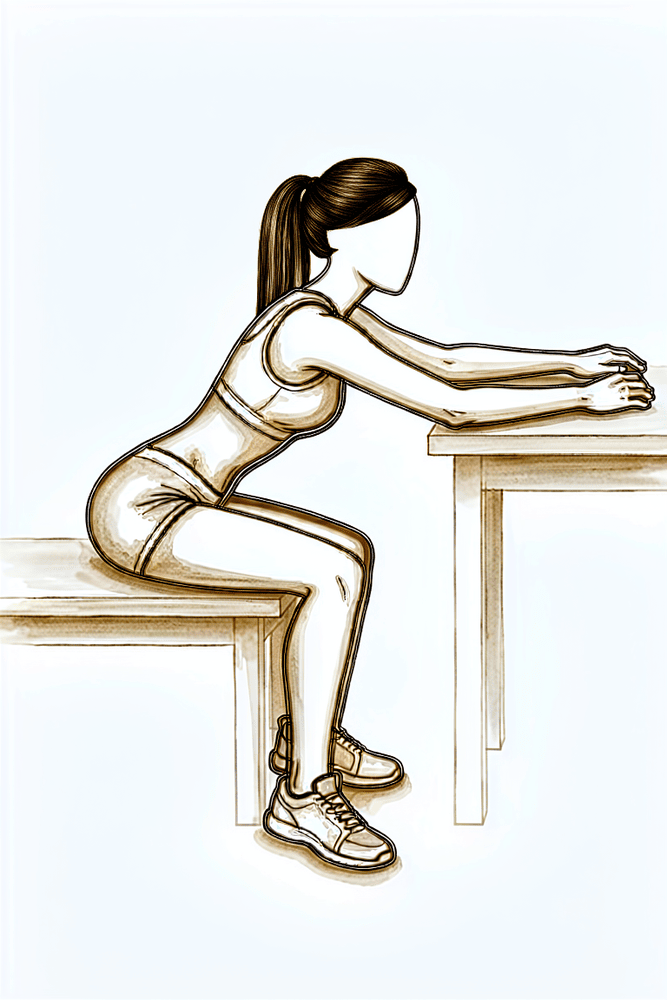
Deslizamentos na mesa
Sente-se à mesa com a mão apoiada numa toalha ou pano. Incline-se para a frente e deslize a mão para longe de si ao longo da mesa, permitindo que o braço se estenda ainda mais à frente; depois, deslize-a de volta. A mesa suporta o peso do braço, sendo este um modo suave de recuperar o movimento para a frente.
Conforme orientado pelo seu fisioterapeuta
Kieran Hirpara 4.0
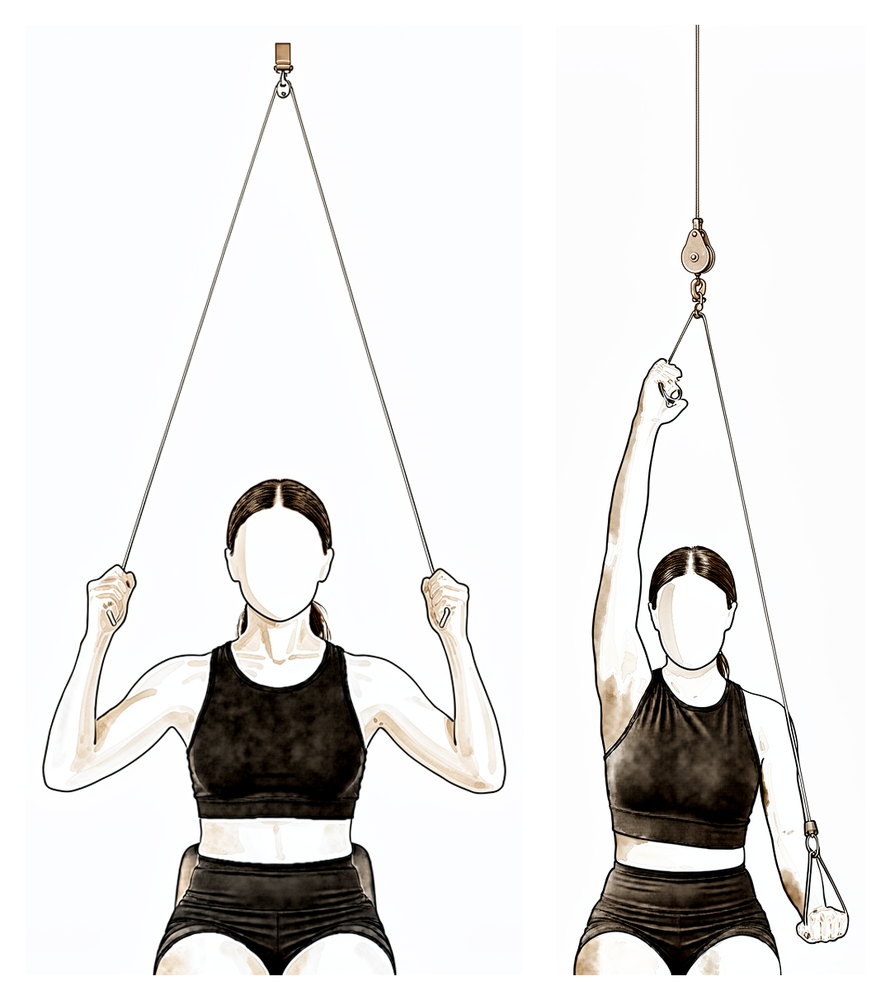
Polia de porta
Sente-se debaixo de uma polia de porta, segurando uma alça em cada mão. Puxe para baixo com o braço saudável para elevar o braço operado até o limite confortável; em seguida, abaixe-o lentamente. Deixe o braço saudável realizar o movimento, mantendo-se sempre dentro de uma amplitude confortável.
Conforme orientado pelo seu fisioterapeuta
Kieran Hirpara 4.0
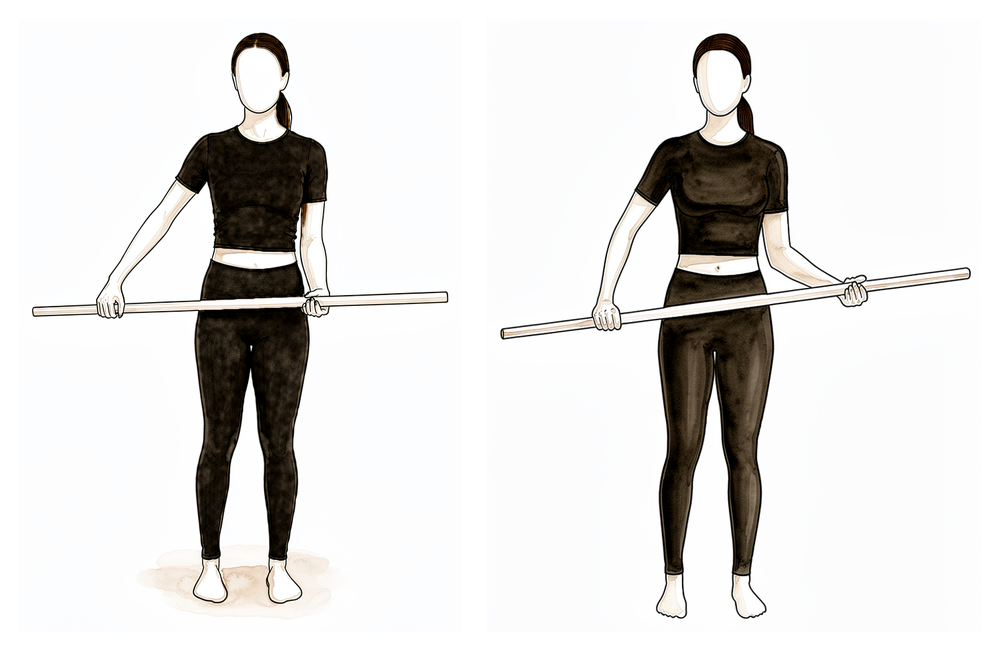
Rotação externa assistida com uma vara
Deite-se de costas, com o cotovelo junto ao corpo e dobrado em um ângulo reto. Segure uma vara com ambas as mãos e use o braço saudável para girar a mão operada para fora. Após a confirmação da cicatrização, faça, com cuidado, um pouco mais de rotação externa — porém mantenha-se dentro dos limites estabelecidos pelo cirurgião e pelo fisioterapeuta.
Conforme orientado pelo seu fisioterapeuta
Kieran Hirpara 4.0
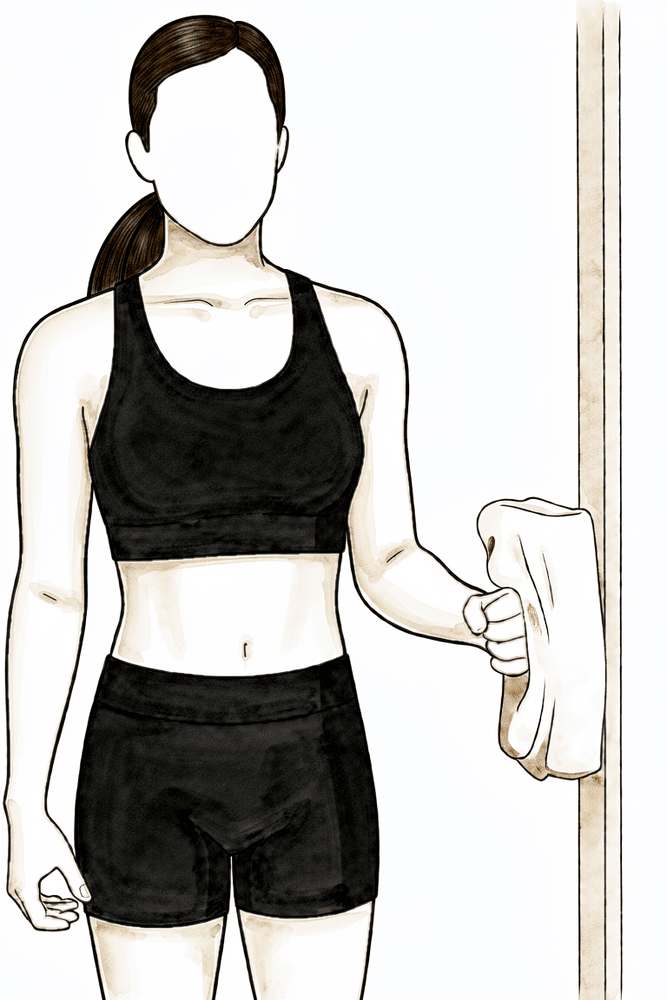
Rotação externa isométrica
Fique de pé com o cotovelo pressionado contra o corpo e dobrado em um ângulo reto, com o dorso da mão encostado numa parede ou na moldura de uma porta. Pressione suavemente para fora, sem mover o braço; mantenha essa posição por alguns segundos e depois relaxe. Isso começa a ativar o manguito rotador sem nenhum movimento — faça esse exercício somente depois que o Dr. Hirpara confirmar a sua cicatrização.
Conforme orientado pelo seu fisioterapeuta
Kieran Hirpara 4.0
Extensões do tríceps
Segurando um peso leve, dobre e depois estique o cotovelo para exercitar o músculo na parte posterior do braço. Mantenha o braço firme e o peso leve — nesta fase, não deve exceder 1–2 kg.
Conforme orientado pelo seu fisioterapeuta
Kieran Hirpara 4.0
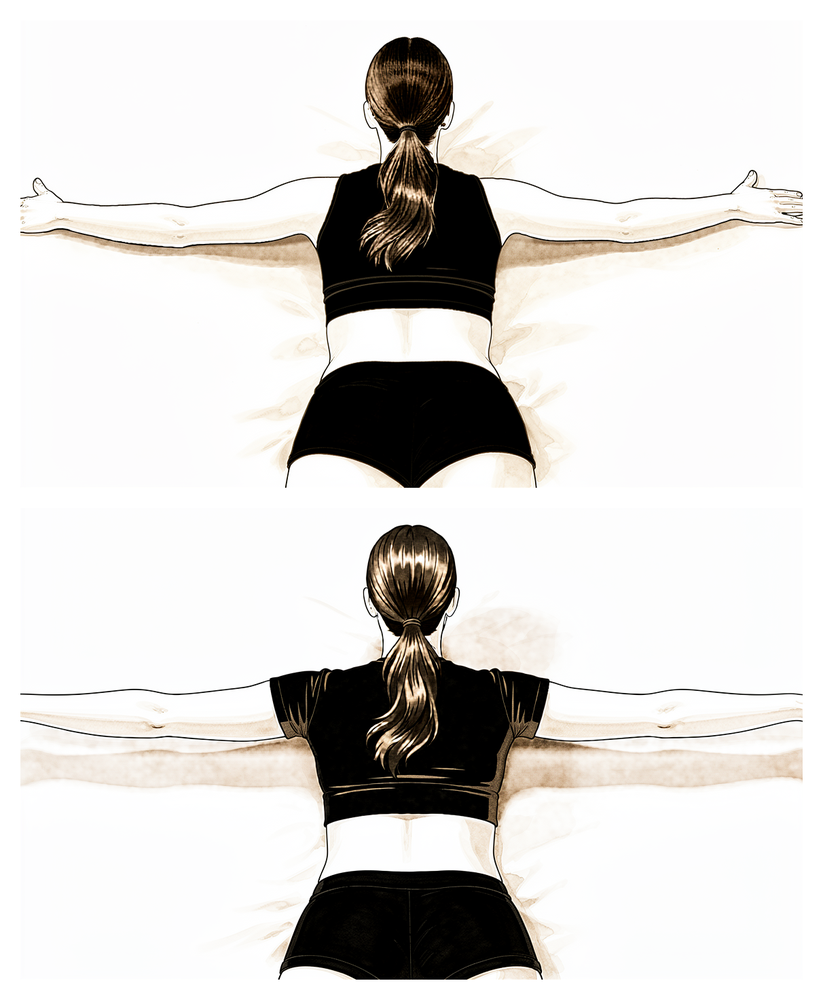
Remada escapular em decúbito ventral
Deite-se de bruços, com o braço pendurado na beira da cama ou de um banco. Puxe a escápula para trás e levante o braço um pouco para o lado, contraindo os músculos entre as escápulas; em seguida, abaixe o braço de forma controlada. Esse exercício fortalece os músculos responsáveis por estabilizar a escápula.
Conforme orientado pelo seu fisioterapeuta
Na consulta de acompanhamento por volta da sexta semana, o Dr. Hirpara analisa seus raios-X. Se a cicatrização estiver progredindo conforme esperado, o uso da tipóia é interrompido e você começa a mover o braço por conta própria, inicialmente com auxílio (usando o outro braço, uma bengala ou um sistema de polias) e, posteriormente, de forma ativa. Geralmente, é mais fácil iniciar os movimentos ativos com o braço estendido para cima enquanto se está deitado de costas, pois a gravidade exerce menos influência; depois, à medida que o controle melhora, passa-se para posições sentada e em pé. Nesta fase, assim que o Dr. Hirpara confirma a cicatrização, iniciam-se exercícios isométricos suaves para o manguito rotador; os exercícios com resistência vêm posteriormente. Você poderá voltar a dirigir quando já não estiver usando a tipóia, tiver amplitude de movimento e controle suficientes para dirigir com segurança, e não estiver mais tomando analgésicos potentes; em caso de dúvida, consulte o médico na próxima avaliação.
Para o seu fisioterapeuta:
Objetivos
- Restaurar a amplitude de movimento passiva por completo
- Evoluir do movimento ativo assistido para o movimento ativo em todos os planos
- Restabelecer o ritmo escapulohumeral normal e minimizar padrões compensatórios
- Retornar às atividades diárias leves normalmente
Condutas
- A tipóia deve ser totalmente retirada até a consulta de acompanhamento da 6ª semana, no máximo
- Movimento ativo assistido: progressão em posição de “cadeira de jardim”, deslizamentos na mesa/parede, exercícios com polias e bengala; avançar além dos limites da Fase I conforme a tolerância
- Movimento ativo a partir de aproximadamente 6–8 semanas: flexão com o braço estendido para cima enquanto deitado, evoluindo para elevação na posição ereta; rotação externa e flexão deitado de lado; exercícios de remada leve ou “socos” suaves
- Exercícios isométricos submáximos para o manguito rotador e deltoide a partir de 6–8 semanas, com o braço ao lado do corpo, após confirmação da cicatrização
- Exercícios isotônicos leves para o cotovelo (flexão de bíceps, extensão de tríceps) e fortalecimento da musculatura escapular (retração, remadas de bruços)
- Mobilizações glenohumerais e escapulotorácicas conforme indicado, aumentando a intensidade à medida que a cicatrização avança
- Correção postural; manter uso de calor/geleira e analgésicos antes e após as sessões, conforme preferência
Precauções
- Não realizar fortalecimento isotônico do manguito rotador com resistência até que a união óssea seja confirmada, geralmente não antes de 8–12 semanas
- Evitar pressão excessiva nos limites extremos de amplitude ou alongamentos passivos agressivos
- O peso levantado com o braço operado deve ser limitado a cerca de 1–2 kg
- Ficar atento a movimentos compensatórios, como elevação do ombro ou inclinação do tronco, e corrigi-los
Critérios para avançar para a fase seguinte
- Amplitude de movimento passiva completa ou quase completa
- Capacidade de elevar o braço ativamente com mecânica correta, ao menos até a altura dos ombros
- Boa tolerância aos exercícios isométricos, sem piora da dor
- Progresso na união óssea constatado nos raios-X, conforme avaliação do Dr. Hirpara
Fase III — Fortalecimento (aproximadamente entre os meses 3 e 4½)
Kieran Hirpara 4.0
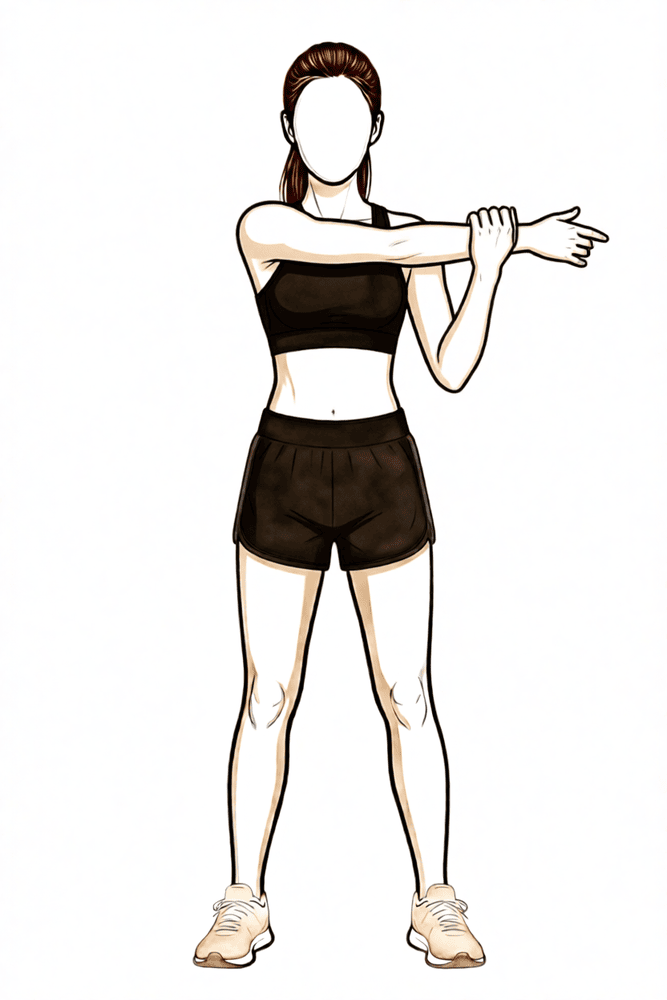
Alongamento cruzado do corpo
Use a outra mão para levar o braço operado ao peito, até sentir um alongamento na parte posterior do ombro. Mantenha a posição por alguns instantes e depois solte. O alongamento deve chegar apenas ao ponto de desconforto moderado — nunca até provocar dor aguda.
Conforme orientado pelo seu fisioterapeuta
Kieran Hirpara 4.0
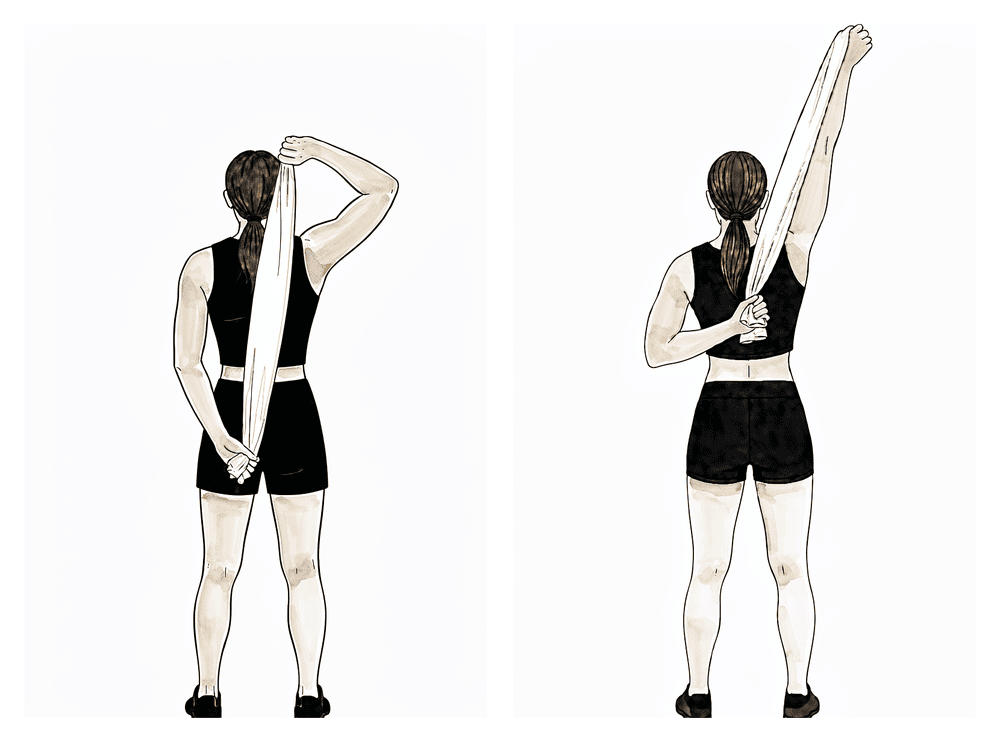
Alongamento atrás das costas
Segure uma toalha atrás das costas, com o braço saudável acima e o braço operado abaixo. Use a mão de cima para puxar suavemente a mão de baixo em direção às costas, até sentir um alongamento confortável; mantenha essa posição por alguns instantes e depois solte. Aumente gradualmente a amplitude do movimento — nunca force o alongamento nem vá além do ponto em que surgir dor aguda.
Conforme orientado pelo seu fisioterapeuta
Kieran Hirpara 4.0
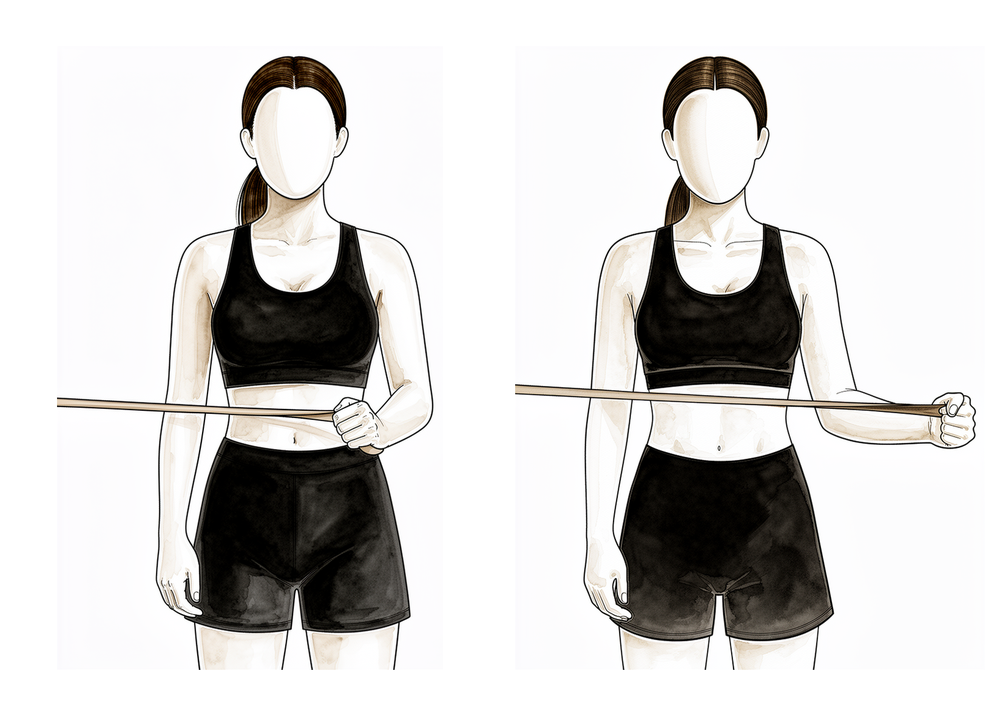
Rotação externa com faixa elástica
Fique em pé com o cotovelo pressionado contra o corpo e dobrado em um ângulo reto, segurando uma faixa elástica fixada na altura da cintura. Mantendo o cotovelo junto ao corpo, gire o antebraço para fora contra a resistência da faixa e depois volte lentamente à posição inicial. Esse exercício fortalece o manguito rotador com o braço ao lado do corpo, sendo o ponto de partida para o fortalecimento da rotação.
2 a 3 séries de 8 a 12 repetições, com baixa resistência
Kieran Hirpara 4.0
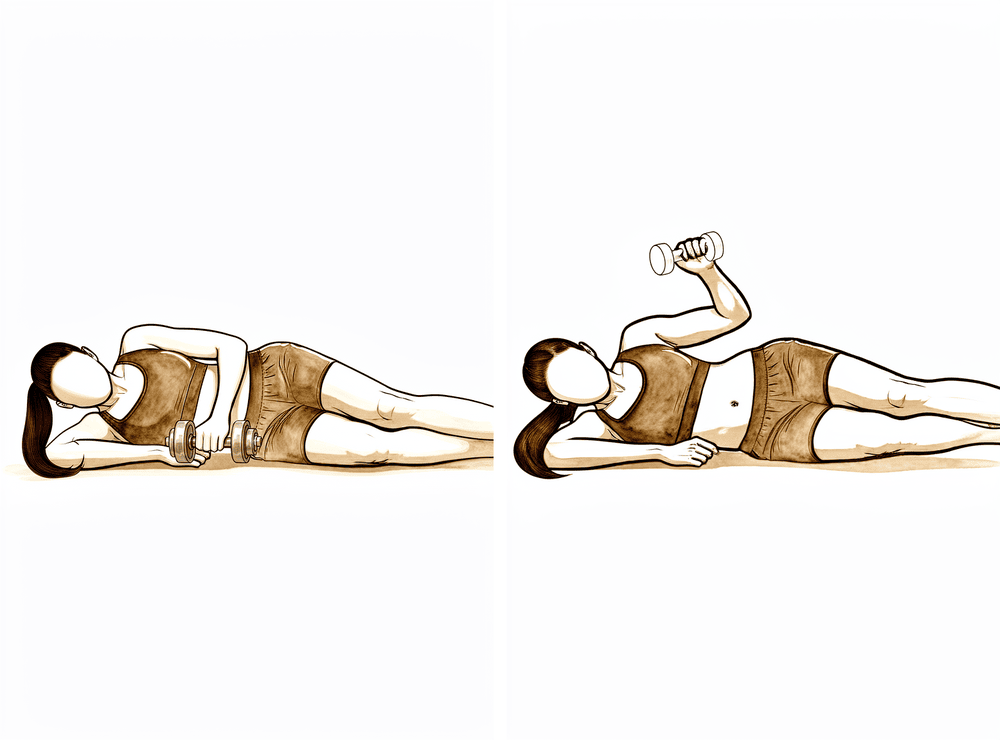
Rotação externa em decúbito lateral com carga
Deite-se sobre o lado não operado, dobrando o cotovelo superior em um ângulo reto e puxando-o para perto do corpo. Segurando um peso leve, gire o antebraço para cima, em direção ao teto, e depois abaixe-o lentamente. Mantenha o peso leve e faça mais repetições à medida que a força do seu manguito rotador for se recuperando.
2 a 3 séries de 8 a 12 repetições, com carga baixa.
Kieran Hirpara 4.0
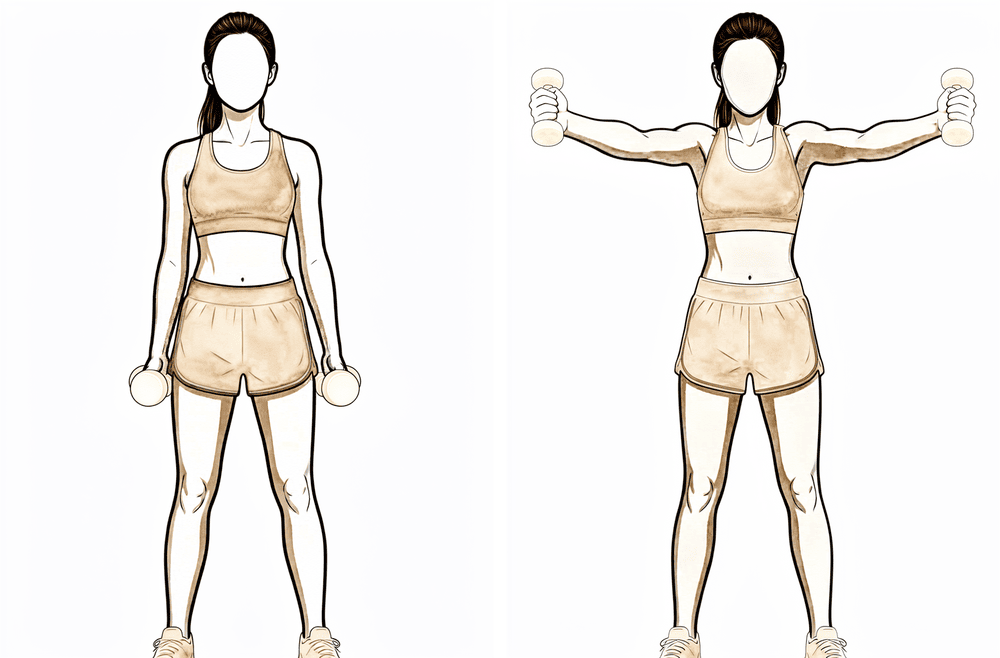
Elevação com “lata cheia” (no plano da escápula)
Segurando um peso leve com o polegar apontado para cima, levante o braço num movimento diagonal para a frente e para fora — não diretamente para o lado — até atingir a altura dos ombros, e depois abaixe-o lentamente. Esse exercício trabalha tanto a parte frontal do ombro quanto o manguito rotador. Mantenha o peso leve e interrompa o exercício caso sinta dor persistente.
2 a 3 séries de 8 a 12 repetições, com carga baixa.
Kieran Hirpara 4.0
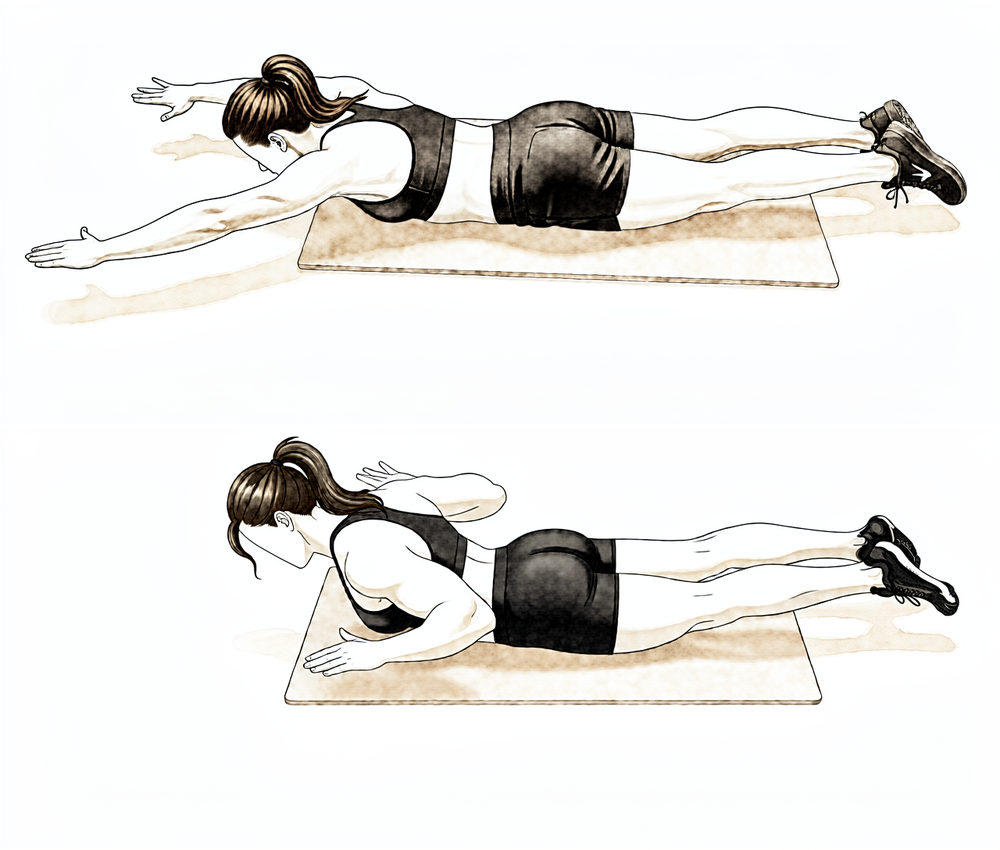
Remada prona
Deite-se de bruços, com o braço operado pendendo em direção ao chão. Levante o cotovelo em direção ao teto, puxando a escápula para perto da coluna vertebral, e depois abaixe-o lentamente. Comece sem nenhum peso e mantenha o movimento sob controle.
Conforme orientado pelo seu fisioterapeuta
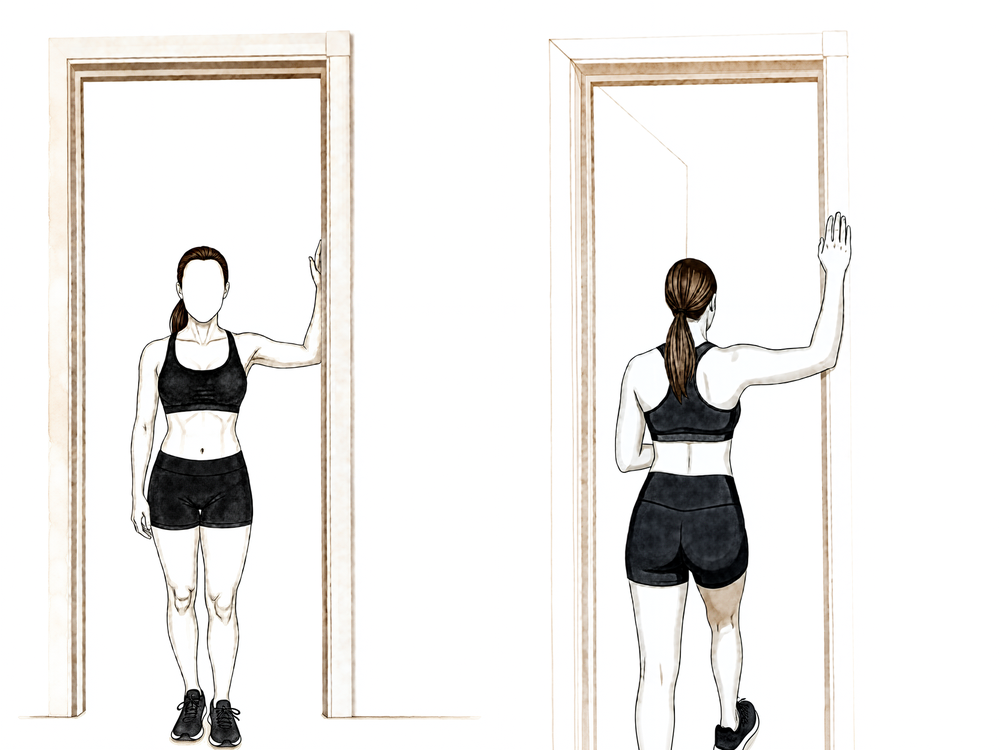
Kieran Hirpara 4.0
Alongamento torácico na entrada da porta
Fique de pé na entrada da porta, com os antebraços apoiados no batente e os cotovelos na altura dos ombros. Passe um pé para o outro lado e incline-se suavemente para a frente até sentir um alongamento na parte frontal do peito; então, mantenha a posição. Faça isso com delicadeza e nunca force.
Mantenha por ~20–30 segundos, conforme orientação do seu fisioterapeuta.
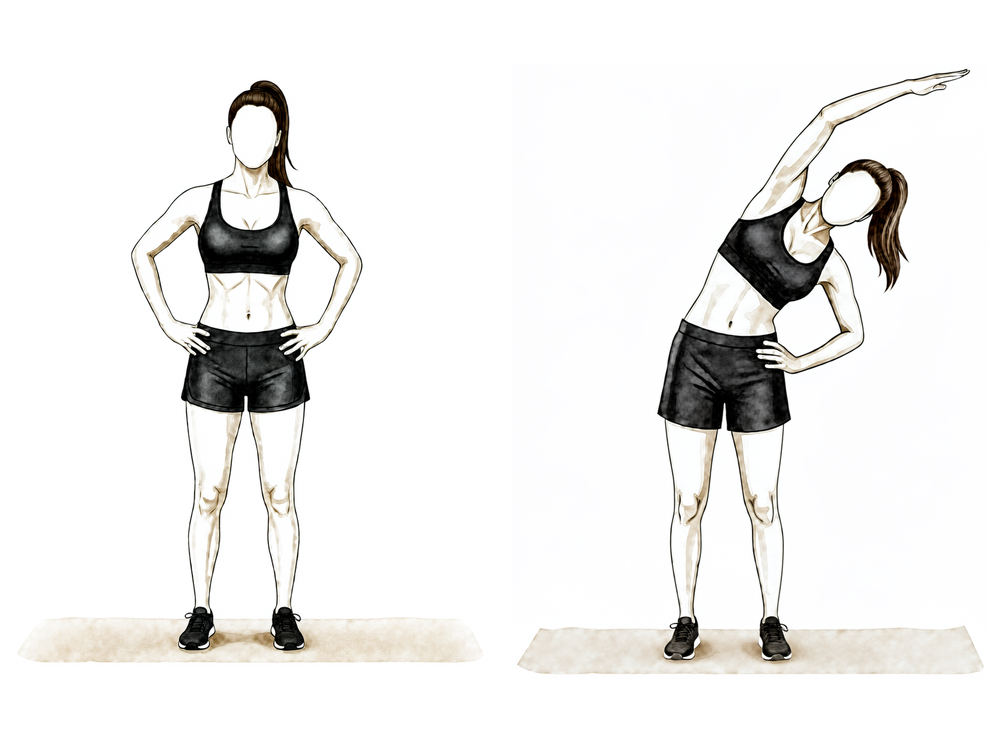
Kieran Hirpara 4.0
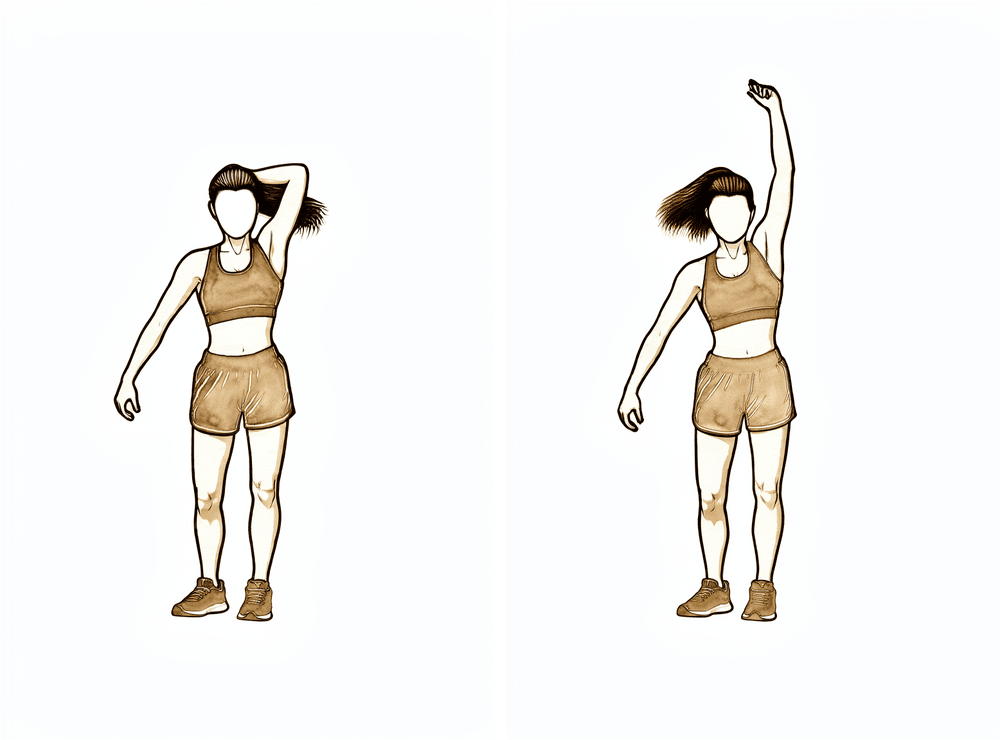
Alongamento do músculo latíssimo (lado das costas)
Levante o braço operado acima da cabeça — use a mão saudável para orientá-lo, se necessário — e incline-se suavemente para o lado oposto até sentir um alongamento na lateral das costas; então, mantenha essa posição. Certifique-se de que seja confortável e esteja dentro do seu limite de movimento.
Mantenha por ~20–30 segundos, conforme orientação do seu fisioterapeuta.
Com a fratura consolidada e o retorno da movimentação ativa, a atenção volta-se para a recuperação da força muscular. O trabalho de resistência começa de forma suave (faixas elásticas e pesos leves para o manguito rotador, deltoide e músculos da escápula) e evolui gradualmente. Os alongamentos também continuam, visando alcançar amplitude de movimento total em todas as direções, inclusive o movimento de alcançar atrás das costas. Nesta fase, as atividades diárias normais devem estar praticamente restabelecidas, e atividades recreativas mais leves geralmente podem ser retomadas, conforme orientação do seu fisioterapeuta.
Para o seu fisioterapeuta:
Objetivos
- Amplitude de movimento ativa completa em todos os planos, com mecânica normal
- Recuperação progressiva da força e resistência do manguito rotador, deltoide e músculos da escápula
Conduta terapêutica
- Evoluir das isometrias para exercícios com faixas elásticas e, em seguida, para pesos livres leves (cerca de 0.5–2 kg) para o manguito rotador, deltoide e estabilizadores da escápula: carga baixa, número maior de repetições (por exemplo, 2–3 séries de 8–12), com sessões de resistência aproximadamente 3 vezes por semana para evitar sobrecarga
- O fortalecimento da rotação deve ser iniciado com o braço ao lado do corpo, abaixo da altura do ombro
- Dar ênfase ao deltoide anterior e à ação conjunta do trapézio e do serrátil anterior para garantir uma base estável da escápula
- Programa de flexibilidade voltado para a amplitude máxima em todos os planos: alongamento da cápsula posterior (através do corpo), rotação interna atrás das costas, alongamentos da parede torácica anterior e do músculo peitoral menor, além do alongamento na porta
- Iniciar a rotação interna atrás das costas e mobilizações de grau III–IV conforme a amplitude de movimento permitir
- Uso de ergômetro para parte superior do corpo com baixa resistência; condicionamento aeróbico geral
Precauções
- O fortalecimento deve permanecer dentro da faixa confortável; não deve provocar dor persistente
- Nesta fase, não se deve levantar cargas superiores a aproximadamente 4–5 kg com o braço operado
- Evitar carga excessiva sobre o braço (flexões e exercícios similares devem ser feitos posteriormente)
Critérios para avançar para a fase seguinte
- Amplitude de movimento ativa completa, sem necessidade de estratégias compensatórias
- Tolerância ao programa de fortalecimento sem reaparecimento de dor ou perda de amplitude de movimento
Fase IV — Retorno às atividades plenas (a partir de aproximadamente 4½–6 meses)
A fase final consiste no retorno gradual a atividades que exigem levantamento de pesos, trabalho manual, tarefas acima da cabeça e prática esportiva. O treinamento de força passa a envolver resistências maiores e movimentos compostos; quando relevante para o seu trabalho ou esporte, também inclui exercícios mais rápidos e dinâmicos. A maioria das pessoas retorna às atividades habituais por volta dos seis meses, embora a força e a confiança continuem a melhorar por até um ano. O momento ideal para esse retorno depende do que você precisa que o braço consiga fazer; portanto, a volta a atividades manuais pesadas, esportes de contato ou tarefas acima da cabeça deve ser acordada com o Dr. Hirpara e seu fisioterapeuta, e não definida apenas pelo calendário.
Para o seu fisioterapeuta:
Objetivos
- Retorno pleno às atividades profissionais, de lazer e esportivas
- Força do braço operado próxima à do lado não operado
Conduta terapêutica
- Aumento progressivo da resistência por meio de faixas elásticas, pesos livres e exercícios compostos em academia
- Progressão nos flexões (parede → banco → joelhos → flexão completa) e exercícios de estabilidade em cadeia fechada, conforme tolerância
- A partir de aproximadamente 4½ meses: carga excêntrica, exercícios pliométricos (uso de bola pesada), além de exercícios de propriocepção e estabilização rítmica, quando aplicáveis
- Rotação resistida com o braço elevado a 90°, além de programas intervalados específicos para o esporte ou profissão, conforme necessário
Precauções
- A progressão deve ser guiada pelos sintomas: caso surjam dor ou perda de amplitude de movimento, reduza a intensidade e restabeleça primeiro um movimento confortável
Critérios para alta
- Força do braço operado atingindo pelo menos 80% da força do lado não operado, conforme medição
- Ausência de dor durante o fortalecimento progressivo
- Capacidade de realizar de forma independente o programa domiciliar de manutenção
Após seguir o seu protocolo
As fases descritas acima foram adaptadas a partir de protocolos de reabilitação publicados para a fixação de fraturas do úmero proximal: Massachusetts General Brigham Sports Medicine, Twin Cities Orthopedics, UConn Musculoskeletal Institute, NYU Langone Orthopedic Center e South Bend Orthopaedics, além de uma revisão sistemática sobre a reabilitação após fraturas do úmero proximal. Os protocolos publicados para essa cirurgia apresentam maior variação do que para a maioria das cirurgias de ombro, pois o ritmo adequado depende de como a fratura foi fixada e de seu processo de cicatrização; por isso, a sua evolução pelas fases é orientada pelo Dr. Hirpara durante as consultas e ajustada pelo seu fisioterapeuta entre elas. Esta página complementa as orientações gerais de recuperação fornecidas pelo consultório; consulte controle da dor pós-operatória e cuidados com o ferimento. Para informações sobre a cirurgia em si, veja fixação do úmero proximal.
Caso deseje conhecer as evidências científicas que fundamentam este protocolo (pesquisas sobre movimentação precoce versus tardia após fixação com placa, o debate entre cirurgia e uso de tipoia, bem como as complicações que a progressão gradual visa evitar), há um resumo completo com referências bibliográficas disponível em formato PDF ao lado desta página.
Evidence & references
This is the clinical evidence summary written for health professionals. It is technical, and it lists the research this page was built from. You do not need to read it to understand your treatment or to make a decision about it.
Proximal Humerus Fracture Fixation (Locking-Plate ORIF) — Post-operative Rehabilitation: Evidence
Topic scope: Post-operative rehabilitation after open reduction and internal fixation (ORIF) of a proximal humerus fracture with a locking (angular-stable) plate and screws. This page covers the evidence behind the phased rehabilitation program — early protected/passive motion, deferred active and resisted motion, and graded strengthening — and the surgical-outcome facts that shape it. It does not cover the separate pathways of non-operative fracture management, intramedullary nailing, hemiarthroplasty or reverse total shoulder arthroplasty, although the operative-versus-non-operative debate is summarised because it frames who is offered this operation at all.
Defining principle of the rehab here (mobilise early, protect the tuberosities): A locking plate is an angular-stable construct — the screws lock into the plate, so the fixation holds even in osteoporotic bone without relying on bone-to-screw friction. Because that stability is present from day one, this protocol now permits early active (and active-assisted) shoulder elevation in a pain-free range for stable fixation, consistent with the early-active-motion RCT evidence (Loew 2025), rather than holding the shoulder passive-only for six weeks. The element still keyed to biological healing is rotation and rotator-cuff loading: where the tuberosity fragments to which the rotator cuff attaches are part of the fracture, active/resisted rotation and cuff work are held back until those fragments unite, whereas where the tuberosities are uninvolved or solidly fixed the surgeon may clear cuff loading sooner. The brake is therefore biological, not mechanical — the plate is strong immediately — and it is now selective (rotation/cuff), not a blanket movement ban. Progression of cuff loading remains governed by fracture stability and radiographic healing, not the calendar. This places the protocol close to the early-active-movement end of the spectrum while still being more tuberosity-aware than a pure debridement/decompression, and far less tuberosity-dependent than a fracture arthroplasty, where healing of the tuberosities to the prosthesis dictates a slower, stricter cuff-loading timetable.
The operation
A proximal humerus fracture is a break of the upper end of the arm bone, near the shoulder. In ORIF the fragments are realigned (reduced) and held with a pre-contoured locking plate on the outer surface of the bone, fixed with multiple locking screws into the humeral head. Where the tuberosities (the bony knobs carrying the rotator-cuff attachments) are part of the fracture, they are reduced and secured to the plate, often reinforced with heavy sutures through the cuff. The plate provides immediate mechanical stability; the rehabilitation then protects the biological healing of the fracture and the tuberosity fragments.
Evidence by theme
1. Modern locking plates permit early active motion — supported by RCT evidence and adopted here for stable fixation
The historical "restrictive" protocol kept the arm immobilised with no active movement for ~6 weeks, with passive limits of flexion to ~90°, external rotation to ~20° and internal rotation to the belly. The rationale for early motion is to prevent the shoulder stiffening (adhesive capsulitis is a recognised complication of these fractures) while still protecting the bone. Because an angular-stable locking plate is mechanically strong from day one, early active elevation can be permitted for stable fixation; the element kept keyed to biological healing is rotation and rotator-cuff loading, because that is what pulls on the tuberosity fragments.
The more aggressive question — can patients move actively from the start? — has now been tested. A prospective randomised controlled trial (Loew et al., J Orthop, 2025) compared a conventional 4-week sling-immobilisation group against an early functional group with no movement or force restrictions after locking-plate ORIF (both groups avoided heavy lifting and impact for 3 months). At 24 months there was no significant difference in DASH or Constant score: Constant score averaged 81.3 (conventional) vs 78.4 (early functional), with relative Constant score 89.8% of the uninjured side in both groups — i.e. early active motion was non-inferior. Moderate (single RCT). This is consistent with the broader signal that early intensive mobilisation yields similar outcomes to conventional later mobilisation after operative treatment. In line with this evidence, Dr Hirpara's protocol now permits early active elevation in a pain-free range for stable fixation; the literature still has no consensus on the optimal regimen, so the one element kept deliberately cautious and keyed to radiographic healing is active/resisted rotation and rotator-cuff loading, because that is the movement that stresses the healing tuberosity fragments.
2. Post-operative protocols are highly heterogeneous, but converge on short immobilisation and early passive ROM
The best summary of practice is a systematic review of 45 cohorts (40 articles, 3,507 patients, 3,519 fractures) (Budharaju et al., Shoulder Elbow, 2024). Across studies:
- Sling immobilisation averaged 3.1 weeks (most commonly 3 weeks; range 0–6).
- Passive ROM began at ~0.9 weeks on average (most commonly at 2 days).
- Active ROM began at ~2.5 weeks on average (most commonly at 3 weeks).
- Strengthening began at ~5.5 weeks on average (most commonly at 6 weeks).
The authors emphasised substantial variability regardless of management, concluded that this heterogeneity limits cross-study comparison, and noted that early mobilisation may produce superior function — supporting consideration of shorter immobilisation. The synthesis page's "~3 weeks in the sling, then wean" reflects this averaged convention, not a trial-proven optimum. Moderate for the descriptive pattern; weak/consensus for any specific timetable.
3. Progression is governed by fracture stability and healing, not the calendar — because of the tuberosities and biological complications
The locking plate is strong immediately; what limits the rehab is the bone. Two facts anchor the "wait-for-healing" rule:
- Tuberosity / cuff loading. When the tuberosities are part of the fracture, loading the rotator cuff (forced/resisted external rotation and resisted cuff work) too early risks displacing fragments before they unite. This is the explicit reason the early phases keep rotation cautious and defer cuff loading until healing, even though early active elevation in a pain-free range is permitted; where the tuberosities are uninvolved or solidly fixed, the surgeon may clear cuff loading sooner.
- The major complications of locking-plate ORIF are largely biological and mechanical, and several are loading- and reduction-sensitive. A systematic review (Thanasas / Brorson-class series) reports the commonest complications as intra-articular screw perforation (~9–12%), varus collapse (~6.8%), loss of reduction, avascular necrosis of the humeral head (~4.6%, reported range 0–15%), subacromial impingement (~5%), adhesive capsulitis (~4%), nonunion (~1.5%) and deep infection (~1.4%). Screw perforation and avascular necrosis frequently coincide, because a head that collapses or undergoes AVN lets fixed-length locked screws migrate into the joint. Moderate (pooled observational series).
This complication profile is why progression waits on radiographs: premature loading risks tipping a borderline reduction into varus collapse or screw cut-out. Some surgeons even advocate early planned plate removal to avoid secondary screw penetration once the head shows AVN/collapse (Dimitriou et al., J Orthop, 2019) — a salvage strategy, not part of routine rehab, but it illustrates how mechanical and biological failure interact.
4. Who is offered ORIF at all — the operative-versus-non-operative debate (PROFHER and after)
The single most influential trial is PROFHER (Rangan et al., JAMA, 2015; 250 patients, 32 UK centres, displaced fractures involving the surgical neck): surgery showed no important difference in Oxford Shoulder Score versus sling-based non-operative care over 2 years, and was more expensive. The 5-year follow-up (Handoll/Keding et al., Bone Joint J, 2017) confirmed no significant difference in shoulder function or quality of life persisting to 5 years. A smaller RCT in displaced 3-part fractures in the elderly (Fjalestad et al., J Shoulder Elbow Surg, 2012) similarly found no functional advantage to internal fixation over non-operative care in that group, and a systematic review and meta-analysis (Beks et al., J Shoulder Elbow Surg, 2018) found no clear superiority of operative treatment across observational and randomised data combined. Strong (multiple RCTs + SR-MA).
The clinical upshot — and the reason this matters to a rehab page — is that ORIF is selectively indicated, typically in younger patients, in fractures where reduction and stable fixation are achievable and worthwhile, and where the alternative (non-operative care or arthroplasty) is judged less favourable. The decision is individualised; "difficulty in decision-making" for displaced fractures is itself documented as affecting outcomes (Okike et al., J Shoulder Elbow Surg, 2018). Patients should understand that being offered ORIF is a considered judgement, not an automatic consequence of the fracture.
5. Adjacent rehabilitation evidence (non-operative immobilisation duration)
Although it concerns non-operatively treated fractures, a relevant randomised controlled trial (Tanji et al., J Bone Joint Surg Am, 2021) compared 1 versus 3 weeks of immobilisation and supports the broad theme that earlier movement is at least as good as longer immobilisation for many proximal humerus fractures. It does not directly govern the post-ORIF protocol but reinforces the same direction-of-travel away from prolonged slings. Moderate (RCT, non-operative population).
Phased post-operative timeline (consistent with the synthesis page)
| Phase | Window | Sling | Shoulder motion | Strengthening | Governing rule |
|---|---|---|---|---|---|
| I — Protection & early passive motion | Weeks 0–6 | Full-time ~3 weeks, then weaned; off for exercises/hygiene; not in bed | Early active-assisted/active elevation permitted in a pain-free range from the outset (supine-start → upright); passive as needed; pendulums; elbow/wrist/hand active. ER kept to a gentle ~30–40° default; rotation cautious — defer active/resisted cuff work until tuberosities heal (surgeon-guided) | None at the shoulder (deltoid/periscapular isometrics as comfort allows) | Protect fixation + tuberosities; settle pain/swelling |
| II — Regaining active movement | Weeks 6–12 | Discarded by the 6-week review at the latest | Active-assisted → active in all planes (supine-start elevation); submaximal cuff/deltoid isometrics once healing confirmed | Light elbow/scapular work; no resisted cuff work until union (typically not before 8–12 weeks) | Radiographic healing at the ~6-week review gates active motion |
| III — Strengthening | ~Months 3–4½ | Off | Full active ROM in all planes, including behind-the-back | Graded bands → light free weights (~0.5–2 kg) for cuff, deltoid, scapula | Union confirmed; symptom-guided load progression |
| IV — Return to full activity | ~4½–6 months | Off | Full, with dynamic/overhead drills as relevant | Heavier resistance, compound + sport/work-specific | Return-to-task agreed with surgeon/physio, not the calendar |
The phase boundaries are individualised at Dr Hirpara's reviews on the basis of X-ray healing — this is the operative consequence of the "stability- and healing-governed, not calendar-governed" principle.
Key controversies / evidence quality
-
Early active versus delayed (protected) mobilisation after ORIF. A single RCT (Loew 2025) found unrestricted early active motion non-inferior to 4-week immobilisation at 24 months, and the broader literature leans toward shorter immobilisation. The protocol here aligns with that early-active-motion evidence: early active and active-assisted elevation in a pain-free range is permitted for stable fixation, rather than holding the shoulder passive-only for six weeks. Because there is still no consensus and no large confirmatory trial (protocols remain heterogeneous — Budharaju 2024), the protocol keeps one deliberate, evidence-aware caution: active/resisted rotation and cuff loading is keyed to radiographic tuberosity healing rather than released wholesale on day one. Moderate evidence, unsettled.
-
Operative versus non-operative treatment of displaced fractures. PROFHER (2015) and its 5-year follow-up (2017), plus an elderly-3-part RCT (Fjalestad 2012) and a meta-analysis (Beks 2018), found no clear functional benefit of surgery on average — which is why ORIF is selectively, not routinely, offered. The trials enrolled broad/older populations; the subgroup most likely to benefit from fixation (younger patients, good bone, reconstructable head-preserving fractures) is exactly where this operation is concentrated. Strong evidence overall; subgroup benefit remains debated.
-
The post-operative rehab protocol itself is consensus/expert. No high-level RCT defines the optimal phase structure, ROM limits or strengthening onset after ORIF. The timings here are drawn from published surgeon protocols and the systematic-review averages, individualised at review. Weak/consensus.
Evidence-strength flags (summary)
- STRONG (RCT / SR-MA): operative versus non-operative equivalence on average for displaced fractures (PROFHER 2-yr JAMA 2015 + 5-yr Bone Joint J 2017; Fjalestad 2012 RCT; Beks 2018 SR-MA).
- MODERATE (single RCT / pooled series): early active motion non-inferior to immobilisation after ORIF at 24 months (Loew 2025 RCT); 1-vs-3-week immobilisation non-operatively (Tanji 2021 RCT); locking-plate complication profile — screw perforation, varus collapse, AVN, etc. (pooled observational series); descriptive practice pattern of short sling + early passive ROM (Budharaju 2024 SR of 45 cohorts).
- WEAK / CONSENSUS: the specific phased rehabilitation timetable after ORIF (no defining rehab RCT; published surgeon protocols + systematic-review averages; progression individualised by radiographic healing).
Citations
RAG corpus (180,000+ Orthopaedic articles) — real DOIs
- Five-year follow-up results of the PROFHER trial comparing operative and non-operative treatment of adults with a displaced fracture of the proximal humerus. Bone Joint J. 2017. DOI: 10.1302/0301-620x.99b3.bjj-2016-1028
- Operative versus nonoperative treatment of proximal humeral fractures: a systematic review, meta-analysis, and comparison of observational studies and randomized controlled trials. J Shoulder Elbow Surg. 2018. DOI: 10.1016/j.jse.2018.03.009
- Internal fixation versus nonoperative treatment of displaced 3-part proximal humeral fractures in elderly patients: a randomized controlled trial. J Shoulder Elbow Surg. 2012. DOI: 10.1016/j.jse.2010.12.018
- One Versus 3-Week Immobilization Period for Nonoperatively Treated Proximal Humeral Fractures: a randomized controlled trial. J Bone Joint Surg Am. 2021. DOI: 10.2106/jbjs.20.02137
- Contemporary Management of Proximal Humeral Fractures. J Am Acad Orthop Surg. 2024. DOI: 10.5435/jaaos-d-24-01073
- The Use of Precontoured Humeral Locking Plates in the Management of Displaced Proximal Humerus Fracture. J Am Acad Orthop Surg. 2009. DOI: 10.5435/00124635-200909000-00005
- Use of locking plates in the treatment of proximal humerus fractures. J Shoulder Elbow Surg. 2010. DOI: 10.1016/j.jse.2010.01.001
- Functional results and unfavorable events after treatment of proximal humerus fractures using a new locking plate system. BMC Musculoskelet Disord. 2023. DOI: 10.1186/s12891-023-06176-5
- Fracture site augmentation with calcium phosphate cement reduces screw penetration after open reduction–internal fixation of proximal humeral fractures. J Shoulder Elbow Surg. 2012. DOI: 10.1016/j.jse.2011.09.017
- Difficulty in decision making in the treatment of displaced proximal humerus fractures: the effect of uncertainty on surgical outcomes. J Shoulder Elbow Surg. 2018. DOI: 10.1016/j.jse.2017.09.033
Literature (URLs)
- Loew M, et al. Postoperative treatment of proximal humerus fractures with an early active motion protocol: a prospective randomized controlled trial. J Orthop. 2025. https://www.sciencedirect.com/science/article/pii/S1058274625001867 (Constant 81.3 conventional vs 78.4 early-functional at 24 months; early active motion non-inferior)
- Budharaju A, Hones KM, Hao KA, et al. Rehabilitation protocols in proximal humerus fracture management: a systematic review. Shoulder Elbow. 2024;16(4):449–458. https://pmc.ncbi.nlm.nih.gov/articles/PMC11437559/ (45 cohorts; sling 3.1 wk, passive 0.9 wk, active 2.5 wk, strengthening 5.5 wk; early mobilisation may improve function)
- Rangan A, et al. (PROFHER). Surgical vs nonsurgical treatment of adults with displaced fractures of the proximal humerus: the PROFHER randomized clinical trial. JAMA. 2015;313(10):1037–1047. https://pubmed.ncbi.nlm.nih.gov/25756440/ (250 patients; no important difference in Oxford Shoulder Score at 2 years)
- Complications associated with locking plate of proximal humerus fractures (systematic review of complication rates). PMC. https://pmc.ncbi.nlm.nih.gov/articles/PMC5858203/ (screw perforation ~9–12%, varus collapse ~6.8%, AVN ~4.6%)
- Avascular necrosis and posttraumatic arthritis after proximal humerus fracture internal fixation: evaluation and management. PMC. https://pmc.ncbi.nlm.nih.gov/articles/PMC9889581/ (AVN reported range 0–15%)
- Late screw-related complications in locking plating of proximal humerus fractures: a systematic review. Injury. https://www.sciencedirect.com/science/article/abs/pii/S0020138319306989
- Dimitriou D, et al. Early locking plate removal following ORIF of proximal humeral fractures could prevent secondary implant-related complications. J Orthop. 2019;17:106–109. https://pmc.ncbi.nlm.nih.gov/articles/PMC6919395/
Published rehabilitation protocols (patient-guidance — basis for the phase structure)
- Massachusetts General Brigham Sports Medicine. Rehabilitation Protocol for Proximal Humeral Fracture Open Reduction Internal Fixation (ORIF). https://www.massgeneral.org/assets/MGH/pdf/orthopaedics/sports-medicine/physical-therapy/rehabilitation-protocol-for-proximal-humeral-fracture-with-ORIF.pdf
- LaPrade CM. Post-Surgical Physical Therapy Protocol: Proximal Humerus Fracture ORIF. Twin Cities Orthopedics. https://tcomn.com/wp-content/uploads/2024/08/CML_Proximal-Humerus-ORIF-PT_10-2024.pdf
- Coyner KJ. ORIF Proximal Humerus Fractures Protocol. UConn Musculoskeletal Institute. https://www.drcoyner.com/pdf/orif-proximal-humerus-fractures-protocol.pdf
- Jazrawi LM. Rehabilitation Protocol: Proximal Humerus Open Reduction & Internal Fixation (ORIF). NYU Langone Orthopedic Center. https://www.newyorkortho.com/pdf/proximal-humerus-fracture-orif-post-op-instructions-and-rehab.pdf
- South Bend Orthopaedics. ORIF Proximal Humerus Fracture Rehab Protocol. https://www.sbortho.com/wp-content/uploads/2023/09/br-pt-fracture-orif-proximal-humerus.pdf