Skip to content

Patients › General-Health

Medicamentos para Dor Nervosa (Gabapentina e Pregabalina)

PDF

How medicines like gabapentin and pregabalin settle nerve pain, why they are built up slowly, their side effects, and using them safely.
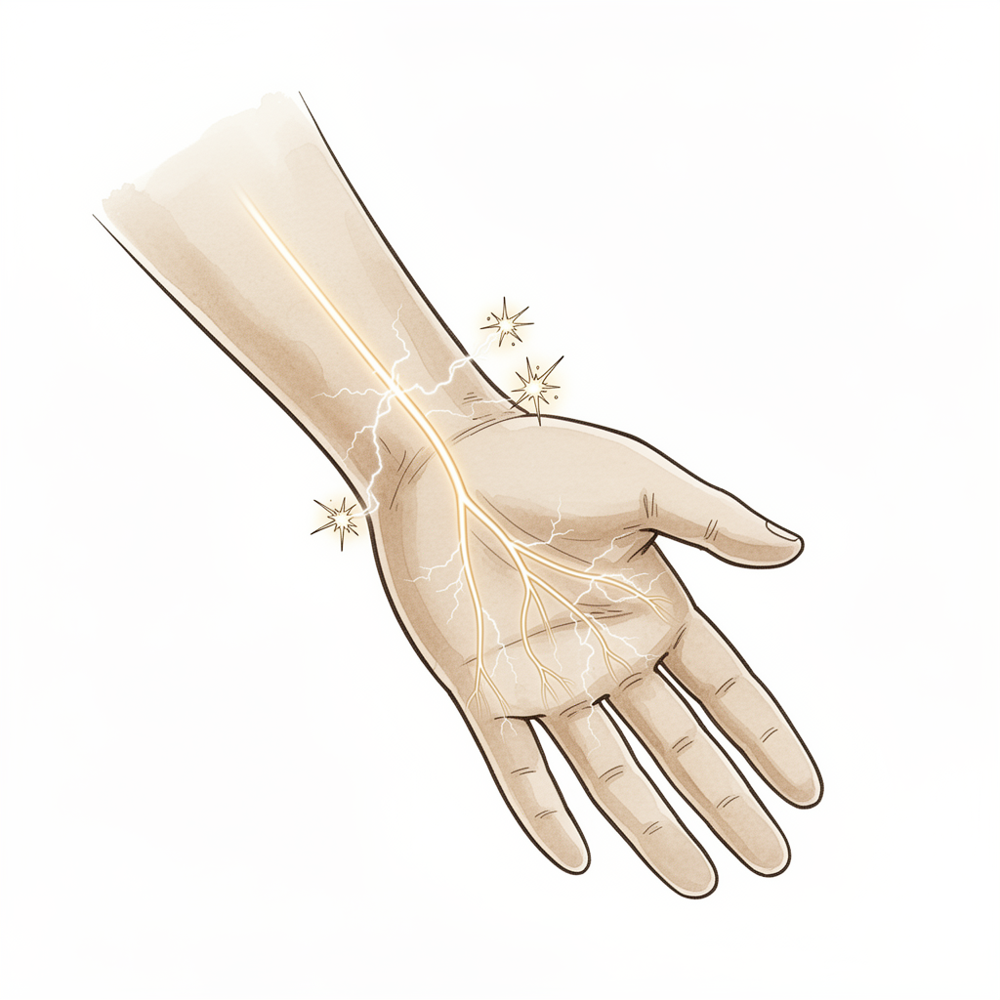
Um antebraço com um nervo traçado ao longo dele e marcas de formigamento.
A dor neuropática é sentida como ardência, pontadas ou formigamento — esses medicamentos acalmam os sinais nervosos hiperativos subjacentes. Kieran Hirpara 4.0

Esta página foi traduzida automaticamente e ainda não foi verificada por um médico. A versão em inglês é a versão oficial.

Se você recebeu prescrição de gabapentina, pregabalina, amitriptilina ou duloxetina, pode ficar surpreso: estes não são os analgésicos mais comuns que as pessoas costumam usar. Há uma boa razão para isso. A dor que eles tratam, dor neuropática, comporta-se de maneira diferente da dor comum, e necessita de um tipo diferente de medicamento para ser controlada. Quando utilizadas adequadamente, estas medicações representam uma forma valiosa e não opioide de acalmar a dor neuropática.

O que é a dor neuropática (dor nervosa)

A maioria das dores é um alarme sensível: você bate a mão, o tecido fica hematomado e a área dói até cicatrizar. A dor nervosa (os médicos chamam de dor neuropática) é diferente. Aqui, o problema é o próprio nervo: um nervo que foi irritado, comprimido ou danificado começa a disparar sinais de dor por conta própria, mesmo quando há pouco ou nada de errado com a pele ou o tecido do qual ele reporta. O alarme, em essência, tornou-se defeituoso e continua a soar.

A dor nervosa tende a ter uma sensação distinta. As pessoas descrevem-na como:

  • Queimante ou quente
  • Pontiaguda ou em forma de choque elétrico, frequentemente percorrendo uma linha
  • Formigamento, sensações de formigueiro ou rastejamento
  • Uma área que parece adormecida, mas dolorosa ao mesmo tempo
  • Pele tão sensível que até um toque leve ou o lençol causa dor

Pode resultar de um nervo preso, como na síndrome do túnel do carpo, de uma lesão nervosa ou após algumas cirurgias, de condições como herpes-zóster ou diabetes, ou de uma condição chamada SCRP (síndrome complexa regional de dor), em que um membro se torna dolorido e excessivamente sensível após uma lesão.

Por que os analgésicos comuns muitas vezes não ajudam muito

Esta é a parte que mais surpreende as pessoas. O paracetamol, o ibuprofeno e os outros anti-inflamatórios atuam principalmente na inflamação e no dano tecidual (uma entorse, um hematoma, o local de uma cirurgia). A dor neuropática não é realmente um problema de inflamação; é um problema de nervo hiperativo e com disparos inadequados. Portanto, os analgésicos habituais, e até mesmo os opioides fortes, muitas vezes apenas reduzem ligeiramente essa dor.

É por isso que recorremos a um grupo diferente de medicamentos. Em vez de acalmar o tecido inflamado, eles atuam diretamente no sistema nervoso, reduzindo a intensidade da sinalização de dor hiperativa. Eles foram inicialmente desenvolvidos para outras finalidades (alguns para epilepsia, outros para depressão), e, ao longo do processo, descobriu-se que eram muito eficazes em acalmar os sinais nervosos defeituosos. Receber uma prescrição desse tipo de medicamento não significa que acreditamos que sua dor é imaginária ou que você tem epilepsia ou depressão; simplesmente significa que estamos utilizando o medicamento para a função para a qual ele é mais eficaz.

Gabapentina e pregabalina (Lyrica)

Estes dois medicamentos são a base do tratamento da dor neuropática e estão estreitamente relacionados. A pregabalina é comercializada sob a marca Lyrica; a gabapentina também é comercializada como Neurontin.

Eles atuam reduzindo a sinalização nervosa excessivamente ativa. Um nervo irritado dispara parcialmente permitindo a entrada de cálcio através de pequenos canais chamados canais de cálcio; a gabapentina e a pregabalina modulam esses canais, de modo que o nervo dispara com mais dificuldade e menos mensagens de dor são transmitidas. Eles não são anti-inflamatórios e não são opioides; eles acalmam o nervo em vez de anestesiarem o tecido.

Uma nota de realismo: estes medicamentos são mais eficazes para a dor neuropática quando há realmente um nervo disfuncional e hiperativo subjacente. Eles não são uma boa opção para o manejo de dores comuns ou do desconforto normal pós-operatório, e o uso rotineiro "apenas por precaução" ao redor da cirurgia não é recomendado; para esse tipo de dor, eles adicionam efeitos colaterais sem proporcionar alívio significativo. Eles justificam seu uso quando a dor neuropática é o problema real.

Amitriptilina e duloxetina — as alternativas

Se a gabapentina ou a pregabalina não forem adequadas para si, ou não produzirem o efeito desejado, existem dois outros medicamentos que atuam sobre o mesmo problema, mas por um ângulo diferente.

  • Amitriptilina é um antidepressivo antigo, utilizado aqui em doses muito mais baixas do que as usadas para a depressão. A estas pequenas doses, ajuda a potenciar as próprias vias de atenuação da dor do organismo na medula espinal e no cérebro. A dose inicial típica é muito baixa e é tomada à noite, em parte porque pode ajudar no sono, o que é útil quando a dor neuropática o mantém acordado.
  • Duloxetina é um ISRSN (um tipo mais recente de antidepressivo) que, novamente, fortalece os sinais naturais de controlo da dor que percorrem o sistema nervoso. É uma escolha particularmente comum para a dor neuropática relacionada com a diabetes.

Tal como com a gabapentina e a pregabalina, a oferta de um destes medicamentos diz respeito à via da dor, e não ao seu humor.

Como estes medicamentos são utilizados — o que esperar

Alguns pontos práticos aplicam-se a todos estes medicamentos, e conhecê-los com antecedência torna a experiência muito mais tranquila.

Começam com doses baixas e aumentam lentamente. Geralmente, inicia-se com uma dose pequena e aumenta-se gradualmente, ao longo de dias ou semanas. Isto não deve-se a cautela desnecessária. O aumento lento permite que o seu corpo se habitue ao medicamento e que os efeitos secundários iniciais diminuam, de modo a que acabe por tolerar uma dose útil que o teria incapacitado se tivesse começado com ela.

Demoram a fazer efeito: não são imediatos. Ao contrário do paracetamol, não tomará um comprimido e sentirá alívio em meia hora. Estes medicamentos acumulam o seu efeito ao longo de dias ou algumas semanas, e a amitriptilina e a duloxetina podem necessitar de várias semanas a uma dose razoável antes de poderem ser avaliadas corretamente. A razão mais comum pela qual as pessoas perdem a oportunidade de beneficiar de um medicamento que as teria ajudado é desistir demasiado cedo. Se ainda não estiver a funcionar, isso significa frequentemente que precisa de mais tempo ou de uma dose mais elevada, e não que tenha falhado.

Atenuam a intensidade; raramente eliminam a dor completamente. Ajuda a saber qual o aspeto do sucesso. Para a maioria das pessoas, um bom resultado é a dor tornar-se mais suave e mais controlável (por exemplo, passar de grave para ligeira, ou permitir dormir) em vez de desaparecer por completo. Algumas pessoas obtêm muito alívio, outras pouco, e algumas verificam que um determinado medicamento não tem qualquer efeito sobre elas, pelo que, frequentemente, trata-se de tentar um e, se necessário, mudar para outro. Associar o medicamento ao resto do seu tratamento (manter a mão em movimento, fisioterapia da mão, tratar a causa subjacente quando possível) costuma ser mais eficaz do que qualquer comprimido isoladamente.

Efeitos secundários comuns. Os mais frequentes são sonolência, tonturas e boca seca; algumas pessoas notam ganho de peso ou ligeiro inchaço dos tornozelos. Estes são geralmente mais intensos no início e tendem a melhorar à medida que o seu corpo se adapta, o que é exatamente a razão pela qual aumentamos a dose gradualmente. Informe-nos se forem incómodos; reduzir a velocidade dos aumentos ou ajustar a dose costuma resolver o problema.

Conduzir e álcool durante o período de adaptação. Como estes podem causar sonolência ou tonturas, tenha cuidado ao conduzir ou operar máquinas até saber como o medicamento afeta o seu organismo, especialmente nos primeiros dias e após cada aumento de dose. Modere também o consumo de álcool, pois este potencia a sonolência.

Não os interrompa subitamente. Quando chegar o momento de deixar de tomar um destes medicamentos, a dose deve ser reduzida gradualmente (desmame) em vez de suspensa abruptamente. A interrupção brusca pode causar efeitos de abstinência desagradáveis. Interrompa sempre o tratamento com orientação médica, e não por iniciativa própria.

Uma nota sobre gabapentina e pregabalina como medicamentos controlados

A gabapentina e a pregabalina são agora classificadas como medicamentos controlados. Existem duas razões. Primeiro, apresentam risco de abuso e dependência em algumas pessoas. Segundo, e mais importante para a segurança, podem ser perigosas quando combinadas com opioides ou outros sedativos (incluindo comprimidos para dormir potentes e consumo significativo de álcool), pois, em conjunto, podem reduzir a sua respiração.

Na prática, isto significa: tome-os exatamente conforme a prescrição, não os partilhe, não tome doses adicionais e certifique-se de que todos os clínicos que o tratam sabem que está a tomar um destes medicamentos, especialmente se algum deles estiver a considerar prescrever-lhe analgésicos opioides ou sedativos. Temos páginas separadas sobre opioides e gestão da dor após a cirurgia e sobre cannabis e CBD para a dor caso sejam relevantes para si.

Nada disto deve desanimá-lo. Para a grande maioria das pessoas, estes são seguros, eficazes e constituem uma forma genuinamente útil de não opioide para controlar a dor neuropática. O estatuto de medicamento controlado é simplesmente uma razão para os utilizar de forma ponderada e apenas conforme prescrito.

Procure ajuda se

Entre em contato conosco, com seu médico de família ou procure atendimento de urgência se notar:

  • Sonolência intensa ou confusão, ou se não for possível acordá-lo facilmente
  • Mudanças de humor ou qualquer pensamento de se machucar: comunique isso imediatamente
  • Problemas respiratórios ou respiração incomumente lenta ou superficial, especialmente se você também estiver usando um opioide ou sedativo (ligue para os serviços de emergência)
  • Sinais de reação alérgica: erupção cutânea, inchaço do rosto, lábios ou língua, ou dificuldade para respirar (isso é uma emergência)

Além disso, entre em contato se o medicamento simplesmente não estiver fazendo efeito após um período adequado de uso, ou se os efeitos colaterais forem difíceis de suportar; existem várias opções, e geralmente trata-se de encontrar a que melhor se adapta a você.


Creative Commons BY-NC 4.0

CC Creative Commons licence
BY Attribution — you must credit the source
NC NonCommercial — not for commercial use

Attribution-NonCommercial 4.0 International


Creative Commons Corporation ("Creative Commons") is not a law firm and does not provide legal services or legal advice. Distribution of Creative Commons public licenses does not create a lawyer-client or other relationship. Creative Commons makes its licenses and related information available on an "as-is" basis. Creative Commons gives no warranties regarding its licenses, any material licensed under their terms and conditions, or any related information. Creative Commons disclaims all liability for damages resulting from their use to the fullest extent possible.

Using Creative Commons Public Licenses

Creative Commons public licenses provide a standard set of terms and conditions that creators and other rights holders may use to share original works of authorship and other material subject to copyright and certain other rights specified in the public license below. The following considerations are for informational purposes only, are not exhaustive, and do not form part of our licenses.

Considerations for licensors: Our public licenses are intended for use by those authorized to give the public permission to use material in ways otherwise restricted by copyright and certain other rights. Our licenses are irrevocable. Licensors should read and understand the terms and conditions of the license they choose before applying it. Licensors should also secure all rights necessary before applying our licenses so that the public can reuse the material as expected. Licensors should clearly mark any material not subject to the license. This includes other CC- licensed material, or material used under an exception or limitation to copyright. More considerations for licensors: wiki.creativecommons.org/Considerations_for_licensors

Considerations for the public: By using one of our public licenses, a licensor grants the public permission to use the licensed material under specified terms and conditions. If the licensor's permission is not necessary for any reason--for example, because of any applicable exception or limitation to copyright--then that use is not regulated by the license. Our licenses grant only permissions under copyright and certain other rights that a licensor has authority to grant. Use of the licensed material may still be restricted for other reasons, including because others have copyright or other rights in the material. A licensor may make special requests, such as asking that all changes be marked or described. Although not required by our licenses, you are encouraged to respect those requests where reasonable. More considerations for the public: wiki.creativecommons.org/Considerations_for_licensees


Creative Commons Attribution-NonCommercial 4.0 International Public License

By exercising the Licensed Rights (defined below), You accept and agree to be bound by the terms and conditions of this Creative Commons Attribution-NonCommercial 4.0 International Public License ("Public License"). To the extent this Public License may be interpreted as a contract, You are granted the Licensed Rights in consideration of Your acceptance of these terms and conditions, and the Licensor grants You such rights in consideration of benefits the Licensor receives from making the Licensed Material available under these terms and conditions.

Section 1 -- Definitions.

a. Adapted Material means material subject to Copyright and Similar Rights that is derived from or based upon the Licensed Material and in which the Licensed Material is translated, altered, arranged, transformed, or otherwise modified in a manner requiring permission under the Copyright and Similar Rights held by the Licensor. For purposes of this Public License, where the Licensed Material is a musical work, performance, or sound recording, Adapted Material is always produced where the Licensed Material is synched in timed relation with a moving image.

b. Adapter's License means the license You apply to Your Copyright and Similar Rights in Your contributions to Adapted Material in accordance with the terms and conditions of this Public License.

c. Copyright and Similar Rights means copyright and/or similar rights closely related to copyright including, without limitation, performance, broadcast, sound recording, and Sui Generis Database Rights, without regard to how the rights are labeled or categorized. For purposes of this Public License, the rights specified in Section 2(b)(1)-(2) are not Copyright and Similar Rights.

d. Effective Technological Measures means those measures that, in the absence of proper authority, may not be circumvented under laws fulfilling obligations under Article 11 of the WIPO Copyright Treaty adopted on December 20, 1996, and/or similar international agreements.

e. Exceptions and Limitations means fair use, fair dealing, and/or any other exception or limitation to Copyright and Similar Rights that applies to Your use of the Licensed Material.

f. Licensed Material means the artistic or literary work, database, or other material to which the Licensor applied this Public License.

g. Licensed Rights means the rights granted to You subject to the terms and conditions of this Public License, which are limited to all Copyright and Similar Rights that apply to Your use of the Licensed Material and that the Licensor has authority to license.

h. Licensor means the individual(s) or entity(ies) granting rights under this Public License.

i. NonCommercial means not primarily intended for or directed towards commercial advantage or monetary compensation. For purposes of this Public License, the exchange of the Licensed Material for other material subject to Copyright and Similar Rights by digital file-sharing or similar means is NonCommercial provided there is no payment of monetary compensation in connection with the exchange.

j. Share means to provide material to the public by any means or process that requires permission under the Licensed Rights, such as reproduction, public display, public performance, distribution, dissemination, communication, or importation, and to make material available to the public including in ways that members of the public may access the material from a place and at a time individually chosen by them.

k. Sui Generis Database Rights means rights other than copyright resulting from Directive 96/9/EC of the European Parliament and of the Council of 11 March 1996 on the legal protection of databases, as amended and/or succeeded, as well as other essentially equivalent rights anywhere in the world.

l. You means the individual or entity exercising the Licensed Rights under this Public License. Your has a corresponding meaning.

Section 2 -- Scope.

a. License grant.

1. Subject to the terms and conditions of this Public License, the Licensor hereby grants You a worldwide, royalty-free, non-sublicensable, non-exclusive, irrevocable license to exercise the Licensed Rights in the Licensed Material to:

a. reproduce and Share the Licensed Material, in whole or in part, for NonCommercial purposes only; and

b. produce, reproduce, and Share Adapted Material for NonCommercial purposes only.

2. Exceptions and Limitations. For the avoidance of doubt, where Exceptions and Limitations apply to Your use, this Public License does not apply, and You do not need to comply with its terms and conditions.

3. Term. The term of this Public License is specified in Section 6(a).

4. Media and formats; technical modifications allowed. The Licensor authorizes You to exercise the Licensed Rights in all media and formats whether now known or hereafter created, and to make technical modifications necessary to do so. The Licensor waives and/or agrees not to assert any right or authority to forbid You from making technical modifications necessary to exercise the Licensed Rights, including technical modifications necessary to circumvent Effective Technological Measures. For purposes of this Public License, simply making modifications authorized by this Section 2(a) (4) never produces Adapted Material.

5. Downstream recipients.

a. Offer from the Licensor -- Licensed Material. Every recipient of the Licensed Material automatically receives an offer from the Licensor to exercise the Licensed Rights under the terms and conditions of this Public License.

b. No downstream restrictions. You may not offer or impose any additional or different terms or conditions on, or apply any Effective Technological Measures to, the Licensed Material if doing so restricts exercise of the Licensed Rights by any recipient of the Licensed Material.

6. No endorsement. Nothing in this Public License constitutes or may be construed as permission to assert or imply that You are, or that Your use of the Licensed Material is, connected with, or sponsored, endorsed, or granted official status by, the Licensor or others designated to receive attribution as provided in Section 3(a)(1)(A)(i).

b. Other rights.

1. Moral rights, such as the right of integrity, are not licensed under this Public License, nor are publicity, privacy, and/or other similar personality rights; however, to the extent possible, the Licensor waives and/or agrees not to assert any such rights held by the Licensor to the limited extent necessary to allow You to exercise the Licensed Rights, but not otherwise.

2. Patent and trademark rights are not licensed under this Public License.

3. To the extent possible, the Licensor waives any right to collect royalties from You for the exercise of the Licensed Rights, whether directly or through a collecting society under any voluntary or waivable statutory or compulsory licensing scheme. In all other cases the Licensor expressly reserves any right to collect such royalties, including when the Licensed Material is used other than for NonCommercial purposes.

Section 3 -- License Conditions.

Your exercise of the Licensed Rights is expressly made subject to the following conditions.

a. Attribution.

1. If You Share the Licensed Material (including in modified form), You must:

a. retain the following if it is supplied by the Licensor with the Licensed Material:

i. identification of the creator(s) of the Licensed Material and any others designated to receive attribution, in any reasonable manner requested by the Licensor (including by pseudonym if designated);

ii. a copyright notice;

iii. a notice that refers to this Public License;

iv. a notice that refers to the disclaimer of warranties;

v. a URI or hyperlink to the Licensed Material to the extent reasonably practicable;

b. indicate if You modified the Licensed Material and retain an indication of any previous modifications; and

c. indicate the Licensed Material is licensed under this Public License, and include the text of, or the URI or hyperlink to, this Public License.

2. You may satisfy the conditions in Section 3(a)(1) in any reasonable manner based on the medium, means, and context in which You Share the Licensed Material. For example, it may be reasonable to satisfy the conditions by providing a URI or hyperlink to a resource that includes the required information.

3. If requested by the Licensor, You must remove any of the information required by Section 3(a)(1)(A) to the extent reasonably practicable.

4. If You Share Adapted Material You produce, the Adapter's License You apply must not prevent recipients of the Adapted Material from complying with this Public License.

Section 4 -- Sui Generis Database Rights.

Where the Licensed Rights include Sui Generis Database Rights that apply to Your use of the Licensed Material:

a. for the avoidance of doubt, Section 2(a)(1) grants You the right to extract, reuse, reproduce, and Share all or a substantial portion of the contents of the database for NonCommercial purposes only;

b. if You include all or a substantial portion of the database contents in a database in which You have Sui Generis Database Rights, then the database in which You have Sui Generis Database Rights (but not its individual contents) is Adapted Material; and

c. You must comply with the conditions in Section 3(a) if You Share all or a substantial portion of the contents of the database.

For the avoidance of doubt, this Section 4 supplements and does not replace Your obligations under this Public License where the Licensed Rights include other Copyright and Similar Rights.

Section 5 -- Disclaimer of Warranties and Limitation of Liability.

a. UNLESS OTHERWISE SEPARATELY UNDERTAKEN BY THE LICENSOR, TO THE EXTENT POSSIBLE, THE LICENSOR OFFERS THE LICENSED MATERIAL AS-IS AND AS-AVAILABLE, AND MAKES NO REPRESENTATIONS OR WARRANTIES OF ANY KIND CONCERNING THE LICENSED MATERIAL, WHETHER EXPRESS, IMPLIED, STATUTORY, OR OTHER. THIS INCLUDES, WITHOUT LIMITATION, WARRANTIES OF TITLE, MERCHANTABILITY, FITNESS FOR A PARTICULAR PURPOSE, NON-INFRINGEMENT, ABSENCE OF LATENT OR OTHER DEFECTS, ACCURACY, OR THE PRESENCE OR ABSENCE OF ERRORS, WHETHER OR NOT KNOWN OR DISCOVERABLE. WHERE DISCLAIMERS OF WARRANTIES ARE NOT ALLOWED IN FULL OR IN PART, THIS DISCLAIMER MAY NOT APPLY TO YOU.

b. TO THE EXTENT POSSIBLE, IN NO EVENT WILL THE LICENSOR BE LIABLE TO YOU ON ANY LEGAL THEORY (INCLUDING, WITHOUT LIMITATION, NEGLIGENCE) OR OTHERWISE FOR ANY DIRECT, SPECIAL, INDIRECT, INCIDENTAL, CONSEQUENTIAL, PUNITIVE, EXEMPLARY, OR OTHER LOSSES, COSTS, EXPENSES, OR DAMAGES ARISING OUT OF THIS PUBLIC LICENSE OR USE OF THE LICENSED MATERIAL, EVEN IF THE LICENSOR HAS BEEN ADVISED OF THE POSSIBILITY OF SUCH LOSSES, COSTS, EXPENSES, OR DAMAGES. WHERE A LIMITATION OF LIABILITY IS NOT ALLOWED IN FULL OR IN PART, THIS LIMITATION MAY NOT APPLY TO YOU.

c. The disclaimer of warranties and limitation of liability provided above shall be interpreted in a manner that, to the extent possible, most closely approximates an absolute disclaimer and waiver of all liability.

Section 6 -- Term and Termination.

a. This Public License applies for the term of the Copyright and Similar Rights licensed here. However, if You fail to comply with this Public License, then Your rights under this Public License terminate automatically.

b. Where Your right to use the Licensed Material has terminated under Section 6(a), it reinstates:

1. automatically as of the date the violation is cured, provided it is cured within 30 days of Your discovery of the violation; or

2. upon express reinstatement by the Licensor.

For the avoidance of doubt, this Section 6(b) does not affect any right the Licensor may have to seek remedies for Your violations of this Public License.

c. For the avoidance of doubt, the Licensor may also offer the Licensed Material under separate terms or conditions or stop distributing the Licensed Material at any time; however, doing so will not terminate this Public License.

d. Sections 1, 5, 6, 7, and 8 survive termination of this Public License.

Section 7 -- Other Terms and Conditions.

a. The Licensor shall not be bound by any additional or different terms or conditions communicated by You unless expressly agreed.

b. Any arrangements, understandings, or agreements regarding the Licensed Material not stated herein are separate from and independent of the terms and conditions of this Public License.

Section 8 -- Interpretation.

a. For the avoidance of doubt, this Public License does not, and shall not be interpreted to, reduce, limit, restrict, or impose conditions on any use of the Licensed Material that could lawfully be made without permission under this Public License.

b. To the extent possible, if any provision of this Public License is deemed unenforceable, it shall be automatically reformed to the minimum extent necessary to make it enforceable. If the provision cannot be reformed, it shall be severed from this Public License without affecting the enforceability of the remaining terms and conditions.

c. No term or condition of this Public License will be waived and no failure to comply consented to unless expressly agreed to by the Licensor.

d. Nothing in this Public License constitutes or may be interpreted as a limitation upon, or waiver of, any privileges and immunities that apply to the Licensor or You, including from the legal processes of any jurisdiction or authority.


Creative Commons is not a party to its public licenses. Notwithstanding, Creative Commons may elect to apply one of its public licenses to material it publishes and in those instances will be considered the “Licensor.” The text of the Creative Commons public licenses is dedicated to the public domain under the CC0 Public Domain Dedication. Except for the limited purpose of indicating that material is shared under a Creative Commons public license or as otherwise permitted by the Creative Commons policies published at creativecommons.org/policies, Creative Commons does not authorize the use of the trademark "Creative Commons" or any other trademark or logo of Creative Commons without its prior written consent including, without limitation, in connection with any unauthorized modifications to any of its public licenses or any other arrangements, understandings, or agreements concerning use of licensed material. For the avoidance of doubt, this paragraph does not form part of the public licenses.

Creative Commons may be contacted at creativecommons.org.