Patients › Rehabilitation
Estabilização posterior
Rehabilitation protocol after posterior shoulder stabilisation, with posterior-specific precautions and return-to-sport criteria.
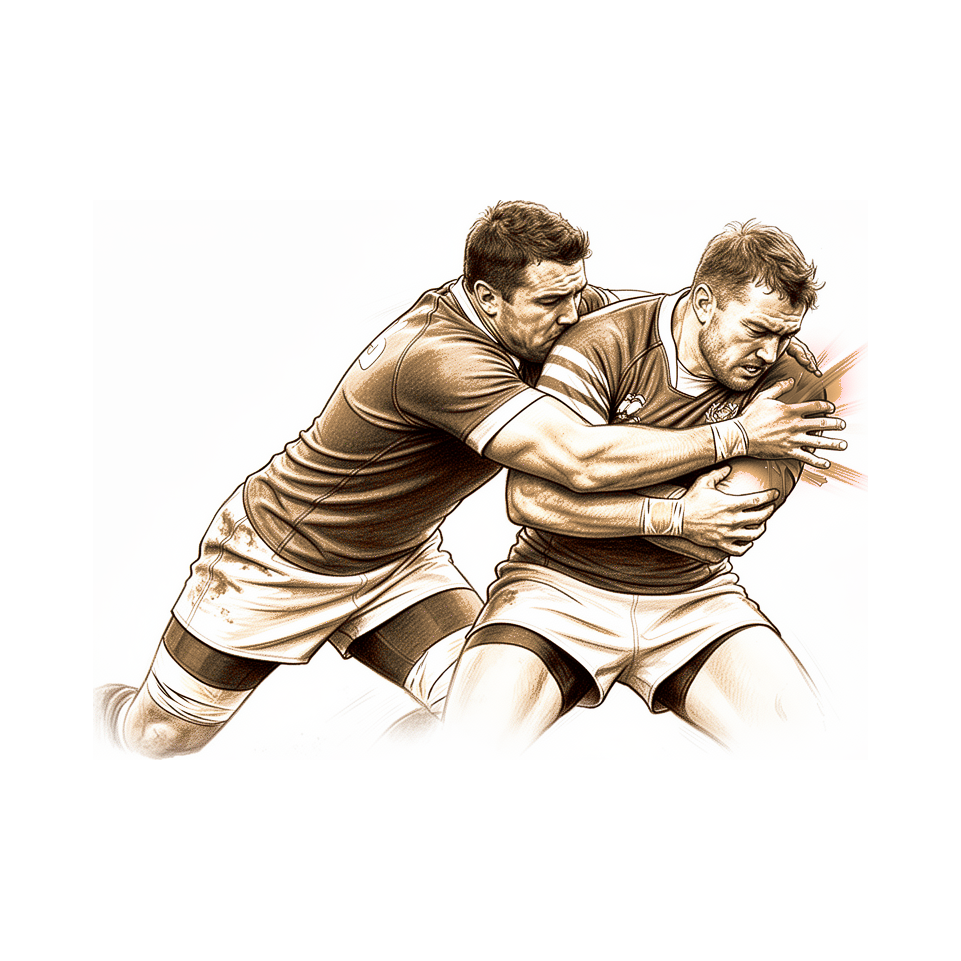
Este protocolo orienta sua recuperação após a estabilização posterior do ombro realizada pelo Dr. Kieran Hirpara no Mater Private Hospital Rockhampton. Cada fase abaixo começa com uma explicação simples, em linguagem acessível, sobre o que está acontecendo e o que é mais importante; em seguida, apresenta o programa estruturado que você pode compartilhar com seu fisioterapeuta. Leve esta página ou seu PDF na primeira sessão de fisioterapia para que a reabilitação seja devidamente coordenada. Seu fisioterapeuta poderá ajustar o plano conforme a evolução da sua recuperação.
Caso tenha alguma dúvida ou preocupação quanto à ferida cirúrgica, entre em contato com o consultório. Geralmente, é útil tirar uma foto da ferida e enviá-la por e-mail para análise.
O que esperar
A estabilização posterior corrige a parte posterior do ombro, onde o lábio cartilaginoso (labrum) e a cápsula articular se desprenderam da cavidade glenoidal. Como a reparação ocorre na parte de trás da articulação, o movimento que mais sobrecarrega essa região é estender o braço para a frente enquanto o gira para dentro. Inicialmente, três movimentos cotidianos devem ser evitados, pois cada um empurra a cabeça do úmero para trás, contra a área recém-reparada:
- Girar o braço para dentro (rotação interna): estender o braço para trás ou virar a mão em direção ao abdômen;
- Estender o braço ao longo do corpo em direção ao ombro oposto (adução cruzada);
- Inclinar-se ou empurrar com o braço operado.
Isso é o oposto da estabilização anterior, na qual o movimento a ser evitado é girar o braço para fora. No caso da reparação posterior, o movimento seguro é girar o braço para fora; a rotação interna é a última a ser restaurada, de forma gradual e sem atingir a amplitude total até cerca de três meses. As fases abaixo detalham exatamente quando cada movimento restrito pode ser retomado.
Há sempre a tentação de acelerar os movimentos, mas as evidências mostram que qualquer ganho adicional de amplitude obtido precocemente é temporário, e a reparação permanece mais frágil nas primeiras seis semanas. Um programa progressivo e controlado garante o retorno mais seguro e previsível à plena funcionalidade. A instabilidade posterior é rara; por isso, este cronograma baseia-se em princípios biomecânicos e em protocolos de especialistas, não em estudos clínicos de grande escala. O Dr. Hirpara ajustará o ritmo conforme suas necessidades.
Você usará uma tipoia simples, não um aparelho especial de abdução ou tipo “gunslinger”. A proteção advém das precauções posturais mencionadas (manter o braço à frente do corpo, evitar rotação interna e movimentos cruzados), e não da forma da tipoia em si.
Visão geral do processo:
- Fase I — Proteção, semanas 0–2
- Fase II — Movimentos iniciais, semanas 2–4
- Fase III — Aumento da amplitude e início do fortalecimento, semanas 4–6
- Fase IV — Progressão, semanas 6–8
- Fase V — Fortalecimento, semanas 8–12
- Fase VI — Amplitude completa e treino com pesos, semanas 12–14
- Retorno aos esportes: a partir da semana 12; esportes de contato só após 5 meses
Retorno às atividades cotidianas:
- Trabalho: para funções sedentárias, conforme tolerância; para trabalhos manuais, mínimo de 3 meses;
- Dirigir: após retirar a tipoia e ter controle total do braço, geralmente por volta de 6 semanas;
- Levantamento de peso: movimentos leves podem ser iniciados nas primeiras semanas, dentro de limites; evite cargas pesadas por cerca de 3 meses;
- Esportes de contato (futebol, rúgbi, artes marciais, esportes com raquete, escalada, equitação): só a partir de 5 meses, e após atender aos critérios de retorno ao esporte.
O procedimento
A estabilização posterior geralmente é feita por artroscopia (cirurgia minimamente invasiva), ou ocasionalmente por meio de uma pequena incisão aberta. O labrum e a cápsula rompidos na parte posterior do ombro são reaplicados e tensionados na borda da cavidade glenoidal (procedimento às vezes chamado de reparo de Bankart reverso ou capsulorrafia posterior). A reabilitação tem como objetivo manter a cabeça do úmero afastada dessa área de reparo enquanto ela cicatriza, limitando inicialmente os movimentos para frente, para dentro e em direção ao corpo; posteriormente, restaura-se gradualmente a amplitude de movimento, a força e a função da articulação.
Como usar a tipóia
A tipóia sustenta o braço e serve como lembrete para mantê-lo na posição segura enquanto a reparação cicatriza. As regras são simples:
- Use uma tipóia simples por cerca de 6 semanas, especialmente quando estiver fora de casa ou na presença de outras pessoas. O Dr. Hirpara não utiliza travesseiros de abdução, cunhas ou órteses do tipo “gunslinger”; a tipóia simples, aliada às precauções de posicionamento abaixo, é o que protege a reparação posterior.
- Não durma com a tipóia. Durma sem ela, mantendo o braço fora da posição de risco: deixe-o ligeiramente à sua frente, sem girá-lo para dentro nem cruzá-lo sobre o corpo. Um travesseiro sob o braço ajuda a mantê-lo nessa posição.
- Retire a tipóia para tomar banho e para fazer os exercícios (depois de aprender como fazê-los). Sempre que a tipóia estiver removida, mantenha o braço relaxado e à frente do corpo; jamais permita que ele vá para trás das costas ou cruze o peito.
- Use gelo se o ombro estiver inchado ou dolorido, especialmente após os exercícios.
Preste atenção à sua postura enquanto usa a tipóia: mantenha as orelhas, ombros e quadris alinhados, evitando curvar-se demais. Uma boa postura protege as costas e ajuda a prevenir a rigidez do ombro.
O fisioterapeuta utilizará três tipos de movimentos: amplitude de movimento passiva (PROM) (o braço permanece completamente relaxado, sendo movimentado pela outra mão ou pelo fisioterapeuta); amplitude de movimento ativa assistida (AAROM) (o braço saudável ou um objeto auxilia no movimento do braço operado); e amplitude de movimento ativa (AROM) (você mesmo movimenta o braço com sua própria força). Sua equipe médica informará qual desses tipos de movimento é indicado em cada fase do tratamento.
Precauções importantes — NÃO FAÇA
Especialmente durante as primeiras seis semanas, as seguintes ações ajudam a proteger a reparação na parte posterior do ombro:
- NÃO gire o braço para dentro além da posição reta para a frente (posição neutra): não tente alcançar algo atrás das costas, nem gire a mão em direção ao abdômen. A rotação interna é o movimento mais importante a ser evitado no início, sendo também o último a ser recuperado.
- NÃO estenda o braço através do corpo em direção ao ombro oposto (não faça movimentos cruzados).
- NÃO combine o movimento de estender o braço para a frente com a rotação interna; essa é exatamente a posição que sobrecarrega a área reparada.
- NÃO apoie o peso no braço operado, nem use-o para se levantar de uma cadeira ou cama, nem transfira peso para ele.
- NÃO levante, empurre ou puxe objetos pesados com o braço operado nos primeiros tempos.
- NÃO force ou estique o braço em nenhuma dessas direções; permita que a amplitude de movimento volte gradualmente, dentro dos limites indicados pelo fisioterapeuta.
- A rotação externa do braço é a direção segura após uma reparação posterior, mas ainda assim deve ser feita dentro dos limites determinados pelo seu fisioterapeuta.
Seus primeiros dias no hospital
Kieran Hirpara 4.0
Pulso, mão e dedos
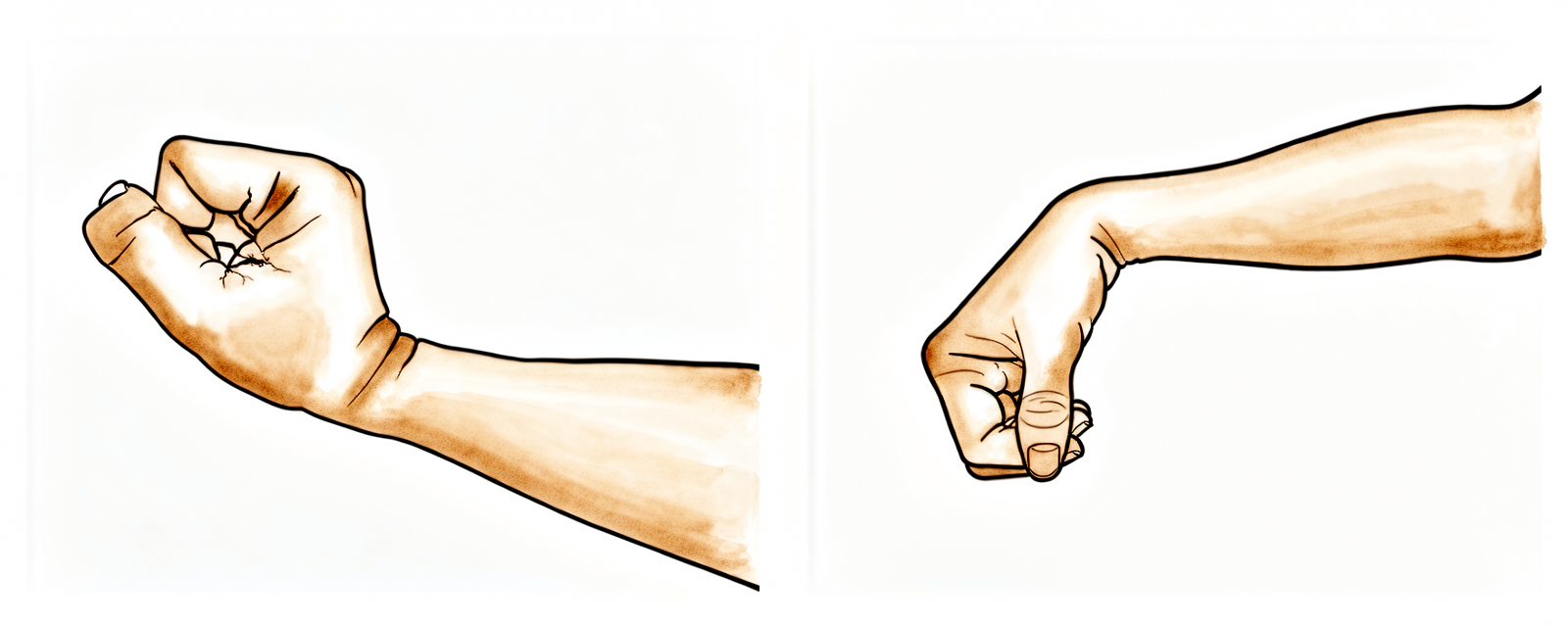
Mantenha a mão em movimento, dobrando o punho para a frente, para trás e para os lados, além de abrindo e fechando os dedos ou apertando uma bola macia. Isso mantém a mão e o punho flexíveis e ajuda a reduzir o inchaço — sem sobrecarregar a área reparada.
10 vezes, 3 vezes ao dia
Kieran Hirpara 4.0
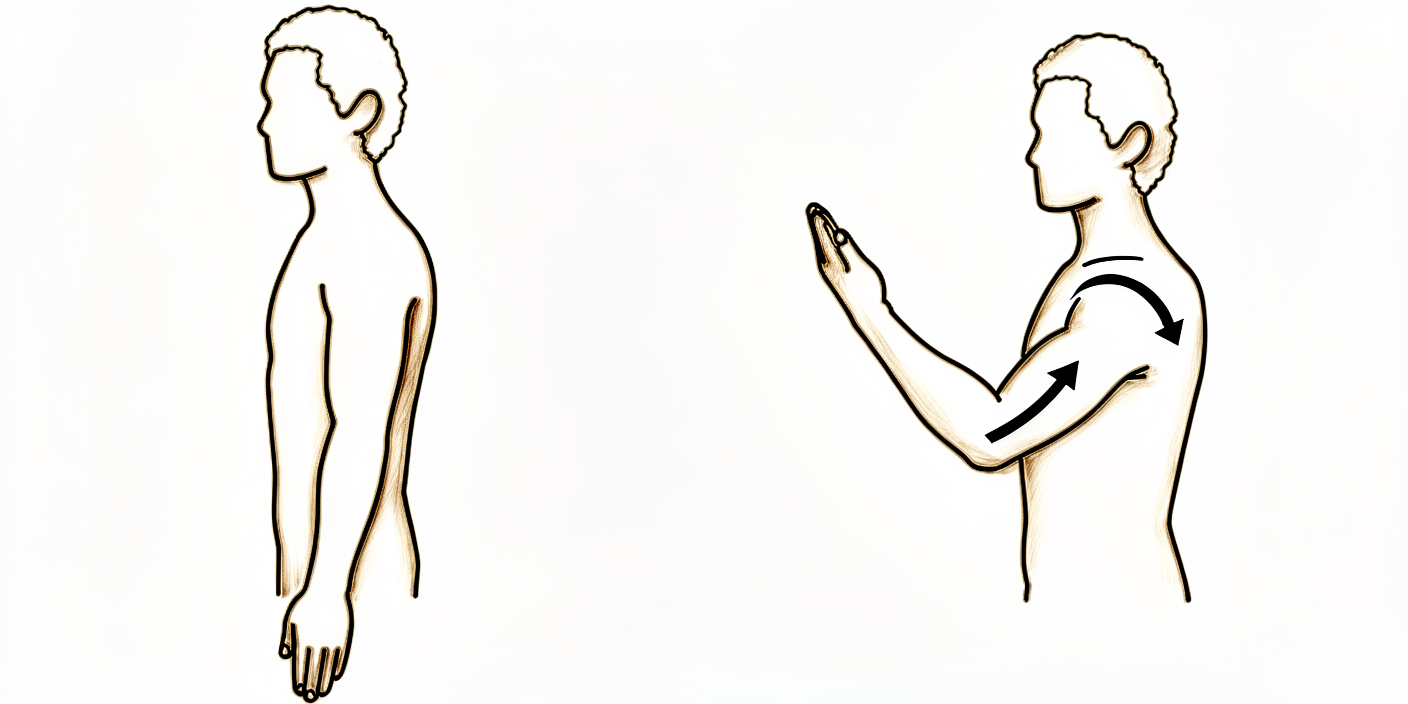
Flexão do cotovelo
Com o braço à frente do corpo, dobre e estenda suavemente o cotovelo. Mantenha o ombro relaxado e imóvel.
10 vezes, 3 vezes ao dia
Kieran Hirpara 4.0
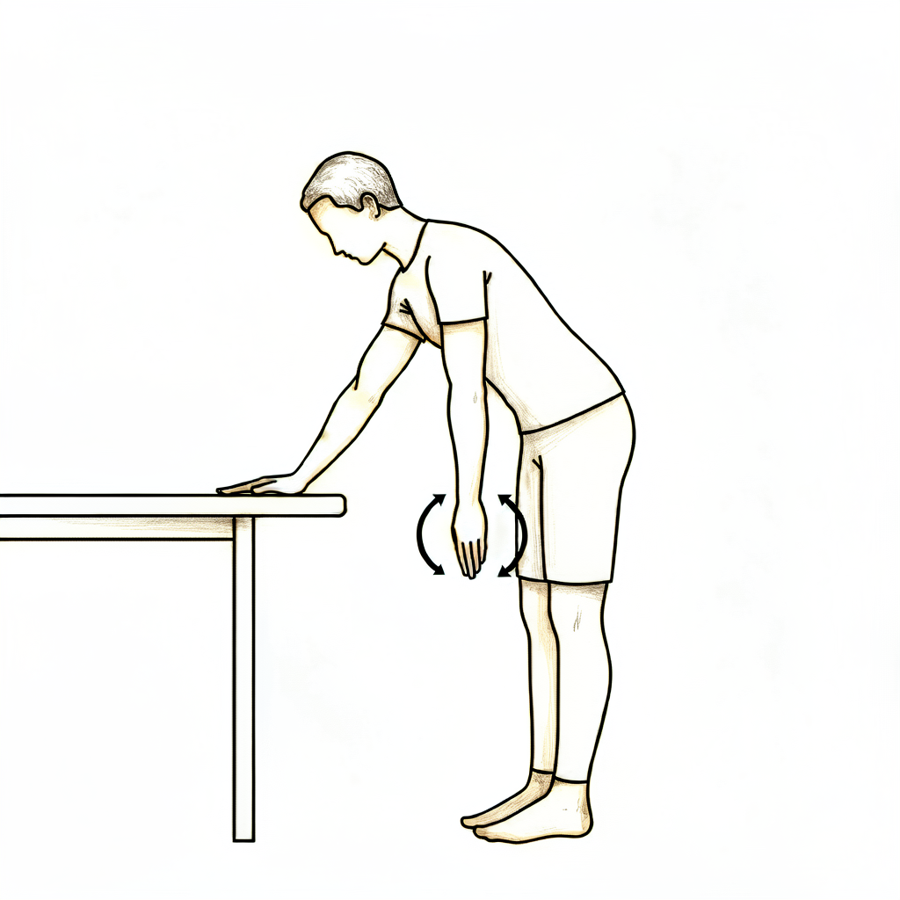
Oscilações do pêndulo
Incline-se para a frente e deixe o braço operado pendurado, totalmente relaxado. Use o corpo para balançar o braço suavemente: faça pequenos círculos no sentido horário e anti-horário, além de movimentos suaves para a frente/trás e para os lados. Os músculos do ombro não devem se contrair; o corpo é quem realiza os movimentos. Mantenha esses movimentos em amplitude reduzida.
Cerca de 30 segundos em cada direção, 3 vezes ao dia.
Algumas orientações para a enfermaria e para seus primeiros dias em casa:
- Use gelo para aliviar a dor, se necessário.
- Ao usar a tipóia, relaxe o ombro e deixe que a tipóia suporte o peso do braço; mantenha o braço à frente do corpo.
- Tome os analgésicos antes de fazer os exercícios e antes das sessões de fisioterapia.
- Você pode retirar o braço da tipóia para fazer os exercícios e para tomar banho.
- Use a tipóia por cerca de 6 semanas, especialmente quando estiver fora de casa.
- A menos que tenha agendado sua própria fisioterapia, já foi marcada uma consulta para você; ela consta no seu kit de alta.
- Caso tenha algum problema, entre em contato com o consultório ou informe seu fisioterapeuta.
Fase I — Proteção (semanas 0–2)
Kieran Hirpara 4.0
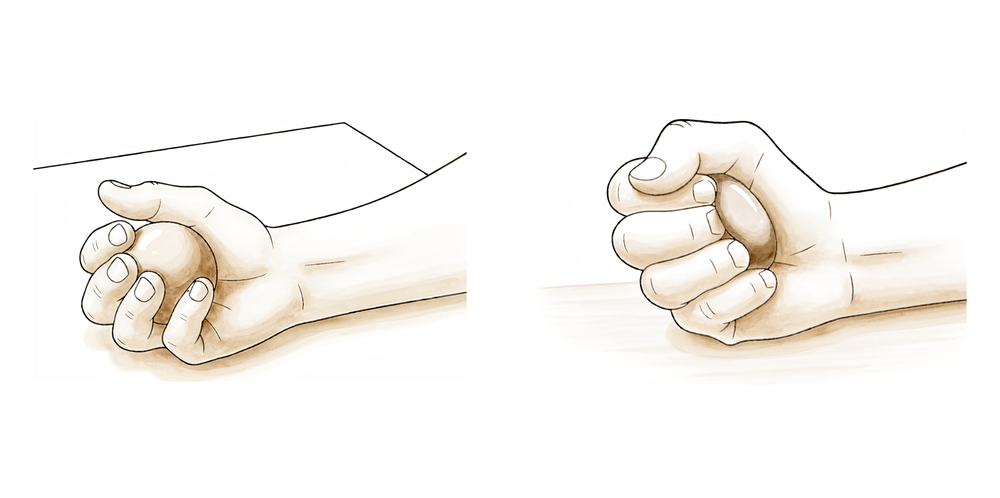
Apertar a bola
Com o braço descansando confortavelmente à sua frente, aperte uma bola macia ou uma meia enrolada, mantenha a pressão por alguns instantes e depois relaxe. Isso mantém o antebraço e a força de preensão ativos, sem mover o ombro.
Mantenha por 5 segundos, 10 vezes, 3 vezes ao dia.
Kieran Hirpara 4.0
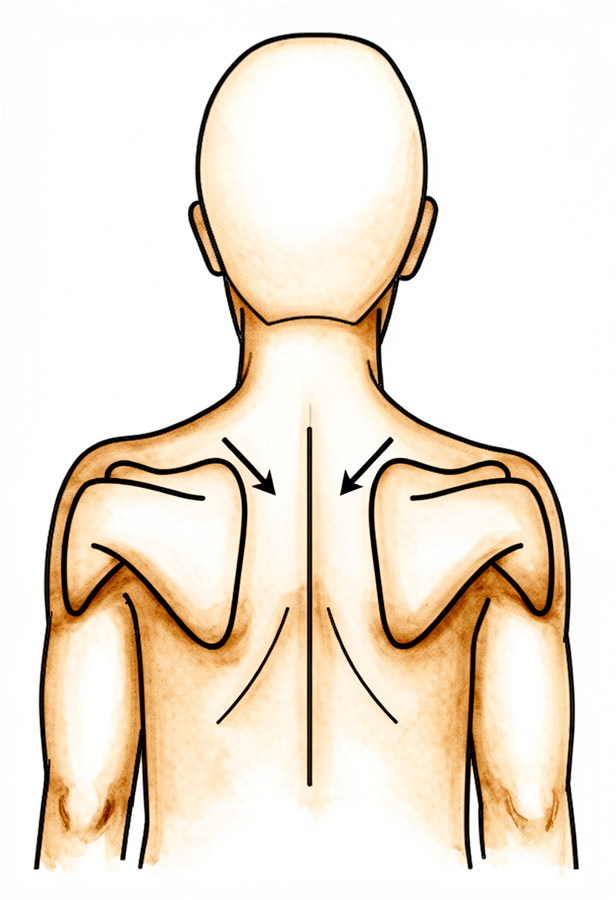
Posicionamento da escápula
Aperte suavemente as escápulas para baixo e para junto uma da outra, mantenha a posição e depois relaxe. O braço não deve se mover — este é um exercício leve de ativação muscular que ajuda a estabilizar a escápula.
Mantenha por 5 segundos, 5 vezes, 3 vezes ao dia.
Kieran Hirpara 4.0
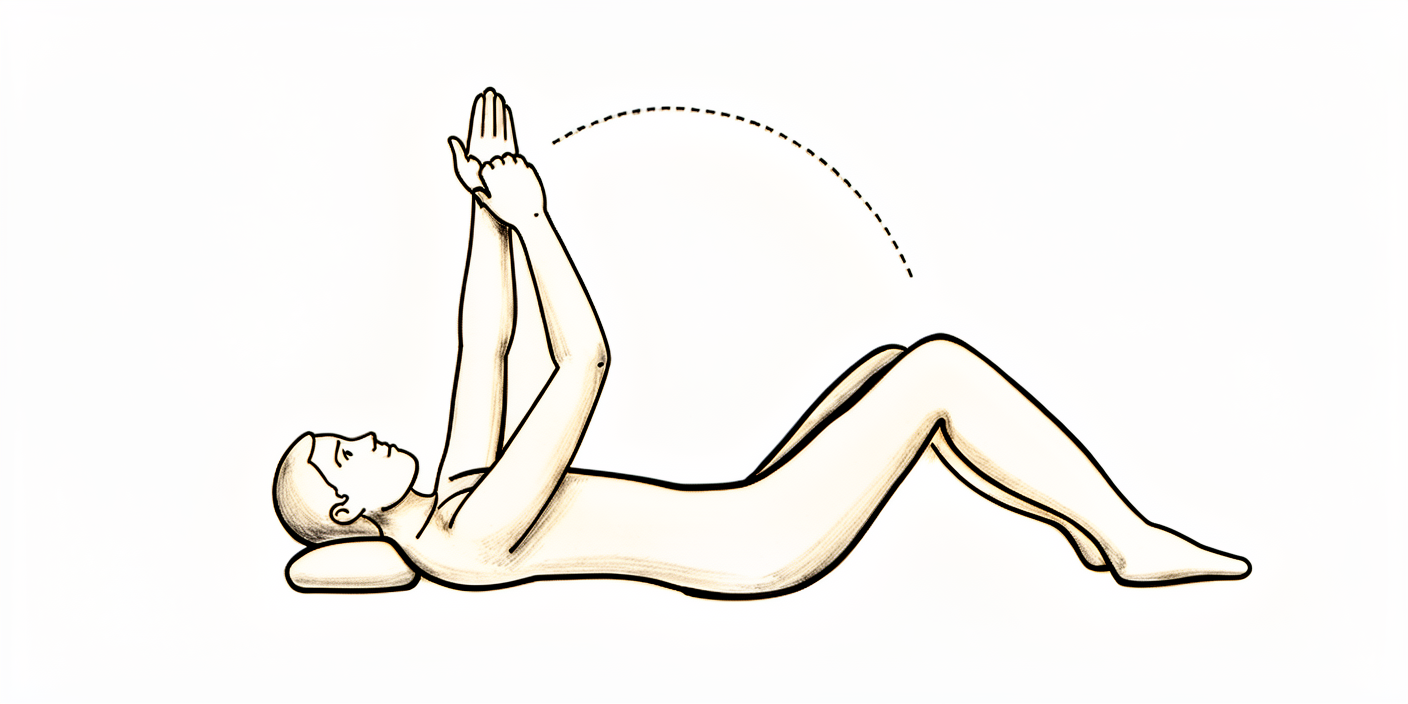
Elevação para a frente assistida
Sente-se e incline-se ligeiramente para a frente; use o braço saudável para segurar o braço operado e ajude-o suavemente a levantar à sua frente. Nesta primeira fase, NÃO ultrapasse cerca de metade do movimento (aproximadamente 60°). Abaixe o braço novamente, fazendo com que o braço saudável realize todo o trabalho. Mantenha o braço sempre à sua frente e nunca force o movimento.
10 vezes, 3 vezes ao dia, dentro dos limites indicados pelo seu fisioterapeuta.
Kieran Hirpara 4.0
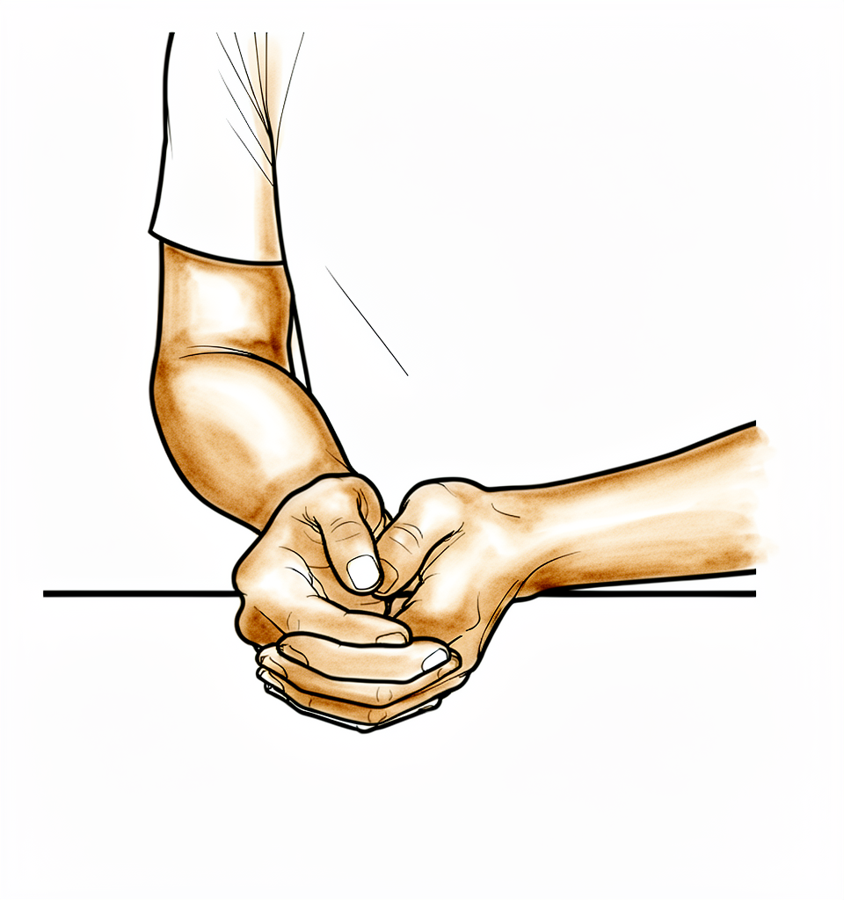
Rotação externa assistida (apenas até a posição neutra)
Ao sentar, mantenha o cotovelo à sua frente e gire o antebraço para fora apenas até ficar apontado diretamente para a frente. Esse movimento de rotação externa é SEGURO após um reparo posterior; porém, a rotação para dentro é o movimento que você deve evitar. Portanto, NÃO permita que a mão se desloque para dentro, em direção ao corpo.
Suavemente, 10 vezes, 3 vezes ao dia.
As duas primeiras semanas têm como objetivo proteger a reparação cirúrgica enquanto se mantém uma mobilidade suave. Você deve usar a tipoia simples, manter o braço à frente do corpo e realizar apenas exercícios leves que mantenham a mão, o punho e o cotovelo em movimento, além de iniciar o fortalecimento da escápula, sem sobrecarregar a parte posterior do ombro. Duas regras são fundamentais: manter o braço à frente do corpo e nunca rotacioná-lo para dentro, em direção ao corpo; além disso, nada deve ser forçado ou esticado. O movimento para a frente, com auxílio, deve limitar-se a cerca de metade da amplitude total; a rotação para fora deve ser feita apenas até a posição frontal (neutra).
- Tipoia: tipoia simples para uso diurno; à noite, retire-a, mas mantenha o braço à frente do corpo, sem rotacioná-lo para dentro. Retire-a para realizar os exercícios e para tomar banho.
- Movimentos permitidos: apenas movimentos assistidos e passivos. Elevação para a frente, com auxílio, até aproximadamente 60° (cerca de metade da amplitude total); rotação para fora apenas até a posição frontal (neutra); não é permitida rotação para dentro além da posição neutra, nem movimentos para trás das costas ou através do corpo.
- Exercícios: balanços pendulares; movimentos suaves da mão, punho e cotovelo; apertar uma bola; fortalecimento da escápula; elevação para a frente com auxílio (até metade da amplitude); rotação para fora até a posição neutra.
Pronto para a próxima fase quando: a dor estiver diminuindo e bem controlada; você conseguir manter o braço na posição protegida (à frente do corpo, sem rotacionar para dentro) confortavelmente; a elevação para a frente, com auxílio, alcançar cerca de metade da amplitude total sem dificuldades; a ferida cirúrgica estiver cicatrizada sem problemas; e você seguir com segurança todas as precauções relativas à parte posterior do ombro.
Fase II — Movimentação inicial (semanas 2–4)
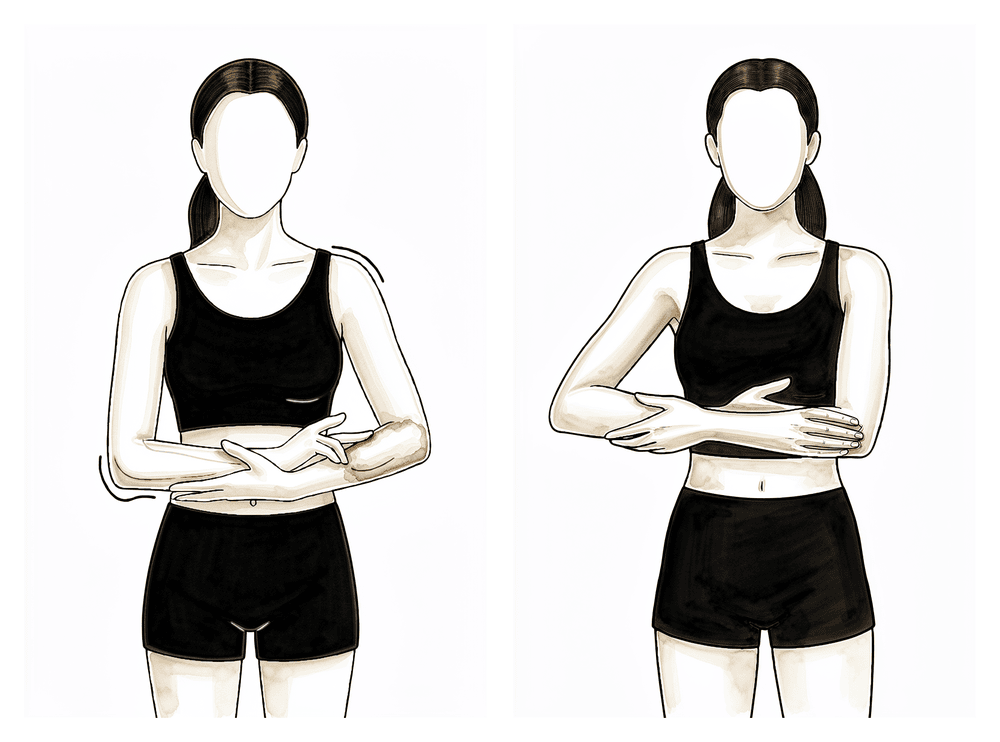
Kieran Hirpara 4.0
Braço lateralizado assistido
Sentado e inclinado ligeiramente para a frente, use o braço saudável para sustentar o braço operado e levá-lo para o lado — como se estivesse embalando um bebê com cuidado. Mantenha o movimento dentro da amplitude indicada pelo seu fisioterapeuta (cerca de 90°, ou na altura do ombro), e mantenha o braço à frente do corpo, nunca atrás.
10 vezes, 3 vezes ao dia
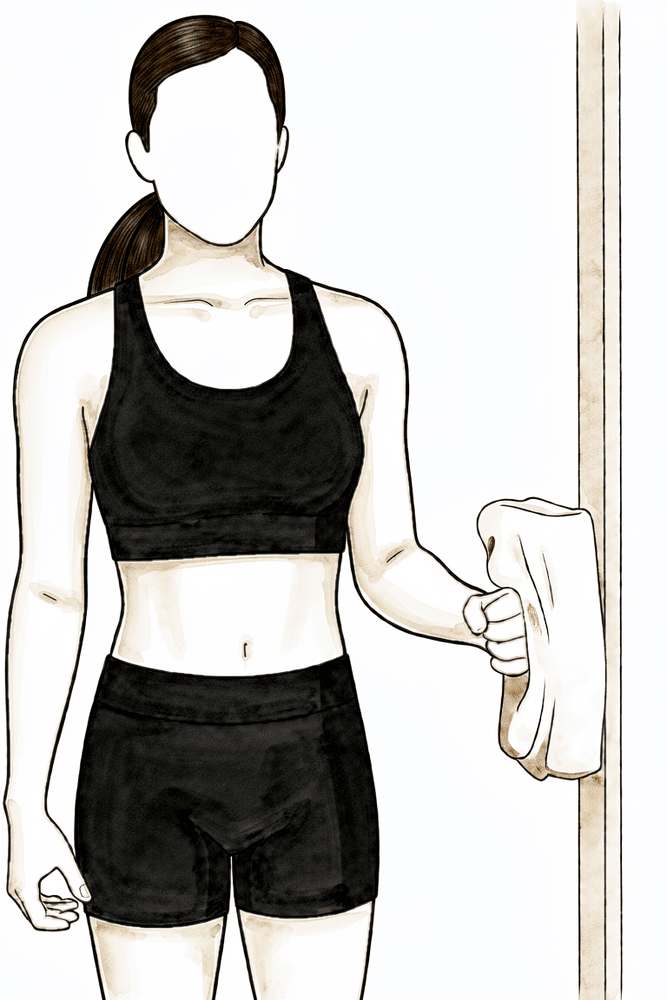
Kieran Hirpara 4.0
Rotação externa isométrica
Fique de pé com o cotovelo dobrado a 90° na frente do corpo, com o dorso da mão próximo a uma parede ou à moldura de uma porta. Pressione suavemente o dorso da mão para fora contra a superfície, SEM mover o braço — com um esforço suave, equivalente a cerca de um quarto da sua força máxima, sem causar dor. Mantenha a posição por alguns instantes e depois relaxe.
Mantenha por ~5 segundos, com suavidade (~25% da força), 10 vezes, conforme orientação do seu fisioterapeuta.
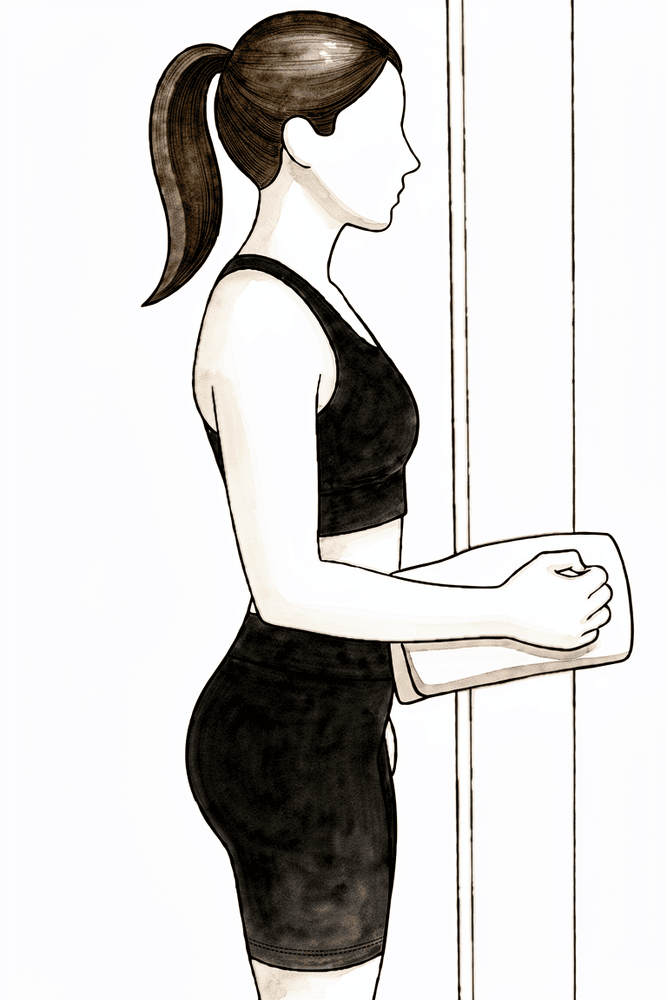
Kieran Hirpara 4.0
Rotação interna isométrica (apenas na posição neutra)
Isso só é permitido quando o braço está ao lado do corpo e a mão aponta para a frente (posição neutra) — NÃO quando a mão está virada para dentro, em direção ao corpo. Mantenha o cotovelo recolhido e pressione suavemente a palma da mão para dentro contra uma parede, SEM mover o braço — use cerca de um quarto da força máxima, sem sentir dor. Mantenha a posição por alguns segundos e depois relaxe. Pare antes que a mão se mova em direção ao estômago.
Mantenha por ~5 segundos, com suavidade (~25% da força), 10 vezes, conforme orientação do seu fisioterapeuta.
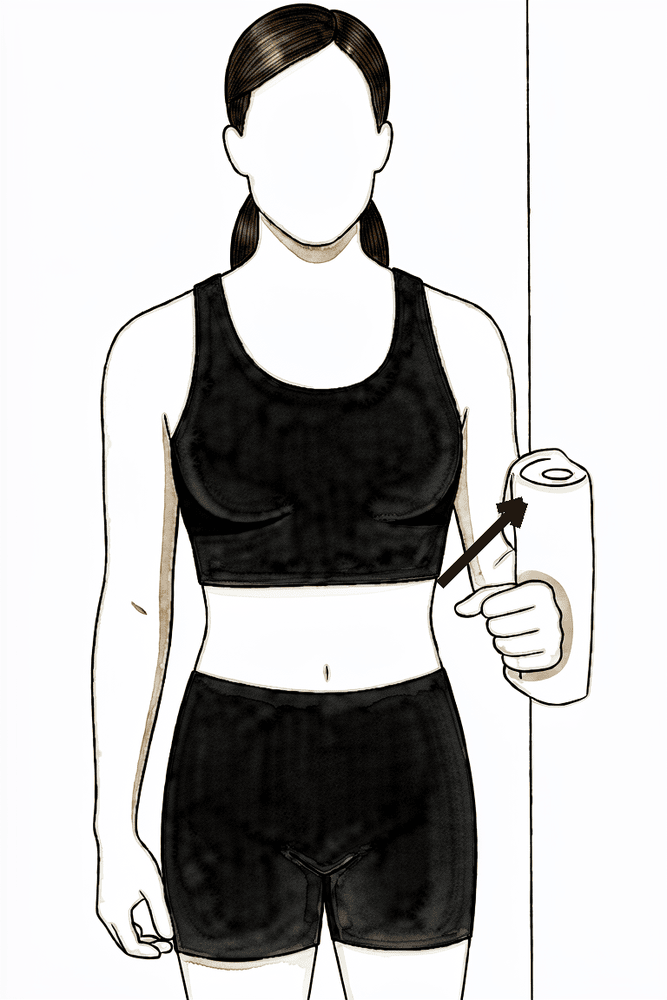
Kieran Hirpara 4.0
Isométrico: braço estendido para o lado
Fique de lado, com a parte externa do braço próxima a uma parede, e o cotovelo recolhido. Pressione suavemente o braço contra a parede SEM permitir que ele se mova — use cerca de um quarto da força máxima, sem sentir dor. Mantenha a posição por alguns instantes e depois relaxe.
Mantenha por ~5 segundos, com suavidade (~25% da força), 10 vezes, conforme orientação do seu fisioterapeuta.
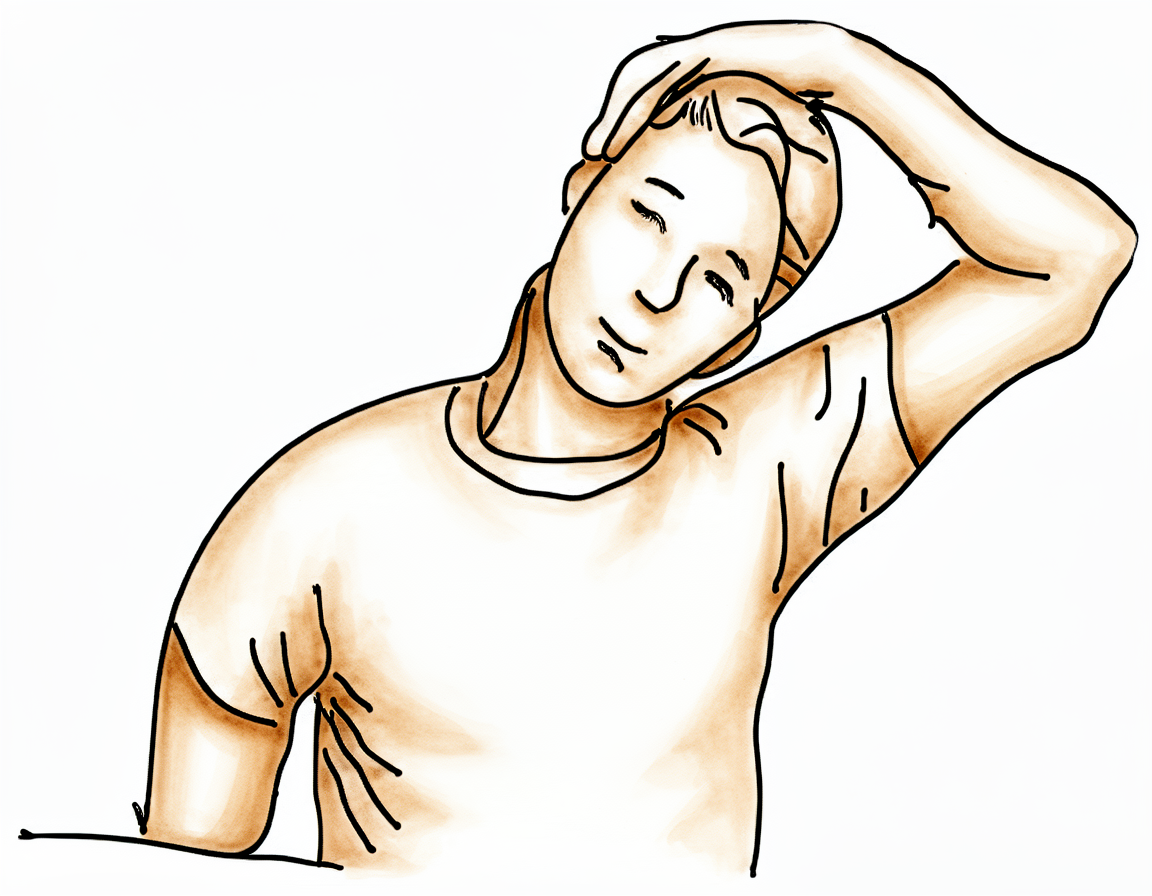
Kieran Hirpara 4.0
Alongamento lateral do pescoço
Use o seu braço saudável para, com cuidado, levar a orelha em direção ao ombro saudável, afastando-a do lado operado, até sentir um alongamento confortável no pescoço.
Mantenha por 10 segundos, 3 vezes, 3 vezes ao dia.
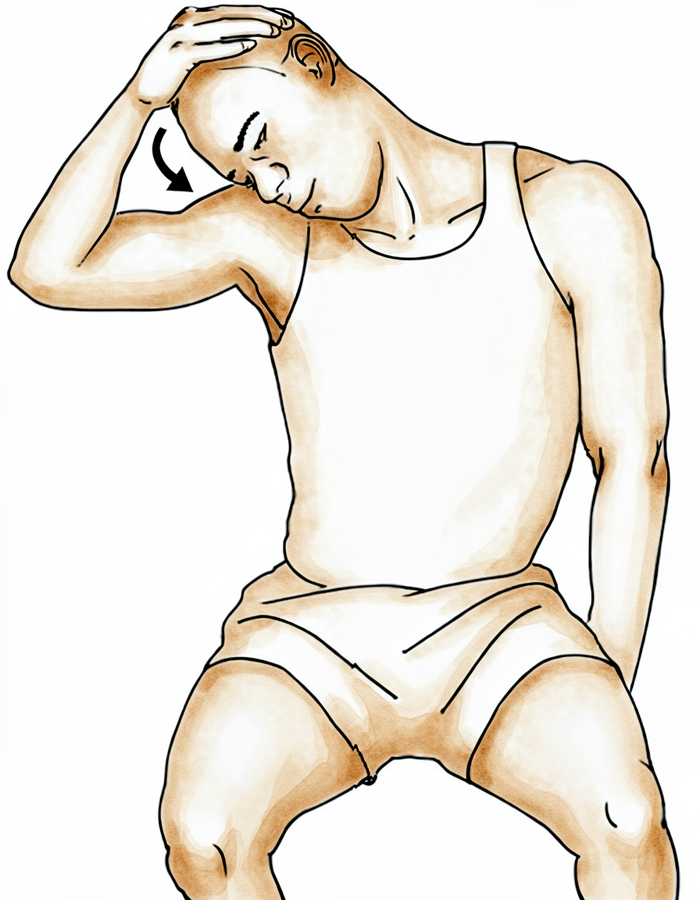
Kieran Hirpara 4.0
Alongamento do pescoço em direção à axila
Use o seu braço saudável para, com cuidado, levar o nariz em direção à axila, afastando-o do lado operado, até sentir um alongamento confortável.
Mantenha por 10 segundos, 3 vezes, 3 vezes ao dia.
A partir da segunda semana, a amplitude de movimento começa a aumentar, sempre respeitando rigorosamente as direções seguras. O fisioterapeuta orienta movimentos passivos e assistidos sob supervisão, definindo os limites permitidos; você também realiza exercícios isométricos leves (pressão mantida) para ativar os músculos, mantendo o braço imóvel. O braço deve permanecer na frente do corpo: ainda não é permitido estender o braço para trás das costas, nem cruzá-lo na frente do corpo; a rotação interna deve ser mantida em posição neutra.
- Tipoia: continua em uso; mantenha o braço na frente do corpo; não estenda o braço para trás das costas.
- Movimentos permitidos (sob supervisão do fisioterapeuta): elevação para a frente até aproximadamente 60°, rotação externa até cerca de 45°, abdução lateral até 90°; a rotação interna deve permanecer em 0° (posição neutra) ao lado do corpo. Não usar polias em casa.
- Exercícios: movimentação assistida do braço para o lado; exercícios isométricos suaves de rotação externa e interna (apenas na posição neutra) e abdução lateral; fortalecimento da musculatura da escápula; alongamentos do pescoço. Interrompa qualquer exercício que cause dor na parte posterior do ombro.
Estará pronto para a próxima fase quando: alcançar os limites de movimento mencionados acima sem apresentar sintomas na parte posterior do ombro; a dor e qualquer inchaço estiverem controlados; e o controle da musculatura da escápula for adequado mesmo durante movimentos suaves.
Fase III — Aumentar o movimento e iniciar o fortalecimento (semanas 4–6)
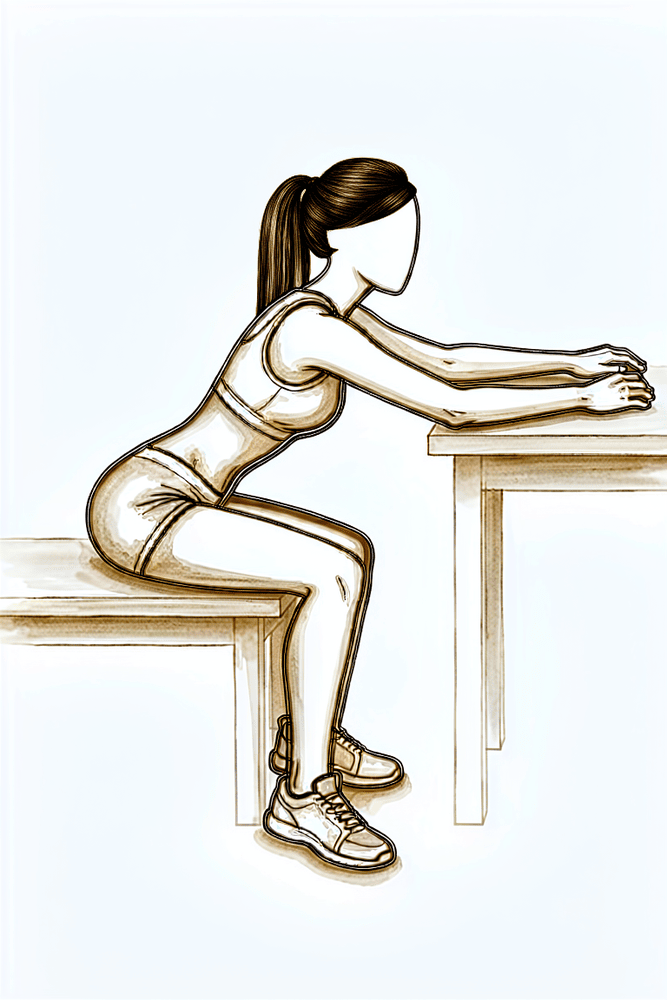
Kieran Hirpara 4.0
Deslizamentos na parede
Fique de frente para uma parede ou sente-se à mesa com a mão operada apoiada nela. Deslize a mão para a frente e para cima ao longo da superfície, de modo que o braço se estenda à sua frente; deixe que a parede ou a mesa suporte o peso. Em seguida, deslize a mão de volta à posição inicial. Mantenha o braço sempre à sua frente — não permita que ele cruze para o outro lado do corpo. Esse exercício desenvolve o alcance para a frente, com o peso do braço apoiado.
10 vezes, 3 vezes ao dia, dentro dos limites indicados pelo seu fisioterapeuta.
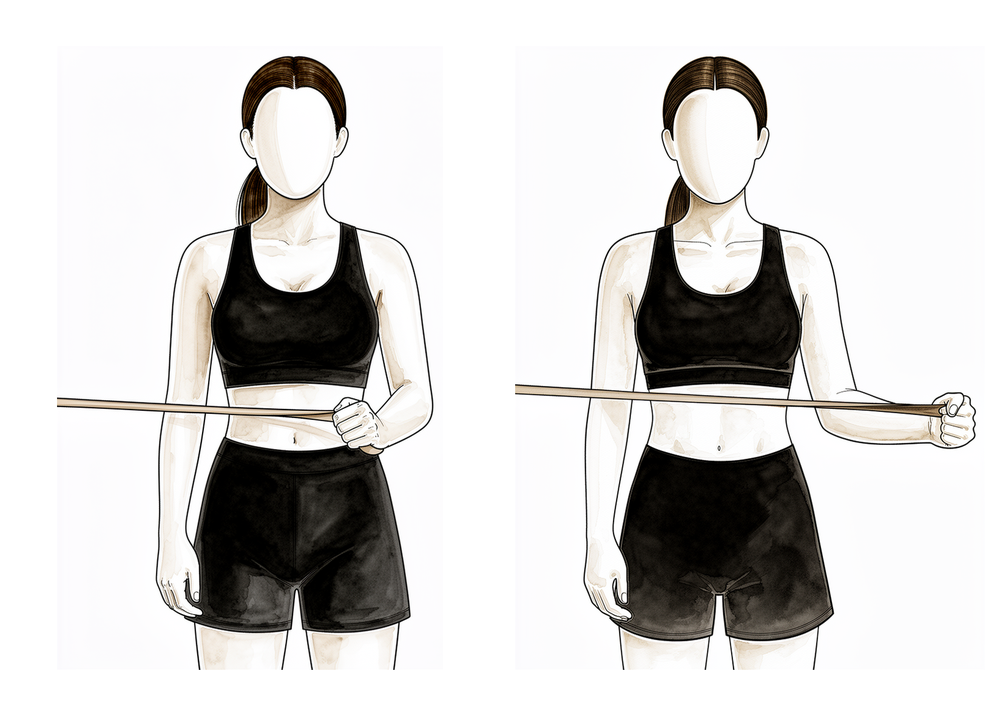
Kieran Hirpara 4.0
Rotação externa leve com faixa elástica
A partir da semana 4–6, caso seu fisioterapeuta concorde. Com o cotovelo pressionado contra o corpo e dobrado a 90°, segure uma faixa leve e gire o antebraço para fora contra a resistência dela; em seguida, volte à posição inicial de forma controlada. A rotação externa é a direção segura após um reparo posterior. Use uma faixa leve e faça muitas repetições, evitando resistências muito fortes.
Conforme orientado pelo seu fisioterapeuta
Kieran Hirpara 4.0
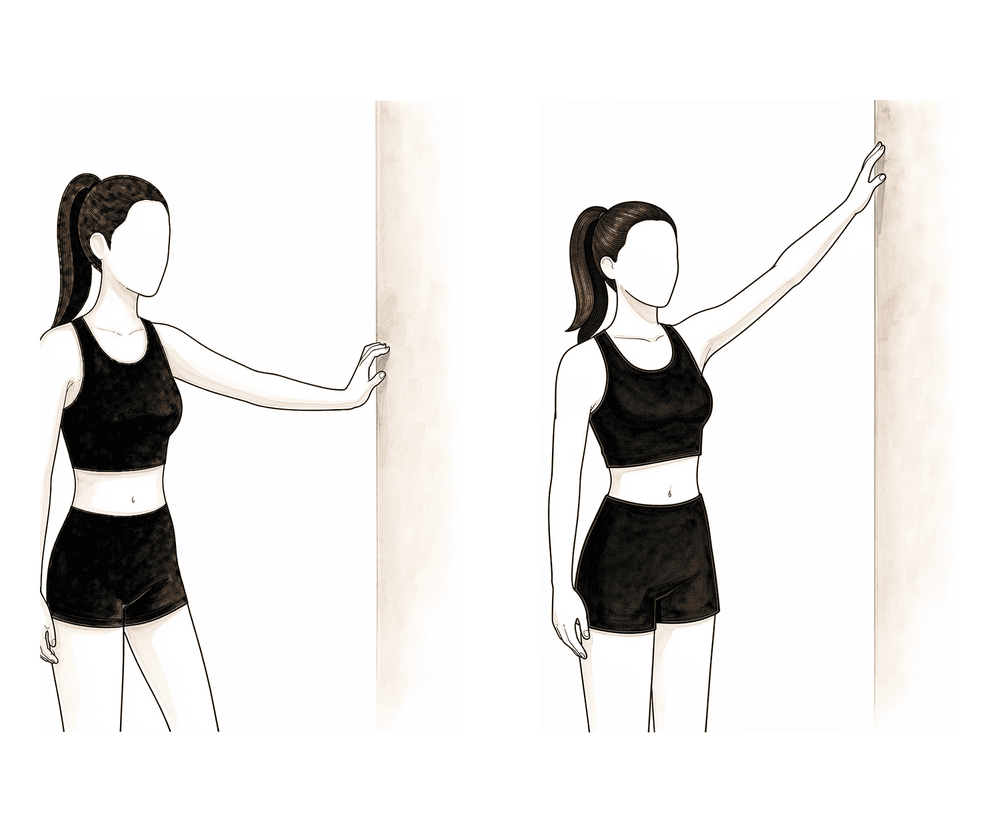
Subida dos dedos na parede, para o lado
Fique de lado em relação à parede, com as pontas dos dedos apoiadas nela. Deslize os dedos pela parede para o lado, levantando o braço até o limite do conforto, e depois deslize-os de volta para baixo com controle. A parede serve de apoio ao braço enquanto você recupera o movimento lateral.
Conforme orientado pelo seu fisioterapeuta
Os movimentos tornam-se mais amplos, e o primeiro fortalecimento leve começa na direção segura da rotação externa. Você inicia movimentos de alcance assistido ativamente, como caminhadas na parede, além de exercícios suaves com faixas elásticas para os músculos rotadores externos. A rotação interna só pode ser introduzida de forma muito limitada, e apenas sob orientação do seu fisioterapeuta; ela continua sendo o movimento mais protegido. O sling deve ser usado durante o dia até a sexta semana.
- Sling: use um sling simples durante o dia até cerca de 6 semanas. Mesmo se o retirar à noite, evite girar o braço para dentro.
- Movimentos permitidos: elevação para a frente até cerca de 90°, movimentos para o lado conforme conforto, rotação externa até cerca de 45° na altura do ombro (ou totalmente ao lado do corpo); a rotação interna deve ser limitada a cerca de 30° e só deve ser feita sob orientação do fisioterapeuta. Comece os movimentos de alcance assistido ativamente (caminhadas na parede). Não levante, empurre ou puxe objetos com peso superior a 2 libras, e evite movimentos acima da cabeça.
- Exercícios: caminhadas na parede; continuação dos exercícios para a escápula e isometria; início de exercícios leves com faixas elásticas para rotação externa ao lado do corpo.
Estará pronto para a próxima fase quando: apresentar movimentos assistidos ativamente com controle suave e uniforme da escápula; sentir pouca ou nenhuma dor; e estiver progredindo dentro dos limites estabelecidos sem causar desconforto na região posterior do ombro.
Fase IV — Avanço (semanas 6–8)
Kieran Hirpara 4.0
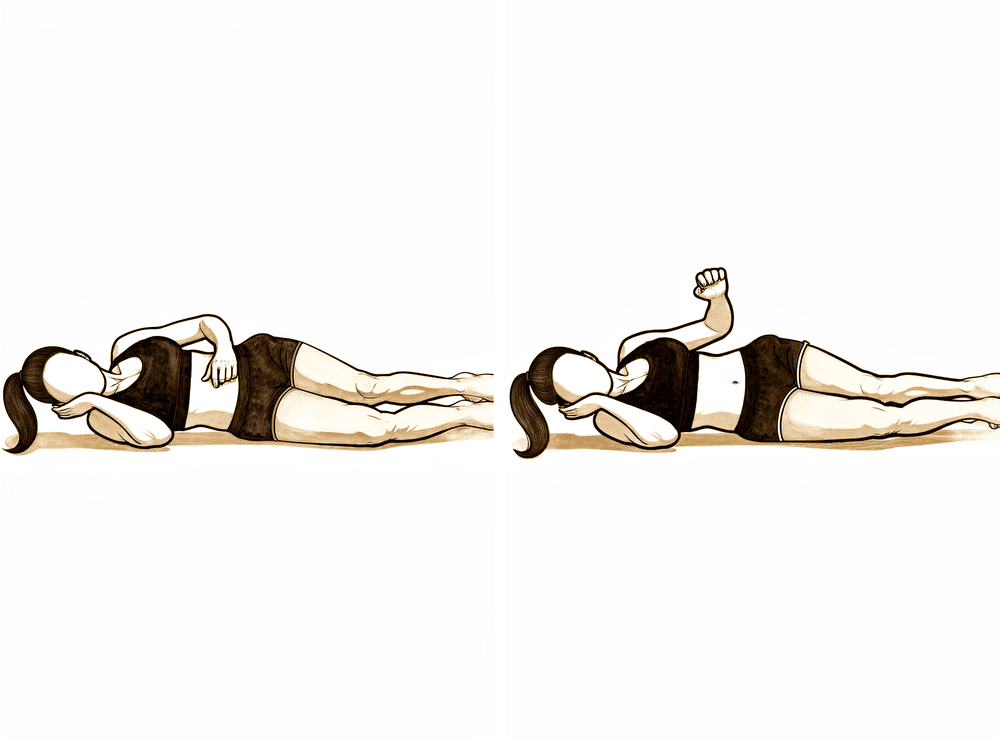
Rotação externa em decúbito lateral
Deite-se sobre o lado saudável, com o cotovelo operado junto à cintura e dobrado a 90°. Gire o antebraço para cima (para fora) de modo que a mão se eleve em direção ao teto; em seguida, abaixe-o de forma controlada. Esse exercício fortalece os músculos do manguito rotador responsáveis pela rotação externa — a direção segura para esse estágio da recuperação.
Conforme orientado pelo seu fisioterapeuta
Kieran Hirpara 4.0
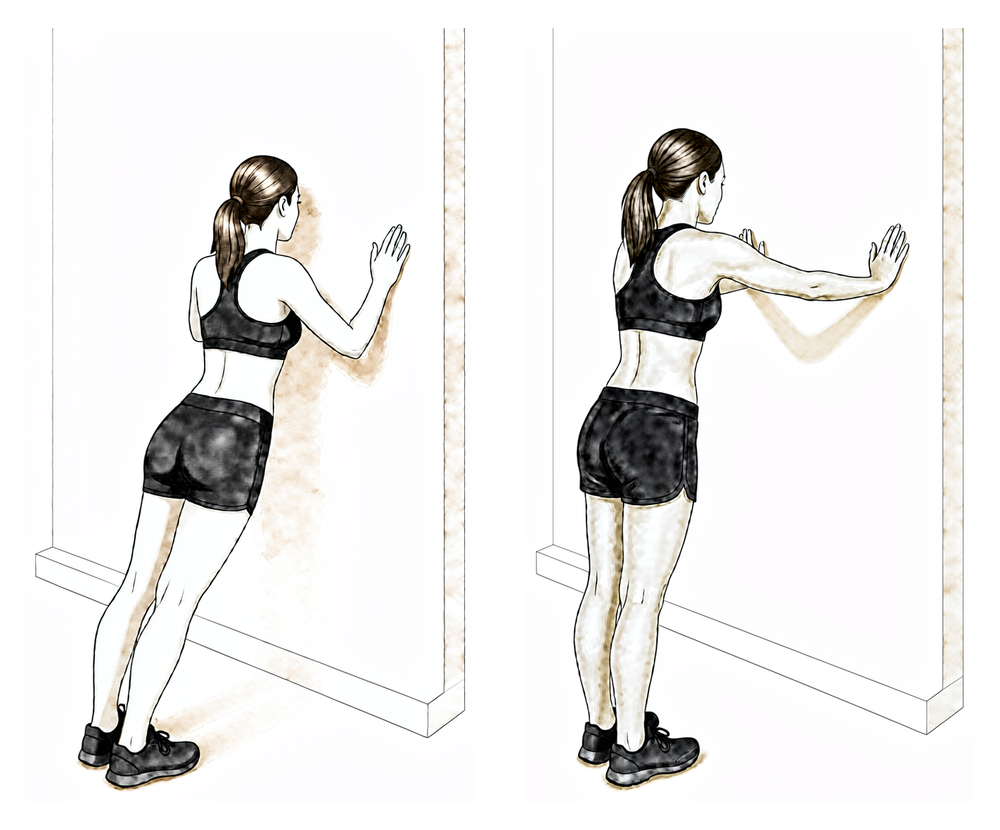
Flexão de parede
Fique de pé com as mãos apoiadas na parede, na altura dos ombros, e os braços esticados. Flexione os cotovelos para aproximar o peito da parede; em seguida, empurre de volta à posição inicial, separando suavemente as escápulas no topo do movimento. Prossiga de forma gradual: esse exercício carrega diretamente a parte posterior do ombro, portanto deve ser progredido lentamente e apenas a partir desta fase.
Conforme orientado pelo seu fisioterapeuta
Kieran Hirpara 4.0
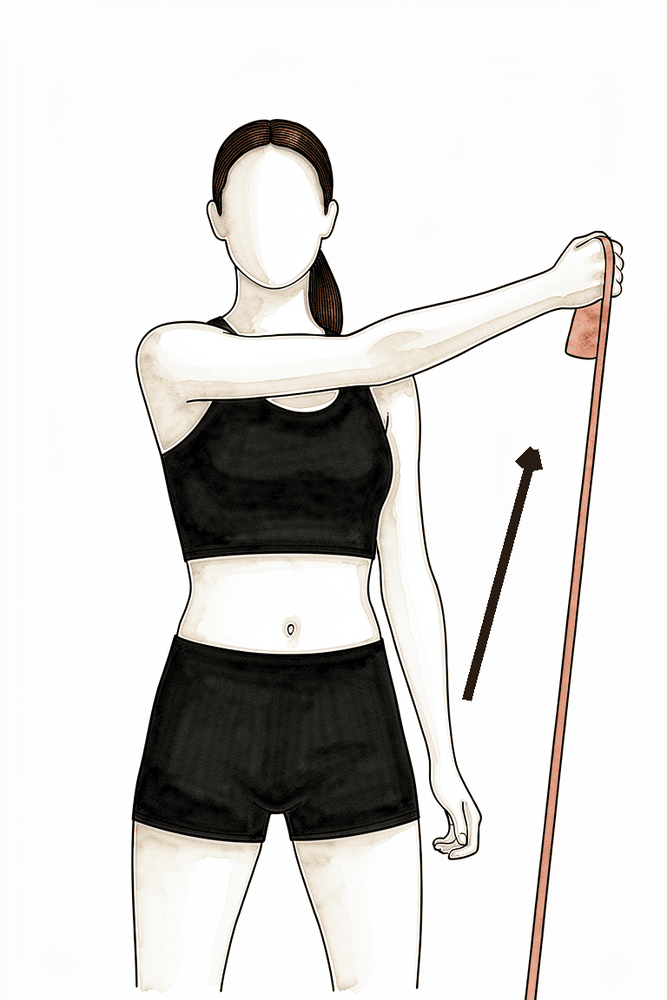
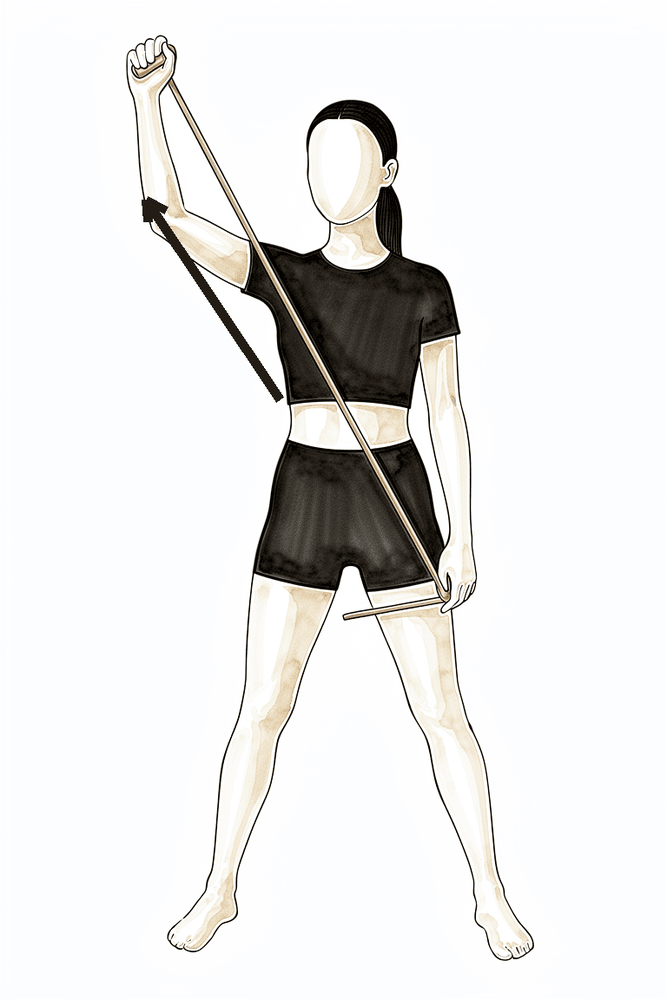
Padrão diagonal com faixa (alcançando para fora e para cima)
Um padrão de fortalecimento diagonal para todo o braço, utilizando uma faixa leve: comece na parte inferior, na frente do corpo, e puxe a faixa para fora e para cima. Mantenha o movimento suave e dentro de uma amplitude confortável; o fisioterapeuta definirá o padrão exato e a resistência adequada.
Conforme orientado pelo seu fisioterapeuta
Kieran Hirpara 4.0
Padrão diagonal com faixa (alcançando através do corpo e para baixo)
O padrão diagonal oposto para todo o braço, com uma faixa leve, indo de cima e para fora até embaixo, cruzando o corpo. Mantenha o movimento suave e controlado, dentro da amplitude estabelecida pelo seu fisioterapeuta.
Conforme orientado pelo seu fisioterapeuta
A tipóia é retirada às seis semanas. Os movimentos realizados de forma autônoma são progressivamente ampliados até o limite máximo em todas as direções, exceto na rotação medial, que ainda é intencionalmente limitada (mantida em cerca de 45° até as doze semanas). O fortalecimento muscular também é intensificado: exercícios leves para o manguito rotador e a escápula, as primeiras flexões contra a parede feitas com controle cuidadoso, além de movimentos diagonais de todo o braço utilizando uma faixa elástica leve.
- Tipóia: removida às 6 semanas.
- Movimentos permitidos: movimentos ativos até o limite máximo tolerado, exceto na rotação medial, que permanece limitada a cerca de 45° até as 12 semanas (tanto ao lado do corpo quanto à altura do ombro). Levantamento leve de cargas até aproximadamente 5 libras.
- Exercícios: rotação lateral do ombro em decúbito lateral; flexões contra a parede (aumentadas gradualmente; carregam diretamente a parte posterior do ombro); movimentos diagonais com faixa elástica; continuação do fortalecimento do manguito rotador e da escápula.
Pronto para a próxima fase quando: houver movimento completo e autônomo em todas as direções, exceto na rotação medial; a força muscular estiver aumentando de forma constante; e não houver dor ou inchaço após a execução dos novos exercícios de fortalecimento.
Fase V — Fortalecimento (semanas 8–12)
Kieran Hirpara 4.0
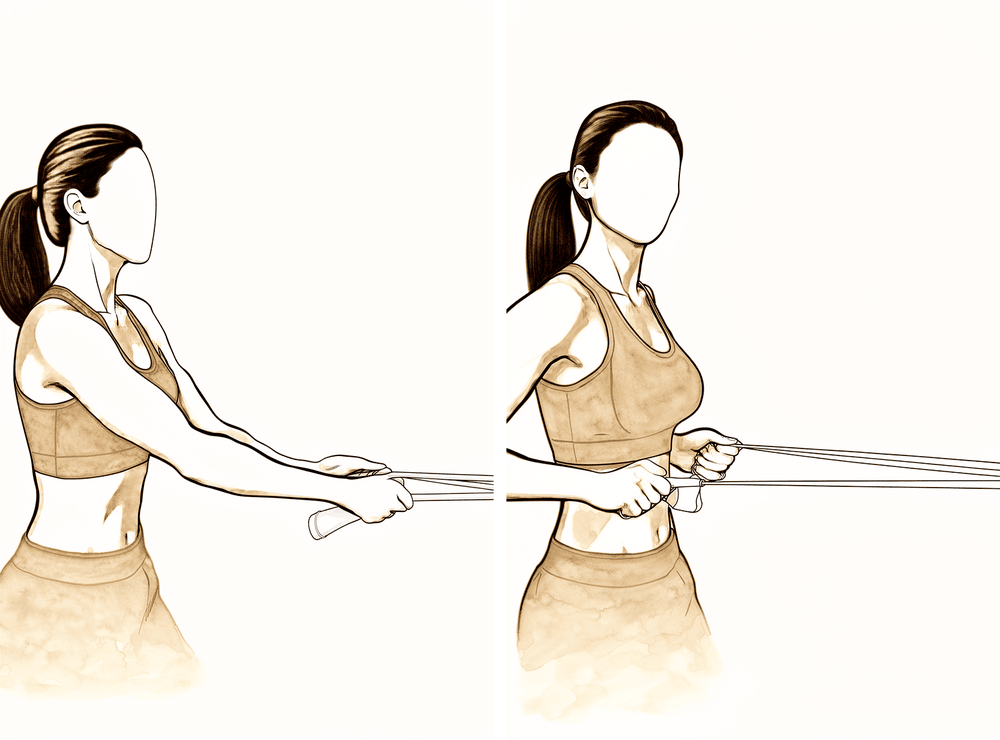
Remada com faixa de resistência
Com uma faixa elástica fixada à sua frente, puxe as alças em direção a si, trazendo os cotovelos para trás e juntando as escápulas; em seguida, volte à posição inicial de forma controlada. Use uma faixa leve e faça muitas repetições; interrompa o exercício caso sinta dor no ombro.
Conforme orientado pelo seu fisioterapeuta
Kieran Hirpara 4.0
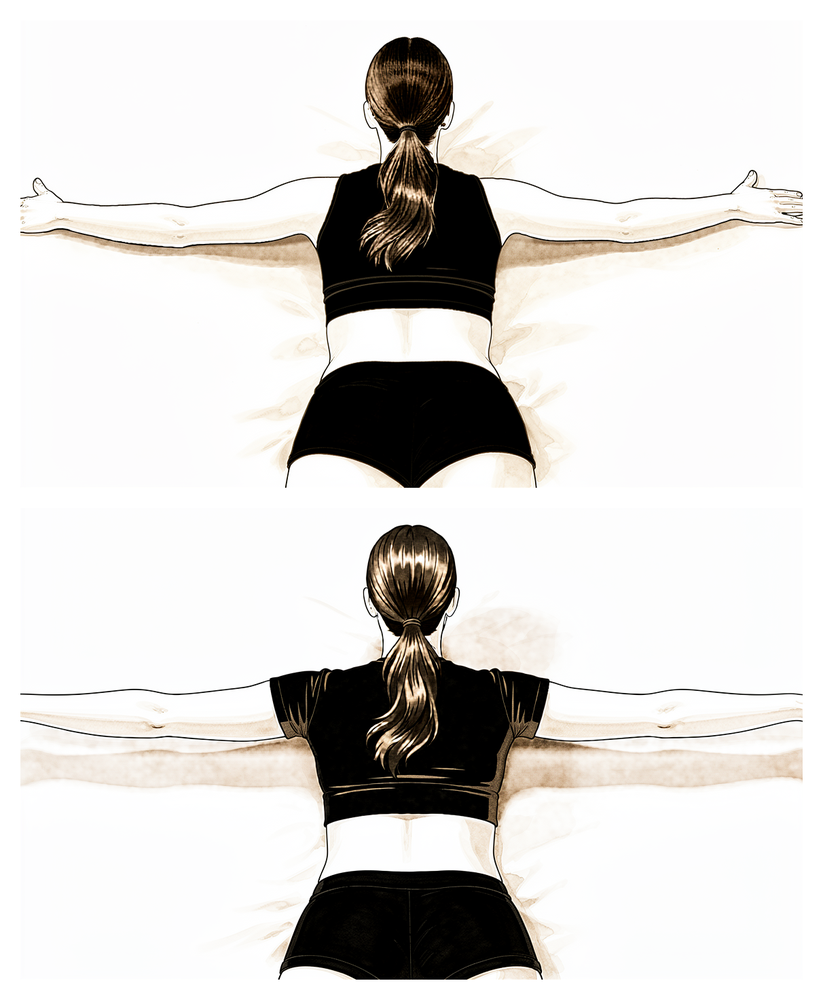
Posição prona T
Deite-se de bruços (ou incline-se para a frente sobre uma mesa), com os polegares para cima. Levante os braços para os lados, formando um “T”, apertando as escápulas uma contra a outra, e depois abaixe-os de forma controlada. Comece sem nenhum peso; adicione um peso muito leve apenas conforme orientação do seu fisioterapeuta.
Conforme orientado pelo seu fisioterapeuta
Kieran Hirpara 4.0
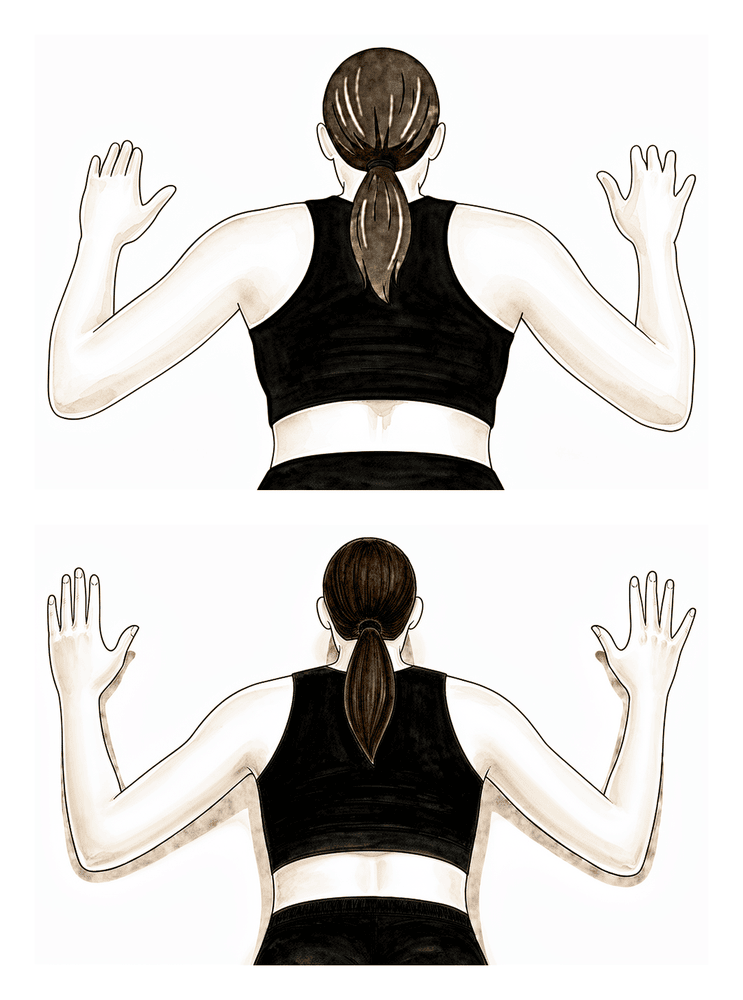
Posição prona W
Deitado de bruços, puxe os cotovelos para trás e para baixo, em direção à cintura, formando um formato de “W”; ao mesmo tempo, aperte as escápulas para baixo e para juntos, depois solte com controle. Esse exercício fortalece os músculos inferiores das escápulas.
Conforme orientado pelo seu fisioterapeuta
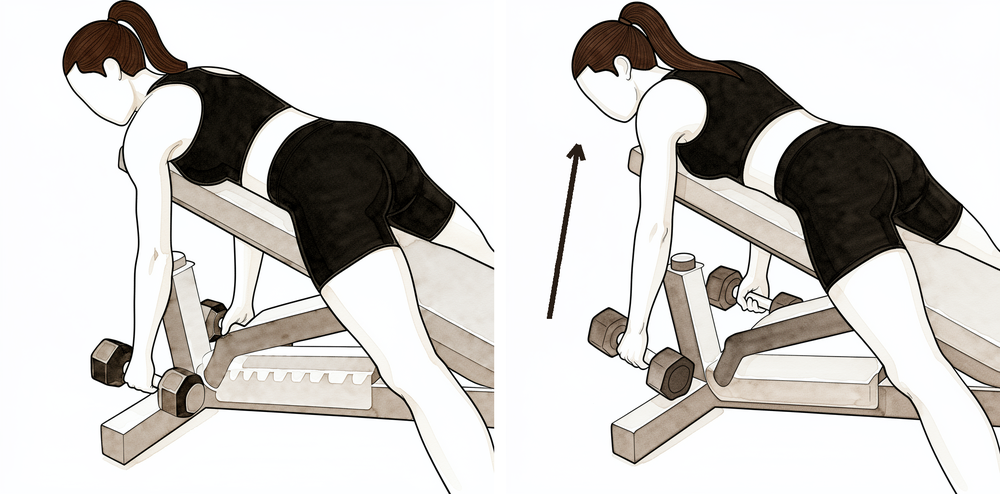
Kieran Hirpara 4.0
Exercício de remada para fortalecimento da escápula
Puxe a escápula para trás e para baixo contra um peso leve ou faixa elástica, mantendo a posição por alguns instantes e, em seguida, solte-a de forma controlada. Este exercício faz parte de um programa mais amplo de fortalecimento (o seu fisioterapeuta pode chamá-lo de “Thrower’s 10”), que visa fortalecer tanto o manguito rotador quanto os músculos da escápula.
Conforme orientado pelo seu fisioterapeuta
Esta fase visa desenvolver força, controle e resistência para o trabalho e a prática esportiva. A rotação interna continua limitada a cerca de 45° até a 12ª semana; porém, todos os demais planos de movimento são trabalhados plenamente. O programa inclui exercícios mais abrangentes para fortalecimento do manguito rotador e da escápula (o fisioterapeuta pode chamá-lo de “Thrower’s 10”), além de exercícios de controle dinâmico.
- Tala: nenhuma.
- Movimentos permitidos: todos os planos de movimento, exceto a rotação interna, que permanece limitada a cerca de 45° até a semana 12.
- Exercícios: remadas com faixa elástica; movimentos em “T” e “W” na posição prona; fortalecimento da escápula; exercícios de controle dinâmico e estabilização. O fisioterapeuta pode acrescentar estabilização rítmica (exercícios suaves de manutenção da posição, nos quais ele pressiona levemente o seu braço e você oferece resistência) para retreinar o controle; trata-se de um trabalho manual, sem diagramas. Os levantamentos são progressivamente intensificados até atingir cerca de 7–10 libra.
Estará pronto para a próxima fase quando: a tolerância à rotação interna melhorar; o fortalecimento for realizado sem dor nem inchaço reativo; e a força do membro afetado aumentar de forma equilibrada em relação ao lado contralateral.
Fase VI — Amplitude completa de movimento e treino com pesos (semanas 12–14)
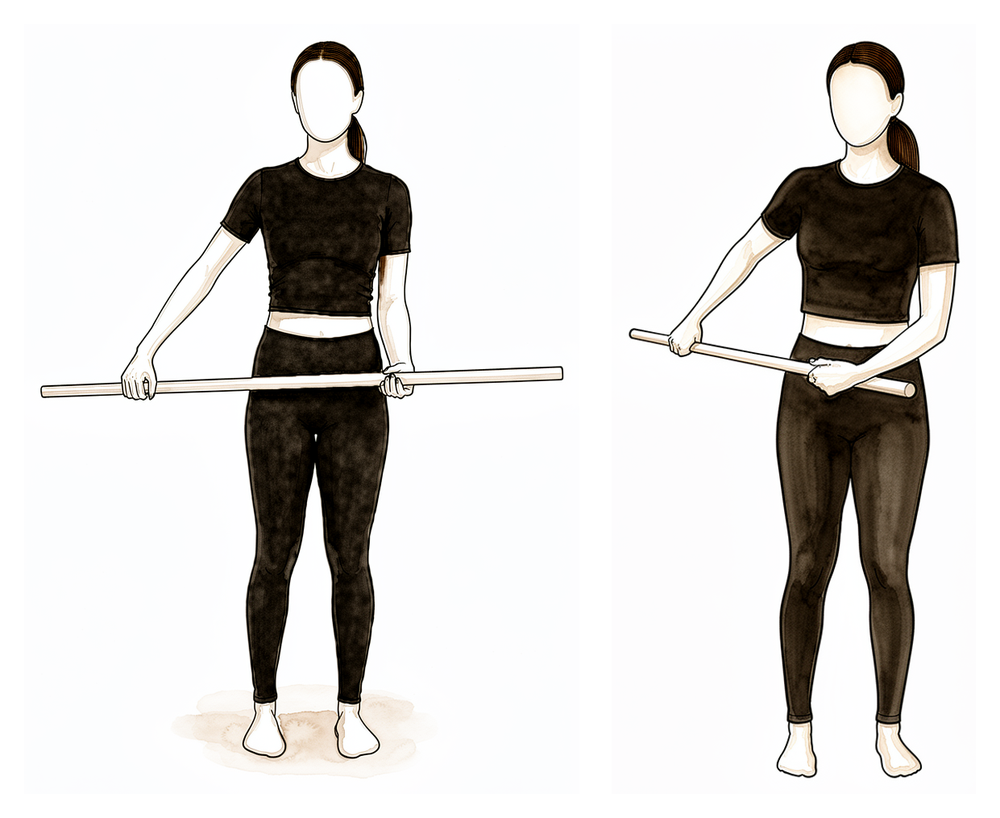
Kieran Hirpara 4.0
Rotação interna utilizando uma vara
A partir da 12ª semana — e não antes. A rotação medial é o último movimento a ser recuperado após um reparo posterior; por isso, só agora se torna possível alcançar algo atrás das costas. Segure uma vara atrás das costas e use a mão saudável para puxar suavemente a mão operada para cima, ao longo das costas, e depois abaixe-a com controle. Avance gradualmente e nunca force o limite da amplitude de movimento.
Conforme orientado pelo seu fisioterapeuta
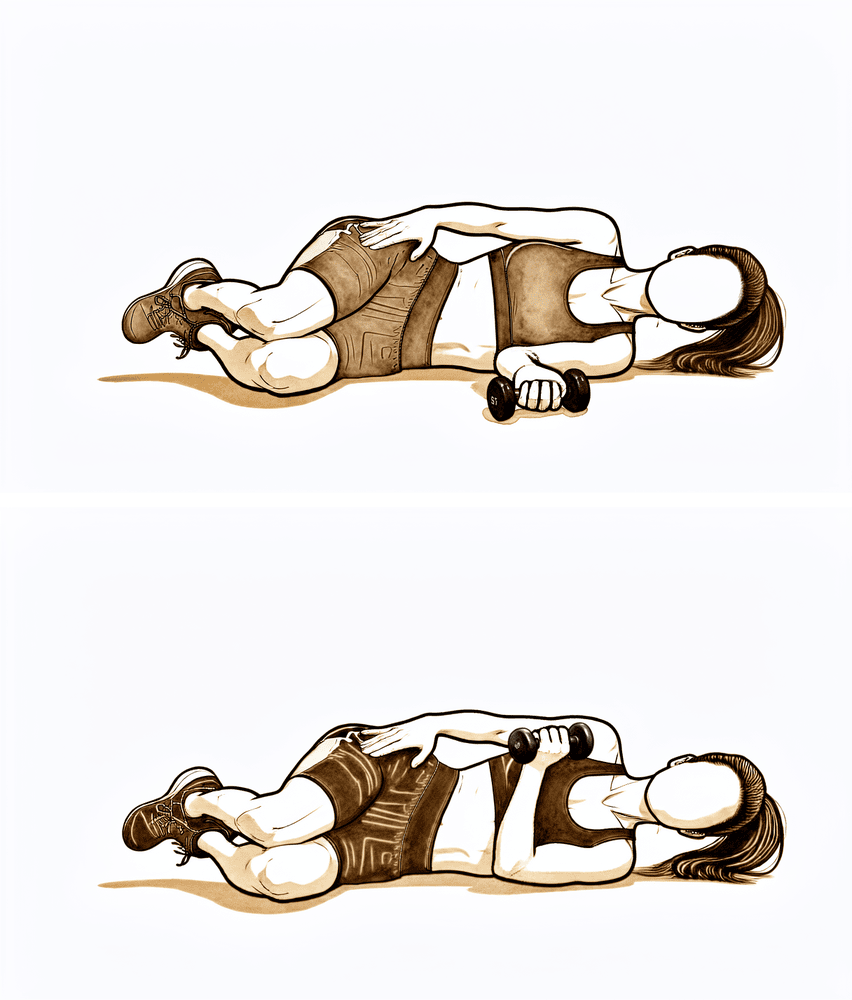
Kieran Hirpara 4.0
Rotação medial em decúbito lateral
A partir da 12ª semana: deite-se sobre o lado operado, com o braço estendido para a frente e o cotovelo dobrado a 90°. Gire o antebraço de modo que a mão fique voltada para baixo (para dentro), e depois volte à posição inicial de forma controlada. Comece sem nenhum peso; adicione um peso leve apenas conforme orientação — isso fortalece os rotadores internos, músculos que são os últimos a se recuperarem após uma reparação posterior.
Conforme orientado pelo seu fisioterapeuta
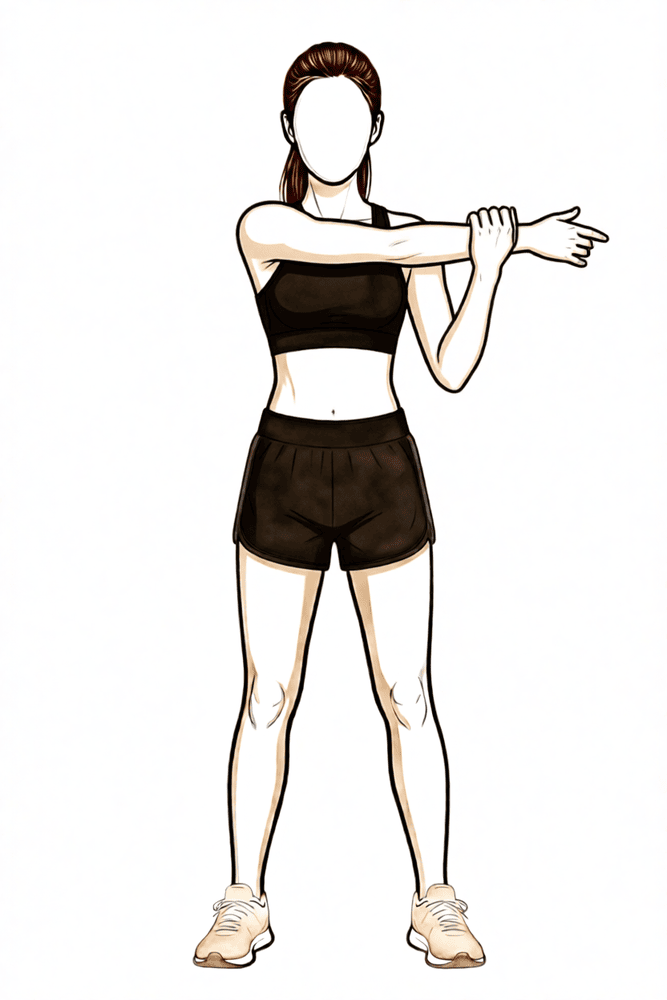
Kieran Hirpara 4.0
Alongamento cruzado do corpo
A partir da 12ª semana — nunca antes, pois isso sobrecarrega a parte posterior do ombro e a área reparada. Use a mão não operada para levar suavemente o braço operado através do peito, até sentir um alongamento confortável na parte de trás do ombro. Avance gradualmente e não force o movimento.
Conforme orientado pelo seu fisioterapeuta
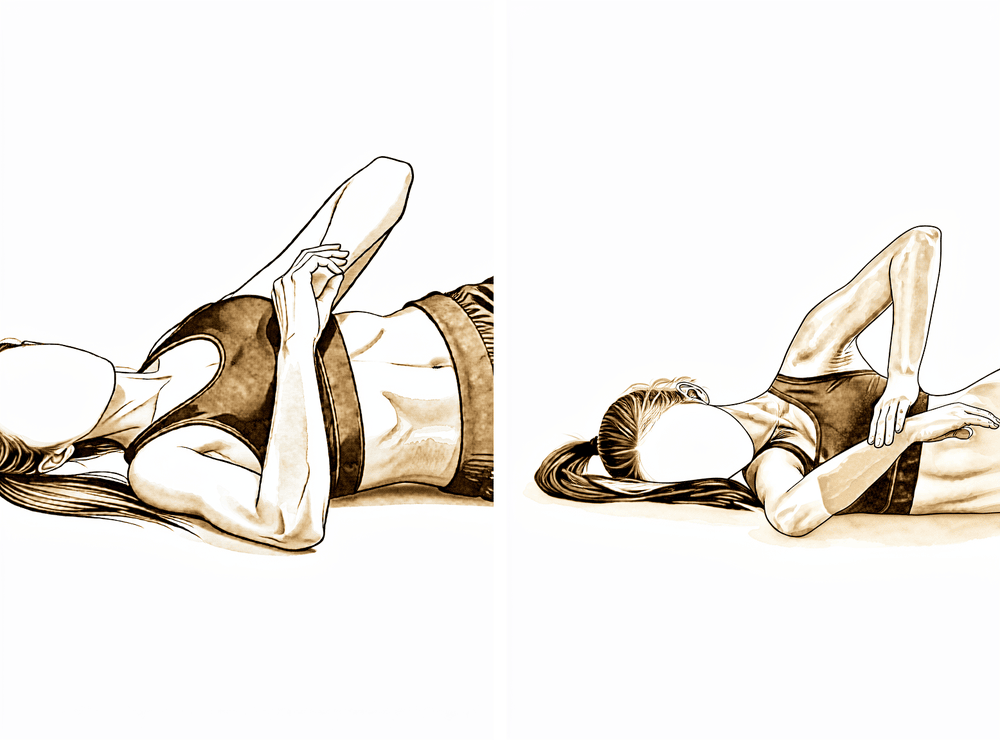
Kieran Hirpara 4.0
Alongamento do tipo “sleeper”
O alongamento para rotação interna no limite de amplitude deve ser iniciado a partir da semana 12 — não antes disso. Deite-se sobre o lado operado, com o braço estendido à frente, na altura do ombro, e o cotovelo dobrado a 90°. Use a outra mão para pressionar suavemente o antebraço em direção à cama, até sentir um alongamento confortável. Prossiga gradualmente e não force o movimento.
Conforme orientado pelo seu fisioterapeuta
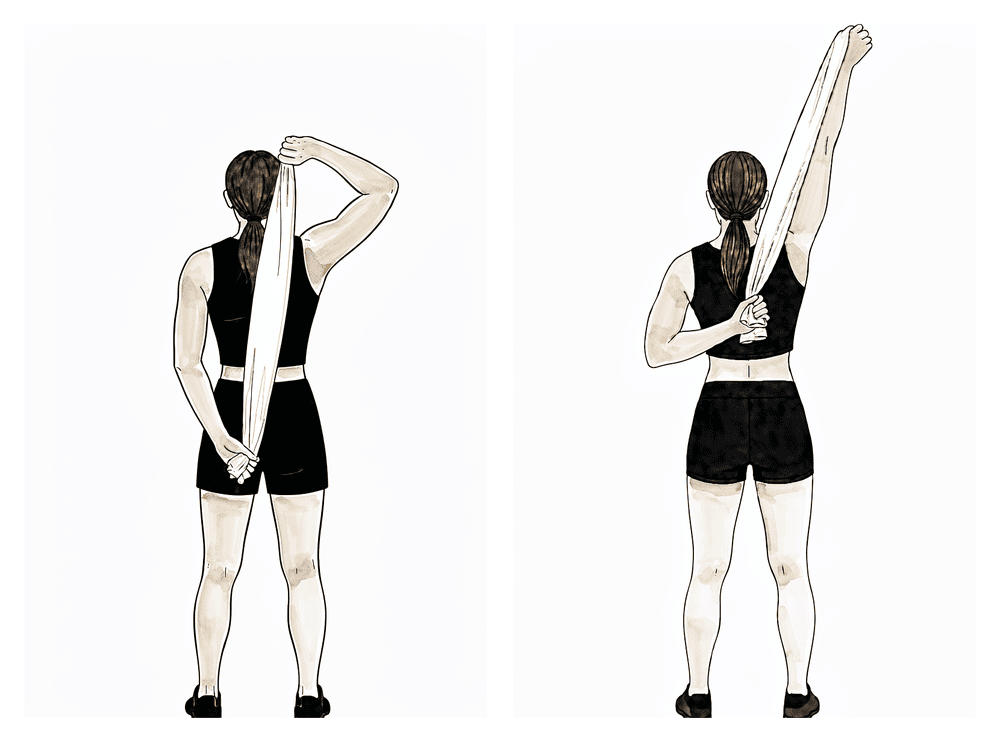
Kieran Hirpara 4.0
Alongamento com toalha (rotação medial por trás das costas)
A partir da 12ª semana, prossiga com o treino para alcançar completamente as costas. Segure uma toalha atrás das costas com a mão operada na parte inferior, e use a outra mão para puxar suavemente essa mão para cima, ao longo das costas. Avance gradualmente e não force a rotação medial até o limite da amplitude.
Conforme orientado pelo seu fisioterapeuta
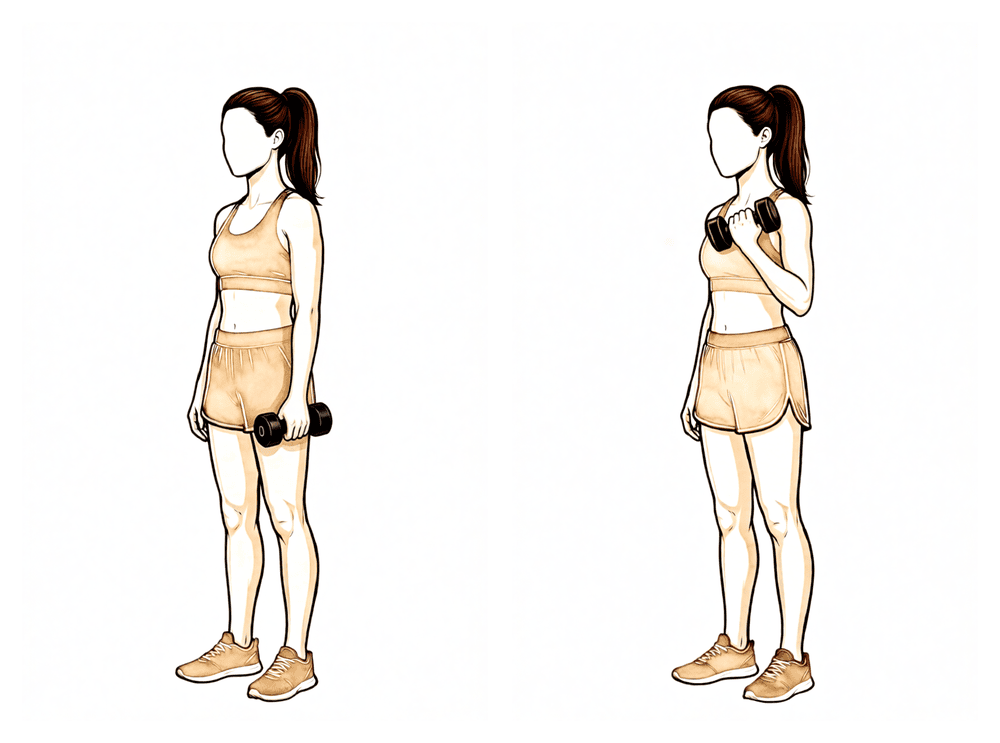
Kieran Hirpara 4.0
Flexão de bíceps
A partir da 12ª semana, quando o condicionamento geral do braço for retomado. Com o braço encostado ao lado do corpo, levante um peso leve dobrando o cotovelo e, em seguida, abaixe-o de forma controlada. Mantenha o ombro relaxado e imóvel.
Conforme orientado pelo seu fisioterapeuta
Ao final da décima segunda semana, a rotação interna finalmente volta à amplitude total. É nesse momento que se iniciam os alongamentos atrás das costas e cruzando o corpo, e o treino na academia evolui das máquinas para o uso de pesos livres. Os flexões também são progressivamente adaptadas, começando na parede e terminando no chão. O objetivo nesta fase é alcançar rotação interna completa e simétrica, igual à do lado não operado, pois a rotação interna é o movimento que a reparação posterior mais demora a restaurar.
- Tala: nenhuma.
- Movimentos permitidos: amplitude completa em todas as direções, incluindo rotação interna, progredindo gradualmente e sem forçar o movimento.
- Exercícios: rotação interna com bastão; rotação interna deitado de lado; alongamento cruzando o corpo; alongamento “sleeper”; alongamento com toalha para alcançar atrás das costas; flexões de bíceps e exercícios gerais de condicionamento. Continue e intensifique os exercícios de fortalecimento do manguito rotador, da escápula e dos músculos diagonais da fase anterior.
Está pronto para avançar para atividades esportivas quando: a rotação interna tornar-se simétrica em relação ao outro lado; houver amplitude de movimento total e sem dor em todas as direções; e a força muscular se aproximar da do lado não operado, sem surgimento de inchaço reativo.
Retorno ao esporte e ao trabalho
O retorno é baseado em critérios, não determinado apenas pelo calendário, e deve ser autorizado tanto pelo Dr. Hirpara quanto pelo seu fisioterapeuta.
- Atletas que lançam ou praticam movimentos acima da cabeça: um programa progressivo de lançamentos ou exercícios intervalados começa por volta da 14–16 semana, aumentando gradualmente o volume e a intensidade.
- Esportes de contato e colisão (rugby, futebol, artes marciais, esportes com raquete, escalada, equitação): não antes de 5 meses, e somente após o cumprimento dos critérios abaixo.
- Trabalho: atividades sedentárias conforme tolerância; trabalho manual ou pesado somente após 3 meses.
Você está pronto para retornar ao esporte quando:
- apresentar amplitude de movimento completa e sem dor em todas as direções, incluindo rotação medial simétrica em relação ao lado contralateral;
- a força de rotação lateral e medial for próxima à do lado oposto (para o fisioterapeuta: um índice de simetria de membros de aproximadamente 90% ou mais para a força de rotação interna e externa, medida por dinamometria isocinética ou manual; no caso de reparo posterior, deve-se prestar atenção especial à simetria da força de rotação interna, pois essa é a direção protegida);
- tiver concluído qualquer programa específico para o esporte (como um programa intervalado de lançamentos) sem dor ou sensação de instabilidade; e
- o Dr. Hirpara autorizar seu retorno após avaliação.
Após seguir este protocolo
Este protocolo complementa as orientações gerais de recuperação fornecidas pela clínica; consulte controle da dor pós-operatória e cuidados com a ferida. Quanto à própria condição, veja instabilidade do ombro.
O cronograma em fases, os limites de proteção específicos para a região posterior, o retorno gradual da rotação interna e os critérios para retorno às atividades esportivas foram elaborados com base nos protocolos de estabilização posterior publicados pela Universidade de Virginia Sports Medicine e pela Universidade do Novo México Sports Medicine (Posterior Labral Repair Rehabilitation Protocols), pelo Massachusetts General Brigham Sports Medicine (Posterior Bankart Repair) e no artigo clínico “Rehabilitation Following Posterior Shoulder Stabilization” (International Journal of Sports Physical Therapy, 2021). Tais protocolos foram adaptados à abordagem desta clínica pelo Dr. Hirpara. O programa de exercícios original baseia-se no trabalho de Leonard Funk e da Wrightington Shoulder Unit (shoulderdoc.co.uk).
Evidence & references
This is the clinical evidence summary written for health professionals. It is technical, and it lists the research this page was built from. You do not need to read it to understand your treatment or to make a decision about it.
Posterior Stabilisation (Posterior Labral / Capsular Repair): Rehabilitation Evidence
Topic: Arthroscopic or open posterior labral repair / posterior capsulorrhaphy (reverse Bankart) for posterior glenohumeral instability. Compiled: 2026-06-16. Sources: local RAG Orthopaedic corpus + published fellowship/PT "standard of care" protocols.
The key difference vs anterior (Bankart/Latarjet): the precaution is REVERSED
Posterior instability and the posterior repair are stressed by the OPPOSITE motions to an anterior repair. The provocative/at-risk position is flexion + adduction + internal rotation (and horizontal adduction) - exactly the position of a posterior load (Itoi/Shoulderology: recurrent posterior instability = PIGHL deficiency failing to resist posterior translation with the arm in flexion and internal rotation). Therefore: - EARLY PRECAUTION = limit flexion, internal rotation, adduction, and horizontal/cross-body adduction; protect against the posteriorly-directed load. (Anterior repairs instead limit ER + abduction.) - Sling/brace is positioned in slight ABDUCTION and NEUTRAL/slight EXTERNAL rotation - often a "gunslinger" brace or abduction pillow - to keep the humeral head off the posterior repair. The arm must be kept in front of the body; do NOT reach behind the back and avoid internal rotation early. - Posterior instability is uncommon (~3-5% of instability) so high-level evidence is sparser; protocols are consensus/biomechanically driven.
Consensus phased timeline (UVA Sports Medicine posterior labral repair standard of care)
| Phase | Week window | Sling/brace | ROM allowed & RESTRICTIONS | AROM / strengthening | RTS |
|---|---|---|---|---|---|
| I - Immediate / protect | 0-2 wk | Sling (all components) at all times incl. sleeping (gunslinger / neutral-to-slight-ER, slight abduction); off only for home ex/PT | Pendulums; elbow/wrist ROM only. No shoulder PROM into the at-risk arc. Keep arm in front of body | Grip/wrist; ball squeezes | None |
| II - Early PROM | 2-4 wk | Continue sling at all times; keep arm IN FRONT - do NOT reach behind back | PROM (PT-supervised), strictly limited: flexion to 60 deg, extension to neutral (0 deg), abduction to 90 deg, ER to 45 deg, IR to neutral (0 deg) at side. No home pulleys | Scapular strengthening; submaximal pain-free isometrics in ALL directions (in sling); cervical ROM | None |
| III - Increase PROM, begin AAROM/strengthening | 4-6 wk | Continue sling by day; may stop sling at night but AVOID internal rotation; keep arm in front | PROM: flexion to 90 deg, extension to 30 deg, abduction full as tolerated, ER 45 deg at 90 deg abd / full at side, IR limited to 30 deg at 90 deg abd. Begin AAROM (wall walks). No reaching behind back | Continue scapular + isometrics; begin light ER Theraband at side. No lift/push/pull >2 lb, no overhead | None |
| IV - Advance | 6-8 wk | Discontinue sling at 6 wk | Advance AROM to full as tolerated EXCEPT IR; limit IR to 45 deg (at side and at 90 deg abd) until 12 wk | Isotonic RC (to 6-8 lb), UBE, wall push-ups, advance scapular, begin D1/D2 PNF (<=3 lb). Lift <=5 lb | None |
| V - Strengthen | 8-12 wk | None | IR still limited to 45 deg until 12 wk; full in all other planes | Advance RC/scapular, dynamic stabilisation, isokinetics with 60 deg block; Thrower's 10 for throwers (from ~10-12 wk). Lift <=7 lb (wk 8-10) -> <=10 lb (wk 10-12) | None |
| VI - Full ROM / weight training | 12-14 wk | None | IR advanced to FULL at 12 wk. Full ROM all directions | Traditional weight training (machines -> free weights), eccentric RC, advance PNF/isokinetics. Begin overhead-work progression | Begin late-stage loading |
| Thrower progression / RTS | 14-24 wk | None | Full | Throwing program from 14-16 wk (60% velocity); isokinetic testing 16-24 wk; interval throwing once passed | No contact sport before 5 months; full RTS on criteria + surgeon clearance |
Active ROM start: AAROM ~4 wk, full AROM (except IR) by ~6-8 wk. Strengthening start: isometrics from ~2-4 wk; isotonic RC ~6 wk. RTS: throwing 14-16 wk; contact sport not before 5 months; criterion-based.
RTS criteria (UVA)
Pass isokinetic test (ER/IR unilateral >=70%, ER bilateral >=98%, IR bilateral >=105%, ER/IR peak-torque/BW ratios); completed throwing program; no pain with activity; surgeon clearance; >=5 months post-op for contact sport.
Posterior-specific precaution summary: sling in slight abduction/neutral-ER (gunslinger); keep arm in front; avoid IR, adduction, horizontal/cross-body adduction, and flexion past limits early; IR is the LAST motion restored (capped 45 deg until 12 wk, full at 12 wk). This is the exact inverse of the anterior protocols, which cap ER.
Key controversies & evidence flags
-
Brace type/position - gunslinger / neutral-to-ER vs simple sling. Biomechanical consensus favours immobilisation in neutral or slight external rotation with slight abduction to unload the posterior capsulolabral repair (reverse of the IR sling used after anterior repair). The Sheean/Kibler current-concepts review and the published PT protocols converge on this, but there is no RCT comparing posterior brace positions. Evidence: consensus / biomechanical (Level V).
-
Throwers / overhead athletes vs traumatic (collision) posterior instability. Posterior labral injury in overhead athletes is often insidious/atraumatic (Sheean 2020), demanding a slower, more conservative throwing return; traumatic posterior instability in collision athletes (Funk 2009 rugby series; Kang "batter's shoulder") may follow a more standard timeline. Savoie (Arthroscopy 2008, 136 shoulders) shows arthroscopic posterior reconstruction is effective after failed conservative care. Evidence: case-series level (Level IV); no RCTs on rehab pace.
-
Sparse high-level evidence overall. Because posterior instability is rare (~3-5%), there are no instability-position RCTs for the posterior repair and protocols are extrapolated/biomechanical. Flag everything here as CONSENSUS / Level IV-V. The "Rehabilitation Following Posterior Shoulder Stabilization" clinical commentary (PMC8168996) is the main synthesising source.
-
Contact-sport return timing. Recent series (e.g., "Favorable Outcomes After Arthroscopic Posterior Bankart Repair for Traumatic Posterior Shoulder Instability in Collision Athletes," PMC12800795) support good RTS, but timing remains criteria-based with a ~5-6 month floor for collision sport. Evidence: cohort (Level IV).
CITATIONS
Published rehabilitation protocols (URLs)
- University of Virginia Sports Medicine - Posterior Labral Repair Rehabilitation Protocol (Arthroscopic or Open): https://med.virginia.edu/orthopaedic-surgery/wp-content/uploads/sites/242/2021/06/Posterior-Labral-Repair.pdf
- St. Louis Orthopedic Specialists - Posterior Labral Repair and Capsulorrhaphy Protocol: https://www.stlorthospecialists.com/wp-content/uploads/2019/05/Posterior-Labral-Repair-and-Capsulorraphy-Rehab-Protocol.pdf
- Dr. Coyner - Posterior Labral Repair Protocol: https://www.drcoyner.com/pdf/posterior-labral-repair-protocol.pdf
- Indianapolis Sports Medicine - Posterior Labral Repair Rehab Protocol: https://www.indysportsdr.com/pdf/posterior-labral-repair-rehab-protocol.pdf
- "Rehabilitation Following Posterior Shoulder Stabilization" (clinical commentary), PMC8168996: https://pmc.ncbi.nlm.nih.gov/articles/PMC8168996/
- "Postsurgical Rehabilitation of Posterior Instability," Musculoskeletal Key: https://musculoskeletalkey.com/postsurgical-rehabilitation-of-posterior-instability/
Local RAG corpus (article / journal / year)
- Eiji Itoi. Shoulderology. 2023. (Posterior instability ~3% of instability; PIGHL deficiency; at-risk position = flexion + internal rotation - the basis for the reversed precaution.) [textbook / mechanism]
- Sheean AJ, Kibler WB, Conway J, et al. Posterior Labral Injury and Glenohumeral Instability in Overhead Athletes: Current Concepts for Diagnosis and Management. Journal of the American Academy of Orthopaedic Surgeons. 2020. [current-concepts review]
- Funk L, Badge R, Tambe A. Arthroscopic isolated posterior labral repair in rugby players. International Journal of Shoulder Surgery. 2009. [case series - traumatic posterior instability, collision athletes]
- Savoie FH, Holt MS, Field LD, Ramsey JR. Arthroscopic Management of Posterior Instability: Evolution of Technique and Results. Arthroscopy. 2008;24(4). (136 shoulders; arthroscopic posterior reconstruction after failed conservative rehab.) [large case series, Level IV]
- Kang RW, Mahony GT, Harris TC, et al. Posterior Instability Caused by Batter's Shoulder. Clinics in Sports Medicine. 2013. [technique / case series]
- Rockwood CA, Fehringer EV. Rockwood and Matsen's The Shoulder. 2016. (Posterior drawer / laxity exam in neutral rotation; diagnostic basis.) [textbook]
Overall evidence grade for the phased protocol itself: CONSENSUS / institutional standard-of-care, weaker than the anterior literature (Level IV-V; no RCTs on posterior brace position or rehab pace). The reversed precaution (limit IR/adduction/flexion; brace in abduction + neutral/ER) is biomechanically well-founded but not RCT-tested.