Patients › Rehabilitation
Instabilidade do cotovelo
A reabilitação pós-cirurgia para instabilidade do cotovelo abrange tanto as lesões laterais (tríade terrível / LCL) quanto as lesões relacionadas ao arremesso (UCL medial), baseando-se em movimentos precoces controlados, em vez da imobilização.
Este protocolo orienta sua recuperação após a cirurgia para instabilidade do cotovelo realizada pelo Dr. Kieran Hirpara no Mater Private Hospital Rockhampton. Ele aborda dois tipos diferentes de instabilidade; seu cirurgião informará qual deles se aplica a você:
- (A) Lesão lateral (no lado externo): como a chamada “tríade terrível”, fratura com deslocamento ou reparo do ligamento colateral lateral (LCL). Essas lesões são estabilizadas de modo que o cotovelo não mais deslize ou gire para fora de posição.
- (B) Lesão medial (no lado interno), comum em atletas arremessadores: reparo ou reconstrução do ligamento colateral ulnar (UCL).
Todo o plano de recuperação se baseia num princípio fundamental: movimentação precoce e protegida, em vez de imobilização. Períodos prolongados com gesso ou talas são a principal causa de rigidez permanente do cotovelo; por isso, o objetivo é iniciar os movimentos com segurança o quanto antes. Leve esta página ou seu arquivo PDF à sua primeira sessão de fisioterapia, para que o processo de reabilitação seja coordenado. Seu terapeuta poderá ajustar o plano conforme a evolução da sua recuperação.
Caso tenha alguma dúvida ou preocupação quanto à ferida cirúrgica, entre em contato com o consultório. Geralmente é útil tirar uma foto da ferida e enviá-la por e-mail para análise.
O que esperar
O cotovelo é mantido no lugar por ligamentos localizados nos lados interno e externo da articulação. Quando esses ligamentos sofrem lesões (por luxação, fratura-luxação ou movimentos repetitivos), a articulação pode tornar-se instável. A cirurgia visa reparar ou reconstruir as estruturas danificadas, permitindo que a articulação volte a ficar estável.
O método do Dr. Hirpara evita o uso de uma órtese externa com dobradiça, volumosa e incômoda. Caso a articulação se mantenha estável em toda a sua amplitude de movimento durante a cirurgia, você usará apenas uma tipoia leve para conforto e poderá começar a mover o cotovelo desde cedo, dentro de limites seguros. Se, porém, for necessária maior proteção, pode-se inserir um estabilizador articular interno durante a cirurgia: uma pequena dobradiça interna que mantém o cotovelo na posição correta, permitindo ainda que você o flexione e estenda precocemente. Como essa proteção é interna, você também evita o uso de uma órtese externa que limite os movimentos. Esse dispositivo interno costuma ser removido após a cicatrização dos ligamentos, em torno de quatro a seis meses.
Para orientações sobre cuidados com a ferida, inchaço e cicatrização, consulte o guia de cuidados com a ferida do consultório.
O hábito mais importante durante a recuperação é manter os movimentos dentro da amplitude segura, respeitando sempre as posições que o cirurgião indicar como proibidas. Os exercícios abaixo constituem o ponto de partida para essa reabilitação.
Precauções e limitações
As posições a serem protegidas dependem do tipo de lesão que você tem. O seu cirurgião e o fisioterapeuta confirmarão quais são as adequadas para você.
Para lesões laterais (lado externo) (tríade terrível / LCL):
- Faça o seguinte: mantenha o antebraço virado com a palma da mão para baixo (pronação) durante os movimentos; isso posiciona bem a articulação e protege a reparação no lado externo.
- Faça exercícios com o braço à frente do corpo, ou deitado com o braço estendido em direção ao teto, se indicado; assim a gravidade ajuda a manter a articulação unida.
- Não deixe o braço cair para o lado (evite abdução do ombro) nem coloque peso sobre ele nos primeiros momentos; a gravidade, nesse caso, pode separar a reparação.
- Não combine o esticamento total do cotovelo com a palma da mão virada para cima (supinação) até que o cirurgião autorize (por volta da 16ª semana); essa é a posição que pode fazer a articulação deslocar novamente.
- Não force ou estique o cotovelo até sentir dor, e evite carregar peso ou receber impactos nos primeiros meses.
Para lesões mediais (lado interno) relacionadas ao arremesso (UCL):
- Faça o seguinte: mantenha o antebraço preferencialmente com a palma da mão virada para cima (supinação) ou em posição neutra, conforme orientação.
- Não coloque carga sobre o ombro em rotação externa nos primeiros momentos; isso sobrecarrega a reparação no lado interno. Geralmente, isso deve ser evitado até cerca de 6 semanas.
Seus exercícios
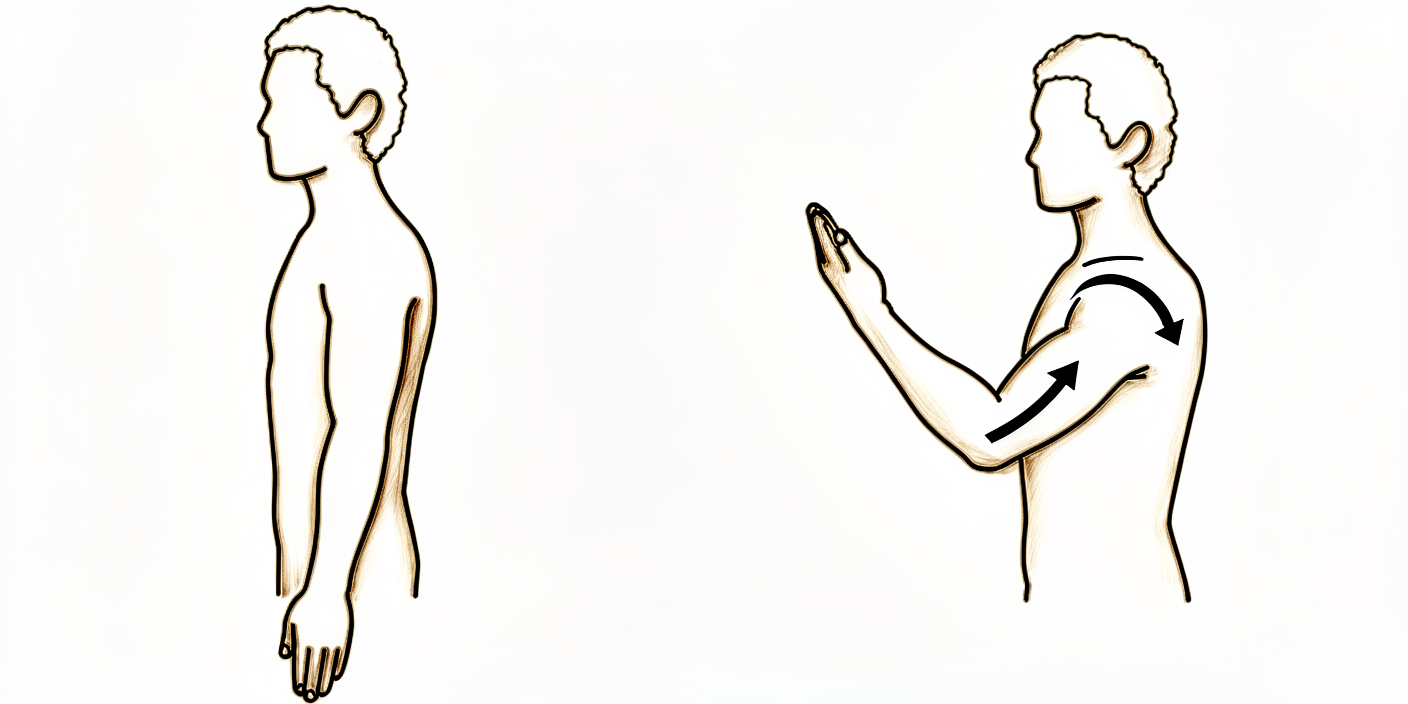
Kieran Hirpara 4.0
Flexões ativas do cotovelo
Dobre o cotovelo suavemente até o limite do conforto, depois estique-o novamente até o ponto permitido pelo seu cirurgião e fisioterapeuta. Mantenha o antebraço na posição que lhe foi indicada — no caso de uma lesão lateral (no lado externo), isso geralmente significa com a palma da mão voltada para baixo (pronação). Movimente apenas os seus próprios músculos; não force a articulação.
10–15 vezes, várias vezes ao dia
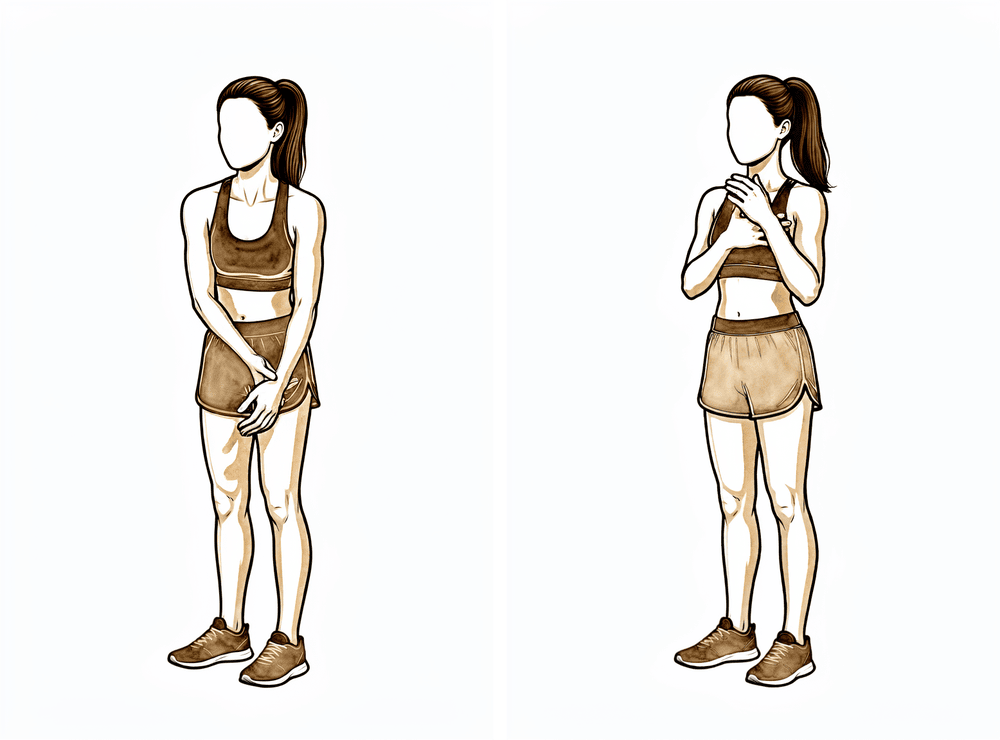
Kieran Hirpara 4.0
Flexão assistida do cotovelo
Quando o seu terapeuta autorizar, use a outra mão para ajudar suavemente o cotovelo a dobrar um pouco mais do que ele consegue fazer por conta própria. Faça isso apenas até atingir um alongamento confortável — nunca até sentir dor — e solte a pressão lentamente.
Mantenha por 10–15 segundos, 5–10 vezes, conforme orientado.
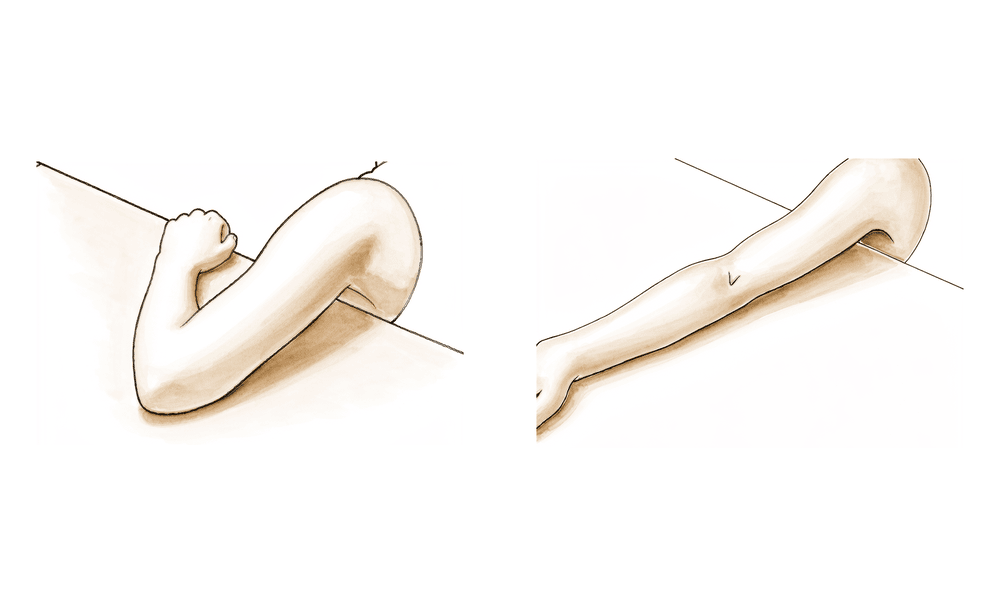
Kieran Hirpara 4.0
Extensão do cotovelo (até o limite do conforto)
Estique o cotovelo tanto quanto lhe for confortável, dentro dos limites estabelecidos pelo seu cirurgião. No caso de lesão lateral, mantenha a palma da mão virada para baixo ao esticar o cotovelo. Não tente esticar completamente o cotovelo combinado com rotação da palma para cima até que o seu cirurgião autorize.
10–15 vezes, várias vezes ao dia
Kieran Hirpara 4.0
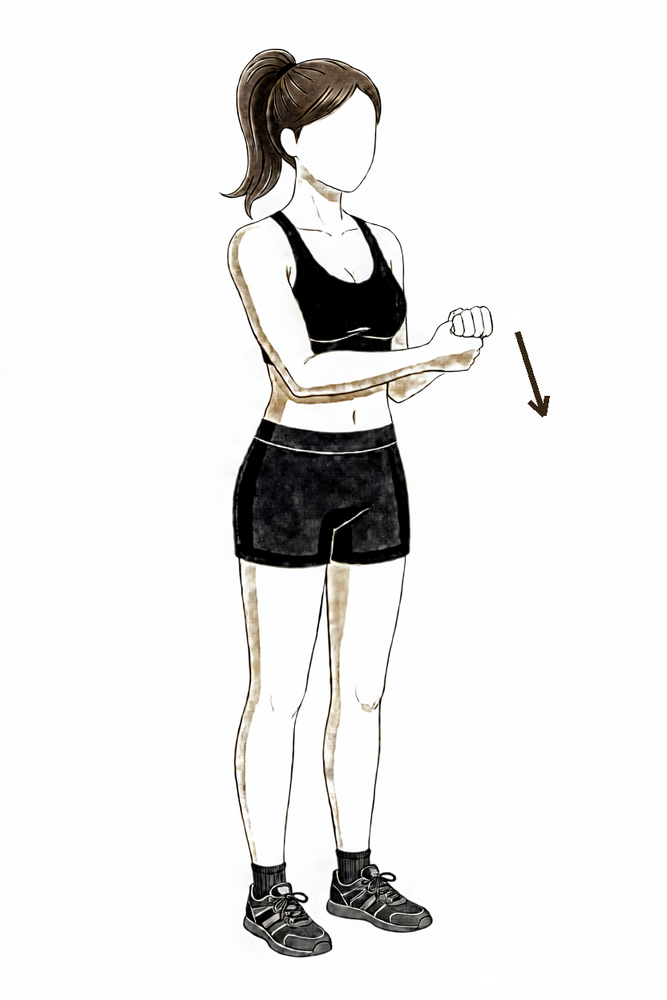
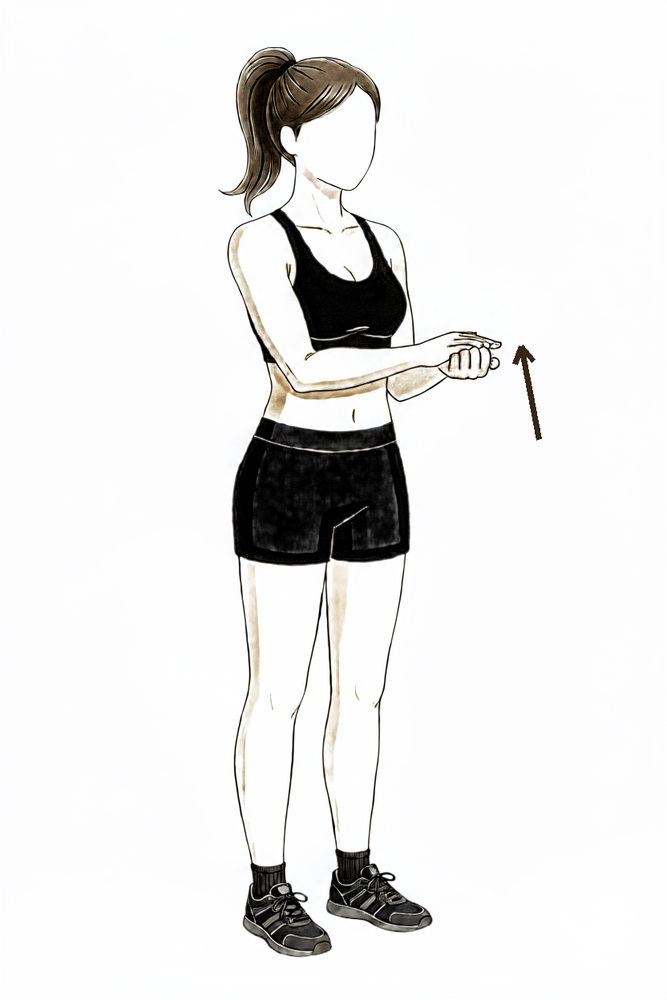
Rotação do antebraço (palma da mão para cima / palma da mão para baixo)
Com o cotovelo pressionado contra o corpo e dobrado em cerca de 90°, gire suavemente a palma da mão para cima e depois para baixo, dentro da amplitude de movimento que lhe foi indicada. A direção segura para o movimento depende da sua lesão: uma lesão lateral favorece a posição com a palma para baixo (pronação); uma lesão medial, comum em atletas que lançam, favorece a posição com a palma para cima (supinação). Siga as orientações dadas pelo seu cirurgião e fisioterapeuta.
10 vezes em cada direção permitida, várias vezes ao dia.
Kieran Hirpara 4.0
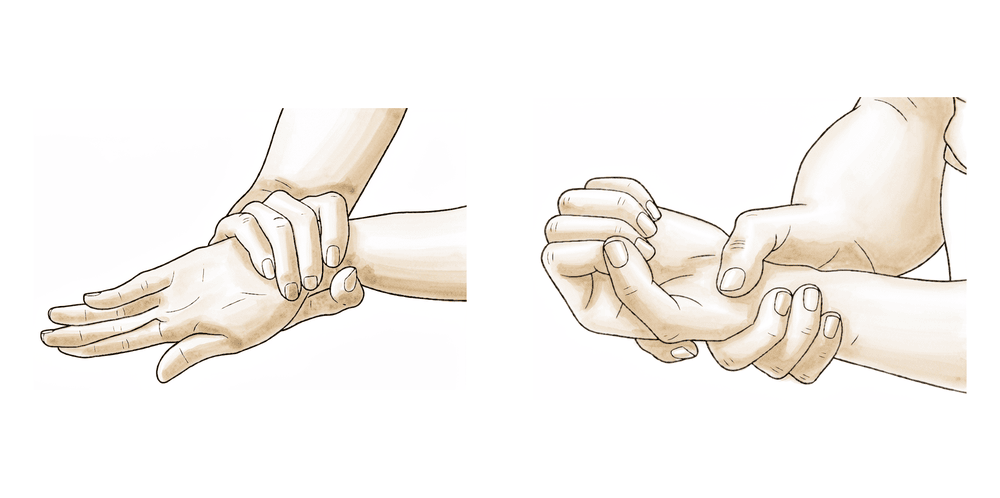
Contração muscular do cotovelo — extensão (isométrica)
Com o cotovelo mantido imóvel, pressione suavemente, como se quisesse esticá-lo contra a outra mão ou uma superfície fixa. O cotovelo não deve se mover de fato. Isso ativa os músculos sem sobrecarregar os ligamentos em processo de cicatrização.
Mantenha por 5 segundos, 10 vezes, uma ou duas vezes ao dia — somente quando autorizado.
Kieran Hirpara 4.0
Contração muscular do cotovelo — flexão (isométrica)
Com o cotovelo imóvel, pressione suavemente, como se quisesse dobrá-lo contra a outra mão. O cotovelo não deve se mover. Mantenha a força em um nível confortável — trata-se de ativação muscular, não de um exercício intenso.
Mantenha por 5 segundos, 10 vezes, uma ou duas vezes ao dia — somente quando autorizado.
Kieran Hirpara 4.0
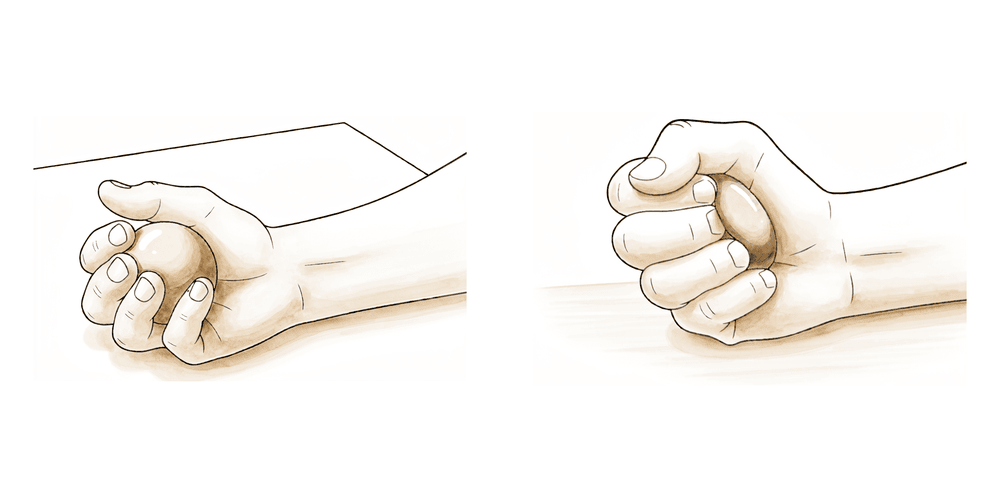
Fortalecimento da preensão
Aperte uma bola macia ou massa terapêutica na mão e mantenha a pressão por alguns instantes, depois solte. Isso ajuda a manter a força da mão e do antebraço, ao mesmo tempo em que protege o cotovelo.
10–15 compressões, 2–3 vezes ao dia
Estes são os exercícios descritos no seu folheto informativo, destinados a restaurar movimentos seguros e manter a funcionalidade da mão, antebraço e ombro enquanto o cotovelo permanece protegido. Inicie-os e progrida neles apenas sob orientação do Dr. Hirpara e do seu fisioterapeuta; a posição segura do antebraço e a amplitude de movimento dependem da sua lesão específica.
Seu protocolo clínico
O restante desta página constitui o protocolo clínico para seu fisioterapeuta ou terapeuta da mão. Ele está dividido em duas partes, pois as duas lesões são tratadas de maneira distinta. Cada fase só pode ser iniciada após o cumprimento de determinados critérios: o avanço ocorre quando as metas são atingidas, e não simplesmente com o passar do tempo.
Antes do início do tratamento, verifique o raio-X do paciente, o relatório cirúrgico e seu histórico médico. Entre em contato com o cirurgião responsável para confirmar a estabilidade obtida na cirurgia, o arco de movimento seguro e a rotação do antebraço, bem como se foi implantado algum estabilizador articular interno. O Dr. Hirpara não utiliza órteses articuladas externas: reparos estáveis em todo o arco de movimento são tratados com uma simples tipóia, permitindo movimentos precoces para maior conforto do paciente. Nos casos em que a estabilidade precisa ser preservada, um estabilizador articular interno mantém a redução da articulação, permitindo ao mesmo tempo a extensão necessária para o conforto.
Trilha A — Tríade terrível / fratura-dislocação / reparo do LCL (LUCL)
Objetivo: Obter um cotovelo estável, com redução concêntrica e mobilidade precoce; prevenir a resubluxação rotatória posterolateral.
Precauções essenciais na fase inicial:
- Mantenha o antebraço em pronação em casos de lesão lateral isolada (isso tensiona as estruturas laterais e fixa a articulação radiocapitelar). Caso ambas as colunas tenham sido reparadas, mantenha o antebraço em posição neutra; a supinação só é permitida quando o cotovelo está flexionado em ~90°.
- Evite estresse varo e abdução do ombro: a gravidade exerce uma carga vara sobre o reparo lateral. Realize exercícios de amplitude de movimento com o braço à frente do corpo ou em posição supina com o braço acima da cabeça (reduzindo a ação da gravidade), caso o reparo seja frágil.
- Não permita extensão total com supinação até cerca de 16 semanas (isso reproduz o fenômeno de “pivot shift”).
- Não realizar carga de peso nem exercícios de cadeia fechada por 8–16 semanas.
Semanas 0–2: Mobilização precoce. Use uma tipóia simples para conforto. Inicie imediatamente exercícios de amplitude de movimento ativa para dedos, punho e ombro. A partir do dia 2–3, comece a mobilização ativa e assistida do cotovelo até o limite do conforto, mantendo o antebraço em pronação e o braço apoiado à frente do corpo (ou em posição supina com o braço acima da cabeça, se o reparo for frágil, para que a gravidade comprima a articulação). Quando um estabilizador articular interno está instalado, progrida para a extensão total confortável desde cedo; esse dispositivo protege a redução, dispensando o uso de órtese externa.
Semanas 2–6: Restauração da amplitude de movimento. Avance para flexão e extensão completas e confortáveis (a extensão deve ser feita até o limite do conforto; o estabilizador interno, se presente, permite isso). Mantenha a tendência à pronação; evite cargas varas. Critérios para progressão: amplitude de movimento passiva total recuperada, ausência de resubluxação à inspeção ou em radiografias, dor ≤3/10.
Semanas 6–12: Fortalecimento. Após confirmação clínica e radiográfica de cicatrização (~semana 6), inicie fortalecimento progressivo; utilize uma tala estática progressiva caso haja risco de contratura. Continue evitando cargas varas. O estabilizador interno, se utilizado, geralmente permanece até a consolidação ligamentar.
Semanas 12–20 em diante: Fase avançada / retorno às atividades. Fortalecimento com resistência progressiva; retorno a atividades de esforço físico intenso. O retorno a esportes de contato e atividades com movimentos acima da cabeça ocorre por volta de 6–9 meses (e após a remoção do estabilizador interno, se houver). Continue evitando exercícios de fortalecimento que impliquem carga vara.
Trilha B — Reparação/reconstrução do LCU medial (relacionada ao arremesso)
Trata-se de um problema crônico causado por sobrecarga na região medial. A preferência do Dr. Hirpara é não utilizar órtese externa com dobradiça: a utilização de fita de sutura como reforço interno (para reparação) ou o enxerto tendinoso (para reconstrução) oferece a proteção necessária; a reabilitação é específica para atividades de arremesso. O antebraço deve ser mantido em posição de supinação/neutro; a rotação externa resistida do ombro deve ser evitada até aproximadamente a semana 6, pois gera carga em valgo sobre o enxerto.
Reparação reforçada com fita interna (abordagem acelerada, alinhada à estratégia sem órtese externa):
- Movimentação controlada e precoce, conforme tolerância do paciente; amplitude completa de movimento alcançada por volta da semana 0–4 (aproximadamente na semana 6).
- Início do programa Thrower’s Ten por volta da semana 3; exercícios pliométricos a partir da semana 6.
- Programa de arremessos intermitentes a partir da semana 11; retorno às atividades esportivas por volta de 5–7 mês.
Trilha de reconstrução com enxerto (mais lenta):
- Amplitude completa de movimento alcançada por volta da semana 6; arremessos intermitentes a partir da semana 14–16; arremessos a partir de um “mound” somente após 6 meses; retorno às competições geralmente ocorre em 9–16 meses.
Voltando ao trabalho e às atividades
A rapidez com que você retorna depende do tipo de lesão que sofreu e das exigências do seu trabalho ou esporte.
- Lesão lateral (tríade terrível/LCL): tarefas leves de escritório e cuidados pessoais podem ser retomadas precocemente, desde que dentro das posições seguras para o cotovelo. O fortalecimento geralmente começa por volta da 6ª semana, após a cicatrização clínica e radiográfica do cotovelo. Atividades esportivas que envolvem contato físico ou movimentos acima da cabeça são normalmente adiadas para cerca de 6–9 meses, após a remoção de qualquer estabilizador articular interno, caso tenha sido instalado. Evite colocar peso sobre o braço ou esticá-lo para os lados até que o cirurgião autorize.
- Lesão no lançamento (UCL): com uma reparação reforçada por órtese interna, um programa estruturado de lançamentos costuma ser iniciado por volta da 11ª semana, com retorno ao esporte em aproximadamente 5–7 meses. Após uma reconstrução, o retorno aos lançamentos competitivos é mais lento, geralmente ocorrendo após 9–16 meses.
Você poderá voltar a dirigir assim que tiver controle confortável e seguro do braço fora da tipóia, e após o cirurgião confirmar, na avaliação, que isso é adequado. Seu fisioterapeuta irá progredir os exercícios de fortalecimento e as atividades específicas para o seu trabalho ou esporte, visando alcançar seus objetivos individuais.
Após seguir este protocolo
Este protocolo complementa as orientações gerais de recuperação fornecidas pela clínica; consulte como controlar a dor pós-operatória e cuidados com a ferida. Sua recuperação contínua será orientada individualmente pelo seu fisioterapeuta ou terapeuta da mão, conforme a evolução do seu cotovelo e o tipo de lesão que você teve. O resumo de evidências clínicas referente a este protocolo encontra-se ao lado desta página.
Evidence & references
This is the clinical evidence summary written for health professionals. It is technical, and it lists the research this page was built from. You do not need to read it to understand your treatment or to make a decision about it.
Elbow Instability — Rehabilitation Evidence (Lateral / Terrible Triad / LCL and Throwing / UCL)
Topic scope: Post-operative rehabilitation after surgery for elbow instability, in two distinct tracks: (A) complex lateral instability — "terrible triad" / fracture-dislocation and lateral (ulnar) collateral ligament [LCL/LUCL] repair & reconstruction for posterolateral rotatory instability (PLRI); and (B) overhead-throwing ulnar (medial) collateral ligament [UCL] reconstruction & repair ("Tommy John").
Defining principle: the crux of every track is protected motion, not immobilisation. Restore enough stability to permit early range of motion (within ~1 week), because prolonged immobilisation is the dominant cause of disabling flexion contracture and stiffness. Dr Hirpara's stance: he does not use an external hinged brace. A repair that is stable through-range at surgery is managed with a simple sling for comfort plus early motion to comfort within positional precautions. Where stability needs protecting, he implants an internal joint stabiliser (an internal hinge) that holds the elbow reduced from the inside while permitting full flexion and extension to comfort — so the patient still moves early without an external arc-limiting brace. The device is typically removed once the ligaments have healed (~4–6 months). The published external-hinged-brace extension-block arcs below are retained as reference for what they represent biomechanically, not as Dr Hirpara's management.
(A) Terrible triad / complex fracture-dislocation / LCL (LUCL) repair & reconstruction
Forearm-rotation rule (the key precaution)
- Lateral-sided (LCL/LUCL) injury → keep the forearm PRONATED. Pronation tightens the lateral structures and seats the radiocapitellar joint, protecting the lateral repair. Terminal extension is performed pronated; supination near full extension reproduces the pivot-shift and is avoided.
- Medial-sided (MCL/UCL) injury → keep the forearm SUPINATED (Rockwood & Green; Green's Operative Hand Surgery).
- If both columns are repaired (many terrible triads), the forearm is held neutral.
- Early supination, when allowed, is done only with the elbow flexed to ~90° (flexion stabilises the ulnohumeral joint and protects the lateral reconstruction).
Phased timeline
- Week 0–2 — Immediate post-op / early motion. Posterior splint at ~90° flexion in injury-appropriate forearm rotation for 7–14 days in the published protocols; the practical aim is early motion. Begin digit/wrist/shoulder AROM immediately and gentle elbow AROM/AAROM in the surgeon-defined stable arc within days (Brigham fracture-dislocation guideline starts elbow/forearm AROM at day 2–3). A supine/overhead protocol is an option where the lateral repair is tenuous — gravity compresses and stabilises the ulnohumeral joint (Green's; Lee 2013).
- Week 2–6 — Protected motion / restore the arc. Published external-hinged-brace protocols open an extension block ~10°/week, forearm pronated (Denver/Eichinger: 30° at wk2 → 20° wk3 → 10° wk4 → 0° wk5), reaching full extension by ~week 5–6. Dr Hirpara replaces this external brace with a simple sling (through-range stable repair) or an internal joint stabiliser permitting extension to comfort. Precautions: avoid varus stress and shoulder abduction; avoid combined full-extension-with-supination for up to ~16 weeks; no weight-bearing/closed-chain for 8–16 weeks.
- Week 6–12 — Intermediate / strengthening. Full PROM, joint mobilisations. Strengthening starts ~week 6 once clinical and radiographic healing is confirmed (Brigham PRE 6–8 wk; Rockwood & Green). Static-progressive splinting if a contracture is developing (Müller 2013).
- Week 12–20+ — Advanced / return. Progressive resistance; avoid varus-loaded strengthening. Contact/overhead sport often delayed to ~6–9 months for reconstruction (Green's: unrestricted use ≥6 months for graft incorporation; Eichinger: up to 9 months).
Nonoperative (stable terrible triad) caveat: if the joint is concentrically reduced with a stable arc to ≥30° of extension (no radial-head block, small coronoid), nonoperative early-motion management is reasonable (Rockwood & Green / Chan criteria; Najd Mazhar 2017).
(B) UCL reconstruction / repair — throwing athlete ("Tommy John")
Rehabilitation is uniformly described in 4 phases (Brotzman-Wilk lineage; ASMI/Andrews; Mass General). The forearm is biased toward supination/neutral (medial-sided injury); no shoulder external-rotation loading early (it valgus-loads the graft).
- Phase I — Week 0–3. Posterior splint at 90° week 1, then progressive ROM. Wrist AROM, gripping, submax shoulder isometrics (no ER), submax biceps isometrics from week 1–2.
- Phase II — Week 4–6/8. Progress to full ROM by ~week 6. Light wrist/forearm strengthening, rotator-cuff isotonics; resisted shoulder ER avoided until ~week 6 to protect the graft.
- Phase III — Week 6/9–12/13. Progressive elbow/forearm strengthening, eccentrics from ~wk9, Thrower's Ten, plyometrics ~wk9 if appropriate.
- Phase IV — Week 14–26+. Interval throwing program ~week 14–16; long-toss ramp 45→60 ft, +30 ft increments to 180 ft; mound throwing ≥6 months; return to competitive throwing ~6 months for return-to-throw, but full competitive RTS typically 9–16 months (≥12 months a common criterion). ~83–97% RTS in throwers.
Internal-brace–augmented UCL REPAIR (accelerated track) — the recent shift
For acute/avulsion tears with good tissue, UCL repair with internal brace allows a markedly accelerated protocol (Dugas/ASMI; SLU/JOSPT 2019):
- Mobilise early to comfort; full/unrestricted ROM by ~wk4, brace off by wk6.
- Thrower's Ten from ~wk3; plyometrics from ~wk6.
- Interval throwing as early as ~wk11; return to sport ~5–7 months (vs ≥9–12+ for reconstruction). Dugas 2025 (AJSM) head-to-head: repair ~2–3 weeks accelerated for ROM/strengthening and ~5–9 weeks accelerated for starting the interval throwing program, with comparable outcomes in appropriately selected athletes.
Phased-timeline summary
| Phase / window | Track A — lateral (terrible triad / LCL) | Track B — throwing (UCL, internal-brace repair) |
|---|---|---|
| Weeks 0–2 | Sling for comfort; elbow AROM/AAROM to comfort from day 2–3, forearm pronated, arm supported in front / supine-overhead | Early protected motion to comfort; submax shoulder (no ER) + biceps isometrics; grip/wrist work |
| Weeks 2–6 | Restore full comfortable arc; extension to comfort (internal stabiliser permits); maintain pronation, avoid varus | Progress to full arc by ~wk6; Thrower's Ten from ~wk3 |
| Weeks 6–12 | Strengthening once healed (~wk6); static-progressive splint if contracture | Plyometrics from ~wk6; progressive strengthening |
| Weeks 12–20+ | Progressive resistance; contact/overhead sport ~6–9 mo | Interval throwing ~wk11; RTS ~5–7 mo (reconstruction: 9–16 mo) |
Key controversies
- Early vs protected motion (complex instability). Strong consensus favours early motion (≤7 days), BUT the two 2024 systematic reviews (Ahmed Kamel, JSES; Larwa, Shoulder & Elbow) found no RCT and high heterogeneity (immobilisation 1–76 days, weighted mean ~42–47). "Early" is biomechanically favoured, not Level-I proven; over-aggressive motion risks re-subluxation in a marginally stable repair.
- Brace necessity & utility. A hinged orthosis is the published standard, but Manocha/King (JHS 2018) showed it adds little stability with the arm overhead (gravity already compresses the joint), supporting overhead/supine rehab over brace reliance for lateral injuries (Lee 2013). This underpins Dr Hirpara's no-external-brace approach.
- Forearm-rotation dogma. Pronation-for-lateral / supination-for-medial is biomechanically grounded and widely taught, but Selley 2025 found forearm rotation at graft tensioning did not change postoperative medial gapping — questioning how rigidly rotation must be controlled in UCL cases.
- Accelerated vs conservative UCL return-to-throw. Time-to-RTS varies 4–16 months with no consensus threshold; Erickson 2017 found earlier RTS did not raise revision risk in MLB pitchers, undercutting strict "wait ≥12 months" dogma.
- Internal brace enabling faster rehab. The biggest recent shift: suture-tape/internal-brace augmentation gives superior time-zero biomechanics and supports repair (not reconstruction) in selected throwers with a 5–9-week-faster throwing timeline. Durability in elite pitchers and mid-substance tears is still maturing (Level III–IV).
Evidence strength flags
- (A) Complex instability / LCL: LOW–MODERATE. No RCTs; guidance is biomechanical + expert-consensus + Level III/IV case series and two 2024 systematic reviews. Internal-joint-stabiliser data (Orbay/Mighell lineage; Dunning/Morrey biomechanics) are device-specific case series — Consensus / Moderate.
- (B) UCL throwing: MODERATE. Large case series, multiple systematic reviews, and concordant institution-standard protocols (Brigham/Brotzman-Wilk, Mass General, ASMI/Andrews) for the phased arc and interval-throwing timeline. Internal-brace augmentation is newer (Level III–IV, growing).
- Rehabilitation protocols themselves: CONSENSUS / WEAK — phase timings derive from published institutional protocols, not rehab RCTs.
Citations
RAG corpus (180,000+ Orthopaedic articles)
- Szekeres M, Chinchalkar SJ, King GJ. Optimizing Elbow Rehabilitation After Instability. Hand Clin. 2008.
- Wilk KE, Arrigo CA. Rehabilitation of Elbow Injuries. Clin Sports Med. 2020.
- Ahmed Kamel S, Shepherd J, Al-Shahwani A, et al. Postoperative mobilization after terrible triad injury: systematic review and single-arm meta-analysis. J Shoulder Elbow Surg. 2024;33(3):e116–e125.
- Larwa J, Buchanan TR, Janke RL, et al. Characteristics of rehabilitation protocols following operative treatment of terrible triad elbow injuries and the influence of early motion: systematic review and meta-analysis. Shoulder Elbow. 2024.
- Najd Mazhar F, Jafari D, Mirzaei A. Evaluation of functional outcome after nonsurgical management of terrible triad injuries of the elbow. J Shoulder Elbow Surg. 2017;26(8):1342–1347.
- Manocha RH, King GJ, Johnson JA. In Vitro Kinematic Assessment of a Hinged Elbow Orthosis Following Lateral Collateral Ligament Injury. J Hand Surg Am. 2018.
- Lee AT, Schrumpf MA, Choi D, et al. The influence of gravity on the unstable elbow. J Shoulder Elbow Surg. 2013;22(1).
- Dunning CE, et al. (Morrey lineage). Ligamentous Repair and Reconstruction for Posterolateral Rotatory Instability of the Elbow. 2006. (LCL/LUCL stabiliser biomechanics.)
- Müller AM, Sadoghi P, Lucas R, et al. Effectiveness of bracing in the treatment of nonosseous restriction of elbow mobility: systematic review/meta-analysis of 13 studies. J Shoulder Elbow Surg. 2013. (Static-progressive stretch for stiffness.)
- Selley RS, Lawton CD, Owusu-Akyaw K, et al. Forearm Rotation at the Time of Elbow UCL Reconstruction Graft Tensioning Does Not Affect Postoperative Medial Elbow Joint Gapping. Orthop J Sports Med. 2025.
- Erickson BJ, Cvetanovich GL, Frank RM, et al. Do Clinical Results and RTS Rates After UCL Reconstruction Differ Based on Graft Choice and Surgical Technique? Orthop J Sports Med. 2016.
- Erickson BJ, Chalmers PN, Bach BR, et al. Length of time between surgery and RTS after UCL reconstruction in MLB pitchers does not predict need for revision. J Shoulder Elbow Surg. 2017.
- Kemler BR, Rao S, Willier DP, et al. Rehabilitation and Return to Sport Criteria Following UCL Reconstruction: A Systematic Review. Am J Sports Med. 2021.
- Griffith R, Bolia IK, Fretes N, et al. RTS Criteria After Upper Extremity Surgery, Part 2: UCL of the Elbow. Orthop J Sports Med. 2021.
- Dugas JR, Froom RJ, Mussell EA, et al. Clinical Outcomes of UCL Repair With Internal Brace Versus UCL Reconstruction in Competitive Athletes. Am J Sports Med. 2025.
- Dugas JR, Looze CA, Capogna B, et al. UCL Repair With Collagen-Dipped FiberTape Augmentation in Overhead-Throwing Athletes. Am J Sports Med. 2019;47(5).
- Jackson GR, Opara O, Tuthill T, et al. Suture Augmentation in Orthopaedic Surgery Offers Improved Time-Zero Biomechanics and Promising Short-Term Clinical Outcomes. Arthroscopy. 2023.
- Cain EL, Dugas JR, Wolf RS, et al. Elbow Injuries in Throwing Athletes: A Current Concepts Review. Am J Sports Med. 2003.
- Erickson BJ, Bach BR, Verma NN, et al. Treatment of Ulnar Collateral Ligament Tears of the Elbow. Orthop J Sports Med. 2017.
- Rockwood and Green's Fractures in Adults. 2019. — long-arm splint 7–10 d; lateral injury → forearm pronated, medial → supinated; avoid shoulder abduction/varus for lateral injury; strengthening ~6 wk.
- Green's Operative Hand Surgery. 2021. — supination only with elbow maximally flexed; overhead/supine protocol option; isometric strengthening 8–10 wk; unrestricted use ≥6 mo.
Published protocols (literature URLs)
- Brigham & Women's Hospital — Elbow Fracture/Dislocation Post-Op ORIF Hand Therapy Guideline (2021). https://www.brighamandwomens.org/assets/BWH/patients-and-families/rehabilitation-services/pdfs/elbow-fracture-orif-hand-therapy-protocol.pdf
- Brigham & Women's Hospital — UCL of the Elbow Reconstruction Using Autogenous Graft Protocol (Brotzman-Wilk modification). https://www.brighamandwomens.org/assets/BWH/patients-and-families/rehabilitation-services/pdfs/elbow-ulnar-collateral-ligament-reconstruction-protocol-bwh.pdf
- Massachusetts General Hospital Sports Medicine — Rehabilitation Protocol for UCL Reconstruction (rev. Nov 2018). https://www.massgeneral.org/assets/MGH/pdf/orthopaedics/sports-medicine/physical-therapy/rehabilitation-protocol-for-UCL.pdf
- Saint Louis University Sports Medicine / JOSPT 2019 — Rehabilitation s/p UCL Repair with Internal Brace. https://www.slu.edu/medicine/orthopaedic-surgery/sports-medicine/-pdf/ucl-repair-guidelines-final.pdf
- Eichinger MD — Rehabilitation Guidelines for Elbow Lateral Collateral Ligament Repair (2018). https://www.josefeichingermd.com/pdf/rehab-for-lateral-collateral-ligament-repair-3-4-18.pdf
- Denver Shoulder — Rehabilitation Protocol: Lateral Collateral Ligament Repair (extension block 30°→20°→10°→0° wk2–5, forearm pronated; supination only at 90° flexion). https://www.denvershouldersurgeon.com/pdf/lcl-repair-protocol.pdf
- Orthopaedic Medical Group of Tampa Bay — Elbow Dislocation Rehab Protocol. https://www.omgtb.com/wp-content/uploads/pdfs/elbow-dislocation-rehab.pdf