Patients › Rehabilitation
Fratura da extremidade distal do rádio (reparação cirúrgica aberta)
Staged rehabilitation after plate fixation of a distal radius fracture, from the first days to return to full activity.
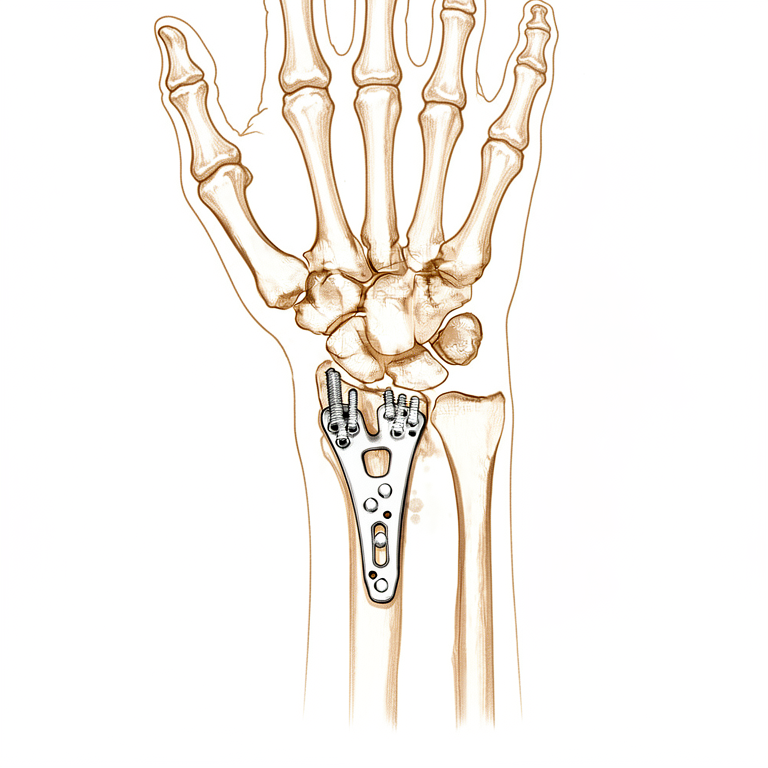
Este protocolo orienta sua recuperação após a fixação cirúrgica de uma fratura na extremidade distal do rádio (punho) – redução aberta e fixação interna (ORIF) – realizada pelo Dr. Kieran Hirpara no Mater Private Hospital Rockhampton. Ele começa com um programa de exercícios para ser feito em casa, seguido pelo protocolo clínico estruturado elaborado para seu fisioterapeuta ou terapeuta da mão: leve esta página ou seu arquivo PDF à sua primeira sessão de terapia, para que a reabilitação seja devidamente coordenada. Seu terapeuta poderá ajustar o plano conforme a evolução da sua recuperação.
Caso tenha alguma dúvida ou preocupação quanto à ferida pós-cirúrgica, entre em contato com o consultório. Geralmente é útil tirar uma foto da ferida e enviá-la por e-mail para análise.
O que esperar
Para orientações sobre o cuidado de feridas, inchaço e cicatrizes, consulte o guia de cuidados com feridas do consultório.
Após a cirurgia, você poderá ser encaminhado a um terapeuta da mão para a confecção de uma tala termoplástica. Nesse caso, a tala será usada temporariamente para proporcionar conforto e proteção; ainda assim, será necessário removê-la para realizar o programa de exercícios em casa. Caso receba indicação para usar uma tala, obterá mais informações sobre seu uso e cuidados.
Os exercícios abaixo são essenciais para recuperar a amplitude de movimento dos dedos, do punho e do antebraço. O calor e o gelo são recursos úteis frequentemente empregados para restaurar a mobilidade, a função e o conforto. Uma vez que a ferida esteja cicatrizada, pode-se aplicar calor antes dos exercícios; o uso de compressas de gelo após os exercícios ajuda a prevenir ou aliviar a inflamação.
O cuidado com as cicatrizes (especialmente a massagem) é muito importante após a cirurgia de fratura do rádio distal, para que os tendões sob a incisão continuem a deslizar livremente e não fiquem aderidos à cicatriz em processo de cura.
A placa bloqueante volar foi projetada para fixar a fratura de forma firme, permitindo o início precoce dos movimentos; este protocolo baseia-se nesse princípio. Estudos comparando o início precoce dos movimentos do punho com várias semanas de imobilização após a fixação com placa volar indicam que o movimento precoce pode melhorar a amplitude de movimento, a força de preensão e o conforto a curto prazo, sem comprometer a posição da fratura [1][2]. Ao mesmo tempo, pesquisas comparando o início dos movimentos por volta da segunda semana com o início por volta da sexta semana mostraram que, após três a seis meses, os dois grupos apresentavam resultados semelhantes [3]. Portanto, embora haja benefícios no início precoce, não há necessidade de pressa; a progressão gradual descrita abaixo é plenamente justificada. A cicatrização óssea segue seu próprio cronograma, independentemente da sensação no punho; por isso, as precauções posteriores (não carregar peso, não levantar objetos pesados nem praticar esportes de contato até 12 semanas após a fratura) permanecem válidas mesmo quando os movimentos já forem confortáveis.
Precauções e limitações
É recomendado o uso funcional leve da mão para tarefas do dia a dia, como cuidados pessoais, alimentação, vestuário, escrita e digitação.
É fundamental proteger o punho de levantar pesos, fazer preensão e sofrer impactos nas primeiras semanas, e não apoiar o peso do corpo no braço, não levantar objetos pesados nem praticar esportes de contato até 12 semanas após a fratura. O fortalecimento suave é introduzido gradualmente a partir da 4ª semana, começando com movimentos leves dos dedos e exercícios isométricos de punho; esse processo é conduzido com cuidado para não anular a proteção inicial.
A seguir estão os exercícios descritos no seu folheto, destinados a recuperar a mobilidade dos dedos, punho e antebraço. Caso esteja usando uma tala, retire-a para realizar os exercícios. Comece-os conforme orientação do Dr. Hirpara e do seu fisioterapeuta.
Seus exercícios
Kieran Hirpara 4.0
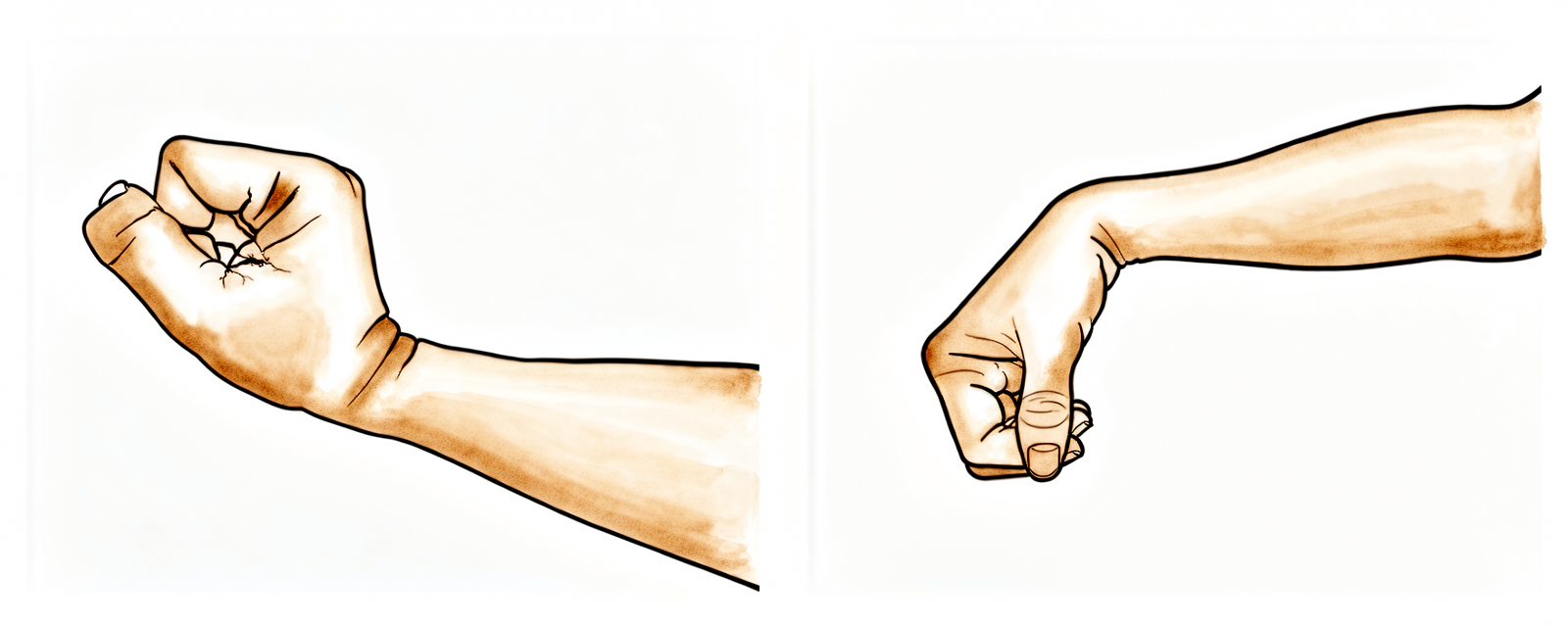
Flexão/extensão do punho
Apoie o cotovelo numa mesa e balance levemente o pulso para frente e para trás (ou apoie-o na borda de uma mesa ou poltrona, conforme ilustrado). Quando se sentir mais à vontade, use a outra mão na palma para empurrar o pulso para trás (com os dedos apontando para o teto) e depois na direção oposta (com os dedos apontando para o chão), mantendo os dedos relaxados. Mantenha cada alongamento por 15 segundos.
10 vezes em cada direção, 4 vezes ao dia.
Kieran Hirpara 4.0
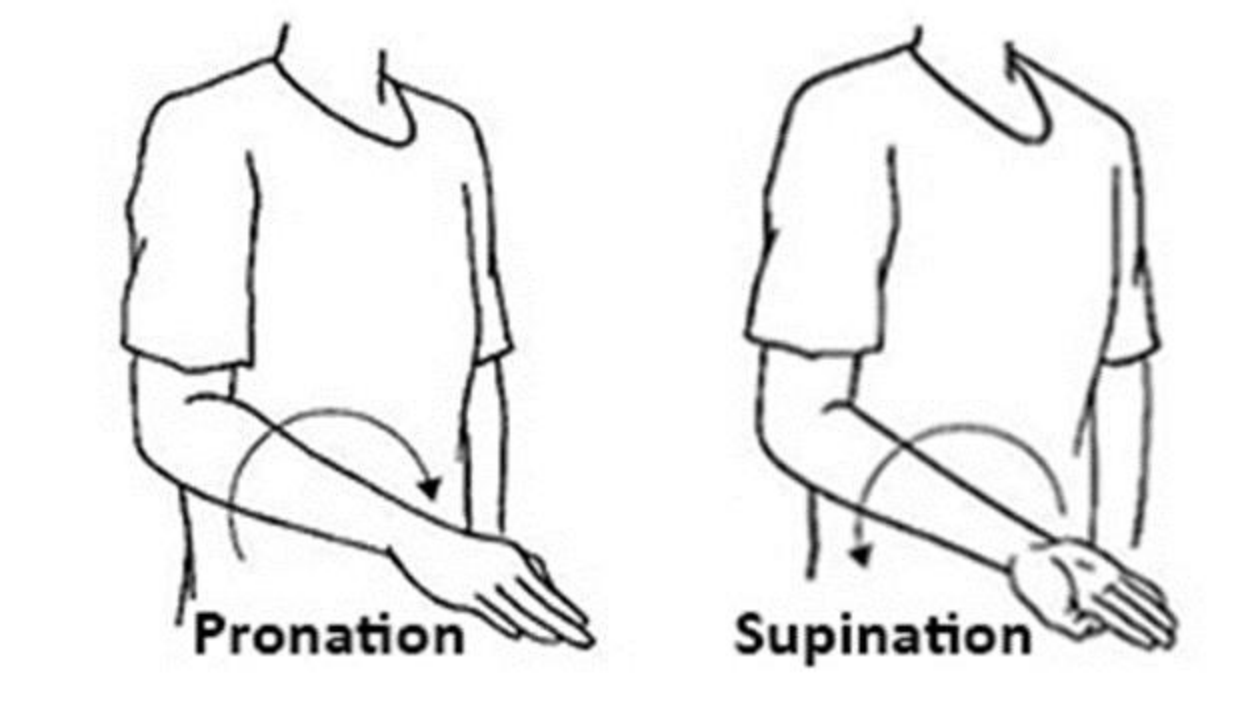
Rotação do antebraço (pronação / supinação)
Com o cotovelo junto ao corpo e o antebraço em posição neutra (polegar para cima), gire suavemente a palma da mão para cima, em direção ao teto (supinação); mantenha essa posição por 3–5 segundos e depois volte à posição neutra. Em seguida, repita o movimento virando a palma da mão para baixo, em direção ao chão (pronação). Não afaste o cotovelo do corpo. Você pode auxiliar o movimento com a outra mão, mantida na altura do pulso.
10 vezes em cada direção, 4 vezes ao dia.
Kieran Hirpara 4.0
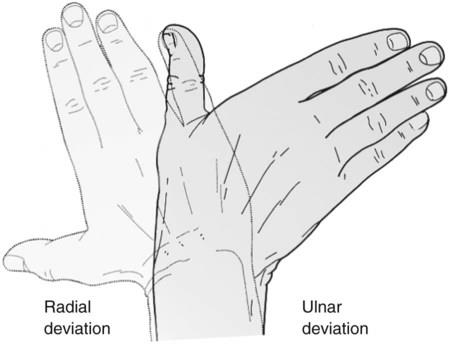
Desvio ulnar/radial
Coloque a mão e o antebraço sobre uma superfície plana. Mantendo o antebraço imóvel, mova suavemente o pulso e a mão de um lado para o outro (conforme ilustrado).
10 vezes, 4 vezes ao dia
Kieran Hirpara 4.0
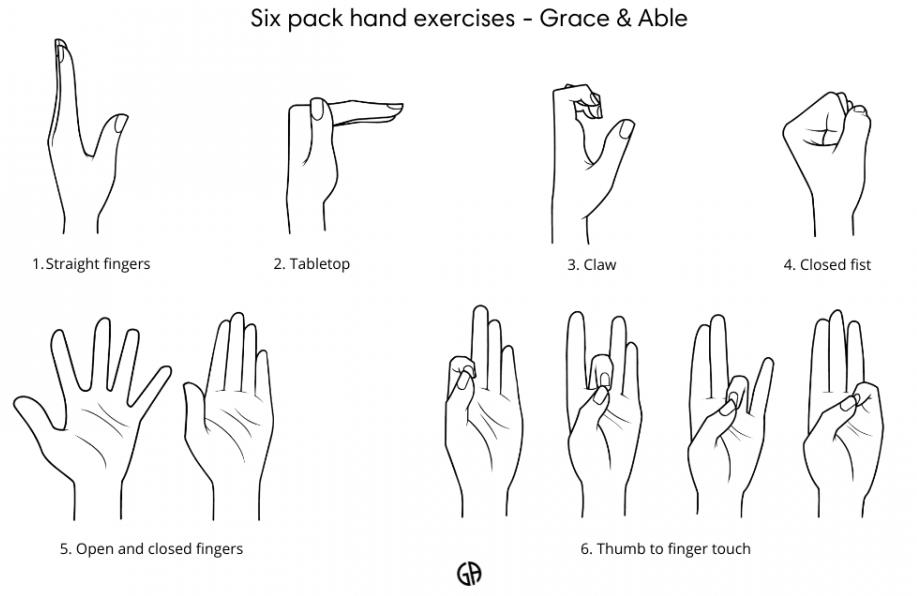
Exercícios para as mãos – “six pack”
Com a mão à sua frente e o pulso reto, realize as seis posições indicadas: dedos esticados; posição “superfície de mesa” (dobrar nas articulações dos dedos, mantendo os dedos retos); posição “gancho” (dobrar as pontas dos dedos, com as articulações para cima); punho fechado com o polegar sobre os dedos; abrir os dedos e depois fechá-los novamente; e levar o polegar a cada ponta dos dedos, começando pelo indicador até o mindinho.
5–10 de cada um, 2–3 vez ao dia; progredir conforme tolerado.
Comece a realizar os exercícios abaixo somente sob orientação do Dr. Hirpara e do seu fisioterapeuta, respeitando sempre os limites e a amplitude de movimento que lhe foram indicados. Como a fratura está fixada por uma placa, o punho pode começar a se mover mais cedo, em vez de se aguardar a consolidação óssea. A flexão do punho, a rotação do antebraço e os movimentos laterais evitam a rigidez articular; já os seis exercícios específicos para a mão mantêm os dedos, o polegar e as articulações em movimento — dedos rígidos são um problema muito mais comum após esta cirurgia do que qualquer problema ósseo. Faça os exercícios com frequência, porém em pequenas sessões. Interrompa qualquer atividade que cause dor intensa no local da fratura.
Seu protocolo clínico
O restante desta página constitui o protocolo clínico acelerado para fratura do rádio distal tratada por redução aberta e fixação interna com placa volar. Esta seção deve ser entregue ao seu fisioterapeuta ou terapeuta da mão; cada fase abaixo começa com uma explicação simples, em língua portuguesa, sobre o que está ocorrendo.
Dias 1–4 após a cirurgia
Nos primeiros dias, o foco é proteger a fixação óssea, controlar o inchaço e manter os dedos, o punho, o antebraço, o cotovelo e o ombro em movimento. A bandagem cirúrgica permanece no local até o 3º dia, quando é afrouxada e o curativo é refeito. Mantenha a mão elevada durante o repouso; utilize-a para tarefas cotidianas leves (até 1–2 kg), dentro dos limites do conforto, e evite carregar peso com o braço, apertar objetos com força ou levantar cargas. Geralmente não é necessária uma tala, mas ela pode ser providenciada caso você volte ao trabalho ou se o punho apresentar maior dor.
Para o seu fisioterapeuta:
Antes do tratamento, verifique o raio-X do paciente, o relatório cirúrgico e seu histórico médico; consulte o cirurgião responsável sobre a estabilidade da fixação da fratura e o prognóstico provável.
Instruções e precauções
- Evite carregar peso com o braço, apertar objetos com força ou levantar cargas.
- Incentive o uso da mão afetada para atividades cotidianas leves (menos de 1–2 kg), dentro dos limites da dor e seguindo padrões normais de movimento.
Tratamento
- Tala: não é necessária, porém pode ser utilizada caso o paciente retorne ao trabalho ou apresente maior dor; considere uma tala termoplástica ou um suporte pronto para uso.
- Curativo: mantenha o curativo cirúrgico intacto até o 3º dia; a partir desse dia, reduza o volume da bandagem e refaça o curativo; oriente o paciente sobre o cuidado com a ferida.
- Edema: oriente sobre a importância de manter a mão elevada; aplique compressão e massagem retrógrada conforme necessário.
- Exercícios: oriente o paciente a realizar exercícios ativos para manter a amplitude de movimento dos dedos; incentive exercícios ativos para o punho, antebraço e dedos; promova também movimentos ativos regulares do cotovelo e ombro.
Semana 2–4 após a cirurgia
Os pontos são retirados no dia 10–14, e a massagem da cicatriz começa assim que a ferida estiver suficientemente cicatrizada. O programa de exercícios continua (os exercícios do “six pack” são interrompidos assim que os dedos recuperarem movimento total), e inicia-se o fortalecimento suave do punho por ativação muscular isométrica. Nesta fase, o punho ainda deve mover-se apenas graças à força muscular: ninguém, nem mesmo o próprio paciente, deve empurrar ou esticar o punho passivamente, pois a fratura ainda está em processo de consolidação. Continue evitando carregar peso, apertar com força e levantar objetos; são recomendadas tarefas cotidianas leves, com peso inferior a 1–2 kg. Não deve dirigir enquanto o punho estiver imobilizado; a permissão para dirigir será dada após a retirada da tala, conforme confirmado na consulta de acompanhamento.
Para o seu fisioterapeuta:
Avaliações
- Avaliações autorrelatadas: Escala de Avaliação do Punho pelo Paciente (PRWE) e Escala DASH (Disabilities of the Arm, Shoulder and Hand)
- Medições circunferenciais do edema
- Escala analógica visual da dor (VAS) ou escala numérica de dor
- Medições da amplitude de movimento ativo (AROM) por goniometria: mão e punho
- Avaliação subjetiva, incluindo adesão do paciente ao programa, uso funcional da mão nas atividades diárias e eventuais problemas/preocupações
Educação e precauções
- Evitar carregar peso com o braço, apertar com força ou levantar objetos
- Proibir movimentos passivos do punho
- Incentivar o uso da mão afetada em tarefas cotidianas leves (menos de 1–2 kg), dentro dos limites da dor e respeitando os padrões normais de movimento
- Proibir dirigir enquanto o punho estiver imobilizado; a permissão para dirigir será dada após a retirada da tala, conforme confirmado na avaliação
Manejo
- Ferida/cicatriz: retirada dos pontos no dia 10–14; iniciar o manejo da cicatriz conforme o progresso da cicatrização
- Edema: considerar o uso de bandagem de compressão, massagem retrógrada, mobilização manual do edema (MEM), banho de contraste e/ou elevação do membro, conforme necessário
- Exercícios: interromper os exercícios do “six pack” assim que a amplitude de movimento dos dedos for total; considerar exercícios passivos para dedos e polegar, como posicionamento e manutenção, caso a amplitude ativa da mão ainda não seja completa; manter os exercícios ativos de amplitude de movimento do punho; incentivar exercícios regulares de amplitude de movimento do cotovelo e ombro; iniciar o fortalecimento isométrico do punho
Solução de problemas
- Monitorar sinais de infecção da ferida, alterações sensoriais na mão ou sinais precoces da síndrome da dor regional complexa (CRPS)
- Identificar padrões de movimento anormais e intervir conforme necessário
Semana 4–6 após a cirurgia
Nesta fase, o fortalecimento começa de forma suave: a partir da 4ª semana, iniciam-se exercícios de fortalecimento dos dedos com baixa resistência, enquanto os exercícios isométricos de punho prosseguem e são gradualmente intensificados. Caso o exame radiográfico seja satisfatório e a fixação óssea esteja estável, podem ser iniciados estiramentos passivos suaves do punho (movimentando o punho com auxílio da outra mão ou do terapeuta) a partir da 4–6ª semana. A recuperação da amplitude de movimento continua sendo prioridade em relação ao fortalecimento muscular. Evite ainda qualquer carga de peso sobre o braço e levantamento de objetos pesados, mantendo o uso da mão para tarefas cotidianas leves.
Para o seu fisioterapeuta:
Avaliações
- Medições circunferenciais do edema
- Escala analógica visual de dor ou escala numérica de avaliação
- Medições goniométricas da amplitude de movimento ativo e análise da qualidade dos movimentos
- Avaliação subjetiva: adesão do paciente ao programa de exercícios, uso funcional da mão nas atividades diárias, bem como eventuais problemas ou preocupações
- Força de preensão, medida com dinamômetro (3 tentativas em cada membro)
Instruções e precauções
- Evitar carregar peso com o braço ou levantar objetos pesados
- Incentivar o uso da mão afetada em tarefas cotidianas leves (peso inferior a 1–2 kg), respeitando os limites de dor e os padrões normais de movimento
Tratamento
- Cicatrizes: manter o cuidado adequado com as cicatrizes conforme necessário
- Edema: prosseguir com terapia de compressão, massagem retrógrada, MEM e elevação do membro conforme indicado; interromper o banho de contraste
- Exercícios: manter os exercícios passivos para dedos e polegar caso a amplitude de movimento ainda não esteja completa; prosseguir com exercícios ativos de amplitude de movimento do punho; iniciar exercícios de fortalecimento dos dedos com baixa resistência a partir da 4ª semana; iniciar exercícios passivos suaves de punho a partir da 4–6ª semana, caso a fixação óssea esteja estável e o exame radiográfico seja satisfatório; incentivar movimentos ativos regulares de cotovelo e ombro; manter ou intensificar os exercícios isométricos de fortalecimento do punho
Solução de problemas
- Verificar a presença de sinais de SDRC ou dor no ombro
- Reavaliar o volume de exercícios recomendados em casa, priorizando a amplitude de movimento em detrimento do fortalecimento
- Caso a amplitude de movimento do punho esteja significativamente limitada, considerar o início de exercícios passivos suaves de amplitude de movimento do punho, mantendo a dor abaixo de 4/10 na escala VAS, mediante autorização do cirurgião
Semana 6–8 após a cirurgia
Nesta fase, inicia-se um retorno gradual às atividades normais ao longo das próximas 3 semanas. O fortalecimento do punho passa a envolver pesos leves (0.5–1.0 kg) ou faixas elásticas de baixa resistência; a resistência nos exercícios de fortalecimento dos dedos também é aumentada. Permanecem dois limites rígidos: não se deve carregar peso, levantar objetos pesados ou praticar esportes de contato até 12 semanas após a fratura. O fisioterapeuta avaliará a possibilidade de dar alta ao paciente quando houver amplitude de movimento completa e recuperação funcional adequada.
Para o seu fisioterapeuta:
Avaliações
- Medições circunferenciais do edema, conforme necessário
- Escala analógica visual de dor ou escala numérica de avaliação
- Medições da amplitude de movimento ativo com goniômetro
- Força de preensão
- Avaliação subjetiva do paciente
Instruções e precauções
- Retorno gradual às atividades normais ao longo das próximas 3 semanas
- Evitar carregar peso, levantar objetos pesados e praticar esportes de contato até 12 semanas após a fratura
Tratamento
- Cicatriz: manter o manejo da cicatriz conforme necessário
- Edema: manter o manejo do edema conforme necessário
- Exercícios: prosseguir com exercícios passivos para dedos e polegar caso a amplitude de movimento ainda não seja completa; manter exercícios ativos e passivos de amplitude de movimento do punho, se necessário; aumentar a resistência nos exercícios de fortalecimento dos dedos; iniciar exercícios de fortalecimento do punho utilizando pesos de 0.5–1.0 kg ou faixas elásticas de baixa resistência; aumentar progressivamente os pesos e a resistência no programa de fortalecimento do punho, conforme tolerância do paciente
Solução de problemas
- Caso haja melhora lenta da amplitude de movimento, considerar ou iniciar o uso de talas progressivas noturnas, talas tipo “luva de boxe” ou talas dinâmicas
- Monitorar quaisquer sinais de instabilidade do punho e tratar conforme indicado
- Considerar a alta do paciente quando houver amplitude de movimento completa e recuperação funcional adequada
- Considerar o encaminhamento de volta ao médico responsável caso haja estagnação do quadro e/ou resultados insatisfatórios
Este protocolo foi elaborado em colaboração com Sarah Farrell, BOccThy AHT, e Kristy Gerlach, BOccThy AHT.
Após seguir este protocolo
Este protocolo complementa as orientações gerais de recuperação fornecidas pelo consultório; consulte controle da dor pós-operatória, cuidados com a ferida e noções básicas sobre terapia da mão. Quanto à própria cirurgia e à lesão tratada, veja fixação da extremidade do rádio (ORIF) e fratura da extremidade do rádio. O plano em fases descrito acima está alinhado com as evidências científicas sobre a reabilitação após a fixação com placa bloqueável volar; sua recuperação contínua será orientada individualmente pelo fisioterapeuta ou terapeuta da mão, conforme a evolução do seu punho.
Referências
[1] Quadlbauer S, Pezzei C, Jurkowitsch J, et al. A mobilização imediata de fraturas da extremidade distal do rádio estabilizadas por placa bloqueada volar resulta em melhores desfechos a curto prazo em comparação com cinco semanas de imobilização: um estudo randomizado prospectivo. Arch Orthop Trauma Surg. 2022;142(5):1–11. https://pubmed.ncbi.nlm.nih.gov/34852677/ [2] Gutiérrez-Espinoza H, Araya-Quintanilla F, Olguín-Huerta C, et al. Eficácia da mobilização precoce versus tardia em pacientes com fratura da extremidade distal do rádio tratados com placa bloqueada volar: uma revisão sistemática e meta-análise. Hand Surg Rehabil. 2020;39(4):261–271. https://www.sciencedirect.com/science/article/abs/pii/S2468122920302231 [3] Lozano-Calderón SA, Souer S, Mudgal C, Jupiter JB, Ring D. Mobilização do punho após fixação com placa volar de fraturas da extremidade distal do rádio. J Bone Joint Surg Am. 2008;90(6):1297–1304. https://pubmed.ncbi.nlm.nih.gov/18519324/ [4] Miller LK, Jerosch-Herold C, Shepstone L. Eficácia das técnicas de controle do edema para o edema subagudo da mão: uma revisão sistemática. J Hand Ther. 2017;30(4):432–446. https://pubmed.ncbi.nlm.nih.gov/28807598/
Evidence & references
This is the clinical evidence summary written for health professionals. It is technical, and it lists the research this page was built from. You do not need to read it to understand your treatment or to make a decision about it.
Distal Radius Fracture (ORIF) — Post-operative Rehabilitation Evidence Brief
Topic scope: post-operative rehabilitation after open reduction and internal fixation (ORIF) of a distal radius fracture with a volar locking plate. This brief backs an early-motion-but-protected hand/wrist pathway delivered with hand therapy, where wrist motion begins early while bone-dependent loading (weight-bearing, heavy lifting, contact sport) is deferred until ~12 weeks. It does not cover the indications for surgery vs casting, nor fragment-specific/dorsal/bridge-plate constructs (which carry their own loading rules).
Defining principle of the rehab here: a volar locking plate is a fixed-angle construct stable enough to permit immediate wrist motion — the screws lock to the plate and hold the articular reduction independent of the cast. So (unlike a cast-treated fracture, and unlike a tendon or ligament repair) the wrist does not need weeks of immobilisation to protect the reduction: the rehab is an early-movement pathway — finger/forearm/wrist active motion and oedema control from day one, splint for comfort only, isometric then progressive strengthening from ~weeks 4–6. The one timeline that is not negotiable is bone healing: union takes ~6–12 weeks regardless of how the wrist feels, which is why weight-bearing, heavy lifting and impact are held to 12 weeks even once motion is comfortable.
A. PROCEDURE & CONSTRUCT — what the rehab is protecting
Volar locking plate fixation is the dominant operative construct for displaced distal radius fractures and is the reference standard against which other techniques are compared. Key surgical-outcome facts that shape the rehab:
- Volar locking plates restore and hold articular reduction reliably, and across randomised comparisons give equivalent or better functional outcomes than non-operative care and competing fixation methods (dorsal plating, intramedullary nailing, fragment-specific), with most differences favouring early function rather than final endpoint [JAAOS controversies review 2014; Hand Clinics plate-fixation review 2021; IM-nail-vs-volar-plate RCTs].
- The fixed-angle construct is the rationale for early motion. Because the locking screws hold the subchondral fragments rigidly, the plate — not a cast — maintains the reduction, so wrist motion can start before union without displacing the fracture [Hand Clinics 2021; accelerated-rehab RCT, JBJS 2014].
- In older patients the operative-vs-conservative outcome gap is small. A 3-year RCT in patients >70 found volar plating and non-operative care converged on similar patient-reported function — context that keeps post-operative rehab pragmatic and patient-centred rather than aggressive [BMC Musculoskelet Disord 2022; Hand Clinics geriatric review 2021].
- Recovery is gradual. Range, grip and patient-reported scores improve steadily over the first 3–6 months; the construct permits early motion but does not accelerate the biology of healing or the return of grip strength.
B. REHABILITATION / HAND-THERAPY EVIDENCE
The central rehab questions for this construct are (1) when to start wrist motion, (2) how much supervised therapy is needed, and (3) what the strengthening timeline should be. The evidence is clear on the first, nuanced on the second, and consensus-driven on the third.
- Early motion is safe and gives a short-term advantage. Multiple RCTs and a systematic review show that starting wrist motion early after volar plating improves short-term ROM, grip and comfort without compromising the radiographic reduction [accelerated-rehab RCT, JBJS 2014; early-vs-late motion RCT, HAND 2018; Hand Therapy systematic review 2020]. This is the direct warrant for the day-1 finger/forearm/wrist program in this protocol.
- "Early" need not mean "immediate," and the advantage washes out by 3–6 months. The landmark trial comparing wrist mobilisation at ~2 weeks vs ~6 weeks found the two groups equivalent by 3–6 months [Lozano-Calderón / JBJS 2008]. So there is a genuine early benefit but no penalty for a measured, comfort-led progression — which is exactly why this protocol can be unhurried.
- Routine supervised physiotherapy adds little over a coached home program for most patients. Systematic reviews and RCTs repeatedly find that a structured home exercise program preceded by instruction/coaching performs as well as formal supervised therapy for uncomplicated cases, and that prescribed exercise programs add limited benefit over advice for impairment/activity outcomes [HEP-vs-supervised SR, J Hand Ther 2014; J Physiother SR 2017; Hand Clinics "is therapy needed?" 2021; Arch Orthop Trauma Surg 2020]. This supports a home-program-first model with hand-therapy review, escalating supervision for stiffness, oedema or slow progress — the structure of this protocol.
- Oedema control and scar/tendon-glide management are standard therapy elements. Elevation, retrograde massage, manual oedema mobilisation and (early) compression are the evidence-informed oedema toolkit [edema-management SR, J Hand Ther 2017]; scar massage to keep the flexor tendons gliding under the volar incision is consensus hand-therapy practice rather than RCT-derived.
Phased post-op timeline (volar locking plate, early-motion pathway)
Phases match this topic's synthesis.md. Timings are post-operative weeks; the 12-week
loading limit is referenced to the fracture (injury) date.
| Phase | Window | Splint | Motion / use | Strengthening | Notes |
|---|---|---|---|---|---|
| I — Protect & move | Days 1–4 | Comfort only, not routine | Active finger (six-pack), wrist, forearm, elbow & shoulder ROM from day 1; light ADL < 1–2 kg within pain limits | — | Surgical bandage to day 3, then redress. Oedema control + elevation. No weight-bearing, gripping or lifting |
| II — Active range & oedema | Week 2–4 | Comfort/work only (no driving while splinted) | Continue active wrist ROM (no passive yet); six-pack stops once fingers full | Isometric wrist activation begins | Sutures out day 10–14; start scar massage once healed. Watch for CRPS. PRWE/DASH baseline |
| III — Passive range & light load | Week 4–6 | Off | Add gentle passive wrist stretches at 4–6 wk if x-ray satisfactory & fixation stable | Finger strengthening (low resistance) from wk 4; upgrade isometrics | Movement still prioritised over strength |
| IV — Graded strengthening & return | Week 6–8 | Off | Restore/maintain full active & passive ROM | Wrist strengthening with 0.5–1.0 kg / light theraband, progress as tolerated | Graded return over ~3 wk. No weight-bearing, heavy lifting or contact sport until 12 weeks post-fracture. Discharge on full ROM + functional return |
The phase structure mirrors published surgeon/hand-therapy ORIF protocols (early ROM → scar + oedema → passive range + light resistance → progressive strengthening, with heavy load/sport held to ~12–16 weeks) [Physiopedia Colles' ORIF protocol; institutional ORIF rehab guidelines].
C. KEY CONTROVERSIES / EVIDENCE QUALITY
- How early to mobilise. Early motion (immediate–2 wk) gives a real short-term ROM/grip/comfort advantage that equalises by 3–6 months vs starting at ~6 weeks. The evidence therefore supports early motion but does not mandate aggression — a measured progression is fully defensible. Moderate–strong (multiple RCTs + SR).
- Supervised therapy vs coached home program. For uncomplicated fractures the best available evidence finds no consistent benefit of routine formal physiotherapy over a well-instructed home program; supervision is best targeted to stiffness, oedema, CRPS risk or slow progress. Moderate (SRs/RCTs), but heterogeneous.
- Strengthening and return-to-load timing. The week-by-week strengthening ramp and the 12-week loading hold are construct- and biology-based consensus, drawn from surgeon/hand- therapy protocols rather than a strengthening-timing RCT. Weak/consensus.
- Whether the wrist needs any immobilisation at all. Some trials report that omitting post-op immobilisation does not worsen outcomes after volar plating, supporting the "splint for comfort only" stance here. Moderate.
D. EVIDENCE STRENGTH FLAGS (summary)
- STRONG / MODERATE–STRONG (RCT / SR): early wrist motion after volar plating is safe and improves short-term ROM/grip/comfort without loss of reduction (accelerated-rehab RCT JBJS 2014; early-vs-late RCT HAND 2018; Hand Therapy SR 2020); ~2-wk vs ~6-wk mobilisation equivalent by 3–6 months (Lozano-Calderón JBJS 2008).
- MODERATE: volar locking plate is a reliable fixed-angle construct with equivalent/favourable outcomes vs alternatives (JAAOS 2014; Hand Clinics 2021); operative-vs-conservative outcomes converge in the elderly (BMC 2022); coached home program ≈ supervised therapy for uncomplicated cases (J Hand Ther 2014; J Physiother 2017; Hand Clinics 2021); evidence-based oedema management (J Hand Ther 2017).
- WEAK / CONSENSUS: the detailed strengthening ramp and 12-week loading limit (surgeon & hand-therapy protocols; biology- and construct-based, not trial-derived); scar/tendon-glide massage practice.
CITATIONS
RAG corpus (180,000+ Orthopaedic articles)
- Accelerated rehabilitation compared with a standard protocol after distal radial fractures treated with volar open reduction and internal fixation. J Bone Joint Surg Am. 2014. DOI: 10.2106/jbjs.m.00860
- Wrist mobilization following volar plate fixation of fractures of the distal part of the radius. J Bone Joint Surg Am. 2008. DOI: 10.2106/jbjs.g.01368
- Early versus late motion following volar plating of distal radius fractures. HAND. 2018. DOI: 10.1177/1558944718787880
- A systematic review of how daily activities and exercises are recommended following volar plating of distal radius fractures and the efficacy and safety of early versus late mobilisation. Hand Therapy. 2020. DOI: 10.1177/1758998320967032
- AAOS/ASSH Clinical Practice Guideline Summary: Management of Distal Radius Fractures. J Am Acad Orthop Surg. 2022. DOI: 10.5435/jaaos-d-21-00719
- Controversies in the management of distal radius fractures. J Am Acad Orthop Surg. 2014. DOI: 10.5435/jaaos-22-09-566
- Plate fixation of distal radius fractures. Hand Clinics. 2021. DOI: 10.1016/j.hcl.2021.02.008
- Non-operative treatment or volar locking plate fixation for dorsally displaced distal radius fractures in patients over 70 years — a three-year follow-up of a randomized controlled trial. BMC Musculoskelet Disord. 2022. DOI: 10.1186/s12891-022-05394-7
- Distal radius fracture: HEP versus supervised therapy — a systematic review. J Hand Ther.
- DOI: 10.1016/j.jht.2013.08.017
- Prescribed exercise programs may not be effective in reducing impairments and improving activity during upper limb fracture rehabilitation: a systematic review. J Physiother. 2017. DOI: 10.1016/j.jphys.2017.08.009
- Is therapy needed after distal radius fracture treatment — what is the evidence? Hand Clinics.
- DOI: 10.1016/j.hcl.2021.02.012
- Rehabilitation after distal radius fractures: is there a need for immobilization and physiotherapy? Arch Orthop Trauma Surg. 2020. DOI: 10.1007/s00402-020-03367-w
- Management of complications of distal radius fractures. Hand Clinics. 2015. DOI: 10.1016/j.hcl.2014.12.002
- A comparison of the accuracy of two sets of diagnostic criteria in the early detection of complex regional pain syndrome following surgical treatment of distal radial fractures. J Hand Surg Eur Vol. 2012. DOI: 10.1177/1753193412469142
Distal radius / rehabilitation literature (URLs)
- AAOS/ASSH Clinical Practice Guideline Summary: Management of Distal Radius Fractures (full summary). PMC. https://pmc.ncbi.nlm.nih.gov/articles/PMC9196973/
- Practical application of the 2020 distal radius fracture AAOS/ASSH clinical practice guideline: a clinical case. PMC. https://pmc.ncbi.nlm.nih.gov/articles/PMC9035062/
- Rehabilitation for distal radial fractures in adults (Cochrane-style review). PMC. https://pmc.ncbi.nlm.nih.gov/articles/PMC9250132/
- Rehabilitation after distal radius fractures: opportunities for improvement. PMC. https://pmc.ncbi.nlm.nih.gov/articles/PMC10569825/
- Rehabilitation following surgically treated distal radius fractures: do immobilization and physiotherapy affect the outcome? PMC. https://www.ncbi.nlm.nih.gov/pmc/articles/PMC8343619/
Published rehab protocols (surgeon / hand-therapy — basis for the phase structure)
- British Society for Surgery of the Hand / British Association of Hand Therapists — Distal Radius Fractures Working Group rehabilitation guidance (2024). https://www.hand-therapy.co.uk/_userfiles/pages/files/distal_radius_fractures_working_group_2024.pdf
- Colles' Fracture Post-Operative Rehabilitation Protocol. Physiopedia. https://www.physio-pedia.com/Colles%E2%80%99_Fracture_Post_Operative_Rehabilitation_Protocol
- Distal Radius ORIF Rehabilitation Guidelines. University of Virginia Department of Orthopaedic Surgery. https://med.virginia.edu/orthopaedic-surgery/wp-content/uploads/sites/242/2024/09/Distal-radius-ORIF.pdf
- Distal Radius ORIF Rehabilitation. Jared Lee, MD. https://jaredleemd.com/pdf/distal-radius-orif-rehabilitation/