Patients › Rehabilitation
Fusão do punho
Um plano de recuperação após a artrodese total do punho: nesse procedimento, o punho desgastado é fixado de forma rígida por meio de uma placa dorsal, de modo que não haja mais movimento intencionalmente. Desde o início, os dedos, o polegar e a rotação do antebraço permanecem em movimento, e a força de preensão é gradualmente recuperada após a consolidação óssea.
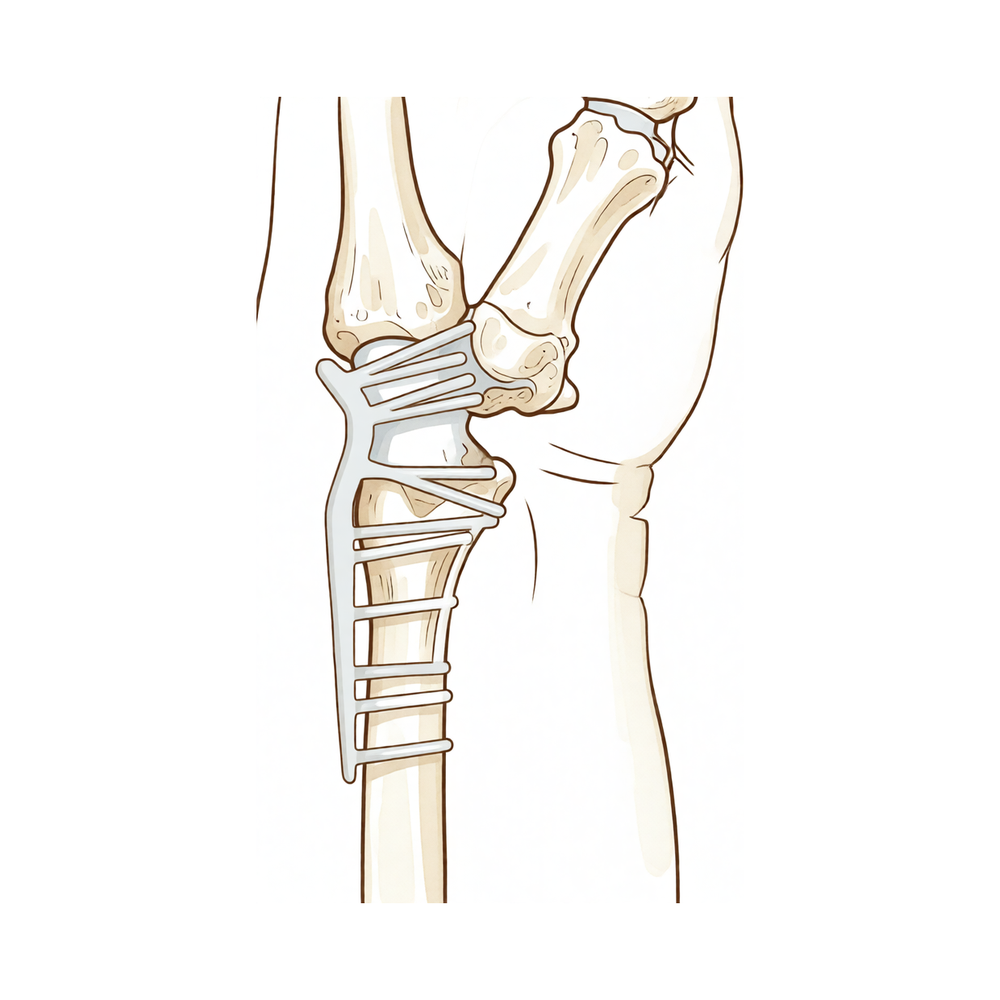
Este protocolo orienta sua recuperação após uma fusão total do punho (também chamada de artrodese do punho, procedimento que une de forma permanente as estruturas do punho desgastadas, impedindo qualquer movimento) realizada pelo Dr. Kieran Hirpara no Mater Private Hospital Rockhampton. Ele começa com um programa de exercícios para ser feito em casa, seguido pelo protocolo clínico estruturado elaborado para seu terapeuta de mão: leve esta página ou seu arquivo PDF à primeira sessão de terapia, para que sua reabilitação seja coordenada corretamente. Seu terapeuta poderá ajustar o plano conforme a evolução da sua recuperação.
Caso tenha alguma dúvida ou preocupação em relação à ferida cirúrgica, entre em contato com o consultório. Geralmente, é útil tirar uma foto da ferida e enviá-la por e-mail para análise.
O que esperar
A fusão total do punho é indicada para casos em que todas as articulações do punho estão desgastadas (artrite em estágio avançado, ou “pancarpal”) e causam dor ao se mover. Em vez de tentar manter em movimento uma articulação já desgastada, a cirurgia remove intencionalmente o movimento: o osso do antebraço (rádio) é unido aos ossos da mão (metacarpos) por meio de uma placa dorsal posicionada na parte de trás do punho, fixando-o numa posição de leve inclinação para trás (leve extensão), ideal para o ato de segurar objetos. Nas semanas seguintes, os ossos se unem, formando um único bloco sólido.
O conceito central da recuperação é o oposto da maioria das cirurgias: o objetivo é que o punho deixe de se mover; isso é o tratamento, não uma complicação. Portanto, não há meta de recuperar o movimento do punho, nem exercícios para dobrar ou esticar o punho. Em vez disso, toda a reabilitação visa proteger duas áreas que a fusão não afeta, mas que são fundamentais para a função da mão:
- Os dedos e o polegar devem permanecer totalmente móveis. A rigidez dos dedos é o principal fator que compromete o resultado da fusão; por isso, o movimento dos dedos e do polegar é incentivado desde o primeiro dia.
- A rotação do antebraço (girar a palma da mão para cima e para baixo) é preservada. Esse movimento não é afetado pela fusão e assume grande parte da função que antes cabia ao punho (como girar chaves, torneiras e maçanetas); por isso, essa mobilidade deve ser mantida desde o início.
Como a placa dorsal fixa os ossos firmemente, utiliza-se uma tala por cerca de seis semanas, período em que os ossos se unem; nesse tempo, o movimento dos dedos e do antebraço é estimulado, em vez de restringido. Após o cirurgião confirmar a união óssea, inicia-se o fortalecimento da força de preensão. Muitas pessoas têm excelente funcionalidade após a fusão do punho; como a dor ao segurar objetos desaparece, a força de preensão costuma aumentar em relação ao estado anterior à cirurgia.
Precauções e limitações
- NÃO tente mover o próprio punho: ele foi projetado para ficar completamente fusionado. Não existem exercícios de flexão do punho, nem agora nem nunca.
- Mantenha os dedos, o polegar e a rotação do antebraço em movimento pleno desde o primeiro dia: esta é a coisa mais importante que você pode fazer pela sua mão.
- Use a tala ou curativo conforme orientado, para conforto e proteção, até que o osso esteja completamente fusionado; mantenha-os limpos e secos.
- NÃO faça esforços de carga ou apertos fortes, e evite levantar objetos mais pesados que uma xícara leve, até que a fusão esteja consolidada e você receba autorização médica (geralmente após seis a oito semanas): cargas excessivas antes da união podem comprometer a placa ou a própria fusão óssea.
- NÃO dirija enquanto estiver usando a tala ou sem condições de controlar o veículo com segurança; a volta à direção só é permitida após a retirada da tala e quando você demonstrar capacidade de manobrar o volante, conforme avaliação médica.
Para orientações sobre cuidados com a ferida, inchaço e cicatrização, consulte o guia de cuidados com feridas do consultório.
Seus exercícios
Kieran Hirpara 4.0
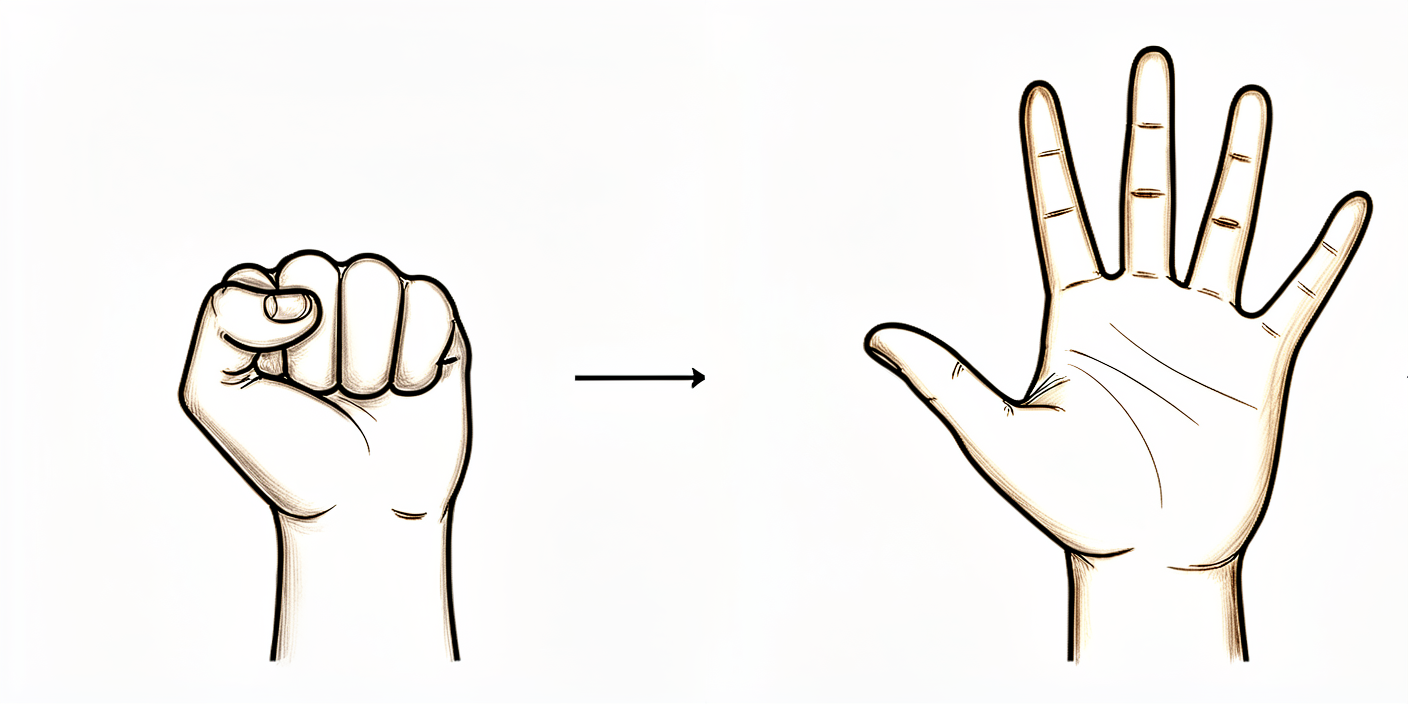
Movimento dos dedos e do polegar
Mantenha os dedos e o polegar em movimento constante desde os primeiros dias. Faça um punho fechado por completo, depois abra a mão amplamente e estique os dedos; em seguida, toque com o polegar na ponta de cada dedo, um por um. O pulso não deve se mover — isso é normal e esperado —, mas os dedos e o polegar devem permanecer soltos e totalmente móveis, pois a rigidez nessa região é o principal fator que limita a função da mão após uma artrodese do pulso.
10 vezes cada um, várias vezes ao dia, desde o primeiro dia.
Kieran Hirpara 4.0
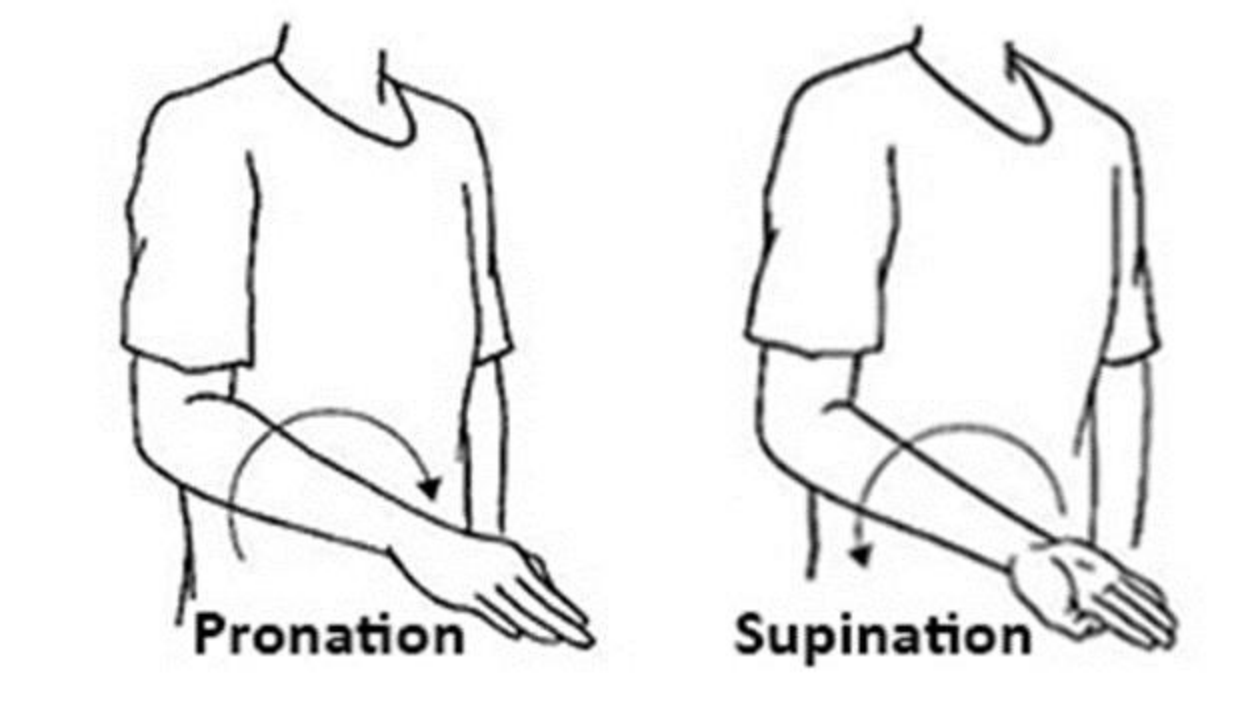
Rotação do antebraço (palma da mão para cima/para baixo)
Com o cotovelo pressionado contra o corpo e dobrado em um ângulo reto, gire suavemente a palma da mão para cima, em direção ao teto, e depois para baixo, em direção ao chão. A fusão não afeta esses movimentos de rotação; portanto, eles permanecem livres. É importante manter essa mobilidade, pois a rotação do antebraço realiza grande parte do trabalho que antes era feito pelo pulso — como girar uma chave, uma maçaneta ou uma torneira.
10 vezes em cada direção, 2–3 vezes ao dia.
Kieran Hirpara 4.0
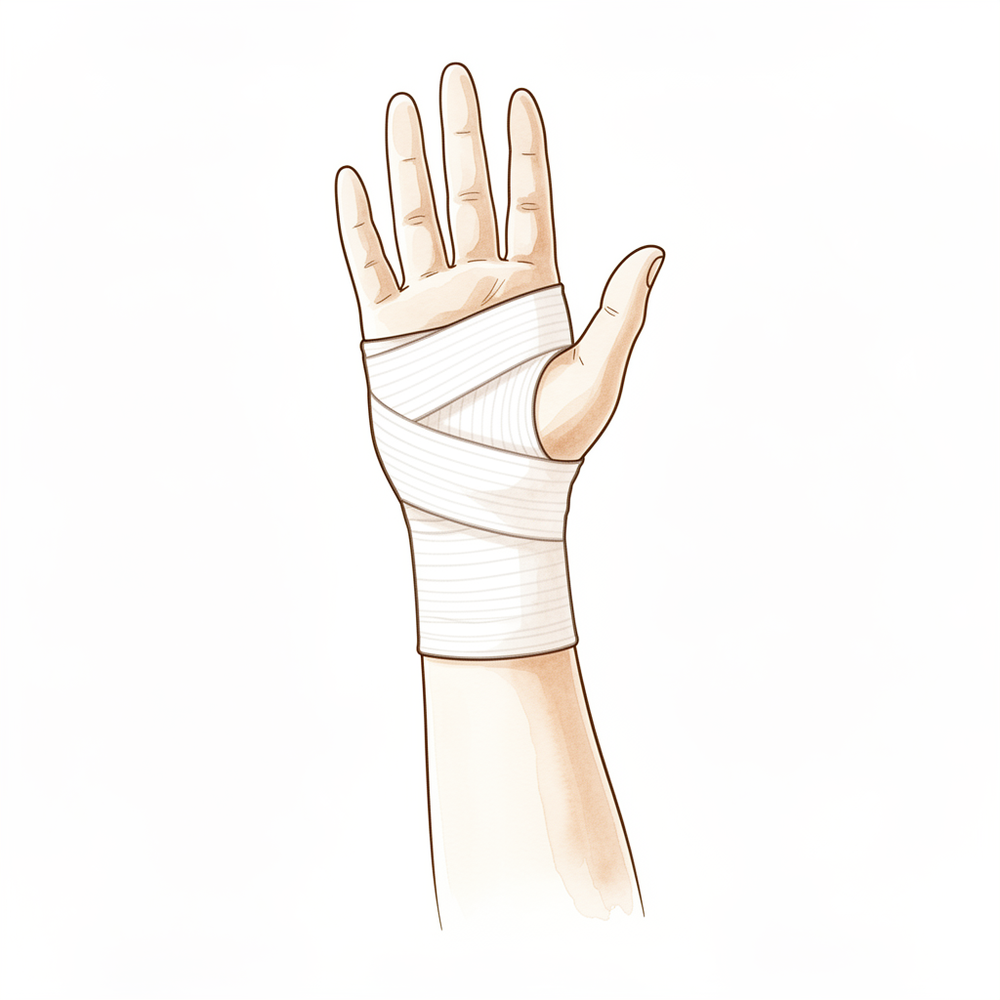
Controle do inchaço
Nas primeiras semanas, mantenha a mão elevada sobre travesseiros, acima do nível do coração, sempre que estiver sentado ou deitado. Além disso, abra e feche os dedos suavemente. Isso ajuda a eliminar o inchaço que sempre ocorre após uma cirurgia na mão; menos inchaço faz com que os dedos se movam com mais facilidade e a ferida cicatrize mais rapidamente.
Mantenha a mão elevada sempre que estiver em repouso; abra e feche os dedos (bombeamento) 10 vezes, a cada hora enquanto estiver acordado.
Kieran Hirpara 4.0
Cuidados com as cicatrizes
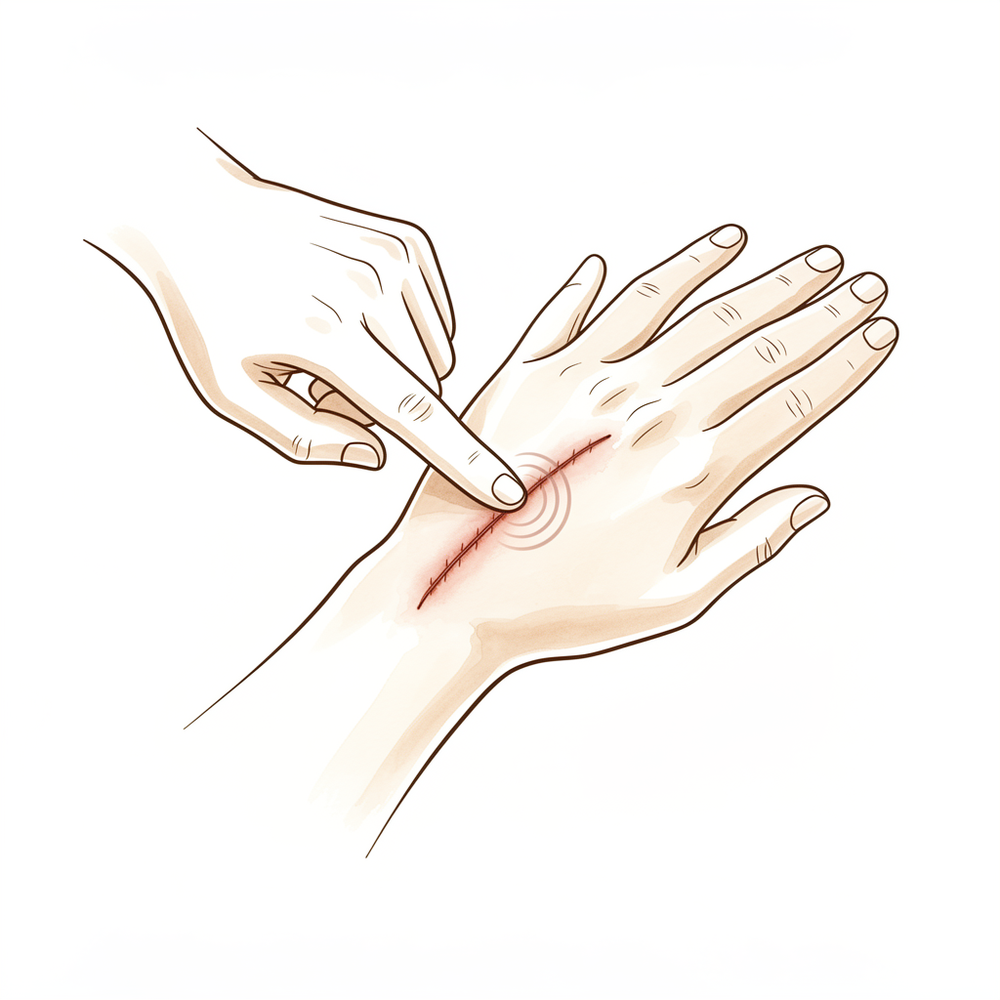
Após a ferida ter cicatrizado completamente e não haver mais crosta, massageie a cicatriz na parte de trás do seu pulso com um pouco de hidratante, fazendo pequenos círculos firmes. Isso mantém a cicatriz macia e evita que ela adira à placa e aos tendões que estão por baixo. O seu terapeuta da mão iniciará essa massagem no momento adequado.
Alguns minutos, 2–3 vezes ao dia, após a cicatrização.
Kieran Hirpara 4.0
Fortalecimento da preensão após a consolidação óssea
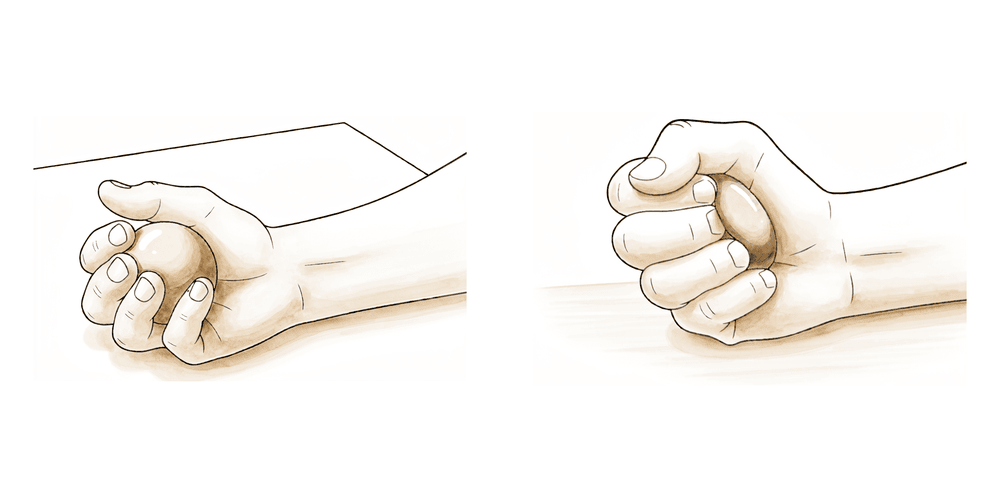
Um exercício posterior — somente após a consolidação da fusão (geralmente após seis a oito semanas) e quando você tiver autorização médica. Aperte uma bola macia ou massa terapêutica na palma da mão, mantenha a pressão por alguns instantes e depois solte. O punho fusionado oferece à mão uma base estável e sem dor para realizar o aperto; por isso, a força de preensão costuma melhorar nos meses seguintes. Prossiga de forma gradual.
10–15 compressões, 2–3 vezes ao dia, após confirmação da consolidação óssea.
Estes são os exercícios contidos no seu folheto informativo. Comece a realizá-los somente sob orientação do Dr. Hirpara e do seu terapeuta ocupacional. Os exercícios iniciais visam proteger tudo o que a fusão deixou livre (movimento dos dedos e do polegar, rotação do antebraço e controle do inchaço); nenhum deles envolve o punho, que permanece imóvel. O fortalecimento da preensão pertence a uma fase posterior e não deve ser iniciado até que a fusão esteja consolidada e você receba autorização específica. Interrompa qualquer exercício que cause dor aguda na parte dorsal do punho.
Seu protocolo clínico
O restante desta página descreve o protocolo clínico em etapas para a reabilitação após artrodese total do punho. Esta seção deve ser entregue ao seu terapeuta de mão; cada fase começa com uma explicação simples, em linguagem acessível, sobre o que está ocorrendo. Não há meta específica para amplitude de movimento do punho: as articulações radiocarpal (e, geralmente, a terceira articulação carpometacarpal) são fundidas por meio de uma placa dorsal. O protocolo tem como objetivo manter a amplitude de movimento dos dedos, a rotação do antebraço e o controle do edema enquanto ocorre a fusão óssea; posteriormente, visa desenvolver a força de preensão sobre a estrutura já estabilizada.
Antes de iniciar o tratamento, verifique o relatório cirúrgico do paciente e seu histórico médico. Entre em contato com o cirurgião responsável para obter informações sobre a placa de artrodese dorsal utilizada, se a terceira articulação CMC foi incluída ou preservada na fusão, a posição final do punho após a cirurgia, eventuais enxertos ósseos empregados e o estado de consolidação óssea. O Dr. Hirpara realiza a fusão do punho em leve extensão, utilizando uma placa dorsal; a fixação é estável, por isso utiliza-se uma tala leve ou curativo confortável, em vez de imobilização rígida prolongada. Nesse contexto, a prioridade é promover movimentos precoces dos dedos e do antebraço.
Fase I — proteger a estrutura cirúrgica e manter a mobilidade das articulações livres (semanas 0 a 6)
Nas primeiras seis semanas, protege-se a fusão óssea em processo de cicatrização, enquanto se mantém totalmente móvel tudo o que não foi fusionado. Utiliza-se uma tala leve ou curativo para conforto. Não há movimento do punho (a estrutura cirúrgica é rigidamente fixada por design); o foco é exclusivamente nos dedos, polegar, antebraço e no controle do inchaço.
Para o seu fisioterapeuta:
Instruções e precauções - Utilizar tala/curativo para conforto e proteção até a constatação clínica e radiográfica da união óssea; não é necessária imobilização rígida prolongada, dado que a fixação com placa é estável - Proibido qualquer movimento do punho: a estrutura radiocárpica/CMC está fusionada; não há meta de amplitude de movimento a ser atingida - Proibido o aperto com força ou levantar pesos além de um objeto leve até que a união óssea seja confirmada - Ficar atento à rigidez digital: esse é o principal risco para o resultado final após a fusão do punho
Manejo clínico - Ferida: aplicar curativos cirúrgicos conforme orientação; retirar pontos e avaliar tala/raios-X por volta dos 10–14 dias; monitorar sinais de infecção - Edema: manter a mão elevada acima do nível do coração, realizar movimentos suaves de bombeamento dos dedos e aplicar gelo conforme necessário - Exercícios: realizar desde o primeiro dia movimentos ativos de amplitude de movimento ativa dos dedos e polegar (fazer um punho fechado e depois estender completamente; movimentos de oposição do polegar); movimentos ativos de pronação/supinação do antebraço; movimentos ativos de amplitude de movimento do ombro e cotovelo; proibido qualquer movimento do punho e qualquer esforço de aperto com resistência
Critérios para avançar para a fase seguinte - Ferida completamente cicatrizada; amplitude de movimento digital total ou quase total mantida; sinais radiográficos iniciais de união óssea por volta da sexta semana
Fase II — confirmar a união óssea, iniciar o fortalecimento da preensão (semanas 6 a 12)
Por volta da sexta semana, a união óssea geralmente já é visível em radiografias; uma vez confirmada pelo cirurgião, a tala é retirada e inicia-se o fortalecimento da preensão. Os exercícios para antebraço e dedos continuam; o punho permanece imobilizado e sem carga apenas até que a união seja confirmada.
Para o seu fisioterapeuta:
Avaliações - Confirmar o estado da união óssea com o cirurgião responsável antes de iniciar a carga; avaliar amplitude de movimento digital; arco de rotação do antebraço; nível inicial de força de preensão; examinar a ferida e a cicatriz
Instruções e precauções - Iniciar o fortalecimento da preensão e cargas leves apenas após confirmação da união pelo cirurgião (geralmente entre seis e oito semanas) - Os implantes localizados na face dorsal do punho encontram-se abaixo da pele; observar se há proeminência ou irritação e relatar imediatamente - Manter como prioridade a manutenção da amplitude de movimento digital completa
Tratamento - Exercícios: fortalecimento progressivo da preensão (bola macia → massa de modelar → pinças graduadas) após confirmação da união; iniciar tratamento da cicatriz após cicatrização da ferida; prosseguir com rotação do antebraço e amplitude de movimento digital completa; introduzir uso funcional leve da mão - Orientar o paciente de que a rotação do antebraço passa a substituir o movimento do punho perdido nas atividades diárias (abrir fechaduras, digitar, girar objetos)
Critérios para avançar - União óssea confirmada; preensão leve sem dor; amplitude de movimento digital completa; cicatriz maleável
Fase III — fortalecimento e retorno à carga (semanas 12 e seguintes)
Após a consolidação da fusão óssea, não há mais restrições de movimento a serem respeitadas; a mão pode ser submetida à carga conforme tolerância, aumentando-a gradualmente. A força de preensão e a força geral da mão continuam a melhorar por vários meses, muitas vezes superando os níveis pré-operatórios, pois a preensão agora é indolor.
Para o seu fisioterapeuta da mão:
Avaliações - Força de preensão comparada ao lado contralateral; testes funcionais e específicos para atividades laborais/tarefas; tolerância aos implantes
Instruções e precauções - Não há restrições de movimento após a consolidação; aumente a carga conforme tolerância - A carga pesada/manual deve ser introduzida gradualmente; os ganhos de força continuam até cerca de doze meses
Tratamento - Exercícios: fortalecimento progressivo da preensão e do antebraço com resistência; retorno gradual a tarefas funcionais e laborais; manter os exercícios para manutenção da mobilidade digital, se ainda necessários - Considere a alta quando a força de preensão for funcional e em progressão, e o paciente conseguir realizar as tarefas diárias; encaminhe novamente ao médico responsável caso haja rigidez digital, irritação persistente dos implantes ou resultado insatisfatório
Critérios para retorno à carga - Consolidação óssea comprovada; força de preensão funcional e em progressão; capacidade de realizar tarefas sob carga sem dor
Retorno às atividades e ao trabalho
O uso leve e cotidiano da mão (comer, escrever, cuidados pessoais básicos) é incentivado desde o início, desde que feito com conforto e sem apertar com força ou levantar objetos mais pesados que uma xícara leve, antes da consolidação da fusão óssea. Como não se deve dirigir enquanto se usa a tala ou quando não se consegue controlar o veículo com segurança, planeje contar com ajuda para o transporte nas primeiras semanas; a volta à direção só ocorre após a retirada da tala e quando o paciente demonstrar capacidade de manobrar o volante, conforme confirmado na consulta de acompanhamento.
Apertar objetos com força, levantar pesos e puxar coisas só devem ser feitos após a consolidação da fusão (geralmente após seis a oito semanas) e mediante autorização médica; nesse momento, essas atividades serão reintroduzidas gradualmente. A maioria dos pacientes retorna ao trabalho de escritório ou a atividades leves por volta dos três meses; atividades mais pesadas ou manuais vêm depois, seguindo uma progressão baseada em critérios clínicos avaliados pelo Dr. Hirpara e pelo fisioterapeuta da mão, e não apenas pelo calendário. A força da mão continua a melhorar por até um ano; como o pulso desgastado já não causa dor, muitas pessoas conseguem apertar com mais força e usar a mão com maior liberdade do que antes da cirurgia.
Após seguir este protocolo
Este protocolo complementa as orientações gerais de recuperação fornecidas pela clínica: consulte controle da dor pós-operatória, cuidados com a ferida e tratamento das cicatrizes. O plano em fases descrito acima baseia-se em resultados publicados e diretrizes de reabilitação após artrodese total do punho; sua recuperação continuará sendo acompanhada individualmente pelo Dr. Hirpara e pelo seu terapeuta de mão, conforme a evolução da fusão óssea e do estado da sua mão.
Evidence & references
This is the clinical evidence summary written for health professionals. It is technical, and it lists the research this page was built from. You do not need to read it to understand your treatment or to make a decision about it.
Total Wrist Arthrodesis — Procedure Outcomes & Post-operative Rehabilitation (Radiocarpal Fusion, Dorsal Plate)
Topic scope: post-operative rehabilitation after total wrist arthrodesis — permanent surgical fusion of the radiocarpal (and usually the third carpometacarpal) joints with a dorsal arthrodesis plate, for end-stage pancarpal (panarticular) arthritis of the wrist. This is a salvage reconstruction that deliberately abolishes wrist motion, not a motion-preserving operation, so the rehabilitation has no wrist-ROM goal. It is built around preserving the joints the fusion leaves free — the fingers, thumb and forearm rotation — and controlling oedema while the fusion unites, then progressive grip loading once united.
Defining principle of the rehab here: total wrist fusion trades motion for a stable, pain-free wrist. The whole wrist is set solid (radius → metacarpals) in slight extension; loss of wrist movement is the intended endpoint, not a deficit to be rehabilitated. Modern dorsal locking-plate fixation is rigid enough that prolonged casting is unnecessary — so the deliberate priorities are early digital and forearm-rotation motion (digital stiffness is the principal threat to a good result) and swelling control, with grip strengthening deferred until radiographic union (typically 6–8 weeks). The single branch point is union status: loading is gated on the surgeon confirming the fusion has consolidated, after which there are no motion restrictions to protect.
A. PROCEDURE OUTCOMES (total wrist arthrodesis, dorsal plate)
Total wrist arthrodesis is a reliable, durable salvage for the painful, arthritic wrist that has failed non-operative care: the great majority of patients obtain lasting pain relief and a stable hand, accepting the loss of wrist motion in exchange.
- High union rates and durable pain relief. Plate arthrodesis is a well-established, reproducible operation; published series and the JAAOS review of indications and outcomes report reliable fusion, good pain relief and high patient satisfaction, with most patients willing to undergo it again [Wei & Feldon, JAAOS 2017; Shah et al., J Hand Surg Am 2022 — technique/modifications]. Moderate–strong (review + technique series).
- Grip strength is preserved or improves. Because gripping is no longer painful and the wrist is a stable platform, grip strength after fusion is typically equal to or better than the painful pre-operative wrist. A 2026 systematic review and meta-analysis of long-term grip strength after total wrist fusion (comparing inclusion vs sparing of the third CMC joint) confirms maintained long-term grip with comparable complication profiles between the two constructs [Lawson-Smith et al., J Hand Surg Glob Online 2026]. Moderate (SR/meta-analysis).
- Function is good for daily tasks; forearm rotation compensates for lost wrist motion. Patients adapt well because forearm pronation/supination (unaffected by the fusion) substitutes for much of the lost wrist arc in activities such as turning keys, taps and handles. Carpometacarpal-joint– sparing plate designs aim to retain a small amount of motion and reduce distal hardware issues [Briotti et al., HAND 2022 — Medartis CMC-sparing plate]. Moderate (cohort).
- Complications are defined and manageable. Principal complications are nonunion, hardware prominence/irritation requiring plate removal (the dorsal plate is subcutaneous), wound issues, and adjacent-segment problems (distal radioulnar joint / digital stiffness). These are recognised, generally treatable, and informed-consent staples rather than common catastrophes [Wei & Feldon, JAAOS 2017; Kalb & Prommersberger, Oper Orthop Traumatol 2009 — AO plate technique]. Moderate.
B. REHABILITATION / THERAPY EVIDENCE
The rehab questions after total wrist fusion are different from a motion-preserving operation: there is no wrist arc to recover. The evidence and consensus instead converge on early mobilisation of the unfused joints, oedema control, and union-gated grip loading, exploiting the stability of modern plate fixation.
- Stable plate fixation permits early digital and forearm motion. Rigid dorsal locking-plate constructs are robust enough that prolonged rigid immobilisation is unnecessary; a light splint or dressing for comfort, with immediate finger, thumb and forearm-rotation motion, is the intended default [Shah et al., J Hand Surg Am 2022; Kalb & Prommersberger, Oper Orthop Traumatol 2009]. Moderate (technique consensus).
- Preserving digital range is the priority — stiffness is the main avoidable failure. Because the hand's function after fusion depends entirely on the joints left mobile, full active finger and thumb range from day one, plus preserved forearm rotation, is the core therapeutic aim. This is a mechanistic/consensus position rather than one from comparative rehab trials. Weak–moderate (mechanism strong, dedicated rehab RCTs absent).
- Grip strengthening is deferred to union, then progressed freely. Loaded grip is withheld until the surgeon confirms radiographic union (commonly 6–8 weeks), after which there are no motion restrictions and strengthening is progressed as tolerated; grip continues to improve for several months. Consensus / protocol-based.
- Hand therapy targets the free joints, not the wrist. Published patient-guidance protocols and surgical references describe early referral to a hand therapist for finger and forearm mobility and later putty-based grip strengthening — there is no wrist-ROM component by design [AAOS OrthoInfo — Wrist Fusion; institutional post-op protocols]. Consensus (patient-guidance).
Recovery trajectory (expected, evidence-anchored)
| Phase | Window | Restraint | Hand use / therapy focus | Strength / load | Notes |
|---|---|---|---|---|---|
| I — Protect construct, mobilise free joints | Week 0–6 | Light splint/dressing for comfort; no wrist motion (fused) | Elevate; immediate full finger + thumb AROM; forearm pronation/supination; elbow/shoulder ROM; oedema control | Light functional use only; no loaded grip / lifting > a light cup | Sutures + splint/X-ray review ~10–14 days. Digital stiffness is the chief threat |
| II — Confirm union, begin grip loading | Week 6–12 | Loading gated on surgeon-confirmed union (≈6–8 wk) | Splint discarded at union; progressive grip (ball → putty → grippers); scar massage once healed; continue forearm + digital ROM | Grip introduced light → graded after union | Forearm rotation substitutes for lost wrist motion. Watch dorsal hardware prominence |
| III — Strengthening & return to load | Week 12 → 12 months | None once united | Progressive resisted grip/forearm strengthening; work-/task-specific loading | Full load as tolerated; heavy/manual built up gradually | Office/light work ~3 months; strength improves up to ~12 months, often exceeding pre-op (pain-free grip) |
(Phase windows mirror the precautions and recovery structure in the patient protocol; they are typical guides anchored to union, not trial-derived deadlines.)
C. KEY CONTROVERSIES / EVIDENCE QUALITY
- Fusion vs total wrist arthroplasty. The central modern controversy. Systematic review of total wrist arthroplasty versus arthrodesis (originally in rheumatoid disease) found insufficient evidence to declare either superior, with arthroplasty preserving some motion at the cost of higher revision/implant-related complications, and fusion offering durability at the cost of motion [Cavaliere & Chung, Plast Reconstr Surg 2008]. A cost-utility analysis found arthrodesis and arthroplasty both reasonable, with trade-offs in motion, complications and cost [Cavaliere & Chung, J Hand Surg Am 2010]. The "where are we now" synthesis frames the choice as patient-specific (demand, bilateral disease, expectations) rather than a settled winner [Jump, Trail & Talwalkar, J Hand Surg Eur 2025]. Moderate; genuine equipoise.
- Arthrodesis as salvage for failed arthroplasty. Total wrist fusion reliably salvages a failed total wrist arthroplasty, though such salvage fusions behave somewhat differently (bone loss, grafting) from primary arthrodesis [Zijlker et al., J Hand Surg Eur 2021]. Moderate.
- Include or spare the third CMC joint. Constructs differ in whether the plate crosses the third carpometacarpal joint. Long-term grip and complication outcomes are broadly comparable between inclusion and sparing, with CMC-sparing designs aiming to reduce distal hardware issues and retain a trace of motion [Lawson-Smith et al., J Hand Surg Glob Online 2026; Briotti et al., HAND 2022]. Moderate.
- Hardware prominence and removal. The subcutaneous dorsal plate is a recognised source of irritation and a common reason for elective hardware removal once the fusion is solid — expected, not a failure of the operation [Wei & Feldon, JAAOS 2017]. Moderate.
- Special populations. In spastic/neurological wrists (e.g. cerebral palsy), fusion changes hand function in nuanced ways — improving positioning but with task-specific trade-offs — underlining that the goal is a useful stable position, not motion [Hargreaves, Warwick & Tonkin, J Hand Surg Br 2000]. Moderate (specialised cohort).
D. EVIDENCE STRENGTH FLAGS (summary)
- STRONG (SR / meta-analysis): preserved-to-improved long-term grip strength after total wrist fusion; comparable outcomes between CMC-inclusion and CMC-sparing constructs [Lawson-Smith et al. 2026].
- MODERATE: reliable union, durable pain relief and high satisfaction with plate arthrodesis [Wei & Feldon 2017; Shah et al. 2022]; genuine equipoise between fusion and arthroplasty with motion-vs-durability/complication trade-offs [Cavaliere & Chung 2008, 2010; Jump et al. 2025]; fusion as salvage for failed arthroplasty [Zijlker et al. 2021]; defined complication set (nonunion, hardware removal, DRUJ/digital adjacent issues).
- WEAK / CONSENSUS: the specific early digital/forearm-motion, union-gated grip rehabilitation programme (mechanistically rationalised — stiffness avoidance — with no dedicated rehab RCTs); exact phase timings (typical, anchored to union rather than trial-derived); stable-fixation early-motion default from technique consensus [Shah et al. 2022; Kalb & Prommersberger 2009].
CITATIONS
RAG corpus (180,000+ Orthopaedic articles)
- Total Wrist Arthrodesis: Indications and Clinical Outcomes. J Am Acad Orthop Surg. 2017. DOI: 10.5435/jaaos-d-15-00424
- Radiocarpal Fusion: Indications, Technique, and Modifications. J Hand Surg Am. 2022. DOI: 10.1016/j.jhsa.2022.04.002
- Long-term Grip Strength and Complications After Total Wrist Fusion With and Without Inclusion of the Third Carpometacarpal Joint: A Systematic Review and Meta-analysis. J Hand Surg Glob Online. 2026. DOI: 10.1016/j.jhsg.2026.101022
- Wrist Arthrodesis Using the Medartis Carpometacarpal Joint Sparing Plate. HAND. 2022. DOI: 10.1177/15589447221141474
- A Systematic Review of Total Wrist Arthroplasty Compared with Total Wrist Arthrodesis for Rheumatoid Arthritis. Plast Reconstr Surg. 2008. DOI: 10.1097/prs.0b013e318180ece3
- A Cost-Utility Analysis of Nonsurgical Management, Total Wrist Arthroplasty, and Total Wrist Arthrodesis in Rheumatoid Arthritis. J Hand Surg Am. 2010. DOI: 10.1016/j.jhsa.2009.12.013
- Arthrodesis or arthroplasty, complete or partial: where are we at in the 21st century? J Hand Surg Eur Vol. 2025. DOI: 10.1177/17531934241296758
- Comparative outcomes of total wrist arthrodesis for salvage of failed total wrist arthroplasty and primary wrist arthrodesis. J Hand Surg Eur Vol. 2021. DOI: 10.1177/17531934211057389
- Die vollständige Versteifung des Handgelenks mit der AO-Handgelenk-Arthrodesenplatte (Complete wrist arthrodesis with the AO wrist arthrodesis plate). Oper Orthop Traumatol. 2009. DOI: 10.1007/s00064-009-1905-2
- Changes in Hand Function Following Wrist Arthrodesis in Cerebral Palsy. J Hand Surg Br. 2000. DOI: 10.1054/jhsb.2000.0366
Wrist-fusion rehabilitation / patient-guidance literature (URLs)
- American Academy of Orthopaedic Surgeons — Wrist Fusion (Wrist Arthrodesis), OrthoInfo (recovery timeline; fusion heals ~8–12 weeks; the fused wrist no longer moves; therapy for joints not fused). https://orthoinfo.aaos.org/en/treatment/wrist-fusion-wrist-arthrodesis/
- Wrist Arthrodesis Technique — postoperative care and approach considerations. Medscape eMedicine. https://emedicine.medscape.com/article/1241236-technique
- Total Wrist Arthrodesis (Wrist Fusion) — procedure and rehabilitation overview. Resurgens Orthopaedics. https://www.resurgens.com/hand-wrist/procedures/wrist-fusion-total-wrist-arthrodesis
- Full Wrist Fusion — Post-Operative Rehabilitation Protocol (institutional hand-therapy protocol; early digital/forearm motion, union-gated grip strengthening). Alaska Orthopedic. https://www.akortho.com/wp-content/uploads/Full-Wrist-Fusion.pdf