Patients › Hand
Mallet Finger
Mallet finger causes fingertip drooping after extensor tendon injury; splinting is key, surgery occasionally needed.
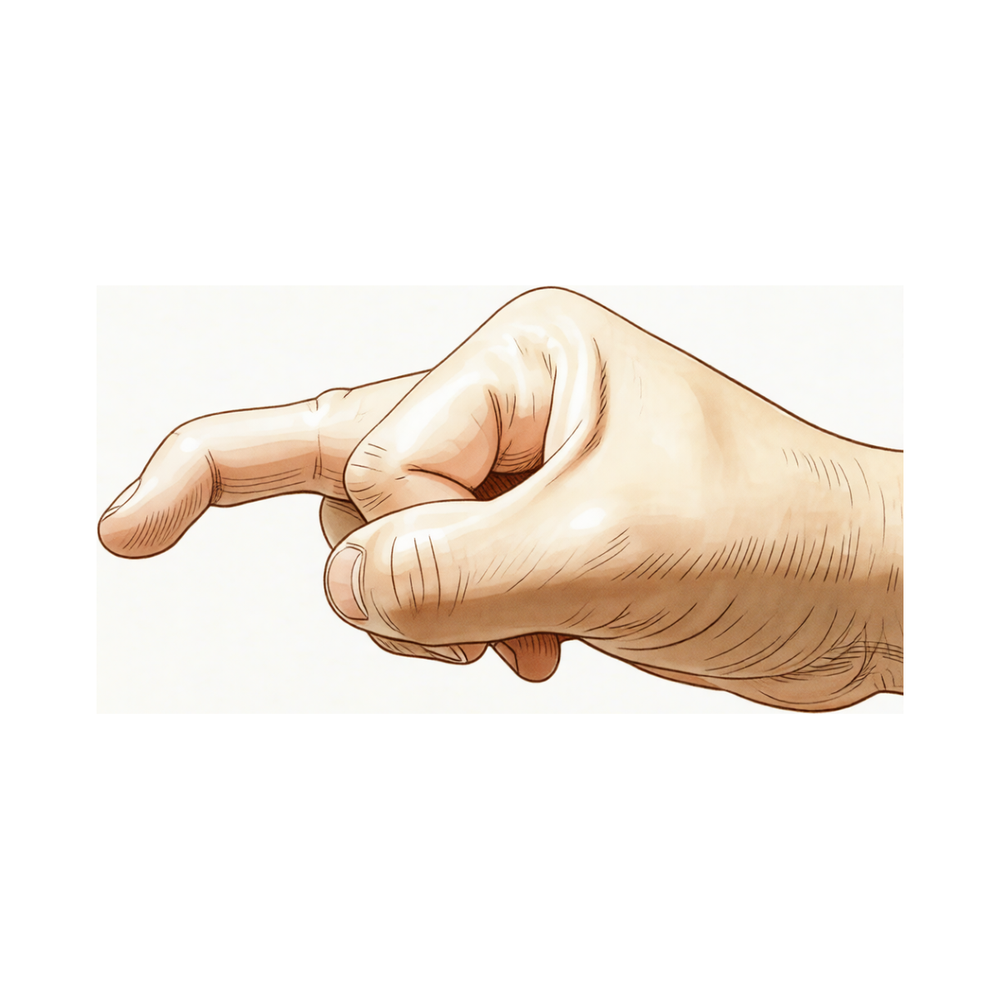
What you're feeling
With a mallet finger, the end joint of your finger droops and you cannot straighten the fingertip on your own. The finger may look bent at the last joint, closest to the nail. The injury happens when the tendon that straightens that joint is torn or pulled away, sometimes with a small piece of bone.
The end joint is often tender and may be swollen or bruised, especially in the days after it happens. Pushing the fingertip straight, gripping a ball, or knocking the finger can make the pain worse. Resting the finger still, supported by a splint, usually settles it.
Day to day, the drooping tip gets in the way of fine tasks. Picking up coins, doing up small buttons, typing, or holding a pen can feel clumsy because the fingertip will not push straight. Ball sports are a common way people get this injury, and a jammed finger during a game is often how it starts.
Some fingers also develop a second problem further up the digit. When the end joint droops, the middle joint can start to over-straighten or bend backwards. If you notice that, mention it, as it changes how the finger is treated.
One thing matters more than almost anything else: timing. Getting the finger seen and splinted early, ideally within two weeks of the injury, gives the best chance of a straight, working fingertip. Waiting can lead to lasting stiffness or a joint that no longer lines up properly. If your finger has been drooping for a while, it is still worth having it looked at, as there are options for fingers that have been left untreated.
You do not need to guess how bad it is. A drooping fingertip after a knock is reason enough to have it assessed, so the right splint or treatment can be started before the joint changes.
What's actually happening
Your fingertip straightens because a thin cord of tendon, a rope of strong fibres, runs along the back of the finger and anchors onto the last bone. With a mallet finger, that cord snaps or pulls off its anchor, sometimes taking a small chip of bone with it. The end joint can no longer be pushed straight from the back, so the tendon that bends the joint pulls it down and it rests in a droop you cannot correct yourself.
Most of these injuries come from a jamming force, like the fingertip snagging on a bedsheet or a ball striking an extended finger and bending the end joint suddenly. Less often, a hard over-straightening force breaks a larger piece of bone off the base of the last bone. When that broken piece involves a third or more of the joint surface, surgery is generally advised. It is also generally advised when the last bone slips out of line towards the palm, because the joint no longer sits where it should.
The droop you noticed in the section above is the direct result of this lost anchor. Another effect can follow further up the finger: with the end joint stuck in a bent position, the balance of straightening and bending forces through the rest of the digit shifts, which is why some fingers develop that over-straight middle joint.
There are two broad patterns. In one, only the tendon is torn. In the other, a piece of bone comes away with it, and the two look much the same from the outside because the tendon goes with the fragment. Most mallet fingers, either pattern, settle with a splint that holds just the end joint straight. Surgery is kept for the larger fractures, for joints that have slipped out of line, or for fingers where earlier treatment did not work.
What we can do about it
Dr Kieran Hirpara, an upper-limb surgeon at Mater Private Hospital Rockhampton, matches the treatment to your specific injury. Patients are generally referred to our clinic by their GP; if a physiotherapist has suggested you see us, you will still need a referral from your GP in order to be eligible for the Medicare rebate. At that visit we take a history, examine the finger and arrange an X-ray if one is needed, to check whether a piece of bone has come away and whether the joint still lines up.
For most mallet fingers, the first step is a splint that holds just the end joint straight. We usually ask you to wear it for 6 to 8 weeks, keeping it on day and night, and to avoid the sport or activity that caused the injury while splinted. A hand therapist fits the splint and shows you how to wear it without irritating the skin, and can manage many of these injuries from start to finish. If the tendon has been torn for 2 to 4 weeks before you get help, splinting still works about as well as when the finger is treated in the first 2 weeks, and even a finger splinted 12 weeks after the injury can be treated much the same way as a fresh one. Some people need to keep the splint on longer than 12 weeks, and how long you continue is largely up to your comfort with it. A night splint on top of the day splint does not add anything, so we do not ask you to double up. The type of splint, custom-made or ready-made, matters less than wearing it as directed.
Pain tablets and anti-inflammatories are not a treatment for the droop itself. They may settle the soreness in the first days while the splint does its job.
Surgery is considered when a splint has not worked, when the droop is stopping you work or meeting a specific need, or when the injury involves a large piece of joint surface or the joint has slipped towards the palm. The operation repairs or reattaches the straightening tendon, or fixes the bone fragment back in place, and the finger is then held straight with a small wire and a splint while it heals. We will talk through the options with you and decide together whether surgery suits your finger and your goals.
What to expect
For most people, a mallet finger settles with treatment rather than surgery. A splint that holds just the end joint straight is the usual path, and it works for most injuries, whether the tendon alone was torn or a small piece of bone came away with it. Both splinting and surgery lead to good results, so you can expect a straight, working fingertip when the finger is treated properly.
Timing shapes how the recovery feels. When the finger is splinted within two weeks of the injury, few people are left with any lasting disability. If the tendon has been torn for 2 to 4 weeks before you get help, splinting still works about as well, and even a finger splinted 12 weeks after the injury can be treated much the same way as a fresh one. Some people need to keep the splint on longer than 12 weeks, and how long you continue is largely up to your comfort with it.
If your finger is left untreated, the droop usually stays. The end joint may stiffen in a bent position, and the middle joint can develop that over-straightening described earlier. Some neglected injuries still do well: tendinous mallet fingers left for 2 to 4 weeks have low long-term complication rates when managed without surgery, and large-fragment cases managed conservatively also have low complication rates. But waiting makes the outcome less predictable, which is why early splinting matters.
Surgery is kept for the smaller group of fingers where a splint will not do the job, such as larger fractures or a joint that has slipped out of line. It is worth knowing that surgery on these fractures carries a complication rate of 41%, partly because the straightening tendon is thin and has a poor blood supply. Surgery done later for bony mallet fingers, though, has shown minimal complications. Your surgeon will weigh these points with you rather than push one path.
There is no single splint proven better than another, custom-made or ready-made. What matters is wearing it as directed, which is the part you control.
When to see someone
A drooping fingertip after a knock is worth having checked within days, not weeks. Early splinting gives the best chance of a straight, working finger, so ask your GP for a referral to a hand surgeon as soon as you notice the droop. The same applies if the end joint is swollen, bruised or tender and will not straighten.
Some warning signs matter more than others. If a piece of bone has broken off and the joint surface is involved, the finger can slip out of line towards the palm. A larger fracture, or one seen late, raises that risk. Ask for a specialist review if the fingertip sits visibly out of place, or if the middle joint starts bending backwards while the tip droops.
Go to an emergency department if the finger is rapidly more painful, hot, red or swollen, or if you cannot move it at all after a forceful injury.
In more depth
Advanced reading: the deeper science (optional)
This section goes further than you need for your own treatment decisions. Mallet finger is worth the extra reading because the two situations that are usually treated as clear indications for surgery — a large fracture fragment, and a persistent droop after splinting, are less clearly established than the confidence with which they are stated.
Both treatments produce good results, and nobody knows where the line is
A systematic review of surgical and non-surgical management reached a conclusion that is unusually direct: both lead to good clinical outcomes, and insufficient evidence is available to determine when surgical intervention is indicated [1].
That second half is the important one. The dispute is not about whether either treatment works. It is that the threshold for choosing surgery, the point at which the fracture is judged too large, or the joint too subluxed, rests on convention rather than on comparative evidence.
Where a fragment involves more than a third of the joint surface, or the distal phalanx has subluxed, surgery is generally indicated, but a significant advantage of surgical management, even in those complicated cases, has yet to be clearly proven [2].
Splinting works, and the number that matters is how long
The orthotic evidence is more concrete. Two of three studies found a large effect size for orthotic intervention, ranging from 2.17 to 12.12, with a recommended immobilisation duration of 6 to 8 weeks, and additional weeks where a lag persists [3].
Two practical points follow. The first is that the splint must hold the fingertip straight continuously, the tendon ends are held apposed by position alone, and a few minutes of flexion while washing restarts the clock. The second is that "additional weeks where a lag persists" is part of the protocol, not a sign of failure.
Why a residual droop is often acceptable
A small permanent extension lag after treatment is common, and it is usually compatible with normal hand use. The distal joint contributes relatively little to grip, and most people adapt to a few degrees of droop without noticing it functionally.
That matters when weighing surgery for an imperfect result, because operating on this joint is not without cost: the fragment is small, the skin is thin, and pin or wire fixation of a joint this size carries risks of infection, nail deformity and joint stiffness that must be set against a cosmetic-to-mild functional gain. Given the reviews above cannot demonstrate an advantage for surgery even in the complicated cases, accepting a modest lag is an evidence-consistent choice rather than a compromise.
The deformity that is not a mallet finger
Mallet finger is one of a family of closed extensor mechanism injuries, distinguished mainly by where along the tendon the failure occurs, mallet at the fingertip, boutonnière at the middle joint, and sagittal band injury at the knuckle [4]. They are frequently confused with one another early, when swelling obscures the pattern, and each has a different splinting position. Splinting a boutonnière as though it were a mallet holds the wrong joint, which is why the diagnosis is worth confirming before six weeks of immobilisation are committed to.
References for the advanced reading
- Lin JS, Samora JB. Surgical and nonsurgical management of mallet finger: a systematic review. J Hand Surg Am. 2018;43(2):146-163.e2.
- Lamaris GA, Matthew MK. The diagnosis and management of mallet finger injuries. Hand (N Y). 2016;12(3):223-8.
- Valdes K, Naughton N, Algar L. Conservative treatment of mallet finger: a systematic review. J Hand Ther. 2015;28(3):237-46.
- Lin JD, Strauch RJ. Closed soft tissue extensor mechanism injuries (mallet, boutonniere, and sagittal band). J Hand Surg Am. 2014;39(5):1005-11.
Evidence & references
This is the clinical evidence summary written for health professionals. It is technical, and it lists the research this page was built from. You do not need to read it to understand your treatment or to make a decision about it.
Overview
- Most mallet finger injuries can be managed non-surgically with splinting [5].
- Surgery is occasionally recommended for acute or chronic cases of mallet finger [5].
- Surgery is occasionally recommended for salvage of failed prior treatment in mallet finger cases [5].
- Both surgical and nonsurgical treatments of mallet finger injuries lead to excellent clinical outcomes [2].
- After a mallet-finger injury treated within two weeks by either internal or external splintage, few patients have significant persistent disability [7].
- Today most authorities splint only the distal joint for mallet finger deformities [9].
- There was insufficient evidence from comparisons tested within randomised controlled trials to establish the relative effectiveness of different custom-made or off-the-shelf finger splints used for treating mallet finger injury [10].
- The authors propose to treat all cases of mallet finger with a dorsal glued splint except for stage IV mallet finger [8].
- Stage IV mallet finger is treated with extra-articular pinning according to the proposed protocol in [8] [8].
- A simple splint is recommended as an alternative means of treating mallet finger [16].
- Delayed surgical management of bony mallet fingers demonstrated adequate functional outcome with minimal complications when compared with prior literature [1].
- Complication rates were low, suggesting that large-fragment mallet finger cases can be effectively managed conservatively [4].
- Absolute indications for surgical intervention for mallet fingers in the pediatric population remain unclear [3].
- The role of surgery for mallet fractures of the thumb remains unclear due to their uncommon nature and favorable radiographic findings [6].
- Surgery is generally indicated in the case of mallet fractures involving more than one-third of the articular surface [17].
- Surgery is generally indicated in all patients who develop volar subluxation of the distal phalanx [17].
- A significant advantage of surgical management even in complicated cases of mallet finger has yet to be clearly proven [17].
Anatomy & Pathophysiology
Mechanism of Injury
- Mallet finger most commonly involves a closed rupture of the terminal tendon with or without associated fracture of the distal phalanx [34].
- The usual mechanism of injury involves sudden passive flexion of the actively extended distal interphalangeal joint [21].
- Snagging the extending finger on a pants cuff, a bedsheet, or other object that suddenly flexes the extending DIP joint is a frequent cause of mallet finger [34].
- Less commonly, a forceful hyperextension injury of the DIP joint may result in a large fracture of the base of the distal phalanx involving one-third or more of the articular surface [34].
- Open mallet injuries are uncommon [34].
- The direction of force on the fingertip that results in a mallet fracture has yet to be determined [47].
- The precise mechanism of injury leading to different sizes of mallet fracture fragments might be difficult to delineate due to multiple variables, including tendon tension at the time of injury and the strain-rate-dependent mechanical properties of the affected bone and soft tissues [47].
Pathophysiology
- Mallet finger involves loss of continuity of the extensor tendon over the distal interphalangeal joint [14].
- Mallet finger reflects the loss of normal extensor force transmission via the terminal tendon insertion onto the distal phalanx [21].
- The unopposed flexor digitorum profundus pulls the distal joint into flexion [21].
- Mallet finger injuries may lead to an imbalance between flexion and extension forces more proximally in the digit [14].
- Disruption of the terminal tendon may be entirely confined to the tendon or may involve an avulsed fracture fragment from the dorsal lip of the distal phalanx proximal articular surface [21].
- Because the avulsed fragment includes the terminal tendon insertion, the clinical appearance of soft tissue and bony mallet fingers is similar [21].
- The distal joint rests in flexion, a posture that cannot be actively changed [21].
- Full passive extension of the distal interphalangeal joint is possible in mallet finger [21].
- Distal interphalangeal joint subluxation is expected with a mallet fracture fragment involving more than one-half of the joint surface [47].
- The distal interphalangeal joint has a remarkable ability to remodel [47].
Incidence and Demographics
- The most frequently involved digits are the small, ring, and middle fingers of the dominant hand, with a male predominance [34].
- Tendinous mallet fingers have been reported to occur from age 11 onward [34].
- In skeletally immature individuals, a transepiphyseal plate fracture may be seen [34].
- There may be a familial predisposition to mallet fingers [34].
- Elderly patients with osteoarthritis of the DIP joint may have “mallet” deformities that are not related to trauma [34].
- Individuals with hyperlax joints may have multiple pseudomallet swan neck postures that are unrelated to trauma [34].
Classification
- The Doyle classification system describes four types of mallet finger injuries [56].
- In the Doyle classification, Type IV represents mallet fractures and is further broken into three subtypes according to the size of articular involvement [56].
- The Wehbé and Schneider classification describes DIP joint subluxation and epiphyseal and physeal injuries [56].
- In the Wehbé and Schneider classification, articular injuries are subdivided into type A (less than one-third), type B (between one-third and two-thirds), and type C (larger than two-thirds of the joint) [56].
- The Doyle and Wehbé and Schneider classification schemes aid in standardizing injury patterns and guiding treatment algorithms [56].
- A 2023 review proposes a modification to the Doyle classification to make it more encompassing and less prone to interobserver error [26].
- The modified Mallet classification demonstrated strong to excellent agreement and interrater reliability across face-to-face, live tele-assessment, and video-based conditions [45].
- The modified Mallet classification is suggested to be appropriate for remote medical follow-up based on its reliability across assessment conditions [45].
- The interrater reliability of the Kellgren & Lawrence and OARSI classification systems for post-traumatic osteoarthritis in the distal interphalangeal joint after mallet finger fractures is considerably lower than initially assumed [44].
Clinical Presentation
- Mallet finger results in a flexion deformity of the distal finger joint [14].
- Mallet finger may lead to an imbalance between flexion and extension forces more proximally in the digit [14].
- Mallet injuries can be classified into four types based on skin integrity and the presence or absence of bony involvement [14].
- Mallet deformity accounts for a minority of sporting injuries [19].
- Mallet finger injuries are frequent in football [23].
- Mallet finger injuries are difficult to treat during the competitive season, often requiring delayed treatment or internal splinting [23].
- Early recognition of mallet finger injuries and referrals to a hand surgeon for treatment are crucial to avoid longterm disability [18].
- Approximately 50% of patients with a mallet fracture involving more than one-third of the articular surface of the distal phalanx do not progress to subluxation of the DIP joint [39].
- Fracture size and time to application of finger immobilizer are independent risk factors for the development of DIP joint subluxation in mallet fracture [39].
Investigations
- A radiograph should be obtained to determine whether a fracture is present [21].
- Radiographs should determine if the dorsal fragment is large and whether the distal phalanx is subluxed palmarward [21].
Treatment
Non-Operative Management
- Splinting of the distal interphalangeal joint for 6 to 8 weeks has yielded good results while minimizing morbidity in the majority of patients [14].
- Non-operative management of mallet fractures, regardless of fracture classification, joint congruence or pre-existing degenerate change in the DIP joint, is safe and yields predictably good outcomes in most patients [15].
- Conservative management of tendinous mallet finger injuries that have been neglected for 2 to 4 weeks can be treated as well as those injuries in patients presenting within the first 2 weeks of injury with low long-term complication rates [12].
- A mallet finger caused by avulsion of the extensor tendon from the distal phalanx can be satisfactorily treated by splinting 12 weeks after injury, as described for an acute injury [13].
- Prolonged splinting and splinting longer than 12 weeks may be successful, with the duration limited by the patient’s tolerance of the splinting [13].
- Supplemental night splinting does not improve the outcome of mallet finger in terms of extensor lag, disability, or satisfaction with treatment [24].
- There was insufficient evidence from comparisons tested within randomised controlled trials to establish the relative effectiveness of different, either custom-made or off-the-shelf, finger splints used for treating mallet finger injury [10].
- Excellent functional outcome can be achieved with splintage and avoidance of the causative sport while splinted [19].
- A hand therapist can treat type 1 mallet finger injuries as effectively as a surgeon [27].
- A hand therapist can treat mallet finger injuries of type 1 as effectively as a surgeon, with a method of immobilisation that offers practically no complications regarding skin condition [40].
- Large-fragment mallet finger cases can be effectively managed conservatively with low complication rates [4].
- The clinical efficacy of elastic taping for the treatment of mallet finger injuries remains to be tested vigorously [37].
- Conventional treatment protocols usually recommend 6 weeks of immobilization in a neutral or slightly flexed splint, followed by staged mobilization [33].
- Giddins (2022) suggested that only 3-4 weeks of immobilization for bony mallet injuries is sufficient, reflecting faster bone healing [33].
- A retrospective study examined outcomes of acute bony mallet injuries treated with 4 weeks of static immobilization in a splint, followed by graduated mobilization [33].
Operative Management
- Surgery is occasionally recommended for acute or chronic cases or for salvage of failed prior treatment [5].
- Surgical management may be considered for acute and chronic mallet lesions in patients who have failed nonsurgical treatment, are unable to work, or have specific functional needs [14].
- Surgery is generally indicated in the case of mallet fractures involving more than one-third of the articular surface as well as in all patients who develop volar subluxation of the distal phalanx [17].
- A significant advantage of surgical management even in complicated cases (fractures >1/3 articular surface or volar subluxation) has yet to be clearly proven [17].
- If the distal phalanx droops severely but passive extension in the distal interphalangeal joint is still satisfactory, surgery may be indicated depending on the patient’s needs [13].
- Scar overlapping suture for treating chronic tendinous mallet finger in children is safe and effective [41].
- A deepithelialised pedicled skin flap technique seems to be a new reliable alternative in the treatment of chronic mallet finger [46].
Surgical Techniques and Postoperative Care
- For secondary repair of chronic mallet finger, a small V-shaped or U-shaped incision is made convex distally, with the tip no closer than 5 mm proximal to the nail base on the dorsum of the finger [13].
- The surgical flap is developed in the plane between the tendon and the subcutaneous fat and elevated proximally to expose the extensor tendon with its intervening scar [13].
- The junction of the normal tendon with the scar is identified, and the tendon is severed transversely proximal to the joint, leaving the insertion of the tendon into bone [13].
- Sufficient scar or tendon is resected to allow closure of the gap with the finger in maximal extension [13].
- The joint is immobilized with a transarticular 0.045-inch Kirschner wire to support and protect the repair [13].
- The extensor tendon is repaired with 4-0 monofilament nylon or 4-0 monofilament wire as a pull-out roll stitch, with no additional sutures required [13].
- The skin is closed with interrupted 5-0 nylon or 4-0 nylon as a dermotondermal suture [13].
- The finger is maintained in extension with a compressive dressing and supported with a volar splint for post-operative comfort and to avoid reinjury [13].
- Sutures are removed at 10 to 14 days, and the distal joint is maintained in extension with the Kirschner wire protected by a small metal splint for 4 weeks [13].
- The Kirschner wire is removed after 4 to 6 weeks, and the repair is protected with a splint for 8 weeks [13].
- Normal activities are progressively resumed after the splinting period [13].
Complications
- The complication rate after operative treatment of mallet fracture was 41% [51].
- The high complication rate after operative treatment of mallet fracture is likely attributable to anatomical factors such as thin extensor tendon and poor blood supply [51].
- Delayed surgical management of bony mallet fingers demonstrated minimal complications [1].
- Conservative management of tendinous mallet finger injuries neglected for 2 to 4 weeks has low long-term complication rates [12].
- A surgical technique for acute combined tendon and bone mallet fingers reported no complications such as infection, nonunion, or nail deformity in the series [29].
- Complication rates were low in large-fragment mallet finger cases managed conservatively [4].
Recovery
- Most mallet finger injuries can be managed non-surgically with splinting, although surgery is occasionally recommended for acute or chronic cases or for salvage of failed prior treatment [5].
- The authors propose to treat all cases of mallet finger with a dorsal glued splint except for stage IV mallet finger, which they treat with extra-articular pinning [8].
- Most authorities splint only the distal joint for mallet finger deformities [9].
- Mallet finger injuries are frequent in football and difficult to treat during the competitive season, often requiring delayed treatment or internal splinting [23].
Key Evidence
- [L4] Delayed surgical management of bony mallet fingers demonstrated adequate functional outcome with minimal complications when compared with prior literature. [1] (10.1177/1558944719840749)
- [L4] Both surgical and nonsurgical treatments of mallet finger injuries lead to excellent clinical outcomes. [2] (10.1016/j.jhsa.2017.10.004)
- [L4] Absolute indications for surgical intervention for mallet fingers in this population remain unclear. [3] (10.1016/j.jhsa.2018.03.037)
- [L4] Complication rates were low, suggesting that large-fragment mallet finger cases can be effectively managed conservatively. [4] (10.1186/s12891-026-09787-w)
- [L5] Most mallet finger injuries can be managed non-surgically with splinting, although surgery is occasionally recommended for acute or chronic cases or for salvage of failed prior treatment. [5] (10.1007/s11552-014-9609-y)
- [L3] The role of surgery for mallet fractures of the thumb remains unclear due to their uncommon nature and favorable radiographic findings. [6] (10.1177/1558944716672192)
- [L1] After a mallet-finger injury treated within two weeks by either method few patients have significant persistent disability. [7] (10.1016/s0072-968x(82)80011-9)
- [L5] The authors propose to treat all cases of mallet finger with a dorsal glued splint except for stage IV mallet finger, which they treat with extra-articular pinning. [8] (10.5999/aps.2016.43.2.134)
- [L5] Today most authorities splint only the distal joint for mallet finger deformities. [9] (10.1016/s0749-0712(21)00059-7)
- [L1] There was insufficient evidence from comparisons tested within randomised controlled trials to establish the relative effectiveness of different, either custom-made or off-the-shelf, finger splints used for treating mallet finger injury. [10] (10.1002/14651858.cd004574.pub2)
- [L3] Conservative management of tendinous mallet finger injuries that have been neglected for 2 to 4 weeks can be treated as well as those injuries in patients presenting within the first 2 weeks of injury with low long-term complication rates. [12] (10.1016/j.jhsa.2014.06.140)
- [L5] [14] (10.5435/00124635-200509000-00007)
- [L3] Non-operative management of mallet fractures, regardless of fracture classification, joint congruence or pre-existing degenerate change in the DIP joint, is safe and yields predictably good outcomes in most patients. [15] (10.1177/1753193421992986)
- [L2] The study recommends this splint as an alternative means of treating mallet finger. [16] (10.1136/emj.10.3.244)
- [L4] Although surgery is generally indicated in the case of mallet fractures involving more than one-third of the articular surface as well as in all patients who develop volar subluxation of the distal phalanx, a significant advantage of surgical management even in those complicated cases has yet to be clearly proven. [17] (10.1177/1558944716642763)
- [L4] Early recognition of these injuries and referrals to a hand surgeon for treatment are crucial to avoid longterm disability. [18] (10.1016/j.hcl.2012.05.042)
- [L4] Mallet deformity accounts for a minority of sporting injuries, but excellent functional outcome can be achieved with splintage and avoidance of the causative sport while splinted. [19] (10.1054/jhsb.2000.0484)
- [L5] Mallet finger injuries are frequent in football and difficult to treat during the competitive season, often requiring delayed treatment or internal splinting. [23] (10.1016/j.hcl.2012.05.043)
- [L1] Supplemental night splinting does not improve the outcome of mallet finger in terms of extensor lag, disability, or satisfaction with treatment. [24] (10.1007/s11552-013-9600-z)
- [L4] [26] (10.1016/j.jhsa.2022.10.013)
- [L4] A hand therapist can treat type 1 mallet finger injuries as effectively as a surgeon. [27] (10.1197/j.jht.2008.04.002)
- [L4] The study describes a surgical technique for acute combined tendon and bone mallet fingers and reports good to excellent long-term results with no reported complications such as infection, nonunion, or nail deformity in the series. [29] (10.1016/j.jhsa.2014.11.011)
- [L4] [33] (10.1177/17531934251382017)
- [L4] Most fingers ended with a dorsal prominence, but this did not significantly affect function. [34] (10.2106/00004623-198466050-00003)
- [L4] The clinical efficacy of the proposed method of elastic taping for the treatment of mallet finger injuries remains to be tested vigorously. [37] (10.1016/j.jht.2014.02.005)
- [L2] Approximately 50% of patients with a mallet fracture involving more than one-third of the articular surface of the distal phalanx do not progress to subluxation of the DIP joint; fracture size and time to application of finger immobilizer are independent risk factors for the development of DIP joint subluxation in mallet fracture. [39] (10.1177/1753193414554556)
- [L4] A hand therapist can treat mallet finger injuries of type 1 as effectively as a surgeon, with a method of immobilisation that offers practically no complications regarding skin condition. [40] (10.1177/175899830501000103)
- [L4] Scar overlapping suture for treating chronic tendinous mallet finger in children is safe and effective. [41] (10.1186/s13018-019-1106-0)
- [L4] The interrater reliability of the Kellgren & Lawrence and OARSI classification systems for post-traumatic osteoarthritis in the distal interphalangeal joint after mallet finger fractures is considerably lower than initially assumed. [44] (10.1016/j.jhsa.2024.03.012)
- [L3] The modified Mallet classification demonstrated strong to excellent agreement and interrater reliability across face-to-face, live tele-assessment, and video-based conditions, suggesting it is appropriate for remote medical follow-up. [45] (10.1177/17531934231196118)
- [Paper] This method seems to be a new reliable alternative in the treatment of chronic mallet finger. [46] (10.1016/j.injury.2013.01.013)
- [L5] [47] (10.1016/j.jhsa.2008.04.014)
- [L4] The complication rate after operative treatment of mallet fracture was 41%, likely attributable to anatomical factors such as thin extensor tendon and poor blood supply. [51] (10.1054/jhsb.2000.0440)
- [L5] [56] (10.1177/1753193414554772)
References
[1] Delayed Extension Block Pinning in 27 Patients With Mallet Fracture. HAND. 2019. DOI: 10.1177/1558944719840749
[2] Surgical and Nonsurgical Management of Mallet Finger: A Systematic Review. The Journal of Hand Surgery. 2018. DOI: 10.1016/j.jhsa.2017.10.004
[3] Outcomes of Splinting in Pediatric Mallet Finger. The Journal of Hand Surgery. 2018. DOI: 10.1016/j.jhsa.2018.03.037
[4] Surgical versus conservative management of Doyle type 4c mallet finger: a comparative study. BMC Musculoskeletal Disorders. 2026. DOI: 10.1186/s12891-026-09787-w
[5] Current Concepts: Mallet Finger. HAND. 2014. DOI: 10.1007/s11552-014-9609-y
[6] Mallet Fractures of the Thumb Compared With Mallet Fractures of the Fingers. HAND. 2016. DOI: 10.1177/1558944716672192
[7] Mallet-Finger Injuries: A Prospective, Controlled Trial of Internal and External Splintage.. Hand. 1982. DOI: 10.1016/s0072-968x(82)80011-9
[8] Review of Acute Traumatic Closed Mallet Finger Injuries in Adults. Archives of Plastic Surgery. 2016. DOI: 10.5999/aps.2016.43.2.134
[9] EXTENSOR TENDON INJURIES AT THE DISTAL INTERPHALANGEAL JOINT. Hand Clinics. 1995. DOI: 10.1016/s0749-0712(21)00059-7
[10] Interventions for treating mallet finger injuries. Cochrane Database of Systematic Reviews. 2004. DOI: 10.1002/14651858.cd004574.pub2
[12] Soft-Tissue Mallet Injuries: A Comparison of Early and Delayed Treatment. The Journal of Hand Surgery. 2014. DOI: 10.1016/j.jhsa.2014.06.140
[13] Campbell S Operative Orthopaedics 4 Volume Set. RECONSTRUCTION OF FINGER FLEXORS: SINGLE-STAGE TENDON GRAFT > CHRONIC MALLET FINGER (SECONDARY REPAIR).
[14] Mallet Finger. Journal of the American Academy of Orthopaedic Surgeons. 2005. DOI: 10.5435/00124635-200509000-00007
[15] The non-operative management of bony mallet injuries. Journal of Hand Surgery (European Volume). 2021. DOI: 10.1177/1753193421992986
[16] The conservative treatment of mallet finger with a simple splint: a case report.. Emergency Medicine Journal. 1993. DOI: 10.1136/emj.10.3.244
[17] The Diagnosis and Management of Mallet Finger Injuries. HAND. 2016. DOI: 10.1177/1558944716642763
[18] Tendon Ruptures: Mallet, FDP and ECRB Tendon Ruptures Associated with Lunotriquetral Coalitions in Professional Basketball Players. Hand Clinics. 2012. DOI: 10.1016/j.hcl.2012.05.042
[19] Mallet Deformity in Sport. Journal of Hand Surgery. 2001. DOI: 10.1054/jhsb.2000.0484
[21] A Lange Medical Book Current Diagnosis Treatment In Orthopedics Fifth Edition. 9Hand Surgery > 3. Mallet Finger.
[23] Tendon Ruptures: Mallet, FDP in Football. Hand Clinics. 2012. DOI: 10.1016/j.hcl.2012.05.043
[24] A Prospective Randomized Controlled Trial Comparing Night Splinting with No Splinting after Treatment of Mallet Finger. HAND. 2014. DOI: 10.1007/s11552-013-9600-z
[26] Acute Mallet Finger Injuries—A Review. The Journal of Hand Surgery. 2023. DOI: 10.1016/j.jhsa.2022.10.013
[27] Hand Therapist-led Management of Mallet Finger. Journal of Hand Therapy. 2008. DOI: 10.1197/j.jht.2008.04.002
[29] Pullout Wire Fixation Together With Distal Interphalangeal Joint Kirschner Wire Stabilization for Acute Combined Tendon and Bone (Double Level) Mallet Finger Injury. The Journal of Hand Surgery. 2015. DOI: 10.1016/j.jhsa.2014.11.011
[33] Four-week splint with early mobilization protocol for the management of bony mallet injuries. Journal of Hand Surgery (European Volume). 2025. DOI: 10.1177/17531934251382017
[34] Mallet fractures.. The Journal of Bone & Joint Surgery. 1984. DOI: 10.2106/00004623-198466050-00003
[37] A novel way of treating mallet finger injuries. Journal of Hand Therapy. 2014. DOI: 10.1016/j.jht.2014.02.005
[39] The risk factors associated with subluxation of the distal interphalangeal joint in mallet fracture. Journal of Hand Surgery (European Volume). 2014. DOI: 10.1177/1753193414554556
[40] Hand Therapist-led Management of Mallet Finger. The British Journal of Hand Therapy. 2005. DOI: 10.1177/175899830501000103
[41] Scar overlapping suture for treating chronic tendinous mallet finger in children. Journal of Orthopaedic Surgery and Research. 2019. DOI: 10.1186/s13018-019-1106-0
[44] Rater Agreement of Post-Traumatic Osteoarthritis of the Distal Interphalangeal Joint 12 Years After a Mallet Finger Fracture. The Journal of Hand Surgery. 2024. DOI: 10.1016/j.jhsa.2024.03.012
[45] Interrater reliability of face-to-face, tele- and video-based assessments with the modified Mallet classification in brachial plexus birth injuries. Journal of Hand Surgery (European Volume). 2023. DOI: 10.1177/17531934231196118
[46] A new surgical treatment for mallet finger deformity: Deepithelialised pedicled skin flap technique. Injury. 2013. DOI: 10.1016/j.injury.2013.01.013
[47] A Biomechanical Study of Distal Interphalangeal Joint Subluxation After Mallet Fracture Injury. The Journal of Hand Surgery. 2008. DOI: 10.1016/j.jhsa.2008.04.014
[51] Complications of Operative Treatment for Mallet Fractures of the Distal Phalanx. Journal of Hand Surgery. 2001. DOI: 10.1054/jhsb.2000.0440
[56] Mallet fingers with bone avulsion and DIP joint subluxation. Journal of Hand Surgery (European Volume). 2014. DOI: 10.1177/1753193414554772