Patients › Hand
Dupuytren's Disease
Dupuytren’s disease causes palm thickening and finger contracture—options range from observation to needle aponeurotomy or surgical excision.
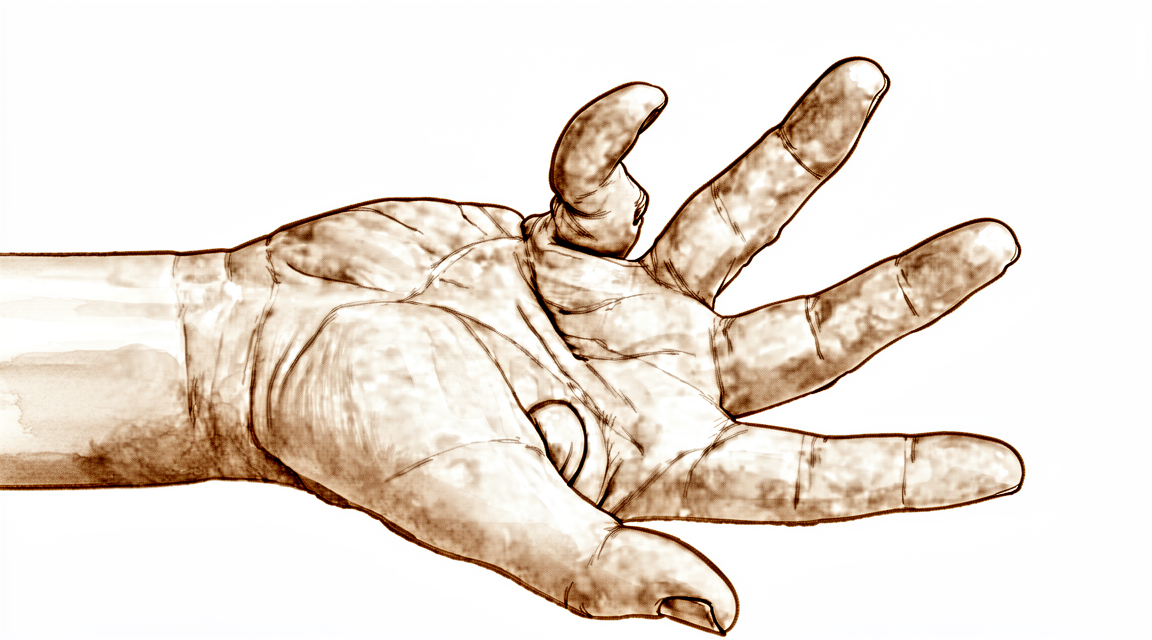
What you're feeling
Dupuytren's disease starts as a thickening in the palm of your hand. You might notice a small lump or nodule near the base of a finger, most often the ring or little finger. It can feel like a cord or band under the skin. Many people have this thickening for years without it causing any problems at all.
Over time, the cord can tighten and pull one or more fingers towards your palm. This is called a contracture. You may find it hard to lay your hand flat on a table. Everyday tasks can become awkward: shaking hands, putting on gloves, gripping a steering wheel, or getting your hand into a pocket. The condition itself is usually not painful, but the bent finger can get in the way of how your hand works.
The changes tend to come on slowly. The pace is different for everyone. Some people's thickening stays the same for decades. Others find their fingers gradually curl further over months or years. There is no single pattern, and it is hard to predict how yours will behave.
The main reason people seek treatment is the chance of getting hand function back. If a finger is starting to curl and your hand is not doing what you want it to, that is worth talking about with your surgeon.
What's actually happening
Under the skin of your palm there is a layer of tough tissue called the palmar fascia. Think of it as a web of soft straps that anchors the skin of your palm and helps your fingers move smoothly. In Dupuytren's disease, this tissue starts to thicken and tighten. Small knots form first, then a firm cord grows along the line of one or more fingers.
The cord is made of the same kind of cells that form scar tissue, but they keep working long after they should stop. They lay down extra fibre, and the cord slowly shortens. As it shortens, it pulls the finger down towards the palm. That is why your finger curls and why laying your hand flat becomes hard. The problem sits in the palm, not in the joint itself.
The thickening usually starts in the shallow layer of this web, close to the skin, which is why you can feel it. The cords most likely to cause trouble run towards the ring and little fingers. As a cord tightens, it can also gather nearby nerves and blood vessels around it, pulling them out of their usual line. Your surgeon keeps this in mind when planning any treatment.
If a finger stays bent for a long time, other parts of the finger can be affected too. The tissues that straighten the finger can weaken and fall out of balance, which can make the finger sit or move differently even after the cord is released. This is one reason earlier treatment is often simpler.
The exact cause is not fully understood. Genes play a large part, which is why the condition can run in families. Repeated strain or injury to the palm may also contribute in some people. Whatever starts it, the process is the same: the palm's natural web of tissue turns into a tightening cord that bends the fingers.
What we can do about it
Dr Kieran Hirpara, an upper-limb surgeon at Mater Private Hospital Rockhampton, starts with the least invasive options that suit your condition. Patients are generally referred to our clinic by their GP; if a physiotherapist has suggested you see us, you will still need a referral from your GP in order to be eligible for the Medicare rebate. At your first visit we take a careful history and examine your hand. Dupuytren's disease is diagnosed from this examination rather than from scans or blood tests, so we rarely need imaging to confirm it.
For a mild thickening that is not yet pulling a finger down, we often suggest simply watching it. Hand therapy or physiotherapy can help keep your fingers moving and your hand working while the condition is quiet. If the cord starts to tighten, earlier treatment tends to be simpler, because a finger that has been bent for a long time is harder to straighten.
There are several procedural options for Dupuytren's disease, and we will talk through which suits your hand. One is a needle release, where a needle is used to cut the tight cord through the skin. It is done under local anaesthetic, which numbs the area while you stay awake. It does not usually need formal hand therapy afterwards. Another option is a collagenase injection, an enzyme that is injected into the cord to weaken it so the finger can be straightened. For cords mainly affecting the knuckle at the base of the finger, needle release and collagenase injection give the same results at 3 months and at 1 year.
Surgery is usually considered when the knuckle at the base of a finger is bent 30° or more, or when the middle joint of the finger has any bend in it at all. The most common operation is a fasciectomy, which means removing the tight cord from the palm and finger. This is the most reliable treatment for straightening the finger, though it carries a real risk of complications that we will discuss with you. Some operations can be done under local anaesthetic without an arm tourniquet, and many are day-case procedures, meaning you go home the same day. Surgery is a shared decision: we will examine your hand, explain the options, and decide together on the treatment that fits your hand and your goals.
What to expect
Dupuytren's disease behaves differently in different people. Some thickenings stay quiet for years. Others slowly tighten and pull a finger down. There is no single pattern, and it is hard to predict how yours will go.
If a finger has already started to curl, it rarely straightens on its own. Leaving it alone usually means the bend stays the same or slowly worsens. Treatment aims to straighten the finger and get your hand working again. Most people who have treatment gain a real improvement in how their hand functions, and surgery achieves full or almost full correction in 75% of cases.
It is honest to say that Dupuytren's can come back. Recurrence after treatment is common, and the chance varies with the treatment you choose and with which joints are affected. Some treatments carry a higher chance of needing another procedure later than others. If a finger curls again after a needle release, that tends to happen relatively early rather than years down the track. Repeat treatment is possible, and straightening a finger that has curled again can still work well.
Recovery feels different depending on what you have had done. A needle release is the lightest option, and you use your hand soon after. An injection or surgery takes longer, and your hand may feel stiff and tender for some weeks. Hand therapy helps you regain movement. Over the following months, most people find the tasks that were awkward before, like laying the hand flat or gripping, become easier again.
A few things are worth knowing upfront. The middle joint of a finger that has been bent a long time may not straighten completely, even with surgery. Women can have more bend in that middle joint to begin with, though results overall are much the same as for men. Your surgeon will examine your hand and give you a clearer idea of what straightening is realistic for you.
When to see someone
Most people with Dupuytren's disease have time on their side. This is not an emergency, and the changes come on slowly. Some palm thickenings never tighten at all and cause no trouble for 20 to 30 years. See your GP if you notice a lump or cord in your palm, or if a finger is starting to curl and your hand is not doing what you want it to. Ask for a specialist review if a finger will not lie flat on a table, or if everyday tasks like gripping, shaking hands or putting on gloves have become awkward. The chance of getting your hand working again is the main reason people seek treatment, and earlier review tends to mean simpler options.
In more depth
Advanced reading: the deeper science (optional)
This section goes further than you need for your own treatment decisions. Dupuytren's is worth the extra reading because the choice between treatments is not really a choice about which one works, it is a choice about which pattern of recurrence and risk you would rather live with.
The evidence base is weaker than the confidence around it
It is worth starting here. A review in the Bone & Joint Journal concluded that there remains limited evidence to guide management of Dupuytren's contracture, while noting that percutaneous needle aponeurotomy tends to produce higher patient satisfaction with fewer adverse events [1].
That should temper any strong recommendation you are given. The condition is common, the treatments are long-established, and the comparative trials that would settle the question have largely not been done.
What collagenase actually offers
Collagenase injection, dissolving the cord rather than cutting it, changed practice quickly. A review of 2,675 patients found it safe and effective for improving hand function, with most adverse events minor and self-resolving [2].
The same review carries the number that matters for expectation-setting: 23% of successfully treated joints went on to recur [2]. Recurrence is not a treatment failure here; it is the natural history of the disease reasserting itself. Dupuytren's is a biological process in the palm, and no current treatment stops the process, they all address the cord it has already made.
Comparing the risks honestly
The trade-off against surgery is not that one is safe and the other is not, but that they fail differently. Comparing collagenase with fasciectomy across 8,809 patients, adverse events seen with collagenase and not reported after fasciectomy included peripheral oedema, extremity pain and injection-site reactions [3].
Read that carefully: those are the additional problems, and they are mostly transient and local. What the injection avoids is a surgical wound in the palm, with its longer recovery, stiffness risk and scar. What surgery offers in return is more complete removal of diseased tissue and, generally, a longer interval before recurrence.
So the decision is legitimately personal. A patient who cannot spare weeks of restricted hand use has a strong reason to prefer the injection even knowing recurrence is likelier. A younger patient with aggressive disease may reasonably accept a bigger operation once rather than a smaller one repeatedly.
Practice moved before the evidence settled
Between the introduction of collagenase and the years following, its use rose to substantial levels in the United States with corresponding falls in the proportion of patients receiving fasciotomy and fasciectomy, with patient age and comorbidities influencing which treatment was chosen [4].
That is a useful piece of context when a clinician tells you what is "usually done". What is usually done has shifted considerably within a decade, on evidence the reviews above describe as limited, which is a reason to ask why a particular option is being recommended for you rather than assuming current practice reflects settled science.
References for the advanced reading
- Soreide E, Murad MH, Denbeigh JM, Lewallen EA, Dudakovic A, Nordsletten L, et al. Treatment of Dupuytren's contracture: a systematic review. Bone Joint J. 2018;100-B(9):1138-45.
- Sandler AB, Scanaliato JP, Dennis T, Gonzalez Trevizo GA, Raiciulescu S, Nesti L, et al. Treatment of Dupuytren's contracture with collagenase: a systematic review. Hand (N Y). 2021;17(5):815-24.
- Peimer CA, Wilbrand S, Gerber RA, Chapman D, Szczypa PP. Safety and tolerability of collagenase Clostridium histolyticum and fasciectomy for Dupuytren's contracture. J Hand Surg Eur Vol. 2014;40(2):141-9.
- Lipman MD, Carstensen SE, Deal DN. Trends in the treatment of Dupuytren disease in the United States between 2007 and 2014. Hand (N Y). 2016;12(1):13-20.
Evidence & references
This is the clinical evidence summary written for health professionals. It is technical, and it lists the research this page was built from. You do not need to read it to understand your treatment or to make a decision about it.
Overview
- Clinically important Dupuytren's disease is common in the general population, with a majority of diagnosed individuals undergoing treatment [2].
- Dupuytren disease is progressive, but the pace is unique to each patient [3].
- There are several procedural options for the treatment of Dupuytren disease [9].
- Currently there remains limited evidence to guide the management of patients with Dupuytren's contracture [6].
- Little agreement exists on treatment recommendations for common presentations of Dupuytren disease in a sample of international hand surgeons [1].
- The literature does not provide evidence in favor of a specific procedure for Dupuytren's disease due to inconsistencies in reporting complications and the lack of a standardized definition [4].
- Surgery remains the gold-standard treatment for progressive Dupuytren contractures, with limited palmar fasciectomy being the most common option [29].
- Surgical treatment in the form of partial or selective fasciectomy remains the most reliable and the most widely used method for treating Dupuytren's disease [26].
- Limited fasciectomy is considered the gold-standard treatment, particularly for patients with a contracture of more than 60° [50].
- Dermofasciectomy appears to be a highly effective surgical intervention for advanced Dupuytren disease, offering substantial long-term benefits in terms of function and disease control [15].
- Patients with Dupuytren's disease of the hand may gain a significant functional benefit following surgical improvement or correction of the deformity [5].
- Percutaneous needle fasciotomy (PNF) is a minimally invasive intervention with a brief recovery period [96].
- In the only randomized trial on PNF, the extension deficit improved by an average of 63% six weeks after the intervention [96].
- In the short term, there was no statistically significant difference between the results of needle fasciotomy and limited fasciectomy if the contracture was less than 90° preoperatively [96].
- For more severe contractures, limited fasciectomy gave better results than needle fasciotomy [96].
- In experienced hands, the cumulative risk of complications is lower in needle fasciotomy than in limited fasciectomy [96].
- The recurrence rate after needle fasciotomy is much higher than after limited fasciectomy, with a rate of 65% after 32 months [96].
- Three-year follow-up data of a randomized comparative study show a recurrence rate of 64% in the PNF group [96].
- Needle fasciotomy is not ideal for relatively young patients with fast progressing Dupuytren's Contracture due to high recurrence rates [50].
- Dermofasciectomy seems more appropriate for patients with a likelihood for high recurrence rate and for those with recurrent disease [50].
- The role of radiotherapy and the injection of collagenase are not yet fully elucidated [50].
- Many treatment options exist for Dupuytren contracture, each with its own complication profile [28].
- An objective method of evaluating the lesions in Dupuytren’s disease allows accurate preoperative assessment and indicates the amount of improvement achieved by the operation [19].
- The hand is divided into five segments for assessment, each consisting of a finger and corresponding palmar zone [19].
- For each of the five segments, distal and palmar aponeurotic lesions are allocated a number corresponding to a certain stage of the disease [19].
- Each stage corresponds to a progression of 45 degrees of the total deformity of each finger [19].
- Total deformities are measured by adding together the individual flexion deformities of the metacarpophalangeal (MP), proximal interphalangeal (PIP), and distal interphalangeal (DIP) joints [19].
- When there is hyperextension of the DIP, the degree of hyperextension is added to the total flexion deformity of the other joints [19].
- The theoretical range of deformity for each finger is from 0 degrees (complete extension) to 200 degrees (contracture of the finger in the palm) [19].
- Six stages can be distinguished for the four fingers, ranging from Stage 0 (no lesion) to Stage 4 (total flexion deformity exceeding 135°) [19].
- For the thumb, contractures of the MP and IP joints are assessed, followed by contracture of the first web space [19].
- The first web space is evaluated by measuring the angle formed by the axes of the first and second metacarpals where they intersect in the sagittal plane [19].
- Normally, the angle of the first web space exceeds 45 degrees, with each stage of assessment corresponding to a loss of 15 degrees [19].
- The theoretical range of deformity for the thumb’s MP and IP joints is from 0 degrees to 160 degrees [19].
- The theoretical range of deformity at the level of the first web is from 0 degrees to more than 45 degrees [19].
- Palmar lesions are indicated by the letter P, and digital lesions are indicated by the letter D [19].
- If the lesion includes both the palm and fingers, the number designating the stage is followed by the letters PD [19].
- The letter H designates advanced cases in which the distal phalanx is fixed in hyperextension [19].
- A PIP joint contracture of greater than 70 degrees has severe prognostic importance and is indicated by a ‘+’ after the digital letter (D+) [19].
- Flexion contracture at the MP joints are more easily corrected than at the PIP [19].
- The total state of the disease can be indicated by adding the numbers of each ray [19].
- Patients want a cure for Dupuytren’s disease, but unfortunately, there is no cure [22].
- The next best option for patients is a treatment that improves the personal disease situation, such as getting fingers functional again, reducing pain, or reducing/stopping disease progression [22].
- There is a need for a commonly agreed-upon treatment concept for Dupuytren’s disease that takes into account the actual situation of the patient [22].
- The relationship between the stage of the disease and the most appropriate treatment is too simplistic in current staging tables [22].
- A very old patient having a contracted finger in stage 3 might not tolerate surgery, making needle aponeurotomy or collagenase injection preferable [22].
- Radiotherapy is effective in the early stage of the disease but might also help after surgery [22].
- There is no standardized, repeatable way to measure an extension deficit that yields identical results irrespective of the person performing the measurement [22].
- Patients need clear advice on what treatment is best in their specific situation from the doctor who treats them [22].
- The typical advice given to patients is to wait until they have a real problem and then have surgery, which is considered too simple [22].
- There is a wide range of treatment options for patients with Dupuytren’s contracture that have not been compared to each other extensively [50].
- The ideal treatment is one which is quick to perform, has little risk of complications, allows early recovery of function with the least possible comorbidity, and provides the longest possible disease-free period [50].
- A specialist who has experience in different techniques is the best to advise the patient [50].
Anatomy & Pathophysiology
Normal Palmar Anatomy and Biomechanics
- The glabrous skin of the hands is fixed to underlying layers in a way that skin folds are fixed but suited for both loose and firm grip [52].
- Subcutaneous fat tissue in the palm is compartmentalized within a firm network of collagen fibers that absorbs and diffuses pressure from the surface [52].
- The palmar aponeurosis is one part of a functional system of stiff subcutaneous connective tissue that facilitates different mechanisms of grip [52].
- The connective tissue framework between the dermis and musculature is a functional unit called the superficial fascia, which varies with location [52].
- The soft tissue of the fingertips is tightly anchored, while the soft tissue of the fingers between the fingertips and the aponeurosis area is mobile and flexible [34].
- The thin covering layer above the triangular center of the palm is relatively fixed, corresponding to the pretendinous portion of the aponeurosis [34].
- The mobile soft tissue of the fingers overlies fibrous tendon sheaths and extends from the distal phalanges to the metacarpophalangeal joints [34].
- In flexion, the distal phalanx is drawn upon the proximal phalanx, effectively shortening the palmar length of the skeleton [34].
- In extension, the phalanx is released from its flexed position and the palmar length of the skeleton is restored [34].
- In the normal finger, soft tissue structures pressed together in flexion remain separated by cutaneous flexion creases [34].
- Cutaneous flexion creases are not stable formations and do not serve as firm borders to subcutaneous processes [34].
- The mobility of the soft tissue of the fingers appears as smooth passive play characterized by the complete absence of abnormal tensile stresses [34].
- Only mobile and flexible soft tissue in the fingers can ensure free unimpaired extension [34].
Disease Progression and Clinical Presentation
- Dupuytren disease results from the complex interplay between genetic predisposition, environmental factors, local and global protein expression, and the relationship between tissue histology and anatomy [8].
- The mainstay of treatment for Dupuytren disease remains palliative and not curative [8].
- Palmar fascial disease may remain confined to the palm and not progress enough to cause digital flexion deformity [58].
- Palmar involvement usually precedes disease extension into the digits, but the disease can begin and remain in the digits [58].
- The ring finger is the most commonly involved digit, followed closely by the small, middle, and index finger, and lastly the thumb [58].
- As the disease progresses, the development of palmar and digital nodules is followed by that of pretendinous and digital cords [58].
- The neurovascular bundle anatomy can be distorted as the cord contracts, especially in the case of the spiral cord [58].
- Ulmas et al. found a 52% prevalence of spiral nerve intraoperatively and 42% had palpable interdigital soft tissue mass [58].
- The existence of a soft tissue mass was specific (75%) but not sensitive (59%) for the presence of the spiral nerve [58].
- The disease can be classified into early, intermediate, and late phases [58].
- The early phase entails skin changes including loss of normal architecture and skin pit formation [58].
- The intermediate phase consists of nodule and cord formation [58].
- The late phase is the end point of joint contracture [58].
- In the typical scenario, the late phase occurs in progressive contracture from the ring to the small and lastly the middle finger [58].
- Dupuytren disease is a progressive disorder of pathologic collagen deposition characterized by nodules and cords in the palm and fingers [38].
- These pathologic changes cause pitting of the overlying skin and flexion contractures of the fingers [38].
- Myofibroblasts are the important pathologic cells in the development of Dupuytren’s disease [38].
- Myofibroblasts mediate increased collagen production, particularly type-III collagen in the early stages of the disease [38].
- In the early stages of the disease process, nodules form within the palm [38].
- As the condition progresses, collagen cords cause fingers to progressively flex at the metacarpophalangeal and proximal interphalangeal joints [38].
- This progression results in a fixed-flexion deformity of the fingers and an extension deficit [38].
- The global prevalence of Dupuytren’s contracture among Caucasians is estimated at 3–6% [38].
- The incidence of Dupuytren’s contracture is reported as higher in men compared to women [38].
- Most patients are older than 50 years at presentation [38].
- Among patients with diabetes, the incidence of Dupuytren’s disease has been estimated at 10.5% [38].
- In patients with thyroid disease, the incidence for Dupuytren’s disease has been reported to be 8.8% [38].
- Dupuytren’s disease is a benign, progressive fibrosing disorder of the palmar fascias of the hand and fingers [57].
- The reported prevalence of Dupuytren’s disease varies from 3% to 42% [57].
- The highest incidence of Dupuytren’s disease is in Caucasians, while it is rarely seen in Africans [57].
- Men are seven times more often affected than women, but in later life the incidence in women increases to the same as men [57].
- Some suggest that disease symptoms are milder in women and therefore may remain unnoticed for a longer period [57].
- The clustering of Dupuytren’s disease in families suggests a genetic influence on the onset of the disease [57].
- Multiple reports describe Dupuytren’s disease as an autosomal dominant disease with varying penetrance [57].
- There are many sporadic (nonfamilial) cases of the disease that are not compatible with a Mendelian inheritance pattern [57].
- Burge et al. suggested that recessive inheritance still remains a viable hypothesis for Dupuytren’s disease [57].
- Factors such as smoking, use of alcohol, antiepilepsy drugs, and medical conditions including liver disease and diabetes are associated with a higher prevalence of the disease [57].
- Dupuytren’s disease is considered one of the most common hereditary connective tissue disorders in Caucasians [57].
- The etiology of Dupuytren’s contracture continues to elude investigators, with investigations over more than 100 years failing to identify the true cause [81].
- Trauma is credited by contemporary investigators as being capable, at most, of being an aggravating factor, but not capable of causing the disease [81].
- The hereditary factor is the most definite and best established of all potential etiological factors [81].
- In a series of 154 patients, a hereditary factor was evident in 23.4% of the patients [81].
- Dupuytren’s disease is a disabling fibrotic condition affecting the palmar fascia of the hand [41].
- DD typically presents over three phases: proliferative, involutional, and a third stage represented by the deposition of an acellular collagen-rich cord [41].
- The proliferative phase shows the development of nodular tissue on the palm containing proliferative myofibroblasts [41].
- The involutional secondary phase is characterized by the alignment of myofibroblasts along the line of stress [41].
- The third stage is represented by the deposition of an acellular collagen-rich cord [41].
- Individuals with a history of alcoholism, smoking, and high blood cholesterol are at a higher risk of developing DD [41].
- The thickened superficial palmar aponeurosis creates adhesions around the proper digital nerves that could cause nerve compression [76].
- These adhesions lead to finger contractures that alter function [76].
- It is not known whether these adhesions also alter finger sensitivity [76].
Molecular Pathophysiology and Collagen Biology
- The hallmark feature of Dupuytren’s contracture is the localized deposition of excess and abnormal collagen within the palmar fascia [59].
- Studies indicate a shift in the balance of collagen remodeling in favor of net collagen deposition in Dupuytren’s disease tissue [59].
- ADAMTS-2, ADAMTS-3, and ADAMTS-14 expression is increased in Dupuytren’s disease tissue, contributing to increased collagen deposition [59].
- COL1A1 and COL1A2 expression is increased in Dupuytren’s disease tissue, contributing to increased collagen deposition [59].
- COL3A1 expression is increased in Dupuytren’s disease tissue, contributing to increased collagen deposition [59].
- Integrin β1 and Fibronectin expression is increased in Dupuytren’s disease tissue, facilitating fibrillogenesis and increasing collagen deposition [59].
- Lysyl oxidase-2 expression is increased in Dupuytren’s disease tissue, enhancing extracellular collagen cross-linking and fibril stability [59].
- MMP-1 expression is decreased in Dupuytren’s disease tissue, reducing collagen degradation [59].
- MMP-2 expression is increased in Dupuytren’s disease tissue, increasing collagen degradation [59].
- MMP-3 expression is decreased in Dupuytren’s disease tissue, reducing collagen degradation [59].
- MMP-8 expression is decreased in Dupuytren’s disease tissue, reducing collagen degradation [59].
- MMP-13 expression is increased in Dupuytren’s disease tissue, increasing collagen degradation [59].
- MMP-14 expression is increased in nodules but decreased in cords of Dupuytren’s disease tissue [59].
- Periostin expression is increased in Dupuytren’s disease tissue, enhancing fibrillogenesis and stabilizing extracellular collagen fibrils [59].
- TIMP-1 expression is significantly elevated in Dupuytren’s disease tissue, inhibiting MMPs except MMP-14 [59].
- TIMP-4 expression is significantly elevated in Dupuytren’s disease tissue, inhibiting all MMPs [59].
- Structural and biochemical abnormalities in Dupuytren’s cords indicate an increase in the stability of the matrix to enzymatic and thermal degradation [59].
- Increased cross-linking of collagen due to increased hydroxylysine and/or hydroxyproline increases thermal and enzymatic stability of collagen fibrils [59].
- Increased or altered collagen glycation increases thermal and enzymatic stability of collagen fibrils [59].
- Collagen fibrils are larger in diameter in Dupuytren’s disease tissue and are more closely packed in larger fascicles with thicker fascicular sheaths [59].
- These structural changes prevent ready access to the labile portions of individual collagen monomers by collagenases [59].
- Structural changes in Dupuytren’s collagen result in increased stiffness (decreased elasticity) in the fibrils relative to normal tissue [59].
- Increased stiffness renders collagen fibrils more effective as signal transducers to fibroblasts [59].
- Genomic and proteomic changes in Dupuytren’s disease reveal significant overlap with patterns of gene and protein expression in normal wound healing [62].
- These findings suggest that abnormalities in Dupuytren’s disease may represent an aberrant or exaggerated wound healing response [62].
- The collagen matrix represents a key therapeutic target in Dupuytren’s disease as both a structural and functional component [62].
- The expression of three key collagenases, MMP1, MMP13, and MMP14, is significantly raised in DD nodule [41].
- The expression of the collagen biosynthetic enzyme ADAMTS14 is significantly raised in DD nodule [41].
- TIMP1 expression is significantly elevated in DD nodule compared to normal palmar fascia [41].
- Contraction and fibrosis in DD may result from increased collagen biosynthesis mediated by increased ADAMTS-14 [41].
- Contraction and fibrosis in DD may result from an elevated level of TIMP-1 blocking MMP-1 and MMP-13-mediated collagenolysis [41].
- Contraction and fibrosis in DD may result from contraction enabled by MMP-14-mediated pericellular collagenolysis which may escape inhibition by TIMP-1 [41].
- The expression level of MMP13 and MMP14 positively correlates with poor progression post-fasciectomy [41].
- The end result of Dupuytren’s biology is ischemic fibrosis and microvascular occlusion from endothelial fibroblast infiltration [78].
- Ischemia results in fibroblast proliferation, collagen deposition, and the appearance of myofibroblasts [78].
- Risk factors for Dupuytren’s disease such as age, diabetes, and smoking tobacco are also risk factors for microvascular disease [78].
- Cells from Dupuytren’s tissue respond to mechanical stretching forces more than cells from normal fascia [78].
- Mechanical tension increases both fibroblast proliferation and myofibroblast differentiation [78].
- Myofibroblast activity has been associated with wound site tension [78].
- Repetitive mechanical stress has been shown to promote collagen synthesis and deposition [78].
- Residual skin tension after fasciotomy increases the likelihood of early disease recurrence [78].
Genetic and Environmental Factors
- The incidence of DD is age, gender, and genetically dependent [41].
- Men are more likely to have the disease than women, and incidence increases with age [41].
- The disease is often familial, but the mode of inheritance is currently unknown [41].
- Genetic studies may provide clues for molecular mechanisms involved in DD pathogenesis [82].
- DD patients with higher expression of MMPs and ADAMTSs have been correlated to a higher recurrence rate in the 1-year clinical outcome [82].
- Being able to identify patients at risk of recurrence preoperatively may allow better postsurgical management [82].
- Dupuytren’s disease is an insidious, internal event with an unknown inciting event and an unpredictable, usually progressive course [79].
- A theoretical framing is that Dupuytren’s is a wound contracture response gone awry [83].
- Support for the wound contracture theory includes hemosiderin deposition in Dupuytren tissues as evidence of microtrauma [83].
- Support for the wound contracture theory includes association of Dupuytren’s with local trauma and heavy manual labor [83].
- In the majority of cases, wounding or local trauma is not a definitive part of the history [83].
- Another theoretical framing is that Dupuytren’s is a dysregulation of the normal process of connective tissue remodeling to normal mechanical stress [83].
- Repeated mechanical stress of tendons results in increased tendon stiffness [83].
- Aponeurosis structures are intrinsically stiffer than free tendons [83].
- Tendon strain results in release of tendon TGF-beta [83].
- The response of increased stiffness is blunted by estrogen, consistent with gender differences in incidence [83].
- The palmar aponeurosis functions anatomically as an aponeurosis for the palmaris longus tendon and is tightened by it [83].
- Dupuytren’s is less common in hands with congenital absence of the palmaris [83].
- Excision of the palmaris reduces early recurrence after fasciectomy for Dupuytren’s [83].
- The palmar fascia is elastic but only half as elastic as palmar skin [83].
- The plantar fascia has a fixed bony origin and retains a unidirectional orientation, while the palmar fascia has a tendinous origin which stretches it to a greater degree [83].
- Foot disease usually remains nodular only, while the palm progresses to contracture [83].
Severity and Prognostic Factors
- Dupuytren severity broadly refers to the likelihood of having a poor outcome from Dupuytren and its treatment [7].
- Severity is multidimensional, involving biology, anatomy, correction, and recontracture [7].
- Anatomic severity (angular contracture severity) determines how likely the finger is to be straight early after treatment [7].
- Biologic severity (disease activity persistence) determines how likely fingers are to be straight late after treatment [7].
- Historic severity affects both short- and long-term treatment expectations [7].
- Prior recontracture is a risk factor for future recontracture [7].
- Initial angular correction depends on pretreatment angular contracture severity, not biology [7].
- Greater pretreatment angular contracture severity lowers the chance a corrective procedure will restore full extension [7].
- Failure to achieve complete correction increases the likelihood of some initial correction loss within a year of treatment [7].
- Greater angular contracture correlates with reduced grip strength, which is not improved by contracture release [7].
- Documentation of DD biologic severity should include family history of DD in siblings or parents, gender, age of onset, current age, age of first treatment, bilaterality, number of digits involved, thumb involvement, presence of palm nodules, DDNs, Ledderhose disease, Peyronie disease, and history of frozen shoulder [7].
- The revised severity staging system incorporates total flexion deformity and additional clinical risk factors [14].
- The revised severity staging system provides a more objective and precise method for assessing Dupuytren's disease severity [14].
- The revised severity staging system may predict surgical outcomes [14].
- An objective method of evaluating lesions in Dupuytren’s disease allows accurate preoperative assessment and indicates the amount of improvement achieved by the operation [19].
- The formula for evaluating lesions takes into account the degree of individual digital flexion and the distribution of lesions throughout the hand [19].
- The hand is divided into five segments, each consisting of a finger and corresponding palmar zone [19].
- For each of the five segments, distal and palmar aponeurotic
Classification
Staging Systems and Definitions
- Dupuytren staging can be conceptualized in three terms: assessment (measurable aspects), scoring system (quantification via numbers or variables), and classification (subdivisions into non-ordinal types) [21].
- The Tubiana classification system categorizes the total passive extension deficit of each ray into four stages: Stage I (0–45°), Stage II (46–90°), Stage III (91–135°), and Stage IV (136–180°) [88].
- The Tubiana classification system defines Stage N as nodules, cords, skin retraction, and fixation with no flexion deformity [90].
- The Tubiana classification system defines Stage I as flexion deformity of fingers with an extension deficit of 11–45° [90].
- The Tubiana classification system defines Stage II as flexion deformity of fingers with an extension deficit of 46–90° [90].
- The Tubiana classification system defines Stage III as flexion deformity of fingers with an extension deficit of 91–135° [90].
- The Tubiana classification system defines Stage IV as flexion deformity of fingers with an extension deficit greater than 135° [90].
- The Tubiana and Michon classification system scores contracture in a complete finger regardless of the contribution of the metacarpophalangeal joint or proximal interphalangeal joint [94].
- The Tubiana and Michon classification system defines Stage 1 as contraction of 0–45° [94].
- The Tubiana and Michon classification system defines Stage 2 as contraction of 46–90° [94].
- The Tubiana and Michon classification system defines Stage 3 as contraction of 91–135° [94].
- The Tubiana and Michon classification system defines Stage 4 as contraction over 135° [94].
- The Tubiana and Michon classification system does not allow deduction of whether a finger should be treated conservatively, minimally invasively, or with open surgery based solely on the stage [94].
- A revised severity staging system that incorporates total flexion deformity and additional clinical risk factors provides a more objective and precise method for assessing Dupuytren's disease severity and may predict surgical outcomes [14].
- The assessment formula for Dupuytren’s disease deformity takes into account the degree of individual digital flexion and the distribution of lesions throughout the hand [19].
- The pretendinous band of the palmar aponeurosis to the four medial fingers and its adjacent segment of the palmar aponeurosis are included in the finger segments for assessment [19].
- The fascia of the thenar eminence and the first web space are part of the thumb segment for assessment [19].
- Each stage in the five-segment assessment corresponds to a progression of 45 degrees of the total deformity of each finger [19].
- Total deformities in the five-segment assessment are measured by adding together the individual flexion deformities of the metacarpophalangeal, proximal interphalangeal, and distal interphalangeal joints [19].
- When there is hyperextension of the distal interphalangeal joint, the degree of hyperextension is added to the total flexion deformity of the other joints in the five-segment assessment [19].
- The theoretical range of deformity for each finger in the five-segment assessment is from 0 degrees (complete extension) to 200 degrees (contracture of the finger in the palm) [19].
- Six stages can be distinguished for the four fingers in the five-segment assessment system [19].
- Stage 0 in the five-segment assessment indicates no lesion [19].
- Stage N in the five-segment assessment indicates a palmar or digital nodule without established flexion deformity [19].
- Stage 1 in the five-segment assessment indicates total flexion deformity between 0° and 45° [19].
- Stage 2 in the five-segment assessment indicates total flexion deformity between 45° and 90° [19].
- Stage 3 in the five-segment assessment indicates total flexion deformity between 90° and 155° [19].
- Stage 4 in the five-segment assessment indicates total flexion deformity exceeding 135° [19].
- For the thumb, contractures of the metacarpophalangeal and interphalangeal joints are assessed, followed by contracture of the first web space [19].
- First web space contracture is evaluated by measuring the angle formed by the axes of the first and second metacarpals where they intersect in the sagittal plane [19].
- The normal angle for first web space assessment exceeds 45 degrees [19].
- Each stage of first web space assessment corresponds to a loss of 15 degrees [19].
- The theoretical range of deformity for the thumb metacarpophalangeal and interphalangeal joints is from 0 degrees to 160 degrees [19].
- The theoretical range of deformity for the first web space is from 0 degrees to more than 45 degrees [19].
- Palmar lesions are indicated by the letter P and digital lesions by the letter D in the five-segment assessment [19].
- If a lesion includes both the palm and fingers, the number designating the stage is followed by the letters PD in the five-segment assessment [19].
- Flexion contracture at the metacarpophalangeal joints is more easily corrected than at the proximal interphalangeal joints [19].
- The total state of the disease can be indicated by adding the numbers of each ray in the five-segment assessment [19].
- Scoring systems for Dupuytren disease fall into five proposed categories, including severity according to degree of contracture, detailed scoring of every digit, and systems that score severity or surgical results into arbitrary categories of excellent/good/fair/poor [21].
- Many methods of assessment have been used in the study of Dupuytren disease, including degree of contracture or range of motion, disease type based on localization of pathologic fascia, histology, Dupuytren diathesis, hand function or disability, rate of recovery/time to return to work, recurrence and progression, and complications [21].
Severity Dimensions
- Anatomic and biologic severity separately affect short- and long-term treatment expectations [7].
- Anatomic severity refers to angular contracture severity and determines how likely the finger is to be straight early after treatment [7].
- Biologic severity refers to disease activity persistence and determines how likely fingers are to be straight late after treatment [7].
- Historic severity affects both short- and long-term outcomes, with prior recontracture being a risk factor for future recontracture [7].
- Documentation of DD biologic severity should include family history of DD in siblings or parents, gender, age of onset of DD, current age, age of first treatment, bilaterality of DD, number of digits involved, thumb involvement, presence of palm nodules, DDNs, Ledderhose disease, Peyronie disease, and history of frozen shoulder [7].
Histological Staging
- Histological staging is a reliable method for predicting recurrence of Dupuytren's disease [40].
- Type I (proliferative) histological staging has the highest risk of recurrence [40].
- Type III (fibrotic) histological staging has the lowest risk of recurrence [40].
Functional Assessment
- The URAM scale provides the first patient-reported functional measure for Dupuytren's disease [16].
Clinical Presentation
Epidemiology and Demographics
- The worldwide prevalence of Dupuytren's disease is up to 32% [39].
- The prevalence of Dupuytren's Disease varies extremely across different geographical locations, with the cause (genetic, environmental, or both) remaining unclear [35].
- In a population study in Bosnia, the prevalence of Dupuytren’s disease was 31% in men and 16% in women over the age of 50 [25].
- In the Bosnia population study, prevalence was highly age-dependent, ranging from 17% for men aged 50–54 to 60% in the oldest men [25].
- In the Bosnia population study, prevalence among women was lower than among men across all age groups [25].
- In a US population-based study, the mean age of respondents reporting a Dupuytren’s diagnosis or treatment was 59 years [24].
- Most patients with Dupuytren’s disease are older than 50 years at presentation [38].
- In a surgical series of 153 patients, 114 were male and 39 were female [45].
- Dupuytren's disease in women presents similarly to men but with more severe PIP joint involvement [17].
- In the Bosnia population study, changes were found more than three times as often in the right hands as in the left hands of men [25].
- In the Bosnia population study, changes were equally distributed in the right and left hands in women [25].
Risk Factors and Associated Conditions
- The prevalence of Dupuytren’s disease is significantly higher among individuals with diabetes mellitus compared to non-diabetics [25].
- In the Bosnia population study, the odds ratio for Dupuytren’s disease in diabetic men was 2.75 and in diabetic women was 2.79 [25].
- In patients with thyroid disease, the incidence of Dupuytren’s disease has been reported to be 8.8% [38].
- In a surgical series, 22% of patients had plantar involvement (Ledderhose disease) [45].
- In a surgical series, 49% of patients had a positive family history of Dupuytren’s disease [45].
- Dorsal Dupuytren's nodules are encountered only in Dupuytren's disease patients, especially among those with strong diathesis [12].
- The prevalence of Dupuytren’s disease was significantly lower among Muslim men than among Serbian and Croatian men in the Bosnia study [25].
- There was no significant difference in the prevalence of Dupuytren’s disease between smokers and nonsmokers in the Bosnia study [25].
- There was no significant difference in the prevalence of Dupuytren’s disease between those admitting to drinking alcohol and teetotalers in the Bosnia study [25].
- There was no significant difference in the prevalence of Dupuytren’s disease between those living in urban areas and those living in rural areas in the Bosnia study [25].
Clinical Features and Progression
- Dupuytren’s contracture is a progressive disorder characterized by nodules and cords in the palm and fingers [38].
- Pathologic changes in Dupuytren’s disease cause pitting of the overlying skin and flexion contractures of the fingers [38].
- In the early stages of Dupuytren’s disease, nodules form within the palm [38].
- As Dupuytren’s disease progresses, collagen cords cause fingers to progressively flex at the metacarpophalangeal (MP) and proximal interphalangeal (PIP) joints [38].
- Progressive flexion at the MP and PIP joints results in a fixed-flexion deformity of the fingers and an extension deficit [38].
- The ring and little finger rays are most often affected by Dupuytren’s disease [25].
- The thumb and index finger rays are least often affected by Dupuytren’s disease [25].
- In a surgical series, individual finger involvement was: thumb 7.5%, index finger 6.4%, long finger 12.0%, ring finger 27.3%, and small finger 46.7% [45].
- The disease was bilateral in 76.1% of patients in a surgical series [45].
- The average age of onset for Dupuytren’s disease was 51.6 years in a surgical series [45].
- Only one in five people with a first Dupuytren nodule will need a procedure within a decade of diagnosis [68].
- One in 10 Dupuytren nodules will resolve without any treatment [68].
- Fewer than one in 20 people with Dupuytren's disease have the severe disabling version [68].
- Patients with Dupuytren diathesis do not progress any faster than those without diathesis [68].
- Dupuytren is common, with or without a family history of the disease [68].
Severity Assessment and Staging
- Dupuytren severity is multidimensional, involving biology, anatomy, correction, and recontracture [7].
- Historic severity, specifically prior recontracture, is a risk factor for future recontracture [7].
- Documentation of DD biologic severity should include family history, gender, age of onset, current age, age of first treatment, bilaterality, number of digits involved, thumb involvement, palm nodules, DDNs, Ledderhose disease, Peyronie disease, and history of frozen shoulder [7].
- The revised Tubiana's staging system incorporates total flexion deformity and additional clinical risk factors to assess severity [14].
- The revised Tubiana's staging system may predict surgical outcomes [14].
- Dupuytren staging can be conceptualized in three terms: assessment, scoring system, and classification [21].
- Assessment aspects of Dupuytren staging include degree of contracture, disease type based on localization, histology, Dupuytren diathesis, hand function/disability, rate of recovery, recurrence/progression, and complications [21].
- Scoring systems for Dupuytren disease fall into five proposed categories, including severity by contracture degree, detailed digit scoring, and arbitrary outcome categories [21].
- The URAM scale is the first patient-reported functional measure for Dupuytren's disease [16].
Patient Perspective and History
- A patient reported noticing a first nodule in the palm of the right hand below the ring finger at age 35 [18].
- A patient reported that a nodule treated with radiotherapy vanished within weeks and did not return over 28 years [18].
- A patient reported developing a second nodule in the left palm below the ring finger five years after the first, which progressed to a cord and contracture [18].
- A patient reported undergoing surgery for an extension deficit of 20–25° in the left hand, with complete removal of the deficit and no recurrence after 10 years [18].
- A patient reported that their mother developed her first nodule at age 80 [18].
- A patient noted that their wound healing was excellent with minimal scarring, doubting the interpretation of Dupuytren’s disease as exaggerated wound healing [18].
Investigations
Clinical Assessment and Staging
- An objective method of evaluating lesions in Dupuytren’s disease allows for accurate preoperative assessment and indicates the amount of improvement achieved by operation [19].
- The revised severity staging system incorporates total flexion deformity and additional clinical risk factors to provide a more objective and precise method for assessing disease severity [14].
- In histological staging, Type I (proliferative) carries the highest risk of recurrence and Type III (fibrotic) the lowest [40].
- Dorsal Dupuytren's nodules are encountered only in patients with Dupuytren's disease, especially among those with strong diathesis [12].
- A PIP joint contracture of greater than 70 degrees has severe prognostic importance and is indicated by a ‘+’ after the digital letter in clinical coding [19].
- Flexion contracture at the MP joints is more easily corrected than at the PIP joints [19].
Imaging
- An 8-MHz Doppler tone assessment may be used to identify superficially displaced neurovascular bundles when Dupuytren cords lie beneath soft fleshy prominences [33].
- False-negatives are possible with 8-MHz Doppler tone assessment for identifying neurovascular bundles [33].
- MRI is probably most useful in identifying additional pathology such as flexor tendon bowstringing [33].
- MRI may be helpful in providing a quantitative noninvasive measure of cellularity of affected areas, which is an index of biologic activity [33].
- MR assessment of Dupuytren’s disease is hindered by the resolution of current equipment, orientation issues due to multiplanar deformities of the fingers, and lack of intraoperative availability [33].
Evidence Gaps and Diagnostic Uncertainty
- There is limited evidence to guide the management of patients with Dupuytren's contracture [6].
- Little agreement exists on treatment recommendations for common presentations of Dupuytren disease among international hand surgeons [1].
- Despite extensive literature, there is as much unknown as known about Dupuytren's disease, and even current knowledge may not be absolutely correct [23].
Treatment
General Evidence and Guidelines
- The best treatment for Dupuytren contractures remains uncertain, and the disease is progressive with a pace unique to each patient [3].
- There is no cure for Dupuytren's disease, and treatment aims to improve the personal disease situation by restoring finger function, reducing pain, or reducing/stopping disease progression [22].
- A commonly agreed-upon treatment concept for Dupuytren’s disease is currently lacking [22].
Severity and Prognostic Factors
- Differences in outcome appear to depend on fibrosis diathesis more than anything else [20].
- No clear genetic or histological findings are reliable to help in patient evaluation for recurrence risk [20].
Surgical Treatment
- Surgical intervention for Dupuytren contractures achieves a high rate of full or almost full correction (75%) [75].
- Segmental aponeurectomy with Z-Plasty has a role in the management of Dupuytren's disease with flexion contracture predominantly involving the MCPJ [13].
- There is low level of evidence that surgical treatments provide clinically important improvements for recurrent Dupuytren contracture [11].
- No surgical technique guarantees indefinite success [20].
- Hand surgery offers a broad range of techniques, including variations in incisions and whether to leave the aponeurosis intact [22].
Collagenase Clostridium Histolyticum (CCH)
- CCH is a safe, effective treatment to improve hand function in Dupuytren's contracture, with most adverse events being minor and self-resolving [43].
- The recurrence rate of CCH is comparable to other standard treatments, and the absence of long-term adverse events 3 years after initial treatment indicates it is an effective and safe treatment [30].
- While initially effective, CCH may not provide durable contracture reduction, but remains a viable nonsurgical treatment for Dupuytren's disease [64].
- There is low level of evidence that nonsurgical treatments provide clinically important improvements for recurrent Dupuytren contracture [11].
- Lateral digital cords present good targets for CCH injection [44].
- If radial and ulnar lateral digital cords coexist and cause PIP joint contracture, one cord should be weakened while the other remains to maintain the joint contracted and resistant to manipulation [44].
- Splitting the dose and injecting both coexisting lateral digital cords is technically off-label [44].
- Periarticular fibrosis is unaffected by collagenase [44].
- If the offending cord ruptures or softens and is no longer palpable, dynamic splinting postinjection should be tried [44].
- PIP joint contracture associated with a huge nodule that practically fills the proximal phalanx does not respond to collagenase [44].
- Shrunken, scarred skin over the proximal phalanx is a poor candidate for collagenase [44].
- The extensor mechanism over the PIP joint becomes elongated in contractures that achieve 60 degrees of correction [44].
- The contracted PIP joint may be nearly fully passively extended after injection and manipulation [44].
- Skin often tears with MP joint contractures greater than 50 degrees, particularly if the skin overlying the cord is calloused [44].
Non-Operative and Adjunctive Treatments
- High-energy focused extracorporeal shockwave therapy relieved pain in Dupuytren's disease, with mean pain scores decreasing from 8.75 to 2.0 [37].
- High-energy focused extracorporeal shockwave therapy reduced tenderness scores from 8.50 to 2.50 in a series of seven hands [37].
- Hand grip strength did not show a statistically significant change after high-energy focused extracorporeal shockwave therapy (p=0.145) [37].
- Static night splinting may have a role in the treatment of early stages of Dupuytren’s disease [47].
- Splinting may be useful in the treatment of established disease and for patients unfit or unwilling to undergo surgery [47].
- Splinting may prove useful as a pre-operative “holding” measure for patients awaiting surgery [47].
- A randomized controlled study of night splinting after Dupuytren’s contracture release surgery showed no difference between groups at 3, 6, 9, or 12 months follow-up [95].
- The randomized controlled study does not support the routine use of a night splint after Dupuytren’s contracture release surgery [95].
- Splinting of the Dupuytren finger opens up therapeutic options that deserve greater attention in both clinical practice and research [87].
- The splint with a silicone bed appears to be particularly important in the management of Dupuytren’s disease [87].
- Finger splinting delays or prevents a recurrent flexion deformity in the finger [99].
- Splinting leads to partial or complete resolution of an existing extension impairment [99].
- The splint prevents the Dupuytren nodule from progressing to a finger contracture [99].
- The prophylactic effect of the finger splint in preventing a flexion deformity following percutaneous needle fasciotomy is attributable to its maintaining the gap in the Dupuytren tissue created by surgery [99].
- The improvement in an existing flexion deformity under splinting is best understood in light of the altered biomechanical stresses acting on the Dupuytren tissue [99].
- There is scant and conflicting evidence in the literature supporting the benefits and risks of hand therapy following surgery for Dupuytren’s contracture [97].
- Continuous passive motion has been reported to provide no benefit following surgery for Dupuytren’s [97].
- Postoperative therapeutic orthotic use varies widely among hand surgeons and therapists, involving relaxed extension, aggressive extension, tension relieved, or no-tension protocols [97].
- There are neither verifiable indications nor risk/benefit analysis data to support routine splinting after any procedure for Dupuytren’s contracture [97].
- Patients with wound healing problems or recurrent disease might prefer needle aponeurotomy or collagenase injection over surgery [22].
Complications
General Evidence and Reporting
- There remains limited evidence to guide the management of patients with Dupuytren's contracture [6].
Recurrence and Reintervention
- Subtotal fasciectomy is associated with recurrence of the disease in the region of excision in approximately 63% of patients [80].
- Subtotal fasciectomy is associated with spread of the disease to previously uninvolved fascia in 66% of patients [80].
- Palmar fasciotomy results in progressive contracture of the proximal interphalangeal joint causing severe contracture in 72% of patients [80].
- Long-term overall reintervention and perceived recurrence following treatment of Dupuytren contracture affecting a single digit were higher with collagenase Clostridium histolyticum (CCH) treatment than with surgical fasciectomy [46].
- The recurrence rate for collagenase Clostridium histolyticum (CCH) is comparable to other standard treatments [30].
- There is low level of evidence that both surgical and nonsurgical treatments provide clinically important improvements for recurrent Dupuytren contracture [11].
- Patients have approximately a 10% likelihood of future treatment on another digit in the same hand [31].
- Patients have nearly a 25% likelihood of future treatment in the contralateral hand [31].
- In a 36-year series of expanded dermofasciectomies with full-thickness grafts, there was a total absence of recurrence of Dupuytren’s disease under the grafted area of the palm [45].
- In a 36-year series of expanded dermofasciectomies with full-thickness grafts, extension of the disease to areas outside the graft was seen in 9.3% of hands treated [45].
Functional Outcomes and Correction
- Dupuytren's disease in women presents with more severe PIP joint involvement but equivalent surgical outcomes regarding final contracture correction, recurrence, and complication rates compared to men [17].
Specific Procedure Complications
- Subtotal fasciectomy involves a higher incidence of postoperative complications compared to palmar fasciotomy [80].
- In a 36-year series of expanded dermofasciectomies with full-thickness grafts, skin graft loss was a rare occurrence after bolster dressing duration was increased to 3 weeks [45].
- In a 36-year series of expanded dermofasciectomies with full-thickness grafts, there were no infections except for an occasional suture abscess [45].
- In a 36-year series of expanded dermofasciectomies with full-thickness grafts, decreased sensibility in the grafts was noted by many patients but was not a complaint because the grafts were not in critical areas for sensibility [45].
- In a 36-year series of expanded dermofasciectomies with full-thickness grafts, hyperpigmentation was not uncommon but was not a complaint [45].
- In a 36-year series of expanded dermofasciectomies with full-thickness grafts, there were no instances of a flare reaction [45].
- At 3 years after initial treatment with collagenase Clostridium histolyticum (CCH), there was an absence of long-term adverse events [30].
Recovery
Prognosis and Recurrence
- Dupuytren disease is progressive, but the pace of progression is unique to each patient [3].
- A risk profile for fast postoperative recurrence is only possible by using clinical parameters [20].
Severity and Outcome Predictors
Treatment Efficacy and Comparison
- The literature does not provide evidence in favor of a specific procedure for Dupuytren's disease due to inconsistencies in reporting complications and lack of a standardized definition [4].
- Patients with Dupuytren's disease may gain a significant functional benefit following surgical improvement or correction of the deformity [5].
- Long-term overall reintervention and perceived recurrence following treatment of Dupuytren contracture affecting a single digit were higher with CCH treatment than surgical fasciectomy when comparing groups with similar baseline characteristics [46].
- At 3 months and 1 year, the outcomes of needle fasciotomy and collagenase injection are the same in Dupuytren's disease with predominantly metacarpophalangeal joint involvement [48].
- The recurrence rate of CCH is comparable to other standard treatments, and the absence of long-term adverse events 3 years after initial treatment indicates that CCH is an effective and safe treatment for Dupuytren contracture [30].
- Initial evaluation of long-term recurrence rates suggests disease recurrence or progression in 4 out of 6 patients with MCP contractures and 2 patients with PIP contractures following collagenase injection [109].
- Recurrence was generally less severe than the initial contracture in the MCP group following collagenase injection [109].
Non-Operative and Adjunctive Measures
- Static night splintage may have a role in the treatment of early stages of Dupuytren’s disease [47].
- Local radiotherapy has been shown to impact early stages of DD in many clinical trials since the early 1950s [92].
- In a study with a median follow-up of 13 years, 87% of stage N, 70% of stage N/I, 38% of stage I, and 14% of stage II–IV cases remained progression-free after radiotherapy [92].
- In a study with a median follow-up of 10 years, 84% of stage N and 67% of stage N/I cases remained stable after radiotherapy, while 65% of stage I and 83% in stage II had progressive nodules and cords [92].
- No complications occurred after a further RT series or after salvage surgery in cases of DD progression following radiotherapy [92].
Key Evidence
- [L4] Little agreement exists on treatment recommendations for common presentations of Dupuytren disease in this sample of international hand surgeons. [1] (10.1016/j.jhsa.2017.08.023)
- [L3] Clinically important Dupuytren's disease is common in the general population, with a majority of diagnosed individuals undergoing treatment. [2] (10.1177/1753193416687914)
- [L5] The best treatment for Dupuytren contractures continues to be fiercely debated; what is known is that Dupuytren disease is progressive, but the pace is unique to each patient, and best treatments remain uncertain. [3] (10.2106/jbjs.18.00282)
- [L4] The literature does not provide evidence in favor of a specific procedure for Dupuytren's disease due to inconsistencies in reporting complications as well as the lack of a standardized definition. [4] (10.1016/j.hansur.2017.07.002)
- [L4] Patients with Dupuytren's disease of the hand may gain a significant functional benefit following surgical improvement or correction of the deformity. [5] (10.1308/003588406x83104)
- [L2] Currently there remains limited evidence to guide the management of patients with Dupuytren's contracture. [6] (10.1302/0301-620x.100b9.bjj-2017-1194.r2)
- [L5] [8] (10.5435/00124635-201112000-00005)
- [L4] There are several procedural options for the treatment of Dupuytren disease. [9] (10.1177/1558944718787281)
- [L1] There is low level of evidence that both surgical and nonsurgical treatments provide clinically important improvements for recurrent Dupuytren contracture. [11] (10.1177/1558944721994220)
- [L3] Dorsal Dupuytren's nodules are encountered only in Dupuytren's disease patients, especially among those with strong diathesis. [12] (10.1016/j.jhsa.2010.06.001)
- [Paper] It has a role in the management of Dupuytren's disease with flexion contracture predominantly involving the MCPJ. [13] (10.1016/j.otsr.2019.08.016)
- [L4] The revised severity staging system, which incorporates total flexion deformity and additional clinical risk factors, provides a more objective and precise method for assessing Dupuytren's disease severity and may predict surgical outcomes. [14] (10.1007/s11552-007-9071-1)
- [L3] Dermofasciectomy appears to be a highly effective surgical intervention for advanced Dupuytren disease, offering substantial long-term benefits in terms of function and disease control. [15] (10.1016/j.jhsa.2025.02.007)
- [L4] We provide the first patient-reported functional measure for Dupuytren's disease. [16] (10.1002/acr.20564)
- [L3] Dupuytren's disease in women presents similarly to men with more severe PIP joint involvement but equivalent surgical outcomes regarding final contracture correction, recurrence, and complication rates. [17] (10.1016/j.jhsa.2007.06.015)
- [Paper] [21] (10.1016/j.hcl.2018.03.006)
- [L5] Despite extensive literature, there is as much unknown as known about Dupuytren's disease, and even current knowledge may not be absolutely correct. [23] (10.1177/1753193417715773)
- [L4] [24] (10.1007/s11552-010-9306-4)
- [L5] The best available published evidence indicates that surgical treatment in the form of partial or selective fasciectomy remains the most reliable and the most widely used method for treating Dupuytren's disease. [26] (10.1016/j.jhsa.2008.05.027)
- [L5] Many treatment options exist for Dupuytren contracture, each with its own complication profile. [28] (10.1016/j.hcl.2018.03.007)
- [L4] Surgery remains the gold-standard treatment for progressive Dupuytren contractures, with limited palmar fasciectomy being the most common option. [29] (10.1016/j.jhsa.2011.03.002)
- [L4] The recurrence rate, which is comparable to other standard treatments, and the absence of long-term adverse events 3 years after initial treatment indicate that CCH is an effective and safe treatment for Dupuytren contracture. [30] (10.1016/j.jhsa.2012.09.028)
- [L3] Patients have approximately a 10% likelihood of future treatment on another digit in the same hand and nearly a 25% likelihood of future treatment in the contralateral hand. [31] (10.1016/j.jhsa.2026.05.004)
- [L4] The prevalence of Dupuytren's Disease in different geographical locations is extremely variable, and it is not clear whether this is genetic, environmental, or a combination of both. [35] (10.1007/s11552-008-9160-9)
- [L4] [37] (10.23736/s1973-9087.18.05498-9)
- [L3] [39] (10.1177/1753193415601353)
- [L3] Histological staging is a reliable method for predicting recurrence of Dupuytren's disease, with Type I (proliferative) having the highest risk and Type III (fibrotic) the lowest. [40] (10.1177/1753193408103729)
- [L2] CCH is a safe, effective treatment to improve hand function in Dupuytren's contracture, with most adverse events being minor and self-resolving. [43] (10.1177/1558944720974119)
- [L4] [44] (10.1016/j.hcl.2013.08.016)
- [L4] Long-term overall reintervention and perceived recurrence following treatment of Dupuytren contracture affecting a single digit were higher with CCH treatment than surgical fasciectomy when comparing groups with similar baseline characteristics. [46] (10.1016/j.jhsa.2021.05.022)
- [L4] [47] (10.1177/175899830200700302)
- [L2] At 3 months and 1 year, the outcomes of needle fasciotomy and collagenase injection are the same in Dupuytren's disease with predominantly metacarpophalangeal joint involvement. [48] (10.1177/1753193415617385)
- [L4] While initially effective, CCH may not provide durable contracture reduction, but remains a viable nonsurgical treatment for Dupuytren's disease. [64] (10.1007/s11552-013-9524-7)
- [L5] Surgical intervention for Dupuytren contractures achieves a high rate of full or almost full correction (75%). [75] (10.1016/j.hcl.2018.04.002)
- [L4] [76] (10.1016/j.otsr.2018.06.004)
- [L4] [80] (10.2106/00004623-197658030-00016)
- [L4] Initial evaluation of long-term recurrence rates suggests disease recurrence or progression in 4 out of 6 patients with MCP contractures and 2 patients with PIP contractures; however, recurrence was generally less severe than the initial contracture in the MCP group. [109] (10.1016/j.jhsa.2010.01.003)
References
[1] Variation in Treatment Recommendations for Dupuytren Disease. The Journal of Hand Surgery. 2017. DOI: 10.1016/j.jhsa.2017.08.023
[2] Prevalence and incidence of doctor-diagnosed Dupuytren’s disease: a population-based study. Journal of Hand Surgery (European Volume). 2017. DOI: 10.1177/1753193416687914
[3] Dupuytren Disease: Is Collagenase Better Than Needling?. Journal of Bone and Joint Surgery. 2018. DOI: 10.2106/jbjs.18.00282
[4] Complications after treating Dupuytren's disease. A systematic literature review. Hand Surgery and Rehabilitation. 2017. DOI: 10.1016/j.hansur.2017.07.002
[5] Management of Dupuytren's Disease – Clear Advice for an Elusive Condition. The Annals of The Royal College of Surgeons of England. 2006. DOI: 10.1308/003588406x83104
[6] Treatment of Dupuytren’s contracture. The Bone & Joint Journal. 2018. DOI: 10.1302/0301-620x.100b9.bjj-2017-1194.r2
[7] Green S Operative Hand Surgery. Dupuytren Severity.
[8] Dupuytren Disease: An Evolving Understanding of an Age-old Disease. Journal of the American Academy of Orthopaedic Surgeons. 2011. DOI: 10.5435/00124635-201112000-00005
[9] Dupuytren Disease Management Trends: A Survey of Hand Surgeons. HAND. 2018. DOI: 10.1177/1558944718787281
[11] Outcomes of Management of Recurrent Dupuytren Contracture: A Systematic Review and Meta-analysis. HAND. 2021. DOI: 10.1177/1558944721994220
[12] Dorsal Pads Versus Nodules in Normal Population and Dupuytren's Disease Patients. The Journal of Hand Surgery. 2010. DOI: 10.1016/j.jhsa.2010.06.001
[13] Segmental aponeurectomy with Z-Plasty as a treatment option in Dupuytren's disease: A retrospective cohort study. Orthopaedics & Traumatology: Surgery & Research. 2019. DOI: 10.1016/j.otsr.2019.08.016
[14] Revised Tubiana's Staging System for Assessment of Disease Severity in Dupuytren's Disease—Preliminary Clinical Findings. HAND. 2007. DOI: 10.1007/s11552-007-9071-1
[15] A Longitudinal Analysis of 281 Cases of Dermofasciectomy Efficacy in Advanced Dupuytren Disease Cases: A 20-Year Perspective. The Journal of Hand Surgery. 2025. DOI: 10.1016/j.jhsa.2025.02.007
[16] Unité Rhumatologique des Affections de la Main (URAM) scale: Development and validation of a tool to assess Dupuytren's disease–specific disability. Arthritis Care & Research. 2011. DOI: 10.1002/acr.20564
[17] Results of Surgical Treatment of Dupuytren’s Disease in Women: A Review of 109 Consecutive Patients. The Journal of Hand Surgery. 2007. DOI: 10.1016/j.jhsa.2007.06.015
[18] Dupuytren S Disease And Related Hyperproliferative Disorders. 52. The Patient’s Perspective and the International Dupuytren Society > 52.2 A Personal History > 52.2.1 One Problem and Two Success Stories.
[19] Exam Of The Hand Wrist 2Ed. Aponeurotic lesions > Assessment of deformity in Dupuytren’s disease.
[20] Dupuytren S Disease And Related Hyperproliferative Disorders. 46. Highly Dosed Tamoxifen in Therapy-Resisting Dupuytren’s Disease > 46.3 Trial Design.
[21] Comparative Outcomes of Dupuytren Disease Treatment. Hand Clinics. 2018. DOI: 10.1016/j.hcl.2018.03.006
[22] Dupuytren S Disease And Related Hyperproliferative Disorders. 52. The Patient’s Perspective and the International Dupuytren Society > 52.3 What Do Patients Want? (Generalization).
[23] Dupuytren’s disease: my personal view. Journal of Hand Surgery (European Volume). 2017. DOI: 10.1177/1753193417715773
[24] Prevalence, Incidence, and Treatments of Dupuytren's Disease in the United States: Results from a Population-Based Study. HAND. 2010. DOI: 10.1007/s11552-010-9306-4
[25] Dupuytren S Disease And Related Hyperproliferative Disorders. 16. The Epidemiology of Dupuytren’s Disease in Bosnia > 16.3 Results.
[26] Nonoperative Treatment of Dupuytren's Disease. The Journal of Hand Surgery. 2008. DOI: 10.1016/j.jhsa.2008.05.027
[28] Complications of Treatment for Dupuytren Disease. Hand Clinics. 2018. DOI: 10.1016/j.hcl.2018.03.007
[29] The Treatment of Dupuytren Disease. The Journal of Hand Surgery. 2011. DOI: 10.1016/j.jhsa.2011.03.002
[30] Dupuytren Contracture Recurrence Following Treatment with Collagenase Clostridium Histolyticum (CORDLESS Study): 3-Year Data. The Journal of Hand Surgery. 2013. DOI: 10.1016/j.jhsa.2012.09.028
[31] The Likelihood of Future Dupuytren Disease Intervention After Initial Treatment in the Same Digit, Another Digit, and Contralateral Hand. The Journal of Hand Surgery. 2026. DOI: 10.1016/j.jhsa.2026.05.004
[33] Dupuytren S Disease And Related Hyperproliferative Disorders. 54. The Future of Dupuytren’s Research and Treatment > 54.4 Mechanical Measurements and Procedures > 54.4.4 Imaging.
[34] Dupuytren S Disease And Related Hyperproliferative Disorders. 2. Palmar Fibromatosis or the Loss of Flexibility of the Palmar Finger Tissue: A New Insight into the Disease Process of Dupuytren Contracture > 2.2 The Skin Anchoring Fibers in the Normal and Diseased Hand > 2.2.1 The External View of the Soft Tissue of the Fingers.
[35] Epidemiological Evaluation of Dupuytren's Disease Incidence and Prevalence Rates in Relation to Etiology. HAND. 2009. DOI: 10.1007/s11552-008-9160-9
[37] High-energy focused extracorporeal shockwave therapy relieved pain in Dupuytren's disease: a series of seven hands. European Journal of Physical and Rehabilitation Medicine. 2020. DOI: 10.23736/s1973-9087.18.05498-9
[38] Dupuytren S Disease And Related Hyperproliferative Disorders. 43. Injectable Collagenase (Clostridium histolyticum) for Dupuytren’s Contracture: Results of the CORD I Study > 43.1 Introduction.
[39] Skin involvement in Dupuytren’s disease. Journal of Hand Surgery (European Volume). 2015. DOI: 10.1177/1753193415601353
[40] Histological Staging and Dupuytren's Disease Recurrence or Extension after Surgical Treatment: A Retrospective Study of 124 Patients. Journal of Hand Surgery (European Volume). 2009. DOI: 10.1177/1753193408103729
[41] Dupuytren S Disease And Related Hyperproliferative Disorders. 18. The Expression of Collagen-Degrading Proteases Involved in Dupuytren’s Disease Fibroblast-Mediated Contraction > 18.1 Introduction.
[43] Treatment of Dupuytren’s Contracture With Collagenase: A Systematic Review. HAND. 2021. DOI: 10.1177/1558944720974119
[44] Collagenase Injections for Treatment of Dupuytren Disease. Hand Clinics. 2014. DOI: 10.1016/j.hcl.2013.08.016
[45] Dupuytren S Disease And Related Hyperproliferative Disorders. 26. Expanded Dermofasciectomies and Full-Thickness Grafts in the Treatment of Dupuytren’s Contracture: A 36-Year Experience > 26.3 Results.
[46] Limited Fasciectomy Versus Collagenase Clostridium histolyticum for Dupuytren Contracture: A Propensity Score Matched Study of Single Digit Treatment With Minimum 5 Years of Telephone Follow-Up. The Journal of Hand Surgery. 2021. DOI: 10.1016/j.jhsa.2021.05.022
[47] The Use of Splinting as a Non-Surgical Treatment for Dupuytren's Disease: A Pilot Study. The British Journal of Hand Therapy. 2002. DOI: 10.1177/175899830200700302
[48] One-year results of needle fasciotomy and collagenase injection in treatment of Dupuytren’s contracture: A two-centre prospective randomized clinical trial. Journal of Hand Surgery (European Volume). 2015. DOI: 10.1177/1753193415617385
[50] Dupuytren S Disease And Related Hyperproliferative Disorders. 5. Treatment for Dupuytren’s Disease: An Overview of Options > 5.7 Conclusions.
[52] Dupuytren S Disease And Related Hyperproliferative Disorders. 3. Basic Thoughts on Dupuytren’s Contracture > 3.3 Functional Biomechanics of Palmar Fascia.
[57] Dupuytren S Disease And Related Hyperproliferative Disorders. 15. A Clinical Genetic Study of Familial Dupuytren’s Disease in the Netherlands > 15.1 Introduction.
[58] Dupuytren S Disease And Related Hyperproliferative Disorders. 1. Dupuytren’s Disease: Anatomy, Pathology, and Presentation > 1.3 Clinical Presentation > 1.3.4 Disease Progression.
[59] Dupuytren S Disease And Related Hyperproliferative Disorders. 17. A Primer of Collagen Biology: Synthesis, Degradation, Subtypes, and Role in Dupuytren’s Disease > 17.4 Roles of Collagen in Dupuytren’s Disease > 17.4.1 Structural Role of Collagen (Imbalance in Collagen Remodeling).
[62] Dupuytren S Disease And Related Hyperproliferative Disorders. 17. A Primer of Collagen Biology: Synthesis, Degradation, Subtypes, and Role in Dupuytren’s Disease > 17.1 Introduction.
[64] Examining the Efficacy and Maintenance of Contracture Correction after Collagenase Clostridium Histolyticum Treatment for Dupuytren's Disease. HAND. 2013. DOI: 10.1007/s11552-013-9524-7
[68] Green S Operative Hand Surgery. TREATMENT: THE DUPUYTREN PATIENT WITHOUT CONTRACTURE.
[75] Fasciectomy for Dupuytren Contracture. Hand Clinics. 2018. DOI: 10.1016/j.hcl.2018.04.002
[76] Distal sensory disorders in Dupuytren's disease. Orthopaedics & Traumatology: Surgery & Research. 2018. DOI: 10.1016/j.otsr.2018.06.004
[78] Dupuytren S Disease And Related Hyperproliferative Disorders. 39. Hand Therapy for Dupuytren’s Contracture > 39.5 Postoperative Management > 39.5.2 The “No-Tension” Program.
[79] Dupuytren S Disease And Related Hyperproliferative Disorders. 10. Dupuytren’s Contracture Versus Burn Scar Contracture > 10.1 Introduction.
[80] Treatment of Dupuytrenʼs contracture. Long-term results after fasciotomy and fascial excision. The Journal of Bone & Joint Surgery. 1976. DOI: 10.2106/00004623-197658030-00016
[81] Biochemical changes in the collagen of the palmar fascia in patients with Dupuytren's disease.. The Journal of bone and joint surgery. American volume. 1981.
[82] Dupuytren S Disease And Related Hyperproliferative Disorders. 12. Use of Genetic and Genomic Analyses Tools to Study Dupuytren’s Disease > 12.6 Discussion.
[83] Dupuytren S Disease And Related Hyperproliferative Disorders. 54. The Future of Dupuytren’s Research and Treatment > 54.3 Cell Biology > 54.3.2 Disease Models.
[87] Dupuytren S Disease And Related Hyperproliferative Disorders. 42. The Role of Static Night Splinting After Contracture Release for Dupuytren’s Disease: A Preliminary Recommendation Based on Clinical Cases > 42.4 Conclusions.
[88] Dupuytren S Disease And Related Hyperproliferative Disorders. 29. The “Jacobsen Flap” for the Treatment of Stage III–IV Dupuytren’s Disease at Little Finger: Our Review of 123 Cases > 29.2 Patients and Methods.
[90] Dupuytren S Disease And Related Hyperproliferative Disorders. 44. Long-Term Outcome of Radiotherapy for Early Stage Dupuytren’s Disease: A Phase III Clinical Study > 44.1 Introduction.
[92] Dupuytren S Disease And Related Hyperproliferative Disorders. 44. Long-Term Outcome of Radiotherapy for Early Stage Dupuytren’s Disease: A Phase III Clinical Study > 44.4 Discussion > 44.4.2 Clinical Results of Radiotherapy.
[94] Dupuytren S Disease And Related Hyperproliferative Disorders. 28. Skin Management in Treatment of Severe PIP Contracture by Homo- or Heterodigital Flaps > 28.1 Introduction.
[95] Dupuytren S Disease And Related Hyperproliferative Disorders. 41. Night-Time Splinting After Fasciectomy or Dermofasciectomy for Dupuytren’s Contracture: A Pragmatic, Multi-centre, Randomised Controlled Trial > 41.6 Bullet Points.
[96] Dupuytren S Disease And Related Hyperproliferative Disorders. 5. Treatment for Dupuytren’s Disease: An Overview of Options > 5.5 Surgical treatment > 5.5.3 Percutaneous Needle Fasciotomy or Aponeurotomy.
[97] Dupuytren S Disease And Related Hyperproliferative Disorders. 39. Hand Therapy for Dupuytren’s Contracture > 39.2 Problems Evaluating Therapy for Dupuytren’s > 39.2.3 Lack of Evidence.
[99] Dupuytren S Disease And Related Hyperproliferative Disorders. 42. The Role of Static Night Splinting After Contracture Release for Dupuytren’s Disease: A Preliminary Recommendation Based on Clinical Cases > 42.3 Discussion.
[109] Collagenase Injection as Nonsurgical Treatment of Dupuytren's Disease: 8-Year Follow-Up. The Journal of Hand Surgery. 2010. DOI: 10.1016/j.jhsa.2010.01.003