Clinicians › Wrist
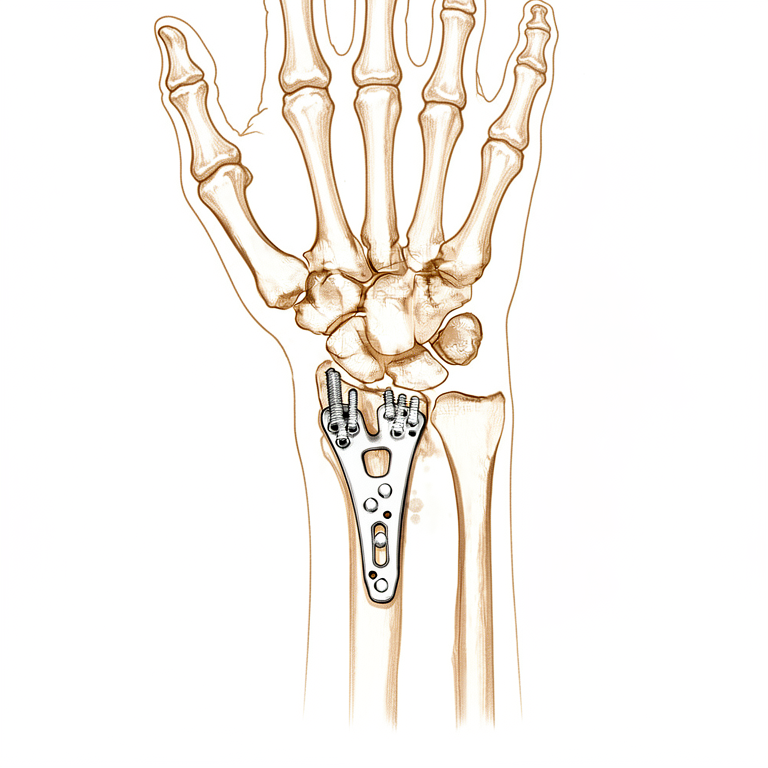
Distal Radius ORIF
Open reduction and volar plate fixation of the distal radius — operation, recovery, rehabilitation.
For patients: a plain-language version of this topic is available. See the patient guide.
Overview
Open reduction and internal fixation (ORIF) with plate fixation offers the best results for adult patients with distal radius fractures, providing superior early and sustained functional recovery and a reduction in fracture healing complications compared to other modalities [30]. This technique yields significantly better subjective outcomes, measured by DASH scores, and superior restoration of anatomic volar tilt, forearm flexion, and extension during the first year compared to external fixation [3, 7]. While external fixation remains a valid treatment option with indications largely unchanged despite the popularity of volar plate fixation [8], it is associated with higher rates of minor and major complications that do not require surgery [5]. Long-term data indicate that clinical and radiological results for volar locking plates and external fixation are comparable three years after surgery for unstable dorsally displaced fractures [2], and external fixation provides the same functional recovery after one year as volar locking plate systems [5].
Indications for ORIF extend to very old patients with distal radius fractures accompanied by ulnar styloid fractures, who may benefit from the procedure to achieve optimal long-term functional recovery [9]. For complex cases, radial column plating is a safe and valuable adjunct, though patients should be counseled that there is a 28% chance that hardware removal may be required [15]. Internal radiocarpal distraction plating serves as a versatile tool for fractures not amenable to standard fixation, offering acceptable radiographic and functional outcomes while avoiding complications associated with external fixation [18]. In comminuted distal radius fractures, bone grafting is the mainstay of treatment alongside fracture stabilisation [16]. Volar plate fixation is effective for intra-articular distal radius fractures, and combined plate fixation can be considered as an alternative for dorsal side comminuted fractures [36]. Arthroscopy is an interesting tool for specialized treatment of articular distal radius fractures in specific cases considering displacement and functional needs [10].
Early mobilization for patients treated with ORIF may have a beneficial functional effect compared to late mobilization at earlier stages, with mean differences in DASH scores at 6 weeks surpassing the minimal clinically important difference [6]. Substantial variations in surgical direct costs exist, with implant choice being the predominant driver [4]. Although complication frequencies did not differ among different treatment modalities in some analyses [20], observed frequencies from comparative observational studies were less robust against potential unmeasured confounders [20]. The best method of treatment for distal radius fractures has yet to be found, as there is a multitude of treatment options available with varying degrees of evidence to support their use [13]. Many patient-specific factors for prolonged opioid consumption can be identified prior to prescribing postoperative pain management [21]. Findings regarding perioperative proton pump inhibitors versus H2-receptor antagonists do not definitively determine whether temporary discontinuation of chronic PPIs alters risks after distal radius ORIF [11].
Anatomy & Pathophysiology
Bony Anatomy
The distal radius articular surface is biconcave, comprising scaphoid and lunate facets [71]. The distal radioulnar joint (DRUJ) articulates the ulna and radius at the sigmoid notch [71]. Lister tubercle, a small dorsal prominence, serves as a landmark for the dorsal approach to the wrist [71]. The distal radial metaphysis features thin cortex and is vulnerable to bending forces [71]. In a normal wrist with neutral ulnar variance, the distal radius bears 80% of the axial load [71].
The carpus consists of two rows of eight bones bridging the forearm and hand, providing movement at the wrist joint while retaining stability [48]. The proximal carpal row includes the scaphoid, lunate, and triquetrum, which act as a key intercalated segment between the forearm and the distal carpal row [48]. The distal carpal row includes the trapezium, trapezoid, capitate, and hamate [48]. The scaphoid is an S-shaped tubular bone located in the proximal carpal row on the radial aspect of the wrist [66]. It articulates with the trapezium/trapezoid, radius, capitate, and lunate [66]. Due to articular cartilage coverage exceeding 80%, the scaphoid has a reduced capacity for periosteal healing and an increased tendency for delayed union and nonunion [66].
Vascular supply to the carpus is distinct for each bone. The scaphoid is supplied by two vascular pedicles originating from the scaphoid branches of the radial artery: a dorsal branch supplying 70% to 80% of the proximal scaphoid and a volar branch supplying 20% to 30% of the distal scaphoid [66]. The waist of the scaphoid has minimal or no perforating vasculature [66]. The lunate receives vessels from palmar and dorsal surfaces in approximately 80% of cases, while approximately 20% receive vessels from the palmar surface only [74]. The triquetrum is supplied by branches of the ulnar artery, dorsal intercarpal arch, and palmar intercarpal arch, with dorsal vessels supplying 60% and palmar vessels supplying 40% [74]. The capitate is supplied by branches of the dorsal intercarpal arch, dorsal basal metacarpal arch, palmar intercarpal arch, and ulnar recurrent artery [74]. The hamate is supplied by branches of the dorsal intercarpal arch, the ulnar recurrent artery, and the ulnar artery [74].
Ligamentous Anatomy
Extrinsic ligaments of the carpus connect the carpal bones to the forearm bones proximally and the metacarpals distally [68]. The extrinsic palmar radiocarpal ligaments include the transverse carpal, radioscaphocapitate, radioscapholunate, radial collateral, long radiolunate, and short radiolunate ligaments [68]. The extrinsic ulnocarpal ligaments include the ulnotriquetral, ulnolunate, and ulnocapitate ligaments [68]. Strong oblique extrinsic palmar radial ligaments prevent the carpus from translating medially on the angulated slope of the distal radius through two V-shaped ligamentous bands [68]. The space of Poirier is a V-shaped interligamentous sulcus over the capitolunate articulation that represents an interval of capsular weakness [68]. The arcuate ligament is found in the central third of the palmar joint capsule and forms a support sling for the midcarpal region, particularly the head of the capitate [68].
Intrinsic ligaments connect individual carpal bones to one another and include palmar midcarpal, proximal interosseous, and distal interosseous ligaments [68]. The scapholunate ligament consists of dorsal, palmar, and proximal portions, with the proximal portion being the widest, thinnest, and weakest section [76]. The lunotriquetral ligament consists of dorsal, palmar, and proximal portions [76]. The radioscaphocapitate ligament originates from the radial styloid at the level of the scaphoid fossa and inserts on the volar capitate [76]. The ulnotriquetral ligament originates from the palmar edge of the triangular fibrocartilage complex (TFCC) and inserts on the proximal and ulnar surfaces of the triquetrum [76].
Pathophysiology & Deforming Forces
The brachioradialis insertion on the radial styloid acts as a deforming force in distal radius fractures [71]. Lister tubercle is a cause of attritional rupture of the extensor pollicis longus (EPL) after a distal radius fracture [71]. Dorsal intercalated segmental instability (DISI) occurs when the lunate is torn from the scaphoid and tilts backwards [49]. Volar intercalated segment instability (VISI) occurs when the lunate is torn from the triquetrum and tilts forwards [49].
Injuries to adjacent soft-tissue structures occur in approximately one-half of distal radius fractures and in almost all intra-articular fractures [81]. The most common associated soft-tissue injuries in distal radius fractures are TFCC, scapholunate ligament, and lunotriquetral ligament injuries in descending order of frequency [81]. Tendon ruptures associated with distal radius fractures can be primary (acute rupture from high-energy trauma) or secondary (subacute rupture from mechanical attrition by osteophytes, fragments, or hardware) [28]. Plate positions associated with attritional flexor tendon rupture have been identified following distal radius fracture fixation with volar plates [92]. Failure to restore volar tilt in surgically treated distal radius fractures causes increased pressure on the flexor pollicis longus (FPL) tendon [93].
Escape of an articular fragment with resultant carpal instability is a complication that can occur following volar locking plate fixation of distal radius fractures [17]. Articular fragment escape is more often seen in conjunction with poorly reduced or captured displaced volar lunate facet fragments [17]. Fixation failure and carpal instability can occur with fracture patterns involving the radial column or dorsal lunate facet [17]. Ulnar carpal translation can occur following reduction and fixation of distal radius fractures, particularly in cases with severe fracture patterns combined with ulnar minus variance [26].
The incidence of ulnocarpal complaints following distal radial fracture depends on the presence but not the healing status of an ulnar styloid fracture [35]. When the distal radioulnar joint is stable, an untreated ulnar styloid fracture does not affect the wrist outcome of a patient with an unstable distal radius fracture treated with external fixation [19].
The forearm functions as a ring, making isolated radial shaft fractures uncommon in adults [40]. Fractures within 7.5 cm of the radiocarpal joint are more likely to represent a Galeazzi fracture involving a radial shaft fracture and associated distal radioulnar joint injury [40]. Radial shaft fracture line obliquity greater than 30 degrees is a statistically significant predictor of distal radioulnar joint instability [40].
Classification
AO/OTA: The Arbeitsgemeinschaft für Osteosynthesefragen/Orthopaedic Trauma Association (AO/OTA) Fracture and Dislocation Classification is the standard system used to classify distal radius fractures [24]. This classification includes types A3.1, A3.2, C2.1, C2.2, C2.3, and C3.2 for distal radius fractures [41]. In a cohort of operatively treated distal radius fractures, AO type A fractures and AO type C fractures were the most common fracture types [62].
Other Considerations: The approach to surgical management of distal radius fractures is based on injury mechanism, fracture pattern, patient characteristics, bone quality, soft tissue injury, and surgeon preference [17]. Distal radius articular fragment escape patterns following fracture fixation can be organized and classified [17]. A machine learning clustering method has been developed to create a new distal radius fracture classification based on specific fragments [36].
Clinical Presentation
The increasing adoption of plate and screw fixation for distal radius fractures across all age groups [12] has shifted clinical focus toward specific post-operative complications and functional outcomes. In patients aged 60 years or older, final radiographic alignment does not correlate with patient-reported function at 12 months [33]. Consequently, clinical assessment must prioritize functional status over radiographic metrics in this demographic.
Associated Ulnar and Carpal Pathology
The presence, size, and treatment of an ulnar styloid fracture associated with internal plate fixation is not an independent predictor of outcomes as determined by the Michigan Hand Outcomes Questionnaire [97]. When the distal radioulnar joint is stable, an untreated ulnar styloid fracture does not affect the wrist outcome of patients with unstable distal radius fractures treated with external fixation [19]. However, ulnar carpal translation can occur following reduction and fixation, particularly in cases with severe fracture patterns combined with ulnar minus variance [26].
Articular and Tendon Complications
Articular fragment escape with resultant carpal instability is a complication of volar locking plate fixation [17]. This event is more often seen in conjunction with poorly reduced or captured displaced volar lunate facet fragments [17]. Tendon ruptures are associated with distal radius fractures, surgical complications, or rheumatoid arthritis [28]. These ruptures present in two distinct temporal patterns:
Primary tendon ruptures: Occur acutely, typically in the context of high-energy fractures that directly damage tendons [28]. Secondary tendon ruptures: Occur subacutely over days to years, typically as a result of mechanical attrition damage to the tendon by another structure [28].
Mechanical attrition damage can be caused by osteophytes, fracture fragments, or surgical hardware that directly abut the tendon [28]. Flexor pollicis longus tendon rupture is a secondary event that notably occurs in the context of mechanical attrition by structures abutting the tendon [28]. A concurrent flexor carpi radialis tendon rupture can occur with acute fractures of the distal radius and ulna [28].
Risk Factors and Adjunctive Procedures
In a review of 417 patients undergoing surgical fixation, smokers demonstrated statistically significant higher rates of postoperative distal radius tenderness [52], wrist stiffness [52], nonunion [52], hardware removal [52], and revision procedures [52] compared with non-smokers. Routine first dorsal compartment release during distal radius fracture fixation may expedite symptom relief in patients with de Quervain disease [39].
Investigations
Plain radiography: Standard evaluation of distal radius fractures requires posteroanterior (PA), lateral, and oblique views [87]. A true lateral view is mandatory for accurate measurements, ensuring the radius and ulna are superimposed [87]. Forearm rotation significantly impacts these measurements; a 5-degree rotational change results in a 1.6-degree change in volar tilt on the lateral view [87]. Key radiographic parameters include radial height, averaging 11 to 12 mm with a normal range of 8–18 mm [87]; radial inclination, averaging 22 to 23 degrees with a normal range of 12–30 degrees [87]; and volar tilt, averaging 11 to 22 degrees with a normal range of 0 to 28 degrees [87]. Ulnar variance is defined as the vertical distance between lines drawn perpendicular to the long axis of the radius at the medial corner of the radial articular surface and the most distal aspect of the ulnar head [87]. Carpal malalignment is assessed by drawing lines down the long axes of the capitate and radius, which should overlap or intersect within the carpus in normal alignment [87]. The teardrop angle, measured on the lateral view as the angle between the radial shaft and the central axis of the teardrop, averages 70 degrees in normal radii [87]. A teardrop angle less than 45 degrees is associated with articular gap and step-off on CT [87]. Specific views include the dorsal tangential view, obtained by flexing the wrist and positioning the forearm tangential to the C-arm beam to assess for dorsal cortical screw penetration [87], and the radial incline view, taken on the lateral view with the C-arm adjusted to match radial inclination to visualize the articular surface of the radius [87]. In patients aged 60 years, final radiographic alignment did not correlate with patient-reported function at 12 months [33].
CT: Computed tomography scans are indicated for preoperative planning of intra-articular fractures [50].
MRI: Magnetic resonance imaging is used to rule out injuries to carpal ligaments or the triangular fibrocartilage complex [50].
Other Considerations: Arthroscopy serves as a tool for the specialized treatment of articular distal radius fractures in specific cases considering displacement and functional needs [10]. Arthroscopic-assisted fixation offers direct visualization for the reduction of articular fragments [63]. An intraoperative radiograph counter is associated with reduced fluoroscopic utilization during open reduction and internal fixation without reducing reduction quality [103]. Adequate intraoperative fluoroscopy is required to avoid intra-articular penetration of the distal radioulnar joint during volar plate placement [45]. Clinical outcome measures include the Disabilities of the Arm, Shoulder, and Hand (DASH) questionnaire for patient-reported outcomes [24], as well as active wrist flexion and extension, forearm pronation and supination, and grip strength [24]. Radiographic outcomes measured in studies include volar tilt, radial inclination, ulnar variance, and articular stepoff [24]. ORIF yields significantly better subjective outcome (DASH scores) the first year after operation compared to external fixation [3]. Early mobilization for patients treated with ORIF may have a beneficial effect on function at earlier stages compared to late mobilization [6]. Mean differences in DASH scores at 6 weeks for early mobilization surpass the minimal clinically important difference [6]. The presence of an ulnar styloid fracture influences the incidence of ulnocarpal complaints following distal radial fracture, regardless of the healing status of the styloid [35].
Treatment
Non-Operative
The provided evidence base does not detail specific conservative management protocols such as weight loss, physical therapy regimens, NSAIDs, or injections for distal radius fractures.
Operative
Indications: Open reduction and internal fixation (ORIF) with a plate offers the best results for adult patients with distal radius fractures regarding early and sustained functional recovery and a reduction in fracture healing complications [30]. Surgery is indicated for unstable dorsally displaced fractures, where clinical and radiological results for volar locking plate (VLP) and external fixation (EF) are comparable at three years [2]. For patients with type I open distal radius fractures, timing of fixation does not affect early complication rates, though these differ from higher-grade fractures regarding infection and complication rates [37].
Surgical Approach / Technique: Volar locking plate fixation is the most commonly used method for the majority of distal radius fracture types [17]. Appropriate placement of volar plates is critical for intraarticular fractures, requiring adequate intraoperative fluoroscopy to avoid intraarticular penetration of the distal radioulnar joint (DRUJ) [45]. For dorsally displaced, comminuted intra-articular fractures, low-profile dorsal plating (DLP) is a useful technique with careful soft tissue coverage [38]. Radial column plating is a safe adjunct for complex fractures, though patients must be counseled on a 28% chance of required hardware removal [15]. Internal radiocarpal distraction plating serves as a versatile tool for fractures not amenable to standard fixation, avoiding external fixation complications [18]. Arthroscopic-assisted distal radius fracture fixation (AADRF) provides direct visualization for articular fragment reduction [63]. Release of the brachioradialis for type C fractures facilitates the procedure without adversely affecting elbow and wrist function [55]. A large locking bone clamp is indicated for dorsally or coronally malaligned fragments when volar plate fixation is selected [111]. The lift-off screw (LOS) length can be calculated to achieve accurate sagittal tilt correction with any distal radius periarticular locking plate that has shaft locking options [58].
Implant Selection: Volar plate fixation is effective for intra-articular distal radius fractures, while combined plate fixation is an alternative for dorsal side comminuted fractures [36]. External fixation provides the same functional recovery after one year compared with volar locking plate systems, although it is associated with higher rates of minor and major complications that do not require surgery [5]. External fixation was less cost-effective than volar locking plate treatment from a societal perspective, primarily due to longer absence from work [60]. Complication frequencies did not differ among different treatment modalities, though observed frequencies from comparative observational studies were less robust against potential unmeasured confounders [20].
Alignment / Balancing Strategy: ORIF yields significantly better subjective outcome (DASH scores) in the first year, restoration of anatomic volar tilt, and forearm flexion and extension at the end of follow-up compared to external fixation [3]. For external fixation, moderately increased distraction of the carpus at initial reduction correlates with improved clinical outcome without adverse effects on subsequent wrist range of motion [23]. Applying distractive force perpendicular to the distal radius articular surface improves some radiological outcomes compared to distraction along the distal radius shaft axis, likely due to better reduction maintenance [25].
Pain Management: Routine first dorsal compartment release during distal radius fracture fixation may expedite symptom relief in patients with pre-existing de Quervain disease [39].
Adjuncts: Cement augmentation improves biomechanical properties in volar plating by increasing load and cycles until failure, construct stiffness, and decreasing screw subsidence in osteoporotic bone [44]. Bone grafting is the mainstay of treatment in comminuted distal radius fractures along with fracture stabilization when using external fixation [16]. Staged non-bridging circular external fixation with sequential osteoporosis therapy for MRSA-infected distal radius non-union enables infection control, stable fixation, and early mobilization while preserving wrist function [34].
Setting of Care: Early mobilization for patients treated with ORIF may have a beneficial effect compared to late mobilization, with mean differences in DASH scores at 6 weeks surpassing the minimal clinically important difference [6].
Other Considerations: The incidence of extensor pollicis longus (EPL) rupture after volar plating is between 0% and 1%, usually occurring about 3 months after fixation [57]. Ulnar carpal translation can occur following reduction and fixation with palmar locking plates, particularly in severe fracture patterns combined with ulnar minus variance [26]. Articular fragment escape with resultant carpal instability is a complication of volar locking plate fixation, more often seen with poorly reduced or captured displaced volar lunate facet fragments [17]. Thorough preoperative planning to recognize fracture patterns leading to articular fragment escape is paramount, and proper implant selection and postoperative immobilization duration are critical to minimizing this complication [17]. The most common theoretical complication from the volar intra-articular extended window approach is carpal instability, whether dorsal carpal subluxation or ulnocarpal translocation [112]. Acute nondissociative carpal instability in the setting of distal radius fracture is a phenomenon that is still not completely understood [112]. In the scenario of ulnocarpal translation seen in the operating room during the volar intra-articular extended window approach, the radiocarpal joint can be temporarily fixed with large Kirschner wires [112]. Nontobacco nicotine dependence is associated with significantly higher risk of postoperative complications following distal radius ORIF, including infection, loosening of ORIF hardware, and nonunion, but a lower risk of wrist stiffness [64]. Patients who underwent distal radius fracture fixation were at greater odds for prolonged opioid use after surgery in the presence of comorbid cardiovascular, renal, metabolic, and mental health illnesses and postoperative medical and surgical complications [105]. Range of motion, grip strength, and radiographic outcomes are similar between groups regarding time-to-surgery, and complication and revision rates were very low and comparable [22].
Complications
General Complication Rates: Reported complication rates following open reduction and internal fixation (ORIF) of distal radius fractures vary from 0% to 60% [43]. The absence of a standard definition for complications after volar plating makes meaningful comparison of existing literature challenging [43]. While complication frequencies did not differ among different treatment modalities, observed frequencies from comparative observational studies were less robust against potential unmeasured confounders [20]. A network meta-analysis of randomized trials indicates that ORIF with a plate offers the best results for adult patients with distal radius fractures regarding a reduction in fracture healing complications [30]. Patients treated with external fixators and K-wires experienced a greater number of complications compared to those treated with volar locking plates for arthroscopically assisted intra-articular distal radial fractures [118].
Hardware-Related Complications: Smoking is associated with a significantly higher rate of hardware removal compared to nonsmokers in patients undergoing surgical fixation for distal radius fractures [52]. Nontobacco nicotine dependence is associated with a significantly higher risk of loosening of ORIF hardware following distal radius ORIF [64].
Tendon and Nerve Complications: The incidence of extensor pollicis longus (EPL) rupture after volar plating of distal radius fractures is between 0% and 1% [57]. EPL rupture usually occurs about 3 months after fixation [57]. In patients without symptoms after distal radius fracture, a 28% incidence of prolonged latencies on nerve conduction studies was observed compared with reference values [102]. In a cohort of neurologically asymptomatic patients treated with volar plate fixation, distal sensory latencies of the median nerve were 3.76 ± 0.70 ms before surgery and 3.81 ± 0.52 ms after surgery [102]. Distal motor latencies of the median nerve were 3.60 ± 0.68 ms before surgery and 3.88 ± 0.36 ms after surgery in the same cohort [102].
Infection and Wound Complications: Nontobacco nicotine dependence is associated with a significantly higher risk of infection following distal radius ORIF [64]. Grade 1 open distal radius fractures are at low risk for infection with immediate internal plate and screw fixation [61]. Type I open distal radius fractures differ from higher grade fractures regarding infection rates [37].
Fracture Healing and Stability Complications: Smoking is associated with a significantly higher rate of nonunion compared to nonsmokers in patients undergoing surgical fixation for distal radius fractures [52]. Nontobacco nicotine dependence is associated with a significantly higher risk of nonunion following distal radius ORIF [64]. Closed reduction and external fixation of severely comminuted unstable distal radial fractures in the elderly may result in significant secondary displacement, which occurred in eleven of sixteen patients in one study [31]. Fixation failure and carpal instability can occur with fracture patterns involving the radial column or dorsal lunate facet following distal radius fracture fixation [17].
Stiffness and Functional Complications: Smoking is associated with a significantly higher rate of wrist stiffness compared to nonsmokers in patients undergoing surgical fixation for distal radius fractures [52]. Conversely, nontobacco nicotine dependence is associated with a lower risk of wrist stiffness following distal radius ORIF [64]. Smoking is also associated with a significantly higher rate of distal radius tenderness compared to nonsmokers in patients undergoing surgical fixation for distal radius fractures [52].
Revision and Secondary Surgery: Smoking is associated with a significantly higher rate of revision procedures compared to nonsmokers in patients undergoing surgical fixation for distal radius fractures [52]. Patients who smoke have a statistically significant higher rate of postoperative complications compared to those who do not smoke, even when controlling for the confounding variables of diabetes and obesity [52].
Recovery
Functional Outcomes and Fixation Comparison: A network meta-analysis of randomized trials indicates that open reduction and internal fixation (ORIF) with a plate provides the best results for adult patients with distal radius fractures regarding early and sustained functional recovery [30]. This method also offers the best results for reducing fracture healing complications [30]. Compared to external fixation, ORIF yields significantly better subjective outcomes, measured by DASH scores, during the first year post-operation [3]. Furthermore, ORIF provides significantly better restoration of anatomic volar tilt, as well as superior forearm flexion and extension, compared to external fixation at the end of the follow-up period [3]. A meta-analysis of randomised controlled trials confirms that ORIF with plate fixation results in significantly better functional outcomes, as measured by DASH scores, compared to external fixation [7].
Long-term Comparisons and Specific Populations: A 3-year follow-up of a randomized controlled study found that clinical and radiological results for volar locking plate and external fixation were comparable for unstable dorsally displaced distal radius fractures [2]. In elderly patients, external fixation provides the same functional recovery after one year compared with volar locking plate systems [5]. However, external fixation is associated with higher rates of minor and major complications that do not require surgery compared with volar locking plate systems in this population [5]. For women older than 55 years, closed reduction and external fixation of severely comminuted unstable distal radial fractures may result in an acceptable functional outcome in the majority of cases [31]. Nevertheless, significant secondary displacement occurred in eleven of the sixteen patients treated with this method for such fractures [31]. A retrospective study suggests that very old patients with distal radius fractures accompanied by ulnar styloid fractures may benefit from ORIF to achieve optimal long-term functional recovery [9].
Mobilization and Timing: A systematic review and meta-analysis found that early mobilization for patients with distal radius fractures treated with ORIF may have a beneficial functional effect compared to late mobilization at earlier stages [6]. Specifically, mean differences in DASH scores at 6 weeks for early mobilization compared to late mobilization surpass the minimal clinically important difference [6]. Regarding time-to-surgery, a systematic review found that range of motion, grip strength, and radiographic outcomes are similar between groups [22]. Complication and revision rates were very low and comparable between groups regarding time-to-surgery for distal radius fractures [22].
Radiographic Alignment and Patient-Reported Outcomes: A study of patients with wrist fractures aged 60 years found that final radiographic alignment did not correlate with patient-reported function at 12 months [33].
Complications and Hardware: Patients undergoing radial column plating of the distal radius should be counseled that there is a 28% chance that hardware removal may be required [15]. Despite this, radial column plating is a safe treatment modality and a valuable adjunct in the setting of complex distal radius fractures [15]. In cases of MRSA-infected distal radius non-union, staged non-bridging circular external fixation and sequential osteoporosis therapy enable infection control, stable fixation, and early mobilization while preserving wrist function [34].
Associated Injuries and Adjuncts: When the distal radioulnar joint is stable, an untreated ulnar styloid fracture does not affect the wrist outcome of the patient with an unstable distal radius fracture treated with external fixation [19]. Bone grafting is the mainstay of treatment in comminuted distal radius fractures along with fracture stabilisation [16]. Arthroscopy is an interesting tool for specialized treatment of articular distal radius fractures in specific cases considering displacement and functional needs [10]. Routine first dorsal compartment release during distal radius fracture fixation may expedite symptom relief in patients with de Quervain disease [39].
Cost and Resource Utilization: Substantial variations in surgical direct costs for distal radius ORIF exist, and implant choice is the predominant driver [4]. From a societal perspective, external fixation was less cost-effective than volar locking plate treatment for distal radial fractures [60]. Patients managed with external fixation had a longer absence from work compared to those treated with volar locking plate [60].
Medication and Pain Management: Findings regarding perioperative proton pump inhibitors versus H2-receptor antagonists and 1-year complications after distal radius ORIF should be interpreted cautiously and do not definitively determine whether temporary discontinuation of chronic PPIs alters risks [11]. Many patient-specific factors for prolonged opioid consumption after distal radius fracture fixation can be identified prior to prescribing postoperative pain management [21].
General Evidence Status: The best method of treatment for distal radius fractures has yet to be found, as there is a multitude of treatment options available with varying degrees of evidence to support their use [13].
Other Considerations: A prospective study of the extended flexor carpi radialis approach for distal radius fracture fixation collected clinical outcome measures including active wrist flexion and extension, forearm pronation and supination, grip strength, and DASH scores at 2 weeks, 6 weeks, 3 months, 6 months, and 12 months [24]. The same study collected radiographic outcomes including volar tilt, radial inclination, ulnar variance, and articular stepoff [24]. A case report of a 48-year-old woman with distal radius and ulna fracture and concurrent flexor carpi radialis tendon rupture treated with ORIF without tendinous repair found that she regained wrist motion symmetric to her uninjured wrist [28]. A study of unstable distal ulna fractures with concomitant distal radius fracture found that locked plating resulted in union, good to excellent alignment and motion, nearly symmetric grip strength, and minimal transient morbidity [29]. A study of unstable fractures of the distal ulna associated with fracture of the distal radius found that condylar blade plate fixation can achieve healing with good alignment, satisfactory function, and an acceptable rate of secondary surgery [109].
Key Evidence
- [L2] Three years after surgery for unstable dorsally displaced distal radius fractures, the clinical and radiological results for VLP and EF were comparable. [2] (10.1016/j.jhsa.2018.09.015)
- [L2] ORIF yields significantly better subjective outcome (DASH scores) the first year after operation, restoration of anatomic volar tilt, and forearm flexion and extension at the end of the follow-up period. [3] (10.1016/j.otsr.2012.11.018)
- [L3] Substantial variations in surgical direct costs for distal radius ORIF exist, and implant choice is the predominant driver. [4] (10.1016/j.jhsa.2018.04.015)
- [L4] For distal radius fractures, external fixation provides the same functional recovery after one year compared with volar locking plate systems, although it is associated with higher rates of minor and major complications that do not require surgery. [5] (10.1016/s0020-1383(15)30004-8)
- [L1] Functionally, at earlier stages, early mobilization for patients with distal radius fractures treated with ORIF may have a beneficial effect compared to late mobilization, with mean differences in DASH scores at 6 weeks surpassing the minimal clinically important difference. [6] (10.1186/s13018-021-02837-0)
- [L1] ORIF with plate fixation resulted in significantly better functional outcomes as measured by DASH scores compared to external fixation. [7] (10.1016/j.injury.2012.12.003)
- [L5] External fixation remains a valid treatment option for distal radius fractures, with indications largely unchanged despite the popularity of volar plate fixation. [8] (10.1016/j.jhsa.2007.09.009)
- [L3] Very old patients with distal radius fracture accompanied by ulnar styloid fractures may benefit from ORIF to achieve optimal long-term functional recovery. [9] (10.1186/s12891-024-07964-3)
- [L3] The arthroscopy is an interesting tool for specialized treatment of articular distal radius fractures in specific cases considering displacement and functional needs. [10] (10.1016/j.otsr.2017.08.021)
- [L3] These findings should be interpreted cautiously and do not definitively determine whether temporary discontinuation of chronic PPIs alters risks after distal radius ORIF. [11] (10.1016/j.jhsg.2026.101039)
- [L3] The use of plate and screw fixation techniques for distal radius fractures increased in all age groups. [12] (10.1016/j.injury.2012.10.025)
- [Paper] The best method of treatment for distal radius fractures has yet to be found, as there is a multitude of treatment options available with varying degrees of evidence to support their use. [13] (10.1016/j.injury.2015.09.030)
- [L4] Radial column plating of the distal radius is a safe treatment modality and a valuable adjunct in the setting of complex distal radius fractures, but patients should be counseled that there is a 28% chance that hardware removal may be required. [15] (10.1177/1558944718760861)
- [L4] Bone grafting is the mainstay of treatment in comminuted distal radius fractures along with fracture stabilisation. [16] (10.1186/1749-799x-6-23)
- [L5] [17] (10.1016/j.jhsa.2024.07.018)
- [L4] Internal radiocarpal distraction plating is a versatile tool for treating distal radius fractures not amenable to standard fixation, offering acceptable radiographic results and functional outcomes while avoiding complications associated with external fixation. [18] (10.1177/1558944718787877)
- [L3] When the distal radioulnar joint is stable, an untreated ulnar styloid fracture does not affect the wrist outcome of the patient with an unstable distal radius fracture treated with external fixation. [19] (10.1186/1471-2474-14-186)
- [L2] Complication frequencies did not differ among different distal radius fracture treatment modalities, but the observed complication frequencies from most comparative observational studies were less robust against potential unmeasured confounders. [20] (10.1097/corr.0000000000002528)
- [L3] Many patient-specific factors for prolonged opioid consumption after distal radius fracture fixation can be identified prior to prescribing postoperative pain management. [21] (10.1177/2325967123s00196)
- [L4] Range of motion, grip strength, and radiographic outcomes are similar between groups, and complication and revision rates were very low and comparable. [22] (10.1016/j.jhsa.2022.12.018)
- [L4] Moderately increased distraction of the carpus at the initial fracture reduction is correlated with improved clinical outcome and does not have an adverse affect on subsequent wrist range of motion. [23] (10.1016/j.jhsa.2009.07.010)
- [L4] [24] (10.1016/j.jhsg.2025.02.003)
- [L1] Applying distractive force perpendicular to the distal radius articular surface seems to improve some radiological outcomes, probably due to better reduction maintenance, when compared with the technique of applying distraction force along distal radius shaft axis. [25] (10.1186/s12891-023-06358-1)
- [L3] This study highlights the potential for ulnar carpal translation to occur following reduction and fixation of distal radius fractures, particularly in cases with a more severe fracture pattern and combined with ulnar minus variance. [26] (10.1186/s13018-024-04689-w)
- [L4] [28] (10.1016/j.jhsg.2021.06.005)
- [L4] Locked plating of unstable distal ulna fractures, in the setting of an associated distal radius fracture, resulted in union, good to excellent alignment and motion, nearly symmetric grip strength, and minimal transient morbidity. [29] (10.1016/j.jhsa.2007.03.010)
- [L1] A network meta-analysis of randomized trials revealed that open reduction and internal fixation with a plate offers the best results for adult patients with a distal radius fracture, in terms of early and sustained functional recovery and a reduction in fracture healing complications. [30] (10.5435/jaaos-d-18-00424)
- [L4] Closed reduction and external fixation of severely comminuted unstable distal radial fractures in the elderly may result in an acceptable functional outcome in the majority of cases, although significant secondary displacement occurred in eleven of the sixteen patients. [31] (10.1016/j.injury.2004.08.004)
- [L2] For patients with wrist fractures aged 60 years, final radiographic alignment did not correlate with patient-reported function at 12 months. [33] (10.1016/j.jhsa.2023.02.012)
- [L5] This approach enables infection control, stable fixation, and early mobilization while preserving wrist function. [34] (10.1186/s12891-026-09865-z)
- [L3] The incidence of ulnocarpal complaints following distal radial fracture depends on the presence but not the healing status of an ulnar styloid fracture. [35] (10.1177/1753193412469582)
- [L3] The volar plate fixation is an effective treatment for the intra-articular distal radius fractures, while combined plate fixation can be considered as an alternative treatment for dorsal side comminuted fractures. [36] (10.1186/s12891-024-08215-1)
- [L3] Type I open distal radius fractures differ from higher grade fractures regarding infection and complication rates. [37] (10.1016/j.jhsg.2024.09.004)
- [L4] DLP is a useful technique for the treatment of selected cases of dorsally displaced, comminuted intra-articular fractures of the distal radius with careful soft tissue coverage. [38] (10.1055/s-0036-1593763)
- [L1] This indicates that routine first dorsal compartment release during distal radius fracture fixation may expedite symptom relief in patients with de Quervain disease. [39] (10.1016/j.jhsg.2024.03.009)
- [L1] [41] (10.1016/s0020-1383(08)70018-4)
- [L4] [43] (10.1016/j.jhsa.2022.11.012)
- [L5] Cement augmentation improves biomechanical properties in volar plating of the distal radius by increasing load and cycles until failure, construct stiffness, and decreasing screw subsidence. [44] (10.1007/s00402-012-1628-y)
- [L5] Appropriate placement of volar distal radius plates is critical to address most intraarticular distal radius fractures, and adequate intraoperative fluoroscopy should be achieved to avoid intraarticular penetration of the DRUJ. [45] (10.5435/jaaos-d-25-00035)
- [L3] [52] (10.1177/1558944718810882)
- [L2] Release of the brachioradialis for type C distal radius fractures facilitated the surgical procedure and did not adversely affect elbow and wrist function. [55] (10.1016/j.otsr.2017.06.015)
- [L4] The incidence of EPL rupture after volar plating of DRF is between 0% and 1% and usually occurs about 3 months after fixation. [57] (10.1177/15589447241233763)
- [L5] The LOS length can be calculated, and this technique can potentially be used with any distal radius periarticular locking plate with locking options in the shaft. [58] (10.1016/j.jhsa.2018.02.011)
- [L1] External fixation was less cost-effective than volar locking plate treatment for distal radial fractures from a societal perspective, primarily because patients managed with external fixation had a longer absence from work. [60] (10.2106/jbjs.19.01288)
- [L4] Grade 1 open distal radius fractures are at low risk for infection or nonunion with immediate internal plate and screw fixation, and the timing of initial debridement is likely less important than for grade 3 injuries. [61] (10.1016/j.jhsa.2010.06.008)
- [L3] [62] (10.1186/s12891-025-09359-4)
- [L4] AADRF is an effective adjunct, offering direct visualization for reduction of articular fragments. [63] (10.1016/j.eats.2024.103033)
- [L2] Nontobacco nicotine dependence is associated with significantly higher risk of postoperative complications following distal radius ORIF, including infection, loosening of ORIF hardware, and nonunion, but a lower risk of wrist stiffness. [64] (10.1016/j.jhsa.2025.08.003)
- [L3] We identified plate positions associated with attritional flexor tendon rupture following distal radius fracture fixation with volar plates. [92] (10.1016/j.jhsa.2013.03.011)
- [L5] Failure to restore the volar tilt in surgically treated distal radius fractures causes increased pressure on the FPL tendon. [93] (10.1016/j.jhsa.2022.05.013)
- [L5] The presence, size, and treatment of an ulnar styloid fracture in association with internal plate fixation of the distal radius fracture was not an independent predictor of outcomes as determined by the Michigan Hand Outcomes Questionnaire. [97] (10.1016/j.jhsa.2009.06.022)
- [L2] [102] (10.1016/j.jhsg.2020.06.003)
- [L3] An intraoperative radiograph counter is associated with reduced fluoroscopic utilization during open reduction and internal fixation of distal radius fracture without reducing reduction quality. [103] (10.1016/j.jhsa.2025.02.016)
- [L3] Patients who underwent distal radius fracture fixation were at greater odds for prolonged opioid use after surgery in the presence of comorbid cardiovascular, renal, metabolic, and mental health illnesses and postoperative medical and surgical complications. [105] (10.1016/j.jhsg.2023.03.003)
- [L4] For unstable fractures of the distal ulna associated with fracture of the distal radius, condylar blade plate fixation can achieve healing with good alignment, satisfactory function, and an acceptable rate of secondary surgery. [109] (10.1016/j.jhsa.2003.10.019)
- [L4] [111] (10.1016/j.jhsa.2018.11.017)
- [L5] [112] (10.1016/j.jhsa.2022.09.018)
- [L2] There was a greater number of complications in the external fixator and K-wire treated patients. [118] (10.1177/1753193419879567)
See Also
References
[2] External Fixation Versus Volar Locking Plate for Unstable Dorsally Displaced Distal Radius Fractures—A 3-Year Follow-Up of a Randomized Controlled Study. The Journal of Hand Surgery. 2019. DOI: 10.1016/j.jhsa.2018.09.015
[3] Open reduction and internal fixation versus external fixation for unstable distal radial fractures: A meta-analysis. Orthopaedics & Traumatology: Surgery & Research. 2013. DOI: 10.1016/j.otsr.2012.11.018
[4] Evaluation of Factors Driving Cost Variation for Distal Radius Fracture Open Reduction Internal Fixation. The Journal of Hand Surgery. 2018. DOI: 10.1016/j.jhsa.2018.04.015
[5] External fixation in the elderly. Injury. 2015. DOI: 10.1016/s0020-1383(15)30004-8
[6] In adults, early mobilization may be beneficial for distal radius fractures treated with open reduction and internal fixation: a systematic review and meta-analysis. Journal of Orthopaedic Surgery and Research. 2021. DOI: 10.1186/s13018-021-02837-0
[7] External fixation versus open reduction with plate fixation for distal radius fractures: A meta-analysis of randomised controlled trials. Injury. 2013. DOI: 10.1016/j.injury.2012.12.003
[8] External Fixation of Distal Radius Fractures. The Journal of Hand Surgery. 2007. DOI: 10.1016/j.jhsa.2007.09.009
[9] Surgical intervention for distal radial fractures with concurrent ulnar styloid fractures may be beneficial for the elderly patients: a retrospective study. BMC Musculoskeletal Disorders. 2024. DOI: 10.1186/s12891-024-07964-3
[10] Treatment of intra-articular fracture of distal radius fractures with fluoroscopic only or combined with arthroscopic control: A prospective tomodensitometric comparative study of 40 patients. Orthopaedics & Traumatology: Surgery & Research. 2018. DOI: 10.1016/j.otsr.2017.08.021
[11] Perioperative Proton Pump Inhibitors Versus H2-Receptor Antagonists and 1-Year Complications After Distal Radius ORIF: A Propensity-Matched Cohort Study. Journal of Hand Surgery Global Online. 2026. DOI: 10.1016/j.jhsg.2026.101039
[12] Epidemiology and health-care utilisation of wrist fractures in older adults in The Netherlands, 1997–2009. Injury. 2013. DOI: 10.1016/j.injury.2012.10.025
[13] Stabilisation of distal radius fractures: Lessons learned and future directions. Injury. 2016. DOI: 10.1016/j.injury.2015.09.030
[15] Complications of Radial Column Plating of the Distal Radius. HAND. 2018. DOI: 10.1177/1558944718760861
[16] Loss of correction in unstable comminuted distal radius fractures with external fixation and bone grafting -a long term followup study. Journal of Orthopaedic Surgery and Research. 2011. DOI: 10.1186/1749-799x-6-23
[17] Articular Fragment Escape and Carpal Subluxation Following Distal Radius Fracture Fixation. The Journal of Hand Surgery. 2024. DOI: 10.1016/j.jhsa.2024.07.018
[18] Review of Internal Radiocarpal Distraction Plating for Distal Radius Fracture Fixation. HAND. 2018. DOI: 10.1177/1558944718787877
[19] Will the untreated ulnar styloid fracture influence the outcome of unstable distal radial fracture treated with external fixation when the distal radioulnar joint is stable. BMC Musculoskeletal Disorders. 2013. DOI: 10.1186/1471-2474-14-186
[20] Are Observational Studies on Distal Radius Fracture Treatment Robust? An E-value Approach to Analysis. Clinical Orthopaedics & Related Research. 2023. DOI: 10.1097/corr.0000000000002528
[21] Poster 211: Prolonged Opioid Use Following Distal Radius Fracture Fixation: Who is at Risk?. Orthopaedic Journal of Sports Medicine. 2023. DOI: 10.1177/2325967123s00196
[22] Effect of Time-To-Surgery on Distal Radius Fracture Outcomes: A Systematic Review. The Journal of Hand Surgery. 2023. DOI: 10.1016/j.jhsa.2022.12.018
[23] External Fixation of Distal Radius Fractures: Effect of Distraction and Duration. The Journal of Hand Surgery. 2009. DOI: 10.1016/j.jhsa.2009.07.010
[24] The Extended Flexor Carpi Radialis Approach for Distal Radius Fracture Fixation: A Prospective Study. Journal of Hand Surgery Global Online. 2025. DOI: 10.1016/j.jhsg.2025.02.003
[25] Treatment outcomes of applying external fixator on distal radius fractures: a randomized clinical trial to compare between two directions of force exertion in parallel to radius shaft and perpendicular to the distal radius articular surface. BMC Musculoskeletal Disorders. 2023. DOI: 10.1186/s12891-023-06358-1
[26] Ulnar carpal translation following palmar locking plate fixation for distal radius fractures: a retrospective analysis. Journal of Orthopaedic Surgery and Research. 2024. DOI: 10.1186/s13018-024-04689-w
[28] Concurrent Flexor Carpi Radialis Tendon Rupture and Distal Radius and Ulna Fractures. Journal of Hand Surgery Global Online. 2021. DOI: 10.1016/j.jhsg.2021.06.005
[29] Open Reduction and Internal Locked Fixation of Unstable Distal Ulna Fractures With Concomitant Distal Radius Fracture. The Journal of Hand Surgery. 2007. DOI: 10.1016/j.jhsa.2007.03.010
[30] Interventions for Distal Radius Fractures: A Network Meta-analysis of Randomized Trials. Journal of the American Academy of Orthopaedic Surgeons. 2019. DOI: 10.5435/jaaos-d-18-00424
[31] External fixation for unstable intra-articular distal radial fractures in women older than 55 years. Injury. 2005. DOI: 10.1016/j.injury.2004.08.004
[33] Does Radiographic Alignment Correlate With Patient-Reported Functional Outcomes and Posttreatment Complications in Older Patients Treated for Wrist Fractures?. The Journal of Hand Surgery. 2023. DOI: 10.1016/j.jhsa.2023.02.012
[34] Staged non-bridging circular external fixation with sequential osteoporosis therapy for MRSA-infected distal radius non-union: a case report. BMC Musculoskeletal Disorders. 2026. DOI: 10.1186/s12891-026-09865-z
[35] The incidence of ulnocarpal complaints after distal radial fracture in relation to the fracture of the ulnar styloid. Journal of Hand Surgery (European Volume). 2012. DOI: 10.1177/1753193412469582
[36] A new distal radius fracture classification depending on the specific fragments through machine learning clustering method. BMC Musculoskeletal Disorders. 2024. DOI: 10.1186/s12891-024-08215-1
[37] Timing of Type I Open Distal Radius Fracture Fixation Does Not Affect Early Complication Rates. Journal of Hand Surgery Global Online. 2025. DOI: 10.1016/j.jhsg.2024.09.004
[38] Surgical Strategy and Techniques for Low-Profile Dorsal Plating in Treating Dorsally Displaced Unstable Distal Radius Fractures. Journal of Wrist Surgery. 2016. DOI: 10.1055/s-0036-1593763
[39] First Dorsal Compartment Release During Volar Approach for Distal Radius Fracture Fixation Reduces Symptoms in Patients With Pre-Existing De Quervain Disease. Journal of Hand Surgery Global Online. 2024. DOI: 10.1016/j.jhsg.2024.03.009
[40] Orthopaedic Knowledge Update Trauma. Fractures of the Forearm and Distal Radius > Forearm Fractures > Galeazzi Fractures.
[41] A comparison of RhBMP-7 (OP-1) and autogenous graft for metaphyseal defects after osteotomy of the distal radius. Injury. 2008. DOI: 10.1016/s0020-1383(08)70018-4
[43] Complications After Volar Locking Plate Fixation of Distal Radius Fractures: A Retrospective Study of 822 Patients. The Journal of Hand Surgery. 2024. DOI: 10.1016/j.jhsa.2022.11.012
[44] Distal radius fracture fixation with volar locking plates and additional bone augmentation in osteoporotic bone: a biomechanical study in a cadaveric model. Archives of Orthopaedic and Trauma Surgery. 2012. DOI: 10.1007/s00402-012-1628-y
[45] Surgical Techniques to Manage the Unstable Volar Lunate Facet Fragment of Distal Radius Fractures. Journal of the American Academy of Orthopaedic Surgeons. 2025. DOI: 10.5435/jaaos-d-25-00035
[48] Rockwood And Green S Fractures In Adults. 42: Fractures of the Distal Radius and Ulna > Pathoanatomy and Applied Anatomy Relating to Carpal Fractures and Dislocations.
[49] Apley And Solomon S Concise System Of Orthopaedics And Trauma. FRACTURES OF THE DISTAL RADIUS IN CHILDREN > Imaging.
[50] A Lange Medical Book Current Diagnosis Treatment In Orthopedics Fifth Edition. 2Musculoskeletal Trauma Surgery > 1. Distal Radius and Ulna Fracture (ICD-9:813.40).
[52] Smoking Increases Postoperative Complications After Distal Radius Fracture Fixation: A Review of 417 Patients From a Level 1 Trauma Center. HAND. 2018. DOI: 10.1177/1558944718810882
[55] The role of brachioradialis release during AO type C distal radius fracture fixation. Orthopaedics & Traumatology: Surgery & Research. 2017. DOI: 10.1016/j.otsr.2017.06.015
[57] Cause of Extensor Pollicis Longus Ruptures After Distal Radius Fracture Fixation Using a Volar Plate. HAND. 2024. DOI: 10.1177/15589447241233763
[58] Lift-Off Screw Results in Accurate Sagittal Tilt Correction in a Distal Radius Fracture Model. The Journal of Hand Surgery. 2018. DOI: 10.1016/j.jhsa.2018.02.011
[60] Cost-Effectiveness of Volar Locking Plate Compared with Augmented External Fixation for Displaced Intra-Articular Wrist Fractures. Journal of Bone and Joint Surgery. 2020. DOI: 10.2106/jbjs.19.01288
[61] Open Fractures of the Distal Radius. The Journal of Hand Surgery. 2010. DOI: 10.1016/j.jhsa.2010.06.008
[62] Operation time and outcomes in distal radius fracture fixation: a retrospective analysis of single- vs. dual-surgeon procedures in 163 cases. BMC Musculoskeletal Disorders. 2025. DOI: 10.1186/s12891-025-09359-4
[63] Arthroscopic‐Assisted Distal Radius Fracture Fixation Using the NanoScope System. Arthroscopy Techniques. 2024. DOI: 10.1016/j.eats.2024.103033
[64] Association of Nontobacco Nicotine Dependence with Postoperative Complications After Distal Radius ORIF: A Retrospective Analysis. The Journal of Hand Surgery. 2025. DOI: 10.1016/j.jhsa.2025.08.003
[66] Rockwood And Green S Fractures In Adults. 42: Fractures of the Distal Radius and Ulna > Pathoanatomy and Applied Anatomy Related to Scaphoid Fractures.
[68] Rockwood And Green S Fractures In Adults. 42: Fractures of the Distal Radius and Ulna > Extrinsic Ligaments.
[71] Miller S Review Of Orthopaedics. DISTAL RADIUS FRACTURES.
[74] Rockwood And Green S Fractures In Adults. 42: Fractures of the Distal Radius and Ulna > Neurovascular Anatomy of Carpal Fractures and Dislocations.
[76] Rockwood And Green S Fractures In Adults. 42: Fractures of the Distal Radius and Ulna > Extrinsic Ligaments of the Carpus.
[81] Orthopaedic Knowledge Update Trauma. Fractures of the Forearm and Distal Radius > Distal Radius Fractures > Associated Injuries.
[87] Rockwood And Green S Fractures In Adults. 42: Fractures of the Distal Radius and Ulna > Imaging and Other Diagnostic Studies for Fractures of the Distal Radius and Ulna > Radiography.
[92] Volar Plate Position and Flexor Tendon Rupture Following Distal Radius Fracture Fixation. The Journal of Hand Surgery. 2013. DOI: 10.1016/j.jhsa.2013.03.011
[93] Optimizing Volar Tilt Restoration and Plate Position in Distal Radius Fractures. The Journal of Hand Surgery. 2024. DOI: 10.1016/j.jhsa.2022.05.013
[97] Commentary: The Effect of Ulnar Styloid Fractures on Patient-Rated Outcomes After Volar Locking Plating of Distal Radius Fractures. The Journal of Hand Surgery. 2009. DOI: 10.1016/j.jhsa.2009.06.022
[102] Changes in Nerve Conduction Studies After Distal Radius Fracture Fixation Using a Volar Approach and Locked Plate. Journal of Hand Surgery Global Online. 2020. DOI: 10.1016/j.jhsg.2020.06.003
[103] Utilization of an Intraoperative Real-Time Radiograph Counter on Radiation Exposure Events for Distal Radius Fracture Fixation: A Follow-Up Investigation. The Journal of Hand Surgery. 2026. DOI: 10.1016/j.jhsa.2025.02.016
[105] Prolonged Opioid Use Following Distal Radius Fracture Fixation: Who Is at Risk and What are the Consequences?. Journal of Hand Surgery Global Online. 2023. DOI: 10.1016/j.jhsg.2023.03.003
[109] Condylar blade plate fixation of unstable fractures of the distal ulna associated with fracture of the distal radius. The Journal of Hand Surgery. 2004. DOI: 10.1016/j.jhsa.2003.10.019
[111] Use of a Large Tenaculum Clamp as a Reduction Technique for Treatment of Distal Radius Fractures. The Journal of Hand Surgery. 2019. DOI: 10.1016/j.jhsa.2018.11.017
[112] The Volar Intra-Articular Extended Window Approach for Intra-Articular Distal Radius Fractures. The Journal of Hand Surgery. 2023. DOI: 10.1016/j.jhsa.2022.09.018
[118] Comparison of volar locking plates with external fixation and K-wires in arthroscopically assisted intra-articular distal radial fracture fixation. Journal of Hand Surgery (European Volume). 2019. DOI: 10.1177/1753193419879567