Skip to content

Distal Radius ORIF PDF Evidence

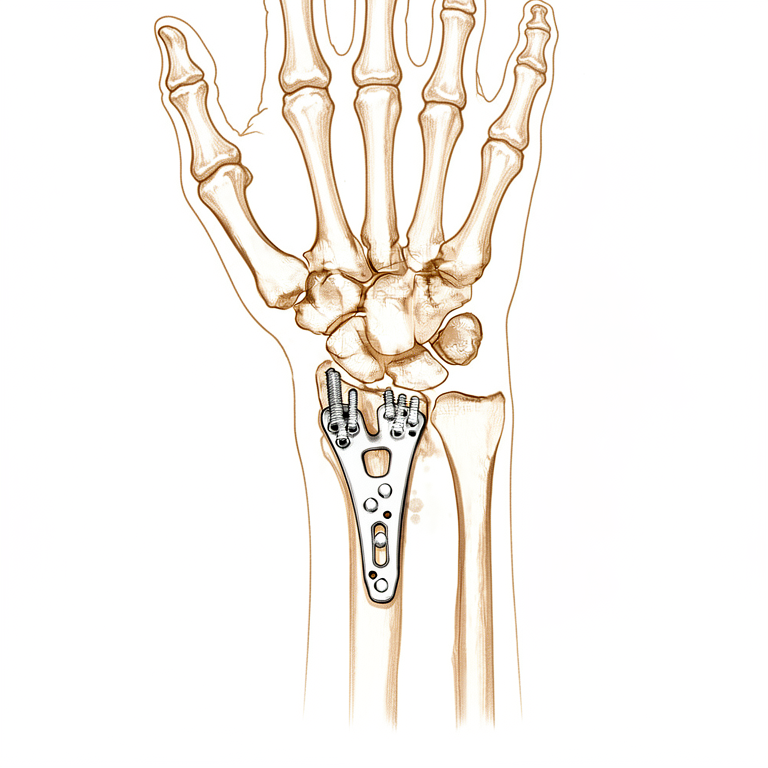
Illustration of the wrist bones with a metal plate and screws fixing the radius.
X-ray after open reduction and internal fixation: the bone fragments have been realigned and a volar locking plate with screws holds them in position while they heal. Kieran Hirpara 4.0

Open reduction and volar plate fixation of the distal radius — operation, recovery, rehabilitation.
Why this operation has been suggested

Your surgeon has suggested open reduction and internal fixation, also known as ORIF, to repair a broken bone in your wrist using a metal plate and screws. This surgery is typically offered to adults with complex fractures where the bone has shifted out of place or broken into multiple pieces. While non-operative options like casting are tried first, surgery is recommended when those methods cannot provide enough stability or healing.

The main goal of this operation is to restore the normal shape of your wrist joint and allow you to move your hand sooner. Evidence shows that using a plate offers the best results for early and sustained recovery compared to other methods. It also significantly reduces the risk of complications related to the bone failing to heal properly.

Before the operation

Please fast for six hours before your surgery and stop any blood-thinning medicines as your surgeon advises. Arrange for someone to drive you home and bring a list of all your current medications. You will likely need X-rays, and possibly an MRI or blood test, to check your bone and joint health before the procedure. Your surgeon will perform an open operation through a standard incision to realign the bone and secure it with a plate. Sometimes, a small camera is used inside the joint to ensure the alignment is perfect. Wear comfortable clothing and arrive ready for your anaesthetic review.

On the day

You will arrive at the hospital and meet your surgeon and the anaesthetist. This operation is done under general anaesthetic. You will be fully asleep for the operation. Some patients may also have a regional nerve block for post-operative pain relief — the anaesthetist decides on the day based on your individual circumstances.

You will then go to the operating theatre where your surgeon makes a cut in your skin to reach the bone. They use a metal plate and screws to hold the broken pieces in place. After the surgery, you will wake up in recovery while nurses watch over you and manage your pain.

What the operation involves

Your surgeon will make a single cut over the wrist to reach the broken bone. This is an open approach, meaning the area is fully exposed rather than using small keyhole cameras. Through this opening, your surgeon carefully moves the broken bone pieces back into their correct position.

Once the bone is aligned, your surgeon secures it using a metal plate and screws. This method offers the best results for early and sustained recovery and helps reduce healing complications. The plate is placed along the side of the radius bone to hold everything steady while it heals. In some cases, your surgeon may use a special screw technique with any locking plate that has options in the shaft.

After the bone is fixed, your surgeon closes the cut with stitches. You may need a second small surgery later if the hardware causes irritation, as there is a 28% chance hardware removal may be required for patients undergoing this plating. Early movement of your hand and wrist is encouraged after the operation to help you regain function sooner than if you waited.

After the operation

You will wake up in a recovery ward where your pain is managed with general medicine. Your arm will be in a sling or brace with a dressing over the incision. Your surgeon made an open cut to fix the bone, sometimes using a small camera to check the joint. You can start moving your fingers and wrist early to help your function. Most people go home the same day, but some stay overnight. You must have someone stay with you for the first 24 hours.

Recovery

You will likely feel pain and swelling in your wrist and hand during the first few days. This is normal as your body heals from the surgery. Your surgeon may use a plate and screws to hold the bone in place through a small cut on your wrist. You might also have a brace or cast to protect the area while you rest.

Early movement is key to getting your hand back to normal. Your physiotherapist will guide you through gentle exercises to reduce stiffness. You will wear a sling or brace when moving around, but you should start moving your fingers and elbow as soon as you are able. These small movements help your hand feel better much sooner than waiting too long.

As the swelling settles, you will notice your grip and daily tasks becoming easier. You can return to light home activities once your surgeon clears you to do so. Your timeline may differ from others, so follow the specific advice from your surgeon and physio team. They will help you know exactly when to increase your activity level safely.

What can go wrong

Most patients do well, but problems can occasionally happen. Your surgeon and the team monitor you closely to spot any issue early.

Sometimes the metal hardware used to hold your bone in place becomes uncomfortable or causes irritation. If you feel pain or pressure over the plate, you might need a second small procedure to remove it. This happens in about one out of every four patients.

You may notice that your wrist does not move as smoothly as expected. Early movement helps your hand work better sooner than waiting too long. If your wrist feels stiff or weak, tell your surgeon right away so they can guide your therapy.

In some cases, the bone alignment might shift slightly over time. This can happen if the screws are not placed deep enough into the bone. If you feel a new clicking sound or notice your hand looks different, bring it up at your next check-up.

Overall, serious problems are rare. Most people who have this surgery recover well with early movement and careful follow-up. The complications table on this page lists typical rates if you want the specifics.

When to call us

Call us if you have a fever, increasing redness, or drainage from your incision. Go to emergency if you feel sudden severe pain, notice your calf is swollen, or have trouble breathing. Call immediately if you lose feeling in your fingers or cannot move your hand. These signs need urgent assessment to protect your recovery.


Evidence & references

title: "Distal Radius ORIF" slug: distal-radius-orif region: wrist audience: patient mesh_terms: ["Open Fracture Reduction", "Radius Fractures/surgery", "Bone Plates", "ORIF", "volar plating", "distal radius plate"] article_count: 26 model_used: qwen3.5-35b-a3b-q8 generated_at: '2026-05-18T13:40:50+00:00' key_articles: - title: "In adults, early mobilization may be beneficial for distal radius fractures treated with open reduction and internal fixation: a systematic review and meta-analysis" ref_num: 1 evidence_tier: paper evidence_level: 1 doi: 10.1186/s13018-021-02837-0 year: 2021 - title: "Evaluation of Factors Driving Cost Variation for Distal Radius Fracture Open Reduction Internal Fixation" ref_num: 2 evidence_tier: paper evidence_level: 3 doi: 10.1016/j.jhsa.2018.04.015 year: 2018 - title: "Lift-Off Screw Results in Accurate Sagittal Tilt Correction in a Distal Radius Fracture Model" ref_num: 3 evidence_tier: paper evidence_level: 5 doi: 10.1016/j.jhsa.2018.02.011 year: 2018 - title: "Interventions for Distal Radius Fractures: A Network Meta-analysis of Randomized Trials" ref_num: 5 evidence_tier: paper evidence_level: 1 doi: 10.5435/jaaos-d-18-00424 year: 2019 - title: "Complications of Radial Column Plating of the Distal Radius" ref_num: 6 evidence_tier: paper evidence_level: 4 doi: 10.1177/1558944718760861 year: 2018 - title: "The Association Between Distal Screw and Articular Subsidence in the Open Treatment of Intra-articular Distal Radius Fractures" ref_num: 8 evidence_tier: paper evidence_level: 4 doi: 10.1016/j.jhsa.2025.03.016 year: 2026 - title: "Management of Intra-Articular Distal Radius Fractures: Volar or Dorsal Locking Plate—Which Has Fewer Complications?" ref_num: 9 evidence_tier: paper evidence_level: 3 doi: 10.1177/1558944716675129 year: 2016 - title: "Open reduction and internal fixation for nonunion of extra-articular distal humeral fractures in patients 70 years and older" ref_num: 19 evidence_tier: paper evidence_level: 4 doi: 10.1016/j.jse.2017.08.024 year: 2018 - title: "Complications After Volar Locking Plate Fixation of Distal Radius Fractures: A Retrospective Study of 822 Patients" ref_num: 39 evidence_tier: paper evidence_level: 4 doi: 10.1016/j.jhsa.2022.11.012 year: 2024 - title: "Proximal Plate Migration After Internal Fixation of a Pediatric Distal Radius Fracture" ref_num: 40 evidence_tier: paper evidence_level: 4 doi: 10.1177/15589447221130083 year: 2023 synthesis_version: "v2" verifier_status: skipped


Overview

  • Early mobilization for patients with distal radius fractures treated with ORIF may have a beneficial effect on function at earlier stages compared to late mobilization [1].
  • Mean differences in DASH scores at 6 weeks for early mobilization in distal radius fractures treated with ORIF surpass the minimal clinically important difference [1].
  • Substantial variations in surgical direct costs for distal radius ORIF exist [2].
  • Implant choice is the predominant driver of cost variation for distal radius ORIF [2].
  • The LOS length can be calculated for the Lift-Off Screw technique in a distal radius fracture model [3].
  • The Lift-Off Screw technique can potentially be used with any distal radius periarticular locking plate with locking options in the shaft [3].
  • Open reduction and internal fixation with a plate offers the best results for adult patients with a distal radius fracture in terms of early and sustained functional recovery [5].
  • Open reduction and internal fixation with a plate offers the best results for adult patients with a distal radius fracture in terms of reduction in fracture healing complications [5].
  • Radial column plating of the distal radius is a safe treatment modality [6].
  • Radial column plating of the distal radius is a valuable adjunct in the setting of complex distal radius fractures [6].
  • There is a 28% chance that hardware removal may be required for patients undergoing radial column plating of the distal radius [6].
  • Placing the distal row of screws greater than 3mm from subchondral bone in comminuted intra-articular distal radius fractures was associated with increased odds of worsening ulnar variance [8].
  • The treatment of displaced intra-articular distal radius fractures with a dorsally versus a volarly placed interlocking plate system demonstrated similar clinical results [9].

Anatomy & Pathophysiology

  • Distal radius fractures are the most common fractures of the upper extremity in the United States, occurring in over 300,000 cases per year [27].
  • Distal radius fractures exhibit a bimodal distribution with young patients sustaining high-energy trauma and elderly patients sustaining low-energy falls [27].
  • Distal radius fractures are the most common upper extremity osteoporotic fracture in elderly patients [27].
  • The distal radius articular surface is biconcave with distinct scaphoid and lunate facets [27].
  • The distal radioulnar joint (DRUJ) is the articulation between the radius and ulna at the sigmoid notch [27].
  • Lister tubercle is a small dorsal prominence on the distal radius that serves as a landmark for the dorsal approach to the wrist [27].
  • Lister tubercle is a cause of attritional rupture of the extensor pollicis longus (EPL) after a distal radius fracture [27].
  • The metaphysis of the distal radius has a thin cortex and is vulnerable to bending forces [27].
  • The brachioradialis insertion on the radial styloid acts as a deforming force in distal radius fractures [27].
  • In a normal wrist, the distal radius bears 80% of the axial load in neutral ulnar variance [27].
  • The carpus encompasses two rows of eight bones that serve as a bridge between the forearm and the hand [16].
  • The proximal carpal row from radial to ulnar includes the scaphoid, lunate, and triquetrum [16].
  • The proximal carpal row is referred to as the key intercalated segment between the forearm and the distal row of the carpus [16].
  • There are no direct tendon attachments to the proximal carpal row [16].
  • The movement of the proximal carpal row results from the shape of the bones, their interaction with other bones, and ligament attachments [16].
  • The pisiform bone is a sesamoid bone enclosed within the sheath of the flexor carpi ulnaris tendon and should not theoretically be considered within the proximal carpal row [16].
  • The distal carpal row from radial to ulnar includes the trapezium, trapezoid, capitate, and hamate [16].
  • The distal carpal row articulates with the proximal carpal row and distally with the five metacarpals of the hand [16].
  • The trapezium articulates with the first metacarpal, the trapezoid with the second, the capitate with the third, and the hamate with the fourth and fifth metacarpals [16].
  • The capitate and trapezoid are tightly connected to the metacarpals [16].
  • There is 30 to 40 degrees of flexion–extension and rotation at the metacarpotrapezial joint [16].
  • Motion at the distal carpal row is controlled by the extrinsic wrist flexors and extensors [16].
  • The ligaments of the wrist are predominantly contained within the joint capsule [16].
  • The inherent stability of the carpal rows is predominantly due to the support of extrinsic and intrinsic ligaments that reinforce the capsule of the carpus [16].
  • Apart from the scaphocapitate ligament, carpal ligaments are not described consistently across anatomical studies [16].
  • The extrinsic palmar radiocarpal ligaments include the transverse carpal, radioscaphocapitate (RSC), radioscapholunate (RSL), radial collateral, long radiolunate (RLT), and short radiolunate ligaments [23].
  • The extrinsic ulnocarpal ligaments include the ulnotriquetral (dorsal and palmar), ulnolunate, and ulnocapitate ligaments [23].
  • The strong oblique extrinsic palmar radial ligaments prevent the carpus from translating medially on the angulated slope of the distal radius through two V-shaped ligamentous bands [23].
  • One V-shaped band is proximal (long radiolunate, radioscapholunate, ulnolunate, ulnotriquetral) and connects the forearm to the proximal carpal row [23].
  • One V-shaped band is distal (radioscaphocapitate, ulnocapitate) and connects the forearm to the distal carpal row [23].
  • Between the radial and ulnar palmar ligaments there is a V-shaped interligamentous sulcus over the capitolunate articulation known as the space of Poirier [23].
  • Maximal space in the space of Poirier is seen when the wrist is dorsiflexed [23].
  • The space of Poirier almost disappears in palmar flexion [23].
  • The lunate displaces into the carpal canal through the space of Poirier during dorsal dislocations [23].
  • The arcuate ligament is found in the central third of the palmar joint capsule and is thought to be formed from the interdigitation of transverse fibers of the radioscaphocapitate, ulnocapitate, triquetrocapitate, and volar scaphotriquetral ligaments [23].
  • The arcuate ligament forms a support sling for the midcarpal region, in particular the head of the capitate [23].
  • The extrinsic dorsal carpal ligaments include the dorsal radiocarpal (DRC) ligament and the dorsal intercarpal ligament [23].
  • The dorsal intercarpal ligament forms a V-shaped configuration [23].
  • The ulnodorsal capsule of the wrist is reinforced by the ulnolunate and ulnotriquetral ligaments and the floors of the fifth and sixth extensor compartments [23].
  • Some studies suggest an essential role of the dorsal carpal ligaments in scapholunate stability [23].
  • The intrinsic ligaments connect the individual carpal bones to one another [23].
  • The intrinsic ligaments are intra-articular short fibers that connect and hold the carpal bones of both the proximal or distal rows to each other [23].
  • There is a contiguous merging of the interosseous ligaments with the joint articular cartilage [23].
  • The intrinsic ligaments include the palmar midcarpal ligaments (scaphotrapeziotrapezoid, scaphocapitate, triquetrocapiate, triquetrohamate) [23].
  • The intrinsic ligaments include the proximal interosseous ligaments (scapholunate, lunotriquetral) [23].
  • The intrinsic ligaments include the distal interosseous ligaments (trapeziotrapezoid, trapeziocapitate, capitohamate) [23].
  • The pisotriquetral ligament bridges the pisotriquetral joint [23].
  • The pisohamate ligament is an extension of the flexor carpi ulnaris [23].
  • On the radial side of the wrist, the V-shaped scaphotrapezium–trapezoid ligament provides stability to the scaphoid–trapezium–trapezoid articulation as well as the scaphoid itself [23].
  • Recent studies suggest the existence of two distinct ligaments on the radial side: the scaphotrapezoid and scaphotrapezium ligaments [23].
  • The scaphocapitate is a large robust ligament that provides midcarpal stability [23].
  • The scaphoid bone is located in the proximal carpal row on the radial aspect of the wrist [21].
  • The scaphoid is a small, irregular S-shaped tubular bone [21].
  • The scaphoid lies entirely within the wrist joint and is located at a 45-degree plane to the longitudinal and horizontal axis of the wrist [21].
  • The scaphoid articulates with the trapezium/trapezoid (distal surface), radius (proximal/lateral surface), capitate (medial surface), and lunate (medial surface) [21].
  • The proximal articular surface of the scaphoid is convex and articulates with the radius [21].
  • The capitate head articulates with a sulcus on the scaphoid located across the radial articular surface [21].
  • The scaphoid gently pronates and flexes distally such that the distal pole sits ulnarly angulated relative to the proximal pole [21].
  • At the distal articular surface, two distinct articular facets for the trapezium and trapezoid are present forming the STT joint [21].
  • Over 80% of the scaphoid surface is covered with articular cartilage [21].
  • The scaphoid has a reduced capacity for periosteal healing and an increased tendency for delayed union and nonunion [21].
  • The scaphoid is ridged across its nonarticular dorsoradial surface, along which the critical dorsal ridge vessels traverse [21].
  • The ridge is the insertion point for both the dorsal component of the scapholunate and intercarpal ligaments [21].
  • The ligamentous attachments of the scaphoid are predominantly found on the nonarticular dorsoradial surface [21].
  • The radioscapocapitate ligament does not attach to the bone itself but crosses the waist, acting as a sling across it allowing it to rotate [21].
  • There are no tendon attachments to the scaphoid [21].
  • The scaphoid acts as a midcarpal joint "bridge" linking and synchronizing the motions of the proximal and distal carpal rows [21].
  • Motion of the scaphoid includes rotation proximally and gliding distally [21].
  • The potential for nonunion of the scaphoid is often ascribed to the meagre, largely retrograde blood supply [21].
  • The blood supply to the scaphoid is provided by two vascular pedicles originating from the scaphoid branches of the radial artery [21].
  • The dorsal branch enters via the small foramina along the spiral groove and dorsal ridge of the scaphoid and supplies 70% to 80% of the scaphoid proximally, including the proximal pole [21].
  • The volar branch enters via the scaphoid tubercle and supplies the remaining 20% to 30% of distal scaphoid [21].
  • The waist of the scaphoid has been shown to have minimal or no perforating vasculature [21].
  • No vessels perforate the proximal dorsal cartilaginous area or through the scapholunate ligament [21].
  • Proximal fractures are inexorably associated with at least temporary disruption of the interosseous blood supply to the proximal pole [21].
  • The metacarpals form a unique cascade similar to that of a Roman arch [20].
  • The index and small fingers form the borders of the metacarpal cascade while the middle finger forms the keystone [20].
  • The metacarpals are inherently stable secondary to the origins of the intrinsic muscles of the hand as well as the stout attachments of the deep transverse intermetacarpal ligaments [20].
  • The bony architecture of the metacarpal is made up of a distal and proximal metaphysis [20].
  • The metaphyseal portion of the metacarpal has a thinner cortex and does not provide rigid purchase for cortical fixation [20].
  • The diaphyseal portion of the metacarpal provides better purchase with its tubular structure and thick cortices [20].
  • The middle and ring fingers have the most inherent stability secondary to their central location [20].
  • The border digits are more prone to shortening, rotation, and angulation [20].
  • The CMC joints increase in stability and decrease in dorsal-volar mobility when moving from the small to index finger metacarpal [20].
  • The small and ring fingers are far more tolerant to deformity than are the index and middle finger metacarpals [20].
  • In the sagittal plane, the metacarpal head has a cam-shaped articular surface with a larger volar-dorsal diameter than a proximal-distal diameter [20].
  • In the transverse plane, the metacarpal head resembles a trapezoid [20].
  • The collateral ligaments of the metacarpal head attach on the dorsal aspect of the metacarpal head within the recess and are thus elongated in flexion [20].
  • The combination of the trapezoidal shape of the head, origin and insertion of the collateral ligaments, and cam-shaped morphology contribute to inherent stability during MCP flexion [20].
  • The metacarpals of the hand and thumb are subcutaneous in position and are thus susceptible to penetrating and crush injuries [20].
  • The metacarpals have a curvature to their diaphyseal segment and often flex during the making of a fist [20].
  • The metacarpal necks are susceptible to fracture during punching [20].
  • The fifth metacarpal has the most anterior–posterior arc at the CMC joint [20].
  • Metacarpal fractures are third in frequency only to phalangeal fractures and distal radius fractures in the upper limb [17].
  • Approximately 70% of metacarpal fractures occur during the second and fifth decades of life [17].
  • The vast majority of metacarpal fractures are inherently stable and can be treated via closed means with early range of motion [17].
  • The flexor carpi radialis (FCR) approach provides excellent exposure for volar plating [26].
  • Incising the FCR sheath on its radial aspect may help to avoid injury to the palmar cutaneous branch of the median nerve [26].
  • A brachioradialis tenotomy removes a deforming force during the FCR approach [26].
  • Repair of the pronator quadratus did not result in better outcomes at 12 months in a randomized trial of 72 patients [26].
  • The extended FCR approach aims to facilitate adequate distal exposure including the volar ulnar corner [26].
  • By releasing the superficial and deep leaves of the FCR sheath to the level of the trapezium, the carpal tunnel contents are more easily retracted ulnarly [26].
  • Pronation of the ulnar shaft through the fracture exposes the dorsal metaphysis in subacute fractures [26].
  • Biasing the skin incision more midline allows development of the interval between the digital flexors and ulnar neurovascular bundle [26].
  • Retracting the carpal tunnel contents radially provides excellent visualization of the lunate facet fragment [26].
  • The approach for the volar ulnar facet fragment is extensile with an open carpal tunnel release [26].
  • A radial column approach requires protection of the superficial branch of the radial nerve [26].
  • The deep interval for a radial column approach is through the first dorsal compartment or the interval between the first and second compartments [26].
  • The dorsal approach is the traditional approach for plating distal radius fractures [26].
  • Enthusiasm for dorsal plating waned as a result of extensor tendon complications [26].
  • A dorsal approach may be necessary to reduce and stabilize the dorsal ulnar facet fragment [26].
  • Elevation of the fourth dorsal compartment on its ulnar aspect exposes the dorsal ulnar corner [26].
  • Unlike the volar approach, the dorsal approach affords the option of visualizing the articular surface through a dorsal capsulotomy [26].
  • The most common tendon to rupture following application of a volar plate is the flexor pollicis longus [34].
  • Rupture of the flexor pollicis longus is due to volar extension of the plate beyond the so-called watershed line [34].
  • Dorsal tendons such as the extensor pollicis longus and extensor digitorum communis can fray and rupture from prominent screw tips following volar insertion [34].
  • Dorsal plates or constructs are now preferred for dorsal shearing fractures and complex articular fractures [34].
  • Distraction (or bridge) plate fixation is increasingly utilized for complex articular fracture, those with complex metaphyseal or diaphyseal fragmentation in particular [34].
  • Application of the bridge/distraction plate should not be a substitute for accurate ORIF [34].
  • Fractures of the radial styloid may be associated with SL ligament injuries because the intra-articular fracture line extends into the joint at that level [34].
  • In the setting of isolated radial styloid fractures, intercarpal ligament injuries must be suspected [34].
  • Intra-articular displacement (or diastasis) greater than 2 mm is an indication for surgery for fractures of the radial styloid [34].
  • Compression screw fixation with partially threaded 3.5- or 4.0-mm cancellous screws can effectively compress radial styloid fragments and maintain the reduction [34].
  • Alternative fixation options for radial styloid fractures include K-wires and fragment-specific pin plate and screw fixation [34].
  • The distal radioulnar joint is assessed following stabilization of the radius [34].
  • Slightly greater laxity than the opposite uninjured wrist is to be expected after distal radius fracture treatment [34].
  • Only frank dislocation with forearm rotation merits surgery to stabilize the distal radioulnar joint [34].
  • The presence of a displaced fracture at the base of the ulnar styloid is not in itself an indication for surgical fixation [34].
  • Clinical stability of the distal radioulnar joint must be elucidated and compared with

Classification

  • Early mobilization for patients with distal radius fractures treated with ORIF may have a beneficial effect on function at earlier stages compared to late mobilization [1].
  • Mean differences in DASH scores at 6 weeks for early mobilization in distal radius fractures treated with ORIF surpass the minimal clinically important difference [1].
  • Substantial variations in surgical direct costs for distal radius ORIF exist [2].
  • Implant choice is the predominant driver of cost variation for distal radius ORIF [2].
  • The LOS length can be calculated for the lift-off screw technique in a distal radius fracture model [3].
  • The lift-off screw technique can potentially be used with any distal radius periarticular locking plate with locking options in the shaft [3].
  • Open reduction and internal fixation with a plate offers the best results for adult patients with a distal radius fracture in terms of early and sustained functional recovery [5].
  • Open reduction and internal fixation with a plate offers the best results for adult patients with a distal radius fracture in terms of a reduction in fracture healing complications [5].
  • Radial column plating of the distal radius is a safe treatment modality [6].
  • Radial column plating of the distal radius is a valuable adjunct in the setting of complex distal radius fractures [6].
  • There is a 28% chance that hardware removal may be required for patients undergoing radial column plating of the distal radius [6].
  • Placing the distal row of screws greater than 3mm from subchondral bone in comminuted intra-articular distal radius fractures was associated with increased odds of worsening ulnar variance [8].
  • The treatment of displaced intra-articular distal radius fractures with a dorsally versus a volarly placed interlocking plate system demonstrated similar clinical results [9].

Clinical Presentation

  • Early mobilization for patients with distal radius fractures treated with ORIF may have a beneficial effect on function at earlier stages compared to late mobilization [1].
  • Mean differences in DASH scores at 6 weeks for early mobilization in distal radius fractures treated with ORIF surpass the minimal clinically important difference [1].
  • Substantial variations in surgical direct costs for distal radius ORIF exist, with implant choice being the predominant driver [2].
  • Radial column plating of the distal radius is a safe treatment modality and a valuable adjunct in the setting of complex distal radius fractures [6].
  • Patients undergoing radial column plating of the distal radius should be counseled that there is a 28% chance that hardware removal may be required [6].
  • Placing the distal row of screws greater than 3mm from subchondral bone in comminuted intra-articular distal radius fractures was associated with increased odds of worsening ulnar variance [8].
  • Treatment of displaced intra-articular distal radius fractures with a dorsally versus a volarly placed interlocking plate system demonstrated similar clinical results [9].
  • An isolated radial shaft fracture is uncommon in adults because the forearm functions as a ring [35].
  • Fractures within 7.5 cm of the radiocarpal joint are more likely to represent a Galeazzi fracture (radial shaft fracture with associated distal radioulnar joint injury) [35].
  • Galeazzi fractures require surgical fixation with rare exceptions [35].
  • Examination may reveal a prominent ulnar head in cases of dorsal distal radioulnar joint subluxation or dislocation [35].
  • Radiographic parameters associated with injury to the distal radioulnar joint include fracture of the base of the ulnar styloid [35].
  • Radiographic parameters associated with injury to the distal radioulnar joint include widening of the distal radioulnar joint on the AP wrist radiograph [35].
  • Radiographic parameters associated with injury to the distal radioulnar joint include dislocation of the ulna relative to the radius on a true lateral wrist radiograph [35].
  • Radiographic parameters associated with injury to the distal radioulnar joint include more than 5 mm of shortening of the radius relative to the ulna (ulnar positive variance) when compared with the contralateral wrist [35].
  • Radial shaft fracture line obliquity greater than 30° is a statistically significant predictor of distal radioulnar joint instability [35].
  • Closed management of displaced forearm axis fractures in adults results in poor outcomes [35].
  • Surgery is indicated for all Galeazzi fractures to restore the structural integrity of the forearm ring [35].
  • Complications following management of Galeazzi fractures of the radius include nonunion [35].
  • Complications following management of Galeazzi fractures of the radius include malunion with limited forearm rotation [35].
  • Complications following management of Galeazzi fractures of the radius include nerve or vessel injury [35].
  • Complications following management of Galeazzi fractures of the radius include infection [35].
  • Complications following management of Galeazzi fractures of the radius include complex regional pain syndrome [35].
  • Complications following management of Galeazzi fractures of the radius include persistent distal radioulnar joint instability [35].

Investigations

  • Early mobilization for distal radius fractures treated with ORIF may have a beneficial effect on function at earlier stages compared to late mobilization, with mean differences in DASH scores at 6 weeks surpassing the minimal clinically important difference [1].
  • Substantial variations in surgical direct costs for distal radius ORIF exist, with implant choice being the predominant driver [2].
  • The length of stay (LOS) can be calculated for a distal radius fracture model using the Lift-Off Screw technique, which can potentially be used with any distal radius periarticular locking plate with locking options in the shaft [3].
  • Open reduction and internal fixation with a plate offers the best results for adult patients with a distal radius fracture in terms of early and sustained functional recovery and a reduction in fracture healing complications [5].
  • Radial column plating of the distal radius is a safe treatment modality, but patients should be counseled that there is a 28% chance that hardware removal may be required [6].
  • Placing the distal row of screws greater than 3mm from subchondral bone in comminuted intra-articular distal radius fractures was associated with increased odds of worsening ulnar variance [8].
  • Treatment of displaced intra-articular distal radius fractures with a dorsally versus a volarly placed interlocking plate system demonstrated similar clinical results [9].
  • An understanding of the anatomy and kinematics of the eight carpal bones is essential for the diagnosis and management of carpal injuries [16].
  • The proximal carpal row includes the scaphoid, lunate, and triquetrum, serving as a key intercalated segment between the forearm and the distal row of the carpus [16].
  • The distal carpal row includes the trapezium, trapezoid, capitate, and hamate, articulating with the proximal carpal row and distally with the five metacarpals [16].
  • The inherent stability of the carpal rows is predominantly due to the support of extrinsic and intrinsic ligaments that reinforce the capsule of the carpus [16].
  • Apart from the scaphocapitate ligament, carpal ligaments are not described consistently across anatomical studies [16].
  • The incidence of metacarpal fractures is third in frequency only to phalangeal fractures and distal radius fractures in the upper limb [17].
  • Approximately 70% of metacarpal fractures occur during the second and fifth decades of life [17].
  • The vast majority of metacarpal fractures are inherently stable and can be treated via closed means with early range of motion [17].
  • Assessment of metacarpal fractures requires evaluation of skin integrity, neurovascular status, ligamentous evaluation, and tendon function [17].
  • Malrotation must be tested in metacarpal fracture assessment, with particular attention toward the border digits [17].
  • Initial X-rays for suspected scaphoid fractures should include posteroanterior (PA) with wrist in ulnar deviation, lateral, semi-pronated oblique, and semi-supinated oblique views [24].
  • An anteroposterior (AP) view with the fist clenched can be added if there is a suspicion of a scapholunate injury [24].
  • In a normal lateral X-ray, the axes of the radius, lunate, capitate, and third metacarpal are co-linear [24].
  • In a normal lateral X-ray, the scaphoid projects at an angle of about 45 degrees to the line of the radius [24].
  • Dorsal intercalated segmental instability (DISI) is characterized by the lunate tilting dorsally and the scaphoid tilting somewhat volarwards [24].
  • Volar intercalated segmental instability (VISI) is characterized by the lunate and scaphoid tilting somewhat volarwards [24].
  • Radiocarpal instability in the acute phase presents with wrist swelling, deformity, and pain aggravated by wrist motion [25].
  • Dorsal wrist swelling and tenderness are most noticeable at the radiocarpal level in acute radiocarpal instability [25].
  • In patients with ulnar translation of the carpus, the radiographic appearance often shows the lunate positioned just distal to the ulna and a large space between the radial styloid and the scaphoid [25].
  • CT may be required to better define associated bony injuries in radiocarpal instability [25].
  • MRI can be used to determine the extent of ligamentous disruption in radiocarpal instability [25].
  • Scaphoid fractures account for almost 75% of all carpal fractures [30].
  • The usual mechanism for scaphoid fractures is forced hyperextension of the wrist [30].
  • Scaphoid fractures occur in three anatomical locations: distal tubercle, waist, and proximal pole [30].
  • The blood supply of the scaphoid arises from the dorsal distal pole, meaning the proximal pole has a poor blood supply [30].
  • Precisely localized tenderness in the anatomical snuffbox is an important diagnostic sign for scaphoid fracture [30].
  • Examination for scaphoid fracture should include pressure backwards over the scaphoid tubercle, palpation over the proximal pole, and telescoping of the thumb base [30].
  • X-rays for suspected scaphoid fractures should include AP, lateral, and two oblique views [30].
  • A CT scan is more sensitive for diagnosing a scaphoid fracture than X-rays [30].
  • MRI is the definitive way to confirm or exclude a diagnosis of scaphoid fracture if the technique is available [30].
  • If X-rays are normal but clinical features are suggestive of a scaphoid fracture, the patient should be immobilized and either re-X-rayed in 2 weeks or undergo an MRI scan [30].
  • Secondary imaging modalities are predominantly used in the assessment of scaphoid fractures and the diagnosis of intercarpal ligament injury and any associated instability [31].
  • Ultrasound scanning (USS) is used for suspected carpal fractures and ligament injuries [31].
  • CT (2D/3D) is used for suspected carpal fractures, fracture displacement, malunion, nonunion, and bone loss [31].
  • Dynamic CT is used by some for ligament injuries [31].
  • Bone scintigraphy is used for suspected carpal fractures and avulsion injuries [31].
  • Arthrography ± videofluoroscopy is used for ligament injuries [31].
  • MRI is useful in detecting suspected fractures and avascular necrosis (AVN) of the carpus [31].
  • Wrist arthroscopy can be used as an aid to the diagnosis of ligament injuries and fracture displacement [31].
  • The lateral intrascaphoid angle is created by lines drawn perpendicular to the proximal and distal articular surfaces/poles of the scaphoid in a sagittal view [31].
  • The normal lateral intrascaphoid angle is 30 degrees ±5 degrees [31].
  • An angle greater than 35 degrees is used as a cut-off for scaphoid displacement [31].
  • The AP intrascaphoid angle is created by lines drawn perpendicular to the proximal and distal articular surfaces in coronal views [31].
  • The normal AP intrascaphoid angle is 40 degrees ± 5 degrees [31].
  • The dorsal cortical angle is created by tangential lines drawn along the dorsal cortices of the proximal and distal scaphoid fragments in a sagittal view [31].
  • The normal dorsal cortical angle is 140 degrees, with abnormal values greater than 160 degrees [31].
  • The scaphoid height-to-length ratio is the ratio of the lines measuring the height and length of the scaphoid in a sagittal view [31].
  • The normal scaphoid height-to-length ratio is 0.60, with abnormal values greater than 0.65 [31].
  • Live/video fluoroscopic evaluation of the wrist can provide diagnostic clarity for dynamic instability with sensitivities reported between 86% and 95% [31].
  • Sensitivities for live/video fluoroscopic evaluation are reported between 86% and 95%, with similar specificity between 80% and 97% for diagnosing scapholunate ligament injury [31].
  • Ultrasound scanning provides an additional tool for the detection of carpal ligament injuries [31].
  • Standard scaphoid radiographic views detect most carpal injuries [31].
  • The DISI pattern is most commonly associated with displaced scaphoid fractures and scapholunate dissociation (SLD) [31].
  • Perilunate dislocations can be missed on standard imaging [31].
  • Assessment of Gilula's lines can aid in the diagnosis of perilunate dislocations [31].
  • CT is useful in the diagnosis of suspected carpal fractures and assessment of union [31].
  • MRI is useful in detecting suspected fractures and AVN of the carpus [31].
  • Wrist arthroscopy can be used as an aid to the diagnosis of ligament injuries and fracture displacement [31].
  • A cortical ring sign with the wrist in flexion, pronation, and ulnar deviation can help localize the ulnar aspect of the proximal pole of the scaphoid [32].
  • A stab incision or mini-open incision can be performed to avoid injury to the soft tissue during percutaneous scaphoid fixation [32].
  • The wire is advanced antegrade along the central axis of the scaphoid and then pulled distally from the palmar side until the proximal guidewire clears the radiocarpal joint [32].
  • The wire is advanced retrograde until it exits the skin dorsally for percutaneous scaphoid fixation [32].
  • Several millimeters should be subtracted from the measured screw length to avoid prominence at either end during scaphoid fixation [32].
  • Biomechanical studies support the view that larger screws are stronger [32].
  • Cannulated screws have been shown to improve central placement of the screw when compared with the Herbert screw [32].
  • High-quality images are required for scaphoid fracture detection, and if initial X-rays are normal, the wrist should be treated and immobilized [24].
  • 10–15% of scaphoid fractures are not visible on initial X-rays [24].
  • Early MRI reduces uncertainty and streamlines care for suspected scaphoid fractures [24].
  • If MRI is not available, repeated X-rays are needed 2 weeks later for suspected scaphoid fractures [24].
  • If there is still doubt after a further 2 weeks, X-ray again for suspected scaphoid fractures [24].
  • Unusual gaps between the scaphoid and the lunate suggest disruption of ligaments [24].
  • With traumatic instability, the linked carpal segments collapse like the buckled carriages of a derailed train [24].
  • In chronic causes for ulnar translation, rheumatoid arthritis and developmental deformities (e.g., Madelung deformity) are included [25].
  • A decrease in the ulnocarpal index may provide the only clue to diagnosis in subtle ulnar shift cases [25].
  • Scaphoid fractures are rare in children and in the elderly [30].
  • Some scaphoid fractures, especially distal oblique and waist fractures, are unstable, which predisposes to non-union or malunion [30].
  • If any of the clinical signs (snuffbox tenderness, pressure over tubercle, palpation of proximal pole, telescoping) are positive, the suspicion for a scaphoid fracture should be high [30].
  • The crack in a scaphoid fracture is usually transverse through the narrowest part of the bone (the waist), but it may be more proximal or more distal [30].
  • One must always look for signs of associated carpal displacement when evaluating scaphoid fractures [30].
  • A CT scan is useful for showing the fracture configuration of a scaphoid fracture [30].
  • The wrist should be held dorsiflexed and the thumb forwards in the 'glass-holding' position (the so-called scaphoid plaster) for suspected scaphoid fractures [30].
  • The cast for suspected scaphoid fractures extends from the upper forearm to just short of the metacarpophalangeal joints of the fingers, but incorporates the proximal phalanx of the thumb [30].
  • At least four X-rays should be taken of possible scaphoid fractures [30].
  • Even if X-rays are normal initially, if there is any doubt, the patient should be put in plaster and either re-X-rayed in 2 weeks or an MRI scan should be obtained [30].
  • The length of the screw for scaphoid fixation should be measured carefully, and several millimeters subtracted from the measured length to avoid prominence at either end [32].
  • Predrilling is used depending on the type of screw during scaphoid fixation [32].
  • If there is resistance during drilling for scaphoid fixation, it may indicate a bend in the wire that will lead to drill or wire breakage [32].
  • Even if the screw is self-drilling, there is a risk of distraction of the fracture during scaphoid fixation [32].
  • If distraction occurs during scaphoid fixation, the screw is removed, and the track drilled [32].
  • If there is a bend in the wire during scaphoid fixation, the wire can usually be further advanced so that the drill passes over a nonbent part of the wire [32].
  • After drilling for scaphoid fixation, the screw is advanced under image intensification [32].
  • It is important to judge the screw length prior to fully seating the screw during scaphoid fixation [32].
  • Central positioning of the screw without joint penetration at the radiocarpal joint or prominence at the scaphotrapezial joint should be confirmed with AP, lateral, supinated, and pronated views of the wrist after scaphoid fixation [32].
  • There are a number of screws available which vary in size and pitch variation and can be partially, fully, or tip threaded [32].
  • Some screws have ancillary techniques for achieving compression, such as special screwdrivers or mobile parts of the screw [32].
  • A high index of suspicion is critical for scaphoid injuries as they can be missed in up to 25% of cases [31].
  • Additional cost-effective tools to help in the diagnosis of scaphoid injuries can be performed with live/video fluoroscopic evaluation of the wrist [31].
  • Few comparative studies exist regarding the utility of ultrasound scanning for carpal ligament injuries [31].
  • The technique of ultrasound scanning for carpal ligament injuries is operator dependent [31].
  • Ultrasound scanning has yet to be universally adopted for carpal ligament injuries because of operator dependence [31].
  • Standard scaphoid radiographic views detect most carpal injuries [31].
  • The DISI pattern is most commonly associated with displaced scaphoid fractures and SLD [31].
  • Perilunate dislocations can be missed [31].
  • Assessment of Gilula's lines can aid in the diagnosis of perilunate dislocations [31].
  • CT is useful in the diagnosis of suspected carpal fractures and assessment of union [31].
  • MRI is useful in detecting suspected fractures and AVN of the carpus [31].
  • Wrist arthroscopy can be used as an aid to the diagnosis of ligament injuries and fracture displacement [31].

Treatment

  • Early mobilization for patients with distal radius fractures treated with ORIF may have a beneficial effect on function at earlier stages compared to late mobilization [1].
  • Mean differences in DASH scores at 6 weeks for early mobilization in distal radius fractures treated with ORIF surpass the minimal clinically important difference [1].
  • Substantial variations in surgical direct costs for distal radius ORIF exist [2].
  • Implant choice is the predominant driver of cost variation for distal radius ORIF [2].
  • The LOS length can be calculated for the Lift-Off Screw technique in a distal radius fracture model [3].
  • The Lift-Off Screw technique can potentially be used with any distal radius periarticular locking plate with locking options in the shaft [3].
  • Open reduction and internal fixation with a plate offers the best results for adult patients with a distal radius fracture in terms of early and sustained functional recovery [5].
  • Open reduction and internal fixation with a plate offers the best results for adult patients with a distal radius fracture in terms of reduction in fracture healing complications [5].
  • Radial column plating of the distal radius is a safe treatment modality [6].
  • Radial column plating of the distal radius is a valuable adjunct in the setting of complex distal radius fractures [6].
  • There is a 28% chance that hardware removal may be required for patients undergoing radial column plating of the distal radius [6].
  • Placing the distal row of screws greater than 3mm from subchondral bone in comminuted intra-articular distal radius fractures was associated with increased odds of worsening ulnar variance [8].
  • The treatment of displaced intra-articular distal radius fractures with a dorsally versus a volarly placed interlocking plate system demonstrated similar clinical results [9].
  • Open reduction and internal fixation is a recommended option for extra-articular distal humeral fractures in elderly patients aged 70 years or older in whom conservative treatment has failed [19].
  • The patient in the case of proximal plate migration after internal fixation of a pediatric distal radius fracture required washout and hardware removal, with resolution of symptoms [40].

Complications

  • Early mobilization for patients with distal radius fractures treated with ORIF may have a beneficial effect on function at earlier stages compared to late mobilization, with mean differences in DASH scores at 6 weeks surpassing the minimal clinically important difference [1].
  • Substantial variations in surgical direct costs for distal radius ORIF exist, and implant choice is the predominant driver [2].
  • The LOS length can be calculated, and the lift-off screw technique can potentially be used with any distal radius periarticular locking plate with locking options in the shaft [3].
  • Open reduction and internal fixation with a plate offers the best results for adult patients with a distal radius fracture in terms of early and sustained functional recovery and a reduction in fracture healing complications [5].
  • Radial column plating of the distal radius is a safe treatment modality, but patients should be counseled that there is a 28% chance that hardware removal may be required [6].
  • In a two-center retrospective cohort of comminuted intra-articular distal radius fractures, placing the distal row of screws greater than 3mm from subchondral bone was associated with increased odds of worsening ulnar variance [8].
  • The treatment of displaced intra-articular distal radius fractures with a dorsally versus a volarly placed interlocking plate system demonstrated similar clinical results [9].
  • A low overall complication rate of 12.3% was found in a retrospective study of 822 patients treated with volar locking plate fixation of distal radius fractures, with 4.8% major and 7.5% minor complications [39].

Recovery

  • Early mobilization for patients with distal radius fractures treated with ORIF may have a beneficial effect on function at earlier stages compared to late mobilization [1].
  • Mean differences in DASH scores at 6 weeks for early mobilization in distal radius fractures treated with ORIF surpass the minimal clinically important difference [1].
  • Substantial variations in surgical direct costs for distal radius ORIF exist [2].
  • Implant choice is the predominant driver of cost variation for distal radius ORIF [2].
  • Open reduction and internal fixation with a plate offers the best results for adult patients with a distal radius fracture in terms of early and sustained functional recovery [5].
  • Open reduction and internal fixation with a plate offers the best results for adult patients with a distal radius fracture in terms of a reduction in fracture healing complications [5].
  • Radial column plating of the distal radius is a safe treatment modality [6].
  • Radial column plating of the distal radius is a valuable adjunct in the setting of complex distal radius fractures [6].
  • There is a 28% chance that hardware removal may be required for patients undergoing radial column plating of the distal radius [6].
  • Placing the distal row of screws greater than 3mm from subchondral bone in comminuted intra-articular distal radius fractures was associated with increased odds of worsening ulnar variance [8].

Key Evidence

  • [L1] Functionally, at earlier stages, early mobilization for patients with distal radius fractures treated with ORIF may have a beneficial effect compared to late mobilization, with mean differences in DASH scores at 6 weeks surpassing the minimal clinically important difference. (10.1186/s13018-021-02837-0)
  • [L3] Substantial variations in surgical direct costs for distal radius ORIF exist, and implant choice is the predominant driver. (10.1016/j.jhsa.2018.04.015)
  • [L5] The LOS length can be calculated, and this technique can potentially be used with any distal radius periarticular locking plate with locking options in the shaft. (10.1016/j.jhsa.2018.02.011)
  • [L1] A network meta-analysis of randomized trials revealed that open reduction and internal fixation with a plate offers the best results for adult patients with a distal radius fracture, in terms of early and sustained functional recovery and a reduction in fracture healing complications. (10.5435/jaaos-d-18-00424)
  • [L4] Radial column plating of the distal radius is a safe treatment modality and a valuable adjunct in the setting of complex distal radius fractures, but patients should be counseled that there is a 28% chance that hardware removal may be required. (10.1177/1558944718760861)
  • [L4] In this two-center retrospective cohort of comminuted intra-articular distal radius fractures, placing the distal row of screws greater than 3mm from subchondral bone was associated with increased odds of worsening ulnar variance. (10.1016/j.jhsa.2025.03.016)
  • [L3] The treatment of displaced intra-articular distal radius fractures with a dorsally versus a volarly placed interlocking plate system demonstrated similar clinical results. (10.1177/1558944716675129)
  • [L4] Osteosynthesis by open reduction and internal fixation is a recommended option for extra-articular distal humeral fractures in elderly patients aged 70 years or older in whom conservative treatment has failed. (10.1016/j.jse.2017.08.024)
  • [L4] A low overall complication rate of 12.3% was found, with 4.8% major and 7.5% minor complications. (10.1016/j.jhsa.2022.11.012)
  • [L4] The patient required washout and hardware removal, with resolution of his symptoms. (10.1177/15589447221130083)

References

[1] In adults, early mobilization may be beneficial for distal radius fractures treated with open reduction and internal fixation: a systematic review and meta-analysis. Journal of Orthopaedic Surgery and Research. 2021. DOI: 10.1186/s13018-021-02837-0 [2] Evaluation of Factors Driving Cost Variation for Distal Radius Fracture Open Reduction Internal Fixation. The Journal of Hand Surgery. 2018. DOI: 10.1016/j.jhsa.2018.04.015 [3] Lift-Off Screw Results in Accurate Sagittal Tilt Correction in a Distal Radius Fracture Model. The Journal of Hand Surgery. 2018. DOI: 10.1016/j.jhsa.2018.02.011 [5] Interventions for Distal Radius Fractures: A Network Meta-analysis of Randomized Trials. Journal of the American Academy of Orthopaedic Surgeons. 2019. DOI: 10.5435/jaaos-d-18-00424 [6] Complications of Radial Column Plating of the Distal Radius. HAND. 2018. DOI: 10.1177/1558944718760861 [8] The Association Between Distal Screw and Articular Subsidence in the Open Treatment of Intra-articular Distal Radius Fractures. The Journal of Hand Surgery. 2026. DOI: 10.1016/j.jhsa.2025.03.016 [9] Management of Intra-Articular Distal Radius Fractures: Volar or Dorsal Locking Plate—Which Has Fewer Complications?. HAND. 2016. DOI: 10.1177/1558944716675129 [16] Rockwood And Green S Fractures In Adults. 42: Fractures of the Distal Radius and Ulna > Pathoanatomy and Applied Anatomy Relating to Carpal Fractures and Dislocations. [17] Rockwood And Green S Fractures In Adults. 42: Fractures of the Distal Radius and Ulna > Metacarpal Fractures. [19] Open reduction and internal fixation for nonunion of extra-articular distal humeral fractures in patients 70 years and older. Journal of Shoulder and Elbow Surgery. 2018. DOI: 10.1016/j.jse.2017.08.024 [20] Rockwood And Green S Fractures In Adults. 42: Fractures of the Distal Radius and Ulna > Pathoanatomy and Applied Anatomy Relating to Metacarpal Fractures. [21] Rockwood And Green S Fractures In Adults. 42: Fractures of the Distal Radius and Ulna > Pathoanatomy and Applied Anatomy Related to Scaphoid Fractures. [23] Rockwood And Green S Fractures In Adults. 42: Fractures of the Distal Radius and Ulna > Extrinsic Ligaments. [24] Apley And Solomon S Concise System Of Orthopaedics And Trauma. FRACTURES OF THE DISTAL RADIUS IN CHILDREN > Imaging. [25] Rockwood And Green S Fractures In Adults. 42: Fractures of the Distal Radius and Ulna > Assessment of Radiocarpal Instability. [26] Orthopaedic Knowledge Update Trauma. Fractures of the Forearm and Distal Radius > Surgical Approaches. [27] Miller S Review Of Orthopaedics. SECTION 16 PATELLAR TRACKING IN TOTAL KNEE ARTHROPLASTY > DISTAL RADIUS FRACTURES. [30] Apley And Solomon S Concise System Of Orthopaedics And Trauma. FRACTURES OF THE DISTAL RADIUS IN CHILDREN > FRACTURE OF THE SCAPHOID. [31] Rockwood And Green S Fractures In Adults. 42: Fractures of the Distal Radius and Ulna > Secondary Imaging Methods. [32] Rockwood And Green S Fractures In Adults. 42: Fractures of the Distal Radius and Ulna > Dorsal Approach. [34] Aaos Comprehensive Orthopaedic Review 3. Wrist Fractures and Dislocations, Carpal Dissociation, and Distal Radius Fractures > III. Fractures of the Distal Radius. [35] Orthopaedic Knowledge Update Trauma. Fractures of the Forearm and Distal Radius > Forearm Fractures > Galeazzi Fractures. [39] Complications After Volar Locking Plate Fixation of Distal Radius Fractures: A Retrospective Study of 822 Patients. The Journal of Hand Surgery. 2024. DOI: 10.1016/j.jhsa.2022.11.012 [40] Proximal Plate Migration After Internal Fixation of a Pediatric Distal Radius Fracture. HAND. 2023. DOI: 10.1177/15589447221130083

Creative Commons BY-NC 4.0

CC Creative Commons licence
BY Attribution — you must credit the source
NC NonCommercial — not for commercial use

Attribution-NonCommercial 4.0 International


Creative Commons Corporation ("Creative Commons") is not a law firm and does not provide legal services or legal advice. Distribution of Creative Commons public licenses does not create a lawyer-client or other relationship. Creative Commons makes its licenses and related information available on an "as-is" basis. Creative Commons gives no warranties regarding its licenses, any material licensed under their terms and conditions, or any related information. Creative Commons disclaims all liability for damages resulting from their use to the fullest extent possible.

Using Creative Commons Public Licenses

Creative Commons public licenses provide a standard set of terms and conditions that creators and other rights holders may use to share original works of authorship and other material subject to copyright and certain other rights specified in the public license below. The following considerations are for informational purposes only, are not exhaustive, and do not form part of our licenses.

Considerations for licensors: Our public licenses are intended for use by those authorized to give the public permission to use material in ways otherwise restricted by copyright and certain other rights. Our licenses are irrevocable. Licensors should read and understand the terms and conditions of the license they choose before applying it. Licensors should also secure all rights necessary before applying our licenses so that the public can reuse the material as expected. Licensors should clearly mark any material not subject to the license. This includes other CC- licensed material, or material used under an exception or limitation to copyright. More considerations for licensors: wiki.creativecommons.org/Considerations_for_licensors

Considerations for the public: By using one of our public licenses, a licensor grants the public permission to use the licensed material under specified terms and conditions. If the licensor's permission is not necessary for any reason--for example, because of any applicable exception or limitation to copyright--then that use is not regulated by the license. Our licenses grant only permissions under copyright and certain other rights that a licensor has authority to grant. Use of the licensed material may still be restricted for other reasons, including because others have copyright or other rights in the material. A licensor may make special requests, such as asking that all changes be marked or described. Although not required by our licenses, you are encouraged to respect those requests where reasonable. More considerations for the public: wiki.creativecommons.org/Considerations_for_licensees


Creative Commons Attribution-NonCommercial 4.0 International Public License

By exercising the Licensed Rights (defined below), You accept and agree to be bound by the terms and conditions of this Creative Commons Attribution-NonCommercial 4.0 International Public License ("Public License"). To the extent this Public License may be interpreted as a contract, You are granted the Licensed Rights in consideration of Your acceptance of these terms and conditions, and the Licensor grants You such rights in consideration of benefits the Licensor receives from making the Licensed Material available under these terms and conditions.

Section 1 -- Definitions.

a. Adapted Material means material subject to Copyright and Similar Rights that is derived from or based upon the Licensed Material and in which the Licensed Material is translated, altered, arranged, transformed, or otherwise modified in a manner requiring permission under the Copyright and Similar Rights held by the Licensor. For purposes of this Public License, where the Licensed Material is a musical work, performance, or sound recording, Adapted Material is always produced where the Licensed Material is synched in timed relation with a moving image.

b. Adapter's License means the license You apply to Your Copyright and Similar Rights in Your contributions to Adapted Material in accordance with the terms and conditions of this Public License.

c. Copyright and Similar Rights means copyright and/or similar rights closely related to copyright including, without limitation, performance, broadcast, sound recording, and Sui Generis Database Rights, without regard to how the rights are labeled or categorized. For purposes of this Public License, the rights specified in Section 2(b)(1)-(2) are not Copyright and Similar Rights.

d. Effective Technological Measures means those measures that, in the absence of proper authority, may not be circumvented under laws fulfilling obligations under Article 11 of the WIPO Copyright Treaty adopted on December 20, 1996, and/or similar international agreements.

e. Exceptions and Limitations means fair use, fair dealing, and/or any other exception or limitation to Copyright and Similar Rights that applies to Your use of the Licensed Material.

f. Licensed Material means the artistic or literary work, database, or other material to which the Licensor applied this Public License.

g. Licensed Rights means the rights granted to You subject to the terms and conditions of this Public License, which are limited to all Copyright and Similar Rights that apply to Your use of the Licensed Material and that the Licensor has authority to license.

h. Licensor means the individual(s) or entity(ies) granting rights under this Public License.

i. NonCommercial means not primarily intended for or directed towards commercial advantage or monetary compensation. For purposes of this Public License, the exchange of the Licensed Material for other material subject to Copyright and Similar Rights by digital file-sharing or similar means is NonCommercial provided there is no payment of monetary compensation in connection with the exchange.

j. Share means to provide material to the public by any means or process that requires permission under the Licensed Rights, such as reproduction, public display, public performance, distribution, dissemination, communication, or importation, and to make material available to the public including in ways that members of the public may access the material from a place and at a time individually chosen by them.

k. Sui Generis Database Rights means rights other than copyright resulting from Directive 96/9/EC of the European Parliament and of the Council of 11 March 1996 on the legal protection of databases, as amended and/or succeeded, as well as other essentially equivalent rights anywhere in the world.

l. You means the individual or entity exercising the Licensed Rights under this Public License. Your has a corresponding meaning.

Section 2 -- Scope.

a. License grant.

1. Subject to the terms and conditions of this Public License, the Licensor hereby grants You a worldwide, royalty-free, non-sublicensable, non-exclusive, irrevocable license to exercise the Licensed Rights in the Licensed Material to:

a. reproduce and Share the Licensed Material, in whole or in part, for NonCommercial purposes only; and

b. produce, reproduce, and Share Adapted Material for NonCommercial purposes only.

2. Exceptions and Limitations. For the avoidance of doubt, where Exceptions and Limitations apply to Your use, this Public License does not apply, and You do not need to comply with its terms and conditions.

3. Term. The term of this Public License is specified in Section 6(a).

4. Media and formats; technical modifications allowed. The Licensor authorizes You to exercise the Licensed Rights in all media and formats whether now known or hereafter created, and to make technical modifications necessary to do so. The Licensor waives and/or agrees not to assert any right or authority to forbid You from making technical modifications necessary to exercise the Licensed Rights, including technical modifications necessary to circumvent Effective Technological Measures. For purposes of this Public License, simply making modifications authorized by this Section 2(a) (4) never produces Adapted Material.

5. Downstream recipients.

a. Offer from the Licensor -- Licensed Material. Every recipient of the Licensed Material automatically receives an offer from the Licensor to exercise the Licensed Rights under the terms and conditions of this Public License.

b. No downstream restrictions. You may not offer or impose any additional or different terms or conditions on, or apply any Effective Technological Measures to, the Licensed Material if doing so restricts exercise of the Licensed Rights by any recipient of the Licensed Material.

6. No endorsement. Nothing in this Public License constitutes or may be construed as permission to assert or imply that You are, or that Your use of the Licensed Material is, connected with, or sponsored, endorsed, or granted official status by, the Licensor or others designated to receive attribution as provided in Section 3(a)(1)(A)(i).

b. Other rights.

1. Moral rights, such as the right of integrity, are not licensed under this Public License, nor are publicity, privacy, and/or other similar personality rights; however, to the extent possible, the Licensor waives and/or agrees not to assert any such rights held by the Licensor to the limited extent necessary to allow You to exercise the Licensed Rights, but not otherwise.

2. Patent and trademark rights are not licensed under this Public License.

3. To the extent possible, the Licensor waives any right to collect royalties from You for the exercise of the Licensed Rights, whether directly or through a collecting society under any voluntary or waivable statutory or compulsory licensing scheme. In all other cases the Licensor expressly reserves any right to collect such royalties, including when the Licensed Material is used other than for NonCommercial purposes.

Section 3 -- License Conditions.

Your exercise of the Licensed Rights is expressly made subject to the following conditions.

a. Attribution.

1. If You Share the Licensed Material (including in modified form), You must:

a. retain the following if it is supplied by the Licensor with the Licensed Material:

i. identification of the creator(s) of the Licensed Material and any others designated to receive attribution, in any reasonable manner requested by the Licensor (including by pseudonym if designated);

ii. a copyright notice;

iii. a notice that refers to this Public License;

iv. a notice that refers to the disclaimer of warranties;

v. a URI or hyperlink to the Licensed Material to the extent reasonably practicable;

b. indicate if You modified the Licensed Material and retain an indication of any previous modifications; and

c. indicate the Licensed Material is licensed under this Public License, and include the text of, or the URI or hyperlink to, this Public License.

2. You may satisfy the conditions in Section 3(a)(1) in any reasonable manner based on the medium, means, and context in which You Share the Licensed Material. For example, it may be reasonable to satisfy the conditions by providing a URI or hyperlink to a resource that includes the required information.

3. If requested by the Licensor, You must remove any of the information required by Section 3(a)(1)(A) to the extent reasonably practicable.

4. If You Share Adapted Material You produce, the Adapter's License You apply must not prevent recipients of the Adapted Material from complying with this Public License.

Section 4 -- Sui Generis Database Rights.

Where the Licensed Rights include Sui Generis Database Rights that apply to Your use of the Licensed Material:

a. for the avoidance of doubt, Section 2(a)(1) grants You the right to extract, reuse, reproduce, and Share all or a substantial portion of the contents of the database for NonCommercial purposes only;

b. if You include all or a substantial portion of the database contents in a database in which You have Sui Generis Database Rights, then the database in which You have Sui Generis Database Rights (but not its individual contents) is Adapted Material; and

c. You must comply with the conditions in Section 3(a) if You Share all or a substantial portion of the contents of the database.

For the avoidance of doubt, this Section 4 supplements and does not replace Your obligations under this Public License where the Licensed Rights include other Copyright and Similar Rights.

Section 5 -- Disclaimer of Warranties and Limitation of Liability.

a. UNLESS OTHERWISE SEPARATELY UNDERTAKEN BY THE LICENSOR, TO THE EXTENT POSSIBLE, THE LICENSOR OFFERS THE LICENSED MATERIAL AS-IS AND AS-AVAILABLE, AND MAKES NO REPRESENTATIONS OR WARRANTIES OF ANY KIND CONCERNING THE LICENSED MATERIAL, WHETHER EXPRESS, IMPLIED, STATUTORY, OR OTHER. THIS INCLUDES, WITHOUT LIMITATION, WARRANTIES OF TITLE, MERCHANTABILITY, FITNESS FOR A PARTICULAR PURPOSE, NON-INFRINGEMENT, ABSENCE OF LATENT OR OTHER DEFECTS, ACCURACY, OR THE PRESENCE OR ABSENCE OF ERRORS, WHETHER OR NOT KNOWN OR DISCOVERABLE. WHERE DISCLAIMERS OF WARRANTIES ARE NOT ALLOWED IN FULL OR IN PART, THIS DISCLAIMER MAY NOT APPLY TO YOU.

b. TO THE EXTENT POSSIBLE, IN NO EVENT WILL THE LICENSOR BE LIABLE TO YOU ON ANY LEGAL THEORY (INCLUDING, WITHOUT LIMITATION, NEGLIGENCE) OR OTHERWISE FOR ANY DIRECT, SPECIAL, INDIRECT, INCIDENTAL, CONSEQUENTIAL, PUNITIVE, EXEMPLARY, OR OTHER LOSSES, COSTS, EXPENSES, OR DAMAGES ARISING OUT OF THIS PUBLIC LICENSE OR USE OF THE LICENSED MATERIAL, EVEN IF THE LICENSOR HAS BEEN ADVISED OF THE POSSIBILITY OF SUCH LOSSES, COSTS, EXPENSES, OR DAMAGES. WHERE A LIMITATION OF LIABILITY IS NOT ALLOWED IN FULL OR IN PART, THIS LIMITATION MAY NOT APPLY TO YOU.

c. The disclaimer of warranties and limitation of liability provided above shall be interpreted in a manner that, to the extent possible, most closely approximates an absolute disclaimer and waiver of all liability.

Section 6 -- Term and Termination.

a. This Public License applies for the term of the Copyright and Similar Rights licensed here. However, if You fail to comply with this Public License, then Your rights under this Public License terminate automatically.

b. Where Your right to use the Licensed Material has terminated under Section 6(a), it reinstates:

1. automatically as of the date the violation is cured, provided it is cured within 30 days of Your discovery of the violation; or

2. upon express reinstatement by the Licensor.

For the avoidance of doubt, this Section 6(b) does not affect any right the Licensor may have to seek remedies for Your violations of this Public License.

c. For the avoidance of doubt, the Licensor may also offer the Licensed Material under separate terms or conditions or stop distributing the Licensed Material at any time; however, doing so will not terminate this Public License.

d. Sections 1, 5, 6, 7, and 8 survive termination of this Public License.

Section 7 -- Other Terms and Conditions.

a. The Licensor shall not be bound by any additional or different terms or conditions communicated by You unless expressly agreed.

b. Any arrangements, understandings, or agreements regarding the Licensed Material not stated herein are separate from and independent of the terms and conditions of this Public License.

Section 8 -- Interpretation.

a. For the avoidance of doubt, this Public License does not, and shall not be interpreted to, reduce, limit, restrict, or impose conditions on any use of the Licensed Material that could lawfully be made without permission under this Public License.

b. To the extent possible, if any provision of this Public License is deemed unenforceable, it shall be automatically reformed to the minimum extent necessary to make it enforceable. If the provision cannot be reformed, it shall be severed from this Public License without affecting the enforceability of the remaining terms and conditions.

c. No term or condition of this Public License will be waived and no failure to comply consented to unless expressly agreed to by the Licensor.

d. Nothing in this Public License constitutes or may be interpreted as a limitation upon, or waiver of, any privileges and immunities that apply to the Licensor or You, including from the legal processes of any jurisdiction or authority.


Creative Commons is not a party to its public licenses. Notwithstanding, Creative Commons may elect to apply one of its public licenses to material it publishes and in those instances will be considered the “Licensor.” The text of the Creative Commons public licenses is dedicated to the public domain under the CC0 Public Domain Dedication. Except for the limited purpose of indicating that material is shared under a Creative Commons public license or as otherwise permitted by the Creative Commons policies published at creativecommons.org/policies, Creative Commons does not authorize the use of the trademark "Creative Commons" or any other trademark or logo of Creative Commons without its prior written consent including, without limitation, in connection with any unauthorized modifications to any of its public licenses or any other arrangements, understandings, or agreements concerning use of licensed material. For the avoidance of doubt, this paragraph does not form part of the public licenses.

Creative Commons may be contacted at creativecommons.org.