Patients › Hand
PIP Joint Arthritis
Osteoarthritis and inflammatory arthritis of the PIP joint — non-operative and surgical options.
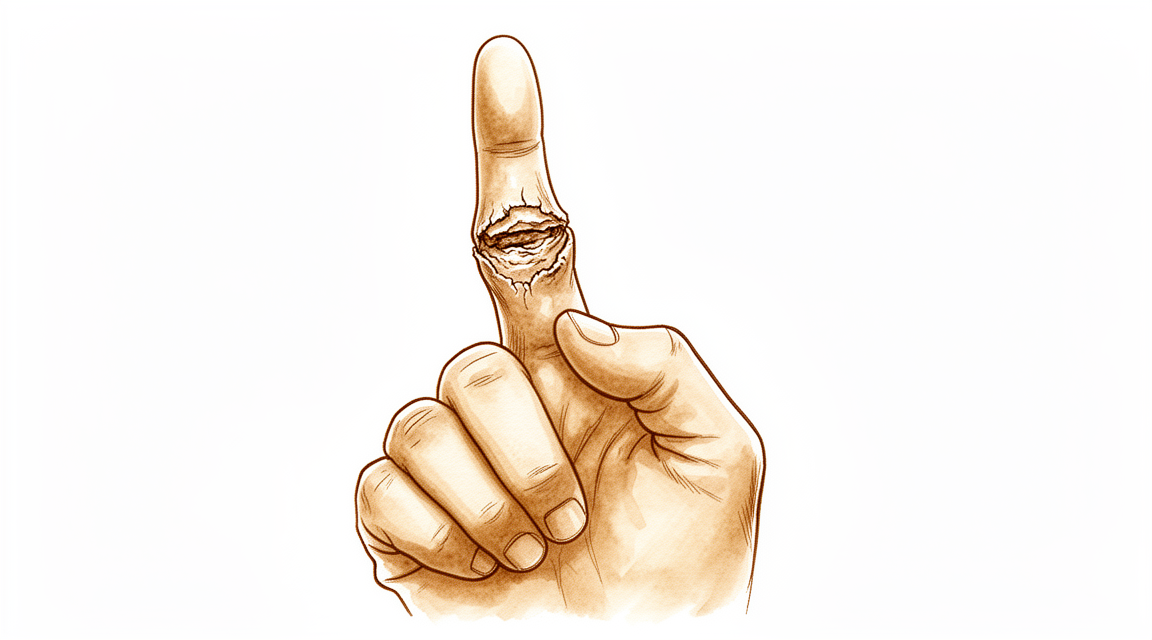
What you're feeling
The pain sits in the middle joint of your finger, the one your finger bends at. It tends to flare after you have used your hand, and it can be stiff when you wake up. Swelling around the joint is common, and it can last a long time. Many people notice the joint feels stiff and does not bend as smoothly as it used to.
Everyday tasks that need finger bending become harder. Buttoning clothes, gripping a kettle, turning a key, or holding a pen can all be uncomfortable. Some people develop a bent shape at the joint that they cannot straighten fully. If your finger has been dislocated or injured in the past and never treated, the joint may sit out of line and stay that way.
One thing worth knowing is that the amount of arthritis seen on an X-ray does not match how much pain you feel. Some people with a lot of wear-and-tear arthritis on X-ray have few symptoms, and some with little change on X-ray have a lot. The early stage of this arthritis involves inflammation in the joint, and many people actually feel better once that settles, even in the later stages.
If you also have a triggering or catching finger, the joint pain may not fully settle after surgery on the tendon sheath. Some minor tenderness at this joint can linger for up to 3 months after that procedure.
What's actually happening
The middle joint of your finger is a simple hinge. It bends and straightens in one direction only, like a door on its hinges. The ends of the finger bones that meet there are shaped to fit snugly together, which keeps the joint steady when your finger is straight. When the finger bends, soft straps around the joint take over and hold everything in place.
Covering those bone ends is a smooth, slippery layer of cartilage. Think of it as the joint's shock absorber and gasket in one. In wear-and-tear arthritis, that layer wears thin and breaks down. New bone forms at the edges of the joint, and the lining around it thickens. The joint then loses its smooth gliding surface, which is why bending feels rough, stiff and sore.
The straps around the joint can also tighten and shorten. Swelling inside the joint, followed by long periods of keeping still, sets off a cycle where the tissues stick down and lose their stretch. That is why a bent finger can become a fixed contracture that you cannot straighten, even with help from your other hand.
Some people develop a particular pattern called a boutonniere deformity. The tendon that straightens the middle joint weakens and slips, so the middle joint bends down while the end joint of the finger bends back too far. Early on, you can still straighten the finger passively and function is mostly unaffected. As it progresses, the bent position becomes fixed.
If your joint was injured in the past, such as a dislocation that was never treated, the same straps can heal in a shortened position. A joint that has sat out of line for 4 weeks or more usually cannot simply be pushed back into place, because the tissues have tightened around the new position.
This is also why the middle joint is unforgiving. It is prone to lasting stiffness and deformity after injury or surgery, and keeping it moving is a real challenge.
What we can do about it
Dr Kieran Hirpara, an upper-limb surgeon at Mater Private Hospital Rockhampton, starts with the least invasive options that suit your condition. Patients are generally referred to our clinic by their GP; if a physiotherapist has suggested you see us, you will still need a referral from your GP in order to be eligible for the Medicare rebate. At your first visit we take a history, examine your finger and arrange imaging such as an X-ray if it is needed. Because this is a long-standing wear-and-tear problem, we usually try non-operative care first and consider surgery when that has not given enough improvement.
The first step is often simple changes you can make yourself. Changing how you grip and use your hand can settle flares, and keeping the joint gently moving helps prevent it stiffening further. Physiotherapy or hand therapy aims to keep the joint bending and straightening, protect the straps around it, and slow the cycle of swelling and shortening that leads to a fixed bent position. We usually give this approach a fair trial of at least 3 months before thinking about anything further.
Pain relief and anti-inflammatory medicine, taken as your GP advises, can help you keep using the hand through a flare. Splinting can also hold the finger in a better position while the joint settles. We do not use injections for this joint, so we move on to surgery when simpler measures have not helped enough.
Surgery comes into the conversation when pain is stopping you use the finger despite 3 months or more of non-operative care, and the X-ray shows the wear-and-tear arthritis. There are two main directions. One is a joint replacement (arthroplasty), where the worn surfaces are replaced with an implant to ease pain while keeping some bending. The other is a fusion (arthrodesis), where the joint is set permanently straight so it no longer hurts, which trades the bending away for a steady, pain-free finger. Which suits you depends on which finger it is, how stable the joint and its tendons are, and how much bending you want to keep. For example, a fusion can suit one side of the hand while a replacement can suit the other, and replacement needs intact tendons and at least some remaining joint stability to work. We will talk through both with you and decide together.
What to expect
This arthritis is long-standing. It does not usually go away on its own, and the stiffness tends to build slowly over months and years rather than days. Some people feel better once an early flare settles, but the wear in the joint itself stays.
If the joint was injured and left untreated, doing nothing has real consequences. The pain can become chronic, the finger can stiffen or develop a fixed bent shape, and the joint can wear out early. Catching these injuries early and treating them properly is what prevents many of these problems.
With well-managed care, the outlook is steadier. Keeping the joint gently moving and protecting it through flares helps slow the cycle of swelling and shortening described earlier. Hand therapy can improve how straight the finger sits, though a straighter finger does not always feel more useful to you in daily tasks.
If you go ahead with a joint replacement, it helps to know the realistic picture. Pain relief is usually the part that works well, and many people keep useful bending in the finger. The bending you gain is often more than double what you had before surgery. But replacement joints in this finger tend to stiffen over time, so the range of movement can fade as the years pass. Around 1 in 5 people with a pyrocarbon implant need another operation on that joint within 5 years, and around 1 in 3 need more than one operation. Other implant designs have their own track records: one newer surface replacement implant has stayed in place in 85% of fingers at 2 years, and silicone implants have lasted in 90% of fingers at 10 years. A broken bone during the operation happens in about 5% of cases, but it does not usually change the final result. Infection after this surgery is uncommon.
If a replacement fails, there are still options. The joint can be fused, which gives a steady, pain-free finger as described earlier. In rare cases, removing the finger (amputation) is the final step.
When to see someone
See your GP if the middle joint of your finger has been sore for 3 months or more despite rest, splinting or hand therapy, and the pain is stopping you use the finger. Ask for a specialist review if the joint is becoming stiff or is developing a bent shape that interferes with what you do, especially if you can still straighten it passively. If your finger was dislocated or injured and has sat out of line for 4 weeks or more, that needs review rather than waiting, because the joint can set in that position. If you have a triggering or catching finger and the middle joint is also tender, mention it before any tendon release, as that tenderness can linger for up to 3 months afterwards.
In more depth
Advanced reading: the deeper science (optional)
This section goes further than you need for your own treatment decisions. Arthritis of the middle finger joint is worth the extra reading because the choice between fusing it and replacing it is decided by something most people would not think to ask about, whether the joint is stable, and because which finger it is matters as much as what the X-ray shows.
Stability, not severity, chooses the operation
Two operations are available. Fusion sets the joint permanently in a chosen position, reliably removing pain at the cost of all movement. Replacement preserves movement.
The comparison across 1,868 patients defines when each is appropriate. Silicone implants remain a valuable option for stable joints, while surface-replacing implants might be better for unstable or deviated joints, although they carry a higher risk of reoperation [1].
The important variable there is stability. A silicone implant is a flexible spacer rather than a hinge; it works by sitting between the bone ends and allowing them to move around it, which requires the surrounding ligaments to provide the stability. Where those ligaments have failed and the joint deviates sideways, a spacer has nothing to work against, hence the move to a surface-replacing design, and hence the higher reoperation rate that comes with a more constrained implant.
Which finger it is changes the recommendation
This is the part rarely explained. The index finger takes a large sideways force in pinch, pressing against the thumb, and that force is exactly what a replaced joint tolerates least. The ring and little fingers are used mainly for grip, where the loads run along the finger rather than across it.
The practical consequence is that replacement is generally better suited to the ulnar fingers, and fusion is often preferred at the index, where a stable post to pinch against is worth more than movement. Two identical-looking joints on an X-ray can therefore attract different recommendations based only on their position in the hand.
Fusion is reliable, and the technique matters less than expected
Where fusion is chosen, the technique debate is modest. Across 1,923 patients, all described techniques can achieve the goal of fusing an osteoarthritic joint, with a trend in more recent literature towards compression techniques [2]. Comparing techniques directly across 286 patients, they had similar fusion time, nonunion and complication rates, with screw arthrodesis showing a lower nonunion rate than wire fusion, though the data carry significant limitations [3].
Where the joint has been destroyed by injury rather than wear
A fracture through the base of the middle bone destroys the joint surface directly. Where more than half the surface is involved, one option is to rebuild it with a graft taken from the hamate bone in the wrist, whose contour resembles the lost joint surface.
Hemi-hamate autograft can be considered reliable for acute and chronic fracture-dislocations with joint involvement greater than 50%, though longer-term follow-up is required, particularly to establish the rate of later arthritis [4]. A separate review of 235 patients found it affords symptomatic relief and functional restoration [5].
That outstanding question about later arthritis is the honest caveat: the graft restores the shape of the joint, and whether a reconstructed surface wears at the same rate as a native one is not yet answered.
References for the advanced reading
- Forster N, Schindele S, Audigé L, Marks M. Complications, reoperations and revisions after proximal interphalangeal joint arthroplasty: a systematic review. J Hand Surg Eur Vol. 2018;43(10):1066-75.
- Millrose M, Gesslein M, Ittermann T, Kim S, Vonderlind H, Ruettermann M. Arthrodesis of the proximal interphalangeal joint of the finger, a systematic review. EFORT Open Rev. 2022;7(1):49-58.
- Faulkner H, An V, Lawson RD, Graham DJ, Sivakumar BS. Proximal interphalangeal joint arthrodesis techniques: a systematic review. Hand (N Y). 2021;18(1):74-9.
- Frueh FS, Calcagni M, Lindenblatt N. The hemi-hamate autograft arthroplasty in proximal interphalangeal joint reconstruction: a systematic review. J Hand Surg Eur Vol. 2014;40(1):24-32.
- Faulkner H, Graham DJ, Hile M, Lawson RD, Sivakumar BS. Hemi-hamate arthroplasty for base of middle phalanx fracture: a systematic review. Hand (N Y). 2021;18(2):300-6.
Evidence & references
This is the clinical evidence summary written for health professionals. It is technical, and it lists the research this page was built from. You do not need to read it to understand your treatment or to make a decision about it.
Overview
- Clinical outcomes for PIP joint replacements with pyrolytic carbon implants are variable despite substantially good survivorship [1].
- Primary PIP arthroplasty utilization for patients with osteoarthritis has increased, while revision PIP arthroplasty has decreased [2].
- Reoperations following primary nonconstrained PIP joint arthroplasties are common [3, 16].
- Extensor mechanism dysfunction is the most frequent cause of reoperations following primary nonconstrained PIP joint arthroplasties [3].
- Surgery performed better than collagenase at early and 2-year follow-up in PIP joints affected by Dupuytren disease [4].
- PIP joint arthrodesis has very few contraindications [5].
- PIP joint arthrodesis has an excellent overall success rate [5].
- The survival of pyrocarbon PIP joint arthroplasty was 85% at 5 years of follow-up [12].
- Pyrocarbon PIP joint arthroplasty is associated with high patient satisfaction [12].
- PIP joint denervation provides durable, effective pain relief despite osteoarthritis progression [13].
- PIP joint denervation is associated with high patient satisfaction [13].
- Ultimate salvage for a failed PIP joint arthroplasty may require arthrodesis or amputation [14].
- Treatment of the long finger may be a relative contraindication to PIP joint arthroplasty [18].
- Pyrocarbon PIP joint replacement provides excellent pain relief [24].
- Pyrocarbon PIP joint replacement increases the arc of motion by more than double the preoperative range [24].
Anatomy & Pathophysiology
Bony Anatomy and Biomechanics
- The proximal interphalangeal (PIP) joint is a simple hinge joint that allows for motion in the flexion-extension axis only [55].
- In full extension, PIP joint stability is maintained by the highly congruent bony architecture [55].
- In flexion, the PIP joint is stabilized by capsuloligamentous structures that envelope the joint [55].
- The PIP joint has unique anatomy that predisposes it to stiffness [55].
- Proper biomechanics of a joint must be restored to achieve full, functional range of motion [52].
- The PIP joint anatomy remains a subject of ongoing investigation, with evolving understanding of its biomechanical properties continuing to improve treatment and reconstructive designs [53].
- The complex anatomy and biomechanics of the PIP joint make classification and management of injuries difficult [36].
- An understanding of the anatomy and biomechanics of the PIP joint forms the basis of analyzing patterns, mechanisms, and subsequent management of these injuries [36].
Soft Tissue Anatomy
- The capsuloligamentous structures of the PIP joint include the dorsal capsule, volar plate, and collateral ligaments [55].
- Unlike the metacarpophalangeal joint, the PIP joint's collateral ligaments are essentially isometric throughout the arc of motion [55].
- The dorsal interossei are abductors and lie to the radial side of the index and middle fingers and the ulnar side of the middle and ring fingers [43].
- The volar interossei are adductors and lie to the ulnar side of the index finger and the radial side of the ring and little fingers [43].
- The middle finger has two dorsal interossei (abductors) and no volar interossei (adductors) because the central axis of the hand lies within it [43].
- The deep head of each dorsal interosseous muscle forms a lateral tendon, or lateral band, at the level of the metacarpophalangeal joint [43].
- The deep head of the dorsal interosseous muscles flexes and weakly abducts the proximal phalanx while extending the middle and distal phalanges [43].
- Transverse fibers arch dorsally from each lateral band to join each other over the dorsum of the finger, flexing the proximal phalanx [43].
- Oblique fibers (spiral fibers) from the lateral bands sweep over the distal third of the proximal phalanx to insert onto the lateral tubercles at the base of the middle phalanx [43].
- The oblique fibers extend the middle phalanx at the PIP joint [43].
- The lateral bands are joined by the lateral slips of the extensor tendon to form the conjoined lateral band [43].
- The two conjoined lateral bands to each finger unite at the distal third of the middle phalanx to form the terminal tendon [43].
- The terminal tendon inserts at the base of the distal phalanx to extend it [43].
- The volar interossei form the ulnar lateral band of the index finger and the radial lateral band of the ring and little fingers [43].
- The volar interossei send oblique or spiral fibers that insert onto the base of the middle phalanx at its lateral tubercle [43].
- The flexor digiti quinti brevis forms the ulnar lateral band of the little finger [43].
- The dorsal covering of the interphalangeal articulations of the digits forms a unique cutaneous unit characterized by a considerable excess of skin when the digits are in extension [42].
- The fine tight skin of the dorsal aspect of the middle phalanx forms another cutaneous unit [42].
- The dorsal integument of the distal phalanx is very special because of the nail bed with its matrix [42].
- The integument of the palmar face of the digits may be subdivided into phalangeal units separated by digital flexion folds [42].
- When a digit is completely flexed, the integument of adjacent phalanges comes into contact in the zones of the flexion creases, establishing areas of cutaneous contact in the form of a diamond [42].
- The sides of the diamond-shaped cutaneous contact zones do not undergo variations in length during the movements of flexion and extension [42].
- Incisions made along the level of the diamond-shaped cutaneous contact zones present a minimal chance of retraction [42].
Pathophysiology and Injury Mechanisms
- The PIP joint of the finger is prone to injury and residual deformity [36].
- Inappropriate management of PIP joint injuries may result in chronic pain, stiffness, deformity, or premature degenerative arthritis [36].
- A review of 96 injuries about the PIP joint found a 30% poor recovery rate, characterized by joint instability, poor function, pain, or flexion deformities [36].
- Suboptimal treatment of intra-articular fractures typically leads to functional impairment of the hand [29].
- Maintaining motion and function following trauma and/or surgery of the PIP joint remains very challenging [6].
- The pathogenesis of the PIP joint contracture is attributed to a cycle of edema, immobilization, and tissue adherence of the capsuloligamentous structures [55].
- PIP joint stiffness may be the result of both traumatic and atraumatic conditions, such as Dupuytren disease, infection, and neurological injury [55].
- Dorsal dislocations represent almost all PIP joint dislocations [81].
- The mechanism for dorsal PIP dislocations involves forced hyperextension, axial load, and radial or ulnar deviation [81].
- Dorsal PIP dislocations are characterized by volar plate rupture at its distal attachment [81].
- Dorsal PIP dislocations involve a split between the accessory collateral ligament and proper collateral ligament with detachment of the proper collateral ligament from its proximal attachment [81].
- In dorsal PIP dislocations, the volar plate is maintained beneath the condyle, held by intact attachment to the accessory collateral ligament [81].
- When a torsional mechanism is involved in dorsal PIP dislocations, soft tissue interposition can block reduction [81].
- Lateral PIP dislocations are less common than dorsal dislocations [81].
- The mechanism for lateral PIP dislocations involves direct radial or ulnar stress on the PIP joint with axial load [81].
- In lateral PIP dislocations, the collateral ligament on the side of the force fails under tension, avulsing from its proximal attachment [81].
- Continued force in lateral PIP dislocations causes disruption of the volar plate on the side of the force [81].
- Volar PIP dislocations are the least common type of PIP dislocation [81].
- Volar PIP dislocations require force in two vectors: ulnar or radial deviation causing rupture of the collateral ligament and volar plate [81].
- In uncomplicated volar PIP dislocations, the central slip of the extensor mechanism ruptures or avulses from the dorsal lip of the middle phalanx [80].
- The intact lateral bands initially can perform joint extension even though the central slip is ruptured in volar PIP dislocations [80].
- Failure to immobilize the joint in extension to allow central slip healing can eventually lead to stretching of the triangular ligament holding the lateral bands [80].
- Stretching of the triangular ligament results in volar subluxation of the lateral bands [80].
- Subluxated lateral bands can no longer extend the PIP joint [80].
- The tightening of the terminal extensor slip leads to hyperextension of the distal interphalangeal joint, resulting in the classic boutonniere deformity [80].
- Complex volar dislocations involve rotary displacement with a collateral ligament tear secondary to lateral stress combined with an anteriorly directed force [80].
- In complicated volar dislocations, the central slip, lateral band, or torn collateral ligament may be interposed within the joint, necessitating open reduction [80].
- A laterally directed force to the PIP joint results in avulsion of the collateral ligament from its proximal attachment on the side of the applied force [80].
- With continued force in lateral dislocations, the volar plate eventually tears on the side of injury, resulting in lateral dislocation [80].
- A dorsal PIP fracture-dislocation with a fracture fragment consisting of more than 40% of the middle phalanx base creates an extremely unstable configuration due to loss of bony congruity and disruption of all ligamentous stabilizers [80].
Classification
- The diagnosis of PIP joint osteoarthritis is based mainly on the clinical picture and confirmed by radiographs [23].
- Radiographs and symptoms do not correlate in PIP joint osteoarthritis, which is why classifications and staging based on radiographs are rarely used [23].
- Radiographic evaluation of bone quality, specifically defects and cyst formation, plays a crucial role in the indication of possible surgical treatment options for PIP joint arthritis [23].
- The presence of stiffness and deformity plays a crucial role in the indication of possible surgical treatment options for PIP joint arthritis [23].
- Patients were considered for PIP joint arthroplasty if they had radiological signs of PIP joint osteoarthritis (Kellgren-Lawrence classification ≥grade 2) in combination with pain, despite nonsurgical treatment for at least 3 months [10].
- Stiffness and deformity could be indications for PIP joint arthroplasty surgery [10].
- A classification of injuries about the PIP joint is suggested to provide a practical guide to management [36].
- The SCARF classification allows non-hand specialists to specify the type of every PIP joint dislocation [57].
Clinical Presentation
Diagnostic Criteria and Indications
- Radiographs and symptoms do not correlate, which is the main reason that classifications and staging based on radiographs are rarely used [23].
- Radiographic evaluation of bone quality, specifically defects and cyst formation, plays a crucial role in the indication of possible surgical treatment options [23].
- The presence of stiffness and deformity plays a crucial role in the indication of possible surgical treatment options [23].
- Patients are considered for surgery if they have radiological signs of PIP joint osteoarthritis (Kellgren-Lawrence classification ≥grade 2) in combination with pain, despite nonsurgical treatment for at least 3 months [10].
- Stiffness and deformity could be indications for surgery in addition to pain [10].
- The most common indications for initial PIP joint arthroplasty surgery were stiffness (28%) and pain (25%) [11].
Symptom Characteristics and Disease Progression
- The initial phase of PIP joint osteoarthritis is an inflammatory process that comes to a halt at a later stage [23].
- Many patients have fewer symptoms at the end stage of the disease than at the beginning [23].
- Patients should be advised that PIP joint range of motion deteriorates over time [8].
- It is common for patients to experience a prolonged duration of swelling, stiffness, and dysfunction following PIP joint sprains [19].
- PIP joint pain in patients with trigger finger is mostly aching and felt on the palmar and dorsal aspect of the PIP joint [26].
- PIP joint pain in patients with trigger finger worsens with joint movement, especially when the joint is actively extended, and sometimes radiates proximally [26].
- Occasionally there is additional PIP joint tenderness on palpation in patients with trigger finger [26].
- Patients complaining of PIP joint pain often have long-standing trigger finger requiring surgery and a variable degree of fixed extension loss [26].
Trauma and Injury Presentation
- Early recognition of joint instability is essential for adequate treatment of injuries of the PIP joint [27].
- Fracture dislocations of the PIP joint may rapidly develop fixed deformity, leaving an athlete with a poor outlook for complete correction [31].
- Clinical results for PIP joint dislocations and fracture-dislocations vary and are often difficult to predict due to the complexity of fracture patterns and potential for sub-acute or chronic presentation [60].
- Complications regularly arise after PIP joint injuries, yet they can often be prevented through early detection of injury and appropriate initial treatment protocols [7].
Functional Limitations
- PIP joint stiffness remains an unsolved problem in hand surgery, with poor prognosis in complex cases even after complete arthrolysis and tenolysis [61].
Investigations
- A careful physical examination is essential to direct care and future testing if indicated [22].
- Diagnostic tests such as imaging and serum laboratory studies are useful in determining pathology but can be expensive, time consuming, and often nonspecific [22].
- Patients often have difficulty accurately describing their symptoms and may incorrectly attribute pathology to a perceived deficit [22].
- A systematic method to approaching the physical examination is essential due to the number of structures in a small space [22].
- Radiological signs of PIP joint osteoarthritis are defined by the Kellgren-Lawrence classification ≥grade 2 [10].
- Stiffness and deformity can be indications for surgery in addition to pain [10].
- Timely diagnosis is imperative if there is any persistent incongruity of the joint, as fracture dislocations of the PIP joint may rapidly develop fixed deformity [31].
Treatment
Arthroplasty
- PIP joint arthroplasty is a widely accepted procedure for joints with osteoarthritis destruction or post-traumatic conditions [70].
- Prerequisites for PIP joint arthroplasty include intact tendons and at least some residual joint stability [70].
- Correction of lateral deviation beyond 30° in PIP joint arthroplasty is difficult and likely to fail [70].
- PIPJ implant arthroplasty is a good and reliable option for symptomatic PIPJ degenerative, post-traumatic, or inflammatory arthritis given the proper clinical setting [15].
- Pyrocarbon PIPJ replacement is a safe and effective treatment for arthritis of the PIPJ [24].
- Pyrocarbon PIPJ replacement provides excellent pain relief and increases the arc of motion by more than double the preoperative range [24].
- Clinical outcomes for PIP joint replacements with pyrocarbon implants are variable despite substantially good survivorship [1].
- Patients should be advised that PIPJ range of motion deteriorates over time following pyrolytic carbon hemiarthroplasty [8].
- The CapFlex-PIP implant demonstrates favourable medium-term results in surface replacing arthroplasty of the proximal interphalangeal joint [37].
- Treatment of the long finger may be a relative contraindication to PIPJ arthroplasty [18].
- Ultimate salvage for a failed PIP joint arthroplasty may require arthrodesis or even amputation [14].
- Data demonstrate an increased use of primary PIPA utilization for patients with osteoarthritis, whereas revision PIPA decreased [2].
Arthrodesis
- PIPJ arthrodesis has very few contraindications [5].
- PIPJ arthrodesis has an excellent overall success rate [5].
- PIPJ arthrodesis is an excellent option for surgical management of PIPJ arthritis [5].
- Arthrodesis in the radial digits brings an improvement in the lateral pinch [70].
- Arthroplasty in the ulnar digits gives reasonable functional mobility with good pain relief [70].
- Several authors have advocated reserving PIP arthroplasty for ulnar digits and treating the index finger with PIP joint fusion [70].
Other Surgical Interventions
- PIP joint denervation provides durable, effective pain relief with high patient satisfaction despite osteoarthritis progression [13].
- PIP joint denervation supports its consideration as a surgical option for symptomatic PIP joint osteoarthritis [13].
- External fixation is a simple and effective treatment modality for chronic traumatic PIP joint contractures [34].
- External fixation for chronic traumatic PIP joint contractures has good predictable medium- to long-term results [34].
- Open reduction of chronic untreated PIP joint dislocations can successfully achieve a functional range of motion with a stable joint [39].
- Surgery performed better than collagenase at early and 2-year follow-up in PIP joints affected by Dupuytren contracture [4].
Rehabilitation and Postoperative Care
- Patients with rheumatoid arthritis may require up to 3 weeks of immobilization before initiation of therapy following PIP arthroplasty to provide for soft tissue repair healing [32].
- Therapy starting 1 week after PIP arthroplasty requires close monitoring to ensure proper alignment, rotation, and position [32].
- A dynamic PIP extension-assist splint is worn during the day and limits ROM to 0° to 30° of extension-flexion for the first week following PIP arthroplasty [32].
- A static resting splint is worn at night and during rest periods, with the MCP joint in 20° of flexion and the PIP and DIP joints maintained in full extension [32].
- All exercises in the dynamic splint should be done hourly with ten repetitions following PIP arthroplasty [32].
- Hyperextension and extension lag should be avoided, with therapy/splinting adjusted immediately when either is present following PIP arthroplasty [32].
- When hyperextension of the PIP joint is present, an extension block can be added to block the PIP joint at 30° or more of flexion [32].
- An extension block for PIP hyperextension includes a night static flexion block at 60° to 90° for 3 weeks [32].
- After a 3-week period of flexion blocking, dynamic extension is reinstituted to zero following PIP arthroplasty [32].
- Functional exercises with the index finger are begun later and functional splinting is prolonged after PIP arthroplasty to protect the radial collateral ligament [70].
- The goal of index-finger rehabilitation after PIP arthroplasty is not maximum mobility but an optimized functional outcome [70].
Complications
Arthroplasty Complications
- Reoperations following primary nonconstrained PIP joint arthroplasties are common, with extensor mechanism dysfunction being the most frequent cause [3].
- Intraoperative fractures occur in about 5% of PIP joint arthroplasties and do not appear to influence outcomes, including revision surgery, refracture rate, or other early complications [58].
- The revision rate of the LPM PIPJ prosthesis was 29%, with a further 20% rate of adverse clinical and radiological outcomes at a maximum follow-up of 6 years [63].
- Periprosthetic joint infection is uncommon after PIP arthroplasties [17].
Arthrodesis Complications
- PIPJ arthrodesis has very few contraindications and an excellent overall success rate [5].
Non-Operative and Injury-Related Complications
- Pain or locking from trigger finger may lead to secondary contracture of the PIP joint [26].
Recovery
- Patients should be advised that PIPJ ROM deteriorates over time [8].
- The postoperative rehabilitation protocol for PIP joint arthroplasty involves the use of two splints: a dynamic PIP extension-assist splint worn during the day and a static resting splint worn at night [32].
- The dynamic PIP extension-assist splint limits ROM to 0° to 30° of extension-flexion for the first week to allow for healing of the extensor apparatus [32].
- The static resting splint is forearm-based, with the MCP joint in 20° of flexion and the PIP and DIP joints maintained in full extension [32].
- Exercises in the dynamic splint should be performed hourly with ten repetitions [32].
- Hyperextension and extension lag should be avoided, with therapy and splinting adjusted immediately when either is present [32].
- When hyperextension of the PIP joint is present, an extension block can be added to block the PIP joint at 30° or more of flexion, with a night static flexion block at 60° to 90° for 3 weeks [32].
- Patients with rheumatoid arthritis may require up to 3 weeks of immobilization before initiation of therapy to provide for soft tissue repair healing [32].
- Using night progressive static and daily dynamic orthoses as an exclusive treatment during the proliferative phase led to significant improvements in the PIP joint active extension [83].
- Improvement in PIP joint active extension from orthotic intervention did not correlate with increased function as perceived by the patient [83].
Key Evidence
- [L4] Despite substantially good survivorship, clinical outcomes for PIP joint replacements with pyrocarbon implants are variable. [1] (10.1302/2058-5241.2.160041)
- [L4] The data demonstrate an increased use of primary PIPA utilization for patients with OA, whereas revision PIPA decreased. [2] (10.1177/1558944719837009)
- [L4] Reoperations following primary nonconstrained PIP joint arthroplasties are common, with extensor mechanism dysfunction being the most frequent cause. [3] (10.1016/j.jhsa.2011.06.002)
- [L3] Surgery performed better than collagenase at early and 2-year follow-up in PIP joints and similarly in MCP joints. [4] (10.1007/s00402-018-3034-6)
- [L5] PIPJ arthrodesis has very few contraindications, with an excellent overall success rate, making it an excellent option for surgical management of PIPJ arthritis. [5] (10.1016/j.hcl.2017.12.007)
- [L5] Maintaining motion and function following trauma and/or surgery of the PIP joint remains very challenging. [6] (10.1016/j.hcl.2017.12.003)
- [L5] Complications regularly arise after PIP joint injuries, yet they can often be prevented through early detection of injury and appropriate initial treatment protocols. [7] (10.1016/j.hcl.2017.12.014)
- [L4] Patients should be advised that PIPJ ROM deteriorates over time. [8] (10.1016/j.jhsa.2023.11.007)
- [L3] [10] (10.1177/15589447221141485)
- [Paper] [11] (10.1055/s-0040-1709088)
- [L4] The survival of pyrocarbon PIP joint arthroplasty was 85% at 5 years of follow-up, with high patient satisfaction. [12] (10.1016/j.jhsa.2012.02.012)
- [L4] PIP joint denervation provides durable, effective pain relief with high patient satisfaction, despite osteoarthritis progression, supporting its consideration as a surgical option for symptomatic PIP joint osteoarthritis. [13] (10.1016/j.jhsa.2026.01.033)
- [L5] Ultimate salvage for the failed PIP joint arthroplasty may require arthrodesis or even amputation. [14] (10.1016/j.hcl.2017.12.011)
- [L4] PIPJ implant arthroplasty is a good and reliable option for symptomatic PIPJ degenerative, post-traumatic or inflammatory arthritis given the proper clinical setting. [15] (10.1177/17531934241265837)
- [L4] Reoperations following primary non-constrained PIP arthroplasties are common. [16] (10.1016/s0363-5023(11)60049-x)
- [L4] PJI is uncommon after MCP or PIP arthroplasties. [17] (10.1016/j.jhsa.2024.12.008)
- [L1] Treatment of the long finger may be a relative contraindication to PIPJ arthroplasty. [18] (10.1177/1558944718791186)
- [L4] It is common for patients to experience a prolonged duration of swelling, stiffness, and dysfunction following PIP joint sprains. [19] (10.1016/j.jhsa.2023.01.025)
- [L5] [23] (10.1016/j.hcl.2017.04.002)
- [L4] Pyrocarbon PIPJ replacement is a safe and effective treatment for arthritis of the PIPJ, providing excellent pain relief and increasing the arc of motion by more than double the preoperative range. [24] (10.1177/1753193411434053)
- [L4] [26] (10.1177/1753193418809771)
- [L5] Early recognition of joint instability is essential for adequate treatment of injuries of the PIP joint. [27] (10.5435/00124635-200011000-00006)
- [L5] Suboptimal treatment of intra-articular fractures typically leads to functional impairment of the hand. [29] (10.1177/1753193414559464)
- [L5] Timely diagnosis is imperative, especially if there is any persistent incongruity of the joint, as fracture dislocations of the PIP joint may rapidly develop fixed deformity, leaving an athlete with a poor outlook for complete correction. [31] (10.1016/j.hcl.2012.05.036)
- [L5] [32] (10.5435/00124635-200703000-00009)
- [L4] External fixation is a simple and effective treatment modality for chronic traumatic PIP joint contractures with good predictable medium- to long-term results. [34] (10.1016/j.jhsa.2013.07.007)
- [L5] [36] (10.1016/j.hcl.2006.05.003)
- [L4] The CapFlex-PIP implant demonstrates favourable medium-term results in surface replacing arthroplasty of the proximal interphalangeal joint. [37] (10.1177/1753193420977244)
- [L4] This surgical technique of open reduction of chronic untreated PIP joint dislocations can successfully achieve a functional range of motion with a stable joint. [39] (10.1016/j.jhsa.2020.07.002)
- [L5] Proper biomechanics of a joint must be restored to achieve full, functional range of motion. [52] (10.1016/j.hcl.2017.12.008)
- [L5] Despite the wealth of knowledge regarding the anatomy of the PIPJ, it remains a subject of ongoing investigation, and evolving understanding of its biomechanical properties will continue to improve treatment and reconstructive designs. [53] (10.1016/j.hcl.2017.12.002)
- [L5] [55] (10.1016/j.jhsa.2015.06.118)
- [L2] Even other than hand specialists can specify the type of every PIP joint dislocation by using the SCARF classification and will have better understanding of each case. [57] (10.1016/j.jos.2019.08.007)
- [L3] Intraoperative fractures occur in about 5% of PIP joint arthroplasties and do not appear to influence outcomes, including revision surgery, refracture rate, or other early complications. [58] (10.1016/j.jhsa.2015.06.101)
- [L5] Clinical results for PIP joint dislocations and fracture-dislocations vary and are often difficult to predict due to the complexity of fracture patterns and potential for sub-acute or chronic presentation. [60] (10.1177/17531934231183259)
- [L5] PIP joint stiffness remains an unsolved problem in hand surgery, with poor prognosis in complex cases even after complete arthrolysis and tenolysis. [61] (10.1177/17531934221143690)
- [L4] The revision rate of 29% and a further 20% rate of adverse clinical and radiological outcomes for the LPM PIPJ prosthesis at a maximum follow-up of 6 years is unacceptable. [63] (10.1177/1753193408094920)
- [L5] [70] (10.1302/2058-5241.4.180042)
- [L5] [80] (10.1016/j.hcl.2009.05.008)
- [L5] [81] (10.1016/j.hcl.2017.12.004)
- [L1] Using night progressive static and daily dynamic orthoses as an exclusive treatment during the proliferative phase led to significant improvements in the PIP joint active extension, but the improvement did not correlate with increased function as perceived by the patient. [83] (10.1016/j.jhsa.2015.01.005)
References
[1] Proximal interphalangeal (PIP) joint replacements with pyrolytic carbon implants in the hand. EFORT Open Reviews. 2017. DOI: 10.1302/2058-5241.2.160041
[2] Trends in Primary Proximal Interphalangeal Joint System and Revisions for Osteoarthritis of the Hand in the Medicare Database. HAND. 2019. DOI: 10.1177/1558944719837009
[3] Reoperations Following Proximal Interphalangeal Joint Nonconstrained Arthroplasties. The Journal of Hand Surgery. 2011. DOI: 10.1016/j.jhsa.2011.06.002
[4] Range of motion, postoperative rehabilitation and patient satisfaction in MCP and PIP joints affected by Dupuytren Tubiana stage 1–3: collagenase enzymatic fasciotomy or limited fasciectomy? A clinical study in 52 patients. Archives of Orthopaedic and Trauma Surgery. 2018. DOI: 10.1007/s00402-018-3034-6
[5] Proximal Interphalangeal Joint Fusion. Hand Clinics. 2018. DOI: 10.1016/j.hcl.2017.12.007
[6] Surgical Exposure of the Proximal Interphalangeal Joint. Hand Clinics. 2018. DOI: 10.1016/j.hcl.2017.12.003
[7] Complications of Proximal Interphalangeal Joint Injuries. Hand Clinics. 2018. DOI: 10.1016/j.hcl.2017.12.014
[8] Pyrolytic Carbon Hemiarthroplasty for Proximal Interphalangeal Joint Arthritis, Long-Term Follow-Up. The Journal of Hand Surgery. 2024. DOI: 10.1016/j.jhsa.2023.11.007
[10] Type of Work and Preoperative Ability to Perform Work Affect Return to Usual Work Following Proximal Interphalangeal Joint Arthroplasty for Osteoarthritis. HAND. 2022. DOI: 10.1177/15589447221141485
[11] Factors Associated with Reoperation after Pyrocarbon Proximal Interphalangeal Joint Arthroplasty for the Arthritic Joint: A Retrospective Cohort Study. Journal of Hand and Microsurgery. 2021. DOI: 10.1055/s-0040-1709088
[12] Pyrocarbon Proximal Interphalangeal Joint Arthroplasty: Minimum Two-Year Follow-Up. The Journal of Hand Surgery. 2012. DOI: 10.1016/j.jhsa.2012.02.012
[13] Long-term Survival of Proximal Interphalangeal Joint Denervation of the Hand: Time-to-Event Analysis. The Journal of Hand Surgery. 2026. DOI: 10.1016/j.jhsa.2026.01.033
[14] Salvaging a Failed Proximal Interphalangeal Joint Implant. Hand Clinics. 2018. DOI: 10.1016/j.hcl.2017.12.011
[15] Proximal interphalangeal joint arthroplasty: current trends and evidence-based practice. Journal of Hand Surgery (European Volume). 2024. DOI: 10.1177/17531934241265837
[16] Reoperations following Proximal Interphalangeal Joint Unconstrained Arthroplasty. The Journal of Hand Surgery. 2011. DOI: 10.1016/s0363-5023(11)60049-x
[17] Incidence and Presentation of Periprosthetic Joint Infection After Primary Metacarpophalangeal and Proximal Interphalangeal Arthroplasty. The Journal of Hand Surgery. 2025. DOI: 10.1016/j.jhsa.2024.12.008
[18] Prosthetic Arthroplasty of Proximal Interphalangeal Joints for Treatment of Osteoarthritis and Posttraumatic Arthritis: Systematic Review and Meta-Analysis Comparing the Three Ulnar Digits With the Index Finger. HAND. 2018. DOI: 10.1177/1558944718791186
[19] Swelling, Stiffness, and Dysfunction Following Proximal Interphalangeal Joint Sprains. The Journal of Hand Surgery. 2024. DOI: 10.1016/j.jhsa.2023.01.025
[22] Orthopaedic Knowledge Update 13 Ebook Without Multimedia. Anatomy, Evaluation, Clinical Examination, and Imaging > Evaluation and Clinical Examination: Current Concepts.
[23] Current European Practice in the Treatment of Proximal Interphalangeal Joint Arthritis. Hand Clinics. 2017. DOI: 10.1016/j.hcl.2017.04.002
[24] Pyrocarbon proximal interphalangeal joint arthroplasty: outcomes of a cohort study. Journal of Hand Surgery (European Volume). 2011. DOI: 10.1177/1753193411434053
[26] Clinical significance of proximal interphalangeal joint pain in patients with trigger fingers. Journal of Hand Surgery (European Volume). 2018. DOI: 10.1177/1753193418809771
[27] Fractures of the Proximal Interphalangeal Joint. Journal of the American Academy of Orthopaedic Surgeons. 2000. DOI: 10.5435/00124635-200011000-00006
[29] Management of difficult intra-articular fractures or fracture dislocations of the proximal interphalangeal joint. Journal of Hand Surgery (European Volume). 2014. DOI: 10.1177/1753193414559464
[31] Proximal Interphalangeal Joint Fracture Dislocations. Hand Clinics. 2012. DOI: 10.1016/j.hcl.2012.05.036
[32] Proximal Interphalangeal Joint Arthroplasty. Journal of the American Academy of Orthopaedic Surgeons. 2007. DOI: 10.5435/00124635-200703000-00009
[34] Distraction for Proximal Interphalangeal Joint Contractures: Long-Term Results. The Journal of Hand Surgery. 2013. DOI: 10.1016/j.jhsa.2013.07.007
[36] Management of Proximal Interphalangeal Joint Injuries. Hand Clinics. 2006. DOI: 10.1016/j.hcl.2006.05.003
[37] Surface replacing arthroplasty of the proximal interphalangeal joint using the CapFlex-PIP implant: a prospective study with 5-year outcomes. Journal of Hand Surgery (European Volume). 2020. DOI: 10.1177/1753193420977244
[39] Open Reduction of Neglected Dislocations of the Proximal Interphalangeal Joint. The Journal of Hand Surgery. 2020. DOI: 10.1016/j.jhsa.2020.07.002
[42] Exam Of The Hand Wrist 2Ed. Functional cutaneous units.
[43] Green S Operative Hand Surgery. Interosseous and Hypothenar Muscles.
[52] Advances in Proximal Interphalangeal Joint Arthroplasty. Hand Clinics. 2018. DOI: 10.1016/j.hcl.2017.12.008
[53] Anatomy and Biomechanics of the Finger Proximal Interphalangeal Joint. Hand Clinics. 2018. DOI: 10.1016/j.hcl.2017.12.002
[55] Hand Therapy Modalities for Proximal Interphalangeal Joint Stiffness. The Journal of Hand Surgery. 2015. DOI: 10.1016/j.jhsa.2015.06.118
[57] Ratio of dislocation types of the proximal interphalangeal joint of the fingers: A new classification system for initial therapy. Journal of Orthopaedic Science. 2019. DOI: 10.1016/j.jos.2019.08.007
[58] Intraoperative Periprosthetic Fractures in Proximal Interphalangeal Joint Arthroplasty. The Journal of Hand Surgery. 2015. DOI: 10.1016/j.jhsa.2015.06.101
[60] Proximal interphalangeal joint dislocations and fracture-dislocations. Journal of Hand Surgery (European Volume). 2023. DOI: 10.1177/17531934231183259
[61] The stiff proximal interphalangeal joint – an unsolved problem?. Journal of Hand Surgery (European Volume). 2023. DOI: 10.1177/17531934221143690
[63] A Report on the Early Failure of the LPM Proximal Interphalangeal Joint Replacement. Journal of Hand Surgery (European Volume). 2008. DOI: 10.1177/1753193408094920
[70] The proximal interphalangeal joint: arthritis and deformity. EFORT Open Reviews. 2019. DOI: 10.1302/2058-5241.4.180042
[80] Management of Proximal Interphalangeal Joint Dislocations in Athletes. Hand Clinics. 2009. DOI: 10.1016/j.hcl.2009.05.008
[81] Treating Proximal Interphalangeal Joint Dislocations. Hand Clinics. 2018. DOI: 10.1016/j.hcl.2017.12.004
[83] Treatment of Proximal Interphalangeal Joint Flexion Contracture: Combined Static and Dynamic Orthotic Intervention Compared With Other Therapy Intervention: A Randomized Controlled Trial. The Journal of Hand Surgery. 2015. DOI: 10.1016/j.jhsa.2015.01.005