Skip to content

Patients › Foot

Neuroma de Morton

Updated Sep 2026
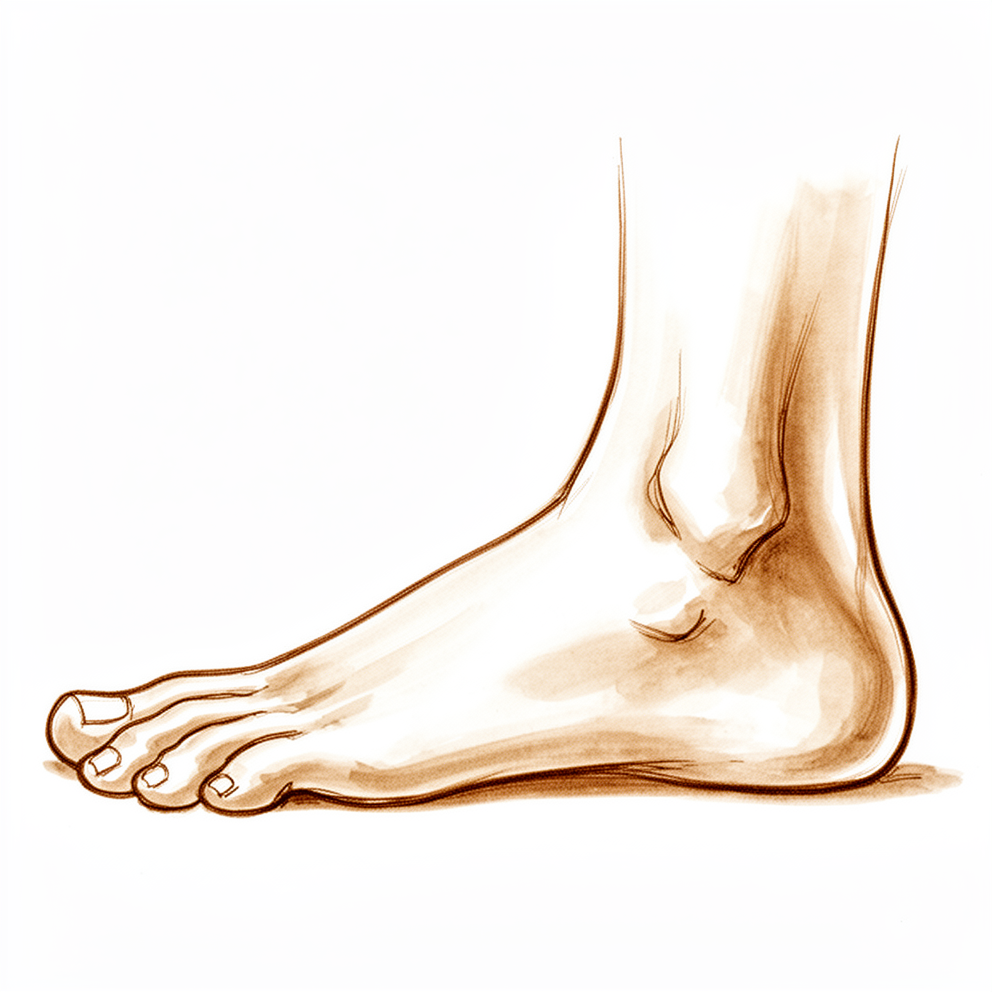
Illustration: foot

Esta página foi traduzida automaticamente e ainda não foi verificada por um médico. A versão em inglês é a versão oficial.

O que você está sentindo

A dor localiza-se na parte anterior do pé, geralmente no espaço entre o terceiro e o quarto dedos. Ela surge quando um nervo nessa região se torna espesso e irritado. Esse nervo possui uma estrutura diferente dos nervos entre os demais dedos: é mais grosso e fixado com mais firmeza, o que o torna suscetível a compressão e estiramento durante a caminhada.

A dor é sentida na parte inferior do pé, na base dos dedos. Você pode descrevê-la como uma dor ardente ou como uma sensação de algo pontiagudo na região anterior do pé. Ficar em pé e caminhar exercem pressão sobre essa área sensível, fazendo com que os sintomas se intensifiquem ao longo do dia. Empurrar o corpo para frente ao dar um passo pode piorar a dor; tirar o peso do pé, por outro lado, geralmente a alivia.

Algumas pessoas percebem a dor principalmente ao se movimentarem, e não à noite ou ao acordar. Os episódios de dor tendem a ocorrer após atividades físicas, quando o nervo é repetidamente comprimido.

No dia a dia, essa área sensível manifesta-se de diversas formas: caminhar pelo supermercado, ficar em pé na cozinha ou subir escadas podem pressionar o nervo. Os sapatos também influenciam: calçados estreitos ou apertados comprimem os ossos da parte anterior do pé e pressionam o nervo; por isso, muitas pessoas acabam afrouxando os cadarços ou tirando os sapatos debaixo da mesa. Algumas sentem necessidade de parar no meio do caminho, sentar-se e tirar o sapato para massagear a área dolorida.

Se isso descreve o que você sente no pé, existem maneiras de aliviar o desconforto. Primeiro, são tentados tratamentos simples e não cirúrgicos; a cirurgia é considerada apenas quando esses métodos não surtem efeito.

O que realmente está acontecendo

Entre os ossos dos dedos dos pés, bem no antepé, existe um pequeno nervo. O nervo localizado entre o terceiro e o quarto dedos difere dos demais: é mais grosso e fica mais firmemente preso no lugar. Dois ramos nervosos se unem exatamente ali antes de seguir em direção aos dedos. Esse ponto de união fica logo abaixo de uma forte faixa de tecido que mantém os ossos do pé unidos.

Ao caminhar, o peso do corpo comprime os ossos do antepé uns contra os outros. O nervo acaba sendo comprimido entre eles, repetidamente. Como está bem preso e não consegue se deslocar, ele absorve toda essa pressão em vez de se mover livremente. Imagine uma mangueira de jardim presa sob um capacho pesado: a cada passo, ela é comprimida, e com o tempo acaba se alterando. O nervo reage da mesma forma: torna-se mais grosso e irritado, e esse nervo espessado é o ponto doloroso que você sente.

Os sintomas descritos acima são consequência direta disso. A pressão sobre o nervo provoca aquela dor ardente no antepé. O aperto causado por sapatos justos comprime ainda mais os ossos, motivo pelo qual calçados estreitos pioram os sintomas. Quando você retira o peso do pé, a compressão cessa, e a dor diminui ao sentar ou ao tirar o sapato.

Não existe um sistema de classificação para essa condição, nem exames que a dividam em formas leves ou graves. O que importa é o grau de interferência na sua vida diária. Primeiro, são indicados tratamentos simples e não cirúrgicos, que funcionam para muitas pessoas. A cirurgia é considerada apenas quando esses tratamentos não surtem efeito. A operação habitual consiste na remoção do próprio nervo espessado. A maioria das pessoas que precisam de uma segunda cirurgia, pois a dor retornou, obtém alívio real; 67% delas alcançam alívio completo ou melhora significativa.

O que podemos fazer a respeito

As radiografias com carga podem descartar outras causas de dor na região anterior do pé, como fraturas por estresse. A ultrassonografia também é uma opção, e a ressonância magnética ajuda a distinguir um neuroma de outras causas de dor nessa região, como cistos ou inflamação da membrana articular.

As primeiras medidas que testamos são aquelas que você mesmo pode fazer. Um acolchoamento macio colocado sob a região anterior do pé alivia a pressão sobre o local dolorido e diminui os sintomas. Optar por calçados mais largos e reduzir o tempo em pé durante o dia também ajuda, pelo mesmo motivo. A fisioterapia visa diminuir a irritação e promover uma distribuição mais uniforme da carga no pé. Normalmente, pedimos que você experimente essas medidas simples antes de avançarmos para outras opções.

Caso o autocuidado não tenha resolvido o problema, podemos oferecer uma injeção. O uso da ultrassonografia para guiar a agulha garante que a cortisona seja aplicada exatamente onde se encontra o nervo. A cortisona é um potente anti-inflamatório que reduz a irritação ao redor do nervo. Injeções de cortisona realizadas dessa forma apresentam melhores resultados quanto à dor e à função do que injeções de ácido hialurônico, substância lubrificante às vezes utilizada em problemas do pé. Algumas pessoas sentem alívio duradouro; outras, porém, percebem que a dor retorna com o tempo.

A cirurgia é considerada quando esses tratamentos não proporcionam melhoria suficiente. A operação habitual consiste na remoção do nervo engrossado por meio de uma pequena incisão na parte superior do pé. Outra opção é remodelar os ossos da região anterior do pé para que a pressão seja distribuída de forma mais uniforme ao caminhar; esse procedimento também pode ser feito por pequenas incisões, com baixo índice de complicações. Conversaremos sobre qual alternativa se adequa ao seu pé e aos seus objetivos, e decidiremos juntos o próximo passo.

O que esperar

O neuroma de Morton raramente desaparece por conta própria, mas não precisa dominar a sua vida. Na maioria das pessoas, o padrão é de piora e melhora: a dor aumenta ao longo de um dia em pé e diminui ao sentar ou ao tirar os sapatos. Se não for tratado, tende a reaparecer, sobretudo se o calçado e as atividades que pressionam o nervo permanecerem os mesmos.

Primeiro são testados tratamentos simples e não cirúrgicos, que funcionam para muitas pessoas. Trocar de sapatos, usar uma almofada sob a parte anterior do pé, reduzir o tempo em pé durante o dia e fazer fisioterapia visam aliviar a pressão sobre o nervo. Caso essas medidas não surtam efeito, uma injeção de cortisona pode diminuir a irritação. Algumas pessoas sentem alívio duradouro; outras percebem que a dor volta com o tempo. Não existe um prazo definido para a duração dos sintomas; o importante é avaliar até que ponto a área dolorida interfere na sua rotina.

A cirurgia é considerada somente quando esses tratamentos não trouxerem melhoria suficiente. A operação habitual consiste na remoção do próprio nervo engrossado; a maioria das pessoas que precisam de uma segunda cirurgia por causa do retorno da dor obtém alívio real com esse procedimento. Os resultados relatados pelos pacientes após a remoção de um neuroma sintomático são aceitáveis, embora nem sempre tão bons quanto indicavam relatos anteriores; portanto, é razoável ter expectativas moderadas, em vez de esperar uma solução perfeita.

Há alguns pontos importantes a considerar. A remoção do nervo pode deixar uma área dormente entre os dedos afetados; em algumas pessoas, pode surgir um ponto sensível no local onde o nervo foi cortado. Operações que remodelam os ossos da parte anterior do pé podem transferir carga extra para os dedos vizinhos, provocando dor neles. Por esses motivos, o cirurgião avaliará cuidadosamente qual procedimento se adapta melhor ao seu pé, e só optará pela cirurgia após testar devidamente os tratamentos menos invasivos.

Quando procurar ajuda médica

Consulte o seu médico de família se sentir uma dor ardente na parte anterior do pé que reaparece com frequência, especialmente se piorar após caminhar ou ficar em pé e melhorar ao sentar-se ou ao tirar os sapatos. Solicite uma avaliação por um especialista caso medidas simples, como usar calçados mais largos, colocar uma almofada sob a parte anterior do pé ou fazer fisioterapia, não tenham surtido efeito após um período razoável; ou se a dor estiver impedindo-o de realizar seu trabalho ou atividades diárias normalmente. Esta condição não é perigosa, nem constitui uma emergência. Contudo, quanto mais cedo a pressão sobre o nervo for aliviada, maiores serão as chances de evitar uma cirurgia no futuro.


Evidence & references

This is the clinical evidence summary written for health professionals. It is technical, and it lists the research this page was built from. You do not need to read it to understand your treatment or to make a decision about it.

Anatomy & Pathophysiology

Plantar Nerve Anatomy

  • The tibial nerve divides into three terminal branches before reaching the foot: the medial calcaneal nerve, lateral plantar nerve, and medial plantar nerve [3].
  • The medial plantar nerve innervates the abductor hallucis and continues under the abductor and plantar fascia to form common digital nerves terminating in the first, second, and third web spaces [3].
  • The medial plantar nerve provides motor branches to the interossei and lumbricals [3].
  • The lateral plantar nerve passes deep to the abductor fascia and plantar fascia, over the quadratus plantae, and continues distally under the flexor digitorum brevis [3].
  • The lateral plantar nerve terminates in the fourth web space and supplies a branch to the third web space [3].
  • The lateral plantar nerve supplies motor branches to the intrinsic muscles of the foot [3].
  • The medial calcaneal nerve branches first from the tibial nerve and travels posteriorly to the subcutaneous tissue [3].
  • The plantar surface of the foot is innervated by the digital branches of the medial plantar nerve [4].

Forefoot Neurovascular Anatomy

  • The dorsalis pedis artery is a continuation of the anterior tibial artery that passes deep under the inferior extensor retinaculum [4].
  • The dorsalis pedis artery lies between the tendons of the extensor hallucis longus medially and the extensor digitorum longus laterally as it passes anterior to the ankle joint [4].
  • The deep peroneal nerve lies immediately lateral to the dorsalis pedis artery [4].
  • The arcuate artery arises in the region of the bases of the metatarsals and passes laterally [4].
  • The second, third, and fourth dorsal metatarsal arteries arise from the arcuate artery and descend to the dorsal surfaces of the respective dorsal interosseous muscles [4].
  • The first dorsal metatarsal artery is the continuation of the dorsalis pedis artery and runs distally on the dorsal surface of the first dorsal interosseous muscle [4].
  • The first dorsal metatarsal artery supplies branches to the dorsal skin, the first and second metatarsals, and the interosseous muscles [4].
  • The deep plantar artery leaves the dorsalis pedis at the base of the first metatarsal and passes toward the plantar surface of the foot between the heads of the first dorsal interosseous muscle [4].
  • The deep plantar artery communicates with the lateral plantar artery to complete the plantar arterial arch [4].
  • The first plantar metatarsal artery is the continuation of the deep plantar artery and passes distally in the first interosseous space [4].
  • The first dorsal metatarsal artery may lie superficial to or within the substance of the first dorsal interosseous muscle in 78% to 88% of feet [4].
  • The first dorsal metatarsal artery may lie plantar to the first metatarsal in 12% to 22% of feet [4].
  • The dorsal surfaces of the toes and foot receive sensory innervation through the superficial peroneal nerve branches [4].
  • The first web space is innervated by the deep peroneal nerve [4].

Foot Compartments

  • The interosseous compartment of the foot lies dorsal to the medial, lateral, and central compartments between the metatarsals [9].
  • The interosseous compartment contains digital nerves [9].
  • Manoli and Weber demonstrated that each of the four interosseous muscles and the adductor hallucis lies in separate compartments [9].
  • The barrier between the superficial and calcaneal compartments of the foot becomes incompetent at a pressure of 10 mm Hg [9].

Tarsal Tunnel Anatomy

  • The tarsal tunnel is a fibroosseous tunnel within the posteromedial ankle and hindfoot [3].
  • The tibial nerve, posterior tibial artery, accompanying veins, posterior tibial tendon, flexor digitorum longus, and flexor hallucis longus tendons pass through the tarsal tunnel into the foot [3].
  • The flexor retinaculum acts as the roof of the tarsal tunnel and extends from the medial malleolus to the medial side of the calcaneal tuberosity [3].
  • The medial distal tibia, talus, and calcaneus make up the floor of the tarsal tunnel [3].
  • Septa projecting from the fibrous roof to the calcaneus separate the posterior tibial, flexor digitorum longus, and flexor hallucis longus tendons [3].
  • The tibial nerve, posterior tibial artery, and accompanying veins pass between the flexor digitorum longus and flexor hallucis longus tendons to enter the foot [3].
  • The tibial nerve typically branches within the tarsal tunnel just proximal and deep to the upper edge of the abductor hallucis muscle [3].

Investigations

Clinical Examination

  • The diagnosis of interdigital neuroma is usually made by conducting a careful history and physical examination [14].
  • Plantar foot pain just distal to and between the metatarsal heads, often described as “burning,” is characteristic of interdigital neuroma [14].
  • Patients with interdigital neuroma often feel as if they are walking on a marble [14].
  • Symptoms of interdigital neuroma are typically aggravated by activity or by wearing shoes with high heels or a narrow toe box [14].
  • Patients with interdigital neuroma often note that they feel better in their bare feet and get quick relief by removing their shoes [14].
  • The Mulder sign is elicited by squeezing the foot while palpating the web space [14].
  • A painful click during the Mulder sign is diagnostic of an interdigital neuroma [14].
  • Neuromas rarely occur in the first and fourth web spaces, so for pain that occurs in these areas, other causes of forefoot pain should be considered [14].
  • The involved ray should be evaluated for metatarsophalangeal (MTP) joint instability, especially if the second web space is symptomatic [14].

Imaging

  • Weight-bearing radiographs are useful for excluding a stress fracture of the metatarsal neck in the evaluation of interdigital neuroma [14].
  • Ultrasonography has been reported to be 85% accurate in diagnosing interdigital neuroma [14].
  • MRI may be useful in the diagnosis of interdigital neuroma, and the administration of contrast medium may increase its accuracy [14].
  • Interdigital or Morton neuroma is most frequently found in the distal third metatarsal interspace [20].
  • Unlike most other tumors, interdigital or Morton neuroma lacks increased signal on T2-weighted MRI sequences [20].
  • MRI can be useful in the diagnosis of metatarsalgia, such as distinguishing among a neuroma, cyst, bursa, or synovitis [18].

Diagnostic Injection

  • Injection of the involved web space with local anesthetic that results in relief of the neuritic symptoms is diagnostic of interdigital neuroma [14].
  • Injections performed under ultrasound guidance had higher short-term relief compared with blind injections for interdigital neuroma [14].

References

[3] Campbell S Operative Orthopaedics 4 Volume Set. COMBINED HAMMER TOE AND MALLET TOE DEFORMITY WITH ASSOCIATED DOUBLE CORNS > TARSAL TUNNEL SYNDROME.

[4] Campbell S Operative Orthopaedics 4 Volume Set. RESULTS OF SUTURE OF THE SCIATIC NERVE > NEUROVASCULAR ANATOMY.

[9] Rockwood And Green S Fractures In Adults. Effect of Blast on the Musculoskeletal System > Foot.

[14] Aaos Comprehensive Orthopaedic Review 3. Neurologic Disorders of the Foot and Ankle > II. Interdigital Neuroma.

[18] A Lange Medical Book Current Diagnosis Treatment In Orthopedics Fifth Edition. 8Foot and Ankle Surgery > METATARSALGIA.

[20] Campbell S Operative Orthopaedics 4 Volume Set. OTHER DISORDERS OF FOOT AND ANKLE.

Creative Commons BY-NC 4.0

CC Creative Commons licence
BY Attribution — you must credit the source
NC NonCommercial — not for commercial use

Attribution-NonCommercial 4.0 International


Creative Commons Corporation ("Creative Commons") is not a law firm and does not provide legal services or legal advice. Distribution of Creative Commons public licenses does not create a lawyer-client or other relationship. Creative Commons makes its licenses and related information available on an "as-is" basis. Creative Commons gives no warranties regarding its licenses, any material licensed under their terms and conditions, or any related information. Creative Commons disclaims all liability for damages resulting from their use to the fullest extent possible.

Using Creative Commons Public Licenses

Creative Commons public licenses provide a standard set of terms and conditions that creators and other rights holders may use to share original works of authorship and other material subject to copyright and certain other rights specified in the public license below. The following considerations are for informational purposes only, are not exhaustive, and do not form part of our licenses.

Considerations for licensors: Our public licenses are intended for use by those authorized to give the public permission to use material in ways otherwise restricted by copyright and certain other rights. Our licenses are irrevocable. Licensors should read and understand the terms and conditions of the license they choose before applying it. Licensors should also secure all rights necessary before applying our licenses so that the public can reuse the material as expected. Licensors should clearly mark any material not subject to the license. This includes other CC- licensed material, or material used under an exception or limitation to copyright. More considerations for licensors: wiki.creativecommons.org/Considerations_for_licensors

Considerations for the public: By using one of our public licenses, a licensor grants the public permission to use the licensed material under specified terms and conditions. If the licensor's permission is not necessary for any reason--for example, because of any applicable exception or limitation to copyright--then that use is not regulated by the license. Our licenses grant only permissions under copyright and certain other rights that a licensor has authority to grant. Use of the licensed material may still be restricted for other reasons, including because others have copyright or other rights in the material. A licensor may make special requests, such as asking that all changes be marked or described. Although not required by our licenses, you are encouraged to respect those requests where reasonable. More considerations for the public: wiki.creativecommons.org/Considerations_for_licensees


Creative Commons Attribution-NonCommercial 4.0 International Public License

By exercising the Licensed Rights (defined below), You accept and agree to be bound by the terms and conditions of this Creative Commons Attribution-NonCommercial 4.0 International Public License ("Public License"). To the extent this Public License may be interpreted as a contract, You are granted the Licensed Rights in consideration of Your acceptance of these terms and conditions, and the Licensor grants You such rights in consideration of benefits the Licensor receives from making the Licensed Material available under these terms and conditions.

Section 1 -- Definitions.

a. Adapted Material means material subject to Copyright and Similar Rights that is derived from or based upon the Licensed Material and in which the Licensed Material is translated, altered, arranged, transformed, or otherwise modified in a manner requiring permission under the Copyright and Similar Rights held by the Licensor. For purposes of this Public License, where the Licensed Material is a musical work, performance, or sound recording, Adapted Material is always produced where the Licensed Material is synched in timed relation with a moving image.

b. Adapter's License means the license You apply to Your Copyright and Similar Rights in Your contributions to Adapted Material in accordance with the terms and conditions of this Public License.

c. Copyright and Similar Rights means copyright and/or similar rights closely related to copyright including, without limitation, performance, broadcast, sound recording, and Sui Generis Database Rights, without regard to how the rights are labeled or categorized. For purposes of this Public License, the rights specified in Section 2(b)(1)-(2) are not Copyright and Similar Rights.

d. Effective Technological Measures means those measures that, in the absence of proper authority, may not be circumvented under laws fulfilling obligations under Article 11 of the WIPO Copyright Treaty adopted on December 20, 1996, and/or similar international agreements.

e. Exceptions and Limitations means fair use, fair dealing, and/or any other exception or limitation to Copyright and Similar Rights that applies to Your use of the Licensed Material.

f. Licensed Material means the artistic or literary work, database, or other material to which the Licensor applied this Public License.

g. Licensed Rights means the rights granted to You subject to the terms and conditions of this Public License, which are limited to all Copyright and Similar Rights that apply to Your use of the Licensed Material and that the Licensor has authority to license.

h. Licensor means the individual(s) or entity(ies) granting rights under this Public License.

i. NonCommercial means not primarily intended for or directed towards commercial advantage or monetary compensation. For purposes of this Public License, the exchange of the Licensed Material for other material subject to Copyright and Similar Rights by digital file-sharing or similar means is NonCommercial provided there is no payment of monetary compensation in connection with the exchange.

j. Share means to provide material to the public by any means or process that requires permission under the Licensed Rights, such as reproduction, public display, public performance, distribution, dissemination, communication, or importation, and to make material available to the public including in ways that members of the public may access the material from a place and at a time individually chosen by them.

k. Sui Generis Database Rights means rights other than copyright resulting from Directive 96/9/EC of the European Parliament and of the Council of 11 March 1996 on the legal protection of databases, as amended and/or succeeded, as well as other essentially equivalent rights anywhere in the world.

l. You means the individual or entity exercising the Licensed Rights under this Public License. Your has a corresponding meaning.

Section 2 -- Scope.

a. License grant.

1. Subject to the terms and conditions of this Public License, the Licensor hereby grants You a worldwide, royalty-free, non-sublicensable, non-exclusive, irrevocable license to exercise the Licensed Rights in the Licensed Material to:

a. reproduce and Share the Licensed Material, in whole or in part, for NonCommercial purposes only; and

b. produce, reproduce, and Share Adapted Material for NonCommercial purposes only.

2. Exceptions and Limitations. For the avoidance of doubt, where Exceptions and Limitations apply to Your use, this Public License does not apply, and You do not need to comply with its terms and conditions.

3. Term. The term of this Public License is specified in Section 6(a).

4. Media and formats; technical modifications allowed. The Licensor authorizes You to exercise the Licensed Rights in all media and formats whether now known or hereafter created, and to make technical modifications necessary to do so. The Licensor waives and/or agrees not to assert any right or authority to forbid You from making technical modifications necessary to exercise the Licensed Rights, including technical modifications necessary to circumvent Effective Technological Measures. For purposes of this Public License, simply making modifications authorized by this Section 2(a) (4) never produces Adapted Material.

5. Downstream recipients.

a. Offer from the Licensor -- Licensed Material. Every recipient of the Licensed Material automatically receives an offer from the Licensor to exercise the Licensed Rights under the terms and conditions of this Public License.

b. No downstream restrictions. You may not offer or impose any additional or different terms or conditions on, or apply any Effective Technological Measures to, the Licensed Material if doing so restricts exercise of the Licensed Rights by any recipient of the Licensed Material.

6. No endorsement. Nothing in this Public License constitutes or may be construed as permission to assert or imply that You are, or that Your use of the Licensed Material is, connected with, or sponsored, endorsed, or granted official status by, the Licensor or others designated to receive attribution as provided in Section 3(a)(1)(A)(i).

b. Other rights.

1. Moral rights, such as the right of integrity, are not licensed under this Public License, nor are publicity, privacy, and/or other similar personality rights; however, to the extent possible, the Licensor waives and/or agrees not to assert any such rights held by the Licensor to the limited extent necessary to allow You to exercise the Licensed Rights, but not otherwise.

2. Patent and trademark rights are not licensed under this Public License.

3. To the extent possible, the Licensor waives any right to collect royalties from You for the exercise of the Licensed Rights, whether directly or through a collecting society under any voluntary or waivable statutory or compulsory licensing scheme. In all other cases the Licensor expressly reserves any right to collect such royalties, including when the Licensed Material is used other than for NonCommercial purposes.

Section 3 -- License Conditions.

Your exercise of the Licensed Rights is expressly made subject to the following conditions.

a. Attribution.

1. If You Share the Licensed Material (including in modified form), You must:

a. retain the following if it is supplied by the Licensor with the Licensed Material:

i. identification of the creator(s) of the Licensed Material and any others designated to receive attribution, in any reasonable manner requested by the Licensor (including by pseudonym if designated);

ii. a copyright notice;

iii. a notice that refers to this Public License;

iv. a notice that refers to the disclaimer of warranties;

v. a URI or hyperlink to the Licensed Material to the extent reasonably practicable;

b. indicate if You modified the Licensed Material and retain an indication of any previous modifications; and

c. indicate the Licensed Material is licensed under this Public License, and include the text of, or the URI or hyperlink to, this Public License.

2. You may satisfy the conditions in Section 3(a)(1) in any reasonable manner based on the medium, means, and context in which You Share the Licensed Material. For example, it may be reasonable to satisfy the conditions by providing a URI or hyperlink to a resource that includes the required information.

3. If requested by the Licensor, You must remove any of the information required by Section 3(a)(1)(A) to the extent reasonably practicable.

4. If You Share Adapted Material You produce, the Adapter's License You apply must not prevent recipients of the Adapted Material from complying with this Public License.

Section 4 -- Sui Generis Database Rights.

Where the Licensed Rights include Sui Generis Database Rights that apply to Your use of the Licensed Material:

a. for the avoidance of doubt, Section 2(a)(1) grants You the right to extract, reuse, reproduce, and Share all or a substantial portion of the contents of the database for NonCommercial purposes only;

b. if You include all or a substantial portion of the database contents in a database in which You have Sui Generis Database Rights, then the database in which You have Sui Generis Database Rights (but not its individual contents) is Adapted Material; and

c. You must comply with the conditions in Section 3(a) if You Share all or a substantial portion of the contents of the database.

For the avoidance of doubt, this Section 4 supplements and does not replace Your obligations under this Public License where the Licensed Rights include other Copyright and Similar Rights.

Section 5 -- Disclaimer of Warranties and Limitation of Liability.

a. UNLESS OTHERWISE SEPARATELY UNDERTAKEN BY THE LICENSOR, TO THE EXTENT POSSIBLE, THE LICENSOR OFFERS THE LICENSED MATERIAL AS-IS AND AS-AVAILABLE, AND MAKES NO REPRESENTATIONS OR WARRANTIES OF ANY KIND CONCERNING THE LICENSED MATERIAL, WHETHER EXPRESS, IMPLIED, STATUTORY, OR OTHER. THIS INCLUDES, WITHOUT LIMITATION, WARRANTIES OF TITLE, MERCHANTABILITY, FITNESS FOR A PARTICULAR PURPOSE, NON-INFRINGEMENT, ABSENCE OF LATENT OR OTHER DEFECTS, ACCURACY, OR THE PRESENCE OR ABSENCE OF ERRORS, WHETHER OR NOT KNOWN OR DISCOVERABLE. WHERE DISCLAIMERS OF WARRANTIES ARE NOT ALLOWED IN FULL OR IN PART, THIS DISCLAIMER MAY NOT APPLY TO YOU.

b. TO THE EXTENT POSSIBLE, IN NO EVENT WILL THE LICENSOR BE LIABLE TO YOU ON ANY LEGAL THEORY (INCLUDING, WITHOUT LIMITATION, NEGLIGENCE) OR OTHERWISE FOR ANY DIRECT, SPECIAL, INDIRECT, INCIDENTAL, CONSEQUENTIAL, PUNITIVE, EXEMPLARY, OR OTHER LOSSES, COSTS, EXPENSES, OR DAMAGES ARISING OUT OF THIS PUBLIC LICENSE OR USE OF THE LICENSED MATERIAL, EVEN IF THE LICENSOR HAS BEEN ADVISED OF THE POSSIBILITY OF SUCH LOSSES, COSTS, EXPENSES, OR DAMAGES. WHERE A LIMITATION OF LIABILITY IS NOT ALLOWED IN FULL OR IN PART, THIS LIMITATION MAY NOT APPLY TO YOU.

c. The disclaimer of warranties and limitation of liability provided above shall be interpreted in a manner that, to the extent possible, most closely approximates an absolute disclaimer and waiver of all liability.

Section 6 -- Term and Termination.

a. This Public License applies for the term of the Copyright and Similar Rights licensed here. However, if You fail to comply with this Public License, then Your rights under this Public License terminate automatically.

b. Where Your right to use the Licensed Material has terminated under Section 6(a), it reinstates:

1. automatically as of the date the violation is cured, provided it is cured within 30 days of Your discovery of the violation; or

2. upon express reinstatement by the Licensor.

For the avoidance of doubt, this Section 6(b) does not affect any right the Licensor may have to seek remedies for Your violations of this Public License.

c. For the avoidance of doubt, the Licensor may also offer the Licensed Material under separate terms or conditions or stop distributing the Licensed Material at any time; however, doing so will not terminate this Public License.

d. Sections 1, 5, 6, 7, and 8 survive termination of this Public License.

Section 7 -- Other Terms and Conditions.

a. The Licensor shall not be bound by any additional or different terms or conditions communicated by You unless expressly agreed.

b. Any arrangements, understandings, or agreements regarding the Licensed Material not stated herein are separate from and independent of the terms and conditions of this Public License.

Section 8 -- Interpretation.

a. For the avoidance of doubt, this Public License does not, and shall not be interpreted to, reduce, limit, restrict, or impose conditions on any use of the Licensed Material that could lawfully be made without permission under this Public License.

b. To the extent possible, if any provision of this Public License is deemed unenforceable, it shall be automatically reformed to the minimum extent necessary to make it enforceable. If the provision cannot be reformed, it shall be severed from this Public License without affecting the enforceability of the remaining terms and conditions.

c. No term or condition of this Public License will be waived and no failure to comply consented to unless expressly agreed to by the Licensor.

d. Nothing in this Public License constitutes or may be interpreted as a limitation upon, or waiver of, any privileges and immunities that apply to the Licensor or You, including from the legal processes of any jurisdiction or authority.


Creative Commons is not a party to its public licenses. Notwithstanding, Creative Commons may elect to apply one of its public licenses to material it publishes and in those instances will be considered the “Licensor.” The text of the Creative Commons public licenses is dedicated to the public domain under the CC0 Public Domain Dedication. Except for the limited purpose of indicating that material is shared under a Creative Commons public license or as otherwise permitted by the Creative Commons policies published at creativecommons.org/policies, Creative Commons does not authorize the use of the trademark "Creative Commons" or any other trademark or logo of Creative Commons without its prior written consent including, without limitation, in connection with any unauthorized modifications to any of its public licenses or any other arrangements, understandings, or agreements concerning use of licensed material. For the avoidance of doubt, this paragraph does not form part of the public licenses.

Creative Commons may be contacted at creativecommons.org.