Por que esta cirurgia foi recomendada
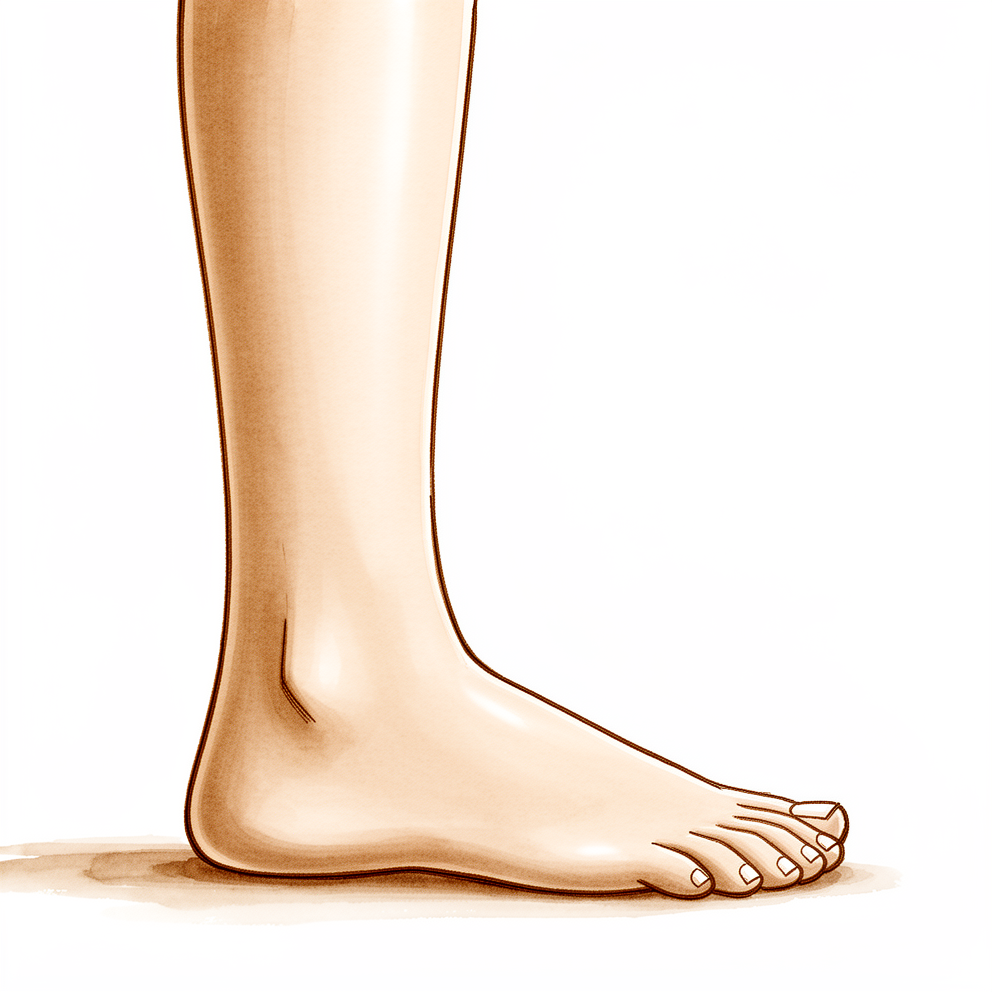
Esta cirurgia reconstrói os ligamentos localizados na parte externa do tornozelo, que evitam que ele “ceda” durante os movimentos. Ela é geralmente indicada para pessoas com instabilidade crônica do tornozelo, caracterizada por sintomas que persistem há pelo menos 6 meses, como entorses repetidas, dor e sensação de instabilidade ao praticar esportes. Normalmente, tentamos primeiro tratamentos não cirúrgicos, como modificação das atividades físicas e fisioterapia; a cirurgia é considerada quando essas medidas não trazem melhoria suficiente. Ela também pode ser indicada caso os sintomas persistam após 3 a 6 meses de tratamento conservador. O objetivo da cirurgia é proporcionar um tornozelo estável, com menos dor e melhor funcionalidade. Em 80% a 95% dos casos, os resultados são bons ou muito bons.
Antes da operação
Nas semanas que antecedem a cirurgia, confirmamos o plano cirúrgico por meio de exames de imagem. Isso pode incluir radiografia, ressonância magnética (exame que mostra tecidos moles como ligamentos) ou ultrassonografia. Essas imagens nos ajudam a planejar a operação e a verificar a presença de outros problemas no tornozelo, como danos na cartilagem.
No dia da cirurgia, pare de comer e beber sete horas antes. Pedimos esse período de sete horas, em vez de um tempo menor, para que a sua operação possa ser antecipada caso a agenda cirúrgica permita. O seu cirurgião informará quais dos medicamentos que você costuma tomar devem ser interrompidos e quando. Leve uma lista por escrito de todos os medicamentos que utiliza, use roupas largas e confortáveis, e providencie alguém para levá-lo para casa após a cirurgia. Caso tenha outras condições médicas, talvez seja necessário realizar exames de sangue ou uma consulta com o anestesista (o especialista responsável por induzir o sono).
No dia da cirurgia
Você chega à unidade de admissão cirúrgica do hospital, onde é registrado e preparado para a sala de operações. Em seguida, encontra-se com o anestesista, o especialista responsável por induzir o sono. Esta cirurgia é realizada sob anestesia geral. Às vezes, é adicionado um bloqueio nervoso regional para alívio da dor pós-operatória; o anestesista conversará sobre isso com você no próprio dia. Depois, você é levado para a sala de operações, onde a cirurgia é realizada.
Ao término da cirurgia, você acorda na área de recuperação. As enfermeiras permanecem ao seu lado enquanto a anestesia vai passando e verificam se você está confortável. Assim que seu estado se estabiliza, você é encaminhado para um quarto ou pode ir para casa no mesmo dia, dependendo do procedimento e da evolução da recuperação. A pessoa que irá levá-lo para casa deve estar pronta para buscá-lo assim que a equipe autorizar sua saída.
Como é realizada a operação
Existem duas formas principais de reconstruir os ligamentos laterais do tornozelo. Se o tecido ligamentar do próprio paciente ainda estiver em boas condições, o cirurgião pode apertá-lo e reanexá-lo. Isso é feito por meio de um corte curvo na parte externa do tornozelo, geralmente direcionado para a frente, em direção ao meio do pé. O ligamento rompido é suturado novamente ao pequeno osso do lado externo do tornozelo (a fíbula), utilizando pequenas âncoras ou pontos passados por minúsculos túneis no osso. O tecido adjacente pode ser dobrado sobre a área reparada para reforçá-la. Fragmentos ósseos soltos ou pequenos ossos a mais que causam dor também são removidos durante a cirurgia.
Caso o tecido ligamentar esteja muito desgastado ou esticado para receber pontos, ou se a operação for uma repetição, o cirurgião pode optar por reconstruir o ligamento usando um pedaço de tendão. Esse enxerto tendinoso pode ser retirado do próprio corpo do paciente ou de um doador. Pequenos túneis são perfurados nos ossos do tornozelo, e o enxerto é passado por eles e fixado, reproduzindo o trajeto do ligamento original.
Algumas reconstruções são feitas por artroscopia. Nesse caso, o cirurgião trabalha por meio de pequenos cortes, utilizando uma câmera (artroscópio), podendo também avaliar e tratar lesões dentro da articulação do tornozelo sem a necessidade de abrir toda a região.
Independentemente do método utilizado, o corte é fechado com pontos e coberto por um curativo. O cirurgião também pode examinar os tendões localizados atrás do osso lateral do tornozelo e repará-los, caso estejam danificados, pois problemas nesses tendões podem ocorrer concomitantemente a lesões ligamentares.
Após a operação
Ao acordar, você estará na sala de recuperação, e as enfermeiras ficarão ao seu lado até que o efeito da anestesia passe. O seu tornozelo será envolto em um curativo, e a nossa equipe cuidará da dor para que você se sinta confortável. Geralmente, você pode colocar peso no pé logo após a cirurgia, embora no início possa precisar usar muletas para se locomover com segurança. Alguém deve ficar com você nas primeiras 24 horas após voltar para casa. A nossa equipe informará se você poderá ir para casa no mesmo dia ou se precisará ficar uma noite no hospital. Deixamos o curativo por cerca de 10 dias; por favor, não o retire antes disso, a menos que receba instruções em contrário. Trocamos ou retiramos o curativo quando o paciente vem para a consulta de acompanhamento.
Recuperação
Nos primeiros dias, o seu tornozelo ficará dolorido e inchado. Isso é normal e melhora gradualmente. O repouso, manter o pé elevado e os analgésicos prescritos pela equipe médica ajudarão a aliviar o desconforto. O inchaço pode aparecer e desaparecer por algum tempo, sendo geralmente mais intenso após ficar em pé por um período.
Logo após a cirurgia, você começará a se movimentar. A maioria das pessoas consegue colocar peso no pé logo cedo, usando muletas no início para se locomover com segurança. O fisioterapeuta orientará você nos exercícios para restaurar a mobilidade e a força, aumentando a intensidade conforme o tornozelo permitir. Você usará o curativo por cerca de 10 dias, e faremos a avaliação da ferida na sua próxima consulta. Em casa, mantenha o curativo seco, faça caminhadas curtas conforme orientado e evite torcer ou girar o tornozelo.
À medida que o inchaço diminui e a mobilidade retorna, as tarefas do dia a dia ficam mais fáceis. Você passará das muletas para caminhar por conta própria, no seu próprio ritmo. Só volte a dirigir quando o seu cirurgião autorizar: não se deve dirigir enquanto o tornozelo operado estiver com gesso, bota ou órtese, nem enquanto for necessário evitar apoiar peso sobre ele, e é preciso já não estar tomando analgésicos fortes e conseguir mover o pé entre os pedais e frear com força sem hesitar. A bota não é uma exceção, e a retirada do gesso ou da bota, por si só, não significa autorização para dirigir. Importa qual tornozelo foi operado e também se o carro é automático ou manual: num carro automático, é o pé direito que freia, enquanto num carro manual o pé esquerdo aciona a embreagem. A volta aos esportes ocorre em etapas: começa-se com atividades em linha reta e, gradualmente, retorna-se aos movimentos de torção e rotação que o tornozelo costumava fazer. O fisioterapeuta informará quando cada etapa for segura para você.
Cada pessoa tem um ritmo de recuperação diferente; portanto, o seu cronograma pode variar em relação aos demais. O cirurgião e o fisioterapeuta orientarão você em cada consulta e ajustarão o plano conforme sua evolução.
O que pode dar errado
A maioria dos pacientes se recupera bem, mas, ocasionalmente, podem surgir problemas. O seu cirurgião e a equipe o monitoram de perto para detectar qualquer problema precocemente.
Os nervos localizados na parte externa do tornozelo podem ficar irritados durante a cirurgia. Se isso acontecer, você pode notar dormência, formigamento, sensação de queimação ou uma sensação aguda, semelhante a uma descarga elétrica, ao longo da parte superior ou lateral do pé. Na maioria dos casos, essa irritação nervosa desaparece sozinha em algumas semanas ou meses. Informe-nos na próxima consulta se notar algum desses sintomas.
Às vezes, a ferida cirúrgica pode apresentar problemas. Fique atento à vermelhidão que se espalha a partir do corte, ao vazamento de líquido ou pus, ou à pele que fica escura ou desgastada. Você também pode sentir uma dor profunda e latejante que não melhora com analgésicos comuns, ou apresentar febre. Caso observe algum desses sinais, ligue imediatamente para a clínica. Algumas infecções da ferida exigem antibióticos ou um pequeno procedimento para drenagem; por isso, a avaliação precoce é fundamental.
Os pontos de sutura ou pequenas âncoras usados para fixar a reparação podem, ocasionalmente, causar atrito ou pressão sob a pele. Isso se manifesta como um ponto sensível, um nódulo ou uma sensação de “clique” próximo a uma das pequenas cicatrizes. Geralmente é leve, mas se lhe causar incômodo, mencione isso na próxima consulta. Um procedimento simples sob anestesia local pode remover a parte irritada.
Em casos raros, o ligamento reparado pode se romper novamente ou se esticar. Você perceberia que o tornozelo voltou a ficar instável, com torções ou entorses frequentes, inchaço e dor na parte frontal do tornozelo. Se, após um período de estabilidade, o tornozelo começar a “ceder” novamente, entre em contato com a clínica para que possamos avaliá-lo.
Algumas pessoas sentem rigidez após a operação. Isso se manifesta como tensão ao dobrar o tornozelo para cima ou ao girar o pé para dentro, limitando a amplitude de movimento. A fisioterapia costuma ajudar. Mencione isso na consulta se a mobilidade não melhorar.
A tabela de complicações nesta página lista as taxas típicas; consulte-a se desejar informações mais detalhadas.
Quando nos contactar
Contacte-nos imediatamente se tiver febre, ou se a pele à volta da ferida ficar mais vermelha, inchada ou começar a libertar líquido. Dirija-se às urgências se sentir dor intensa e súbita, inchaço na panturrilha ou dificuldade em respirar. Estes podem ser sinais de um coágulo sanguíneo. Dirija-se também às urgências se perder a sensibilidade no pé ou se não conseguir movê-lo. No caso de dormência, formigueiro ou sensação de ardor que apareçam gradualmente, ligue para a clínica para que possamos avaliá-lo.
Evidence & references
This is the clinical evidence summary written for health professionals. It is technical, and it lists the research this page was built from. You do not need to read it to understand your treatment or to make a decision about it.
Anatomy & Pathophysiology
Ligament Anatomy and Biomechanics
- The anterior talofibular ligament and calcaneofibular ligament are the primary lateral ankle structures identified radiographically [1].
- Sectioning of the deltoid ligament results in a 43% increase in tibiotalar contact area [7].
- Sectioning of the deltoid ligament results in a 30% increase in peak pressures [7].
- Sectioning of the deltoid ligament alone results in valgus tilt of the talus [7].
- Chronic instability resulting from deltoid ligament sectioning may lead to tibiotalar arthrosis [7].
- The deep deltoid ligament consists of short fibers [7].
- The Chrisman-Snook reconstruction resulted in a significantly more stable ankle joint complex than ankles with cut anterior talofibular ligaments [2].
- The Chrisman-Snook reconstruction resulted in ankles with significantly less motion than intact ankles [2].
- Transection and imbrication of the lateral ligaments results in improved mechanical stability in approximately 80% of patients [2].
Pathophysiology of Instability
- Chronic instability of the ankle from an earlier rupture of a ligament should first be treated conservatively if it is symptomatic [2].
- Mechanical instability is characterized by stress radiographs showing 8 to 10 degrees of increased tilt of the talus in the ankle mortise compared with the normal ankle [2].
- Functional instability is defined as the subjective feeling of ankle instability or recurrent ankle sprain caused by neuromuscular or proprioceptive deficits [2].
- Recurrent sprains are associated with a risk of associated injuries to other structures, such as osteochondral lesions [2].
- An acute lateral ankle sprain significantly decreases physical activity across the lifespan [1].
- Chronic medial instability often does not cause severe disability that cannot be treated conservatively [7].
- Patients with chronic medial ankle instability may give a history of a pronation-type injury but more often report having had multiple ankle sprains without clearly remembering the mechanism [7].
- The combination of posterior tibial insufficiency and deltoid incompetence is categorized by Myerson as a stage IV adult-acquired flatfoot [7].
- This combination of posterior tibial insufficiency and deltoid incompetence is most commonly seen in the older population [7].
- A symptomatic anterolateral exostosis at the insertion of the anterior talofibular ligament, described as an excentric lesion, is found by CT scan in patients with chronic ankle pain after an inversion injury [2].
- Physical examination and oblique radiographs were suggestive of the excentric lesion in most cases [2].
- Unsatisfactory results for lateral ligament shortening procedures may occur in patients with generalized joint hypermobility or long-standing ligamentous laxity [2].
- Unsatisfactory results for lateral ligament shortening procedures are frequent in patients with prior ankle surgery [2].
- Better functional results may be obtained with reconstruction of both lateral ligaments than with reconstruction of the anterior talofibular ligament alone, although the literature is inconclusive [2].
- Karlsson et al. recommended combined reconstruction if there is any doubt regarding the involvement of both ligaments [2].
- Primary repair of a chronic deltoid tear, either end-to-end, “vest-over-pants,” or advancement to bone, does not usually work [7].
- Anatomic primary repair of the chronically deficient deltoid ligament is less satisfactory than repair of the lateral ankle ligament due to the short fibers of the deep deltoid and increased tension placed on the medial aspect of the ankle [7].
- Medial ankle ligament reconstruction is indicated after failed conservative treatment in patients with chronic symptomatic mechanical instability [7].
- It is important to assess for incompetence of the medial tendons of the ankle, especially the posterior tibial tendon, in patients with chronic medial instability [7].
Investigations
- With mechanical instability, stress radiographs show 8 to 10 degrees of increased tilt of the talus in the ankle mortise compared with the normal ankle [2].
- If stress radiographs do not show increased talar tilt, other causes for the disability, such as a stress fracture, should be sought [2].
- A symptomatic anterolateral exostosis at the insertion of the anterior talofibular ligament, described as an excentric lesion, can be found by CT scan in patients with chronic ankle pain after an inversion injury [2].
- Bone scans reveal increased uptake in the middle third of the fibula, indicating a stress fracture in patients with chronic, recurrent pain over the distal third of the leg and ankle [2].
- MRI is used for ankle injuries [3].
- Stress views of the ankle mortise are utilized in evaluation [3].
Treatment
- The arthroscopic Broström technique is a described method for lateral ligament repair [1].
- Anatomic ligament repairs are performed for syndesmotic injuries [1].
- Medial ankle instability involves the deltoid ligament [1].
- An evidence-based approach exists for the treatment of acute traumatic syndesmosis (high ankle) sprains [1].
- Gravity stress radiographs are used to assess deltoid ligament integrity and medial clear space measurements [1].
- Subtalar instability is a condition with specific diagnosis and treatment protocols [1].
- Ankle fracture syndesmosis fixation and management is a current practice among orthopedic surgeons [1].
- The Broström procedure has been evaluated for long-term results in chronic lateral ankle instability [1].
- Combined medial and lateral anatomic ligament reconstruction is used for chronic rotational instability of the ankle [1].
- Outcome scales are used to assess lateral ankle ligament reconstruction [1].
- Predictors of peroneal pathology have been identified in Broström-Gould ankle ligament reconstruction for lateral ankle instability [1].
- Acute and chronic lateral ankle instability are conditions affecting athletes [1].
- Lateral ligament augmentation using suture-tape affects functional instability [1].
- A randomized comparison exists between lateral ligaments augmentation using suture-tape and modified Broström repair in young female patients with chronic ankle instability [1].
- A modified Broström procedure can be combined with arthroscopic debridement of medial gutter osteoarthritis in patients with chronic ankle instability [1].
- Ossicle resection is performed during lateral ligament repair for the treatment of chronic lateral ankle instability [1].
- Qualitative and quantitative anatomic investigations of the lateral ankle ligaments inform surgical reconstruction procedures [1].
- Deltoid ligament abnormalities are present in cases of chronic lateral ankle instability [1].
- Magnetic resonance imaging is compared to physical examination for diagnosing syndesmotic injury after lateral ankle sprain [1].
- Interventions for treating chronic ankle instability have been systematically reviewed [1].
- Open mosaicplasty is used for osteochondral lesions of the talus [1].
- Operative management of ankle instability includes reconstruction with open and percutaneous methods [1].
- Radiographic identification is used to identify primary lateral ankle structures [1].
- Acute superficial deltoid complex avulsion is repaired during ankle fracture fixation in National Football League players [1].
- Calcaneofibular ligament injury plays a role in ankle instability with implications for surgical management [1].
- Deltoid ligament repair is compared to syndesmotic fixation in bimalleolar equivalent ankle fractures [1].
- Anatomic reconstruction of the anterior talofibular and calcaneofibular ligaments can be performed using a semitendinosus tendon allograft and interference screws [1].
- Repair of only the anterior talofibular ligament resulted in similar outcomes to repair of both the anterior talofibular and calcaneofibular ligaments [1].
- Simultaneous ossicle resection and lateral ligament repair provide excellent clinical results with an early return to physical activity in pediatric and adolescent patients with chronic lateral ankle instability and os subfibulare [1].
- Morphological characteristics of os subfibulare are related to the failure of conservative treatment of chronic lateral ankle instability [1].
- The modified Broström procedure in patients with chronic ankle instability is superior to conservative treatment in terms of muscle endurance and postural stability [1].
References
[1] Campbell S Operative Orthopaedics 4 Volume Set. REPAIR OF ACUTE RUPTURE OF LATERAL LIGAMENTS > ACUTE ANKLE LIGAMENT INJURIES, CHRONIC ANKLE INSTABILITY.
[2] Campbell S Operative Orthopaedics 4 Volume Set. REPAIR OF ACUTE RUPTURE OF LATERAL LIGAMENTS > CHRONIC INSTABILITY AFTER INJURY.
[3] Campbell S Operative Orthopaedics 4 Volume Set. REPAIR OF ACUTE RUPTURE OF LATERAL LIGAMENTS > Anesthesia (Continued).
[7] Campbell S Operative Orthopaedics 4 Volume Set. REPAIR OF ACUTE RUPTURE OF LATERAL LIGAMENTS > MEDIAL REPAIR OF CHRONIC INSTABILITY.