Por que esta cirurgia foi recomendada
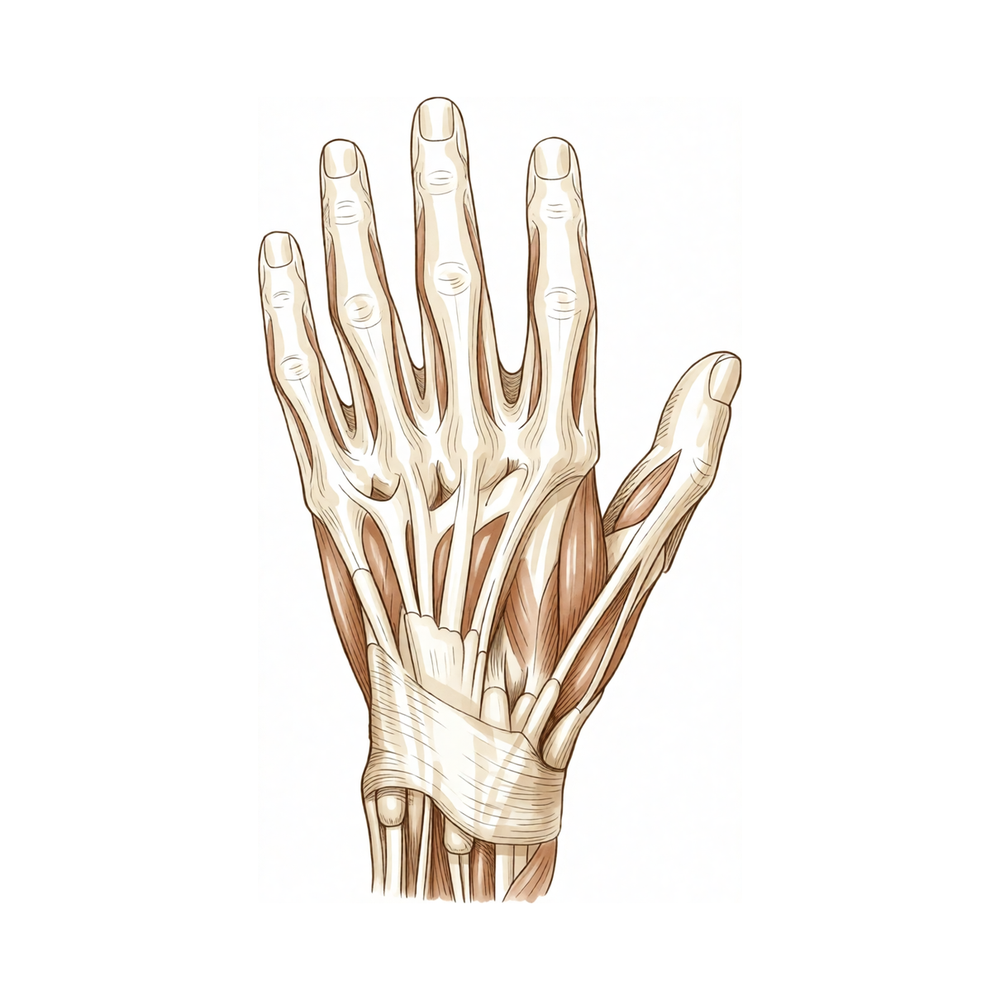
O Dr. Kieran Hirpara, cirurgião de membros superiores no Mater Private Hospital Rockhampton, adapta o tratamento à sua lesão específica. Os tendões extensores correm ao longo do dorso da mão e dos dedos, e são eles que esticam os seus dedos. Quando um desses tendões é cortado ou rompido, o reparo une novamente as pontas para que o tendão volte a funcionar.
Sempre verificamos primeiro se a cirurgia é realmente necessária. Muitas lesões fechadas, em que a pele não foi rompida, podem ser tratadas sem operação, com uma tala que mantém o dedo imóvel enquanto o tendão cicatriza. A maioria das lesões de dedo em martelo, em que o tendão se rompe perto da ponta do dedo, também é tratada com tala em vez de cirurgia. A cirurgia geralmente é recomendada quando a lesão é aberta, quando as pontas do tendão se afastaram, ou quando a tala não trouxe melhora suficiente. Algumas lesões graves evoluem melhor com o reparo feito logo após a lesão, e não mais tarde.
O objetivo da operação é restaurar o movimento e a força do seu dedo ou da sua mão. Seis semanas após o reparo, 22 de 24 lesões simples e 11 de 13 lesões complexas tinham função boa ou excelente. Vamos conversar com você sobre as suas opções e decidir juntos o que é adequado para a sua lesão e os seus objetivos.
Antes da operação
Nos dias antes da cirurgia, você vai precisar preparar algumas coisas práticas. Você não deve comer nem beber nada nas sete horas antes da sua operação. Pedimos sete horas em vez de seis para que a sua cirurgia possa ser antecipada caso a agenda do centro cirúrgico ande mais rápido. O seu cirurgião dirá quais medicamentos suspender e quando, por isso leve uma lista de tudo o que você toma. Providencie uma carona para casa, porque você não poderá dirigir. Use roupas largas e confortáveis. Exames de imagem, como radiografia, ultrassom ou ressonância magnética, podem já ter sido feitos para planejar a operação. Se você tiver outros problemas de saúde, pode precisar de exames de sangue ou de uma avaliação com o anestesista, mas a maioria das pessoas não precisa.
No dia da cirurgia
Você chega à unidade de admissão cirúrgica do hospital, onde será registrado e preparado para a sala de operações. Você vai conhecer o anestesista, que cuida da sua anestesia e do alívio da dor durante a operação. Esta cirurgia é realizada sob anestesia geral. Às vezes, um bloqueio nervoso regional é adicionado para alívio da dor no pós-operatório; o anestesista conversará com você sobre isso no próprio dia.
Em seguida, você é levado para a sala de operações, onde a cirurgia é realizada. Depois, acorda na sala de recuperação, onde enfermeiros acompanham você enquanto a anestesia vai passando. Assim que sua condição se estabilizar, você será encaminhado para o quarto ou poderá ir para casa, dependendo do procedimento e da sua recuperação.
O que envolve a operação
A operação é feita no dorso da mão ou do dedo, onde ficam os tendões extensores. O cirurgião faz um corte sobre o tendão lesionado, une novamente as pontas rompidas com pontos e fecha a pele. Se o tendão se rompeu perto de uma articulação, o reparo é mantido de forma que possa cicatrizar na posição correta. Em algumas lesões, uma tala é colocada após a operação para proteger o reparo.
Nem toda lesão precisa do mesmo reparo. Os tendões são divididos em zonas ao longo da mão e dos dedos, e o tratamento depende de qual zona foi lesionada e da gravidade. Lesões fechadas, em que a pele não foi rompida, muitas vezes são tratadas com tala em vez de operação. Lesões abertas, em que a pele foi rompida, geralmente precisam de reparo cirúrgico.
Se o tendão foi muito danificado ou perdido, o cirurgião pode precisar reconstruí-lo. Isso pode envolver usar um pedaço de tendão de outra parte da sua mão, ou deslocar um tendão próximo para assumir a função do tendão danificado. Em algumas lesões graves, essa reconstrução é feita na primeira operação, e não numa operação posterior.
A operação é adaptada à sua lesão. O seu cirurgião vai explicar exatamente o que está planejado para você antes de você assinar o termo de consentimento.
Após a operação
Quando acordar, você estará na sala de recuperação, onde os enfermeiros acompanham você de perto. O alívio da dor é planejado antes de você sair da sala de operações, e os enfermeiros vão verificar se está funcionando. A sua mão ficará com curativos e uma tala de proteção provisória colocada na sala de operações, que mantém o reparo imóvel enquanto ele cicatriza. A sua terapeuta da mão confecciona a sua tala sob medida na sua primeira consulta de terapia da mão após a operação. Você pode ir para casa com o braço numa tipoia para mais conforto. A maioria das pessoas consegue se levantar e andar logo após a cirurgia, mas você não vai usar a mão para nada até que a sua terapeuta autorize. Alguém deve ficar com você nas primeiras 24 horas. A sua equipe dirá se você vai para casa no mesmo dia ou se fica uma noite no hospital. Deixamos o curativo por cerca de 10 dias; por favor, não o retire antes disso, a menos que nós orientemos. Trocamos ou retiramos o curativo quando atendermos você.
Recuperação
Nos primeiros dias, a sua mão vai ficar dolorida e inchada, e a pele pode parecer roxa. Manter a mão elevada sobre travesseiros, acima do nível do coração, ajuda o inchaço a diminuir. Tome os analgésicos conforme prescrito, em vez de esperar a dor aumentar.
A sua mão ficará numa tala feita pela sua terapeuta da mão, Ruby Doolan, da Extend Rehabilitation, que também vai conduzir a sua reabilitação. Ela vai mostrar exercícios que movimentam os seus dedos de forma cuidadosa e controlada enquanto o reparo cicatriza. Mexer cedo dessa forma protegida ajuda o tendão a deslizar suavemente e impede que o tecido cicatricial o prenda. Você não vai usar a mão para segurar, levantar peso ou fazer tarefas do dia a dia até que a sua terapeuta autorize. Durma com a mão apoiada sobre travesseiros no início; isso alivia o latejamento.
Quando o inchaço diminui e o movimento volta, os exercícios ficam maiores e mais fortes. A tala é retirada quando a sua terapeuta considera que o tendão cicatrizou o suficiente, e você vai recuperar aos poucos a preensão e a força. Você pode voltar ao trabalho de escritório e às tarefas leves do dia a dia quando a sua terapeuta liberar, o que se encaixa nas 4 a 6 semanas mostradas na tabela. Trabalho braçal, esporte e academia vêm depois, quando a força tiver voltado, dentro dos 3 meses mostrados na tabela. Dirigir é diferente: você não pode dirigir por pelo menos seis semanas após um reparo de tendão, e nunca enquanto estiver com a tala de proteção. Apertar o volante com força pode romper o reparo. Depois que a tala for retirada e o seu cirurgião liberar, consulte Dirigir após cirurgia no membro superior.
A recuperação varia de pessoa para pessoa. O seu cronograma pode ser diferente, e o seu cirurgião e a sua terapeuta da mão vão orientar você.
O que pode dar errado
A maioria dos pacientes se recupera bem, mas, ocasionalmente, podem surgir problemas. O seu cirurgião e a equipe acompanham você de perto para detectar qualquer problema precocemente.
O problema mais comum é a rigidez. Pode se formar tecido cicatricial ao redor do tendão em cicatrização e prendê-lo, o que limita o quanto você consegue dobrar os dedos ou fechar completamente a mão. É por isso que a sua terapeuta começa cedo com movimentos cuidadosos e controlados. Se a rigidez aparecer mesmo assim, às vezes é necessária uma pequena operação para liberar o tecido cicatricial. Fale sobre qualquer perda de movimento na sua próxima consulta, para que possa ser acompanhada.
O próprio reparo pode se soltar ou se romper. Você notaria uma perda repentina da capacidade de esticar o dedo, às vezes com um estalo. Isso é mais provável se você retirar a tala antes da hora ou usar a mão antes de a sua terapeuta liberar. Ligue para a clínica imediatamente se isso acontecer, porque o reparo pode precisar ser refeito.
A infecção é incomum, mas grave. Ligue para a clínica no mesmo dia se tiver febre, se a vermelhidão se espalhar a partir da ferida, ou se sair líquido ou pus por ela. Dor que continua piorando apesar dos analgésicos também exige uma ligação no mesmo dia.
Podem acontecer problemas na ferida, em que as bordas da pele têm dificuldade para cicatrizar. Observe a ferida nas verificações do curativo e mencione qualquer coisa que pareça diferente.
Os nervos passam perto dos tendões, e uma lesão ou irritação de um nervo pode causar dormência, formigamento ou alteração da sensibilidade nos dedos. Dormência e fraqueza nas primeiras 24 horas após um bloqueio nervoso são esperadas. Ligue para a clínica se a dormência continuar depois que o efeito do bloqueio passar, ou se você não conseguir mexer os dedos depois disso.
A tabela de complicações nesta página lista as taxas típicas, caso queira saber os detalhes.
Quando nos contatar
Alguns problemas precisam de uma resposta rápida, e ajuda saber quais são e aonde ir.
Vá ao pronto-socorro se tiver inchaço ou dor na panturrilha, ou falta de ar ou dor no peito. Esses podem ser sinais de um coágulo sanguíneo. Vá também se os seus dedos, a sua mão ou o seu polegar ficarem pálidos, frios, brancos, azulados ou escuros, pois isso sugere um problema de circulação do sangue.
Ligue para a clínica no mesmo dia se tiver febre, se a vermelhidão se espalhar ao redor da ferida, ou se sair líquido ou pus por ela. Dor que continua piorando apesar dos analgésicos também exige uma ligação no mesmo dia.
Ligue para a clínica se tiver dormência ou não conseguir mexer o braço, a mão ou os dedos depois que o efeito do bloqueio nervoso tiver passado, cerca de 24 horas após a cirurgia. Dormência e fraqueza nas primeiras 24 horas são esperadas enquanto o bloqueio está agindo.
Se não conseguir falar com a clínica, fora do horário de atendimento ou no fim de semana, vá ao pronto-socorro mais próximo.
Evidence & references
This is the clinical evidence summary written for health professionals. It is technical, and it lists the research this page was built from. You do not need to read it to understand your treatment or to make a decision about it.
Anatomy & Pathophysiology
General Hand Architecture
- The hand is composed of 19 bones, 17 articulations, and 19 muscles situated entirely within the hand [2].
- Approximately the same number of tendons activated by forearm muscles are present in the hand [2].
- The hand functions efficiently only if the proximal joints of the limb are stable and yet mobile [2].
- The dorsal aspect of the hand is convex, while the anterior, palmar, or volar aspect is concave [2].
- The palmar surface is the functional surface of the hand, while the dorsal surface is usually visible and aesthetically important [2].
- The thumb has a more proximal and lateral position than the four fingers, allowing movement inward and outward from the palm [2].
- When fingers are extended and separated, their tips lie on the circumference of a circle whose center is the head of the third metacarpal [2].
Metacarpal and Longitudinal Arch Anatomy
- The metacarpal arch possesses adaptability due to the mobility of the peripheral metacarpals [7].
- The index metacarpal is the most firmly fixed of the metacarpals [7].
- The ring metacarpal has approximately 10 degrees of mobility in flexion and extension [7].
- The fifth metacarpal has a range of flexion–extension of approximately 20 degrees [7].
- The second to fifth metacarpals are bound together by the deep transverse intermetacarpal ligament, also known as the interglenoid ligament [7].
- The interglenoid ligament ties together the anterior glenoid ligaments of the metacarpophalangeal articulations, known as volar plates [7].
- The metacarpophalangeal joints serve as the keystones of the longitudinal arches of the hand [7].
- The volar plates prevent hyperextension at the metacarpophalangeal joints [7].
- The sagittal bands of the extensor apparatus insert onto the volar plate [7].
- The first annular segment of the pulley of the flexor tendons inserts onto the volar plate [7].
Extensor Tendon and Intrinsic Muscle Anatomy
- There are seven interosseous muscles in the hand, consisting of four dorsal and three volar muscles [4].
- The dorsal interossei are abductors, while the volar interossei are adductors [4].
- The middle finger has two dorsal interossei and no volar interossei because the central axis of the hand lies within it [4].
- Each dorsal interosseous muscle, with the exception of the third, has two muscle heads: a superficial head and a deep head [4].
- The superficial head of the dorsal interosseous muscles abducts and weakly flexes the proximal phalanx [4].
- The deep head of the dorsal interosseous muscles forms the lateral band at the level of the metacarpophalangeal joint [4].
- The deep head of the dorsal interosseous muscles flexes and weakly abducts the proximal phalanx while extending the middle and distal phalanges [4].
- Transverse fibers arch dorsally from each lateral band to join over the dorsum of the finger, flexing the proximal phalanx [4].
- Oblique or spiral fibers from the lateral bands insert onto the lateral tubercles at the base of the middle phalanx to extend the middle phalanx [4].
- The lateral bands are joined by the lateral slips of the extensor tendon to form the conjoined lateral band [4].
- The two conjoined lateral bands unite at the distal third of the middle phalanx to form the terminal tendon [4].
- The terminal tendon inserts at the base of the distal phalanx to extend it [4].
- The volar interossei have only one muscle head and do not insert onto the proximal phalanx [4].
- The flexor digiti quinti brevis forms the ulnar lateral band of the little finger [4].
Cutaneous and Vascular Anatomy
- The dorsal cutaneous unit extends from the wrist to the proximal interphalangeal joints of the fingers and the interphalangeal joint of the thumb [3].
- The dorsal covering of the interphalangeal articulations forms a unique cutaneous unit characterized by considerable excess of skin when digits are in extension [3].
- The palmar integument is subdivided into two zones by the oppositional crease of the thumb [3].
- The skin of the radial portion of the palm covers the thenar eminence and is relatively well vascularized and mobile [3].
- The skin of the ulnar and distal portion of the palm covers the hypothenar eminence and has poor mobility [3].
- The central triangular part of the palm has fixed, poorly vascularized skin that covers the superficial palmar aponeurosis [3].
- Incisions made along the sides of the diamond-shaped cutaneous contact zones in flexed digits present a minimal chance of retraction [3].
- The princeps pollicis artery is the terminal branch of the radial artery that crosses the first intermetacarpal space [8].
- The princeps pollicis artery runs along the ulnar side of the first metacarpal bone and along the volar surface of the adductor muscle [8].
- The princeps pollicis artery divides into two terminal rami, the collateral palmar arteries of the thumb, at the level of the metacarpophalangeal joint flexion crease [8].
- Only 15% of anatomical dissections of the palmar arteries of the thumb fall into the classical "typical" category [8].
- In the second segment of the thumb, the ulnar collateral artery is often easier to dissect than the radial collateral artery [8].
- A subtendinous anastomosis at the level of the neck of the first phalanx acts as a moderator between the two collateral arteries [8].
- The dorsal arteries of the thumb originate from palmar arteries at the level of the first metacarpal and head distally on the side of the two distal phalanges [8].
Investigations
- Clinical evaluation of the injured or dysfunctional hand and wrist requires combining patient history with a careful physical examination to pinpoint or narrow the scope of possible pathologic processes [1].
- Diagnostic tests such as imaging and serum laboratory studies are useful in determining pathology but can be expensive, time consuming, and often nonspecific [1].
- A careful physical examination is essential to direct care and future testing if indicated [1].
- A systematic method to approaching the physical examination of the hand and wrist is essential due to the number of structures in a small space [1].
- An 8-MHz Doppler tone assessment may be used to identify superficially displaced neurovascular bundles when Dupuytren cords lie beneath soft fleshy prominences [11].
- False-negatives are possible with 8-MHz Doppler tone assessment for identifying neurovascular bundles [11].
- Doppler imaging is a promising improvement for identifying structures, but higher resolution imaging technology is needed [11].
- MR assessment of Dupuytren’s disease is hindered by the resolution of current equipment, orientation issues due to multiplanar deformities of the fingers, and lack of intraoperative availability [11].
- MRI is probably most useful in identifying additional pathology such as flexor tendon bowstringing [11].
- MRI may be helpful in providing a quantitative noninvasive measure of cellularity of affected areas, which is an index of biologic activity [11].
- The potential staging tool of MRI for measuring cellularity has not been investigated yet on a large scale [11].
References
[1] Orthopaedic Knowledge Update 13 Ebook Without Multimedia. Anatomy, Evaluation, Clinical Examination, and Imaging > Evaluation and Clinical Examination: Current Concepts.
[2] Exam Of The Hand Wrist 2Ed. INTRODUCTION.
[3] Exam Of The Hand Wrist 2Ed. Functional cutaneous units.
[4] Green S Operative Hand Surgery. Interosseous and Hypothenar Muscles.
[7] Exam Of The Hand Wrist 2Ed. The arches of the hand > The metacarpal arch.
[8] Exam Of The Hand Wrist 2Ed. Techniques of investigation of the arterial supply by J P Melki > Vascularization of the thumb > Palmar aspect.
[11] Dupuytren S Disease And Related Hyperproliferative Disorders. 54. The Future of Dupuytren’s Research and Treatment > 54.4 Mechanical Measurements and Procedures > 54.4.4 Imaging.