Patients › General-Health
Nerve Pain Medicines (Gabapentin and Pregabalin)
How medicines like gabapentin and pregabalin settle nerve pain, why they are built up slowly, their side effects, and using them safely.
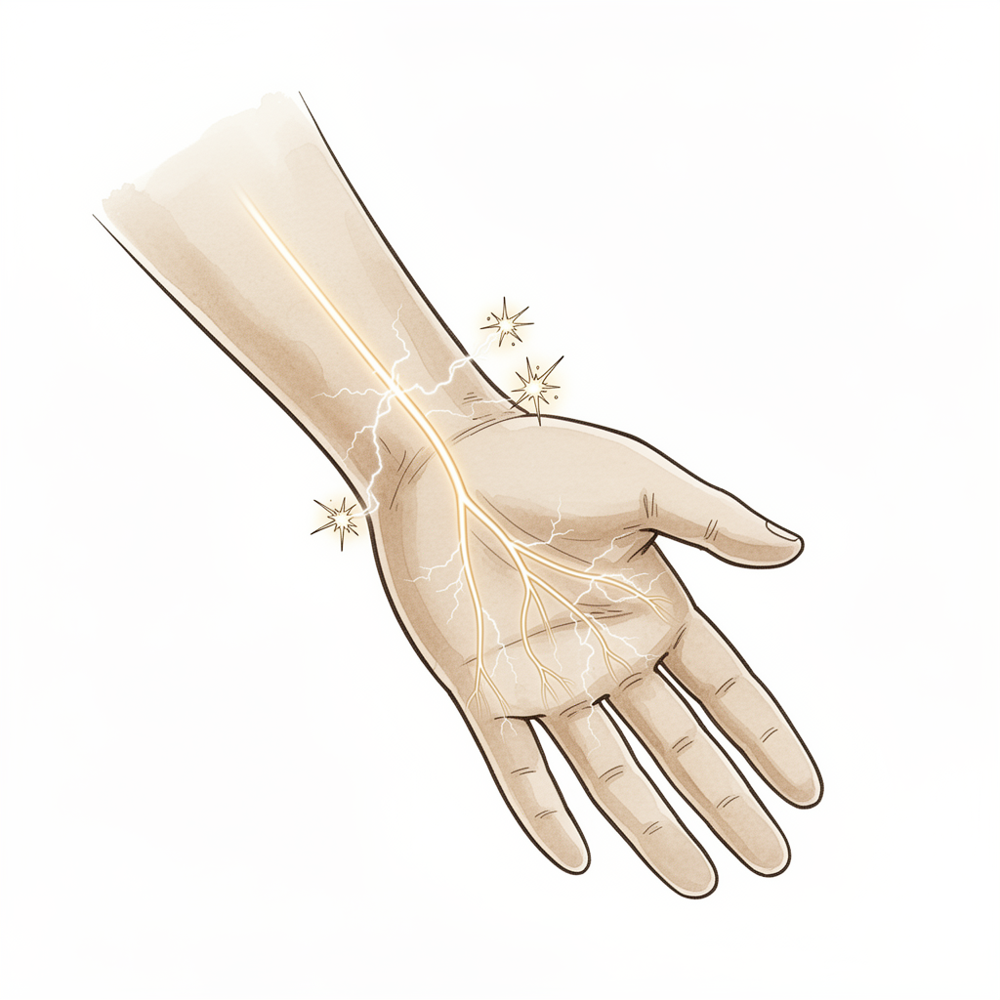
If you have been prescribed gabapentin, pregabalin, amitriptyline or duloxetine, you may be surprised: these aren't the painkillers most people reach for. There's a good reason. The pain they treat, nerve pain, behaves differently from ordinary pain, and it needs a different kind of medicine to settle it. Used properly, these are a valuable, non-opioid way to quieten nerve pain down.
What nerve (neuropathic) pain is
Most pain is a sensible alarm: you knock your hand, the tissue is bruised, and the area hurts until it heals. Nerve pain (doctors call it neuropathic pain) is different. Here the problem is the nerve itself: a nerve that has been irritated, squeezed or damaged starts firing off pain signals on its own, even when there's little or nothing wrong with the skin or tissue it reports from. The alarm, in effect, has become faulty and keeps going off.
Nerve pain tends to feel distinctive. People describe it as:
- Burning or hot
- Shooting or electric-shock-like, often running along a line
- Pins and needles, tingling or crawling
- An area that feels numb but painful at the same time
- Skin so sensitive that even a light touch or bedsheet hurts
It can come from a trapped nerve such as carpal tunnel syndrome, from a nerve injury or after some operations, from conditions like shingles or diabetes, or from a condition called CRPS (complex regional pain syndrome) where a limb becomes painful and oversensitive after an injury.
Why ordinary painkillers often don't help much
This is the part that surprises people most. Paracetamol, ibuprofen and the other anti-inflammatories work mainly on inflammation and tissue damage (a sprain, a bruise, an operation site). Nerve pain isn't really an inflammation problem; it's an over-active, mis-firing nerve problem. So the usual painkillers, and even strong opioids, often make only a small dent in it.
That's why we turn to a different group of medicines. Rather than calming inflamed tissue, they work on the nervous system itself, turning down the volume on the over-active pain signalling. They were first developed for other purposes (some for epilepsy, some for depression), and along the way they were found to be very good at calming faulty nerve signals. Being prescribed one does not mean we think your pain is imagined or that you have epilepsy or depression; it simply means we're using the medicine for the job it does best.
Gabapentin and pregabalin (Lyrica)
These two are the mainstay of nerve-pain treatment and are closely related. Pregabalin is sold under the brand name Lyrica; gabapentin is also sold as Neurontin.
They work by calming down over-active nerve signalling. An irritated nerve fires partly by letting calcium flow into it through tiny gates called calcium channels; gabapentin and pregabalin dampen those channels, so the nerve fires less easily and fewer pain messages get through. They are not anti-inflammatories and they are not opioids; they quieten the nerve rather than numbing tissue.
A word of realism: these medicines help nerve pain best when there is genuinely a faulty, over-firing nerve behind it. They are not a good way to manage ordinary aches or the normal soreness after an operation, and taking them routinely "just in case" around surgery isn't recommended; for that kind of pain they add side-effects without adding much relief. They earn their place when nerve pain is the real problem.
Amitriptyline and duloxetine — the alternatives
If gabapentin or pregabalin don't suit you, or don't quite do the job, two other medicines work on the same problem from a different angle.
- Amitriptyline is an old antidepressant used here at a much lower dose than for depression. At these small doses it helps boost the body's own pain-dampening pathways in the spinal cord and brain. A typical starting dose is very low and taken at night, partly because it can aid sleep, which is helpful when nerve pain is keeping you awake.
- Duloxetine is an SNRI (a newer type of antidepressant) that, again, strengthens the natural pain-control signals running through the nervous system. It's a particularly common choice for nerve pain related to diabetes.
As with gabapentin and pregabalin, being offered one of these is about the pain pathway, not your mood.
How these medicines are used — what to expect
A few practical points apply to all of these medicines, and knowing them in advance makes the experience far smoother.
They are started low and built up slowly. You'll usually begin on a small dose and increase it step by step over days to weeks. This isn't caution for its own sake. Going slowly lets your body get used to the medicine and lets the early side-effects settle, so you end up tolerating a useful dose that would have floored you if you'd started on it.
They take time to work: they are not instant. Unlike paracetamol, you won't take a tablet and feel relief in half an hour. These medicines build their effect over days to a few weeks, and amitriptyline and duloxetine may need several weeks at a reasonable dose before you can fairly judge them. The single most common reason people miss out on a medicine that would have helped is giving up too early. If it isn't working yet, that often means it needs more time or a higher dose, not that it has failed.
They take the edge off; they rarely switch the pain off completely. It helps to know what success looks like. For most people a good result is the pain becoming quieter and more manageable (say, dropping from severe to mild, or letting you sleep) rather than disappearing altogether. Some people get a lot of relief, some get a little, and some find a particular medicine does nothing for them, which is why it's often a case of trying one and, if needed, switching to another. Pairing the medicine with the rest of your treatment (keeping the hand moving, hand therapy, treating the underlying cause where we can) usually does more than any tablet on its own.
Common side-effects. The usual ones are drowsiness, dizziness and a dry mouth; some people notice weight gain or mild swelling of the ankles. These are usually worst early on and often ease as your body adjusts, which is exactly why we build the dose up gently. Tell us if they're troublesome; slowing down the increases, or adjusting the dose, usually sorts it out.
Driving and alcohol while you settle in. Because these can make you drowsy or lightheaded, be careful with driving or operating machinery until you know how the medicine affects you, especially in the first days and after each dose increase. Go easy on alcohol too, as it adds to the drowsiness.
Don't stop them suddenly. When the time comes to come off one of these medicines, the dose should be reduced gradually (tapered) rather than stopped overnight. Stopping abruptly can cause unpleasant withdrawal effects. Always come off them with guidance, not on your own.
A note on gabapentin and pregabalin as controlled medicines
Gabapentin and pregabalin are now classed as controlled medicines. There are two reasons. First, they carry a risk of misuse and dependence in some people. Second, and most importantly for safety, they can be dangerous when combined with opioids or other sedatives (including strong sleeping tablets and significant alcohol), because together they can slow your breathing.
In practice this means: take them exactly as prescribed, don't share them, don't take extra, and make sure every clinician treating you knows you're on one, especially if anyone is considering prescribing you opioid painkillers or sedatives. We have separate pages on managing pain after surgery and on cannabis and CBD for pain if those are relevant to you.
None of this should put you off. For the great majority of people these are safe, effective and a genuinely useful non-opioid way to bring nerve pain under control. The controlled-medicine status is simply a reason to use them thoughtfully and only as prescribed.
Seek help if
Contact us, your GP, or seek urgent care if you notice:
- Severe drowsiness or confusion, or you can't be roused easily
- Mood changes, or any thoughts of harming yourself: tell someone straight away
- Breathing problems or unusually slow or shallow breathing, especially if you are also taking an opioid or sedative (call emergency services)
- Signs of an allergic reaction: a rash, swelling of the face, lips or tongue, or difficulty breathing (this is an emergency)
And do get in touch if the medicine simply isn't helping after a fair trial, or the side-effects are hard to live with; there are several options, and it's usually a matter of finding the one that suits you.