Skip to content

Patients › Hand

Extensor Tendon Repair

Updated Sep 2026
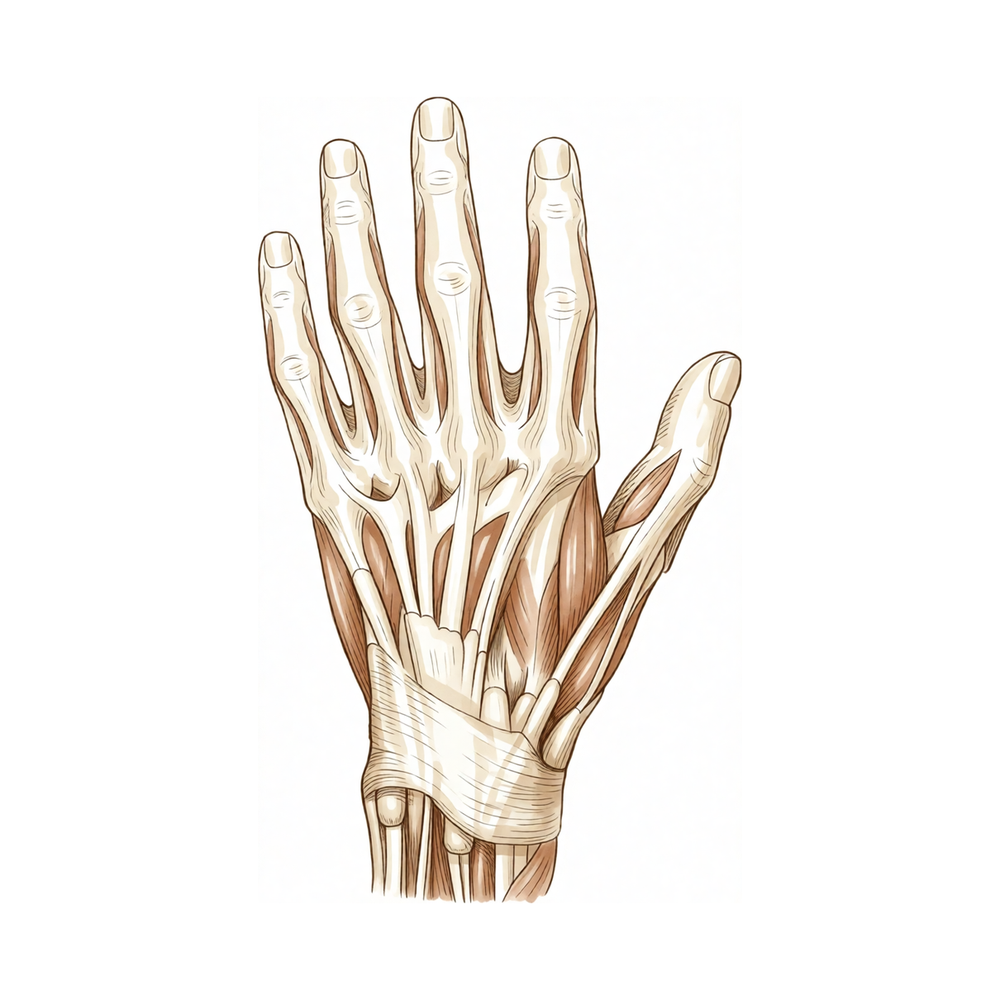
Illustration: Extensor Tendon Repair

Why this operation has been suggested

Dr Kieran Hirpara, an upper-limb surgeon at Mater Private Hospital Rockhampton, matches the treatment to your specific injury. Patients are generally referred to our clinic by their GP; if a physiotherapist has suggested you see us, you will still need a referral from your GP in order to be eligible for the Medicare rebate. At your appointment we take a history, examine your hand, and arrange imaging if it is needed to work out what has happened.

Extensor tendons are the cords on the back of your hand and fingers that straighten them. They can be cut by a laceration, torn by a crush or sporting injury, or rupture after a fracture. Many of these injuries, such as mallet finger, are treated without surgery using a splint. Others need repair, especially open cuts, long-standing tears, or injuries where the tendon has been badly damaged. We consider surgery when splinting has not given enough improvement, or straight away when the injury is acute and the tendon will not heal on its own. The aim is to restore the tendon's length and strength so your finger or thumb can straighten again, giving you a working, pain-free hand.

Before the operation

Once your operation is booked, we will give you clear instructions to follow in the days before you come in. You will need to stop eating and drinking seven hours before surgery. We ask for seven hours so you can be brought forward if the theatre list runs early. Your surgeon will tell you which of your usual medicines to stop and which to keep taking, so bring a written list of everything you take, including any blood thinners. Arrange for someone to drive you home afterwards, as you will not be able to drive yourself. Wear loose, comfortable clothing with sleeves that are easy to remove. Most people need no other preparation. If you have other medical conditions, you may need blood tests or a review with the anaesthetist, the doctor who gives the anaesthetic.

On the day

You will come to the hospital's surgical admissions unit, where you are checked in and prepared for theatre. You will meet the anaesthetist there. This operation is done under general anaesthetic. A regional nerve block is sometimes added for post-operative pain relief; the anaesthetist will discuss this with you on the day. You are then taken into the operating theatre, where the operation is performed. Afterwards you will wake up in the recovery area, where nurses monitor you while the anaesthetic wears off. Once you are stable, you will either go to the ward or go home, depending on the procedure and your recovery.

What the operation involves

The exact steps depend on where the tendon is torn and how badly. Extensor tendons run just under the skin on the back of the hand and fingers, so your surgeon can usually reach the injury through a cut over the back of the affected finger or hand. If the skin itself was injured, damaged tissue is cleaned away first, and healthy skin cover may be brought over the area.

Once the tendon ends are found, your surgeon sews them back together. The repair is made strong enough to cope with the early movements your hand will do afterwards. If a length of tendon is missing or too damaged to sew, the gap can be bridged instead. This may be done with a piece of tendon taken from a finger that cannot be saved, with a graft, or by moving a nearby tendon to take over the job of the torn one. Your surgeon aims to restore the tendon's natural length, because a tendon left too loose or too tight will not straighten the finger properly.

The cut is closed with stitches and covered with a dressing. You will go home with written instructions on caring for your hand.

What happens next matters as much as the repair itself. Some repairs need a splint that holds the finger still, while others are started on early, protected movement within the first weeks. One approach allows 30 degrees of active movement in the first two weeks, increasing to 40 degrees in the third week and 50 degrees in the fourth week. Your surgeon will match the plan to your injury and tell you exactly what you can and cannot do.

After the operation

You will wake up in the recovery area, where nurses watch you as the anaesthetic wears off. Your hand will be dressed and may be resting in a splint, depending on your injury. Pain relief is planned before you leave theatre, and you can tell the nurses if you are sore at any point. Someone should stay with you for the first 24 hours. Most people move around normally soon after waking; the operation is on your hand, not your legs. Your team will tell you whether you go home the same day or stay one night in hospital. We leave the dressing on for about 10 days; please do not take it off before then unless we tell you to. We change or remove it when we see you.

Recovery

Your hand will be sore and swollen for the first days and weeks. This is normal. Keeping your hand raised on pillows, even while you sleep, helps the swelling settle. Simple pain relief as directed by your team usually eases the discomfort.

Your dressing stays on for about 10 days. Depending on your injury, you may wear a splint that holds the finger still, or you may be started on early protected movement. If early movement is part of your plan, you will be shown exactly how far to bend and straighten the finger and how often. The movements are small at first and increase as the repair strengthens. Rehabilitation is with Ruby Doolan, a hand therapist at Extend Rehabilitation. She will guide your exercises and make any splint you need.

At home you can do most everyday things that do not strain the hand. You will need to avoid lifting, gripping and anything that could knock the repair until your therapist clears you. Keep the hand clean and dry until we review the wound. As the swelling settles and movement returns, the exercises become easier and the finger starts to straighten more smoothly.

Recovery varies from person to person. Your timeline may differ, and your surgeon and hand therapist will guide you at each review.

What can go wrong

Most patients do well, but problems can occasionally happen. Your surgeon and the team monitor you closely to spot any issue early.

The most common problem after this surgery is stiffness. The finger may not straighten fully or bend into a full fist, and grip strength can stay weaker than before. This happens when the tendon scars down to the tissue around it while the hand is held still. Your therapist will watch for this at each visit and adjust your exercises. If movement stalls or the finger feels increasingly tight, bring it up at your next review rather than waiting.

Sometimes a small amount of straightening power is lost even when everything else goes well. You may notice the finger sits slightly lower than its neighbours when you try to straighten it, or that it will not bend all the way into your palm. This is called an extensor lag. It is worth knowing this can happen, especially if the injury was old before it was treated. Mention it at review so your therapist can work on it.

The repair itself can fail. If you feel a sudden pop or the finger that was straightening well suddenly droops again, contact the clinic straight away. Do not wait for the next appointment.

Infection is uncommon but needs quick attention. Watch for pain that keeps getting worse instead of easing, redness spreading out from the wound, swelling that builds rather than settles, or any fluid leaking from the stitches. A fever with a sore hand is also a warning sign. If you see any of these, call the clinic the same day or go to the emergency department if it is after hours.

If surgery is needed to free a scarred tendon later, this is called tenolysis. It is not part of the original plan, but it is an option if stiffness does not respond to therapy. Your surgeon will discuss it with you only if your movement plateaus.

The complications table on this page lists typical rates if you want the specifics.

When to call us

Problems are easier to fix when they are caught early. Call us if your pain keeps getting worse instead of easing, or if the skin around the wound becomes redder, hotter or starts leaking fluid. Call us if you feel feverish, if your fingers or hand go numb, or if you cannot move the finger at all. If you notice sudden swelling and pain in your calf, or you become short of breath, go to emergency. If the finger that was straightening well suddenly droops, or you feel a pop, call us straight away.


Evidence & references

This is the clinical evidence summary written for health professionals. It is technical, and it lists the research this page was built from. You do not need to read it to understand your treatment or to make a decision about it.

Anatomy & Pathophysiology

General Hand Architecture

  • The hand is composed of 19 bones, 17 articulations, and 19 muscles situated entirely within the hand [2].
  • Approximately the same number of tendons activated by forearm muscles are present in the hand [2].
  • The hand functions efficiently only if the proximal joints of the limb are stable and yet mobile [2].
  • The dorsal aspect of the hand is convex, while the anterior, palmar, or volar aspect is concave [2].
  • The palmar surface is the functional surface of the hand, while the dorsal surface is usually visible and aesthetically important [2].
  • The thumb has a more proximal and lateral position than the four fingers, allowing movement inward and outward from the palm [2].
  • When fingers are extended and separated, their tips lie on the circumference of a circle whose center is the head of the third metacarpal [2].

Metacarpal and Longitudinal Arch Anatomy

  • The metacarpal arch possesses adaptability due to the mobility of the peripheral metacarpals [7].
  • The index metacarpal is the most firmly fixed of the metacarpals [7].
  • The ring metacarpal has approximately 10 degrees of mobility in flexion and extension [7].
  • The fifth metacarpal has a range of flexion–extension of approximately 20 degrees [7].
  • The second to fifth metacarpals are bound together by the deep transverse intermetacarpal ligament, also known as the interglenoid ligament [7].
  • The interglenoid ligament ties together the anterior glenoid ligaments of the metacarpophalangeal articulations, known as volar plates [7].
  • The metacarpophalangeal joints serve as the keystones of the longitudinal arches of the hand [7].
  • The volar plates prevent hyperextension at the metacarpophalangeal joints [7].
  • The sagittal bands of the extensor apparatus insert onto the volar plate [7].
  • The first annular segment of the pulley of the flexor tendons inserts onto the volar plate [7].

Extensor Tendon and Intrinsic Muscle Anatomy

  • There are seven interosseous muscles in the hand, consisting of four dorsal and three volar muscles [4].
  • The dorsal interossei are abductors, while the volar interossei are adductors [4].
  • The middle finger has two dorsal interossei and no volar interossei because the central axis of the hand lies within it [4].
  • Each dorsal interosseous muscle, with the exception of the third, has two muscle heads: a superficial head and a deep head [4].
  • The superficial head of the dorsal interosseous muscles abducts and weakly flexes the proximal phalanx [4].
  • The deep head of the dorsal interosseous muscles forms the lateral band at the level of the metacarpophalangeal joint [4].
  • The deep head of the dorsal interosseous muscles flexes and weakly abducts the proximal phalanx while extending the middle and distal phalanges [4].
  • Transverse fibers arch dorsally from each lateral band to join over the dorsum of the finger, flexing the proximal phalanx [4].
  • Oblique or spiral fibers from the lateral bands insert onto the lateral tubercles at the base of the middle phalanx to extend the middle phalanx [4].
  • The lateral bands are joined by the lateral slips of the extensor tendon to form the conjoined lateral band [4].
  • The two conjoined lateral bands unite at the distal third of the middle phalanx to form the terminal tendon [4].
  • The terminal tendon inserts at the base of the distal phalanx to extend it [4].
  • The volar interossei have only one muscle head and do not insert onto the proximal phalanx [4].
  • The flexor digiti quinti brevis forms the ulnar lateral band of the little finger [4].

Cutaneous and Vascular Anatomy

  • The dorsal cutaneous unit extends from the wrist to the proximal interphalangeal joints of the fingers and the interphalangeal joint of the thumb [3].
  • The dorsal covering of the interphalangeal articulations forms a unique cutaneous unit characterized by considerable excess of skin when digits are in extension [3].
  • The palmar integument is subdivided into two zones by the oppositional crease of the thumb [3].
  • The skin of the radial portion of the palm covers the thenar eminence and is relatively well vascularized and mobile [3].
  • The skin of the ulnar and distal portion of the palm covers the hypothenar eminence and has poor mobility [3].
  • The central triangular part of the palm has fixed, poorly vascularized skin that covers the superficial palmar aponeurosis [3].
  • Incisions made along the sides of the diamond-shaped cutaneous contact zones in flexed digits present a minimal chance of retraction [3].
  • The princeps pollicis artery is the terminal branch of the radial artery that crosses the first intermetacarpal space [8].
  • The princeps pollicis artery runs along the ulnar side of the first metacarpal bone and along the volar surface of the adductor muscle [8].
  • The princeps pollicis artery divides into two terminal rami, the collateral palmar arteries of the thumb, at the level of the metacarpophalangeal joint flexion crease [8].
  • Only 15% of anatomical dissections of the palmar arteries of the thumb fall into the classical "typical" category [8].
  • In the second segment of the thumb, the ulnar collateral artery is often easier to dissect than the radial collateral artery [8].
  • A subtendinous anastomosis at the level of the neck of the first phalanx acts as a moderator between the two collateral arteries [8].
  • The dorsal arteries of the thumb originate from palmar arteries at the level of the first metacarpal and head distally on the side of the two distal phalanges [8].

Investigations

  • Clinical evaluation of the injured or dysfunctional hand and wrist requires combining patient history with a careful physical examination to pinpoint or narrow the scope of possible pathologic processes [1].
  • Diagnostic tests such as imaging and serum laboratory studies are useful in determining pathology but can be expensive, time consuming, and often nonspecific [1].
  • A careful physical examination is essential to direct care and future testing if indicated [1].
  • A systematic method to approaching the physical examination of the hand and wrist is essential due to the number of structures in a small space [1].
  • An 8-MHz Doppler tone assessment may be used to identify superficially displaced neurovascular bundles when Dupuytren cords lie beneath soft fleshy prominences [11].
  • False-negatives are possible with 8-MHz Doppler tone assessment for identifying neurovascular bundles [11].
  • Doppler imaging is a promising improvement for identifying structures, but higher resolution imaging technology is needed [11].
  • MR assessment of Dupuytren’s disease is hindered by the resolution of current equipment, orientation issues due to multiplanar deformities of the fingers, and lack of intraoperative availability [11].
  • MRI is probably most useful in identifying additional pathology such as flexor tendon bowstringing [11].
  • MRI may be helpful in providing a quantitative noninvasive measure of cellularity of affected areas, which is an index of biologic activity [11].
  • The potential staging tool of MRI for measuring cellularity has not been investigated yet on a large scale [11].

References

[1] Orthopaedic Knowledge Update 13 Ebook Without Multimedia. Anatomy, Evaluation, Clinical Examination, and Imaging > Evaluation and Clinical Examination: Current Concepts.

[2] Exam Of The Hand Wrist 2Ed. INTRODUCTION.

[3] Exam Of The Hand Wrist 2Ed. Functional cutaneous units.

[4] Green S Operative Hand Surgery. Interosseous and Hypothenar Muscles.

[7] Exam Of The Hand Wrist 2Ed. The arches of the hand > The metacarpal arch.

[8] Exam Of The Hand Wrist 2Ed. Techniques of investigation of the arterial supply by J P Melki > Vascularization of the thumb > Palmar aspect.

[11] Dupuytren S Disease And Related Hyperproliferative Disorders. 54. The Future of Dupuytren’s Research and Treatment > 54.4 Mechanical Measurements and Procedures > 54.4.4 Imaging.

Creative Commons BY-NC 4.0

CC Creative Commons licence
BY Attribution — you must credit the source
NC NonCommercial — not for commercial use

Attribution-NonCommercial 4.0 International


Creative Commons Corporation ("Creative Commons") is not a law firm and does not provide legal services or legal advice. Distribution of Creative Commons public licenses does not create a lawyer-client or other relationship. Creative Commons makes its licenses and related information available on an "as-is" basis. Creative Commons gives no warranties regarding its licenses, any material licensed under their terms and conditions, or any related information. Creative Commons disclaims all liability for damages resulting from their use to the fullest extent possible.

Using Creative Commons Public Licenses

Creative Commons public licenses provide a standard set of terms and conditions that creators and other rights holders may use to share original works of authorship and other material subject to copyright and certain other rights specified in the public license below. The following considerations are for informational purposes only, are not exhaustive, and do not form part of our licenses.

Considerations for licensors: Our public licenses are intended for use by those authorized to give the public permission to use material in ways otherwise restricted by copyright and certain other rights. Our licenses are irrevocable. Licensors should read and understand the terms and conditions of the license they choose before applying it. Licensors should also secure all rights necessary before applying our licenses so that the public can reuse the material as expected. Licensors should clearly mark any material not subject to the license. This includes other CC- licensed material, or material used under an exception or limitation to copyright. More considerations for licensors: wiki.creativecommons.org/Considerations_for_licensors

Considerations for the public: By using one of our public licenses, a licensor grants the public permission to use the licensed material under specified terms and conditions. If the licensor's permission is not necessary for any reason--for example, because of any applicable exception or limitation to copyright--then that use is not regulated by the license. Our licenses grant only permissions under copyright and certain other rights that a licensor has authority to grant. Use of the licensed material may still be restricted for other reasons, including because others have copyright or other rights in the material. A licensor may make special requests, such as asking that all changes be marked or described. Although not required by our licenses, you are encouraged to respect those requests where reasonable. More considerations for the public: wiki.creativecommons.org/Considerations_for_licensees


Creative Commons Attribution-NonCommercial 4.0 International Public License

By exercising the Licensed Rights (defined below), You accept and agree to be bound by the terms and conditions of this Creative Commons Attribution-NonCommercial 4.0 International Public License ("Public License"). To the extent this Public License may be interpreted as a contract, You are granted the Licensed Rights in consideration of Your acceptance of these terms and conditions, and the Licensor grants You such rights in consideration of benefits the Licensor receives from making the Licensed Material available under these terms and conditions.

Section 1 -- Definitions.

a. Adapted Material means material subject to Copyright and Similar Rights that is derived from or based upon the Licensed Material and in which the Licensed Material is translated, altered, arranged, transformed, or otherwise modified in a manner requiring permission under the Copyright and Similar Rights held by the Licensor. For purposes of this Public License, where the Licensed Material is a musical work, performance, or sound recording, Adapted Material is always produced where the Licensed Material is synched in timed relation with a moving image.

b. Adapter's License means the license You apply to Your Copyright and Similar Rights in Your contributions to Adapted Material in accordance with the terms and conditions of this Public License.

c. Copyright and Similar Rights means copyright and/or similar rights closely related to copyright including, without limitation, performance, broadcast, sound recording, and Sui Generis Database Rights, without regard to how the rights are labeled or categorized. For purposes of this Public License, the rights specified in Section 2(b)(1)-(2) are not Copyright and Similar Rights.

d. Effective Technological Measures means those measures that, in the absence of proper authority, may not be circumvented under laws fulfilling obligations under Article 11 of the WIPO Copyright Treaty adopted on December 20, 1996, and/or similar international agreements.

e. Exceptions and Limitations means fair use, fair dealing, and/or any other exception or limitation to Copyright and Similar Rights that applies to Your use of the Licensed Material.

f. Licensed Material means the artistic or literary work, database, or other material to which the Licensor applied this Public License.

g. Licensed Rights means the rights granted to You subject to the terms and conditions of this Public License, which are limited to all Copyright and Similar Rights that apply to Your use of the Licensed Material and that the Licensor has authority to license.

h. Licensor means the individual(s) or entity(ies) granting rights under this Public License.

i. NonCommercial means not primarily intended for or directed towards commercial advantage or monetary compensation. For purposes of this Public License, the exchange of the Licensed Material for other material subject to Copyright and Similar Rights by digital file-sharing or similar means is NonCommercial provided there is no payment of monetary compensation in connection with the exchange.

j. Share means to provide material to the public by any means or process that requires permission under the Licensed Rights, such as reproduction, public display, public performance, distribution, dissemination, communication, or importation, and to make material available to the public including in ways that members of the public may access the material from a place and at a time individually chosen by them.

k. Sui Generis Database Rights means rights other than copyright resulting from Directive 96/9/EC of the European Parliament and of the Council of 11 March 1996 on the legal protection of databases, as amended and/or succeeded, as well as other essentially equivalent rights anywhere in the world.

l. You means the individual or entity exercising the Licensed Rights under this Public License. Your has a corresponding meaning.

Section 2 -- Scope.

a. License grant.

1. Subject to the terms and conditions of this Public License, the Licensor hereby grants You a worldwide, royalty-free, non-sublicensable, non-exclusive, irrevocable license to exercise the Licensed Rights in the Licensed Material to:

a. reproduce and Share the Licensed Material, in whole or in part, for NonCommercial purposes only; and

b. produce, reproduce, and Share Adapted Material for NonCommercial purposes only.

2. Exceptions and Limitations. For the avoidance of doubt, where Exceptions and Limitations apply to Your use, this Public License does not apply, and You do not need to comply with its terms and conditions.

3. Term. The term of this Public License is specified in Section 6(a).

4. Media and formats; technical modifications allowed. The Licensor authorizes You to exercise the Licensed Rights in all media and formats whether now known or hereafter created, and to make technical modifications necessary to do so. The Licensor waives and/or agrees not to assert any right or authority to forbid You from making technical modifications necessary to exercise the Licensed Rights, including technical modifications necessary to circumvent Effective Technological Measures. For purposes of this Public License, simply making modifications authorized by this Section 2(a) (4) never produces Adapted Material.

5. Downstream recipients.

a. Offer from the Licensor -- Licensed Material. Every recipient of the Licensed Material automatically receives an offer from the Licensor to exercise the Licensed Rights under the terms and conditions of this Public License.

b. No downstream restrictions. You may not offer or impose any additional or different terms or conditions on, or apply any Effective Technological Measures to, the Licensed Material if doing so restricts exercise of the Licensed Rights by any recipient of the Licensed Material.

6. No endorsement. Nothing in this Public License constitutes or may be construed as permission to assert or imply that You are, or that Your use of the Licensed Material is, connected with, or sponsored, endorsed, or granted official status by, the Licensor or others designated to receive attribution as provided in Section 3(a)(1)(A)(i).

b. Other rights.

1. Moral rights, such as the right of integrity, are not licensed under this Public License, nor are publicity, privacy, and/or other similar personality rights; however, to the extent possible, the Licensor waives and/or agrees not to assert any such rights held by the Licensor to the limited extent necessary to allow You to exercise the Licensed Rights, but not otherwise.

2. Patent and trademark rights are not licensed under this Public License.

3. To the extent possible, the Licensor waives any right to collect royalties from You for the exercise of the Licensed Rights, whether directly or through a collecting society under any voluntary or waivable statutory or compulsory licensing scheme. In all other cases the Licensor expressly reserves any right to collect such royalties, including when the Licensed Material is used other than for NonCommercial purposes.

Section 3 -- License Conditions.

Your exercise of the Licensed Rights is expressly made subject to the following conditions.

a. Attribution.

1. If You Share the Licensed Material (including in modified form), You must:

a. retain the following if it is supplied by the Licensor with the Licensed Material:

i. identification of the creator(s) of the Licensed Material and any others designated to receive attribution, in any reasonable manner requested by the Licensor (including by pseudonym if designated);

ii. a copyright notice;

iii. a notice that refers to this Public License;

iv. a notice that refers to the disclaimer of warranties;

v. a URI or hyperlink to the Licensed Material to the extent reasonably practicable;

b. indicate if You modified the Licensed Material and retain an indication of any previous modifications; and

c. indicate the Licensed Material is licensed under this Public License, and include the text of, or the URI or hyperlink to, this Public License.

2. You may satisfy the conditions in Section 3(a)(1) in any reasonable manner based on the medium, means, and context in which You Share the Licensed Material. For example, it may be reasonable to satisfy the conditions by providing a URI or hyperlink to a resource that includes the required information.

3. If requested by the Licensor, You must remove any of the information required by Section 3(a)(1)(A) to the extent reasonably practicable.

4. If You Share Adapted Material You produce, the Adapter's License You apply must not prevent recipients of the Adapted Material from complying with this Public License.

Section 4 -- Sui Generis Database Rights.

Where the Licensed Rights include Sui Generis Database Rights that apply to Your use of the Licensed Material:

a. for the avoidance of doubt, Section 2(a)(1) grants You the right to extract, reuse, reproduce, and Share all or a substantial portion of the contents of the database for NonCommercial purposes only;

b. if You include all or a substantial portion of the database contents in a database in which You have Sui Generis Database Rights, then the database in which You have Sui Generis Database Rights (but not its individual contents) is Adapted Material; and

c. You must comply with the conditions in Section 3(a) if You Share all or a substantial portion of the contents of the database.

For the avoidance of doubt, this Section 4 supplements and does not replace Your obligations under this Public License where the Licensed Rights include other Copyright and Similar Rights.

Section 5 -- Disclaimer of Warranties and Limitation of Liability.

a. UNLESS OTHERWISE SEPARATELY UNDERTAKEN BY THE LICENSOR, TO THE EXTENT POSSIBLE, THE LICENSOR OFFERS THE LICENSED MATERIAL AS-IS AND AS-AVAILABLE, AND MAKES NO REPRESENTATIONS OR WARRANTIES OF ANY KIND CONCERNING THE LICENSED MATERIAL, WHETHER EXPRESS, IMPLIED, STATUTORY, OR OTHER. THIS INCLUDES, WITHOUT LIMITATION, WARRANTIES OF TITLE, MERCHANTABILITY, FITNESS FOR A PARTICULAR PURPOSE, NON-INFRINGEMENT, ABSENCE OF LATENT OR OTHER DEFECTS, ACCURACY, OR THE PRESENCE OR ABSENCE OF ERRORS, WHETHER OR NOT KNOWN OR DISCOVERABLE. WHERE DISCLAIMERS OF WARRANTIES ARE NOT ALLOWED IN FULL OR IN PART, THIS DISCLAIMER MAY NOT APPLY TO YOU.

b. TO THE EXTENT POSSIBLE, IN NO EVENT WILL THE LICENSOR BE LIABLE TO YOU ON ANY LEGAL THEORY (INCLUDING, WITHOUT LIMITATION, NEGLIGENCE) OR OTHERWISE FOR ANY DIRECT, SPECIAL, INDIRECT, INCIDENTAL, CONSEQUENTIAL, PUNITIVE, EXEMPLARY, OR OTHER LOSSES, COSTS, EXPENSES, OR DAMAGES ARISING OUT OF THIS PUBLIC LICENSE OR USE OF THE LICENSED MATERIAL, EVEN IF THE LICENSOR HAS BEEN ADVISED OF THE POSSIBILITY OF SUCH LOSSES, COSTS, EXPENSES, OR DAMAGES. WHERE A LIMITATION OF LIABILITY IS NOT ALLOWED IN FULL OR IN PART, THIS LIMITATION MAY NOT APPLY TO YOU.

c. The disclaimer of warranties and limitation of liability provided above shall be interpreted in a manner that, to the extent possible, most closely approximates an absolute disclaimer and waiver of all liability.

Section 6 -- Term and Termination.

a. This Public License applies for the term of the Copyright and Similar Rights licensed here. However, if You fail to comply with this Public License, then Your rights under this Public License terminate automatically.

b. Where Your right to use the Licensed Material has terminated under Section 6(a), it reinstates:

1. automatically as of the date the violation is cured, provided it is cured within 30 days of Your discovery of the violation; or

2. upon express reinstatement by the Licensor.

For the avoidance of doubt, this Section 6(b) does not affect any right the Licensor may have to seek remedies for Your violations of this Public License.

c. For the avoidance of doubt, the Licensor may also offer the Licensed Material under separate terms or conditions or stop distributing the Licensed Material at any time; however, doing so will not terminate this Public License.

d. Sections 1, 5, 6, 7, and 8 survive termination of this Public License.

Section 7 -- Other Terms and Conditions.

a. The Licensor shall not be bound by any additional or different terms or conditions communicated by You unless expressly agreed.

b. Any arrangements, understandings, or agreements regarding the Licensed Material not stated herein are separate from and independent of the terms and conditions of this Public License.

Section 8 -- Interpretation.

a. For the avoidance of doubt, this Public License does not, and shall not be interpreted to, reduce, limit, restrict, or impose conditions on any use of the Licensed Material that could lawfully be made without permission under this Public License.

b. To the extent possible, if any provision of this Public License is deemed unenforceable, it shall be automatically reformed to the minimum extent necessary to make it enforceable. If the provision cannot be reformed, it shall be severed from this Public License without affecting the enforceability of the remaining terms and conditions.

c. No term or condition of this Public License will be waived and no failure to comply consented to unless expressly agreed to by the Licensor.

d. Nothing in this Public License constitutes or may be interpreted as a limitation upon, or waiver of, any privileges and immunities that apply to the Licensor or You, including from the legal processes of any jurisdiction or authority.


Creative Commons is not a party to its public licenses. Notwithstanding, Creative Commons may elect to apply one of its public licenses to material it publishes and in those instances will be considered the “Licensor.” The text of the Creative Commons public licenses is dedicated to the public domain under the CC0 Public Domain Dedication. Except for the limited purpose of indicating that material is shared under a Creative Commons public license or as otherwise permitted by the Creative Commons policies published at creativecommons.org/policies, Creative Commons does not authorize the use of the trademark "Creative Commons" or any other trademark or logo of Creative Commons without its prior written consent including, without limitation, in connection with any unauthorized modifications to any of its public licenses or any other arrangements, understandings, or agreements concerning use of licensed material. For the avoidance of doubt, this paragraph does not form part of the public licenses.

Creative Commons may be contacted at creativecommons.org.