Clinicians › Hand
Swan-Neck Deformity of the Finger
Swan-neck deformity: PIP/DIP imbalance and causes, Nalebuff staging, splinting vs FDS tenodesis, volar plate advancement, lateral-band relocation and salvage.
For patients: a plain-language version of this topic is available. See the patient guide.
Overview
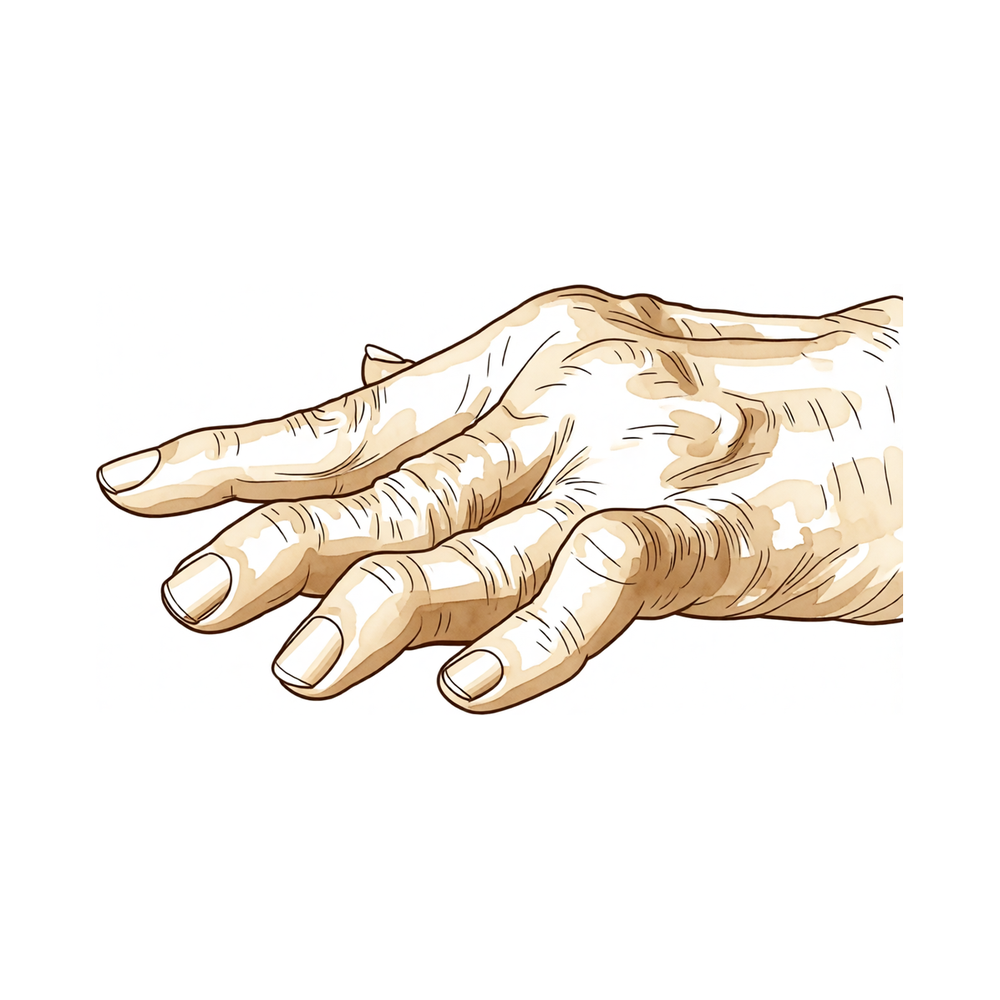
Swan neck deformity is characterized by hyperextension of the proximal interphalangeal (PIP) joint [8], which impairs the ability to flex the digit and creates functional difficulties in grasping objects [8]. While classically associated with the PIP joint, this deformity can also occur at the distal interphalangeal (DIP) and metacarpophalangeal (MCP) joints due to multiple etiologies [22]. The pathogenesis involves a complex interrelation where PIP recurvatum relaxes the lateral extensor tendons and stretches the flexor digitorum profundus, leading to secondary DIP flexion [9]. In rheumatoid arthritis, synovitis stretches the volar plate and flexor digitorum superficialis, resulting in unopposed dorsal central tendon pull [22], whereas weakening of the radial sagittal bands causes ulnarward migration of the central tendon and subsequent MCP flexion [22]. In cerebral palsy, the deformity arises from excessive tension on the middle band with relative relaxation of the lateral bands [16].
Treatment planning requires a complete preoperative examination, correct staging, and proper timing to ensure successful operative results [4]. Understanding the specific etiology, biomechanical changes, and articular status is essential for devising an appropriate strategy [8, 10]. For rheumatoid hand surgery, the classic teaching dictates correction in a proximal-to-distal direction; MCP joint deformities are addressed with soft tissue reconstruction or joint replacement before distal procedures, as distal deformities may improve conservatively once the MCP joint is corrected [22]. Flexible deformities are suitable for splinting and soft tissue reconstructions [22], while fixed deformities require assessment of joint condition: joints free of articular wear can be converted to flexible states for reconstruction, whereas those fixed by articular wear necessitate fusion or implant arthroplasty [22].
Outcomes depend heavily on postoperative management, where an experienced hand therapist emphasizes MCP extension, PIP flexion, and DIP extension [30]. A PIP joint extension block in 10 to 30 degrees for 4 to 6 weeks is essential to avoid recurrence [30]. For destroyed, painful, or unstable DIP joints, arthrodesis is an established method to correct fixed deformities [30]. The goal of DIP arthrodesis is to achieve fusion in 5 to 10 degrees of flexion with a cone-in-cup fashion [30]. Although screw fixation offers immediate strong fixation with a low complication rate, Kirschner wires may provoke pin track infections or migrate, potentially leading to delayed or nonunion [30]. Overall, morbidity rates for DIP arthrodesis are reported at 20%, with most complications related to the fixation method and hardware used [30].
Anatomy & Pathophysiology
Etiology and Mechanism
Swan neck deformity is characterized by a collapsing linked joint appearance that produces a zigzag deformity following joint disruption [8]. This displacement can originate at various joints and progress in either a proximal-to-distal or distal-to-proximal direction [8]. While typically presenting with hyperextension of the proximal interphalangeal (PIP) joint, swan neck deformities are not unique to rheumatoid arthritis and can occur at the distal interphalangeal (DIP), PIP, and metacarpophalangeal (MCP) joints due to multiple etiologies [8, 22]. The pathogenesis involves the interrelation of PIP hyperextension and DIP flexion [9]. Specifically, PIP recurvatum relaxes the lateral extensor tendons and stretches the flexor digitorum profundus, leading to secondary DIP flexion [9].
Synovitis drives specific mechanical failures at different joint levels. At the DIP joint, synovitis causes a flexion deformity, and the resulting zigzag deformity propagates proximally due to stretching of the terminal tendon [22]. At the PIP joint, synovitis stretches the volar plate and the flexor digitorum superficialis (FDS), which inserts at the base of the volar middle phalanx [22]. This stretching creates an unopposed pull of the dorsal central tendon, inducing an extension deformity in the PIP joint [22]. Concomitant flexion of the DIP and MCP joints occurs with this PIP extension deformity [22]. Furthermore, synovitis can stretch both the extrinsic tendons over the MCP joint and the sagittal bands that maintain the central tendon in the midline position [22]. Weakening of the radial sagittal bands causes the central tendon to migrate ulnarward [22]. As the deformity progresses, the extensor tendon over the MCP joint descends volar to the joint axis, causing MCP flexion and PIP hyperextension [22].
Additional mechanisms include chronic mallet injury, provided the PIP deformity is capable of hyperextension [34]. PIP hyperextension results from innate or acquired laxity of the volar plate combined with increased tension in the central slip and lateral bands owing to elongation of the terminal tendon [34]. The deformity may also arise from overactivity of the extrinsic or intrinsic extensor mechanism due to spasticity or intrinsic contracture [34]. Alternatively, it can result from insufficiency of the volar stabilizers of the PIP joint, such as volar plate incompetence or FDS injury [34]. The most important factor in the development of finger deformities is the changes occurring in the tendons and related structures, especially in early stages [38]. Identifying the cause of the deformity is critical for successful treatment [21]. An understanding of the anatomy, clinical presentation, treatment options, and expected outcomes is crucial for optimal treatment of posttraumatic boutonnière and swan neck deformities [1]. There are several forms of swan-neck deformity which are amenable to surgical treatment with good results, if based on an adequate study of the mechanism [2].
Classification and Staging
Feldon and colleagues developed a classification system for swan neck deformities [22]. The severity of a swan neck deformity depends on the extent of joint stiffness and articular wear [22]. The classification distinguishes between specific types based on joint mechanics: * Type II: Characterized by intrinsic tightness, limited PIP motion, and an extended MCP joint with ulnar deviation corrected [22]. * Type III: Characterized by a stiff PIP in all positions of the MCP joint and a good radiograph [22].
A deformity at the MCP joint can be corrected with soft tissue reconstruction or joint replacement before distal procedures are performed [22]. Distal deformities may improve with conservative treatment once the MCP joint deformity is corrected, circumventing the need for further reconstruction [22]. The concept of flexible versus fixed deformities that applies to boutonnière treatment is also relevant for swan neck treatment [22].
Pathomechanics and Biomechanics
In individuals with DIP joint flexion contractures, swan neck deformity progresses significantly with time because of increasing DIP joint flexion contracture [3]. Sacrifice of the FDS in two-stage flexor tendon reconstruction causes the extensor force at the PIP joint to be imbalanced [60]. In patients with cerebral palsy, flexion deformity at the MCP joints with swan neck deformity of the PIP joints is usually due to intrinsic spasticity or contracture [57]. Severe flexion deformity of the MCP joint from the combined forces of the extrinsic digital flexors and intrinsic muscles results in great tension in the retinacular ligaments of the extensor mechanism, in particular the sagittal bands [57]. Tension in the retinacular ligaments can lead to attenuation of the sagittal bands, allowing the extensor tendon to dislocate with subsequent loss of extension at the MCP joint [57].
Chronic severe PIP hyperextension deformities are frequently accompanied by a painful snapping sensation as the lateral bands slide over the condyles of the proximal phalanx during flexion [40]. Swan neck deformity with chronic hyperextension of the PIP joint most commonly occurs following avulsion of the palmar plate, extensor mechanism imbalance, or chronic mallet finger deformity [40]. Injury to both the radial collateral ligament and the palmar plate can occur when the PIP joint is hyperextended with deviation [40]. Most chronic radial collateral ligament injuries of the PIP joint are associated with collateral ligament degeneration, which makes the tissue unsuitable for repair [40].
The role of the oblique retinacular ligament (ORL) is debated; it does not contribute notably to extension of the distal phalanx in a normal finger [24]. However, the ORL was shown to at least play a minor role in linking PIP joint and DIP joint motion and restrain flexion of the distal phalanx when the PIP joint was extended [24]. The migration of the lateral bands at the PIP joint is not dependent on the triangular or transverse retinacular ligaments in normal fingers [24]. In acute boutonniere deformity, extension of the PIP joint decreases as structures are progressively damaged [43]. A finite element model successfully replicated the behavior of the digit under specific scenarios, including the extension of the DIP joint during Elson's test observed in cadaveric studies [62].
Clinical Presentation and Diagnosis
Each type of swan neck deformity can be identified quite readily by reviewing the hand posture [22]. A proper evaluation is necessary to make a definite diagnosis and establish treatment targets [22]. Some individuals are able to voluntarily put the finger in the swan neck position, and this is physiologic in the absence of symptoms [34]. Swan neck deformity may become symptomatic due to locking of the PIP joint in hyperextension (pseudotriggering) upon initiating PIP flexion from the hyperextended position [34].
A physical examination maneuver to distinguish between swan neck deformity caused primarily by PIP laxity or mallet finger is to manually block PIP hyperextension [34]. If full DIP extension is possible when PIP hyperextension is blocked, blocking PIP hyperextension will suffice to correct the swan neck deformity [34]. If blocking PIP hyperextension does not result in correction of the DIP extensor lag, surgically increasing the extensor force at the DIP joint is required in addition to restricting PIP hyperextension [34].
Classification
The pathogenesis of the swan-neck deformity involves the interrelation of PIP hyperextension and DIP flexion [9]. This deformity is caused by excessive tension on the middle band with relative relaxation of the lateral bands of the extensor mechanism [16]. Additionally, stretching of the volar plate and FDS causes an unopposed pull of the dorsal central tendon, inducing an extension deformity in the PIP joint [22].
Other Considerations: A fixed swan neck deformity in a joint free of articular wear can be converted into a flexible deformity prior to soft tissue reconstruction [22]. Conversely, a fixed swan neck deformity caused by articular wear should be treated with fusion or implant arthroplasty [22].
Clinical Presentation
The inability to flex the digit constitutes a functional deficit, as patients report difficulty grasping objects [8]. The pathogenesis of the swan-neck deformity involves the interrelation of proximal interphalangeal (PIP) hyperextension and distal interphalangeal (DIP) flexion [9]. Synovitis at the PIP joint level causes stretching of the volar plate and the flexor digitorum superficialis (FDS), which inserts at the base of the volar middle phalanx [22]. This stretching results in an unopposed pull of the dorsal central tendon, inducing an extension deformity in the PIP joint [22]. Concomitant flexion of the DIP and metacarpophalangeal (MCP) joints also occurs in swan neck deformity [22].
As the deformity progresses, the extensor tendon over the MCP joint descends volar to the joint axis [22]. This descent causes flexion of the MCP joint and hyperextension of the PIP joint [22]. Each type of swan neck deformity can be identified by reviewing the hand posture [22]. In an individual with a DIP joint flexion contracture, the swan neck deformity progressed significantly with time because of increasing DIP joint flexion contracture [3]. Strain in the volar plate increased progressively with the creation of mallet and swan neck deformity conditions [17].
Investigations
Other Considerations: A successful operative result for swan-neck and boutonnière deformities depends on complete preoperative examination, correct staging of the deformity, and proper timing of treatment [4]. Understanding the etiology of a swan-neck deformity is necessary to devise an appropriate treatment plan [8]. Functional and esthetic considerations dictate whether surgical intervention is necessary for swan-neck deformities and indicate the expected treatment outcomes [8]. A careful physical examination is essential to direct care and future testing if indicated [47].
Treatment
General Principles and Indications
Optimal management of posttraumatic swan neck deformities requires a comprehensive understanding of anatomy, clinical presentation, treatment options, and expected outcomes [1]. Treating proximal interphalangeal (PIP) joint deformities specifically necessitates an evaluation of the underlying cause, biomechanical changes, and articular status [10]. Several forms of swan-neck deformity are amenable to surgical treatment with good results when based on an adequate study of the mechanism [2]. Functional and esthetic considerations dictate whether surgical intervention is necessary and indicate the expected treatment outcomes [8]. In patients with rheumatoid arthritis, swan neck deformities are associated with impairments in function and limitations in daily activities [12].
Classification and Staging
The Feldon classification system categorizes the severity of swan neck deformities based on the extent of joint stiffness and articular wear [22]. Distal deformities may improve with conservative treatment once the metacarpophalangeal (MCP) joint deformity is corrected, potentially circumventing the need for further reconstruction [22].
Non-Operative
Hyperextension block splinting alone is reported to be insufficient to reverse the muscle imbalance causing swan neck deformity in cerebral palsy [54].
Operative
Indications: Surgical intervention is indicated when functional and esthetic considerations dictate the need for correction [8]. A joint that is fixed because of articular wear should be treated with fusion or implant arthroplasty [22]. Adult patients with good range of passive motion and a pure case of congenital attenuation can be treated with a simple procedure that does not involve extensive repair [46].
Surgical Approach / Technique: Soft tissue procedures constitute a primary operative strategy. The Zancolli-Tonkin procedure (lateral band translocation) is a simple and reliable technique that provides lasting correction of an incapacitating deformity associated with impaired overall hand function [7]. A new lateral extensor band technique provides a stable and reliable correction of swan neck deformity in rheumatoid arthritis [5]. Surgical transfer of the lateral band using the transverse retinacular ligament is effective in correcting mild swan neck deformity [28]. FDS tenodesis (superficialis sling) is indicated for flexible swan neck deformities or fixed deformities that can be made flexible, creating a static volar restraint against hyperextension [27]. Dynamic tenodesis of the proximal interphalangeal joint is a satisfactory surgical procedure for congenital swan neck deformity that produces a better cosmetic result than Swanson tenodesis [20]. In the treatment of swan neck deformity in cerebral palsy, intrinsic lengthening via fractional tenotomy of lumbricals and interossei is performed to ensure intrinsics are no longer tight in MCP extension [23]. Fowler tenotomy reduces central slip tone while increasing extensor force at the DIP joint to correct swan neck deformity [34]. Surface replacement arthroplasty combined with transfer of the flexor digitorum superficialis tendon to the radial lateral band is a successful technique for treating traumatic osteoarthritic changes that lead to swan-neck deformity and ulnar deviation at the PIP joint [18]. Superficialis-to-profundus tendon transfer provides satisfactory outcomes in terms of hand opening in brain-damaged patients, with some patients also experiencing improved hand function [35].
Implant Selection: DIP arthrodesis is generally well tolerated, especially if there is a mobile PIP and MCP joint [30]. Screw fixation for DIP arthrodesis has the advantage of immediate strong fixation with a low complication rate [30]. Kirschner wires for DIP arthrodesis may provoke pin track infections, fall out, or migrate, which can lead to delayed or nonunion [30].
Long-Term Outcomes and Complications: The morbidity of DIP arthrodesis includes nonunion, malunion, and infection [30]. Stern and Fulton reported a 20% complication rate for DIP arthrodesis, with the majority of problems related to the fixation method and hardware used [30]. The long-term result of lateral band translocation for swan neck deformity in cerebral palsy is disappointing, with a success rate decreasing from 84% at 1-year follow-up to 60% at 5-year follow-up [54]. Consequently, lateral band translocation should not be advocated as a procedure with long-lasting success in patients with cerebral palsy [54]. The swan neck deformity in individuals with DIPJ flexion contractures can progress significantly with time because of increasing DIPJ flexion contracture [3].
Complications
Fixation and Hardware: DIP joint arthrodesis for swan neck deformity carries a 20% complication rate, with the majority of issues related to the fixation method and hardware used [30]. Kirschner wires may provoke pin track infections [30]. Additionally, wires may fall out or migrate, necessitating early removal which can lead to delayed or nonunion [30].
Nail and Bone Integrity: Violation of the nail's germinal matrix during DIP joint arthrodesis can lead to severe permanent nail deformity [30]. Excessive bone resection during the procedure can result in excessive shortening of the finger [30].
Other Considerations: A PIP joint extension block in 10 to 30 degrees for 4 to 6 weeks is essential postoperatively to avoid recurrence of the deformity [30]. In patients with long-standing complex pathophysiological changes, full correction of the deformity may not be possible and a few degrees of PIP joint extension deficit is inevitable [29]. Overlengthening of fractional intrinsic lengthening by flexing the PIP joints past 70 degrees with MCP joints extended is a risk during surgical treatment of swan neck deformity in cerebral palsy [23].
Recovery
Rehabilitation protocol: Hand therapy programs for the proximal interphalangeal joint must address the specific disorder, timing of injury, and phases of healing to prevent stiffness and dysfunction [36]. Treatment decisions are based on the degree of joint deformity, joint motion, passive joint correctability, and the status of the articular surface [44].
Other Considerations: Due to long-standing complex pathophysiological changes, full correction may not be possible, and a few degrees of PIP joint extension deficit is inevitable [29]. The Zancolli-Tonkin procedure provides lasting correction of an incapacitating deformity associated with impaired overall hand function [7]. FDS hemitenodesis is a biomechanically effective treatment that significantly reduced volar plate strain compared to the swan neck deformity condition [19]. A soft-tissue arthrodesis using FDS hemitenodesis offers low revision rates, retained motion, and favorable pain and satisfaction scores for patients with swan neck deformities following unconstrained PIP arthroplasty [14]. The new surgical procedure for congenital swan neck deformity does not produce as great a fixed flexion deformity as the Swanson tenodesis and produces a better cosmetic result [20]. The experience with surface replacement arthroplasty and transfer of the flexor digitorum superficialis tendon to the radial lateral band is a successful technique for treating traumatic osteoarthritic changes that lead to swan-neck deformity and ulnar deviation at the proximal interphalangeal joint [18]. This new lateral extensor band technique provides a stable and reliable correction of swan neck deformity [5].
Key Evidence
- [L5] An understanding of the anatomy, clinical presentation, treatment options, and expected outcomes is crucial for optimal treatment of posttraumatic boutonnière and swan neck deformities. [1] (10.5435/jaaos-d-14-00272)
- [L5] There are several forms of swan-neck deformity which are amenable to surgical treatment with good results, if based on an adequate study of the mechanism. [2] (10.1016/0072-968x(76)90004-8)
- [L5] The swan neck deformity in this individual progressed significantly with time because of increasing DIPJ flexion contracture. [3] (10.1016/j.jht.2009.11.005)
- [L5] A successful operative result depends on complete preoperative examination, correct staging of the deformity, and proper timing of treatment. [4] (10.5435/00124635-199903000-00002)
- [L4] This new technique improves some unappealing aspects of previous techniques and provides a stable and reliable correction of swan neck deformity. [5] (10.1177/1753193408092787)
- [L5] This in-depth biomechanical analysis explains how IP joint flexion contracture following zone T1 flexor tendon repair can result in secondary swan neck deformity of the thumb. [6] (10.1016/j.jht.2011.07.026)
- [Paper] The Zancolli-Tonkin procedure is a simple and reliable technique that provides lasting correction of an incapacitating deformity associated with impaired overall hand function. [7] (10.1016/j.otsr.2016.03.008)
- [Paper] The pathogenesis of the swan-neck deformity involves the interrelation of PIP hyperextension and DIP flexion, where PIP recurvatum relaxes the lateral extensor tendons and stretches the flexor digitorum profundus, leading to secondary DIP flexion. [9] (10.1016/0049-0172(83)90007-0)
- [L4] Treating swan neck and boutonniere deformities of the PIP joint is a difficult challenge that requires understanding the cause, biomechanical changes, and articular status. [10] (10.1016/j.hcl.2017.12.006)
- [L4] RA patients with swan neck deformities experience a variety of problems, including impairments in functions and limitations in daily activities. [12] (10.1002/msc.180)
- [L4] Central slip tenotomy is a reliable treatment for dynamic swan-neck deformity in cerebral palsy in patients without dynamic metacarpophalangeal flexion deformity. [13] (10.1016/j.jhsa.2007.07.002)
- [L4] A soft-tissue arthrodesis using FDS hemitenodesis is a safe and effective treatment option for patients with swan neck deformities following unconstrained PIP arthroplasty, offering low revision rates, retained motion, and favorable pain and satisfaction scores. [14] (10.1007/s11552-013-9571-0)
- [L5] The Mitek mini anchor offers a practical, reliable and functional reconstruction of the volar plate in the management of congenital swan neck deformities. [15] (10.1016/j.bjps.2005.01.017)
- [L4] The swan-neck deformity is caused by excessive tension on the middle band with relative relaxation of the lateral bands of the extensor mechanism. [16] (10.2106/00004623-196042060-00004)
- [L5] Strain in the volar plate increased progressively with the creation of mallet and swan neck deformity conditions. [17] (10.1177/1558944720966736)
- [L4] The experience with surface replacement arthroplasty and transfer of the flexor digitorum superficialis tendon to the radial lateral band is a successful technique for treating traumatic osteoarthritic changes that lead to swan-neck deformity and ulnar deviation at the proximal interphalangeal joint. [18] (10.1177/17531934251408609)
- [L5] FDS hemitenodesis significantly reduced volar plate strain compared to the swan neck deformity condition, suggesting it is a biomechanically effective treatment. [19] (10.1177/15589447211040877)
- [L4] The new surgical procedure is satisfactory for congenital swan neck deformity, does not produce as great a fixed flexion deformity as the Swanson tenodesis, and produces a better cosmetic result. [20] (10.1054/jhsb.2000.0498)
- [L5] Identifying the cause of the deformity is critical for successful treatment. [21] (10.1016/j.hcl.2018.06.011)
- [L4] [23] (10.1016/j.jhsa.2014.01.039)
- [L5] [24] (10.1016/j.jhsa.2022.07.008)
- [L5] FDS tenodesis is indicated for flexible swan neck deformities or fixed deformities that can be made flexible, creating a static volar restraint against hyperextension. [27] (10.1016/j.jhsa.2015.07.018)
- [L4] Surgical transfer of the lateral band using the transverse retinacular ligament is effective in correcting mild swan neck deformity. [28] (10.1177/15589447221127337)
- [L4] Due to long-standing complex pathophysiological changes, full correction may not be possible, and a few degrees of PIP joint extension deficit is inevitable. [29] (10.1016/j.otsr.2021.102971)
- [L4] Superficialis-to-profundus tendon transfer (STP) provides satisfactory outcomes in terms of hand opening, with some patients also experiencing improved hand function. [35] (10.1016/j.otsr.2017.08.019)
- [Paper] Hand therapy programs for the proximal interphalangeal joint must address the specific disorder, timing of injury, and phases of healing to prevent stiffness and dysfunction. [36] (10.1016/j.hcl.2018.01.001)
- [L4] The most important factor in the development of finger deformities is the changes occurring in the tendons and related structures, especially in early stages. [38] (10.2106/00004623-195739030-00006)
- [L4] [40] (10.1177/1753193417739248)
- [Paper] Extension of the PIP joint decreases as these structures are progressively damaged. [43] (10.1016/s0363-5023(12)60014-8)
- [L5] Treatment decisions are based on the degree of joint deformity, joint motion, passive joint correctability, and the status of the articular surface. [44] (10.1016/j.jhsa.2011.05.029)
- [Letter] Adult patients with good range of passive motion and a pure case of congenital attenuation can be treated with a simple procedure that does not involve extensive repair. [46] (10.1016/j.jhsa.2014.12.047)
- [L4] [54] (10.1097/bpo.0b013e3181c6c363)
- [L4] [57] (10.1054/jhsb.1998.0005)
- [L4] This analysis reveals that sacrifice of the flexor digitorum superficialis in 2 stage flexor tendon reconstruction causes the extensor force at the PIP joint to be imbalanced. [60] (10.1016/j.jht.2011.07.027)
- [L5] The study developed and validated a finite element model that successfully replicated the behavior of the digit under specific scenarios, including the extension of the DIP joint during Elson's test observed in cadaveric studies. [62] (10.1186/s13018-025-06329-3)
See Also
- Mallet Finger
References
[1] Posttraumatic Boutonnière and Swan Neck Deformities. Journal of the American Academy of Orthopaedic Surgeons. 2015. DOI: 10.5435/jaaos-d-14-00272
[2] Swan-neck deformity: Mechanism and surgical treatment. Hand. 1976. DOI: 10.1016/0072-968x(76)90004-8
[3] Swan Neck Deformity after Distal Interphalangeal Joint Flexion Contractures: A Biomechanical Analysis. Journal of Hand Therapy. 2010. DOI: 10.1016/j.jht.2009.11.005
[4] Operative Correction of Swan-Neck and Boutonniere Deformities in the Rheumatoid Hand. Journal of the American Academy of Orthopaedic Surgeons. 1999. DOI: 10.5435/00124635-199903000-00002
[5] Correction of Swan Neck Deformity in Rheumatoid Arthritis Using a New Lateral Extensor Band Technique. Journal of Hand Surgery (European Volume). 2008. DOI: 10.1177/1753193408092787
[6] Biomechanical Analysis of Secondary Swan Neck Deformity Following IP Joint Flexion Contracture of the Thumb. Journal of Hand Therapy. 2011. DOI: 10.1016/j.jht.2011.07.026
[7] Lateral band translocation for swan-neck deformity: Outcomes of 41 digits after a mean follow-up of eight years. Orthopaedics & Traumatology: Surgery & Research. 2016. DOI: 10.1016/j.otsr.2016.03.008
[8] Green S Operative Hand Surgery. Swan Neck and Boutonnière Deformities.
[9] Pathogenesis and differential diagnosis of the swan-neck deformity. Seminars in Arthritis and Rheumatism. 1983. DOI: 10.1016/0049-0172(83)90007-0
[10] Treating the Proximal Interphalangeal Joint in Swan Neck and Boutonniere Deformities. Hand Clinics. 2018. DOI: 10.1016/j.hcl.2017.12.006
[12] Swan neck deformities in rheumatoid arthritis: a qualitative study on the patients' perspectives on hand function problems and finger splints. Musculoskeletal Care. 2010. DOI: 10.1002/msc.180
[13] Surgical Treatment of Swan-Neck Deformity in Hemiplegic Cerebral Palsy. The Journal of Hand Surgery. 2007. DOI: 10.1016/j.jhsa.2007.07.002
[14] Reconstruction of Swan Neck Deformities after Proximal Interphalangeal Joint Arthroplasty. HAND. 2013. DOI: 10.1007/s11552-013-9571-0
[15] Correction of bilateral congenital swan-neck deformity by use of Mitek mini anchor: a new technique. British Journal of Plastic Surgery. 2005. DOI: 10.1016/j.bjps.2005.01.017
[16] Surgery of the Hand in Cerebral Palsy and the Swan-Neck Deformity. The Journal of Bone & Joint Surgery. 1960. DOI: 10.2106/00004623-196042060-00004
[17] Development of an In Vitro Swan Neck Deformity Biomechanical Model. HAND. 2020. DOI: 10.1177/1558944720966736
[18] Surface replacement arthroplasty for a proximal interphalangeal joint with swan neck deformity and ulnar deviation. Journal of Hand Surgery (European Volume). 2025. DOI: 10.1177/17531934251408609
[19] Effect of a Flexor Digitorum Superficialis Hemitenodesis on Reducing Volar Plate Strains for Swan Neck Deformities. HAND. 2021. DOI: 10.1177/15589447211040877
[20] TREATMENT OF CONGENITAL SWAN NECK DEFORMITY WITH DYNAMIC TENODESIS OF PROXIMAL INTERPHALANGEAL JOINT. Journal of Hand Surgery. 2001. DOI: 10.1054/jhsb.2000.0498
[21] Management of Joint Contractures in the Spastic Upper Extremity. Hand Clinics. 2018. DOI: 10.1016/j.hcl.2018.06.011
[22] Green S Operative Hand Surgery. Swan Neck Deformities.
[23] Treatment of Swan Neck Deformity in Cerebral Palsy. The Journal of Hand Surgery. 2014. DOI: 10.1016/j.jhsa.2014.01.039
[24] Clarification of Extensor Tenotomy for Finger Deformities. The Journal of Hand Surgery. 2022. DOI: 10.1016/j.jhsa.2022.07.008
[27] Superficialis Sling (Flexor Digitorum Superficialis Tenodesis) for Swan Neck Reconstruction. The Journal of Hand Surgery. 2015. DOI: 10.1016/j.jhsa.2015.07.018
[28] Volar Transfer of the Lateral Band With Transverse Retinacular Ligament for the Correction of Swan Neck Deformity. HAND. 2022. DOI: 10.1177/15589447221127337
[29] RETRACTED: Flexor Digitorum Superficialis tendon transfer for a long-standing boutonniere deformity finger- a retrospective study of 11 cases. Orthopaedics & Traumatology: Surgery & Research. 2021. DOI: 10.1016/j.otsr.2021.102971
[30] Green S Operative Hand Surgery. Swan Neck Deformities > Postoperative Care.
[34] Green S Operative Hand Surgery. Treatment of Swan Neck Deformity Associated With Chronic Mallet Injury.
[35] Results and complications of superficialis-to-profundus tendon transfer in brain-damaged patients, a series of 26 patients. Orthopaedics & Traumatology: Surgery & Research. 2018. DOI: 10.1016/j.otsr.2017.08.019
[36] Therapy Concepts for the Proximal Interphalangeal Joint. Hand Clinics. 2018. DOI: 10.1016/j.hcl.2018.01.001
[38] Finger Deformities Caused by Rheumatoid Arthritis. The Journal of Bone & Joint Surgery. 1957. DOI: 10.2106/00004623-195739030-00006
[40] Swan neck deformity due to chronic radial collateral ligament injury of the little finger proximal interphalangeal joint. Journal of Hand Surgery (European Volume). 2017. DOI: 10.1177/1753193417739248
[43] Biomechanics of the Acute Boutonniere Deformity. The Journal of Hand Surgery. 2012. DOI: 10.1016/s0363-5023(12)60014-8
[44] Treatment of Boutonniere Finger Deformity in Rheumatoid Arthritis. The Journal of Hand Surgery. 2011. DOI: 10.1016/j.jhsa.2011.05.029
[46] Letter Regarding “Restoration of the Central Slip in Congenital Form of Boutonniere Deformity: Case Report”. The Journal of Hand Surgery. 2015. DOI: 10.1016/j.jhsa.2014.12.047
[47] Orthopaedic Knowledge Update 13 Ebook Without Multimedia. Anatomy, Evaluation, Clinical Examination, and Imaging > Evaluation and Clinical Examination: Current Concepts.
[54] Long-term Results of Lateral Band Translocation for the Correction of Swan Neck Deformity in Cerebral Palsy. Journal of Pediatric Orthopaedics. 2010. DOI: 10.1097/bpo.0b013e3181c6c363
[57] Extensor Tendon Dislocation in Cerebral Palsy. Journal of Hand Surgery. 1999. DOI: 10.1054/jhsb.1998.0005
[60] Videographic, Fluoroscopic, and Biomechanical Analysis of Swan-Neck Deformity in Two Stage Flexor Tendon Graft. Journal of Hand Therapy. 2011. DOI: 10.1016/j.jht.2011.07.027
[62] Assessment of the ligamentous stress distribution in the pathomechanics of the boutonniere deformity through a computational 3D model. Journal of Orthopaedic Surgery and Research. 2025. DOI: 10.1186/s13018-025-06329-3