Patients › Hand
Giant Cell Tumour ng Tendon Sheath (Bukol sa Daliri o Hinlalaki)
A giant cell tumour of tendon sheath is a common, benign (non-cancerous) lump on a finger or thumb. What causes it, how it is diagnosed and removed, and how often it comes back.
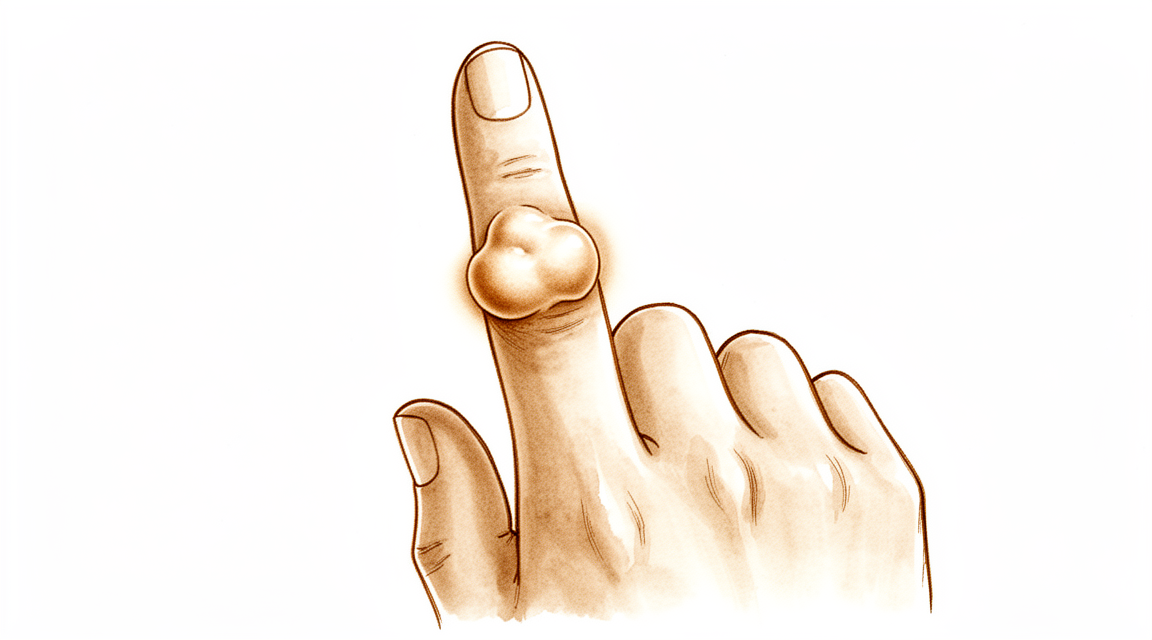
Ang iyong nararamdaman
Karamihan sa mga tao ay nakapapansin ng isang bukol sa isang daliri o hinlalaki na hindi masakit. Karaniwan itong matigas, at mabagal itong lumaki. Ang ilang bukol ay nasa mismong tabi ng isang joint (kasukasuan), kadalasan sa joint na pinakamalapit sa dulo ng daliri, at maaari silang lumitaw sa itaas na bahagi, sa gilid o sa panig ng palad ng daliri. Ang hintuturo ang pinakakaraniwang lokasyon.
Halos sa lahat ng kaso, hindi masakit ang bukol mismo. Kapag may hindi komportableng pakiramdam, kadalasan itong nagmumula sa pag-ipit ng bukol sa mga kalapit na istruktura habang lumalaki ito. Ang maliit na bilang ng mga tao ay nakapapansin ng pangingilig o pamamanhid sa daliri kung ang bukol ay umiipit sa isang nerve. Napapansin ng ilang tao na sumasabit o pumipitik ang daliri kapag gumagalaw ito, na medyo katulad ng trigger finger, kung saan sandaling naiipit ang daliri at pagkatapos ay biglang lumalaya. Kung ang bukol ay malapit sa isang joint, maaaring mahirap ibaluktot nang buo ang daliring iyon dahil nakakasagabal ang bukol.
Ang mga pang-araw-araw na gawain na gumagamit ng daliring iyon ay maaaring maging asiwa. Ang pagpulot ng maliliit na barya, pagbubutones ng damit, paghawak ng panulat o paghawak sa takip ng garapon ay maaaring maging asiwa kung ang bukol ay nasa bahaging tinatamaan ng iyong paghawak. Maaari ring sumabit ang bukol sa guwantes o sa bulsa.
Kadalasan, matagal nang naroon ang bukol bago ka nito abalahin nang sapat para ipatanong mo ito. Maraming tao ang naghihintay ng mga buwan o taon, habang pinapanood itong dahan-dahang magbago.
May ilang bagay tungkol sa kondisyong ito na dapat malaman. Ito ay benign, na nangangahulugang hindi ito kumakalat sa ibang bahagi ng katawan. Bahagyang mas karaniwan ito sa mga babae kaysa sa mga lalaki, at kadalasan itong lumilitaw sa pagitan ng edad na 32 at 51. Karamihan sa mga tao ay may iisang bukol, bagaman ang ilan ay may higit sa isa sa magkakaibang lugar.
Bantayan kung ang isang daliri o kamay ay naging mainit, pula, namamaga at masakit, lalo na kung may kasamang lagnat. Kung mangyari iyon, pumunta sa emergency department sa mismong araw na iyon. Kung patuloy na lumalaki ang bukol, nagsisimulang sumakit, o hindi gumagana nang maayos ang daliri, magpatingin sa iyong GP o humingi ng pagsusuri ng isang espesyalista.
Ano ang aktwal na nangyayari
Ang iyong mga tendon ay ang matitibay na tali na nagdurugtong ng kalamnan sa buto at nagpapahintulot sa iyong mga daliri na bumaluktot. Ang bawat tendon ay dumadaan sa loob ng isang manipis na sleeve na tinatawag na tendon sheath, na gumagana nang medyo katulad ng isang gasket sa paligid ng isang lubid: pinapanatili nitong madulas ang tali upang malaya itong dumulas habang gumagalaw ang daliri.
Sa kondisyong ito, ang mga cell sa sleeve na iyon ay nagsisimulang dumami nang higit sa nararapat. Ang resulta ay isang soft tissue na bukol na nasa ibabaw o tabi ng tendon, kadalasang malapit sa isang joint. Ito ay benign, na nangangahulugang hindi ito kumakalat, at mabagal itong lumaki. Karamihan sa mga bukol ay maliit, mga 1.35 cm sa average, bagaman ang ilan ay lumalaki nang mas malaki.
Ang bukol ay binubuo ng ilang bagay na magkakasamang nagsisiksikan: mga inflammatory cell, mga giant cell (na mga cell lamang na may ilang nucleus), at isang madilim na pigment na tinatawag na haemosiderin, ang parehong sangkap na nagbibigay-kulay sa isang lumang pasa. Ang pigment na iyon ang dahilan kung bakit maaaring magmukhang kulay-kayumanggi ang mga bukol na ito kung makikita man ang mga ito habang inooperahan.
Ang mga sintomas na napansin mo sa seksyon sa itaas ay nagmumula sa pagkakasagabal ng bukol. Habang lumalaki ito, maaari itong umipit sa tendon, sa joint o sa isang nerve, na nagpapaliwanag sa pagsabit, sa paninigas at sa paminsan-minsang pangingilig. Kadalasan, hindi ito sumasakit kahit kaunti, at mga 16 lamang sa bawat 100 tao ang nag-uulat ng sakit.
Ilang puntos na dapat malaman. Karamihan sa mga tao ay may iisang bukol, ngunit mga 21 sa bawat 100 ang may dalawa o higit pang magkakahiwalay na bukol. Kadalasang nasa tabi ng isang joint ang bukol, at sa mga isang-katlo ng mga kaso sa daliri, ito ay nasa joint na pinakamalapit sa dulo ng daliri. Napakabihira, ang bukol ay maaaring dumiin papasok sa mismong buto, na makikita sa x-ray.
Mayroon ding mas bihira at mas kalat na anyo ng parehong kondisyon na kumakalat sa kahabaan ng tendon sa manipis na mga fronds (parang maliliit na sanga) sa halip na bumuo ng isang maayos na bukol. Ang anyong iyon ay mas hindi karaniwan sa daliri at may posibilidad na kumilos nang iba, kaya nais ng iyong surgeon na magkaroon ng malinaw na larawan kung anong uri mismo ng bukol ito bago magplano ng anuman.
Ano ang maaari naming gawin tungkol dito
Si Dr Kieran Hirpara, isang upper-limb surgeon sa Mater Private Hospital Rockhampton, ay nagsisimula sa mga opsyon na hindi gaanong invasive na angkop sa iyong kondisyon. Ang mga pasyente ay karaniwang nirerefer sa aming klinika ng kanilang GP; kung iminungkahi ng isang physiotherapist na magpatingin sa amin, kakailanganin mo pa rin ng referral mula sa iyong GP upang maging eligible para sa Medicare rebate. Sa klinika, kumukuha kami ng history, sinusuri ang iyong kamay at nag-aayos ng imaging kung saan ito kinakailangan upang matukoy kung anong uri mismo ng bukol ito.
Dahil benign ang bukol na ito at mabagal lumaki, ang hindi paggawa ng anuman ay isang tunay na opsyon. Para sa isang maliit at hindi masakit na bukol, ang pagbabantay lamang dito ay maaaring ang tamang pagpipilian. Kung nakakasagabal ang bukol, makatutulong ang hand therapy sa paninigas at sa pagsabit. Layunin ng therapy na panatilihing gumagalaw ang daliri at gawing mas madali ang mga pang-araw-araw na gawain. Karaniwan naming iminumungkahi na bigyan ito ng sapat na pagsubok bago isaalang-alang ang operasyon.
Walang gamot para sa kondisyong ito na nagpapaliit dito, kaya ang mga pain tablet at anti-inflammatory ay nagpapahupa lamang ng hindi komportableng pakiramdam na dulot ng pag-ipit ng bukol sa kalapit na tissue. Hindi nila pinaliliit ang bukol.
Ang operasyon ang karaniwang gamutan kapag malaki ang bukol, masakit, o pumipigil sa daliri na gumana nang maayos. Ang layunin ay tanggalin ang buong bukol kasama ang attachment nito sa sleeve ng tendon, dahil ang pag-iiwan sa attachment na iyon ang nagpapahintulot dito na tumubong muli. Maingat kaming nagpaplano bago mag-opera, gumagamit ng magnification habang inooperahan, at tinatanggal nang buo ang bukol. Ang pagbalik (recurrence) ang pangunahing panganib sa kondisyong ito, at karaniwan itong nangyayari sa loob ng 36 na buwan matapos ang pagtanggal. Sa isang grupo ng 605 na tao na tinanggalan ng bukol sa daliri, 14.8% ang nakaranas ng pagbalik nito. Sa ibang salita: karamihan sa mga tao, mga 85 sa bawat 100, ay hindi na binabalikan nito. Kung bumalik ito, ang muling pagtanggal dito na may karagdagang mga hakbang upang pigilan ang muling pagtubo ay maaari pa ring makalutas sa problema.
Ano ang dapat asahan
Ang pananaw para sa bukol na ito ay matatag sa halip na dramatiko. Ito ay benign, kaya hindi ito kumakalat saanman sa iyong katawan. Kung hahayaan, ang isang maliit at hindi masakit na bukol ay kadalasang patuloy na lumalaki nang mabagal, o nananatili lamang kung ano ito. Bihira itong humupa nang kusa, at hindi ito nagiging anumang mapanganib.
Ang pangunahing ginagawa ng kondisyong ito sa paglipas ng panahon ay ang pagbalik pagkatapos tanggalin. Ang pagbalik (recurrence) ang pangunahing panganib sa bukol na ito, at karaniwan itong nangyayari sa loob ng 36 na buwan matapos ang pagtanggal. Ang ilang bukol ay mas malamang na bumalik kaysa sa iba: ang mga binubuo ng dalawa o higit pang magkakahiwalay na piraso na hindi magkakadugtong, at ang mga tumubo na papasok sa mismong tendon o sa lining ng joint. Kapag tinanggal ang buong bukol kasama ang lugar kung saan ito nakakabit, malaki ang ibinababa ng panganib na iyon.
Karaniwang mabuti ang function pagkatapos ng gamutan. Ang mga taong tinanggalan ng isa sa mga bukol na ito sa daliri ay nakakakuha, sa average, ng 92% ng normal na function ng braso at kamay sa isang karaniwang sukatan kung paano gumagana ang braso at kamay. Sa mga naiulat na kaso, napanatili ng mga tao ang buong paggalaw ng daliri, at bumalik sa normal ang hugis ng buto ng daliri sa x-ray pagsapit ng pagsusuri pagkalipas ng dalawang taon.
Kung ang bukol ay ang mas bihira at mas kumakalat na uri na bumabalot sa tendon sa mga fronds, mas mahirap itong tanggalin nang buo at mas malamang na bumalik. Sa mga kasong iyon, ang radiation therapy na nakatutok sa bahaging iyon ay makatutulong upang makontrol ang bukol habang pinapanatiling gumagana ang iyong kamay.
Kung pipiliin mong bantayan lamang ang isang maliit at hindi masakit na bukol, ang makatotohanang larawan ay isang bukol na mabagal na lumalaki o nananatiling pareho, at maaaring unti-unti nitong gawing mas asiwa ang pagbaluktot ng daliri o ang paggamit nito para sa maliliit na gawain. Kung magsimula itong sumakit, patuloy na lumaki, o hindi na gumana nang maayos ang daliri, iyon ang panahon kung kailan karaniwang nagiging sulit ang gamutan.
Kailan dapat magpatingin
Karamihan sa mga bukol na tulad nito ay hindi urgent, at hindi kailangang magmadali sa gamutan. Magpatingin sa iyong GP kung ang isang bukol ay hindi humuhupa, lumalaki sa loob ng mga linggo, nagsisimulang sumakit, o pumipigil sa iyong gamitin nang normal ang daliri o kamay. Humingi ng pagsusuri ng isang espesyalista kung sumasabit o pumipitik ang daliri kapag gumagalaw ito, kung nakapapansin ka ng pangingilig o pamamanhid, o kung naging mahirap ibaluktot nang buo ang daliri dahil nakakasagabal ang bukol. Ito ang mga bagay na sulit ipasuri nang mas maaga kaysa huli, dahil ang bukol na tumubo na papasok sa tendon o sa lining ng joint ay mas mahirap tanggalin nang buo at mas malamang na bumalik.
May isang grupo ng mga palatandaan na nangangailangan ng pangangalaga sa mismong araw na iyon. Kung ang iyong daliri o kamay ay naging mainit, pula, namamaga at masakit, lalo na kung may kasamang lagnat, pumunta sa emergency department. Hindi mo kailangan muna ng referral mula sa GP. Kung hindi mo makontak ang klinika, sa labas ng oras ng klinika o sa katapusan ng linggo, pumunta sa pinakamalapit na emergency department.
Higit pang detalye
Advanced reading: the deeper science (optional)
Ang seksyong ito ay higit pa sa kailangan mo para sa iyong sariling mga desisyon sa paggamot. Ang giant cell tumour of the tendon sheath ay karapat-dapat sa karagdagang pagbabasa dahil ang pangunahing problema nito ay ang recurrence, at iminumungkahi ng ebidensya na ang recurrence ay mas itinutulak ng biyolohiya ng indibidwal na tumour kaysa sa anumang bagay tungkol sa kung paano ito tinanggal.
Ang pagbalik (recurrence) ay isang katangian ng tumour, hindi lamang ng operasyon
Ang instinktibong paliwanag para sa pagbalik ng isang bukol ay may naiwan na bahagi nito. Isang systematic review ng 605 digital cases ang nagkonkluda ng kabaligtaran: ang intrinsic biology ng tumour ay tila may mas pundamental na papel sa pagbalik kaysa sa lokasyon ng tumour o local invasiveness, kung saan nanawagan ang mga may-akda para sa mas malalaking prospective studies upang matukoy kung aling mga tumour ang prone sa pagbalik [1].
Ito ay isang tunay na kapaki-pakinabang na bagay na dapat malaman bago ang isang operasyon. Ang pagbalik pagkatapos ng isang maayos na excision ay isang kinikilalang gawi ng tumour na ito sa halip na ebidensya na may nagkamali.
Ang gamutan ay elective, at ang hindi paggawa ng anuman ay isang tunay na opsyon
Madaling makalimutan ito kapag pinaplano na ang isang operasyon. Ang prinsipyo ng first-line treatment ay kumpletong resection, ngunit ang gamutan ay hindi kailanman urgent, at ang indikasyon ay dapat timbangin laban sa mga sintomas, progression, lokasyon at sa iyong sariling mga sirkumstansya [4].
Para sa isang maliit, walang sakit, at mabagal na lumalaking nodule, ang pag-obserba rito ay isang lehitimong pagpipilian. Ang tumour ay benign at hindi kumakalat, kaya ang argumento para sa pag-oopera ay tungkol sa function, laki at abala — hindi tungkol sa panganib.
Ngunit may dalawang surgical factor na mahalaga
Hindi lamang biyolohiya ang kabuuan ng kwento. Sa 941 na pasyente na may localised-type tenosynovial giant cell tumour, ang mga factor na nauugnay sa recurrence pagkatapos ng resection ay ang mas malaking laki ng tumour at paunang gamutan sa pamamagitan ng arthroscopy. Dahil sa relatibong mababang complication rates at mabuting functional outcomes, inirerekomenda ng mga may-akda ang isang open approach na may complete resection hangga't maaari upang mabawasan ang recurrence sa mga high-risk cases [2].
Ang counterpoint ay ang arthroscopic excision ay napatunayang epektibo para sa localised type sa apat na joints sa isang review ng 1,448 na pasyente, habang sa diffuse type, ang arthroscopic synovectomy ay nagpakita lamang ng efficacy sa tuhod [3].
Pag-uugnay sa mga ito: para sa isang maliit, localised, at well-defined na lesion, maaaring gumana ang alinman sa dalawang approach. Habang lumalaki ang sukat, at para sa diffuse form, mas suportado ang complete open excision. Ang dahilan ay mechanical, ang tumour na ito ay kumakalat sa mga fronds sa paligid ng tendon, nerve at joint, at ang mga bahaging pinakamadaling makaligtaan ay ang mga nakatago sa likod ng mga istruktura na dapat iangat at direktang suriin.
Bakit mahalaga ang pagpapangalan
Ang kondisyon ay nasa ilalim na ngayon ng tenosynovial giant cell tumour, na sumasaklaw sa parehong localised form sa kamay at sa diffuse intra-articular form na dati ay tinatawag na pigmented villonodular synovitis [4]. Sila ay iisang entity sa magkaibang lokasyon at growth patterns.
Mahalagang malaman ito kung magbabasa ka tungkol sa paksa, dahil ang paghahanap ay maglalabas ng mga materyales tungkol sa mga tuhod at balakang na naglalarawan sa iyong kondisyon sa diffuse form nito, at ang mga recurrence rates na binabanggit para sa diffuse disease ay mas mataas nang malaki kaysa sa mga para sa isang localised digital lesion. Ang paglalapat ng mga pigura ng tuhod sa isang bukol sa daliri ay nagpapalabis sa panganib.
Saan pumapasok ang radiotherapy
Para sa diffuse disease na bumalik o hindi maaaring maalis nang buo, ang adjuvant radiotherapy ay minsan isinasaalang-alang. Isang meta-analysis ang nakatuklas na ang open synovectomy, o synovectomy na pinagsama sa perioperative radiotherapy, ay nauugnay sa isang nabawasang rate ng recurrence sa diffuse pigmented villonodular synovitis, habang nananawagan para sa malalaking long-term prospective studies upang kumpirmahin ito [5].
Para sa isang localised digital tumour, na siyang nakararami sa mga kaso sa kamay, hindi ito nagiging isyu. Ito ay kabilang sa diffuse, recurrent, joint-based end ng spectrum, at nabanggit lamang dito dahil ang paghahanap sa pangalan ng kondisyon ay maglalabas nito.
Ano ito hindi
Sa kabila ng pangalan, ito ay isang benign na tumour. Hindi ito kumakalat sa ibang bahagi ng katawan. Ang salitang "tumour" ay may bigat na hindi nararapat dito, at ang pag-aalala sa recurrence ay tungkol sa paulit-ulit na lokal na operasyon, paninigas at lapit sa nerve, hindi tungkol sa cancer.
Mga Sanggunian
[1] Fotiadis E, Papadopoulos A, Svarnas T, Akritopoulos P, Sachinis NP, Chalidis BE. Giant cell tumour of tendon sheath of the digits. A systematic review. Hand (N Y). 2011;6(3):244-9. https://doi.org/10.1007/s11552-011-9341-9
[2] Mastboom M, Staals E, Verspoor F, Rueten-Budde A, Stacchiotti S, Palmerini E, et al. Surgical treatment of localized-type tenosynovial giant cell tumors of large joints: a study based on a multicenter-pooled database of 31 international sarcoma centers. J Bone Joint Surg Am. 2019;101(14):1309-18. https://doi.org/10.2106/JBJS.18.01147
[3] Noailles T, Brulefert K, Briand S, Longis P, Andrieu K, Chalopin A, et al. Giant cell tumor of tendon sheath: open surgery or arthroscopic synovectomy? A systematic review of the literature. Orthop Traumatol Surg Res. 2017;103(5):809-14. https://doi.org/10.1016/j.otsr.2017.03.016
[4] Gouin F, Noailles T. Localized and diffuse forms of tenosynovial giant cell tumor (formerly giant cell tumor of the tendon sheath and pigmented villonodular synovitis). Orthop Traumatol Surg Res. 2017;103(1):S91-S97. https://doi.org/10.1016/j.otsr.2016.11.002
[5] Mollon B, Lee A, Busse JW, Griffin AM, Ferguson PC, Wunder JS, et al. The effect of surgical synovectomy and radiotherapy on the rate of recurrence of pigmented villonodular synovitis of the knee. Bone Joint J. 2015;97-B(4):550-7. https://doi.org/10.1302/0301-620X.97B4.34907
Evidence & references
This is the clinical evidence summary written for health professionals. It is technical, and it lists the research this page was built from. You do not need to read it to understand your treatment or to make a decision about it.
Overview
- The diagnosis and treatment of suspected hand neoplasms should proceed in an orderly fashion similar to accepted methods applied to tumors in other locations of the extremities [1].
- Giant cell tumors of the tendon sheaths in the hand are benign lesions where recurrence is the primary risk [3, 4].
- Recurrence of giant cell tumors of the tendon sheaths typically occurs within 36 months of excision [3].
- The fundamental consideration in the management of hand tumours is to reconcile adequate tumour clearance with the maintenance of function and appearance [20].
- Complete surgical resection remains the treatment of choice for most patients with tenosynovial giant cell tumors [15].
- Diffuse tenosynovial giant cell tumor disease presents challenges due to high recurrence rates [15].
- Curettage, cryosurgery, and cementation performed by experienced surgeons appears to be a safe, effective, and reliable method for treating selected giant cell tumors of the hand [5].
- In cases of infiltrative giant cell tumor of the tendon sheath, radiation therapy may provide local tumor control with preservation of hand function [12].
- En bloc resection of the tumour and reconstruction with a fibular graft where necessary should be considered as the treatment of choice in giant cell tumour of the hand [10].
- En bloc resection of the tumour and reconstruction with an autograft should be considered in the treatment of recurrent giant cell tumour of the hand [8].
- En bloc resection and matched nonvascularized toe phalangeal transfer for Campanacci Grade 2 or 3 giant cell tumor of the phalanges resulted in a functional tumor-free digit with a low complication rate and no recurrences [35].
- Well-designed studies combining the recurrence rates of several hand surgery centers implementing a standardized treatment are needed to better demonstrate the associated risk factors for recurrence [28].
Anatomy & Pathophysiology
Clinical Presentation and Demographics
- Giant cell tumour of tendon sheath (GCTTS) is the second most common benign proliferative tumour in the upper extremities after ganglion cysts [102].
- GCTTS are usually slow-growing, painless, benign soft tissue tumours [102].
- GCTTS are most commonly found in the fingers and among women in their fourth and fifth decades [102].
- The male-to-female ratio for GCTTS of the digits is 1:1.47 [23].
- The mean age range for GCTTS of the digits is 32 to 51 years [23].
- Pain was reported in 15.7% of GCTTS cases and sensory disturbances in 4.57% of cases [23].
- A definite history of trauma was recorded in 5% of GCTTS lesions [23].
- The most frequent tumour location for GCTTS of the digits is the index finger (29.7%) [23].
- In a series of 64 cases, the most frequent location for GCTTS was the long finger (23.5%), followed by the thumb, index finger, and hand (20.3% each) [49].
- Patients with GCTTS arising in the fingers complained of a painless mass in almost every instance [24].
- The duration of symptoms for finger GCTTS ranged from two weeks to fifteen years, with an average duration of thirty-eight months [24].
- GCTTS are usually firm, lobulated, and non-tender masses [24].
- As the tumour grows, patients may present with swelling, pain, and limitation of movement [102].
Anatomical Distribution and Morphology
- Fifty-three xanthomas (GCTTS) arose adjacent to joints in the fingers, whereas twenty-nine bore no relation to joints [24].
- Thirty-one of ninety-one finger GCTTS occurred at the distal joints [24].
- Of the thirty-one distal joint GCTTS, eighteen were on the dorsal aspect and thirteen were distributed evenly on the radial, ulnar, and volar aspects [24].
- Type I GCTTS (single lesions) were more frequently detected (78.7%) than Type II tumours (two or more distinct tumours that were not joined together) (21.3%) [23].
- Type 1 GCTTS includes a nodular or multinodular lesion surrounded by a capsule, while Type 2 describes tumours with no connective tissue membrane and satellite, diffuse, or multicentric nodules [102].
- The average size of GCTTS was 1.35 cm, with a range of 0.3 cm to 5 cm [49].
- Bone erosion was found in 3 patients (4.7%) in a series of 64 GCTTS cases [49].
- Tendon involvement with flexors/extensors ratio of 4:3 was found in 7 cases (10.9%) in a series of 64 GCTTS cases [49].
- Involvement of the neurovascular bundle was presented in 7 patients (10.9%) in a series of 64 GCTTS cases [49].
- A case report describes the first patient with three separate GCTTS developing from both flexor and extensor tendons in a single digit [7].
Histology and Pathogenesis
- Microscopically, all GCTTS contained multinucleated giant cells, histiocytes, and haemosiderin deposits [49].
- GCTTS originates from the synovial membrane, tendon sheath, or synovial bursa [102].
- Inflammation resulting from reactive or regenerative hyperplasia is the generally accepted theory of pathogenesis for GCTTS [102].
- Genetic factors have been observed in previous studies regarding GCTTS pathogenesis [102].
- Fibroma of tendon sheath is histologically distinct from giant cell tumor of tendon sheath, a lesion with which it is commonly confused [16].
Diagnostic Imaging
- Radiography can be helpful in evaluating cortical destruction but is not helpful in the definitive diagnosis of GCTTS [102].
- Magnetic resonance imaging (MRI) is the most useful examination for the diagnosis and treatment planning of GCTTS [102].
- Al-Qattan classified GCTTS with MRI into two types according to the risk of recurrence [102].
Classification
- Giant cell tumors of the synovial sheaths in the hand are benign lesions in which recurrence is the primary risk [4].
- Recurrence for giant cell tumors of the tendon sheaths typically occurs within 36 months of excision [3].
- The Al-Qattan classification divides giant cell tumours of tendon sheath into two main types based on whether the entire tumour is surrounded by one pseudocapsule as assessed by the surgeon during surgery [90].
- Type I tumours are defined as those where the entire tumour is surrounded by one pseudocapsule [90].
- Type II tumours are defined as those where the entire tumour is not surrounded by one pseudocapsule [90].
- Type I tumours are sub-classified according to the thickness of the capsule, lobulation of the tumour, the presence of satellite lesions, and the diffuse or multicenteric nature of the tumour [90].
- Type II tumours are sub-classified according to the thickness of the capsule, lobulation of the tumour, the presence of satellite lesions, and the diffuse or multicenteric nature of the tumour [90].
- In a prospective study of 43 consecutive cases, none of the type I tumours (n=30) recurred [90].
- In a prospective study of 43 consecutive cases, recurrence occurred in five out of 13 type II tumours [90].
- Second recurrences were seen with type II B and C tumours, but not type II A tumours [90].
- Type I tumours (single lesions) were more frequently detected (78.7%) than type II tumours (two or more distinct tumours that were not joined together) (21.3%) in a systematic review of 605 patients [23].
- Type II tumours were associated with higher recurrence rates compared to Type I tumours in a systematic review of 605 patients [23].
- Direct involvement of the extensor tendons, flexor tendons, or joint capsule puts patients in a high-risk category with respect to recurrence [43].
- Preoperative diagnosis and meticulous surgical technique were found to be the only predictive factor of recurrence in a series of 14 cases [34].
- The overall recurrence rate in a systematic review of 605 patients was 14.8% [23].
Clinical Presentation
- Patients with fibrous xanthomas arising in the fingers complained of a painless mass in almost every instance [24].
- The duration of symptoms for finger tumors ranged from two weeks to fifteen years, with an average duration of thirty-eight months [24].
- The tumors were usually firm, lobulated, and non-tender [24].
- Fifty-three xanthomas arose adjacent to joints in the fingers, whereas twenty-nine bore no relation to joints [24].
- Thirty-one of the ninety-one tumors in the fingers occurred at the distal joints [24].
- Eighteen of the thirty-one distal joint tumors were on the dorsal aspect of the joint, and thirteen were distributed about evenly on the radial, ulnar, and volar aspects of the joint [24].
- The most frequent tumour location for giant cell tumour of tendon sheath of the digits was the index finger (29.7%) [23].
- Pain was reported in 15.7% of cases and sensory disturbances in 4.57% of cases [23].
- A definite history of trauma was recorded in 5% of lesions [23].
- Type I tumours (single lesions) were more frequently detected (78.7%) than type II tumours (two or more distinct tumours that were not joined together) (21.3%) [23].
- The male-to-female ratio for giant cell tumour of tendon sheath of the digits was 1:1.47 [23].
- The mean age for giant cell tumour of tendon sheath of the digits ranged from 32 to 51 years [23].
- A tendon tumour can present as a trigger finger [18].
- Trigger wrist caused by a giant cell tumour of tendon sheath has been reported [26].
- The trigger phenomenon in trigger wrist caused by a giant cell tumour of tendon sheath probably occurred when the tumour entered and left the distal carpal tunnel [26].
- Fibroma of tendon sheath is a benign soft tissue tumor that has a predilection for the hand [16].
- Fibroma of tendon sheath may be more common than has been previously recognized [16].
- The differential diagnosis of a soft tissue tumor in the digits and hand is usually limited to a ganglion, an inclusion cyst, or a giant cell tumor of tendon sheath (xanthofibroma) [16].
- Fibroma of tendon sheath should be included in the differential diagnosis of a soft tissue tumor in the digits and hand [16].
- A case of fibroma of tendon sheath presented as a 6-year history of a slowly enlarging palmar mass of the left index finger [16].
- Examination of a fibroma of tendon sheath case demonstrated a soft, compressible, lobulated, nontender mass extending from the second web space to the tip of the finger [16].
- Flexion of the digit was limited by the bulge in a case of fibroma of tendon sheath [16].
- The unusual location of a fibroma of the tendon sheath and atypical nature of the triggering phenomenon can lead to it being reported as a rare cause of median nerve compression at the wrist [50].
- Giant cell tumor of tendon sheath and pigmented villonodular synovitis are benign, locally invasive tumors involving synovium, tendon sheaths, and bursae [47].
- Patients with giant cell tumor of tendon sheath or pigmented villonodular synovitis may present with a discrete mass or with joint swelling, pain, or locking or catching [47].
- The knee and digits of the hand are the most common locations of lesions for giant cell tumor of tendon sheath and pigmented villonodular synovitis [47].
- Multifocal lesions of giant cell tumor of tendon sheath and pigmented villonodular synovitis are rare [47].
- The authors report the uniqueness of a case of multicentric giant cell tumor in the upper extremity [9].
- Radiological changes in the form of bony indentation was seen in only 2 cases of giant cell tumor of tendon sheath in a series of 12 patients [34].
- The most common presentation for giant cell tumor of tendon sheath in a series of 12 patients was with a mass over the hand, with a predilection to the thumb [34].
- A 65-year-old man presented with a slowly enlarging mass on the dorsal aspect of the left thumb consistent with a recurrent giant cell tumor of the tendon sheath [33].
Investigations
- The differential diagnosis of a soft tissue tumor in the digits and hand is usually limited to a ganglion, an inclusion cyst, or a giant cell tumor of tendon sheath [16].
- Fibroma of tendon sheath should be included in the differential diagnosis as it may be more common than has been previously recognized [16].
- Fibro-osseous pseudotumor of the digit should be considered in the differential diagnosis of rapidly enlarging digital lesions [64].
- Although MRI findings and location might help in the diagnosis of tenosynovial giant cell tumors, careful assessment is mandatory, especially in unusual locations [129].
Treatment
General Principles
Surgical Excision
- Complete surgical resection remains the treatment of choice for most patients with tenosynovial giant cell tumors, though diffuse disease presents challenges due to high recurrence rates [15].
- En bloc resection of metacarpal giant cell tumors with reconstruction by iliac graft appears to be an effective treatment [14].
- En bloc resection and matched nonvascularized toe phalangeal transfer resulted in a functional tumor-free digit with a low complication rate and no recurrences for Campanacci Grade 2 or 3 giant cell tumors of the phalanges [35].
- Total surgical excision ensuring removal of the attachment site (flexor sheath/palmar fascia) resulted in no local recurrences at a mean follow-up of 3.2 years for fibroma of tendon sheath [11].
- Local excision of the tumour appears to be a satisfactory method of treatment for Nora’s lesion [109].
- Preoperative planning aided by a tissue diagnosis with fine needle aspiration cytology, wide surgical exposure, and meticulous dissection with help of magnification are imperative for a successful outcome in giant cell tumor of tendon sheath [34].
- In all cases of giant cell tumor of tendon sheath, magnifying loupe or operating microscope was used during surgical excision [49].
- In cases of infiltrative giant cell tumor of tendon sheath, radiation therapy may provide local tumor control with preservation of hand function [12].
Recurrence and Adjuvant Therapy
- Giant cell tumors of the tendon sheaths in the hand are benign lesions where recurrence is the primary risk, typically occurring within 36 months of excision [3].
- In a study of 64 cases of giant cell tumor of tendon sheath, the recurrence rate was 4.7% (n=3) [49].
- In a systematic review of 605 patients with giant cell tumor of tendon sheath of the digits, 14.8% of patients had tumour recurrence [23].
- Repeated curettage with adjuvants eventually resulted in the cure for all patients and is therefore a reasonable treatment for both primary and recurrent giant cell tumor of the small bones of the hands and feet [105].
- Intralesional excision with cautery and methylmethacrylate provides a reliable method of treatment of giant cell tumors with good long-term functional results [71].
- Intralesional excision with local adjuvant therapy is recommended for the treatment of giant cell tumor of bone because it results in a good functional outcome compared to extralesional excision [98].
- Intralesional excision remains a viable, and likely the standard, mode of treatment for most giant cell tumors of the distal radius unless there is extensive bone loss [29].
- Based on data obtained from the number of studies available, intralesional excision appears to be more appropriate for the treatment of local lesions (eg, Grades 1 and 2) than Grade 3 giant cell tumors of the distal radius [52].
- Well-designed studies combining the recurrence rates of several hand surgery centers implementing a standardized treatment are needed to better demonstrate the associated risk factors for recurrence in giant cell tumor of tendon sheath [28].
Reconstruction and Resection Options
- Both curettage and resection/amputation are acceptable treatment options for the rare condition of giant cell tumour of bone in the hand, with a need to individualize treatment decisions based on the site and extent of disease to minimize treatment morbidity while maximizing disease control [6].
- Aggressive and malignant bone tumors of the second through fifth metacarpals generally require en bloc bone excision [17].
- Ray excision is usually best for lesions of the second and fifth metacarpals [17].
- If bone graft has been used for reconstruction, carpometacarpal arthrodesis and MCP ligament reconstruction or silicone arthroplasty may be practical [17].
- Whatever level is chosen for reconstruction, it is essential that an adequate, safe margin of normal tissue first be excised en bloc with the tumor [17].
- Aggressive tumors of the second through fifth metacarpals that have invaded soft tissue or sustained pathologic fractures often require excision of not only the involved ray but also the contiguous ray or rays radial and ulnar to the involved digit [17].
- If a malignant tumor has broken into the midpalm and extends across the metacarpals, removal of all digital rays may be needed to gain an adequate soft tissue margin [17].
- Retention of a sensate and relatively mobile thumb may be considerably more esthetic and functionally satisfactory than a forearm- or wrist-level amputation [17].
- If a tumor extends proximally from the metacarpal level, a more proximal level of hand, wrist, or forearm amputation is required for safe tumor management [17].
- Malignant soft tissue tumors in the palm or carpal tunnel often require at least partial hand amputation [17].
- If treated by only local or limited excision, the chance of recurrence is extremely high particularly in the setting of a positive margin for malignant soft tissue tumors in the palm or carpal tunnel [17].
- Below-elbow amputation is necessary to treat larger tumors of the palm or carpal tunnel [17].
- Wide en bloc excision of soft tissue sarcomas with negative margins is required to achieve local control of the lesion [17].
- At a minimum, aggressive soft tissue tumors, such as bone tumors, require ray resection or removal of multiple rays [17].
- Central palmar lesions more likely require sacrifice of three rays; those on the border are more likely than those in the center to be salvageable by removing just two rays [17].
- In the presence of proximal, broader, and larger lesions, all four digits or the entire hand may have to be sacrificed to save the patient [17].
- The use of a massive biocompatible bipolar unconstrained prosthesis is a viable treatment option for distal radius reconstruction after en-bloc resection of a giant cell tumour, offering rapid functional improvement without donor-site morbidity [68].
- Reconstruction after wide excision by nonvascularized fibular graft is a viable alternative for giant cell tumors of the lower end of radius though it is a challenging procedure and may be accompanied by major complications [111].
- En bloc resection is recommended for aggressive giant cell tumours (GCT) of the bone involving the distal end of the radius to minimize the risk of recurrence [91].
- The distal ulna may be widely resected with or without stabilization of the residual ulnar stump, yielding satisfactory local disease control and functional outcome [48].
- This is a simple and effective modality of reconstruction after resection of distal radial tumors using centralization of the ulna [30].
Complications
- Recurrence is the primary risk associated with giant cell tumors of the tendon sheaths in the hand [3].
- The overall recurrence rate for giant cell tumour of tendon sheath of the digits is 14.8% [23].
- Type II tumours (two or more distinct tumours that were not joined together) are associated with a higher risk of recurrence compared to Type I tumours [23].
- Direct involvement of the extensor tendons, flexor tendons, or joint capsule places patients in a high-risk category for recurrence [43].
- Surgical treatment of pigmented villonodular synovitis led to good functional results with an average Enneking score of 92% of normal limb function [32].
- A tendon tumour arising from the superficialis tendon can present as a trigger finger [18].
- A giant cell tumour of the tendon sheath can cause a trigger wrist phenomenon when the tumour enters and leaves the distal carpal tunnel [26].
- A fibroma of the tendon sheath in an unusual location can cause a triggering phenomenon and median nerve compression at the wrist [50].
- Total surgical excision ensuring removal of the attachment site (flexor sheath/palmar fascia) for fibroma of tendon sheath resulted in no local recurrences at a mean follow-up of 3.2 years [11].
- Patients with giant cell tumor of bone in the hand who are at higher risk of recurrence should be clinically followed more closely [41].
- Both curettage and resection/amputation are acceptable treatment options for giant cell tumour of bone in the hand, with a need to individualize treatment decisions based on the site and extent of disease to minimize treatment morbidity while maximizing disease control [6].
- Below-elbow amputation is necessary to treat larger malignant soft tissue tumors in the palm or carpal tunnel [17].
- Patients who received preoperative radiotherapy for hand tumors had a decrease in functional outcomes and grip strength that averaged 66% compared with the contralateral hand [55].
- None of the patients who underwent single-ray amputation for tumors of the hand, including giant cell tumors of bone, had local recurrences [55].
- A 29-year-old patient with recurrent giant-cell tumor of the digit was treated by phalangeal excision and toe phalanx transplant [54].
Recovery
- Recurrence of giant cell tumors of the tendon sheaths in the hand typically occurs within 36 months of excision [3].
- Total surgical excision ensuring removal of the attachment site (flexor sheath/palmar fascia) resulted in no local recurrences at a mean follow-up of 3.2 years [11].
- In cases of infiltrative GCTTS, radiation therapy may provide local tumor control with preservation of hand function [12].
- At 2-year final follow-up examination, no recurrence was noted, finger range of motion was full, and the x-ray film contour of the phalanx had returned to normal [13].
- Surgical treatment led to good functional results with an average Enneking score of 92% of normal limb function [32].
- En bloc resection and matched nonvascularized toe phalangeal transfer resulted in a functional tumor-free digit with a low complication rate and no recurrences [35].
Key Evidence
- [L5] The diagnosis and treatment of suspected hand neoplasms should proceed in an orderly fashion similar to accepted methods applied to tumors in other locations of the extremities. [1] (10.1016/s0363-5023(83)80277-9)
- [L4] Giant cell tumors of the tendon sheaths in the hand are benign lesions where recurrence is the primary risk, typically occurring within 36 months of excision. [3] (10.1016/j.otsr.2013.03.008)
- [L4] Giant cell tumors of the synovial sheaths in the hand are benign lesions in which recurrence is the primary risk. [4] (10.1016/j.jhsa.2013.08.051)
- [L4] Curettage, cryosurgery, and cementation performed by experienced surgeons appears to be a safe, effective, and reliable method for treating selected giant cell tumors of the hand. [5] (10.1053/jhsu.2001.22525)
- [L4] Both curettage and resection/amputation are acceptable treatment options for the rare condition of giant cell tumour of bone in the hand, with a need to individualize treatment decisions based on the site and extent of disease to minimize treatment morbidity while maximizing disease control. [6] (10.1177/17531934211007820)
- [L5] We believe this case report describes the first patient with three separate GCTTS developing from both flexor and extensor tendons in a single digit. [7] (10.1142/s2424835518720189)
- [L4] En bloc resection of the tumour and reconstruction with an autograft should be considered in the treatment of recurrent giant cell tumour of the hand. [8] (10.1016/s0266-7681(98)80197-6)
- [L5] The authors report the uniqueness of this case of multicentric giant cell tumor in the upper extremity. [9] (10.1016/j.main.2011.11.006)
- [L4] En bloc resection of the tumour and reconstruction with a fibular graft where necessary should be considered as the treatment of choice in giant cell tumour of the hand. [10] (10.1016/s0266-7681(96)80161-6)
- [L4] Total surgical excision ensuring removal of the attachment site (flexor sheath/palmar fascia) resulted in no local recurrences at a mean follow-up of 3.2 years. [11] (10.1177/1753193412469146)
- [L4] In cases of infiltrative GCTTS, radiation therapy may provide local tumor control with preservation of hand function. [12] (10.1016/j.jhsa.2012.01.011)
- [L5] At 2-year final follow-up examination, no recurrence was noted, finger range of motion was full, and the x-ray film contour of the phalanx had returned to normal. [13] (10.1016/s0363-5023(05)80151-0)
- [L5] En bloc resection of metacarpal giant cell tumors with reconstruction by iliac graft appears to be an effective treatment. [14] (10.1016/s1297-3203(03)00042-8)
- [L5] Complete surgical resection remains the treatment of choice for most patients with tenosynovial giant cell tumors, though diffuse disease presents challenges due to high recurrence rates. [15] (10.5435/jaaos-d-24-01255)
- [L5] [16] (10.1016/s0363-5023(84)80031-3)
- [L5] At operation a tumour arising from the superficials tendon was found and removed. [18] (10.1016/0266-7681(86)90283-4)
- [L5] The fundamental consideration in the management of hand tumours is to reconcile adequate tumour clearance with the maintenance of function and appearance. [20] (10.1016/0266-7681(91)90159-l)
- [L1] [23] (10.1007/s11552-011-9341-9)
- [L4] [24] (10.2106/00004623-196951010-00005)
- [L5] [26] (10.1016/s0266-7681(85)80038-3)
- [L3] Well-designed studies combining the recurrence rates of several hand surgery centers implementing a standardized treatment are needed to better demonstrate the associated risk factors for recurrence. [28] (10.1186/s12891-019-2866-8)
- [L3] Intralesional excision remains a viable, and likely the standard, mode of treatment for most giant cell tumors of the distal radius unless there is extensive bone loss. [29] (10.1007/s11999-014-4054-3)
- [L4] This is a simple and effective modality of reconstruction after resection of distal radial tumors. [30] (10.1016/j.jhsa.2022.05.011)
- [L4] Surgical treatment led to good functional results with an average Enneking score of 92% of normal limb function. [32] (10.1097/01.blo.0000224051.01873.fb)
- [L4] [33] (10.1016/j.jhsa.2012.11.001)
- [L4] [34] (10.1007/s12593-010-0020-9)
- [L4] En bloc resection and matched nonvascularized toe phalangeal transfer resulted in a functional tumor-free digit with a low complication rate and no recurrences. [35] (10.1016/j.jhsa.2024.06.013)
- [L4] Our observations suggest there are subsets of patients with giant cell tumor of bone who are at higher risk of recurrence and should be clinically followed more closely. [41] (10.1007/s11999-011-2172-8)
- [L3] Direct involvement of the extensor tendons, flexor tendons, or joint capsule puts patients in a high-risk category with respect to recurrence. [43] (10.1016/j.jhsa.2009.12.004)
- [Case_report] [47] (10.1016/j.jhsa.2014.11.010)
- [L3] The distal ulna may be widely resected with or without stabilization of the residual ulnar stump, yielding satisfactory local disease control and functional outcome. [48] (10.1177/1558944717743598)
- [L4] [49] (10.11138/gchir/2013.34.5.149)
- [L5] The unusual location of the fibroma of the tendon sheath (FGT) and the atypical nature of the triggering phenomenon led to the reporting of this observation as a rare cause of median nerve compression at the wrist. [50] (10.1016/j.main.2006.03.001)
- [L3] Based on data obtained from the number of studies available, intralesional excision appears to be more appropriate for the treatment of local lesions (eg, Grades 1 and 2) than Grade 3 GCTs of the distal radius. [52] (10.1007/s11999-012-2464-7)
- [L5] [54] (10.1016/s0363-5023(79)80134-3)
- [Paper] Fibro-osseous pseudotumor of the digit should be considered in the differential diagnosis of rapidly enlarging digital lesions. [64] (10.1177/15589447261481209)
- [Case_report] The use of a massive biocompatible bipolar unconstrained prosthesis is a viable treatment option for distal radius reconstruction after en-bloc resection of a giant cell tumour, offering rapid functional improvement without donor-site morbidity. [68] (10.1016/j.otsr.2013.04.001)
- [L4] Intralesional excision with cautery and methylmethacrylate provides a reliable method of treatment of giant cell tumors with good long-term functional results. [71] (10.1097/01.blo.0000128280.59965.e3)
- [L3] [90] (10.1054/jhsb.2000.0522)
- [L4] [91] (10.1177/17531934211068622)
- [L3] Intralesional excision with local adjuvant therapy is recommended for the treatment of giant cell tumor of bone because it results in a good functional outcome compared to extralesional excision. [98] (10.1007/s004020100317)
- [L4] [102] (10.1177/17531934231222401)
- [L3] Repeated curettage with adjuvants eventually resulted in the cure for all patients and is therefore a reasonable treatment for both primary and recurrent GCT of the small bones of the hands and feet. [105] (10.1302/0301-620x.95b6.30876)
- [L5] Local excision of the tumour appears to be a satisfactory method of treatment. [109] (10.1016/s0266-7681(97)80269-0)
- [L4] Reconstruction after wide excision by nonvascularized fibular graft is a viable alternative for giant cell tumors of the lower end of radius though it is a challenging procedure and may be accompanied by major complications. [111] (10.1007/s00402-010-1059-6)
- [L4] Although MRI findings and location might help in the diagnosis of a T-GCT, careful assessment is mandatory, especially in unusual locations. [129] (10.1186/s12891-016-1050-7)
References
[1] Tumors in the hand. The Journal of Hand Surgery. 1983. DOI: 10.1016/s0363-5023(83)80277-9
[3] Giant cell tumors of the tendon sheaths in the hand: Review of 96 patients with an average follow-up of 12 years. Orthopaedics & Traumatology: Surgery & Research. 2013. DOI: 10.1016/j.otsr.2013.03.008
[4] Giant Cell Tumors of the Tendon Sheaths in the Hand: Review of 96 Patients With an Average Follow-Up of 12 Years. The Journal of Hand Surgery. 2013. DOI: 10.1016/j.jhsa.2013.08.051
[5] Giant cell tumor of the hand: Superior results with curettage, cryosurgery, and cementation. The Journal of Hand Surgery. 2001. DOI: 10.1053/jhsu.2001.22525
[6] Giant cell tumour of hand bones: outcomes of treatment. Journal of Hand Surgery (European Volume). 2021. DOI: 10.1177/17531934211007820
[7] Multiple Giant Cell Tumor of Tendon Sheath Involving Both Flexor and Extensor Tendons in a Single Digit: A Case Report and Review of the Literatures. The Journal of Hand Surgery (Asian-Pacific Volume). 2018. DOI: 10.1142/s2424835518720189
[8] Recurrent Metacarpal Giant Cell Tumour Treated by En Bloc Resection and Metatarsal Transfer. Journal of Hand Surgery. 1998. DOI: 10.1016/s0266-7681(98)80197-6
[9] Tumeurs à cellules géantes à localisations multiples du membre supérieur. Chirurgie de la Main. 2012. DOI: 10.1016/j.main.2011.11.006
[10] Giant Cell Tumours of the Hand. Journal of Hand Surgery. 1996. DOI: 10.1016/s0266-7681(96)80161-6
[11] Fibroma of tendon sheath of the hand: a series of 20 patients with 23 tumours. Journal of Hand Surgery (European Volume). 2012. DOI: 10.1177/1753193412469146
[12] Radiation Therapy for Infiltrative Giant Cell Tumor of the Tendon Sheath. The Journal of Hand Surgery. 2012. DOI: 10.1016/j.jhsa.2012.01.011
[13] Vascular leiomyoma of the finger causing bone erosion. The Journal of Hand Surgery. 1995. DOI: 10.1016/s0363-5023(05)80151-0
[14] Tumeur à cellules géantes du troisième métacarpien : à propos d’un cas. Chirurgie de la Main. 2003. DOI: 10.1016/s1297-3203(03)00042-8
[15] Tenosynovial Giant Cell Tumor and Pigmented Villonodular Synovitis. Journal of the American Academy of Orthopaedic Surgeons. 2025. DOI: 10.5435/jaaos-d-24-01255
[16] Fibroma of tendon sheath. The Journal of Hand Surgery. 1984. DOI: 10.1016/s0363-5023(84)80031-3
[17] Green S Operative Hand Surgery. BOX 59.1 Ganglions of the Hand and Wrist > Finger Metacarpals.
[18] A tendon tumour presenting as a trigger finger. The Journal of Hand Surgery: Journal of the British Society for Surgery of the Hand. 1986. DOI: 10.1016/0266-7681(86)90283-4
[20] Soft Tissue Tumours of the Hand. Journal of Hand Surgery. 1991. DOI: 10.1016/0266-7681(91)90159-l
[23] Giant Cell Tumour of Tendon Sheath of the Digits. A Systematic Review. HAND. 2011. DOI: 10.1007/s11552-011-9341-9
[24] Fibrous Xanthoma of Synovium (Giant-Cell Tumor of Tendon Sheath, Pigmented Nodular Synovitis). The Journal of Bone & Joint Surgery. 1969. DOI: 10.2106/00004623-196951010-00005
[26] Trigger Wrist Caused by a Giant Cell Tumour of Tendon Sheath. Journal of Hand Surgery. 1985. DOI: 10.1016/s0266-7681(85)80038-3
[28] Giant cell tumor of tendon sheath in the hand: analysis of risk factors for recurrence in 50 cases. BMC Musculoskeletal Disorders. 2019. DOI: 10.1186/s12891-019-2866-8
[29] Is Intralesional Treatment of Giant Cell Tumor of the Distal Radius Comparable to Resection With Respect to Local Control and Functional Outcome?. Clinical Orthopaedics & Related Research. 2015. DOI: 10.1007/s11999-014-4054-3
[30] Functional Outcomes of Centralization of the Ulna as a Method of Reconstruction Following Resection of Campanacci Grade 3 Giant Cell Tumor of the Distal Radius. The Journal of Hand Surgery. 2024. DOI: 10.1016/j.jhsa.2022.05.011
[32] What Affects the Recurrence and Clinical Outcome of Pigmented Villonodular Synovitis?. Clinical Orthopaedics and Related Research. 2006. DOI: 10.1097/01.blo.0000224051.01873.fb
[33] Giant Cell Tumor of the Tendon Sheath. The Journal of Hand Surgery. 2013. DOI: 10.1016/j.jhsa.2012.11.001
[34] Giant Cell Tumor of Tendon Sheath: Case Series and Review of Literature. Journal of Hand and Microsurgery. 2010. DOI: 10.1007/s12593-010-0020-9
[35] Campanacci Grade 2 or 3 Giant Cell Tumor of the Phalanges: En Bloc Resection and Matched Nonvascularized Toe Phalangeal Transfer. The Journal of Hand Surgery. 2025. DOI: 10.1016/j.jhsa.2024.06.013
[41] Giant Cell Tumor of Bone: Are We Stratifying Results Appropriately?. Clinical Orthopaedics & Related Research. 2012. DOI: 10.1007/s11999-011-2172-8
[43] Recurrence of Giant Cell Tumors in the Hand: A Prospective Study. The Journal of Hand Surgery. 2010. DOI: 10.1016/j.jhsa.2009.12.004
[47] Recurrent Pigmented Villonodular Synovitis and Multifocal Giant Cell Tumor of the Tendon Sheath: Case Report. The Journal of Hand Surgery. 2015. DOI: 10.1016/j.jhsa.2014.11.010
[48] Extensor Carpi Ulnaris Tenodesis Versus No Stabilization After Wide Resection of Distal Ulna Giant Cell Tumors. HAND. 2017. DOI: 10.1177/1558944717743598
[49] Giant cell tumor of tendon sheath: study of 64 cases and review of literature. Giornale di Chirurgia - Journal of Surgery. 2013. DOI: 10.11138/gchir/2013.34.5.149
[50] Fibrome de la gaine tendineuse occasionnant un « poignet à ressaut » et un syndrome du canal carpien. Chirurgie de la Main. 2006. DOI: 10.1016/j.main.2006.03.001
[52] Which Treatment is the Best for Giant Cell Tumors of the Distal Radius? A Meta-analysis. Clinical Orthopaedics & Related Research. 2012. DOI: 10.1007/s11999-012-2464-7
[54] Treatment of recurrent giant-cell tumor of the digit by phalangeal excision and toe phalanx transplant: A case report. The Journal of Hand Surgery. 1979. DOI: 10.1016/s0363-5023(79)80134-3
[55] Green S Operative Hand Surgery. Index Finger Ray Amputation.
[64] Recurrent Fibro-Osseous Pseudotumour of the Digit Mimicking Infection: A Narrative Review and Case Report. HAND. 2026. DOI: 10.1177/15589447261481209
[68] Massive wrist prosthesis for giant cell tumour of the distal radius: A case report with a 3-year follow-up. Orthopaedics & Traumatology: Surgery & Research. 2013. DOI: 10.1016/j.otsr.2013.04.001
[71] Results of Giant Cell Tumor of Bone Treated With Intralesional Excision. Clinical Orthopaedics & Related Research. 2004. DOI: 10.1097/01.blo.0000128280.59965.e3
[90] Giant Cell Tumours of Tendon Sheath: Classification and Recurrence Rate. Journal of Hand Surgery. 2001. DOI: 10.1054/jhsb.2000.0522
[91] En bloc resection and vascularized ulnar pedicle graft reconstruction with plate fixation for giant cell tumour of the distal radius. Journal of Hand Surgery (European Volume). 2022. DOI: 10.1177/17531934211068622
[98] Oncologic and functional results after treatment of giant cell tumors of bone. Archives of Orthopaedic and Trauma Surgery. 2001. DOI: 10.1007/s004020100317
[102] The effect of surgical factors on recurrence of tendon sheath giant cell tumours. Journal of Hand Surgery (European Volume). 2024. DOI: 10.1177/17531934231222401
[105] Giant cell tumours of the small bones of the hands and feet. The Bone & Joint Journal. 2013. DOI: 10.1302/0301-620x.95b6.30876
[109] Nora’s Lesion. Journal of Hand Surgery. 1997. DOI: 10.1016/s0266-7681(97)80269-0
[111] Autogenous non-vascularized fibula for treatment of giant cell tumor of distal end radius. Archives of Orthopaedic and Trauma Surgery. 2010. DOI: 10.1007/s00402-010-1059-6
[129] Tenosynovial giant cell tumors in unusual locations detected by positron emission tomography imaging confused with malignant tumors: report of two cases. BMC Musculoskeletal Disorders. 2016. DOI: 10.1186/s12891-016-1050-7