Patients › Rehabilitation
Subacromial Decompression
Rehabilitation after isolated arthroscopic subacromial decompression — early movement, staged strengthening and return to activity.
Saklaw ng protocol na ito ang rehabilitasyon pagkatapos ng isang isolated arthroscopic subacromial decompression (acromioplasty, mayroon o walang pagtanggal ng inflamed bursa) kasama si Dr Kieran Hirpara sa Mater Private Hospital Rockhampton. Dalhin ang pahinang ito o ang PDF nito sa iyong unang physiotherapy visit upang manatiling coordinated ang iyong rehabilitasyon. Ang iyong rehabilitasyon ay isinasagawa nang indibidwal ng iyong physiotherapist sa pamamagitan ng mga phase sa ibaba, depende sa pag-unlad ng iyong balikat.
Importante: ang subacromial decompression ay madalas na isinasagawa kasabay ng isang rotator cuff repair. Ang protocol na ito ay para sa isang isolated subacromial decompression. Kung ang iyong operasyon ay kinabilangan din ng rotator cuff repair, sundin ang rotator cuff repair protocol sa halip; ang inoperahang tendon ay nangangailangan ng mas mabagal na pace.
Kung mayroon kang anumang alalahanin tungkol sa iyong sugat pagkatapos ng operasyon, makipag-ugnayan sa mga rooms. Madalas na nakatutulong ang pagkuha ng larawan ng sugat at pag-email nito para sa review.
Ano ang dapat asahan
Ang subacromial decompression ay nagbibigay ng mas malawak na espasyo para sa mga rotator cuff tendon sa pamamagitan ng pag-shave sa under-surface ng acromion (ang butong bubong ng balikat) at pagtanggal ng namamagang bursa. Walang anumang inayos na kailangang protektahan, kaya ang maagang rehabilitasyon ay tungkol sa paggalaw, hindi sa pahinga: ligtas igalaw ang balikat mula sa unang araw, at ang maagang paggalaw nito ang pumipigil sa paninigas nito habang ito ay nagpapagaling.
Ang sling na suot mo paggising ay para sa comfort lamang; wala itong pinoprotektahan. Huwag itong isuot hangga't maaari at unti-unting itigil ang paggamit nito nang maaga: karamihan sa mga tao ay hindi na gumagamit ng sling sa loob ng unang ilang araw, at ayon sa mga nailathalang protocol, inaasahang wala na ito pagkalipas ng dalawang linggo sa pinakahuli. Huwag magmaneho sa loob ng hindi bababa sa anim na linggo pagkatapos ng anumang operasyon sa balikat, kahit wala na ang sling; bibigyan ka ng clearance ng iyong surgeon para magmaneho, karaniwan sa six-week review.
Ang iyong exercise program ay gumagamit ng tatlong uri ng paggalaw, at gagabayan ka ng iyong physiotherapist kung alin ang naaangkop sa bawat yugto:
- Active range of motion: pinapayagan ang paggalaw nang walang tulong.
- Active-assisted range of motion: paggamit ng kabilang braso o isang bagay upang tumulong sa paggalaw ng braso.
- Passive range of motion: lubos na relax, gamit ang kabilang braso o puwersa upang gawin ang 100% ng trabaho.
Ang paglalakbay sa isang sulyap:
- Phase I — Maagang paggalaw — humigit-kumulang sa unang dalawang linggo
- Phase II — Pagbabalik ng iyong range at pagsisimula ng lakas — linggo 2–6
- Phase III — Pagpapalakas — linggo 6–12
- Phase IV — Pagbabalik sa buong aktibidad — linggo 12 pataas
Ang balikat ay karaniwang masakit kaysa marupok sa mga unang linggo, at may ilang tao na nakararanas ng discomfort hanggang anim na linggo. Ayon sa nailathalang gabay, karamihan sa mga tao ay nakakaramdam ng malinaw na pagbuti ng sakit sa loob ng humigit-kumulang tatlong buwan, at ang mga sintomas ay maaaring patuloy na bumuti hanggang isang taon. Ang mga range ng linggo sa ibaba ay tipikal at hindi fixed; itutuloy ng iyong physiotherapist ang iyong progreso base sa kung paano gumagalaw ang iyong balikat, hindi base sa kalendaryo.
Phase I — Maagang paggalaw (Linggo 0–2)
Kieran Hirpara 4.0
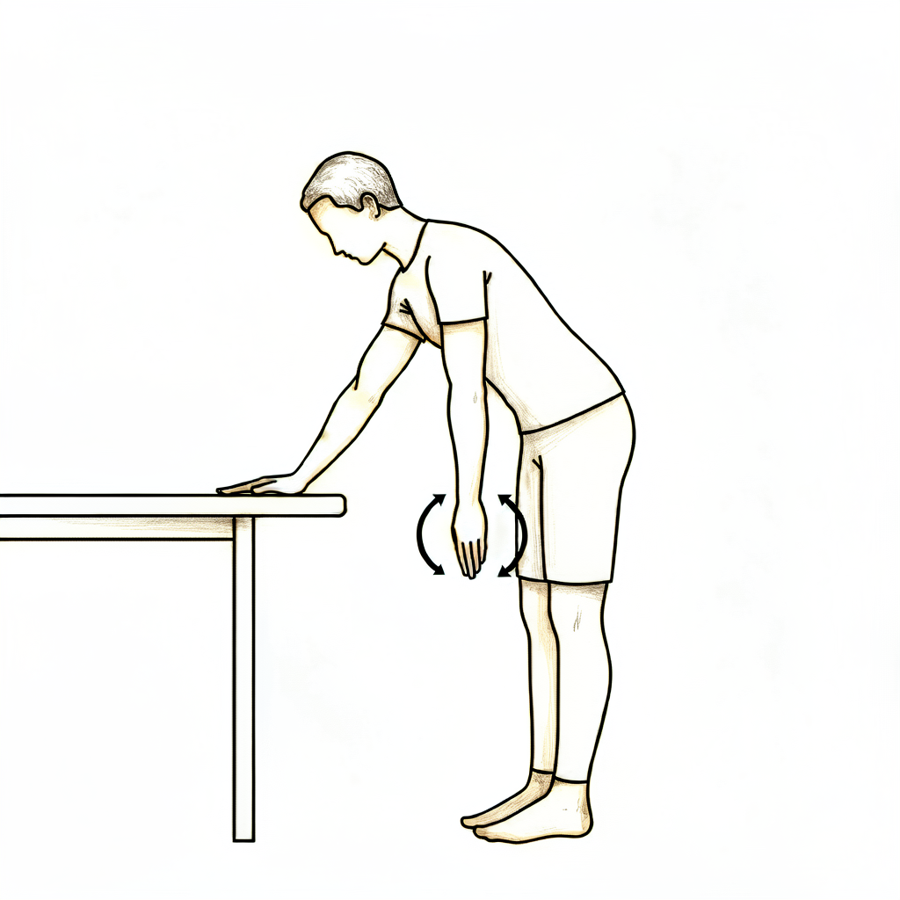
Ehersisyong pendulum
Yumuko pasulong mula sa baywang at hayaang nakabitin nang dahan-dahan ang inoperahang braso palayo sa katawan. Hayaang umugoy ang braso sa maliliit at relax na bilog — ang paggalaw ay nagmumula sa iyong katawan, hindi sa mga kalamnan ng balikat. Gawin ito hanggang sa kung ano ang komportable; ang sakit ang magsisilbing gabay.
Ayon sa gabay ng iyong physiotherapist
Kieran Hirpara 4.0
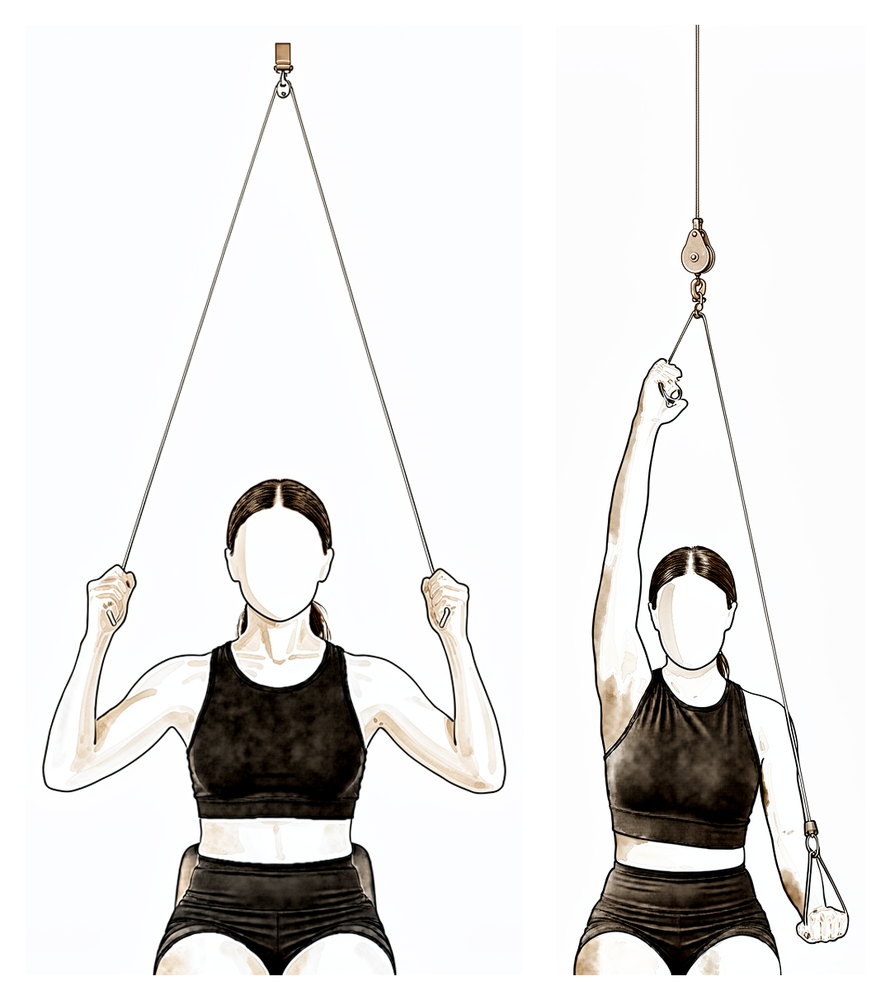
Pag-angat na may tulong ng pulley
Umupo sa ilalim ng isang over-door pulley habang humahawak ng handle sa bawat kamay. Hilahin pababa gamit ang mabuting braso upang itaas ang inoperahang braso paitaas at bahagyang nasa harap ng katawan, hayaan itong manatiling relaxed, pagkatapos ay ibaba ito nang may kontrol. Huwag pilitin o sobrahang i-stretch — gumalaw lamang sa loob ng komportableng range.
Ayon sa gabay ng iyong physiotherapist
Kieran Hirpara 4.0
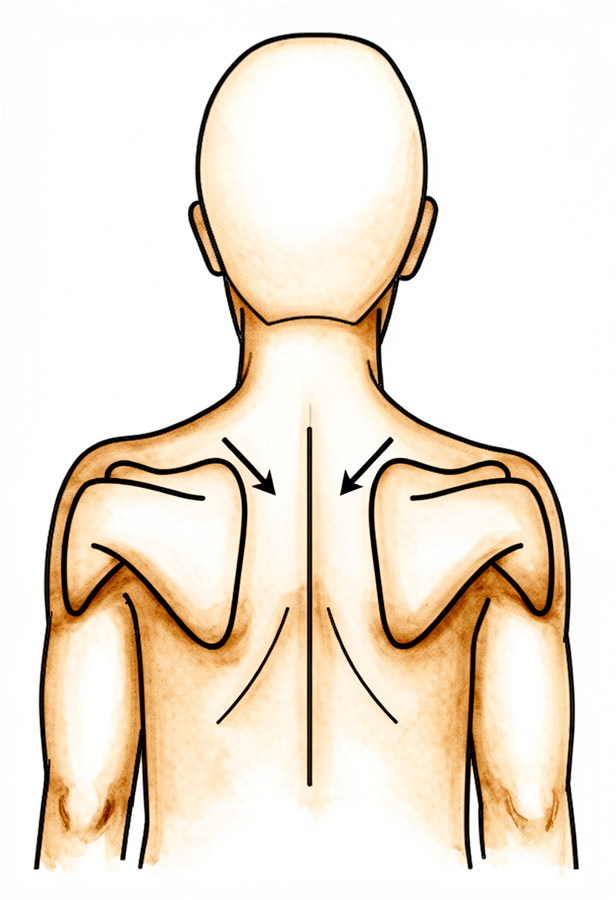
Pag-aayos ng scapula (Scapular setting)
Umupo nang tuwid, dahan-dahang hilahin ang iyong mga shoulder blade pabalik at pababa, palayo sa iyong mga tainga. Manatili sa posisyong ito ng ilang segundo, pagkatapos ay mag-relax. Isabay ito sa pagbibigay-pansin sa iyong postura sa buong araw.
Ayon sa gabay ng iyong physiotherapist
Kieran Hirpara 4.0
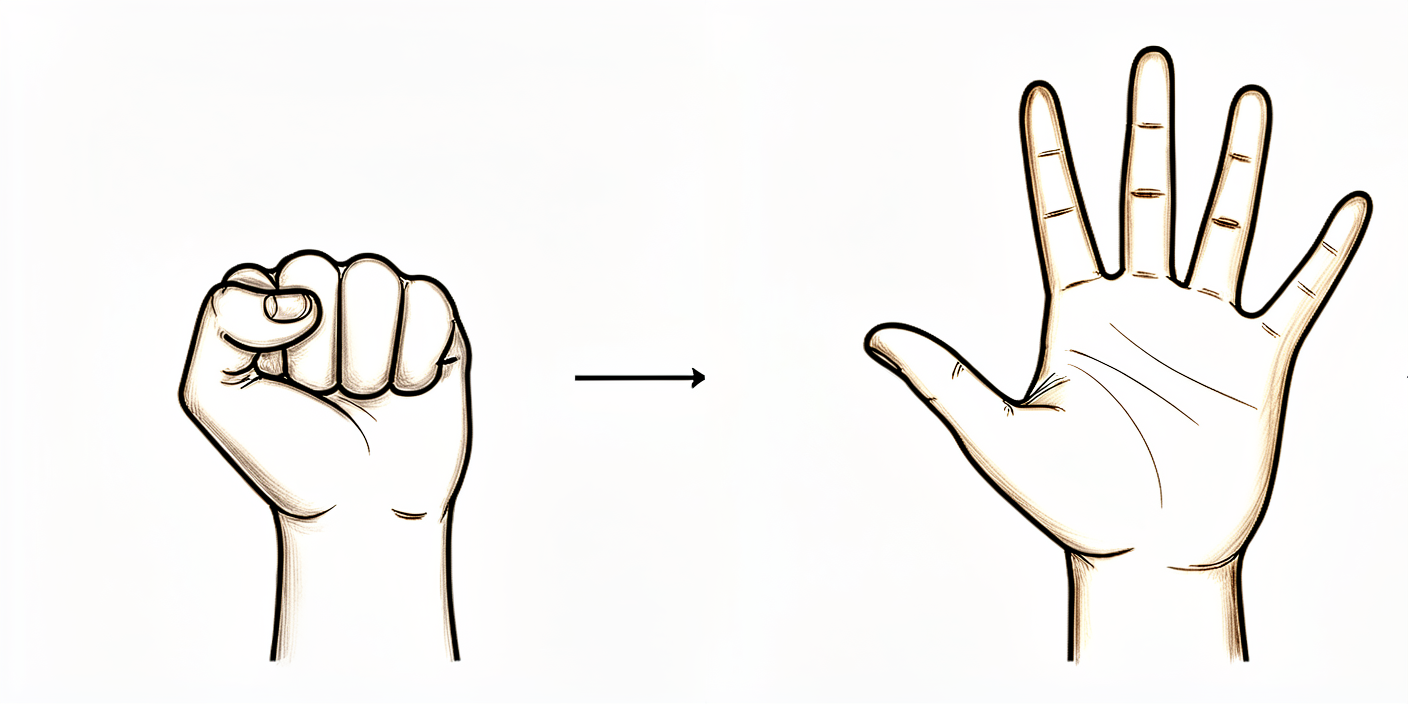
Buksan at isara ang kamay
Panatilihing gumagalaw ang iyong kamay at mga daliri sa pamamagitan ng pagbubukas at pagsasara ng mga ito, o sa pamamagitan ng pagpisil sa isang malambot na bola. Simulan ito agad upang mapanatiling gumagana ang kamay at braso habang kumakalma ang balikat.
10 beses, tatlong beses sa isang araw
Kieran Hirpara 4.0
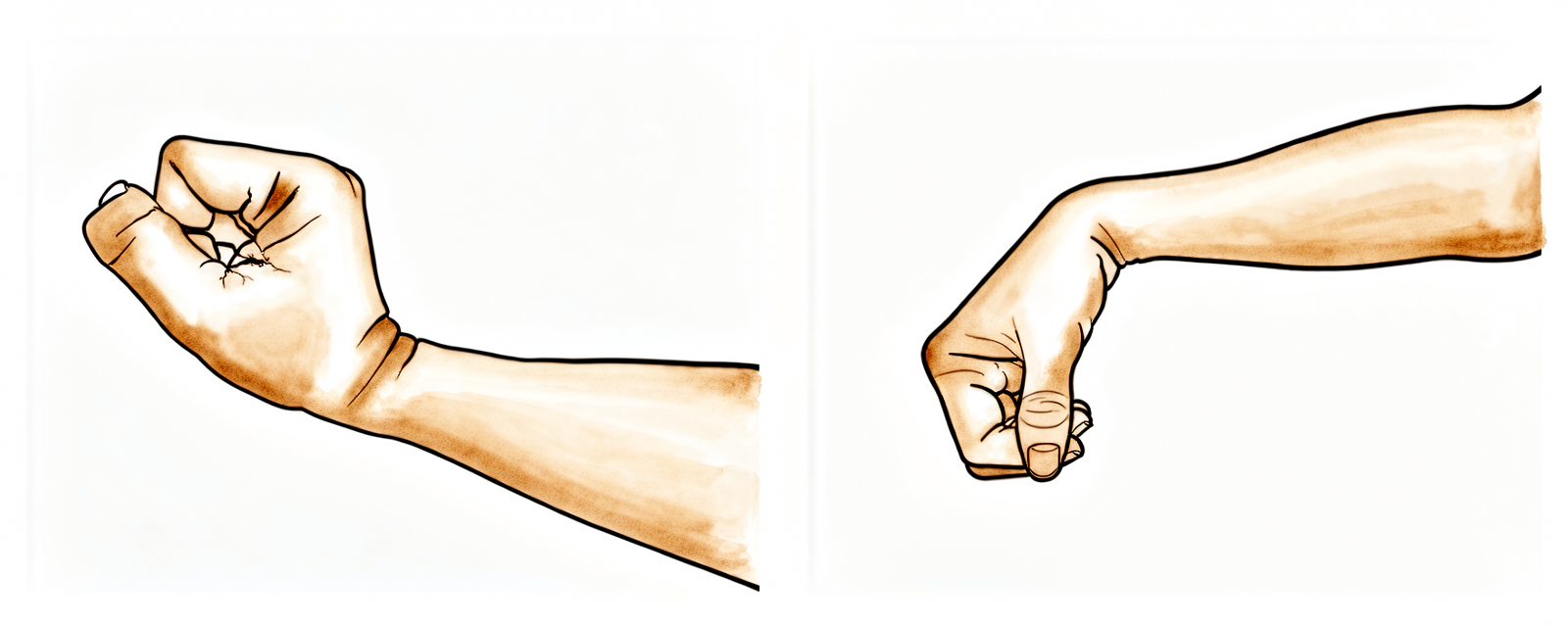
Paggalaw ng pulso
Panatilihing gumagalaw ang iyong pulso sa pamamagitan ng pagbaluktot nito pasulong, pabalik, at sa magkabilang gilid. Gawin ito mula sa unang araw upang mapanatiling gumagana ang braso habang kumakalma ang balikat.
10 beses, tatlong beses sa isang araw
Kieran Hirpara 4.0
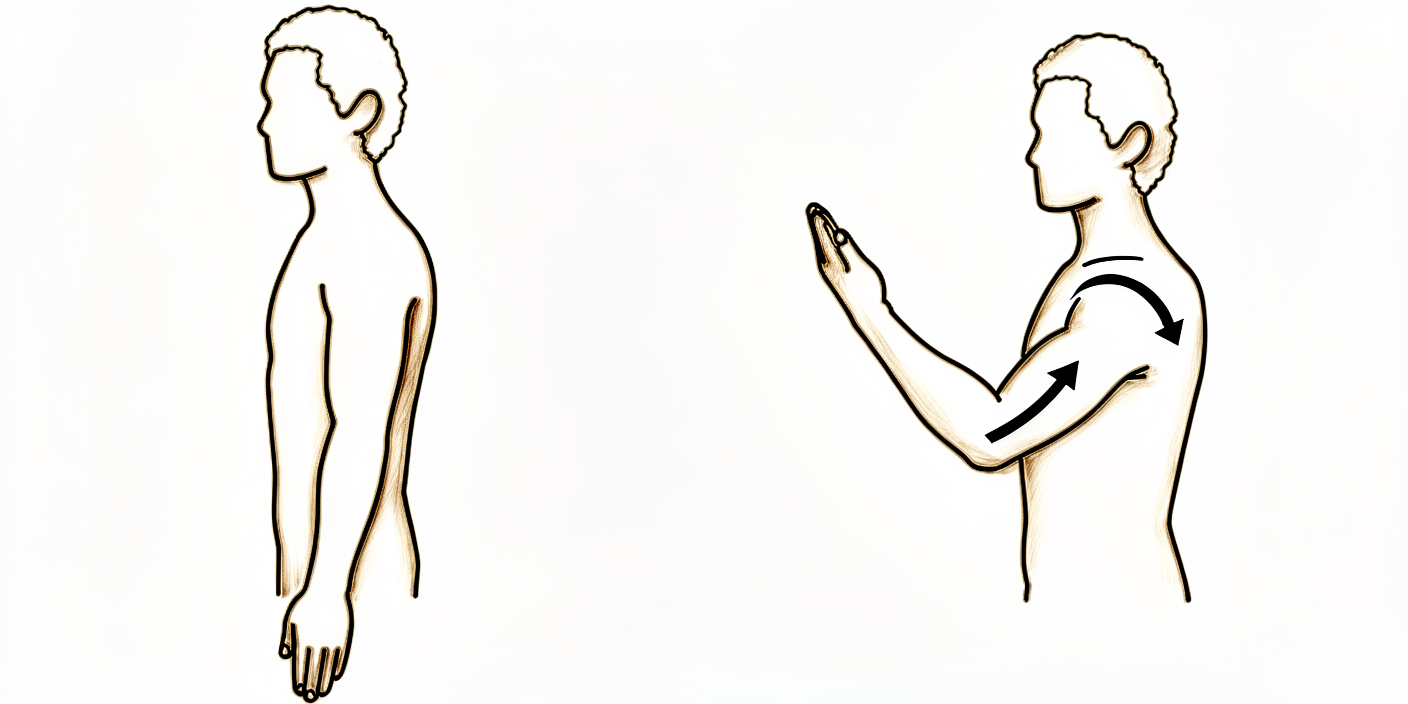
Naititiklop ang siko
Habang nakapahinga ang itaas na bahagi ng braso sa iyong tabi, itiklop ang siko hanggang sa kung saan ito komportableng makakarating, pagkatapos ay ituwid ito nang lubos. Siko lamang ang gumagalaw — panatilihing relax ang balikat. Simulan ito mula sa unang araw.
10 beses, tatlong beses sa isang araw
Kieran Hirpara 4.0
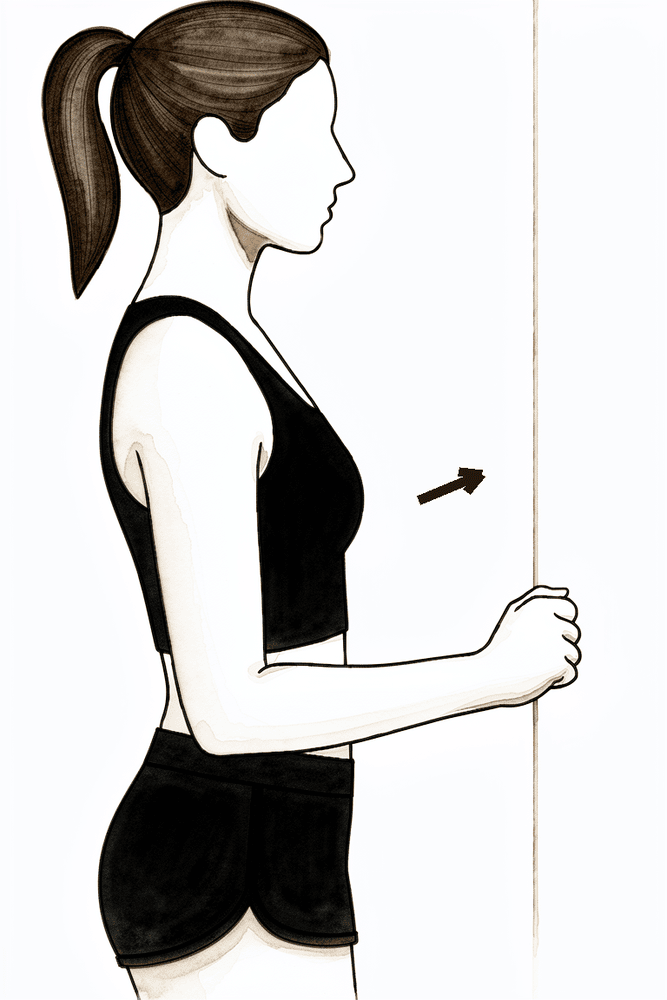
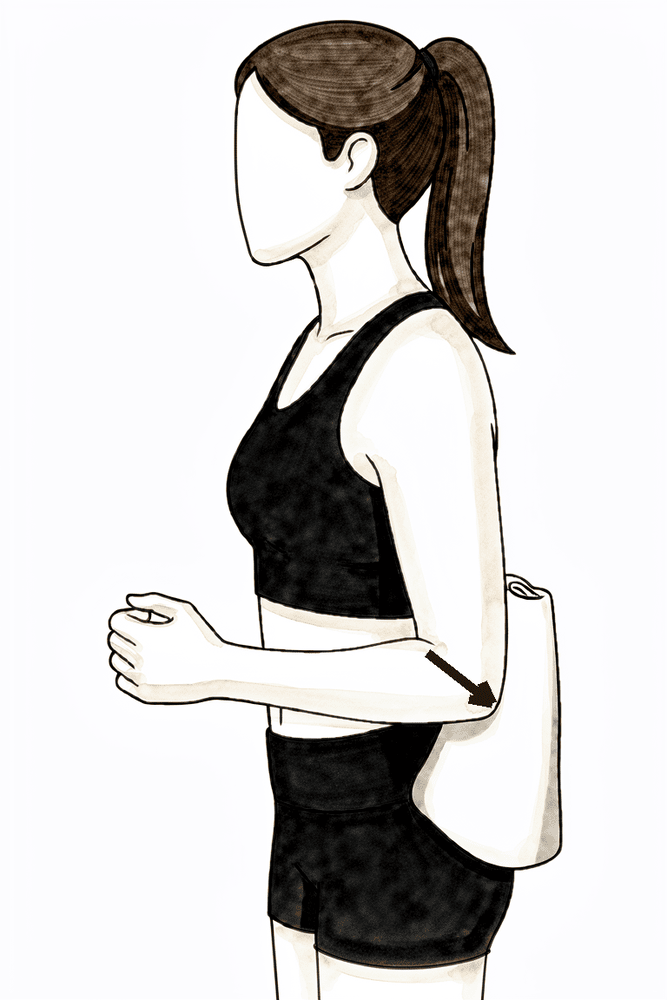
Isometric flexion
Tumayo nang nakaharap sa pader na ang iyong siko ay nakabaluktot at nakadikit sa iyong tagiliran, at ang harap ng iyong kamao ay nakasandal sa pader. Dahan-dahang itulak ang pader nang pasulong nang hindi pinapagalaw ang braso, panatilihin ito nang ilang segundo, pagkatapos ay i-relax. Pinapanatili nito ang paggana ng mga kalamnan nang walang paggalaw habang nagpapagaling ang balikat.
Hawakan nang ilang segundo, nang ilang beses; ayon sa gabay ng iyong physiotherapist
Kieran Hirpara 4.0
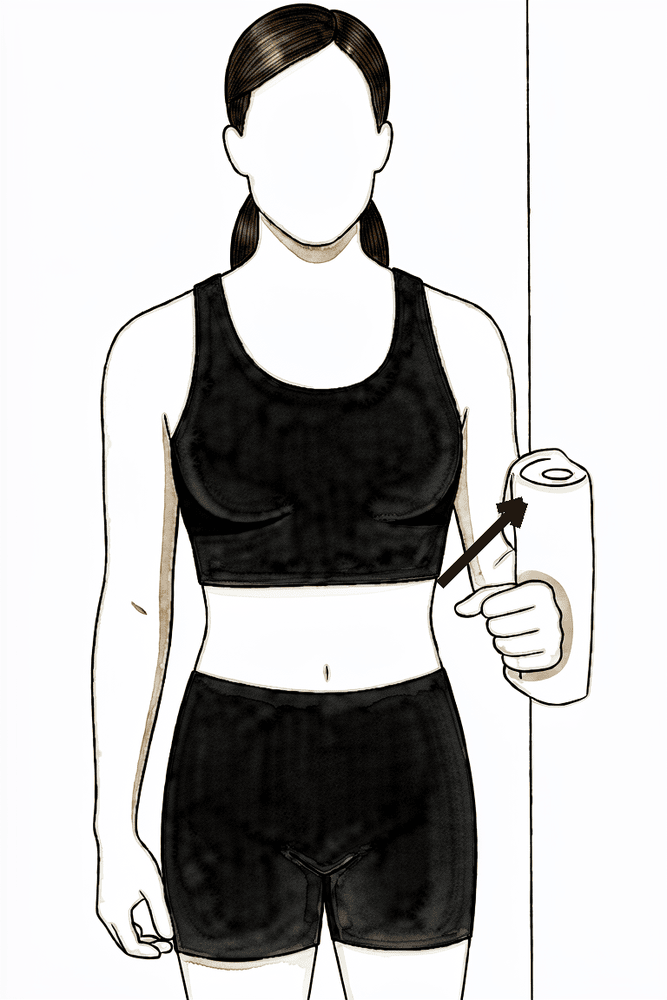
Isometric extension
Tumayo nang ang iyong siko ay nasa iyong gilid at ang likod ng iyong itaas na braso ay nakasandal sa pader. Dahan-dahang itulak ang braso pabalik sa pader nang hindi ito hinahayaang gumalaw, manatili sa posisyong ito ng ilang segundo, pagkatapos ay i-relax. Isang paraan na walang paggalaw upang mapanatiling aktibo ang mga kalamnan sa simula.
Hawakan nang ilang segundo, nang ilang beses; ayon sa gabay ng iyong physiotherapist
Kieran Hirpara 4.0
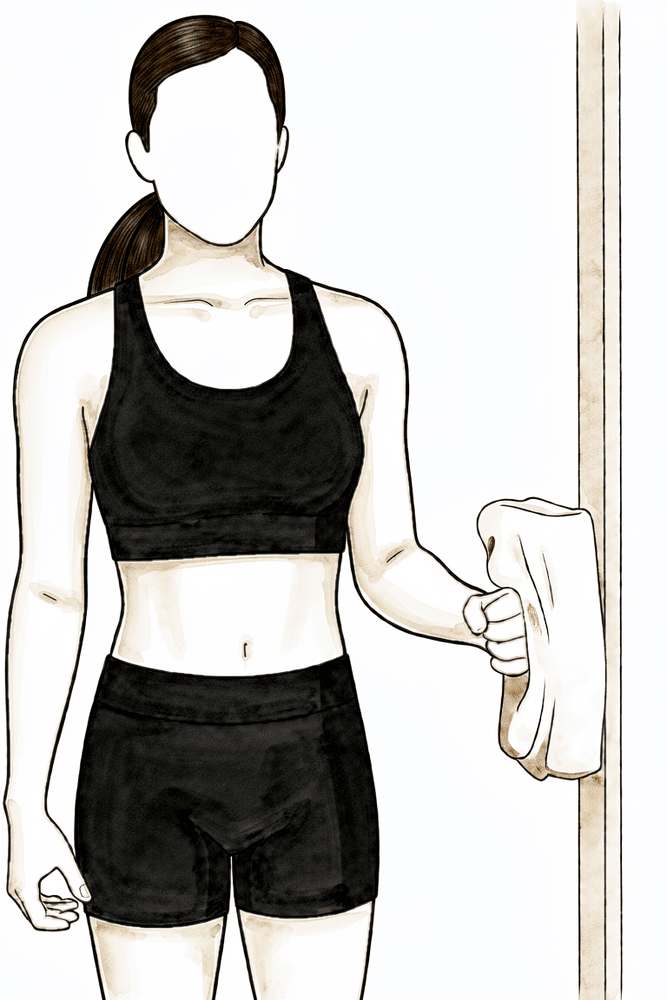
Isometric abduction
Tumayo nang patagilid na ang labas ng iyong itaas na braso ay malapit sa dingding, at ang siko ay nakadikit sa iyong tagiliran. Dahan-dahang itulak ang braso palabas patungo sa dingding nang hindi ito hinahayaang gumalaw, panatilihin ito nang ilang segundo, pagkatapos ay i-relax.
Hawakan nang ilang segundo, nang ilang beses; ayon sa gabay ng iyong physiotherapist
Kieran Hirpara 4.0
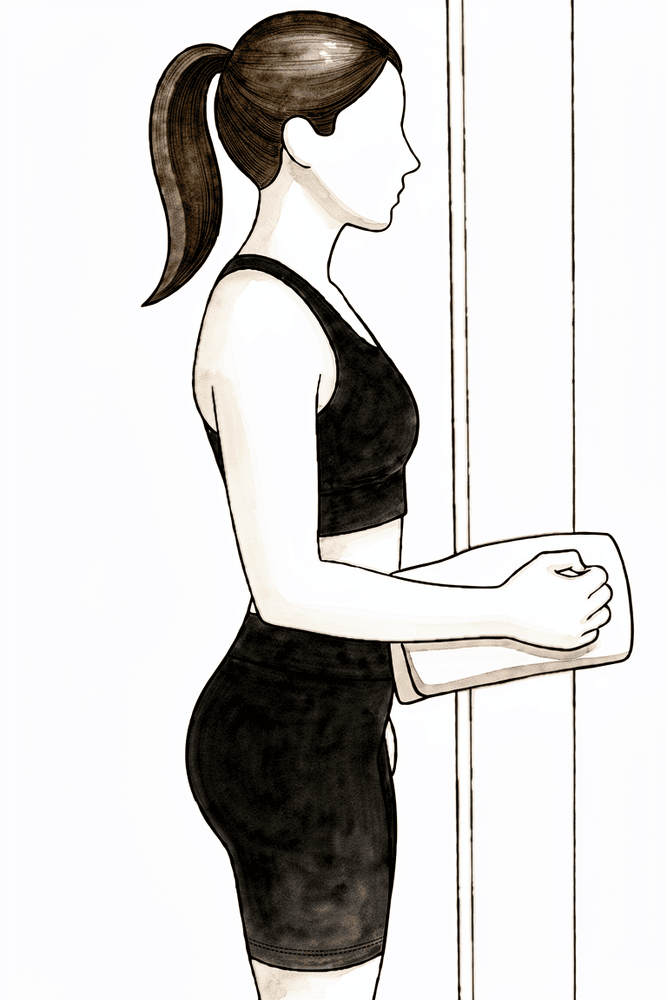
Isometric external rotation
Tumayo nang nakadikit ang iyong siko sa iyong gilid at nakabaluktot sa isang right angle, ang likod ng iyong kamay ay nakasandal sa pader o hamba ng pinto. Dahan-dahang itulak ito palabas nang hindi pinapagalaw ang braso, manatili sa posisyong ito ng ilang segundo, pagkatapos ay i-relax. Binubuo nito ang rotator cuff nang walang paggalaw.
Hawakan nang ilang segundo, nang ilang beses; ayon sa gabay ng iyong physiotherapist
Kieran Hirpara 4.0
Isometric internal rotation
Tumayo nang nakadikit ang iyong siko sa iyong gilid at nakabaluktot sa isang right angle, ang palad ng iyong kamay ay nakasandal sa pader o hamba ng pinto. Dahan-dahang itulak ito papasok nang hindi pinapagalaw ang braso, manatili sa posisyong ito ng ilang segundo, pagkatapos ay i-relax. Isang banayad na paraan upang simulan ang pag-activate ng cuff.
Hawakan nang ilang segundo, nang ilang beses; ayon sa gabay ng iyong physiotherapist
Kadalasan ay gumagamit ng nerve block habang isinasagawa ang operasyon, kaya maaaring manatiling manhid ang braso sa loob ng ilang oras pagkatapos nito; simulan ang iyong mga painkiller bago ito mawala. Sa unang dalawang linggo, simple lamang ang mga layunin: pakalmahin ang sakit at pamamaga, at pagalawin ang balikat sa abot ng iyong komportableng kapasidad. Gumamit ng yelo nang regular para sa pagpapaginhawa ng sakit. Simulan agad ang paggalaw ng iyong kamay, pulso, at siko, magdagdag ng mga pendulum exercise at assisted arm movements hangga't kaya ng iyong komportableng kapasidad, at gamitin ang braso para sa mga normal at magagaan na pang-araw-araw na aktibidad tulad ng paghuhugas, pagbibihis, at pagkain. Inumin ang iyong mga painkiller bago ang iyong mga ehersisyo at bago ang mga appointment sa physiotherapy. Ito ay isang keyhole surgery, karaniwang sa pamamagitan ng dalawa o tatlong maliliit na puncture wound na natatakpan ng mga waterproof dressing; maaari kang maligo nang nadadaanan ang mga ito simula sa unang araw (huwag ibabad o kuskusin), at mananatili ang mga ito hanggang sa iyong wound review sa 10–14 araw. Ang mga taong may desk-based jobs ay karaniwang bumabalik sa trabaho sa loob ng unang dalawang linggo; ang pagmamaneho ay hihintayin hanggang sa payagan ka ng iyong surgeon, karaniwan sa six-week review.
Para sa iyong physiotherapist:
Mga Layunin
- Pakalmahin ang sakit at pamamaga
- Muling itatag ang non-painful range of motion (active-assisted patungo sa active)
- Iwasan ang muscular atrophy at simulan ang muling pagtatatag ng dynamic stability
- Pagiging independyente sa mga magagaan na aktibidad ng pang-araw-araw na pamumuhay
Pamamahala
- Cryotherapy nang regular para sa sakit at pamamaga; analgesia bago ang mga ehersisyo at session
- Elbow, wrist, hand, neck, at thoracic range-of-motion exercises simula sa unang araw
- Pendulums; pulley o wand active-assisted elevation sa scapular plane; external at internal rotation simula sa 30–45° ng abduction
- Mag-progress sa active range of motion hangga't kaya ng komportableng kapasidad
- Scapular setting habang nakaupo; postural awareness
- Submaximal isometrics (flexion, extension, abduction, external at internal rotation) at gentle rhythmic stabilisation
- Simula sa linggo 2: init bago ang ehersisyo kung nakatutulong; i-progress ang rotation work patungo sa 90° ng abduction; external at internal rotation gamit ang elastic tubing, ang braso ay nasa gilid
Mga Pag-iingat
- Magtrabaho sa loob ng mga komportableng range: huwag pilitin o sobrahang i-stretch; ang sakit ang magsisilbing gabay
- Sling para sa komportableng pakiramdam lamang; unti-unting bawasan ang paggamit sa unang mga araw at alisin na pagsapit ng dalawang linggo
- Bawal magmaneho sa loob ng anim na linggo (nalalapat ito sa anumang operasyon sa balikat)
- Bawal ang mabibigat na pagbuhat, bawal ang pagbuhat nang nakataas sa ulo, bawal ang mga biglaang paggalaw (jerking movements)
- Iwasang tumulak paitaas mula sa upuan o kama gamit ang inoperahang braso sa unang anim na linggo: ang acromion ay pinanipis at dapat iwasan ang puwersadong loading habang ito ay nag-remodel
Mga Kraytirya para sa pag-progress
- Ang sakit ay kontrolado nang maayos gamit ang simpleng analgesia
- Ang pamamaga ay humuhupa at ang mga sugat ay magaling na o gumagaling nang walang anumang alalahanin
- Komportableng active-assisted movement, na may active movement na bumabalik sa ibaba ng taas ng balikat
Phase II — Pagbabalik ng iyong range at pagsisimula ng lakas (Linggo 2–6)
Kieran Hirpara 4.0
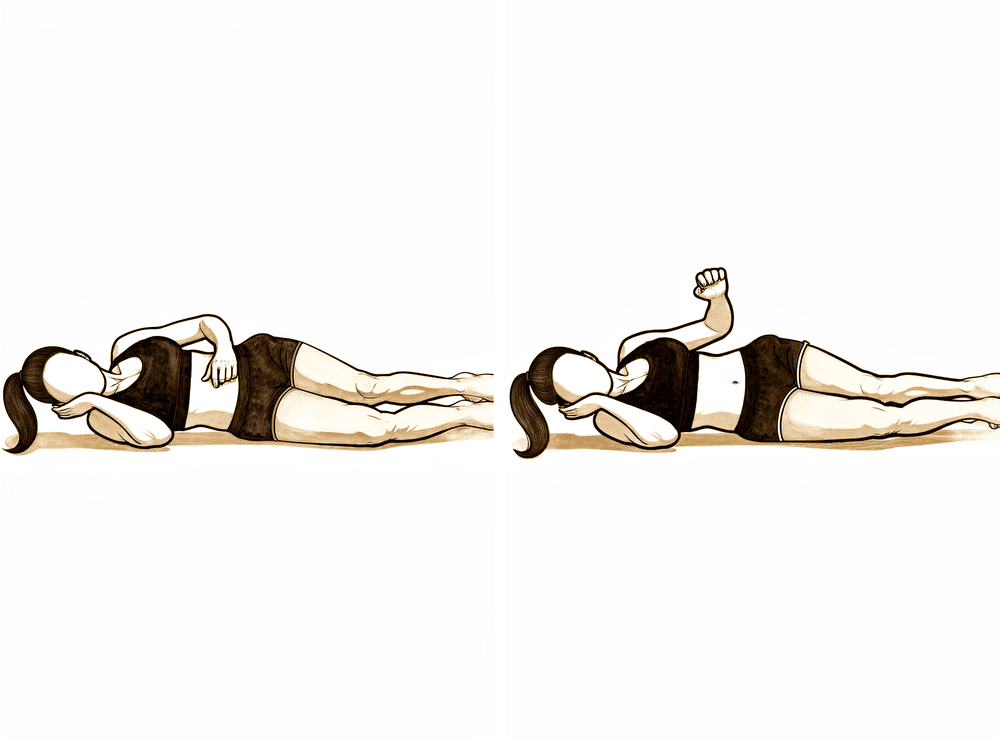
Side-lying external rotation
Humiga sa gilid na hindi naoperahan na ang itaas na siko ay nakabaluktot sa right angle at nakadikit sa iyong katawan. Habang pinapanatili ang siko sa iyong gilid, i-rotate ang forearm pataas patungo sa kisame, pagkatapos ay ibaba ito nang may kontrol. Magsimula nang walang bigat.
Magdagdag ng magaan na timbang (0.5–1 kg) pagkatapos ng isang linggo ng walang sakit at kontroladong mga repetisyon
Kieran Hirpara 4.0
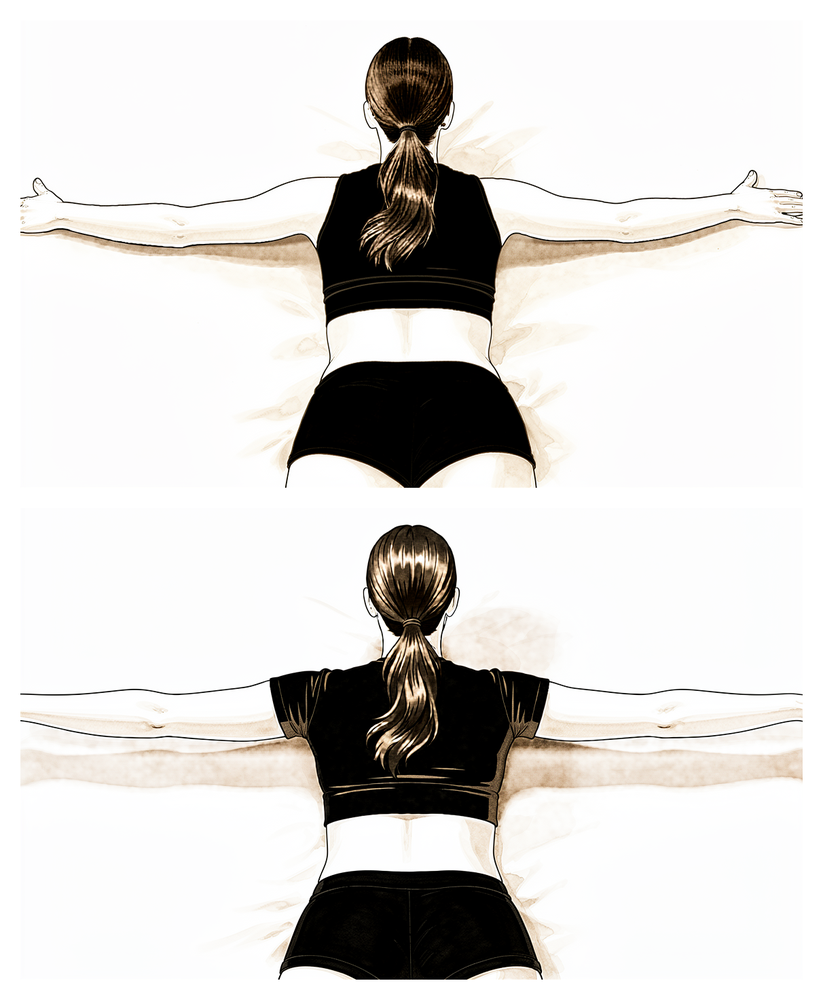
Prone horizontal abduction (prone 'T')
Humiga nang nakadapa na ang braso ay nakabitin patungo sa sahig. Pisilin ang shoulder blade papasok sa direksyon ng spine at iangat ang braso palabas sa gilid hanggang sa lebel ng balikat, na ang hinlalaki ang nangunguna, pagkatapos ay dahan-dahang ibaba. Magsimula nang walang bigat; maaaring magdagdag ng magaan na bigat kapag ang mga repetisyon ay wala nang sakit at kontrolado na nang mabuti.
Ayon sa gabay ng iyong physiotherapist
Kieran Hirpara 4.0
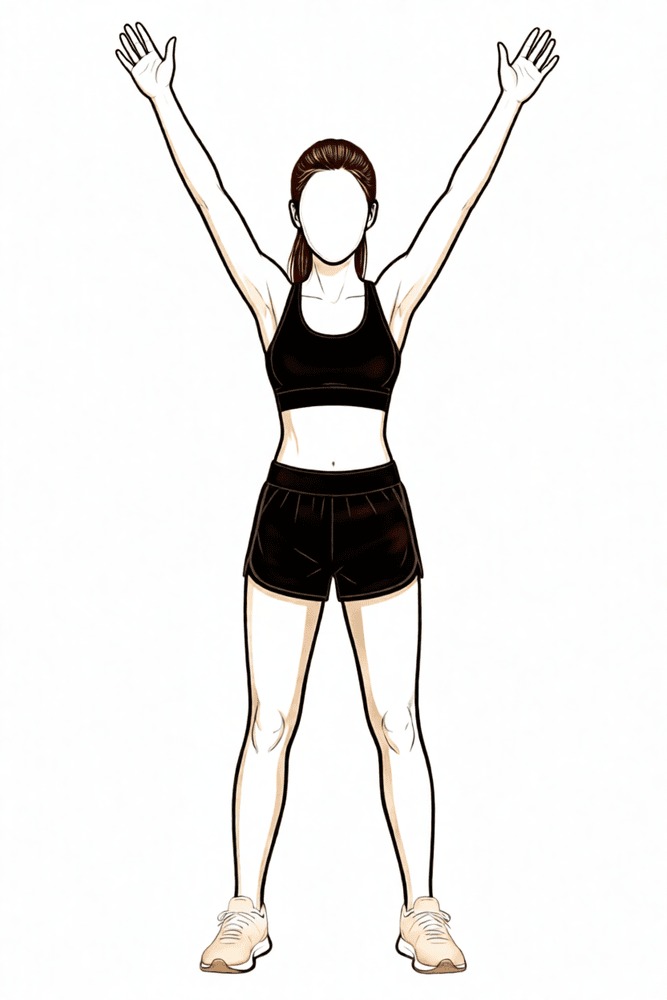
Retraining ng lower trapezius
Dapa sa kama o mesa na ang braso ay nakarelaks sa gilid. Hilahin ang shoulder blade pababa at papasok patungo sa spine, hayaang umangat ang braso habang gumagalaw ang blade — ang puwersa ay nagmumula sa ibaba ng shoulder blade, hindi mula sa pag-angat ng balikat. Ibaba nang dahan-dahan at ulitin.
Ayon sa gabay ng iyong physiotherapist
Kieran Hirpara 4.0
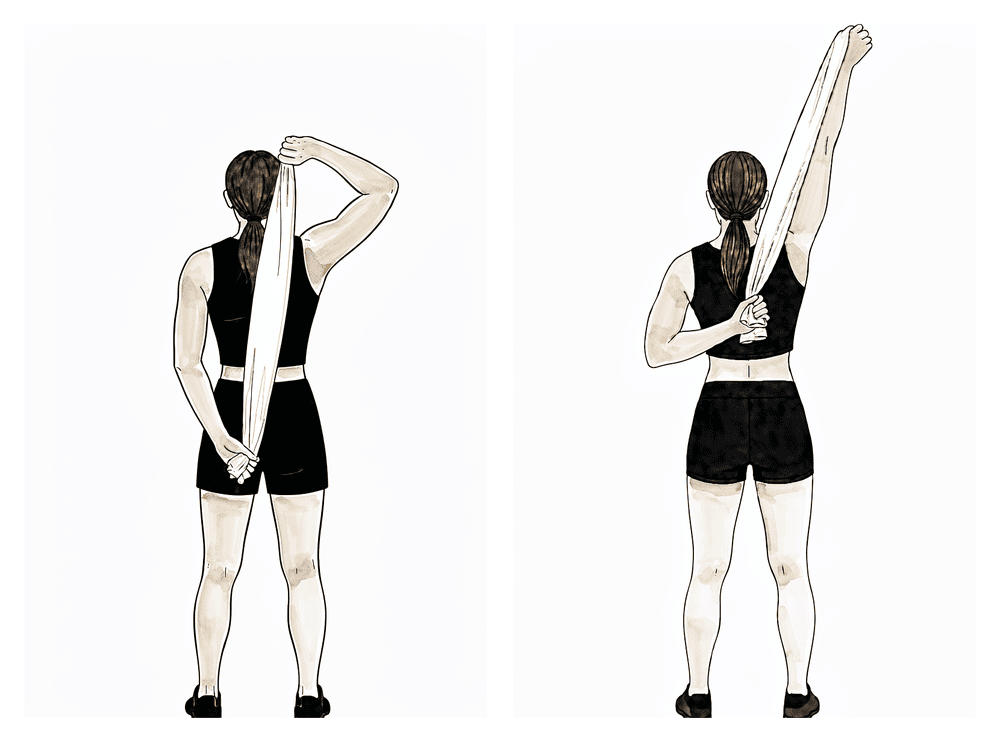
Stretch sa likod ng katawan
Humawak ng tuwalya sa likod, kung saan ang kamay na inoperahan ay nasa ibaba at ang maayos na kamay ay nasa itaas. Gamitin ang maayos na braso upang dahan-dahang hatakin ang kamay na inoperahan pataas sa likod hanggang sa makaramdam ng stretch, panatilihin ito nang sandali, pagkatapos ay ibaba. Ang layunin ay isang banayad na stretch sa likod ng balikat — huwag itong pilitin.
Ayon sa gabay ng iyong physiotherapist
Kieran Hirpara 4.0
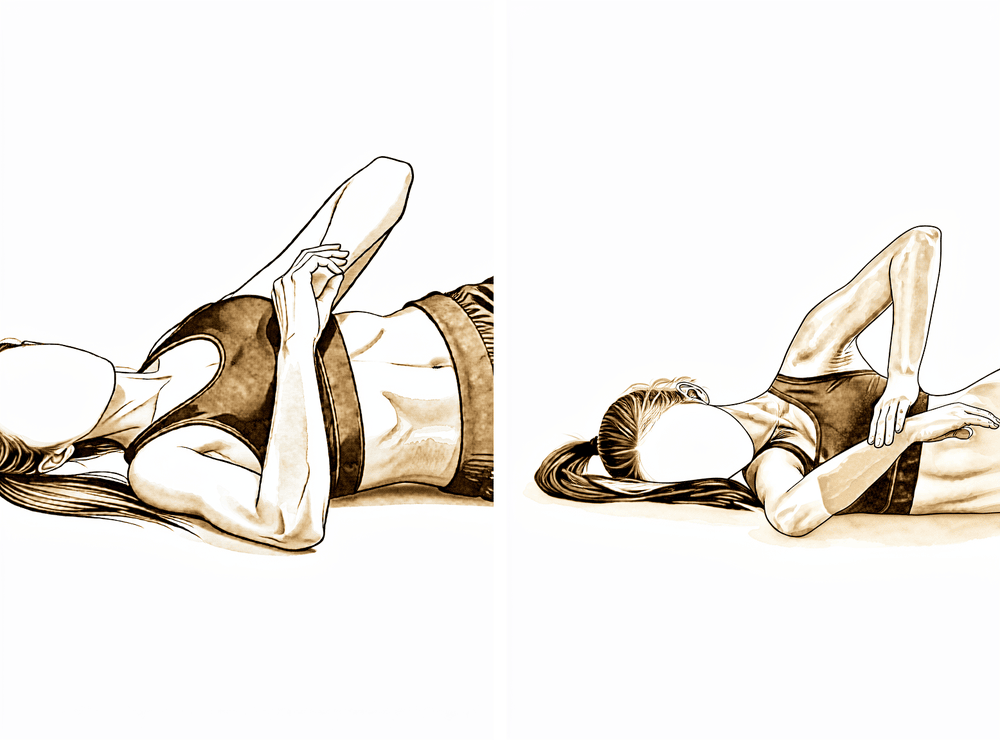
Sleeper stretch (posterior capsule)
Humiga sa panig na inoperahan na ang balikat at siko ay parehong nakabaluktot sa right angle. Gamit ang iyong kabilang kamay, dahan-dahang itulak ang forearm pababa sa kama hanggang sa makaramdam ng stretch sa likod ng balikat, pagkatapos ay luwagan ito. Ito ang posterior capsular stretch na gagamitin ng iyong physiotherapist upang mapaluwag ang rotation — panatilihin itong dahan-dahan, walang matalas na sakit.
Hawakan nang 20–30 segundo, nang ilang beses; ayon sa gabay ng iyong physiotherapist
Kieran Hirpara 4.0
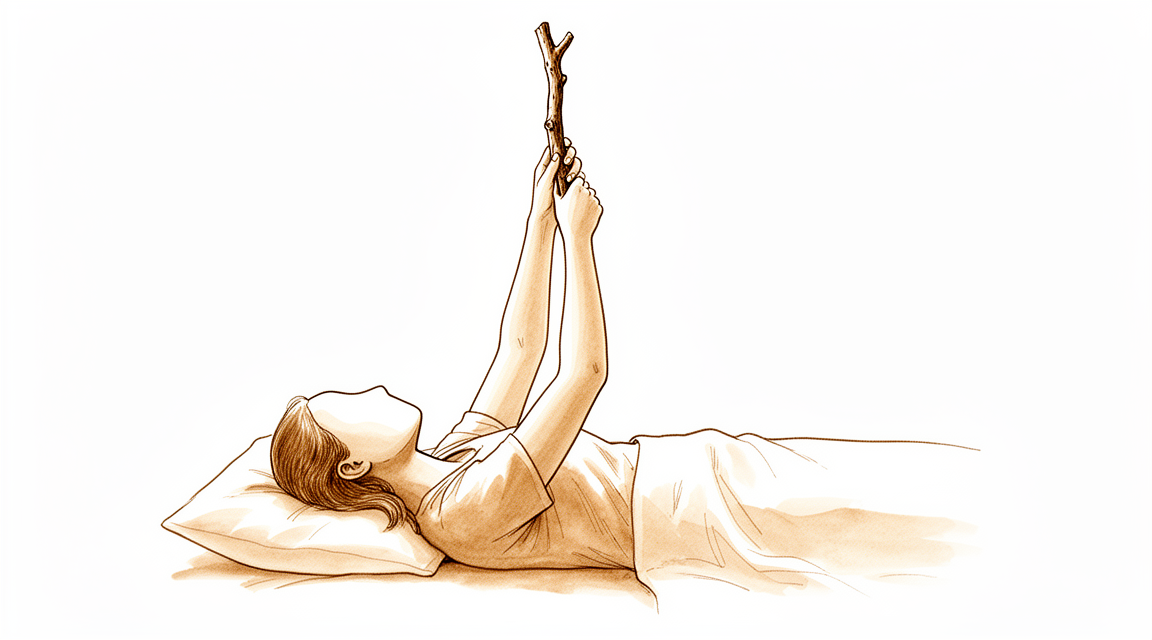
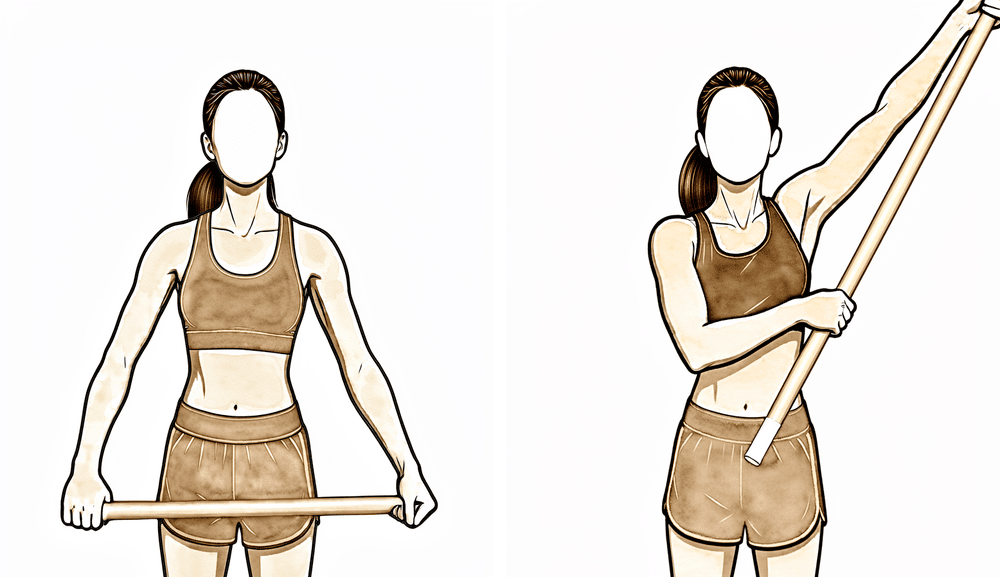
Tinutulungang abduction gamit ang stick
Humiga nang patihaya at humawak ng isang stick sa magkabilang kamay. Gamitin ang maayos na braso upang gabayan ang inoperahang braso palabas sa gilid patungo sa lebel ng balikat, pagkatapos ay ibaba ito nang may kontrol. Nakatutulong ito upang maibalik ang abduction patungo sa 90 degrees habang bumabalik ang iyong range.
Ayon sa gabay ng iyong physiotherapist
Kieran Hirpara 4.0
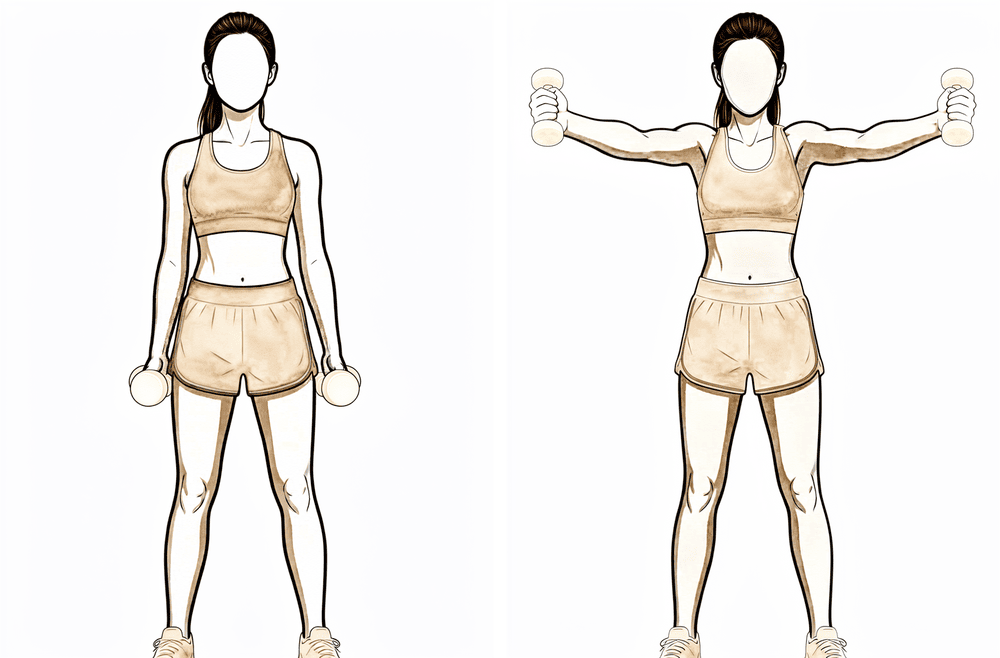
Scaption (full-can elevation)
Tumayo nang ang braso ay nasa iyong tabi, at ang hinlalaki ay nakaturo pataas. Itaas ang braso sa isang forward angle — sa gitna ng diretso sa harap at palabas sa gilid — hindi tataas nang higit sa komportable, pagkatapos ay ibaba ito nang dahan-dahan. Magsimula nang walang pabigat; panatilihing nakapirme ang shoulder blade at iwasang mag-shrug.
Magsimula nang walang bigat; magdagdag ng magaan na bigat kapag ang mga repetisyon ay wala nang sakit at kontrolado na nang mabuti
Kieran Hirpara 4.0
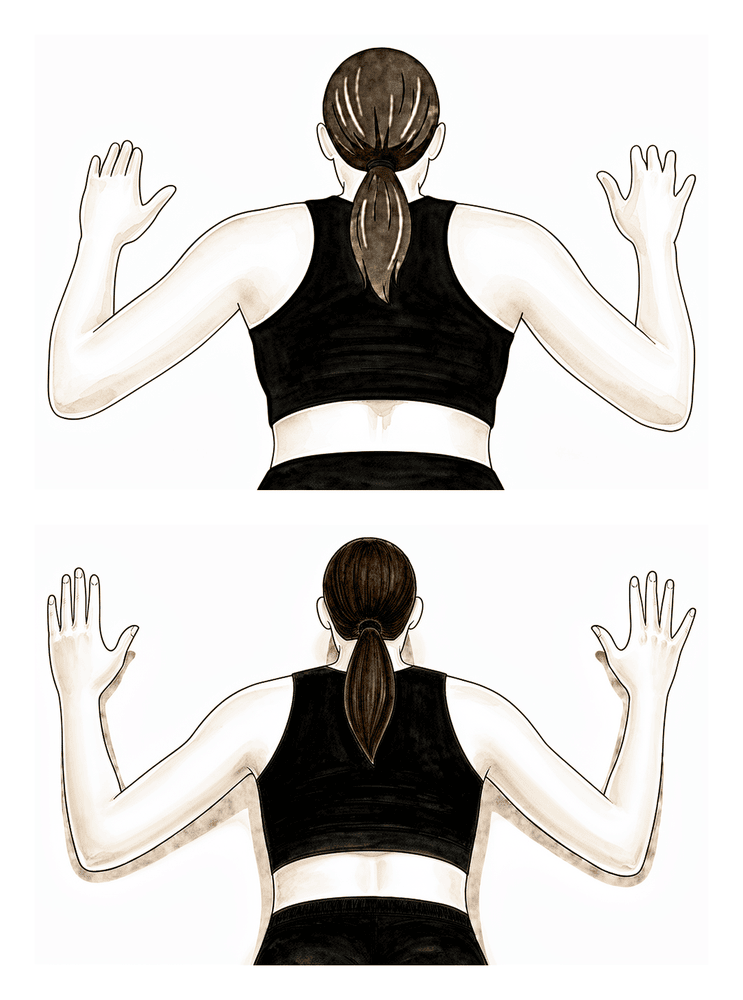
Prone row
Humiga nang nakadapa na ang mga braso ay nakalaylay patungo sa sahig. Pagdikitin ang mga shoulder blade at hilahin ang mga siko pabalik at pababa upang ang mga braso ay bumuo ng hugis 'W', pagkatapos ay dahan-dahang ibaba. Magsimula nang walang bigat; maaaring magdagdag ng magaan na bigat kapag ang mga repetisyon ay wala nang sakit at kontrolado na nang mabuti.
Magsimula nang walang bigat; magdagdag ng magaan na bigat (humigit-kumulang 0.5–1 kg) pagkatapos ng isang linggo ng mga repetisyon na walang sakit
Ang phase na ito ay tungkol sa pagbabalik ng natitira mong paggalaw at pagsisimulang muling bumuo ng lakas. Ang iyong mga ehersisyo ay uunlad mula sa mga assisted movement patungo sa aktibong paggalaw ng braso sa lahat ng direksyon, kung saan karamihan sa mga nailathalang protocol ay inaasahan ang full o near-full range sa loob ng mga anim hanggang walong linggo. Ang pagpapalakas ay nagsisimula nang dahan-dahan: una ay nang walang weight, pagkatapos ay gamit ang mga elastic band at napakagagaan na weight para sa rotator cuff at mga kalamnan ng shoulder blade. Maraming tao ang nakakahanap na nakatutulong ang heat bago ang ehersisyo at ice pagkatapos nito. Ang katamtamang trabaho (magaang pagbuhat sa ibaba ng taas ng balikat) ay karaniwang nagiging posible sa phase na ito, sa gabay ng iyong physiotherapist.
Para sa iyong physiotherapist:
Mga Layunin
- Full, o near-full, active range of motion sa lahat ng plane sa paligid ng linggo 6–8
- Mabawi at mapabuti ang lakas ng rotator cuff at scapular
- Ma-normalise ang scapulohumeral rhythm at neuromuscular control
- Ipagpatuloy ang pagpapakalma ng sakit
Pamamahala
- Paunlarin ang range of motion sa lahat ng plane, kabilang ang behind-the-back internal rotation na may banayad na posterior capsular stretching
- Glenohumeral joint mobilisation (inferior, posterior at anterior glides) ayon sa indikasyon
- Isotonic program na nagsisimula nang unweighted (shoulder elevation, prone rowing, prone horizontal abduction, prone extension to neutral, sidelying external rotation, abduction to 90°), pagdaragdag ng light weight (mga 0.5–1 kg) pagkatapos ng isang linggo ng pain-free at well-controlled na mga repetition
- External at internal rotation gamit ang elastic tubing; paunlarin patungo sa rotation work sa mas mataas na mga posisyon ayon sa kakayahan/comfort
- Scapular neuromuscular control at lower trapezius work; conditioning ng trunk, core at lower-limb
- Upper-limb endurance work; heat bago at ice pagkatapos ng mga session ayon sa kagustuhan
Mga Pag-iingat
- Iwasan ang loaded work sa isang masakit na impingement range; ang mga ehersisyo ay maaaring mahirap, ngunit hindi dapat ibalik ang pre-operative pain
- Huwag targetin ang supraspinatus o mid-deltoid loading hanggang sa ito ay pain-free, at iwasan ito kung nagdudulot ito ng resting o night pain
- Ipagpatuloy ang pag-iwas sa pagtulak paitaas (pushing up) gamit ang inoperahang braso at mabigat o overhead lifting hanggang anim na linggo
Mga Kraytirya para sa pag-unlad
- Full, non-painful range of motion na may minimal na tenderness
- Lakas ng rotator cuff na humigit-kumulang 4/5 sa manual testing, na may mabuting scapular control
Phase III — Pagpapalakas (Linggo 6–12)
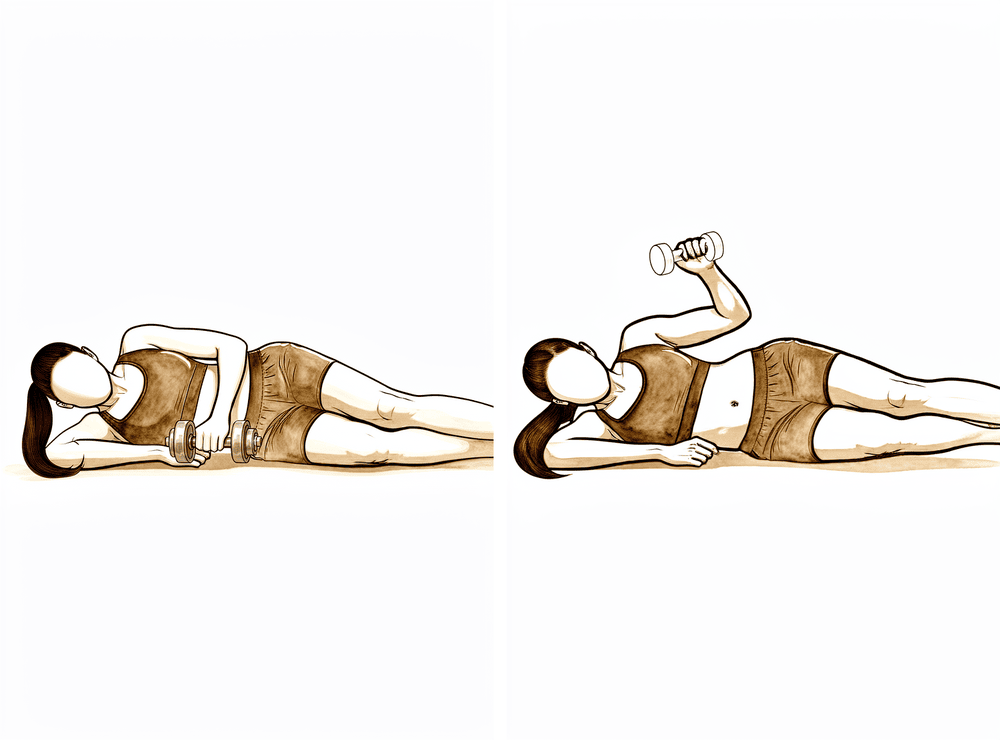
Kieran Hirpara 4.0
Side-lying external rotation na may weight
Humiga sa gilid na hindi naoperahan na ang itaas na siko ay nakabaluktot sa right angle at nakadikit sa iyong katawan. Habang humahawak ng magaan na pabigat, i-rotate ang forearm pataas patungo sa kisame, pagkatapos ay dahan-dahang ibaba. Ang mga ehersisyo ay dapat maramdamang may pagpapagal ngunit nananatiling halos walang sakit — bawasan ang anumang nagdudulot ng resting pain o night pain.
2–3 set ng 8–12 repetitions
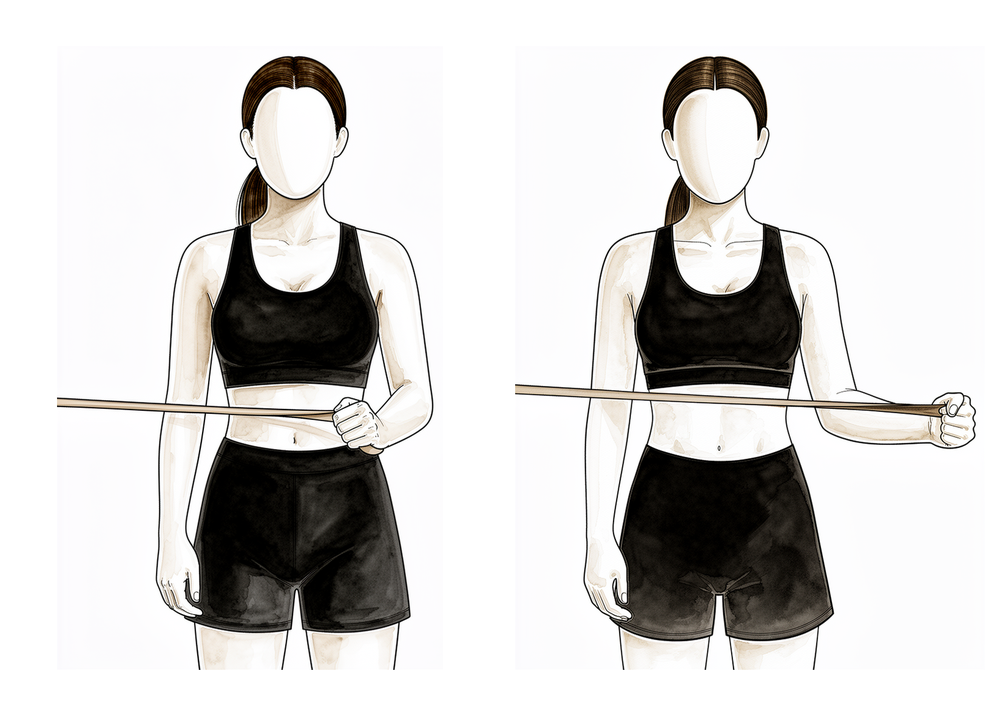
Kieran Hirpara 4.0
Band external rotation
Tumayo nang nakadikit ang iyong siko sa iyong tagiliran at nakabaluktot sa isang right angle, habang hawak ang isang elastic band na naka-angkla sa taas ng baywang. Panatilihing nakadikit ang siko sa iyong tagiliran, i-rotate ang forearm palabas laban sa band, pagkatapos ay dahan-dahang ibalik. Pinauunlad nito ang rotator cuff mula sa naunang isometric at unweighted work.
2–3 set ng 8–12 repetitions
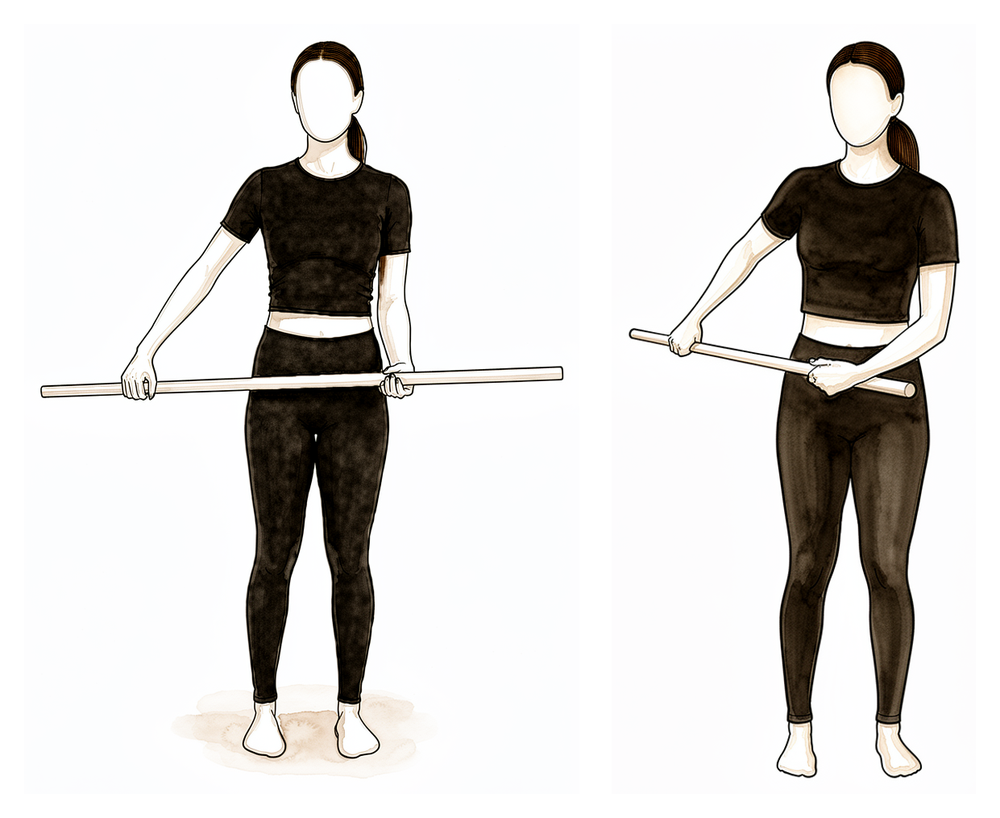
Kieran Hirpara 4.0
Internal rotation ng band
Habang nakadikit ang iyong siko sa iyong tagiliran, hawakan ang isang band na naka-angkla sa isang panig at i-rotate ang forearm papasok sa tapat ng iyong katawan laban sa band, pagkatapos ay dahan-dahang ibalik. Panatilihing progresibo ang resistance habang lumalakas ang iyong muscles.
2–3 set ng 8–12 repetitions
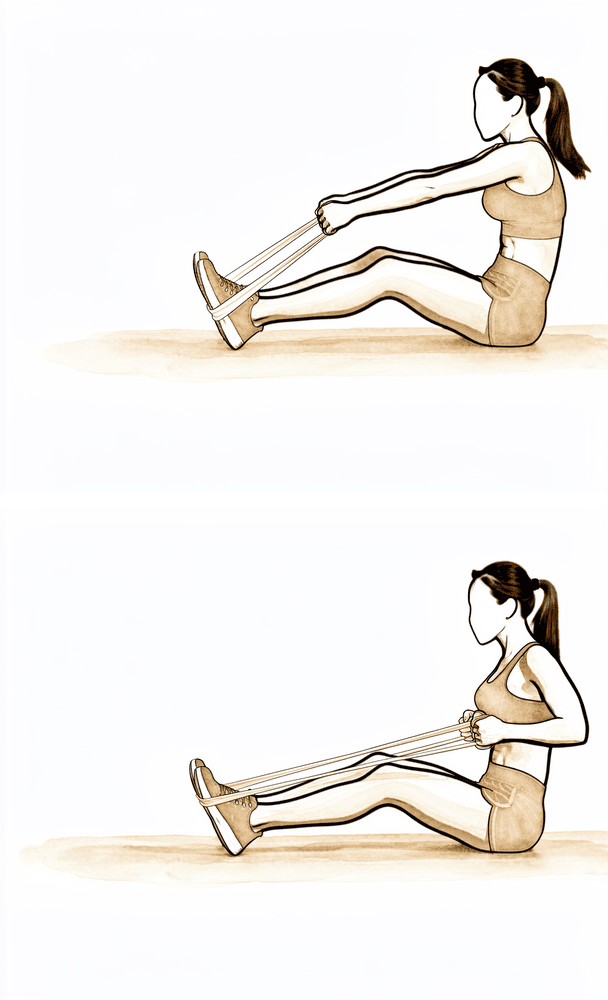
Kieran Hirpara 4.0
Standing row
Humawak ng band na naka-angkla sa harap mo sa taas ng iyong baywang. Panatilihing medyo tuwid ang braso, hilahin ito pabalik at pababa patungo sa iyong balakang, pigain ang shoulder blade pababa at pabalik, pagkatapos ay dahan-dahang ibalik. Binubuo nito ang mga kalamnan ng shoulder blade na sumusuporta sa cuff.
2–3 set ng 8–12 repetitions
Kieran Hirpara 4.0
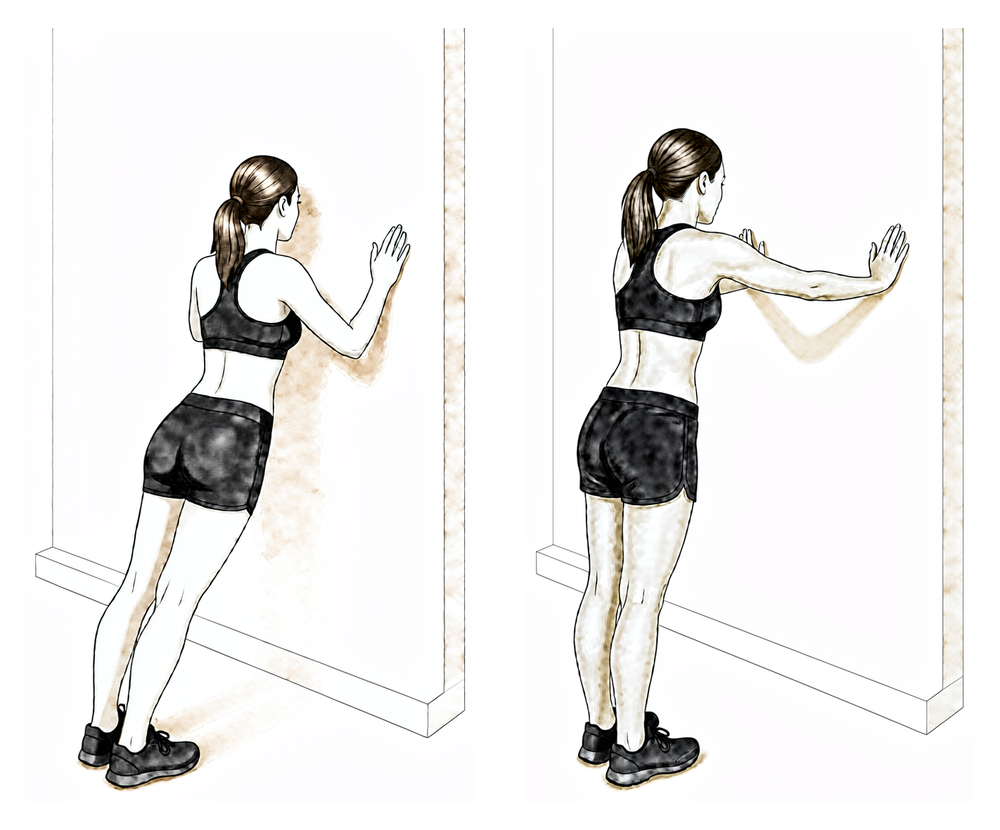
Wall push-up plus
Tumayo nang nakaharap sa pader na ang mga kamay ay nakalapat dito sa taas ng balikat. Itiklop ang mga siko upang humilig patungo sa pader, pagkatapos ay itulak pabalik, na may kasamang banayad na pagtulak gamit ang mga kamay sa dulo upang ihiwalay ang mga shoulder blade. Isang closed-chain exercise upang bumuo ng kontrol — simulan ito ayon sa gabay ng iyong physiotherapist.
Ayon sa gabay ng iyong physiotherapist
Ngayong naibalik na ang iyong paggalaw, ang atensyon ay nakatuon na sa lakas, endurance at kontrol. Ang resistance work ay uunlad mula sa mga band patungo sa mga weights, at ang ehersisyo ay magiging mas dynamic, kabilang, para sa mga taong babalik sa sports, ang pagsisimula ng kontroladong plyometric work at unti-unting pagbabalik sa pagsasanay. Ang paglangoy ay karaniwang nagpapatuloy mula sa ika-anim na linggo (breaststroke muna, freestyle kapag komportable na), at ang medium work (magaang pagbuhat sa ibaba ng taas ng balikat) ay karaniwang kaya na mula sa ika-anim na linggo. Ang isang interval return-to-sport program ay karaniwang nagsisimula sa mga linggo 10–12 kapag nakamit na ang mga criteria sa lakas.
Para sa iyong physiotherapist:
Mga Layunin
- Pagbutihin ang lakas, power at endurance ng shoulder complex
- I-optimise ang neuromuscular control, proprioception at movement patterning (walang shoulder hitching)
- Maghanda para sa unti-unting pagbabalik sa sports at mas mabigat na trabaho
Pamamahala
- I-progress ang isotonic program: isometrics → elastic bands → weights; rotator cuff, deltoid at scapular stabilisers sa 2–3 sets ng 8–12 repetitions
- Ipakilala ang eccentrically resisted work, closed-chain exercises at rhythmic stabilisation; proprioceptive work kabilang ang weight-bearing at four-point kneeling
- Plyometric activities: two-handed drills (chest pass, side-to-side throws) na uunlad patungo sa one-handed drills (wall dribbles, throwing drills) bago matapos ang phase
- Simulan ang isang interval sports program sa mga linggo 10–12 kung nakamit ang mga criteria
- Ipagpatuloy ang core at conditioning work; cryotherapy kung kinakailangan
Mga Pag-iingat
- Ang mga ehersisyo ay dapat mahirap ngunit esensyal na walang sakit; bawasan ang anumang trabaho na nagdudulot ng resting o night pain
- Ang mabigat na pagbuhat at sustained overhead loading ay hintayin hanggang sa humigit-kumulang tatlong buwan
Mga Criteria para mag-progress
- Buo at walang sakit na active range of motion (humigit-kumulang katumbas ng kabilang panig)
- Lakas na papalapit sa kabilang panig (ang mga nailathalang criteria ay mula 70% para makapasok sa dynamic training, patungo sa 90% para sa pagbabalik sa sports)
- Walang sakit o tenderness sa progressive loading
Phase IV — Pagbabalik sa buong aktibidad (Ika-12 linggo onwards)
Ang huling phase ay ang unti-unting pagbabalik sa mabigat na trabaho, mga gawaing overhead, at sports. Ang mabigat o paulit-ulit na pagbubuhat at matagal na pagtatrabaho nang nakataas ang kamay lampas sa taas ng balikat ay karaniwang ipinagpapatuloy mula sa ikatlong buwan. Ang pagbabalik sa competitive sport (partikular na ang overhead sport) ay nakabase sa pagtugon sa mga criteria sa halip na sa kalendaryo: buong paggalaw na walang sakit, lakas na malapit sa kabilang panig, at kumpyansa sa mga sport-specific drill. Ang balikat ay karaniwang patuloy na bumubuti lampas sa phase na ito; inilalarawan sa mga nailathalang gabay na ang pagbuti ay nagpapatuloy hanggang isang taon.
Para sa iyong physiotherapist:
Mga Layunin
- Unti-unting pagbabalik sa mabigat na trabaho, overhead activity, at sport
- Pagpapanatili ng range of motion, lakas, at kontrol sa long term
Pamamahala
- Ipagpatuloy ang strengthening program, isulong ang gym- at sport-specific work ayon sa tolerance
- Ipagpatuloy ang interval sports program na may staged return sa pagbato (throwing) at iba pang overhead sport
- Self-managed capsular stretches at maintenance exercises kung kinakailangan
Mga Pag-iingat
- Ang progression ay nananatiling symptom-guided; kung bumalik ang sakit, bawasan ang load, ibalik ang komportableng paggalaw, at muling bumuo (rebuild)
Mga Criteria para mag-progress
- Buo at walang sakit na range of motion
- Kasiya-siyang strength at functional testing (humigit-kumulang 90% ng kabilang panig sa mga nailathalang return-to-sport criteria)
- Kasiya-siyang clinical review
Pagkatapos ng iyong protocol
Ang mga phase sa itaas ay hango sa mga nailathalang rehabilitation protocol at gabay para sa pasyente para sa arthroscopic subacromial decompression: OrthoIndy, Sports Surgery New York, Gundersen Health System Sports Medicine, Twin Cities Orthopedics, Oxford University Hospitals NHS Foundation Trust at Royal Berkshire NHS Foundation Trust. Ang mga range ng linggo ay tipikal at hindi fixed, at ang iyong patuloy na rehabilitation ay ginagabayan nang indibidwal ng iyong physiotherapist, katuwang ang practice, base sa kung paano nagpapagaling ang iyong balikat. Ang pahinang ito ay kasabay ng pangkalahatang payo sa paggaling ng practice; tingnan ang pamamahala ng post-operative pain at pag-aalaga ng sugat. Para sa mismong operasyon at sa kondisyong ginagamot nito, tingnan ang subacromial decompression. Ang ebidensya sa likod ng protocol na ito (kabilang ang kung paano ito tumutugma sa ebidensya ng trial sa subacromial surgery) ay nakabuod sa evidence section, na available bilang PDF sa itaas ng pahinang ito.
Evidence & references
This is the clinical evidence summary written for health professionals. It is technical, and it lists the research this page was built from. You do not need to read it to understand your treatment or to make a decision about it.
Arthroscopic Subacromial Decompression (Acromioplasty) — Post-operative Rehabilitation
Topic scope: Post-operative rehabilitation after isolated arthroscopic subacromial decompression (ASD / acromioplasty ± bursectomy). When a decompression is performed together with a rotator cuff repair, the repaired tendon sets the (slower) pace and the rotator-cuff-repair protocol takes priority — this page is for the isolated decompression.
Defining principle of this rehab: a subacromial decompression shaves bone and clears bursa — it repairs nothing that needs protecting. So (like a debridement, and unlike a cuff repair or stabilisation) the rehab is an early-movement pathway: a short sling for comfort only, weaned within days, motion and normal light use from day one, and a rapid return of range and function. The aim is to settle the post-operative flare and keep the shoulder moving while it quiets down — rehabilitation, not rest, does the work.
A. THE PROCEDURE & ITS EVIDENCE CONTEXT (important)
Arthroscopic subacromial decompression removes the subacromial bursa and shaves the under-surface of the acromion to "make room" for the rotator cuff, on the impingement model of subacromial pain.
The efficacy of the bony decompression itself is one of the most debated questions in shoulder surgery, and the rehabilitation context cannot be stated honestly without it:
- CSAW (Beard et al, Lancet 2018; n=313, 3-arm) — a placebo-controlled surgical RCT. Decompression gave no clinically important benefit over arthroscopy-only (placebo) surgery, and both surgical arms were only marginally better than no treatment — a difference below the pre-specified minimal clinically important threshold.
- FIMPACT (Paavola et al, BMJ 2018) — a second placebo-controlled RCT: no benefit of ASD over diagnostic arthroscopy, and neither was superior to a structured exercise programme at 2 years.
- Cochrane review (Karjalainen et al, 2019) — high-certainty evidence that subacromial decompression provides little or no clinically important benefit over placebo for pain, function, or quality of life.
The practical consequence is that structured exercise/physiotherapy is first-line for subacromial pain, and ASD is now a selective operation — reserved for patients who have failed an adequate non-operative programme or who have a specific mechanical lesion. This does not make a well-selected decompression valueless, but it explains why the post-operative emphasis is on early movement and rehabilitation, which is what reliably drives recovery.
B. POST-OPERATIVE PHASED TIMELINE (isolated decompression)
A nerve block is commonly used (numb arm for some hours — start analgesia before it wears off). Keyhole wounds; desk-based work commonly resumes within ~2 weeks.
| Phase | Window | Sling | ROM / use | Strengthening | Notes |
|---|---|---|---|---|---|
| I — Early movement | Week 0–2 | Comfort only, off within days (gone by ≤ 2 wk) | Hand/elbow immediately; pendulums + assisted motion as comfort allows; normal light daily use from day 1 | — | Settle pain/swelling; ice; analgesia before exercise. No driving while in sling (typically back ~1–3 wk once out of sling + safe emergency stop) |
| II — Restore range / start strength | Week 2–6 | Off | Progress to full active ROM all planes | Begin gentle cuff + scapular strengthening | Range comfortable below shoulder height; most daily activity resumed |
| III — Strengthening | Week 6–12 | Off | Full | Progressive cuff/scapular loading, band → light weight | Heavier and overhead loading built gradually |
| IV — Return to full activity | Week 12 + | Off | Full | Advanced/sport-specific | Full unrestricted activity typically ~3 months |
There is no construct-protection branch in the isolated decompression — the only branch is if a rotator cuff repair was also done, which converts recovery to the protected cuff-repair pathway.
C. KEY CONTROVERSIES / EVIDENCE QUALITY
- Does the bony decompression add anything? Two placebo-controlled RCTs (CSAW, FIMPACT) and a Cochrane review say it adds little or nothing over placebo or exercise for subacromial pain. Strong (RCT/SR). → exercise-first, selective surgery.
- Decompression added to a cuff repair — multiple RCTs show no added benefit of routine acromioplasty at the time of arthroscopic cuff repair. Moderate–strong.
- The post-operative rehab protocol itself — consensus/expert (institutional protocols), no defining rehab RCT; phase timings are typical, not trial-derived. Weak/consensus.
(Patient-facing note: the efficacy debate belongs in this clinician evidence section, not the patient protocol page — surfaced here for the surgeon's awareness.)
D. EVIDENCE STRENGTH FLAGS (summary)
- STRONG (RCT / SR): ASD provides little/no benefit over placebo surgery or exercise (CSAW Lancet 2018; FIMPACT BMJ 2018; Cochrane Karjalainen 2019); no benefit of added acromioplasty at cuff repair.
- MODERATE: early-motion rehabilitation after isolated decompression (institutional cohorts / consensus protocols, consistent ~3-month recovery).
- WEAK / CONSENSUS: the specific phase/timeline structure of the post-op protocol.
CITATIONS
RAG corpus (180,000+ Orthopaedic articles)
- Is acromioplasty justifiable? Orthop Traumatol Surg Res. 2019. DOI: 10.1016/j.otsr.2019.10.002
- Indications for Arthroscopic Subacromial Decompression: a Level V evidence clinical guideline. Arthroscopy. 2019. DOI: 10.1016/j.arthro.2019.06.012
- The role of subacromial decompression in patients undergoing arthroscopic repair of full-thickness rotator cuff tears. Arthroscopy. 2012. DOI: 10.1016/j.arthro.2011.11.022
- Arthroscopic repair of full-thickness rotator cuff tears with and without acromioplasty (RCT). Am J Sports Med. 2014. DOI: 10.1177/0363546514529091
- A comparative study of arthroscopic débridement versus repair for Ellman grade I partial cuff tears. J Shoulder Elbow Surg. 2020. DOI: 10.1016/j.jse.2020.03.006
Landmark trials / reviews (URLs)
- Beard DJ, et al. Arthroscopic subacromial decompression for subacromial shoulder pain (CSAW): placebo-controlled 3-group RCT. Lancet. 2018. https://www.thelancet.com/journals/lancet/article/PIIS0140-6736(17)32457-1/fulltext
- Paavola M, et al. (FIMPACT) Subacromial decompression versus diagnostic arthroscopy for shoulder impingement: randomised, placebo surgery controlled trial. BMJ. 2018;362:k2860. https://www.bmj.com/content/362/bmj.k2860
- Karjalainen TV, et al. Subacromial decompression surgery for rotator cuff disease. Cochrane Database Syst Rev. 2019. https://www.cochranelibrary.com/cdsr/doi/10.1002/14651858.CD005619.pub3/full
Published rehab protocols (basis for the phase structure)
- Kendall C. Arthroscopic Subacromial Decompression Physical Therapy Protocol. OrthoIndy. https://www.orthoindy.com/wp-content/uploads/Arthroscopic-Subacromial-Decompression.pdf
- Strauss EJ. Rehabilitation Protocol: Arthroscopic Subacromial Decompression / Distal Clavicle Excision. Sports Surgery New York. https://www.sportssurgerynewyork.com/pdf/arthroscopic-subacromial-decompression-distal-clavicle-excision-rehab-protocol.pdf
- Gundersen Health System Sports Medicine. Subacromial Decompression / Acromioplasty Rehabilitation Program. https://www.gundersenhealth.org/sites/default/files/2022-06/Sports-Medicine-Protocol-Subacromial-Decompression-Acromioplasty.pdf
- Meisterling RC. Arthroscopic Subacromial Decompression Rehabilitation. Twin Cities Orthopedics. https://tcomn.com/wp-content/uploads/2016/06/Arthroscopic-Subacromial-Decompression-Rehabilitation.pdf
- Scott-Dempster C, Harper J. Outpatient Post-operative Physiotherapy Guidelines: Sub-Acromial Decompression. Oxford University Hospitals NHS FT. https://www.ouh.nhs.uk/media/zidppie2/sub-acromial-decompression.pdf
- Royal Berkshire NHS FT. Arthroscopic subacromial decompression and/or ACJ excision: discharge advice. https://www.royalberkshire.nhs.uk/media/smegtn3c/arthroscopic-subacromial-decompression-and-or-acromioclavicular-joint-excision-discharge-advice_jul24.pdf