Patients › Rehabilitation
Proximal Humerus Fixation (ORIF)
Rehabilitation after locking-plate fixation of a proximal humerus fracture, gated on radiographic healing at review.
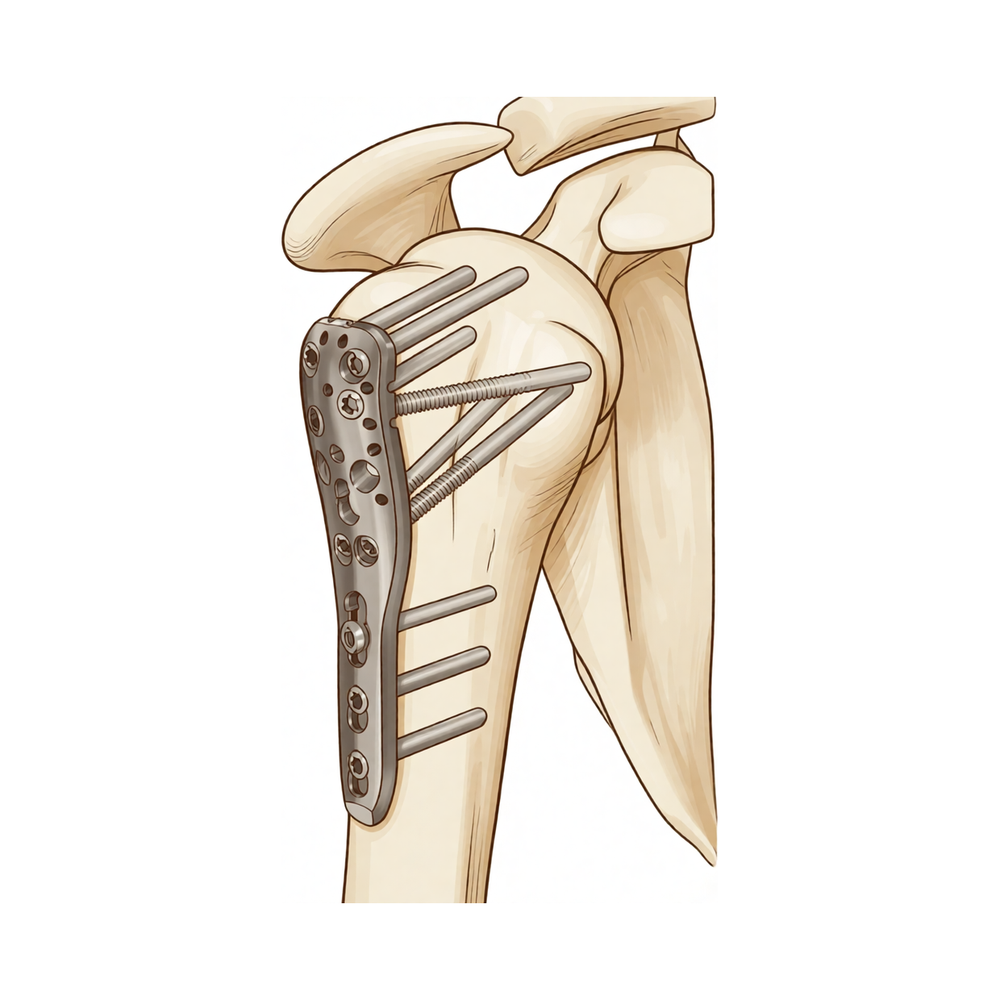
Saklaw ng protocol na ito ang rehabilitasyon pagkatapos ng surgical fixation ng isang proximal humerus fracture (isang bali sa buto ng itaas na braso malapit sa balikat, na inayos gamit ang locking plate at mga screw, open reduction and internal fixation, ORIF) kasama si Dr Kieran Hirpara sa Mater Private Hospital Rockhampton. Dalhin ang pahinang ito o ang PDF nito sa iyong unang pagbisita sa physiotherapy upang manatiling coordinated ang iyong rehabilitasyon. Ang iyong rehabilitasyon ay isinasagawa nang indibidwal ng iyong physiotherapist sa pamamagitan ng mga phase sa ibaba, depende sa kung paano gumagaling ang iyong bali.
Kung mayroon kang anumang alalahanin tungkol sa iyong sugat pagkatapos ng operasyon, makipag-ugnayan sa mga room. Madalas na nakatutulong ang pagkuha ng larawan ng sugat at pag-email nito para masuri.
Ano ang dapat asahan
Ang rehabilitasyon pagkatapos ng fracture fixation ay gumagana nang naiiba sa rehabilitasyon pagkatapos ng karamihan sa mga nakaplano na operasyon sa balikat. Pinapanatili ng plate at mga screw ang nabaling buto sa posisyon, ngunit ang buto mismo ay kailangan pa ring gumaling, at ang bilis ng paggaling na ito ay malaki ang pagkakaiba sa bawat tao. Dahil dito, ang timetable sa ibaba ay isang tipikal na gabay lamang at hindi isang fixed na iskedyul: ang bawat pag-akyat sa iyong programa ay nakadepende kapwa sa bilang ng mga linggo mula sa operasyon at sa kung paano gumagaling ang fracture sa iyong mga X-ray, gaya ng kinukumpirma sa iyong mga review kay Dr Hirpara. Huwag ilipat ang iyong sarili sa susunod na phase base lamang sa kalendaryo; hintayin ang iyong review.
May isa pang bagay na nagpapaiba sa operasyong ito. Ang mga bony knob sa itaas ng humerus (ang mga tuberosities) ay kung saan nakakabit ang mga rotator cuff tendon, at sa maraming proximal humerus fracture, ang mga fragment na ito ay bahagi ng bali at ibinabalik sa posisyon gamit ang plate o mga tahi. Ang sobrang pagpapatrabaho sa mga rotator cuff muscle nang masyadong maaga ay maaaring humila sa mga fragment na iyon bago pa sila gumaling. Gamit ang isang modernong locking plate, ang fixation ay matibay mula sa unang araw, kaya hinihikayat ang banayad na maagang paggalaw: maaari mong igalaw ang balikat nang actively-assisted at banayad na actively sa loob ng comfort mula sa simula, itataas ang braso sa isang pain-free range. Ang bahaging dapat mag-ingat ay ang rotator-cuff loading: kung ang mga tuberosity fragment ay hindi bahagi ng fracture, o matibay na nakapirmi, maaaring payagan ka ng iyong surgeon na simulan ang active rotation at cuff work nang mas maaga; kung ang mga tuberosities ay kasama at gumagaling pa, ang active rotator-cuff work at forced outward rotation ay ipinagpapaliban nang mas matagal. Sasabihin sa iyo ni Dr Hirpara kung alin ang naaangkop sa iyo.
Ang iyong exercise program ay gumagamit ng tatlong uri ng paggalaw, at mamarkahan ng iyong team kung alin ang naaangkop sa iyo:
- Active range of motion: ang paggalaw ay pinapayagan nang walang tulong o suporta.
- Active-assisted range of motion: paggamit ng kabilang braso o isang bagay upang tumulong sa paggalaw ng braso.
- Passive range of motion: ganap na relaxed, gamit ang kabilang braso o puwersa upang gawin ang 100% ng trabaho.
Magigising ka mula sa operasyon na ang iyong braso ay nasa sling. Isuot ito nang full-time sa unang tatlong linggo o higit pa, pagkatapos ay unti-unting alisin sa mga sumunod na linggo habang pinapayagan ng comfort; ang mga nailathalang protocol ay may average na humigit-kumulang tatlong linggo ng immobilisation, at sinusuportahan ng ebidensya ang mas maagang paggalaw kaysa sa mas mahabang panahon sa sling. Hindi mo kailangang matulog nang suot ito. Hubarin ito nang ilang beses sa isang araw para sa iyong mga exercise at para sa paghuhugas at pagbibihis, at kapag nakaupo nang tahimik sa bahay, maaari mong ipahinga ang braso sa labas ng sling. Huwag magmaneho sa loob ng hindi bababa sa anim na linggo pagkatapos ng anumang operasyon sa balikat; papayagan ka ng iyong surgeon na magmaneho, karaniwan sa six-week review.
Ang paglalakbay sa isang sulyap:
- Phase I — Proteksyon at maagang paggalaw: weeks 0–6
- Phase II — Pagbawi ng active movement: weeks 6–12
- Phase III — Pagpapalakas (Strengthening): humigit-kumulang buwan 3 hanggang 4½
- Phase IV — Pagbabalik sa full activity: mula humigit-kumulang 4½–6 na buwan
Phase I — Proteksyon at maagang paggalaw (Weeks 0–6)
Kieran Hirpara 4.0
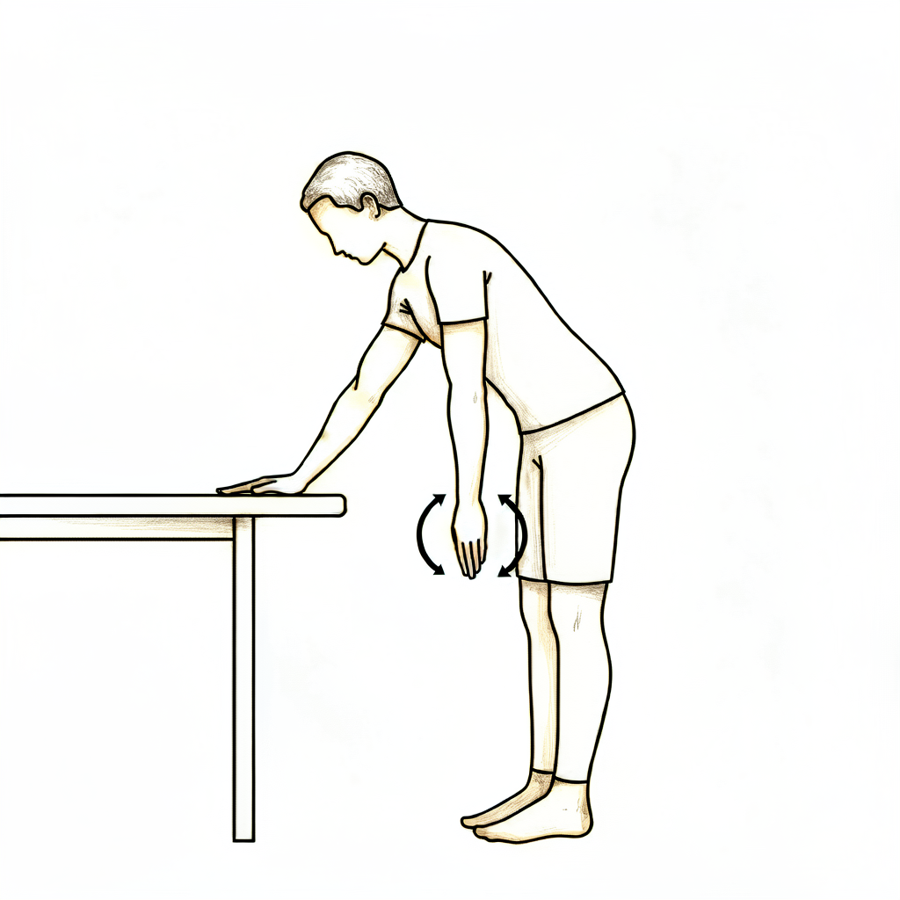
Mga ehersisyong pendulum
Yumuko nang bahagya pasulong, suportahan ang sarili sa isang mesa gamit ang kabilang kamay, at hayaang nakalaylay nang relax ang braso na inoperahan. Gumawa ng maliliit na bilog — clockwise, pagkatapos ay anticlockwise — sa pamamagitan ng dahan-dahang pag-ugoy ng iyong katawan. Ang braso ay dapat gumalaw nang passive; ang paggalaw ay nagmumula sa iyong katawan, hindi sa mga kalamnan ng balikat.
Ilang beses sa isang araw
Kieran Hirpara 4.0
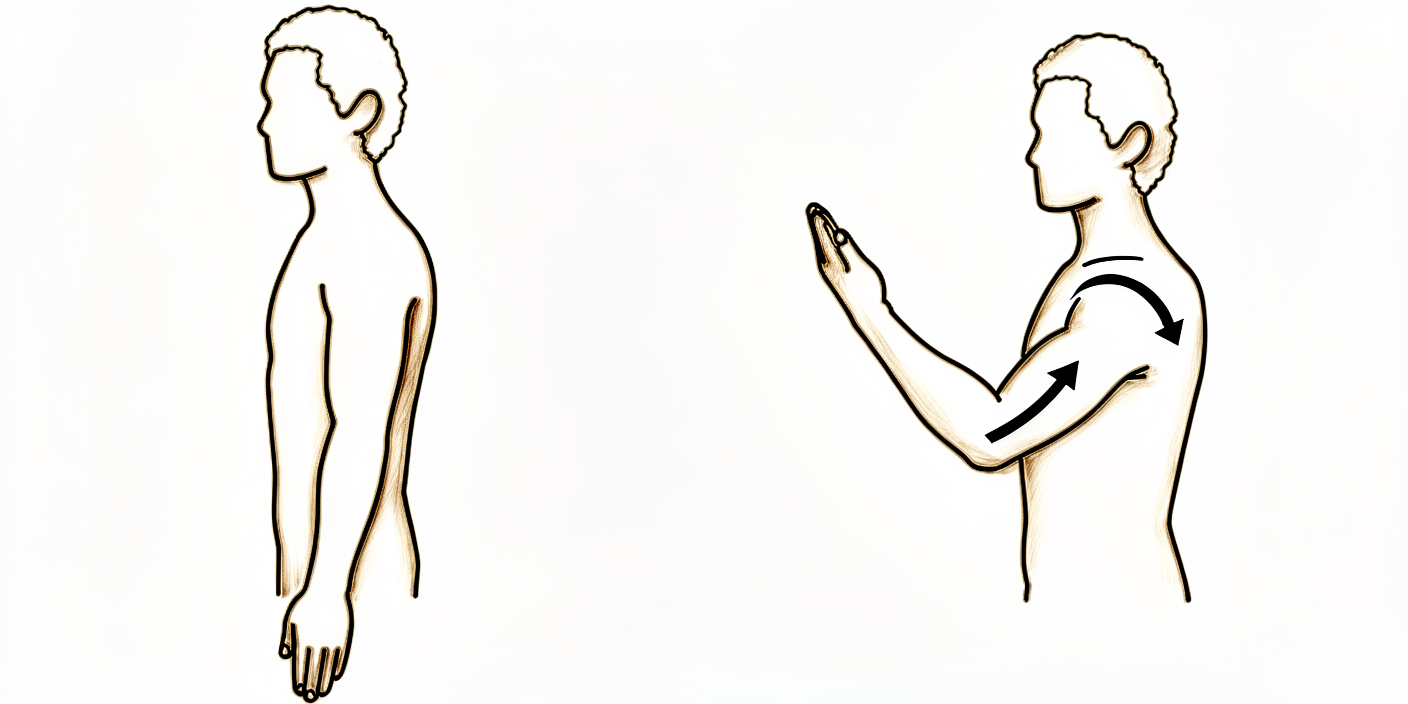
Aktibong pagbaluktot ng siko
Habang wala ang braso sa sling at nakapahinga ang itaas na bahagi ng braso sa iyong tabi, itiklop ang siko hangga't kaya nito nang komportable, pagkatapos ay ituwid ito nang lubos. Siko lamang ang gumagalaw — panatilihing hindi gumagalaw ang balikat at ang braso ay nasa iyong tabi.
Ilang beses sa isang araw
Kieran Hirpara 4.0
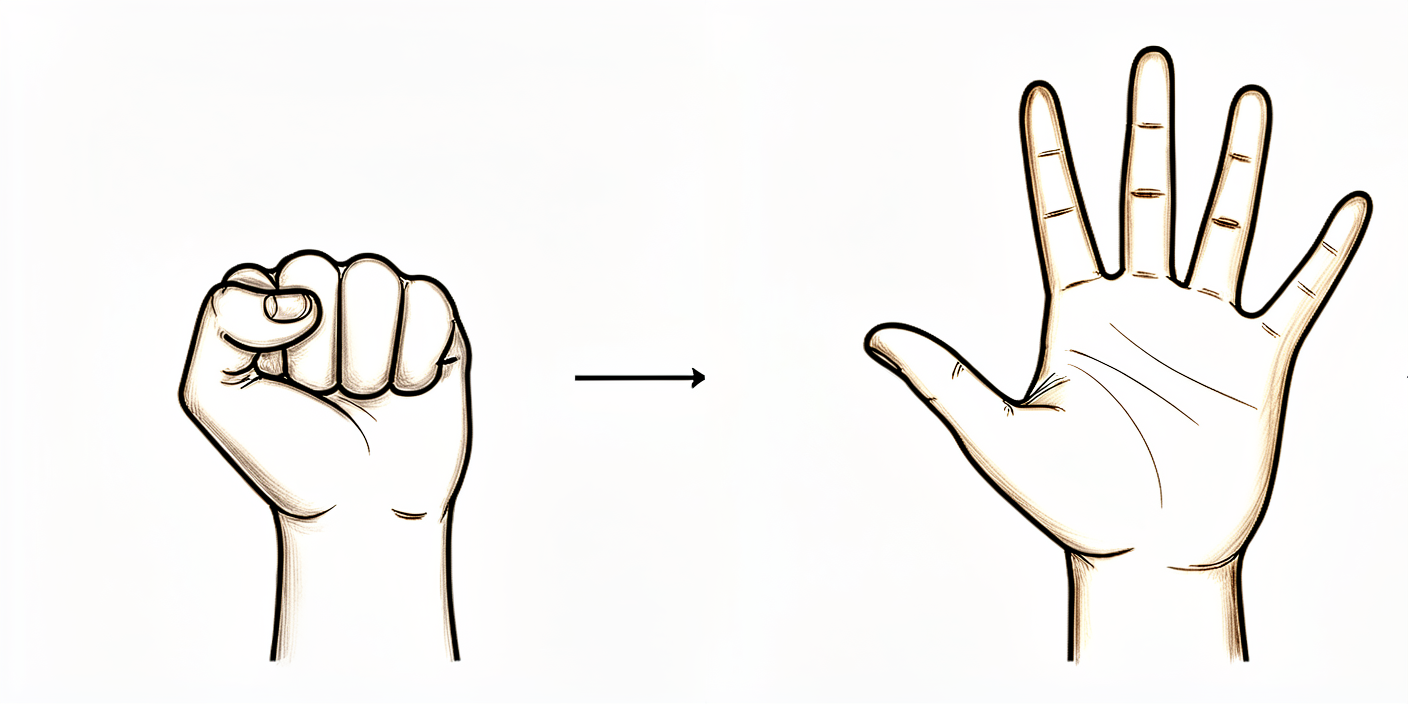
Pagpisil ng bola
Habang suportado ang braso, pumiga ng malambot na bola o itikom nang mahigpit ang kamao, pagkatapos ay ibuka nang husto ang kamay. Panatilihing gumagalaw ang mga daliri, pulso, at kamay sa tuwing wala ang braso sa sling.
Ilang beses sa isang araw
Kieran Hirpara 4.0
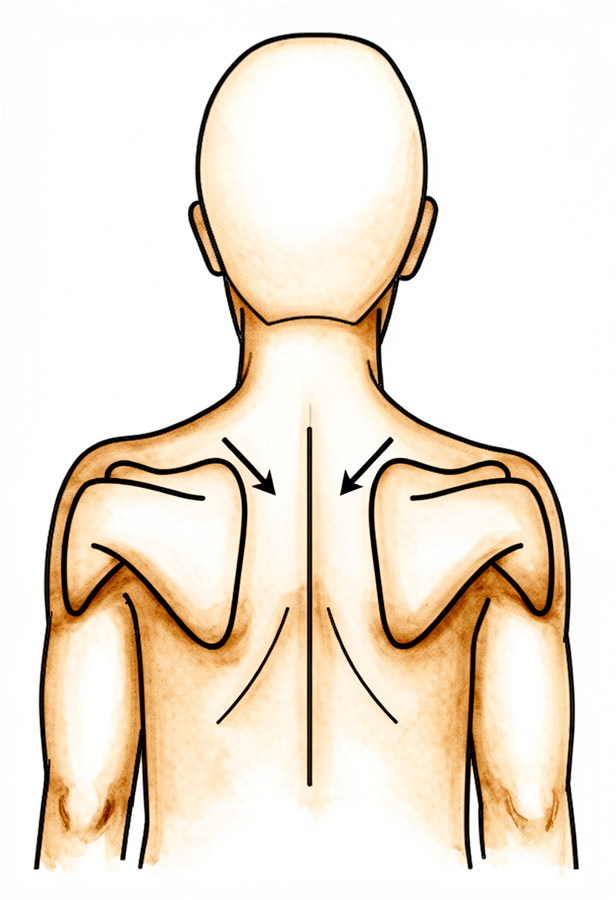
Pag-aayos ng scapula (Scapular setting)
Habang nakaupo o nakatayo nang tuwid, dahan-dahang hilahin ang iyong mga shoulder blade pababa at pabalik nang magkasama nang hindi ginagalaw ang mga braso, panatilihin ito nang ilang segundo, pagkatapos ay i-relax. Panatilihing magkahanay ang iyong mga tainga, balikat, at balakang.
Ayon sa gabay ng iyong physiotherapist
Kieran Hirpara 4.0
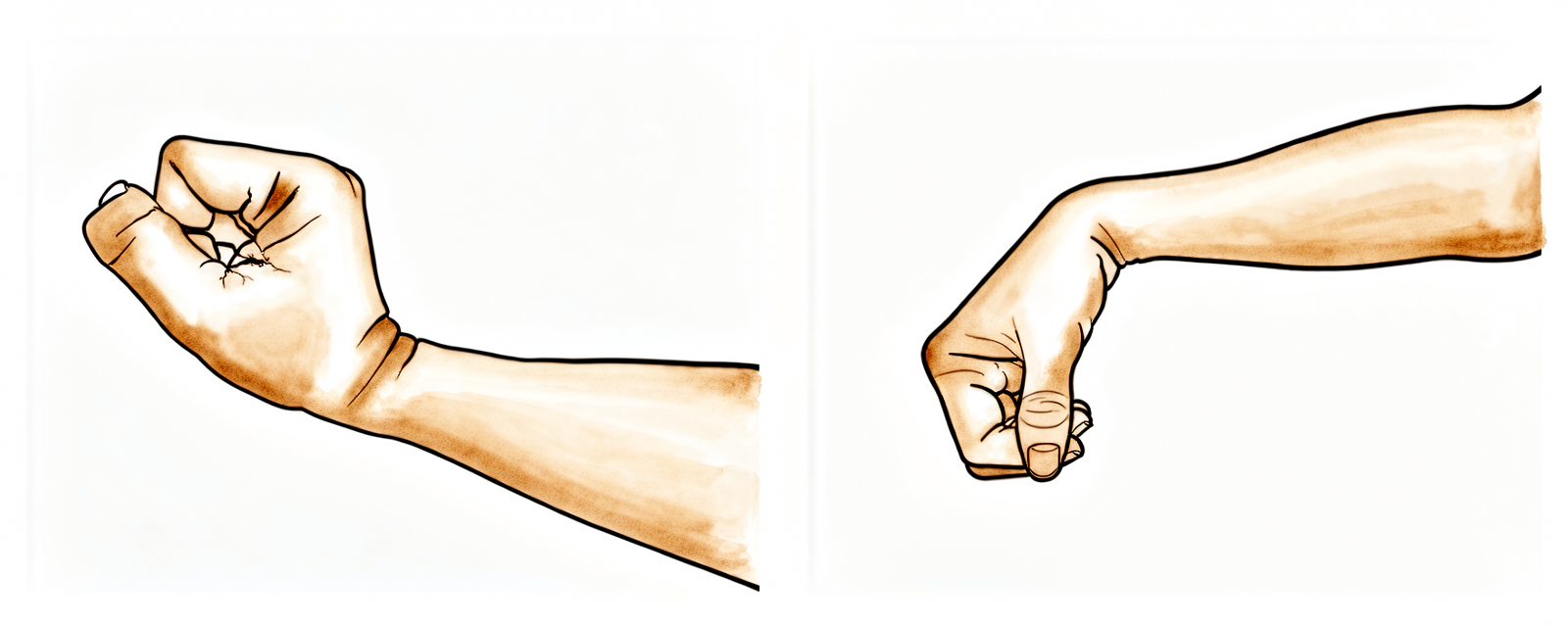
Mga galaw ng pulso
Habang wala ang braso sa sling, panatilihing gumagalaw ang pulso sa pamamagitan ng pagbaluktot nito pasulong, pabalik, at dahan-dahang patagilid. Pinapanatili nito ang paggana ng buong braso habang protektado ang balikat.
Ilang beses sa isang araw
Kieran Hirpara 4.0
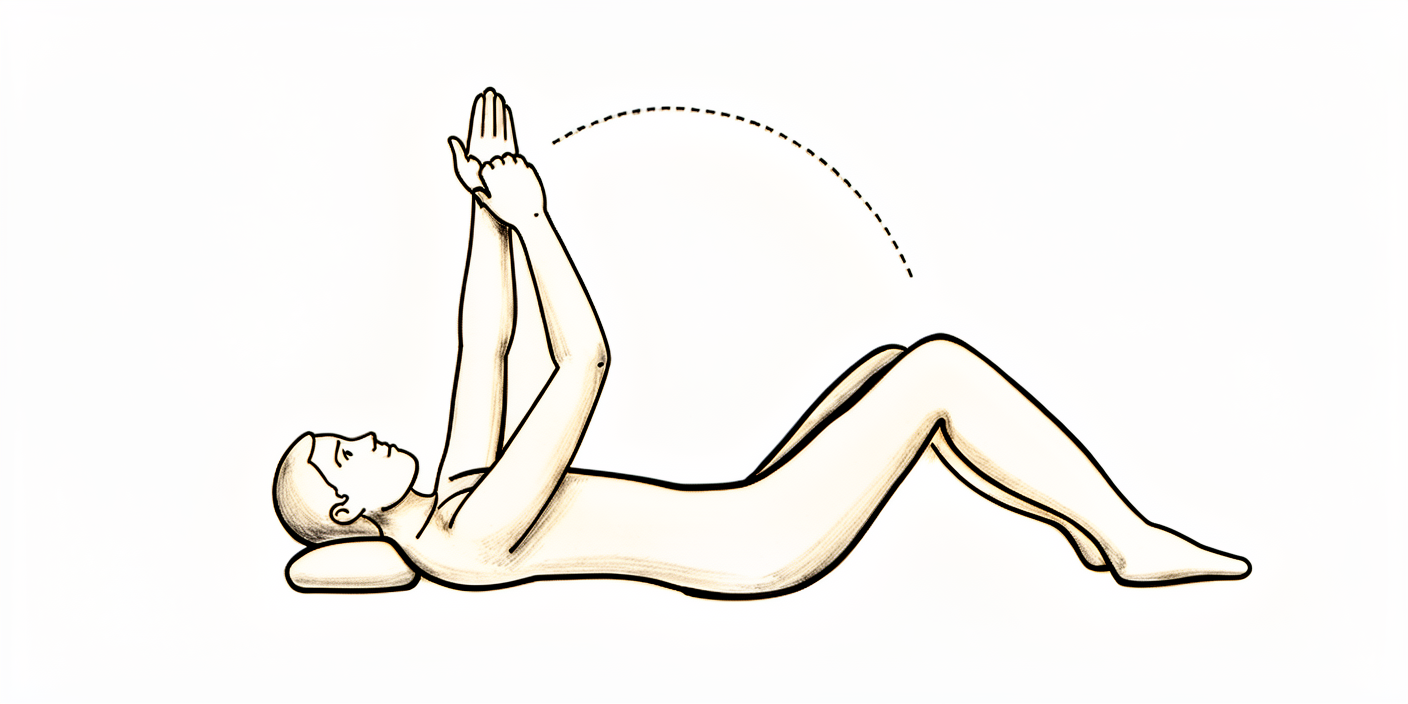
Tinutulungang forward elevation (nakahiga)
Humiga nang patihaya at gamitin ang iyong maayos na braso upang tulungang itaas ang inoperahang braso sa iyong harapan, pagkatapos ay dahan-dahan itong ibaba habang tinutulungan pa rin ng maayos na braso. Ang pagsisimula nang nakatihaya ay nagpapahintulot sa grabidad na tumulong at ginagawang mas madali ang maagang pag-angat. Manatili sa isang komportable at walang sakit na range at huminto kung saan nagsisimula na itong humila — huwag itong pilitin.
Ilang beses sa isang araw, sa loob ng range na walang sakit
Kieran Hirpara 4.0
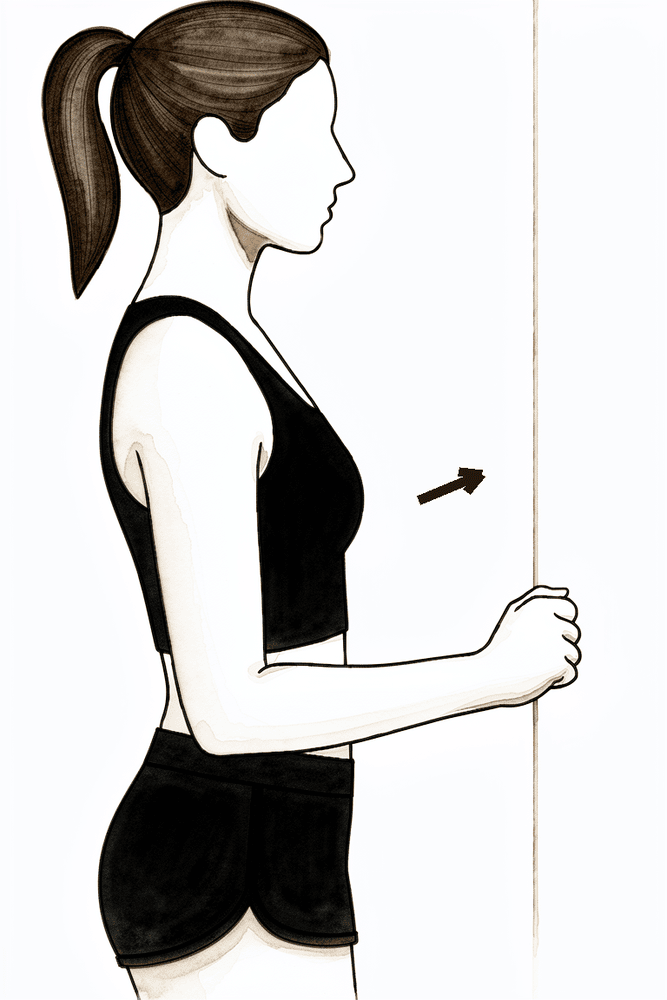
Banayad na forward-elevation isometric
Tumayo nang nakaharap sa pader na ang inoperahang braso ay nasa iyong tabi at ang nakasara ngunit malambot na kamao ay nakasandal sa pader sa iyong harapan. Dahan-dahang itulak ang kamay pasulong sa pader nang hindi pinapagalaw ang braso, panatilihin ito nang ilang segundo, pagkatapos ay i-relax. Ginigising nito ang mga kalamnan na nag-aangat ng balikat nang hindi binibigatan ang naghihilom na bali. Gawin lamang ito kung pinasimulan ka na ng iyong physiotherapist.
Ayon sa gabay ng iyong physiotherapist
Ang unang anim na linggo ay tungkol sa pagprotekta sa fixed fracture habang pinipigilan ang paninigas ng natitirang bahagi ng braso (at ng shoulder joint mismo). Dahil ang locking plate ay matatag na humahawak sa buto mula sa simula, hinihikayat ang banayad na maagang paggalaw sa halip na maghintay ng anim na linggo. Ang isang physiotherapist ay magsisimula sa iyo ng mga banayad na ehersisyo bago ka umuwi: pendulum exercises (pagpapabitin at dahan-dahang pag-ugoy ng braso sa pamamagitan ng pag-ugoy ng iyong katawan), at pagpapanatiling gumagalaw ng siko, pulso, at kamay sa labas ng sling ilang beses sa isang araw. Mula sa simula, at sa loob ng isang komportable at walang sakit na range, maaari mo nang simulan ang paggalaw ng braso sa tulong ng iyong kabilang kamay (active-assisted) at banayad na gamit ang sarili nitong lakas (active), sa pamamagitan ng pag-angat nito sa iyong harapan ayon sa iyong komportable. Ang bahaging dapat mag-ingat ay ang rotator-cuff loading: iwasan ang pagpilit sa braso palabas (external rotation) at iwasan ang resisted rotator-cuff work hanggang sa gumaling ang iyong mga tuberosity, gaya ng kinumpirma ni Dr Hirpara. Gumamit ng ice para sa pagpapagaan ng sakit, at inumin ang iyong mga painkiller bago ang iyong mga ehersisyo at physiotherapy appointments.
Para sa iyong physiotherapist:
Mga Layunin
- Protektahan ang fixation at i-optimise ang paggaling ng buto
- Pahupain ang sakit at pamamaga
- Magtatag ng maagang active-assisted na magiging active elevation sa loob ng isang pain-free range
- Panatilihin ang full motion ng leeg, siko, pulso, at kamay
Pamamahala
- Sling full-time sa loob ng ~3 linggo, pagkatapos ay unti-unting aalisin ayon sa komportable (literature convention); tatanggalin ilang beses sa isang araw para sa mga ehersisyo at hygiene; hindi kailangan kapag nasa kama
- Pendulum / Codman exercises ilang beses sa isang araw
- Maagang active-assisted at banayad na active forward elevation sa loob ng isang komportable at pain-free range mula sa simula para sa stable fixation; supine-start elevation na magiging upright habang nagkakaroon ng kontrol; itaas ang range ayon sa komportable
- Passive range of motion kung kinakailangan kung saan ang active ay hindi pa kinakaya: forward elevation sa scapular plane hanggang mga 90°, internal rotation hanggang sa tiyan (hindi sa likod ng likod)
- Ang external rotation ay pananatilihin sa isang banayad na maagang default na mga 30–40° habang ang braso ay nasa gilid; maaaring itaas ito ng surgeon kung ang mga tuberosity ay hindi apektado o matatag na naka-fix
- Cervical, elbow, wrist, at hand active range of motion sa labas ng sling; ball squeezes para sa grip
- Scapular setting at scapular mobility work (elevation, depression, retraction, protraction)
- Maaaring ipakilala ang banayad na deltoid at periscapular isometrics ayon sa komportable
- Cryotherapy at analgesia bago ang mga session; scar mobilisation at desensitisation kapag gumaling na ang sugat
Mga Pag-iingat
- Iwasan ang forced o resisted external rotation at mabigat na rotator-cuff loading hanggang sa makumpirma ang paggaling ng tuberosity (surgeon-guided); pinapayagan ang active elevation sa isang pain-free range
- Walang internal rotation sa likod ng likod; iwasan ang abduction sa coronal plane
- Panatilihing pain-free ang maagang paggalaw: banayad at sa loob ng komportable, hindi pinipilit
- Bawal magbuhat ng higit sa mga 0.5–1 kg gamit ang inooperahang braso
- Bawal ang weight-bearing gamit ang inooperahang braso (bawal ang pagtulak paitaas mula sa upuan o kama)
- Bawal magmaneho sa loob ng anim na linggo (nalalapat ito sa anumang operasyon sa balikat)
- Walang forced o masakit na end-range movement
Mga Pamantayan para sa Pag-usad
- Radiographic evidence ng pag-unlad ng paggaling, gaya ng kinumpirma sa review kay Dr Hirpara sa loob ng mga 6 na linggo
- Ang sakit ay kontrolado nang mabuti
- Full elbow, wrist, at hand motion ay napanatili
- Komportableng active-assisted hanggang active elevation sa loob ng isang pain-free range
Phase II — Pagbawi ng aktibong paggalaw (Weeks 6–12)
Kieran Hirpara 4.0
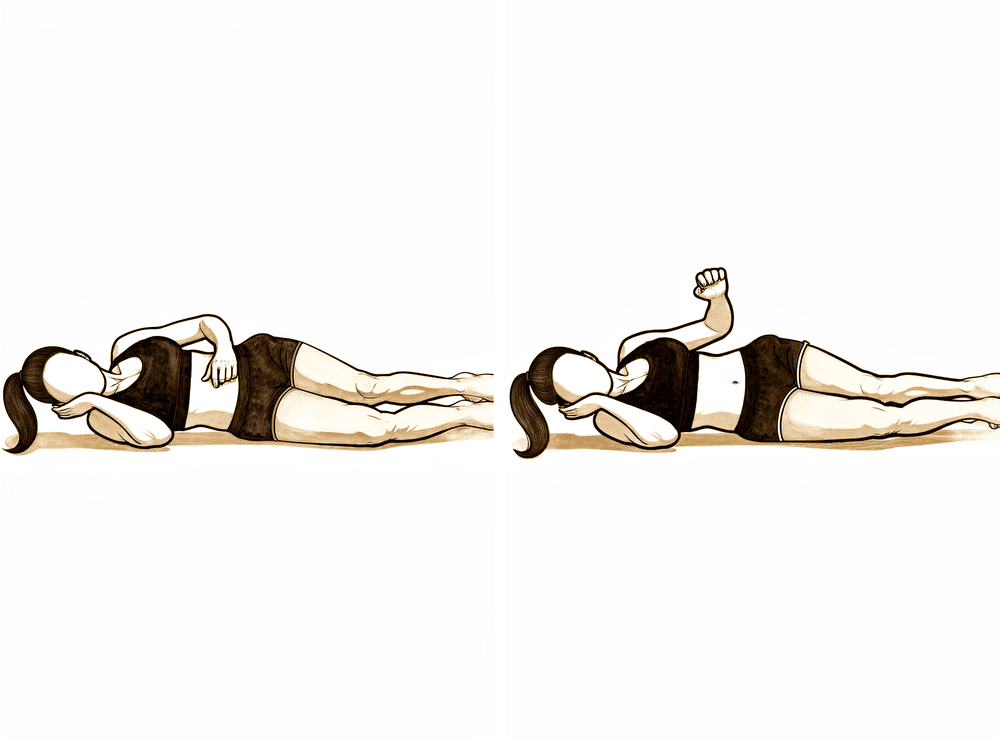
Side-lying external rotation
Humiga sa gilid na hindi naoperahan nang ang braso na naoperahan ay nasa itaas, ang siko ay nakabaluktot nang 90 degrees at nakadikit sa iyong katawan. Habang pinapanatiling nakadikit ang siko, i-rotate ang forearm pataas palayo sa iyong tiyan hanggang sa kung saan ito komportable, pagkatapos ay ibaba ito nang may kontrol. Huwag magdagdag ng bigat — ang braso ay gumagalaw gamit ang sarili nitong lakas.
Ayon sa gabay ng iyong physiotherapist
Kieran Hirpara 4.0
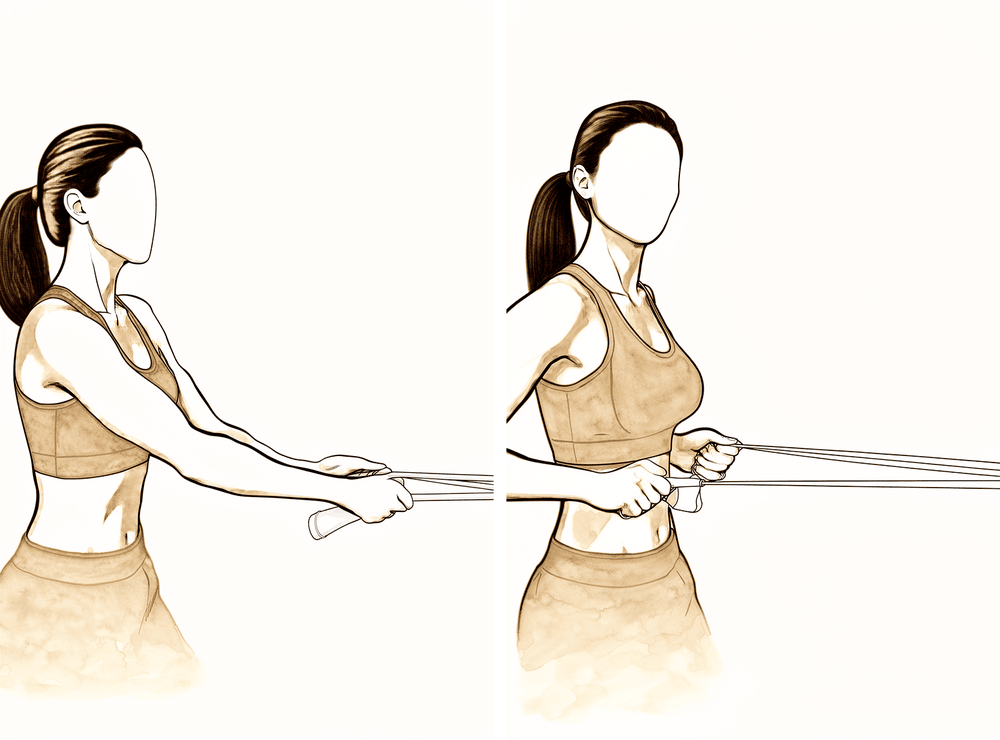
Low row gamit ang elastic band
I-angkla ang isang elastic band sa iyong harapan sa taas ng baywang. Habang nakatayo nang tuwid, hilahin ang band patungo sa iyo, dahan-dahang ibaba at iurong ang shoulder blade, pagkatapos ay bitawan nang may kontrol. Panatilihing magaan ang resistance.
Ayon sa gabay ng iyong physiotherapist
Kieran Hirpara 4.0
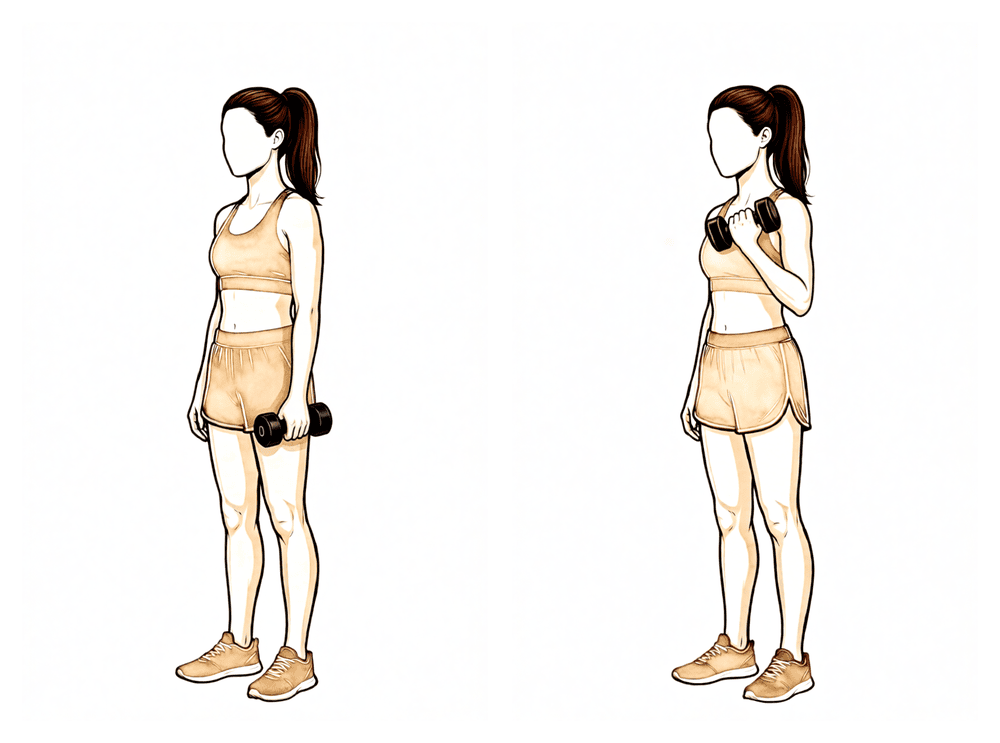
Biceps curls
Humawak ng magaan na pabigat nang nakaharap pataas ang palad, itiklop ang siko upang ilapit ang pabigat sa iyong balikat, pagkatapos ay dahan-dahan itong ibaba. Panatilihing hindi gumagalaw ang itaas na bahagi ng braso sa iyong tabi, at panatilihing magaan ang pabigat — hindi hihigit sa humigit-kumulang 1–2 kg sa yugtong ito.
Ayon sa gabay ng iyong physiotherapist
Kieran Hirpara 4.0
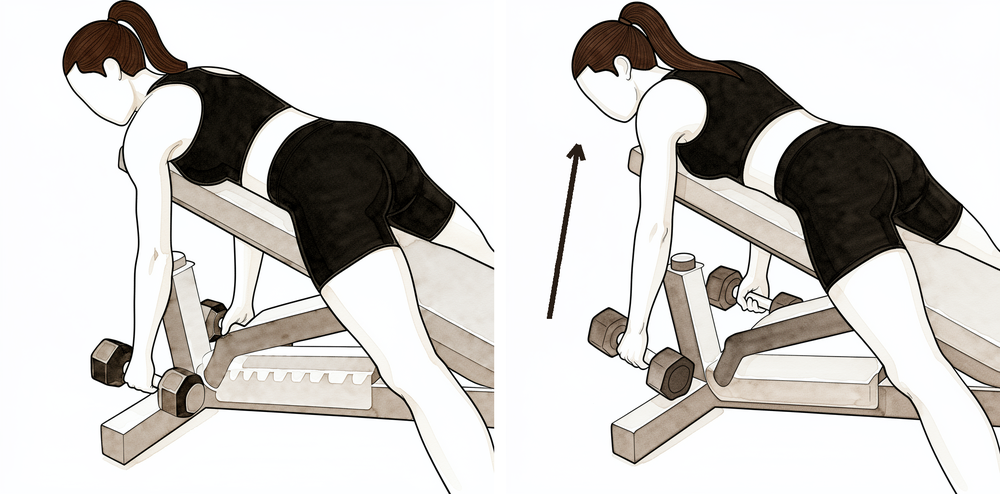
Mga suportadong row
Yumuko nang bahagya habang ang iyong maayos na braso ay nakasandal sa mesa, at hayaang nakabitin ang braso na inoperahan na may magaan na pabigat. Hatakin ang shoulder blade pabalik at i-row ang pabigat pataas patungo sa iyong balakang, pagkatapos ay ibaba ito nang may kontrol. Panatilihing steady ang trunk — ang paggalaw ay nagmumula sa shoulder blade at braso, hindi sa likod.
Ayon sa gabay ng iyong physiotherapist
Kieran Hirpara 4.0
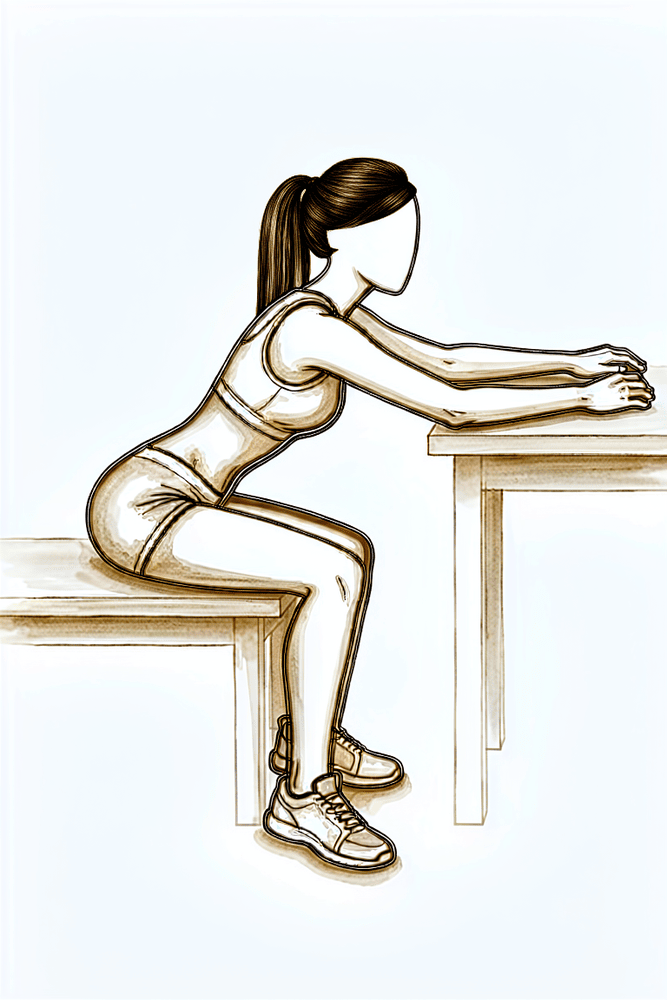
Mga slide ng table
Umupo sa isang mesa na ang iyong kamay ay nakapatong sa isang tuwalya o tela. Yumuko nang bahagya pasulong at i-slide ang kamay palayo sa iyo sa ibabaw ng mesa, hayaang umabot ang braso nang mas malayo sa harap, pagkatapos ay i-slide ito pabalik. Ang mesa ang pumapasan sa bigat ng braso, kaya ito ay isang banayad na paraan upang maibalik ang paggalaw pasulong.
Ayon sa gabay ng iyong physiotherapist
Kieran Hirpara 4.0
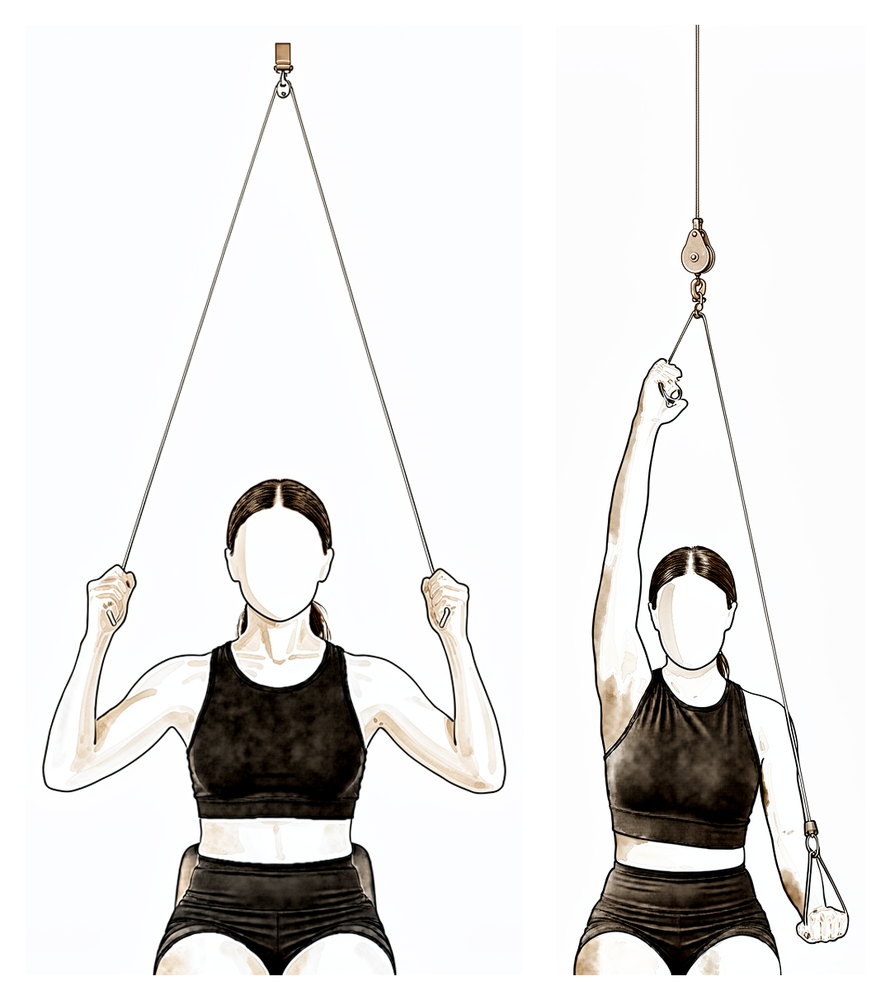
Over-door pulley
Umupo sa ilalim ng isang over-door pulley na may hawakan sa bawat kamay. Hilahin pababa gamit ang iyong malusog na braso upang itaas ang inoperahang braso hanggang sa kung saan ito komportableng makakarating, pagkatapos ay dahan-dahan itong ibaba. Hayaan ang malusog na braso ang gumawa ng trabaho at manatili sa loob ng komportableng range.
Ayon sa gabay ng iyong physiotherapist
Kieran Hirpara 4.0
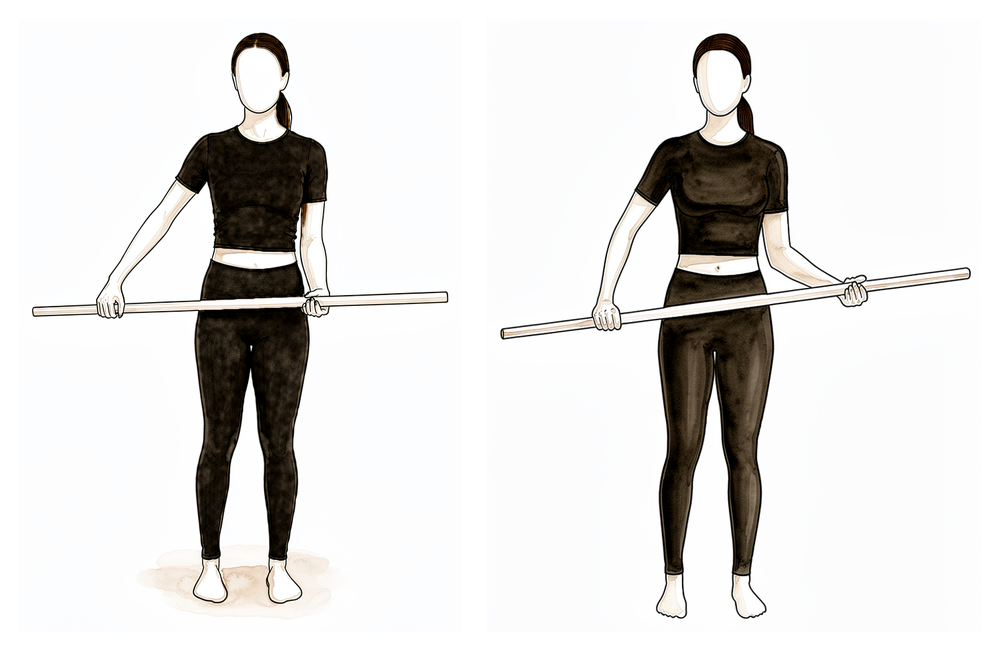
Assisted external rotation gamit ang stick
Humiga nang patihaya na ang siko ay nakadikit sa iyong gilid at nakabaluktot sa isang right angle. Humawak ng stick sa magkabilang kamay at gamitin ang iyong maayos na braso upang iikot ang inoperahang kamay palabas. Kapag nakumpirma na ang iyong paggaling, dahan-dahang itulak ang outward rotation nang kaunti pa — ngunit manatili sa loob ng range na itinakda ng iyong surgeon at physiotherapist.
Ayon sa gabay ng iyong physiotherapist
Kieran Hirpara 4.0
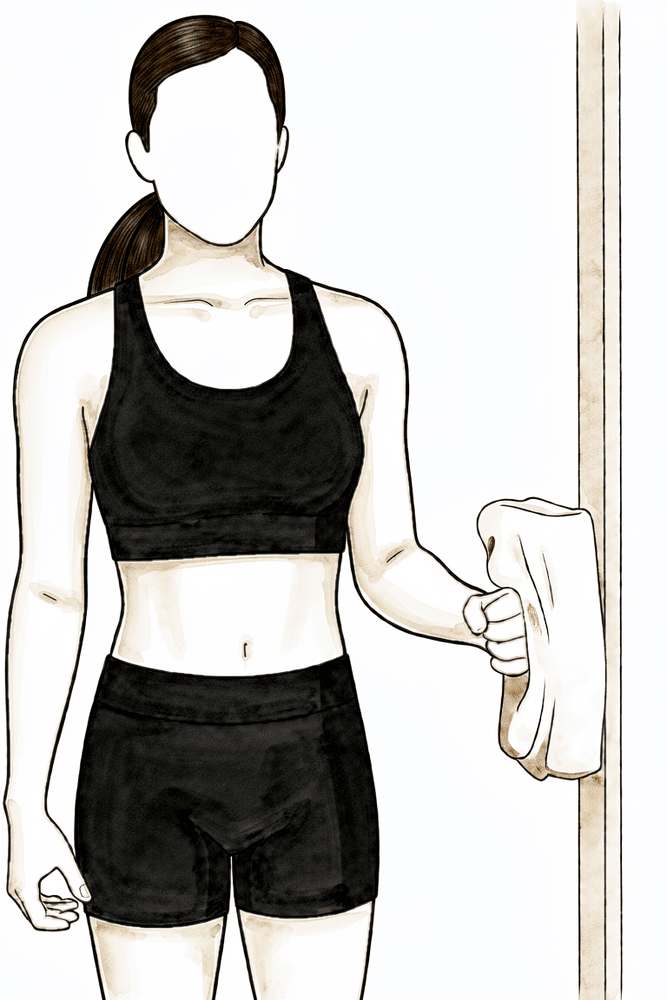
Isometric external rotation
Tumayo nang nakadikit ang iyong siko sa iyong gilid at nakabaluktot sa isang right angle, ang likod ng iyong kamay ay nakasandal sa pader o doorframe. Dahan-dahang itulak ito palabas nang hindi pinapagalaw ang braso, manatili sa posisyong ito ng ilang segundo, pagkatapos ay i-relax. Sinisimulan nito ang pag-activate ng rotator cuff nang walang paggalaw — simulan lamang ito kapag nakumpirma na ni Dr Hirpara ang iyong paggaling.
Ayon sa gabay ng iyong physiotherapist
Kieran Hirpara 4.0
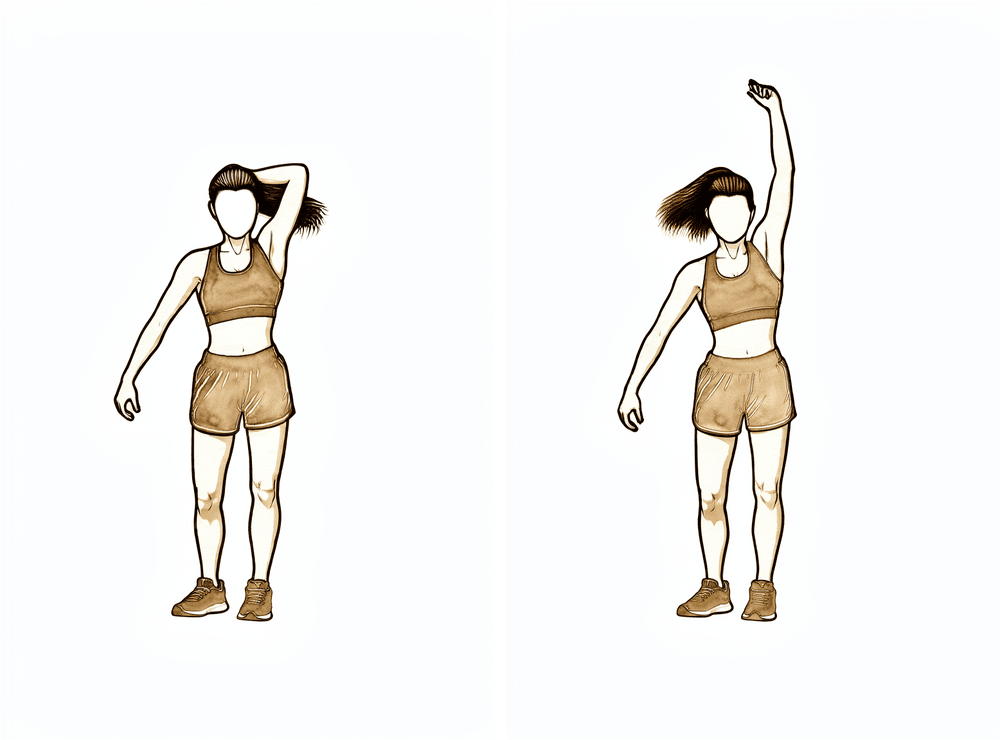
Triceps extensions
Habang humahawak ng magaan na pabigat, itiklop at pagkatapos ay ituwid ang siko upang mapagana ang kalamnan sa likod ng itaas na bahagi ng braso. Panatilihing steady ang itaas na bahagi ng braso at magaan ang pabigat — hindi hihigit sa humigit-kumulang 1–2 kg sa yugtong ito.
Ayon sa gabay ng iyong physiotherapist
Kieran Hirpara 4.0
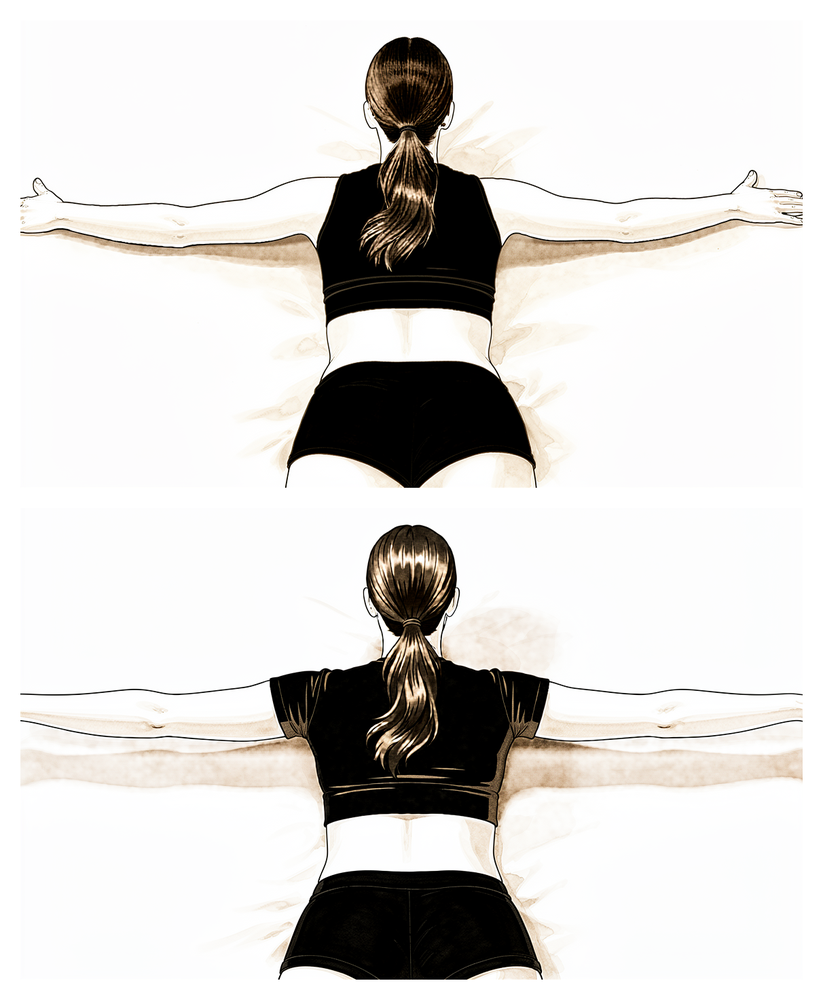
Prone scapular row
Dapa nang nakaharap sa ibaba habang ang iyong braso ay nakalaylay sa gilid ng kama o bench. Hatakin ang shoulder blade pabalik at itaas ang braso palabas sa gilid nang bahagya, habang pinagdidikit ang mga shoulder blade, pagkatapos ay ibaba ito nang may kontrol. Pinapalakas nito ang mga kalamnan na nagpapatatag sa shoulder blade.
Ayon sa gabay ng iyong physiotherapist
Sa iyong review sa loob ng anim na linggo, susuriin ni Dr Hirpara ang iyong mga X-ray. Kung ang paggaling ay nagpapatuloy ayon sa inaasahan, ititigil na ang anumang natitirang paggamit ng sling at sisimulan mo nang igalaw ang braso nang mag-isa, una ay may tulong (gamit ang kabilang braso, tungkod o pulley), pagkatapos ay aktibo. Karaniwang pinakamabisang simulan ang aktibong pag-angat ng braso habang nakahiga nang patihaya, kung saan hindi gaanong hadlang ang grabidad, at magpatuloy sa pag-upo at pagtayo habang bumubuti ang kontrol. Ang mga banayad na muscle-setting (isometric) na ehersisyo para sa rotator cuff ay magsisimula sa phase na ito kapag nakumpirma na ni Dr Hirpara ang paggaling; ang mga ehersisyo laban sa resistance ay susunod na. Maaari ka nang bumalik sa pagmamaneho kapag wala ka na sa sling, may sapat na paggalaw at kontrol sa braso upang magmaneho nang ligtas, at hindi na umiinom ng malalakas na painkiller; kung may pag-aalinlangan, talakayin ito sa iyong review.
Para sa iyong physiotherapist:
Mga Layunin
- Ibalik ang buong passive range of motion
- Mag-progress mula sa active-assisted patungo sa active range of motion sa lahat ng planes
- Ibalik ang normal na scapulohumeral rhythm at bawasan ang mga compensatory pattern
- Bumalik sa mga normal at magagaan na pang-araw-araw na aktibidad
Pamamahala
- Ganap na itapon ang sling sa pinakahuli ay sa 6-week review
- Active-assisted range of motion: lawn-chair progression, table / wall slides, pulleys, stick exercises, pag-progress lampas sa mga limitasyon ng Phase I ayon sa kakayahan ng pasyente
- Active range of motion mula sa humigit-kumulang 6–8 linggo: supine flexion na nag-pro-progress patungo sa upright elevation; side-lying external rotation at flexion; low rows / low punch
- Submaximal rotator cuff at deltoid isometrics mula sa humigit-kumulang 6–8 linggo, habang ang braso ay nasa gilid, kapag nakumpirma na ang paggaling
- Magagaan na elbow isotonics (biceps curls, triceps extensions) at scapular strengthening (retraction, prone rows)
- Glenohumeral at scapulothoracic mobilisation ayon sa indikasyon, pag-progress ng mga grade kasabay ng paggaling
- Pagwawasto ng postura; ipagpatuloy ang heat / ice at analgesia sa paligid ng mga session ayon sa kagustuhan
Mga Pag-iingat
- Walang resisted (isotonic) rotator cuff strengthening hanggang sa makumpirma ang union, karaniwan ay hindi bago ang 8–12 linggo
- Walang puwersahang end-range overpressure o agresibong passive stretching
- Ang pagbuhat ay limitado sa humigit-kumulang 1–2 kg gamit ang inoperahang braso
- Bantayan at iwasto ang shoulder hitching at trunk-lean compensation habang nag-e-elevation
Mga Pamantayan upang mag-progress
- Buo, o halos buo, na passive range of motion
- Active elevation na may mabuting mechanics, kahit man lang sa ibaba ng taas ng balikat
- Isometrics ay well tolerated nang walang paglala ng sakit
- Union ay nag-pro-progress sa X-ray, gaya ng nakumpirma sa iyong review kay Dr Hirpara
Phase III — Pagpapalakas (humigit-kumulang Buwan 3 hanggang 4½)
Kieran Hirpara 4.0
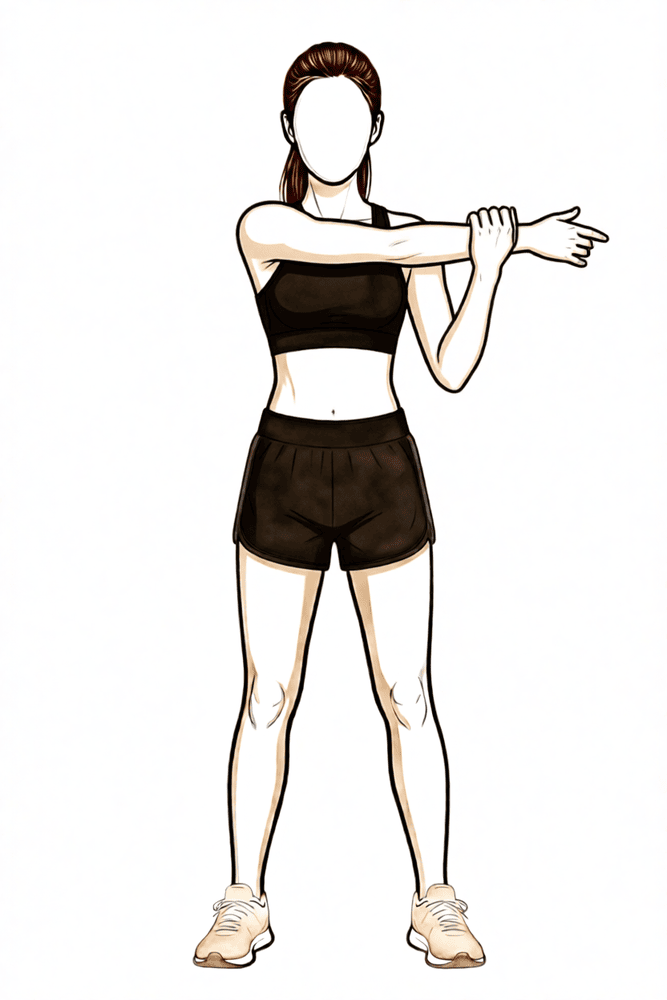
Cross-body stretch
Gamitin ang iyong kabilang kamay upang hilahin ang inoperahang braso patawid sa iyong dibdib hanggang sa makaramdam ka ng stretch sa likod ng balikat. Hawakan nang sandali, pagkatapos ay bitawan. Mag-stretch hanggang sa maramdaman lamang ang firm discomfort — huwag na huwag aabot sa matalas na sakit.
Ayon sa gabay ng iyong physiotherapist
Kieran Hirpara 4.0
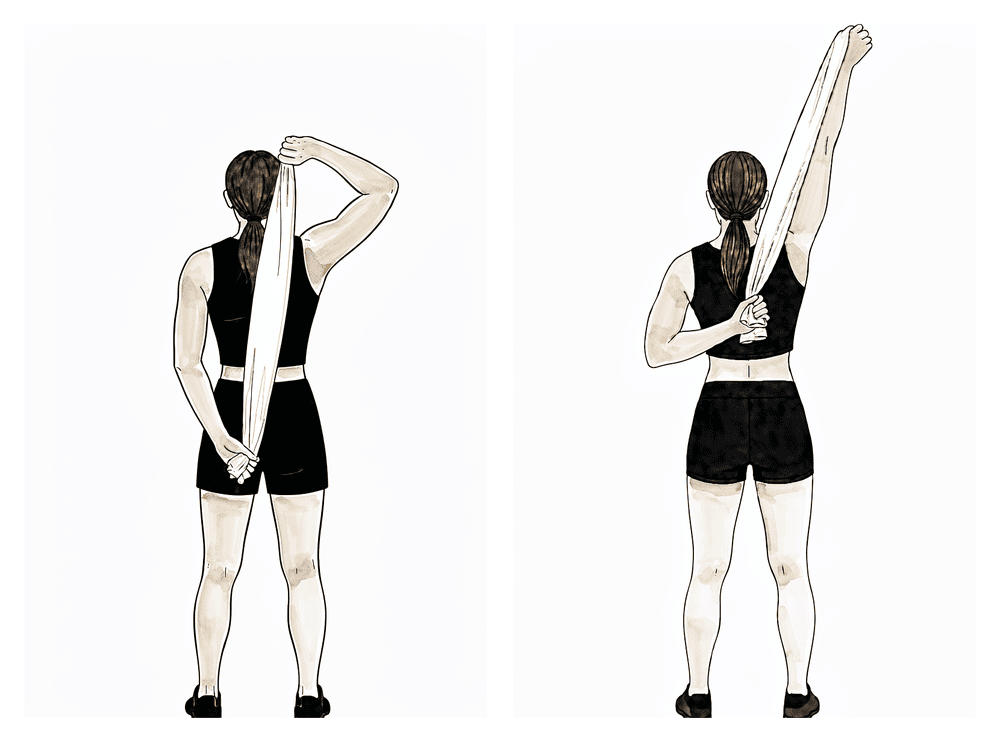
Stretch sa likod ng katawan
Humawak ng tuwalya sa likod ng iyong katawan kung saan ang maayos na braso ay nasa itaas at ang inoperahang braso ay nasa ibaba. Gamitin ang kamay na nasa itaas upang dahan-dahang hilahin ang kamay na nasa ibaba pataas sa iyong likod hanggang sa makaramdam ka ng komportableng stretch, manatili sa posisyong ito, pagkatapos ay bitawan. Unti-unting palawakin ang range — huwag kailanman pilitin ang stretch o ituloy kung may nararamdamang matalas na sakit.
Ayon sa gabay ng iyong physiotherapist
Kieran Hirpara 4.0
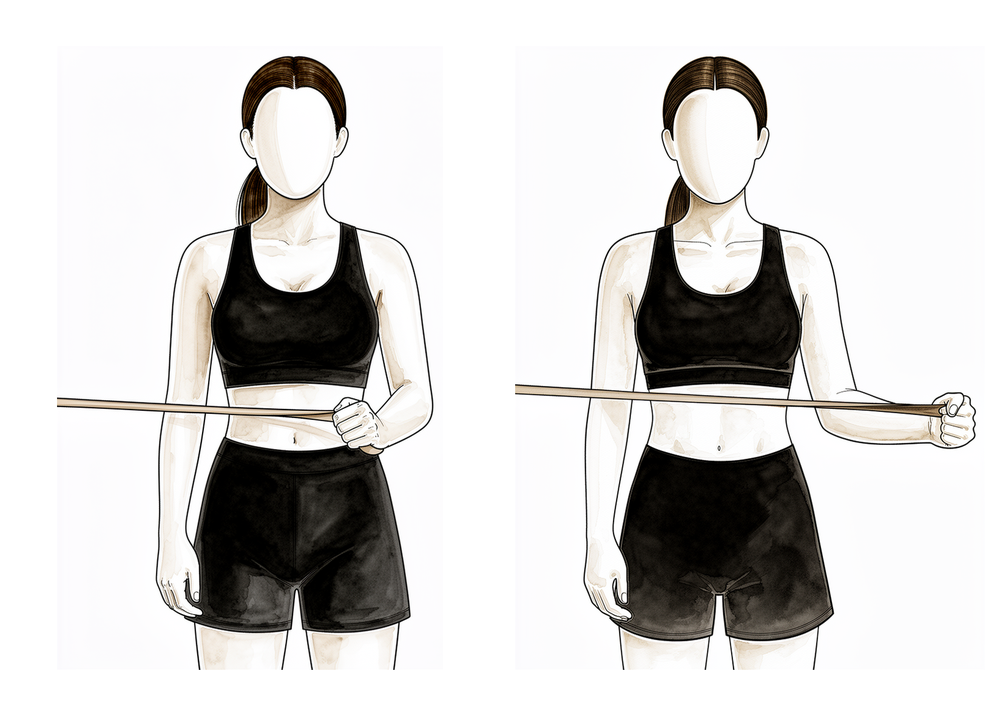
Band external rotation
Tumayo nang nakadikit ang iyong siko sa iyong tagiliran at nakabaluktot sa isang right angle, habang hawak ang isang elastic band na naka-angkla sa taas ng baywang. Panatilihing nakadikit ang siko sa iyong tagiliran, i-rotate ang forearm palabas laban sa band, pagkatapos ay dahan-dahang ibalik. Binubuo nito ang rotator cuff habang ang braso ay nasa tagiliran, ang panimulang punto para sa rotation strengthening.
2 hanggang 3 sets ng 8 hanggang 12, mababang resistance
Kieran Hirpara 4.0
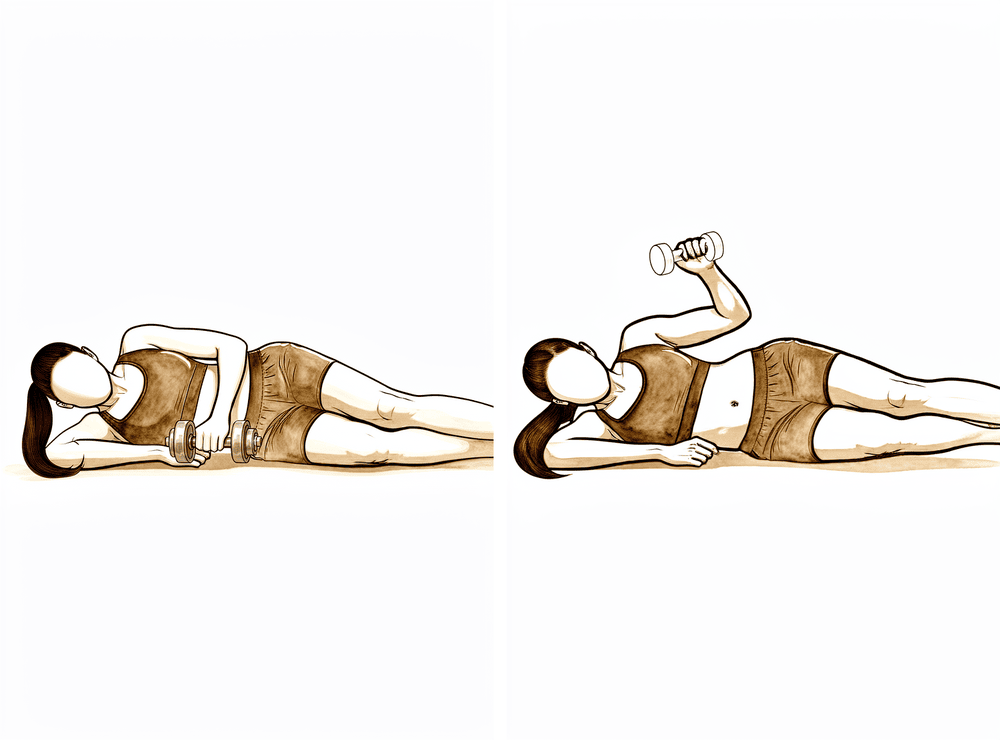
Side-lying external rotation na may weight
Humiga sa gilid na hindi naoperahan na may siko ng itaas na bahagi na nakatiklop sa right angle at nakadikit sa iyong katawan. Habang humahawak ng magaan na pabigat, i-rotate ang forearm pataas patungo sa kisame, pagkatapos ay dahan-dahang ibaba. Panatilihing magaan ang load at mas mataas ang repetitions habang bumabalik ang lakas ng iyong rotator-cuff.
2 hanggang 3 sets ng 8 hanggang 12, low load
Kieran Hirpara 4.0
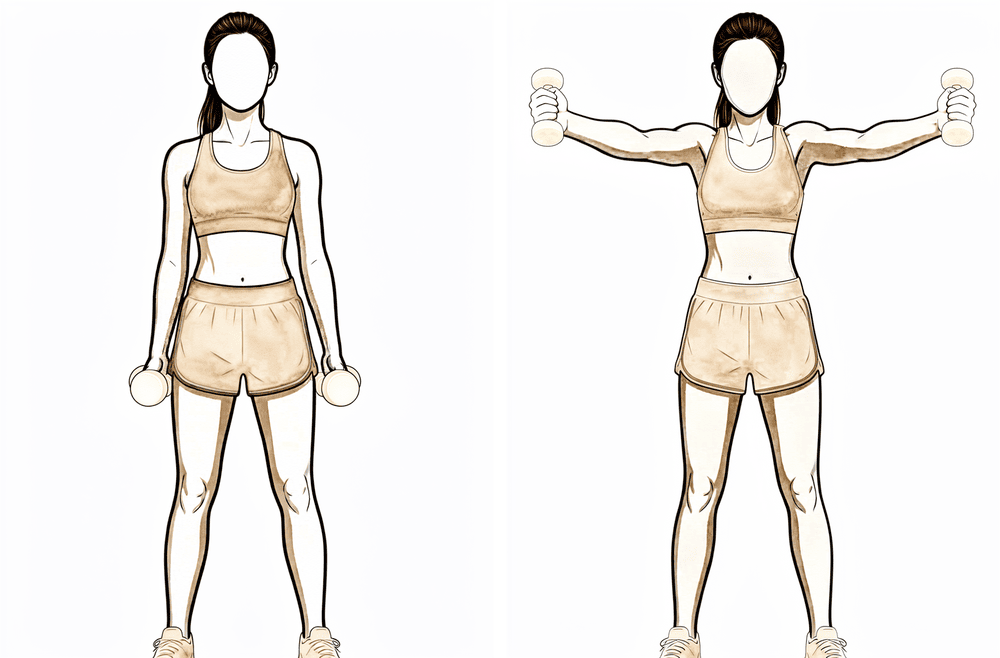
Full-can raise (scaption)
Habang humahawak ng magaan na pabigat na ang iyong hinlalaki ay nakaturo pataas, itaas ang braso palabas sa isang forward-and-out diagonal — hindi diretso sa gilid — hanggang sa taas ng balikat, pagkatapos ay dahan-dahang ibaba. Pinapagana nito ang harap ng balikat at ang cuff nang magkasama. Panatilihing magaan ang pabigat at huminto kung ito ay nagdudulot ng pananakit na nananatili.
2 hanggang 3 sets ng 8 hanggang 12, low load
Kieran Hirpara 4.0
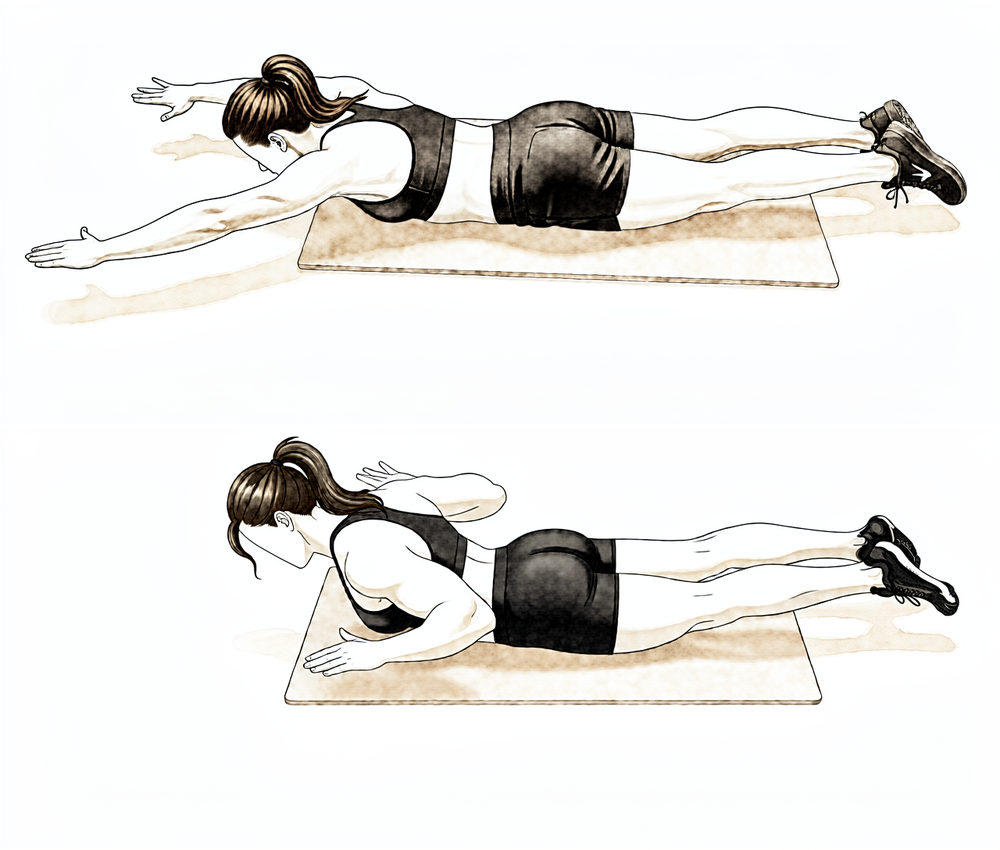
Prone row
Humiga nang nakadapa na ang inoperahang braso ay nakalaylay pababa sa sahig. Itaas ang iyong siko patungo sa kisame, habang hinihigpitan ang shoulder blade papasok sa iyong spine, pagkatapos ay dahan-dahang ibaba. Magsimula nang walang bigat at panatilihing kontrolado ang paggalaw.
Ayon sa gabay ng iyong physiotherapist
Kieran Hirpara 4.0
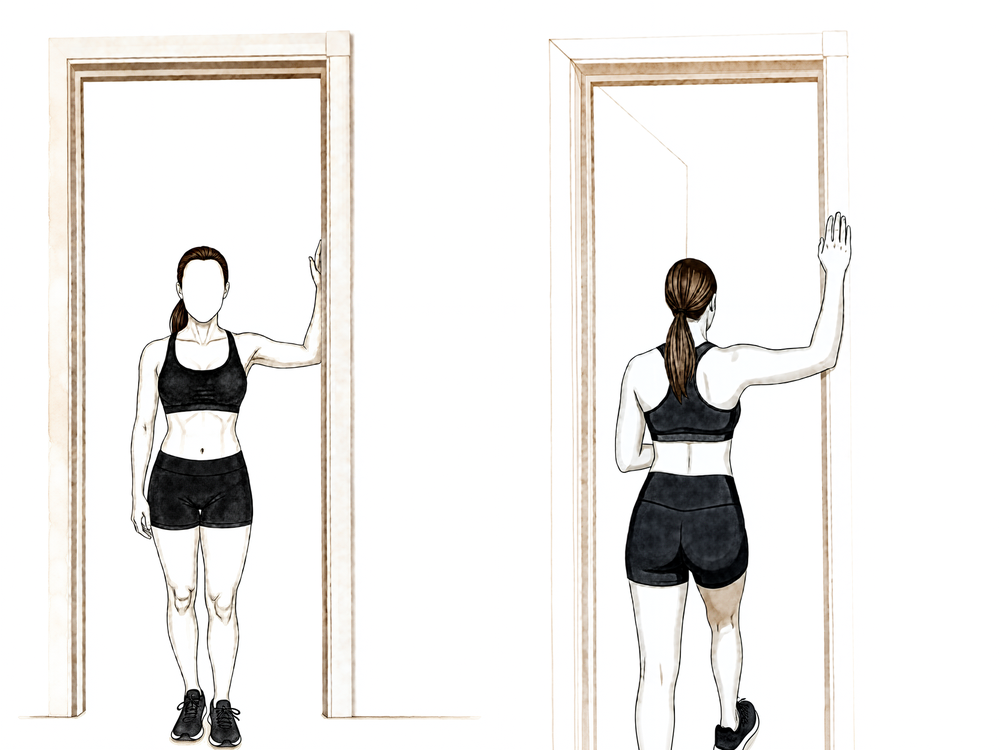
Doorway chest stretch
Tumayo sa isang pintuan na ang iyong mga forearm ay nakasandal sa frame at ang mga siko ay nasa taas ng iyong balikat. Ihakbang ang isang paa pasulong at dahan-dahang yumuko pasulong hanggang sa makaramdam ka ng stretch sa harap ng iyong dibdib, pagkatapos ay panatilihin ito. Panatilihin itong banayad at huwag itong pilitin.
I-hold nang ~20–30 segundo, ayon sa gabay ng iyong physiotherapist
Kieran Hirpara 4.0
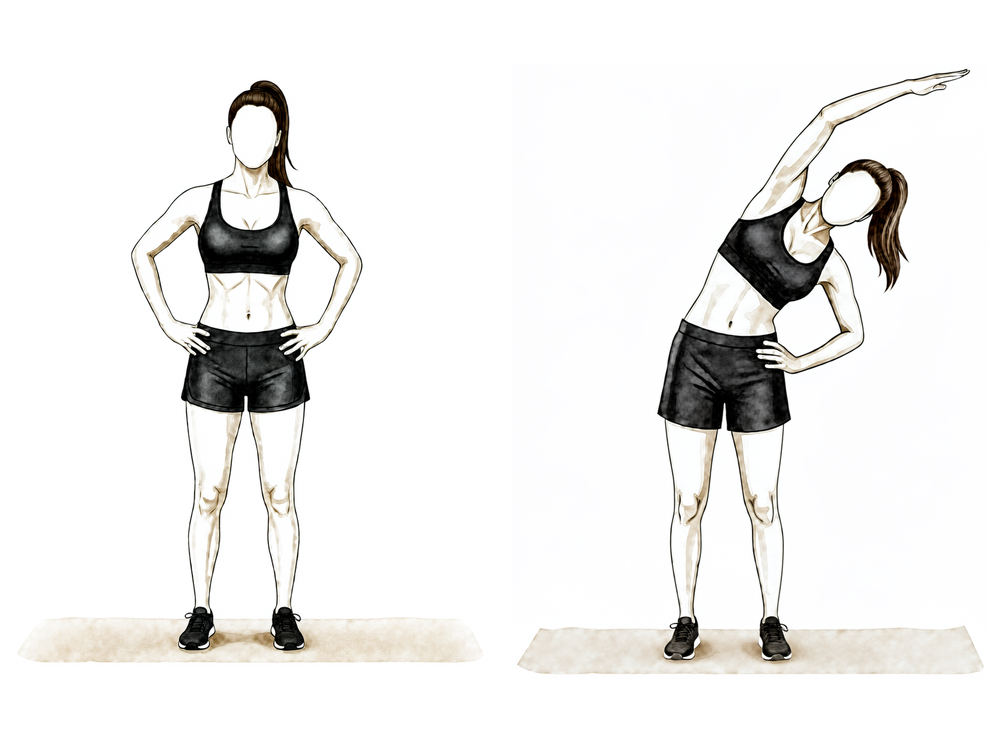
Stretch ng Latissimus (gilid ng likod)
Itaas ang inoperahang braso sa ibabaw ng ulo — gamitin ang iyong malusog na kamay upang gabayan ito kung kinakailangan — at dahan-dahang humilig sa kabilang panig hanggang sa makaramdam ng stretch sa gilid ng iyong likod, pagkatapos ay panatilihin ito. Panatilihin itong komportable at ayon sa iyong range.
I-hold nang ~20–30 segundo, ayon sa gabay ng iyong physiotherapist
Dahil naghilom na ang bali at bumabalik na ang iyong active movement, ang atensyon ay nakatuon na sa muling pagbuo ng lakas. Ang resistance work ay magsisimula nang dahan-dahan (elastic bands at magagaan na weights para sa rotator cuff, deltoid at mga kalamnan ng shoulder-blade) at unti-unting uunlad. Ang stretching ay magpapatuloy kasabay nito, na naglalayong makuha ang full movement sa lahat ng direksyon, kabilang ang pag-abot sa likod. Ang mga normal na pang-araw-araw na aktibidad ay dapat na halos bumalik na sa dati sa phase na ito, at ang mga magagaan na recreational activities ay karaniwang muling sisimulan, ayon sa gabay ng iyong physiotherapist.
Para sa iyong physiotherapist:
Mga Layunin
- Full active range of motion sa lahat ng planes na may normal na mechanics
- Graduated restoration ng lakas at endurance ng rotator cuff, deltoid at scapular
Pamamahala
- Pag-usad mula sa isometrics patungo sa elastic-band at pagkatapos ay light free-weight strengthening (humigit-kumulang 0.5–2 kg) para sa cuff, deltoid at scapular stabilisers: low load, higher repetitions (halimbawa 2–3 sets ng 8–12), resistance sessions mga 3 beses bawat linggo upang maiwasan ang overload
- Rotation strengthening sa simula ay habang ang braso ay nasa gilid, sa ibaba ng taas ng balikat
- Bigyang-diin ang anterior deltoid at ang trapezius–serratus anterior force couple para sa isang stable na scapular base
- Flexibility program para sa terminal range sa lahat ng planes: posterior capsule (cross-body) stretch, behind-the-back internal rotation, anterior chest wall / pectoralis minor stretches, doorway stretch
- Simulan ang internal rotation sa likod at grade III–IV mobilisations habang pinahihintulutan ng range
- Upper-body ergometer na may low resistance; general aerobic conditioning
Mga Pag-iingat
- Ang pagpapalakas ay dapat manatili sa loob ng comfortable range at hindi dapat magdulot ng pananakit na nagtatagal
- Bawal magbuhat ng higit sa humigit-kumulang 4–5 kg gamit ang inooperahang braso sa phase na ito
- Iwasan ang labis na weight-bearing sa pamamagitan ng braso (ang mga push-ups at katulad nito ay gagawin sa huli)
Mga Kraytirya para sa pag-usad
- Full active range of motion na walang compensatory strategies
- Ang strengthening program ay natatanggap nang walang flare-up ng pananakit o pagkawala ng range
Phase IV — Pagbabalik sa buong aktibidad (mula humigit-kumulang 4½–6 na buwan)
Ang huling phase ay isang unti-unting pagbabalik sa mas mabigat na pagbubuhat, manwal na trabaho, mga gawaing overhead, at isport. Ang strength work ay uunlad patungo sa mas mabigat na resistance at compound movements, at, kung may kaugnayan sa iyong trabaho o isport, sa mas mabilis at mas dynamic na ehersisyo. Karamihan sa mga tao ay nakakabalik na sa kanilang mga nakasanayang aktibidad sa loob ng humigit-kumulang anim na buwan, bagaman ang lakas at kumpyansa ay karaniwang patuloy na bumubuti hanggang isang taon. Ang tamang finish line ay nakadepende sa kung ano ang kailangang gawin ng braso, kaya ang pagbabalik sa mabigat na manwal na trabaho o contact at overhead sport ay pinagkakasunduan kasama si Dr Hirpara at ang iyong physiotherapist sa halip na itakda ng kalendaryo.
Para sa iyong physiotherapist:
Mga Layunin
- Pagbabalik sa buong trabaho, rekreasyon, at sporting activity
- Lakas ng inoperahang braso na papalapit sa lakas ng kabilang panig
Pamamahala
- Progressive resistance sa pamamagitan ng bands, free weights, at gym-based compound movements
- Push-up progression (wall → bench → knees → full) at closed-chain stability work ayon sa tolerance
- Mula humigit-kumulang 4½ buwan: eccentric loading, plyometrics (weighted-ball work), proprioceptive at rhythmic-stabilisation drills kung may kaugnayan
- Resisted rotation sa 90° ng elevation, at interval sport-specific o vocation-specific programs kung naaangkop
Mga Pag-iingat
- Ang progression ay nananatiling symptom-guided: kung bumalik ang sakit o pagkawala ng range, bawasan ang intensity at ibalik muna ang komportableng paggalaw
Mga Kraytirya para sa discharge
- Lakas ng inoperahang braso ay hindi bababa sa humigit-kumulang 80% ng kabilang panig kapag sinukat
- Walang sakit kasabay ng progressive strengthening
- Independent na sa isang maintenance home program
Pagkatapos ng iyong protocol
Ang mga phase sa itaas ay hango sa mga nailathalang rehabilitation protocol para sa proximal humerus fracture fixation: Massachusetts General Brigham Sports Medicine, Twin Cities Orthopedics, the UConn Musculoskeletal Institute, NYU Langone Orthopedic Center at South Bend Orthopaedics, kasama ang isang systematic review ng rehabilitation pagkatapos ng proximal humerus fracture. Ang mga nailathalang protocol para sa operasyong ito ay mas nag-iiba kumpara sa karamihan ng shoulder surgery, dahil ang tamang bilis ay nakadepende sa kung paano na-fix ang indibidwal na fracture at kung paano ito gumagaling; samakatuwid, ang iyong pag-usad sa mga phase ay ginagabayan ni Dr Hirpara sa iyong mga review at inaayos ng iyong physiotherapist sa pagitan ng mga ito. Ang pahinang ito ay kasabay ng pangkalahatang payo sa paggaling ng klinika; tingnan ang managing post-operative pain at wound care. Para sa mismong operasyon, tingnan ang proximal humerus fixation.
Kung nais mong basahin ang ebidensya sa likod ng protocol na ito (ang pananaliksik tungkol sa maaga laban sa naantalang paggalaw pagkatapos ng plate fixation, ang debate sa pagitan ng surgery at sling, at ang mga komplikasyon na nilalayong iwasan ng staged progression), ang isang fully referenced evidence summary ay available bilang PDF kasama ng pahinang ito.
Evidence & references
This is the clinical evidence summary written for health professionals. It is technical, and it lists the research this page was built from. You do not need to read it to understand your treatment or to make a decision about it.
Proximal Humerus Fracture Fixation (Locking-Plate ORIF) — Post-operative Rehabilitation: Evidence
Topic scope: Post-operative rehabilitation after open reduction and internal fixation (ORIF) of a proximal humerus fracture with a locking (angular-stable) plate and screws. This page covers the evidence behind the phased rehabilitation program — early protected/passive motion, deferred active and resisted motion, and graded strengthening — and the surgical-outcome facts that shape it. It does not cover the separate pathways of non-operative fracture management, intramedullary nailing, hemiarthroplasty or reverse total shoulder arthroplasty, although the operative-versus-non-operative debate is summarised because it frames who is offered this operation at all.
Defining principle of the rehab here (mobilise early, protect the tuberosities): A locking plate is an angular-stable construct — the screws lock into the plate, so the fixation holds even in osteoporotic bone without relying on bone-to-screw friction. Because that stability is present from day one, this protocol now permits early active (and active-assisted) shoulder elevation in a pain-free range for stable fixation, consistent with the early-active-motion RCT evidence (Loew 2025), rather than holding the shoulder passive-only for six weeks. The element still keyed to biological healing is rotation and rotator-cuff loading: where the tuberosity fragments to which the rotator cuff attaches are part of the fracture, active/resisted rotation and cuff work are held back until those fragments unite, whereas where the tuberosities are uninvolved or solidly fixed the surgeon may clear cuff loading sooner. The brake is therefore biological, not mechanical — the plate is strong immediately — and it is now selective (rotation/cuff), not a blanket movement ban. Progression of cuff loading remains governed by fracture stability and radiographic healing, not the calendar. This places the protocol close to the early-active-movement end of the spectrum while still being more tuberosity-aware than a pure debridement/decompression, and far less tuberosity-dependent than a fracture arthroplasty, where healing of the tuberosities to the prosthesis dictates a slower, stricter cuff-loading timetable.
The operation
A proximal humerus fracture is a break of the upper end of the arm bone, near the shoulder. In ORIF the fragments are realigned (reduced) and held with a pre-contoured locking plate on the outer surface of the bone, fixed with multiple locking screws into the humeral head. Where the tuberosities (the bony knobs carrying the rotator-cuff attachments) are part of the fracture, they are reduced and secured to the plate, often reinforced with heavy sutures through the cuff. The plate provides immediate mechanical stability; the rehabilitation then protects the biological healing of the fracture and the tuberosity fragments.
Evidence by theme
1. Modern locking plates permit early active motion — supported by RCT evidence and adopted here for stable fixation
The historical "restrictive" protocol kept the arm immobilised with no active movement for ~6 weeks, with passive limits of flexion to ~90°, external rotation to ~20° and internal rotation to the belly. The rationale for early motion is to prevent the shoulder stiffening (adhesive capsulitis is a recognised complication of these fractures) while still protecting the bone. Because an angular-stable locking plate is mechanically strong from day one, early active elevation can be permitted for stable fixation; the element kept keyed to biological healing is rotation and rotator-cuff loading, because that is what pulls on the tuberosity fragments.
The more aggressive question — can patients move actively from the start? — has now been tested. A prospective randomised controlled trial (Loew et al., J Orthop, 2025) compared a conventional 4-week sling-immobilisation group against an early functional group with no movement or force restrictions after locking-plate ORIF (both groups avoided heavy lifting and impact for 3 months). At 24 months there was no significant difference in DASH or Constant score: Constant score averaged 81.3 (conventional) vs 78.4 (early functional), with relative Constant score 89.8% of the uninjured side in both groups — i.e. early active motion was non-inferior. Moderate (single RCT). This is consistent with the broader signal that early intensive mobilisation yields similar outcomes to conventional later mobilisation after operative treatment. In line with this evidence, Dr Hirpara's protocol now permits early active elevation in a pain-free range for stable fixation; the literature still has no consensus on the optimal regimen, so the one element kept deliberately cautious and keyed to radiographic healing is active/resisted rotation and rotator-cuff loading, because that is the movement that stresses the healing tuberosity fragments.
2. Post-operative protocols are highly heterogeneous, but converge on short immobilisation and early passive ROM
The best summary of practice is a systematic review of 45 cohorts (40 articles, 3,507 patients, 3,519 fractures) (Budharaju et al., Shoulder Elbow, 2024). Across studies:
- Sling immobilisation averaged 3.1 weeks (most commonly 3 weeks; range 0–6).
- Passive ROM began at ~0.9 weeks on average (most commonly at 2 days).
- Active ROM began at ~2.5 weeks on average (most commonly at 3 weeks).
- Strengthening began at ~5.5 weeks on average (most commonly at 6 weeks).
The authors emphasised substantial variability regardless of management, concluded that this heterogeneity limits cross-study comparison, and noted that early mobilisation may produce superior function — supporting consideration of shorter immobilisation. The synthesis page's "~3 weeks in the sling, then wean" reflects this averaged convention, not a trial-proven optimum. Moderate for the descriptive pattern; weak/consensus for any specific timetable.
3. Progression is governed by fracture stability and healing, not the calendar — because of the tuberosities and biological complications
The locking plate is strong immediately; what limits the rehab is the bone. Two facts anchor the "wait-for-healing" rule:
- Tuberosity / cuff loading. When the tuberosities are part of the fracture, loading the rotator cuff (forced/resisted external rotation and resisted cuff work) too early risks displacing fragments before they unite. This is the explicit reason the early phases keep rotation cautious and defer cuff loading until healing, even though early active elevation in a pain-free range is permitted; where the tuberosities are uninvolved or solidly fixed, the surgeon may clear cuff loading sooner.
- The major complications of locking-plate ORIF are largely biological and mechanical, and several are loading- and reduction-sensitive. A systematic review (Thanasas / Brorson-class series) reports the commonest complications as intra-articular screw perforation (~9–12%), varus collapse (~6.8%), loss of reduction, avascular necrosis of the humeral head (~4.6%, reported range 0–15%), subacromial impingement (~5%), adhesive capsulitis (~4%), nonunion (~1.5%) and deep infection (~1.4%). Screw perforation and avascular necrosis frequently coincide, because a head that collapses or undergoes AVN lets fixed-length locked screws migrate into the joint. Moderate (pooled observational series).
This complication profile is why progression waits on radiographs: premature loading risks tipping a borderline reduction into varus collapse or screw cut-out. Some surgeons even advocate early planned plate removal to avoid secondary screw penetration once the head shows AVN/collapse (Dimitriou et al., J Orthop, 2019) — a salvage strategy, not part of routine rehab, but it illustrates how mechanical and biological failure interact.
4. Who is offered ORIF at all — the operative-versus-non-operative debate (PROFHER and after)
The single most influential trial is PROFHER (Rangan et al., JAMA, 2015; 250 patients, 32 UK centres, displaced fractures involving the surgical neck): surgery showed no important difference in Oxford Shoulder Score versus sling-based non-operative care over 2 years, and was more expensive. The 5-year follow-up (Handoll/Keding et al., Bone Joint J, 2017) confirmed no significant difference in shoulder function or quality of life persisting to 5 years. A smaller RCT in displaced 3-part fractures in the elderly (Fjalestad et al., J Shoulder Elbow Surg, 2012) similarly found no functional advantage to internal fixation over non-operative care in that group, and a systematic review and meta-analysis (Beks et al., J Shoulder Elbow Surg, 2018) found no clear superiority of operative treatment across observational and randomised data combined. Strong (multiple RCTs + SR-MA).
The clinical upshot — and the reason this matters to a rehab page — is that ORIF is selectively indicated, typically in younger patients, in fractures where reduction and stable fixation are achievable and worthwhile, and where the alternative (non-operative care or arthroplasty) is judged less favourable. The decision is individualised; "difficulty in decision-making" for displaced fractures is itself documented as affecting outcomes (Okike et al., J Shoulder Elbow Surg, 2018). Patients should understand that being offered ORIF is a considered judgement, not an automatic consequence of the fracture.
5. Adjacent rehabilitation evidence (non-operative immobilisation duration)
Although it concerns non-operatively treated fractures, a relevant randomised controlled trial (Tanji et al., J Bone Joint Surg Am, 2021) compared 1 versus 3 weeks of immobilisation and supports the broad theme that earlier movement is at least as good as longer immobilisation for many proximal humerus fractures. It does not directly govern the post-ORIF protocol but reinforces the same direction-of-travel away from prolonged slings. Moderate (RCT, non-operative population).
Phased post-operative timeline (consistent with the synthesis page)
| Phase | Window | Sling | Shoulder motion | Strengthening | Governing rule |
|---|---|---|---|---|---|
| I — Protection & early passive motion | Weeks 0–6 | Full-time ~3 weeks, then weaned; off for exercises/hygiene; not in bed | Early active-assisted/active elevation permitted in a pain-free range from the outset (supine-start → upright); passive as needed; pendulums; elbow/wrist/hand active. ER kept to a gentle ~30–40° default; rotation cautious — defer active/resisted cuff work until tuberosities heal (surgeon-guided) | None at the shoulder (deltoid/periscapular isometrics as comfort allows) | Protect fixation + tuberosities; settle pain/swelling |
| II — Regaining active movement | Weeks 6–12 | Discarded by the 6-week review at the latest | Active-assisted → active in all planes (supine-start elevation); submaximal cuff/deltoid isometrics once healing confirmed | Light elbow/scapular work; no resisted cuff work until union (typically not before 8–12 weeks) | Radiographic healing at the ~6-week review gates active motion |
| III — Strengthening | ~Months 3–4½ | Off | Full active ROM in all planes, including behind-the-back | Graded bands → light free weights (~0.5–2 kg) for cuff, deltoid, scapula | Union confirmed; symptom-guided load progression |
| IV — Return to full activity | ~4½–6 months | Off | Full, with dynamic/overhead drills as relevant | Heavier resistance, compound + sport/work-specific | Return-to-task agreed with surgeon/physio, not the calendar |
The phase boundaries are individualised at Dr Hirpara's reviews on the basis of X-ray healing — this is the operative consequence of the "stability- and healing-governed, not calendar-governed" principle.
Key controversies / evidence quality
-
Early active versus delayed (protected) mobilisation after ORIF. A single RCT (Loew 2025) found unrestricted early active motion non-inferior to 4-week immobilisation at 24 months, and the broader literature leans toward shorter immobilisation. The protocol here aligns with that early-active-motion evidence: early active and active-assisted elevation in a pain-free range is permitted for stable fixation, rather than holding the shoulder passive-only for six weeks. Because there is still no consensus and no large confirmatory trial (protocols remain heterogeneous — Budharaju 2024), the protocol keeps one deliberate, evidence-aware caution: active/resisted rotation and cuff loading is keyed to radiographic tuberosity healing rather than released wholesale on day one. Moderate evidence, unsettled.
-
Operative versus non-operative treatment of displaced fractures. PROFHER (2015) and its 5-year follow-up (2017), plus an elderly-3-part RCT (Fjalestad 2012) and a meta-analysis (Beks 2018), found no clear functional benefit of surgery on average — which is why ORIF is selectively, not routinely, offered. The trials enrolled broad/older populations; the subgroup most likely to benefit from fixation (younger patients, good bone, reconstructable head-preserving fractures) is exactly where this operation is concentrated. Strong evidence overall; subgroup benefit remains debated.
-
The post-operative rehab protocol itself is consensus/expert. No high-level RCT defines the optimal phase structure, ROM limits or strengthening onset after ORIF. The timings here are drawn from published surgeon protocols and the systematic-review averages, individualised at review. Weak/consensus.
Evidence-strength flags (summary)
- STRONG (RCT / SR-MA): operative versus non-operative equivalence on average for displaced fractures (PROFHER 2-yr JAMA 2015 + 5-yr Bone Joint J 2017; Fjalestad 2012 RCT; Beks 2018 SR-MA).
- MODERATE (single RCT / pooled series): early active motion non-inferior to immobilisation after ORIF at 24 months (Loew 2025 RCT); 1-vs-3-week immobilisation non-operatively (Tanji 2021 RCT); locking-plate complication profile — screw perforation, varus collapse, AVN, etc. (pooled observational series); descriptive practice pattern of short sling + early passive ROM (Budharaju 2024 SR of 45 cohorts).
- WEAK / CONSENSUS: the specific phased rehabilitation timetable after ORIF (no defining rehab RCT; published surgeon protocols + systematic-review averages; progression individualised by radiographic healing).
Citations
RAG corpus (180,000+ Orthopaedic articles) — real DOIs
- Five-year follow-up results of the PROFHER trial comparing operative and non-operative treatment of adults with a displaced fracture of the proximal humerus. Bone Joint J. 2017. DOI: 10.1302/0301-620x.99b3.bjj-2016-1028
- Operative versus nonoperative treatment of proximal humeral fractures: a systematic review, meta-analysis, and comparison of observational studies and randomized controlled trials. J Shoulder Elbow Surg. 2018. DOI: 10.1016/j.jse.2018.03.009
- Internal fixation versus nonoperative treatment of displaced 3-part proximal humeral fractures in elderly patients: a randomized controlled trial. J Shoulder Elbow Surg. 2012. DOI: 10.1016/j.jse.2010.12.018
- One Versus 3-Week Immobilization Period for Nonoperatively Treated Proximal Humeral Fractures: a randomized controlled trial. J Bone Joint Surg Am. 2021. DOI: 10.2106/jbjs.20.02137
- Contemporary Management of Proximal Humeral Fractures. J Am Acad Orthop Surg. 2024. DOI: 10.5435/jaaos-d-24-01073
- The Use of Precontoured Humeral Locking Plates in the Management of Displaced Proximal Humerus Fracture. J Am Acad Orthop Surg. 2009. DOI: 10.5435/00124635-200909000-00005
- Use of locking plates in the treatment of proximal humerus fractures. J Shoulder Elbow Surg. 2010. DOI: 10.1016/j.jse.2010.01.001
- Functional results and unfavorable events after treatment of proximal humerus fractures using a new locking plate system. BMC Musculoskelet Disord. 2023. DOI: 10.1186/s12891-023-06176-5
- Fracture site augmentation with calcium phosphate cement reduces screw penetration after open reduction–internal fixation of proximal humeral fractures. J Shoulder Elbow Surg. 2012. DOI: 10.1016/j.jse.2011.09.017
- Difficulty in decision making in the treatment of displaced proximal humerus fractures: the effect of uncertainty on surgical outcomes. J Shoulder Elbow Surg. 2018. DOI: 10.1016/j.jse.2017.09.033
Literature (URLs)
- Loew M, et al. Postoperative treatment of proximal humerus fractures with an early active motion protocol: a prospective randomized controlled trial. J Orthop. 2025. https://www.sciencedirect.com/science/article/pii/S1058274625001867 (Constant 81.3 conventional vs 78.4 early-functional at 24 months; early active motion non-inferior)
- Budharaju A, Hones KM, Hao KA, et al. Rehabilitation protocols in proximal humerus fracture management: a systematic review. Shoulder Elbow. 2024;16(4):449–458. https://pmc.ncbi.nlm.nih.gov/articles/PMC11437559/ (45 cohorts; sling 3.1 wk, passive 0.9 wk, active 2.5 wk, strengthening 5.5 wk; early mobilisation may improve function)
- Rangan A, et al. (PROFHER). Surgical vs nonsurgical treatment of adults with displaced fractures of the proximal humerus: the PROFHER randomized clinical trial. JAMA. 2015;313(10):1037–1047. https://pubmed.ncbi.nlm.nih.gov/25756440/ (250 patients; no important difference in Oxford Shoulder Score at 2 years)
- Complications associated with locking plate of proximal humerus fractures (systematic review of complication rates). PMC. https://pmc.ncbi.nlm.nih.gov/articles/PMC5858203/ (screw perforation ~9–12%, varus collapse ~6.8%, AVN ~4.6%)
- Avascular necrosis and posttraumatic arthritis after proximal humerus fracture internal fixation: evaluation and management. PMC. https://pmc.ncbi.nlm.nih.gov/articles/PMC9889581/ (AVN reported range 0–15%)
- Late screw-related complications in locking plating of proximal humerus fractures: a systematic review. Injury. https://www.sciencedirect.com/science/article/abs/pii/S0020138319306989
- Dimitriou D, et al. Early locking plate removal following ORIF of proximal humeral fractures could prevent secondary implant-related complications. J Orthop. 2019;17:106–109. https://pmc.ncbi.nlm.nih.gov/articles/PMC6919395/
Published rehabilitation protocols (patient-guidance — basis for the phase structure)
- Massachusetts General Brigham Sports Medicine. Rehabilitation Protocol for Proximal Humeral Fracture Open Reduction Internal Fixation (ORIF). https://www.massgeneral.org/assets/MGH/pdf/orthopaedics/sports-medicine/physical-therapy/rehabilitation-protocol-for-proximal-humeral-fracture-with-ORIF.pdf
- LaPrade CM. Post-Surgical Physical Therapy Protocol: Proximal Humerus Fracture ORIF. Twin Cities Orthopedics. https://tcomn.com/wp-content/uploads/2024/08/CML_Proximal-Humerus-ORIF-PT_10-2024.pdf
- Coyner KJ. ORIF Proximal Humerus Fractures Protocol. UConn Musculoskeletal Institute. https://www.drcoyner.com/pdf/orif-proximal-humerus-fractures-protocol.pdf
- Jazrawi LM. Rehabilitation Protocol: Proximal Humerus Open Reduction & Internal Fixation (ORIF). NYU Langone Orthopedic Center. https://www.newyorkortho.com/pdf/proximal-humerus-fracture-orif-post-op-instructions-and-rehab.pdf
- South Bend Orthopaedics. ORIF Proximal Humerus Fracture Rehab Protocol. https://www.sbortho.com/wp-content/uploads/2023/09/br-pt-fracture-orif-proximal-humerus.pdf