Patients › General-Health
Paninigarilyo at ang Paggaling ng Buto, Joint at Kalamnan
How smoking and nicotine affect bone healing, fracture union, spinal fusion, tendon and wound healing, and surgical complications — and the benefits of stopping before surgery.
Ano ito
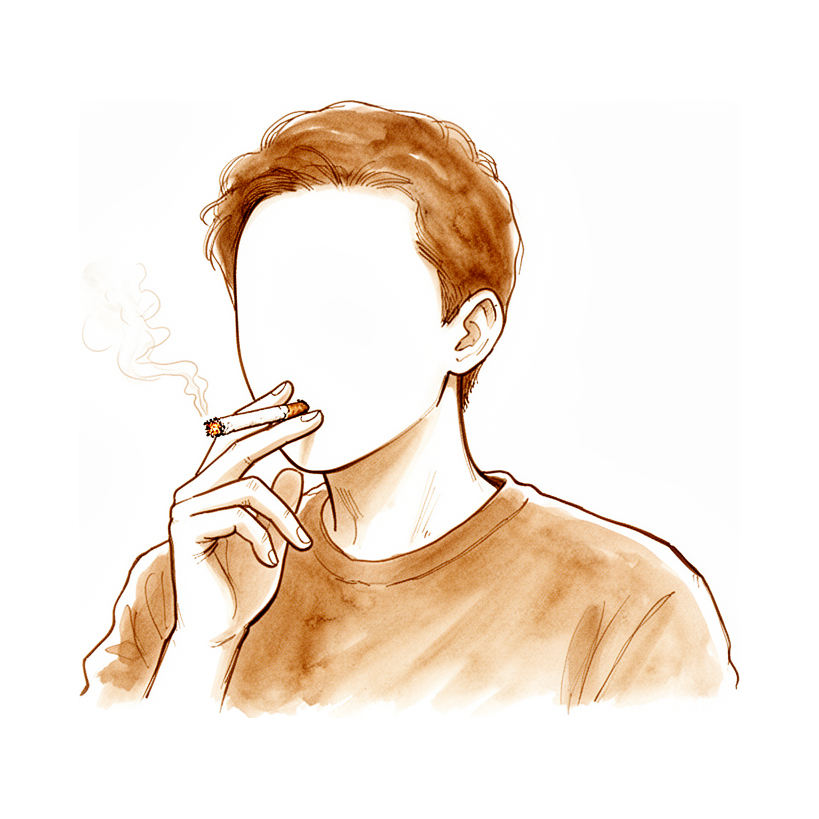
Hindi lamang ang iyong baga at puso ang naaapektuhan ng paninigarilyo. Pinababagal din nito kung gaano kahusay gumagaling ang iyong katawan pagkatapos ng operasyon sa buto, joint, tendon at ligament. Ipinapaliwanag ng pahinang ito kung bakit, at kung ano ang ibig sabihin nito para sa iyong operasyon.
Ang nicotine, ang nakaka-adik na kemikal sa tabako, ay nagpapakitid sa maliliit na ugat ng dugo na nagdadala ng oxygen at sustansya sa gumagaling na tissue. May dose-dependent na epekto ito sa paggaling ng buto, paglaki ng buto at pagsasanib ng implant sa buto [1]. Ibig sabihin, habang mas maraming nicotine ang natatanggap ng iyong katawan, mas malaki ang maaaring maging hadlang nito sa paggaling. Kailangan ng buto ng tuloy-tuloy na daloy ng dugo upang muling magdikit, at kailangan ng mga implant ng malusog na buto upang kumapit.
Lumalabas ang mga epekto sa maraming uri ng operasyon. Mas mataas ang panganib ng mga naninigarilyo na magkaroon ng mga medikal at surgical na komplikasyon pagkatapos ng planadong (elective) hip o knee replacement [2]. Pagkatapos ng rotator cuff repair, ang mga heated tobacco product ay may katulad na nakasasamang epekto sa paggaling ng tendon gaya ng sigarilyo [3]. Iniuugnay ang smokeless tobacco sa mas maraming komplikasyon pagkatapos ng ACL reconstruction [4, 5] at pagkatapos ng hip replacement [6]. Para sa operasyon sa fracture ng bukung-bukong at sakong, pinapataas ng paninigarilyo ang panganib ng impeksyon sa sugat [7]. Ang pagkaadik sa nicotine bago ang operasyon sa fracture ng itaas na braso ay may kaakibat na 60-110% na pagtaas ng panganib ng mga komplikasyon gaya ng impeksyon, pagbuka ng sugat, nonunion (fracture na hindi gumaling) at muling operasyon [8].
Ang magandang balita ay ang paninigarilyo ay isang modifiable risk factor [9, 10]. Ibig sabihin, isa itong bagay na kaya mong baguhin. Mahalaga ang pagtigil. Ang mga dating naninigarilyo na tumigil nang higit sa 6 na buwan bago ang rotator cuff repair ay walang natutukoy na pagtaas sa impeksyon o revision surgery kumpara sa mga taong hindi kailanman naninigarilyo [11]. Maaaring makipag-usap sa iyo ang iyong doktor tungkol sa pagtigil, at tungkol sa mga opsyon sa nicotine replacement, nang maaga bago ang petsa ng iyong operasyon.
Gumagana ba ito?
Ang tapat na sagot ay maaari pa ring gumana ang operasyon para sa mga naninigarilyo, ngunit ipinapakita ng ebidensya na madalas itong hindi gaanong gumagana. Natuklasan ng mga pag-aaral ng shoulder replacement na ang mga kasalukuyang naninigarilyo ay maaaring may mas mahinang paggana pagkatapos kaysa sa mga taong hindi kailanman naninigarilyo o tumigil na [12]. Magkatulad ang antas ng mga komplikasyon at revision surgery sa pagitan ng mga grupo [12]. Kaya maaaring tumagal ang implant mismo, ngunit ang pakiramdam at paggalaw ng iyong balikat ay maaaring hindi umabot sa parehong antas.
Mahalaga rin ang nicotine nang mag-isa, kahit walang tabako. Natuklasan ng pananaliksik sa shoulder replacement na ang pagkaadik sa nicotine mula sa mga pinagmumulang hindi paninigarilyo ay iniugnay sa mas maraming pagbuka ng sugat at impeksyon sa unang 90 araw, at mas maraming pagluwag at impeksyon sa joint sa ika-2 taon [13]. Pagkatapos ng keyhole na rotator cuff repair, ang mga taong adik sa nicotine ay nangailangan ng mas maraming kasunod na repair ng cuff at mas maraming procedure upang paluwagin ang matigas na balikat o linisin ang joint, sa parehong ika-2 at ika-5 taon [14].
Lumalabas din ang parehong pattern sa ibang lugar. Pagkatapos ng ACL reconstruction, mas malamang na magkaroon ng mahusay na paggana ng tuhod ang mga taong hindi kailanman naninigarilyo kaysa sa mga naninigarilyo [15]. Para sa knee replacement, tila naaapektuhan ng paninigarilyo ang maagang panahon ng paggaling sa halip na ang antas ng sakit lamang [16]. Para sa operasyon sa fracture, nakadepende sa dose ang epekto ng nicotine sa paggaling ng buto, at naipakita ito sa mga pag-aaral sa hayop at sa laboratoryo [1]. Pinapayuhan ang mga surgeon na tanungin ang bawat pasyenteng may scaphoid fracture, isang maliit na buto ng wrist, kung sila ay naninigarilyo o gumagamit ng smokeless tobacco, dahil pareho nitong pinapataas ang posibilidad na hindi gumaling ang fracture [17].
Mas matibay ang ilan sa ebidensyang ito kaysa sa iba. Karamihan dito ay nagmumula sa malalaking rekord ng pasyente sa halip na sa mga trial kung saan random na hinahati ang mga tao sa mga grupo. Halo-halo ang ilang natuklasan. Natuklasan ng isang pag-aaral na mas mataas ang panganib ng mga komplikasyon sa paninigarilyo kaysa sa smokeless tobacco pagkatapos ng knee replacement [18], na nagpapahiwatig na walang produktong tabako na malinaw na ligtas sa panahon ng operasyon.
Simple ang ibig sabihin nito para sa iyo. Ang pagtigil bago ang iyong operasyon ay nagbibigay sa iyong katawan ng pinakamagandang pagkakataon na gumaling nang maayos, at habang mas maaga kang tumigil, mas mabuti.
Ano ang mga panganib?
Ang mga pangunahing panganib ay ang mga nailarawan na: mas mabagal na paggaling, mga problema sa sugat at impeksyon. Ngunit may ilang detalye na dapat mong malaman.
Ang nicotine mula sa anumang pinagmulan, hindi lamang sa sigarilyo, ay nagpapataas ng posibilidad ng pagbuka ng sugat, impeksyon at malubhang pagkalat ng impeksyon sa unang 90 araw pagkatapos ng shoulder replacement [13]. Pinapataas din nito ang posibilidad na lumuwag o magkaroon ng impeksyon ang implant sa ika-2 taon [13]. Kasama rito ang nicotine mula sa mga pouch, gum o iba pang produktong walang anumang tabako.
Ang ilang panganib ay nakadepende sa kung saan ka ooperahan. Pinapataas ng paninigarilyo ang panganib ng impeksyon sa sugat pagkatapos ng operasyon sa fracture ng buto ng bukung-bukong at sakong [7]. Pagkatapos ng knee replacement, tila pinakanaaapektuhan ng paninigarilyo ang maagang panahon ng paggaling [16]. Para sa mga fracture ng scaphoid, isang maliit na buto sa wrist, parehong itinuturing ang paninigarilyo at ang paggamit ng smokeless tobacco na mga palatandaan na maaaring hindi gumaling ang buto [17].
Hindi lahat ng panganib ay kumpirmado. Natuklasan ng isang pag-aaral ng isang partikular na uri ng operasyon sa ibabang bahagi ng gulugod na hindi pinabagal ng paninigarilyo ang pagsasanib ng buto kapag ginamit ang isang karaniwang pamamaraan [19]. Maaaring mabawi ng mas bagong mga pamamaraan at ng mga dagdag na pampagaling ng buto ang ilan sa mga epekto ng paninigarilyo sa ganoong kaso [20]. Kaya hindi pare-pareho ang larawan para sa bawat operasyon.
Ang pinakamalinaw na panganib ay ang kaya mong baguhin. Ang nicotine ay isang modifiable risk factor sa operasyon sa rotator cuff [10]. Ang pagtigil nang higit sa 6 na buwan bago ang rotator cuff repair ay walang natutukoy na pagtaas sa impeksyon o revision surgery kumpara sa mga taong hindi kailanman naninigarilyo [11].
Tama ba ito para sa iyo?
Walang simpleng oo o hindi rito. Hindi ka inaalis ng paninigarilyo sa posibilidad ng operasyon, ngunit binabago nito ang usapang kailangan ninyong gawin ng iyong doktor. Ipinapakita ng ebidensya na naaapektuhan ng tabako at nicotine ang paggaling sa maraming operasyon, mula sa mga wrist fracture hanggang sa mga shoulder at knee replacement. Kaya ang tanong ay hindi gaanong tungkol sa kung maaari kang operahan, kundi higit na tungkol sa kung paano bibigyan ang iyong katawan ng pinakamagandang pagkakataon na gumaling nang maayos.
Iyan ang dahilan kung bakit mahalaga ang screening. Pinapayuhan ang mga surgeon na tanungin ang bawat pasyenteng may scaphoid fracture kung sila ay naninigarilyo o gumagamit ng smokeless tobacco [17], at magtanong tungkol sa lahat ng anyo ng paggamit ng tabako bago ang ACL reconstruction [4, 5]. Bahagi rin ng pagsusuring iyon ang nicotine mula sa mga pinagmumulang hindi tabako [21]. Kung gumagamit ka ng alinman sa mga ito, ang maagang pagsasabi sa iyong doktor ay nangangahulugang makakapagplano kayo nang naaayon, kabilang ang pagtigil nang maaga bago ang petsa ng iyong operasyon.
Ang ilang sitwasyon ay nangangailangan ng dagdag na pag-iingat. Kung ikaw ay kasalukuyan o kamakailang naninigarilyo na sasailalim sa shoulder replacement, ipinapahiwatig ng pananaliksik na ang pananatili sa ospital nang hindi bababa sa 2 gabi ay maaaring makatulong sa maagang panahon ng paggaling [22]. At pagkatapos ng knee replacement, tila pinakanaaapektuhan ng paninigarilyo ang maagang paggaling [16], kaya ang mas malapit na follow-up sa mga unang linggong iyon ay maaaring makagawa ng pagkakaiba.
Ito ay sama-samang pagpapasya. Sabihin nang tapat ang tungkol sa iyong paninigarilyo o paggamit ng nicotine, itanong kung ano ang ibig sabihin nito para sa iyong partikular na operasyon, at timbangin ang mga panganib na inilarawan sa seksyon sa itaas laban sa benepisyong inaasahan mong makuha. Matutulungan ka ng iyong doktor na magpasya sa tamang panahon, at kung makatwiran para sa iyo na tumigil muna.
Ang pinaka-punto
Kung naninigarilyo ka o gumagamit ng nicotine sa anumang anyo, sulit na tumigil bago ang iyong operasyon. Ang pagtigil ay ang nag-iisang risk factor na kaya mong baguhin, at habang mas maaga kang tumigil, mas mabuti. Maaari pa ring gumana ang operasyon para sa mga naninigarilyo, ngunit mas magandang pagkakataon ang natatanggap ng iyong katawan na gumaling kapag walang nicotine na nagpapabagal dito. Ang pangunahing paalala: naaapektuhan din ng nicotine mula sa anumang pinagmulan, kabilang ang mga pouch at gum, ang paggaling, kaya maaaring hindi sapat ang pagtigil sa tabako lamang.
Mga Sanggunian
[1] The effect of non-tobacco nicotine on bone healing: a systematic review and application to total joint arthroplasty. Journal of Orthopaedic Surgery and Research. 2026. DOI: 10.1186/s13018-026-06733-3
[2] Should Smoking Cessation Be Recommended and Required for Patients Undergoing Elective Knee or Hip Arthroplasty?. The Journal of Arthroplasty. 2025. DOI: 10.1016/j.arth.2024.10.035
[3] All Forms of Tobacco Products Adversely Affect Rotator Cuff Healing. Journal of Bone and Joint Surgery. 2024. DOI: 10.2106/jbjs.24.00192
[4] Poster 132: Smokeless Tobacco Use is Associated with Increased Perioperative Complications and Revision Surgery After Anterior Cruciate Ligament Reconstruction. Orthopaedic Journal of Sports Medicine. 2025. DOI: 10.1177/2325967125s00229
[5] Association of Smokeless Tobacco Use With Perioperative Complications and Revision Surgery After Anterior Cruciate Ligament Reconstruction. The American Journal of Sports Medicine. 2025. DOI: 10.1177/03635465241303487
[6] Smokeless Tobacco Use is Associated With Worse Medical and Surgical Outcomes Following Total Hip Arthroplasty. The Journal of Arthroplasty. 2024. DOI: 10.1016/j.arth.2023.05.041
[7] Adverse effect of smoking on surgical site infection following ankle and calcaneal fracture fixation: a meta-analysis. EFORT Open Reviews. 2024. DOI: 10.1530/EOR-23-0139
[8] The impact of nicotine dependence on postoperative complications following humeral shaft fracture repair. JSES Reviews, Reports, and Techniques. 2026. DOI: 10.1016/j.xrrt.2026.100732
[9] Influence of smoking on shoulder arthroplasty outcomes: A meta-analysis of postoperative complications. Shoulder & Elbow. 2025. DOI: 10.1177/17585732251327368
[10] Editorial Commentary : Tobacco or Not—All Nicotine Products Negatively Impact Rotator Cuff Surgery. Arthroscopy. 2026. DOI: 10.1002/arj.70199
[11] Does timing matter? The effect of preoperative smoking cessation on the risk of infection or revision following rotator cuff repair. Journal of Shoulder and Elbow Surgery. 2023. DOI: 10.1016/j.jse.2023.03.007
[12] The effect of smoking on outcomes of reverse total shoulder arthroplasty. Journal of Shoulder and Elbow Surgery. 2025. DOI: 10.1016/j.jse.2024.07.052
[13] Nontobacco Nicotine Dependence and Rates of Periprosthetic Joint Infection and Other Postoperative Complications in Shoulder Arthroplasty: A Retrospective Analysis. Journal of the American Academy of Orthopaedic Surgeons. 2024. DOI: 10.5435/jaaos-d-24-00706
[14] Nontobacco Nicotine Dependence Is Associated With Perioperative Complications and Repeat Surgery After Arthroscopic Rotator Cuff Repair. Arthroscopy. 2026. DOI: 10.1002/arj.70189
[15] Tobacco's toll: Comparable anterior cruciate ligament graft failure rates and inferior functional outcomes in smokers compared to non‐smokers: A systematic review and meta‐analysis. Knee Surgery, Sports Traumatology, Arthroscopy. 2025. DOI: 10.1002/ksa.70146
[16] Impact of Smoking Status on Early Outcomes and Healthcare Utilization Following Primary Total Knee Arthroplasty: A Retrospective Cohort Study. The Journal of Arthroplasty. 2026. DOI: 10.1016/j.arth.2026.04.018
[17] The Snuffbox: The Effect of Smokeless Tobacco Use on Scaphoid Fracture Healing. Journal of the American Academy of Orthopaedic Surgeons. 2023. DOI: 10.5435/jaaos-d-23-00188
[18] Smokeless Tobacco Use is Associated With Worse Outcomes Following Total Knee Arthroplasty. The Journal of Arthroplasty. 2023. DOI: 10.1016/j.arth.2023.01.035
[19] Cigarette Smoking Was Not Associated With Lower Odds of Radiographic Fusion After Combined TLIF and Posterolateral Lumbar (270°) Arthrodesis: A CT-based Retrospective Cohort Evaluation. Clinical Orthopaedics & Related Research. 2026. DOI: 10.1097/corr.0000000000003844
[20] Editor’s Spotlight/Take 5: Cigarette Smoking Was Not Associated With Lower Odds of Radiographic Fusion After Combined TLIF and Posterolateral Lumbar (270°) Arthrodesis: A CT-based Retrospective Cohort Evaluation. Clinical Orthopaedics & Related Research. 2026. DOI: 10.1097/corr.0000000000003999
[21] Non-Tobacco Nicotine Dependence and Rates of Postoperative Complications in Total Knee Arthroplasty: A Propensity-Matched Comparison. Journal of the American Academy of Orthopaedic Surgeons. 2024. DOI: 10.5435/jaaos-d-23-01053
[22] Smoking is an independent risk factor for complications in outpatient total shoulder arthroplasty. JSES International. 2023. DOI: 10.1016/j.jseint.2023.07.009
Evidence & references
This is the clinical evidence summary written for health professionals. It is technical, and it lists the research this page was built from. You do not need to read it to understand your treatment or to make a decision about it.
Overview
- Contemporary techniques and biologic augmentation may mitigate the adverse effects of smoking on radiographic fusion after combined TLIF and posterolateral lumbar arthrodesis [1].
- Heated tobacco use has a similar deleterious effect on rotator cuff repair healing as cigarette smoking [2].
- Pack-years and duration of cessation serve as independent predictors of tendon healing after arthroscopic rotator cuff repair [3].
- Surgeons should consider asking all patients with scaphoid fractures if they use smokeless tobacco or smoke to identify patients at risk for nonunions [4].
- Active smokers are at an increased risk of both medical and surgical complications following elective knee or hip arthroplasty [5].
- Patient factors that influence lesser tuberosity osteotomy healing in stemmed and stemless anatomic shoulder arthroplasty include a greater BMI and tobacco use [6].
- Heated tobacco users have worse clinical outcomes with respect to rotator cuff healing than nonsmokers, similar to conventional cigarette smokers [7].
- Smoking is associated with a higher risk for complications than smokeless tobacco use following total knee arthroplasty [8].
- Current smokers may have poorer functional outcomes after reverse total shoulder arthroplasty compared to former smokers and nonsmokers, despite no significant differences in the incidence of complications and revision surgery between cohorts [9].
- Smokeless tobacco use is associated with increased perioperative complications and revision surgery after anterior cruciate ligament reconstruction [10, 11].
- Smoking is associated with higher residual pain and poorer functional outcomes at midterm follow-up after autologous osteochondral transplantation for osteochondral lesions of the talus, despite no significant differences in activity levels based on Tegner scores [12].
- Cessation of smoking is highly advised for medial meniscus allograft transplantation and meniscus repair performed in the presence of concurrent ligamentous injury [13].
- Smoking is a modifiable risk factor that should be addressed to improve outcomes and reduce the costs associated with complications and joint replacement in patients undergoing shoulder arthroplasty [14].
- Smokeless tobacco use is associated with higher rates of medical- and joint-related complications following primary total hip arthroplasty [15].
- Orthopaedic surgeons should consider evaluating non-tobacco nicotine dependence within their surgical optimization protocol for total knee arthroplasty [16].
How It Works
- Tobacco use is a patient factor that influences lesser tuberosity osteotomy healing in stemmed and stemless anatomic shoulder arthroplasty [6].
- Heated tobacco users have worse clinical outcomes with respect to rotator cuff healing than nonsmokers [7].
- Current smokers may have poorer functional outcomes after reverse total shoulder arthroplasty compared to former smokers and nonsmokers [9].
- Smoking is associated with higher residual pain and poorer functional outcomes at midterm follow-up after autologous osteochondral transplantation for osteochondral lesions of the talus [12].
- Cessation of smoking is highly advised for meniscus repair performed in the presence of concurrent ligamentous injury [13].
- Smoking is a modifiable risk factor that should be addressed to improve outcomes and reduce costs associated with complications in patients undergoing shoulder arthroplasty [14].
- Cigarette smoking was not associated with impaired radiographic fusion after TLIF with adjunctive posterolateral arthrodesis performed using a standardized technique [17].
- Former smokers who quit more than 6 months prior to rotator cuff repair are not at a detectably elevated risk of infection or revision surgery compared with those who have never smoked [18].
- Smoking may primarily affect the early recovery trajectory rather than pain-related outcomes alone following primary total knee arthroplasty [19].
- Nicotine has a dose-dependent effect on bone healing, bone growth, and implant integration [20].
- Nicotine use is a modifiable risk factor in rotator cuff surgery [21].
- Smoking has a negative effect on anatomical total shoulder arthroplasty functional outcomes that may persist even after quitting [22].
- Nicotine dependence prior to surgical fixation of humeral shaft fractures is associated with a 60-110% increased risk for surgical complications including postoperative infection, wound disruption, nonunion and reoperation [23].
- Nontobacco nicotine dependence is associated with higher 90-day rates of wound disruptions, infections, sepsis, as well as increased rates of mechanical loosening and prosthetic joint infection at 2 years postoperatively after shoulder arthroplasty [24].
- Smoking is a significant risk factor for surgical site infection following ankle and calcaneal fracture fixation [26].
What the Evidence Shows
Spine and Arthrodesis
Shoulder and Rotator Cuff
- Patient factors that influence lesser tuberosity osteotomy healing in anatomic shoulder arthroplasty include a greater BMI and tobacco use [6].
- The incidence of complications and revision surgery after reverse total shoulder arthroplasty does not differ significantly between current smokers, former smokers, and nonsmokers [9].
- At 2 and 5 years, nontobacco nicotine dependence showed increased odds of subsequent cuff repair and manipulation under anesthesia or debridement versus controls after arthroscopic rotator cuff repair [30].
Knee and Hip Arthroplasty
- Smokeless tobacco use is associated with worse outcomes following total knee arthroplasty [8].
- Differences in follow-up communication suggest that smoking may primarily affect the early recovery trajectory rather than pain-related outcomes alone following primary total knee arthroplasty [19].
Ligament Reconstruction
- Smokeless tobacco use is associated with perioperative complications and revision surgery after anterior cruciate ligament reconstruction [11].
- Non-smokers were significantly more likely to achieve superior functional outcomes following ACL reconstruction compared to smokers [28].
- Anterior cruciate ligament graft failure rates are comparable between smokers and non-smokers [28].
Fractures and Bone Healing
- Cannabis and nicotine use were independently associated with increased postoperative complications following fixation of upper extremity fractures compared with matched non-user controls [29].
- Nicotine has a dose-dependent effect on bone healing, bone growth, and implant integration, as demonstrated in various animal and in vitro studies [20].
Cartilage and Meniscus
- There are no significant differences in activity levels based on Tegner scores between smokers and non-smokers after autologous osteochondral transplantation for osteochondral lesions of the talus [12].
Practical Considerations
Preoperative Screening and Risk Assessment
- Surgeons should ask all patients with scaphoid fractures about smokeless tobacco or smoking use and add this to the intake history to identify patients at risk for nonunions [4].
- Specific forms of tobacco use should be considered in preoperative screening for patients undergoing anterior cruciate ligament reconstruction [10, 11].
- Orthopaedic surgeons should consider evaluating non-tobacco nicotine dependence within their surgical optimization protocol [16].
- Smoking is a modifiable risk factor that should be addressed to improve outcomes and reduce costs associated with complications and joint replacement in patients undergoing shoulder arthroplasty [14].
Cessation Timing and Duration
Impact on Healing and Outcomes
- Smoking is associated with higher risk for complications than smokeless tobacco use following total knee arthroplasty [8].
- Current smokers may have poorer functional outcomes after reverse total shoulder arthroplasty compared to former smokers and nonsmokers, despite no significant differences in the incidence of complications and revision surgery [9].
- Patient factors that influence lesser tuberosity healing in stemmed and stemless anatomic shoulder arthroplasty include a greater body mass index and tobacco use [6].
- Smoking is an independent risk factor for complications in outpatient total shoulder arthroplasty [27].
Mitigation and Management
- Cessation of smoking is highly advised for meniscus repair performed in the presence of concurrent ligamentous injury to reduce factors that may contribute to failure [13].
- Current or recent smokers undergoing total shoulder arthroplasty may benefit from an inpatient setting of minimum 2 nights [27].
- Nicotine use is a modifiable risk factor, and using research to guide patients on the safest path to recovery is impactful for rotator cuff surgery [21].
Key Evidence
- [L3] Contemporary techniques and biologic augmentation may mitigate the adverse effects of smoking in this setting. [1] (10.1097/corr.0000000000003999)
- [L4] This novel study shows that heated tobacco use has a similar deleterious effect on rotator cuff repair healing as cigarette smoking. [2] (10.2106/jbjs.24.00192)
- [L3] Pack-years and duration of cessation serve as independent predictors of tendon healing. [3] (10.1177/03635465261422620)
- [L3] Surgeons should consider asking all patients with scaphoid fractures if they use smokeless tobacco or smoke and consider adding this to the patient's intake history to further identify patients at risk for nonunions. [4] (10.5435/jaaos-d-23-00188)
- [L1] The literature reveals that active smokers are at an increased risk of both medical and surgical complications. [5] (10.1016/j.arth.2024.10.035)
- [L3] In addition to the surgical technique, patient factors that influence tuberosity healing include a greater BMI and tobacco use. [6] (10.3390/jcm12030834)
- [L3] Heated tobacco users, like conventional cigarette smokers, have worse clinical outcomes with respect to rotator cuff healing than nonsmokers. [7] (10.2106/jbjs.23.00804)
- [L3] However, smoking is associated with higher risk for complications than smokeless tobacco use. [8] (10.1016/j.arth.2023.01.035)
- [L3] Current smokers may have poorer functional outcomes after rTSA compared to former smokers and nonsmokers, despite the incidence of complications and revision surgery not differing significantly between cohorts. [9] (10.1016/j.jse.2024.07.052)
- [L3] These findings highlight the importance of considering specific forms of tobacco use in preoperative screening for patients undergoing ACLR. [10] (10.1177/2325967125s00229)
- [L3] These findings highlight the importance of considering specific forms of tobacco use in preoperative screening for patients undergoing ACLR. [11] (10.1177/03635465241303487)
- [L3] However, smoking is associated with higher residual pain and poorer functional outcomes at midterm follow-up, despite no significant differences in activity levels based on Tegner scores. [12] (10.1186/s13018-025-06428-1)
- [L2] Nevertheless, MAT and meniscus repair performed in the presence of concurrent ligamentous injury require reduction of factors that may contribute to failure, and cessation of smoking is highly advised. [13] (10.1530/eor-24-0097)
- [L1] Smoking is a modifiable risk factor that should be addressed to improve outcomes and reduce the costs associated with complications and joint replacement in patients undergoing shoulder arthroplasty. [14] (10.1177/17585732251327368)
- [L3] Smokeless tobacco use is associated with higher rates of medical- and joint-related complications following primary THA. [15] (10.1016/j.arth.2023.05.041)
- [L3] Orthopaedic surgeons should consider evaluating non-tobacco nicotine dependence within their surgical optimization protocol. [16] (10.5435/jaaos-d-23-01053)
- [L2] Cigarette smoking was not associated with impaired radiographic fusion after TLIF with adjunctive posterolateral arthrodesis performed using a standardized technique. [17] (10.1097/corr.0000000000003844)
- [L3] Former smokers who quit >6 months prior to rotator cuff repair are not at a detectably elevated risk of infection or revision surgery compared with those who have never smoked. [18] (10.1016/j.jse.2023.03.007)
- [L3] Differences in follow-up communication suggest that smoking may primarily affect the early recovery trajectory rather than pain-related outcomes alone. [19] (10.1016/j.arth.2026.04.018)
- [L2] Nicotine has a dose-dependent effect on bone healing, bone growth, and implant integration, as demonstrated in various animal and in vitro studies. [20] (10.1186/s13018-026-06733-3)
- [L5] It highlights that nicotine use is a modifiable risk factor and that using research to guide patients on the safest path to recovery is impactful. [21] (10.1002/arj.70199)
- [L3] Smoking has a negative effect on anatomical total shoulder arthroplasty functional outcomes that may persist even after quitting. [22] (10.1302/0301-620x.106b11.bjj-2024-0202.r1)
- [L3] Nicotine dependence prior to surgical fixation of humeral shaft fractures is associated with a 60-110% increased risk for surgical complications including postoperative infection, wound disruption, nonunion and reoperation. [23] (10.1016/j.xrrt.2026.100732)
- [L3] Nontobacco nicotine dependence is associated with higher 90-day rates of wound disruptions, infections, sepsis, as well as increased rates of mechanical loosening and prosthetic joint infection at 2 years postoperatively after shoulder arthroplasty. [24] (10.5435/jaaos-d-24-00706)
- [L1] Smoking is a significant risk factor for surgical site infection following ankle and calcaneal fracture fixation. [26] (10.1530/EOR-23-0139)
- [L3] Current or recent smokers may benefit from an inpatient setting of minimum 2 nights. [27] (10.1016/j.jseint.2023.07.009)
- [L1] Nonetheless, non-smokers were significantly more likely to achieve superior functional outcomes following ACL reconstruction. [28] (10.1002/ksa.70146)
- [L3] Cannabis and nicotine use were independently associated with increased postoperative complications following fixation of upper extremity fractures compared with matched non-user controls. [29] (10.1186/s13018-025-06635-w)
- [L3] At 2 and 5 years, NTND showed increased odds of subsequent cuff repair and manipulation under anesthesia or debridement versus controls. [30] (10.1002/arj.70189)
References
[1] Editor’s Spotlight/Take 5: Cigarette Smoking Was Not Associated With Lower Odds of Radiographic Fusion After Combined TLIF and Posterolateral Lumbar (270°) Arthrodesis: A CT-based Retrospective Cohort Evaluation. Clinical Orthopaedics & Related Research. 2026. DOI: 10.1097/corr.0000000000003999
[2] All Forms of Tobacco Products Adversely Affect Rotator Cuff Healing. Journal of Bone and Joint Surgery. 2024. DOI: 10.2106/jbjs.24.00192
[3] Duration of Smoking Cessation Needed to Achieve Retear Rates Comparable to Those of Nonsmokers After Arthroscopic Rotator Cuff Repair. The American Journal of Sports Medicine. 2026. DOI: 10.1177/03635465261422620
[4] The Snuffbox: The Effect of Smokeless Tobacco Use on Scaphoid Fracture Healing. Journal of the American Academy of Orthopaedic Surgeons. 2023. DOI: 10.5435/jaaos-d-23-00188
[5] Should Smoking Cessation Be Recommended and Required for Patients Undergoing Elective Knee or Hip Arthroplasty?. The Journal of Arthroplasty. 2025. DOI: 10.1016/j.arth.2024.10.035
[6] Lesser Tuberosity Osteotomy Healing in Stemmed and Stemless Anatomic Shoulder Arthroplasty Is Higher with a Tensionable Construct and Affected by Body Mass Index and Tobacco Use. Journal of Clinical Medicine. 2023. DOI: 10.3390/jcm12030834
[7] Heated Tobacco Products Have Detrimental Effects on Rotator Cuff Healing, Similar to Conventional Cigarettes. Journal of Bone and Joint Surgery. 2024. DOI: 10.2106/jbjs.23.00804
[8] Smokeless Tobacco Use is Associated With Worse Outcomes Following Total Knee Arthroplasty. The Journal of Arthroplasty. 2023. DOI: 10.1016/j.arth.2023.01.035
[9] The effect of smoking on outcomes of reverse total shoulder arthroplasty. Journal of Shoulder and Elbow Surgery. 2025. DOI: 10.1016/j.jse.2024.07.052
[10] Poster 132: Smokeless Tobacco Use is Associated with Increased Perioperative Complications and Revision Surgery After Anterior Cruciate Ligament Reconstruction. Orthopaedic Journal of Sports Medicine. 2025. DOI: 10.1177/2325967125s00229
[11] Association of Smokeless Tobacco Use With Perioperative Complications and Revision Surgery After Anterior Cruciate Ligament Reconstruction. The American Journal of Sports Medicine. 2025. DOI: 10.1177/03635465241303487
[12] Smoking is associated with inferior postoperative outcomes after autologous osteochondral transplantation for osteochondral lesions of the talus: a minimum 5-year clinical follow-up study. Journal of Orthopaedic Surgery and Research. 2025. DOI: 10.1186/s13018-025-06428-1
[13] The impact of smoking on meniscus surgery: a systematic review. EFORT Open Reviews. 2025. DOI: 10.1530/eor-24-0097
[14] Influence of smoking on shoulder arthroplasty outcomes: A meta-analysis of postoperative complications. Shoulder & Elbow. 2025. DOI: 10.1177/17585732251327368
[15] Smokeless Tobacco Use is Associated With Worse Medical and Surgical Outcomes Following Total Hip Arthroplasty. The Journal of Arthroplasty. 2024. DOI: 10.1016/j.arth.2023.05.041
[16] Non-Tobacco Nicotine Dependence and Rates of Postoperative Complications in Total Knee Arthroplasty: A Propensity-Matched Comparison. Journal of the American Academy of Orthopaedic Surgeons. 2024. DOI: 10.5435/jaaos-d-23-01053
[17] Cigarette Smoking Was Not Associated With Lower Odds of Radiographic Fusion After Combined TLIF and Posterolateral Lumbar (270°) Arthrodesis: A CT-based Retrospective Cohort Evaluation. Clinical Orthopaedics & Related Research. 2026. DOI: 10.1097/corr.0000000000003844
[18] Does timing matter? The effect of preoperative smoking cessation on the risk of infection or revision following rotator cuff repair. Journal of Shoulder and Elbow Surgery. 2023. DOI: 10.1016/j.jse.2023.03.007
[19] Impact of Smoking Status on Early Outcomes and Healthcare Utilization Following Primary Total Knee Arthroplasty: A Retrospective Cohort Study. The Journal of Arthroplasty. 2026. DOI: 10.1016/j.arth.2026.04.018
[20] The effect of non-tobacco nicotine on bone healing: a systematic review and application to total joint arthroplasty. Journal of Orthopaedic Surgery and Research. 2026. DOI: 10.1186/s13018-026-06733-3
[21] Editorial Commentary : Tobacco or Not—All Nicotine Products Negatively Impact Rotator Cuff Surgery. Arthroscopy. 2026. DOI: 10.1002/arj.70199
[22] The effect of smoking on functional outcomes and implant survival of anatomical total shoulder arthroplasty. The Bone & Joint Journal. 2024. DOI: 10.1302/0301-620x.106b11.bjj-2024-0202.r1
[23] The impact of nicotine dependence on postoperative complications following humeral shaft fracture repair. JSES Reviews, Reports, and Techniques. 2026. DOI: 10.1016/j.xrrt.2026.100732
[24] Nontobacco Nicotine Dependence and Rates of Periprosthetic Joint Infection and Other Postoperative Complications in Shoulder Arthroplasty: A Retrospective Analysis. Journal of the American Academy of Orthopaedic Surgeons. 2024. DOI: 10.5435/jaaos-d-24-00706
[26] Adverse effect of smoking on surgical site infection following ankle and calcaneal fracture fixation: a meta-analysis. EFORT Open Reviews. 2024. DOI: 10.1530/EOR-23-0139
[27] Smoking is an independent risk factor for complications in outpatient total shoulder arthroplasty. JSES International. 2023. DOI: 10.1016/j.jseint.2023.07.009
[28] Tobacco's toll: Comparable anterior cruciate ligament graft failure rates and inferior functional outcomes in smokers compared to non‐smokers: A systematic review and meta‐analysis. Knee Surgery, Sports Traumatology, Arthroscopy. 2025. DOI: 10.1002/ksa.70146
[29] Cannabis and nicotine use are independently associated with adverse surgical, medical, and psychosocial outcomes following upper extremity fracture fixation. Journal of Orthopaedic Surgery and Research. 2026. DOI: 10.1186/s13018-025-06635-w
[30] Nontobacco Nicotine Dependence Is Associated With Perioperative Complications and Repeat Surgery After Arthroscopic Rotator Cuff Repair. Arthroscopy. 2026. DOI: 10.1002/arj.70189