Patients › Wrist
SLAC at SNAC Wrist
SLAC/SNAC wrist – understanding pain from arthritis at the wrist, often after injury.
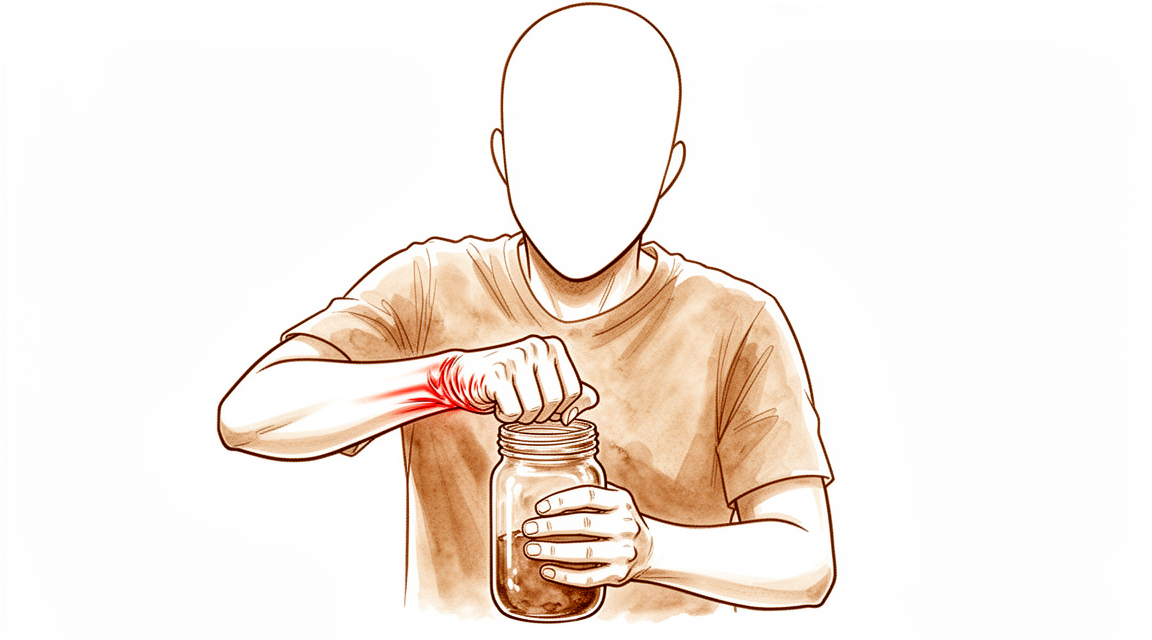
Ang iyong nararamdaman
Ang sakit ay nasa panig ng hinlalaki ng iyong pulso, sa gitna ng joint sa halip na sa mga gilid. May tendensiya itong unti-unting lumala sa loob ng mga taon sa halip na dumating nang biglaan. Maraming taong may sakit sa pulso ang matagal na walang malinaw na sanhi, dahil ang ganitong uri ng arthritis ay hindi palaging lumalabas sa mga ordinaryong x-ray sa simula.
May ilang galaw na nagdudulot ng sakit. Ang pagpapabigat sa pulso habang nakatiklop paatras ang kamay, gaya ng pagtulak sa sarili paitaas mula sa upuan o pag-ahon mula sa swimming pool, ay nagdidiin sa mga pudpod na surface sa isa't isa. Ang sabay na paghawak nang mahigpit at pagpihit ay isa pang karaniwang trigger: pagpihit ng doorknob, pagpiga ng tela, o paggamit ng screwdriver. Karaniwang humuhupa ito sa pahinga, bagaman ang kirot ay maaaring gumising sa iyo sa gabi o mangirot paggising bago ito lumuwag.
Habang kumakalat ang pagkapudpod, nagiging mas mahirap ang mga pang-araw-araw na gawain. Maaaring mapansin mong humihina ang iyong grip kapag nagdadala ng pinamili, nagbubuhos mula sa kettle, o nagbubukas ng garapon. Nagiging hindi komportable ang pagtiklop ng pulso paatras upang tumukod sa iyong kamay, o ang pagpasan ng buong bigat mo rito. Nawawala sa ilang tao ang makinis at maliksing galaw ng pulso at nagsisimula silang umiwas sa anumang nagpapabigat sa kamay nang nakaanggulo.
Kung hindi humuhupa ang iyong mga sintomas, lumalala sa loob ng mga linggo, ginigising ka sa gabi, o pinipigilan kang magtrabaho o gamitin ang iyong kamay, magpatingin sa iyong GP o humingi ng pagsusuri ng isang espesyalista.
Ano ang aktwal na nangyayari
Ang iyong pulso ay binubuo ng walong maliliit na buto na nakaayos sa dalawang hanay. Ang hanay na pinakamalapit sa iyong forearm ay nagsisilbing parang unan sa pagitan ng iyong forearm at ng iyong kamay, na nagkakalat ng load at nagpapakinis ng paggalaw. Isang matibay na tali ng ligament, ang ligament na pinakamadalas mapinsala sa pulso, ang nagdurugtong sa dalawa sa mga butong iyon upang gumana ang hanay bilang iisang yunit.
Nagsisimula ang SLAC wrist kapag napinsala ang taling iyon, kadalasan mula sa isang lumang pinsala. Naghihiwalay ang dalawang butong pinagdurugtong nito. Ang isa sa mga ito, ang scaphoid, ay nagbabago sa paraan ng paggalaw ng buong hanay, at ang load na dating pantay na nakakalat ay naiipon na ngayon sa isang maliit na bahagi ng joint. Ang SNAC wrist ay sumusunod sa parehong landas ngunit nagsisimula sa isang baling scaphoid na hindi kailanman gumaling, na pumuputol din sa ugnayan ng mga hanay sa katulad na paraan.
Ang naipong load na iyon ay pumupudpod sa makinis na cartilage na bumabalot sa mga dulo ng buto, ang parehong wear-and-tear arthritis na maaari ring magkaroon sa tuhod. Nagkikiskisan ang mga pudpod na surface kapag pinabibigatan mo ang pulso, at iyon ang sakit na nararamdaman mo kapag itinutulak ang sarili mula sa upuan o pinipihit ang screwdriver. Habang kumakalat ang pagkapudpod mula sa panig ng hinlalaki patungo sa gitna ng pulso, humihina ang grip at naninigas ang paggalaw.
Inilalarawan ang kondisyon ayon sa mga stage, at ang stage ay nakadepende sa kung aling mga surface ng joint ang naabot na ng pagkapudpod. Sa simula, limitado ito sa panlabas na gilid ng pulso. Sa kalaunan, naaabot nito ang joint sa gitna ng kamay. Mahalaga iyon dahil ang operasyon ay pinipili ayon sa stage: kung malusog pa ang isang mahalagang joint, maaaring gumana ang pagtatanggal sa pudpod na hanay ng mga buto, at kung mas kumalat na ang pagkapudpod, ang pag-fuse ng ilan sa mga natitirang buto upang maging isang solong block ang ginagamit sa halip.
Ano ang maaari naming gawin tungkol dito
Si Dr Kieran Hirpara, isang upper-limb surgeon sa Mater Private Hospital Rockhampton, ay nagsisimula sa mga opsyon na hindi gaanong invasive na angkop sa iyong kondisyon. Ang mga pasyente ay karaniwang nirerefer sa aming klinika ng kanilang GP; kung iminungkahi ng isang physiotherapist na magpatingin sa amin, kakailanganin mo pa rin ng referral mula sa iyong GP upang maging eligible para sa Medicare rebate. Inaalam namin ang iyong history, sinusuri ang iyong pulso, at nag-aayos ng imaging kung kinakailangan upang matukoy ang stage ng pagkapudpod. Para sa isang matagal nang problemang gaya nito, karaniwan naming sinusubukan muna ang non-operative care at isinasaalang-alang ang operasyon kapag hindi ito nagbigay ng sapat na pagbuti.
Ang unang hakbang ay ang pagbabago sa kung paano mo pinabibigatan ang pulso. Ang pagtulak sa sarili mula sa upuan, pagpiga ng tela at paggamit ng screwdriver ay nagdidiin sa mga pudpod na surface sa isa't isa, kaya ang pag-aangkop sa mga gawaing iyon ay nag-aalis ng presyon. Ang isang splint ay maaaring humawak sa pulso nang hindi gumagalaw habang nagtatrabaho ka o natutulog. Layunin ng hand therapy na panatilihing gumagalaw ang pulso at palakasin ang paligid nito. Karaniwan naming binibigyan ito ng sapat na pagsubok sa loob ng ilang linggo hanggang buwan bago isipin ang operasyon.
Maaaring makatulong ang gamot sa sakit kasabay nito. Ang mga simpleng anti-inflammatory ay nagpapakalma sa kirot kapag mas ginagamit mo ang pulso kaysa karaniwan. Pag-uusapan namin kung ano ang angkop sa iyo at sa iba mo pang mga gamot.
Kapag hindi na nagbibigay ng sapat na ginhawa ang mga hakbang na ito, isinasaalang-alang ang operasyon. Ang layunin ay tanggalin ang mga pudpod na surface ng joint na nagdudulot ng sakit habang pinapanatili ang hangga't maaaring kapaki-pakinabang na paggalaw ng pulso. Kung malusog pa ang isang mahalagang joint, ang pagtatanggal sa pudpod na hanay ng mga buto ay nagpapahintulot sa pulso na gumana sa isang bago at mas makinis na pagdidikit ng mga buto. Kung mas kumalat na ang pagkapudpod, ang pag-fuse ng ilan sa mga natitirang buto upang maging isang solong block ay nagbibigay ng matatag na pulso na kayang magpasan ng bigat. Pareho silang mga pagpipiliang nagpapanatili ng paggalaw (motion-preserving), at ang timbangan sa pagitan ng paggalaw at lakas ay isang desisyong gagawin namin nang magkasama sa iyo. Kung masyadong malawak ang pagkapudpod para sa alinman, ang total wrist fusion ay nakalaan para sa mga pambihirang sitwasyon, at ang joint replacement ay maaaring maging alternatibo kung ito ay angkop sa pasyente.
Ano ang dapat asahan
Ito ay isang matagal nang anyo ng wear-and-tear arthritis, kaya hindi ito mabilis na humuhupa nang kusa. Kung pababayaan, ang sakit ay may tendensiyang lumala sa loob ng mga taon habang kumakalat ang pagkapudpod mula sa panlabas na gilid ng pulso patungo sa gitna. Humihina ang grip at naninigas ang paggalaw habang tumatagal. Ang non-operative care ay maaaring magpagaan sa kirot sa loob ng ilang linggo hanggang buwan, ngunit pinamamahalaan nito ang mga sintomas sa halip na pigilan ang pagkapudpod.
Sa gamutan, ang outlook ay nakadepende sa kung gaano na kalawak ang pagkapudpod at kung aling operasyon ang angkop sa iyong stage. Kung malusog pa ang isang mahalagang joint, ang pagtatanggal sa pudpod na hanay ng mga buto ay maaaring magbigay ng pangmatagalang resulta. Kung ang ilang buto ay pinag-fuse upang maging isang solong block, karamihan sa mga pulso ay ganap na nagdudugtong at kayang magpasan ng bigat nang walang nagkikiskisang sakit. Maagang nagsisimula ang hand therapy pagkatapos ng operasyon, kung minsan sa loob ng unang linggo, upang mabawasan ang paninigas, at pinapanatiling hindi gumagalaw ang pulso nang mga dalawang buwan habang nagdudugtong ang mga buto. Patuloy na dumarating ang pagbuti pagkatapos niyon: ang ilang tao ay patuloy na nadaragdagan ng function ng pulso nang higit sa 3 taon pagkatapos ng gamutan.
Tapat na sabihin na hindi lahat ng pulso ay ganap na humuhupa. Ang ilang buto ay hindi nagdudugtong pagkatapos ng fusion, na maaaring mangailangan ng karagdagang operasyon. Ang metal na ginagamit upang hawakan ang fusion ay maaari ring magdulot ng sakit sa likod ng pulso, at paminsan-minsan ay kailangan itong tanggalin. Ang maliit na bilang ng mga taong sumailalim sa isa sa mga operasyong nagpapanatili ng paggalaw ay nangangailangan pa rin ng total wrist fusion sa kalaunan kung nagpapatuloy ang sakit. At sa ilang pulso, nananatili ang sakit kahit na maayos na nagdugtong ang mga buto.
Ang mga babalang senyales pagkatapos ng anumang operasyon sa pulso ay nangangailangan ng mabilis na aksyon. Kung ang iyong daliri, kamay o braso ay naging mainit, pula, namamaga at masakit, lalo na kung may kasamang lagnat, pumunta sa emergency department sa mismong araw na iyon; hindi kailangan ng referral mula sa GP. Ganoon din kung ang iyong mga daliri o kamay ay naging maputla, malamig, puti o asul, o kung bigla kang nawalan ng pakiramdam o paggalaw.
Kung hindi humuhupa ang iyong mga sintomas, lumalala sa loob ng mga linggo, ginigising ka sa gabi, o pinipigilan kang magtrabaho o gamitin ang iyong kamay, magpatingin sa iyong GP o humingi ng pagsusuri ng isang espesyalista.
Kailan dapat magpatingin
Dahan-dahang nabubuo ang kondisyong ito, kaya karamihan sa mga babalang senyales ay tungkol sa pagbabago sa halip na biglaang panganib. Magpatingin sa iyong GP kung hindi humuhupa ang sakit sa iyong pulso sa pahinga at sa pag-aangkop ng kung paano mo ito pinabibigatan, o kung lumalala ito sa loob ng mga linggo. Humingi ng pagsusuri ng isang espesyalista kung ginigising ka ng sakit sa gabi, pinipigilan kang magtrabaho, o patuloy na humihina ang iyong grip at patuloy na nagiging mas mahirap ang mga pang-araw-araw na gawain.
Pagkatapos ng anumang operasyon sa pulso, may ilang senyales na nangangailangan ng pangangalaga sa mismong araw na iyon. Pumunta sa emergency department kung ang iyong daliri, kamay o braso ay naging mainit, pula, namamaga at masakit, lalo na kung may kasamang lagnat. Ganoon din kung ang iyong mga daliri o kamay ay naging maputla, malamig, puti o asul, o kung bigla kang nawalan ng pakiramdam o paggalaw. Kung hindi mo makontak ang klinika sa labas ng oras ng trabaho o sa weekend, pumunta sa pinakamalapit na emergency department.
Walang emergency na senyales ang arthritis mismo. Ang dahilan upang magpatingin ay kumakalat ang pagkapudpod sa paglipas ng panahon, at ang mga opsyong nagpapanatili ng pinakamaraming paggalaw ay pinakamabisa bago ito umabot sa gitna ng pulso.
Mas malalim na pagtalakay
Advanced reading: the deeper science (optional)
Ang seksyong ito ay higit pa sa kailangan mo para sa iyong sariling mga desisyon sa paggamot. Ang SLAC at SNAC wrist ay karapat-dapat sa karagdagang pagbabasa dahil ang pagpili sa pagitan ng dalawang standard salvage operations ay isang tunay na trade-off, ang isa ay nagbibigay ng higit na paggalaw, ang isa naman ay higit na lakas, at ang pinakabagong pooled evidence ay nagsimulang pumanig sa isa sa kanila sa pangkalahatan.
Dalawang operasyon, dalawang magkaibang kompromiso
Kapag ang carpus ay nag-collapse na sa arthritic pattern, hindi na maibabalik ang mga joint surface, kaya parehong tinatanggal ng mga operasyon ang arthritic contact sa halip na kumpunihin ito. Ang Proximal row carpectomy ay nagtatanggal ng buong unang hanay ng mga buto sa carpal, na hinahayaan ang ulo ng capitate na maupo sa socket na iniwan ng scaphoid at lunate. Ang Four-corner fusion ay nagtatanggal ng scaphoid at pinagsasama (fuse) ang natitirang apat na buto upang maging isang solong block.
Sa direktang paghahambing sa 240 na pasyente, malinaw ang kompromiso. Ang Four-corner arthrodesis ay nagbigay ng significantly greater radial deviation at grip strength bilang porsyento ng kabilang panig, habang ang proximal row carpectomy ay nagresulta sa mas mabuting flexion, extension at total flexion-extension arc, kasama ang mas mababang overall complication rate [1].
Tumutugma ito sa kung paano binuo ang bawat isa. Ang pag-fuse ng apat na buto sa isang block ay pinapanatili ang mga attachment na nagpapatakbo ng grip ngunit inaalis ang paggalaw sa pagitan nila. Ang pagtatanggal ng isang hanay ay nagpapaikli sa carpus at lumilikha ng isang bago at mas mobile na joint, sa kapalit ng lakas na nagmula sa mga tinanggal na istruktura.
Mas pabor ang mas malaking pooled analysis sa carpectomy
Ang mas bago at mas malawak na ebidensya ay nagpabago sa balanse. Sa 3,174 na pasyenteng may SLAC at SNAC wrists, ang proximal row carpectomy ay nagresulta sa mas mabuting outcomes at mas mababang complication rate kaysa sa four-corner fusion [2].
Ang pagkakaiba sa komplikasyon ang mas maaasahang bahagi ng paghahambing na iyon, at mayroon itong mekanikal na paliwanag: ang four-corner fusion ay kailangang makamit ang union sa apat na bone surfaces, at ang nonunion, mga problema sa hardware at ang pangangailangang tanggalin ang mga ito ay mga komplikasyong hindi nararanasan sa carpectomy.
Ang pagrepaso sa mga fusion variants mismo ay hindi nag-aalis sa pagkakaibang ito. Sa paghahambing ng two-corner at four-corner arthrodesis, ang mga teknika ay nagpakita ng magkatulad na outcomes at complications sa kabila ng teoretikal na bentahe ng mas maliit na fusion, kaya nananatiling makatwiran ang dalawa [3].
Kung saan ang desisyon ay nananatiling pabor sa kabilang panig
Ang pinagsama-samang resulta ay hindi nangangahulugang ang carpectomy ay unibersal na tama. Depende ito sa pagiging walang pinsala ng head ng capitate at ng kaukulang surface ng radius, dahil ang dalawang surface na ito ang magiging bagong joint. Kung saan ang arthritis ay naabot na ang capitate, isang mas advanced na yugto ng parehong proseso, ang carpectomy ay walang matatag na mapag-aarticulate, at ang fusion ang nagiging opsyon.
Mahalaga rin ang edad at demand. Ang isang mas bata at mas mabigat ang paggamit na wrist ay maaaring pabor sa lakas na pinapanatili ng fusion, habang tinatanggap ang mas mataas na complication rate.
Kapag naubos na ang parehong opsyon
Kung mabigo ang salvage, o kung ang arthritis ay masyadong malawak para sa alinman, ang mga natitirang opsyon ay total wrist fusion at total wrist replacement. Parehong epektibo ang mga ito sa pagpapagaan ng sakit at pagpapabuti ng grip, na may magkatulad na complication rates na 17% at 19% ayon sa pagkakasunod, kung saan may naobserbahang functional improvement pagkatapos ng arthroplasty, ngunit kulang pa rin ang matibay na long-term data sa replacement [4].
Ang pagkakapantay na iyon ay mahalagang malaman dahil ang fusion at replacement ay madalas na ipinapakita bilang radikal na magkaibang panukala. Nagkakaiba sila sa kung ano ang maiiwan sa iyo, sa halip na sa kung gaano kadalas nagkakaroon ng problema: isang malakas, walang sakit, at hindi gumagalaw na wrist kumpara sa isang gumagalaw na wrist na may replacement na maaaring mas tumagal pa ang buhay mo kaysa rito, na nangangahulugan ng karagdagang operasyon sa hinaharap.
Mga Sanggunian
[1] Saltzman BM, Frank JM, Slikker W, Fernandez JJ, Cohen MS, Wysocki RW. Clinical outcomes of proximal row carpectomy versus four-corner arthrodesis for post-traumatic wrist arthropathy: a systematic review. J Hand Surg Eur Vol. 2014;40(5):450-7. https://doi.org/10.1177/1753193414554359
[2] Hones KM, Hao KA, Rakauskas TR, Densley S, Hampton H, Kim J, et al. Four-corner fusion versus proximal row carpectomy for scapholunate advanced collapse and scaphoid nonunion advanced collapse wrists: a systematic review and meta-analysis. J Hand Surg Am. 2024;49(7):633-8. https://doi.org/10.1016/j.jhsa.2024.01.011
[3] Hundepool CA, Duraku LS, Quanjel TJ, van Minnen LP, Jansen MC, Zuidam JM. Two-, three-, or four-corner arthrodesis for midcarpal osteoarthritis: a systematic review and meta-analysis. J Hand Surg Am. 2025;50(1):93.e1-93.e11. https://doi.org/10.1016/j.jhsa.2023.04.018
[4] Zhu XM, Perera E, Gohal C, Dennis B, Khan M, Alolabi B. A systematic review of outcomes of wrist arthrodesis and wrist arthroplasty in patients with wrist arthritis. J Hand Surg Eur Vol. 2020;46(3):297-303. https://doi.org/10.1177/1753193420953683
Evidence & references
This is the clinical evidence summary written for health professionals. It is technical, and it lists the research this page was built from. You do not need to read it to understand your treatment or to make a decision about it.
Overview
Pathophysiology and Anatomy
- Scapholunate interosseous ligament injury and extrinsic ligament complex attenuation lead to palmar flexion of the scaphoid and extension of the lunate (DISI) [20].
- The radioscaphoid joint becomes incongruous, leading to alteration in normal radioscaphoid contact forces and development of arthrosis [20].
- As the scaphoid flexes and the scapholunate diastasis increases, the capitate migrates proximally [20].
- Altered intercarpal contact forces result in arthrosis at the capitolunate joint [20].
- The styloscaphoid, radioscaphoid, and capitolunate joints are affected by SLAC wrist arthritic changes [20].
- The radiolunate joint is typically spared in SLAC wrist because of its spheroid shape [20].
- In SNAC wrist, the distal scaphoid articular surface with the radial styloid is affected first in stage I [20].
- In SNAC wrist, the proximal scaphoid pole and radioscaphoid fossa may be preserved in stage I [20].
- Bone density was greater at the capitolunate joint, the radial styloid, and the radiolunate joint in SNAC wrists compared to controls [10].
Clinical Presentation
- Symptoms of SLAC wrist include reduced grip and pinch strength [20].
- Symptoms of SLAC wrist include stiffness with extension and radial deviation [20].
- Symptoms of SLAC wrist include localized tenderness at the radioscaphoid articulation [20].
- Symptoms of SLAC wrist include decreased wrist motion on extension and radial deviation [20].
- A positive Watson shift test results when the scaphoid subluxates dorsally out of the scaphoid fossa and relocates when pressure is released [20].
- Patients with SLAC wrist were more likely to be male and have a history of trauma compared to patients with first CMC OA [12].
Diagnosis and Staging
- Radiographic classification of SLAC wrist has moderate reliability and reproducibility [15].
- Radiographic classification of SNAC wrist has limited reliability [15].
- SLAC must be distinguished from other etiologies of wrist arthritis that can mimic SLAC to appropriately inform treatment, guide prognosis, and standardize future outcome studies [6].
- It is important to differentiate between SNAC and SLAC-Wrist for classification and preoperative planning in treatment of advanced carpal collapse [2].
Treatment Indications
- Partial wrist fusion is indicated for painful posttraumatic and osteoarthritic conditions of the wrist that affect only part of the articulating system in a patient keen to have adequate pain control while preserving useful motion [16].
- Common indications for partial wrist fusion include SLAC wrist, SNAC wrist, Kienböck disease, STT arthritis, and posttraumatic radiocarpal arthritis [16].
- Chronic painful dissociative or nondissociative carpal instabilities with or without secondary arthritic change are good indications for partial wrist fusion [16].
- In inflammatory arthritis, the disease should be in a quiescent stage to avoid ongoing clinical deterioration due to disease progression for partial wrist fusion [16].
- Partial wrist fusion is contraindicated when there is active sepsis, panarthritis, and rapidly progressive joint destruction at a proliferative stage [16].
- Chronic smokers have a higher incidence of nonunion with partial wrist fusion, so alternatives for pain control such as a wrist denervation can be considered [16].
- Arthroscopic partial wrist fusions are technically demanding procedures and require extensive arthroscopic experience [16].
- Patients with preexisting extensor tendon pathology over the wrist region may have a higher incidence of tendon complications associated with partial wrist fusion [16].
- Arthrofibrosis and long-standing carpal collapse may pose additional difficulty and risk for partial wrist fusion [16].
- Scaphoid excision and four-corner fusion is indicated for the treatment of the SLAC/SNAC wrist when significant pain is refractory to nonoperative measures [9].
- Radial styloidectomy is suitable for stage I SLAC and SNAC wrist conditions [17].
- The best indications for APSI implant are SNAC wrists stages 1 and 2 as well as SLAC wrists stage 1 [4].
- Scaphoidectomy and capsulodesis is mostly indicated as a palliative procedure in elderly patients with posttraumatic SNAC or SLAC wrist with limited functional demands [25].
- Arthroscopic wrist debridement and radial styloidectomy is indicated for SLAC II or SLAC III wrists as an intermediate step to relieve pain and preserve functional motion [37].
Surgical Outcomes
- Four-corner arthrodesis with locking plate preserves satisfactory range of motion and grip strength (64% compared to the non-operated side) for SLAC and SNAC wrist [1].
- Four-corner arthrodesis with locking plate maintains the height of the carpus and prevents the premature appearance of radiocarpal osteoarthritis for SLAC and SNAC wrist [1].
- Both proximal row carpectomy and four corner fusion provide improvements in pain and subjective outcome measures for patients with symptomatic and appropriately staged SLAC or SNAC wrists [3].
- Midcarpal arthrodesis is a reliable procedure for treating SLAC- and SNAC-wrists in stages II and III [7].
- Midcarpal arthrodesis preserves some range of motion for SLAC- and SNAC-wrists [7].
- Scaphoid excision and four-corner arthrodesis reliably diminished wrist pain in patients with stage III SLAC wrist while maintaining a 54° flexion-extension arc [11].
- Successful scaphoid reconstruction in SNAC wrists shifts the load back onto the proximal pole and interrupts the otherwise inevitable degenerative pattern in scaphoid nonunions [13].
- Distal scaphoid resection is a durable procedure with good long-term results for arthritis secondary to scaphoid nonunion [31].
- 94% of patients remained satisfied after distal scaphoid resection for arthritis secondary to scaphoid nonunion [31].
- No further wrist collapse or radiocarpal arthritis developed after distal scaphoid resection for arthritis secondary to scaphoid nonunion [31].
- Findings favor Limited Carpal Fusion compared to Proximal Row Carpectomy for SNAC and SLAC wrist conditions, except for flexion-extension and grip strength in women [5].
- The authors prefer proximal row carpectomy for SLAC wrists with preserved capitate head cartilage due to socio-economic benefits, lower complication rates, and procedural ease [53].
- Capitolunate arthrodesis is a valuable alternative to four-corner fusion for selected SNAC wrist arthritis [39].
- ARARC may be a viable surgical option for patients with SLAC wrist who desire a minimally invasive procedure [116].
- Arthroscopic wrist debridement and radial styloidectomy may have advantages in relieving pain while preserving wrist motion for SLAC stage 2 or 3 disease [58].
Anatomy & Pathophysiology
Bony Anatomy
- The wrist is an anatomically and functionally highly complex joint composed of eight carpal bones arranged in two rows [54].
- The proximal carpal row contains the scaphoid, lunate, triquetrum, and pisiform [65].
- The distal carpal row contains the trapezium, trapezoid, capitate, and hamate [65].
- The distal radius articular surface has two concave facets, the scaphoid and lunate facets, separated by the scapholunate ridge [65].
- The scaphoid presents a long axis inclined by 45 degrees to the long axis of the radius [71].
- The lunate sits on the capitate and has anterior and posterior horns [71].
- The triquetrum is not in contact with the ulna head; a fibro-cartilage disc, the triangular ligament, separates the two bones [71].
- The carpus does not form a single rigid bony block because the eight small bones of the carpus all have different degrees of movement [71].
- The distal row is quite rigid, but the three proximal row bones are relatively mobile [71].
- The stability of the carpal bones does not rely upon tendon insertions, with the exception of the pisiform which is a sesamoid in flexor carpi ulnaris tendon [71].
- Carpal stability is largely due to interosseous ligaments and bony configuration of these carpal bones [71].
- The primary vascular supply to the scaphoid is a branch of the radial artery at the dorsal ridge [65].
- A group of smaller vessels enters the palmar tubercle of the scaphoid and supplies the distal 30% [65].
- The capitate head often relies on a retrograde vascular supply [65].
Ligaments
- The scapholunate interosseous ligament is the primary stabilizer of the scapholunate joint [112].
- The scapholunate interosseous ligament is composed of three distinct portions: proximal or membranous, dorsal, and palmar [112].
- The dorsal portion of the scapholunate interosseous ligament is the strongest portion and prevents translation [112].
- The palmar portion of the scapholunate interosseous ligament acts as a rotational constraint [112].
- The scapholunate interosseous ligament is C-shaped in the sagittal plane [65].
- The dorsal third of the scapholunate interosseous ligament is the thickest, strongest portion of the ligament [65].
- The radioscapholunate ligament (ligament of Testut) is a volar intra-articular neurovascular structure and provides little mechanical stability [112].
- The palmar stabilizers of the scaphoid include the radioscaphocapitate ligament, long radiolunate ligament, and short radiolunate ligament [112].
- The dorsal stabilizers of the scaphoid are the dorsal radiocarpal ligament and the dorsal intercarpal ligament [112].
- The triangular fibrocartilage complex (TFCC) is formed by the central meniscus homolog, the dorsal and volar radioulnar ligaments, the floor of the extensor carpi ulnaris tendon sheath, and the volar ulnocarpal ligaments [65].
- The dorsal and volar radioulnar ligaments are the primary stabilizers of the distal radioulnar joint [65].
- Only the peripheral 10% to 40% of the volar, ulnar, and dorsal TFCC has a vascular supply [65].
Kinematics and Biomechanics
- The wrist can essentially be considered to be a two-joint system linking the hand to the forearm around the highly mobile bones of the proximal carpal row [66].
- The two principle articulations are the radiocarpal and midcarpal joints, situated proximal and distal to the mobile proximal carpal row [66].
- The proximal carpal row has no muscular or tendinous attachments and is an intercalary segment [65].
- With ulnar deviation, the proximal row extends relative to the forearm/distal row [65].
- With radial deviation, the proximal row flexes relative to the forearm/distal row [65].
- With axial loading through the neutral wrist, approximately 80% of forces are transmitted through the distal radius and 20% through the distal ulna [65].
- Of the forces transmitted through the distal radius during neutral axial loading, 60% are transmitted through the scaphoid facet and 40% through the lunate facet [65].
- With wrist flexion, 60% of the motion is midcarpal and 40% is radiocarpal [65].
- With wrist extension, 33% of the motion is midcarpal and 66% is radiocarpal [65].
- The contact areas of the wrist accounted for only 20.6% of the available joint surface [105].
- Wrist contact areas shift from a primarily palmar location to a primarily dorsal location when the wrist changes from flexion to extension [105].
- A wrist joint should be considered biomechanically unstable when it is not able to bear loads and does not exhibit normal kinematics throughout its arc of motion [62].
SLAC Pathophysiology
- Scapholunate advanced collapse (SLAC) wrist may result from chronic pseudogout and can appear bilaterally without a clear history of injury [14].
- Scapholunate interosseous ligament injury and extrinsic ligament complex attenuation lead to palmar flexion of the scaphoid and extension of the lunate [20].
- Palmar flexion of the scaphoid and extension of the lunate results in dorsal intercalated segment instability (DISI) [20].
- The radioscaphoid joint becomes incongruous following scapholunate ligament injury, leading to alteration in the normal radioscaphoid contact forces and development of arthrosis [20].
- The experimental kinetic behavior of the chronic SLAC wrist is similar to the one with a recent scapholunate dissociation without carpal collapse associated [18].
- Measurements of the angular deformity between the scaphoid and the radius obtained in a cadaveric model help to explain the progression of degenerative changes in the SLAC wrist [26].
SNAC Pathophysiology
- Scaphoid nonunion advanced collapse (SNAC) is caused by trauma [14].
- Symptomatic scaphoid nonunion may lead to a predictable pattern of radioscaphoid and midcarpal degenerative arthritis [21].
- Degenerative changes in scaphoid nonunion can occur early, especially when instability is present [21].
- Instability patterns in scaphoid nonunion increase with time [21].
- The proximal scaphoid pole and radioscaphoid fossa may be preserved in stage I SNAC wrist [20].
- SNAC wrists differ from SLAC wrists in exhibiting a decreased sagittal lunotriquetral angle, indicating a distinct pathomechanism of carpal instability [8].
- The chronology of the progression of SNAC and SLAC wrist is largely identical [48].
- Only the initial stages of SNAC and SLAC wrist differ [48].
Classification
Definitions and Etiology
- Scapholunate advanced collapse (SLAC) may result from chronic pseudogout and can appear bilaterally without a clear history of injury [14].
- In clinical practice, SNAC pathology is observed in 60% and SLAC in 40% of cases [34].
Staging Systems
- The severity of degenerative change in SLAC and SNAC wrists is classified into three stages [34].
- The Watson and Ballet classification of SLAC wrist osteoarthritis is widely accepted, simple, and a well-recognized guide to treatment despite its significant limitations [51].
- Staging systems for SNAC wrist lack agreement [27].
- The classification of Vender et al. (1987) is widely used to describe SNAC severity, but its inter- and intra-observer reliability is poor [38].
Pathomechanics and Radiographic Features
- Carpal malalignment in SLAC wrists affects the radio- and midcarpal joints and extends to the third carpometacarpal joint, with malalignment evident in both the sagittal and coronal planes [36].
- The experimental kinetic behavior of the chronic SLAC wrist is similar to that of a recent scapholunate dissociation without carpal collapse [18].
- Measurements of angular deformity between the scaphoid and the radius help explain the progression of degenerative changes in the SLAC wrist [26].
- Carpal collapse in Kienbock’s disease is different from SLAC and does not progress to radiocarpal osteoarthritis as in post-traumatic cases [23].
Differential Diagnosis
- It is important to differentiate between SNAC and SLAC wrist for classification and preoperative planning in the treatment of advanced carpal collapse [2].
- The SOAC staging system differentiates SOAC from SLAC wrist and can guide treatment decisions [40].
Clinical Presentation
Symptoms and Physical Examination
- Symptomatic SLAC wrist usually includes pain with activity, dorsal wrist swelling, and limited wrist motion [22].
- Patients with SLAC wrist present with reduced grip and pinch strength [20].
- Patients with SLAC wrist present with stiffness with extension and radial deviation [20].
- Patients with SLAC wrist present with localized tenderness at the radioscaphoid articulation [20].
- Patients with SLAC wrist present with decreased wrist motion on extension and radial deviation [20].
- A positive Watson shift test is defined as the scaphoid subluxating dorsally out of the scaphoid fossa when pressure is directed over the palmar scaphoid tuberosity while the wrist is moved from ulnar to radial deviation, with relocation when pressure is released [20].
- SLAC wrist may result from chronic pseudogout and can appear bilaterally without a clear history of injury [14].
- SNAC wrist is caused by trauma [14].
Radiographic Findings and Staging
- Plain radiographs are usually sufficient to make the diagnosis of SLAC wrist [22].
- Joint space narrowing with sclerosis is apparent in the radioscaphoid joint in the early stages of SLAC wrist [22].
- In stage I SNAC wrist, the distal scaphoid articular surface with the radial styloid is affected first [20].
- In stage I SNAC wrist, the proximal scaphoid pole and radioscaphoid fossa may be preserved [20].
- SNAC wrists differ from SLAC wrists in exhibiting a decreased sagittal lunotriquetral angle [8].
- Carpal malalignment in SLAC wrists extends to the third carpometacarpal joint, with malalignment evident in both the sagittal and coronal planes [36].
Pathomechanics
- The radioscaphoid joint becomes incongruous, leading to alteration in the normal radioscaphoid contact forces and development of arthrosis [20].
- Measurements of the angular deformity between the scaphoid and the radius help to explain the progression of degenerative changes in the SLAC wrist [26].
- Degenerative changes can occur early, especially when instability is present [21].
Investigations
Clinical Evaluation
- A careful history and physical examination are essential in the evaluation of patients with wrist arthritis, as patients referred for surgical treatment of SLAC wrist may have pain from other conditions such as DeQuervain's tenosynovitis rather than the wrist joint itself [22].
- Patients with SLAC wrist are more likely to be male and have a history of trauma compared to patients with first CMC OA [12].
- SLAC wrist may result from chronic pseudogout and can appear bilaterally without a clear history of injury, whereas SNAC wrist is caused by trauma [14].
- SLAC must be distinguished from other etiologies of wrist arthritis that can mimic it to appropriately inform treatment, guide prognosis, and standardize future outcome studies [6].
- The Watson shift test involves directing pressure over the palmar scaphoid tuberosity while the wrist is moved from ulnar to radial deviation, with a positive test resulting when the scaphoid subluxates dorsally out of the scaphoid fossa and relocates when pressure is released [20].
- Reduced grip and pinch strength, stiffness with extension and radial deviation, localized tenderness at the radioscaphoid articulation, and decreased wrist motion on extension and radial deviation are symptoms of SLAC wrist [20].
- The history, staging, and treatment of SNAC wrist are similar to that for SLAC wrist [20].
- In SNAC wrist, the distal scaphoid articular surface with the radial styloid is affected first in stage I, while the proximal scaphoid pole and radioscaphoid fossa may be preserved [20].
- The natural inclination to study radiographs or special imaging studies prior to a thorough history and physical examination should be avoided as it introduces cognitive bias that can affect thinking and decision making [89].
- Bilateral grip and pinch strength testing is useful to uncover underlying pathology in chronic cases, with strength potentially diminished due to muscle atrophy, pain inhibition, or learned behaviors [89].
- A local injection of anesthetic to a painful joint or selected tendon sheath may help normalize dynamometer readings and narrow the diagnostic spectrum [89].
Radiographic Imaging
- Tomograms may be useful in determining the extent of arthritis but rarely change the course of treatment [22].
- Radiographic classification of SLAC wrist has moderate reliability and reproducibility, whereas classification of SNAC wrist has limited reliability [15].
- The severity of the radiocarpal arthrosis following distal radius fracture seen on radiograph is not correlated with the presence of symptoms [20].
- A routine radiographic series for evaluating a painful wrist consists of four views: posteroanterior, lateral, oblique, and ulnar-deviated posteroanterior scaphoid view [81].
- Spot views of the carpal bones for detail (carpal tunnel view) are a useful radiographic technique for evaluating a painful wrist [81].
- A series of views for instability includes anteroposterior clenched fist, posteroanterior in neutral/radial/ulnar deviation, lateral in neutral/full flexion/extension, and semipronated/semisupinated oblique views [81].
- 10° of supination can drastically alter the developed posteroanterior radiograph of the wrist due to the significant effect of rotation on radiographic landmarks [46].
- Radiographic scaphoid dorsal translation is correlated with MRI findings and might represent a lower cost option for early detection of the radioscaphoid joint eccentric wear seen in some stages of scapholunate instability [126].
Advanced Imaging (CT, MRI, Arthroscopy)
- MRI should be added for evaluation of the triangular fibrocartilage, the distal radioulnar joint, and vascularity of the various carpal bones to confirm clinical suspicion and correlate with physical examination findings [81].
- A high rate of false-positive findings on MR images of normal subjects has been reported [81].
- A dedicated wrist coil provides enhanced resolution of wrist structures for MRI [81].
- With proper technique, injuries to the triangular fibrocartilage complex can be demonstrated with MRI, appearing as linear defects or gaps filled with hyperintense fluid on coronal gradient-echo or T2-weighted pulse sequences [78].
- Evaluation of the scapholunate and lunotriquetral ligaments is more challenging on MRI, but with optimal technique and equipment, the integrity of these structures can be consistently assessed [78].
- The addition of arthrographic contrast improves the visualization of scapholunate and lunotriquetral ligaments on MR images [78].
- MRI is useful in detecting additional marrow abnormalities in osteonecrosis, as seen in the lunate in Kienböck disease or in the scaphoid after fracture [78].
- Asymmetry of marrow signal in proximal and distal fragments of a fractured scaphoid is suggestive of proximal pole ischemia on MRI [78].
- Quantitative 3-D CT demonstrates that bone density was greater at the capitolunate joint, the radial styloid, and the radiolunate joint in SNAC wrists compared to controls [10].
- Computer-aided three-dimensional analysis indicates that SNAC wrists differ from SLAC wrists in exhibiting a decreased sagittal lunotriquetral angle, indicating a distinct pathomechanism of carpal instability [8].
- CT was of diagnostic value to view the position of the scaphoid about the radius and its changes in load in patients with scapholunate instability [47].
- Arthroscopic assessment of intercarpal ligament injuries and instability is considered by many the “gold standard” for evaluation of these conditions [80].
- Arthroscopy has been found to be more accurate than arthrography in identifying the location and size of triangular fibrocartilage and interosseous ligament injuries [80].
- The inconsequent use of available modern magnetic resonance imaging (MRI) techniques and the lack of reliable preoperative diagnoses necessitated pure diagnostic arthroscopies for ulnar-sided wrist pain [118].
Pathomechanics and Differential Diagnosis
- Scapholunate interosseous ligament injury and extrinsic ligament complex attenuation lead to palmar flexion of the scaphoid and extension of the lunate (DISI) in SLAC wrist [20].
- The radioscaphoid joint becomes incongruous in SLAC wrist, leading to alteration in the normal radioscaphoid contact forces and development of arthrosis [20].
- As the scaphoid flexes and the scapholunate diastasis increases in SLAC wrist, the capitate migrates proximally [20].
- The altered intercarpal contact forces in SLAC wrist result in arthrosis at the capitolunate joint [20].
- Carpal collapse in Kienböck disease is different from scapholunate advanced collapse (SLAC) and does not progress to radiocarpal osteoarthritis as in post-traumatic cases [23].
- SOAC wrist is differentiated from SLAC wrist, and the SOAC staging system can guide treatment decisions [40].
Treatment
General Principles and Indications
- Surgical treatment for SLAC wrist includes four-corner arthrodesis, capitolunate arthrodesis, complete wrist arthrodesis, proximal row carpectomy (PRC), denervation, and radial styloidectomy [14].
- SNAC wrist has the additional surgical option of excision of the distal ununited scaphoid fragment compared to SLAC wrist [14].
- Partial wrist fusion is indicated for painful posttraumatic and osteoarthritic conditions of the wrist that affect only part of the articulating system in a patient who is keen to have adequate pain control while preserving useful motion [16].
- Chronic smokers have a higher incidence of nonunion after partial wrist fusion, so alternatives for pain control such as a wrist denervation can be considered [16].
- The treatment for SLAC or SNAC wrist is identical at any given stage of the disease, with the exception that only the initial stages of SNAC and SLAC wrist differ [48].
- Trapeziometacarpal joint arthritis and SLAC wrist may be treated either simultaneously or in stages [30].
Stage-Specific Interventions
- For SLAC 1 wrist, partial arthrodesis of the wrist with styloidectomy of the radius is indicated [48].
- Arthroscopic radial styloidectomy is indicated for Stage 1 SLAC and SNAC wrist as an isolated procedure or adjunct procedure together with scaphoid non-union or SL reconstruction procedures [55].
- Midcarpal arthrodesis is a reliable procedure for treating SLAC- and SNAC-wrists in stages II and III which preserves some range of motion [7].
- Wrist arthrodesis is generally an appropriate option for SNAC stage IV [45].
- Wrist arthrodesis is a final option in a situation where there is no other treatments to resolve pain [45].
Proximal Row Carpectomy (PRC)
- PRC is best indicated for Type 2 and Type 3 SLAC or SNAC wrists in which the injury has not yet involved the entire carpus [50].
- PRC is indicated for multiple degenerative and traumatic wrist conditions that result in persistent pain and dysfunction with activities in daily living that have been unresponsive to nonoperative measures [50].
- Proximal row carpectomy results in better outcomes and a lower complication rate compared to four-corner fusion in the treatment of scapholunate advanced collapse and scaphoid nonunion advanced collapse wrists [125].
- Among patients treated for SNAC and SLAC wrist conditions, findings are in favour of Limited Carpal Fusion compared to Proximal Row Carpectomy, except for flexion-extension and grip strength in women [5].
Four-Corner Arthrodesis (4CF)
- Four-corner arthrodesis with locking plate is a valuable surgical technique for treating SLAC and SNAC wrist because it preserves satisfactory range of motion and grip strength (64% compared to the non-operated side), maintains the height of the carpus and prevents the premature appearance of radiocarpal osteoarthritis, as long as the technical challenges of this procedure are mastered [1].
- Four-corner fusion retains 60% of wrist motion and 80% of grip strength [20].
Scaphoid-Specific Procedures
- Bone grafting of the scaphoid in symptomatic patients may help to prevent the development of arthritis [21].
- Distal scaphoid resection is a durable procedure with good long-term results, with 94% of patients remaining satisfied and no further wrist collapse or radiocarpal arthritis developing [31].
- Arthroscopic distal scaphoidectomy is indicated for symptom control in selected cases of SNAC wrist, as well as in the treatment of STT joint osteoarthritis [111].
- In SNAC wrist, distal scaphoid resection can be regarded as a “buying time” procedure in removing the primary source of mechanical symptoms in painful scaphoid nonunion [111].
- The best indication for distal scaphoidectomy in SNAC wrist is when the cartilage degeneration, osteophyte formation, and deformity are confined mainly to the distal scaphoid articular surface on both radiocarpal and midcarpal joint surfaces, manifested by severe degenerative change at the radial styloid-scaphoid articulation [111].
- A significant dorsal lunate tilt deformity (DISI) is considered a relative contraindication to distal scaphoid excision [111].
- Marked arthritis at the lunocapitate joint constitutes a relative contraindication of distal scaphoidectomy [111].
- An intact SL ligament and RSC ligament are considered a prerequisite for distal scaphoidectomy to minimize progressive midcarpal collapse and DISI [111].
- Bicolumnar fusion for SNAC wrist without bone grafting resulted in union in all cases, with postoperative Mayo wrist scores of excellent in 16 patients and good in 6 patients [107].
Combined and Adjunctive Procedures
- For SLAC 1 wrist with trapeziometacarpal arthritis, one option is to fuse the scaphocapitate with a styloidectomy, which allows for trapeziectomy or arthroplasty [48].
- For SLAC 1 wrist with trapeziometacarpal arthritis, another option is to perform a STT arthrodesis with a styloidectomy, which requires performing a prosthetic arthroplasty on the trapeziometacarpal joint [48].
- Total or subtotal scaphoidectomy is a concomitant procedure for midcarpal arthrodesis in SLAC wrist and SNAC wrist [17].
- The APSI implant has best indications for SNAC wrists stages 1 and 2 as well as SLAC wrists stage 1 [4].
Complications
- Partial wrist fusion is not a guarantee of pain relief [16].
- The potential advantage of partial wrist fusion in preservation of a useful arc of motion may be offset by the risks of nonunion [16].
- The potential advantage of partial wrist fusion in preservation of a useful arc of motion may be offset by continued pain despite successful fusion [16].
- Chronic smokers have a higher incidence of nonunion following partial wrist fusion [16].
- Patients with preexisting extensor tendon pathology over the wrist region may have a higher incidence of tendon complications associated with complex partial wrist fusion procedures [16].
- Arthrofibrosis poses additional difficulty and risk for partial wrist fusion [16].
- Long-standing carpal collapse poses additional difficulty and risk for partial wrist fusion [16].
- Total wrist fusion does not always result in complete pain relief [34].
- Total wrist fusion causes significant functional disability [34].
- Proximal row carpectomy results in a reduction of wrist motion [20].
- Proximal row carpectomy results in a reduction of grip strength [20].
- Resection of 6 mm or 10 mm of the radial styloid is associated with radial, ulnar, and palmar carpal displacement [38].
- Resection of 6 mm or 10 mm of the radial styloid is associated with increased radial translation [17].
- Resection of 6 mm or 10 mm of the radial styloid is associated with ulnar and palmar carpal displacement [17].
- Resection of 3 mm of the radial styloid was not associated with radial, ulnar, or palmar carpal displacement [38].
- The second most common complication of scaphocapitate arthrodesis is persistent wrist pain despite radiographic evidence of bony union [41].
- Persistent wrist pain despite radiographic evidence of bony union occurred in 4 of 30 patients (13%) undergoing scaphocapitate arthrodesis [41].
- In SLAC wrists with significant ligamentous lesions, the placement of a proximal scaphoid implant does not resolve the problem of ligamentous destabilization [57].
- At 43 years follow-up of a vitallium scaphoid arthroplasty, radiographs demonstrated carpal collapse [32].
- At 43 years follow-up of a vitallium scaphoid arthroplasty, radiographs demonstrated diffuse radiocarpal arthritis [32].
Recovery
- Four-corner arthrodesis with locking plate preserves satisfactory range of motion and grip strength at 64% compared to the non-operated side [1].
- Four-corner arthrodesis with locking plate maintains the height of the carpus [1].
- Four-corner arthrodesis with locking plate prevents the premature appearance of radiocarpal osteoarthritis [1].
- Limited Carpal Fusion is favored over Proximal Row Carpectomy for SNAC and SLAC wrist conditions, except for flexion-extension and grip strength in women [5].
- Midcarpal arthrodesis preserves some range of motion in the treatment of SLAC- and SNAC-wrists in stages II and III [7].
- Scaphoid excision and four-corner arthrodesis maintains a 54° flexion-extension arc in patients with stage III SLAC wrist [11].
- Functional results of four-corner fusion for SLAC and SNAC wrist are good at long-term follow-up despite radiographic changes in the radiolunate joint in 73% of patients [124].
- Distal scaphoid resection is a durable procedure with good long-term results, with 94% of patients remaining satisfied [31].
- No further wrist collapse or radiocarpal arthritis developed in patients treated with distal scaphoid resection for arthritis secondary to scaphoid nonunion [31].
- Distal scaphoid resection arthroplasty produced favorable, long-term clinical results and did not result in noteworthy wrist collapse [60].
- There has been no long term deterioration of wrist function following the use of costo-osteochondral grafts in the wrist [33].
Key Evidence
- [L4] Four-corner arthrodesis with locking plate is a valuable surgical technique for treating SLAC and SNAC wrist because it preserves satisfactory range of motion and grip strength (64% compared to the non-operated side), maintains the height of the carpus and prevents the premature appearance of radiocarpal osteoarthritis, as long as the technical challenges of this procedure are mastered. [1] (10.1016/j.hansur.2019.10.196)
- [L4] We find it important to differentiate between SNAC and SLAC-Wrist for classification and preoperative planning in treatment of advanced carpal collapse. [2] (10.1016/0266-7681(94)90353-0)
- [L4] Both procedures provide improvements in pain and subjective outcome measures for patients with symptomatic and appropriately staged SLAC or SNAC wrists. [3] (10.1177/1753193408100954)
- [L3] Les meilleures indications sont les SNAC wrists stades 1 et 2 ainsi que les SLAC wrists stades 1. [4] (10.1016/j.main.2015.10.062)
- [L3] Among patients treated for SNAC and SLAC wrist conditions, findings are in favour of Limited Carpal Fusion compared to Proximal Row Carpectomy, except for flexion-extension and grip strength in women. [5] (10.1186/s13018-023-04177-7)
- [L5] SLAC must be distinguished from other etiologies of wrist arthritis that can mimic SLAC to appropriately inform treatment, guide prognosis, and standardize future outcome studies. [6] (10.1016/j.jhsa.2015.06.110)
- [L4] Our data demonstrate that midcarpal arthrodesis is a reliable procedure for treating SLAC- and SNAC-wrists in stages II and III and, furthermore, one which preserves some range of motion. [7] (10.1097/01.sap.0000194245.94684.54)
- [L4] SNAC wrists differ from SLAC wrists in exhibiting a decreased sagittal lunotriquetral angle, indicating a distinct pathomechanism of carpal instability. [8] (10.1186/s12891-025-08652-6)
- [L4] Scaphoid excision and four-corner fusion is indicated for the treatment of the SLAC/SNAC wrist when significant pain is refractory to nonoperative measures. [9] (10.1053/otor.2003.36321)
- [L3] Bone density was greater at the capitolunate joint, the radial styloid, and the radiolunate joint in SNAC wrists compared to controls. [10] (10.2106/jbjs.22.01350)
- [L4] Scaphoid excision and four-corner arthrodesis reliably diminished wrist pain in patients with stage III SLAC wrist while maintaining a 54° flexion-extension arc. [11] (10.1016/0363-5023(94)90178-3)
- [L3] Patients with SLAC wrist were more likely to be male and have a history of trauma compared to patients with first CMC OA. [12] (10.1177/1558944718788672)
- [L4] Successful scaphoid reconstruction in SNAC wrists shifts the load back onto the proximal pole and interrupts the otherwise inevitable degenerative pattern in scaphoid nonunions. [13] (10.1016/j.jhsa.2018.06.104)
- [L5] [14] (10.1016/j.jhsa.2011.01.018)
- [L4] Radiographic classification of SLAC wrist has moderate reliability and reproducibility, whereas classification of SNAC wrist has limited reliability. [15] (10.1177/1753193413484629)
- [L5] The experimental kinetic behavior of the chronic SLAC wrist is similar to the one with a recent scapholunate dissociation without carpal collapse associated. [18] (10.1177/1558944716660555w)
- [L4] [21] (10.1016/s0363-5023(87)80198-3)
- [L5] [22] (10.1097/00130911-199712000-00003)
- [L5] The author notes that carpal collapse in KD is different from scapholunate advanced collapse (SLAC) and does not progress to radiocarpal osteoarthritis as in post-traumatic cases. [23] (10.1177/17531934231205707)
- [L4] It is mostly indicated as a palliative procedure in elderly patients with posttraumatic SNAC or SLAC wrist with limited functional demands. [25] (10.1055/s-0032-1329615)
- [L5] Measurements of the angular deformity between the scaphoid and the radius obtained in this cadaveric model help to explain the progression of degenerative changes in the SLAC wrist. [26] (10.1016/s0363-5023(87)80066-7)
- [Paper] Staging systems for SNAC wrist lack agreement. [27] (10.1007/s12593-012-0062-2)
- [L4] Trapeziometacarpal joint arthritis and SLAC wrist may be treated either simultaneously or in stages. [30] (10.1016/j.jhsa.2021.05.002)
- [L4] Distal scaphoid resection is a durable procedure with good long-term results. 94% of patients remained satisfied, and no further wrist collapse or radiocarpal arthritis developed. [31] (10.1016/s0363-5023(11)60002-6)
- [L5] At 43 years follow-up, radiographs demonstrated carpal collapse and diffuse radiocarpal arthritis, and the patient is now considering a total wrist fusion. [32] (10.1016/0363-5023(91)90015-4)
- [L4] There has been no long term deterioration of wrist function. [33] (10.1097/00130911-200109000-00008)
- [L4] [34] (10.1054/jhsb.2000.0434)
- [L3] Carpal malalignment in SLAC wrists not only affects the radio- and midcarpal joints, but also extends to the third carpometacarpal joint, with malalignment evident in both the sagittal and coronal planes. [36] (10.1016/j.jhsa.2024.09.021)
- [L4] The procedure is indicated for SLAC II or SLAC III wrists as an intermediate step to relieve pain and preserve functional motion. [37] (10.1016/j.arthro.2012.04.108)
- [L3] [38] (10.1177/1753193417739519)
- [Paper] The procedure is a valuable alternative to four-corner fusion for selected SNAC wrist arthritis. [39] (10.1007/s12593-015-0182-6)
- [L4] It also differentiates SOAC from SLAC wrist and discusses how the SOAC staging system can guide treatment decisions. [40] (10.5435/jaaos-d-25-01408)
- [Paper] The second most common complication is persistent wrist pain despite radiographic evidence of scaphocapitate bony union, occurring in 4/30 patients (13%). [41] (10.1097/00130911-200206000-00003)
- [L4] [45] (10.1142/s2424835518300049)
- [Paper] Our results highlight the significant effect of rotation on radiographic landmarks at the wrist, indicating that 10° of supination can drastically alter the developed radiograph. [46] (10.1177/15589447241255705)
- [L4] Despite these, it was of diagnostic value to view the position of the scaphoid about the radius and its changes in load. [47] (10.1016/s0363-5023(03)80339-8)
- [L5] [48] (10.1016/j.hansur.2020.08.013)
- [Paper] [50] (10.1097/bth.0b013e3181d44526)
- [L5] Despite its significant limitations, the Watson and Ballet classification of SLAC wrist osteoarthritis is widely accepted, simple, and a well-recognized guide to treatment. [51] (10.1097/corr.0000000000000451)
- [L3] The authors prefer proximal row carpectomy for SLAC wrists with preserved capitate head cartilage due to socio-economic benefits, lower complication rates, and procedural ease. [53] (10.1177/1753193408087116)
- [L1] [54] (10.1007/s00402-026-06423-z)
- [L4] Dans les séquelles de disjonction scapholunaire (SLAC wrist) où les lésions ligamentaires sont importantes la mise en place de l’implant ne résout pas le problème de la déstabilisation ligamentaire qui nécessite un traitement approprié supplémentaire. [57] (10.1016/s1297-3203(00)73492-5)
- [L4] The procedure studied may have advantages in relieving pain while preserving wrist motion for SLAC stage 2 or 3 disease. [58] (10.1177/1558944717725383)
- [L4] Distal scaphoid resection arthroplasty produced favorable, long-term clinical results and did not result in noteworthy wrist collapse. [60] (10.1016/j.jhsa.2014.05.031)
- [L5] A wrist joint should be considered biomechanically unstable when it is not able to bear loads and does not exhibit normal kinematics throughout its arc of motion. [62] (10.1053/jhsu.1999.0866)
- [L5] The contact areas accounted for only 20.6% of the available joint surface and shift from a primarily palmar location to a primarily dorsal location when the wrist changes from flexion to extension. [105] (10.1016/s0363-5023(87)80093-x)
- [L4] [107] (10.1097/bth.0b013e318249d454)
- [L4] ARARC may be a viable surgical option for patients with SLAC wrist who desire a minimally invasive procedure. [116] (10.1055/s-0034-1373839)
- [L4] The inconsequent use of available modern magnetic resonance imaging (MRI) techniques and the lack of reliable preoperative diagnoses necessitated pure diagnostic arthroscopies for ulnar-sided wrist pain. [118] (10.1177/1558944716660555hs)
- [L4] Functional results were good at long-term follow-up despite radiographic changes in the radiolunate joint in 73% of patients. [124] (10.1177/1558944716681949)
- [L1] In the treatment of scapholunate advanced collapse and scaphoid nonunion advanced collapse wrists, PRC results in better outcomes and a lower complication rate compared to 4CF. [125] (10.1016/j.jhsa.2024.01.011)
- [L4] Radiographic scaphoid dorsal translation is correlated with MRI findings and might represent a lower cost option for early detection of the radioscaphoid joint eccentric wear seen in some stages of scapholunate instability. [126] (10.1177/1558944716660555ir)
References
[1] Clinical and radiological outcomes of 40 cases of SLAC and SNAC wrist treated by four-corner arthrodesis with locking plate. Hand Surgery and Rehabilitation. 2020. DOI: 10.1016/j.hansur.2019.10.196
[2] Advanced Carpal Collapse after Longstanding Scaphoid Nonunion (SNAC-Wrist) and Longstanding Scapho-Lunate Dissociation (SLAC-Wrist)—Where are the Differences?. Journal of Hand Surgery. 1994. DOI: 10.1016/0266-7681(94)90353-0
[3] Proximal Row Carpectomy vs Four Corner Fusion for Scapholunate (Slac) or Scaphoid Nonunion Advanced Collapse (Snac) Wrists: A Systematic Review of Outcomes. Journal of Hand Surgery (European Volume). 2009. DOI: 10.1177/1753193408100954
[4] L’implant APSI – indications et résultats. Chirurgie de la Main. 2015. DOI: 10.1016/j.main.2015.10.062
[5] Limited intercarpal fusion versus proximal row carpectomy in the treatment of SLAC or SNAC wrist, results after 3.5 years. Journal of Orthopaedic Surgery and Research. 2023. DOI: 10.1186/s13018-023-04177-7
[6] Scapholunate Advanced Collapse: Nomenclature and Differential Diagnosis. The Journal of Hand Surgery. 2015. DOI: 10.1016/j.jhsa.2015.06.110
[7] Long-Term Results of Midcarpal Arthrodesis in the Treatment of Scaphoid Nonunion Advanced Collapse (SNAC-Wrist) and Scapholunate Advanced Collapse (SLAC-Wrist). Annals of Plastic Surgery. 2006. DOI: 10.1097/01.sap.0000194245.94684.54
[8] Computer-aided three-dimensional analysis of carpal alignment in scaphoid nonunion advanced collapse wrists: A comparative study with scapholunate advanced collapse and healthy wrists. BMC Musculoskeletal Disorders. 2025. DOI: 10.1186/s12891-025-08652-6
[9] Scaphoid excision and four-corner fusion in the SLAC/SNAC wrist. Operative Techniques in Orthopaedics. 2003. DOI: 10.1053/otor.2003.36321
[10] Quantitative 3-D CT Demonstrates Distal Row Pronation and Translation and Radiolunate Arthritis in the SNAC Wrist. Journal of Bone and Joint Surgery. 2023. DOI: 10.2106/jbjs.22.01350
[11] Surgical treatment of scapholunate advanced collapse. The Journal of Hand Surgery. 1994. DOI: 10.1016/0363-5023(94)90178-3
[12] The Epidemiology of Scapholunate Advanced Collapse. HAND. 2018. DOI: 10.1177/1558944718788672
[13] Long-Term Results of Scaphoid Grafting in 52 SNAC Wrists: Should We Cut Down on Salvage Procedures?. The Journal of Hand Surgery. 2018. DOI: 10.1016/j.jhsa.2018.06.104
[14] Scapholunate Advanced Collapse and Scaphoid Nonunion Advanced Collapse Arthritis—Update on Evaluation and Treatment. The Journal of Hand Surgery. 2011. DOI: 10.1016/j.jhsa.2011.01.018
[15] Reproducibility of radiographic classification of scapholunate advanced collapse (SLAC) and scaphoid nonunion advanced collapse (SNAC) wrist. Journal of Hand Surgery (European Volume). 2013. DOI: 10.1177/1753193413484629
[16] Green S Operative Hand Surgery. AUTHOR'S PREFERRED METHOD OF TREATMENT: ARTHROSCOPIC PARTIAL WRIST FUSION > Indications and Contraindications.
[17] Green S Operative Hand Surgery. AUTHOR'S PREFERRED METHOD OF TREATMENT: ARTHROSCOPIC PARTIAL WRIST FUSION > Osteotomy.
[18] Kinetics of the Wrist in Scapholunate Advanced Collapse. HAND. 2016. DOI: 10.1177/1558944716660555w
[20] Aaos Comprehensive Orthopaedic Review 3. Arthritides of the Hand and Wrist* > IV. Posttraumatic Arthritis.
[21] Degenerative change in symptomatic scaphoid nonunion. The Journal of Hand Surgery. 1987. DOI: 10.1016/s0363-5023(87)80198-3
[22] Midcarpal Arthrodesis. Techniques in Hand & Upper Extremity Surgery. 1997. DOI: 10.1097/00130911-199712000-00003
[23] Re: Luitjens J, Goller SS, Schmitt R, Erber B, Van Scoonhoven J, Hess N. Diagnostic performance of traditional radiographic indices in detection of carpal collapse in Kienbock’s disease. J Hand Surg Eur. 2023, 48: 619–24.. Journal of Hand Surgery (European Volume). 2023. DOI: 10.1177/17531934231205707
[25] Scaphoidectomy and Capsulodesis for SNAC or SLAC Stage II. Journal of Wrist Surgery. 2012. DOI: 10.1055/s-0032-1329615
[26] The effect of rotatory subluxation of the scaphoid on radio-scaphoid contact. The Journal of Hand Surgery. 1987. DOI: 10.1016/s0363-5023(87)80066-7
[27] Scaphoid Nonunion Advanced Collapse Classifications: A Reliability Study. Journal of Hand and Microsurgery. 2012. DOI: 10.1007/s12593-012-0062-2
[30] Combined Treatment of Trapeziometacarpal Joint Arthritis and Scapholunate Advanced Collapse Wrist. The Journal of Hand Surgery. 2022. DOI: 10.1016/j.jhsa.2021.05.002
[31] Distal Scaphoid Resection for Arthritis Secondary to Scaphoid Nonunion: A Twenty-year Experience. The Journal of Hand Surgery. 2011. DOI: 10.1016/s0363-5023(11)60002-6
[32] A forty-three-year follow-up of a vitallium scaphoid arthroplasty. The Journal of Hand Surgery. 1991. DOI: 10.1016/0363-5023(91)90015-4
[33] Costo-Osteochondral Grafts in the Wrist. Techniques in Hand & Upper Extremity Surgery. 2001. DOI: 10.1097/00130911-200109000-00008
[34] Midcarpal Arthrodesis with Complete Scaphoid Excision and Interposition Bone Graft in the Treatment of Advanced Carpal Collapse (SNAC/SLAC Wrist): Operative Technique and Outcome Assessment. Journal of Hand Surgery. 2000. DOI: 10.1054/jhsb.2000.0434
[36] Comparative Computer-Aided Analysis of Three-Dimensional Carpal Alignment in Scapholunate Advanced Collapse and Healthy Wrists. The Journal of Hand Surgery. 2025. DOI: 10.1016/j.jhsa.2024.09.021
[37] Arthroscopic Wrist Debridement and Radial Styloidectomy for Late‐stage Scapholunate Advanced Collapse Wrist (SS‐49). Arthroscopy. 2012. DOI: 10.1016/j.arthro.2012.04.108
[38] Radial styloidectomy for scaphoid nonunion advanced collapse – relevance of nonunion location. Journal of Hand Surgery (European Volume). 2017. DOI: 10.1177/1753193417739519
[39] Capitolunate Arthrodesis for Treatment of Scaphoid Nonunion Advanced Collapse (SNAC) Wrist Arthritis. Journal of Hand and Microsurgery. 2015. DOI: 10.1007/s12593-015-0182-6
[40] Scaphotrapeziotrapezoid Joint Osteoarthritis: Differentiating SOAC Wrist From SLAC Wrist. Journal of the American Academy of Orthopaedic Surgeons. 2026. DOI: 10.5435/jaaos-d-25-01408
[41] Scaphocapitate Arthrodesis. Techniques in Hand and Upper Extremity Surgery. 2002. DOI: 10.1097/00130911-200206000-00003
[45] Surgical Strategy for Scaphoid Nonunion Treatment. The Journal of Hand Surgery (Asian-Pacific Volume). 2018. DOI: 10.1142/s2424835518300049
[46] The Sensitivity of the Scapholunate Interval and Bony Landmarks to Wrist Rotation on Posteroanterior Radiographs. HAND. 2024. DOI: 10.1177/15589447241255705
[47] The role of CT in diagnosis of scapho-lunate instability. The Journal of Hand Surgery. 2003. DOI: 10.1016/s0363-5023(03)80339-8
[48] Trapeziometacarpal osteoarthritis and arthritis of the wrist. Hand Surgery and Rehabilitation. 2021. DOI: 10.1016/j.hansur.2020.08.013
[50] Proximal Row Carpectomy With a Dorsal Capsule Interposition Flap. Techniques in Hand & Upper Extremity Surgery. 2010. DOI: 10.1097/bth.0b013e3181d44526
[51] Classifications in Brief: Watson and Ballet Classification of Scapholunate Advanced Collapse Wrist Arthritis. Clinical Orthopaedics & Related Research. 2018. DOI: 10.1097/corr.0000000000000451
[53] Proximal Row Carpectomy Versus Four-Corner Arthrodesis as a Treatment for SLAC (Scapholunate Advanced Collapse) Wrist. Journal of Hand Surgery (European Volume). 2008. DOI: 10.1177/1753193408087116
[54] Conservative and surgical treatment of wrist osteoarthritis: a systematic review. Archives of Orthopaedic and Trauma Surgery. 2026. DOI: 10.1007/s00402-026-06423-z
[55] Green S Operative Hand Surgery. AUTHOR'S PREFERRED METHOD OF TREATMENT: ARTHROSCOPIC PARTIAL WRIST FUSION > Arthroscopic Radial Styloidectomy.
[57] Implant adaptatif du scaphoïde proximal. Chirurgie de la Main. 2000. DOI: 10.1016/s1297-3203(00)73492-5
[58] Arthroscopic Wrist Debridement and Radial Styloidectomy for Advanced Scapholunate Advanced Collapse Wrist: Long-term Follow-up. HAND. 2017. DOI: 10.1177/1558944717725383
[60] Distal Scaphoid Resection for Degenerative Arthritis Secondary to Scaphoid Nonunion: A 20-Year Experience. The Journal of Hand Surgery. 2014. DOI: 10.1016/j.jhsa.2014.05.031
[62] Position Statement: Definition of Carpal Instability. The Journal of Hand Surgery. 1999. DOI: 10.1053/jhsu.1999.0866
[65] Aaos Comprehensive Orthopaedic Review 3. Anatomy of the Hand and Wrist > VII. The Wrist.
[66] Green S Operative Hand Surgery. WRIST BIOMECHANICS > Carpal Kinematics.
[71] Exam Of The Hand Wrist 2Ed. 1.2 SKELETON OF THE WRIST.
[78] Campbell S Operative Orthopaedics 4 Volume Set. WRIST AND ELBOW.
[80] Campbell S Operative Orthopaedics 4 Volume Set. NERVE INJURIES AT THE LEVEL OF THE HAND AND WRIST > ARTHROSCOPY OF THE WRIST.
[81] Campbell S Operative Orthopaedics 4 Volume Set. NERVE INJURIES AT THE LEVEL OF THE HAND AND WRIST > RADIOGRAPHIC TECHNIQUES.
[89] Green S Operative Hand Surgery. Diagnosis and Treatment > Assessment of the Symptomatic Wrist.
[105] Load transfer characteristics of the wrist. Part I. The normal joint. The Journal of Hand Surgery. 1987. DOI: 10.1016/s0363-5023(87)80093-x
[107] Bicolumnar Fusion for Scaphoid Nonunion Advanced Collapse Without Bone Grafting. Techniques in Hand & Upper Extremity Surgery. 2012. DOI: 10.1097/bth.0b013e318249d454
[111] Green S Operative Hand Surgery. AUTHOR'S PREFERRED METHOD OF TREATMENT: ARTHROSCOPIC PARTIAL WRIST FUSION > Arthroscopic Distal Scaphoidectomy.
[112] Aaos Comprehensive Orthopaedic Review 3. Wrist Fractures and Dislocations, Carpal Dissociation, and Distal Radius Fractures > II. Carpal Ligament Injury and Perilunate Dislocation.
[116] Arthroscopic Resection Arthroplasty of the Radial Column for SLAC Wrist. Journal of Wrist Surgery. 2014. DOI: 10.1055/s-0034-1373839
[118] Preventable Repeat Wrist Arthroscopies. HAND. 2016. DOI: 10.1177/1558944716660555hs
[124] Ten-Year Minimum Follow-Up of 4-Corner Fusion for SLAC and SNAC Wrist. HAND. 2016. DOI: 10.1177/1558944716681949
[125] Four-Corner Fusion Versus Proximal Row Carpectomy for Scapholunate Advanced Collapse and Scaphoid Nonunion Advanced Collapse Wrist: A Systematic Review and Meta-Analysis. The Journal of Hand Surgery. 2024. DOI: 10.1016/j.jhsa.2024.01.011
[126] Radiologic Assessment of Scaphoid Dorsal Translation in Patients With Scapholunate Instability. HAND. 2016. DOI: 10.1177/1558944716660555ir