Patients › Rehabilitation
Clavicle Fixation (ORIF)
Rehabilitation after plate fixation of a clavicle fracture, gated on radiographic healing at review.
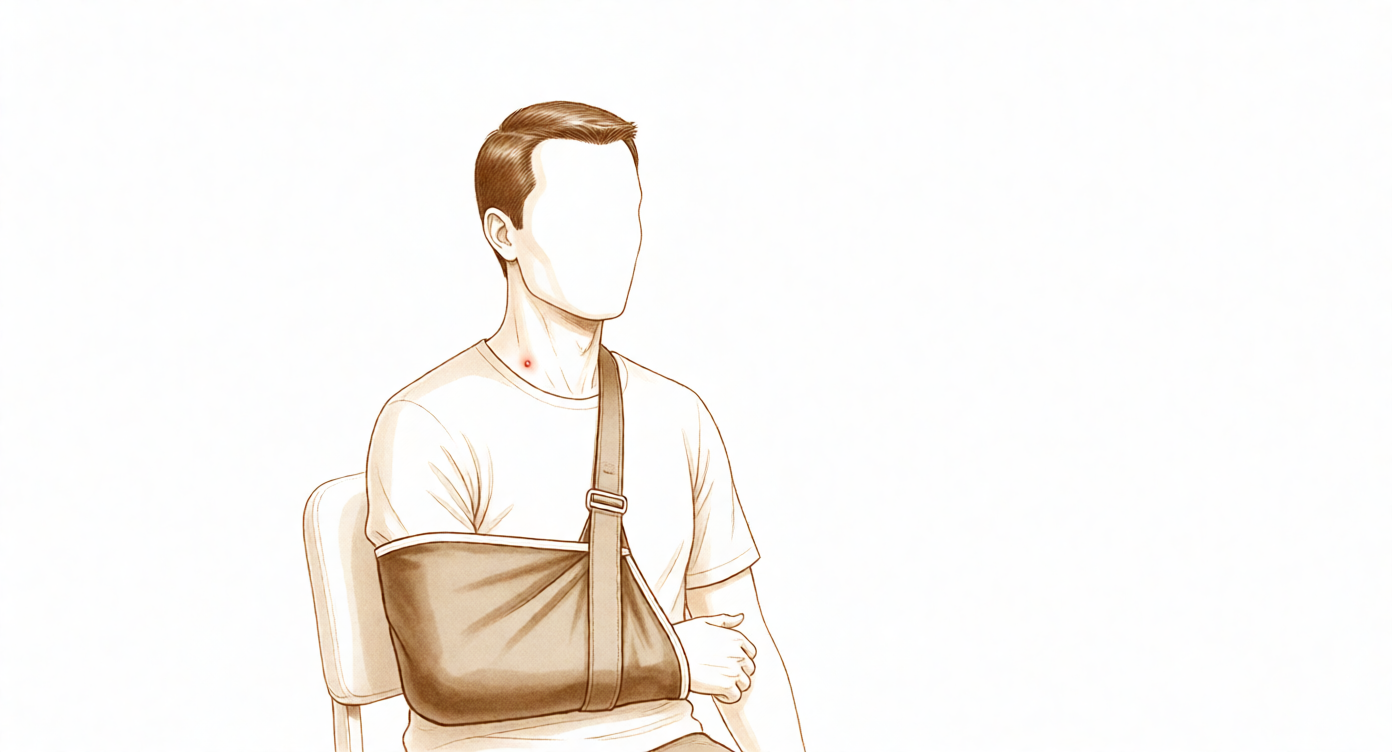
Ang protocol na ito ay nagsisilbing gabay sa iyong paggaling pagkatapos ng plate fixation ng isang fractured clavicle (collarbone), open reduction and internal fixation (ORIF), kasama si Dr Kieran Hirpara sa Mater Private Hospital Rockhampton. Ang bawat phase sa ibaba ay nagsisimula sa isang paliwanag sa simpleng Ingles tungkol sa kung ano ang nangyayari at kung ano ang pinakamahalaga, na sinusundan ng structured protocol na isinulat para sa iyong physiotherapist; dalhin ang pahinang ito o ang PDF nito sa iyong unang physiotherapy visit upang manatiling coordinated ang iyong rehabilitasyon. Maaaring i-adjust ng iyong physiotherapist ang plano depende sa pag-unlad ng iyong paggaling.
Kung mayroon kang anumang alalahanin tungkol sa iyong sugat pagkatapos ng operasyon, makipag-ugnayan sa mga rooms. Madalas na nakatutulong ang pagkuha ng larawan ng sugat at pag-email nito para masuri.
Ano ang dapat asahan
Pinapanatili ng operasyon ang mga nabaling dulo ng collarbone sa tamang posisyon gamit ang isang plate at mga screw upang gumaling ang buto. Ang plate ay matibay, ngunit ito ay isang splint, hindi kapalit ng naghilom na buto: ang buto mismo ay karaniwang tumatagal ng mga anim hanggang labindalawang linggo bago magdugtong, at patuloy itong lumalakas (remodelling) sa loob ng maraming buwan pagkatapos nito. Ang rehabilitasyon ay nakabase sa biyolohiyang iyon: pinoprotektahan ang fixation sa mga unang linggo habang nagsisimulang magdugtong ang fracture, susunod na ibabalik ang paggalaw, at huli na ang pagbubuhat at sports, kapag kaya na itong suportahan ng buto.
Dahil ito ay isang fracture, ang bawat pangunahing hakbang pasulong (paggalaw ng braso nang higit sa taas ng balikat, pagpapalakas, mas mabigat na pagbubuhat, at pagbabalik sa sports) ay hindi lamang nakadepende sa kalendaryo kundi sa hitsura ng fracture sa x-ray, gaya ng kumpirmasyon sa iyong review kay Dr Hirpara. Ang mga range ng linggo sa ibaba ay karaniwan lamang at hindi fixed.
Ang paghilom ng buto ay mas mabagal sa mga naninigarilyo at sa mga taong may diabetes, at ang paninigarilyo partikular na maaaring magpaantala o humadlang sa pagdugtong ng fracture. Kung ikaw ay naninigarilyo, ang mga linggo pagkatapos ng fracture ay isang napakahalagang panahon upang huminto.
Ang collarbone ay matatagpuan nang direkta sa ilalim ng balat, kaya karaniwan nang maramdaman (at makita) ang plate kapag humupa na ang pamamaga. Maaari itong maging sensitibo sa ilalim ng seatbelt o strap ng backpack sa mga unang buwan; karaniwan itong nawawala habang nababawasan ang sensitibidad ng area. Kung ang plate ay nananatiling nakakaabala matapos ganap na gumaling ang fracture, ang pagtanggal nito ay isang opsyon na maaaring talakayin sa susunod na review; ito ay isang hiwalay at hindi nagmamadaling desisyon, na gagawin matapos magdugtong ang buto.
Ang paglalakbay sa isang sulyap:
- Phase I — Proteksyon: linggo 0–3
- Phase II — Maagang paggalaw: linggo 3–6
- Phase III — Pagpapalakas: linggo 6–12
- Phase IV — Pagbabalik sa buong aktibidad at sports: linggo 12 pataas
Pagsusuot ng iyong sling
Sinuportahan ng sling ang bigat ng braso, binabawasan ang discomfort at pinoprotektahan ang naghihilom na buto sa mga unang linggo. Simple lamang ang mga panuntunan:
- Isuot ito lalo na kapag nasa labas ng bahay, upang protektahan ang braso at upang maiwasan na mabunggo ito ng ibang tao. Hindi mo kailangang matulog nang nakasuot nito.
- Para sa unang tatlong linggo, isuot ito sa halos lahat ng oras. Pagkatapos nito, unti-unti na itong babawasan depende sa iyong comfort, at karamihan ng mga tao ay hindi na ito ginagamit pagsapit ng anim na linggo.
- Hubarin ito para sa pagligo, para sa iyong mga exercise, at para sa mga tahimik na gawain na ginagawa nang nakaupo habang suportado ang braso: pagkain, pagsusulat, pagbabasa.
- Kapag nagpapahinga sa bahay, maaaring hubarin ang sling kung ikaw ay mag-iingat: suportado ang braso sa unan habang nakaupo, at ang kamay ay pinapanatiling mas mababa sa taas ng balikat.
- Bawal magmaneho sa loob ng anim na linggo (nalalapat ito sa anumang operasyon sa balikat), at hindi rin habang nakasuot ng sling. Pagkatapos nito, maaari nang magmaneho muli kapag kaya nang kontrolin ang kotse nang may comfort at kaligtasan, gaya ng kumpirmasyon sa iyong review kay Dr Hirpara.
Ang iyong mga unang araw pagkatapos ng operasyon
Kung gumamit ng nerve block habang nag-oopera, maaaring makaramdam ng pamamanhid at bigat sa braso sa loob ng ilang oras pagkatapos; panatilihin itong protektado sa sling hanggang sa bumalik ang normal na pakiramdam. Ilang praktikal na tips para sa mga unang araw:
- Inumin ang iyong mga painkiller bago gawin ang iyong mga ehersisyo, at bago ang iyong mga appointment sa physiotherapy.
- Gumamit ng yelo sa apektadong bahagi para sa sakit at pamamaga, mga 15–20 minuto bawat beses, nakabalot sa basang tela, huwag itong ilalagay nang direkta sa balat o sa sugat.
- Kapag nakasuot ng sling, i-relax ang iyong balikat at hayaang ang sling ang pumasan sa bigat ng iyong braso.
- Bantayan ang iyong postura: panatilihing nakalinya ang iyong mga tainga, balikat at balakang at iwasang hayaang lumaylay ang mga balikat pasulong; ang mabuting postura ay nagpoprotekta sa posisyon ng fracture at tumutulong upang maiwasan ang paninigas.
- Panatilihing gumagalaw ang iyong mga daliri, pulso, siko at leeg mula sa simula.
- Kung mayroon kang anumang problema, makipag-ugnayan sa mga clinic o ipaalam sa iyong physiotherapist.
Phase I — Proteksyon (Linggo 0–3)
Kieran Hirpara 4.0
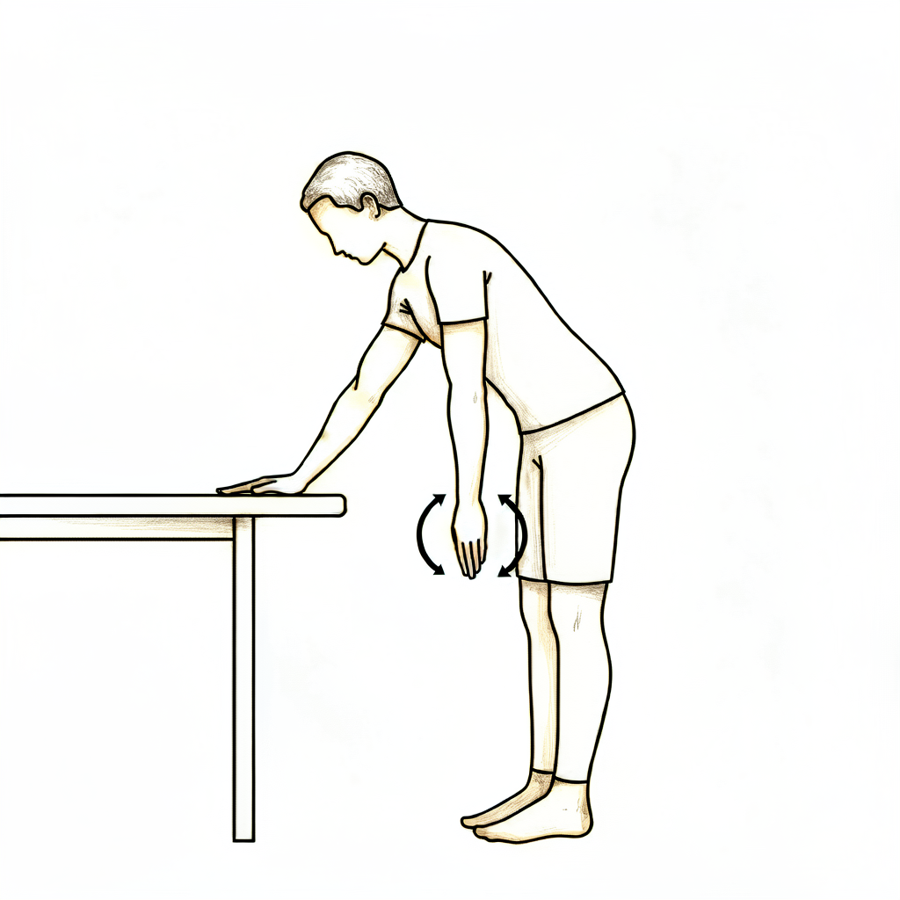
Mga ehersisyong pendulum
Yumuko nang bahagya pasulong, suportahan ang sarili sa isang mesa gamit ang kabilang kamay, at hayaang nakalaylay nang relax ang braso na inoperahan. Gumawa ng maliliit na bilog — clockwise, pagkatapos ay anticlockwise — sa pamamagitan ng dahan-dahang pag-ugoy ng iyong katawan. Mananatiling relax ang braso sa buong proseso; ang paggalaw ay nagmumula sa iyong katawan, hindi sa balikat.
Ayon sa gabay ng iyong physiotherapist
Kieran Hirpara 4.0
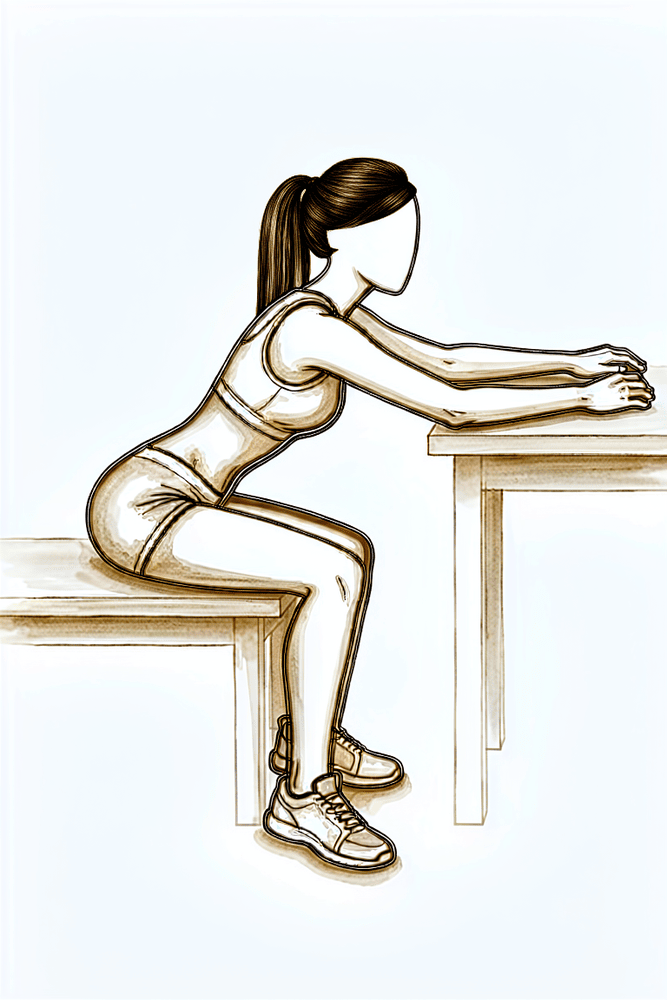
Mga slide ng table
Umupo sa isang mesa na nakapatong dito ang iyong forearm. Dahan-dahang yumuko pasulong upang dumulas ang iyong kamay sa mesa, hayaang ang mesa ang pumasan sa bigat ng braso, pagkatapos ay umupo nang tuwid. Manatili sa antas na komportable at panatilihing mas mababa sa taas ng balikat ang braso.
Ayon sa gabay ng iyong physiotherapist
Kieran Hirpara 4.0
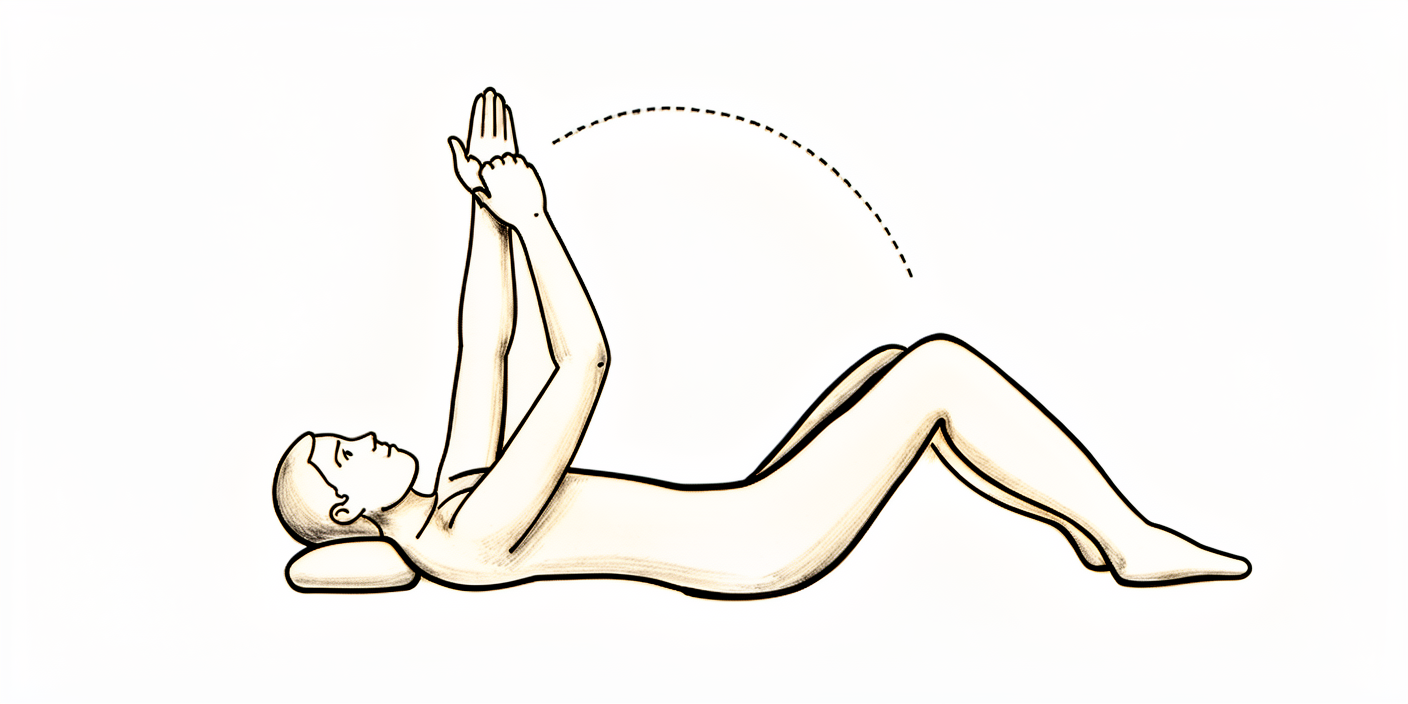
Assisted shoulder flexion (nakahiga)
Humiga nang nakatihaya. Gamit ang iyong kabilang kamay na sumusuporta sa inoperahang braso sa bahagi ng pulso, dahan-dahang iangat ito pasulong hanggang sa maximum na 90 degrees — nakaturo sa kisame, hindi tataas pa rito — pagkatapos ay ibaba ito. Panatilihing relax ang inoperahang braso; ang iyong kabilang braso ang gagawa ng trabaho. Huwag lalampas sa 90 degrees hanggang sa mapayagan sa iyong six-week review.
Ayon sa gabay ng iyong physiotherapist
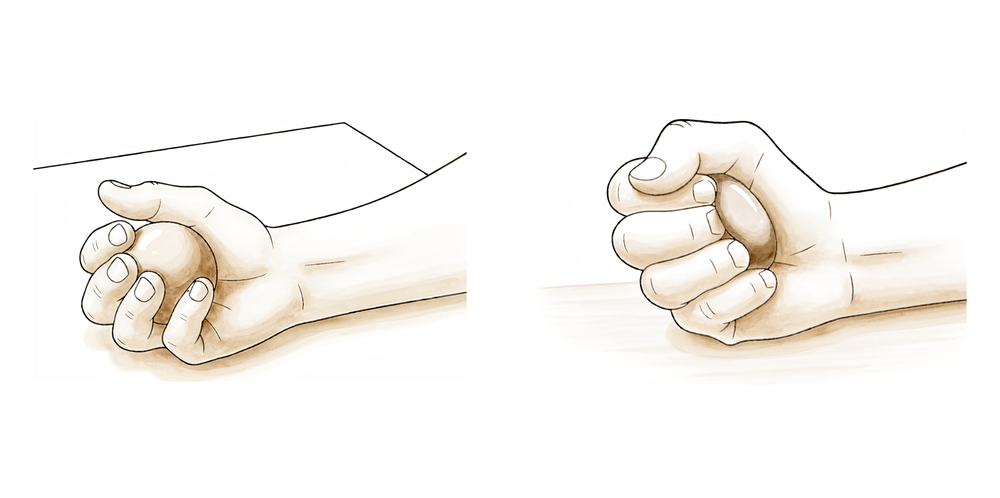
Kieran Hirpara 4.0
Pagpisil ng bola
Habang suportado ang braso, pumiga ng malambot na bola o itikom nang mahigpit ang kamao, pagkatapos ay ibuka nang husto ang kamay. Panatilihing gumagalaw ang iyong mga daliri, pulso, at kamay mula sa simula.
Ayon sa gabay ng iyong physiotherapist
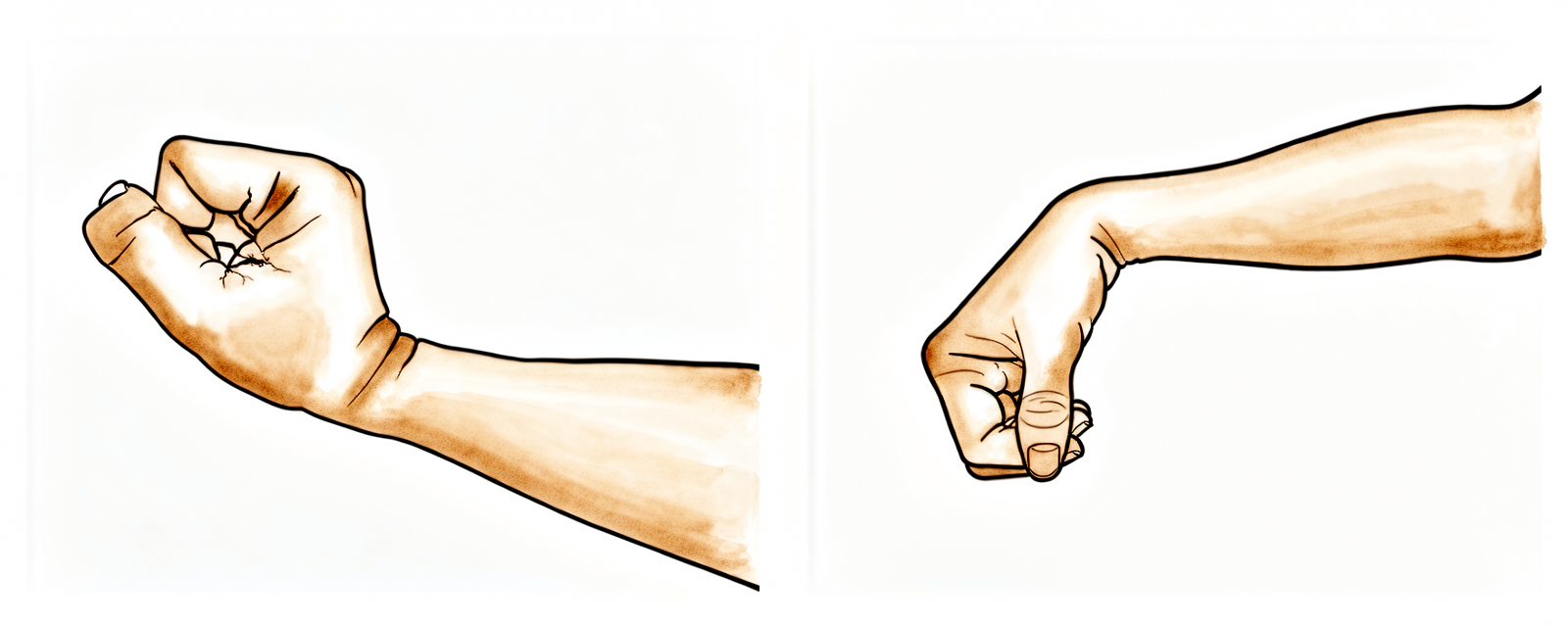
Kieran Hirpara 4.0
Paggalaw ng pulso
Habang ang braso ay wala sa sling at may suporta, panatilihing gumagalaw ang iyong pulso sa pamamagitan ng pagbaluktot nito pasulong, pabalik, at sa magkabilang gilid. Ang pagpapanatili sa paggana ng pulso mula sa simula ay nakakaiwas sa paninigas habang protektado ang balikat.
Ayon sa gabay ng iyong physiotherapist
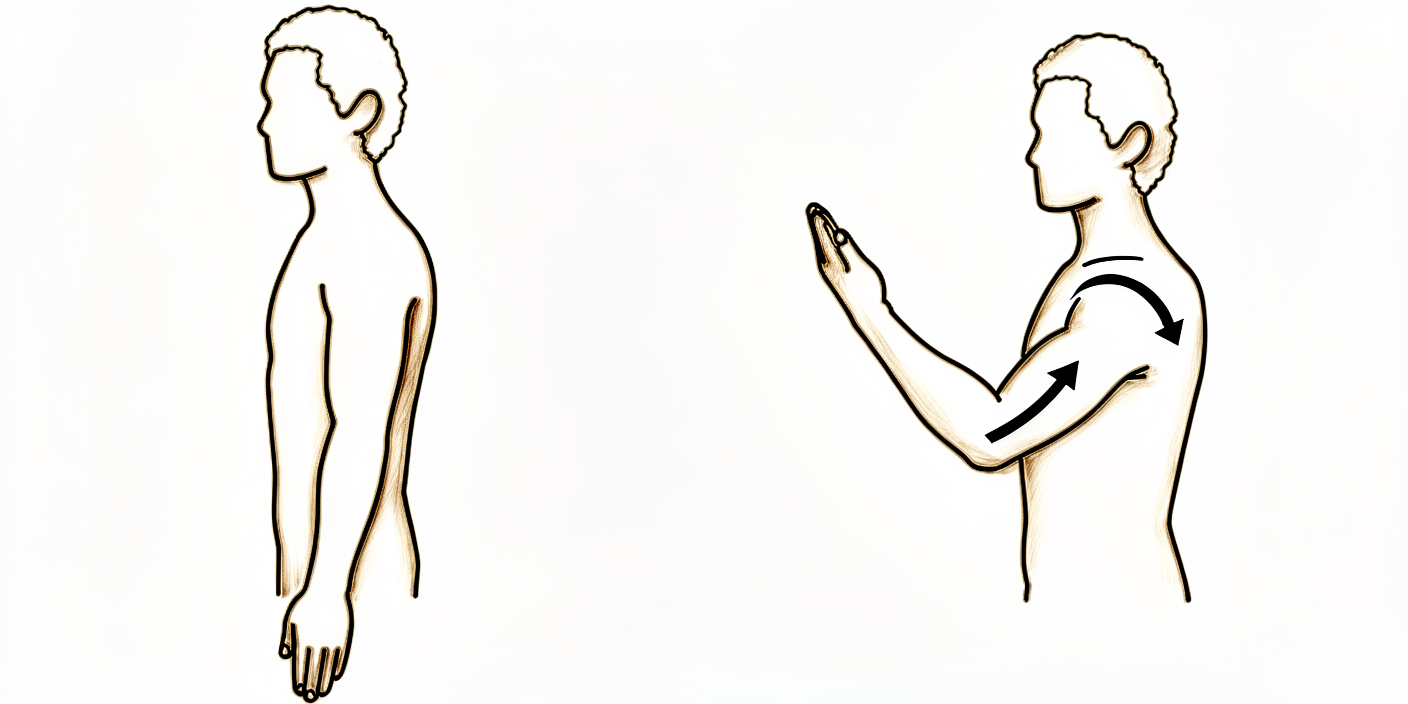
Kieran Hirpara 4.0
Pagtiklop ng siko
Habang nakapahinga at may suporta ang itaas na bahagi ng braso sa iyong tabi, itiklop ang siko hangga't kaya nito nang komportable, pagkatapos ay ituwid ito nang lubos. Siko lamang ang gumagalaw — panatilihing relax ang balikat. Pinapanatili nitong malaya ang siko habang protektado ang collarbone.
Ayon sa gabay ng iyong physiotherapist
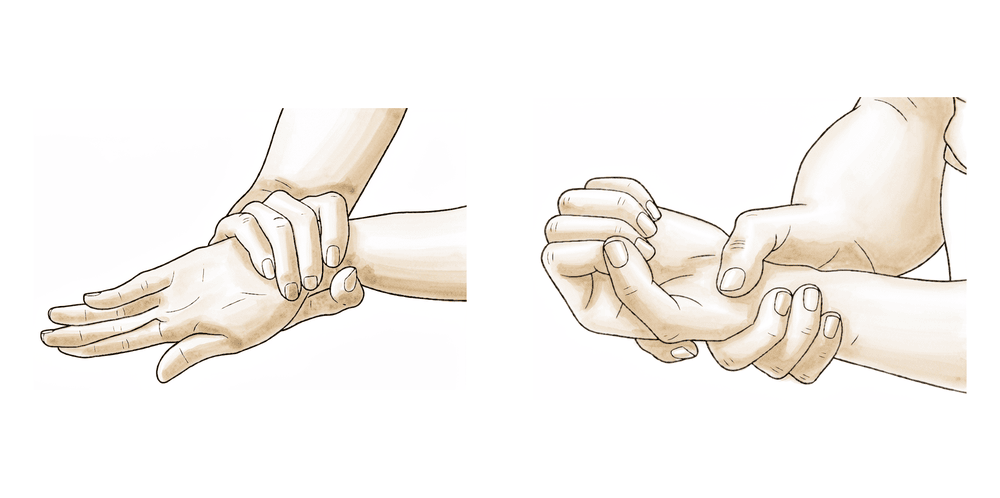
Kieran Hirpara 4.0
Rotasyon ng forearm
Habang ang siko ay nakadikit sa iyong tagiliran at nakabaluktot sa isang right angle, itutok ang palad pataas, pagkatapos ay itutok ito pababa. Panatilihing hindi gumagalaw ang itaas na bahagi ng braso upang ang forearm lamang ang uminog. Mula sa ikalawang linggo, maaaring magdagdag ang iyong physiotherapist ng banayad na resistance dito.
Ayon sa gabay ng iyong physiotherapist
Kieran Hirpara 4.0
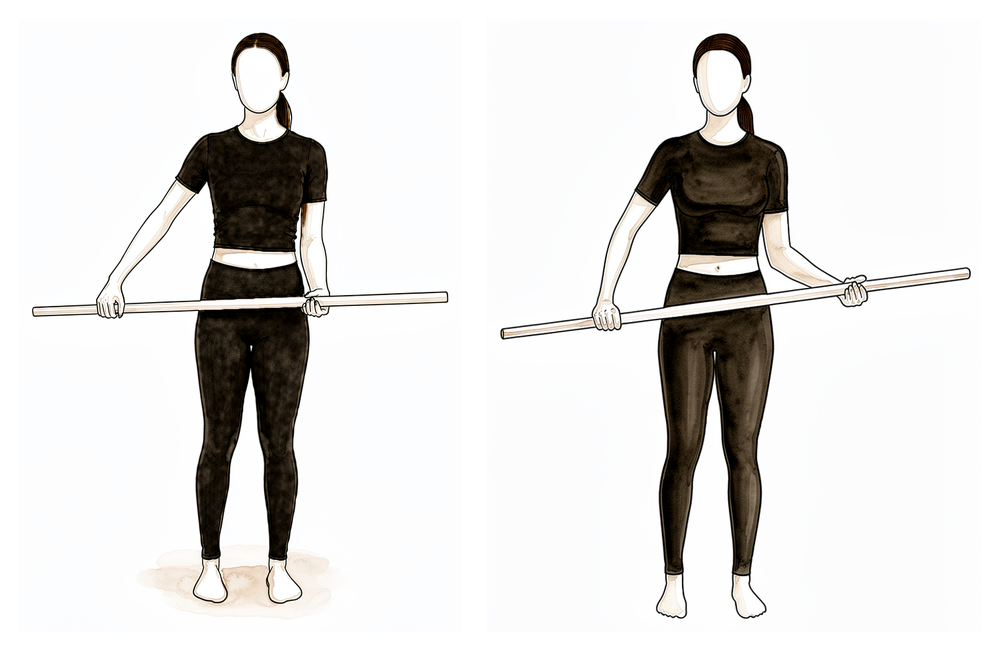
Assisted external rotation gamit ang stick
Humiga nang patihaya na ang inoperahang siko ay nakadikit sa iyong gilid at nakatupi sa isang right angle. Humawak ng isang stick sa magkabilang kamay at gamitin ang iyong maayos na braso upang dahan-dahang iikot ang inoperahang kamay palabas, habang iniikot ang balikat, pagkatapos ay ibalik ito. Panatilihing nakadikit ang siko sa iyong gilid — ito ay isang assisted movement, hindi isang forced movement.
Ayon sa gabay ng iyong physiotherapist
Kieran Hirpara 4.0
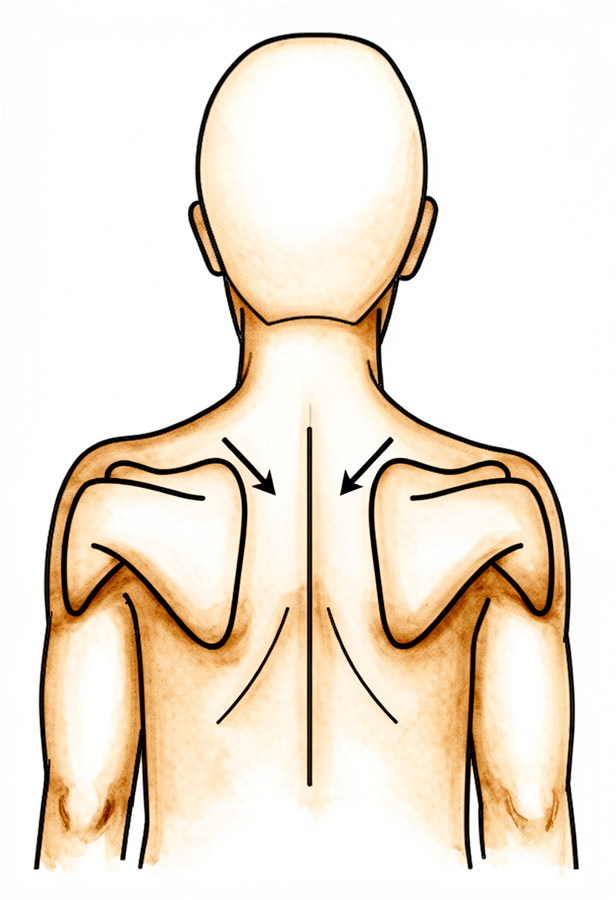
Pag-aayos ng scapula (Scapular setting)
Habang nakaupo o nakatayo nang tuwid, dahan-dahang hilahin ang iyong mga shoulder blade pabalik at pababa, palayo sa iyong mga tainga. Manatili sa posisyong ito ng ilang segundo, pagkatapos ay mag-relax. Pinapanatili nito na aktibo ang mga kalamnan ng shoulder blade nang hindi ginagalaw ang nagpapagaling na collarbone.
Ayon sa gabay ng iyong physiotherapist
Kieran Hirpara 4.0
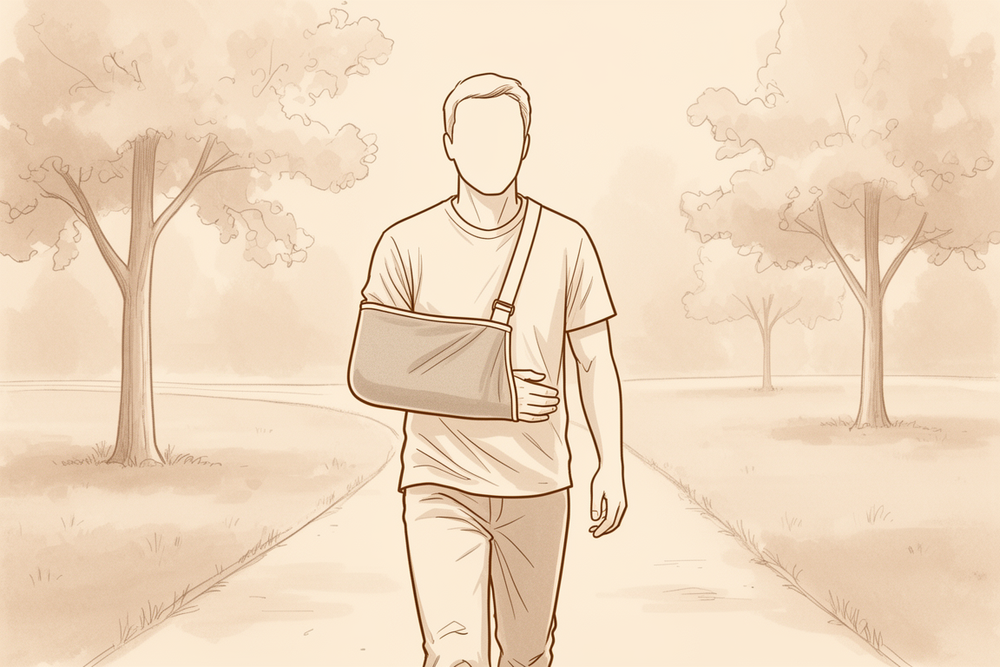
Paglalakad nang naka-sling ang braso
Ipagpatuloy ang banayad na cardiovascular activity sa pamamagitan ng paglalakad, habang ang inoperahang braso ay nakapahinga sa sling. Pinapanatili nito ang iyong pangkalahatang fitness habang protektado ang fracture.
Ayon sa gabay ng iyong physiotherapist
Ang mga unang linggo ay tungkol sa pagprotekta sa fixation habang nagsisimulang maghilom ang bali. Mananatili ka sa sling, pamamahala ng pamamaga gamit ang ice, at paggawa ng mga banayad na ehersisyo upang mapanatiling gumagalaw ang ibang bahagi ng braso: ang kamay, pulso, siko at leeg, kasama ang mga pendulum at banayad na assisted shoulder movement sa ibaba ng taas ng balikat. Ang mga panuntunang pinakamahalaga: huwag itaas ang siko nang lampas sa taas ng balikat, bawal magbuhat o magdala ng gamit gamit ang inoperahang braso, bawal tumukod o tumulak gamit ang braso, at bawal magmaneho sa loob ng anim na linggo (nalalapat ito sa anumang operasyon sa balikat) o habang nakasuot ng sling.
Para sa iyong physiotherapist:
Mga Layunin
- Protektahan ang fixation at ang naghihilom na buto at soft tissue
- Paginhawahin ang sakit at pamamaga
- Ibalik ang passive shoulder range sa ibaba ng 90° ng elevation
- Panatilihin ang full elbow, wrist, hand at cervical range of motion
Pamamahala
- Cryotherapy at mga modality kung kinakailangan; analgesia bago ang mga ehersisyo at session
- Suriin ang fit ng sling; magbigay ng edukasyon sa paggamit ng sling (protective wear, lalo na kapag labas ng bahay; hindi kinakailangan sa gabi ayon sa kumbensyon ng klinika) at postura
- Pendulums at table slides
- PROM: external at internal rotation sa plane of the scapula hanggang sa komportable; flexion / scaption / abduction hanggang maximum na 90°
- AAROM: external rotation gamit ang stick sa neutral; supine assisted flexion hanggang 90°
- AROM: siko, pulso, kamay at cervical spine; grip work (ball squeezes)
- Mula linggo 2: resisted wrist flexion/extension at forearm rotation; banayad na scapular setting at retraction
- Cardio: paglalakad habang ang braso ay nasa sling; stationary o recumbent bike habang ang braso ay nasa sling
Mga Pag-iingat
- Bawal ang active shoulder elevation
- Bawal ang shoulder flexion o abduction nang lampas sa 90°, kabilang ang passive
- Bawal magbuhat o magdala ng gamit gamit ang inoperahang braso; bawal ang weight-bearing gamit ang braso
- Bawal magmaneho sa loob ng anim na linggo (nalalapat ito sa anumang operasyon sa balikat), at hindi rin habang nakasuot ng sling
Mga Pamantayan para sa pag-usad (Criteria to progress)
- Komportableng passive flexion/scaption hanggang 90° at external rotation hanggang mga 30°
- Ang sakit ay bumaba sa 4/10 habang nakapahinga
- Full elbow, wrist at hand active range
- Hilom na ang sugat, at walang mga palatandaan ng komplikasyon
Phase II — Maagang paggalaw (Linggo 3–6)
Kieran Hirpara 4.0
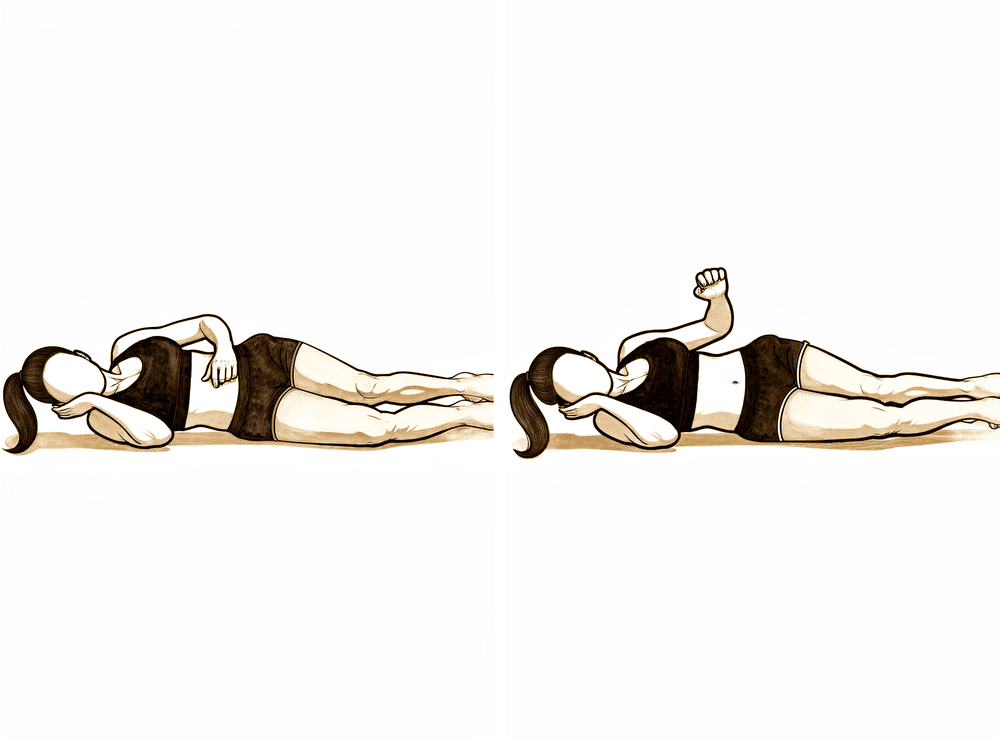
Side-lying external rotation
Humiga sa gilid na hindi naoperahan nang ang naoperahang braso ay nasa itaas, ang siko ay nakabaluktot nang 90 degrees at nakadikit sa iyong katawan. Habang pinapanatiling nakadikit ang siko, i-rotate ang forearm pataas palayo sa iyong tiyan hanggang sa kung saan ito komportable, pagkatapos ay ibaba ito nang may kontrol. Huwag gumamit ng weights sa phase na ito — ang braso ay gumagalaw gamit ang sarili nitong lakas.
Ayon sa gabay ng iyong physiotherapist
Kieran Hirpara 4.0
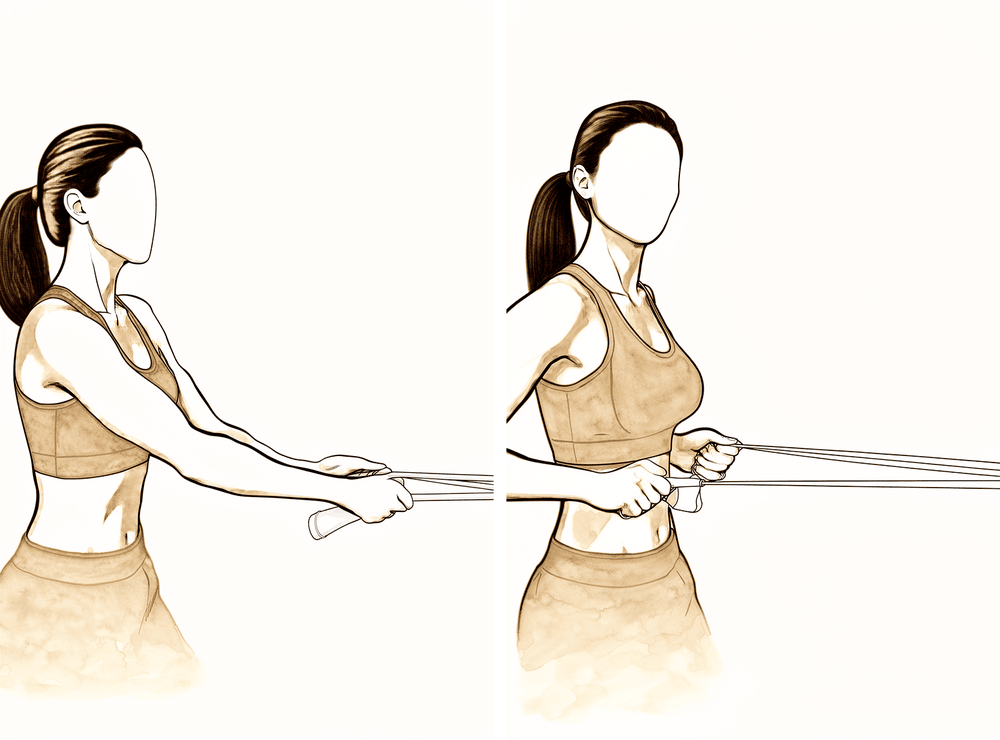
Low row gamit ang elastic band
I-angkla ang isang elastic band sa iyong harapan sa taas ng baywang. Habang nakatayo nang tuwid, hilahin ang band patungo sa iyo, dahan-dahang ibaba at iurong ang shoulder blade, pagkatapos ay bitawan nang may kontrol. Panatilihing magaan ang resistance.
Ayon sa gabay ng iyong physiotherapist
Kieran Hirpara 4.0
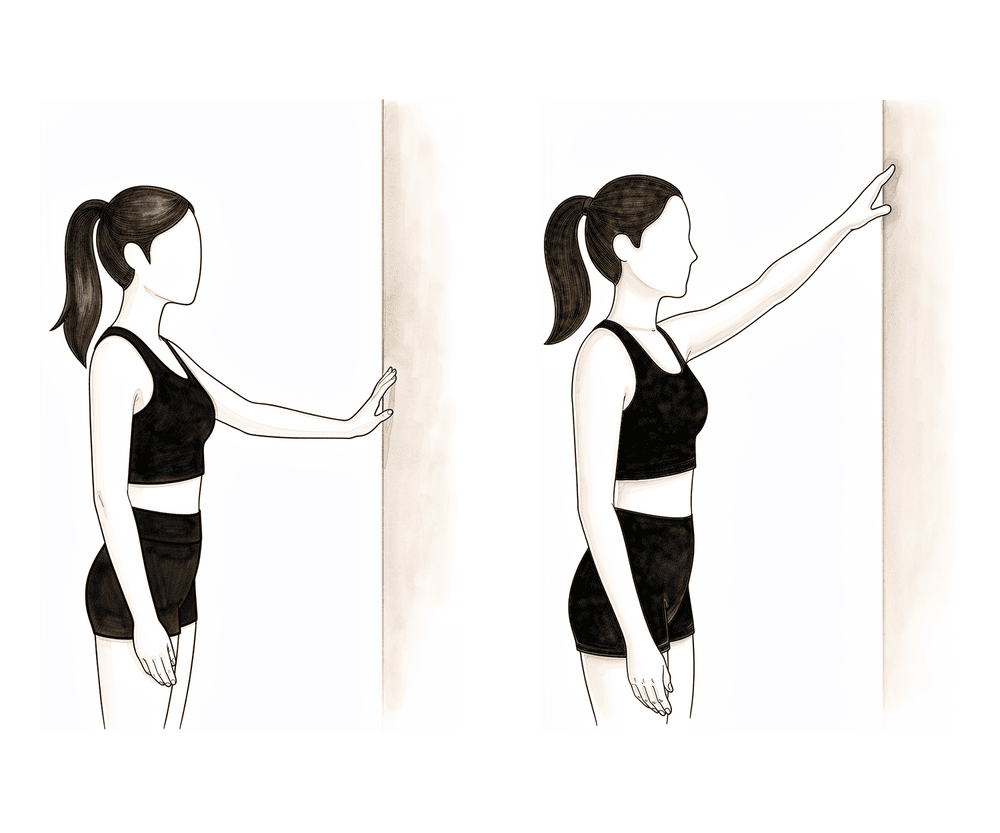
Wall slides (finger walk)
Tumayo nang nakaharap sa pader at ipatong ang iyong mga daliri rito. I-lakad ang iyong mga daliri pataas sa pader upang itaas ang braso, hayaang kuhanin ng pader ang bahagi ng bigat, pagkatapos ay i-lakad ito pabalik pababa. Panatilihing mas mababa sa taas ng balikat ang braso sa yugtong ito — ang pader ang tumutulong, kaya nananatili itong banayad.
Ayon sa gabay ng iyong physiotherapist
Kieran Hirpara 4.0
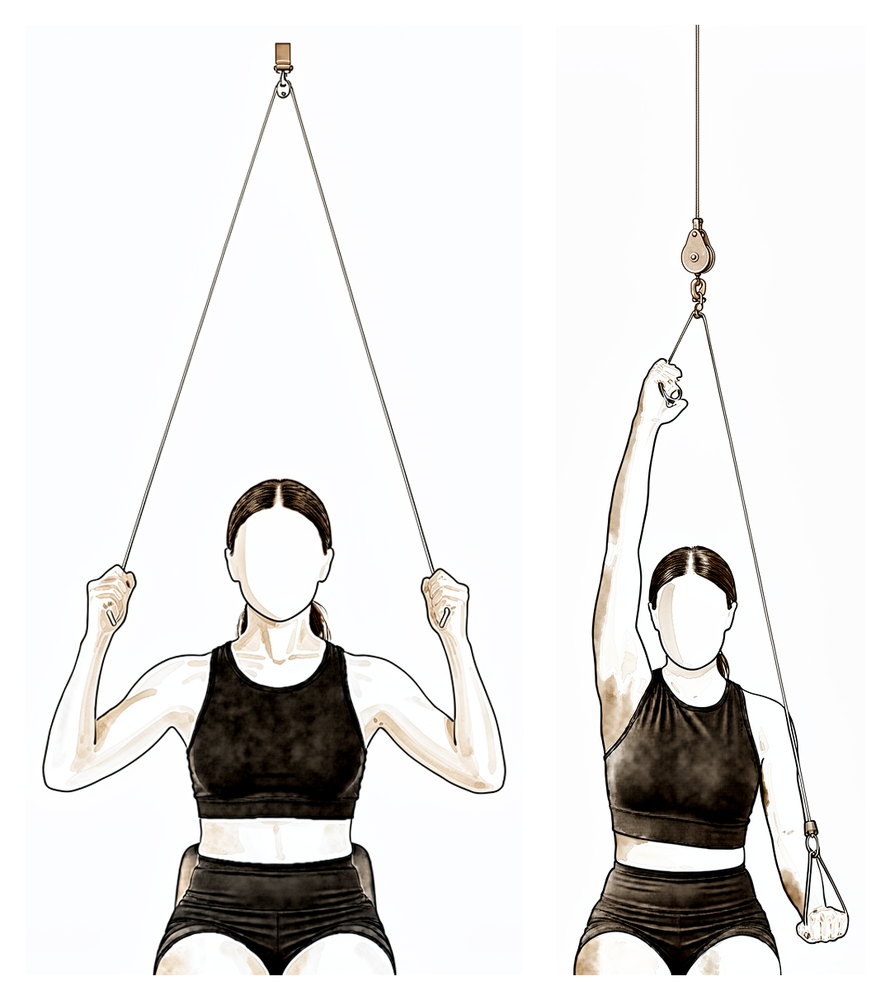
Over-door pulley
Umupo sa ilalim ng isang over-door pulley na may hawakan sa bawat kamay. Hilahin pababa gamit ang iyong mabuting braso upang itaas ang inoperahang braso hanggang sa komportable, pagkatapos ay dahan-dahang ibaba. Panatilihin muna ito sa isang banayad na range at mas mababa sa taas ng balikat — ang mabuting braso ang gagawa ng trabaho.
Ayon sa gabay ng iyong physiotherapist
Kieran Hirpara 4.0
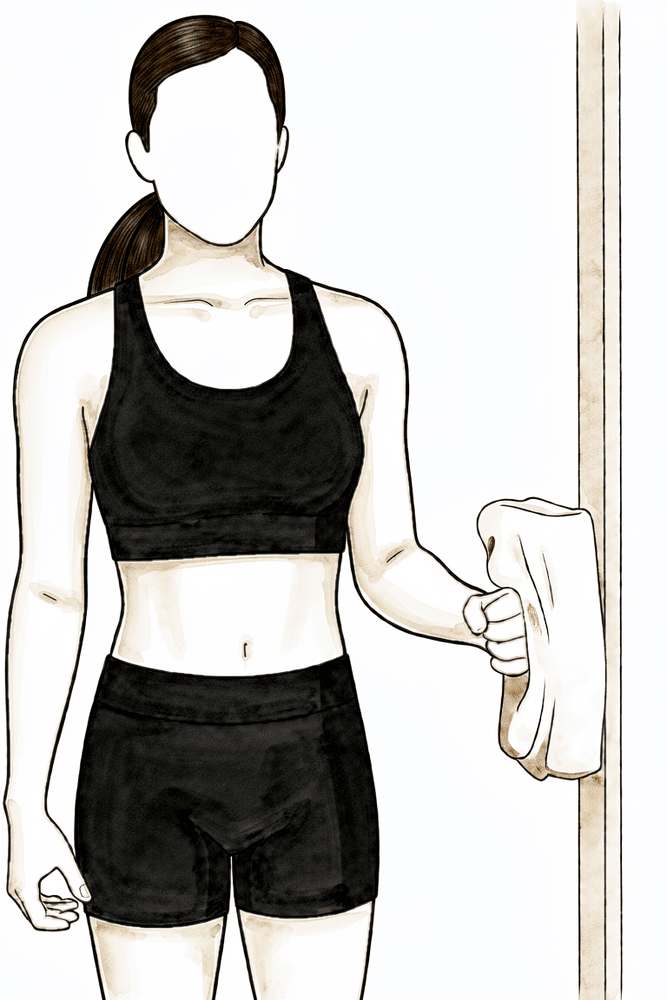
Isometric external rotation
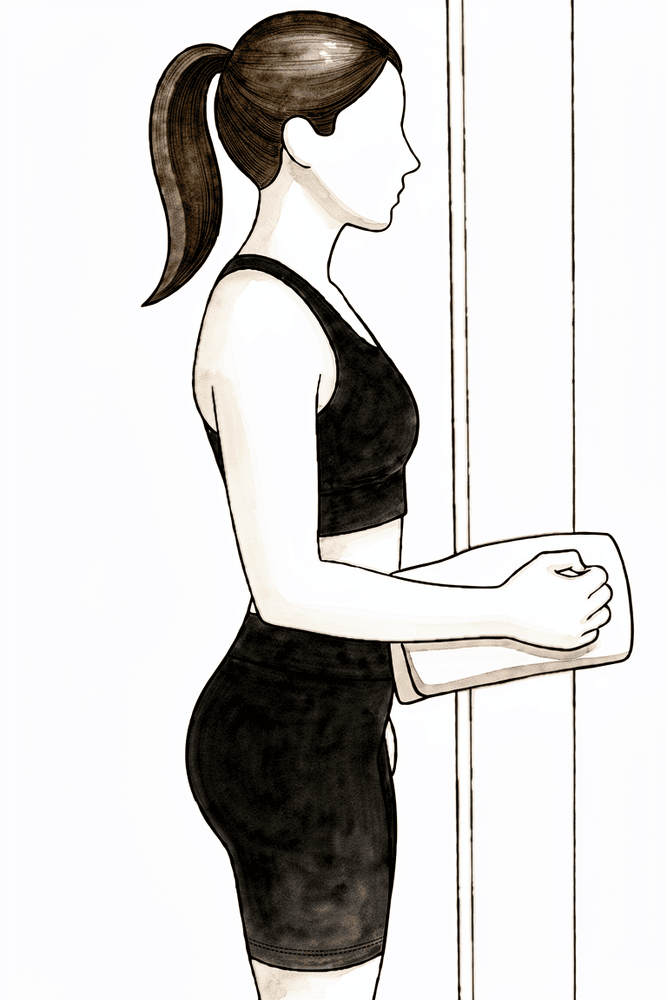
Tumayo nang nakadikit ang iyong siko sa iyong gilid at nakabaluktot sa isang right angle, ang likod ng iyong kamay ay nakasandal sa pader o doorframe. Dahan-dahang itulak ito palabas nang hindi pinapagalaw ang braso, panatilihin ito ng ilang segundo, pagkatapos ay i-relax. Ginigising nito ang rotator cuff nang walang paggalaw ng balikat.
Ayon sa gabay ng iyong physiotherapist
Kieran Hirpara 4.0
Isometric internal rotation
Tumayo nang nakadikit ang iyong siko sa iyong gilid at nakabaluktot sa isang right angle, ang palad ng iyong kamay ay nakasandal sa pader o hamba ng pinto. Dahan-dahang itulak ito papasok nang hindi pinapagalaw ang braso, manatili sa posisyong ito ng ilang segundo, pagkatapos ay i-relax. Isang banayad na paraan upang simulan ang pag-activate ng cuff.
Ayon sa gabay ng iyong physiotherapist
Kieran Hirpara 4.0
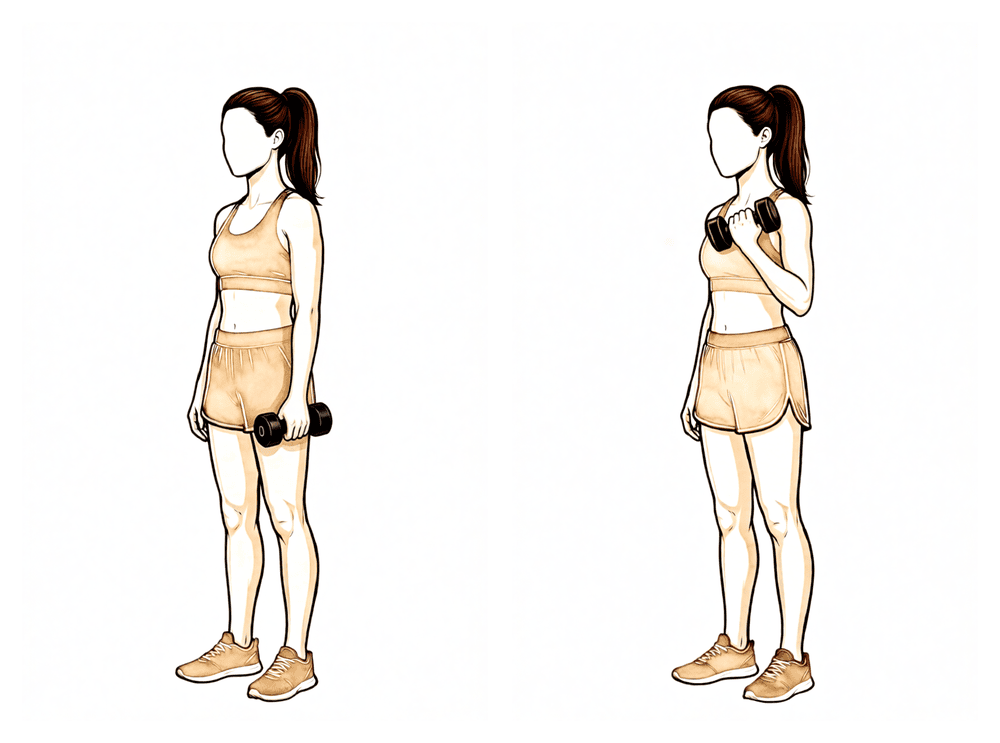
Biceps curl
Habang ang itaas na bahagi ng braso ay nasa iyong gilid, itiklop ang siko upang itaas ang isang magaan na pabigat patungo sa iyong balikat, pagkatapos ay ibaba ito nang may kontrol. Panatilihing magaan ang load — ito ay banayad na conditioning ng braso, hindi mabigat na pagbubuhat.
Ayon sa gabay ng iyong physiotherapist
Nagsisimula nang magdugtong ang bali, ngunit hindi pa ito ganap na magaling: ang phase na ito ay para mabawi ang paggalaw, hindi ang lakas. Unti-unting aalisin ang sling depende sa ginhawa, itutuloy ang passive at assisted range patungo sa pagiging buo, at magsisimula ka nang igalaw ang braso gamit ang sarili nitong lakas sa ibaba ng taas ng balikat, kasama ang mga banayad na muscle-activation (isometric) exercises. Panatilihing hindi hihigit sa bigat ng isang tasa ng kape ang anumang bubuhatin o dadalhin, at iwasan ang anumang puwersahang pag-stretch. Ang phase na ito ay magtatapos sa isang x-ray at review kasama si Dr Hirpara sa loob ng humigit-kumulang anim na linggo; ang review na iyon, at hindi ang kalendaryo lamang, ang magbibigay-daan sa pagpapalakas at sa paggalaw sa itaas ng taas ng balikat.
Para sa iyong physiotherapist:
Mga Layunin
- Unti-unting pag-alis sa sling (ititigil na sa bandang ika-6 na linggo)
- Pag-usad ng passive range patungo sa pagiging buo sa lahat ng planes
- Pagtatatag ng active range sa ibaba ng 90° na may mabuting mechanics
- Pagsisimula ng banayad na isometric at periscapular work
Pamamahala
- PROM: pag-usad patungo sa full range sa lahat ng planes, ayon sa tolerance; walang puwersahang pag-stretch
- AAROM: supine flexion gamit ang dowel na mag-uusad patungo sa upright (lawn-chair progression), wall at rail slides, pulleys
- AROM: sa ibaba ng 90° elevation, walang sakit; supine flexion na mag-uusad patungo sa standing; seated at side-lying external rotation
- Isometric rotator cuff work sa neutral; light periscapular strengthening (scapular retraction, low row, mid row); light biceps at triceps work
- Pag-monitor para sa compensation patterns (shoulder hitching, scapular substitution)
- Cardio: paglalakad; stationary bike
Mga Pag-iingat
- Bawal magbuhat o magdala ng mas mabigat kaysa sa humigit-kumulang isang tasa ng kape
- Bawal ang active elevation lampas ng 90° hanggang sa makumpirma ang paggaling ng bali sa six-week review
- Bawal ang puwersahang pag-stretch ng balikat o mga posisyon na nagdudulot ng sakit
- Bawal ang weight-bearing gamit ang braso
- Bawal magmaneho sa loob ng anim na linggo (nalalapat ito sa anumang operasyon sa balikat), at hindi rin habang nakasuot ng sling
Mga Pamantayan para sa pag-usad
- Buo, o halos buo, na passive range of motion
- Active elevation hanggang 90° na may minimal na compensation at sakit na mababa sa 4/10
- Kasiya-siyang paggaling ng bali sa x-ray, gaya ng kinumpirma sa review kasama si Dr Hirpara
Phase III — Pagpapalakas (Linggo 6–12)
Kieran Hirpara 4.0
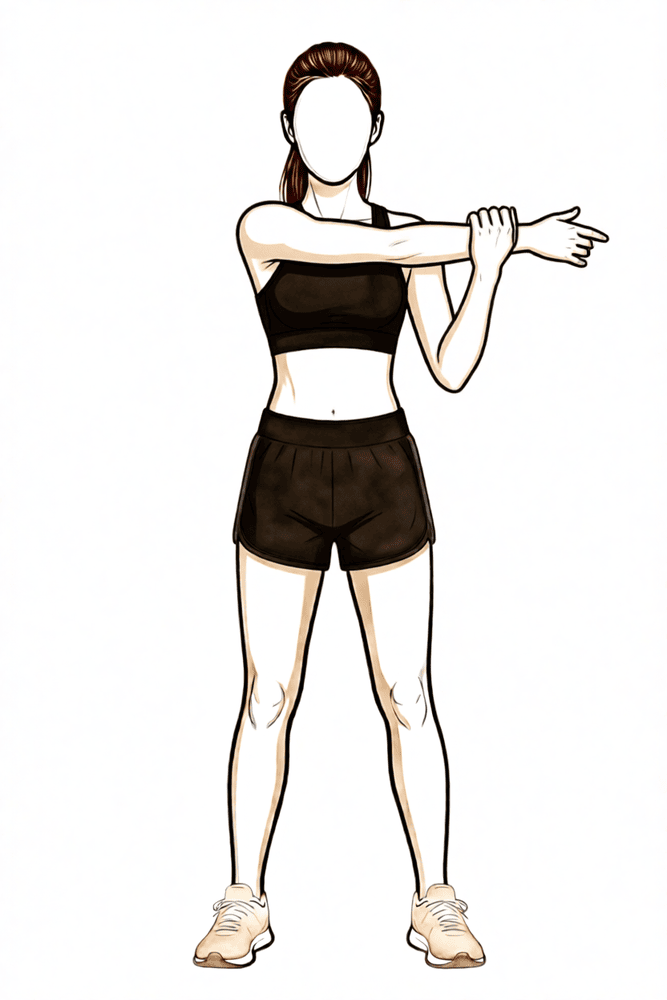
Cross-body stretch
Gamitin ang iyong kabilang kamay upang hilahin ang inoperahang braso patawid sa iyong dibdib hanggang sa makaramdam ka ng stretch sa likod ng balikat. Hawakan nang sandali, pagkatapos ay bitawan. Mag-stretch hanggang sa maramdaman lamang ang firm discomfort — huwag na huwag aabot sa matalas na sakit.
Ayon sa gabay ng iyong physiotherapist
Kieran Hirpara 4.0
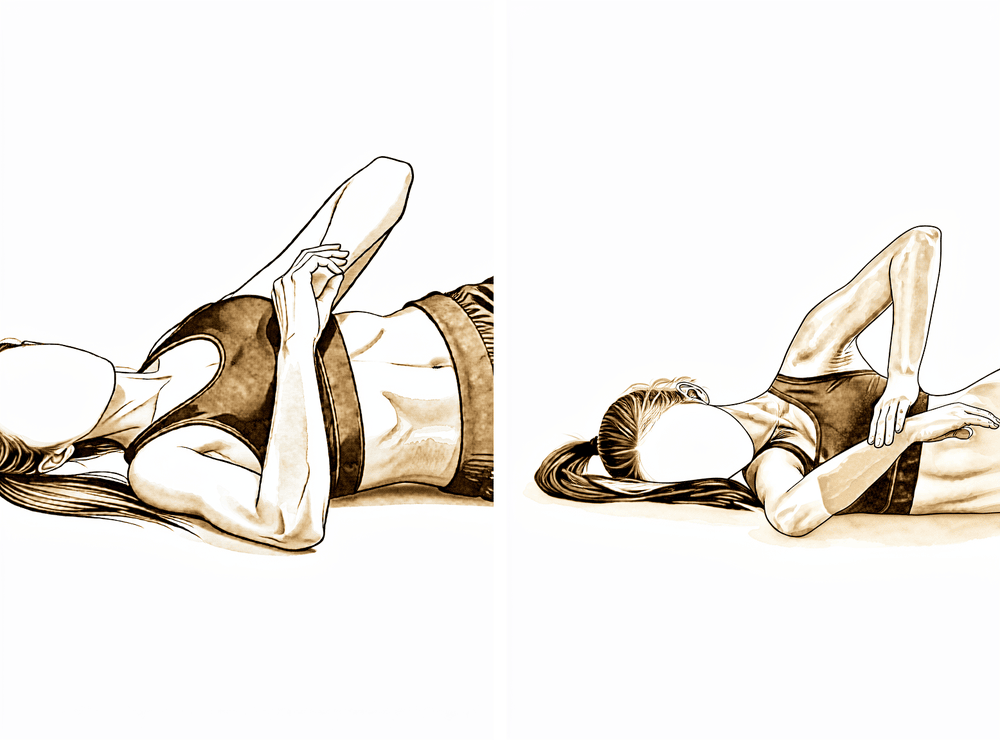
Sleeper stretch
Humiga sa panig ng iyong inoperahang bahagi na ang balikat at siko ay parehong nakabaluktot nang 90 degrees. Gamit ang iyong kabilang kamay, dahan-dahang itulak pababa ang forearm patungo sa kama hanggang sa makaramdam ka ng stretch sa likod ng balikat, pagkatapos ay bitawan. Panatilihin itong dahan-dahan — walang matalas na sakit.
Ayon sa gabay ng iyong physiotherapist
Kieran Hirpara 4.0
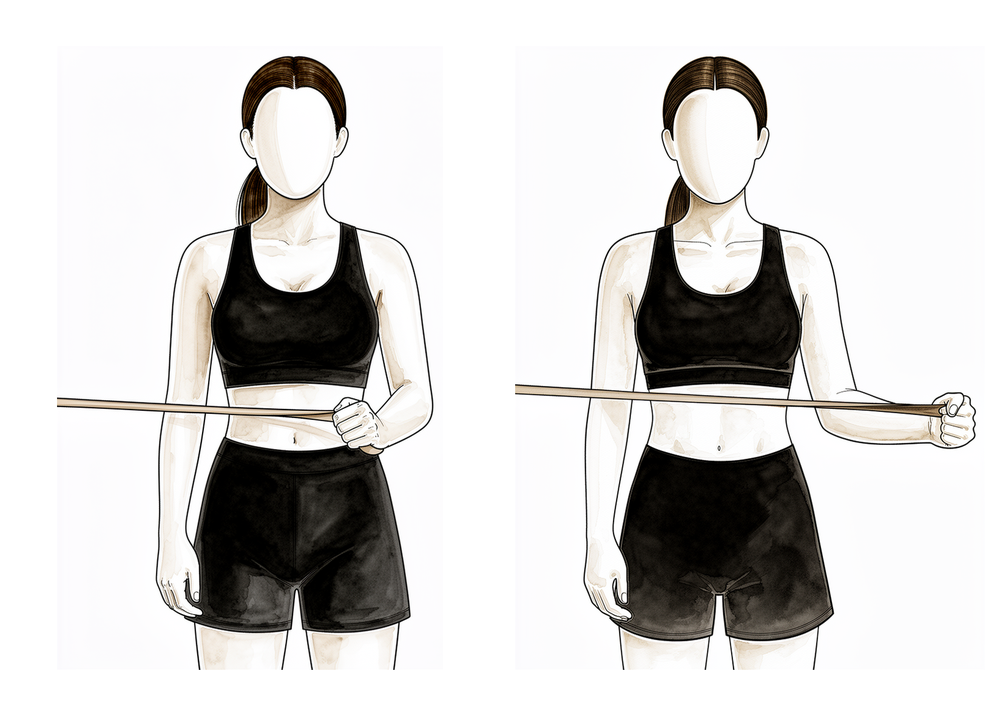
Band external rotation
Tumayo nang nakadikit ang iyong siko sa iyong tagiliran at nakabaluktot sa isang right angle, habang hawak ang isang elastic band na naka-angkla sa taas ng baywang. Panatilihing nakadikit ang siko sa iyong tagiliran, i-rotate ang forearm palabas laban sa band, pagkatapos ay dahan-dahang ibalik. Pinauunlad nito ang rotator cuff mula sa naunang isometric work.
Ayon sa gabay ng iyong physiotherapist
Kieran Hirpara 4.0
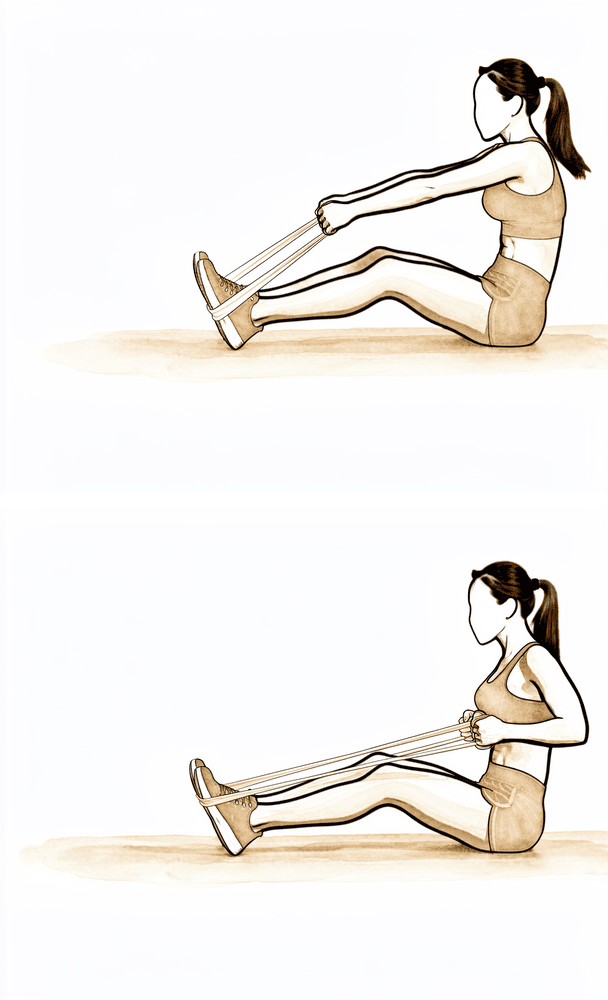
Low row
Humawak ng band na naka-angkla sa harap mo sa taas ng iyong baywang. Panatilihing medyo tuwid ang braso, hilahin ito pabalik at pababa patungo sa iyong balakang, pigain ang shoulder blade pababa at pabalik, pagkatapos ay dahan-dahang ibalik. Binubuo nito ang mga kalamnan ng shoulder blade na sumusuporta sa cuff.
Ayon sa gabay ng iyong physiotherapist
Kieran Hirpara 4.0
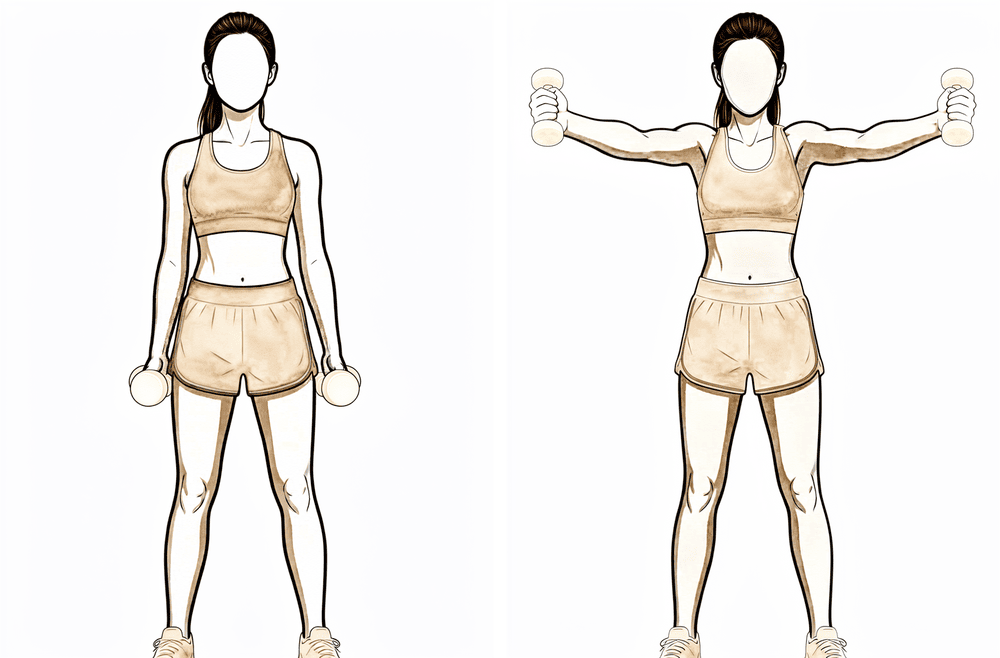
Scaption raises (full can)
Habang nakaturo pataas ang mga hinlalaki, itaas ang braso nang mga 45 degrees sa iyong harapan — sa pagitan ng diretso sa harap at diretso sa gilid — pagkatapos ay ibaba ito nang may kontrol. Kapag malaya na ang iyong range sa itaas ng taas ng balikat, itaas ito sa isang komportableng overhead range. Panatilihing magaan ang load.
Ayon sa gabay ng iyong physiotherapist
Kieran Hirpara 4.0
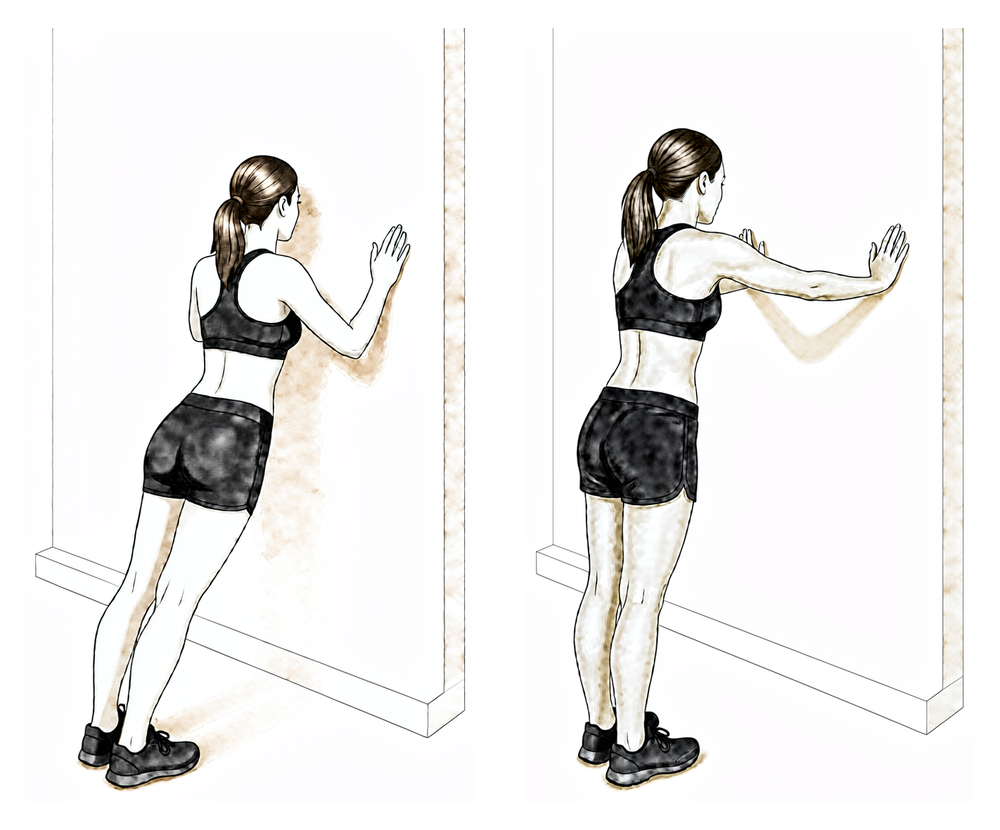
Wall push-ups
Tumayo nang nakaharap sa pader na ang mga kamay ay nakalapat dito sa taas ng balikat. Itiklop ang mga siko upang humilig patungo sa pader, pagkatapos ay itulak pabalik, na may kasamang banayad na pagtulak gamit ang mga kamay sa dulo upang ihiwalay ang mga shoulder blade. Ipakilala lamang ito sa huling bahagi ng phase na ito, ayon sa gabay ng iyong physiotherapist.
Ayon sa gabay ng iyong physiotherapist
Kieran Hirpara 4.0
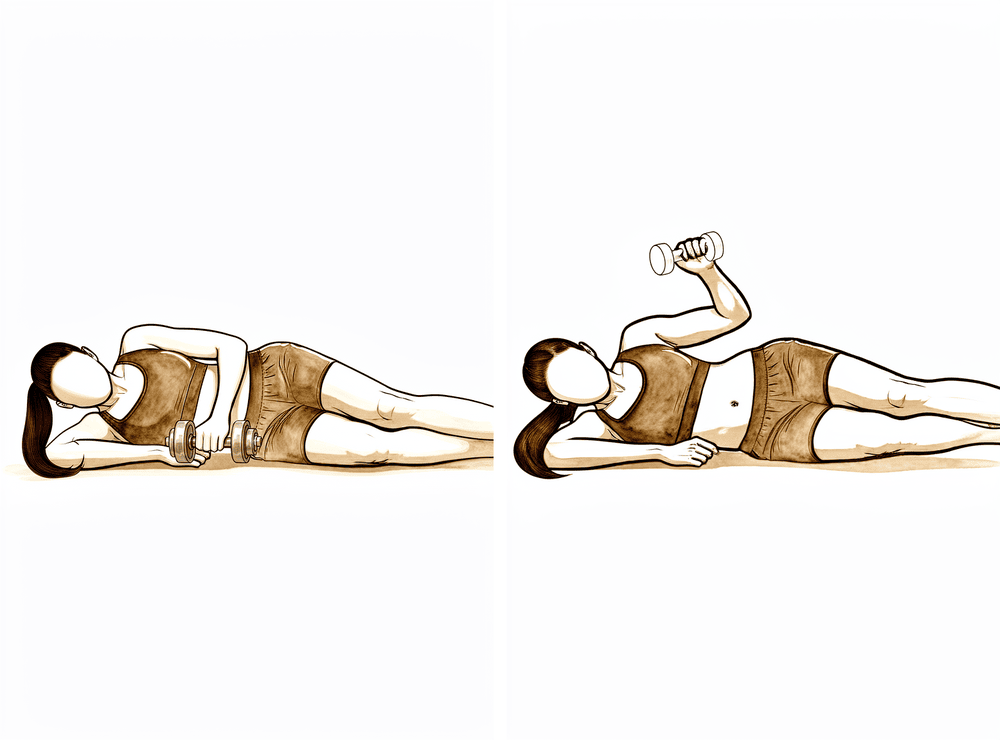
Side-lying external rotation na may weight
Humiga sa gilid na hindi naoperahan na may siko ng itaas na bahagi na nakatiklop sa right angle at nakadikit sa iyong katawan. Habang humahawak ng magaan na pabigat, i-rotate ang forearm pataas patungo sa kisame, pagkatapos ay dahan-dahang ibaba. Panatilihing magaan ang pabigat at mas mataas ang bilang ng mga repetition.
Ayon sa gabay ng iyong physiotherapist
Kieran Hirpara 4.0
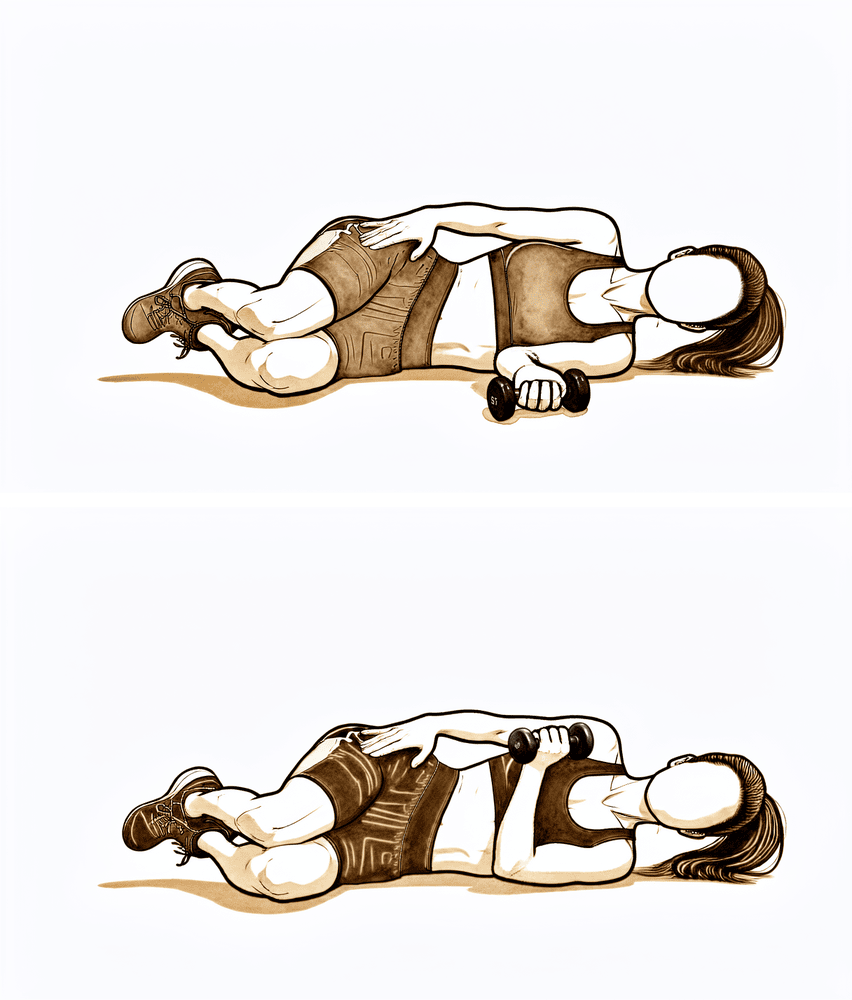
Side-lying internal rotation na may weight
Humiga sa panig na inoperahan na ang siko ay nakabaluktot sa right angle at nakadikit sa katawan. Habang humahawak ng magaan na pabigat, itaas ito patungo sa iyong tiyan sa pamamagitan ng pag-rotate ng balikat papasok, pagkatapos ay dahan-dahang ibaba. Panatilihing magaan ang load at mas mataas ang bilang ng repetitions.
Ayon sa gabay ng iyong physiotherapist
Kapag nakumpirma sa iyong review na maayos ang paghilom ng bali, magsisimula na ang paggalaw nang higit sa taas ng balikat at bubuuin ang full active range sa mga sumunod na linggo. Ang pagpapalakas ay magsisimula nang dahan-dahan: muscle-activation work muna, pagkatapos ay elastic bands, at pagkatapos ay light weights para sa rotator cuff at mga kalamnan ng shoulder blade. Mananatiling magaan ang pagbuhat (hindi hihigit sa mga 2 kg) hanggang labindalawang linggo, ipagpaliban muna ang mabigat o overhead lifting, at walang contact sport sa phase na ito. Ang paglangoy at pagbibisikleta ay karaniwang ibinabalik sa phase na ito, ayon sa gabay ng iyong physiotherapist.
Para sa iyong physiotherapist:
Mga Layunin
- Full active range of motion sa lahat ng planes, na may normal na mechanics
- Simulan at ituloy ang pagpapalakas ng rotator cuff at periscapular
- Pagbabalik sa mga normal na pang-araw-araw na aktibidad
Pamamahala
- Ituloy ang AROM nang higit sa 90° sa lahat ng planes, habang binabawasan ang compensatory patterns
- Stretching kung kinakailangan: latissimus, pectoral, posterior capsule at sleeper stretches
- Pagpapalakas: isometric cuff work na magiging resisted external/internal rotation gamit ang bands, sa simula ay mababa sa taas ng balikat; scapular retraction at rows; scaption raises, serratus work at wall push-ups sa huling bahagi ng phase
- Light free weights na itutuloy ayon sa tolerance: low load, mas mataas na repetitions
- Cardio: stationary bike at paglalakad; paglangoy at pagtakbo mula humigit-kumulang 8–10 linggo kung pinayagan sa review
Mga Pag-iingat
- Bawal magbuhat ng mas mabigat sa mga 2 kg hanggang 12 linggo
- Iwasan ang mabigat na pagbuhat overhead o malayo sa katawan hanggang 12 linggo
- Walang contact sport; walang plyometric o impact loading hanggang sa huling bahagi ng phase (humigit-kumulang 10–12 linggo)
- Ang pagpapalakas ay dapat manatili sa comfortable range at hindi dapat magdulot ng pananakit na nagtatagal
Mga Kraytirya para mag-progress
- Active range of motion na hindi bababa sa 90% ng kabilang panig
- Mabuting rotator cuff at periscapular activation, na may sakit na hindi hihigit sa 3/10 sa resisted work
- Pag-unlad ng fracture union sa x-ray, gaya ng nakumpirma sa review kasama si Dr Hirpara
Phase IV — Pagbabalik sa buong aktibidad at isport (Ika-12 linggo onwards)
Kieran Hirpara 4.0
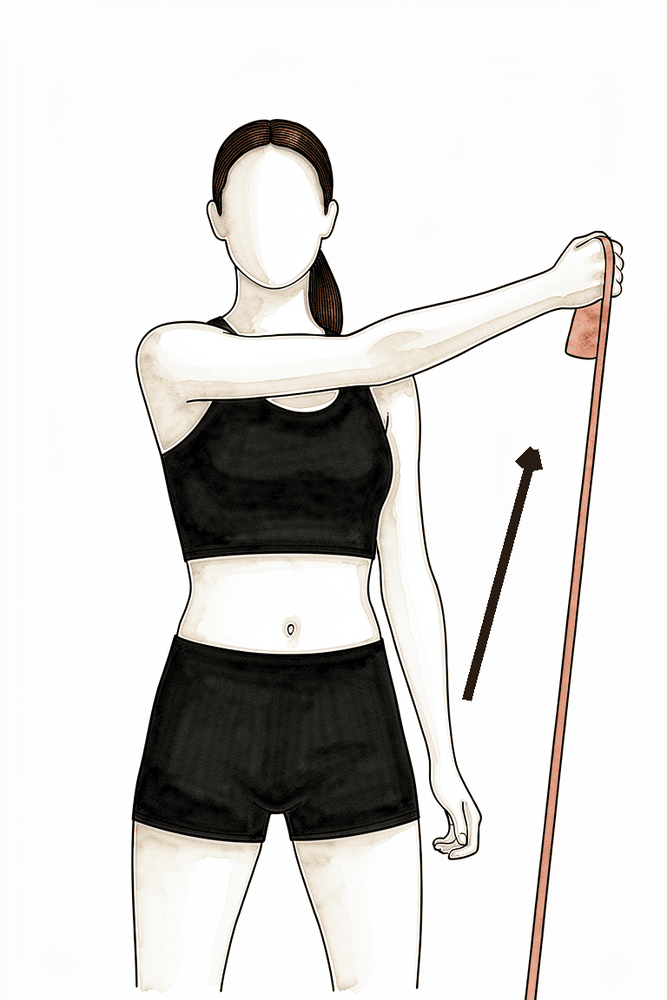
Diagonal pattern na may band (D1)
Humawak ng isang elastic band at hilahin ito nang pahilis (diagonally) sa iyong katawan — mula sa ibaba at patawid sa isang balakang paakyat at palabas sa kabilang panig, pagkatapos ay ibalik ito nang may kontrol. Ang mga functional diagonal pattern na ito ay muling bumubuo sa coordinated, whole-arm movement na ginagamit sa trabaho at sports. Idagdag lamang kapag naghilom na ang bali (fracture).
Ayon sa gabay ng iyong physiotherapist
Kieran Hirpara 4.0
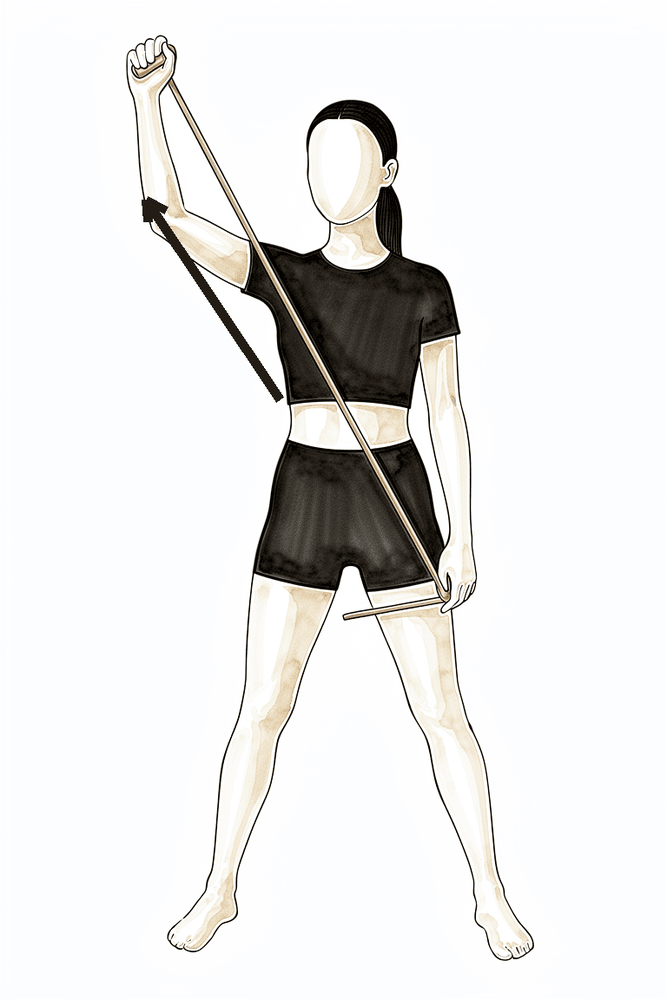
Diagonal pattern na may band (D2)
Humawak ng isang elastic band at hilahin ito nang pahilis mula sa kabilang bahagi ng katawan pababa, pataas hanggang sa itaas ng ulo at palabas, pagkatapos ay ibalik ito nang may kontrol. Binubuo nito ang mga overhead, sport-specific na pattern ng balikat. Idagdag lamang kapag naghilom na ang bali at pinayagan na ang overhead work.
Ayon sa gabay ng iyong physiotherapist
Ang huling phase ay ang unti-unting pagbabalik sa mas mabigat na pagbubuhat, manwal na trabaho at isport. Ang strength work ay uunlad sa pamamagitan ng mas mabigat na resistance, overhead positions at (para sa mga atleta) plyometric, throwing at sport-specific drills. Ang contact at collision sport (football, rugby, horse riding) ay nangangailangan ng united fracture sa x-ray, gaya ng kumpirmado sa iyong review kay Dr Hirpara, karaniwan mula sa humigit-kumulang tatlo hanggang apat na buwan sa pinakamaaga, at ang ilang mga protocol ay itinakda ang collision sport hanggang anim na buwan. Ang pagbabalik bago mag-unite ang buto ay may panganib ng re-fracture, kaya ito ay isang gate na dapat respetuhin.
Para sa iyong physiotherapist:
Mga Layunin
- Mapanatili ang buo at walang sakit na range of motion
- Lakas na hindi bababa sa 90% ng hindi apektadong panig
- Unti-unting pagbabalik sa manwal na trabaho, rekreasyon at isport
Pamamahala
- Progressive resistance training, kabilang ang eccentric loading, overhead positions at functional patterns ayon sa tolerance
- Rhythmic stabilisation at proprioceptive work; plyometric at interval throwing o racquet programs para sa mga overhead athletes
- Work-specific conditioning para sa mga manwal na manggagawa; sport-specific drills bago ang unrestricted play
- Ang pagdedesisyon sa pagbabalik-sa-isport ay indibidwalisado (contact versus non-contact, upper-limb demand) at coordinated sa surgeon
Mga Kraytirya para sa pag-unlad
- Buo at walang sakit na active range of motion
- Lakas na hindi bababa sa 90% ng hindi apektadong panig sa dynamometry, na walang sakit sa strength testing
- Pagkumpleto ng isang graded return-to-sport program nang walang sakit o pangamba
- Radiographic union na kumpirmado sa review kay Dr Hirpara bago ang contact o collision sport
Pagkatapos ng iyong protocol
Ang mga phase sa itaas ay hango sa mga nailathalang rehabilitation protocol para sa clavicle fracture fixation: Massachusetts General Brigham Sports Medicine, Mammoth Orthopedic Institute, University of Colorado (Dr Jonathan Bravman) at Midwest Orthopaedics at Rush (Dr Brian Cole), kasama ang NHS physiotherapy guidance mula sa West Suffolk at United Lincolnshire, at return-to-sport evidence mula sa isang systematic review ng mga clavicle fracture sa mga atleta. Ang mga range ng linggo ay tipikal at hindi fixed, at ang iyong pag-unlad ay ginagabayan ng iyong physiotherapist at nakadepende sa paghilom ng fracture sa iyong mga review kay Dr Hirpara. Ang pahinang ito ay kasabay ng pangkalahatang payo sa paggaling ng klinika; tingnan ang managing post-operative pain at wound care. Para sa operasyon mismo, tingnan ang clavicle fixation. Ang ebidensya sa likod ng protocol na ito (ang operative-versus-non-operative trial data, union at return-to-sport rates, at ang mga nailathalang surgeon protocol) ay nakabuod sa evidence section, na available bilang PDF sa itaas ng pahinang ito.
Evidence & references
This is the clinical evidence summary written for health professionals. It is technical, and it lists the research this page was built from. You do not need to read it to understand your treatment or to make a decision about it.
Midshaft Clavicle Fracture — Operative vs Non-operative Management & Post-operative Rehabilitation (Plate ORIF)
Topic scope: (A) the decision between non-operative management and plate fixation for displaced midshaft clavicle fractures (the randomised-trial evidence on union, function and return to sport), and (B) post-operative rehabilitation after open reduction and internal fixation (ORIF) of the clavicle with a plate and screws. Distal-third and proximal-third fractures, which involve different fixation constructs, are noted only where they bear on the rehab principles.
Defining principle of the surgical rehab here: clavicle ORIF is a protect-the-fixation / protect-the-healing-fracture pathway, NOT an early-aggressive-motion pathway. The plate is a splint, not a substitute for healed bone — it neutralises load while the fracture itself unites over roughly 6–12 weeks and remodels for months afterwards. So the rehab is staged around fracture biology: a sling and below-shoulder-height-only motion early to protect the construct, range of motion progressed as the fracture knits (overhead motion deferred until the ~6-week x-ray), and strengthening / loading / collision sport withheld until radiographic union is confirmed. This is the opposite of a debridement or capsular-release pathway, where motion is the goal from day one and there is no fracture to protect. The single most important gate throughout is the x-ray, not the calendar — every major step up depends on how the fracture is healing.
A. THE OPERATIVE-vs-NON-OPERATIVE DECISION
Most clavicle fractures heal without surgery. The debate concerns completely displaced midshaft fractures (typically ≥100% displacement or ≥~2 cm shortening), where historic "all clavicles heal" teaching was overturned by randomised data.
The landmark trial — Canadian Orthopaedic Trauma Society (COTS) 2007
The COTS multicentre RCT randomised 132 patients with displaced midshaft clavicle fractures to plate ORIF vs non-operative sling treatment. Plate fixation produced a markedly lower nonunion rate (~2% vs ~23–24% non-operative), fewer symptomatic malunions, faster time to union, and better Constant and DASH scores at one year. This trial is the basis for offering surgery to active patients with completely displaced fractures — it did not establish that all such fractures require surgery. STRONG (RCT). [COTS 2007]
What later evidence tempered
- Meta-analyses of RCTs confirm operative fixation reduces nonunion and symptomatic malunion but show that much of the early functional advantage converges by 1 year, and comes at the cost of hardware-related reoperation. The decision is therefore shared and patient-specific (activity demands, displacement, comminution, smoking, occupation) rather than automatic. STRONG (SR/MA of RCTs). [Woltz-type meta-analysis; meta-regression, JSES 2020 — DOI 10.1016/j.jse.2020.02.011]
- A modern cohort comparison of dual mini-fragment plating vs non-operative care (mean 3.4-yr follow-up) found fewer union complications with fixation but similar patient-reported outcomes at final follow-up — echoing the "fixation buys reliable union, not necessarily a better long-term shoulder" theme. MODERATE (cohort). [DOI 10.1016/j.jse.2024.10.018]
- Heterogeneity between trials (how nonunion and displacement were defined, statistical handling of time-to-union) explains some of the apparent disagreement across studies — a caution against over-reading any single union statistic. MODERATE. [DOI 10.1016/j.jse.2012.03.015; meta-regression DOI 10.1016/j.jse.2020.02.011]
Construct choice (informs the rehab, not the patient's behaviour)
- Plate vs intramedullary fixation: an RCT comparing locked intramedullary nailing with plating found both achieve union; plates remain the workhorse for comminuted/displaced patterns. MODERATE (RCT). [DOI 10.1016/j.jse.2010.05.002]
- Plate position: superior plating is biomechanically strong but the plate lies directly under thin skin and is frequently symptomatic; anteroinferior plating lowers symptomatic hardware and removal rates. This is why patients commonly feel and see the plate, and why removal is a later, elective conversation. [Hardware-removal cohort, DOI 10.1016/j.jse.2017.03.011]
- Fixation reaches union even when delayed: immediate fixation vs delayed reconstruction of displaced midshaft fractures both restore objective strength and patient-oriented outcomes — reassuring that a fracture initially treated non-operatively can still be fixed successfully if it fails to unite. MODERATE (cohort). [DOI 10.1016/j.jse.2007.01.001]
B. POST-OPERATIVE REHABILITATION (plate ORIF)
The operation holds the fracture ends in position with a plate and screws so the bone can heal. Rehab is the same staged, fracture-protective sequence used across published surgeon and NHS protocols. Key facts that shape it:
- The plate neutralises load but the bone must unite biologically — typically 6–12 weeks to radiographic union, with remodelling for months after. Strengthening and loading that precede union risk implant loosening or re-fracture. Consensus / biomechanical.
- Bone healing is slower in smokers and in diabetics, and smoking can delay or prevent union — a modifiable risk worth addressing in the post-fracture window. Established.
- Overhead motion and strengthening are gated on the x-ray, not a fixed date — published protocols restrict elevation to ≤90° until early healing is confirmed (commonly the ~6-week review).
Consensus phased post-op timeline (plate ORIF)
| Phase | Window | Sling | ROM | Strengthening | Notes |
|---|---|---|---|---|---|
| I — Protection | Week 0–3 | Most of the time; off for showers/exercises/seated tasks; not required overnight | Passive/AAROM below 90° only — flexion/scaption/abduction capped at 90°, ER/IR in scapular plane to comfort; pendulums, table slides; full elbow/wrist/hand/cervical AROM | None at shoulder (grip + wrist only) | Protect fixation; settle pain/swelling; no driving while in sling; no lifting/carrying/weight-bearing through the arm |
| II — Early motion | Week 3–6 | Weaned as comfort allows; discarded by ~6 wk | Progress passive→full all planes (no forceful stretch); active motion below 90°; AAROM lawn-chair/pulley progression | Gentle isometrics + light periscapular work only | Recover movement, not strength. Lift ≤ a coffee cup. Phase ends with x-ray + review that gates overhead motion + strengthening |
| III — Strengthening | Week 6–12 | Off | AROM progresses above 90° once union confirmed; full active range built up | Cuff + scapular strengthening: isometric → bands → light weights; lift ≤ ~2 kg until 12 wk | Swimming/cycling typically return; no contact sport; no overhead/heavy lifting |
| IV — Return to activity & sport | Week 12 + | Off | Full, pain-free, maintained | Progressive heavy/eccentric/overhead loading; sport-specific + plyometric drills | Contact/collision sport needs radiographic union — typically ~3–4 months at the earliest, some protocols stage collision as late as 6 months |
The structure above matches the topic's patient protocol and is drawn from published surgeon ORIF protocols (Massachusetts General Brigham; Mammoth Orthopedic Institute; University of Colorado / Bravman; Midwest Orthopaedics at Rush / Cole) and NHS physiotherapy guidance (West Suffolk; United Lincolnshire). These protocols broadly agree on the sling ~3 weeks, ROM ≤90° early, overhead and strengthening after the ~6-week review, return to sport gated on union sequence; exact week boundaries vary by surgeon. WEAK / CONSENSUS — no rehab RCT defines the optimal regimen.
Return to sport — the evidence
- A systematic review of return to sport after clavicle fractures (Robertson & Wood, Br Med Bull 2016, 23 studies) found ~92% return to sport, at a mean of ~96 days (~3 months). MODERATE (SR of heterogeneous cohorts). [Robertson 2016]
- A more recent systematic review and meta-analysis reported mean return to play ~3.1 months operative vs ~3.9 months non-operative, with similar overall return rates but a higher rate of return to pre-injury level after operative treatment. MODERATE. [RTP SR-MA, JSES Rev 2024]
- In elite athletes specifically (e.g. NFL series), operative management has been used to achieve predictable, timely return — though selection bias makes these cohorts hard to generalise. WEAK (selected cohorts). [DOI 10.1177/0363546510372795]
The consistent signal: most athletes return by ~3 months, operative slightly faster and more reliably to pre-injury level — but union on x-ray, not the average timeline, governs clearance for collision sport.
C. KEY CONTROVERSIES / EVIDENCE QUALITY
- Who actually needs surgery. COTS established that fixation reduces nonunion/malunion in completely displaced midshaft fractures, but the early functional gap narrows by a year and fixation adds hardware reoperations. The modern position is shared decision-making for the active, completely-displaced patient — not routine fixation of all displaced fractures. Strong evidence, nuanced application.
- How big is the nonunion benefit, really? Reported nonunion rates vary with how "nonunion" and "displacement" are defined and how time-to-union is analysed; meta-regression shows this heterogeneity drives much of the between-study disagreement. Treat single headline figures with caution. Moderate.
- Hardware prominence and removal. Because the clavicle is subcutaneous, plates are often felt and sometimes symptomatic; removal rates depend heavily on plate position (anteroinferior < superior) and design (low-profile/dual). Removal is an elective, post-union decision. Moderate (cohorts).
- The rehab protocol itself is consensus. Phase timings come from surgeon patient-guidance documents and NHS leaflets, not a rehab RCT. The ≤90°-until-6-weeks and union-gated-sport principles are widely shared; precise week boundaries are not trial-derived. Weak/consensus.
D. EVIDENCE STRENGTH FLAGS (summary)
- STRONG (RCT / SR-MA of RCTs): plate fixation reduces nonunion and symptomatic malunion in displaced midshaft fractures (COTS 2007 RCT; meta-analyses), with early functional benefit that converges by ~1 year; plate vs IM nail both achieve union (RCT).
- MODERATE (cohorts / SR of cohorts): similar long-term PROs fixation vs non-op despite fewer union complications (dual-plate cohort 2024); return to sport ~92% at ~3 months, operative slightly faster/more reliable to pre-injury level (Robertson 2016 SR; RTP SR-MA 2024); hardware removal rate and its dependence on plate position; delayed fixation still succeeds.
- WEAK / CONSENSUS: the post-operative rehabilitation protocol itself (surgeon + NHS patient-guidance documents; no defining rehab RCT); elite-athlete operative series (selection bias).
CITATIONS
RAG corpus (180,000+ Orthopaedic articles) — clavicle-specific evidence
- Canadian Orthopaedic Trauma Society. Nonoperative treatment compared with plate fixation of displaced midshaft clavicular fractures: a multicenter, randomized clinical trial. J Bone Joint Surg Am. 2007;89(1):1–10. (also corpus-adjacent reanalysis: DOI 10.1016/j.jse.2012.03.015)
- Factors explaining heterogeneity in studies comparing surgical and nonsurgical treatment of midshaft clavicle fractures: a meta-regression analysis of RCTs and high-quality observational studies. J Shoulder Elbow Surg. 2020. DOI: 10.1016/j.jse.2020.02.011
- Dual mini-fragment plate fixation of midshaft clavicle fractures demonstrates fewer union complications but similar patient-reported outcomes compared to nonoperative management: a cohort study (mean 3.4-yr follow-up). J Shoulder Elbow Surg. 2024. DOI: 10.1016/j.jse.2024.10.018
- Locked intramedullary fixation vs plating for displaced and shortened mid-shaft clavicle fractures: a randomized clinical trial. J Shoulder Elbow Surg. 2010. DOI: 10.1016/j.jse.2010.05.002
- Does delay matter? Restoration of objectively measured shoulder strength and patient-oriented outcome after immediate fixation versus delayed reconstruction of displaced midshaft clavicle fractures. J Shoulder Elbow Surg. 2007. DOI: 10.1016/j.jse.2007.01.001
- Functional outcome of surgical treatment of symptomatic nonunion and malunion of midshaft clavicle fractures. J Shoulder Elbow Surg. 2007. DOI: 10.1016/j.jse.2006.12.002
- Plate fixation of midshaft clavicular fractures: patient-reported outcomes and hardware-related complications. J Shoulder Elbow Surg. 2015. DOI: 10.1016/j.jse.2015.09.029
- What is the hardware removal rate after anteroinferior plating of the clavicle? A retrospective cohort study. J Shoulder Elbow Surg. 2017. DOI: 10.1016/j.jse.2017.03.011
- A biomechanical and clinical comparison of midshaft clavicle plate fixation: are 2 screws as good as 3 on each side of the fracture? Orthop J Sports Med. 2017. DOI: 10.1177/2325967117725293
- Evolving management of middle-third clavicle fractures in the National Football League. Am J Sports Med. 2010. DOI: 10.1177/0363546510372795
- Effect of different statistical methods on union or time to union in a published study about clavicular fractures. J Shoulder Elbow Surg. 2012. DOI: 10.1016/j.jse.2012.03.015
- Treatment of clavicle fractures: current concepts review. J Shoulder Elbow Surg. 2011. DOI: 10.1016/j.jse.2011.08.053
Literature (URLs)
- Canadian Orthopaedic Trauma Society. Nonoperative treatment compared with plate fixation of displaced midshaft clavicular fractures: a multicenter RCT. JBJS 2007. https://journals.lww.com/jbjsjournal/fulltext/2007/01000/nonoperative_treatment_compared_with_plate.1.aspx
- Plate fixation versus nonoperative treatment for displaced midshaft clavicular fractures: a meta-analysis of RCTs. PubMed. https://pubmed.ncbi.nlm.nih.gov/28632595/
- Robertson GA, Wood AM. Return to sport following clavicle fractures: a systematic review. Br Med Bull. 2016;119(1):111–128. https://academic.oup.com/bmb/article-abstract/119/1/111/1744610
- Return to play following clavicular fracture — a systematic review and meta-analysis. JSES Rev Rep Tech. 2024. https://www.sciencedirect.com/science/article/pii/S2666639124001500
- Hardware removal after clavicle plating (rates, plate position): retrospective cohort. PubMed. https://pubmed.ncbi.nlm.nih.gov/28478898/
- Have new plate designs reduced hardware removal following midshaft clavicle fixation? J Clin Med. 2025. https://www.mdpi.com/2077-0383/14/18/6351
Published rehab protocols (patient-guidance — basis for the phase structure)
- Massachusetts General Brigham Sports Medicine. Rehabilitation Protocol for Clavicle ORIF. https://www.massgeneral.org/assets/MGH/pdf/orthopaedics/sports-medicine/physical-therapy/rehabilitation-protocol-for-clavicle-ORIF.pdf
- Crall T, Perumal J. Rehabilitation Guidelines for Clavicle Fracture S/P ORIF. Mammoth Orthopedic Institute. 2018. https://www.mammothortho.com/pdf/shoulder-clavicle-fx-orif-protocol.pdf
- Bravman JT. Clavicle ORIF Rehab Protocol. University of Colorado School of Medicine. https://www.sportsandshoulderdoc.com/pt-protocols/clavicle-orif.pdf
- Cole BJ. Clavicle Fracture ORIF Rehabilitation Protocol. Midwest Orthopaedics at Rush. https://www.briancolemd.com/wp-content/themes/ypo-theme/pdf/orif-clavicle-fracture-post-op-ver2.pdf
- West Suffolk NHS Foundation Trust. Clavicle ORIF — physiotherapy advice for patients after surgery. 2023. https://www.wsh.nhs.uk/CMS-Documents/Patient-leaflets/Physiotherapy/6857-1-Clavicle-open-reduction-internal-fixation-ORIF-physiotherapy-advice.pdf
- United Lincolnshire Teaching Hospitals NHS Trust. Clavicle Fracture ORIF — physiotherapy advice for patients after surgery. June 2025. https://www.ulh.nhs.uk/wp-content/uploads/2025/07/Clavicle-fracture.pdf