Patients › Rehabilitation
Arthroscopy ng Balikat
Recovery after simple or diagnostic shoulder arthroscopy with no repair — an early-mobilisation fast pathway.
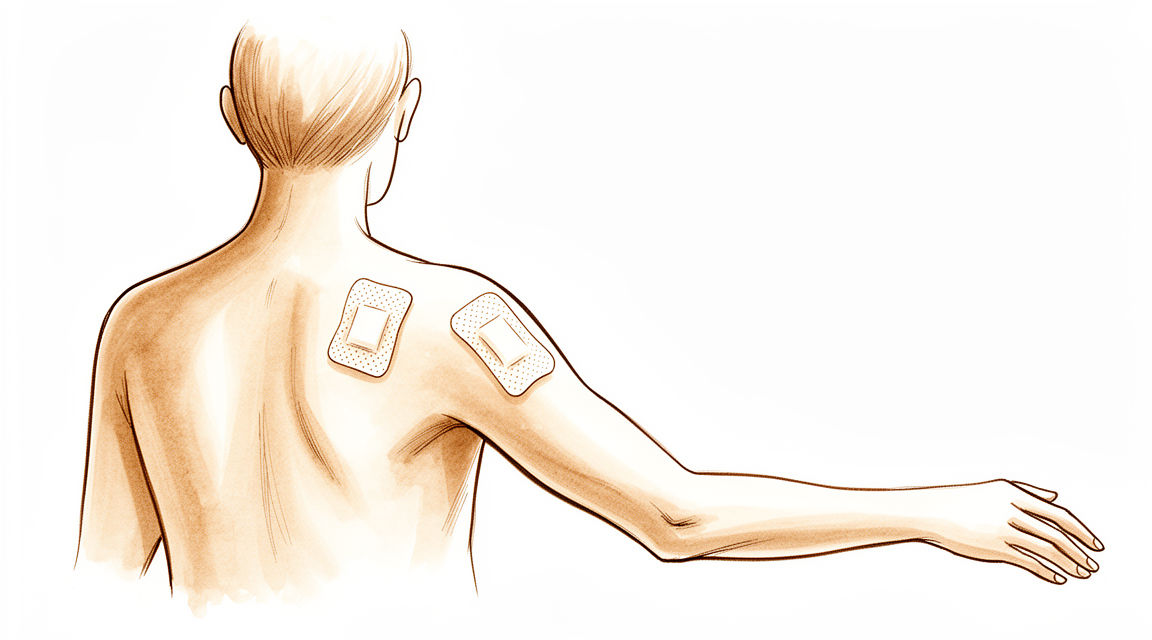
Saklaw ng protocol na ito ang rehabilitasyon pagkatapos ng isang simple o diagnostic shoulder arthroscopy kasama si Dr Kieran Hirpara sa Mater Private Hospital Rockhampton: isang keyhole surgery kung saan ang joint ay sinuri, hinugasan (washed out) o nilinis (debrided), at walang anumang kinumpuni. Dahil walang repair na kailangang protektahan, ito ay isa sa mga pinakamabilis na operasyon sa balikat na maaaring maka-recover: ang layunin ay maagang paggalaw at mabilis na pagbabalik sa normal na pamumuhay. Dalhin ang pahinang ito o ang PDF nito sa iyong unang physiotherapy visit upang manatiling coordinated ang iyong rehabilitasyon.
Ang protocol na ito ay nalalapat kapag ang arthroscopy ay hindi kinasangkutan ng anumang repair: debridement, washout o diagnostic assessment lamang. Kung mayroong kinumpuni, dinkompres (decompressed) o pinatibay (stabilised) noong iyong arthroscopy, sundin ang protocol para sa procedure na iyon sa halip: halimbawa, ang rotator cuff repair protocol kung ang iyong rotator cuff ay kinumpuni. Kung hindi ka sigurado kung ano ang ginawa, suriin ang iyong operation note o magtanong sa rooms bago magpatuloy.
Kung mayroon kang anumang alalahanin tungkol sa iyong sugat pagkatapos ng operasyon, makipag-ugnayan sa rooms. Madalas na nakatutulong ang pagkuha ng larawan ng sugat at pag-email nito para masuri.
Ano ang dapat asahan
Pagkatapos ng isang arthroscopy na walang repair, wala nang anumang bagay sa loob ng balikat na kailangang protektahan, kaya walang mahigpit na paghihigpit sa paggalaw; ang iyong balikat ay igagalaw nang maaga at uunlad base sa iyong komportable, hindi base sa kalendaryo. Ang sling ay ibinibigay para sa komportable lamang: karamihan sa mga tao ay ginagamit ito sa unang isang o dalawang araw at ganap nang tinatanggal sa loob ng unang linggo. Huwag magmaneho sa loob ng hindi bababa sa anim na linggo pagkatapos ng anumang operasyon sa balikat, kahit na mas maaga mong matatanggal ang sling; bibigyan ka ng clearance ng iyong surgeon para magmaneho, karaniwan sa six-week review.
Ang paglalakbay sa isang sulyap:
- Phase I — Maagang paggalaw at pagpapakalma — humigit-kumulang sa unang dalawang linggo
- Phase II — Pagbabalik ng buong paggalaw at pagsisimula ng lakas — linggo 2–6
- Phase III — Pagbabalik sa buong aktibidad — linggo 6 pataas
Karamihan sa mga tao ay nakakabalik sa desk-based na trabaho sa loob ng ilang araw hanggang isang linggo. Ang pagmamaneho ay magsisimula muli mula anim na linggo, kapag nabigyan ka na ng clearance ng iyong surgeon. Ang mas mabigat na manual na trabaho at sports ay karaniwang mas matagal, kadalasan sa pagitan ng anim at labindalawang linggo depende sa hinihingi ng balikat. Ang balikat ay madalas na nananatiling may bahagyang kirot sa loob ng ilang linggo habang kumakalma ang joint; ito ay normal at bumubuti habang bumabalik ang paggalaw at lakas.
Phase I — Maagang paggalaw at pagpapagaling (Linggo 0–2)
Kieran Hirpara 4.0
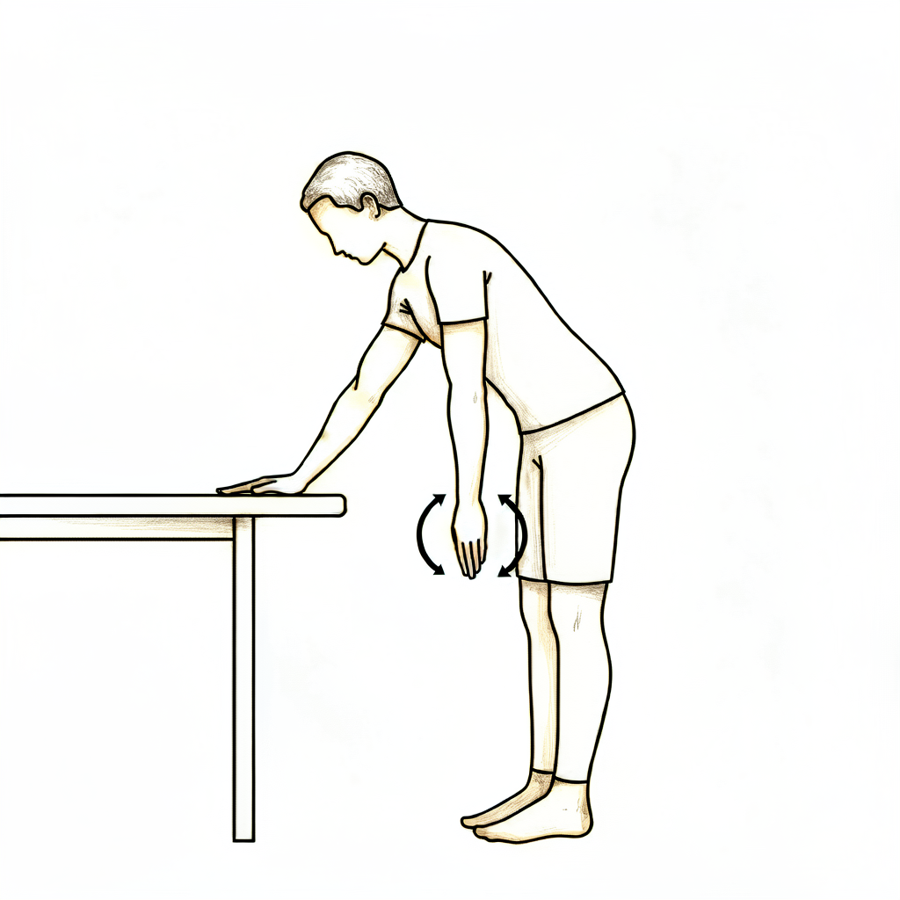
Mga ehersisyong pendulum
Yumuko nang bahagya pasulong, suportahan ang sarili sa isang mesa gamit ang kabilang kamay, at hayaang nakalaylay nang relax ang braso na inoperahan. Gumawa ng maliliit na bilog — clockwise, pagkatapos ay anticlockwise — sa pamamagitan ng dahan-dahang pag-ugoy ng iyong katawan. Manatiling relax ang braso; ang galaw ay nagmumula sa iyong katawan, hindi sa balikat.
Ayon sa gabay ng iyong physiotherapist
Kieran Hirpara 4.0
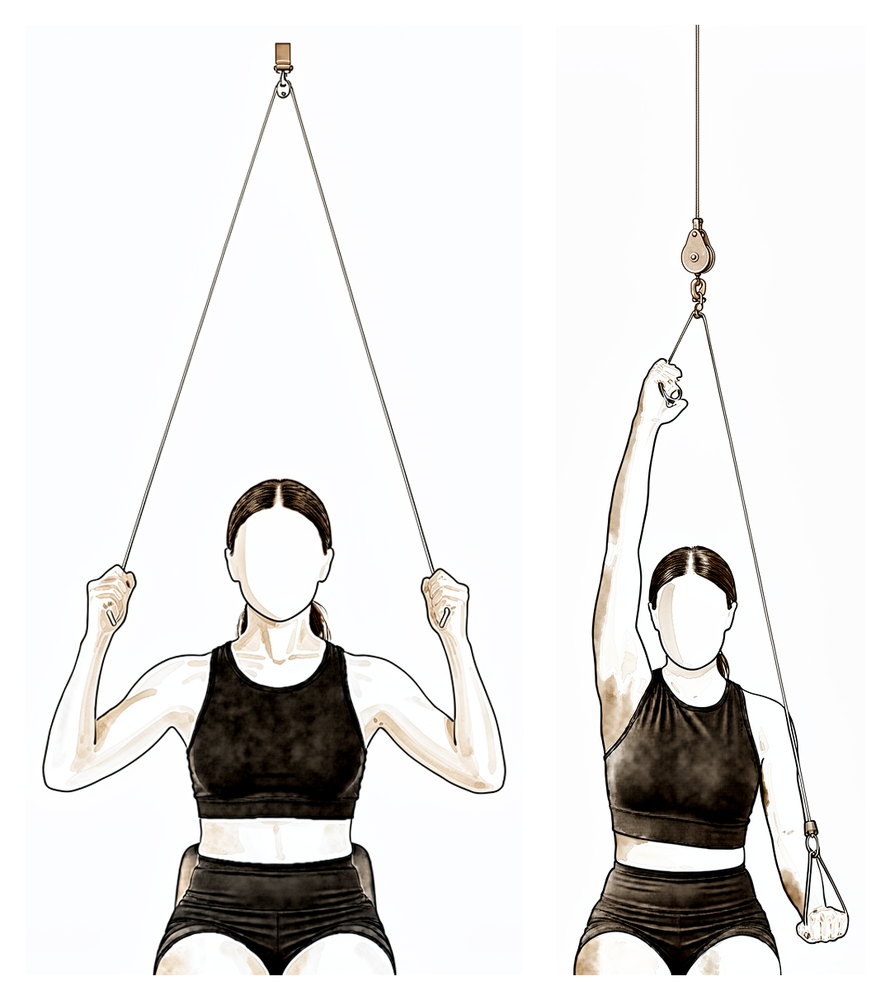
Paggalaw na may tulong ng pulley
Umupo sa ilalim ng isang over-door pulley. Habang nakarelaks ang operadong braso, hilahin pababa gamit ang iyong kabilang kamay upang dahan-dahang maiangat ng lubid ang operadong braso, pagkatapos ay dahan-dahan itong ibaba. Mag-progress base sa komportable — bawasan ang galaw kung may matalas o nananatiling sakit, huwag itong pilitin.
Ayon sa gabay ng iyong physiotherapist
Kieran Hirpara 4.0
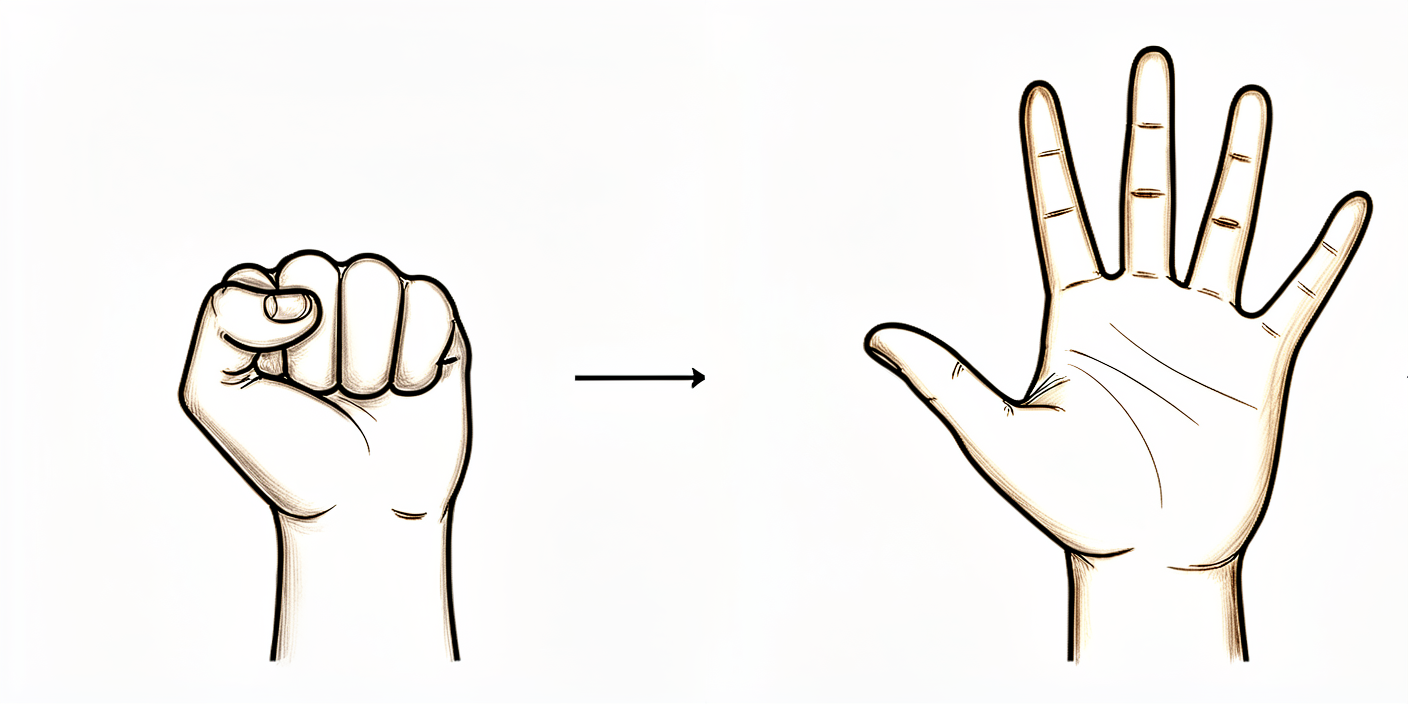
Buksan at isara ang kamay
Gumawa ng mahigpit na kamao o pumiga ng malambot na bola, pagkatapos ay ibuka nang husto ang kamay. Igalaw ang iyong kamay, pulso, at siko nang malaya mula sa simula, at gamitin ang braso para sa mga magagaan na pang-araw-araw na gawain hangga't komportable.
Ayon sa gabay ng iyong physiotherapist
Kieran Hirpara 4.0
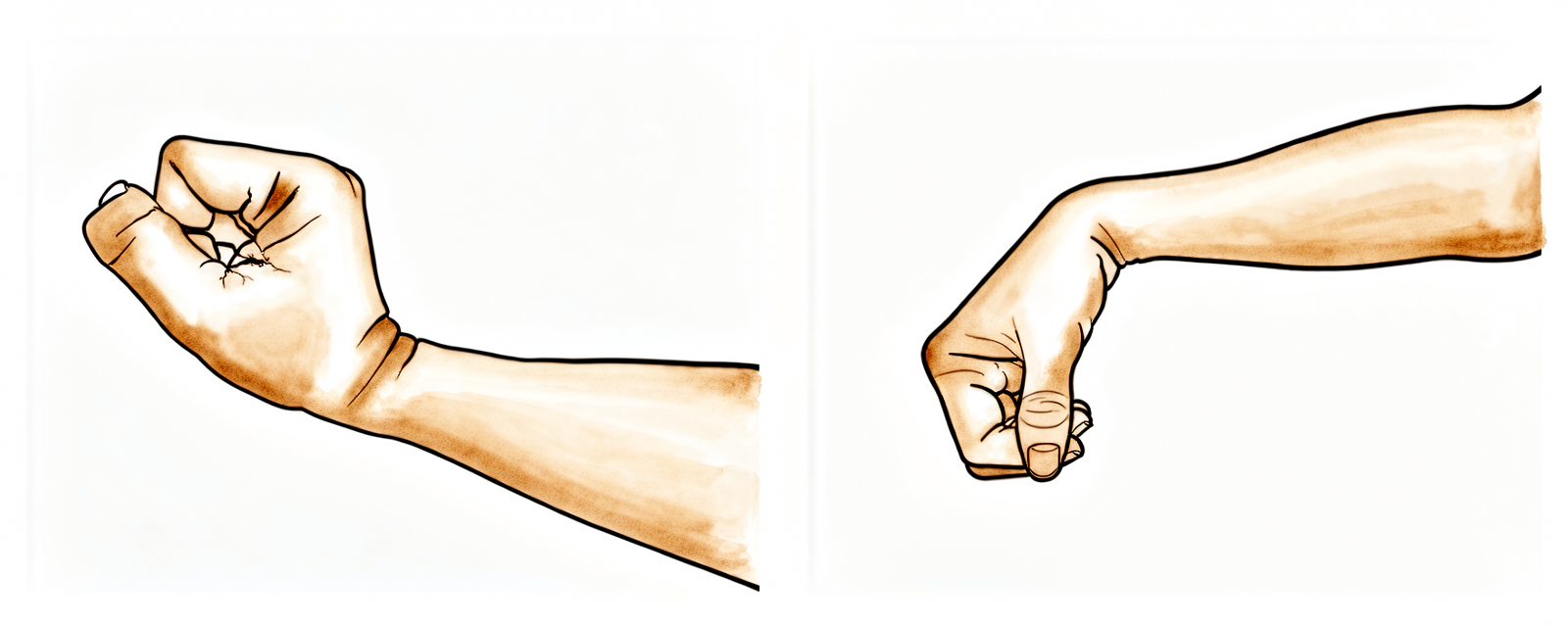
Paggalaw ng pulso
Panatilihing gumagalaw ang iyong pulso sa pamamagitan ng pagbaluktot nito pasulong, pabalik, at sa magkabilang gilid. Galawin nang malaya ang kamay, pulso, at siko mula sa simula upang manatiling gumagana ang buong braso habang nagpapagaling ang balikat.
Ayon sa gabay ng iyong physiotherapist
Kieran Hirpara 4.0
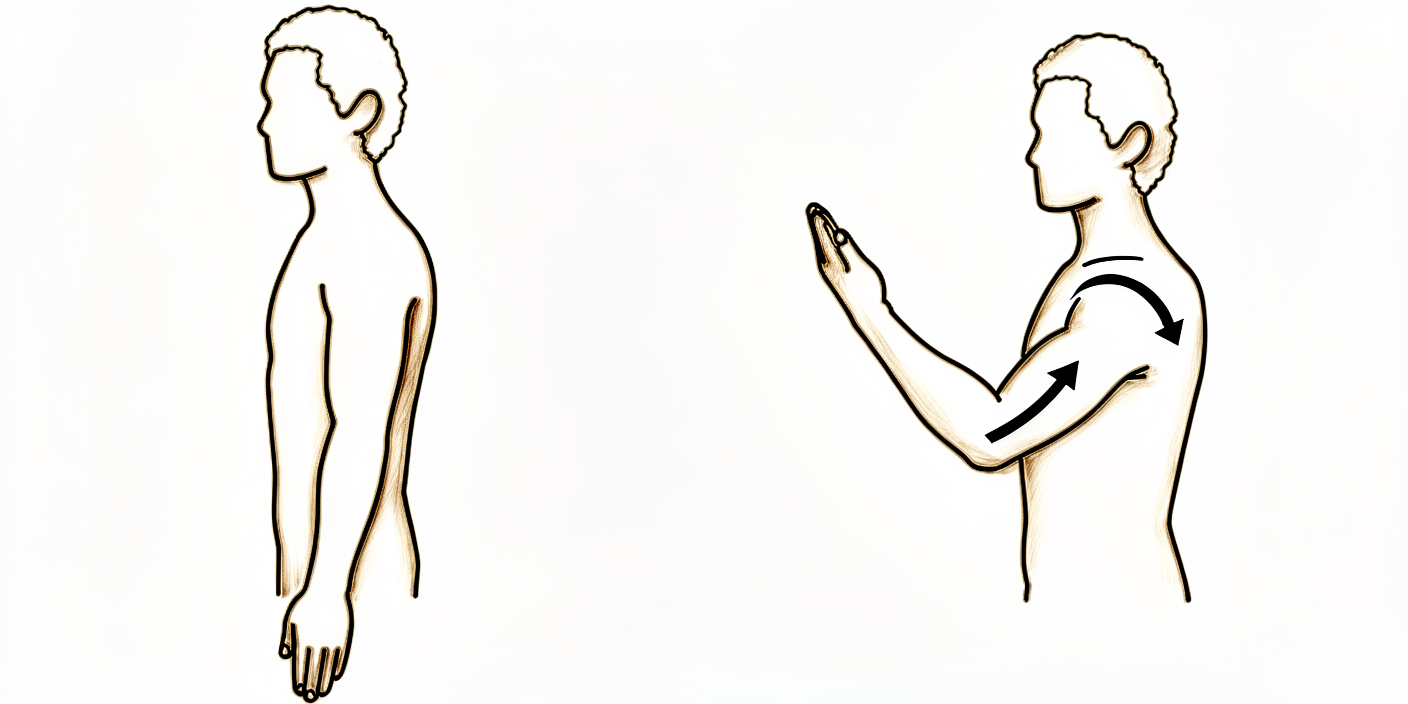
Naititiklop ang siko
Habang nakapahinga ang iyong itaas na braso sa iyong tabi, itiklop ang siko hanggang sa kung saan ito komportableng makakarating, pagkatapos ay ituwid ito nang lubos. Siko lamang ang gumagalaw — panatilihing relax ang balikat.
Ayon sa gabay ng iyong physiotherapist
Kieran Hirpara 4.0
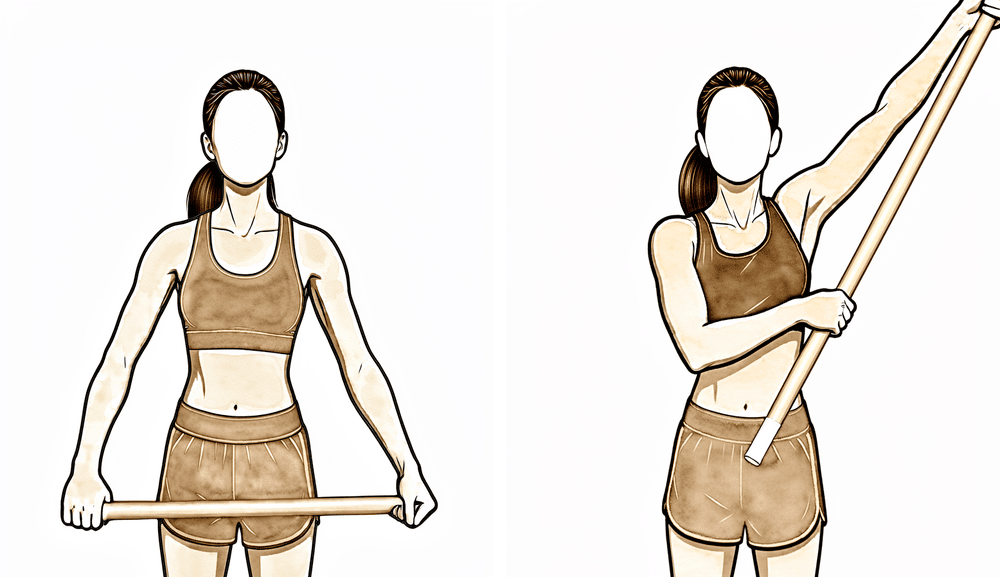
Tinutulungang paggalaw gamit ang stick
Humawak ng isang stick (tungkod o wand) gamit ang dalawang kamay at hayaang gabayan ng iyong mabuting braso ang inoperahang braso palabas sa gilid at pasulong, hanggang sa kung saan ito komportable, pagkatapos ay ibaba ito nang may kontrol. Ang active-assisted movement na ito ay pinapanatiling gumagalaw ang balikat nang maaga habang ito ay nagpapagaling.
Ayon sa gabay ng iyong physiotherapist
Kieran Hirpara 4.0
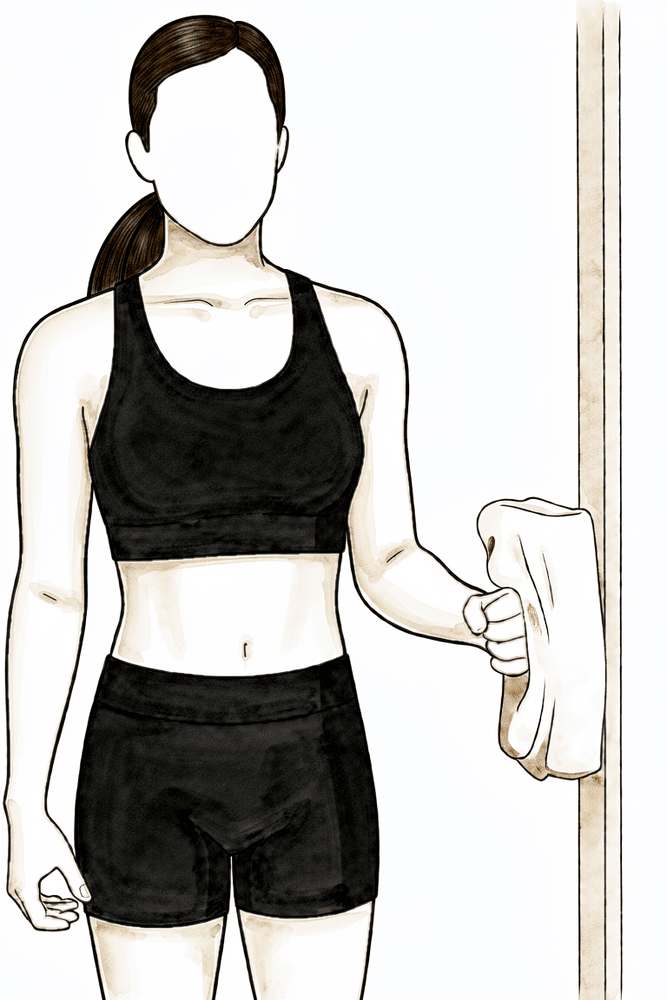
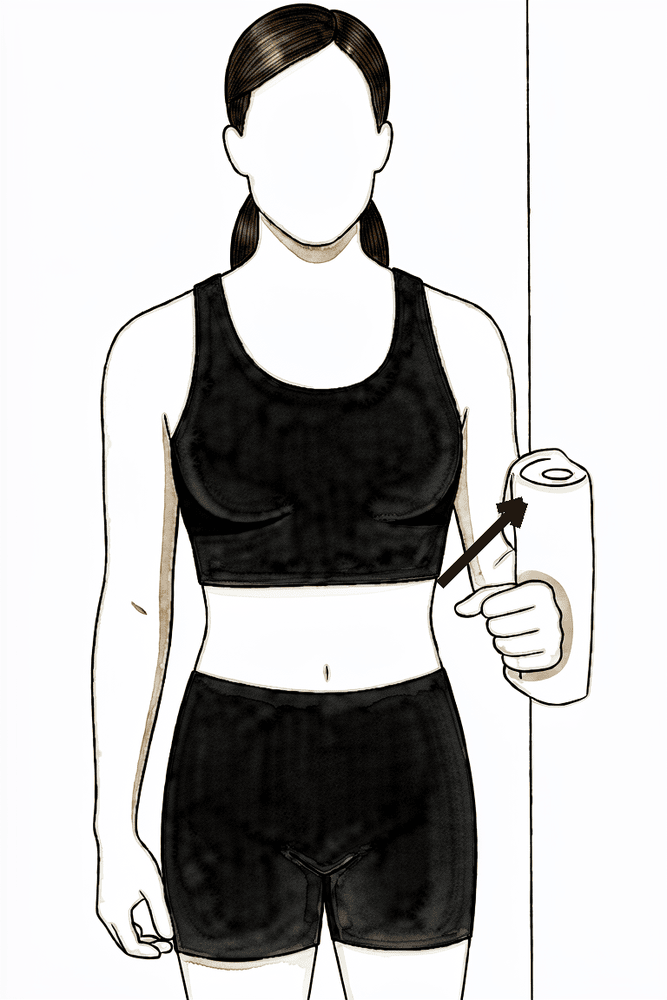
Isometric external rotation
Tumayo nang nakadikit ang iyong siko sa iyong gilid at nakabaluktot sa isang right angle, ang likod ng iyong kamay ay nakasandal sa pader o hamba ng pinto. Dahan-dahang itulak ito palabas nang hindi pinapagalaw ang braso, manatili sa posisyong ito ng ilang segundo, pagkatapos ay i-relax. Dahan-dahang pinapagana nito ang rotator cuff nang walang paggalaw, ayon sa iyong kakayahan at ginhawa.
Ayon sa gabay ng iyong physiotherapist
Kieran Hirpara 4.0
Isometric abduction
Tumayo nang patagilid sa isang pader na ang iyong siko ay nasa iyong gilid at dahan-dahang itulak ang labas ng iyong upper arm sa pader, na tila itinataas ang braso nang patagilid, nang hindi hinahayaang gumalaw ito. Manatili sa posisyong ito ng ilang segundo, pagkatapos ay i-relax. Pinapagana nito ang deltoid nang dahan-dahan nang walang paggalaw, ayon sa kakayahan ng iyong komportable.
Ayon sa gabay ng iyong physiotherapist
Kieran Hirpara 4.0
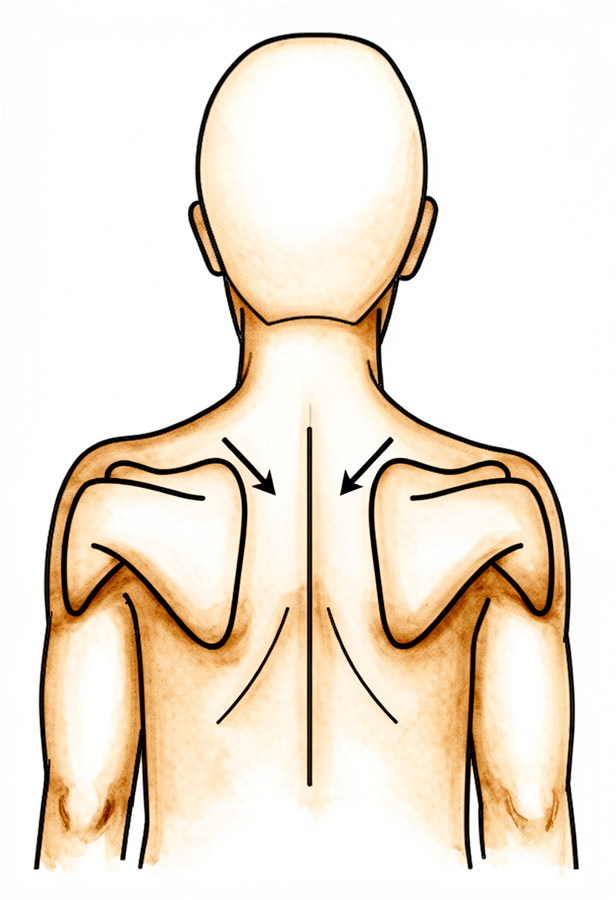
Pag-aayos ng scapula (Scapular setting)
Habang nakaupo o nakatayo nang tuwid, dahan-dahang hilahin ang iyong mga shoulder blade pababa at pabalik nang magkasama nang hindi ginagalaw ang mga braso, panatilihin ito nang ilang segundo, pagkatapos ay i-relax. Panatilihing magkahanay ang iyong mga tainga, balikat, at balakang.
Ayon sa gabay ng iyong physiotherapist
Ang unang dalawang linggo ay para sa pagpapahinga ng balikat habang pinapanatili itong gumagalaw. Gamitin ang sling lamang kung ito ay nakakatulong sa ginhawa (karaniwan sa unang isang o dalawang araw) at huwag itong isuot hangga't maaari; hindi mo kailangang matulog nang nakasuot nito. Galawin nang malaya ang iyong kamay, pulso, at siko mula sa simula, at gamitin ang braso para sa mga magagaan na pang-araw-araw na gawain tulad ng pagkain, paghuhugas, at pagbibihis ayon sa iyong ginhawa. Ang banayad na paggalaw ng balikat ay magsisimula agad: pendulum exercises at assisted movements na magiging active movement habang pinahihintulutan ng balikat. Ang yelo at simpleng pain relief ay nakakatulong upang manatiling komportable ang mga ehersisyo. Ang iyong mga wound dressing ay waterproof: maaari kang maligo mula sa unang araw at hayaang dumaloy ang tubig sa mga ito (huwag ibabad o kuskusin ang area). Tatanggalin ang mga ito mga sampu hanggang labindalawang araw pagkatapos ng operasyon.
Para sa iyong physiotherapist:
Mga Layunin
- Pagpapakalma ng sakit at pamamaga
- Maagang range of motion na magsisimula mula assisted patungong active ayon sa kakayahan
- Pagiging independent sa mga magagaan na activities of daily living
- Pag-alis sa paggamit ng sling sa loob ng mga unang araw
Pamamahala
- Sling para sa ginhawa lamang: hikayatin ang unti-unting pag-alis sa unang mga araw at ganap na pagtigil sa loob ng unang isa hanggang dalawang linggo nang pinakamatagal
- Pendulum exercises; active-assisted range of motion (pulley, cane o wand) na magiging active range of motion sa lahat ng planes ayon sa kakayahan
- Malayang paggalaw ng kamay, pulso, at siko; grip work ayon sa ginhawa
- Scapular setting at postural work
- Banayad na rotator cuff at deltoid isometrics ayon sa ginhawa
- Cryotherapy at analgesia upang suportahan ang exercise program
Mga Pag-iingat
- Bawal magmaneho sa loob ng anim na linggo (nalalapat ito sa anumang operasyon sa balikat)
- Ang paggalaw ay itutuloy base sa ginhawa: ang matalas o nananatiling sakit ay nangangahulugang dapat bawasan ang galaw, hindi pipilitin
- Ang mga dressing ay waterproof (maaaring maligo nang nakasuot ang mga ito); tatanggalin pagkalipas ng humigit-kumulang 10–12 araw. Iulat ang labis na pamumula o discharge
Mga Pamantayan para sa pag-usad (Criteria to progress)
- Wala na sa sling at komportable na sa mga magagaan na pang-araw-araw na gawain
- Sapat na ang paghupa ng sakit upang aktibong magtrabaho sa range of motion
Phase II — Pagbabalik ng buong paggalaw at pagsisimula ng lakas (Linggo 2–6)
Kieran Hirpara 4.0
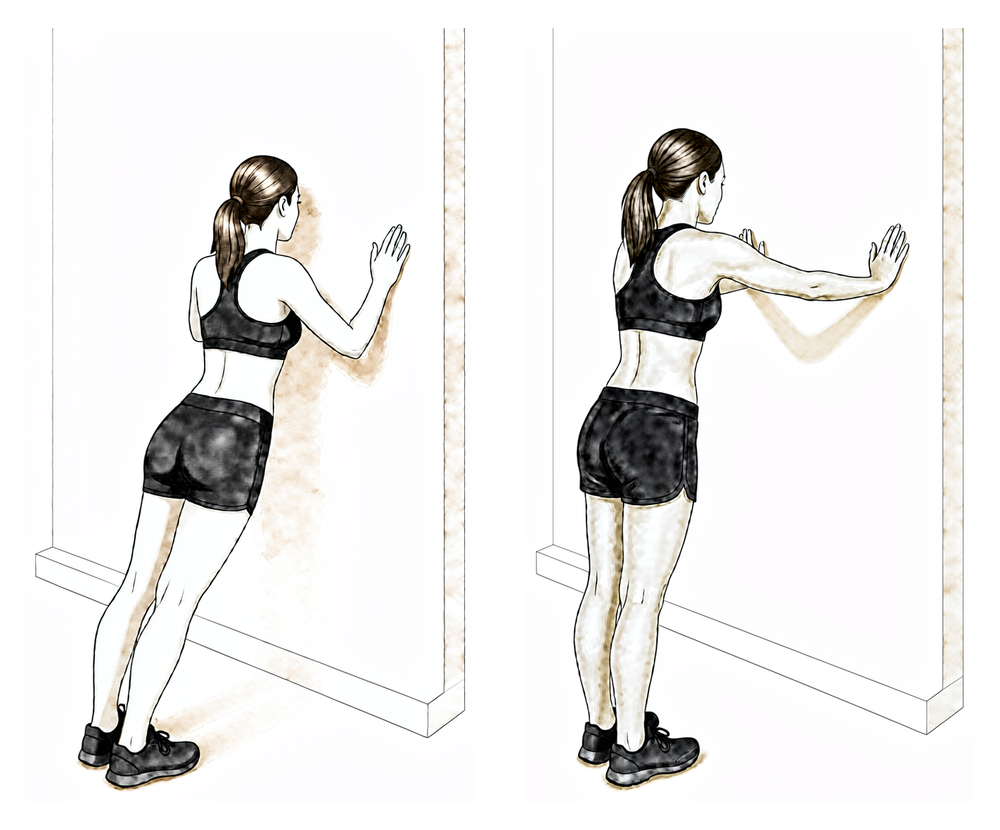
Wall protraction
Tumayo nang nakalapat ang mga kamay sa pader sa taas ng dibdib at nakadiretso ang mga braso. Nang hindi ibinabaluktot ang mga siko, itulak ang pader palayo upang bumukol ang iyong itaas na bahagi ng likod at maghiwalay ang mga shoulder blade, pagkatapos ay ibalik ito nang may kontrol.
Ayon sa gabay ng iyong physiotherapist
Kieran Hirpara 4.0
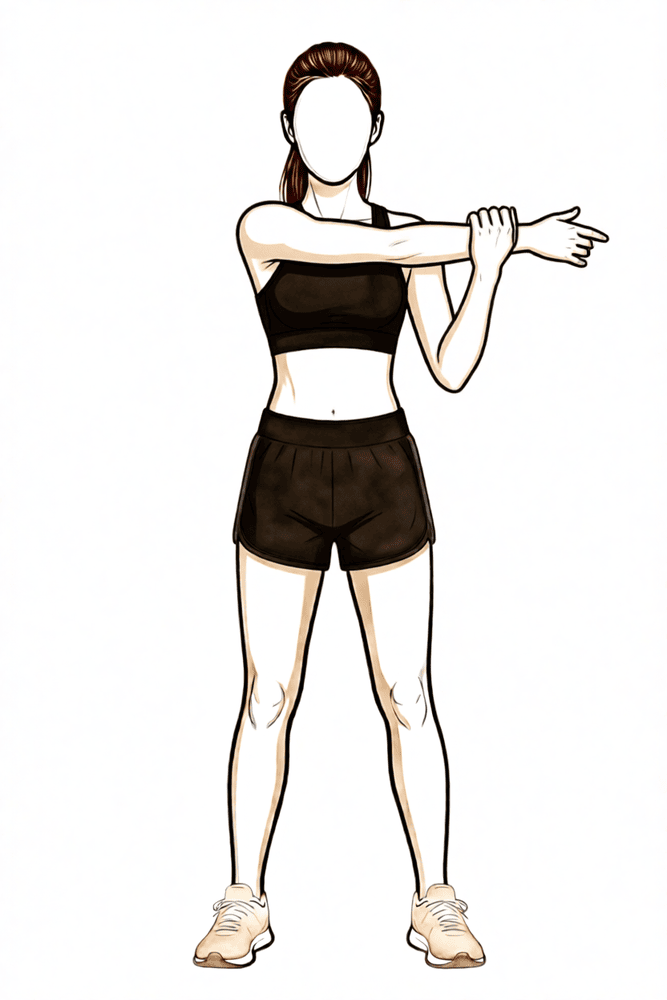
Cross-body stretch
Kung nananatiling naninigas ang likod ng balikat, gamitin ang iyong kabilang kamay upang hilahin ang inooperahang braso patawid sa iyong dibdib hanggang sa makaramdam ka ng stretch sa likod ng balikat. Hawakan nang sandali, pagkatapos ay bitawan. Mag-stretch hanggang sa punto lamang ng katamtaman ngunit matatag na discomfort (firm discomfort) — hindi ito dapat magdulot ng sakit na nananatili.
Ayon sa gabay ng iyong physiotherapist
Kieran Hirpara 4.0
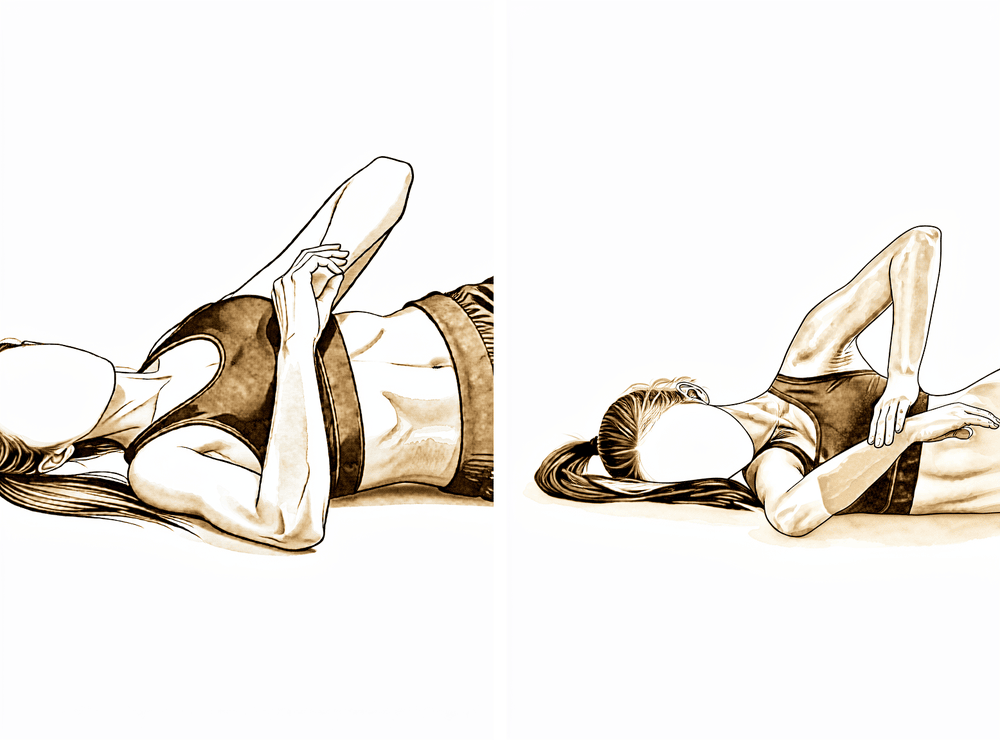
Sleeper stretch
Humiga sa panig na inoperahan na ang braso ay nakaunat sa harap at ang siko ay nakabaluktot. Gamitin ang iyong maayos na kamay upang dahan-dahang itulak ang forearm pababa sa kama hanggang sa makaramdam ng stretch sa malalim na bahagi ng balikat, pagkatapos ay luwagan ito. Binabawasan nito ang anumang natitirang paninigas sa likod ng balikat.
Ayon sa gabay ng iyong physiotherapist
Kieran Hirpara 4.0
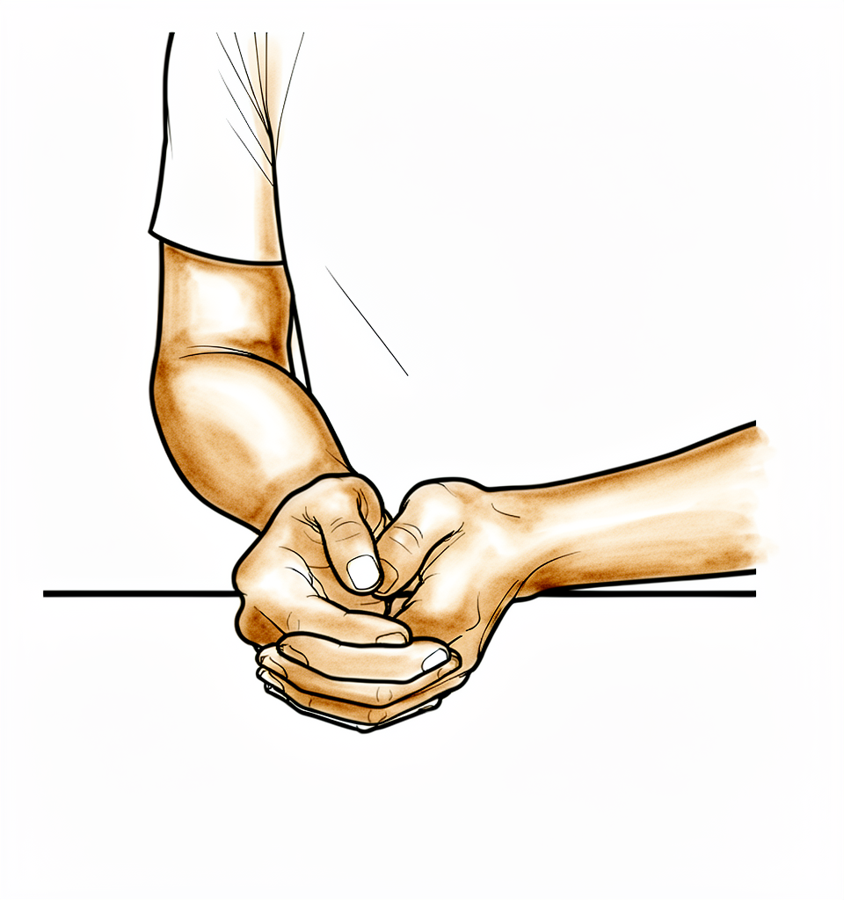
Band external rotation (malapit sa neutral)
Tumayo nang nakadikit ang iyong siko sa iyong tagiliran at nakabaluktot sa isang right angle, habang humahawak ng isang elastic band na naka-angkla sa tapat ng iyong katawan sa taas ng baywang. Panatilihing nakadikit ang siko sa iyong tagiliran, i-rotate ang forearm palabas hanggang sa midline laban sa band, pagkatapos ay dahan-dahang ibalik. Ito ang simula ng pagpapalakas ng rotator cuff habang lumilipat ka mula sa mga isometric hold.
Mababang resistance, ayon sa gabay ng iyong physiotherapist
Kieran Hirpara 4.0
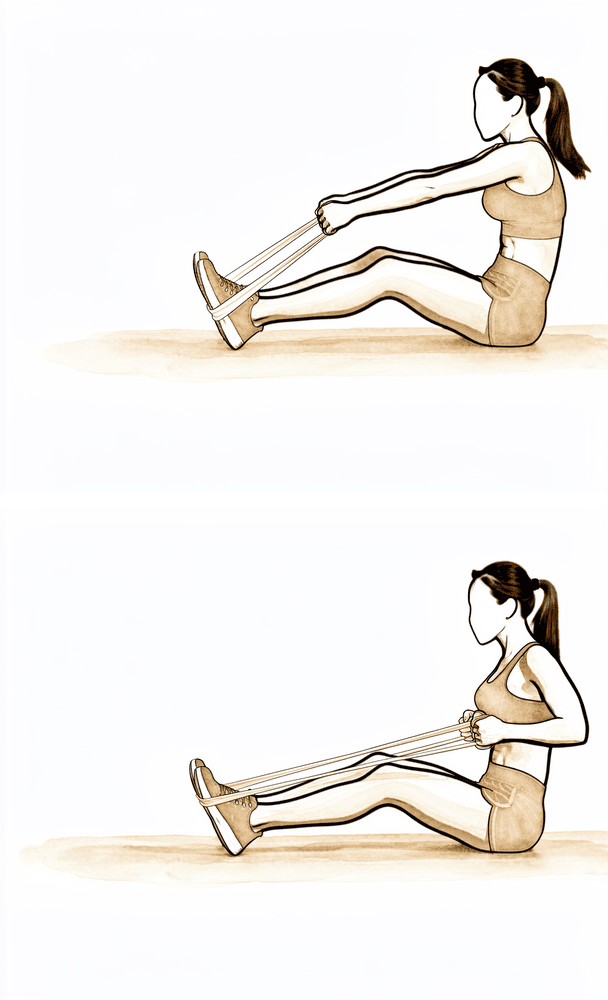
Pag-ipit ng shoulder-blade gamit ang band
Habang hawak ang isang band na naka-angkla sa iyong harapan, hatakin ang iyong mga siko pabalik at pagdikitin ang iyong mga shoulder blade pababa, pagkatapos ay dahan-dahang ibalik. Pinapalakas nito ang mga kalamnan na nagpapatatag sa shoulder blade habang nadaragdagan ang resistance sa phase na ito.
Ayon sa gabay ng iyong physiotherapist
Kieran Hirpara 4.0
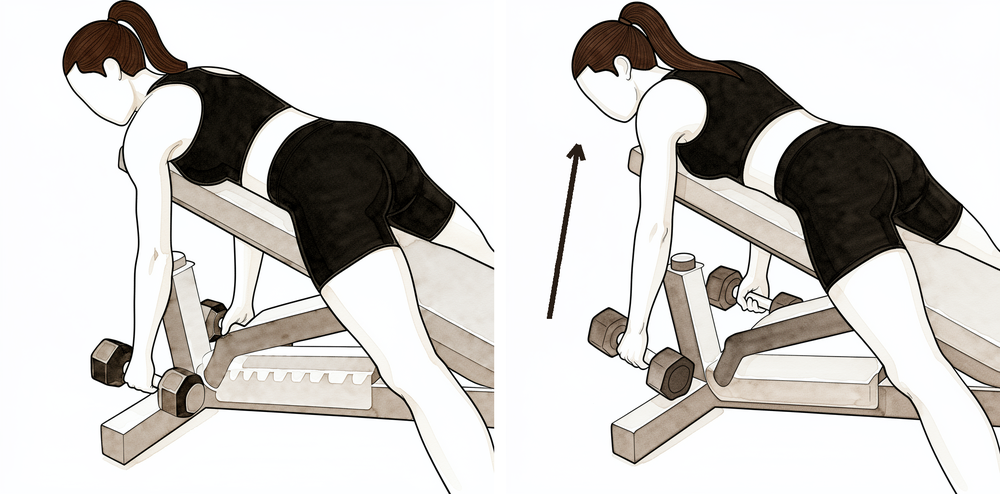
Low row
Humawak ng band na naka-angkla sa harap mo sa taas ng iyong baywang. Panatilihing medyo tuwid ang braso, hilahin ito pabalik at pababa patungo sa iyong balakang, pigain ang shoulder blade pababa at pabalik, pagkatapos ay dahan-dahang ibalik. Binubuo nito ang mga shoulder-blade depressor na sumusuporta sa cuff.
Ayon sa gabay ng iyong physiotherapist
Kieran Hirpara 4.0
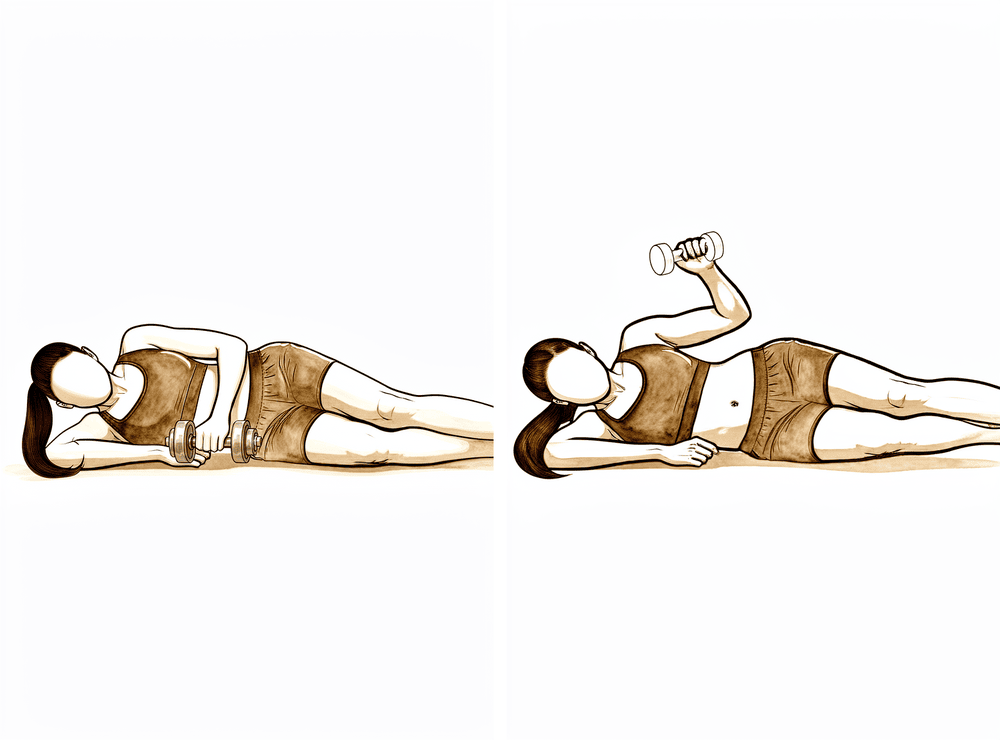
Side-lying external rotation na may weight
Humiga sa gilid na hindi naoperahan na may siko ng itaas na bahagi na nakatiklop sa right angle at nakadikit sa iyong katawan. Habang humahawak ng magaan na pabigat, i-rotate ang forearm pataas patungo sa kisame, pagkatapos ay dahan-dahang ibaba. Ito ay light isotonic cuff work — mababang pabigat at mas mataas na repetitions — mula sa ika-apat na linggo depende sa iyong komportable.
Mababang load, mas mataas na repetitions, ayon sa gabay ng iyong physiotherapist
Kieran Hirpara 4.0
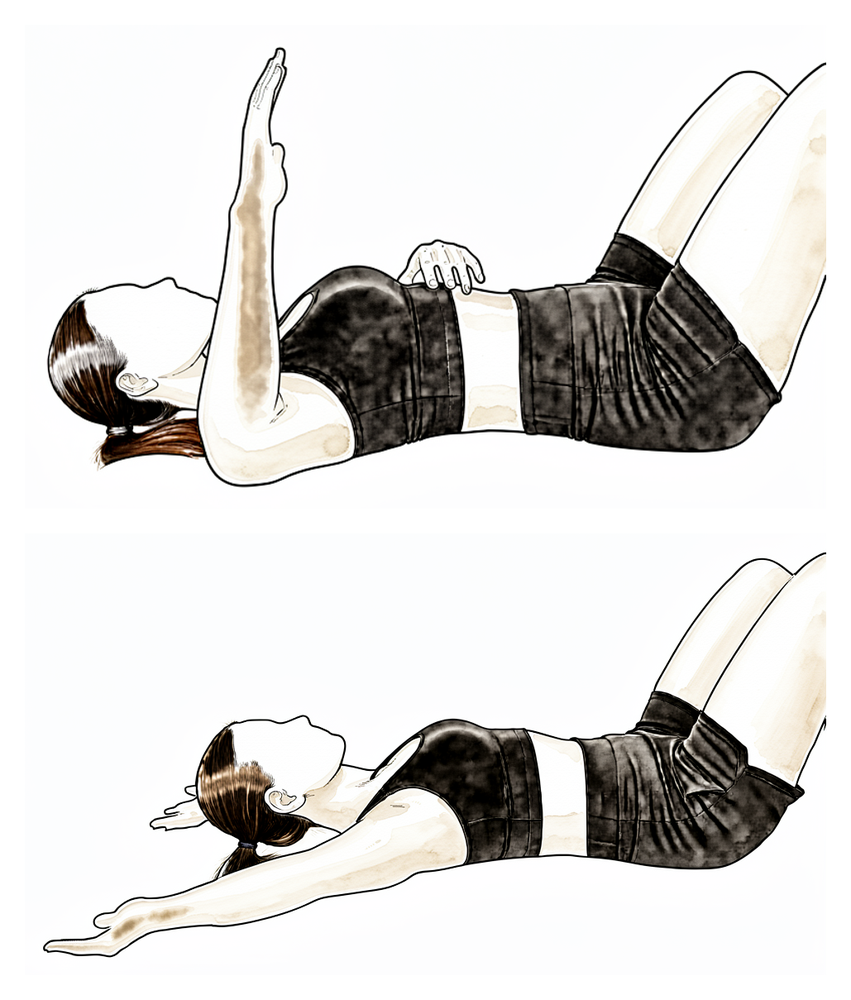
External rotation sa 90/90 (nakahiga)
Humiga nang patihaya na ang braso ay nakalabas sa gilid sa taas ng balikat at ang siko ay nakatiklop sa isang right angle, na nakapatong sa isang unan. Dahan-dahang i-rotate ang forearm pabalik sa direksyon ng ulo hanggang sa kung saan ito komportable, pagkatapos ay ibalik ito nang may kontrol. Ibinabalik nito ang rotation sa nakataas na posisyon.
10 beses, ayon sa gabay ng iyong physiotherapist
Kieran Hirpara 4.0
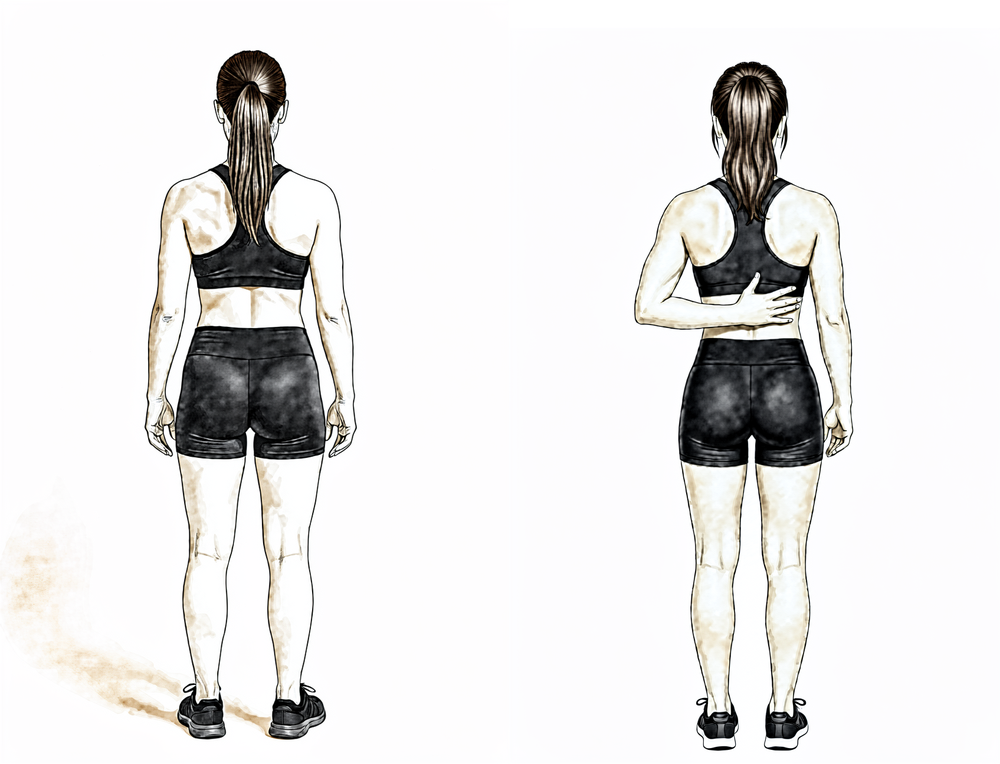
Pag-abot ng kamay sa likod
Habang nakatayo, ilagay ang likod ng iyong inoperahang kamay sa iyong ibabang bahagi ng likod at dahan-dahang i-slide ito pataas sa iyong spine hanggang sa kung saan ito komportable gamit ang sarili mong mga kalamnan, pagkatapos ay ibaba ito. Gumalaw lamang sa loob ng komportableng range at huwag itong pilitin.
Ayon sa gabay ng iyong physiotherapist
Habang kumakalma ang balikat, ang pokus ay lilipat sa pagbawi ng buong paggalaw at pagsisimula ng pagpapalakas. Ang active movement ay isinasulong sa lahat ng direksyon tungo sa full range, at ang resistance work ay nagsisimula nang dahan-dahan, mula sa isometric holds patungo sa mga elastic-band exercise para sa rotator cuff at mga kalamnan ng shoulder blade ayon sa kakayahan. Karamihan sa mga tao ay bumabalik sa desk-based work sa unang isang o dalawang linggo kung hindi pa sila nakakabalik. Ang pagmamaneho ay maghihintay hanggang sa payagan ka ng iyong surgeon sa six-week review. Ang mga mas magagaan na recreational activities ay muling sisimulan sa phase na ito ayon sa gabay ng iyong physiotherapist.
Para sa iyong physiotherapist:
Mga Layunin
- Buo, o halos buong, active range of motion sa lahat ng planes
- Simulan ang graduated strengthening ng rotator cuff at scapular stabilisers
- Pagbabalik sa normal na pang-araw-araw na aktibidad at trabaho (pagmamaneho lamang pagkatapos ng clearance ng surgeon sa six-week review)
Pamamahala
- Isulong ang active range of motion sa lahat ng planes tungo sa buo; ang mga tipikal na interim target ay forward flexion na lampas sa 140–160° at external rotation na lampas sa 40–60°
- Isulong mula sa isometrics patungo sa elastic-band rotator cuff work (internal at external rotation malapit sa neutral), itataas habang kinakaya
- Scapular strengthening: shrugs, retraction, protraction at depression work na isinusulong patungo sa resistance
- Mula sa humigit-kumulang linggo 4, light isotonic strengthening gamit ang mabababang timbang at mas mataas na repetitions ayon sa kakayahan
- Manual therapy at stretching para sa anumang natitirang capsular tightness, kabilang ang posterior capsule stretching kung kinakailangan
Mga Pag-iingat
- Ang strengthening ay dapat manatili sa comfortable range at hindi dapat magdulot ng sakit na nananatili pagkatapos
- Unti-unting buuin ang loaded rotation sa abduction (90/90 positions): ipakilala kapag comfortable na ang neutral rotation work
- Iwasan ang mabibigat na pagbuhat at puwersahang overhead work habang bumabalik ang lakas
Mga Pamantayan para sa pag-usad
- Buo o halos buong active range of motion na may minimal na sakit
- Band at light-weight strengthening na kinakaya nang walang flare-up
Phase III — Pagbabalik sa buong aktibidad (Ika-6 na linggo onwards)
Kieran Hirpara 4.0
Push-up plus
Mula sa posisyon ng push-up — nakasandal sa dingding, nakaluhod, o buo depende sa lakas na kaya — kumpletuhin ang push-up, pagkatapos ay itulak pa nang kaunti upang bumaluktot ang itaas na bahagi ng iyong likod at maghiwalay ang mga shoulder blade, pagkatapos ay bumalik. Ang closed-chain work na ito ay bumubuo ng kontrol at lakas habang bumabalik ka sa full activity.
Ayon sa gabay ng iyong physiotherapist
Ang huling phase ay ang unti-unting pagbabalik sa mas mabigat na pagbubuhat, manwal na trabaho, gym training at sport. Ang kumbensyonal na weight training ay karaniwang maaaring simulan muli mula sa ika-anim na linggo, magsisimula sa magaan at unti-unting magiging progresibo, at ang overhead o contact sport ay karaniwang nagpapatuloy sa pagitan ng anim at labindalawang linggo depende sa sport at kung paano ang performance ng balikat. Ang benchmark para sa pagtatapos ng rehabilitasyon ay isang komportableng balikat na may buong paggalaw at may kumpiyansang lakas; karamihan sa mga tao ay nakakabalik na sa lahat ng gusto nilang gawin sa loob ng humigit-kumulang tatlong buwan, at anumang natitirang pananakit ay patuloy na humuhupa pagkatapos nito.
Para sa iyong physiotherapist:
Mga Layunin
- Buo at walang sakit na range of motion
- Pagpapanumbalik ng lakas, endurance at kumpiyansa para sa trabaho at sport
- Unti-unting pagbabalik sa mabigat na manwal na trabaho, gym training at sport
Pamamahala
- Mag-progress sa kumbensyonal na resistance training mula sa ika-6 na linggo, mag-advance mula sa machine patungo sa free weights ayon sa kontrol na pinahihintulutan
- Eccentric at closed-chain work ayon sa tolerance
- Sport-specific conditioning, kabilang ang isang staged throwing o overhead program kung saan nararapat
- Limitahan ang mabigat na rotator cuff strengthening sa humigit-kumulang tatlong session bawat linggo upang maiwasan ang overload tendinopathy
Mga Pag-iingat
- Ang progression ay nananatiling symptom-guided: ang sakit na lumalala kasabay ng load o nananatili pagkatapos ay nangangahulugang dapat ibaba ang load
- Ang pagbabalik sa contact o overhead sport ay maghihintay para sa buo at walang sakit na range at sapat na lakas
Mga Kraytirya para mag-progress
- Buo at walang sakit na range of motion na may lakas na maihahambing sa kabilang panig para sa nilalayong aktibidad
- Sport- o work-specific tasks na naisagawa nang walang provocation
Pagkatapos ng iyong protocol
Ang mga phase sa itaas ay hango sa mga nailathalang rehabilitation protocol para sa simple at diagnostic shoulder arthroscopy nina Dr Jorge Chahla (Rush University Medical Center), Dr Benedict Nwachukwu (Hospital for Special Surgery), Dr Blake Obrock (orthopaedic sports medicine, Amarillo) at sa patient guide ng Royal National Orthopaedic Hospital para sa diagnostic shoulder arthroscopy. Ang mga range ng linggo ay tipikal at hindi fixed, at ang iyong rehabilitation ay ginagabayan nang indibidwal ng iyong physiotherapist, katuwang ang practice, base sa kung paano nagpapagaling ang iyong balikat. Ang pahinang ito ay kasabay ng pangkalahatang payo sa paggaling ng practice: tingnan ang managing post-operative pain at wound care. Para sa operasyon mismo, tingnan ang shoulder arthroscopy. Ang ebidensya sa likod ng protocol na ito (ang rationale ng early-motion, ang mga placebo-controlled surgical trial, at ang mga nailathalang rehabilitation protocol na pinagbatayan nito) ay nakabuod sa evidence section, na available bilang PDF sa itaas ng pahinang ito.
Evidence & references
This is the clinical evidence summary written for health professionals. It is technical, and it lists the research this page was built from. You do not need to read it to understand your treatment or to make a decision about it.
Shoulder Arthroscopy (Diagnostic / Debridement / Washout) — Post-operative Rehabilitation
Topic scope: Post-operative rehabilitation after a generic keyhole shoulder arthroscopy in which nothing was repaired — diagnostic assessment, washout (lavage), debridement of degenerate tissue, removal of loose bodies, and isolated subacromial decompression or distal clavicle excision. Specific repair or reconstruction procedures have their own protocols that take priority — rotator-cuff repair, labral/instability stabilisation (anterior-Bankart, posterior-stabilisation, Latarjet), capsular release, biceps tenodesis and AC-joint stabilisation each convert to a slower, construct-protecting pathway. This page is the default keyhole pathway used only when the operation note confirms no repair was performed.
Defining principle of the rehab here: when nothing is repaired there is no construct to protect, so the rehab is an early-motion pathway — a sling for comfort only (days, not weeks), unrestricted use below shoulder height from day one, motion progressed on comfort rather than the calendar, and strengthening as soon as range and pain allow. The single branch point is whether anything was actually repaired or stabilised; if it was, recovery converts to that procedure's protected protocol. Unlike a cuff repair or a labral repair, there is no healing tissue that early movement can disrupt, so the usual risks of early motion (re-tear, construct failure) do not apply — the main thing early motion prevents here is post-operative stiffness.
The operation and why the rehab is fast
A keyhole (arthroscopic) shoulder operation in this scope involves looking inside the joint and subacromial space through small portals and doing one or more of: confirming a diagnosis, washing out the joint, trimming (debriding) frayed labrum, degenerate cuff or inflamed bursa, removing loose bodies, or shaving bone in a subacromial decompression or distal clavicle excision. None of these creates a repair that must heal under protection. That is the central fact that separates this pathway from cuff repair, stabilisation and the other audited protocols: the tissue is either removed or simply inspected, so the post-operative soreness — not a healing construct — is what paces recovery.
Because of this, recovery is among the quickest of any shoulder operation. Most people are back to desk-based work within days to a week, out of the sling within the first week, driving within one to three weeks once the sling is off and they can control the car confidently, and back to heavier manual work and sport somewhere between six and twelve weeks depending on the demands placed on the shoulder.
Evidence by theme
1. Early motion is the goal — there is no construct to protect
The case for early movement here is largely a mechanistic one rather than one settled by a dedicated trial: with no repair to disrupt, the only thing prolonged immobilisation achieves is avoidable stiffness, discomfort and delayed return to activity. The closest high-quality evidence comes by analogy from the cuff-repair literature, where — even with a real construct to protect — randomised trials and meta-analyses show early controlled motion does not increase re-tear and tends to reduce stiffness (number-needed-to-harm for re-tear in the order of several hundred). If early motion is safe when a repair is present, it is plainly safe when there is nothing to protect. Mechanistic + analogous moderate evidence; no debridement-specific RCT.
2. The procedures themselves: a candid note on efficacy
Two landmark placebo-controlled surgical trials bear directly on the commonest reason a no-repair arthroscopy is done — subacromial pain:
- FIMPACT (BMJ 2018) — a double-blind trial of 210 patients randomised to arthroscopic subacromial decompression, diagnostic arthroscopy (placebo surgery), or exercise therapy. At 24 months decompression gave no benefit over diagnostic arthroscopy; both surgical arms improved, but no more than each other. Strong (placebo-controlled RCT).
- CSAW (Lancet 2018) — a three-arm placebo-controlled UK trial reaching the same conclusion: decompression was no better than investigational (diagnostic) arthroscopy, and the small edge of either over no-treatment was not clinically important. Strong (placebo-controlled RCT).
The honest reading is that for subacromial pain the surgical element adds little over diagnostic arthroscopy or structured exercise — which reinforces why, when this operation is done, the rehabilitation (early motion, restoring strength and confidence) carries much of the recovery. A longer-term single RCT (Magnussen-class, 10-year follow-up, in the corpus) did favour decompression over therapy alone, so practice remains individualised — but the placebo-controlled data are the higher tier.
3. Debridement of degenerate tissue — limited, old evidence
Arthroscopic debridement of irreparable degenerative cuff lesions (Burkhart, J Bone Joint Surg 1995, in the corpus) can relieve pain and restore functional "force-couple" mechanics in selected patients, but the evidence base is small, old and uncontrolled. Debridement and washout are best understood as symptom-directed measures, not structural repairs — which again places the weight of recovery on rehabilitation rather than on a healing construct. Weak (historical case series).
4. The phased protocol is consensus, drawn from published surgeon protocols
The phase structure below is expert/consensus, compiled from published patient-guidance protocols for general/diagnostic shoulder arthroscopy and debridement (Chahla – Rush; Nwachukwu – HSS; Obrock; Royal National Orthopaedic Hospital). There is no rehabilitation RCT defining the optimal regimen for a no-repair arthroscopy; the week ranges are typical, not trial-derived. Weak/consensus.
Phased post-op timeline (no repair performed)
| Phase | Window | Sling | ROM / use | Strengthening | Notes |
|---|---|---|---|---|---|
| I — Early movement & settling | Week 0–2 | Comfort only, days (rarely > 1–2 wk), off ASAP; no sleeping in it | Free hand/wrist/elbow + light ADLs from day 1; pendulums and assisted ROM progressing to active ROM as comfort allows | Scapular setting; gentle cuff/deltoid isometrics as comfort allows | Settle the post-op flare. No driving while in the sling. Dressings off ~10–12 days |
| II — Restore movement, start strength | Week 2–6 | Off | Progress active ROM in all planes toward full (interim targets ~140–160° flexion, 40–60° ER) | Isometric → elastic-band cuff + scapular work; light isotonic from ~wk 4 | Desk work + driving once sling off, pain settled, confident to control the car (typically wk 1–3) |
| III — Return to full activity | Week 6 onward | Off | Maintain full, pain-free ROM | Conventional resistance training from ~wk 6; eccentric/closed-chain; sport-specific conditioning. Cap heavy cuff loading at ~3×/week | Heavier manual work & sport return ~6–12 wk by demand; most back to everything by ~3 months |
Branch point — if anything was repaired or stabilised: recovery converts to that procedure's protected protocol (e.g. rotator-cuff repair — sling ~6 weeks, restricted ROM, deferred strengthening, ~5 months total; or the relevant stabilisation/capsular-release pathway). The operation note and the rooms confirm which pathway applies.
Key controversies / evidence quality
- Does the surgery help at all (for subacromial pain)? Two placebo-controlled RCTs (FIMPACT, CSAW) found decompression no better than diagnostic arthroscopy, and arthroscopy little better than exercise. This is the strongest evidence in the topic — and it argues that, where a no-repair arthroscopy is performed, good rehabilitation is doing much of the work. Strong.
- Debridement evidence is thin and dated. The supportive data (e.g. Burkhart 1995) are small, uncontrolled case series; debridement is symptom-directed, not curative. Weak.
- The rehab protocol itself is consensus, not trial-derived. No RCT defines the optimal regimen after a no-repair arthroscopy; phase timings are typical surgeon-protocol values, and recovery is individualised by the treating physiotherapist. Weak/consensus.
- Safety of early motion is inferred, not directly tested here. It rests on a sound mechanism (nothing to protect) reinforced by analogy to the cuff-repair early-motion trials, rather than a debridement-specific RCT. Mechanistic + analogous moderate.
The evidence base for this generic pathway is genuinely limited. The high-quality data (placebo-controlled trials) speak to whether the operation helps, not to how best to rehabilitate it; the rehabilitation guidance is consensus-level. This is stated plainly because it is the honest position.
Evidence-strength flags (summary)
- STRONG (placebo-controlled RCT): subacromial decompression gives no benefit over diagnostic arthroscopy — FIMPACT (BMJ 2018), CSAW (Lancet 2018).
- MODERATE (analogous RCT/MA): safety of early controlled motion (extrapolated from cuff-repair early-motion trials — early motion does not raise re-tear and reduces stiffness even when a construct is present).
- WEAK (historical case series): arthroscopic debridement of irreparable degenerative cuff lesions (Burkhart 1995).
- WEAK / CONSENSUS: the post-operative rehabilitation protocol itself (published surgeon patient-guidance documents; no defining rehab RCT).
- SAFETY NOTE (rare complication): glenohumeral chondrolysis has been linked to post-arthroscopic intra-articular continuous bupivacaine infusion and to thermal capsulorrhaphy — a reason such adjuncts are avoided, not a reflection on standard debridement.
CITATIONS
RAG corpus (180,000+ Orthopaedic articles)
- Burkhart SS. Débridement of degenerative, irreparable lesions of the rotator cuff. J Bone Joint Surg Am. 1995. DOI: 10.2106/00004623-199506000-00006
- Magnussen R, et al. Subacromial decompression yields a better clinical outcome than therapy alone: a prospective randomized study with minimum 10-year follow-up. Am J Sports Med. 2018. DOI: 10.1177/0363546518755759
- Bailie DS, Ellenbecker TS. Severe chondrolysis after shoulder arthroscopy associated with continuous bupivacaine infusion. Arthroscopy. 2009. DOI: 10.1016/j.arthro.2009.08.024
- (The corpus is thin on no-repair / diagnostic-arthroscopy rehabilitation specifically; the higher-tier evidence below comes from the placebo-controlled surgical trials and published surgeon protocols.)
Literature (URLs)
- FIMPACT — Paavola M, et al. Subacromial decompression versus diagnostic arthroscopy for shoulder impingement: randomised, placebo surgery controlled clinical trial. BMJ. 2018. https://pmc.ncbi.nlm.nih.gov/articles/PMC6052435/
- CSAW — Beard DJ, et al. Arthroscopic subacromial decompression for subacromial shoulder pain: a multicentre, pragmatic, placebo-controlled, three-group, randomised surgical trial. Lancet. 2018. https://www.thelancet.com/journals/lancet/article/PIIS0140-6736(17)32457-1/fulltext
Published rehab protocols (patient-guidance — basis for the phase structure)
- Chahla J. Shoulder Arthroscopy Debridement — Rehab Protocol. Rush University Medical Center. https://www.jorgechahlamd.com/wp-content/uploads/2021/08/Shoulder-Arthroscopy-Debridement.pdf
- Nwachukwu BU. Post-Operative Shoulder Arthroscopy Debridement Rehab Protocol. Hospital for Special Surgery. https://manhattansportsdoc.com/post-operative-shoulder-arthroscopy-debridement-rehab-protocol/
- Obrock B. Post-operative Rehabilitation Protocol — General Shoulder Arthroscopy (Debridement, Subacromial Decompression, and/or Distal Clavicle Resection). https://www.drblakeobrock.com/pdf/obrock-shoulder-arthroscopy-general.pdf
- Royal National Orthopaedic Hospital. A Patient's Guide to Diagnostic Shoulder Arthroscopy. https://www.rnoh.nhs.uk/patients-and-visitors/patient-information-guides/diagnostic-shoulder-arthroscopy-patients-guide