Patients › Rehabilitation
DRUJ Hemiresection Arthroplasty
Isang plano ng paggaling pagkatapos ng hemiresection-interposition arthroplasty ng distal radioulnar joint, kung saan ang gasgas na bahagi ng ulnar head ay bahagyang tinatanggal upang maibalik ang rotation ng forearm na walang sakit; pagkatapos ng maikling panahon ng proteksyon, ang maagang rotation ng forearm (pagpihit ng palad pataas at pababa) ang prayoridad, habang ang mas mabigat na loading ay unti-unting idinaragdag.
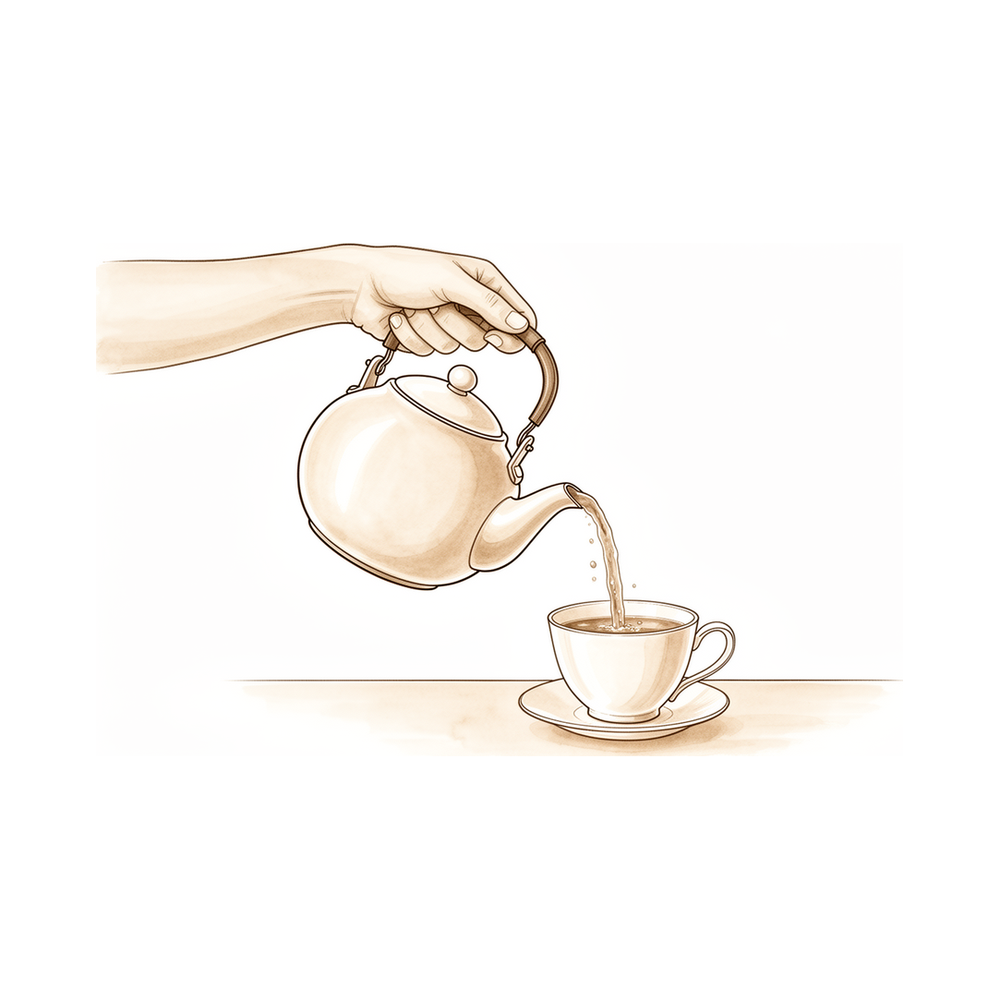
Ang protocol na ito ay nagsisilbing gabay sa iyong paggaling pagkatapos ng hemiresection-interposition arthroplasty ng distal radioulnar joint (DRUJ), isang operasyon na muling hinuhubog ang gasgas na dulo ng forearm upang maibalik ang komportable at walang sakit na pag-ikot ng forearm, kasama si Dr Kieran Hirpara sa Mater Private Hospital Rockhampton. Nagsisimula ito sa iyong home exercise program, na sinusundan ng structured clinical protocol na isinulat para sa iyong hand therapist; dalhin ang pahinang ito o ang PDF nito sa iyong unang therapy visit upang manatiling coordinated ang iyong rehabilitasyon. Maaaring i-adjust ng iyong therapist ang plano depende sa pag-unlad ng iyong paggaling.
Kung mayroon kang anumang alalahanin tungkol sa iyong sugat pagkatapos ng operasyon, makipag-ugnayan sa mga rooms. Madalas na nakatutulong ang pagkuha ng larawan ng sugat at pag-email nito para masuri.
Ano ang dapat asahan
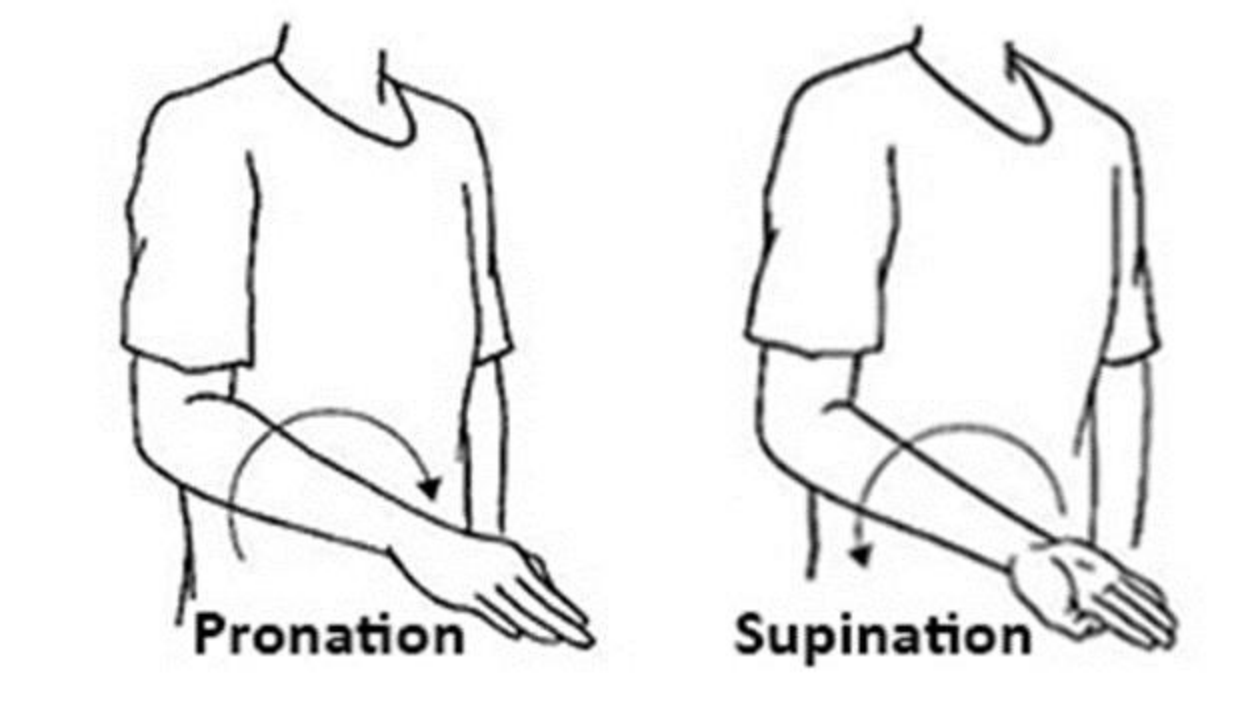
Ang distal radioulnar joint (DRUJ) ay ang maliit na kasukasuan malapit sa iyong pulso sa panig ng kalingkingan kung saan nagtatagpo ang dalawang buto ng forearm (ang radius at ang ulna). Ito ang kasukasuan na nagpapahintulot sa iyong iikot ang iyong forearm, palad na nakaharap sa itaas (supination) at palad na nakaharap sa ibaba (pronation). Kapag ang kasukasuang ito ay napudpod at nagkaroon ng arthritis, nagiging masakit ang pag-ikot ng forearm.
Sa isang hemiresection arthroplasty, ang pudpod at arthritic na bahagi lamang ng ulo ng ulna ang kinakaltas (isang bahagyang pagtanggal: ang "hemi" ay nangangahulugang kalahati), at isang maliit na cushion ng iyong sariling soft tissue ang isinisingit sa puwang upang maiwasan ang pagkikiskisan ng mga surface. Pinapanatili ng operasyong ito ang mga pangunahing istrukturang nagpapatatag, kabilang ang TFCC (ang cartilage at ligament hammock na sumusuporta sa pulso sa panig na iyon), ang ulnar styloid, at ang mga soft-tissue attachment, upang manatiling suportado ang dulo ng ulna. Ito ang nagpapaiba rito sa kumpletong pagtanggal ng ulnar head (isang Darrach procedure).
Dahil ang mga joint surface ay binabago ang hugis sa halip na kumpunihin o i-reconstruct, walang tendon o ligament na kailangang gumaling sa ilalim ng proteksyon sa loob ng maraming buwan. Ang layunin ng operasyong ito ay pain-free forearm rotation, at ang pinakamahalagang bahagi ng iyong rehabilitasyon ay ang maagang pagpapagalaw ng rotation na iyon. Pagkatapos ng maikling panahon ng proteksyon sa isang splint upang hayaang kumalma ang mga soft tissue, ang pagbabalik ng pag-ikot ng forearm (palad na nakaharap sa itaas at palad na nakaharap sa ibaba) ang nagiging pangunahing pokus ng iyong recovery. Ang lakas at mas mabigat na loading ay unti-unting idinaragdag pagkatapos nito.
Mga pag-iingat at limitasyon
- Para sa unang dalawa hanggang tatlong linggo, isuot ang iyong splint ayon sa itinuro; dahan-dahan nitong nililimitahan ang pag-ikot ng forearm habang nananatili ang interposition tissue. Panatilihing gumagalaw ang iyong mga daliri, at (kapag pinayagan na) ang iyong pulso, sa lahat ng oras.
- Kapag pinayagan na na tanggalin ang splint, gawing prayoridad ang pag-ikot ng forearm, panatilihin itong walang sakit at walang load. Ang maagang pag-ikot ay dapat gawin nang walang hawak, hindi laban sa bigat.
- HUWAG lagyan ng load ang forearm sa pag-ikot nang maaga: bawal ang pagpihit ng mga nakasarang garapon, pagpiga ng mga tela, paggamit ng screwdriver, o pagdadala ng mabibigat na bag sa panig na iyon hanggang sa mapayagan na ang strengthening (karaniwan ay sa loob ng anim hanggang walong linggo).
- Maging alerto sa sakit o pakiramdam ng instability sa panig ng kalingkingan ng pulso kapag ikaw ay tumutulak o naglalagay ng load sa forearm, dahil ito ang bahaging ginawan ng operasyon. Ipaalam ito sa iyong hand therapist; huwag itong pilitin.
- Panatilihing malayang gumagalaw ang iyong mga daliri, hinlalaki, siko at balikat mula sa simula, at gamitin ang kamay para sa mga magagaan na pang-araw-araw na gawain sa loob ng iyong comfort level, basta't hindi ito kinapapalooban ng pilit o may load na pagpihit.
Para sa pamamahala ng sugat, pamamaga at peklat, tingnan ang gabay ng practice sa wound care.
Iyong mga ehersisyo
Kieran Hirpara 4.0
Rotasyon ng forearm (palad paitaas / palad paibaba)
Ito ang headline exercise — ito ang paggalaw na layuning ibalik ng operasyon. Habang ang iyong siko ay nakadikit sa iyong gilid at nakabaluktot sa isang right angle (upang hindi makatulong ang iyong balikat sa paggalaw), dahan-dahang itagilid ang iyong palad paitaas patungo sa kisame, pagkatapos ay dahan-dahang ibaba patungo sa sahig. Gumalaw lamang hanggang sa kung ano ang komportable. Simulan ito kapag pinayagan ka na ni Dr Hirpara at ng iyong hand therapist na tanggalin ang splint para sa mga ehersisyo — karaniwan ay sa humigit-kumulang dalawa hanggang tatlong linggo — at gawin itong iyong pangunahing pokus mula noon.
10 beses sa bawat direksyon, 3-4 beses sa isang araw, pain-free range
Kieran Hirpara 4.0
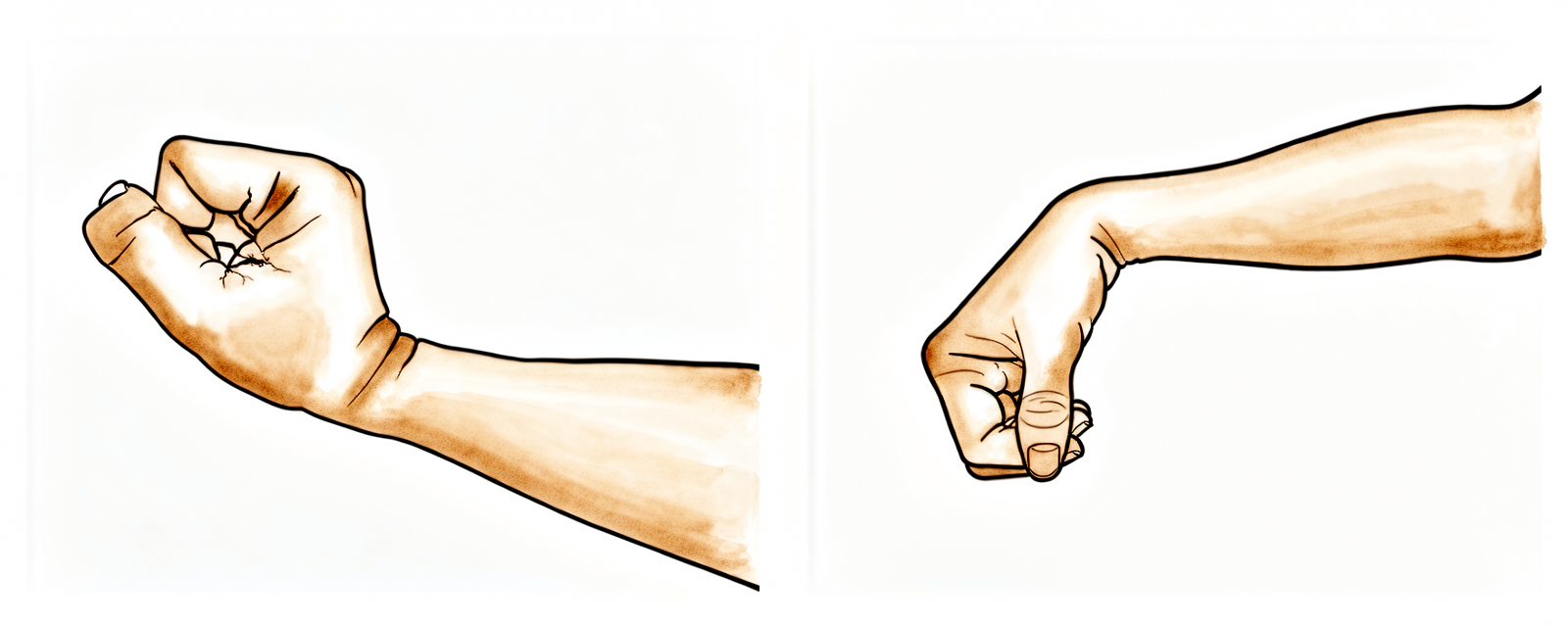
Paggalaw ng pulso (pagbaluktot at pagtuwid)
Dahan-dahang itiklop ang iyong pulso pasulong (palad papunta sa forearm) at pabalik (likod ng kamay papunta sa forearm), panatilihing mabagal ang paggalaw at sa loob ng iyong komportableng limitasyon. Pinipigilan nito ang paninigas ng pulso habang naghihilom ang distal ulna. Panatilihin itong dahan-dahan sa simula at huwag pilitin ang dulo ng range ng paggalaw.
10 beses sa bawat direksyon, 2-3 beses sa isang araw
Kieran Hirpara 4.0
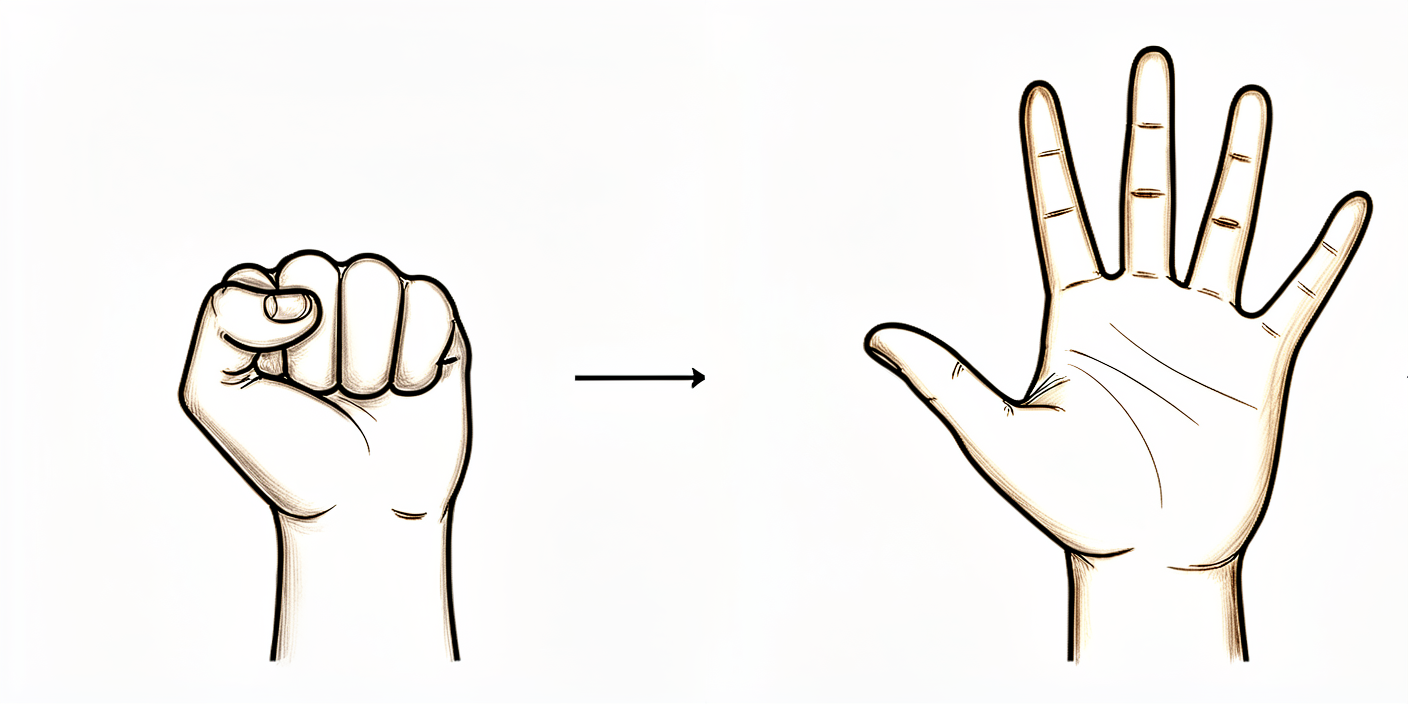
Paggalaw ng daliri (buong kamao at pag-unat)
Simulan ito mula sa unang araw. Gumawa ng isang buo at mahigpit na kamao, pagkatapos ay buksan ang kamay at i-stretch ang mga daliri nang diretso. Ang pagpapanatili sa paggalaw ng mga daliri nang maaga ay nakakaiwas sa paninigas at tumutulong sa paghupa ng anumang pamamaga. Gawin ito nang madalas sa buong araw, kahit na ang iyong forearm ay nasa splint pa.
10 beses, tuwing ilang oras habang gising
Kieran Hirpara 4.0
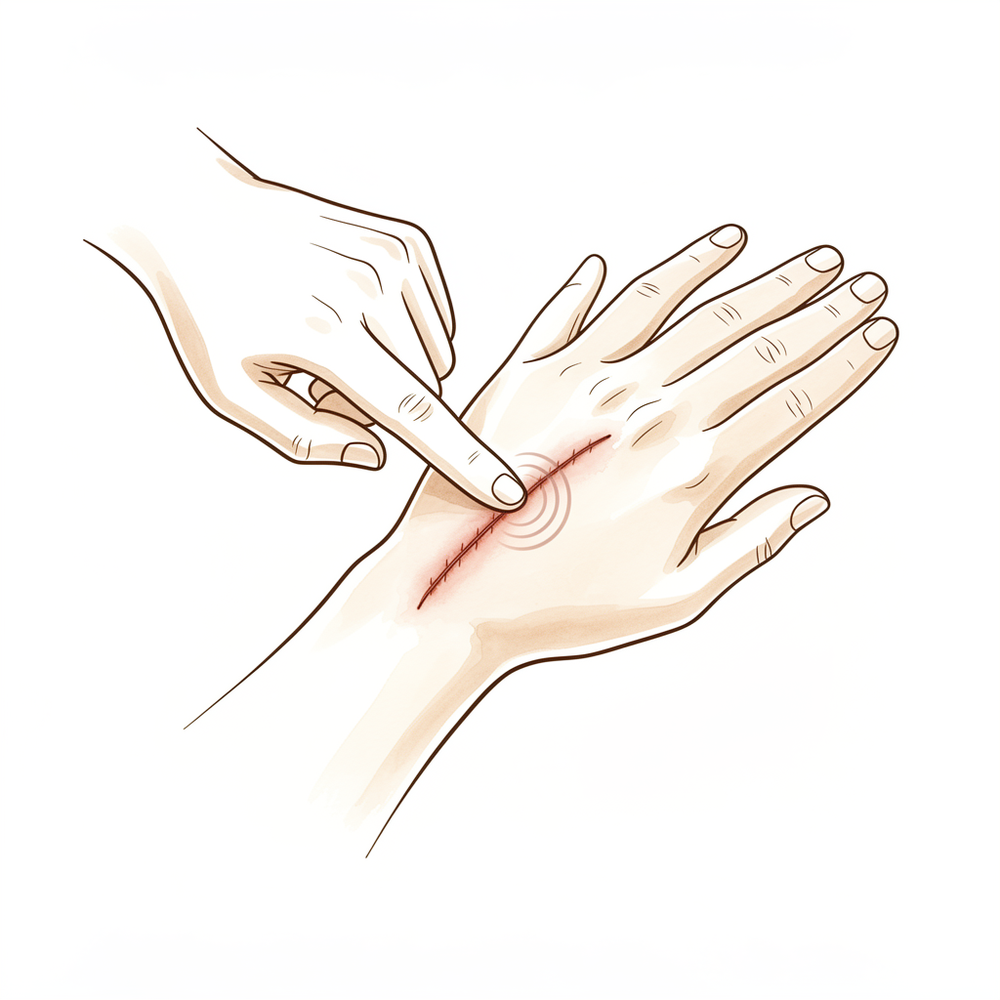
Masahe sa peklat
Kapag ganap nang magaling ang sugat at wala na itong mga langib (karaniwan ay mula sa ikatlo hanggang ikaapat na linggo), magpahid ng kaunting plain moisturizer sa peklat gamit ang maliliit at madiing pabilog na galaw sa loob ng ilang minuto. Pinapalambot nito ang peklat at tinutulungan ang balat at mga tendon sa ibabaw ng distal ulna na gumalaw nang malaya. Itigil ito kung ang sugat ay hindi pa ganap na sarado.
2-3 minuto, dalawang beses sa isang araw, kapag magaling na ang sugat
Kieran Hirpara 4.0
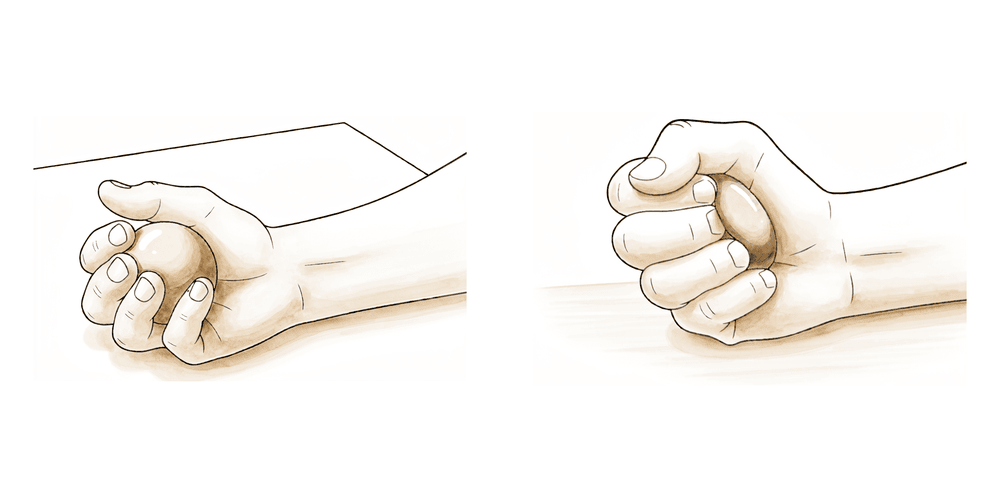
Pagpapalakas ng grip at rotation (sa huling yugto)
Isang ehersisyo sa HULING bahagi — kapag pinayagan na lamang ni Dr Hirpara at ng iyong hand therapist ang strengthening, karaniwan ay mula sa ika-anim hanggang ikawalong linggo. Pisilin ang isang soft ball o putty upang maibalik ang grip, at i-turn ang forearm nang palm-up at palm-down laban sa isang light resistance (halimbawa, isang light hand weight na hawak na parang martilyo). Unti-unting dagdagan ang resistance sa loob ng ilang linggo. Huminto kung ang pag-turn ng forearm habang may load ay masakit sa bahagi ng little-finger side ng wrist.
Ayon sa gabay ng iyong hand therapist (mula ~6-8 linggo lamang)
Ito ang mga ehersisyo mula sa iyong handout. Simulan lamang ang mga ito ayon sa gabay ni Dr Hirpara at ng iyong hand therapist, at manatili sa anumang range at limitasyong ibinigay sa iyo. Ang paggalaw ng daliri ay magsisimula agad. Ang pag-ikot ng forearm (ang ehersisyong pinagbatayan ng buong operasyong ito) at paggalaw ng pulso ay magsisimula kapag tinanggal na ang splint, karaniwan ay pagkalipas ng dalawa hanggang tatlong linggo, at ang pag-ikot ang magiging pangunahing pokus mo. Ang pag-masahe sa peklat ay magsisimula kapag ganap nang gumaling ang sugat. Ang pagpapalakas ng grip at rotation ay kabilang sa huling yugto at hindi dapat simulan hangga't hindi ka partikular na pinapayagan. Itigil ang anumang nagdudulot ng matalas na sakit sa bahagi ng pulso na malapit sa kalingkingan.
Ang iyong clinical protocol
Ang natitirang bahagi ng pahinang ito ay ang staged clinical protocol para sa rehabilitasyon pagkatapos ng hemiresection-interposition arthroplasty ng distal radioulnar joint. Ang seksyong ito ay ibibigay sa iyong hand therapist, at ang bawat phase ay nagsisimula sa isang paliwanag sa simpleng Ingles tungkol sa kung ano ang nangyayari. Ito ay isang joint-reshaping (arthroplasty) procedure, hindi isang repair: walang construct sa ilalim ng tension na kailangang protektahan sa loob ng maraming buwan. Ang sadyang pagpigil ay maikli lamang: isang maikling panahon ng paggamit ng splint upang hayaang kumalma ang soft-tissue interposition at capsule, pagkatapos nito, ang maagang pagbabalik ng forearm rotation ang tahasang prayoridad dahil ang rotation ang function na layuning ibalik ng operasyon. Ang pangunahing load na dapat irespeto sa kabuuan ay ang rotational loading ng distal ulna, na siyang nagdudulot ng masakit na ulnar-stump instability at radioulnar convergence.
Bago ang paggamot, suriin ang operation report ng pasyente at ang nakaraang medical history, at makipag-ugnayan sa treating surgeon tungkol sa anumang concurrent procedures (TFCC repair, distal radius osteotomy, PIN neurectomy, extensor reconstruction), ang stability ng distal ulnar stump na sinuri intra-operatively, at ang iniresetang splint at rotation ceiling. Ang concurrent TFCC repair o distal radius osteotomy ay nagpapahaba sa protected phase; ang isolated hemiresection para sa degenerative o post-traumatic arthritis ay sumusunod sa mas maikling pathway sa ibaba. Pinapanatili ni Dr Hirpara ang TFCC, ulnar styloid at ulnar soft-tissue attachments, kaya nananatiling suportado ang distal ulna, at dahil dito, maaaring bigyang-prayoridad ng rehab ang maagang rotation.
Phase I — protektadong pagpapagaling sa isang splint (linggo 0 hanggang 2-3)
Ang unang dalawa hanggang tatlong linggo ay nagpoprotekta sa soft-tissue interposition at capsule habang pinapanatiling mobile ang natitirang bahagi ng limb. Ang forearm ay nakapahinga sa isang splint (karaniwan ay isang above-elbow / Muenster-type splint o cast na naglilimita sa forearm rotation), na tinatanggal lamang para sa hygiene at, sa dulo ng phase, para sa unang banayad na rotation. Ang mga daliri ay iginagalaw mula sa unang araw.
Para sa iyong hand therapist:
Edukasyon at mga pag-iingat - I-immobilise sa itinakdang splint (above-elbow / Muenster-type, o ayon sa surgeon) na naglilimita sa forearm rotation; tatanggalin lamang para sa hygiene at mga aprubadong ehersisyo - Walang loaded forearm rotation; walang weight-bearing o pagpihit (twisting) gamit ang operated forearm - Siguraduhin sa pasyente na ang maagang panghihina ng grip at pamamaga sa ulnar side ay inaasahan
Pamamahala - Sugat: surgical dressings ayon sa itinuro; i-monitor para sa impeksyon - Oedema: elevation, banayad na hand pump, ice kung kinakailangan - Mga Ehersisyo: active finger, thumb at (kung hindi nahaharangan ng splint) shoulder ROM mula sa unang araw; banayad na elbow ROM ayon sa pinahihintulutan ng splint; ipakilala ang banayad at pain-free active forearm rotation sa huling ilang araw ng phase na ito kung pinahihintulutan ng surgeon ang maagang pagtanggal
Mga kraytirya para mag-progress - Paghilom ng sugat; tapos na ang splint period (≈2-3 linggo para sa isolated hemiresection); aprubado ng surgeon para sa active rotation
Phase II — maagang rotation ng forearm (ang prayoridad) (linggo 2-3 hanggang 6)
Ito ang mapagpasyang phase. Kapag wala na ang splint, ang active pronation at supination ang magiging sentro ng rehabilitasyon: dahan-dahan, madalas, walang sakit, at unloaded. Idaragdag ang wrist motion. Ang rotation ang function na ibinabalik ng operasyon, kaya ito ay aktibong itinataguyod dito habang ipinagbabawal pa rin ang loading.
Para sa iyong hand therapist:
Mga Assessment - Active at passive forearm pronation/supination (target na restorasyon patungo sa ~80° sa bawat direksyon na iniulat sa outcome series); wrist at finger ROM; sakit sa ulnar wrist; pamamaga; pagsusuri ng sugat/scar
Edukasyon at mga pag-iingat - Prayoridad ang forearm rotation: madalas, walang sakit, unloaded active pronation/supination, nakadikit ang siko sa gilid upang i-isolate ang forearm - Bawal ang resisted o loaded rotation, bawal ang mabigat na paghawak (heavy gripping), bawal ang mga twisting tasks hanggang ~6-8 linggo - Ang ilang mga splint ay lalo pang nililimitahan ang end-range rotation sa loob ng ilang linggo pagkatapos tanggalin ang cast; sundin ang anumang itinakdang limitasyon
Pamamahala - Mga Ehersisyo: active at active-assisted pronation/supination bilang pangunahing pokus; active wrist flexion/extension at radial/ulnar deviation; ituloy ang finger at grip ROM (wala pang resisted grip); simulan ang scar management kapag ganap nang hilom ang sugat - Mga modality para sa oedema at scar kung kinakailangan
Mga kraytirya para mag-progress - Komportable, kontrolado, at malapit sa buong pain-free active forearm rotation; hilom na ang sugat; sakit ≤3/10; walang provocative ulnar-side pain sa dahan-dahang rotation
Phase III — pagpapalakas at pagbabalik (linggo 6-8 at higit pa)
Kapag naibalik na ang rotation at wala nang sakit, magsisimula ang pagpapalakas at unti-unting itataas: grip muna, pagkatapos ay loaded forearm rotation, na partikular na binabantayan ang masakit na ulnar-stump instability o radioulnar convergence sa ilalim ng load. Ang pagbabalik sa mas mabigat na trabaho at sport ay nakabase sa criterion.
Para sa iyong hand therapist:
Mga Assessment - Grip strength kumpara sa kabilang panig (iniuulat ng outcome series ang recovery patungo sa ~85-90% ng contralateral side); forearm-rotation strength at anumang sakit o instability sa loaded rotation; functional at work-/sport-specific testing kung naaangkop
Edukasyon at mga pag-iingat - Ipakilala muna ang resisted grip, pagkatapos ay graded loaded forearm rotation (hal. hammer turns gamit ang light weight) mula humigit-kumulang anim hanggang walong linggo; dahan-dahang itaas ang load - Bantayan ang masakit na ulnar-stump instability / radioulnar convergence sa ilalim ng axial o rotational load: kung mapukaw, bawasan ang load at makipag-ugnayan sa surgeon
Pamamahala - Mga ehersisyo: progressive grip/putty work; graded resisted pronation/supination (light → moderate); task-specific loading; ituloy ang anumang residual ROM work - Isaalang-alang ang discharge kapag ang rotation at grip ay functional at near-symmetrical at nakamit na ang angkop na pagbabalik ng function - Isaalang-alang ang referral pabalik sa treating doctor kung ang recovery ay nag-plateau, o kung mayroong persistent ulnar-side load pain na nagpapahiwatig ng stump instability o convergence
Mga Criteria para sa pagbabalik sa load/sport - Near-symmetrical grip at rotation strength; pain-free loaded rotation; walang instability sa functional testing
Pagbabalik sa trabaho at aktibidad
Hinihikayat ang magaan na pang-araw-araw na paggamit ng kamay (pagkain, pagsusulat, magaan na pag-aalaga sa sarili) mula sa simula, hangga't komportable, basta't hindi ito kinapapalooban ng pilit o may karga na pagpihit ng forearm. Dahil ang iyong forearm ay naka-splint nang maaga at dapat kang makontrol nang ligtas ang manibela (kabilang ang pagpihit nito), magplano ng tulong sa transportasyon sa unang ilang linggo; ang pagmamaneho ay muling sisimulan kapag wala ka na sa splint at kaya mo nang irotate ang forearm nang komportable at ligtas upang magmaneho, gaya ng kumpirmasyon sa iyong review.
Ang mga gawaing may kargang pagpihit (pagbubukas ng matitigas na garapon, pagpiga, paggamit ng screwdriver, pagdadala ng mabibigat na bag sa panig na iyon) ay hihintayin hanggang sa payagan na ang strengthening (karaniwan ay sa loob ng anim hanggang walong linggo) at pagkatapos ay unti-unting itataas. Ang pagbabalik sa mas mabigat na manwal na trabaho at sports ay susunod sa parehong criterion-based progression at nakadepende sa pagbawi ng walang-sakit at halos-symmetrical na forearm rotation at grip, na huhusgahan ni Dr Hirpara at ng iyong hand therapist sa halip na sa kalendaryo lamang.
Pagkatapos ng iyong protocol
Ang protocol na ito ay kasabay ng pangkalahatang payo sa paggaling ng klinika; tingnan ang pamamahala ng sakit pagkatapos ng operasyon, pag-aalaga ng sugat at pamamahala ng peklat. Kung ang iyong problema sa DRUJ ay kasunod ng isang wrist fracture, ang protocol para sa distal radius fracture fixation ay isang kapaki-pakinabang na kasama. Ang phased plan sa itaas ay sumasalamin sa nailathalang gabay sa rehabilitasyon pagkatapos ng distal radioulnar joint hemiresection arthroplasty, at ang iyong patuloy na paggaling ay ginagabayan nang indibidwal ni Dr Hirpara at ng iyong hand therapist ayon sa pag-unlad ng iyong forearm.
Evidence & references
This is the clinical evidence summary written for health professionals. It is technical, and it lists the research this page was built from. You do not need to read it to understand your treatment or to make a decision about it.
DRUJ Hemiresection-Interposition Arthroplasty (Bowers) — Procedure Outcomes & Post-operative Rehabilitation
Topic scope: post-operative rehabilitation after hemiresection-interposition arthroplasty (HIT) of the distal radioulnar joint (DRUJ) — the Bowers procedure — for painful DRUJ arthritis (degenerative, post-traumatic, or inflammatory). The arthritic portion of the ulnar head is partially resected and a soft-tissue spacer is interposed, preserving the TFCC, ulnar styloid and ulnar soft-tissue attachments so the distal ulna remains supported. This is a joint-reshaping arthroplasty, not a repair or reconstruction: the rehab is therefore an early-rotation pathway built around a short protected settling phase, then prioritised restoration of forearm pronation/supination, then graded loading — not months of construct protection.
Defining principle of the rehab here: the operation exists to restore pain-free forearm rotation, and nothing is sutured under tension that must heal protected for months. The deliberate restraint is a brief splinted phase (commonly an above-elbow / Muenster-type splint limiting forearm rotation for ~2-3 weeks in the isolated case) to let the soft-tissue interposition and capsule settle. After that, early active pronation/supination is the explicit priority — rotation is the function the operation restores. The single load to respect throughout is rotational/axial loading of the distal ulna, which provokes the characteristic failure mode: painful ulnar-stump instability and radioulnar convergence. The main branch point that lengthens the protected phase is a concurrent procedure (TFCC repair, distal radius osteotomy, extensor reconstruction).
A. PROCEDURE OUTCOMES (hemiresection-interposition arthroplasty)
The Bowers HIT is a long-established, generally reliable salvage for the arthritic DRUJ. The evidence base is level IV (retrospective cohorts and case series, no randomised trials), but it is consistent across decades: most patients gain durable pain relief and improved, stable forearm rotation, with the principal residual concern being ulnar-stump instability / radioulnar convergence under load.
- The original Bowers series established the procedure and its rationale. Bowers' 1985 description (38 patients, mean ~2.5 yr) reported stable, painless rotation in the great majority — in rheumatoid patients ~85% achieved stable painless rotation (pronation ~84°, supination ~77°), and degenerative/post-traumatic patients achieved painless rotation averaging ~80° in each direction. The technique was explicitly designed to preserve the functional ulnocarpal ligament complex [Bowers, J Hand Surg Am 1985]. Level IV (foundational case series).
- Long-term outcomes are durable but with a defined complication rate. A long-term cohort (66 patients, mean follow-up 8.6 years) reported low residual pain (median NRS 1/10), an overall complication rate of ~14% and reoperation ~8%; reported complications included stylocarpal impingement, ulnar subluxation, exostoses and tendon rupture. Inflammatory-arthritis patients had lower pain than post-traumatic patients (median 0 vs 5). The same series found PIN neurectomy associated with improved pain scores [HIT long-term outcome study, Hand (N Y) 2019]. Level IV (cohort).
- Forearm rotation, grip and pain all improve measurably. A capsuloretinacular HIT series (21 wrists, mean ~2 yr 10 mo) reported significant gains: pronation 56.8°→83.0°, supination 60.0°→82.0°, grip 66.0%→87.4% of the contralateral side, VAS pain 62→23 mm, DASH 37.7→25.0, PRWE 48.1→24.4, with no post-operative DRUJ instability reported in that series [HIT capsuloretinacular series, J Wrist Surg 2023]. Level IV (cohort).
- HIT sits within a family of DRUJ salvage options (Darrach distal ulna resection, Sauvé-Kapandji arthrodesis-pseudarthrosis, matched/hemiresection variants, and ulnar-head implant arthroplasty), each with its own instability/convergence profile; HIT's selling point is preservation of the ulnar support structures to reduce stump instability versus a formal Darrach [Bowers 1985; Glowacki, Hand Clin 2005; Chidgey, JAAOS 1995; Rekant, Hand Clin 2012; Murray, Hand Clin 2011]. Mechanistic / narrative-review.
B. REHABILITATION / THERAPY EVIDENCE
There is no trial-level evidence for any specific rehabilitation regimen after DRUJ HIT. Protocols are surgeon- and technique-derived expert consensus, reported as the post-operative methods of the outcome series and operative-technique articles above. The consensus is consistent on its key features.
- A brief protected settling phase, not prolonged immobilisation. In the isolated hemiresection (no distal radius osteotomy, no TFCC repair), a long-arm plaster splint for ~10 days followed by a removable Muenster splint for a further 2-3 weeks is typical; cohort series report an upper-arm cast ~3 weeks then a forearm cast 1-2 weeks. Where a distal radius osteotomy or TFCC repair is added, immobilisation is longer (e.g. a long-arm cast in ~45° supination for ~4 weeks) [Pillukat & van Schoonhoven, Oper Orthop Traumatol 2009; HIT capsuloretinacular series, J Wrist Surg 2023]. Weak / expert consensus.
- Early forearm rotation is the explicit priority once protection ends. The whole point of the operation is rotation, so active pronation/supination is pursued early and frequently. Some protocols further limit end-range rotation by splint for ~4 more weeks after the cast comes off before unrestricted motion and load [Pillukat & van Schoonhoven 2009]. Weak / expert consensus.
- Loading is added last, watching for the characteristic failure mode. Range and load are returned to normal after the rotation-limited window; the specific thing to watch is painful ulnar-stump instability and radioulnar convergence under axial/rotational load, which is the biomechanically demonstrated weak point of distal-ulna procedures [Sauerbier et al., J Hand Surg Br 2002; Douglas et al., J Hand Surg Am 2014; Barret et al., Orthop Traumatol Surg Res 2020]. Mechanistic (biomechanical) + consensus.
- Finger, thumb, elbow and shoulder motion from day one is standard to prevent stiffness, as in any forearm/wrist immobilisation pathway. Consensus.
Recovery trajectory (expected, evidence-anchored)
| Phase | Window | Restraint | Hand use / therapy focus | Strength / load | Notes |
|---|---|---|---|---|---|
| I — Protected settling | Week 0 to 2-3 | Splint limiting forearm rotation (Muenster / above-elbow type) | Active finger/thumb/shoulder ROM from day 1; elbow ROM as splint allows; first gentle pain-free rotation toward end of phase | None through forearm | Longer if concurrent TFCC repair or distal radius osteotomy (cast in supination ~4 wk) |
| II — Early forearm rotation (priority) | Week 2-3 to 6 | Unloaded; some protocols cap end-range rotation a few more weeks | Active pronation/supination as the main focus, elbow tucked; add wrist ROM; finger/grip ROM; scar massage once healed | No resisted/loaded rotation, no heavy grip | Target restoration toward ~80° each direction; pain-free is the rule |
| III — Strengthening & return | Week 6-8+ | Restrictions lifted progressively | Resisted grip first, then graded loaded rotation (hammer turns); task-specific loading | Build load slowly; grip recovers toward ~85-90% contralateral | Watch for ulnar-stump instability / radioulnar convergence under load |
(Phase windows mirror the precautions and phase tables in the patient protocol; they are typical expert-consensus guides, not trial-derived deadlines, and lengthen with concurrent procedures.)
C. KEY CONTROVERSIES / EVIDENCE QUALITY
- HIT vs Darrach. The Darrach (complete distal ulna resection) is simpler but sacrifices the ulnar support structures and is more prone to painful proximal ulnar-stump instability and radioulnar convergence, especially in younger, higher-demand or post-traumatic patients. HIT preserves the TFCC/styloid/attachments to mitigate this — but biomechanical work shows HIT also converges under load, just to a different degree, so convergence is a spectrum, not a HIT-vs-Darrach binary [Sauerbier et al., J Hand Surg Br 2002; Douglas et al., J Hand Surg Am 2014]. Darrach remains reasonable in low-demand/elderly patients. *Moderate (biomechanical
- cohort).*
- HIT vs Sauvé-Kapandji. Sauvé-Kapandji fuses the DRUJ and creates a controlled proximal pseudarthrosis, preserving the ulnar head/buttress for the carpus; it is often favoured where ulnar translation of the carpus is a concern (e.g. rheumatoid), but it too can develop painful proximal-stump instability. Long-term Sauvé-Kapandji and modified-Sauvé-Kapandji series report durable function with that caveat [Reissner et al., J Hand Surg Eur 2021; Zimmermann et al., Arch Orthop Trauma Surg 2003]. Choice is patient- and pathology-specific, not evidence-mandated. Moderate.
- HIT vs ulnar-head (implant) replacement. Implant ulnar-head arthroplasty is an alternative — particularly for failed resection/instability salvage — restoring a load-bearing buttress, but it adds implant-specific complications. Long-term implant series report good outcomes; it is increasingly used to rescue a painful, unstable stump after resection-type procedures [Kakar et al., J Hand Surg Am 2010; Adams, Hand Clin 2010; Watts et al., Hand Clin 2010; Rekant, Hand Clin 2012]. Moderate.
- The rehab regimen itself is consensus, not trial-derived. No RCT compares immobilisation length, rotation timing or loading progression after HIT. The "brief protection → early rotation → graded load" structure is inferred from technique articles and the methods of level-IV outcome series. Exact phase timings are typical, not deadlines, and shift with concurrent procedures. Weak / expert consensus.
- Patient selection drives results. Inflammatory-arthritis patients report lower residual pain than post-traumatic patients in long-term follow-up; adjunct PIN neurectomy is associated with better pain scores. Both point to outcome being substantially a selection/technique matter, not a rehab one [HIT long-term cohort, Hand 2019]. Moderate (within level-IV data).
D. EVIDENCE STRENGTH FLAGS (summary)
- STRONG (RCT / SR): none. There are no randomised trials of DRUJ HIT or of its rehabilitation.
- MODERATE: the biomechanical basis of radioulnar convergence / ulnar-stump instability under load across distal-ulna procedures (cadaveric studies); the comparative trade-offs among HIT / Darrach / Sauvé-Kapandji / ulnar-head replacement (consistent cohort + mechanistic data).
- LEVEL IV (cohort / case series — the outcome evidence): pain relief, grip recovery (~85-90% contralateral), pronation/supination gains (toward ~80° each), ~14% complication and ~8% reoperation rates, durability to ~8-9 years. Consistent but uncontrolled and surgeon-reported.
- WEAK / EXPERT CONSENSUS (the rehab regimen): the specific brief-protection → early-rotation → graded-load programme, the Muenster/above-elbow splint choice, the ~2-3 week protected window, and all exact phase timings — derived from technique articles and the methods sections of level-IV series, lengthened by concurrent procedures. No comparative rehab evidence exists.
CITATIONS
RAG corpus (180,000+ Orthopaedic articles)
- Glowacki KA. Hemiresection arthroplasty of the distal radioulnar joint. Hand Clin. 2005. DOI: 10.1016/j.hcl.2005.08.002
- Sauerbier M, Fujita M, Hahn ME, et al. The dynamic radioulnar convergence of the Darrach procedure and the ulnar head hemiresection interposition arthroplasty: a biomechanical study. J Hand Surg Br. 2002. DOI: 10.1054/jhsb.2002.0763
- Douglas KC, Parks BG, Tsai MA, et al. The biomechanical stability of salvage procedures for distal radioulnar joint arthritis. J Hand Surg Am. 2014. DOI: 10.1016/j.jhsa.2014.03.028
- Barret H, Lazerges C, Chammas P, et al. Modification of matched distal ulnar resection for distal radio-ulnar joint arthropathy: analysis of distal instability and radio-ulnar convergence. Orthop Traumatol Surg Res. 2020. DOI: 10.1016/j.otsr.2020.07.008
- Chidgey LK. The distal radioulnar joint: problems and solutions. J Am Acad Orthop Surg. 1995. DOI: 10.5435/00124635-199503000-00005
- Murray PM. Current concepts in the treatment of rheumatoid arthritis of the distal radioulnar joint. Hand Clin. 2011. DOI: 10.1016/j.hcl.2010.10.002
- Lee SK, Hausman MR. Management of the distal radioulnar joint in rheumatoid arthritis. Hand Clin. 2005. DOI: 10.1016/j.hcl.2005.08.009
- Ozer K. Management of complications of distal radioulnar joint. Hand Clin. 2015. DOI: 10.1016/j.hcl.2014.12.003
- Zimmerman RM, Jupiter JB. Instability of the distal radioulnar joint. J Hand Surg Eur Vol. 2014. DOI: 10.1177/1753193414527052
- Rekant M. Distal ulna arthroplasties. Hand Clin. 2012. DOI: 10.1016/j.hcl.2012.08.016
- Watts AC, Hayton MJ, Stanley JK. Salvage of failed distal radioulnar joint reconstruction. Hand Clin. 2010. DOI: 10.1016/j.hcl.2010.05.004
- Kakar S, Swann R, Perry K, et al. Distal radioulnar joint implant arthroplasty: a long-term outcome analysis. J Hand Surg Am. 2010. DOI: 10.1016/j.jhsa.2010.05.010
- Adams BD. Complications of wrist arthroplasty. Hand Clin. 2010. DOI: 10.1016/j.hcl.2010.01.006
- Reissner L, Schweizer A, Unterfrauner I, et al. Long-term results of the Sauvé-Kapandji procedure. J Hand Surg Eur Vol. 2021. DOI: 10.1177/17531934211004459
- Zimmermann R, Gschwentner M, Arora R, et al. Treatment of distal radioulnar joint disorders with a modified Sauvé-Kapandji procedure: long-term outcome with special attention to the DASH questionnaire. Arch Orthop Trauma Surg. 2003. DOI: 10.1007/s00402-003-0529-5
- Nypaver C, Bozentka DJ. Distal radius fracture and the distal radioulnar joint. Hand Clin. 2021. DOI: 10.1016/j.hcl.2021.02.011
- Pillukat T, van Schoonhoven J. Die Hemiresektions-Interpositionsarthroplastik des distalen Radioulnargelenks nach Bowers [The hemiresection-interposition arthroplasty of the distal radioulnar joint]. Oper Orthop Traumatol. 2009. DOI: 10.1007/s00064-009-1913-2
DRUJ hemiresection literature (URLs)
- Bowers WH. Distal radioulnar joint arthroplasty: the hemiresection-interposition technique. J Hand Surg Am. 1985;10(2):169-178. https://www.jhandsurg.org/article/S0363-5023(85)80100-3/abstract (PMID: 3980927)
- Hemiresection interposition arthroplasty of the distal radioulnar joint: a long-term outcome study. Hand (N Y). 2019. DOI: 10.1177/1558944719873430. https://pmc.ncbi.nlm.nih.gov/articles/PMC8461192/
- Hemiresection capsuloretinacular interposition arthroplasty for distal radioulnar joint osteoarthritis. J Wrist Surg. 2023. DOI: 10.1055/s-0043-1771341. https://pmc.ncbi.nlm.nih.gov/articles/PMC11606672/
- Mid- to long-term functional results after Bowers' hemiresection interposition arthroplasty of the distal radio-ulnar joint. PubMed. https://pubmed.ncbi.nlm.nih.gov/35238965/
- Pillukat T, van Schoonhoven J. The hemiresection-interposition arthroplasty of the distal radioulnar joint (operative technique). Oper Orthop Traumatol. 2009. https://link.springer.com/article/10.1007/s00064-009-1913-2 (PMID: 20058126)
- Ulnar head hemiresection with interposition and extensor reconstruction — surgical technique. OrthOracle. https://www.orthoracle.com/library/ulnar-head-hemiresection-with-interposition-and-extensor-reconstruction/