Skip to content

Patients › General-Health

Paano Gumagana at Nagagamot ang mga Tendones

PDF

Ang pahinang ito ay isinalin ng makina at hindi pa nasusuri ng isang doktor. Ang bersyong Ingles ang siyang opisyal.

Ang mga tendon ay mga kable ng katawan, matibay na hibla na nag-uugnay ng kalamnan sa buto at nagpapadaloy ng lakas ng kalamnan upang makagawa ng galaw. Kapag yumuko ka ng daliri o tinataas ang iyong braso, ang mga tendon ang gumagawa ng trabaho na dala-dala ang puwersang iyon sa pamamagitan ng kasukasuan. Matibay ang mga tendon, ngunit mabagal silang gumaling at may partikular na paraan, at hindi lahat ng tendon ay gumagaling sa parehong paraan. Ang pagputol ng flexor tendon sa daliri at ang pagputol ng rotator cuff tendon sa balikat ay may magkakaibang kwento ng paggaling, kaya’t magkaiba ang kanilang operasyon at rehabilitasyon. Ipapaliwanag ng pahinang ito sa simpleng wika kung ano ang mga tendon at kung paano sila gumagaling, at pagkatapos ay lalalim sa biyolohiya para sa mga mapagmasid, kabilang ang dahilan kung bakit ang repair ng flexor tendon ay naging mahina bago ito maging matibay, at kung bakit ang rotator cuff ay gumagaling sa buto sa paraang iyon.

Ano ang tendon at ano ang kanyang ginagawa

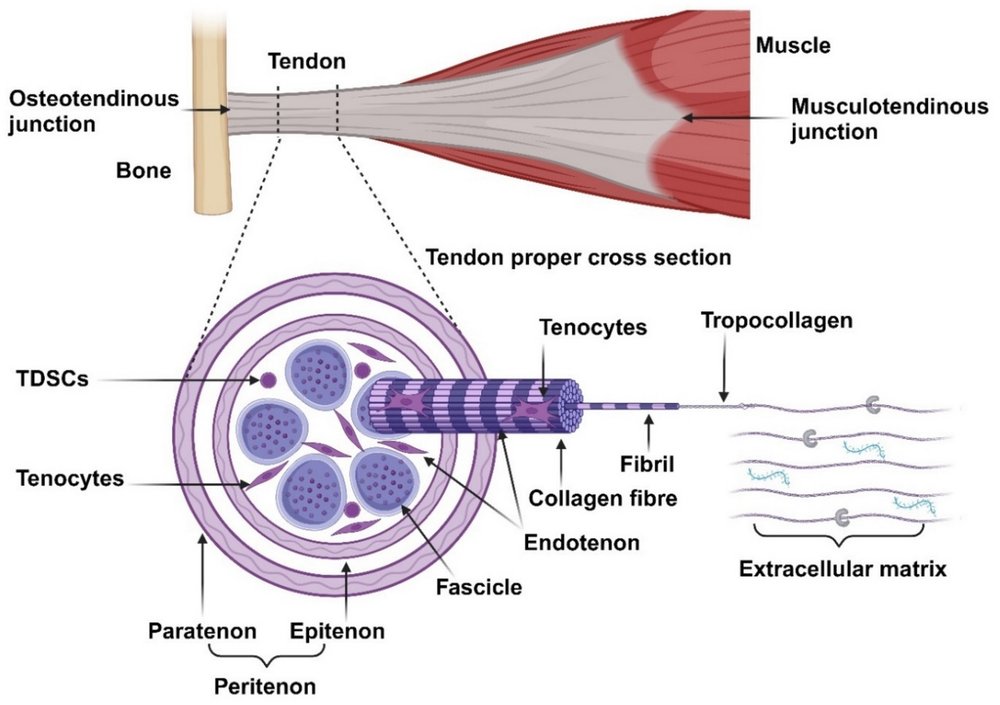
Ang tendon ay isang lubid na karamihan ay binubuo ng collagen (ang parehong matigas na protina na nagbibigay ng flexibility sa buto), na nakabalot sa mga mahigpit na nakataling bundle na tumatakbo sa direksyon ng paghila. Ang isang dulo ay nag-uugnay sa kalamnan; ang kabilang dulo ay nakakabit sa buto. Ang kanyang tungkulin ay simple ngunit mahalaga: ipasa ang puwersa na hinahalo ng kalamnan sa buto, upang gumalaw ang kasukasuan. May ilang tendon na kailangan ding mag-slide: ang mga flexor tendon na yumuyuko sa iyong mga daliri ay lumilipat-lipat sa mga makitid na tunnel bawat beses na gumawa ka ng kamay na nakasara.

Ang mga tendon ay buhay na tisyu, ngunit medyo limitado lamang: mayroon silang kaunting mga cell at mahinang suplay ng dugo kumpara sa kalamnan o balat. Ito ang isa sa mga dahilan kung bakit sila mabagal ang paggaling.

Paano gumagaling ang mga tendon

Kapag putol o napunit ang isang tendon, gumagaling ito sa tatlong magkakasamang yugto, katulad ng ibang mga tisyu:

  1. Pamamaga (unang linggo). Bumubuo ang isang dugo at pumapasok ang mga cell para sa pagkukumpuni. Sa yugtong ito, hawak ng mga tahi ng doktor ang pagkakadikit; ang tendon mismo ay nag-aambag ng napakaliit na lakas.
  2. Pagkukumpuni (mga linggo). Inilalagay ng mga cell ang bagong collagen sa bukas na espasyo, ngunit nasa unang yugto ay magulo at mahina ito, katulad ng isang bilog na hibla na bilog na pinagsama kaysa sa maayos na lubid.
  3. Pagbabago (mga buwan). Sa paglipas ng panahon at banayad na paggamit, unti-unting pinalitan at muling inayos ang magulong collagen ayon sa direksyon ng paghila, at muling nakakakuha ng lakas ang tendon. Patuloy ito sa loob ng maraming buwan, madalas hanggang isang taon o higit pa.

Mahalagang punto: ang tendon ay gumagaling sa pamamagitan ng pagbuo ng buntot, hindi sa perpektong paglago muli ng orihinal na tisyu. Ang pinagkumpunang bahagi ay hindi kasing linis ng orihinal, kaya mahalaga ang maingat na rehabilitasyon at pasensya.

Ano ang tumutulong sa paggaling ng tendon

  • Ang tamang dami ng galaw. Ang mga tendon ay tumutugon sa load. Ang controlled, graded exercise (na gabay ng hand surgeon o physiotherapist) ang nagtuturo sa healing collagen kung paano ito mag-organisa. Masyadong marami, masyadong maaga, ay maaaring magdulot ng rupture ng repair; masyadong kaunti naman ay magdudulot ng stiffness at tendon na nakakabit sa scar.
  • Pagprotekta sa repair sa maagang yugto. Ang isang bagong tendon repair ay fragile sa loob ng ilang linggo kahit sa tingin ay okay na; sundin ang iyong splint at limitasyon sa aktibidad upang maiwasan ang pagkabulok nito.
  • Mabuting pangkalahatang kalusugan. Ang pag-iwas sa pagsigarilyo, pagkontrol ng diabetes, at pag-iwas sa hindi kinakailangang steroids ay tumutulong; ang pagsigarilyo ay partikular na nakakaapekto sa paggaling ng tendon.
  • Oras. Ang tendon ay mabagal na tissue. Ang tunay na lakas ay kailangan ng ilang buwan, hindi linggo.

Mas malalim pa

Ang seksyong ito ay nag-aalok ng mas detalyadong paliwanag sa antas ng mag-aaral tungkol sa biyolohiya. Hindi ito kailangan upang maunawaan ang pinsala sa tendon o ang kanyang paggamot, ngunit kung interesado ka sa paano talaga gumagana ang mga tendon, at bakit magkaiba ang paraan ng paggaling ng tendon ng daliri at ng tendon ng balikat, magpatuloy sa pagbabasa.

Ang tendon bilang buhay na tisyu

Ang tendon ay binubuo ng isang hierarchy ng collagen, katulad ng lubid na gawa sa mga patuloy na mas manipis na hibla. Ang mga molekula ng collagen ay nagbubundle upang maging fibrils, ang mga fibrils ay nagbubundle upang maging fibres, ang mga fibres ay nagbubundle upang maging fascicles, at ang mga fascicles ay nagbubundle upang maging buong tendon; sa bawat antas, may manipis na balot ng connective tissue (ang endotenon, at ang epitenon sa paligid ng buong tendon) na dala ang mga maliit na blood vessel at nerves. Ang karamihan ng collagen ay type I, na napakalakas sa tension at inilalagay halos perpektong parallel sa direksyon ng paghila.

Sa pahinga, ang mga fibres ay may alon-alon at crimped na pattern. Kapag unang binigyan ng load ang isang tendon, ang crimp ay nag-uunat, kaya ang isang tendon ay bahagyang stretchy sa simula ng paghila bago maging matigas at malakas (mayroon itong kaunting built-in na pag-unat). Ang tendon ay viscoelastic din: ito ay kumikilos nang iba depende sa kung gaano kabilang itong binibigyan ng load (mas matigas kapag mabilis na binibigyan ng load), at dahan-dahang creeps (nag-uunat) sa ilalim ng patuloy na load.

Ang mga buhay na cell ay tenocytes, na mga bihira at spindle-shaped na cell na nakasabit sa pagitan ng mga collagen bundle. Ito ang nagpapanatili at dahan-dahang binabago ang matrix. Dahil kaunti ang mga cell at blood vessel, at ang ilang rehiyon ng ilang tendons ay tunay na hypovascular (mga "watershed" na lugar na may mahinang blood supply), ang paggaling ng tendon ay mabagal, at ang mga lugar na mahina ang blood supply ay eksaktong kung saan ang ilang tendons ay karaniwang napuputol at mahirap gumaling.

Paano gumagaling ang mga tendon — at bakit karamihan ay sa pamamagitan ng peklat

Ang tatlong yugto sa itaas, sa mas detalyadong paglalarawan: isang pamamaraan ng pamamaga (humigit-kumulang sa unang linggo) na naglilinis ng mga dumi at nag-aalok ng mga selula; isang pamamaraan ng paglago (mga isang hanggang tatlong linggo) kung saan ang mga selula ay gumagawa ng malaking dami ng di-ayos na type III collagen, mabilis itong ilagay ngunit mahina sa mekanikal na aspeto; at isang mahabang pamamaraan ng pag-aayos (mga buwan, hanggang sa mga 18 buwan) kung saan ang type III collagen na iyon ay unti-unting pinalitan ng matibay at nakahanay na type I collagen, may cross-link at nakahanay ayon sa linya ng karga.

Ang mahalagang konsepto ay ang ito ay pag-aayos sa pamamagitan ng peklat, hindi regenerasyon. Inilalagyan ng patch ng katawan ang puwang sa halip na muling likhain ang orihinal, maganda-ayos na tendon. Ang nagpapagawa sa maagang mahinang peklat na maging matibay at nakahanay ay ang mekanikal na karga. Ito ang buong dahilan ng modernong rehabilitasyon ng tendon: kontroladong puwersa, na inilalapat sa tamang oras, ay literal na nagtuturo sa peklat kung paano ito maging tendon.

Paggaling ng flexor tendon: intrinsic vs extrinsic, at ang trabaho ng flexion

Ang mga flexor tendon na yumuyuko sa iyong mga daliri ay isang espesyal na kaso, dahil kailangan nilang lumusot sa isang masisikip na tunnel (ang flexor sheath, kasama ang mga pulley nito) upang gumana. Ito ay nagdudulot ng tensyon sa puso ng surgery sa flexor, at may dalawang paraan kung paano maaaring magaling ang tendon:

  • Ang intrinsic healing ay galing sa sarili na mga cell ng tendon, na pinapakain ng synovial fluid sa loob ng sheath at ng mga maliit na fold ng blood vessel na tinatawag na vincula. Ang flexor tendon ay karamihan ay pinapakain hindi ng mga blood vessel kundi ng synovial fluid, na aktibong ipinapasok sa tendon (isang proseso na tinatawag na imbibition) bawat pag-yuko at pagtuwid ng daliri; kaya ang galaw mismo ang nagpapakinis sa healing tendon. Ang intrinsic healing ay nagbubuklod ulit sa tendon * nang hindi* ito dumikit sa mga paligid nito, kaya maaari pa rin itong lumusot.
  • Ang extrinsic healing ay galing sa mga cell at scar na pumapasok mula sa labas, mula sa sheath at sa mga nakapaligid na tissue. Nagpapagaling ito sa tendon, ngunit idinidikit nito ito sa kanyang tunnel, na bumubuo ng adhesions na humihinto sa paglusot nito, kaya hindi ganap na yumuyuko o tutuwid ang daliri.

Ang modernong repair kasama ang maagang kontroladong galaw ay dinisenyo upang itulak ang balanse patungo sa intrinsic healing at lumayo sa adhesions.

Dito pumapasok ang trabaho ng flexion: ang puwersa na kailangang gawin ng muscle upang tunay na yumuko ang daliri. Hindi ito lamang ang bigat na gumagalaw; ito ay ang resistance sa paglusot ng tendon: ang friction sa sheath, ang bulk ng repair mismo, ang post-operative swelling, at ang masisikip na pulley ay lahat ay nagdaragdag dito. Kung ang trabaho ng flexion (ang resistance) ay tumataas nang higit sa kaya ng repair, ang repair ay magkakaroon ng gap o magre-rupture, o ang daliri ay hindi gumalaw at magse-set ang adhesions. Kaya ang surgeon ay nagbabalanse ng dalawang magkalaban na pangangailangan: isang repair na sapat na matibay upang tanggapin ang maagang galaw, ngunit sapat na manipis at makinis upang lumusot na may mababang trabaho ng flexion. Ang maagang galaw ay gumagana lamang kung pareho ang maabot.

Bakit nagiging mahina ang flexor repair bago ito maging matibay

Narito ang bahagi na tila salungat sa intuisyon at nagpapaliwanag sa buong maingat na timeline ng rehabilitasyon. Ang tendon repair ay hindi patuloy na nagiging mas matibay mula sa unang araw. Ito ay sumusunod sa isang U-shaped curve:

  • Sa unang mga araw, halos lahat ng lakas ay galing sa suture; ang sariling tissue ng tendon ay halos walang mag-aambag.
  • Sa loob ng unang isa hanggang tatling linggo, ang mga putol na dulo ng tendon ay talagang nagiging malambot: tinatanggal at iniaayos ng katawan ang collagen sa eksaktong lugar ng repair bago matandaan ang bagong collagen. Kaya ang buong konstruksyon ay umaabot sa pinakamahinang punto nito sa mga unang linggo (karaniwan ay sa dulo ng unang linggo hanggang sa ikatlong linggo), kahit na mukhang nakaheal na ang sugat at normal ang pakiramdam ng daliri.
  • Pagkatapos ay tumataas ang lakas. Habang ang disorganized na type III collagen ay pinalitan ng aligned, cross-linked na type I, ang repair ay muling nakakakuha ng lakas at higit pa sa nagsimula nito, na umaabot sa sapat para sa karamihan sa mga pang-araw-araw na gawain sa humigit-kumulang 12 linggo at patuloy na nagmo-mature sa loob ng maraming buwan.

Ito ang dahilan kung bakit ang hand therapy ay mabuti nang hinahati-hati ang mga yugto, at kung bakit ang "naramdaman kong okay ito sa tatlong linggo" ay isang trap: kadalasan ay ito ang eksaktong panahon kung kailan ang pinakamahina ang repair. Ang banayad, kontroladong galaw sa maagang yugto ay pinapanatiling gumagalaw ang tendon (pinapaboran ang intrinsic healing) at inaayos ang bagong collagen walang sobrang stress sa isang repair na, sa biological na pananaw, nasa pinakamahina nito. Ang mga tendon rupture pagkatapos ng repair ay nakakumpol sa mga mahinang unang linggo para sa eksaktong dahilang ito.

Pagpapagaling ng tendon sa buto: ang rotator cuff at ang enthesis

Ang pagputol ng rotator cuff ay isang ganap na ibang problema, dahil dito kailangang magpagaling ang tendon pabalik sa buto, at ang ugnayan sa pagitan ng tendon at buto ay isang kahanga-hangang istruktura na tinatawag na enthesis.

Sa malusog na tisyu, ang enthesis ay isang unahan na paglipat (graded transition), na binuo sa humigit-kumulang apat na zona: tendon → hindi nakakalkal na fibrocartilage → nakakalkal na fibrocartilage → buto. Ang banayad na gradient na ito mula sa malambot, nababaluktot na tendon patungo sa matigas, matigas na buto ay nagpapalawak sa stress, upang ang malambot na tendon ay hindi simpleng mapuputol mula sa matigas na buto sa isang matalas na hangganan.

Ang hamon ay, kapag naputol na, hindi mabubuo ng katawan ang unahan na enthesis. Ang isang pinagaling na cuff ay nagpapagaling sa pamamagitan ng fibrovascular na peklat sa pagitan ng tendon at buto, na mekanikal na mas mahina kaysa sa orihinal na apat-zonang paglipat, at isa sa mga dahilan kung bakit ang mga pagkukumpuni ng rotator cuff ay maaaring muling magputol kahit na maayos ang operasyon.

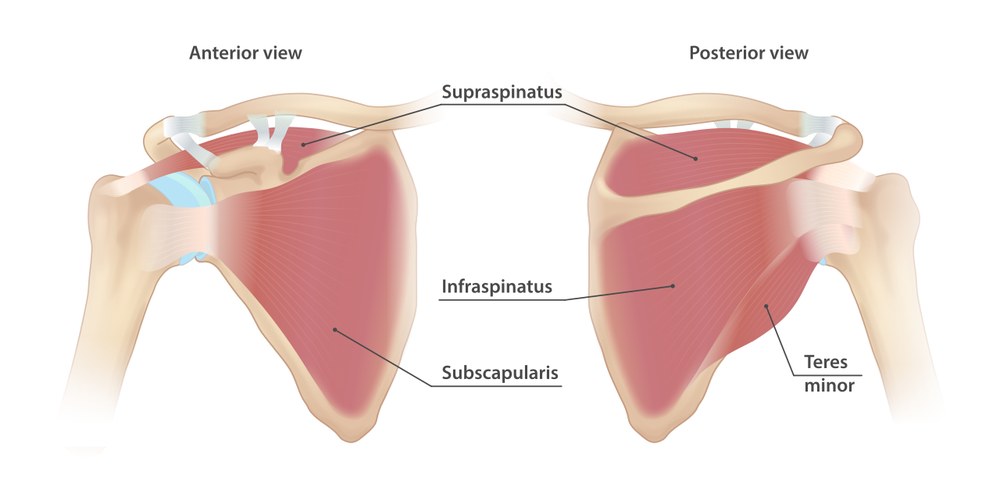
Mahalaga rin na ang karamihan sa mga putol ng cuff ay deheneratibo kaysa purong traumatic: sa pagtanda, ang tendon, partikular sa isang relatibong mahinang-supply na "critical zone" na humigit-kumulang isang sentimetro mula sa kung saan ang supraspinatus tendon ay nagtatagpo sa buto, humihina, nagkakaroon ng fraying, at nagpuputol nang kaunti o walang pinsala (ang tunay na putol ng cuff ay bihira bago ang humigit-kumulang 50). Ang operasyon ay muling inaattach ang tendon sa kanyang bonyong "footprint", ngunit ito ay nagtatrabaho laban sa pagtanda, madalas na mahinang kalidad na tisyu. Kaya ang pagpapagaling ng cuff ay batay sa limitasyon ng biyolohiya: ang operasyon ay muling nagtatatag ng anatomiya, ngunit kung ang ugnayan ng tendon sa buto ay tunay na magpapagaling ay nakadepende sa kalidad ng tendon, laki ng putol, edad, pagsusuka, diyabetes, at kung paano protektado at binibigyan ng load ang pagkukumpuni. Ito ay ang kabaligtaran ng dulo ng spectrum mula sa isang malinis na flexor laceration sa isang batang kamay: parehong tisyu, napakabagong problema sa pagpapagaling.

Ano ang nakatulong at nakakasama sa paggaling ng tendon

  • Pagkarga, na may tamang dosis. Ang kontroladong, unti-unting pagkarga ang pinakamalakas na kasangkapan para sa pagbuo ng lakas at pagkakahanay ng tendon. Masyadong marami at mabilisan ay magdudulot ng pagputol ng pagkumpuni; masyadong kaunti naman ay magdudulot ng katigasan at adhesions. Ang sining ng rehabilitasyon ay ang dosis.
  • Suplay ng dugo. Mas magaling gumaling ang tendon na may maayos na vasculature; mas mahina gumaling ang hypovascular na "watershed" na mga zona (tulad ng sa ilang bahagi ng rotator cuff).
  • Pagsusuka, diyabetes, steroids, at edad ay lahat ay nakakasama sa paggaling ng tendon at nagpapataas ng panganib ng pagputol at pagbalik ng pagputol.
  • Oras. Mabagal ang paggaling ng tendon; ang makabuluhang lakas ay nangangailangan ng mga buwan, at ang buong remodelling ay maaaring tumagal nang higit sa isang taon.

Tingnan din


Creative Commons BY-NC 4.0

CC Creative Commons licence
BY Attribution — you must credit the source
NC NonCommercial — not for commercial use

Attribution-NonCommercial 4.0 International


Creative Commons Corporation ("Creative Commons") is not a law firm and does not provide legal services or legal advice. Distribution of Creative Commons public licenses does not create a lawyer-client or other relationship. Creative Commons makes its licenses and related information available on an "as-is" basis. Creative Commons gives no warranties regarding its licenses, any material licensed under their terms and conditions, or any related information. Creative Commons disclaims all liability for damages resulting from their use to the fullest extent possible.

Using Creative Commons Public Licenses

Creative Commons public licenses provide a standard set of terms and conditions that creators and other rights holders may use to share original works of authorship and other material subject to copyright and certain other rights specified in the public license below. The following considerations are for informational purposes only, are not exhaustive, and do not form part of our licenses.

Considerations for licensors: Our public licenses are intended for use by those authorized to give the public permission to use material in ways otherwise restricted by copyright and certain other rights. Our licenses are irrevocable. Licensors should read and understand the terms and conditions of the license they choose before applying it. Licensors should also secure all rights necessary before applying our licenses so that the public can reuse the material as expected. Licensors should clearly mark any material not subject to the license. This includes other CC- licensed material, or material used under an exception or limitation to copyright. More considerations for licensors: wiki.creativecommons.org/Considerations_for_licensors

Considerations for the public: By using one of our public licenses, a licensor grants the public permission to use the licensed material under specified terms and conditions. If the licensor's permission is not necessary for any reason--for example, because of any applicable exception or limitation to copyright--then that use is not regulated by the license. Our licenses grant only permissions under copyright and certain other rights that a licensor has authority to grant. Use of the licensed material may still be restricted for other reasons, including because others have copyright or other rights in the material. A licensor may make special requests, such as asking that all changes be marked or described. Although not required by our licenses, you are encouraged to respect those requests where reasonable. More considerations for the public: wiki.creativecommons.org/Considerations_for_licensees


Creative Commons Attribution-NonCommercial 4.0 International Public License

By exercising the Licensed Rights (defined below), You accept and agree to be bound by the terms and conditions of this Creative Commons Attribution-NonCommercial 4.0 International Public License ("Public License"). To the extent this Public License may be interpreted as a contract, You are granted the Licensed Rights in consideration of Your acceptance of these terms and conditions, and the Licensor grants You such rights in consideration of benefits the Licensor receives from making the Licensed Material available under these terms and conditions.

Section 1 -- Definitions.

a. Adapted Material means material subject to Copyright and Similar Rights that is derived from or based upon the Licensed Material and in which the Licensed Material is translated, altered, arranged, transformed, or otherwise modified in a manner requiring permission under the Copyright and Similar Rights held by the Licensor. For purposes of this Public License, where the Licensed Material is a musical work, performance, or sound recording, Adapted Material is always produced where the Licensed Material is synched in timed relation with a moving image.

b. Adapter's License means the license You apply to Your Copyright and Similar Rights in Your contributions to Adapted Material in accordance with the terms and conditions of this Public License.

c. Copyright and Similar Rights means copyright and/or similar rights closely related to copyright including, without limitation, performance, broadcast, sound recording, and Sui Generis Database Rights, without regard to how the rights are labeled or categorized. For purposes of this Public License, the rights specified in Section 2(b)(1)-(2) are not Copyright and Similar Rights.

d. Effective Technological Measures means those measures that, in the absence of proper authority, may not be circumvented under laws fulfilling obligations under Article 11 of the WIPO Copyright Treaty adopted on December 20, 1996, and/or similar international agreements.

e. Exceptions and Limitations means fair use, fair dealing, and/or any other exception or limitation to Copyright and Similar Rights that applies to Your use of the Licensed Material.

f. Licensed Material means the artistic or literary work, database, or other material to which the Licensor applied this Public License.

g. Licensed Rights means the rights granted to You subject to the terms and conditions of this Public License, which are limited to all Copyright and Similar Rights that apply to Your use of the Licensed Material and that the Licensor has authority to license.

h. Licensor means the individual(s) or entity(ies) granting rights under this Public License.

i. NonCommercial means not primarily intended for or directed towards commercial advantage or monetary compensation. For purposes of this Public License, the exchange of the Licensed Material for other material subject to Copyright and Similar Rights by digital file-sharing or similar means is NonCommercial provided there is no payment of monetary compensation in connection with the exchange.

j. Share means to provide material to the public by any means or process that requires permission under the Licensed Rights, such as reproduction, public display, public performance, distribution, dissemination, communication, or importation, and to make material available to the public including in ways that members of the public may access the material from a place and at a time individually chosen by them.

k. Sui Generis Database Rights means rights other than copyright resulting from Directive 96/9/EC of the European Parliament and of the Council of 11 March 1996 on the legal protection of databases, as amended and/or succeeded, as well as other essentially equivalent rights anywhere in the world.

l. You means the individual or entity exercising the Licensed Rights under this Public License. Your has a corresponding meaning.

Section 2 -- Scope.

a. License grant.

1. Subject to the terms and conditions of this Public License, the Licensor hereby grants You a worldwide, royalty-free, non-sublicensable, non-exclusive, irrevocable license to exercise the Licensed Rights in the Licensed Material to:

a. reproduce and Share the Licensed Material, in whole or in part, for NonCommercial purposes only; and

b. produce, reproduce, and Share Adapted Material for NonCommercial purposes only.

2. Exceptions and Limitations. For the avoidance of doubt, where Exceptions and Limitations apply to Your use, this Public License does not apply, and You do not need to comply with its terms and conditions.

3. Term. The term of this Public License is specified in Section 6(a).

4. Media and formats; technical modifications allowed. The Licensor authorizes You to exercise the Licensed Rights in all media and formats whether now known or hereafter created, and to make technical modifications necessary to do so. The Licensor waives and/or agrees not to assert any right or authority to forbid You from making technical modifications necessary to exercise the Licensed Rights, including technical modifications necessary to circumvent Effective Technological Measures. For purposes of this Public License, simply making modifications authorized by this Section 2(a) (4) never produces Adapted Material.

5. Downstream recipients.

a. Offer from the Licensor -- Licensed Material. Every recipient of the Licensed Material automatically receives an offer from the Licensor to exercise the Licensed Rights under the terms and conditions of this Public License.

b. No downstream restrictions. You may not offer or impose any additional or different terms or conditions on, or apply any Effective Technological Measures to, the Licensed Material if doing so restricts exercise of the Licensed Rights by any recipient of the Licensed Material.

6. No endorsement. Nothing in this Public License constitutes or may be construed as permission to assert or imply that You are, or that Your use of the Licensed Material is, connected with, or sponsored, endorsed, or granted official status by, the Licensor or others designated to receive attribution as provided in Section 3(a)(1)(A)(i).

b. Other rights.

1. Moral rights, such as the right of integrity, are not licensed under this Public License, nor are publicity, privacy, and/or other similar personality rights; however, to the extent possible, the Licensor waives and/or agrees not to assert any such rights held by the Licensor to the limited extent necessary to allow You to exercise the Licensed Rights, but not otherwise.

2. Patent and trademark rights are not licensed under this Public License.

3. To the extent possible, the Licensor waives any right to collect royalties from You for the exercise of the Licensed Rights, whether directly or through a collecting society under any voluntary or waivable statutory or compulsory licensing scheme. In all other cases the Licensor expressly reserves any right to collect such royalties, including when the Licensed Material is used other than for NonCommercial purposes.

Section 3 -- License Conditions.

Your exercise of the Licensed Rights is expressly made subject to the following conditions.

a. Attribution.

1. If You Share the Licensed Material (including in modified form), You must:

a. retain the following if it is supplied by the Licensor with the Licensed Material:

i. identification of the creator(s) of the Licensed Material and any others designated to receive attribution, in any reasonable manner requested by the Licensor (including by pseudonym if designated);

ii. a copyright notice;

iii. a notice that refers to this Public License;

iv. a notice that refers to the disclaimer of warranties;

v. a URI or hyperlink to the Licensed Material to the extent reasonably practicable;

b. indicate if You modified the Licensed Material and retain an indication of any previous modifications; and

c. indicate the Licensed Material is licensed under this Public License, and include the text of, or the URI or hyperlink to, this Public License.

2. You may satisfy the conditions in Section 3(a)(1) in any reasonable manner based on the medium, means, and context in which You Share the Licensed Material. For example, it may be reasonable to satisfy the conditions by providing a URI or hyperlink to a resource that includes the required information.

3. If requested by the Licensor, You must remove any of the information required by Section 3(a)(1)(A) to the extent reasonably practicable.

4. If You Share Adapted Material You produce, the Adapter's License You apply must not prevent recipients of the Adapted Material from complying with this Public License.

Section 4 -- Sui Generis Database Rights.

Where the Licensed Rights include Sui Generis Database Rights that apply to Your use of the Licensed Material:

a. for the avoidance of doubt, Section 2(a)(1) grants You the right to extract, reuse, reproduce, and Share all or a substantial portion of the contents of the database for NonCommercial purposes only;

b. if You include all or a substantial portion of the database contents in a database in which You have Sui Generis Database Rights, then the database in which You have Sui Generis Database Rights (but not its individual contents) is Adapted Material; and

c. You must comply with the conditions in Section 3(a) if You Share all or a substantial portion of the contents of the database.

For the avoidance of doubt, this Section 4 supplements and does not replace Your obligations under this Public License where the Licensed Rights include other Copyright and Similar Rights.

Section 5 -- Disclaimer of Warranties and Limitation of Liability.

a. UNLESS OTHERWISE SEPARATELY UNDERTAKEN BY THE LICENSOR, TO THE EXTENT POSSIBLE, THE LICENSOR OFFERS THE LICENSED MATERIAL AS-IS AND AS-AVAILABLE, AND MAKES NO REPRESENTATIONS OR WARRANTIES OF ANY KIND CONCERNING THE LICENSED MATERIAL, WHETHER EXPRESS, IMPLIED, STATUTORY, OR OTHER. THIS INCLUDES, WITHOUT LIMITATION, WARRANTIES OF TITLE, MERCHANTABILITY, FITNESS FOR A PARTICULAR PURPOSE, NON-INFRINGEMENT, ABSENCE OF LATENT OR OTHER DEFECTS, ACCURACY, OR THE PRESENCE OR ABSENCE OF ERRORS, WHETHER OR NOT KNOWN OR DISCOVERABLE. WHERE DISCLAIMERS OF WARRANTIES ARE NOT ALLOWED IN FULL OR IN PART, THIS DISCLAIMER MAY NOT APPLY TO YOU.

b. TO THE EXTENT POSSIBLE, IN NO EVENT WILL THE LICENSOR BE LIABLE TO YOU ON ANY LEGAL THEORY (INCLUDING, WITHOUT LIMITATION, NEGLIGENCE) OR OTHERWISE FOR ANY DIRECT, SPECIAL, INDIRECT, INCIDENTAL, CONSEQUENTIAL, PUNITIVE, EXEMPLARY, OR OTHER LOSSES, COSTS, EXPENSES, OR DAMAGES ARISING OUT OF THIS PUBLIC LICENSE OR USE OF THE LICENSED MATERIAL, EVEN IF THE LICENSOR HAS BEEN ADVISED OF THE POSSIBILITY OF SUCH LOSSES, COSTS, EXPENSES, OR DAMAGES. WHERE A LIMITATION OF LIABILITY IS NOT ALLOWED IN FULL OR IN PART, THIS LIMITATION MAY NOT APPLY TO YOU.

c. The disclaimer of warranties and limitation of liability provided above shall be interpreted in a manner that, to the extent possible, most closely approximates an absolute disclaimer and waiver of all liability.

Section 6 -- Term and Termination.

a. This Public License applies for the term of the Copyright and Similar Rights licensed here. However, if You fail to comply with this Public License, then Your rights under this Public License terminate automatically.

b. Where Your right to use the Licensed Material has terminated under Section 6(a), it reinstates:

1. automatically as of the date the violation is cured, provided it is cured within 30 days of Your discovery of the violation; or

2. upon express reinstatement by the Licensor.

For the avoidance of doubt, this Section 6(b) does not affect any right the Licensor may have to seek remedies for Your violations of this Public License.

c. For the avoidance of doubt, the Licensor may also offer the Licensed Material under separate terms or conditions or stop distributing the Licensed Material at any time; however, doing so will not terminate this Public License.

d. Sections 1, 5, 6, 7, and 8 survive termination of this Public License.

Section 7 -- Other Terms and Conditions.

a. The Licensor shall not be bound by any additional or different terms or conditions communicated by You unless expressly agreed.

b. Any arrangements, understandings, or agreements regarding the Licensed Material not stated herein are separate from and independent of the terms and conditions of this Public License.

Section 8 -- Interpretation.

a. For the avoidance of doubt, this Public License does not, and shall not be interpreted to, reduce, limit, restrict, or impose conditions on any use of the Licensed Material that could lawfully be made without permission under this Public License.

b. To the extent possible, if any provision of this Public License is deemed unenforceable, it shall be automatically reformed to the minimum extent necessary to make it enforceable. If the provision cannot be reformed, it shall be severed from this Public License without affecting the enforceability of the remaining terms and conditions.

c. No term or condition of this Public License will be waived and no failure to comply consented to unless expressly agreed to by the Licensor.

d. Nothing in this Public License constitutes or may be interpreted as a limitation upon, or waiver of, any privileges and immunities that apply to the Licensor or You, including from the legal processes of any jurisdiction or authority.


Creative Commons is not a party to its public licenses. Notwithstanding, Creative Commons may elect to apply one of its public licenses to material it publishes and in those instances will be considered the “Licensor.” The text of the Creative Commons public licenses is dedicated to the public domain under the CC0 Public Domain Dedication. Except for the limited purpose of indicating that material is shared under a Creative Commons public license or as otherwise permitted by the Creative Commons policies published at creativecommons.org/policies, Creative Commons does not authorize the use of the trademark "Creative Commons" or any other trademark or logo of Creative Commons without its prior written consent including, without limitation, in connection with any unauthorized modifications to any of its public licenses or any other arrangements, understandings, or agreements concerning use of licensed material. For the avoidance of doubt, this paragraph does not form part of the public licenses.

Creative Commons may be contacted at creativecommons.org.