Skip to content

Patients › Hand

Swan-Neck Deformity ng Daliri

A finger that hyperextends at the middle joint and bends at the tip — why it happens and how splints or surgery can correct it.
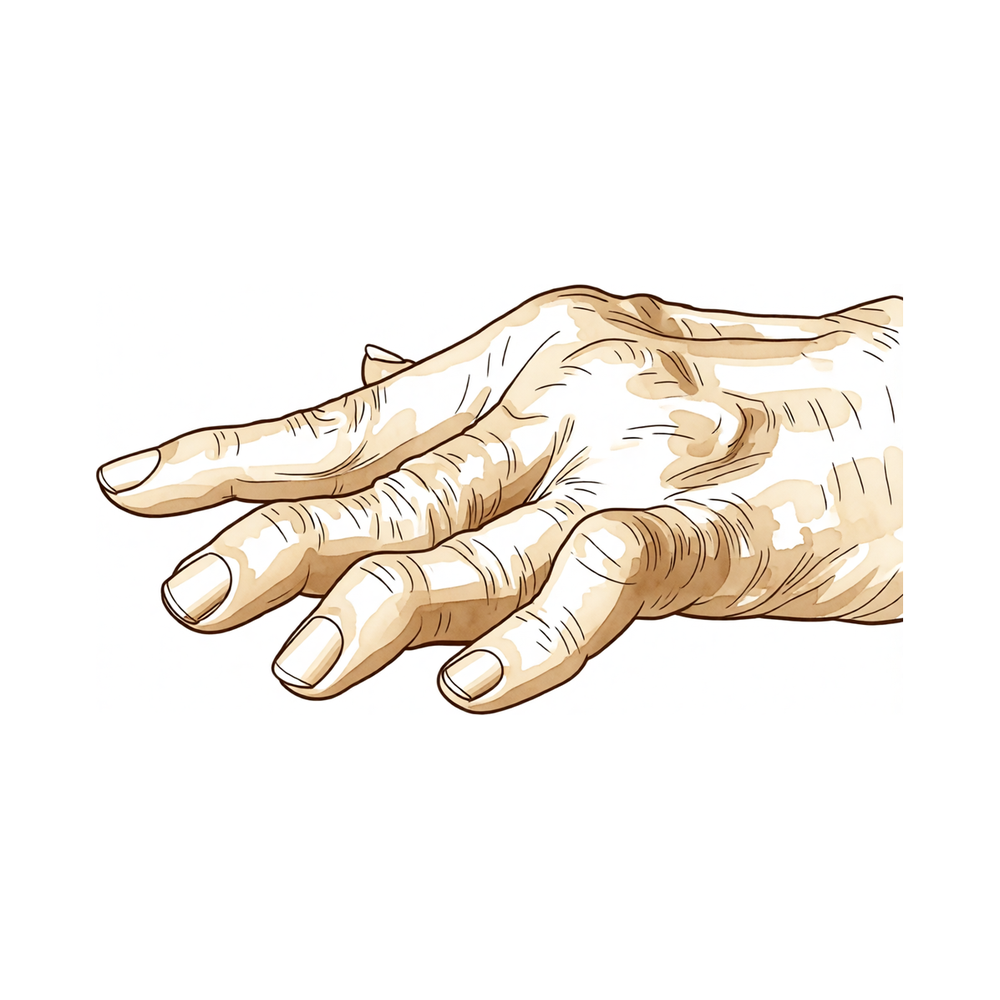
Isang kamay na nagpapakita ng swan-neck posture — ang gitnang kasukasuan ng daliri ay nakabaluktot pabalik at ang dulo ng daliri ay nakabaluktot pababa.
Swan-neck deformity: ang gitnang kasukasuan (PIP) ay naka-hyperextend habang ang dulo ng daliri (DIP) ay nakabaluktot pababa, na nagbibigay sa daliri ng hugis na swan-neck. Abdulaziz Alkanderi / Wikimedia Commons, CC BY-SA 3.0

Ang pahinang ito ay isinalin ng makina at hindi pa nasusuri ng isang doktor. Ang bersyong Ingles ang siyang opisyal.

Ang iyong nararamdaman

Maaaring napansin mo na ang isa o higit pa sa iyong mga daliri ay nagkaroon ng kakaibang hugis. Ang gitnang kasukasuan ng daliri (ang malaking knuckle sa gitna, hindi ang nasa base) ay bumabaluktot pabalik kaya ang daliri ay mukhang bahagyang naka-arko o "swan-like," habang ang maliit na kasukasuan na pinakamalapit sa kuko ay nakalaylay pasulong. Kapag tiningnan mula sa gilid, ang daliri ay bumubuo ng mababaw na zig-zag.

Sa simula, maaaring ito ay mas nakakaabala kaysa masakit: ang daliri ay maaaring maramdamang "nababara" o pumipitik habang sinusubukan itong itiklop, at maaaring mahirap ang paggawa ng maayos na kamao o paghawak ng maliliit na bagay. Habang ito ay nagiging mas permanente, ang daliri ay maaaring hindi na maituwid o maikurba gaya ng dati, at ang mga pang-araw-araw na gawain (pagbubutones, pagpulot ng barya, paghawak ng panulat) ay nagiging mahirap at nakakapagod. Ang ilang tao ay unang napapansin ito dahil lamang sa sumasabit ang daliri kapag ipinapasok nila ang kamay sa bulsa o sa guwantes.

Ano ang aktwal na nangyayari

Ang iyong daliri ay binabalanse ng isang matalinong sistema ng mga tendon at maliliit na ligament na tumatakbo sa itaas, ibaba, at mga gilid ng bawat joint. Ang gitnang joint (ang PIP joint) ay karaniwang pinipigilan sa pagbaluktot pabalik ng isang matibay at maliit na ligament sa bahagi ng palad nito na tinatawag na volar plate, at ng mga tendon band na nakapuwesto sa mga gilid ng daliri.

Sa isang swan-neck deformity, nawawala ang balanseng iyon. Kung ang volar plate ay lumuwag, o ang mga side-tendon (ang mga lateral band) ay dumulas paakyat sa itaas ng joint, ang gitnang joint ay nahihila pabalik sa hyperextension, at dahil ang mga tendon ay lahat konektado, ang dulo ng daliri ay nahihila pababa. Ang dalawang ito ay magkasabay na nangyayari.

Mayroong ilang dahilan kung bakit maaaring mabigo ang balanse. Minsan nagsisimula ito sa dulo ng daliri: ang isang hindi nagamot na mallet finger (isang nakalaylay na dulo ng daliri pagkatapos ng injury sa tendon) ay nagbabago sa hila ng mga tendon at dahan-dahang itinutulak ang gitnang joint pabalik. Madalas itong dulot ng inflammatory arthritis, lalo na ang rheumatoid arthritis, na nag-uunat at nagpapahina sa mga ligament. Maaari rin itong sumunod sa loose-jointedness, mga lumang injury, o mga kondisyon na nagpapataas ng muscle tightness. Anuman ang trigger, ang huling resulta ay ang parehong nakikilalang hugis.

Ano ang maaari naming gawin tungkol dito

Pinamumunuan ni Dr Kieran Hirpara ang aming upper-limb service sa Mater Private Hospital Rockhampton, kung saan ginagabayan namin ang mga pasyente mula sa paunang referral hanggang sa isang malinaw na management plan. Ang iyong paglalakbay ay nagsisimula sa isang masusing clinic assessment upang kumpirmahin ang diagnosis at maunawaan kung paano gumagalaw ang iyong daliri. Karaniwan kaming nagsisimula sa non-operative care para sa mga matagal nang isyu at isinasaalang-alang lamang ang operasyon kapag ang pamamaraang iyon ay hindi nagbigay ng sapat na ginhawa.

Ang tamang paggamot ay nakadepende sa kung gaano pa ka-flexible ang daliri at kung ano ang nagiging sanhi nito, kaya ang unang hakbang ay palaging isang wastong hand assessment at paggamot sa anumang underlying arthritis.

Kung ang daliri ay supple pa at ang joint ay maaaring ituwid at itiklop nang malaya, madalas kaming nagsisimula nang walang operasyon. Isang maliit at custom na figure-of-eight splint (kung minsan ay isang neat silver-ring style splint) ang inilalagay sa middle joint at tahimik na hinaharangan ang pagbaluktot pabalik habang hinahayaan pa ring gumana ang daliri. Maraming tao ang nakakayanan nang maayos sa paraang ito, at ang hand therapy ay tumutulong upang mapanatiling gumagalaw ang mga joint.

Kung ang splinting ay hindi sapat, o ang daliri ay nagsisimulang ma-stuck, maaaring muling i-balance ito sa pamamagitan ng operasyon. Mayroong ilang well-established na mga opsyon, na pinipili upang bumagay sa iyong daliri: muling pag-tether ng middle joint gamit ang isang slip ng isa sa iyong sariling mga tendon upang hindi na ito mabaluktot pabalik (isang tenodesis); paghihigpit sa maluwag na ligament sa bahagi ng palad; o pagbabalik ng mga slipped side-tendon sa kanilang tamang kinalalagyan. Kung ang joint surface mismo ay pudpod na at matigas (karaniwan sa long-standing arthritis), maaari naming i-fuse ang joint sa isang mabuting working position o, sa mga piling kaso, palitan ito.

Ano ang dapat asahan

Kapag naagapan habang flexible pa ang daliri, maganda ang prognosis; ang isang splint o re-balancing operation ay maaaring magbalik ng mas kapaki-pakinabang at mas swabeng paggalaw ng daliri. Habang nagiging mas rigid at arthritic ang joint, mas nagiging limitado ang mga opsyon, kaya naman mahalagang magpakonsulta bago pa man tumigas ang daliri sa isang posisyon.

Kung sasailalim sa operasyon, asahan ang isang panahon ng paggamit ng splint at isang kurso ng hand therapy pagkatapos nito upang muling sanayin ang daliri at protektahan ang repair; ang rehab na ito ay isang mahalagang bahagi ng resulta, hindi isang optional na extra. Sa mga kaso kung saan ang underlying arthritis ang sanhi, ang pagpapanatili nitong kontrolado kasama ang iyong rheumatology team ay nagpoprotekta sa ibang mga daliri upang hindi rin mangyari ang parehong kondisyon.

Kailan dapat magpatingin

  • Isang dulo ng daliri na nakalaylay at hindi na ganap na naituwid pagkatapos ng isang pagkabagok o jamming injury (isang mallet finger); ang maagang paggamot dito ay maaaring makapigil sa swan-neck sa hinaharap.
  • Isang daliri na nagsisimulang kumurbada pabalik sa gitnang kasukasuan, o kaya ay sumasabit, pumipitik o nagla-lock kapag ibinabaluktot.
  • Tumitinding paninigas, o isang daliri na hindi na nakakagawa ng swabeng kamao.
  • Kilalang rheumatoid o inflammatory arthritis na may nagbabagong hugis ng daliri: mahalagang masuri bago maging permanente ang deformity.

Higit pang detalye

Advanced reading: the deeper science (optional)

Ang seksyong ito ay higit pa sa kailangan mo para sa iyong sariling mga desisyon sa paggamot. Ang swan neck deformity ay karapat-dapat sa karagdagang pagbabasa dahil hindi ito iisang kondisyon; ang parehong hugis ng daliri ay nagmumula sa ilang magkakaibang pagkasira, sa magkabilang dulo ng daliri, at ang tamang paggamot ay nakadepende nang lubos sa kung alin sa mga ito ang nagpasimula nito.

Isang hugis, ilang mga sanhi

Ang swan neck finger ay nag-hyperextend sa gitnang joint at lumulundo sa dulo ng daliri. Ang postura na ito ay ang huling estado ng isang imbalance sa isang linked system, at ang nagsimulang fault ay maaaring nasa alinman sa magkabilang dulo.

Mula sa dulo ng daliri. Ang isang hindi nagamot na mallet injury ay nag-iiwan sa extensor mechanism na detached distally [1]. Ang extensor force na hindi na nito naibibigay sa dulo ng daliri ay naipapasa sa halip sa gitnang joint, na unti-unting nahihila patungo sa hyperextension. Ang swan neck ay maaari samakatuwid na maging huling bunga ng isang pinsala ilang linggo o buwan na ang nakalipas na tila kinasangkutan lamang ng dulo ng daliri.

Mula sa gitnang joint. Kung ang volar plate, ang makapal na ligament na pumipigil sa gitnang joint mula sa pag-hyperextend, ay nabanat o napunit, ang joint ay gumagalaw pabalik. Ang mga lateral band ay sumasakay pagkatapos sa itaas ng axis ng joint at pinapatibay ang extension, habang ang deep flexor tendon ay naiiwang may slack na nag-flex sa dulo ng daliri.

Mula sa generalised laxity o inflammatory disease. Sa hypermobility, ang volar plate ay constitutionally lax sa halip na injured. Sa rheumatoid arthritis, pinahihina ng synovitis ang mga restraint sa paglipas ng panahon, at ang deformity ay karaniwang bahagi ng isang mas malawak na pattern sa ilang mga daliri [3].

Bakit ang pagkakaiba ang nagtatakda ng gamutan

Layunin ng gamutan na pigilan ang hyperextension ng middle joint, at ang antas kung saan ito itatama ay dapat tumugma sa antas ng depekto.

Kung ang deformity ay nagmumula sa dulo ng daliri, ang pagtatama sa middle joint lamang ay hindi tumutugon sa imbalance na nagdudulot nito. Kung ang volar plate ay pumalya, maaaring gumamit ng tenodesis gamit ang isang slip ng superficialis tendon upang pigilan ang hyperextension [2]. Kung ang sanhi ay inflammatory, ang underlying disease ang nagtatakda kung ang anumang reconstruction ay tatagal; ang mga soft-tissue procedure sa isang kamay na may aktibong pamamaga ay may tendensiyang lumuwag sa paglipas ng panahon.

Isang silver-ring o figure-of-eight splint, na humaharang sa huling ilang digri ng hyperextension habang pinapayagan ang daliri na mabaluktot, ang madalas na ginagamit muna. Mas epektibo ito kaysa sa inaakala, dahil ang pagpigil sa maliit na range na iyon ay pinuputol ang mekanismong nagtutulak sa deformity.

Flexible laban sa fixed ang isa pang mapagpasyang katanungan

Ang ikalawang katanungan ay kung ang daliri ay maaari pa ring ituwid nang passively. Ang isang flexible deformity — isa na maaaring itama gamit ang kamay, ay maaaring tumugon sa splinting o soft-tissue rebalancing. Ang isang fixed deformity, kung saan ang joint ay hindi na gumagalaw sa range nito, ay mayroon nang established joint contracture at ang mga soft-tissue procedure lamang ay hindi ito itatama [4].

Ang praktikal na implikasyon ay katulad din ng para sa boutonnière deformity, at ito ang dahilan kung bakit kapwa mahalagang ipakita ang mga ito sa isang eksperto nang maaga: ang mga ito ay progressive at self-reinforcing na mga deformity. Ang window kung saan ang isang splint ay maaaring magpanatiling tuwid sa isang flexible na daliri ay mas malawak kaysa sa window kung saan ang surgery ay maaaring magpanumbalik sa isang fixed na daliri.

Isang tala tungkol sa kaugnay na deformity

Ang Boutonnière ay sa ilang paraan ay mirror image, nakabaluktot ang gitnang joint, hyperextended ang dulo ng daliri, at nagmumula sa pagkasira ng central slip sa halip na sa volar plate. Ang dalawang ito ay tinatalakay nang hiwalay, at mahalagang hindi sila mapagpalit dahil magkasalungat ang mga posisyon ng splinting.

Mga Sanggunian

[1] McKeon KE, Lee DH. Posttraumatic boutonnière and swan neck deformities. J Am Acad Orthop Surg. 2015;23(10):623-32. https://doi.org/10.5435/JAAOS-D-14-00272

[2] Wei DH, Terrono AL. Superficialis sling (flexor digitorum superficialis tenodesis) for swan neck reconstruction. J Hand Surg Am. 2015;40(10):2068-74. https://doi.org/10.1016/j.jhsa.2015.07.018

[3] Smith GC, Amirfeyz R. The flexible swan neck deformity in rheumatoid arthritis. J Hand Surg Am. 2013;38(7):1405-7. https://doi.org/10.1016/j.jhsa.2013.01.002

[4] Fox PM, Chang J. Treating the proximal interphalangeal joint in swan neck and boutonniere deformities. Hand Clin. 2018;34(2):167-76. https://doi.org/10.1016/j.hcl.2017.12.006


Creative Commons BY-NC 4.0

CC Creative Commons licence
BY Attribution — you must credit the source
NC NonCommercial — not for commercial use

Attribution-NonCommercial 4.0 International


Creative Commons Corporation ("Creative Commons") is not a law firm and does not provide legal services or legal advice. Distribution of Creative Commons public licenses does not create a lawyer-client or other relationship. Creative Commons makes its licenses and related information available on an "as-is" basis. Creative Commons gives no warranties regarding its licenses, any material licensed under their terms and conditions, or any related information. Creative Commons disclaims all liability for damages resulting from their use to the fullest extent possible.

Using Creative Commons Public Licenses

Creative Commons public licenses provide a standard set of terms and conditions that creators and other rights holders may use to share original works of authorship and other material subject to copyright and certain other rights specified in the public license below. The following considerations are for informational purposes only, are not exhaustive, and do not form part of our licenses.

Considerations for licensors: Our public licenses are intended for use by those authorized to give the public permission to use material in ways otherwise restricted by copyright and certain other rights. Our licenses are irrevocable. Licensors should read and understand the terms and conditions of the license they choose before applying it. Licensors should also secure all rights necessary before applying our licenses so that the public can reuse the material as expected. Licensors should clearly mark any material not subject to the license. This includes other CC- licensed material, or material used under an exception or limitation to copyright. More considerations for licensors: wiki.creativecommons.org/Considerations_for_licensors

Considerations for the public: By using one of our public licenses, a licensor grants the public permission to use the licensed material under specified terms and conditions. If the licensor's permission is not necessary for any reason--for example, because of any applicable exception or limitation to copyright--then that use is not regulated by the license. Our licenses grant only permissions under copyright and certain other rights that a licensor has authority to grant. Use of the licensed material may still be restricted for other reasons, including because others have copyright or other rights in the material. A licensor may make special requests, such as asking that all changes be marked or described. Although not required by our licenses, you are encouraged to respect those requests where reasonable. More considerations for the public: wiki.creativecommons.org/Considerations_for_licensees


Creative Commons Attribution-NonCommercial 4.0 International Public License

By exercising the Licensed Rights (defined below), You accept and agree to be bound by the terms and conditions of this Creative Commons Attribution-NonCommercial 4.0 International Public License ("Public License"). To the extent this Public License may be interpreted as a contract, You are granted the Licensed Rights in consideration of Your acceptance of these terms and conditions, and the Licensor grants You such rights in consideration of benefits the Licensor receives from making the Licensed Material available under these terms and conditions.

Section 1 -- Definitions.

a. Adapted Material means material subject to Copyright and Similar Rights that is derived from or based upon the Licensed Material and in which the Licensed Material is translated, altered, arranged, transformed, or otherwise modified in a manner requiring permission under the Copyright and Similar Rights held by the Licensor. For purposes of this Public License, where the Licensed Material is a musical work, performance, or sound recording, Adapted Material is always produced where the Licensed Material is synched in timed relation with a moving image.

b. Adapter's License means the license You apply to Your Copyright and Similar Rights in Your contributions to Adapted Material in accordance with the terms and conditions of this Public License.

c. Copyright and Similar Rights means copyright and/or similar rights closely related to copyright including, without limitation, performance, broadcast, sound recording, and Sui Generis Database Rights, without regard to how the rights are labeled or categorized. For purposes of this Public License, the rights specified in Section 2(b)(1)-(2) are not Copyright and Similar Rights.

d. Effective Technological Measures means those measures that, in the absence of proper authority, may not be circumvented under laws fulfilling obligations under Article 11 of the WIPO Copyright Treaty adopted on December 20, 1996, and/or similar international agreements.

e. Exceptions and Limitations means fair use, fair dealing, and/or any other exception or limitation to Copyright and Similar Rights that applies to Your use of the Licensed Material.

f. Licensed Material means the artistic or literary work, database, or other material to which the Licensor applied this Public License.

g. Licensed Rights means the rights granted to You subject to the terms and conditions of this Public License, which are limited to all Copyright and Similar Rights that apply to Your use of the Licensed Material and that the Licensor has authority to license.

h. Licensor means the individual(s) or entity(ies) granting rights under this Public License.

i. NonCommercial means not primarily intended for or directed towards commercial advantage or monetary compensation. For purposes of this Public License, the exchange of the Licensed Material for other material subject to Copyright and Similar Rights by digital file-sharing or similar means is NonCommercial provided there is no payment of monetary compensation in connection with the exchange.

j. Share means to provide material to the public by any means or process that requires permission under the Licensed Rights, such as reproduction, public display, public performance, distribution, dissemination, communication, or importation, and to make material available to the public including in ways that members of the public may access the material from a place and at a time individually chosen by them.

k. Sui Generis Database Rights means rights other than copyright resulting from Directive 96/9/EC of the European Parliament and of the Council of 11 March 1996 on the legal protection of databases, as amended and/or succeeded, as well as other essentially equivalent rights anywhere in the world.

l. You means the individual or entity exercising the Licensed Rights under this Public License. Your has a corresponding meaning.

Section 2 -- Scope.

a. License grant.

1. Subject to the terms and conditions of this Public License, the Licensor hereby grants You a worldwide, royalty-free, non-sublicensable, non-exclusive, irrevocable license to exercise the Licensed Rights in the Licensed Material to:

a. reproduce and Share the Licensed Material, in whole or in part, for NonCommercial purposes only; and

b. produce, reproduce, and Share Adapted Material for NonCommercial purposes only.

2. Exceptions and Limitations. For the avoidance of doubt, where Exceptions and Limitations apply to Your use, this Public License does not apply, and You do not need to comply with its terms and conditions.

3. Term. The term of this Public License is specified in Section 6(a).

4. Media and formats; technical modifications allowed. The Licensor authorizes You to exercise the Licensed Rights in all media and formats whether now known or hereafter created, and to make technical modifications necessary to do so. The Licensor waives and/or agrees not to assert any right or authority to forbid You from making technical modifications necessary to exercise the Licensed Rights, including technical modifications necessary to circumvent Effective Technological Measures. For purposes of this Public License, simply making modifications authorized by this Section 2(a) (4) never produces Adapted Material.

5. Downstream recipients.

a. Offer from the Licensor -- Licensed Material. Every recipient of the Licensed Material automatically receives an offer from the Licensor to exercise the Licensed Rights under the terms and conditions of this Public License.

b. No downstream restrictions. You may not offer or impose any additional or different terms or conditions on, or apply any Effective Technological Measures to, the Licensed Material if doing so restricts exercise of the Licensed Rights by any recipient of the Licensed Material.

6. No endorsement. Nothing in this Public License constitutes or may be construed as permission to assert or imply that You are, or that Your use of the Licensed Material is, connected with, or sponsored, endorsed, or granted official status by, the Licensor or others designated to receive attribution as provided in Section 3(a)(1)(A)(i).

b. Other rights.

1. Moral rights, such as the right of integrity, are not licensed under this Public License, nor are publicity, privacy, and/or other similar personality rights; however, to the extent possible, the Licensor waives and/or agrees not to assert any such rights held by the Licensor to the limited extent necessary to allow You to exercise the Licensed Rights, but not otherwise.

2. Patent and trademark rights are not licensed under this Public License.

3. To the extent possible, the Licensor waives any right to collect royalties from You for the exercise of the Licensed Rights, whether directly or through a collecting society under any voluntary or waivable statutory or compulsory licensing scheme. In all other cases the Licensor expressly reserves any right to collect such royalties, including when the Licensed Material is used other than for NonCommercial purposes.

Section 3 -- License Conditions.

Your exercise of the Licensed Rights is expressly made subject to the following conditions.

a. Attribution.

1. If You Share the Licensed Material (including in modified form), You must:

a. retain the following if it is supplied by the Licensor with the Licensed Material:

i. identification of the creator(s) of the Licensed Material and any others designated to receive attribution, in any reasonable manner requested by the Licensor (including by pseudonym if designated);

ii. a copyright notice;

iii. a notice that refers to this Public License;

iv. a notice that refers to the disclaimer of warranties;

v. a URI or hyperlink to the Licensed Material to the extent reasonably practicable;

b. indicate if You modified the Licensed Material and retain an indication of any previous modifications; and

c. indicate the Licensed Material is licensed under this Public License, and include the text of, or the URI or hyperlink to, this Public License.

2. You may satisfy the conditions in Section 3(a)(1) in any reasonable manner based on the medium, means, and context in which You Share the Licensed Material. For example, it may be reasonable to satisfy the conditions by providing a URI or hyperlink to a resource that includes the required information.

3. If requested by the Licensor, You must remove any of the information required by Section 3(a)(1)(A) to the extent reasonably practicable.

4. If You Share Adapted Material You produce, the Adapter's License You apply must not prevent recipients of the Adapted Material from complying with this Public License.

Section 4 -- Sui Generis Database Rights.

Where the Licensed Rights include Sui Generis Database Rights that apply to Your use of the Licensed Material:

a. for the avoidance of doubt, Section 2(a)(1) grants You the right to extract, reuse, reproduce, and Share all or a substantial portion of the contents of the database for NonCommercial purposes only;

b. if You include all or a substantial portion of the database contents in a database in which You have Sui Generis Database Rights, then the database in which You have Sui Generis Database Rights (but not its individual contents) is Adapted Material; and

c. You must comply with the conditions in Section 3(a) if You Share all or a substantial portion of the contents of the database.

For the avoidance of doubt, this Section 4 supplements and does not replace Your obligations under this Public License where the Licensed Rights include other Copyright and Similar Rights.

Section 5 -- Disclaimer of Warranties and Limitation of Liability.

a. UNLESS OTHERWISE SEPARATELY UNDERTAKEN BY THE LICENSOR, TO THE EXTENT POSSIBLE, THE LICENSOR OFFERS THE LICENSED MATERIAL AS-IS AND AS-AVAILABLE, AND MAKES NO REPRESENTATIONS OR WARRANTIES OF ANY KIND CONCERNING THE LICENSED MATERIAL, WHETHER EXPRESS, IMPLIED, STATUTORY, OR OTHER. THIS INCLUDES, WITHOUT LIMITATION, WARRANTIES OF TITLE, MERCHANTABILITY, FITNESS FOR A PARTICULAR PURPOSE, NON-INFRINGEMENT, ABSENCE OF LATENT OR OTHER DEFECTS, ACCURACY, OR THE PRESENCE OR ABSENCE OF ERRORS, WHETHER OR NOT KNOWN OR DISCOVERABLE. WHERE DISCLAIMERS OF WARRANTIES ARE NOT ALLOWED IN FULL OR IN PART, THIS DISCLAIMER MAY NOT APPLY TO YOU.

b. TO THE EXTENT POSSIBLE, IN NO EVENT WILL THE LICENSOR BE LIABLE TO YOU ON ANY LEGAL THEORY (INCLUDING, WITHOUT LIMITATION, NEGLIGENCE) OR OTHERWISE FOR ANY DIRECT, SPECIAL, INDIRECT, INCIDENTAL, CONSEQUENTIAL, PUNITIVE, EXEMPLARY, OR OTHER LOSSES, COSTS, EXPENSES, OR DAMAGES ARISING OUT OF THIS PUBLIC LICENSE OR USE OF THE LICENSED MATERIAL, EVEN IF THE LICENSOR HAS BEEN ADVISED OF THE POSSIBILITY OF SUCH LOSSES, COSTS, EXPENSES, OR DAMAGES. WHERE A LIMITATION OF LIABILITY IS NOT ALLOWED IN FULL OR IN PART, THIS LIMITATION MAY NOT APPLY TO YOU.

c. The disclaimer of warranties and limitation of liability provided above shall be interpreted in a manner that, to the extent possible, most closely approximates an absolute disclaimer and waiver of all liability.

Section 6 -- Term and Termination.

a. This Public License applies for the term of the Copyright and Similar Rights licensed here. However, if You fail to comply with this Public License, then Your rights under this Public License terminate automatically.

b. Where Your right to use the Licensed Material has terminated under Section 6(a), it reinstates:

1. automatically as of the date the violation is cured, provided it is cured within 30 days of Your discovery of the violation; or

2. upon express reinstatement by the Licensor.

For the avoidance of doubt, this Section 6(b) does not affect any right the Licensor may have to seek remedies for Your violations of this Public License.

c. For the avoidance of doubt, the Licensor may also offer the Licensed Material under separate terms or conditions or stop distributing the Licensed Material at any time; however, doing so will not terminate this Public License.

d. Sections 1, 5, 6, 7, and 8 survive termination of this Public License.

Section 7 -- Other Terms and Conditions.

a. The Licensor shall not be bound by any additional or different terms or conditions communicated by You unless expressly agreed.

b. Any arrangements, understandings, or agreements regarding the Licensed Material not stated herein are separate from and independent of the terms and conditions of this Public License.

Section 8 -- Interpretation.

a. For the avoidance of doubt, this Public License does not, and shall not be interpreted to, reduce, limit, restrict, or impose conditions on any use of the Licensed Material that could lawfully be made without permission under this Public License.

b. To the extent possible, if any provision of this Public License is deemed unenforceable, it shall be automatically reformed to the minimum extent necessary to make it enforceable. If the provision cannot be reformed, it shall be severed from this Public License without affecting the enforceability of the remaining terms and conditions.

c. No term or condition of this Public License will be waived and no failure to comply consented to unless expressly agreed to by the Licensor.

d. Nothing in this Public License constitutes or may be interpreted as a limitation upon, or waiver of, any privileges and immunities that apply to the Licensor or You, including from the legal processes of any jurisdiction or authority.


Creative Commons is not a party to its public licenses. Notwithstanding, Creative Commons may elect to apply one of its public licenses to material it publishes and in those instances will be considered the “Licensor.” The text of the Creative Commons public licenses is dedicated to the public domain under the CC0 Public Domain Dedication. Except for the limited purpose of indicating that material is shared under a Creative Commons public license or as otherwise permitted by the Creative Commons policies published at creativecommons.org/policies, Creative Commons does not authorize the use of the trademark "Creative Commons" or any other trademark or logo of Creative Commons without its prior written consent including, without limitation, in connection with any unauthorized modifications to any of its public licenses or any other arrangements, understandings, or agreements concerning use of licensed material. For the avoidance of doubt, this paragraph does not form part of the public licenses.

Creative Commons may be contacted at creativecommons.org.