Patients › Rehabilitation
Pagpapalit ng PIP Joint
Isang protektadong plano ng paggaling pagkatapos ng silicone replacement ng gasgas na gitnang kasukasuan ng daliri (ang PIP joint), kung saan ang bilis ng pagsisimula ng paggalaw ay nakadepende kung ang siruhano ay pumasok mula sa harap (panig ng palad) o sa likod ng daliri.
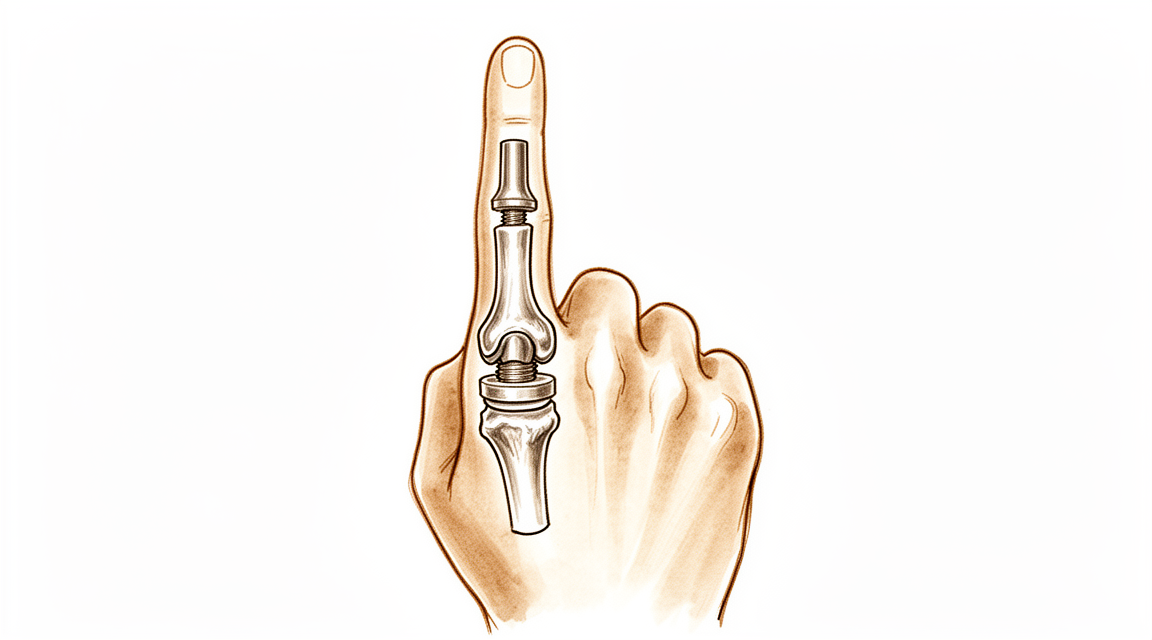
Ang protocol na ito ay nagsisilbing gabay sa iyong paggaling pagkatapos ng pagpapalit ng gasgas na gitnang kasukasuan ng daliri (ang proximal interphalangeal (PIP) joint, ang gitnang knuckle) gamit ang isang flexible silicone spacer, na isinagawa ni Dr Kieran Hirpara sa Mater Private Hospital Rockhampton. Nagsisimula ito sa iyong home exercise program, na sinusundan ng structured clinical protocol na isinulat para sa iyong hand therapist. Dalhin ang pahinang ito o ang PDF nito sa iyong unang therapy visit upang manatiling coordinated ang iyong rehabilitasyon. Maaaring i-adjust ng iyong therapist ang plano depende sa pag-unlad ng iyong paggaling.
Kung mayroon kang anumang alalahanin tungkol sa iyong sugat pagkatapos ng operasyon, makipag-ugnayan sa mga rooms. Madalas na nakakatulong ang pagkuha ng larawan ng sugat at pag-email nito para masuri.
Ano ang dapat asahan
Ang gitnang kasukasuan (joint) ng iyong daliri ay napudpod dahil sa arthritis, na nagdudulot ng sakit at paninigas. Sa operasyong ito, tatanggalin ang mga napudpod na surface ng kasukasuan at maglalagay ng isang flexible silicone spacer (isang Swanson-type implant) sa pagitan ng dalawang buto. Ang spacer ay hindi isang matigas na mechanical hinge; ito ay isang nababaluktot na spacer na naghihiwalay sa mga buto, nagpapahintulot sa daliri na mabaluktot, at hinahayaan ang iyong sariling scar tissue na bumuo ng isang bagong supportive sleeve sa paligid nito. Ang pangunahin at pinaka-maaasahang benepisyo ay ang pagkawala ng sakit. Dapat ka ring asahan ang isang kapaki-pakinabang at katamtamang arc ng pagbaluktot (karaniwang nasa 40 hanggang 60 degrees) sa halip na isang buo at normal na range. Karamihan sa mga tao ay lubos na nasisiyahan dahil wala na ang sakit at komportable nang gamitin ang daliri.
Ang pinaka-importanteng bagay tungkol sa iyong recovery ay kung saang bahagi pumasok ang surgeon, dahil ito ang nagtatakda kung gaano ka kabilis makakagalaw:
- Mula sa harap (sa bahagi ng palad, isang volar approach): ang straightening tendon sa likod ng daliri ay hinahayaang buo. Dahil walang kailangang gumaling sa likod, karaniwan ay maaari mo nang simulan ang paggalaw ng daliri sa loob ng ilang araw.
- Mula sa likod (isang dorsal approach): ang straightening tendon (ang central slip) ay kailangang hatiin o iangat upang maabot ang kasukasuan, at pagkatapos ay kailangang kumpunihin. Ang kumpuning iyon ay dapat munang protektahan, kaya ang daliri ay nilalagyan ng splint nang diretso sa simula at ang pagbaluktot ay unti-unting ipinapakilala, sa ilalim ng gabay ng iyong hand therapist.
Susundin ng iyong hand therapist ang plano para sa iyong surgical approach. Sasabihin sa kanila ni Dr Hirpara kung aling approach ang ginamit, at ang mga timing sa ibaba ay iniakma para dito. Anuman ang approach na ginamit sa iyo, ang bagong kasukasuan ay isang hinge: gusto nito ang pagbaluktot at pagtuwid sa isang tuwid na linya, ngunit hindi nito gusto ang maitulak o mapilipit nang patagilid. Ang pagprotekta rito mula sa side-to-side stress ang nagpapanatili rito na stable sa pangmatagalan.
Mga pag-iingat at limitasyon
- Igalaw ang daliri sa isang tuwid na linya lamang (pagbaluktot at pagtuwid) at iwasan ang anumang puwersang paitaas-pababa o pagpilit na pag-ikot sa inoperahang daliri. Ang bagong joint ay isang hinge at ang stress sa gilid ay maaaring magpaluwag o magpabago sa hugis nito.
- Isuot ang iyong splint ayon sa itinuro, at gumamit ng buddy strapping para sa mga aktibidad upang mapanatiling tuwid ang paggalaw ng daliri.
- Kung ang iyong operasyon ay mula sa likod ng daliri, HUWAG itulak ang sariling pagtuwid lampas sa limitasyong ibinigay sa iyo sa simula: ang straightening tendon ay nagpapagaling pa lamang.
- HUWAG gumawa ng mahigpit na paghawak (gripping), matinding pag-pinch, o mabibigat o umiikot na mga gawain hanggang sa payagan ng iyong hand therapist ang strengthening (karaniwan ay mula sa ika-anim na linggo).
- Panatilihing gumagalaw ang iba pang mga joint ng daliri, ang iyong pulso (wrist) at ang iyong balikat mula sa simula, at gamitin ang kamay para sa mga magagaan na pang-araw-araw na gawain hangga't komportable.
Para sa pamamahala ng sugat, pamamaga at peklat, tingnan ang gabay ng klinika sa wound care.
Iyong mga ehersisyo
Kieran Hirpara 4.0
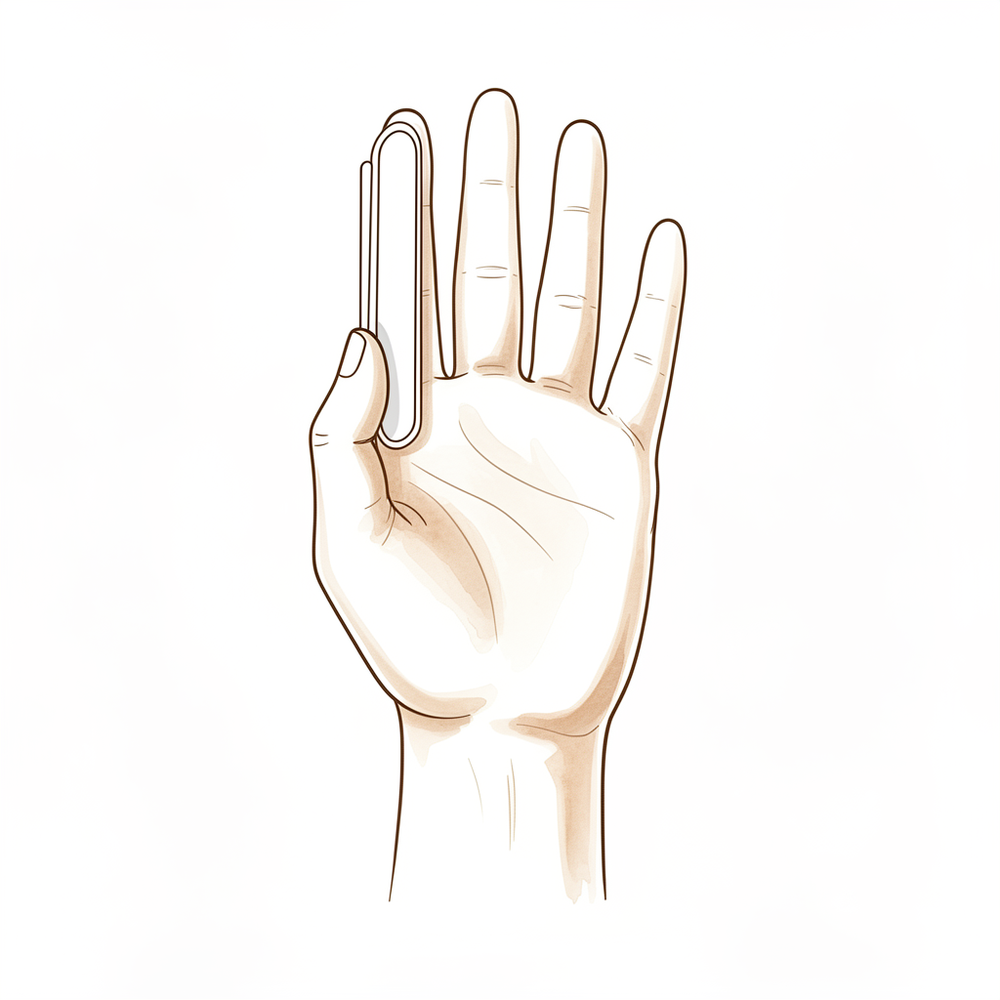
Protektadong aktibong pagbaluktot (PIP joint)
Gamit ang iyong ibang mga daliri at ang splint na sumusuporta sa nalalabing bahagi ng kamay, dahan-dahang itiklop at ituwid ang inoperahang middle joint ng daliri sa loob ng range na itinakda ng iyong hand therapist. Panatilihin itong mabagal at tuwid — itiklop at ituwid sa isang malinis na linya, nang hindi hinahayaang tumagilid ang daliri sa isang panig. Pinapanatili nito ang paggalaw ng bagong joint upang hindi ito tumigas.
10 beses, ilang beses sa isang araw, sa loob ng iyong itinakdang range
Kieran Hirpara 4.0
Aktibong pagtuwid (extension)
Dahan-dahang ituwid ang inoperahang daliri nang kasing-buo at kasing-tuwid hangga't kaya mo, pagkatapos ay i-relax ito. Kung ang iyong operasyon ay mula sa likod ng daliri, ito ang galaw na dapat protektahan sa simula — gagabayan ka ng iyong hand therapist kung gaano karami ang dapat gawin at kailan, dahil kailangang gumaling muna ang straightening tendon. Huwag itong pilitin kailanman.
10 beses, ilang beses sa isang araw, ayon sa gabay
Kieran Hirpara 4.0
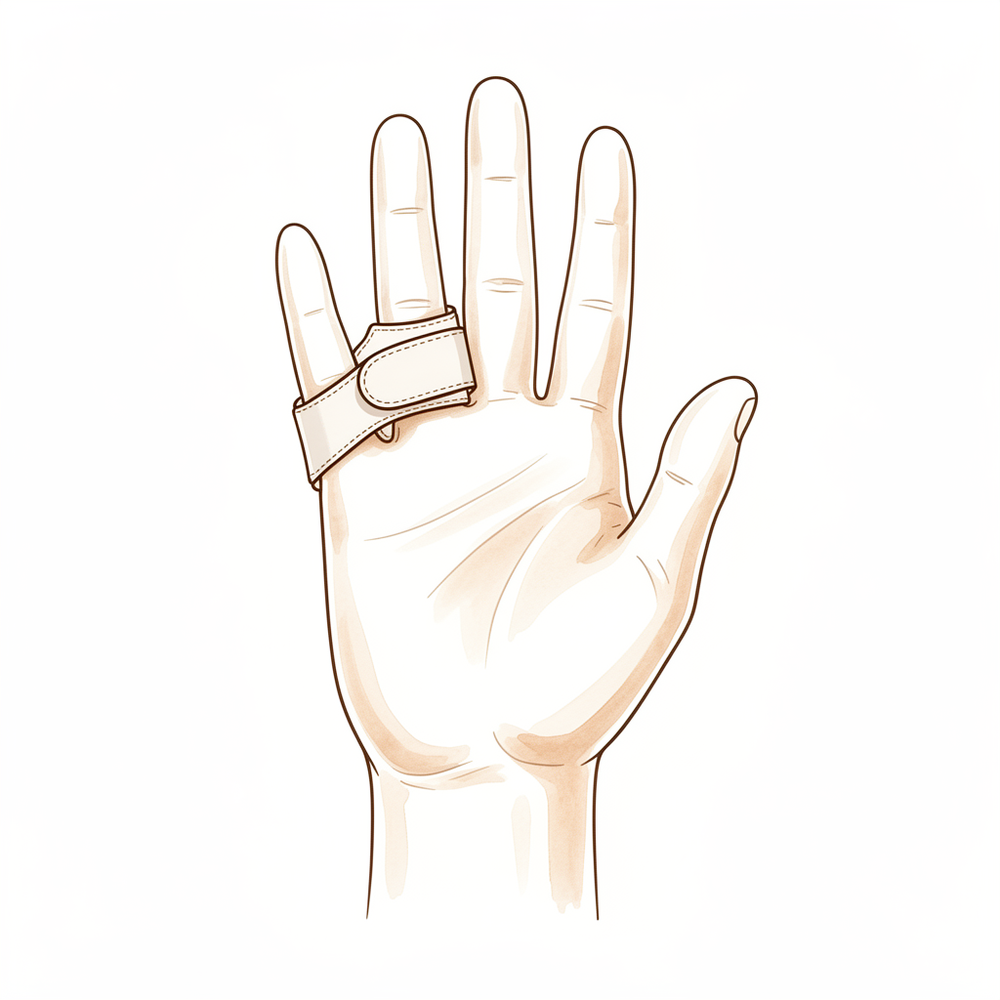
Buddy strapping
Dahan-dahang i-tape ang inoperahang daliri sa katabing daliri (sa itaas at ibaba ng gitnang joint, hindi sa ibabaw nito). Ang katabing daliri ay magsisilbing splint na gagabay sa iyong daliri upang mabaluktot at maunat sa isang tuwid na linya at pipigil dito sa pagtagilid patungo sa bagong joint. Isuot ito para sa mga aktibidad ayon sa payo.
Isusuot habang may magaan na aktibidad, ayon sa gabay ng iyong hand therapist
Kieran Hirpara 4.0
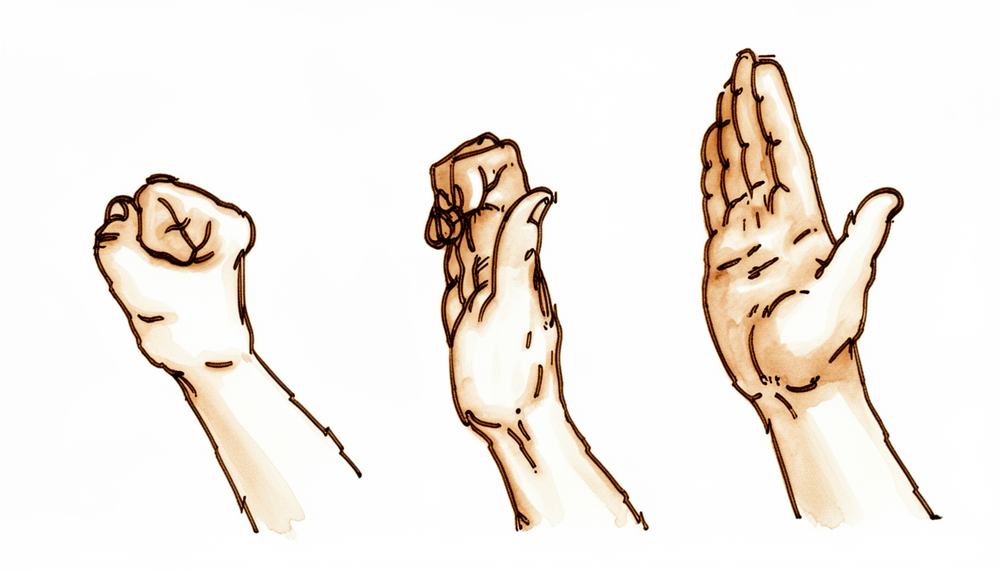
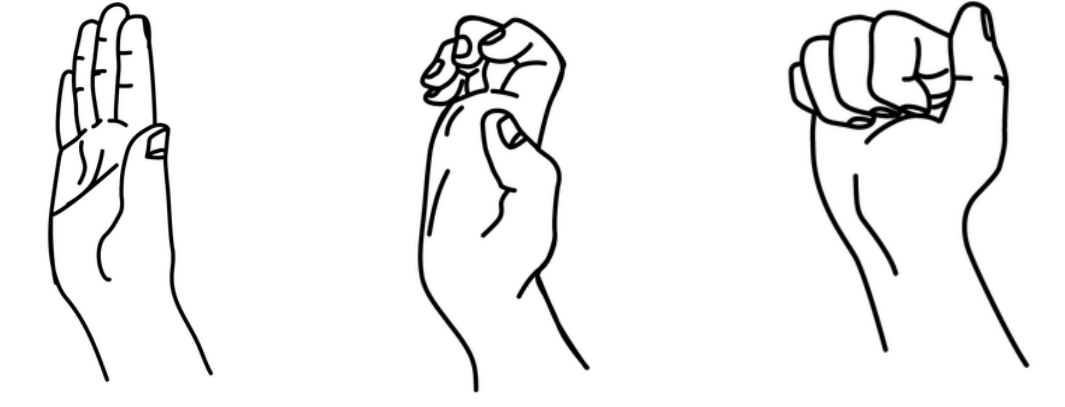
Tendon glides
Igalaw ang iyong kamay sa tatlong hugis: tuwid ang mga daliri (flat hand), pagkatapos ay itiklop lamang ang huling dalawang kasukasuan upang maging hugis-kawit (hook), pagkatapos ay itiklop nang dahan-dahan para maging isang buong kamao, at pagkatapos ay ituwid itong muli. Pinapadulas nito ang mga tendon upang hindi sila dumikit habang gumagaling ang daliri. Manatili sa loob ng anumang limitasyon sa pagtiklop na ibinigay sa iyo.
5–10 beses sa sequence, ilang beses sa isang araw
Kieran Hirpara 4.0
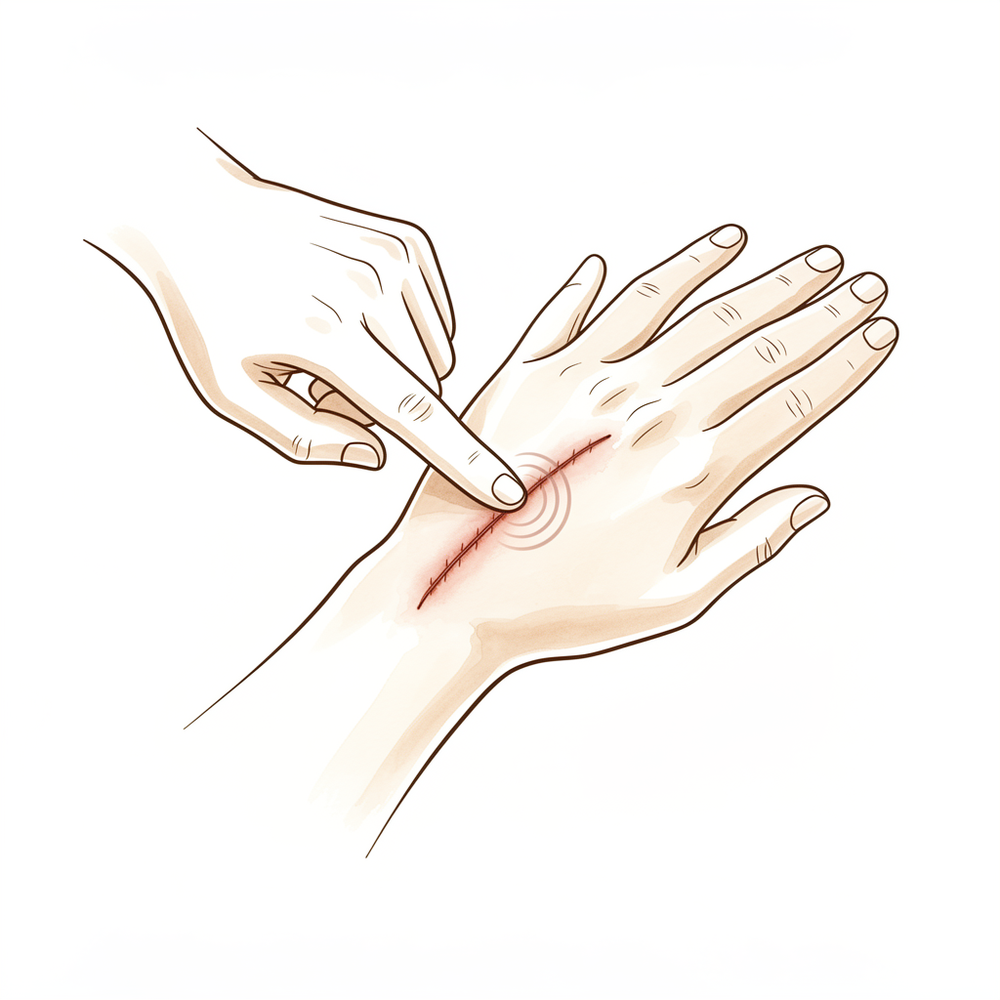
Masahe sa peklat
Kapag ganap nang magaling ang sugat, i-massage ang peklat gamit ang kaunting plain cream, sa pamamagitan ng paggawa ng maliliit at madiing pabilog na galaw sa loob ng ilang minuto. Pinapanatili nitong malambot ang peklat at pinipigilan itong kumapit sa tendon at joint sa ilalim nito. Huwag simulan hangga't hindi kinukumpirma ng iyong hand therapist na magaling na ang sugat.
Ilang minuto, 2–3 beses sa isang araw, kapag magaling na ang sugat
Kieran Hirpara 4.0
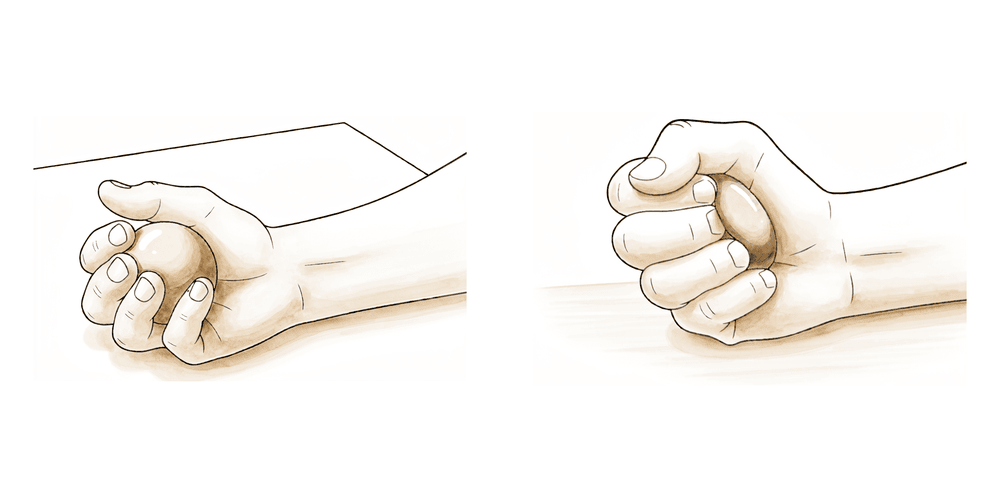
Pagpapalakas ng grip (kapit)
Isang ehersisyo sa HULING bahagi — kapag pinayagan na lamang ng iyong hand therapist ang strengthening (karaniwan mula humigit-kumulang anim na linggo). Dahan-dahang pisilin ang isang soft ball o putty, unti-unting dinaragdagan. Iwasan ang malakas na pag-pinch o anumang pagpilipit na naglalagay ng puwersang pagilid (side-to-side) sa bagong joint hangga't hindi sinasabing ligtas na.
Ayon sa gabay ng iyong hand therapist (sa huling phase lamang)
Ito ang mga ehersisyo mula sa iyong handout. Simulan lamang ang mga ito ayon sa gabay ni Dr Hirpara at ng iyong hand therapist, at manatili sa anumang range at limitasyong ibinigay sa iyo. Ang mga unang gawain ay pinapanatili ang paggalaw ng daliri sa isang tuwid na linya nang walang side stress: protected bending, gentle straightening, buddy strapping at tendon glides. Kung ang iyong operasyon ay mula sa likod ng daliri, ang ehersisyo sa active straightening ang dapat protektahan sa simula at dahan-dahang palakasin. Ang grip strengthening ay kabilang sa huling bahagi at hindi dapat simulan hangga't hindi ka partikular na pinapayagan. Itigil ang anumang nagdudulot ng matalas na sakit o nagpaparamdam na hindi stable ang daliri.
Ang iyong clinical protocol
Ang natitirang bahagi ng pahinang ito ay ang staged clinical protocol para sa rehabilitasyon pagkatapos ng silicone PIP joint arthroplasty. Ang seksyong ito ay ibibigay sa iyong hand therapist, at ang bawat phase ay nagsisimula sa isang paliwanag sa simpleng Ingles tungkol sa kung ano ang nangyayari. Ang protocol ay nakadepende sa approach, at ito ang pangunahing branch point: ang volar (palmar) approach ay hinahayaang buo ang extensor mechanism at pinapahintulutan ang maagang active motion sa loob ng ilang araw; ang dorsal approach ay hinahati o binibiyak ang central slip, kaya dapat munang protektahan ang paggaling ng extensor gamit ang extension orthotics at graded flexion. Sa kabuuan, ang silicone implant ay isang flexible spacer na ang long-term stability ay nakadepende sa peri-implant capsule, kaya iniiwasan ang coronal (lateral) stress at pinapanatili ang motion sa isang pure sagittal arc.
Bago ang gamutan, kumpirmahin sa treating surgeon ang surgical approach (volar vs dorsal), ang integridad/repair ng central slip at collateral ligaments, at anumang intra-operative arc. Tutukuyin ni Dr Hirpara ang approach; piliin ang volar (early-active-motion) o dorsal (extension-protected) pathway nang naaayon. Ang inaasahang functional target ay isang pain-free arc na humigit-kumulang 40–60°, hindi full range.
Phase I — proteksyon at pagsisimula ng paggalaw (linggo 0 hanggang 3)
Ang mga unang linggo ay para protektahan ang mga soft tissue habang pinipigilan ang paninigas, kung saan ang bilis ay nakadepende nang lubos sa approach. Ang implant ay stable sa flexion–extension ngunit vulnerable sa side load, kaya ang lahat ng paggalaw ay pinapanatili sa isang malinis na sagittal plane at ang daliri ay sinusuportahan ng buddy strapping at isang splint.
Para sa iyong hand therapist:
Edukasyon at mga pag-iingat - Tukuyin ang surgical approach at sundin ang kaukulang pathway: - Volar approach: intact ang extensor mechanism → simulan ang active PIP/DIP motion sa 3–5 araw. Magkabit ng volar extension-block / template splint na nagpapahintulot ng maikling flexion arc (karaniwang ~30° sa simula), na unti-unting dadagdagan. - Dorsal approach (central slip split/repaired): protektahan ang extension. Ang PIP ay naka-splint malapit sa full extension nang full-time; ipakilala ang active flexion sa isang limitadong maikling arc sa ilalim ng superbisyon, habang isinasaalang-alang ang central-slip repair. (Maaaring gumamit ng relative-motion / dynamic-extension scheme ayon sa kagustuhan ng surgeon.) - Mahigpit na pag-iwas sa coronal (lateral/radial–ulnar) stress sa inoperahang joint: buddy strap sa katabing daliri upang gabayan ang purong sagittal tracking. - Bawal ang paghawak nang mahigpit (gripping), pag-pinch, o resisted/loaded use.
Pamamahala - Sugat: surgical dressings ayon sa itinuro; bantayan kung may impeksyon - Oedema: elevation, gentle retrograde massage, light compressive wrap - Mga ehersisyo: protected active PIP/DIP flexion–extension sa loob ng itinakdang arc; tendon glides; active motion ng mga joint na hindi apektado (DIP, MCP, wrist, thumb); simulan ang buddy strapping para sa aktibidad - Ang splint ay isusuot nang full-time sa pagitan ng mga session ng ehersisyo
Mga kraytirya para mag-progress - Kasiya-siya ang paghilom ng sugat; walang nabubuong extensor lag (dorsal pathway); komportable at kontroladong paggalaw sa loob ng kasalukuyang arc
Phase II — advanced motion (linggo 3 hanggang 6)
Binubuksan ang flexion arc at, para sa mga daliring may dorsal-approach, ang extension protection ay unti-unting niluluwagan habang tumitibay ang central slip. Ang layunin ng panahong ito ay makuha ang kapaki-pakinabang na arc (≈40–60°) bago itakda ng scar maturation ang range.
Para sa iyong hand therapist:
Mga Assessment - Active at passive PIP arc; extensor lag (dorsal pathway); coronal stability; sakit at oedema; pagsusuri ng sugat/scar
Edukasyon at mga pag-iingat - Unti-unting dagdagan ang pinahihintulutang flexion arc patungo sa functional target (≈40–60°) - Volar: isulong ang active flexion ayon sa tolerance; magdagdag ng gentle passive flexion kung ang extension ay buo at stable - Dorsal: unti-unting alisin ang extension splinting ayon sa paggaling ng central-slip (karaniwang pag-aalis ng daytime support sa loob ng mga linggo 4–6); mag-ingat laban sa extensor lag: huwag pilitin ang flexion sa kapinsalaan ng active extension - Ipagpatuloy ang mahigpit na pag-iwas sa lateral/torsional load; wala pang resisted strengthening
Pamamahala - Mga Ehersisyo: graded active at active-assisted PIP flexion–extension; blocking exercises upang ituon ang PIP motion; ipagpatuloy ang tendon glides at buddy strapping; simulan ang scar massage kapag magaling na ang sugat - Panatilihin ang full motion ng mga katabing joints
Mga kraytirya para mag-progress - Magaling na sugat; stable na joint sa coronal plane; naitatag na functional pain-free arc; minimal na extensor lag (dorsal)
Phase III — pagpapalakas at pagbabalik (ika-6 hanggang ika-12 linggo at higit pa)
Kapag naitatag na ang paggalaw at maayos na ang mga soft tissue (mga anim na linggo), magsisimula ang light strengthening at unti-unting dadagdagan. Pananatilihing axial ang pagpapalakas (grip at straight-line loading) habang patuloy na iniingatan ang lateral/torsional stress sa implant sa pangmatagalan.
Para sa iyong hand therapist:
Mga Assessment - Grip at pinch kumpara sa kabilang panig; pinal na PIP arc; coronal stability; functional at task-specific testing
Edukasyon at mga pag-iingat - Simulan ang light grip strengthening mula mga anim na linggo, unti-unting dadagdagan - Ipakilala ang pinch loading nang may pag-iingat at patuloy na iwasan ang forceful lateral/twisting loads sa inoperahang joint nang walang takdang panahon (longevity ng implant) - Magtakda ng mga makatotohanang ekspektasyon: ang pangunahing pakinabang ay ang matagal na pain relief; ang pinal na arc ay modest (≈40–60°) at malaking bahagi ay nakatakda na sa loob ng ~3 buwan
Pamamahala - Mga ehersisyo: progressive grip/putty work; graded functional at work-specific loading; ituloy ang anumang residual mobility at scar work - Isaalang-alang ang discharge kapag nakamit na ang isang stable, comfortable, at functional na daliri na may kapaki-pakinabang at pain-free na arc - I-refer muli sa treating doctor kung ang recovery ay nag-plateau, naging unstable/deviated ang joint, o pinaghihinalaang may implant failure
Mga kraytirya para sa discharge / pagbabalik - Comfortable, pain-free, at coronally stable na joint na may functional arc; sapat na grip; kayang tugunan ang mga pang-araw-araw at pang-trabahong pangangailangan
Pagbabalik sa trabaho at aktibidad
Hinihikayat ang magaan na pang-araw-araw na paggamit ng kamay (pagkain, pagsusulat, magaan na pag-aalaga sa sarili) mula sa simula, hangga't komportable, basta't nananatili itong diretso at naiwasan ang side-to-side o twisting force sa inoperahang daliri. Ang pagmamaneho ay karaniwang posible kapag kaya mo nang hawakan ang manibela nang komportable at makontrol ang kotse nang ligtas, wala ka na sa anumang restrictive splint, at hindi ka na umiinom ng matatapang na gamot sa sakit, karaniwan ay pagkalipas ng ilang linggo, at kumpirmado sa iyong review.
Ang mas mahigpit na paghawak at mga gawaing may karga ay maghihintay hanggang mga anim na linggo, at pagkatapos ay unti-unting itataas. Ang mas mabigat na manwal o twisting work ang huling babalikan, at nakabase ito sa pagbawi ng isang komportable at matatag na daliri na may sapat na grip, na huhusgahan ni Dr Hirpara at ng iyong hand therapist, hindi base sa kalendaryo lamang. Tandaan ang pangmatagalang kasunduan sa operasyong ito: maaasahang pain relief at isang useful arc na humigit-kumulang 40 hanggang 60 degrees, habang iniwasan ang side-to-side stress sa joint para sa pangmatagalan upang maprotektahan ang implant.
Pagkatapos ng iyong protocol
Ang protocol na ito ay kasabay ng pangkalahatang payo sa paggaling ng klinika; tingnan ang pamamahala ng sakit pagkatapos ng operasyon, pag-aalaga ng sugat at pamamahala ng peklat. Ang phased plan sa itaas ay sumasalamin sa nailathalang gabay sa rehabilitasyon pagkatapos ng silicone PIP joint arthroplasty, at ang iyong patuloy na paggaling ay ginagabayan nang indibidwal ni Dr Hirpara at ng iyong hand therapist ayon sa kung anong surgical approach ang ginamit at kung paano ang pag-unlad ng iyong daliri.
Evidence & references
This is the clinical evidence summary written for health professionals. It is technical, and it lists the research this page was built from. You do not need to read it to understand your treatment or to make a decision about it.
Silicone PIP Joint Replacement — Procedure Outcomes & Post-operative Rehabilitation (Swanson-type Arthroplasty for PIP Osteoarthritis)
Topic scope: post-operative rehabilitation after silicone (Swanson-type) proximal interphalangeal (PIP) joint arthroplasty for primary osteoarthritis. The worn joint surfaces are excised and a flexible silicone spacer is implanted; this is an interposition / encapsulation arthroplasty, not a rigidly-fixed mechanical hinge. The implant works as a flexible spacer around which a peri-implant fibrous capsule forms to provide stability. The dominant, reliable benefit is pain relief; the functional gain is a modest active arc (~40–60°), not restoration of normal range.
Defining principle of the rehab here: the rehabilitation pathway is dictated by the surgical approach, because the rate-limiting tissue is the extensor mechanism, not the implant. A volar (palmar) approach leaves the central slip and extensor mechanism intact → it permits immediate / early active motion (within 3–5 days). A dorsal approach must split or reflect the central slip to reach the joint → the extensor repair must be protected first with extension orthotics and a graded, short-arc flexion programme. Across both pathways the silicone spacer is stable in the sagittal (flexion–extension) plane but vulnerable in the coronal plane, so the programme deliberately avoids lateral / torsional load and tracks the joint in a pure sagittal arc (buddy strapping). Therapy aims to bank the useful arc before scar maturation fixes it while protecting extension and the implant — it is not an immobilise-to-heal construct in the volar case.
A. PROCEDURE OUTCOMES (silicone PIP arthroplasty for osteoarthritis)
Silicone PIP arthroplasty is a reliable pain-relieving operation with predictable but modest motion; the principal debates are over surgical approach and implant choice (silicone vs surface-replacement/pyrocarbon), not whether arthroplasty relieves pain.
- Pain relief is high and durable; motion gains are modest. A long-term series of Swanson silicone PIP arthroplasty for osteoarthritis (mean ~10-year follow-up) reported excellent pain relief (mean VAS ~0.4) with essentially unchanged arc (≈55° pre-op → ≈50° post-op) and high patient satisfaction — patients would have the surgery again despite limited motion gain [Bales, Wall & Stern, J Hand Surg Am 2014]. Moderate (level-IV long-term cohort).
- The volar approach can improve the active arc. A volar-approach silicone PIP series reported the active arc improving from ~33° to ~72°, with good function and satisfaction, by preserving the extensor mechanism and enabling early motion [Proubasta et al., J Hand Surg Am 2014]. Moderate–weak (level-IV).
- Radiographic implant deformation/fracture is common but poorly correlated with symptoms. In the long-term Swanson series most implants deformed and many fractured radiographically, yet clinical revision was uncommon (survivorship ~90% at ~10 years) and there was no correlation between radiographs and satisfaction [Bales, Wall & Stern 2014]. Strong natural-history signal within a cohort.
- Silicone vs surface-replacement and pyrocarbon implants give broadly comparable clinical results; no implant is clearly superior. Systematic review across implants/approaches found comparable outcomes with implant-/approach-specific complication profiles [Yamamoto et al., Plast Reconstr Surg 2017; Carlson Strother, Moran & Rizzo, JAAOS 2023]. Moderate (SR + narrative review).
- Pyrocarbon and resurfacing implants carry their own failure modes (subsidence, squeaking, intra-operative periprosthetic fracture, instability), informing implant choice rather than rehab [Watts et al., J Hand Surg Am 2012; Wagner et al. medium-term 2018 & intra-op fractures 2015; Branam et al. resurfacing-vs-silicone 2007]. Moderate.
B. REHABILITATION / THERAPY EVIDENCE
The central rehab questions are (1) how soon to move and (2) how to splint, and the answer to both is set by the surgical approach and the extensor mechanism. The evidence base is low-level (expert consensus / single-cohort therapy series) — there are no RCTs comparing PIP arthroplasty rehab pathways.
- Approach dictates the timeline (the core principle). Surgical reviews establish that a volar approach preserves the central slip and permits immediate active and passive motion, while a dorsal approach requires post-operative protection of the split/repaired central slip before flexion is advanced [Renfree, Bone Joint J 2022 (surgical approaches); Herren, Hand Clin 2017; Yamamoto et al. 2017]. Moderate (surgical evidence) — strong mechanistic basis.
- A structured 12-week, splint-based therapy programme is the consensus framework (dorsal pathway). Feldscher's hand-therapy protocol for PIP (pyrocarbon, central-slip-splitting dorsal approach) uses a volar static finger orthosis allowing a limited short-arc PIP/DIP active arc that is increased over the rehab course, with a hand-based resting splint (MCP flexed, PIP/DIP near 0°) for full-time use except during template-splint exercise [Feldscher, J Hand Ther 2010]. Weak (expert-consensus protocol).
- A defined controlled-motion program exists and reports good arcs. A controlled-motion rehabilitation program for PIP arthroplasty reported favourable range-of-motion outcomes, supporting graded controlled motion over rigid immobilisation [Ramanathan, Koludrovich & Evans, J Hand Ther 2021]. Weak (cohort / programme description).
- Static and dynamic extension splinting give similar results. A comparison of static vs dynamic splinting after PIP pyrocarbon arthroplasty found comparable outcomes, favouring static splinting for simplicity and patient convenience [Jennings & Livingstone / static-vs-dynamic cohort, J Hand Ther 2011]. Weak–moderate (comparative cohort).
- Coronal-plane protection is the durable, lifelong caveat. Collateral integrity and avoidance of lateral stress underpin long-term implant stability; collateral compromise drives instability/deviation [Carlo et al., collateral reconstruction, J Hand Surg Am 2016; Carlson Strother et al. 2023]. Consensus / mechanistic.
Recovery trajectory (expected, evidence-anchored)
| Phase | Window | Restraint (by approach) | Hand-therapy focus | Strength / load | Notes |
|---|---|---|---|---|---|
| I — Protect & initiate motion | Week 0–3 | Volar: active motion at 3–5 days, short flexion arc (~30°) in template/extension-block splint. Dorsal: PIP splinted near extension full-time; supervised short-arc flexion only | Protected sagittal PIP/DIP motion; tendon glides; buddy strapping; uninvolved-joint motion; no lateral/torsional load | None (no grip/pinch) | Implant stable in flexion–extension, vulnerable coronally |
| II — Advance motion | Week 3–6 | Progressively increase flexion arc toward ~40–60°. Dorsal: wean extension splint as central slip consolidates (≈wk 4–6); guard against extensor lag | Graded active/AAROM flexion–extension; blocking; scar massage once healed; continue buddy strapping | Still no resisted strengthening | Bank the useful arc before scar maturation fixes it |
| III — Strengthen & return | Week 6–12+ | Lifting/grip restrictions progressively lifted; lateral/twisting load avoided indefinitely | Light grip → cautious pinch; functional & work-specific loading | Grip from ~6 wk, graded | Pain relief is the durable gain; final arc (~40–60°) largely set by ~3 months |
(Phase windows mirror the precautions in the patient protocol; they are typical guides — not trial-derived deadlines — and the volar vs dorsal split is the dominant variable.)
C. KEY CONTROVERSIES / EVIDENCE QUALITY
- Volar vs dorsal approach (the rehab-defining question). The volar approach spares the extensor mechanism and permits early active motion (and a better reported arc), at the cost of being more technically demanding; the dorsal approach is more familiar but mandates extensor protection and a slower, splint-led flexion programme. Choice is surgeon-dependent and drives the entire rehab pathway. Moderate surgical evidence; no head-to-head rehab RCT.
- Implant choice (silicone vs surface-replacement vs pyrocarbon). No implant is clearly superior on clinical outcomes; silicone is durable for pain relief with high radiographic deformation/fracture that poorly predicts symptoms, while pyrocarbon/resurfacing trade different complication profiles (subsidence, instability, intra-operative fracture). Moderate (SR + cohorts).
- Static vs dynamic splinting (dorsal pathway). Comparable outcomes; static splinting is favoured for simplicity and convenience. Weak–moderate.
- Motion gain is modest and that is expected, not failure. Patients reliably lose pain but gain little arc (especially via dorsal/silicone); mislabelling the modest arc as a poor result misframes a successful pain-relieving operation. Counsel the ~40–60° expectation up front. Strong natural-history signal.
- Lifelong coronal-stress avoidance. Long-term stability depends on the peri-implant capsule and collaterals; forceful lateral/twisting load risks deviation, instability and implant failure. Consensus.
D. EVIDENCE STRENGTH FLAGS (summary)
- STRONG (mechanistic / natural-history): the surgical-approach principle (volar preserves extensor mechanism → early motion; dorsal splits central slip → protect extension first); the modest-arc / reliable-pain-relief outcome pattern; radiographic implant deformation poorly predicting symptoms.
- MODERATE: procedure outcomes are level-IV case series (long-term Swanson silicone series; volar approach series); implant-comparison systematic review/narrative review; surgical-approach reviews.
- WEAK / EXPERT CONSENSUS: the specific rehabilitation regimen — short-arc controlled motion, 12-week splint-based programme, static-vs-dynamic splinting equivalence, exact phase timings. These are low-level, expert-consensus / single-cohort therapy descriptions, not trial-derived; individualise to the operative approach and tissue quality.
CITATIONS
RAG corpus (180,000+ Orthopaedic articles)
- Bales JG, Wall LB, Stern PJ. Long-term results of Swanson silicone arthroplasty for proximal interphalangeal joint osteoarthritis. J Hand Surg Am. 2014. DOI: 10.1016/j.jhsa.2013.11.008
- Proubasta IR, Lamas CG, Natera L, et al. Silicone proximal interphalangeal joint arthroplasty for primary osteoarthritis using a volar approach. J Hand Surg Am. 2014;39(6). DOI: 10.1016/j.jhsa.2014.03.033
- Weistra K, Kan HJ, van Alebeek VAHJ, et al. Proximal interphalangeal joint arthroplasty using a silicone implant: a comparison between Integra and NeuFlex in 72 cases. HAND. 2022. DOI: 10.1177/15589447221122829
- Branam BR, Tuttle HG, Stern PJ, et al. Resurfacing arthroplasty versus silicone arthroplasty for proximal interphalangeal joint osteoarthritis. J Hand Surg Am. 2007. DOI: 10.1016/j.jhsa.2007.04.006
- Yamamoto M, Malay S, Fujihara Y, et al. A systematic review of different implants and approaches for proximal interphalangeal joint arthroplasty. Plast Reconstr Surg. 2017. DOI: 10.1097/prs.0000000000003260
- Renfree KJ. Surgical approaches for proximal interphalangeal joint arthroplasty. Bone Joint J. 2022;104-B(12). DOI: 10.1302/0301-620x.104b12.bjj-2022-0946
- Herren DB. Current European practice in the treatment of proximal interphalangeal joint arthritis. Hand Clin. 2017. DOI: 10.1016/j.hcl.2017.04.002
- Carlson Strother CR, Moran SL, Rizzo M. Small joint arthroplasty of the hand: an update on indications, outcomes, and complications. J Am Acad Orthop Surg. 2023;31(15). DOI: 10.5435/jaaos-d-23-00034
- Feldscher SB. Postoperative management for PIP joint pyrocarbon arthroplasty. J Hand Ther. 2010. DOI: 10.1016/j.jht.2009.10.011
- Ramanathan D, Koludrovich J, Evans P. A new controlled motion program for rehabilitation of the proximal interphalangeal joint arthroplasty. J Hand Ther. 2021. DOI: 10.1016/j.jht.2019.04.003
- Watts AC, Hearnden AJ, Trail IA, et al. Pyrocarbon proximal interphalangeal joint arthroplasty: minimum two-year follow-up. J Hand Surg Am. 2012. DOI: 10.1016/j.jhsa.2012.02.012
- Wagner ER, Weston JT, Houdek MT, et al. Medium-term outcomes with pyrocarbon proximal interphalangeal arthroplasty: a study of 170 consecutive arthroplasties. J Hand Surg Am. 2018. DOI: 10.1016/j.jhsa.2018.06.020
- Wagner ER, Van Demark R, Kor DJ, et al. Intraoperative periprosthetic fractures in proximal interphalangeal joint arthroplasty. J Hand Surg Am. 2015. DOI: 10.1016/j.jhsa.2015.06.101
- McGuire DT, White CD, Carter SL, et al. Pyrocarbon proximal interphalangeal joint arthroplasty: outcomes of a cohort study. J Hand Surg Eur Vol. 2011;37(6). DOI: 10.1177/1753193411434053
- Carlo J, Dell PC, Matthias R, et al. Collateral ligament reconstruction of the proximal interphalangeal joint. J Hand Surg Am. 2016;41(1). DOI: 10.1016/j.jhsa.2015.10.007
- Aversano FJ, Calfee RP. Salvaging a failed proximal interphalangeal joint implant. Hand Clin. 2018. DOI: 10.1016/j.hcl.2017.12.011
PIP arthroplasty rehabilitation literature (URLs)
- Feldscher SB. Postoperative management for PIP joint pyrocarbon arthroplasty. J Hand Ther. 2010. https://pubmed.ncbi.nlm.nih.gov/20036511/
- Ramanathan D, Koludrovich J, Evans P. A new controlled motion program for rehabilitation of the proximal interphalangeal joint arthroplasty. J Hand Ther. 2021. https://pubmed.ncbi.nlm.nih.gov/31481342/
- Static versus dynamic splinting for proximal interphalangeal joint pyrocarbon implant arthroplasty: a comparison of current and historical cohorts. J Hand Ther. 2011. https://pmc.ncbi.nlm.nih.gov/articles/PMC3143198/
- Proubasta IR, et al. Silicone proximal interphalangeal joint arthroplasty for primary osteoarthritis using a volar approach. J Hand Surg Am. 2014. https://pubmed.ncbi.nlm.nih.gov/24799141/
- Bales JG, Wall LB, Stern PJ. Long-term results of Swanson silicone arthroplasty for PIP joint osteoarthritis. J Hand Surg Am. 2014. https://pubmed.ncbi.nlm.nih.gov/24559624/
- The dorsal approach to silicone implant arthroplasty of the proximal interphalangeal joint. J Hand Surg Am. 2007. https://www.sciencedirect.com/science/article/abs/pii/S0363502307004662
- Proximal interphalangeal joint arthroplasty using a silicone implant: a comparison between Integra and NeuFlex. HAND. 2022. https://pmc.ncbi.nlm.nih.gov/articles/PMC10953532/