Patients › Rehabilitation
Pag-aayos ng Extensor Tendon
Isang plano ng paggaling pagkatapos ng repair ng isang extensor tendon sa likod ng daliri o kamay (zones IV hanggang VII), gamit ang isang relative-motion (yoke) splint na nagpapahintulot sa iyo na gamitin ang kamay agad habang pinoprotektahan ang repair, pagkatapos ay unti-unting pag-alis sa splint at pagpapalakas sa maingat na mga yugto.
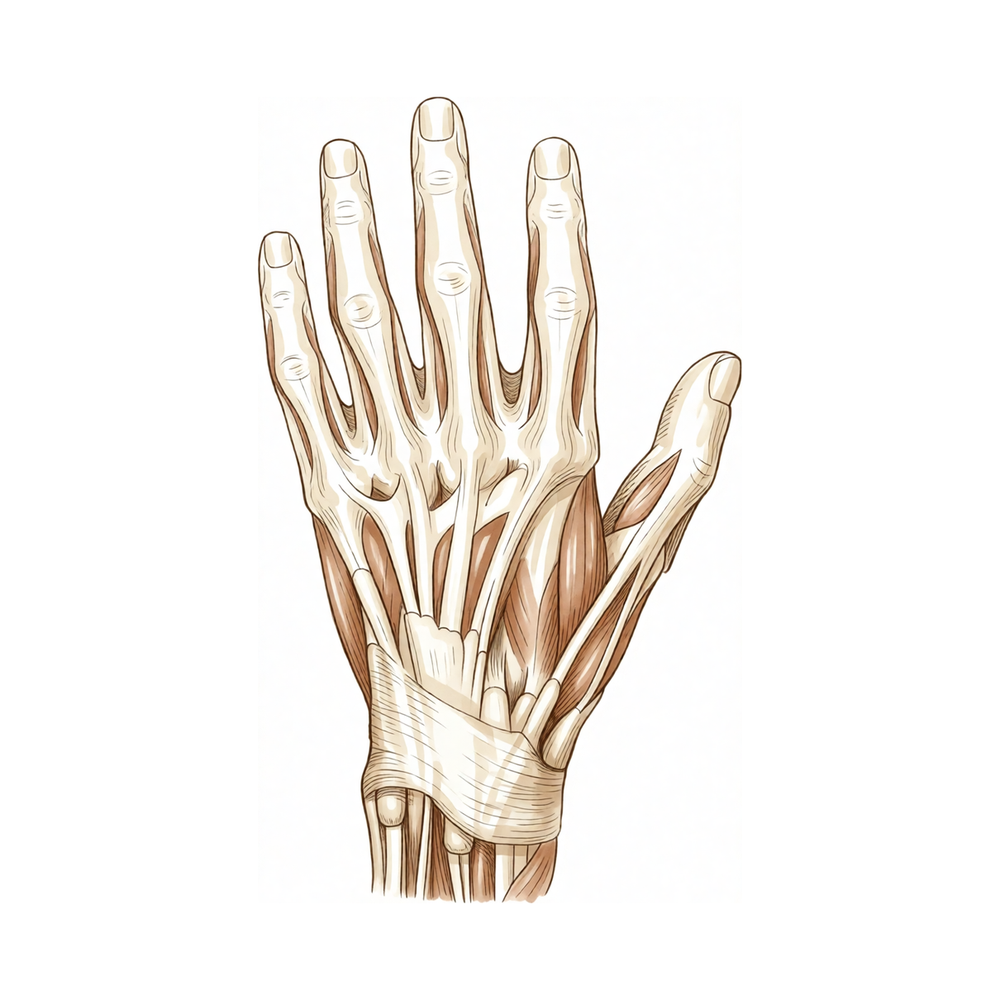
Ang protocol na ito ay nagsisilbing gabay sa iyong paggaling pagkatapos ng surgical repair ng isang extensor tendon (isa sa mga tendon sa likod ng daliri o kamay na nagtutuwid ng daliri) kasama si Dr Kieran Hirpara sa Mater Private Hospital Rockhampton. Saklaw nito ang mga repair sa likod ng daliri, kamay, at pulso (ang mga zone na tinatawag ng mga surgeon na IV hanggang VII). Hindi nito saklaw ang mallet finger (isang repair mismo sa dulo ng daliri) o isang central-slip / boutonnière repair sa gitnang knuckle; ang mga iyon ay sumusunod sa ibang mga plano. Nagsisimula ito sa iyong home exercise program, na sinusundan ng structured clinical protocol na isinulat para sa iyong hand therapist. Dalhin ang pahinang ito o ang PDF nito sa iyong unang therapy visit upang manatiling coordinated ang iyong rehabilitasyon. Maaaring i-adjust ng iyong therapist ang plano depende sa pag-unlad ng iyong paggaling.
Kung mayroon kang anumang alalahanin tungkol sa iyong sugat pagkatapos ng operasyon, makipag-ugnayan sa mga rooms. Madalas na nakatutulong ang pagkuha ng larawan ng sugat at pag-email nito para masuri.
Ano ang dapat asahan
Ang extensor tendon repair ay pagtatahi muli ng naputol na tendon sa likod ng daliri o kamay. Ang lumang paraan upang protektahan ang repair na iyon ay ang pag-splint sa kamay nang hindi ginagalaw sa loob ng ilang linggo, ngunit madalas nitong naiiwang matigas ang mga daliri at mabagal ang paggaling. Sa halip, ang iyong recovery ay gagamit ng isang matalino at modernong approach na tinatawag na relative-motion rehabilitation (Merritt method).
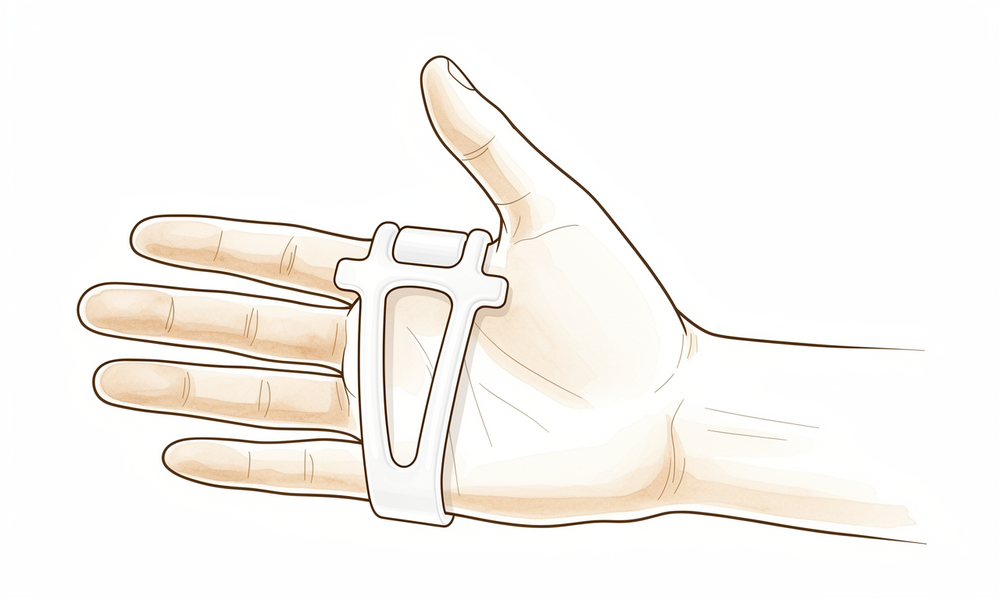
Ang susi ay isang maliit na splint na tinatawag na yoke, na isinusuot sa likod ng kamay. Pinapanatili nito ang malaking knuckle ng na-repair na daliri na humigit-kumulang 15 hanggang 20 degrees na mas tuwid kaysa sa mga knuckle ng mga daliri sa magkabilang panig. Ang maliit na pagkakaibang iyon ay tahimik na nag-aalis ng load mula sa naghihilom na tendon, upang maaari mo nang simulan ang paggamit ng kamay agad-agad, nang dahan-dahan at ayon sa iyong komportable, sa halip na maghintay ng ilang linggo habang ito ay naka-splint at hindi ginagalaw. Ang maagang paggalaw sa protektadong paraang ito ay pinapanatiling dumudulas ang tendon upang hindi ito dumikit, habang ang offset naman ay pumipigil upang hindi ito ma-over-strain.
Para sa karamihan ng mga repair (ang mga karaniwang zone sa likod ng daliri at kamay), ang yoke lamang ay sapat na. Para sa ilang repair (yaong mga mas malapit sa wrist, mas mahinang repair, o kung saan makatwiran ang dagdag na proteksyon), isang wrist splint ang idinaragdag din para sa unang ilang linggo. Sasabihin sa iyo ng iyong hand therapist kung kailangan mo rin ng wrist splint.
Ang plano ay magbubukas pagkatapos sa mga maingat na yugto: ang yoke ay isinusuot nang full-time sa loob ng humigit-kumulang anim na linggo at unti-unting inaalis simula sa ika-limang linggo; ang magkasabay na paggalaw ng wrist at daliri ay idinaragdag sa mga gitnang linggo; ang pagpapalakas (strengthening) ay nagsisimula mula sa ika-walong linggo; at ang buong aktibidad ay bumabalik sa loob ng sampu hanggang labindalawang linggo, kapag matatag na ang repair.
Mga pag-iingat at limitasyon
- Isuot ang iyong yoke splint nang full-time sa loob ng unang anim na linggo, kabilang na sa mga ehersisyo at pang-araw-araw na gawain, at tanggalin o bawasan lamang ang paggamit nito ayon sa direktiba ng iyong hand therapist. Sasabihin sa iyo ng iyong hand therapist kung mayroon ka ring wrist splint.
- Magsagawa ng magaang pang-araw-araw na paggamit ng kamay habang nasa splint mula sa simula, sa antas na komportable. HUWAG magbuhat, piliting kumapit, o gumawa ng mga gawaing may resistensya sa unang ilang linggo.
- HUWAG magsimula ng pagpapalakas ng grip o pinch hanggang sa ikaw ay payagan na, karaniwan ay sa loob ng walong linggo.
- HUWAG itikom nang mahigpit ang kamao o pilitin ang daliri nang maaga; igalaw lamang ito sa banayad at kontroladong range na ipinakita sa iyo.
- Panatilihing gumagalaw ang maliliit na joint ng daliri upang hindi ito tumigas; nakakatulong dito ang banayad na passive straightening.
Para sa pamamahala ng sugat, pamamaga, at peklat, tingnan ang gabay ng practice sa wound care.
Iyong mga ehersisyo
Kieran Hirpara 4.0
Pagsusuot ng iyong relative-motion (yoke) splint
Ang iyong naoperahang daliri ay nakalagay sa isang maliit na splint na tinatawag na yoke (o relative-motion splint). Pinapanatili nito ang malaking knuckle (ang MCP, kung saan nagtatagpo ang daliri at ang kamay) ng naoperahang daliri na mas tuwid ng mga 15 hanggang 20 degrees kaysa sa mga daliri sa magkabilang panig nito. Ang maliit na pagkakaibang ito ang nag-aalis ng tensyon sa naghihilom na tendon, na siyang nagpapahintulot sa iyo na magamit agad ang kamay. Isuot ito nang full-time sa loob ng mga anim na linggo — kabilang na sa iyong mga ehersisyo at sa mga pang-araw-araw na gawain — at tanggalin lamang ito ayon sa direktiba ng iyong hand therapist. Sasabihin sa iyo ng iyong hand therapist kung kailangan mo rin ng wrist splint.
Isinuot nang full-time sa loob ng humigit-kumulang 6 na linggo, unti-unting binawasan mula sa ika-5 linggo ayon sa gabay
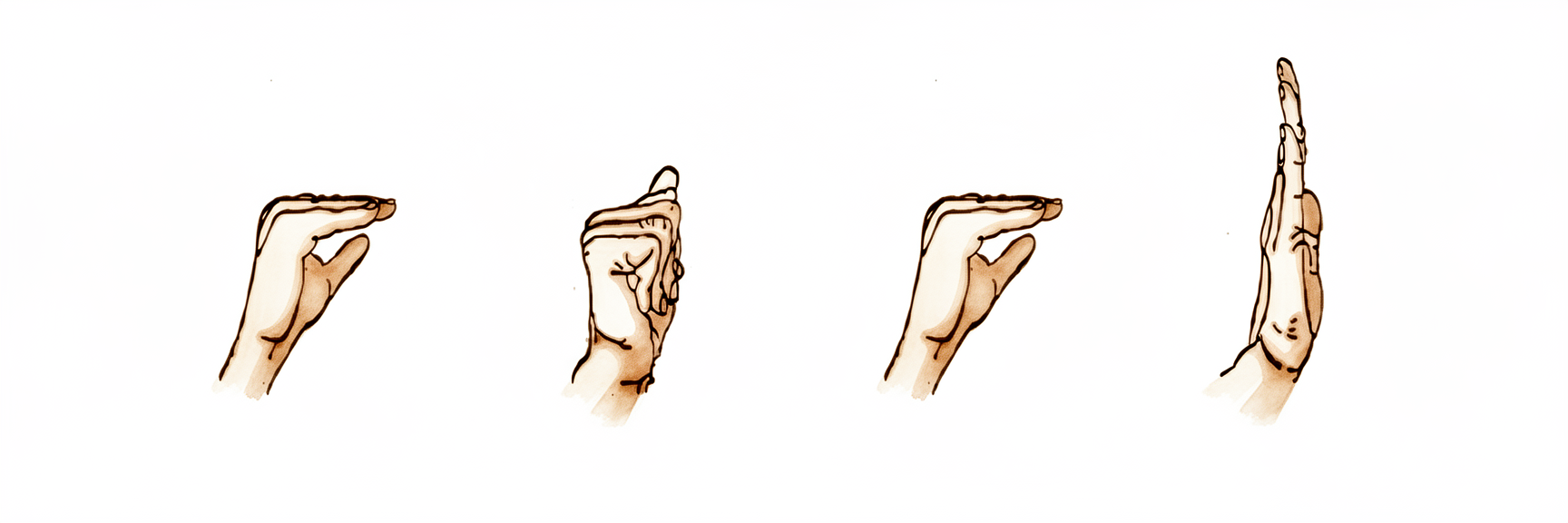
Baluktot ang knuckle, tuwid ang mga daliri (intrinsic-plus)
Habang suot ang splint, itiklop sa malalaking knuckles (kung saan nagtatagpo ang mga daliri at kamay) habang pinapanatiling diretso ang natitirang bahagi ng bawat daliri — na parang gumagawa ng patag na hugis 'tabletop' o 'shelf'. Pagkatapos ay ibalik sa pagiging diretso. Gumalaw nang swabe sa loob ng limitasyon ng iyong komportable. Pinapadulas nito ang inayos na tendon sa isang ligtas at kontroladong paraan upang hindi ito dumikit, nang hindi ito nailalagay sa strain.
10 beses, tuwing ilang oras sa buong araw
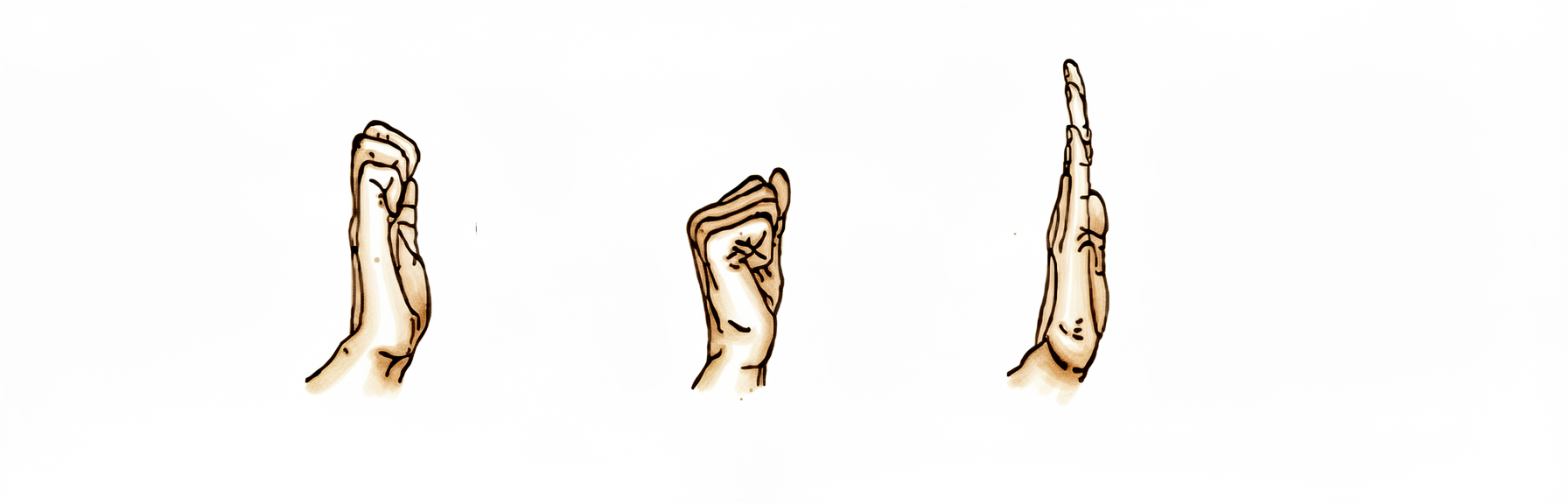
Tuwid ang mga knuckles, nakakurbada ang mga daliri (intrinsic-minus / hook)
Habang nakasuot ang splint, panatilihing diretso ang iyong mga malalaking knuckle at itiklop lamang ang mga mas maliliit na joint ng mga daliri pababa sa hugis na kawit (claw), pagkatapos ay ituwid silang muli. Pinapakilos nito ang inayos na tendon sa iba pang range nito, muli sa isang ligtas at kontroladong paraan. Manatili sa antas ng komportable at huwag itong pilitin.
10 beses, tuwing ilang oras sa buong araw
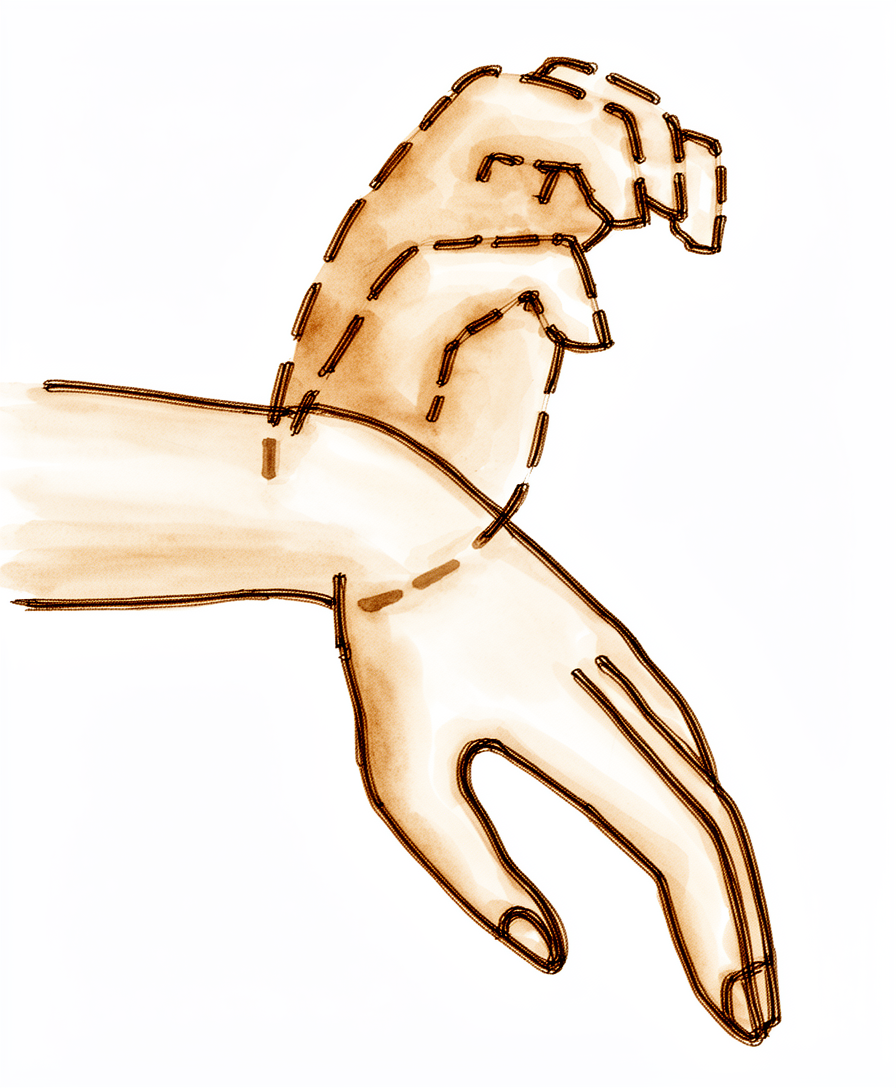
Magkasabay na galaw ng pulso at daliri (tenodesis)
Isang ehersisyo sa HULING bahagi — idinagdag ng iyong hand therapist mula sa ikatlo hanggang ikaanim na linggo. Dahan-dahang itingala ang pulso pabalik at hayaang mag-relax at bumukas ang mga daliri, pagkatapos ay hayaang bumagsak ang pulso pasulong habang dahan-dahang nagsasara ang mga daliri. Ang pulso at mga daliri ay gumagalaw nang magkasama bilang isang pares. Likas at ligtas nitong pinapadulas ang mga extensor tendon at sinisimulan kapag mas matibay na ang repair.
10 beses, 2 hanggang 3 beses sa isang araw (mula ~3 hanggang 6 na linggo, ayon sa gabay)
Kieran Hirpara 4.0
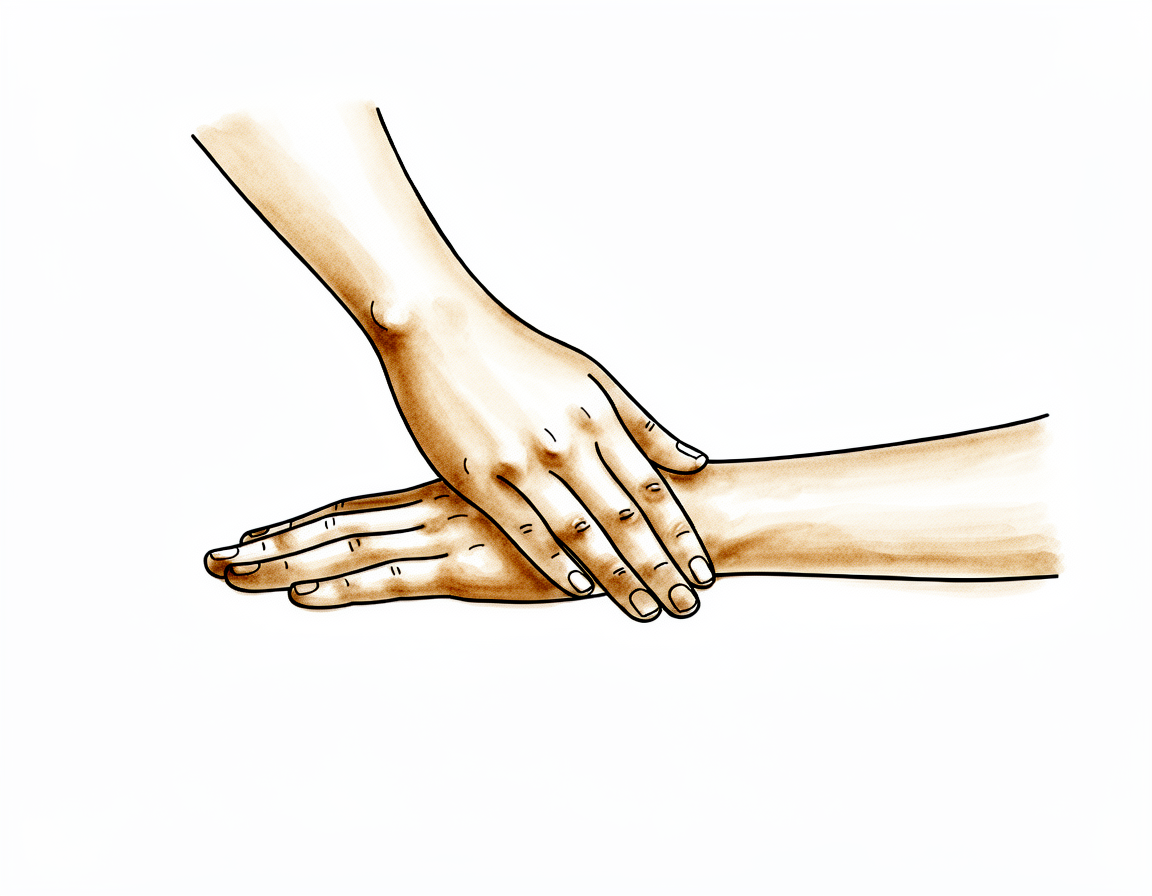
Pasibong pagtutuwid ng daliri
Dahan-dahang gamitin ang iyong kabilang kamay upang suportahan at ituwid ang mga mas maliliit na joint ng daliring ginamot, upang matulungan itong maabot ang ganap na pagtuwid nang hindi pinipilit. Pinipigilan nito ang paninigas ng daliri sa nakabaluktot na posisyon habang gumagaling ang tendon. Panatilihin itong dahan-dahan at walang sakit, at gawin lamang ayon sa gabay ng iyong hand therapist.
Hawakan nang ilang segundo, 5 hanggang 10 beses araw-araw, ayon sa gabay
Kieran Hirpara 4.0
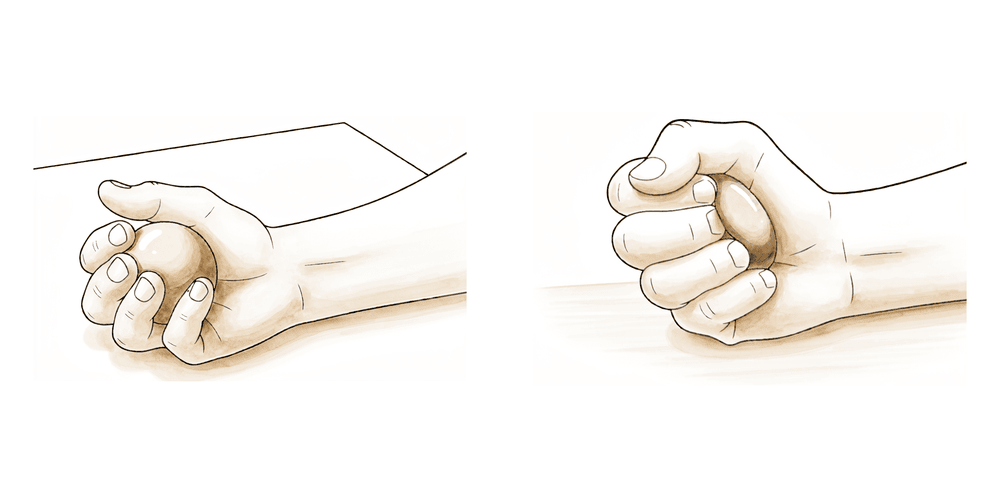
Pagpapalakas ng grip/pinch (mula wk 8)
Isang ehersisyo sa HULING bahagi — mula humigit-kumulang walong linggo lamang, kapag pinayagan na ng iyong hand therapist ang strengthening. Pisilin ang isang soft ball o putty gamit ang buong kamay, at kurutin ito sa pagitan ng iyong hinlalaki at mga daliri, unti-unting dagdagan ang puwersa sa loob ng ilang linggo. Binubuo nito muli ang grip at pinch strength kapag matatag na ang repair. Huwag magsimula ng resisted gripping bago ka payagan.
10 hanggang 15 na piga, 2 hanggang 3 beses sa isang araw (mula ~8 linggo lamang)
Ito ang mga ehersisyo mula sa iyong handout. Simulan lamang ang mga ito ayon sa gabay ni Dr Hirpara at ng iyong hand therapist, at manatili sa anumang range at limitasyong ibinigay sa iyo. Ang mga maagang ehersisyo ay ginagawa habang suot ang yoke splint: banayad na pagbaluktot ng knuckle at pag-curl ng daliri upang maipadulas ang na-repair na tendon sa isang ligtas at kontroladong dami nang hindi ito nabibigatan. Ang pinagsamang paggalaw ng wrist-and-finger at ang pagpapalakas ng grip/pinch ay kabilang sa mga huling phase at hindi dapat simulan hangga't hindi ka partikular na pinapayagan. Itigil ang anumang nagdudulot ng matalas na sakit sa likod ng daliri o kamay.
Ang iyong clinical protocol
Ang natitirang bahagi ng pahinang ito ay ang staged clinical protocol para sa rehabilitasyon pagkatapos ng extensor tendon repair (zones IV hanggang VII) gamit ang relative-motion extension (RME). Ang seksyong ito ay ibibigay sa iyong hand therapist, at ang bawat phase ay nagsisimula sa isang paliwanag sa simpleng Ingles tungkol sa nangyayari. Ang repair ay protektado ng isang yoke splint na humahawak sa MCP ng repaired digit na 15 hanggang 20 degrees na mas extended kaysa sa mga katabing daliri, upang mabawasan ang active extensor excursion sa pamamagitan ng quadriga effect at ng juncturae tendineae, kaya ligtas ang immediate active motion.
Bago ang paggamot, suriin ang operation report ng pasyente at ang past medical history, at makipag-ugnayan sa treating surgeon tungkol sa (mga) zone na na-repair, (mga) tendon na sangkot, repair strength, at kung kinakailangan ang isang supplementary wrist orthosis. Ang default ni Dr Hirpara para sa zones V hanggang VI ay yoke-alone (relative-motion extension splint, ang repaired MCP ay hinahawak na 15–20° na mas extended kaysa sa mga katabi). Ang isang wrist orthosis (~20–25° extension, unang ~3 linggo) ay idinaragdag para sa zone VII, mas mahihinang repair, o mga pasyenteng non-compliant. Ang protocol na ito ay para sa dorsal extensor repairs zones IV–VII lamang, HINDI para sa mallet (zones I–II) o central-slip/boutonnière (zone III).
Phase I — yoke (± wrist splint), agarang aktibong paggamit (linggo 0 hanggang 3)
Pinoprotektahan ng yoke ang repair sa unang tatlong linggo habang aktibong ginagamit ng pasyente ang kamay agad-agad. Ang relative 15–20° extension offset ay nagbabawas ng load sa repair, kaya hinihikayat ang controlled active gliding mula sa simula. Pinahihintulutan ang light functional use habang naka-splint; bawal ang pagbuhat o resisted grip.
Para sa iyong hand therapist:
Edukasyon at mga pag-iingat - I-fit ang yoke / relative-motion extension splint: ang MCP ng repaired digit ay panatilihing 15–20° na mas extended kaysa sa mga katabing daliri; isuot nang full-time - Magdagdag ng wrist orthosis (~20–25° extension) para sa unang ~3 linggo LAMANG para sa zone VII / mas mahinang repairs / mga pasyenteng non-compliant (yoke-alone ang default para sa zones V–VI) - Hinihikayat ang light use ng kamay habang naka-splint; BAWAL ang pagbuhat, forced gripping o resisted work - Iwasan ang forced composite fisting; panatilihing controlled ang ranges
Pamamahala - Sugat: surgical dressings ayon sa itinuro; i-monitor para sa impeksyon - Oedema: elevation, gentle digital pump, ice kung kinakailangan - Mga ehersisyo (habang naka-splint, tuwing ~2 oras): active intrinsic-plus (MCP flexion habang extended ang mga IP) at intrinsic-minus / hook (MCP extension habang may IP flexion); passive IP extension araw-araw upang maiwasan ang IP stiffness - Simulan ang scar management kapag magaling na ang sugat
Mga kraytirya para mag-progress - Paghilom ng sugat; walang nabubuong extensor lag; komportable at controlled active motion sa loob ng splint sa ika-~3 linggo
Phase II — tanggal na ang wrist splint, tuloy ang yoke, coupled motion (linggo 3 hanggang 6)
Mula sa ikatlong linggo, ititigil na ang anumang supplementary wrist splint (ang yoke ay mananatiling suot full-time). Idaragdag ang coupled wrist-and-finger (tenodesis) motion at composite active flexion/extension, upang unti-unting pataasin ang tendon excursion sa isang kontrolado at ligtas na paraan para sa repair.
Para sa iyong hand therapist:
Assessments - Active at passive ROM (MCP at IP), extensor lag, sakit at pamamaga; pagsusuri ng sugat/peklat
Education and precautions - Itigil ang supplementary wrist splint (kung may ginamit); ipagpatuloy ang yoke full-time - Unti-unting itaas ang motion; BAWAL pa rin ang resisted grip o strengthening
Management - Mga ehersisyo: idagdag ang coupled wrist-and-finger motion (tenodesis) at composite active flexion/extension; ipagpatuloy ang intrinsic-plus / intrinsic-minus gliding at passive IP extension; light functional use habang suot ang yoke - Ipagpatuloy ang scar massage kapag magaling na
Criteria to progress - Composite active ROM ay nag-proprogress (karaniwang buo na ang composite motion sa ~6 hanggang 8 linggo); walang extensor lag; humuhupa na ang sakit
Phase III — pag-alis ng yoke, pagpapalakas, pagbabalik (ika-6 hanggang ika-12 linggo)
Mula humigit-kumulang ikalimang hanggang ikaanim na linggo, unti-unting inaalis ang yoke. Ang progresibong pagpapalakas ng grip at pinch ay nagsisimula mula sa ika-walong linggo kapag matatag na ang repair, at unti-unting itinataas patungo sa full activity sa ika-10 hanggang ika-12 linggo.
Para sa iyong hand therapist:
Mga Assessment - Full active at passive ROM, extensor lag, grip/pinch strength kumpara sa kabilang panig; functional at work-specific testing kung naaangkop
Edukasyon at mga pag-iingat - Unti-unting alisin ang yoke mula ~ika-5 linggo, tanggalin na sa paligid ng ika-6 na linggo depende sa motion at control - Ipakilala ang progresibong grip/pinch strengthening mula ika-8 linggo (hindi bago nito) - Unti-unting itaas ang resistance patungo sa full activity sa ika-10 hanggang ika-12 linggo
Pamamahala - Mga ehersisyo: graded grip and pinch strengthening (pagpiga ng ball/putty, pinch) mula ika-8 linggo; progresibong resistance; ituloy ang anumang residual mobility at IP-extension work - Isaalang-alang ang discharge kapag ang motion at strength ay near-symmetrical na at nakamit na ang functional return - Isaalang-alang ang referral pabalik sa treating doctor kung nananatili ang extensor lag, nag-plateau ang motion, o may poor outcome
Mga kraytirya para sa pagbabalik sa full activity - Full painless ROM na walang significant extensor lag; near-symmetrical grip/pinch; ~ika-10 hanggang ika-12 linggo
Pagbabalik sa trabaho at aktibidad
Hinihikayat ang magaan na pang-araw-araw na paggamit ng kamay habang nasa yoke splint (pagkain, pagsusulat, pagbibihis, magaan na pag-aalaga sa sarili) mula sa simula, hangga't komportable, basta't hindi ito kinapapalooban ng pagbubuhat, sapilitang paghawak (forced gripping), o resisted work. Ang pagpapalakas (strengthening) ay nagsisimula mula sa humigit-kumulang walong linggo, at ang buo at walang limitasyong aktibidad ay nagbabalik sa loob ng sampu hanggang labindalawang linggo kapag matatag na ang repair at naibalik na ang iyong galaw at lakas, na huhusgahan ni Dr Hirpara at ng iyong hand therapist, at hindi base sa kalendaryo lamang.
Pagmamaneho: ayos lang ang magaan na paggamit ng kamay habang nasa yoke, kaya ang pagmamaneho ay hindi lubos na ipinagbabawal, ngunit dapat kang makahawak sa manibela at makontrol ang kotse nang ligtas, kabilang na sa oras ng emergency. Para sa karamihan ng mga tao, nangangahulugan ito ng pagbabalik habang unti-unting inaalis ang yoke (mga anim na linggo); maaari itong mas maaga kung kaya mong kontrolin ang kotse nang komportable, at kumpirmado ng iyong surgeon kung kailan ito ligtas para sa iyo.
Pagkatapos ng iyong protocol
Ang protocol na ito ay kasabay ng pangkalahatang payo sa paggaling ng klinika: tingnan ang pamamahala ng sakit pagkatapos ng operasyon, pag-aalaga ng sugat at pamamahala ng peklat. Ang phased plan sa itaas ay sumasalamin sa nailathalang gabay sa rehabilitasyon pagkatapos ng extensor tendon repair gamit ang relative-motion extension, at ang iyong patuloy na paggaling ay ginagabayan nang indibidwal ni Dr Hirpara at ng iyong hand therapist ayon sa pag-unlad ng iyong kamay.
Evidence & references
This is the clinical evidence summary written for health professionals. It is technical, and it lists the research this page was built from. You do not need to read it to understand your treatment or to make a decision about it.
Extensor Tendon Repair — Procedure Outcomes & Post-operative Rehabilitation (Relative-Motion Extension, Zones IV–VII)
Topic scope: post-operative rehabilitation after primary repair of an extensor tendon on the dorsum of the finger, hand or wrist — zones IV to VII — managed by relative-motion extension (RME / Merritt yoke splint, the ICAM family of regimens). This is a tendon repair (a construct that must heal under controlled load), but the relative-motion approach lets that load be applied immediately and actively rather than after weeks of immobilisation. This page does not cover mallet finger (zones I–II) or central-slip / boutonnière repair (zone III), which follow different regimens.
Defining principle of the rehab here: a yoke (relative-motion) splint holds the repaired digit's MCP joint 15–20° more extended than its neighbours. By the quadriga effect and the juncturae tendineae, this small relative offset offloads the repaired tendon — it reduces the active extensor excursion demanded of the healing repair (from roughly 12 mm of excursion in normal active extension to about 6 mm within the splint). That residual ~6 mm is enough to keep the tendon gliding and prevent adhesions, but too little to rupture the repair — which is why immediate active motion is safe. The single common branch point is whether a supplementary wrist orthosis (~20–25° extension, first ~3 weeks) is added for zone VII, weaker repairs, or non-compliant patients; the yoke alone is the default for zones V–VI.
A. PROCEDURE / REPAIR OUTCOMES (relative-motion vs immobilisation)
Extensor tendon repair on the back of the hand is reliable; the principal modern question is how to rehabilitate it — protected immobilisation versus an early-active programme such as relative-motion extension — not whether repair works.
- The mechanism that makes immediate active motion safe is well established. The 15–20° relative MCP-extension offset offloads the repair via the quadriga effect and the juncturae tendineae, cutting active extensor excursion from ~12 mm (normal) to ~6 mm within the splint — enough to prevent adhesions, too little to rupture. Cadaveric and mechanistic work underpins this rationale [Merritt, Wong & Lalonde 2020]. Strong (mechanistic + cadaveric).
- Relative-motion regimens match or improve on traditional early-active and immobilisation pathways. A randomised controlled trial in zones V–VI found relative-motion extension delivered earlier return of hand function and higher patient satisfaction with equivalent total active motion (TAM) versus the comparator early-active programme [Collocott RCT 2020]. A systematic review reported earlier return to work with equivalent range of motion and complication rates [Collocott review 2017]. Moderate–strong (1 RCT + SR; RME studies of generally lower methodological quality).
- Yoke-alone (no wrist splint) is supported for the common zones. Case series of relative-motion extension without a supplementary wrist orthosis for zones IV–VI report no ruptures, supporting yoke-alone as the default for these zones with the wrist orthosis reserved for zone VII / weaker / non-compliant repairs [Hirth 2021; Howell ICAM]. Moderate.
- The functional gain over immobilisation is large and practical. Early-active relative-motion programmes report return to work at roughly 17–25 days, versus the 3–4 months typical of immobilisation regimens — the headline advantage that has driven adoption [Collocott review 2017; Howell ICAM]. Moderate.
B. REHABILITATION / THERAPY EVIDENCE
The central rehab questions are (1) immobilise or move early, (2) is a wrist splint needed in addition to the yoke, and (3) how long must the splint stay on. The evidence favours early relative motion, supports yoke-alone for zones V–VI, and suggests splint duration can be shorter than the traditional six weeks without penalty.
- Early active motion via relative-motion extension is the modern default. The original technique description [Merritt 2014] and the clinical scheduling / yoke construction work [Lutz 2015] established a reproducible programme: immediate active intrinsic-plus and intrinsic-minus motion in the yoke, progressing to coupled (tenodesis) motion, weaning, then strengthening. Moderate (technique + cohort).
- A supplementary wrist splint is optional, not mandatory. Yoke-alone case series for zones IV–VI report no ruptures; the wrist orthosis (~20–25° extension, first ~3 weeks) is added selectively for zone VII, weaker repairs, or poor compliance [Hirth 2021; Howell ICAM]. Moderate (selective use).
- Splint duration may be shortened. A comparison of 4-week versus 6-week splinting found no difference in outcome, suggesting the traditional six-week full-time period can be safely abbreviated in selected patients [Svens 2015]. This page keeps full-time wear ~6 weeks (weaned from ~wk 5) as the conservative default while acknowledging the shorter option. Moderate (1 comparative study).
- The field is moving toward wider use of relative motion. A recent international consensus endorses broader application of relative-motion rehabilitation, including beyond its original zone V–VI indication [Tang consensus 2025]. Consensus.
Recovery trajectory (expected, evidence-anchored)
| Phase | Window | Splint / restraint | Hand use / therapy focus | Strength / load | Notes |
|---|---|---|---|---|---|
| I — Yoke (± wrist splint), immediate active use | Week 0–3 | Yoke full-time (repaired MCP 15–20° more extended); wrist orthosis ~20–25° ext only for zone VII / weak / non-compliant | Active intrinsic-plus (MCP flex, IPs straight) and intrinsic-minus / hook every ~2 h; passive IP extension daily; light use in the splint | Light functional use only; no lifting / resisted grip | Relative offset offloads repair (~12 mm → ~6 mm excursion); active motion is safe from day one |
| II — Wrist splint off, yoke continues | Week 3–6 | Discontinue any wrist splint; yoke continues full-time | Add coupled wrist-and-finger (tenodesis) motion + composite active flexion/extension; light functional use; scar massage once healed | Still no resisted grip | Composite active ROM building; watch for extensor lag |
| III — Wean yoke, strengthen, return | Week 6–12 | Yoke weaned from ~wk 5, off ~wk 6 | Progress full active motion; commence grip/pinch strengthening from week 8 | Graded strengthening from wk 8 → full activity ~10–12 wk | Return to work as early as ~17–25 days reported; full unrestricted activity ~10–12 wk |
(Phase windows mirror the precautions and recovery structure in the patient protocol; they are typical guides, not trial-derived deadlines. Splint duration may be safely shortened toward 4 weeks in selected patients.)
C. KEY CONTROVERSIES / EVIDENCE QUALITY
- Relative motion vs traditional immobilisation / other early-active regimens. One RCT (zones V–VI) and a systematic review favour relative-motion extension for earlier hand function, earlier return to work, higher satisfaction, with equivalent TAM and complications — though RME studies are generally of lower methodological quality, so the effect size is moderately rather than strongly certain. Moderate–strong.
- Wrist splint: needed or not? Yoke-alone gives good results with no ruptures in zone IV–VI series; the supplementary wrist orthosis is selective (zone VII / weaker / non-compliant). The defensible default is yoke-alone for the common zones — hence the page wording that the hand therapist will advise if a wrist splint also applies. Moderate.
- How long to splint. Traditional full-time wear is ~6 weeks; a 4-vs-6-week comparison showed no difference, so duration can be individualised and potentially shortened. Moderate.
- The 15–20° offset itself. The specific relative-extension increment is consensus-derived (it must offload enough to protect but leave enough excursion to glide); it rests on sound mechanism rather than a dose-finding trial. Consensus.
- Extending relative motion beyond zones V–VI (e.g. to sagittal-band injury and selected boutonnière/central-slip cases). The 2025 consensus endorses wider use, but evidence outside the core zones is weak–moderate, which is why this page deliberately scopes to zones IV–VII and excludes zone III. Weak–moderate.
D. EVIDENCE STRENGTH FLAGS (summary)
- STRONG: the mechanism — relative 15–20° MCP-extension offset offloads the repair (quadriga + juncturae tendineae; ~12 mm → ~6 mm active excursion) making immediate active motion safe (mechanistic + cadaveric).
- MODERATE–STRONG: relative-motion extension is at least as good as other early-active-motion regimens (1 RCT zones V–VI: earlier hand function, higher satisfaction, equal TAM; SR: earlier return to work, equal ROM/complications) — tempered by the lower methodological quality of RME studies.
- MODERATE: wrist-splint-optional (yoke-alone, no ruptures in zone IV–VI series); 4-vs-6-week splint duration (no difference); return to work ~17–25 days vs 3–4 months for immobilisation.
- CONSENSUS: the specific 15–20° offset increment; broader application of relative motion (Tang 2025).
- WEAK–MODERATE: extension of the technique to sagittal-band / boutonnière (central-slip) injuries outside the core zones.
CITATIONS
RAG corpus (180,000+ Orthopaedic articles)
- Merritt WH. Relative motion splint: active motion after extensor tendon injury and repair. J Hand Surg Am. 2014. DOI: 10.1016/j.jhsa.2014.03.015
- Merritt WH, Wong AL, Lalonde DH. Recent developments are changing extensor tendon management (relative motion / quadriga mechanism). Plast Reconstr Surg. 2020. DOI: 10.1097/prs.0000000000006556
- Lutz K, et al. Relative motion extension splinting for extensor tendon repair — clinical schedule and yoke. Hand Clin. 2015. DOI: 10.1016/j.hcl.2014.12.006
- Collocott SJF, et al. Relative motion flexion versus relative motion extension / early active motion after extensor tendon repair (zones V–VI): a randomized controlled trial. J Hand Ther. 2020. DOI: 10.1016/j.jht.2018.10.003
- Collocott SJF, Kelly E, Ellis RG. A systematic review of relative-motion orthoses for the management of extensor tendon repairs. Hand Ther. 2017. DOI: 10.1177/1758998317729713
- Svens B, et al. Four-week versus six-week immobilisation comparison after extensor tendon repair. J Hand Ther. 2015. DOI: 10.1016/j.jht.2014.07.006
- Hirth MJ, et al. Relative-motion approaches in extensor tendon rehabilitation. J Hand Ther. 2021. DOI: 10.1016/j.jht.2019.12.016
- Tang JB, et al. International consensus on relative-motion rehabilitation and extensor tendon management. J Hand Surg (Eur Vol). 2025. DOI: 10.1177/17531934251363138
Extensor tendon rehabilitation literature (URLs)
- Howell JW, Merritt WH, Robinson SJ. Immediate Controlled Active Motion (ICAM) following zone 4–7 extensor tendon repair. J Hand Ther / PMC. https://www.ncbi.nlm.nih.gov/pmc/articles/PMC3574475/