Patients › Rehabilitation
de Quervain's Release
Isang plano para sa maagang paggalaw ng recovery pagkatapos ng surgical release ng first dorsal compartment para sa de Quervain's tenosynovitis, na may maikling suporta para sa ginhawa, banayad na paggalaw ng hinlalaki at pulso mula sa simula upang maiwasan ang paninigas, pag-aalaga sa peklat, at unti-unting pagbabalik sa lakas ng grip at pinch sa loob ng humigit-kumulang apat hanggang anim na linggo.
Ang protocol na ito ay nagsisilbing gabay sa iyong paggaling pagkatapos ng isang de Quervain's release, isang maliit na operasyon na nagbubukas sa masikip na tunnel sa ibabaw ng mga tendon sa bahagi ng hinlalaki ng iyong pulso, kasama si Dr Kieran Hirpara sa Mater Private Hospital Rockhampton. Nagsisimula ito sa iyong home exercise program, na sinusundan ng structured clinical protocol na isinulat para sa iyong hand therapist; dalhin ang pahinang ito o ang PDF nito sa iyong unang therapy visit upang manatiling coordinated ang iyong rehabilitasyon. Maaaring i-adjust ng iyong hand therapist ang plano depende sa pag-unlad ng iyong paggaling.
Kung mayroon kang anumang alalahanin tungkol sa iyong sugat pagkatapos ng operasyon, makipag-ugnayan sa mga rooms. Kadalasang nakatutulong ang pagkuha ng larawan ng sugat at pag-email nito para masuri.
Ano ang dapat asahan
Ang De Quervain's tenosynovitis ay iritasyon ng dalawang tendon na papunta sa iyong hinlalaki (ang abductor pollicis longus at extensor pollicis brevis) kung saan dumadaan sila sa isang masikip na tunnel (ang first dorsal compartment) sa bahagi ng pulso na malapit sa hinlalaki. Ang release ay isang maliit na operasyon na nagbubukas sa tunnel na iyon upang ang mga tendon ay may espasyo para gumalaw nang malaya, na nag-aalis ng sakit at pag-stock (catching).
Dahil walang tinatahi pabalik o hinihigpitan (ang tunnel ay binubuksan lamang at layuning manatiling bukas), ito ay isang early-motion recovery, hindi isang matagal na protected recovery. Walang construct na nangangailangan ng ilang buwan ng paghilom. Ang buong layunin ng rehabilitasyon ay panatilihing gumagalaw ang mga tendon sa naghihilom na surgical bed upang hindi sila dumikit, habang ang maliit na sugat at ang mga nerve ng balat sa ibabaw nito ay kumakalma.
Kaya simple lang ang plano: isang soft dressing (kung minsan ay light thumb splint para lamang sa comfort) para sa unang ilang araw hanggang mga isa o dalawang linggo, maagang pagsisimula ng banayad na paggalaw ng hinlalaki at pulso, pag-aalaga sa peklat kapag hila na ang sugat, at unti-unting pagpapalakas ng grip at pinch strength. Karamihan sa mga tao ay nakakabalik sa komportableng normal na aktibidad sa loob ng apat hanggang anim na linggo.
Dalawang bagay ang binabantayan pagkatapos ng partikular na operasyong ito. Ang una ay isang maliit na skin nerve, ang radial sensory nerve, na ang mga sanga ay dumadaan mismo sa harap ng surgical site; maaari itong manatiling tingly o sensitibo sa loob ng ilang panahon, at ang maagang nerve-settling work ay nakatuon dito. Ang ikalawa ay ang posisyon ng mga tendon: ang sobrang pagbubukas ng tunnel patungo sa bahagi ng palad ay maaaring paminsan-minsang magdulot ng pag-slide ng tendon pasulong (subluxate) kapag iginagalaw ang hinlalaki. Parehong hindi karaniwan ang mga ito, at babantayan ito ng iyong hand therapist.
Mga pag-iingat at limitasyon
- Panatilihing gumagalaw ang hinlalaki at pulso mula sa simula: ang banayad na paggalaw ang gamot dito, hindi ang pahinga. Ang paninigas dahil sa kawalan ng galaw ang pangunahing bagay na sinusubukan nating iwasan.
- Gamitin ang anumang comfort splint ayon lamang sa itinuro at para lamang sa unang mga araw hanggang isang o dalawang linggo: ito ay para sa ginhawa, hindi para sa proteksyon, at dapat tanggalin para sa iyong mga ehersisyo.
- Panatilihing malinis at tuyo ang sugat hanggang sa ito ay gumaling; huwag simulan ang scar massage hanggang sa matanggal na ang mga dressing at sarado na ang balat.
- Iwasan ang mabigat na paghawak (gripping), puwersadong pag-pinch, pagbuhat at pagpili (pagpiga ng tela, pagbubukas ng mahigpit na garapon, mabibigat na kagamitan) hanggang sa humigit-kumulang tatlo hanggang apat na linggo, pagkatapos ay unti-unting ibalik ang lakas.
- Sabihan ang iyong therapist o ang klinika kung mapansin ang pangingilig, pamamanhid o matalas na parang kuryenteng pakiramdam sa likod ng hinlalaki at pulso, o isang tendon na pumipitik o dumudulas kapag iginagalaw ang hinlalaki.
Para sa pamamahala ng sugat, pamamaga at peklat, tingnan ang gabay ng klinika sa wound care.
Iyong mga ehersisyo
Kieran Hirpara 4.0
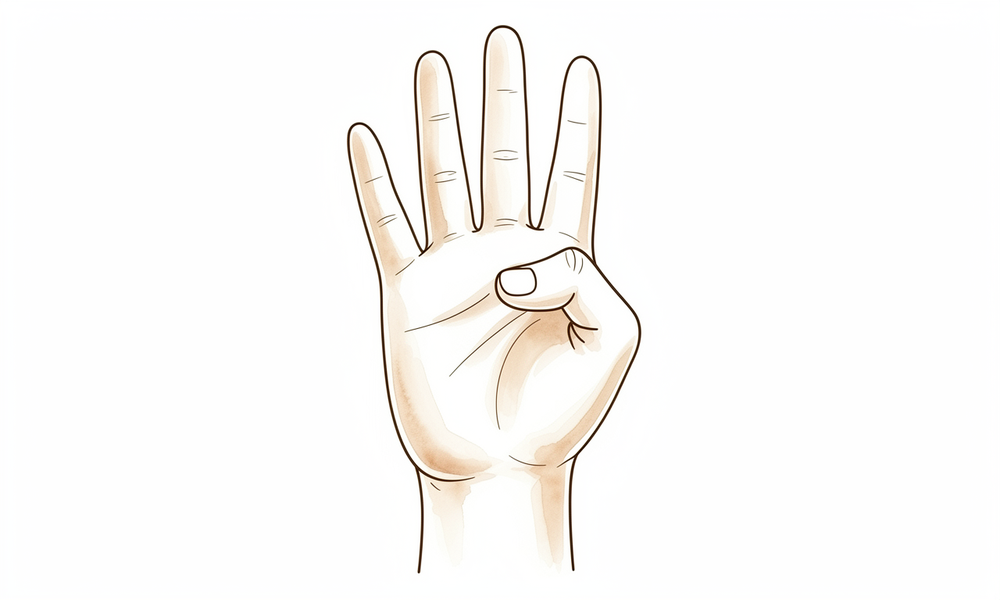
Paggalaw ng hinlalaki (pagbaluktot, pagtuwid at pag-abot)
Dahan-dahang igalaw ang iyong hinlalaki sa buong range nito: itiklop ang dulo pababa papunta sa iyong palad, ituwid ito, pagkatapos ay igalaw ang buong hinlalaki patawid upang hawakan ang base ng iyong kalingkingan at ibalik ito nang malapad. Panatilihin itong mabagal at komportable. Ang maagang paggalaw ng hinlalaki ay nagpapanatili sa pagdausdos ng mga na-release na tendon upang hindi sila dumikit sa naghihilom na peklat.
10 ng bawat isa, 3–4 beses sa isang araw, hanggang sa komportable
Kieran Hirpara 4.0
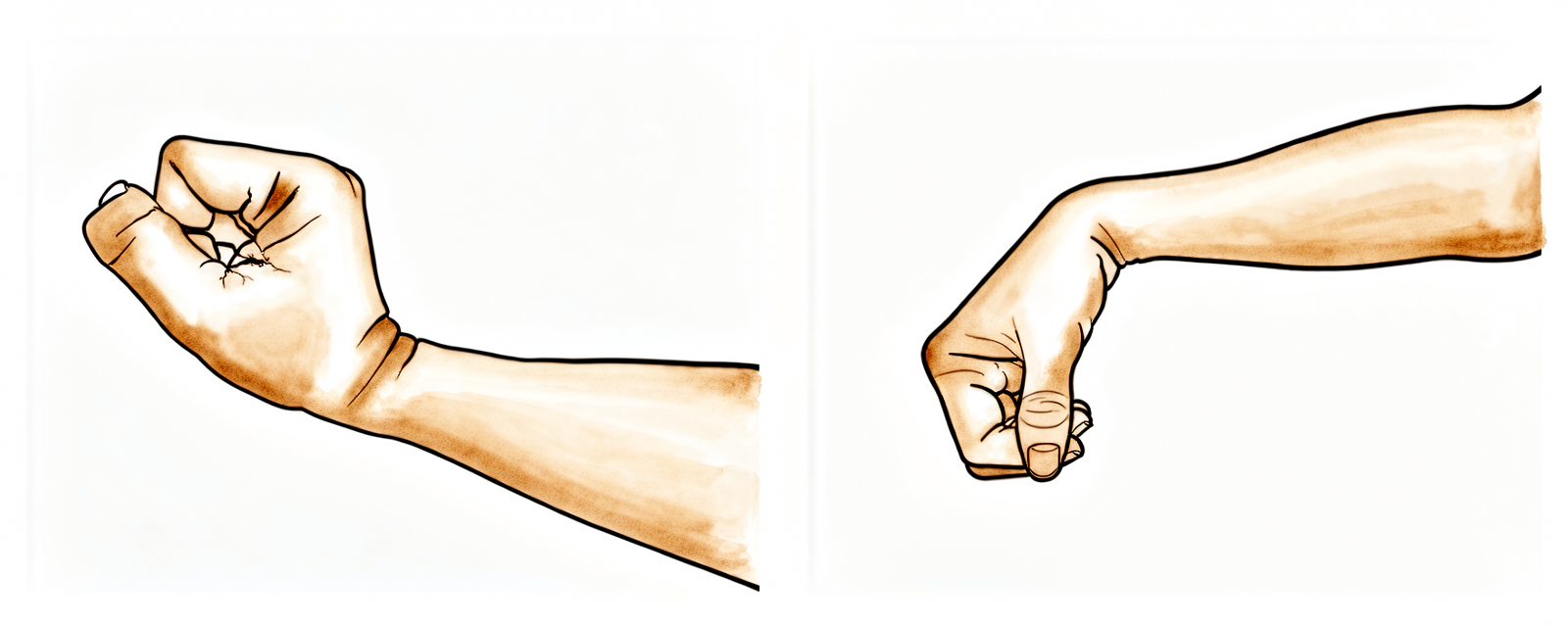
Paggalaw ng pulso (taas, baba at gilid-sa-gilid)
Habang nakapatong ang iyong forearm sa mesa, dahan-dahang itiklop ang pulso pataas at pababa, pagkatapos ay itagilid ito nang magkabilang panig (papunta sa hinlalaki, pagkatapos ay papunta sa kalingkingan). Gumalaw lamang hanggang sa kung ano ang komportable. Pinapanatili nito ang pagiging supple ng pulso habang naghihilom ang sugat.
10 sa bawat direksyon, 3–4 beses sa isang araw
Kieran Hirpara 4.0
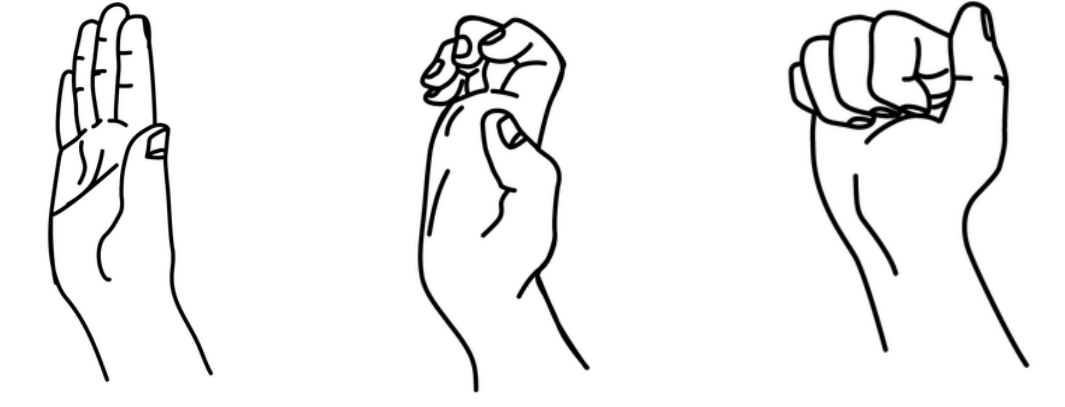
Tendon glides (pag-glide ng hinlalaki at mga daliri)
Ibukas nang malapad ang iyong kamay, pagkatapos ay i-slide ang hinlalaki upang hawakan ang bawat dulo ng daliri nang sunod-sunod, pagkatapos ay itikom nang maluwag ang kamao at ibukas itong muli. Ang layunin ay swabeng paggalaw, hindi puwersa. Ang pagpapanatili sa paggalaw ng mga tendon sa loob ng na-release na tunnel ang pinakamahalagang bagay sa mga unang linggo upang maiwasan ang paninigas at adhesions.
5–10 mabagal na cycle, 3–4 beses sa isang araw
Kieran Hirpara 4.0
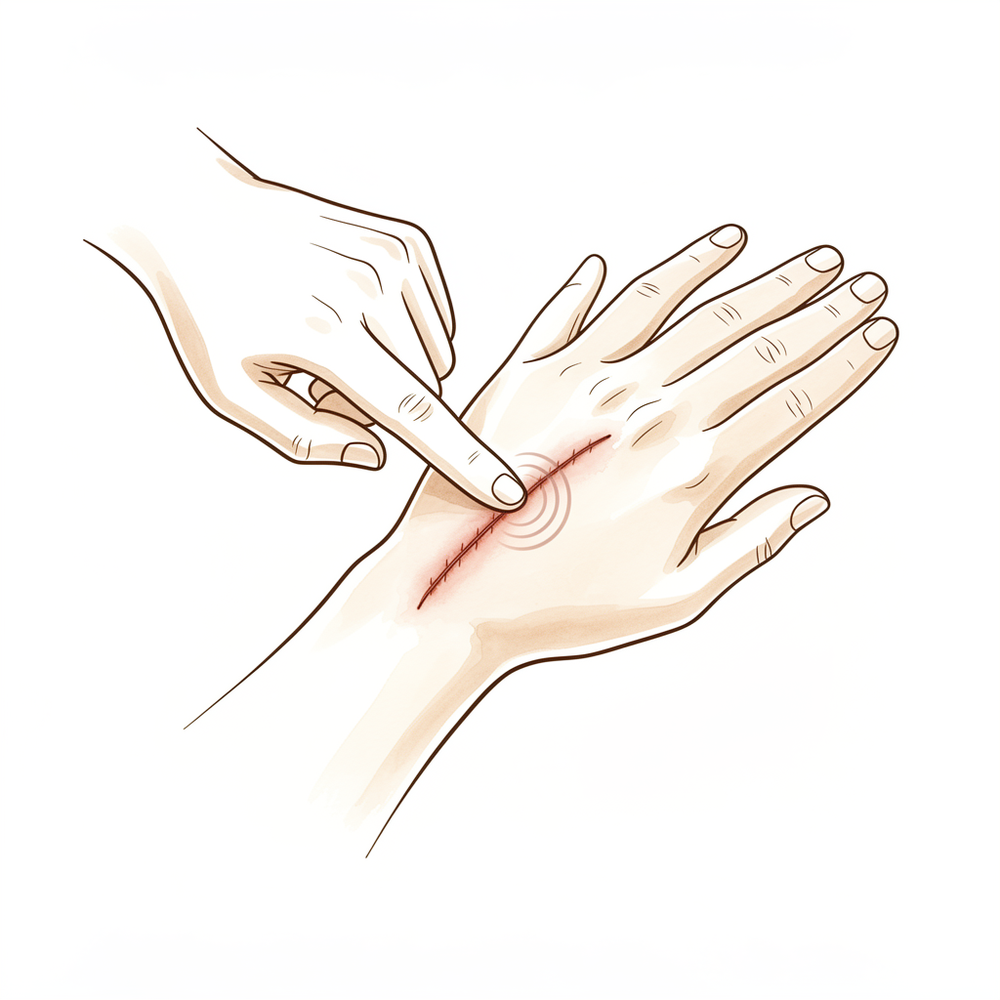
Masahe sa peklat
Kapag ganap nang magaling ang sugat at wala na ang mga dressing (karaniwan ay pagkalipas ng humigit-kumulang dalawang linggo), magpahid ng kaunting plain moisturiser sa peklat gamit ang maliliit at madiing pabilog na galaw sa loob ng isa o dalawang minuto. Pinapalambot nito ang peklat at tumutulong sa balat at sa mga sensitibong sanga ng nerve sa ilalim nito na kumalma. Itigil kung ang bahagi ay bukas pa rin o may lumalabas na likido.
1–2 minuto, 2–3 beses sa isang araw, kapag magaling na
Kieran Hirpara 4.0
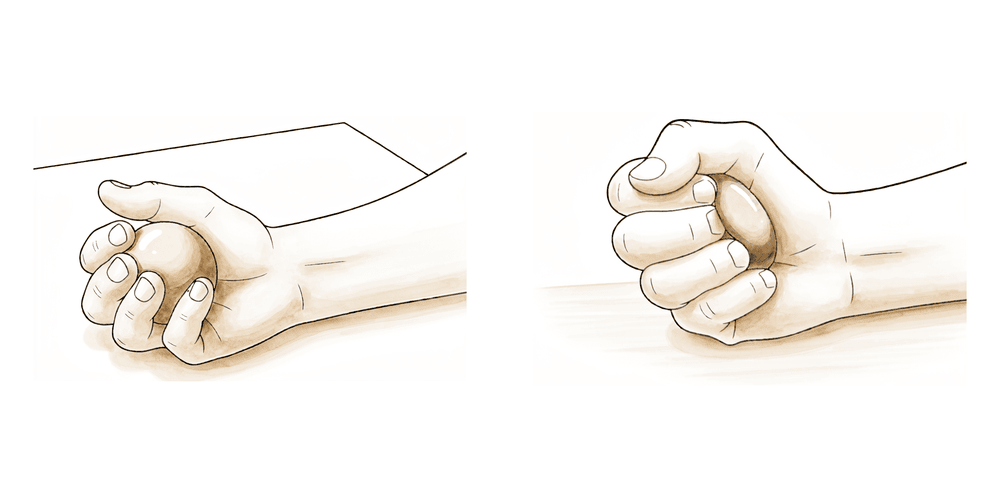
Pagpapalakas ng grip at pinch
Isang ehersisyo sa HULING bahagi — karaniwan ay mula sa ikatlo hanggang ikaapat na linggo, kapag naghilom na ang sugat at komportable na ang paggalaw. Pumiga ng malambot na bola o therapy putty para sa grip, at kurot ng maliit na piraso ng putty sa pagitan ng iyong hinlalaki at mga dulo ng daliri para sa pinch. Unti-unting dagdagan ang puwersa. Binubuo nito muli ang lakas na laging bumababa pagkatapos ng operasyon.
10–15 piga/pisil, 2–3 beses sa isang araw (mula ~3–4 linggo)
Kieran Hirpara 4.0
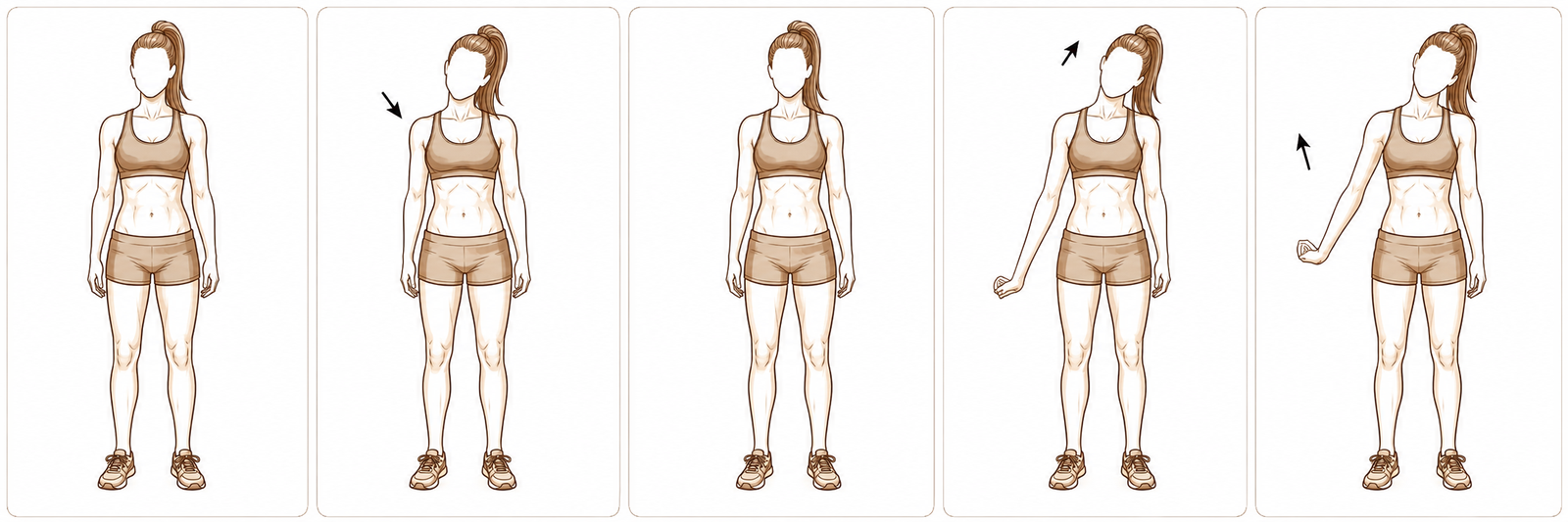
Radial nerve glide (kung ang likod ng pulso ay nakakaramdam ng pangingilig o pananakit)
Tanging kung sisimulan ito ng iyong hand therapist — para sa pangingilig, pananakit, o pagiging sensitibo sa likod ng hinlalaki at pulso. Habang nakaunat ang braso sa harap, dahan-dahang ibaba ang pulso at hinlalaki sa isang light stretch hanggang sa makaramdam ng bahagyang hila, manatili nang sandali, pagkatapos ay bitawan. Hindi ito dapat magdulot ng sakit o magpalala sa pangingilig. Pinapakalma nito ang maliit na nerve sa balat na dumadaan mismo sa site ng operasyon.
5–10 mabagal na glides, 1–2 beses sa isang araw, ayon lamang sa gabay
Ito ang mga ehersisyo mula sa iyong handout. Simulan ang mga ito ayon sa gabay ni Dr Hirpara at ng iyong hand therapist. Ang mga maagang ehersisyo (paggalaw ng hinlalaki, paggalaw ng pulso at tendon glides) ay pinapanatiling gumagalaw at dumudulas ang lahat upang ang mga nailabas na tendon ay hindi dumikit; nagsisimula ang mga ito sa loob ng mga unang araw, hangga't komportable. Ang scar massage ay nagsisimula kapag magaling na ang sugat. Ang pagpapalakas ng grip at pinch ay idinaragdag sa huling bahagi, karaniwan ay mula sa ikatlo hanggang ikaapat na linggo. Ang nerve glide ay idinaragdag lamang kung ang balat sa ibabaw ng pulso ay nakakaramdam ng pangingilig o pagiging sensitibo. Itigil ang anumang nagdudulot ng matalas o tumutusok na sakit sa bahagi ng hinlalaki ng pulso.
Ang iyong clinical protocol
Ang natitirang bahagi ng pahinang ito ay ang staged clinical protocol para sa rehabilitasyon pagkatapos ng de Quervain's (first dorsal compartment) release. Ang seksyong ito ay ibibigay sa iyong hand therapist, at ang bawat phase ay nagsisimula sa isang paliwanag sa simpleng Ingles tungkol sa kung ano ang nangyayari. Ito ay isang decompression, hindi isang repair: ang first dorsal compartment ay hinati at nilalayong manatiling hati, kaya walang construct na kailangang protektahan. Ang programa ay samakatuwid ay isang early-motion, glide-based na pathway: panatilihing dumudulas (gliding) ang mga APL/EPB tendon sa surgical bed upang maiwasan ang adhesion, kontrolin ang oedema, pamahalaan ang scar at ang radial sensory nerve, at ibalik ang grip at pinch.
Bago ang gamutan, suriin ang operation report ng pasyente at makipag-ugnayan sa treating surgeon tungkol sa release (longitudinal/dorsal incision, kung may nakita at hinating hiwalay na EPB sub-sheath/septum), ang dorsal positioning ng release upang maprotektahan laban sa volar tendon subluxation, at anumang paghawak sa radial sensory nerve. Si Dr Hirpara ay nagsasagawa ng open release sa pamamagitan ng dorsal/longitudinal approach, pinoprotektahan ang mga radial sensory nerve branches at pinapanatiling dorsal ang release upang maiwasan ang volar subluxation; ang immobilisation ay para sa comfort lamang (soft dressing ± short thumb spica sa loob ng ilang araw hanggang ~1–2 linggo), at ang maagang paggalaw ng thumb at wrist ang default.
Phase I — maagang paggalaw, oedema at pag-aalaga sa sugat (linggo 0 hanggang ~2)
Protektahan ang sugat at bawasan ang pamamaga sa unang isang o dalawang linggo habang agad na sinisimulan ang paggalaw. Walang protected arc na dapat sundin: ang layunin ay mapagalaw agad ang mga released tendons. Ang anumang splint ay para lamang sa comfort at tinatanggal para sa mga ehersisyo.
Para sa iyong hand therapist:
Edukasyon at mga pag-iingat - Ito ay isang decompression: walang construct na dapat protektahan; ang maagang active motion ang nakatakdang default - Comfort support lamang: soft dressing ± short thumb spica para sa unang ilang araw hanggang ~1–2 linggo; tinatanggal para sa mga ehersisyo at paghuhugas - Panatilihing malinis at tuyo ang sugat hanggang sa gumaling; ipagpaliban ang scar work hanggang sa magsara ang balat - Iwasan ang puwersadong grip, pinch, pagbuhat at pagpihit ng wrist sa panahong ito - Suriin ang distribusyon ng radial sensory nerve (dorsoradial thumb/wrist) para sa paraesthesiae, hypersensitivity o Tinel's; suriin para sa APL/EPB subluxation sa resisted/active thumb extension–abduction
Pamamahala - Sugat: surgical dressings ayon sa itinuro; bantayan para sa impeksyon - Oedema: elevation, gentle retrograde massage, ice kung kinakailangan - Mga ehersisyo: active thumb ROM (flexion/extension, palmar + radial abduction, opposition), active wrist ROM, APL/EPB tendon glides, full active finger ROM; light functional hand use base sa comfort
Pamantayan para mag-progress - Sugat ay gumaling/kumakalma; kontrolado ang pamamaga; komportable ang active thumb at wrist motion
Phase II — pagbabalik ng paggalaw at pamamahala ng peklat (linggo ~2 hanggang 4)
Kapag magaling na ang sugat, aalisin na ang comfort splint at ang pokus ay lilipat sa buo at komportableng paggalaw kasama ang aktibong desensitisation ng peklat at nerve. Ang magaang pagpapalakas ay magsisimula bago matapos ang panahong ito.
Para sa iyong hand therapist:
Mga Assessment - Active/passive ROM ng thumb at wrist; kalidad ng peklat; mga sintomas ng radial sensory nerve; subluxation screen
Edukasyon at mga pag-iingat - Itigil ang anumang comfort splint; hikayatin ang normal at magaang paggamit ng kamay - Patuloy na iwasan ang mabigat/mapuwersang grip at pinch hanggang ~3–4 linggo
Pamamahala - Peklat: masahe at silicone/moisturiser kapag magaling na; desensitisation kung hypersensitive - Nerve: radial sensory nerve glides/desensitisation kung irritable; pakalmahin bago lagyan ng load - Mga Ehersisyo: ituloy patungo sa full thumb at wrist ROM; ituloy ang tendon glides; simulan ang magaang grip/pinch (putty, soft ball) mula ~3–4 linggo
Mga kraytirya para mag-progress - Buo at walang sakit na thumb at wrist ROM; magaling at mobile na peklat; humuhupa na mga sintomas ng nerve
Phase III — pagpapalakas at pagbabalik sa aktibidad (mga linggo ~4 hanggang 6 at higit pa)
Kapag naibalik na ang paggalaw at hiyang na ang sugat, pinapalakas ang grip at pinch at ibinabalik ang pasyente sa buong aktibidad. Karamihan ay nakakamit ang komportableng normal na paggamit sa loob ng apat hanggang anim na linggo; ang mga mas mabibigat na manual na pangangailangan ay mas matagal nang kaunti at nakabase sa criterion.
Para sa iyong hand therapist:
Mga Assessment - Lakas ng grip at pinch kumpara sa kabilang panig; sakit kapag may load; functional/work-specific na pag-test kung naaangkop
Edukasyon at mga pag-iingat - Unti-unting pagbabalik sa pag-grip, pag-pinch, pagbuhat, at pag-twist; buong aktibidad ayon sa pinahihintulutan ng komportable at lakas - Patuloy na dorsoradial pain/tingling o snapping tendon → i-refer muli sa treating surgeon (isaalang-alang ang neuroma, incomplete release, o volar subluxation)
Pamamahala - Mga ehersisyo: progresibong pagpapalakas ng grip at pinch; task- at work-specific na loading; ituloy ang anumang natitirang scar/nerve work - Isaalang-alang ang discharge kapag ang lakas ay malapit nang maging symmetrical at naibalik na ang function - Isaalang-alang ang referral pabalik sa treating doctor kung ang recovery ay nag-plateau o mayroong poor outcome
Mga Criteria para sa discharge / pagbabalik sa buong aktibidad - Malapit na symmetrical na grip at pinch; walang sakit na functional at work-specific na paggamit
Pagbabalik sa trabaho at aktibidad
Hinihikayat ang magaan na pang-araw-araw na paggamit ng kamay (pagkain, pagsusulat, pagbibihis, magagaan na gawain) mula sa simula, hangga't komportable. Dahil ang operasyon ay nasa pulso at kailangang malayang makagalaw at ligtas na makahawak ang kamay, ang pagmamaneho ay maaaring ituloy kapag komportable na ang sugat, wala na ang anumang comfort splint, at may kumpiyansa ka nang humawak at pumihit ng manibela, para sa karamihan ng mga tao sa loob ng unang isang hanggang dalawang linggo, gaya ng kumpirmasyon sa iyong review.
Ang puwersadong paghawak, pag-pinch, pagbuhat, at pagpihit ay dapat hintayin hanggang humigit-kumulang tatlo hanggang apat na linggo at pagkatapos ay unti-unting itataas. Ang trabaho sa desk at magagaan na gawain ay madalas na naibabalik sa loob ng ilang araw hanggang isang o dalawang linggo; ang mas mabigat na manwal na trabaho na nakadepende sa malakas at paulit-ulit na paggamit ng hinlalaki at pulso ay karaniwang naibabalik sa loob ng apat hanggang anim na linggo, na huhusgahan batay sa iyong nabawing lakas at komportable kaysa sa kalendaryo lamang, ni Dr Hirpara at ng iyong hand therapist.
Pagkatapos ng iyong protocol
Ang protocol na ito ay kasabay ng pangkalahatang payo sa paggaling ng klinika: tingnan ang pamamahala ng sakit pagkatapos ng operasyon, pag-aalaga ng sugat at pamamahala ng peklat. Ang phased plan sa itaas ay sumasalamin sa nailathalang gabay sa rehabilitasyon pagkatapos ng de Quervain's release, at ang iyong patuloy na paggaling ay ginagabayan nang indibidwal ni Dr Hirpara at ng iyong hand therapist ayon sa pag-unlad ng iyong kamay.
Evidence & references
This is the clinical evidence summary written for health professionals. It is technical, and it lists the research this page was built from. You do not need to read it to understand your treatment or to make a decision about it.
de Quervain's Release — Procedure Outcomes & Post-operative Rehabilitation (First Dorsal Compartment Release)
Topic scope: post-operative rehabilitation after surgical release of the first dorsal compartment of the wrist (abductor pollicis longus, APL, and extensor pollicis brevis, EPB) for refractory de Quervain's tenosynovitis. This is a decompression, not a reconstruction: the fibro-osseous tunnel is opened and is meant to stay open, so the rehabilitation is an early-motion pathway built around tendon gliding, oedema and scar control, and protection of the overlying radial sensory nerve — rather than months of protected healing.
Defining principle of the rehab here: de Quervain's release relieves a tendon entrapment and does not create a construct that needs protection. The divided extensor retinaculum is meant to stay divided. So (unlike a tendon or ligament repair) immediate, gentle active thumb and wrist motion is the default, and the only deliberate restraints are brief comfort support and a short window of heavy-grip/pinch/twist avoidance while the wound heals. The therapy programme exists to keep the APL/EPB tendons gliding through the healing surgical bed so they do not adhere, to settle the radial sensory nerve branches that cross the incision, and to rebuild grip and pinch — not to immobilise. The single branch points are (1) whether a separate EPB sub-sheath/septum was present and released (its retention is a classic cause of failed release) and (2) keeping the release dorsal so the tendons do not subluxate volarly.
A. PROCEDURE OUTCOMES (open release; endoscopic and retinaculum-sparing variants)
Surgical release of the first dorsal compartment is a reliable operation for de Quervain's that has failed non-operative care: the great majority of patients obtain durable symptom relief, and the principal debates are over technique details (incision orientation, completeness of EPB sub-sheath release, whether to preserve/lengthen the retinaculum) rather than whether to decompress.
- Open release gives durable, high-quality long-term outcomes. A series of 80 cases with a mean 9.5-year follow-up reported sustained relief with a low complication profile, establishing the long-term reliability of open release [Garçon et al., Orthop Traumatol Surg Res 2018]. Moderate (long-term cohort).
- Functional recovery is good and objectively measurable. A series using DASH scores to evaluate first-extensor-compartment release for refractory disease documented good functional outcomes, and emphasised identifying and releasing a separate EPB sub-compartment (septum) when present [Lee et al., Clin Orthop Surg 2014]. DASH is a validated, widely used outcome instrument across hand and wrist conditions [Baltzer, Novak & McCabe, J Hand Surg Am 2014 — scoping review]. Moderate (cohort) + instrument SR.
- Endoscopic and open release are broadly comparable. A comparative study of endoscopic versus open release found favourable results for the endoscopic approach with attention to the radial sensory nerve, while open release remains the standard reference technique [Kang et al., Bone Joint J 2013]. Moderate (comparative).
- The retinaculum can be partly resected, simply divided, or reconstructed. Partial resection of the extensor retinaculum gives good short-term results [Altay et al., Orthop Traumatol Surg Res 2011]; simple release and Z-plasty (retinaculum-lengthening) reconstruction give comparable outcomes, with Z-plasty proposed to reduce subluxation risk at the cost of complexity [Kim, Baek & Lee, J Hand Surg Eur 2019]. A longitudinal-incision technique series likewise reports good functional outcomes [Mangukiya et al., Musculoskelet Surg 2019]. Moderate (comparative/cohort).
- Dissatisfaction does occur and is worth counselling for. A focused study of dissatisfaction after first dorsal compartment release found that a minority of patients remain dissatisfied, often linked to residual pain, nerve symptoms or incomplete relief — a reminder that outcomes are good but not universal [Rogozinski & Lourie, J Hand Surg Am 2016]. Moderate (cohort).
B. REHABILITATION / THERAPY EVIDENCE
The central rehab questions are (1) whether to immobilise the thumb/wrist afterwards and for how long, and (2) whether formal hand therapy changes the outcome. The published base specific to post-de-Quervain-release rehabilitation is thin and consensus-driven: there are no high-quality trials comparing immobilisation regimens or therapy protocols. Practice converges on brief comfort support and early motion, with hand therapy used selectively.
- Early motion is the rationalised default; prolonged immobilisation is not supported. Because the release is a decompression with no construct to protect, early active thumb and wrist motion is used to keep the APL/EPB tendons gliding and prevent adhesion. Immobilisation, where used, is a soft dressing or short thumb spica for comfort only for days to ~1–2 weeks. The supporting evidence is mechanistic/consensus, mirroring the well-established early-motion rationale after other upper-limb decompressions. Weak–moderate (mechanism strong, outcome data sparse).
- De Quervain's is not always an isolated problem — therapy assessment matters. A hand-therapy review highlights that de Quervain's syndrome may coexist with other dorsoradial/wrist pathology, so post-operative therapy should reassess rather than assume a single diagnosis — relevant when symptoms persist after release [Redvers-Chubb, Hand Therapy 2015]. Consensus (narrative/therapy review).
- Hand therapy focus is glide, scar and nerve, then strength. The programme priorities are tendon gliding (adhesion prevention), oedema control, scar management and radial sensory nerve desensitisation, and graded grip/pinch strengthening. The benefit of formal supervised therapy over a home programme is not established by trial data; selective therapy is defensible. Weak / consensus.
Recovery trajectory (expected, evidence-anchored)
| Phase | Window | Restraint | Hand use / therapy focus | Strength / load | Notes |
|---|---|---|---|---|---|
| I — Early motion, oedema & wound care | Week 0–~2 | Comfort support only (soft dressing ± short thumb spica) | Immediate active thumb + wrist motion; APL/EPB tendon glides; elevation/oedema control; screen radial sensory nerve + subluxation | Light functional use only | No construct to protect; motion is the treatment. Keep wound clean/dry |
| II — Restore motion & scar/nerve care | Week ~2–4 | Splint discarded once healed | Full thumb + wrist ROM; scar massage once wound healed; radial sensory nerve glides/desensitisation if irritable | Begin light grip/pinch (putty, ball) from ~3–4 wk | Avoid forceful grip/pinch/twist until ~3–4 wk |
| III — Strengthening & return | Week ~4–6+ | Restrictions lifted, graded | Progressive grip/pinch and task-specific loading | Return to near-symmetrical grip/pinch; full activity as strength allows | Light/desk work days–1–2 wk; manual work ~4–6 wk, criterion-based |
(Phase windows are typical clinical guides, not trial-derived deadlines. Driving resumes once the wound is comfortable, any comfort splint is off, and the patient can grip and steer confidently — commonly within 1–2 weeks.)
C. KEY CONTROVERSIES / EVIDENCE QUALITY
- The EPB sub-sheath (septum) must be sought and released. A separate EPB sub-compartment is common and, if missed, is a classic cause of persistent symptoms / failed release. Series that emphasise identifying and releasing it report good outcomes [Lee 2014]. Moderate — strong mechanistic consensus.
- Volar tendon subluxation if released too volar. Dividing the retinaculum too far towards the palmar side can let the APL/EPB tendons subluxate volarly with thumb motion. Keeping the release dorsal, and retinaculum-lengthening (Z-plasty) reconstructions, are described specifically to mitigate this [Kim 2019; Altay 2011]. Moderate (technique-comparative).
- Radial sensory nerve injury is the signature complication. The superficial radial nerve branches cross the operative field; injury or scar entrapment produces dorsoradial numbness, hypersensitivity or painful neuroma and is a leading driver of dissatisfaction [Ilyas et al., J Am Acad Orthop Surg 2007; Rogozinski 2016]. Careful exposure with nerve protection is emphasised across open and endoscopic techniques [Kang 2013]. Moderate.
- Immobilise or move early? No trial settles the optimal post-operative regimen; consensus favours brief comfort support and early motion (decompression logic) over prolonged splinting. Weak — consensus, not trial-derived.
- Outcomes are good but not universal. A measurable minority remain dissatisfied, usually from residual pain, nerve symptoms or incomplete release — worth explicit pre-operative counselling [Rogozinski 2016]. Moderate.
D. EVIDENCE STRENGTH FLAGS (summary)
- MODERATE (cohort / comparative): durable long-term relief from open release (9.5-yr cohort); good DASH-measured functional outcomes; comparability of endoscopic vs open and of simple release vs Z-plasty / partial retinaculum resection; radial sensory nerve injury as the signature complication; a real, defined dissatisfaction rate.
- WEAK / CONSENSUS: the early-motion, glide-based rehabilitation programme itself (mechanistically rationalised; no trial comparing immobilisation regimens or therapy protocols after de Quervain's release); the role of formal supervised therapy vs a home programme; exact phase timings and return-to-activity windows (typical guides, not trial-derived). Outcomes and the two signature complications (radial sensory nerve injury; volar subluxation) are better studied than the rehabilitation protocol.
CITATIONS
RAG corpus (180,000+ Orthopaedic articles)
- Garçon JJ, Charruau B, Marteau E, et al. Results of surgical treatment of De Quervain's tenosynovitis: 80 cases with a mean follow-up of 9.5 years. Orthop Traumatol Surg Res. 2018. DOI: 10.1016/j.otsr.2018.04.022 (PMID 29909297)
- Lee HJ, Kim PT, Aminata IW, et al. Surgical Release of the First Extensor Compartment for Refractory de Quervain's Tenosynovitis: Surgical Findings and Functional Evaluation Using DASH Scores. Clin Orthop Surg. 2014. DOI: 10.4055/cios.2014.6.4.405
- Ilyas AM, Ast M, Schaffer AA, et al. de Quervain Tenosynovitis of the Wrist. J Am Acad Orthop Surg. 2007. DOI: 10.5435/00124635-200712000-00009 (PMID 18063716)
- Kang HJ, Koh IH, Jang JW, et al. Endoscopic versus open release in patients with de Quervain's tenosynovitis. Bone Joint J. 2013. DOI: 10.1302/0301-620X.95B7.31486 (PMID 23814248)
- Altay M, Ertürk C, Işıkan UE. De Quervain's disease treatment using partial resection of the extensor retinaculum: A short-term results survey. Orthop Traumatol Surg Res. 2011. DOI: 10.1016/j.otsr.2011.03.015
- Kim J, Baek J, Lee J. Comparison between simple release and Z-plasty of retinaculum for de Quervain's disease: a retrospective study. J Hand Surg Eur Vol. 2019. DOI: 10.1177/1753193418818341 (PMID 30669923)
- Mangukiya HJ, Kale A, Mahajan NP, et al. Functional outcome of De Quervain's tenosynovitis with longitudinal incision in surgically treated patients. Musculoskelet Surg. 2019. DOI: 10.1007/s12306-018-0585-1
- Rogozinski B, Lourie GM. Dissatisfaction After First Dorsal Compartment Release for de Quervain Tendinopathy. J Hand Surg Am. 2016;41(1). DOI: 10.1016/j.jhsa.2015.09.020 (PMID 26481556)
- Baltzer H, Novak CB, McCabe SJ. A Scoping Review of Disabilities of the Arm, Shoulder, and Hand Scores for Hand and Wrist Conditions. J Hand Surg Am. 2014. DOI: 10.1016/j.jhsa.2014.07.050 (PMID 25227601)
- Redvers-Chubb K. De Quervain's syndrome: It may not be an isolated pathology. Hand Therapy. 2015. DOI: 10.1177/1758998315599796
de Quervain's release literature (URLs)
- Lee HJ, et al. Surgical Release of the First Extensor Compartment for Refractory de Quervain's Tenosynovitis (DASH outcomes; EPB septum). Clin Orthop Surg 2014 (open access). https://doi.org/10.4055/cios.2014.6.4.405
- Garçon JJ, et al. Results of surgical treatment of De Quervain's tenosynovitis: 80 cases, mean 9.5-year follow-up. Orthop Traumatol Surg Res 2018. https://doi.org/10.1016/j.otsr.2018.04.022
- Ilyas AM, et al. de Quervain Tenosynovitis of the Wrist (review — radial sensory nerve, surgical technique, complications). J Am Acad Orthop Surg 2007. https://doi.org/10.5435/00124635-200712000-00009
- Rogozinski B, Lourie GM. Dissatisfaction After First Dorsal Compartment Release for de Quervain Tendinopathy. J Hand Surg Am 2016. https://doi.org/10.1016/j.jhsa.2015.09.020