Skip to content

Patients › Wrist

Malunion ng Distal Radius (at Corrective Osteotomy)

When a wrist fracture heals in a poor position — the problems it causes and how a corrective osteotomy realigns the bone.
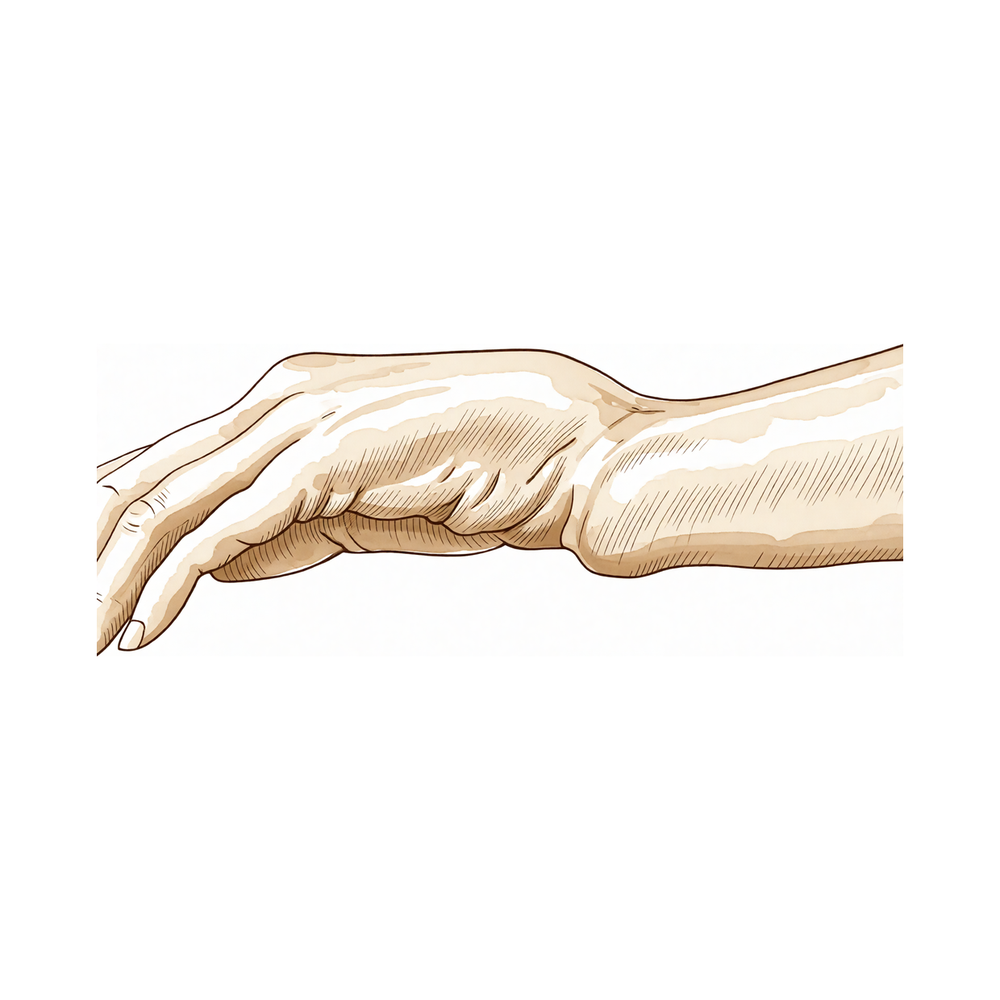
Side view ng isang pulso na may klasikong 'dinner-fork' deformity matapos gumaling nang tabingi ang isang fracture.
Distal radius malunion: ang isang bali sa pulso na gumaling sa maling posisyon ay maaaring mag-iwan ng 'dinner-fork' deformity, na may nabawasang lakas at rotation. Kieran Hirpara 4.0

Ang pahinang ito ay isinalin ng makina at hindi pa nasusuri ng isang doktor. Ang bersyong Ingles ang siyang opisyal.

Ang iyong nararamdaman

Nabali ang iyong pulso ilang panahon na ang nakalipas (marahil mula sa pagkahulog nang nakaunat ang kamay) at ito ay gumaling na. Ngunit hindi ito bumalik sa normal. Ang pulso ay maaaring magmukhang bahagyang nakabaluktot, tabingi, o mas maikli kaysa sa kabilang panig, kung minsan ay may nakikitang bukol sa likuran. Higit pa sa hitsura, madalas ay hindi na ito gumagana gaya ng dati: ang pagkakahawak ay pakiramdam na mahina, matigas ang pulso, at ang pagpihit ng iyong palad paitaas at paibaba (gaya ng pagpihit ng susi o doorknob) ay maaaring maging awkward o masakit.

Maraming tao ang nakakapansin ng kirot sa bahagi ng pulso kung nasaan ang kalingkingan (ang panig na malayo sa hinlalaki) na lumalala kapag pumipihit, sumasandal sa kamay, o gumagawa ng mas mabibigat na gawain. Ang ilan ay nakakaramdam ng pag-alog (clunk) o kawalan ng katatagan (instability) kapag iniikot ang forearm. Ang ilan ay nagkakaroon ng pins and needles (pamanhid o pangingilig) sa hinlalaki at mga daliri kung ang posisyon ng paggaling ay umiipit sa isang nerve sa pulso. Ang lahat ng ito ay mga palatandaan na ang buto ay hindi gumaling sa tamang hugis.

Ano ang aktwal na nangyayari

Ang distal radius ay ang mas malaki sa dalawang buto ng forearm, sa panig ng hinlalaki, eksakto sa pulso. Kapag ito ay nabali at pagkatapos ay gumaling sa maling posisyon, tinatawag namin itong malunion: ang buto ay solidong gumaling, ngunit sa maling hugis. Ang pinakakaraniwang pattern ay ang dulo ng radius ay tumatagilid pabalik (patungo sa likod ng kamay) at ang buto ay nananatiling mas maikli, kaya hindi na ito nakalinya nang maayos sa katabing butong ulna.

Ang maliit na pagbabagong iyon sa hugis ay may mga knock-on effect. Ang mas maikli at nakatagiling radius ay nakakasira sa grip mechanics, kaya bumababa ang lakas. Binabalanse rin nito ang joint kung saan nagtatagpo ang dalawang buto ng forearm malapit sa pulso (ang DRUJ), na siya ang joint na nagpapahintulot sa iyo na i-rotate ang iyong forearm, na nagiging sanhi ng paninigas o pananakit ng rotation. At dahil bumaba ang radius, ang ulna ay maaaring magmukhang masyadong "mahaba," na umiipit sa maliliit na buto at cartilage sa panig ng kalingkingan at nagdudulot ng ulnar-sided pain. Kung ang bali ay umabot sa mismong joint surface at gumaling na may step, ang cartilage ay napupudpod nang hindi pantay at maaaring humantong sa arthritis sa paglipas ng panahon.

Ano ang maaari naming gawin tungkol dito

Sa Mater Private Hospital Rockhampton, pinamumunuan ni Dr Kieran Hirpara ang aming upper-limb team sa pamamahala ng mga pinsalang ito sa pulso. Karaniwan kaming nagsisimula sa non-surgical care, ngunit kung magpapatuloy ang sakit o paninigas, isinasaalang-alang namin ang operasyon pagkatapos ng isang masusing pagsusuri sa iyong history at imaging.

Hindi lahat ng pulsong naghilom nang tabingi ay nangangailangan ng operasyon. Kung ang deformity ay mild at maayos ang iyong kalagayan, ang hand therapy, pagbabago sa mga aktibidad, isang supportive splint at simpleng pain relief ay ganap na makatwiran, at madalas kaming nagsisimula rito.

Kapag ang deformity ay malala at talagang nililimitahan ka nito (sakit, mahinang grip, limitadong rotation), ang operasyon na nag-aayos sa pinag-uugatang problema ay isang corrective osteotomy. Sa simpleng pananalita, maingat na muling pinuputol ng surgeon ang buto sa bahagi ng lumang fracture, ibinabalik ito sa tamang alignment, at pinapanatili ito roon gamit ang isang metal plate at mga screw. Kung saan binuksan ang buto upang maibalik ang haba, ang puwang ay maaaring punan ng bone graft (iyong sariling buto, donor bone, o isang bone-substitute material), bagaman sa mga modernong plate, maraming koreksyon ngayon ang naghihilom nang maayos kahit walang graft. Kung ang buto sa panig ng kalingkingan ang pangunahing problema, maaaring sa halip (o kasabay nito) ay paikliin ng surgeon ang ulna upang maalis ang pressure sa panig na iyon.

Sa kasalukuyan, ang operasyon ay madalas na pinaplano nang maaga sa isang 3D computer model ng iyong sariling pulso, at maaaring gumamit ang surgeon ng isang custom-made guide upang ang pagputol at ang realignment ay tumugma nang tumpak sa plano; ito ay lalong kapaki-pakinabang kapag ang bali ay umabot sa joint surface.

Ano ang dapat asahan

Nakakatulong na malaman nang maaga na ito ay isang mas malaking operasyon kaysa sa orihinal na surgery sa fracture: binabago ng surgeon ang hugis ng naghilom na buto sa halip na simpleng ayusin ang isang bagong bali, kaya ang recovery ay mas komplikado at mas matagal. Kailangang magdugtong ng buto sa bago nitong posisyon, na karaniwang tumatagal ng ilang buwan, at ang plate ay karaniwang hinahayaan na lamang sa loob.

Ang mabuting balita ay, para sa kanang pulso, ang mga benepisyo ay totoo at pangmatagalan: patuloy na ipinapakita ng mga pag-aaral ang pagbuti ng sakit, mas mahusay na grip at mas mabuting rotation ng forearm, at sa pangkalahatan ay nag-uulat ang mga pasyente na sila ay nasisiyahan pagkalipas ng mga taon. Ang pagtatama sa hugis nang maaga, bago pa man maka-adapt ang joint at mga nakapalibot na ligament sa maling posisyon, ay may tendensiyang magbigay ng pinakamagandang resulta. Hindi ito garantiya ng isang perpektong normal na pulso, at kung nagsimula na ang arthritis ang benepisyo ay mas limitado, ngunit para sa isang symptomatic malunion, ang operasyong ito ay maaasahang nagpapabuti sa paggana ng pulso kaysa dati.

Kailan dapat magpatingin

  • Isang pulso na gumaling nang tabingi at nananatiling masakit, mahina, o matigas ilang buwan pagkatapos ng isang fracture; mahalagang masuri ang alignment, dahil karaniwang mas mabisa ang pagtatama nito nang mas maaga.
  • Sakit sa bahagi ng pulso na malapit sa kalingkingan na lumalala kapag pumipilipit o sumasandal sa kamay, lalo na kung may kasamang clunky o limitadong rotation ng forearm.
  • Lumalalang pagkawala ng grip o rotation, o paghihirap sa mga pang-araw-araw na gawain tulad ng pagpihit ng susi, pagbubuhos, o paggamit ng mga kagamitan.
  • Pins and needles o pamamanhid sa hinlalaki at mga daliri pagkatapos ng isang wrist fracture; maaaring may naiiritang nerve at dapat itong masuri.

Higit pang detalye

Advanced reading: the deeper science (optional)

Ang seksyong ito ay lumalampas sa kailangan mo para sa iyong sariling mga desisyon sa paggamot. Ang distal radius malunion ay karapat-dapat sa karagdagang pagbabasa dahil ang corrective operation ay may malinaw na teknikal na kasagutan na kamakailan lamang naitatag, at dahil ang desisyon na gawin ito ay nakabase sa function sa halip na sa hitsura ng X-ray.

Ang approach ang nagtatakda ng reoperation rate

Ang pagtatama ng malunion ay nangangahulugan ng pagputol sa naghilom na buto, pagbabalik ng alignment nito, at paghawak dito gamit ang isang plate. Ang plate na iyon ay maaaring ilagay sa harap ng radius o sa likod, at ang pagpili ay itinuring na usapin ng preference.

Ang paghahambing sa 403 na pasyente ay naghihiwalay sa kanila. Ang anterior plating ay nauugnay sa mas kaunting reoperation, 9% laban sa 28%, at mas kaunting pagtanggal ng hardware, 3% laban sa 18%, na may magkatulad na major complications sa 5% at 6%. Pinapayuhan ng mga may-akda na ang mga surgeon ay dapat lubos na aware sa mga nadagdag na panganib ng dorsal plate fixation pagkatapos ng corrective osteotomy [1].

Ang mekanismo ay anatomical sa halip na technical. Sa likod ng wrist, ang mga extensor tendon ay tumatakbo nang direkta sa ibabaw ng buto na halos walang anuman sa pagitan nila at ng plate, kaya ang hardware doon ay prominente, nakaka-irita, at madalas na tinatanggal, at sa pinakamalalang kaso ay maaaring makagasgas sa tendon. Sa harap, isang layer ng muscle ang naghihiwalay sa plate mula sa mga flexor tendon.

Pansinin kung ano ang hindi nagkaiba: ang mga major complication ay pareho. Ang bentahe ay nasa pag-iwas sa pangalawang operasyon para sa hardware, hindi sa pag-iwas sa disaster.

Bakit hindi ang X-ray ang nagdedesisyon dito

Ang isang malunited distal radius na gumaling sa maling posisyon ay nakikita sa anumang film, at ang deformity ay mukhang isang bagay na nangangailangan ng koreksyon. Ang mga sukat, kung gaano kakatagilid ang joint surface, at kung gaano naikli ang radius, ang binibigyang-diin sa isang follow-up report.

Ngunit ang deformity mismo ay hindi ang reklamo. Ang ipinapakita ng mga tao ay ang pagkawala ng rotation ng forearm, pagkawala ng grip, pananakit sa ulnar side ng wrist, o isang anyo na nakakaabala sa kanila. Ang ugnayan sa pagitan ng mga radiographic numbers at ng mga sintomas na iyon ay maluwag, lalo na sa mga matatandang pasyente, kung saan ang malaking deformity ay madalas na natatanggap nang maayos.

Iyan ang dahilan kung bakit ang corrective osteotomy ay isinasaalang-alang para sa mga sintomas at function, hindi para sa anyo ng isang scan. Ang isang wrist na gumagana nang katanggap-tanggap, sa isang tao na natutugunan nito ang mga pangangailangan, ay hindi nangangailangan ng koreksyon dahil lamang mali ang mga anggulo.

Ano ang aktwal na itinatama ng operasyon

Dalawang bunga ang nagtutulak sa karamihan ng mga symptomatic malunion.

Ang una ay ang pagkawala ng rotation ng forearm. Kapag ang radius ay gumaling nang maikli o nakatagilid, hindi na ito umiikot nang tama sa paligid ng ulna, at nagiging limitado ang pagbaligtad ng palad paitaas, ang paggalaw na kailangan upang magdala ng tray, kumuha ng sukli, o magpihit ng susi.

Ang ikalawa ay ang pananakit sa panig ng ulna dahil sa relative lengthening. Umiikli ang radius habang ito ay nag-collapse, kaya ang ulna ay nagiging relatibong mahaba at naitutulak laban sa mga carpal bone, na nagdudulot ng impaction problem bilang secondary consequence ng fracture. Ito ay maaaring gamutin sa pamamagitan ng pagbabalik ng haba ng radius o sa pamamagitan ng pagpapaikli ng ulna, at ang naaangkop ay depende sa kung gaano kalaki ang deformity sa bawat buto.

Ang pag-unawa sa dalawang mekanismong ito ay nagpapaliwanag kung bakit ang koreksyon ay madalas na sulit isaalang-alang kahit ilang taon na matapos ang orihinal na pinsala: tinutugunan nito ang isang patuloy na mechanical problem, hindi kinukumpuni ang isang lumang fracture.

Mga Sanggunian

[1] Essa A, Paul R, Khan S, Avisar E, Chan A, Persitz J. Isang meta-analysis na naghahambing sa mga komplikasyon ng anterior versus dorsal osteotomy at plate fixation para sa distal radius malunion. J Hand Surg Eur Vol. 2024;49(8):956-64. https://doi.org/10.1177/17531934241254962


Creative Commons BY-NC 4.0

CC Creative Commons licence
BY Attribution — you must credit the source
NC NonCommercial — not for commercial use

Attribution-NonCommercial 4.0 International


Creative Commons Corporation ("Creative Commons") is not a law firm and does not provide legal services or legal advice. Distribution of Creative Commons public licenses does not create a lawyer-client or other relationship. Creative Commons makes its licenses and related information available on an "as-is" basis. Creative Commons gives no warranties regarding its licenses, any material licensed under their terms and conditions, or any related information. Creative Commons disclaims all liability for damages resulting from their use to the fullest extent possible.

Using Creative Commons Public Licenses

Creative Commons public licenses provide a standard set of terms and conditions that creators and other rights holders may use to share original works of authorship and other material subject to copyright and certain other rights specified in the public license below. The following considerations are for informational purposes only, are not exhaustive, and do not form part of our licenses.

Considerations for licensors: Our public licenses are intended for use by those authorized to give the public permission to use material in ways otherwise restricted by copyright and certain other rights. Our licenses are irrevocable. Licensors should read and understand the terms and conditions of the license they choose before applying it. Licensors should also secure all rights necessary before applying our licenses so that the public can reuse the material as expected. Licensors should clearly mark any material not subject to the license. This includes other CC- licensed material, or material used under an exception or limitation to copyright. More considerations for licensors: wiki.creativecommons.org/Considerations_for_licensors

Considerations for the public: By using one of our public licenses, a licensor grants the public permission to use the licensed material under specified terms and conditions. If the licensor's permission is not necessary for any reason--for example, because of any applicable exception or limitation to copyright--then that use is not regulated by the license. Our licenses grant only permissions under copyright and certain other rights that a licensor has authority to grant. Use of the licensed material may still be restricted for other reasons, including because others have copyright or other rights in the material. A licensor may make special requests, such as asking that all changes be marked or described. Although not required by our licenses, you are encouraged to respect those requests where reasonable. More considerations for the public: wiki.creativecommons.org/Considerations_for_licensees


Creative Commons Attribution-NonCommercial 4.0 International Public License

By exercising the Licensed Rights (defined below), You accept and agree to be bound by the terms and conditions of this Creative Commons Attribution-NonCommercial 4.0 International Public License ("Public License"). To the extent this Public License may be interpreted as a contract, You are granted the Licensed Rights in consideration of Your acceptance of these terms and conditions, and the Licensor grants You such rights in consideration of benefits the Licensor receives from making the Licensed Material available under these terms and conditions.

Section 1 -- Definitions.

a. Adapted Material means material subject to Copyright and Similar Rights that is derived from or based upon the Licensed Material and in which the Licensed Material is translated, altered, arranged, transformed, or otherwise modified in a manner requiring permission under the Copyright and Similar Rights held by the Licensor. For purposes of this Public License, where the Licensed Material is a musical work, performance, or sound recording, Adapted Material is always produced where the Licensed Material is synched in timed relation with a moving image.

b. Adapter's License means the license You apply to Your Copyright and Similar Rights in Your contributions to Adapted Material in accordance with the terms and conditions of this Public License.

c. Copyright and Similar Rights means copyright and/or similar rights closely related to copyright including, without limitation, performance, broadcast, sound recording, and Sui Generis Database Rights, without regard to how the rights are labeled or categorized. For purposes of this Public License, the rights specified in Section 2(b)(1)-(2) are not Copyright and Similar Rights.

d. Effective Technological Measures means those measures that, in the absence of proper authority, may not be circumvented under laws fulfilling obligations under Article 11 of the WIPO Copyright Treaty adopted on December 20, 1996, and/or similar international agreements.

e. Exceptions and Limitations means fair use, fair dealing, and/or any other exception or limitation to Copyright and Similar Rights that applies to Your use of the Licensed Material.

f. Licensed Material means the artistic or literary work, database, or other material to which the Licensor applied this Public License.

g. Licensed Rights means the rights granted to You subject to the terms and conditions of this Public License, which are limited to all Copyright and Similar Rights that apply to Your use of the Licensed Material and that the Licensor has authority to license.

h. Licensor means the individual(s) or entity(ies) granting rights under this Public License.

i. NonCommercial means not primarily intended for or directed towards commercial advantage or monetary compensation. For purposes of this Public License, the exchange of the Licensed Material for other material subject to Copyright and Similar Rights by digital file-sharing or similar means is NonCommercial provided there is no payment of monetary compensation in connection with the exchange.

j. Share means to provide material to the public by any means or process that requires permission under the Licensed Rights, such as reproduction, public display, public performance, distribution, dissemination, communication, or importation, and to make material available to the public including in ways that members of the public may access the material from a place and at a time individually chosen by them.

k. Sui Generis Database Rights means rights other than copyright resulting from Directive 96/9/EC of the European Parliament and of the Council of 11 March 1996 on the legal protection of databases, as amended and/or succeeded, as well as other essentially equivalent rights anywhere in the world.

l. You means the individual or entity exercising the Licensed Rights under this Public License. Your has a corresponding meaning.

Section 2 -- Scope.

a. License grant.

1. Subject to the terms and conditions of this Public License, the Licensor hereby grants You a worldwide, royalty-free, non-sublicensable, non-exclusive, irrevocable license to exercise the Licensed Rights in the Licensed Material to:

a. reproduce and Share the Licensed Material, in whole or in part, for NonCommercial purposes only; and

b. produce, reproduce, and Share Adapted Material for NonCommercial purposes only.

2. Exceptions and Limitations. For the avoidance of doubt, where Exceptions and Limitations apply to Your use, this Public License does not apply, and You do not need to comply with its terms and conditions.

3. Term. The term of this Public License is specified in Section 6(a).

4. Media and formats; technical modifications allowed. The Licensor authorizes You to exercise the Licensed Rights in all media and formats whether now known or hereafter created, and to make technical modifications necessary to do so. The Licensor waives and/or agrees not to assert any right or authority to forbid You from making technical modifications necessary to exercise the Licensed Rights, including technical modifications necessary to circumvent Effective Technological Measures. For purposes of this Public License, simply making modifications authorized by this Section 2(a) (4) never produces Adapted Material.

5. Downstream recipients.

a. Offer from the Licensor -- Licensed Material. Every recipient of the Licensed Material automatically receives an offer from the Licensor to exercise the Licensed Rights under the terms and conditions of this Public License.

b. No downstream restrictions. You may not offer or impose any additional or different terms or conditions on, or apply any Effective Technological Measures to, the Licensed Material if doing so restricts exercise of the Licensed Rights by any recipient of the Licensed Material.

6. No endorsement. Nothing in this Public License constitutes or may be construed as permission to assert or imply that You are, or that Your use of the Licensed Material is, connected with, or sponsored, endorsed, or granted official status by, the Licensor or others designated to receive attribution as provided in Section 3(a)(1)(A)(i).

b. Other rights.

1. Moral rights, such as the right of integrity, are not licensed under this Public License, nor are publicity, privacy, and/or other similar personality rights; however, to the extent possible, the Licensor waives and/or agrees not to assert any such rights held by the Licensor to the limited extent necessary to allow You to exercise the Licensed Rights, but not otherwise.

2. Patent and trademark rights are not licensed under this Public License.

3. To the extent possible, the Licensor waives any right to collect royalties from You for the exercise of the Licensed Rights, whether directly or through a collecting society under any voluntary or waivable statutory or compulsory licensing scheme. In all other cases the Licensor expressly reserves any right to collect such royalties, including when the Licensed Material is used other than for NonCommercial purposes.

Section 3 -- License Conditions.

Your exercise of the Licensed Rights is expressly made subject to the following conditions.

a. Attribution.

1. If You Share the Licensed Material (including in modified form), You must:

a. retain the following if it is supplied by the Licensor with the Licensed Material:

i. identification of the creator(s) of the Licensed Material and any others designated to receive attribution, in any reasonable manner requested by the Licensor (including by pseudonym if designated);

ii. a copyright notice;

iii. a notice that refers to this Public License;

iv. a notice that refers to the disclaimer of warranties;

v. a URI or hyperlink to the Licensed Material to the extent reasonably practicable;

b. indicate if You modified the Licensed Material and retain an indication of any previous modifications; and

c. indicate the Licensed Material is licensed under this Public License, and include the text of, or the URI or hyperlink to, this Public License.

2. You may satisfy the conditions in Section 3(a)(1) in any reasonable manner based on the medium, means, and context in which You Share the Licensed Material. For example, it may be reasonable to satisfy the conditions by providing a URI or hyperlink to a resource that includes the required information.

3. If requested by the Licensor, You must remove any of the information required by Section 3(a)(1)(A) to the extent reasonably practicable.

4. If You Share Adapted Material You produce, the Adapter's License You apply must not prevent recipients of the Adapted Material from complying with this Public License.

Section 4 -- Sui Generis Database Rights.

Where the Licensed Rights include Sui Generis Database Rights that apply to Your use of the Licensed Material:

a. for the avoidance of doubt, Section 2(a)(1) grants You the right to extract, reuse, reproduce, and Share all or a substantial portion of the contents of the database for NonCommercial purposes only;

b. if You include all or a substantial portion of the database contents in a database in which You have Sui Generis Database Rights, then the database in which You have Sui Generis Database Rights (but not its individual contents) is Adapted Material; and

c. You must comply with the conditions in Section 3(a) if You Share all or a substantial portion of the contents of the database.

For the avoidance of doubt, this Section 4 supplements and does not replace Your obligations under this Public License where the Licensed Rights include other Copyright and Similar Rights.

Section 5 -- Disclaimer of Warranties and Limitation of Liability.

a. UNLESS OTHERWISE SEPARATELY UNDERTAKEN BY THE LICENSOR, TO THE EXTENT POSSIBLE, THE LICENSOR OFFERS THE LICENSED MATERIAL AS-IS AND AS-AVAILABLE, AND MAKES NO REPRESENTATIONS OR WARRANTIES OF ANY KIND CONCERNING THE LICENSED MATERIAL, WHETHER EXPRESS, IMPLIED, STATUTORY, OR OTHER. THIS INCLUDES, WITHOUT LIMITATION, WARRANTIES OF TITLE, MERCHANTABILITY, FITNESS FOR A PARTICULAR PURPOSE, NON-INFRINGEMENT, ABSENCE OF LATENT OR OTHER DEFECTS, ACCURACY, OR THE PRESENCE OR ABSENCE OF ERRORS, WHETHER OR NOT KNOWN OR DISCOVERABLE. WHERE DISCLAIMERS OF WARRANTIES ARE NOT ALLOWED IN FULL OR IN PART, THIS DISCLAIMER MAY NOT APPLY TO YOU.

b. TO THE EXTENT POSSIBLE, IN NO EVENT WILL THE LICENSOR BE LIABLE TO YOU ON ANY LEGAL THEORY (INCLUDING, WITHOUT LIMITATION, NEGLIGENCE) OR OTHERWISE FOR ANY DIRECT, SPECIAL, INDIRECT, INCIDENTAL, CONSEQUENTIAL, PUNITIVE, EXEMPLARY, OR OTHER LOSSES, COSTS, EXPENSES, OR DAMAGES ARISING OUT OF THIS PUBLIC LICENSE OR USE OF THE LICENSED MATERIAL, EVEN IF THE LICENSOR HAS BEEN ADVISED OF THE POSSIBILITY OF SUCH LOSSES, COSTS, EXPENSES, OR DAMAGES. WHERE A LIMITATION OF LIABILITY IS NOT ALLOWED IN FULL OR IN PART, THIS LIMITATION MAY NOT APPLY TO YOU.

c. The disclaimer of warranties and limitation of liability provided above shall be interpreted in a manner that, to the extent possible, most closely approximates an absolute disclaimer and waiver of all liability.

Section 6 -- Term and Termination.

a. This Public License applies for the term of the Copyright and Similar Rights licensed here. However, if You fail to comply with this Public License, then Your rights under this Public License terminate automatically.

b. Where Your right to use the Licensed Material has terminated under Section 6(a), it reinstates:

1. automatically as of the date the violation is cured, provided it is cured within 30 days of Your discovery of the violation; or

2. upon express reinstatement by the Licensor.

For the avoidance of doubt, this Section 6(b) does not affect any right the Licensor may have to seek remedies for Your violations of this Public License.

c. For the avoidance of doubt, the Licensor may also offer the Licensed Material under separate terms or conditions or stop distributing the Licensed Material at any time; however, doing so will not terminate this Public License.

d. Sections 1, 5, 6, 7, and 8 survive termination of this Public License.

Section 7 -- Other Terms and Conditions.

a. The Licensor shall not be bound by any additional or different terms or conditions communicated by You unless expressly agreed.

b. Any arrangements, understandings, or agreements regarding the Licensed Material not stated herein are separate from and independent of the terms and conditions of this Public License.

Section 8 -- Interpretation.

a. For the avoidance of doubt, this Public License does not, and shall not be interpreted to, reduce, limit, restrict, or impose conditions on any use of the Licensed Material that could lawfully be made without permission under this Public License.

b. To the extent possible, if any provision of this Public License is deemed unenforceable, it shall be automatically reformed to the minimum extent necessary to make it enforceable. If the provision cannot be reformed, it shall be severed from this Public License without affecting the enforceability of the remaining terms and conditions.

c. No term or condition of this Public License will be waived and no failure to comply consented to unless expressly agreed to by the Licensor.

d. Nothing in this Public License constitutes or may be interpreted as a limitation upon, or waiver of, any privileges and immunities that apply to the Licensor or You, including from the legal processes of any jurisdiction or authority.


Creative Commons is not a party to its public licenses. Notwithstanding, Creative Commons may elect to apply one of its public licenses to material it publishes and in those instances will be considered the “Licensor.” The text of the Creative Commons public licenses is dedicated to the public domain under the CC0 Public Domain Dedication. Except for the limited purpose of indicating that material is shared under a Creative Commons public license or as otherwise permitted by the Creative Commons policies published at creativecommons.org/policies, Creative Commons does not authorize the use of the trademark "Creative Commons" or any other trademark or logo of Creative Commons without its prior written consent including, without limitation, in connection with any unauthorized modifications to any of its public licenses or any other arrangements, understandings, or agreements concerning use of licensed material. For the avoidance of doubt, this paragraph does not form part of the public licenses.

Creative Commons may be contacted at creativecommons.org.