Patients › Rehabilitation
Pag-oopera ng Rotator Cuff (Rotator Cuff Repair)
Staged rehabilitation protocol after rotator cuff repair at Mater Private Hospital Rockhampton, with the early exercise program.
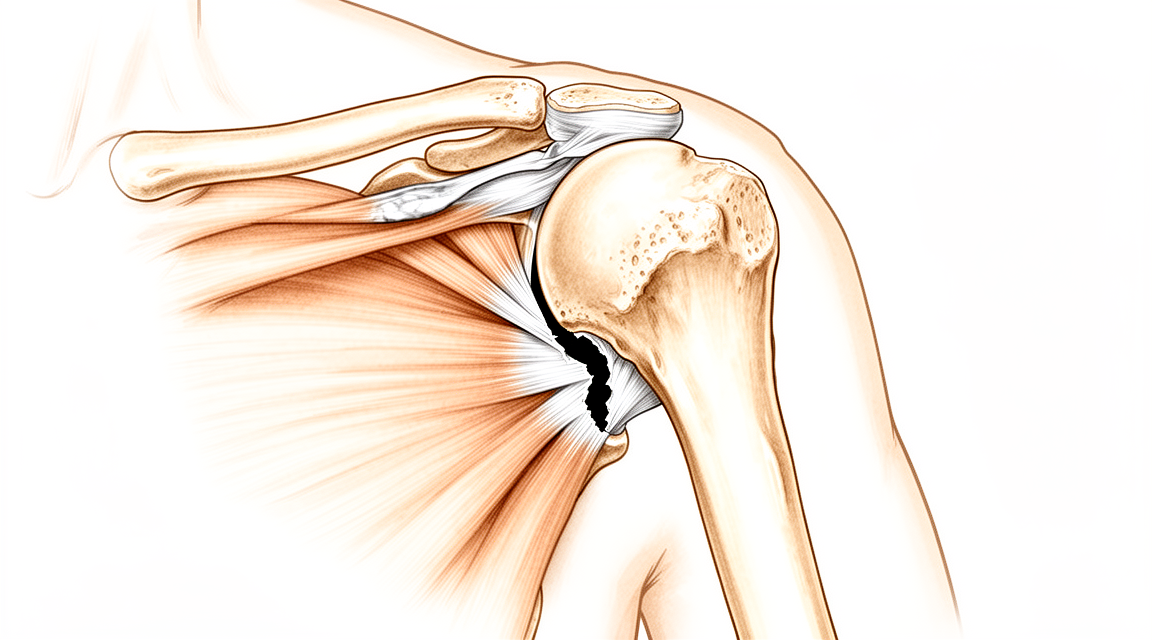
Ang protocol na ito ay nagsisilbing gabay sa iyong paggaling pagkatapos ng rotator cuff repair kasama si Dr Kieran Hirpara sa Mater Private Hospital Rockhampton. Pinagsasama nito ang isang simpleng paliwanag ng bawat yugto at isang structured programme na maaari mong ibahagi sa iyong physiotherapist; dalhin ang pahinang ito o ang PDF nito sa iyong unang appointment upang manatiling coordinated ang iyong rehabilitasyon. Maaaring i-adjust ng iyong physiotherapist ang plano depende sa pag-unlad ng iyong paggaling.
Kung mayroon kang anumang alalahanin tungkol sa iyong sugat pagkatapos ng operasyon, makipag-ugnayan sa mga rooms. Madalas na nakatutulong ang pagkuha ng larawan ng sugat at pag-email nito para masuri.
Ano ang dapat asahan
Ang rotator cuff repair ay muling nagkakabit ng napunit na tendon pabalik sa buto, at ang biyolohikal na muling pagkakabit na ito ang pinoprotektahan ng buong programang ito. Ang repair ay malambot pa sa ika-anim na linggo at patuloy na nagma-mature sa loob ng maraming buwan: sa mga pag-aaral sa paggaling, mayroon lamang itong humigit-kumulang isang kapat ng normal nitong lakas sa ika-anim na linggo, halos kalahati sa ika-labindalawang linggo, at hindi ito lumalapit sa buong lakas hanggang sa hindi bababa sa anim na buwan. Ito ang dahilan kung bakit ang paggalaw at load ay unti-unting ibinabalik sa mga yugto sa halip na biglaan.
Nakakatukso na magmadali sa simula, ngunit nakapagpapanatag ang ebidensya. Para sa mga karaniwang maliit at katamtamang punit, anumang dagdag na range na makukuha mo mula sa maagang paggalaw ay pansamantala lamang, at pagsapit ng isang taon ay wala nang pagkakaiba sa pagitan ng pagsisimula nang maaga at pagsisimula nang mas huli nang kaunti. Ang pagtitiyaga sa mga unang linggo ay walang mawawala sa iyo sa katagalan, at pinoprotektahan nito ang repair habang ito ay nasa pinakamahinang estado nito. Mayroon ding mabuting ebidensya na ang pagsisimula ng agresibong therapy sa pinakaunang linggo ay mas nakakasama kaysa nakakabuti, kaya ang mga unang linggo ay sadyang dahan-dahan lamang.
Ang pinaka-kapaki-pakinabang na bagay na maaari mong gawin para sa iyong balikat ay ang protektahan ang repair nang maaga. Karamihan ng mga re-tear ay nangyayari sa unang tatlo hanggang anim na buwan, at ang mga pasyenteng hindi sumusunod sa mga maagang restriksyon ay mas malaki ang posibilidad na magkaroon ng re-tear. Ang pagsunod sa protocol ay mas mahalaga kaysa sa anumang ehersisyo.
Ang mga rotator cuff repair ay madalas na pinagsasama sa iba pang mga procedure sa iisang operasyon: pinakakaraniwan ang subacromial decompression, distal clavicle excision, biceps tenodesis o suprascapular nerve release. Kapag nangyari ito, ang protocol na ito ang namamahala sa buong recovery: ang inayos na tendon ang pinakamabagal gumaling na bahagi, at ang timeline nito ang nagtatakda ng bilis.
Ang iyong timeline ay nakadepende sa laki ng punit na inayos. Ito ang pinakamalaking bagay na nagtatakda ng bilis, dahil ang mas malalaking punit ay mas mabagal gumaling at mas malaki ang posibilidad na magkaroon ng re-tear. Sasabihin sa iyo ni Dr Hirpara kung sa aling grupo kabilang ang iyong repair, at hinahati ng pahinang ito ang programa sa dalawang malinaw na may label na track sa ibaba:
- Small / medium tears: isa o dalawang tendon, magandang kalidad ng tissue.
- Large / massive tears: mas malalaking punit, dalawa o higit pang tendon, o mas mahinang kalidad ng tissue. Ang mga hakbang ay pareho, ngunit mas matagal na pinapanatili at mas maingat na isinasagawa: ang protected motion ay pinapanatili nang mas matagal, ang active movement ay mas huling ibinabalik, at ang strengthening ay ipinagpapaliban.
Ang pamamaraan
Ang iyong rotator cuff repair ay ginagawa nang arthroscopically (keyhole), o paminsan-minsan sa pamamagitan ng isang maliit na open incision. Ang napunit na tendon ay muling ikinakabit sa bony footprint nito sa itaas ng buto ng upper arm, at ang tungkulin ng rehabilitasyon ay protektahan ang muling pagkakabit na iyon habang ito ay gumagaling, at pagkatapos ay unti-unting ibalik ang buong paggalaw, lakas, at function.
Pagsusuot ng iyong sling
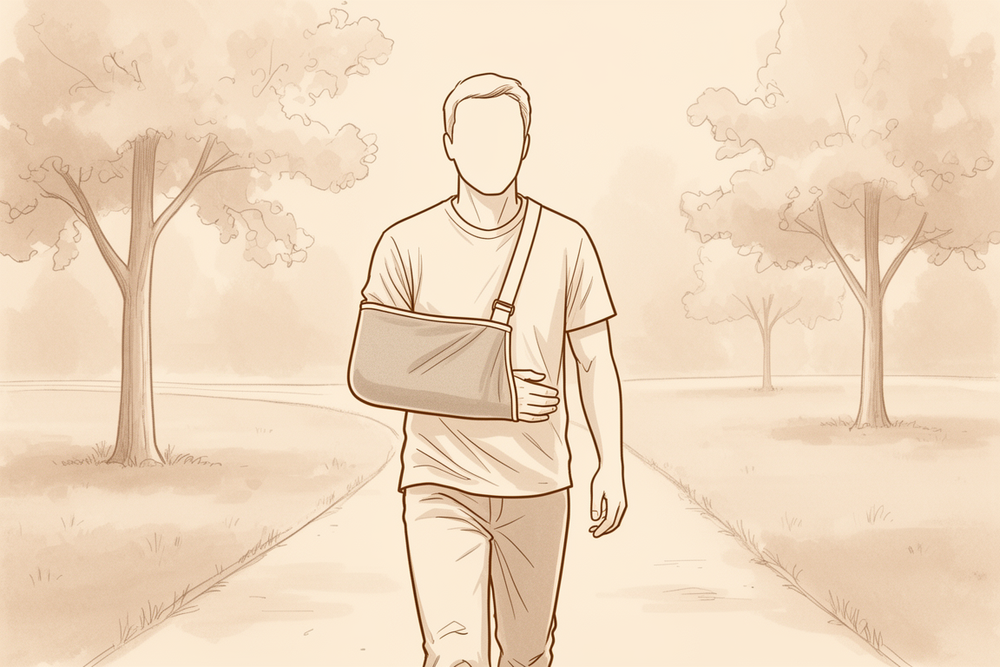
Gagamit ka ng simpleng shoulder sling, hindi abduction-pillow sling. Walang napatunayang pagkakaiba sa resulta sa pagitan ng dalawa, at ang simpleng sling ay mas madaling gamitin sa araw-araw. Gumagamit si Dr Hirpara ng simpleng sling para sa bawat cuff repair, kabilang ang malalaki at massive na punit.
- Isuot ang sling sa loob ng 6 na linggo para sa suporta sa araw, lalo na kapag ikaw ay nasa labas ng bahay o may kasamang ibang tao.
- Huwag matulog nang nakasuot ng sling. Ito ay para sa suporta sa araw lamang; matulog nang wala ito, habang ang iyong braso ay komportable at suportado ng unan.
- Hubarin ito para sa pagligo at para sa iyong mga ehersisyo (kapag naipakita na sa iyo kung paano). Sa tuwing wala ang sling, panatilihing relax ang iyong braso at nasa iyong tabi.
- Gumamit ng ice kung ang balikat ay namamagâ o masakit, lalo na pagkatapos ng ehersisyo.
- Para sa paginhawa ng sakit, uminom ng regular na paracetamol kasama ang isang anti-inflammatory (tulad ng ibuprofen) maliban kung may ibang sinabi sa iyo, gaya ng nakasaad sa managing post-operative pain. Ang pag-inom ng dose bago ang iyong mga ehersisyo ay nakakatulong.
Bantayan ang iyong postura habang ginagamit ang sling: panatilihing nakalinya ang iyong mga tainga, balikat, at balakang at iwasang humukot. Ang tamang postura ay nagpoprotekta sa iyong likod at tumutulong upang maiwasan ang paninigas ng balikat.
Mga pangunahing pag-iingat — HUWAG
- HUWAG aktibong igalaw ang balikat gamit ang sarili nitong lakas hanggang sa humigit-kumulang 6 na linggo (ang repair ay nasa 20% lamang ng normal na lakas sa ika-4 na linggo).
- HUWAG magbuhat, tumulak, humila, o magdala ng bigat gamit ang kamay o braso sa loob ng 6 na linggo.
- HUWAG i-rotate ang braso palabas lampas sa diretsong posisyon (neutral) sa simula.
- Kung ang front cuff tendon (subscapularis) ay na-repair: panatilihin ang active external rotation sa loob ng humigit-kumulang 30° para sa unang 12 linggo, at huwag aktibong i-rotate ang braso papasok (laban sa resistance) sa panahong iyon; pinoprotektahan nito ang repair sa harap. Sasabihin sa iyo ng iyong surgeon kung ito ay naaangkop sa iyo.
- HUWAG gumawa ng "empty-can" (thumb-down) raises. Kailanman.
- HUWAG abutin ang likod sa simula, at iwasan ang anumang biglaang paghatak o pagtulak.
- HUWAG magmaneho habang kinakailangan ang sling (6 na linggo).
Maliit / katamtamang punit
Ito ang track para sa mga punit ng isa o dalawang tendon na may mabuting tissue. Kung saan ang isang phase ay nagbibigay ng numero ng linggo, ito ang iyong timing.
Small-medium tears — Phase I: Proteksyon (weeks 0–6)
Kieran Hirpara 4.0
Sirkulasyon at malalim na paghinga
Upang mabawasan ang panganib ng mga komplikasyon pagkatapos ng operasyon, sikaping maglakad nang hindi bababa sa 30 minuto bawat araw (hindi kailangang isang bagsakan lang ito), at kumuha ng 4–6 malalim na hininga bawat oras.
Sa buong maghapon
Kieran Hirpara 4.0
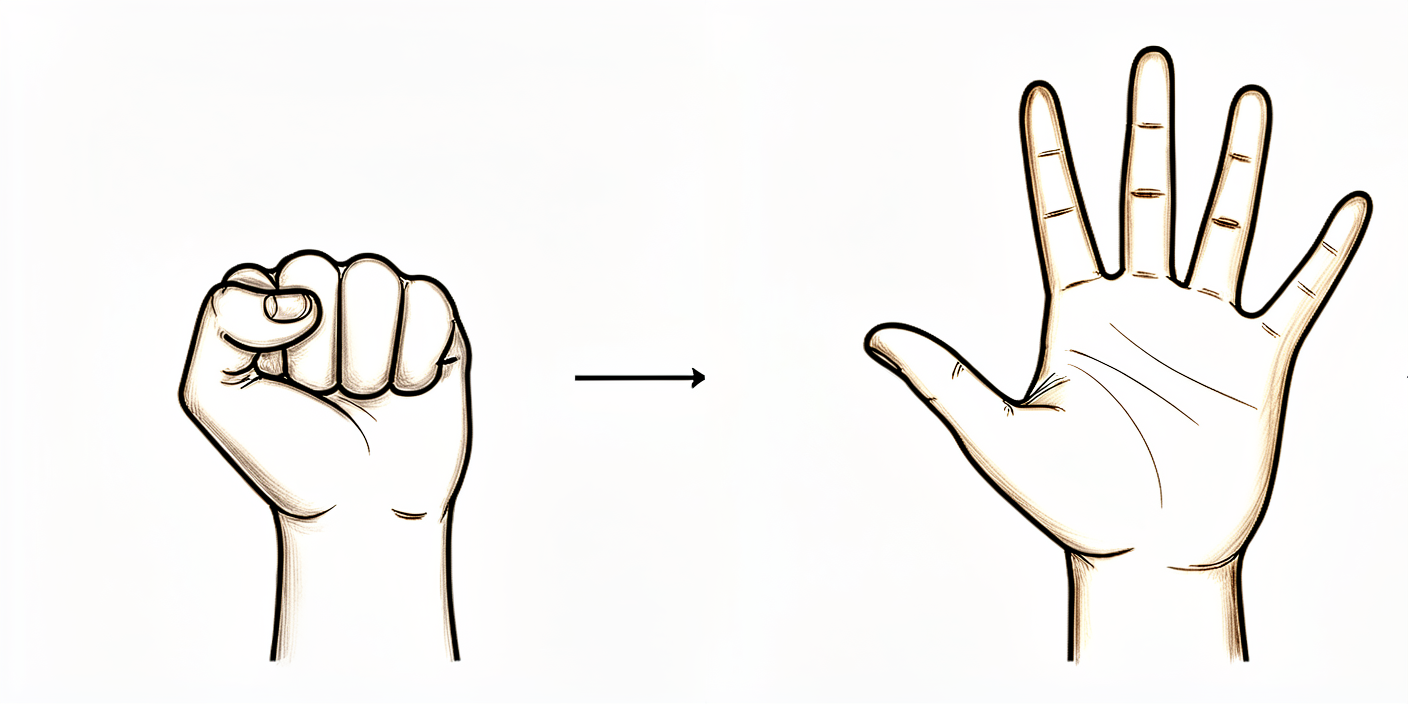
Buksan at isara ang kamay
I-kuyom nang mahigpit ang iyong kamay, pagkatapos ay ibuka ito nang lubos. Pinapanatili nito ang paggalaw ng iyong kamay at tumutulong upang maiwasan ang paninigas at pamamaga.
10 beses bawat oras
Kieran Hirpara 4.0
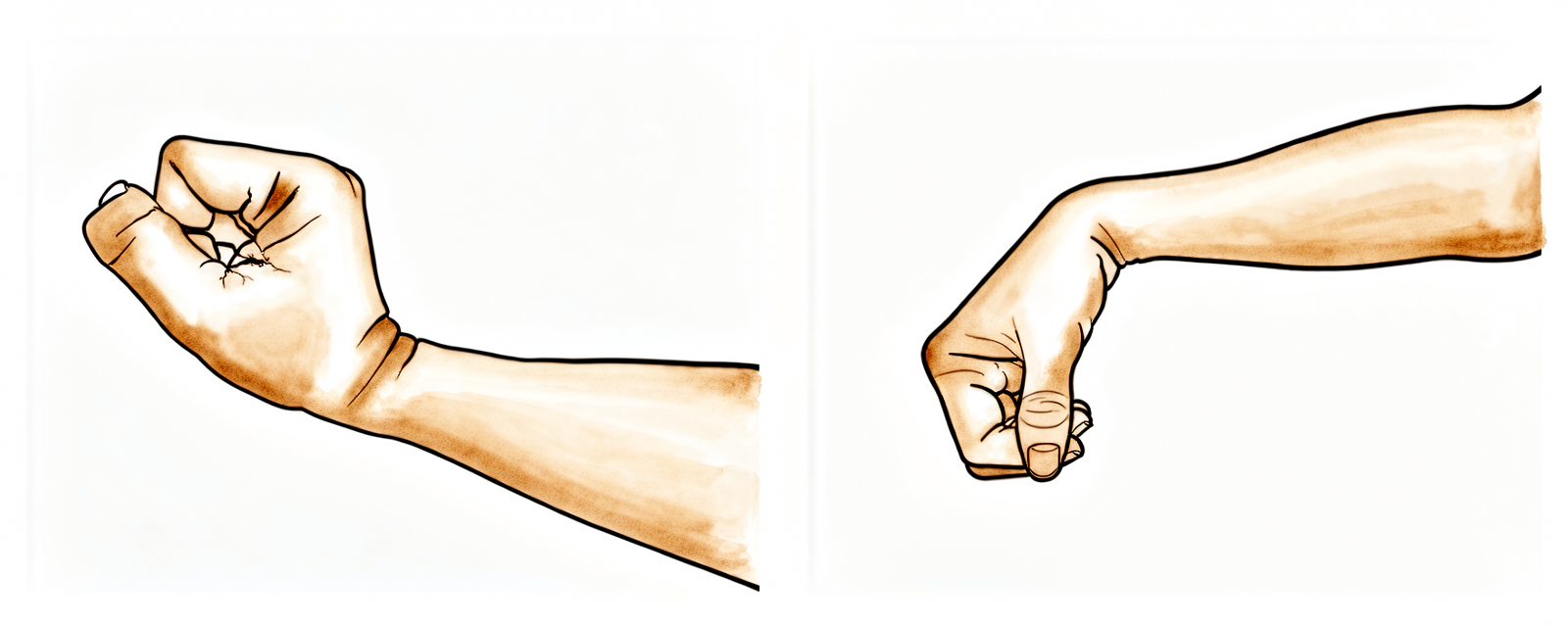
Aktibong pagbaluktot ng pulso
Dahan-dahang itiklop ang iyong pulso pasulong, pagkatapos ay pabalik, hanggang sa kung saan ito komportable.
10–15 beses bawat oras
Kieran Hirpara 4.0
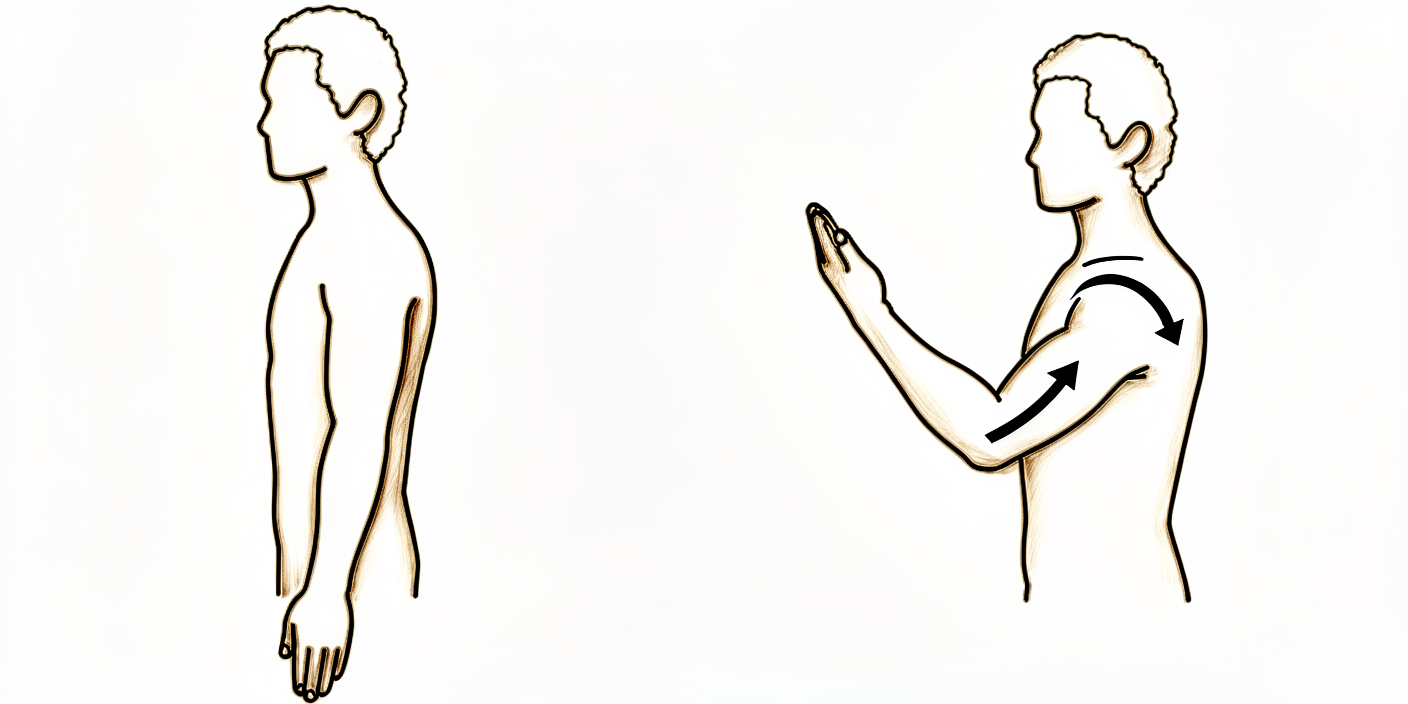
Aktibong pagbaluktot ng siko
Habang nakaharap pataas ang iyong palad, dahan-dahang itiklop ang iyong siko hangga't kaya mo, pagkatapos ay ituwid muli ang iyong braso. Panatilihing nakadikit ang iyong itaas na braso sa iyong tagiliran.
10–15 beses, 2–3 beses sa isang araw
Kieran Hirpara 4.0
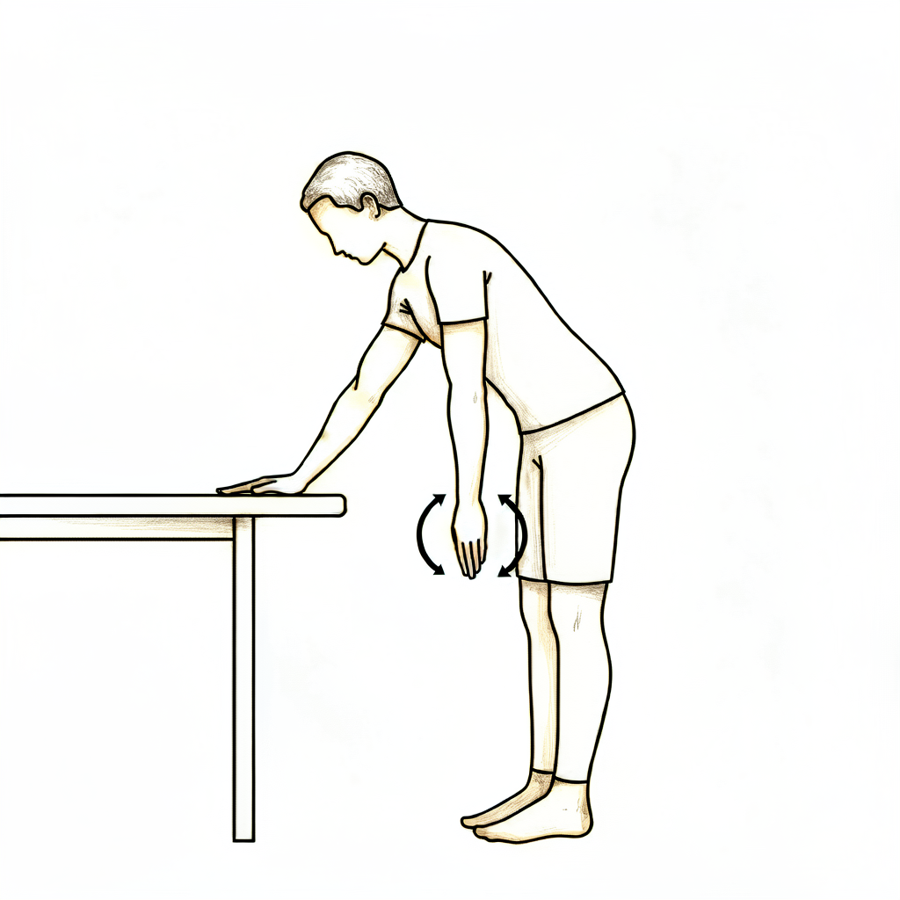
Pendulum swings
Yumuko nang bahagya pasulong at hayaang nakabitin ang iyong inoperahang braso, na lubos na relaks. Gumawa ng maliliit na bilog — clockwise, pagkatapos ay sa kabilang direksyon — sa pamamagitan ng pag-ugoy ng iyong katawan, HINDI sa pamamagitan ng paggamit ng mga kalamnan sa iyong balikat. I-ugoy din nang dahan-dahan ang braso pasulong/pabalik at pakanan/pakaliwa. Panatilihing maliit ang bilog (mas mababa sa humigit-kumulang 20 cm). Mananatiling relaks ang iyong inoperahang braso sa buong proseso — hindi mo ito itinataas.
10 sa bawat direksyon, 2–3 beses sa isang araw
Kieran Hirpara 4.0
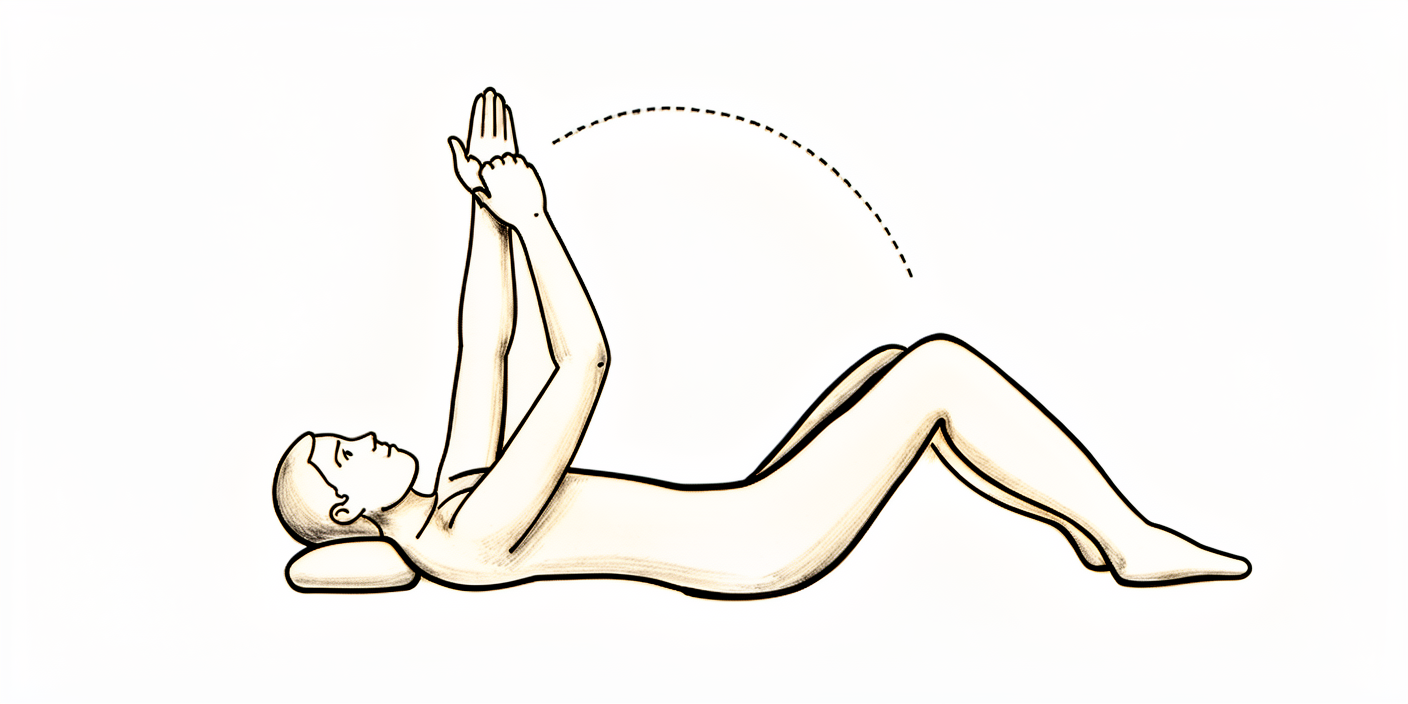
Tinutulungang forward lift habang nakahiga
Humiga nang patihaya. Ilagay ang iyong maayos na kamay sa ilalim ng siko ng iyong braso na inoperahan at gamitin ito upang iangat ang inoperahang braso patungo sa kisame — nananatiling relax ang iyong inoperahang balikat habang ang iyong maayos na kamay ang gumagawa ng trabaho para sa iyo. HUWAG iangat nang lampas sa taas ng balikat (mga 90°) sa yugtong ito. Ibaba ito nang dahan-dahan pabalik sa simula.
10 beses, 2–3 beses sa isang araw
Kieran Hirpara 4.0
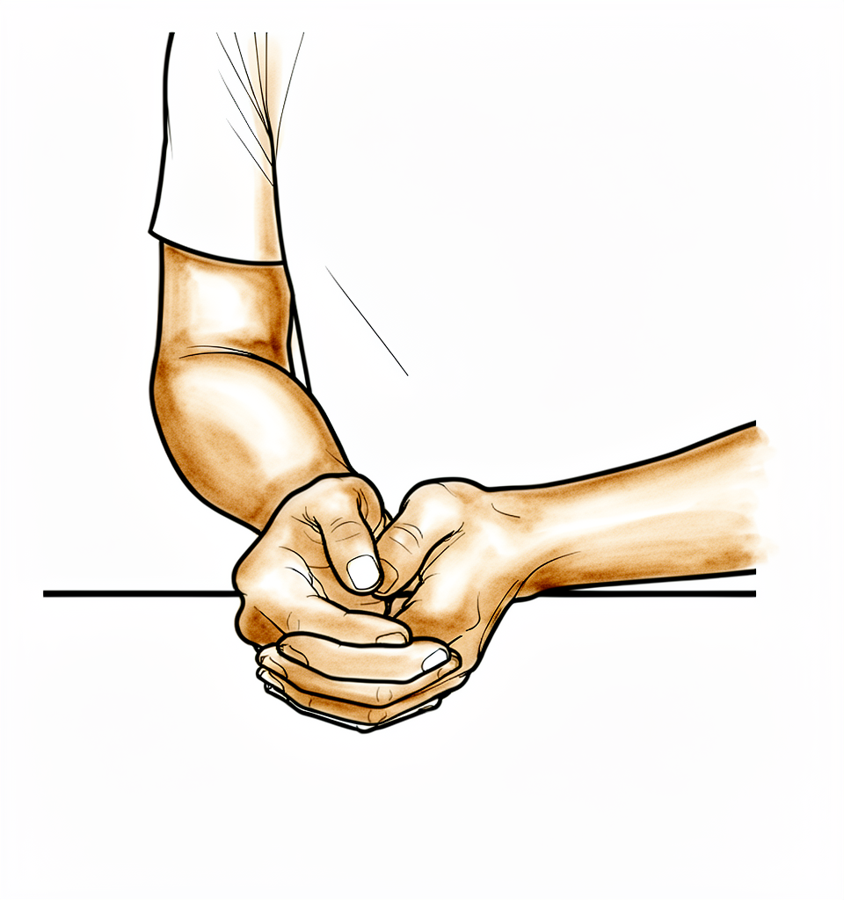
Naka-cradle ang braso na nakalabas sa gilid
Habang nakaupo at bahagyang nakayuko pasulong, alalayan ang iyong inoperahang braso gamit ang iyong maayos na braso at tulungan itong igalaw palabas sa gilid — gaya ng pagduyan ng isang sanggol. Panatilihing relax ang iyong inoperahang balikat; ang iyong maayos na braso ang gagawa ng paggalaw.
10 beses, 2–3 beses sa isang araw
Kieran Hirpara 4.0
Tinulungang external rotation hanggang neutral
Nakaupo man o nakatayo, panatilihing nakadikit ang iyong siko sa iyong tagiliran at magsimula nang nakapatong ang iyong kamay sa iyong tiyan. Dahan-dahang iikot ang iyong forearm palabas hanggang sa diretsong posisyon (neutral) lamang — huwag lalampas. HUWAG i-rotate lampas sa neutral. Dahan-dahang ibalik.
10 beses, 2–3 beses sa isang araw
Kieran Hirpara 4.0
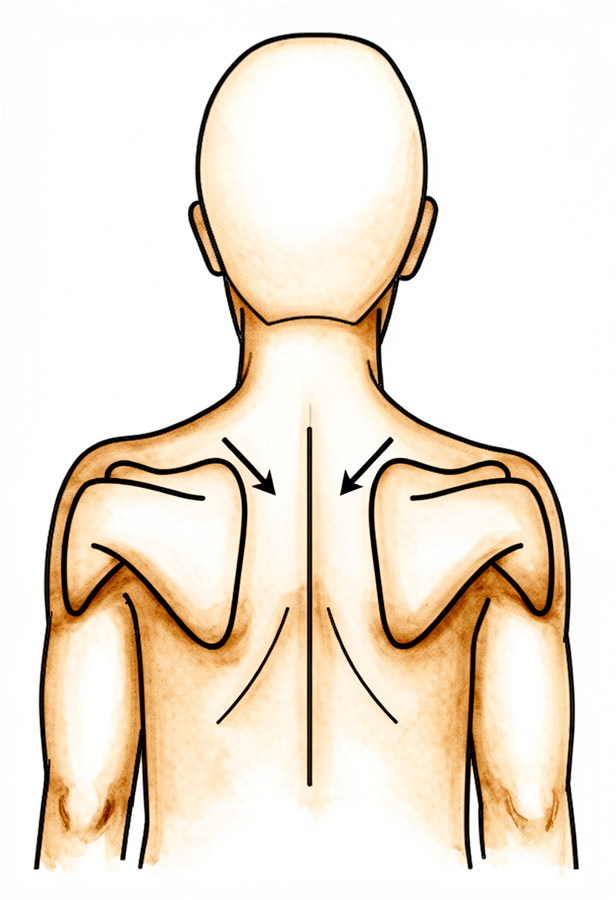
Pag-aayos ng shoulder-blade
Dahan-dahang pisilin ang iyong mga shoulder blade pababa at magkasama, manatili sa posisyong ito, pagkatapos ay i-relax. Ito ay isang light muscle-activation drill — hindi gumagalaw ang iyong braso.
Hawakan nang 5 segundo, 5 beses, 2–3 beses sa isang araw
Kieran Hirpara 4.0
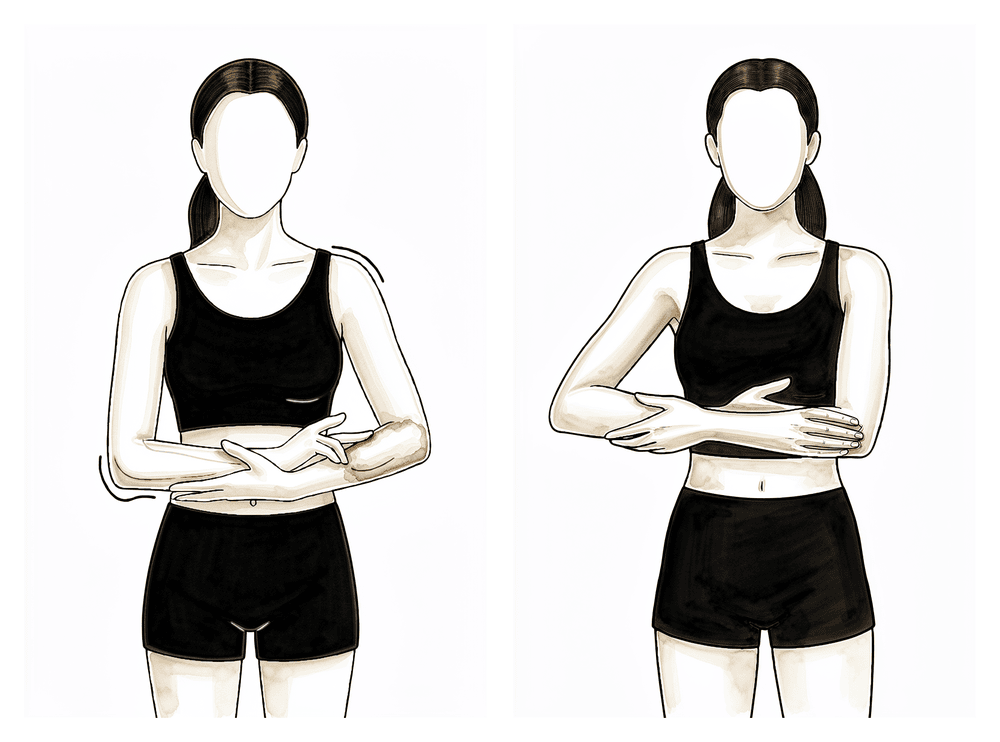
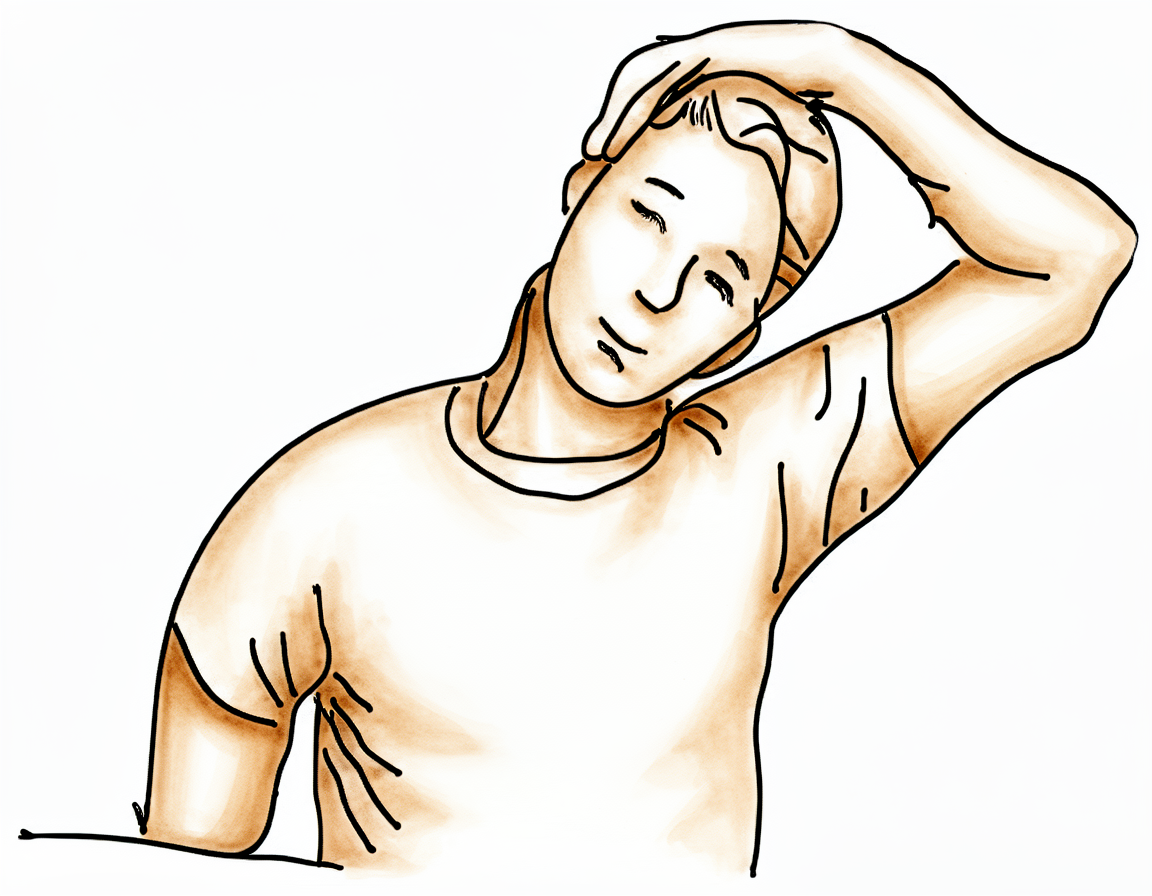
Side-stretch ng leeg
Gamitin ang iyong maayos na braso upang dahan-dahang ilapit ang iyong tainga sa iyong maayos na balikat, palayo sa panig na inoperahan, hanggang sa makaramdam ka ng komportableng stretch sa iyong leeg.
Hawakan nang 10 segundo, 3 beses, 2–3 beses sa isang araw
Kieran Hirpara 4.0
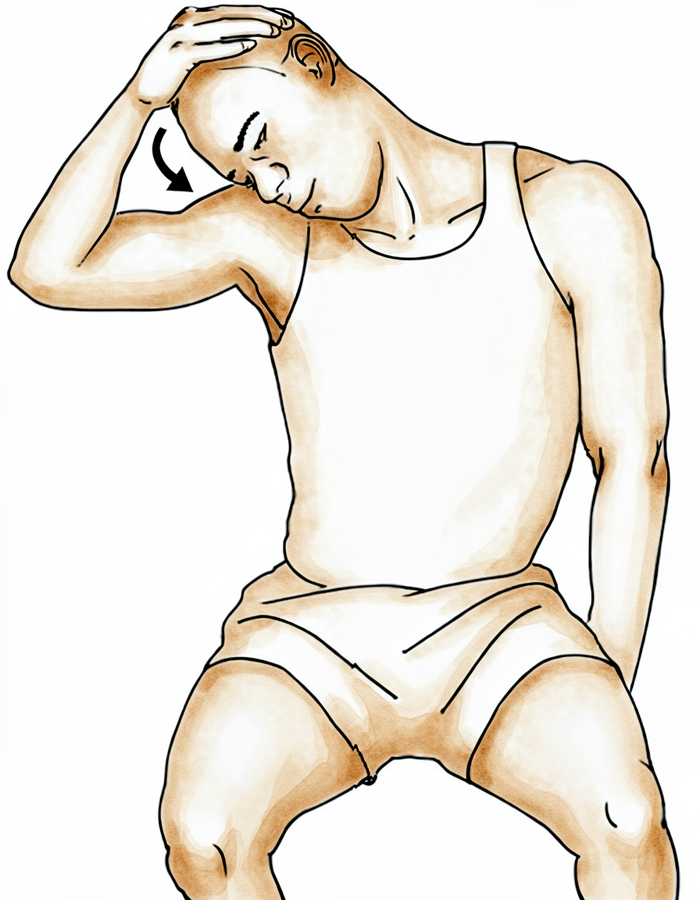
Stretch ng leeg papunta sa kili-kili
Gamitin ang iyong maayos na braso upang dahan-dahang ibaba ang iyong ilong patungo sa iyong kili-kili, palayo sa panig na inoperahan, hanggang sa makaramdam ka ng komportableng stretch.
Hawakan nang 10 segundo, 3 beses, 2–3 beses sa isang araw
Ang unang anim na linggo ay nakatuon sa isang bagay: ang protektahan ang repair habang nagsisimulang gumaling ang tendon sa buto. Mananatili ka sa simpleng sling para sa suporta sa araw; matulog nang wala ito, pamahalaan ang pamamaga gamit ang ice, at gumawa ng mga gentle drill upang mapanatiling gumagalaw ang iyong kamay, wrist, siko at leeg nang hindi binibigatan ang inayos na tendon. Ang iyong physiotherapist (o ikaw, sa tulong ng iyong maayos na braso) ang dahan-dahang igagalaw ang iyong balikat; manatiling lubos na relaxed.
- Sling: simpleng sling para sa suporta sa araw; matulog NANG WALA ang sling; tanggalin para sa mga ehersisyo at hygiene.
- Pinapayagang paggalaw: assisted at passive movement lamang; walang anuman gamit ang sariling lakas ng balikat. Ang iyong maayos na braso o isang stick ang gagawa ng trabaho. Unti-unting itaas ang assisted forward elevation hanggang sa humigit-kumulang 90° (kalahati pataas) sa simula, at assisted outward rotation hanggang sa straight-ahead (neutral) na posisyon lamang.
- Mga Ehersisyo: pendulum swings; assisted forward lift habang nakahiga; cradled arm-out-to-the-side; assisted external rotation hanggang neutral; gentle na paggalaw ng kamay, wrist at siko; shoulder-blade at neck drills.
Handa na para sa susunod na phase kapag: ang iyong sakit ay humuhupa at kontrolado ng simpleng pain relief (mga 3/10 o mas mababa pa); ang assisted forward elevation ay nakakaabot ng humigit-kumulang 90° nang komportable; ang assisted outward rotation ay nakakaabot sa neutral na posisyon nang komportable; ang iyong sugat ay gumaling na nang walang mga palatandaan ng problema; at walang palatandaan na ang repair ay na-over-stress.
Small-medium tears — Phase II: Pagbabalik ng paggalaw (weeks 6–12)
Kieran Hirpara 4.0
Tinutulungang forward lift habang nakahiga
Habang nakahiga nang patihaya, humawak ng stick sa magkabilang kamay at gamitin ang iyong maayos na braso upang iangat ang inoperahang braso pasulong at pataas — panatilihing relax ang inoperahang balikat. Unti-unting itaas hanggang sa humigit-kumulang 120° (mga dalawang-katlo ng daan pataas) sa phase na ito, habang nananatili sa range na itinakda ng iyong physiotherapist. Gumalaw nang swabe, huwag kailanman pilitin, at ibaba ito nang may kontrol.
10 beses, 2–3 beses sa isang araw
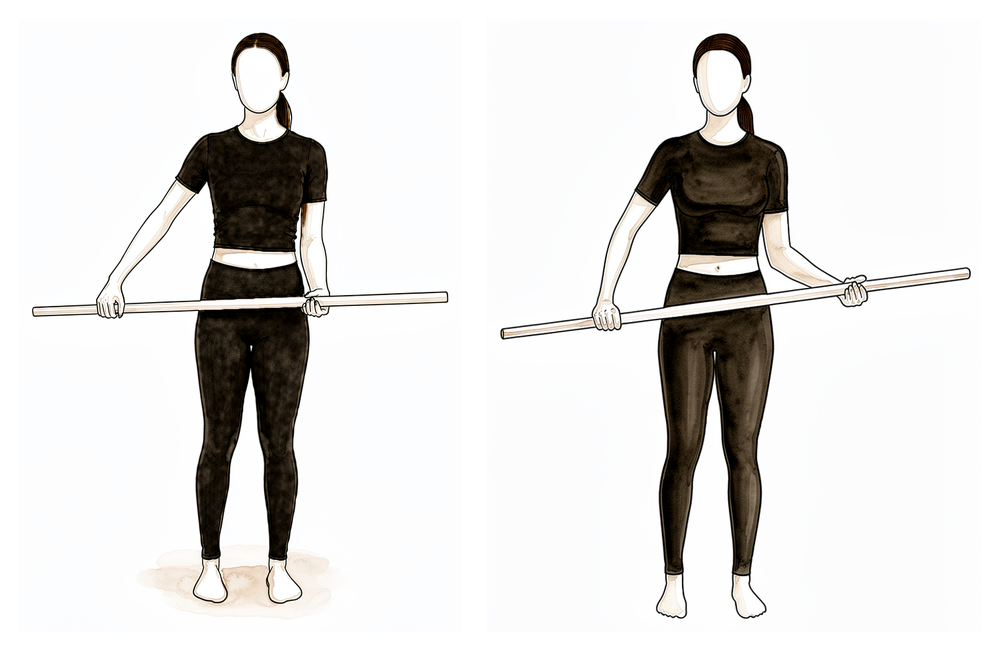
Kieran Hirpara 4.0
Assisted external rotation gamit ang stick
Humiga nang nakatihaya, ang siko ay nakadikit sa iyong tagiliran at nakabaluktot nang 90°, humawak ng stick sa magkabilang kamay at gamitin ang iyong maayos na braso upang dahan-dahang itulak ang kamay na inoperahan palabas. Manatili sa loob ng range na itinakda ng iyong physiotherapist at huwag itong pilitin.
10 beses, 2–3 beses sa isang araw
Kieran Hirpara 4.0
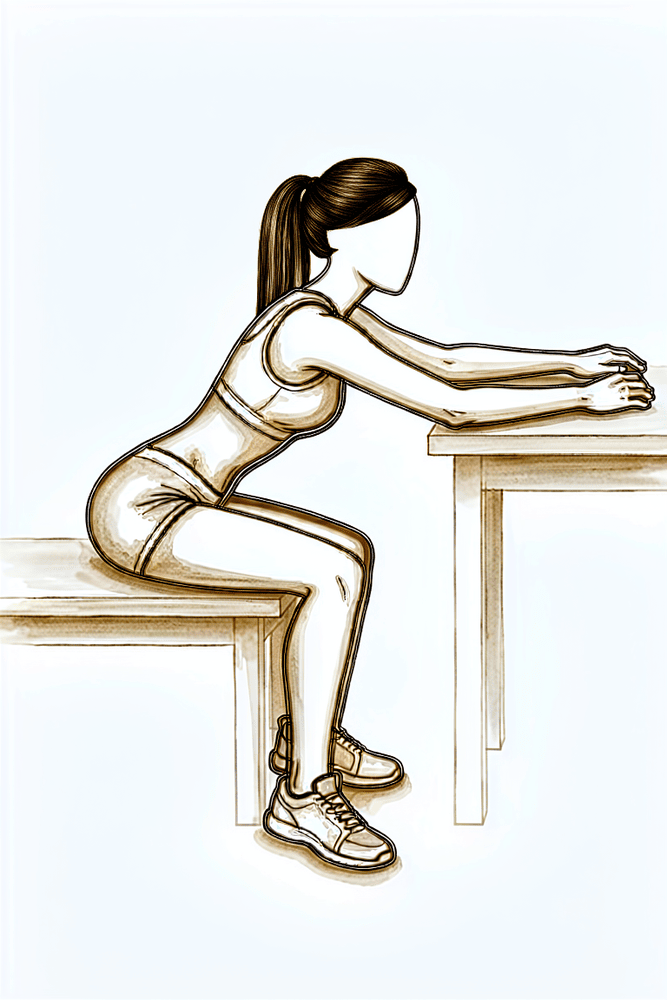
Seated table slide
Mula sa humigit-kumulang ika-6 na linggo, maupo sa isang mesa na ang iyong inoperahang kamay ay nasa ibabaw ng isang tuwalya. I-slide ang kamay pasulong sa ibabaw nito upang ang braso ay umabot pasulong at pataas, hayaang ang mesa ang pumasan ng bigat, pagkatapos ay i-slide pabalik. Ang parehong pagsasanay ay maaaring gawin patagilid ayon sa direktiba ng iyong physiotherapist.
10 beses, 2–3 beses sa isang araw
Kieran Hirpara 4.0
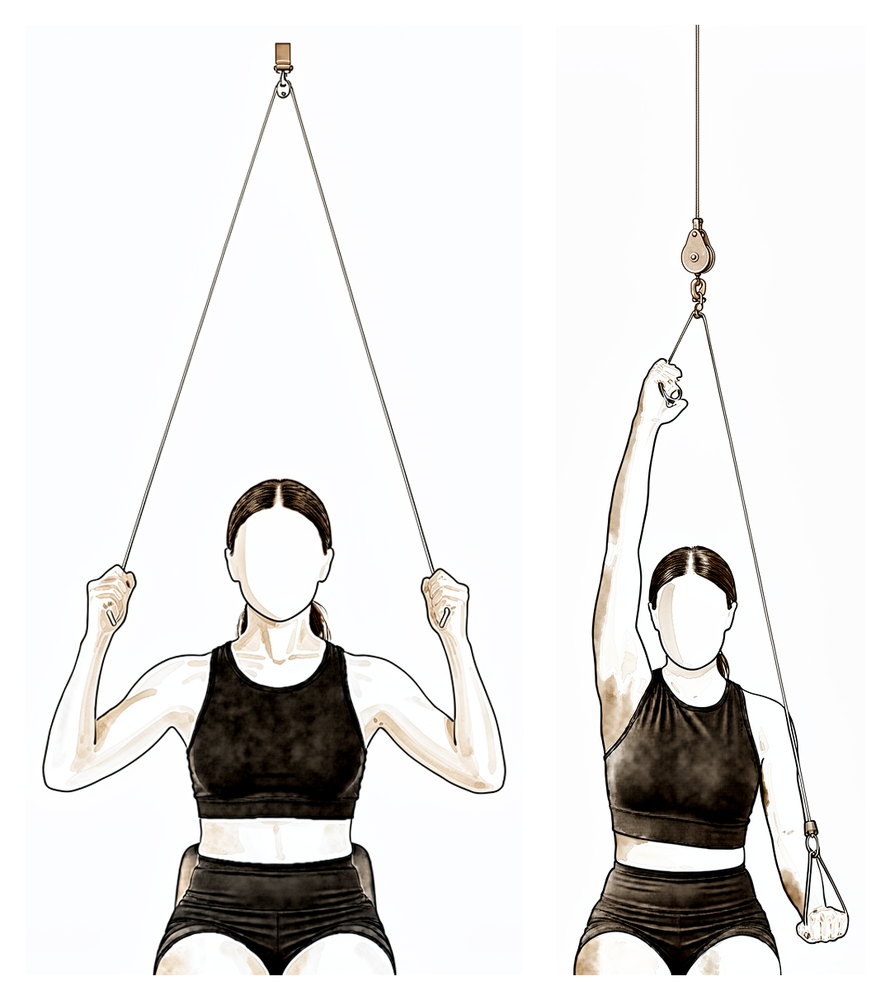
Over-door pulley
Mula sa humigit-kumulang ika-6 na linggo, maupo sa ilalim ng isang over-door pulley na may hawakan sa bawat kamay. Hilahin pababa gamit ang iyong malusog na braso upang itaas ang inoperahang braso, panatilihing relax ang inoperahang braso, pagkatapos ay dahan-dahan itong ibaba.
Ayon sa gabay ng iyong physiotherapist
Kieran Hirpara 4.0
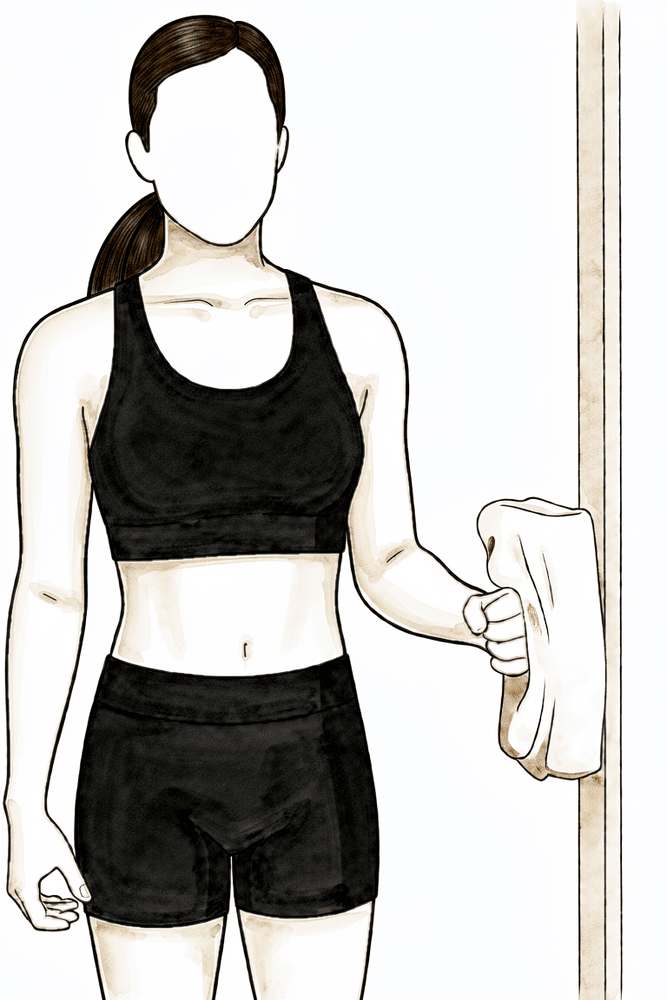
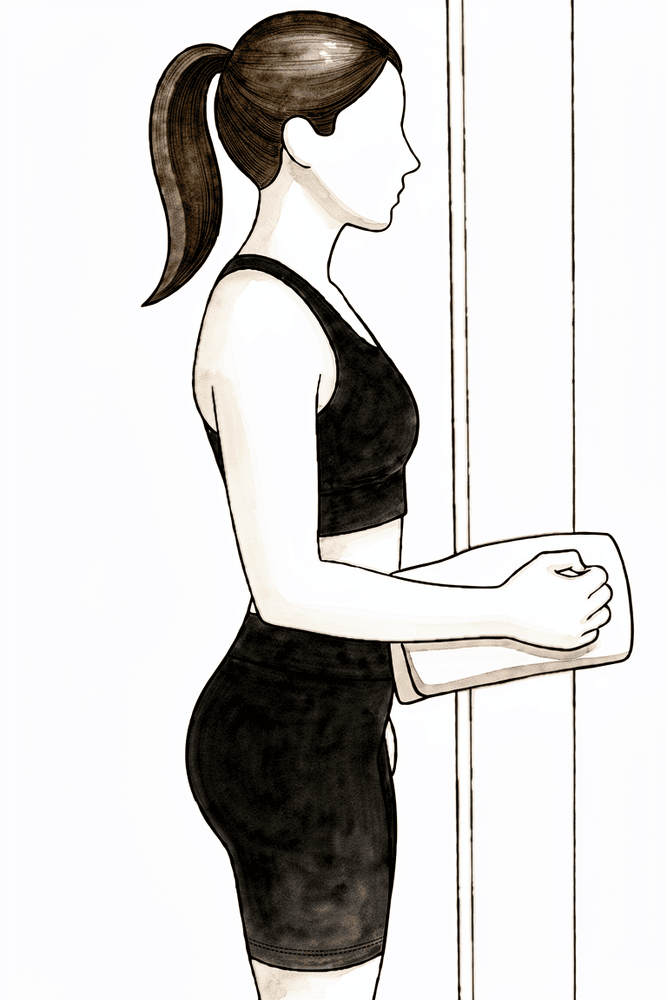
Isometric external rotation
Mula sa humigit-kumulang ika-8 linggo, kung papayag ang iyong physiotherapist. Tumayo nang nakadikit ang siko sa iyong gilid at nakabaluktot nang 90°, ang likod ng iyong kamay ay malapit sa pader o hamba ng pinto. Dahan-dahang itulak ang likod ng iyong kamay palabas sa ibabaw nang HINDI pinapagalaw ang braso — isang banayad na pagsisikap, humigit-kumulang isang kapat ng iyong lakas, nang walang sakit. Manatili sa posisyon, pagkatapos ay i-relax.
Hawakan nang ~5 segundo, dahan-dahan (~25% na pagsisikap), ayon sa gabay ng iyong physiotherapist
Kieran Hirpara 4.0
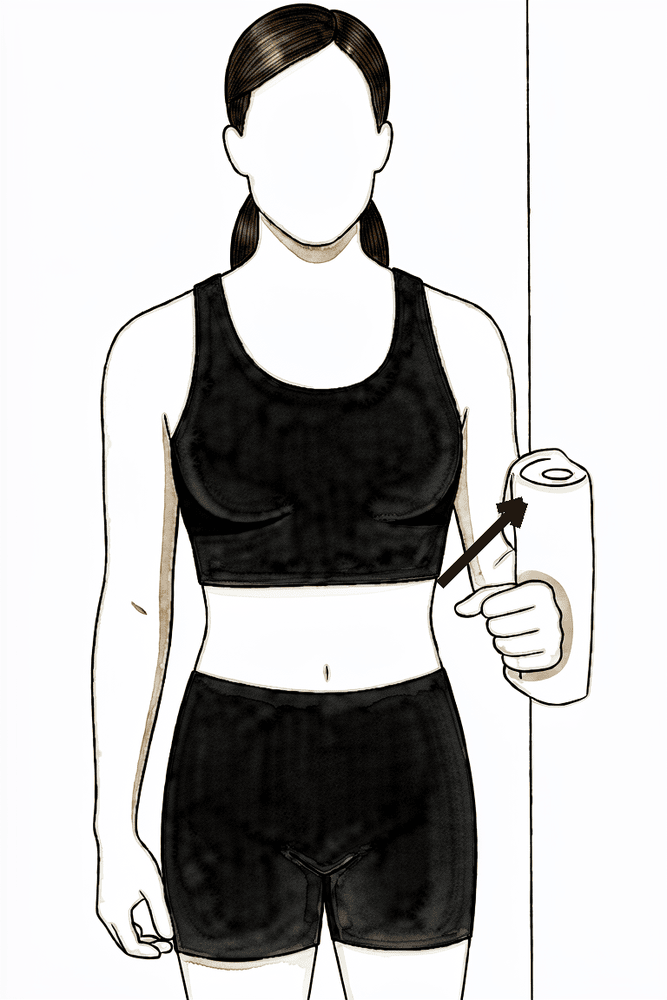
Isometric internal rotation
Mula sa humigit-kumulang ika-8 linggo, kung pumapayag ang iyong physiotherapist — ngunit HINDI bago ang ika-12 linggo kung ang front cuff tendon (subscapularis) ay kinumpuni. Tumayo nang nakadikit ang siko sa iyong gilid, at ang palad ay nakasandal sa pader. Dahan-dahang itulak ang palad papasok NANG HINDI pinapagalaw ang braso — humigit-kumulang isang kapat na lakas, at walang sakit. Manatili sa posisyon, pagkatapos ay i-relax.
Hawakan nang ~5 segundo, dahan-dahan (~25% na pagsisikap), ayon sa gabay ng iyong physiotherapist
Kieran Hirpara 4.0
Isometric abduction
Mula sa humigit-kumulang ika-8 linggo, kung papayag ang iyong physiotherapist. Tumayo nang patagilid na ang labas ng iyong upper arm ay malapit sa pader, at ang siko ay nasa iyong gilid. Dahan-dahang itulak ang braso palabas patungo sa pader NANG HINDI ito hinahayaang gumalaw — humigit-kumulang isang kapat (quarter) na lakas, walang sakit. Manatili sa posisyong ito, pagkatapos ay i-relax.
Hawakan nang ~5 segundo, dahan-dahan (~25% na pagsisikap), ayon sa gabay ng iyong physiotherapist
Kieran Hirpara 4.0
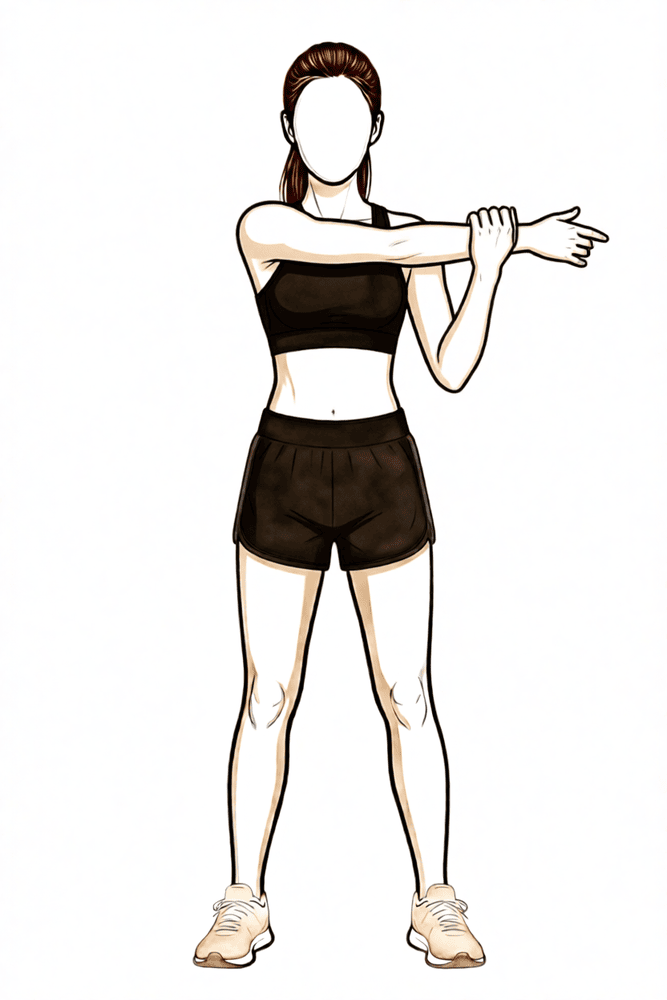
Cross-body stretch
Sa huling bahagi lamang ng phase na ito (pagkatapos ng ika-9 na linggo). Gamitin ang iyong maayos na kamay upang dahan-dahang hilahin ang inoperahang braso patawid sa iyong dibdib hanggang sa makaramdam ka ng komportableng stretch sa likod ng balikat. Panatilihin itong dahan-dahan — huwag pilitin.
I-hold nang 10–20 segundo, nang ilang beses, ayon sa gabay ng iyong physiotherapist
Ang repair ay naghihilom ngunit mahina pa, nasa humigit-kumulang 20–30% lamang ng normal na lakas sa ika-anim na linggo. Kaya ang phase na ito ay para sa pagbabalik ng paggalaw, hindi ng lakas. Wala na ngayon ang sling. Mag-uumpisa ka mula sa assisted movement patungo sa paggalaw ng braso gamit ang sarili mong lakas, simula sa mga madaling posisyon (nakahiga, o pag-slide sa ibabaw ng mesa kung saan walang hatak ng gravity) at unti-unting patungo sa pagtayo. Ang mga light muscle-activation (isometric) drill ay idaragdag sa huling bahagi ng phase.
- Sling: unti-unting inaalis (halos naalis na pagsapit ng weeks 4–6).
- Pinapayagang paggalaw: full assisted movement, patungo sa paggalaw gamit ang sariling lakas mula humigit-kumulang ika-6 na linggo. Palaguin ang assisted/active forward elevation patungo sa humigit-kumulang 120° at higit pa.
- Mga Ehersisyo: assisted forward lift habang nakahiga; assisted external rotation gamit ang stick; seated table slide; over-door pulley; gentle isometric (press-and-hold) external rotation, internal rotation at abduction mula humigit-kumulang ika-8 linggo; cross-body stretch sa huling bahagi ng phase (pagkatapos ng ika-9 na linggo).
Handa na para sa susunod na phase kapag: kaya mo nang iangat ang braso pasulong gamit ang sarili mong lakas hanggang sa hindi bababa sa 115–120° nang may maayos na kontrol (walang pag-shrug o pag-angat ng shoulder blade); ang iyong assisted/passive movement ay full o halos full at walang sakit; ang mga gentle isometric ay natatagalan nang walang paglala ng sakit pagkatapos; at ang sakit ay hindi hihigit sa humigit-kumulang 2/10 bago magsimula ang resisted work.
Small-medium tears — Phase III: Strengthening (weeks 12–16)
Kieran Hirpara 4.0
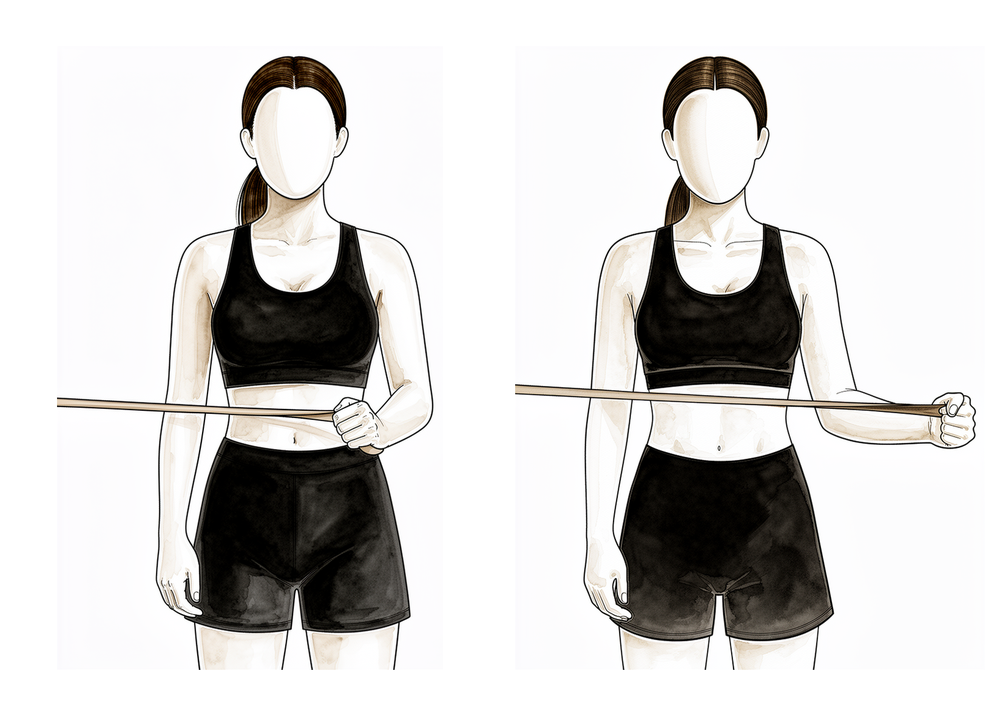
External rotation sa taas ng balikat (band)
Mula sa humigit-kumulang ika-12 linggo, kapag komportable na ang paggalaw nang paitaas (overhead). Habang ang iyong braso ay nakataas hanggang sa taas ng balikat palabas sa gilid at ang siko ay nakabaluktot nang 90°, i-rotate ang forearm paitaas laban sa isang light band, pagkatapos ay ibalik ito nang may kontrol. Gumamit ng light band at maraming repetitions, hindi mabigat na resistance.
Ayon sa gabay ng iyong physiotherapist
Kieran Hirpara 4.0
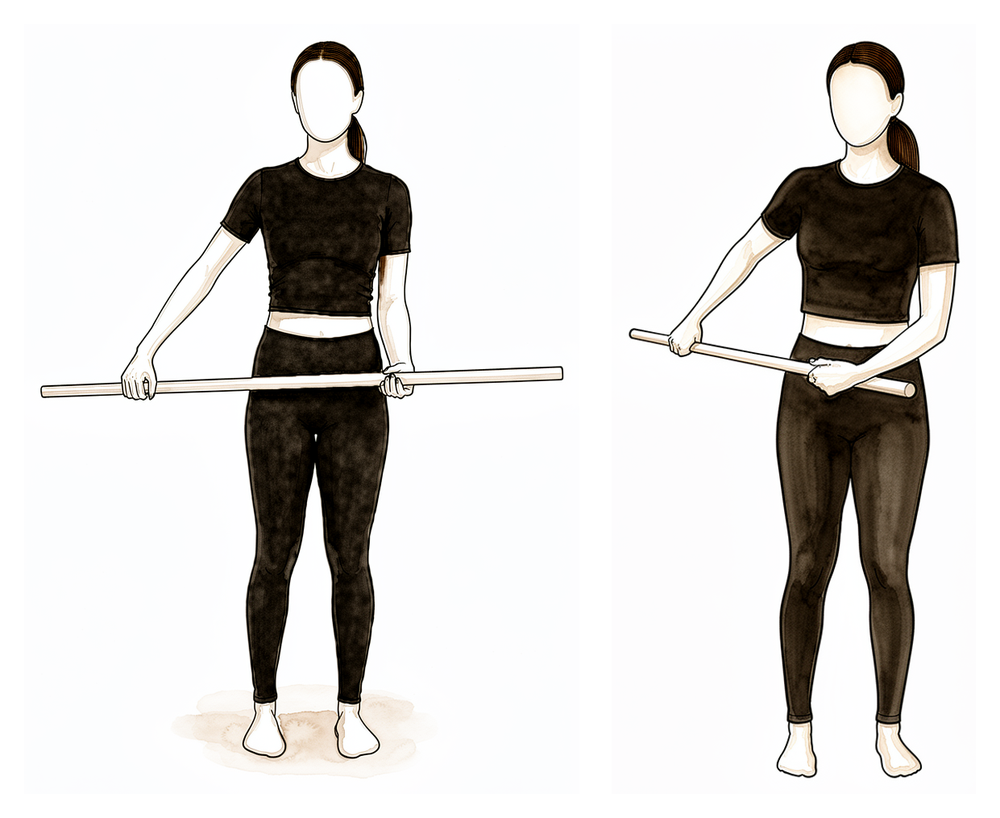
Internal rotation gamit ang stick
Mula sa humigit-kumulang ika-12 linggo (mas huli kung ang front cuff tendon ay na-repair). Humawak ng isang stick sa likod ng iyong katawan at gamitin ang iyong maayos na kamay upang dahan-dahang hilahin ang inoperahang kamay pataas sa iyong likod, pagkatapos ay ibaba ito nang may kontrol. Panatilihin itong komportable at sa loob ng mga limitasyong itinakda ng iyong physiotherapist.
Ayon sa gabay ng iyong physiotherapist
Kieran Hirpara 4.0
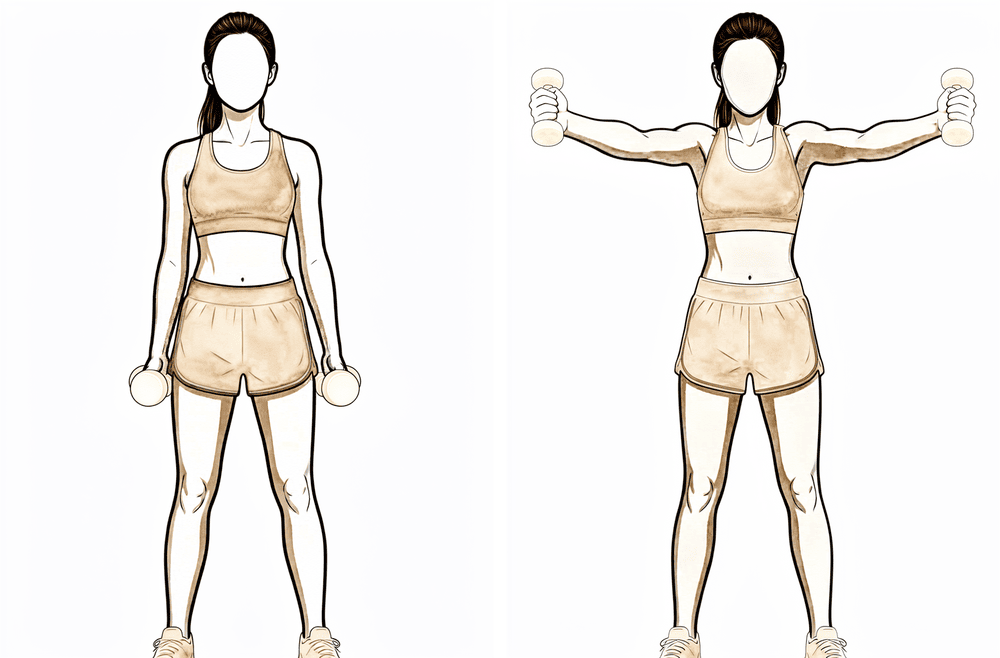
Full-can lift
Mula sa humigit-kumulang ika-12 linggo, kapag komportable na ang pag-angat pasulong. Itaas ang iyong braso pasulong at bahagyang palabas sa gilid na ang iyong HINLALAKI AY NAKATURO PATAAS — ang "full can" na posisyon — pagkatapos ay ibaba ito nang may kontrol. HUWAG NA HUWAG itataas habang ang hinlalaki ay nakaturo pababa ("empty can").
Ayon sa gabay ng iyong physiotherapist
Kieran Hirpara 4.0
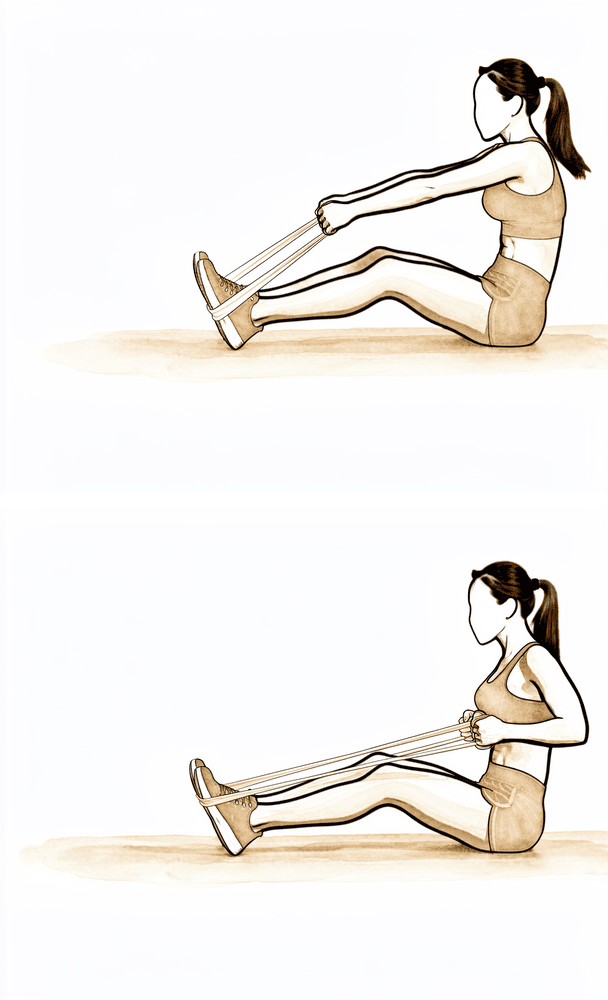
Low row (pag-aayos ng shoulder-blade)
Mula sa humigit-kumulang ika-12 linggo. Habang ang iyong kamay ay nasa isang nakapirming ibabaw sa iyong tabi, idiin ito pababa at pabalik upang hilahin ang shoulder blade pababa at papasok, at panatilihin ito nang sandali. Pinapatatag nito ang shoulder blade (maaaring tawagin ito ng iyong physiotherapist na "inferior glide").
Ayon sa gabay ng iyong physiotherapist
Kieran Hirpara 4.0
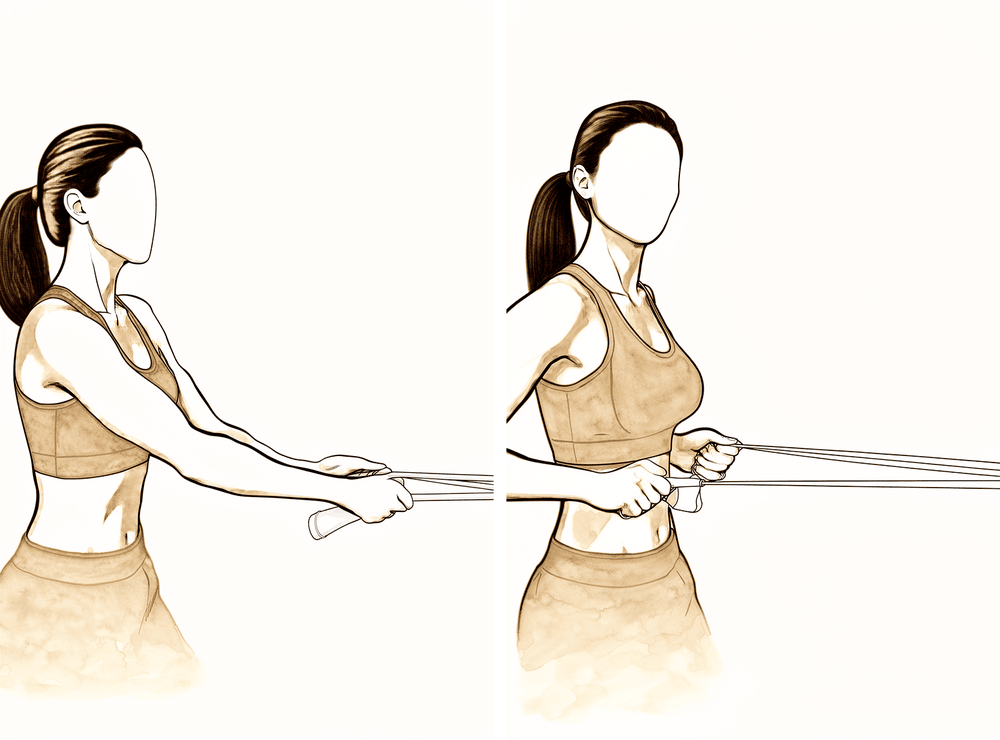
Resistance-band row
Mula sa humigit-kumulang ika-12 linggo. Gamit ang isang band na naka-angkla sa iyong harapan, hilahin ang mga handle patungo sa iyo, iurong ang iyong mga siko pabalik at pagdikitin ang iyong mga shoulder blade, pagkatapos ay ibalik ito nang may kontrol. Magaan na band, mataas na repetitions; huminto kung sumakit ang balikat.
Ayon sa gabay ng iyong physiotherapist
Kieran Hirpara 4.0
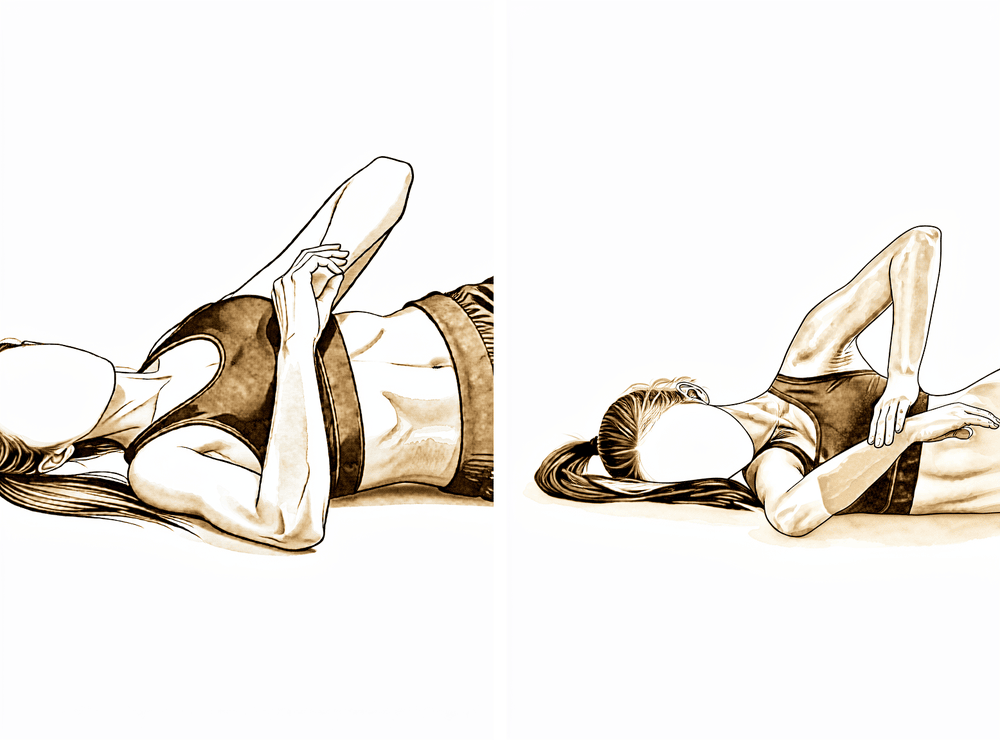
Sleeper stretch
Mula sa humigit-kumulang ika-12 linggo, kung ito ay ituturo ng iyong physiotherapist. Humiga sa panig na inoperahan na ang braso ay nasa harap at ang siko ay nakabaluktot. Gamitin ang iyong kabilang kamay upang dahan-dahang itulak ang forearm pababa sa kama hanggang sa makaramdam ka ng komportableng stretch sa likod ng balikat. Dahan-dahan lamang — huwag pilitin.
I-hold nang 10–20 segundo, nang ilang beses, ayon sa gabay ng iyong physiotherapist
Kieran Hirpara 4.0
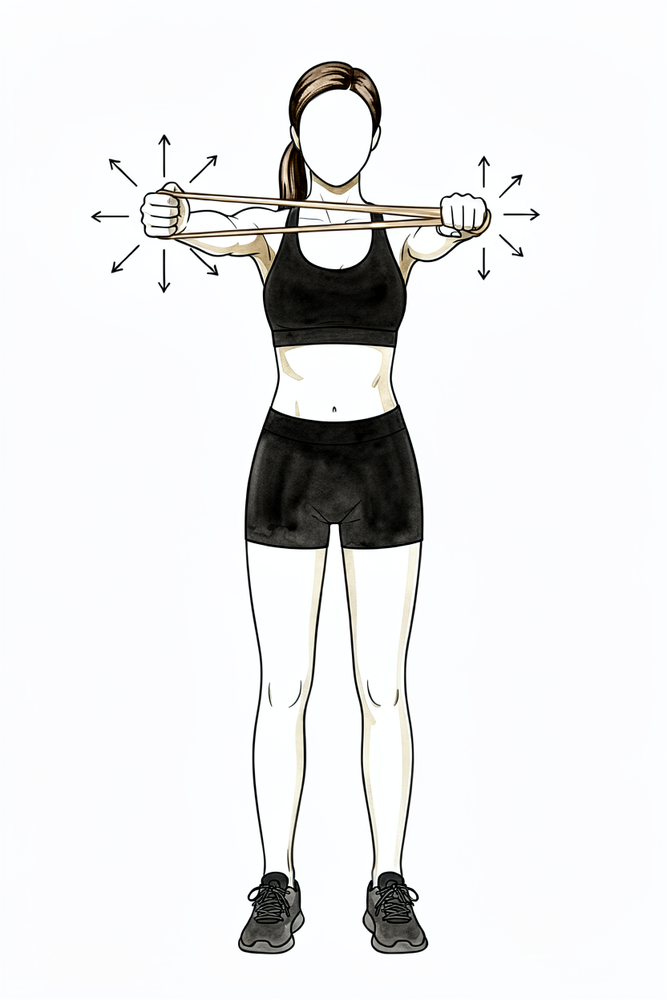
Rhythmic stabilisation
Habang ang iyong braso ay suportado sa harap mo sa taas na halos kapantay ng balikat, hayaan ang iyong physiotherapist (o ang iyong maayos na kamay) na magbigay ng maliliit at banayad na tulak mula sa iba't ibang direksyon habang pinapanatili mong hindi gumagalaw at matatag ang braso — huwag itong hayaang gumalaw. Sinasanay nito ang mga stabilising muscle ng balikat na tumugon. Panatilihing banayad ang lahat ng pagsisikap.
Ayon sa gabay ng iyong physiotherapist
Dito pinakamabilis na naghihilom ang repair, at ang pokus ay lilipat mula sa pagbawi ng paggalaw patungo sa muling pagbuo ng lakas, endurance at kontrol. Ang resistance work gamit ang light bands at light weights ay nagsisimula mula humigit-kumulang sa ika-12 linggo: mataas na repetitions, mababang loads. Ang golden rule ay isang plane sa bawat pagkakataon: magpapalakas ka lamang sa isang direksyon kapag mayroon ka nang halos kumpletong, komportableng paggalaw sa direksyong iyon. Laging magbuhat nang nakataas ang hinlalaki (thumb-up), huwag kailanman nang nakababa ang hinlalaki (thumb-down).
- Sling: wala; inaasahan ang full movement.
- Mga Ehersisyo: band external rotation sa shoulder height; internal rotation gamit ang stick; full-can lift; low row (shoulder-blade setting); resistance-band rows; sleeper stretch. Maaari ring magdagdag ang iyong physiotherapist ng rhythmic stabilisation (mga gentle hold-steady drills kung saan tinutulak nila nang bahagya ang iyong braso at lalaban ka) upang muling sanayin ang kontrol; ito ay hands-on work na walang diagram.
Handa na para sa susunod na phase kapag: mayroon ka nang kumpleto at walang sakit na paggalaw gamit ang sarili mong lakas na may pantay na shoulder-blade control; walang sakit o pamamaga pagkatapos ng mga strengthening sessions; komportableng resisted lifting sa shoulder-blade plane; at ang rotation strength ay bumubuo patungo sa kabilang panig (humigit-kumulang 80% sa gentle testing; ang full strength testing ay maghihintay hanggang sa mas huling bahagi).
Small-medium tears — Phase IV: Pagbabalik sa isport at trabaho (weeks 16–24)
Kieran Hirpara 4.0
Full-can lift gamit ang magaan na pabigat
Ang full-can lift gaya ng dati, ngayon ay may magaan na pabigat, unti-unting dagdagan ang load. Panatilihing NAKATAAS ANG HINLALAKI (THUMB UP). Itigil kung masakit ang balikat o mamamaga pagkatapos.
Ayon sa gabay ng iyong physiotherapist
Ang phase na ito ang tulay pabalik sa isang ganap na gumaganang balikat, pagkatapos ay isang unti-unting pagbabalik sa isport at mas mabigat na trabaho. Pananatilihin mo ang range na iyong nakamit at bubuo ng lakas, power, at endurance upang magamit ito nang may kumpiyansa: pag-abot, pagbubuhat, at pagtatrabaho nang nakataas ang kamay (overhead). Ang pagbabalik ay dadaan sa mga yugto, hindi biglaan; para sa isport, ang isang interval programme na unti-unting nagpapataas ng volume at intensity step by step ang pinakaligtas na paraan pabalik.
- Sling: wala.
- Mga Ehersisyo: full-can lift gamit ang magaan at unti-unting dinadagdagan na bigat; conditioning na partikular sa isport at trabaho, progressive loading, at controlled higher-speed (plyometric) drills sa huling bahagi ng phase kung naaangkop.
Handa nang bumalik kapag: ang iyong rotation strength ay hindi bababa sa 85–90% ng kabilang panig; mayroon kang buo at walang sakit na paggalaw nang walang reactive swelling sa ilalim ng mas mabigat na load; at naipasa mo ang mga task-specific tests para sa iyong isport o trabaho. Ang pagbabalik sa isport o mabigat na trabaho ay karaniwang nasa 4–6 buwan, base sa pagtugon sa mga criteria na ito at sa clearance ni Dr Hirpara at ng iyong physiotherapist, hindi base sa kalendaryo lamang.
Malalaki / massive na punit
Ito ang track para sa mas malalaking punit (dalawa o higit pang mga tendon, o mas mahinang kalidad ng tissue). Ang mga phase ay pareho, ngunit ang bawat isa ay pinapanatili nang mas matagal at isinasagawa nang mas maingat upang paboran ang paggaling. Ang ilang mga surgeon ay sadyang ipinagpapaliban ang pormal na therapy sa grupong ito; sundin ang partikular na instruksyong ibibigay sa iyo ni Dr Hirpara. Ang sling ay nananatiling isang simple sling, na walang abduction pillow, kahit para sa malalaki o massive na punit.
Malalaki-massive na punit — Phase I: Proteksyon (mga linggo 0–6)
Kieran Hirpara 4.0
Pendulum swings
Yumuko nang bahagya pasulong at hayaang nakabitin ang iyong inoperahang braso, na lubos na relax. Gumawa ng maliliit na bilog sa pamamagitan ng pag-ugoy ng iyong katawan, HINDI sa pamamagitan ng paggamit ng mga kalamnan sa iyong balikat. Mananatiling relax ang iyong inoperahang braso sa buong proseso.
10 sa bawat direksyon, 2–3 beses sa isang araw
Kieran Hirpara 4.0
Buksan at isara ang kamay
Gumawa ng mahigpit na kamao, pagkatapos ay ibukas nang husto ang iyong kamay. Pinapanatili nitong gumagalaw ang kamay at binabawasan ang pamamaga.
10 beses bawat oras
Kieran Hirpara 4.0
Aktibong pagbaluktot ng pulso
Dahan-dahang itiklop ang iyong pulso pasulong, pagkatapos ay pabalik, hanggang sa kung saan ito komportable.
10–15 beses bawat oras
Kieran Hirpara 4.0
Aktibong pagbaluktot ng siko
Habang nakaharap sa itaas ang iyong palad, dahan-dahang itiklop ang iyong siko, pagkatapos ay ituwid ito, habang pinapanatiling nakadikit ang iyong itaas na braso sa iyong gilid.
10–15 beses, 2–3 beses sa isang araw
Kieran Hirpara 4.0
Pag-aayos ng shoulder-blade
Dahan-dahang pisilin ang iyong mga shoulder blade pababa at magkasama, manatili sa posisyong ito, pagkatapos ay i-relax. Hindi gumagalaw ang iyong braso.
Hawakan nang 5 segundo, 5 beses, 2–3 beses sa isang araw
Katulad ng sa small/medium track, ngunit ang paggalaw ay pinapanatiling mahigpit na protektado at mas mabagal ang pag-usad. Ang iyong physiotherapist o ang iyong mabuting braso ang nagpapagalaw ng balikat para sa iyo; manatiling relax. Sa grupong ito, ang pormal na therapy ay minsang ipinagpapaliban upang paboran ang paggaling.
- Sling: simpleng sling para sa suporta sa araw; matulog nang WALANG sling; tanggalin para sa mga ehersisyo at kalinisan.
- Pinapayagang paggalaw: protektadong passive movement lamang, hanggang sa limitasyong itinakda ni Dr Hirpara; sa pangkalahatan ay mas maliit na range kaysa sa small/medium track.
- Mga Ehersisyo: pendulum swings; banayad at protektadong assisted movement ayon sa itinuro; paggalaw ng kamay, pulso at siko; shoulder-blade setting.
Handa na para sa susunod na phase kapag: kontrolado na ang iyong sakit; walang palatandaan na ang repair ay na-over-stress; at binigyan ka ni Dr Hirpara ng clearance upang magpatuloy (ang grupong ito ay individualised; huwag mag-advance base lamang sa kalendaryo).
Malalaki-massive na punit — Phase II: Pagbabalik ng paggalaw (weeks 6–12)
Tinatanggal ang sling sa paligid ng ika-6 na linggo, ngunit ang aktibong paggalaw gamit ang sariling lakas ay muling ipinapakilala nang mas huli at mas indibidwal kaysa sa small/medium track, upang mas maprotektahan ang repair. Sadyang ipinagpaliban ang resisted cuff work.
- Sling: unti-unting tinatanggal sa paligid ng ika-6 na linggo.
- Pinapayagang paggalaw: assisted movement na nag-uunlad patungo sa paggalaw gamit ang sariling lakas nang mas huli kaysa sa small/medium track; ang eksaktong timing ay itatakda ng iyong physiotherapist base sa iyong paggaling.
- Mga Ehersisyo: kaparehong mga drill ng small/medium Phase II (assisted forward lift, assisted external rotation gamit ang stick, table slide, over-door pulley), ngunit mas mabagal ang pag-unlad; ipinagpaliban ang resisted cuff work.
Handa na para sa susunod na phase kapag: ang iyong paggalaw gamit ang sariling lakas ay patuloy na bumubuti; ang assisted/passive movement ay buo na; mayroon kang mabuting shoulder-blade control; at nasisiyahan ang iyong team na ang repair ay gumagaling nang sapat upang simulan ang loading.
Malalaki-massive na punit — Phase III: Pagpapalakas (mula humigit-kumulang ika-16 na linggo)
Kieran Hirpara 4.0
Rhythmic stabilisation
Habang ang iyong braso ay suportado sa harap mo sa taas na halos kapantay ng balikat, hayaan ang iyong physiotherapist (o ang iyong maayos na kamay) na magbigay ng maliliit at banayad na tulak mula sa iba't ibang direksyon habang pinapanatili mong hindi gumagalaw at matatag ang braso — huwag itong hayaang gumalaw. Sinasanay nito ang mga stabilising muscle ng balikat na tumugon. Panatilihing banayad ang lahat ng pagsisikap.
Ayon sa gabay ng iyong physiotherapist
Ang pagpapalakas ay naantala hanggang humigit-kumulang ika-16 na linggo sa halip na ika-12 linggo, dahil ang mas malaking repair ay nangangailangan ng mas mahabang panahon upang maging mature. Mula rito, ang progression ay katulad ng sa small/medium strengthening phase: magaan na mga band at weights, mataas na repetitions, mababang loads, isang plane sa bawat pagkakataon, laging nakataas ang hinlalaki (thumb-up).
- Sling: wala; inaasahan ang full movement.
- Mga Ehersisyo: gaya ng sa small/medium strengthening phase (band external rotation, internal rotation gamit ang stick, full-can lift, low row, band rows, sleeper stretch), sinimulan nang mas huli at unti-unting pinalalakas. Maaaring idagdag ang Rhythmic stabilisation (hands-on hold-steady drills) habang bumubuti ang kontrol.
Handa na para sa susunod na phase kapag: mayroon ka nang full, pain-free movement gamit ang sarili mong lakas; walang sakit o pamamaga pagkatapos ng pagpapalakas; at ang iyong lakas ay pantay na nabubuo kumpara sa kabilang panig.
Malalaki at massive na punit — Phase IV: Pagbabalik sa isport at trabaho (6 na buwan pataas)
Ang pagbabalik sa isport at mabigat na trabaho ay mas huli para sa malalaki at massive na punit, karaniwang anim na buwan o higit pa, at madalas ay mas matagal, na may mas mabagal na pagbabalik, at mas kaunting tao ang nakakabalik sa kanilang dating antas. Ang paghahanda ay sumusunod sa parehong staged, criteria-based na approach gaya ng sa small/medium track.
- Sling: wala.
- Mga Ehersisyo: progressive loading at conditioning na partikular sa isport o trabaho, na unti-unting itataas.
Handa nang bumalik kapag: parehong nagbigay ng clearance si Dr Hirpara at ang iyong physiotherapist; ang iyong rotation strength ay hindi bababa sa 85% ng kabilang panig; at mayroon kang buo at walang sakit na paggalaw at endurance nang walang reactive swelling sa ilalim ng load. Asahan ang anim na buwan o higit pa (madalas ay mas matagal) at ibase ang desisyon sa pagtugon sa mga criteria na ito, hindi sa kalendaryo.
Pagbabalik sa isport at trabaho
Para sa bawat repair, ang pagbabalik ay nakabase sa criteria (walang sakit, may sapat na range, lakas at endurance) at nilagdaan kapwa ni Dr Hirpara at ng iyong physiotherapist, hindi nakadepende sa kalendaryo lamang.
- Small / medium tears: sedentary work sa loob ng ilang linggo; mas mabigat na strengthening mula 12–16 linggo; pagbabalik sa isport o mabigat na trabaho mula humigit-kumulang 4–6 buwan.
- Large / massive tears: 6 na buwan o higit pa, madalas ay mas matagal, na may mas mabagal at mas maingat na build-up.
Para sa overhead at throwing sports, kumpletuhin ang isang graded interval programme bago ang unrestricted play. Ang full (maximal) strength testing ay ipinagpapaliban hanggang 9–12 buwan pagkatapos ng operasyon.
Ang iyong mga maagang ehersisyo
Ito ang mga banayad na ehersisyo para sa maagang (proteksyon) phase, na magsisimula sa ward at ipagpapatuloy sa bahay, na gagawin habang ang iyong inoperahang braso ay wala sa sling at ang mga kalamnan ng iyong balikat ay relaxed. Simulan ang mga ito ayon sa gabay ng iyong physiotherapist, at itigil ang anumang nagdudulot ng matalas na sakit sa balikat. Makikita ang mga ito sa ilalim ng Phase I ng bawat track sa itaas.
Pagkatapos ng iyong protocol
Ang protocol na ito ay kasabay ng pangkalahatang payo sa paggaling ng klinika; tingnan ang pamamahala ng sakit pagkatapos ng operasyon at pag-aalaga ng sugat. Para sa mismong operasyon, tingnan ang rotator cuff repair.
Evidence & references
This is the clinical evidence summary written for health professionals. It is technical, and it lists the research this page was built from. You do not need to read it to understand your treatment or to make a decision about it.
Rotator Cuff Repair — Best-Evidence Rehabilitation Protocol
Scope: arthroscopic (and mini-open) rotator cuff repair (RCR). Two evidence sources combined: (1) local RAG corpus of 180,000+ Orthopaedic articles (citations below carry the journal/year), and (2) authoritative published institutional rehabilitation protocols (URLs below).
Each claim is flagged [STRONG] (RCT / meta-analysis / systematic review) or [CONSENSUS] (institutional protocol, narrative review, expert opinion) where relevant.
1. Consensus phased timeline (small/medium, "standard" 1–2 tendon repair)
Synthesised primarily from the Brigham & Women's Hospital (BWH) Arthroscopic RCR protocol and the BWH Standard of Care, cross-checked against the published institutional consensus. [CONSENSUS] for the exact week windows; [STRONG] that no specific week-by-week schedule is proven superior across all sizes (see controversies — Baumgarten 2009 Level I/II review; Chan 2014 meta-analysis).
| Phase | Weeks | Sling | ROM allowed | Active ROM | Strengthening | Precautions |
|---|---|---|---|---|---|---|
| I — Passive motion / protective ("healing") | 0–6 | Sling + small abduction cushion worn at all times, including sleep; remove only for exercise/icing/hygiene. Weaned wks 4–6. | PROM/AAROM only. Pendulums. Supine passive forward elevation to ~90–100°; passive ER (arm near side) to ~30°. Progress toward 120–140° FE / 30–60° ER by end of phase. | None. No active shoulder motion (tendon ~20% of normal strength at 4 wks). Active elbow/wrist/hand OK (curls only if biceps not involved). | Submaximal scapular + cuff setting; manual scapular work only. No resisted shoulder. | No active abduction/elevation; no pushing off with the arm for 6 wks. |
| II — Active-assisted -> active ROM | 6–12 | Discontinued (weaned wks 4–6). | Full PROM/AAROM to tolerance; supine->seated AAROM with cane/towel. | AAROM starts ~6 wks; AROM starts ~6–8 wks (gravity-eliminated -> upright). Goal >115° active FE before Phase III. | Begin light isotonic for deltoid, non-repaired cuff, scapula at ~10–12 wks (small tears); delayed to 16 wks for large/massive. | Avoid empty-can raises ever; no straight-arm lateral raises; light waist-level use only early. |
| III — Strengthening | 12–16 | None. | Should have full ROM with good stability. | Full active use for ADLs; return to full work + modified recreation. | Progressive cuff/scapular/deltoid strengthening; endurance/power. | <=5 lb lifting; no sudden jerk/push; thumb-up (full-can) raises only. |
| IV — Return to sport/work prep | 16–24 | None. | Maintain full ROM. | Sport/work-specific conditioning, plyometrics, progressive weight program. | Advanced/sport-specific strengthening. | <=10 lb until cleared; no painful progressions. |
| Return to sport / heavy work | >=4–6 months (often 6 mo; up to 12 mo for full recovery) | — | — | — | — | Surgeon + therapist clearance; pain-free, adequate ROM + endurance. |
Tendon-healing biology underpinning the schedule (BWH protocol): repair strength ~20% of normal at 4 wks, ~40% at 8 wks, ~60% at 12 wks, ~70% at 16 wks, ~80% at 32 wks — the rationale for no active motion before 6 wks and no strengthening before 12 wks. [CONSENSUS] (institutional, biologically grounded).
2. Small/medium vs large/massive tears (the key size distinction)
[STRONG] Tear size is the dominant modifier of healing/retear risk: weighted mean retear ~26.6% overall (Chamberlain/Namdari/Keener, What's New in Shoulder & Elbow Surgery, JBJS 2015), rising to ">90% in massive tears" (Hsu, Horneff, Gee, Immobilization After Rotator Cuff Repair, Orthop Clin North Am 2016). Retear correlates with larger tear size, advanced age, fatty infiltration.
| Variable | Small / medium (<3 cm, 1–2 tendons, good tissue) | Large / massive (>3–5 cm, >=2 tendons, poor tissue) |
|---|---|---|
| Sling/immobilizer duration | 4–6 wks | 6 wks (commonly), abduction pillow; some delay PT to 6 wks to protect healing |
| PT start | within first 6 wks | may be delayed up to 6 wks to promote healing (BWH hybrid protocol) |
| Active ROM start | ~6–8 wks | later, individualised; protect repair longer |
| Strengthening start | ~10–12 wks | delayed to ~16 wks |
| Return to sport/heavy work | 4–6 months | >=6 months, frequently longer; lower/slower return |
[STRONG] Review of online RCR protocols (Coda et al., Arthrosc Sports Med Rehabil 2020): for large/massive tears, sling/immobilizer use ranged 4–10 wks, with the plurality (~55%) at 6 wks. [STRONG] Substantial between-protocol variability exists (Galetta et al., J Shoulder Elbow Surg 2021, ACGME-program protocol survey; Coda 2020) — i.e., no single validated schedule; size-stratification is consensus-driven.
Return-to-work pooled data: [STRONG] Haunschild et al. (Am J Sports Med 2021) systematic review/meta-analysis quantifies return-to-work after primary RCR (timeline varies with job demand; heavy-labor return slower).
3. KEY CONTROVERSY — Early vs Delayed (immobilization) passive motion after arthroscopic RCR
This is the central evidence debate. Two competing concerns: early PROM reduces post-op stiffness; delayed/immobilization may protect tendon-to-bone healing (reduce retear), especially in larger tears.
Evidence FOR early passive motion (less stiffness, no proven healing penalty in small/medium)
- [STRONG] Keener et al. RCT — early vs delayed passive motion after arthroscopic repair of full-thickness tears, 114 patients, small-to-medium tears (cited in Braman/Neviaser/Parsons, What's New in Shoulder and Elbow Surgery, JBJS 2014): the landmark RCT in this debate; early motion improved early ROM without a clear healing penalty in this size class.
- [STRONG] Mazzocca et al. RCT (Arthroscopy 2017): no difference between delayed and early motion in WORC scores, clinical outcomes, or structural failure at 6 months; both protocols equivalent on patient-reported outcomes.
- [STRONG] Saltzman et al. (J Shoulder Elbow Surg 2017) — systematic review of overlapping meta-analyses: early-motion protocols may give superior early ROM; differences trend toward equivalence by ~1 year.
- [STRONG] Li et al. meta-analysis (Medicine 2018): early passive motion (EPM) gives superior ROM recovery, with the caveat below.
Evidence FOR delayed motion / immobilization (protect healing, lower retear in larger tears)
- [STRONG] Chan et al. meta-analysis (J Shoulder Elbow Surg 2014): documents the shift toward delaying motion over healing concerns; early motion improves ROM but raises healing-integrity questions.
- [STRONG] Li et al. meta-analysis (Medicine 2018): EPM "may adversely affect shoulder function" and "might result in lower rates of tendon healing in large-sized tears" — i.e., the early-motion benefit is size-dependent and may cost healing in big tears.
- [STRONG] Gallagher et al. systematic review (Phys Sportsmed 2015): early aggressive rehab may compromise repair integrity; conclusions size/quality dependent.
- [STRONG] Stillson et al. (J Am Acad Orthop Surg 2022, large Medicare cohort): strong association between starting PT within 1 week post-op and increased revision/revision-surgery rates — the largest study to date on rehab timing; cautions against very early aggressive therapy.
- Supporting basic-science: delayed early passive motion was harmless to cuff healing in animal models (rabbit model cited in Thigpen/Shaffer/Kissenberth, Clin Sports Med 2015, "Knowing the Speed Limit").
Current consensus
[STRONG/CONSENSUS] The meta-analytic bottom line (Mazzocca 2017 RCT; Saltzman 2017; Chan 2014): for small-to-medium tears, early and delayed PROM converge by ~6–12 months — timing is largely surgeon preference and does not change final outcome, so either is defensible. For large/massive tears (and poor tissue), the balance tips toward a delayed / protected approach to favor healing and lower retear (Li 2018; Hsu 2016), and very early (<1 wk) aggressive PT should be avoided (Stillson 2022). This is exactly the size-stratified pattern the BWH protocol encodes (delay PT/strengthening for large/massive). Note Cochrane-level certainty remains low — no protocol is proven superior on patient-important outcomes (Baumgarten 2009 Level I/II review found insufficient evidence for a single optimal protocol).
4. Practice shift to flag
- Historical default = early passive motion (minimize stiffness). Over the last decade the field moved toward delaying/protecting motion in larger tears on healing grounds (Chan 2014; Li 2018), then partially back toward equipoise for small/medium tears as RCTs/meta-analyses showed equivalent final outcomes (Mazzocca 2017; Saltzman 2017).
- Newest signal: avoid ultra-early (<1 week) PT regardless — associated with higher revision rates (Stillson 2022, Medicare cohort). Net current practice = size-stratified: standard 6-wk sling + passive-only phase, active ROM ~6–8 wks, strengthening ~12 wks for small/medium and ~16 wks for large/massive, RTS 4–6+ months.
CITATIONS
RAG corpus articles (title / journal / year)
- Keener et al. — early vs delayed passive motion after arthroscopic full-thickness RCR (small–medium, n=114). Cited in Braman J, Neviaser A, Parsons B. What's New in Shoulder and Elbow Surgery. J Bone Joint Surg. 2014;96(20). [STRONG — RCT]
- Mazzocca AD, Arciero RA, Shea KP, et al. The Effect of Early Range of Motion on Quality of Life, Clinical Outcome, and Repair Integrity After Arthroscopic Rotator Cuff Repair. Arthroscopy. 2017;33(6). [STRONG — RCT]
- Chan K, MacDermid JC, Hoppe DJ, et al. Delayed versus early motion after arthroscopic rotator cuff repair: a meta-analysis. J Shoulder Elbow Surg. 2014. [STRONG — meta-analysis]
- Saltzman BM, Zuke WA, Go B, et al. Does early motion lead to a higher failure rate or better outcomes after arthroscopic rotator cuff repair? A systematic review of overlapping meta-analyses. J Shoulder Elbow Surg. 2017;26(9):1681-1691. [STRONG]
- Li S, Sun H, Luo X, et al. The clinical effect of rehabilitation following arthroscopic rotator cuff repair (meta-analysis). Medicine. 2018. [STRONG — meta-analysis]
- Gallagher BP, Bishop ME, Tjoumakaris FP, et al. Early versus delayed rehabilitation following arthroscopic rotator cuff repair: A systematic review. Phys Sportsmed. 2015. [STRONG]
- Stillson QA, Sun JQ, Maninang M, et al. Effect of Physical Therapy and Rehabilitation Timing on Rotator Cuff Repair Revisions and Capsulitis. J Am Acad Orthop Surg. 2022 (large Medicare cohort). [STRONG]
- Baumgarten KM, Vidal AF, Wright RW. Rotator Cuff Repair Rehabilitation: A Level I and II Systematic Review. Sports Health. 2009 (insufficient evidence for a single optimal protocol). [STRONG]
- Parsons BO, Gruson KI, Chen DD, et al. Does slower rehabilitation after arthroscopic rotator cuff repair lead to long-term stiffness? J Shoulder Elbow Surg. 2010;19(7):1034-1039. [moderate]
- Thigpen CA, Shaffer MA, Kissenberth MJ. Knowing the Speed Limit. Clin Sports Med. 2015. [CONSENSUS/review]
- Chamberlain AM, Namdari S, Keener JD. What's New in Shoulder and Elbow Surgery? J Bone Joint Surg. 2015;97(20) (retear ~26.6%; predictors). [STRONG — pooled]
- Hsu JE, Horneff JG, Gee AO. Immobilization After Rotator Cuff Repair. Orthop Clin North Am. 2016 (retear up to >90% massive). [CONSENSUS/review]
- Coda RG, Cheema SG, Hermanns CA, et al. A Review of Online Rehabilitation Protocols Designated for Rotator Cuff Repairs. Arthrosc Sports Med Rehabil. 2020;2(3) (sling 4–10 wks; ~55% at 6 wks for large/massive). [STRONG — protocol systematic review]
- Galetta MD, Keller RE, Sabbag OD, et al. Rehabilitation variability after rotator cuff repair. J Shoulder Elbow Surg. 2021;30(6) (ACGME program protocol variability). [STRONG]
- Haunschild ED, Gilat R, Lavoie-Gagne O, et al. Return to Work After Primary Rotator Cuff Repair: A Systematic Review and Meta-analysis. Am J Sports Med. 2021. [STRONG]
Published institutional protocols (URLs)
- Brigham & Women's Hospital — Arthroscopic Rotator Cuff Repair Protocol (hybrid patient/therapist; full phased timeline, tear-size stratification): https://www.brighamandwomens.org/assets/BWH/patients-and-families/rehabilitation-services/pdfs/shoulder-arthroscopic-rct-repair-protocol-hybrid-patient-therapist.pdf
- Brigham & Women's Hospital — Standard of Care: Arthroscopic repair of a rotator cuff tear (small/medium/large-massive protocol families; literature review): https://www.brighamandwomens.org/assets/BWH/patients-and-families/rehabilitation-services/pdfs/shoulder-rotator-cuff-repair-arthroscopic.pdf
Overall evidence grade: the biology-based phase structure is [CONSENSUS] (well-aligned across institutions). The early-vs-delayed motion question is supported by multiple [STRONG] RCTs and meta-analyses, which converge on equivalence for small/medium tears and a protect-healing tilt for large/massive — but Cochrane-level certainty for any single optimal schedule remains LOW.