Patients › Elbow
Radial Tunnel Release
Radial tunnel release relieves pain from PIN compression – distinct from tennis elbow, and how surgery helps.
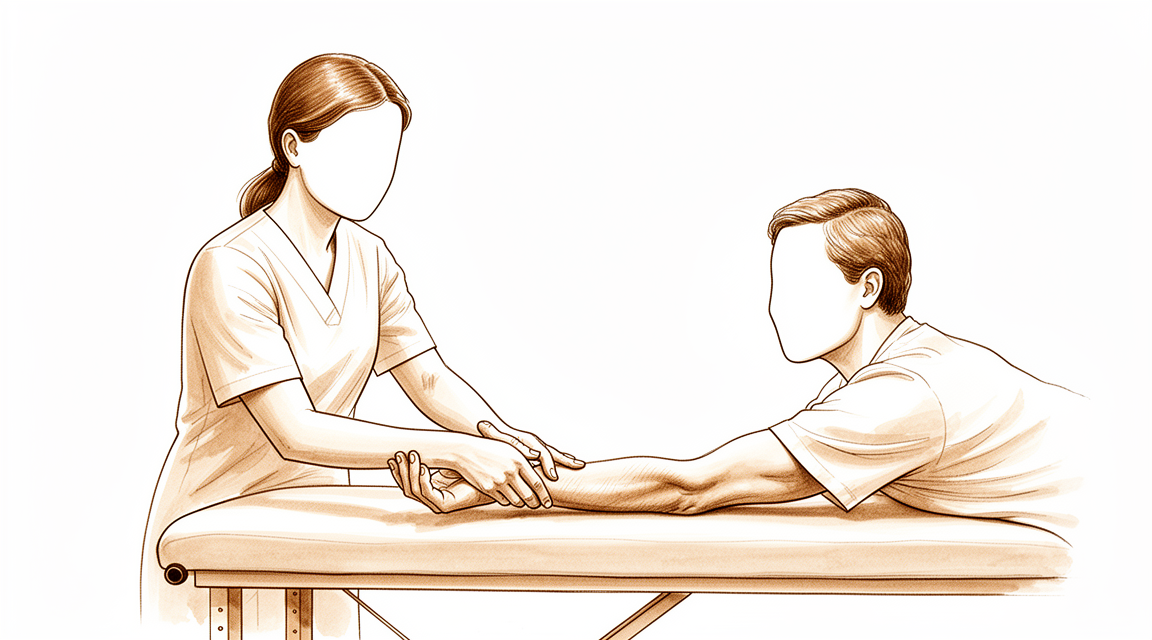
Bakit iminungkahi ang operasyong ito
Si Dr Kieran Hirpara, isang upper-limb surgeon sa Mater Private Hospital Rockhampton, ay nagsisimula sa mga opsyon na hindi gaanong invasive na angkop sa iyong kondisyon. Ang mga pasyente ay karaniwang nirerefer sa aming klinika ng kanilang GP; kung iminungkahi ng isang physiotherapist na magpatingin sa amin, kakailanganin mo pa rin ng referral mula sa iyong GP upang maging eligible para sa Medicare rebate. Ang aming assessment, batay sa iyong history, pagsusuri, at imaging kung kinakailangan, ang nagtatakda ng diagnosis.
Ang radial tunnel syndrome ay nagdudulot ng sakit sa panlabas na bahagi ng iyong siko at forearm. Ang radial nerve ay bumababa sa iyong forearm, at ilang magkakahiwalay na istruktura sa landas nito ang maaaring pumitpit dito. Maaaring kabilang dito ang gilid ng isang kalamnan, isang fibrous band, o maliliit na blood vessels na tumatawid sa nerve. Karaniwan kaming nagsisimula sa non-operative care tulad ng pagbabago sa aktibidad, physiotherapy o hand therapy, splinting, o mga injection. Isinasaalang-alang ang surgery kapag hindi ito nagbigay ng sapat na pagbuti. Ang operasyon, na tinatawag na radial tunnel release, ay nagpapagaan ng pressure sa nerve sa bawat isa sa mga puntong ito. Inirerekomenda namin ito para sa mga taong nagpapatuloy ang sakit sa kabila ng iba pang paggamot. Ang pangunahing layunin ay maibsan ang iyong sakit at tulungan ang iyong forearm at wrist na gumana nang normal muli.
Bago ang operasyon
Kailangang itigil ang pagkain at pag-inom pitong oras bago ang iyong operasyon. Humihingi kami ng mas mahabang oras kaysa sa ibang mga klinika upang maaaring mapabilis ang iyong operasyon kung maagang matapos ang listahan sa theatre. Sasabihin sa iyo ng iyong surgeon kung alin sa iyong mga regular na gamot ang dapat laktawan sa araw na iyon, at alin ang dapat inumin nang normal. Mangyaring magdala ng nakasulat na listahan ng lahat ng iyong iniinom, kabilang ang mga tabletas, injection at anumang patak o cream. Mag-ayos ng taong maghahatid sa iyo pauwi pagkatapos, dahil hindi ka nasa kondisyong magmaneho nang mag-isa. Magsuot ng maluwag at komportableng damit na may mga manggas na madaling i-slide sa iyong braso. Ang ilang imaging, gaya ng X-ray, MRI o ultrasound scan, ay tumutulong sa amin sa pagpaplano ng operasyon. Kung mayroon kang iba pang kondisyong medikal, maaaring kailanganin mo ng mga blood test o pagsusuri kasama ang anaesthetist.
Sa araw ng operasyon
Darating kayo sa surgical admissions unit ng ospital, kung saan kayo ay i-che-check in at ihahanda para sa theatre. Makikilala ninyo ang anaesthetist, ang doktor na mag-aalaga sa inyong pagtulog at kontrol sa sakit habang isinasagawa ang operasyon. Ang operasyong ito ay ginagawa sa ilalim ng general anaesthetic. Kayo ay tuluyang makakatulog para sa operasyon. Ang ilang pasyente ay maaaring sumailalim din sa regional nerve block para sa pagpapaginhawa ng sakit pagkatapos ng operasyon; ang anaesthetist ang magdedesisyon sa araw na iyon base sa inyong indibidwal na kalagayan. Pagkatapos ay dadalhin kayo sa operating theatre, kung saan isasagawa ang operasyon.
Kapag natapos na ang operasyon, magigising kayo sa recovery area. Babantayan kayo ng mga nurse doon habang nawawala ang bisa ng anaesthetic. Kapag stable na kayo, maaaring ilipat kayo sa ward o uuwi sa araw na iyon, depende sa procedure at kung paano ang takbo ng inyong recovery. Kung kayo ay uuwi, ang taong inayos ninyong magmamaneho para sa inyo ang maghahatid sa inyo doon.
Ano ang kinapapalooban ng operasyon
Ang operasyon ay tinatawag na radial tunnel release. Ginagawa ito sa pamamagitan ng isang hiwa sa harap ng iyong forearm, sa ibaba lamang ng tupi ng iyong siko. Ang iyong surgeon ay gagawa sa pamamagitan ng iisang bukasan na ito upang marating ang radial nerve.
Sa landas ng nerve, may ilang magkakahiwalay na istruktura ang maaaring pumipigil dito. Maaaring kabilang dito ang gilid ng isang kalamnan, isang fibrous band, o maliliit na blood vessel na tumatawid sa nerve. Hahanapin ng iyong surgeon ang bawat pressure point na ito at luluwagan ang mga ito, upang mabawasan ang pag-ipit sa nerve. Ang nakapalibot na tissue ay hinahayaang hindi gaanong magalaw, at pinapanatili ang blood supply sa nerve.
Kapag nailuwag na ang mga pressure point, isasara ng iyong surgeon ang hiwa. Isang manipis na self-adhesive mesh ang ilalagay muna sa ibabaw ng nakasarang sugat, upang pagdikitin ang mga gilid ng balat. Pagkatapos ay papahiran ng liquid skin adhesive ang mesh, kung saan ito titigas upang selyuhan ang lahat. Mananatili ito nang humigit-kumulang isa hanggang dalawang linggo at pagkatapos ay kusa itong aangat at mababakbak, kaya walang kailangang tanggalin.
Pagkatapos ng operasyon
Magigising ka sa recovery area kasama ang mga nurse sa iyong tabi habang nawawala ang bisa ng anaesthetic. Ang iyong braso ay magkakaroon ng malambot na dressing sa ibabaw ng sugat, at aayusin ang pain relief upang manatili kang komportable. Maaari ka nang gumalaw sa oras na maramdaman mong handa ka na, at magagamit mo agad ang iyong kamay para sa mga magagaan na gawain. Karaniwan itong isang day case, kaya maaari mong asahan na uuwi ka sa araw ring iyon, bagaman paminsan-minsan ay nananatili ang mga pasyente nang magdamag. Dapat may kasama ka sa unang 24 oras pagkauwi mo sa bahay. Iniiwan namin ang dressing sa loob ng humigit-kumulang 10 araw; pakiusap na huwag itong tanggalin bago ang panahong iyon maliban kung sinabi namin sa iyo. Papalitan o tatanggalin namin ito kapag nakita ka namin.
Paggaling
Ang iyong braso ay may malambot na dressing pag-uwi mo sa bahay. Ang ilang pananakit at pamamaga sa paligid ng sugat ay normal sa mga unang araw. Ipahinga ang iyong braso hangga't maaari, panatilihin itong nakataas kapag nakaupo, at inumin ang pain relief na inilaan para sa iyo. Karamihan sa mga tao ay napapansin na ang discomfort ay unti-unting nawawala habang lumilipas ang mga araw.
Maaari mo nang gamitin ang iyong kamay para sa mga magagaan na gawain agad-agad. Walang cast o routine splint pagkatapos ng operasyong ito, kaya malayang nakakagalaw ang iyong pulso at mga daliri. Ang banayad na paggalaw ay tumutulong sa pag-glide ng nerve at umiiwas sa paninigas. Ang iyong hand therapy pagkatapos ng surgery ay kay Ruby Doolan sa Extend Rehabilitation. Si Ruby ay isang hand therapist: gagabayan niya ang iyong mga ehersisyo at gagawa ng anumang splint na kakailanganin mo sa proseso. Sa bahay, panatilihing tuyo ang sugat at huwag galawin ang dressing hanggang sa masuri namin ito.
Habang humuhupa ang pamamaga, mapapansin mong unti-unting bumabalik ang iyong grip at lakas ng forearm. Ang mga pang-araw-araw na gawain tulad ng pagbibihis, pagkain, at pag-type ay karaniwang bumabalik nang maaga. Ang mas mabigat na pagbuhat at mahigpit na paghawak ay darating nang mas huli, kapag nararamdaman mo nang malakas ang iyong kamay at wala na ang tenderness. Kapag kuntento na ang iyong therapist sa iyong paggalaw at lakas, maaari mo nang ibalik ang iyong mga normal na aktibidad.
Karaniwan nang maaari kang magmaneho kapag natanggal na ang anumang splint at humupa na ang sakit nang sapat upang mahawakan ang manibela at makatugon nang mabilis. Ang mga pasyenteng naka-splint ay hindi dapat magmaneho. Tingnan ang aming pahina sa Driving after upper-limb surgery.
Ang paggaling ay nag-iiba sa bawat tao. Maaaring magkaiba ang iyong timeline, at gagabayan ka ng iyong surgeon at therapist.
Ano ang maaaring maging problema
Karamihan sa mga pasyente ay gumagaling nang maayos, ngunit paminsan-minsan ay maaaring magkaroon ng mga problema. Binabantayan kayo nang maigi ng inyong surgeon at ng team upang maagapan ang anumang isyu.
Ang nerve na pinaluluwag ay tumatakbo malapit sa operating area, kaya maaari itong mairita o mapinsala habang nag-oopera. Kung mangyari ito, maaaring mapansin ninyo ang panghihina kapag itinataas ang inyong wrist o kapag itinuwid ang inyong mga daliri, o pamamanhid at pangingilig sa likod ng inyong forearm, wrist o kamay. Ang ilan sa mga pagbabagong ito ay pansamantala at nawawala nang kusa sa loob ng ilang linggo hanggang buwan. Kung mapansin ninyo ang bagong panghihina o pamamanhid pagkatapos ng operasyon, sabihin ito sa inyong surgeon sa susunod na review, o tumawag sa clinic nang mas maaga kung ito ay biglaang dumating.
Minsan, may nabubuong scar tissue sa paligid ng nerve habang ito ay gumagaling. Maaari itong muling pumitpit sa nerve at ibalik ang sakit na naranasan ninyo noon, madalas ay ilang linggo o buwan matapos ang maayos na paggaling. Kung bumalik ang inyong orihinal na sakit, banggitin ito sa inyong susunod na appointment. Posible ang karagdagang operasyon upang paluwagin ang scar tissue kung kinakailangan.
May pagkakataon din na ang unang operasyon ay hindi nakapag-alis ng inyong mga sintomas, o kaya ay bumalik ang mga ito agad pagkatapos. Maaari itong mangyari kung may nakaligtaang pressure point sa kahabaan ng nerve, o kung hindi eksakto ang diagnosis. Kung nagpapatuloy o bumabalik ang inyong sakit, sabihin ito sa inyong surgeon. Muli nilang susuriin ang inyong kalagayan at tatalakayin kung ano ang susunod na gagawin, na maaaring kabilang ang karagdagang gamutan.
Anumang operasyon sa forearm ay may maliit na panganib ng mga problema sa mismong sugat. Bantayan ang tumitinding pamumula na kumakalat mula sa hiwa, pagtagas ng likido o nana mula rito, o lagnat. Kung makakita kayo ng alinman sa mga ito, makipag-ugnayan agad sa clinic, o pumunta sa emergency department kung hindi ninyo kami maabot.
Kung kayo ay nag-aalala sa paggaling ng inyong braso, tumawag sa clinic sa halip na maghintay para sa inyong susunod na pagbisita. Ang complications table sa pahinang ito ay naglilista ng mga tipikal na rate kung nais ninyo ang mga detalye.
Kailan dapat tumawag sa amin
Tumawag sa amin kung ang iyong sakit ay biglang lumala, o kung may mabilis na paglitaw ng bagong panghihina o pamamanhid. Tumawag sa amin kung ang sugat ay lalong namumula, may lumalabas na likido o nana, o kung nilalagnat ka. Pumunta sa emergency kung hindi mo kami ma-contact, o kung mawalan ng pakiramdam sa iyong braso o hindi ito maigalaw. Pumunta agad sa emergency para sa paninikip ng dibdib (shortness of breath) o pamamaga ng binti (calf swelling). Kung ikaw ay nag-aalala, tumawag sa klinika sa halip na maghintay para sa iyong susunod na bisita.
Saan maaaring magbasa nang higit pa tungkol sa kondisyon
Ang pahinang ito ay tungkol sa operasyon mismo. Ang kondisyong ginagamot nito, kabilang ang kung ano ang ipinapakita ng ebidensya tungkol sa kung kailan nakatutulong ang operasyon at kung kailan hindi, ay tinalakay nang mas detalyado sa pahinang Radial Tunnel Syndrome.
Evidence & references
This is the clinical evidence summary written for health professionals. It is technical, and it lists the research this page was built from. You do not need to read it to understand your treatment or to make a decision about it.
Anatomy & Pathophysiology
Bony Anatomy
- The elbow is a trocho-ginglymoid joint consisting of medial and lateral articulations that provide bony stability [3].
- The trochlea articulates with the ulna within the greater sigmoid notch to form the ulnohumeral, hinged, or trochoid portion of the elbow joint [3].
- The ulnohumeral articulation has highly congruent anatomy through almost 180° of articular contact, except for the bare area of the greater sigmoid notch which is devoid of cartilage [3].
- The coronoid process has medial and lateral facets that buttress the trochlea anteriorly [3].
- The sublime tubercle is located just distal and medial to the coronoid and serves as the attachment site for the anterior bundle of the medial ulnar collateral ligament [3].
- The medial epicondyle is larger and more posteriorly oriented than the lateral epicondyle and forms the attachment site for the origins of the flexor pronator mass [3].
- The capitellum and radial head form the radiocapitellar joint on the lateral side [3].
- The radius is held in close approximation to the ulna at the proximal radioulnar joint by the annular ligament [3].
- The area of the ulna that articulates with the margin of the radial head at the proximal radioulnar joint is known as the lesser sigmoid notch [3].
- The radial head is a concave elliptical structure covered with articular cartilage along the radiocapitellar joint and approximately 270° of the articular margin [3].
- The radial head articulates with both the capitellum and the lesser sigmoid notch [3].
- The lateral epicondyle is the origin of the lateral extensor musculature [3].
- The origin of the lateral ulnar collateral ligamentous complex is located just distal to the lateral epicondyle at the geometric center of the radiocapitellar articulation [3].
- The distal humeral articulation is angled 30° from the longitudinal axis [3].
- The anterior humeral line should pass through the center of the axis of rotation [3].
- The axis of rotation is angulated 5° to 7° in the coronal plane relative to the epicondylar axis, with the medial side more distal than the lateral side [3].
- The angulation of the distal humeral articulation accounts for the change from a valgus carrying angle to a more varus position as the elbow is flexed [3].
- There is a high correlation between the size of the radial head and capitellum on the left and right sides in the same individual [3].
- The olecranon provides a broad attachment site for the triceps posteriorly [3].
- The ulna bends approximately 8° medially at 8 cm from the tip of the olecranon [3].
- The articulation to the tip of the coronoid is approximately 30° from the long axis of the ulna in the sagittal plane [3].
- The radial head should line up with the capitellum at all arm positions on all radiographic views [4].
Ligaments and Capsule
- Elbow stability is determined by primary and secondary stabilizers [1].
- The three primary stabilizers of the elbow are the ulnohumeral articulation, the medial ulnar collateral ligament, and the lateral ulnar collateral ligament complex [1].
- Secondary stabilizers of the elbow include the radiocapitellar articulation, the common flexor tendon, the common extensor tendon, and the joint capsule [1].
- The medial ulnar collateral ligament is the primary valgus stabilizer of the elbow [4].
- The anterior bundle of the medial ulnar collateral ligament is the most important component for stability [4].
- The posterior bundle of the medial ulnar collateral ligament has the greatest change in length and becomes taut at flexion beyond 120 degrees [4].
- The lateral ulnar collateral ligament is the posterolateral stabilizer of the elbow [4].
- The joint capsule allows maximum distension at approximately 70 to 80 degrees of flexion [4].
- The anterior capsule attaches at a point approximately 6 mm distal to the tip of the coronoid [4].
- Tensile forces are present at the medial elbow and compressive forces are present at the lateral elbow [4].
- The LUCL origin center is 10.7 mm from the lateral epicondyle [2].
- The LUCL insertion is 3.3 mm from the apex of the supinator crest [2].
Muscles and Nerves
- The brachialis is the strongest elbow flexor and attaches to the coronoid 11 mm distal to the tip [4].
- The biceps brachii inserts at the ulnar margin of the radial tuberosity, with the long head inserting proximally and the short head distally [4].
- The biceps brachii is a powerful supinator of the forearm [4].
- The triceps is the primary elbow extensor and inserts on the olecranon process [4].
- The mobile wad consists of the brachioradialis, extensor carpi radialis longus, and extensor carpi radialis brevis [4].
- The flexor-pronator mass consists of the pronator teres, flexor carpi radialis, palmaris longus, flexor carpi ulnaris, and flexor digitorum superficialis [4].
- The radial nerve enters the interval between the brachialis and brachioradialis muscles in the proximal angle of the lateral approach wound [6].
- The deep branch of the radial nerve enters the supinator muscle [6].
- The common origin of the extensor muscles is attached to the lateral epicondyle [6].
- The common origin of the extensor muscles is attached to the lateral condylar fragment in lateral condyle fractures [6].
- The interval between the triceps posteriorly and the origins of the extensor carpi radialis longus and brachioradialis anteriorly is used to expose the lateral border of the humerus [6].
- The interval between the triceps posteriorly and the brachioradialis and extensor carpi radialis longus muscles anteriorly is used to expose the lateral condyle and capsule over the radial head [7].
- The extensor carpi ulnaris is separated from the anconeus distal to the radial head during the lateral J-shaped approach [7].
- The distal fibers of the anconeus are divided in line with the curved and transverse parts of the distal skin incision during the lateral J-shaped approach [7].
- The anconeus is reflected subperiosteally from the proximal ulna to dislocate and examine the joint during the lateral J-shaped approach [7].
Functional Anatomy
- The normal elbow has a range of motion from 0° to 140° from extension to flexion [1].
- The normal elbow has a range of motion of 75° in pronation and 85° in supination [1].
- A functional arc for elbow flexion and extension is 100° [1].
- A functional arc for forearm rotation is 100° [1].
Investigations
Physical Examination
- The physical examination of the elbow is directed by the history and the location of the patient's pain in the anterior, posterior, medial, or lateral aspect of the elbow [1].
- Pathologic entities associated with specific compartments aid the examiner in detecting pathologic conditions [1].
- Active and passive flexion, extension, supination, and pronation should be evaluated using a goniometer for accurate measurement [9].
- The contralateral elbow should be examined for comparison during range of motion assessment [9].
- Pain should be assessed during the mid-arc or at the terminal ends of motion [9].
- Mid-arc range of motion pain is more common with intrinsic disease and may not improve with contracture release alone [9].
- The ulnar nerve is of utmost importance in the neurovascular examination due to its anatomic proximity to the elbow [9].
- Electromyography and nerve conduction velocity studies should be performed if there is any question about neurologic dysfunction [9].
- An assessment for ulnar nerve subluxation should be performed [9].
- Subluxation of the ulnar nerve is a relative contraindication for an arthroscopic procedure secondary to possible iatrogenic nerve injury [9].
- If the elbow has less than 90° to 100° of flexion, the posterior bundle of the medial collateral ligament is contracted and must be released to restore flexion [9].
Imaging
- Plain radiographs remain the hallmark and the best screening test for elbow evaluation [1].
- Standard radiographic views include AP, lateral, and oblique views [9].
- Serial radiography is used as follow-up when heterotopic ossification is present [9].
- Primary bony landmarks assessed on radiographs include the ulnohumeral joint, coronoid process, radial head, capitellum, radiocapitellar joint, olecranon tip, coronoid/olecranon fossae, and trochlear ridge [9].
- CT is helpful when assessing for malunion architecture and the location and pattern of osteophytes and/or loose bodies [9].
- Three-dimensional CT is used to check for heterotopic ossification [9].
- CT is not necessary when the stiffness is entirely soft-tissue related [9].
- CT is beneficial if any joint incongruity or abnormal bony anatomy is present [9].
- MRI can be used to evaluate ligaments and tendons, but it is rarely indicated for elbow stiffness [9].
- AP, lateral, oblique, and axillary views of the elbow may reveal posteromedial olecranon osteophytes and/or loose bodies in valgus extension overload syndrome [11].
- CT with two-dimensional reconstruction and three-dimensional surface rendering best visualizes the pathology of valgus extension overload syndrome [11].
- MRI may be most helpful in evaluating associated injuries including partial or complete tears of the medial collateral ligament in valgus extension overload syndrome [11].
- Radiographic evaluations are essential when diagnosing an osteochondritis dissecans lesion of the elbow [12].
- Important aspects of osteochondritis dissecans lesions may be better seen with MRI [12].
- Standard AP and lateral radiographs should be obtained for the evaluation of elbow osteoarthritis [13].
- Radiographs for elbow osteoarthritis typically show osteophyte formation at the coronoid process, coronoid fossa, radial fossa, radial head, olecranon tip, and olecranon fossa [13].
- Joint spaces at the ulnohumeral joint are usually preserved in elbow osteoarthritis [13].
- Joint spaces at the radiocapitellar joint are mildly narrowed in elbow osteoarthritis [13].
- Loose bodies may be evident on radiographs, which typically underestimate the number present [13].
- CT may be useful for surgical planning of elbow osteoarthritis by allowing a detailed assessment of osteophytes and the presence of loose bodies [13].
References
[1] Orthopaedic Knowledge Update 13 Ebook Without Multimedia. Anatomy, Biomechanics, Physical Examination, and Imaging of the Elbow > Summary and Conclusions.
[2] Orthopaedic Knowledge Update 13 Ebook Without Multimedia. Anatomy, Biomechanics, Physical Examination, and Imaging of the Elbow > Annotated References.
[3] Orthopaedic Knowledge Update 13 Ebook Without Multimedia. Anatomy, Biomechanics, Physical Examination, and Imaging of the Elbow > Anatomy > Bony Anatomy.
[4] Miller S Review Of Orthopaedics. SECTION 16 PATELLAR TRACKING IN TOTAL KNEE ARTHROPLASTY > TABLE 2.3 Shoulder Spaces.
[6] Campbell S Operative Orthopaedics 4 Volume Set. LATERAL APPROACHES.
[7] Campbell S Operative Orthopaedics 4 Volume Set. LATERAL J-SHAPED APPROACH TO THE ELBOW.
[9] Aaos Comprehensive Orthopaedic Review 3. Elbow Stiffness* > IV. Evaluation.
[11] Aaos Comprehensive Orthopaedic Review 3. Elbow Injuries in the Athlete* > III. Valgus Extension Overload Syndrome and Posterior Impingement.
[12] Orthopaedic Knowledge Update. Osteochondritis Dissecans of the Knee and Elbow* > Summary.
[13] Aaos Comprehensive Orthopaedic Review 3. Arthritis and Arthroplasty of the Elbow > I. Osteoarthritis.