Patients › General-Health
Paano Gumagana at Gumagaling ang mga Nerve
How nerves carry signals, sense the world, and heal after injury — in plain English, with an in-depth section.

Ang mga nerve ay ang wiring ng katawan. Nagdadala ang mga ito ng maliliit na electrical signal sa pagitan ng iyong utak at ng iba pang bahagi ng iyong katawan, na nagsasabi sa mga kalamnan na gumalaw at nagbabalik ng iyong nararamdaman: hipo, temperatura, posisyon, at sakit. Kapag ang isang nerve ay naiirita, naipit, o naputol, ang mga signal na ito ay nagagambala, at mapapansin mo ito bilang pangingilig (pins and needles), pamamanhid, panghihina, o sakit. Ang mabuting balita ay maaaring makarecover ang mga nerve. Mabagal silang gumaling at sa isang medyo predictable na paraan, at ang pag-unawa sa pattern na iyon ay nagpapabawas sa pag-aalala habang naghihintay. Ipinapaliwanag ng pahinang ito, sa simpleng pananalita, kung ano ang ginagawa ng mga nerve at kung paano sila gumagaling; at para sa mga interesado, ang huling seksyon ay mas malalim na tumatalakay sa biology.
Ano ang nerve at ano ang ginagawa nito
Isipin ang nerve bilang isang bundle ng mga insulated cable. Ang bawat "cable" ay isang single nerve fibre, at ang isang buong nerve (tulad ng median nerve sa iyong pulso) ay naglalaman ng libu-libo nito na magkakasama, nababalot ng mga protective sheath na katulad ng mga layer ng isang cable bundle.
Ang mga signal ay naglalakbay sa dalawang direksyon, kaya ang mga nerve ay may tatlong pangunahing tungkulin:
- Motor: ang mga signal ay naglalakbay palabas mula sa iyong utak at spinal cord patungo sa iyong mga kalamnan, na nagsasabi sa mga ito kung kailan at gaano kalakas dapat mag-contract. Ito ang paraan kung paano ka humahawak, kumukurot, at gumagalaw.
- Sensory: ang mga signal ay naglalakbay pabalik mula sa iyong balat, mga joint, at tendon, na nagdadala ng touch, vibration, temperatura, sakit, at ang iyong pakiramdam kung nasaan ang iyong limb sa espasyo.
- Autonomic: mga awtomatikong background signal na hindi mo iniisip, na kumokontrol sa mga bagay tulad ng pagpapawis at ang lapad ng maliliit na blood vessel (kung kaya't ang isang napinsalang bahagi ng balat ay maaaring makaramdam ng pagkatuyo o magbago ng temperatura).
Ang bawat fibre ay may living core (ang axon) na nagdadala ng signal, at maraming fibre ang nababalot sa isang fatty insulation layer na tinatawag na myelin. Katulad ng plastic coating sa isang electrical wire, pinipigilan ng insulation na ito ang pagtagas ng signal at hinahayaan itong maglakbay nang mas mabilis.
Ano ang nangyayari kapag may pinsala ang nerve
Nagkakaroon ng problema ang mga nerve sa dalawang malawak na paraan, at ang mga sintomas ang nagsasabi kung alin dito.
Isang naipit o compressed na nerve. Kapag ang isang nerve ay naipit (halimbawa, ang median nerve sa carpal tunnel syndrome, o ang funny-bone nerve sa siko), ang insulation at supply ng dugo sa segment na iyon ang unang naaapektuhan. Bumabagal o nahaharangan ang mga signal habang dumadaan sa naipit na bahagi. Mararamdaman mo ito bilang pins and needles, pamamanhid at pagkailang sa paggalaw, na madalas ay lumalala sa gabi o sa mga partikular na posisyon, at ang mga kalamnang sinusupurtahan ng nerve na iyon ay maaaring humina sa paglipas ng panahon. Dahil ang cable mismo ay karaniwang nananatiling buo, ang pag-alis ng pressure ay madalas na nagbibigay-daan sa isang mabuting paggaling.
Isang naputol o napunit na nerve. Ang isang laceration, malalim na sugat, o malalang stretch ay maaaring humati sa mga fibre mismo. Ngayon, ang koneksyon ay pisikal na putol: ang bahagi ng nerve lampas sa pinsala ay putol na mula sa utak at spinal cord, kaya mawawala ang pakiramdam at paggalaw sa lahat ng sinusupurtahan ng nerve na iyon. Ang isang malinis na nahating nerve ay karaniwang kailangang kumpunihin sa pamamagitan ng surgery, tahiin nang magkasama upang ang mga fibre ay may landas na mapaglalakbay para tumubo muli.
Simple lang ang dahilan kung bakit lumalabas ang mga sintomas: ang signal na hindi makadaan ay signal na hindi nakakarating. Harangan ang mga motor fibre at hihina ang kalamnan; harangan ang mga sensory fibre at mamamanhid o mangingilig ang balat; iritahin ang mga fibre at makakaranas ka ng sakit.
Paano gumagaling ang mga nerve
Ang paggaling ng nerve ay tunay na mabagal, at nakatutulong na malaman ito nang maaga upang ang bilis nito ay hindi maramdaman bilang isang kabiguan.
Kapag ang mga fibre ay napinsala, muli itong tumutubo mula sa punto ng pinsala palabas patungo sa balat at kalamnan, sa humigit-kumulang isang milimetro bawat araw, mga isang pulgada bawat buwan. Ang panuntunang ito ay nagpapaliwanag ng marami:
- Habang mas malayo ang target, mas matagal ang paghihintay. Ang isang nerve na napinsala sa itaas (halimbawa, malapit sa siko) ay kailangang tumubo nang malayo pababa upang maabot ang mga dulo ng daliri, na maaaring tumagal ng maraming buwan. Ang isang maliit na hiwa malapit sa dulo ng daliri ay mas mabilis na gumagaling.
- Karaniwang bumabalik ang sensasyon bago ang fine strength. Habang naaabot ng mga fibre ang balat, maaaring mapansin mo muna ang isang malabong kamalayan, pagkatapos ay pangingilig (madalas ay isang buzzing o electric feeling kapag tinapik ang area, isang mabuting senyales na ang mga fibre ay umuusad), pagkatapos ay crude touch, at sa huli ay finer discrimination. Ang lakas at fine coordination ang madalas na huling dumarating.
- Mahalaga ang maaga at malinis na repair. Ang isang nahating nerve ay pinakamahusay na gumagaling kapag ito ay na-repair nang mabilis at tumpak, dahil ang mga support cell ng katawan na gumagabay sa regrowth ay pinakamahusay na gumagana sa mga buwan kaagad pagkatapos ng pinsala at nababawasan ang bisa sa paglipas ng panahon.
Ang mga nakatutulong sa paggaling: pagpapanatiling supple ng mga joint at malusog ng mga kalamnan gamit ang mga hand-therapy exercise na ibinigay sa iyo, pagprotekta sa manhid na balat mula sa mga paso at hiwa (hindi ka nito babalaan ng panganib), hindi paninigarilyo, at pagiging pasensyoso. Ang muling pagsasanay sa iyong utak upang bigyang-kahulugan ang mga bumabalik na signal, sa pamamagitan ng guided sensory exercises, ay bahagi rin ng pagkamit ng mabuting resulta. Kung ang isang nerve na dapat ay bumubuti ayon sa timeline ay hindi gumagaling, nararapat itong suriin, dahil ang ilang pinsala ay nangangailangan ng operasyon upang mabigyan ang paggaling ng pinakamahusay na pagkakataon.
Mas malalim na pagtalakay
Advanced reading: the deeper science (optional)
Ang seksyong ito ay nagbibigay ng mas detalyadong paliwanag sa antas ng estudyante tungkol sa biyolohiya sa likod ng lahat ng nabanggit sa itaas. Hindi ito kailangan upang maunawaan ang iyong kondisyon, ngunit kung kuryoso ka kung paano talaga gumagana ang wiring, magpatuloy sa pagbabasa.
Ang nerve cell at ang membrane nito
Tulad ng ibang bahagi ng iyong katawan, ang nerve ay binubuo ng mga cell, partikular na ang mga neuron. Ang isang neuron ay may cell body (kung saan naroon ang nucleus, ang control centre ng cell), maiikling receiving branches na tinatawag na dendrites, at isang mahabang axon na nagdadala ng signal palayo, na kung minsan ay may habang halos isang metro.
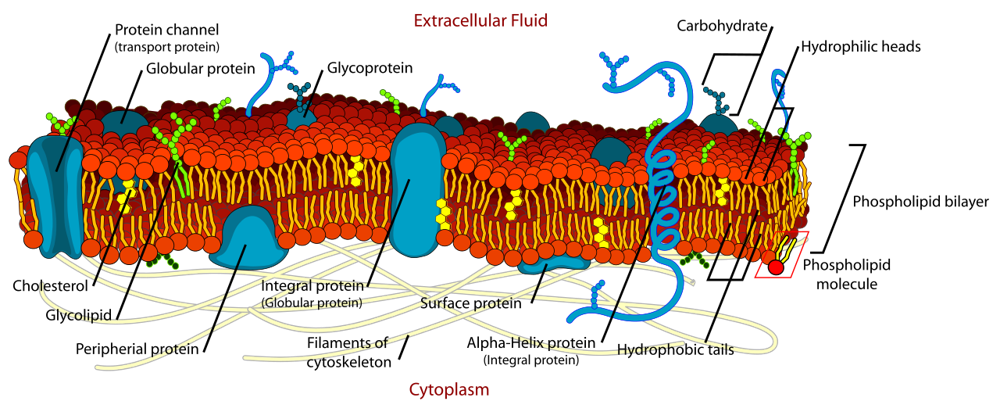
Bawat cell, kabilang ang neuron, ay nababalot ng isang cell membrane, at ang komposisyon nito ay mahalaga para sa mga susunod na bahagi. Ang membrane ay isang phospholipid bilayer, isang double sheet ng mga fatty molecules. Ang bawat phospholipid ay may 'head' na mahilig sa tubig at dalawang fatty 'tails' na tumataboy sa tubig; nakahanay sila nang tail-to-tail sa dalawang layer, kung saan ang mga head ay nakaharap sa watery fluid sa loob at labas ng cell at ang mga oily tails ay nakatago sa gitna. Ang manipis at fatty film na ito ang barrier na naghihiwalay sa loob at labas, at maaari itong humawak ng electrical charge sa kabuuan nito. Ang mga 'channels' at 'pumps' na inilalarawan sa susunod na seksyon ay mga protein gates lamang na nakapuwesto sa fatty membrane na ito.
Ang wiring: mga axon, myelin at mga node of Ranvier
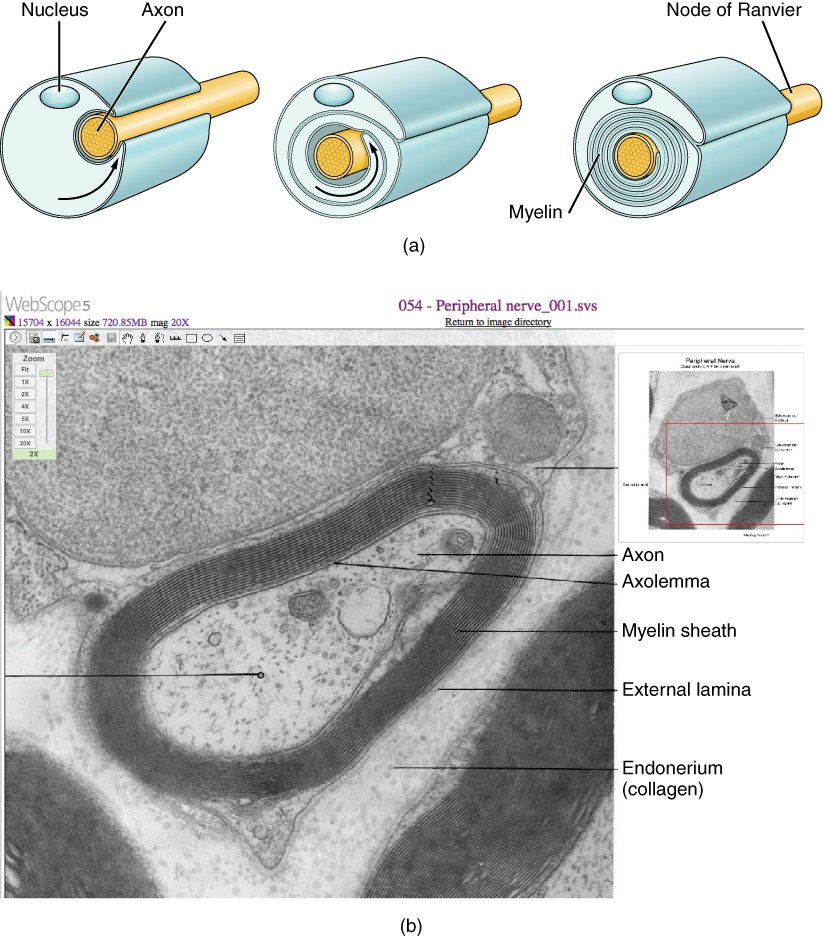
Ang isang solong nerve fibre ay binuo sa paligid ng isang axon, isang mahabang thread-like extension ng isang nerve cell na nagdadala ng electrical signal. Maraming axon ang nababalot sa myelin, isang fatty insulating sheath, at mahalagang malaman kung ano talaga ang myelin. Ang isang support cell (isang Schwann cell sa mga peripheral nerve ng iyong braso) ay ibinabalot ang sarili nitong cell membrane sa paligid ng axon, paikot-ikot, nang paulit-ulit, gaya ng paggulong ng isang sheet ng cling film sa paligid ng isang lapis nang dose-dosenang beses. Dahil ang membrane na iyon ay isang phospholipid bilayer (pangunahing taba), ang bawat pagbalot ay naglalagay ng isa pang layer ng taba, at ang maraming nakapatong na layer ay bumubuo ng isang makapal at fatty sleeve. Ang sleeve na iyon ng nakabalot na membrane ay ang insulation: ang myelin ay halos taba dahil ito ay layer sa ibabaw ng layer ng cell membrane. Habang mas maraming ikot ang ginagawa ng Schwann cell, mas maganda ang insulation, at mas mabilis ang fibre.
Gayunpaman, ang myelin sheath ay hindi tuloy-tuloy. Inilalatag ito sa mga segment, na may maliliit at hubad na puwang sa pagitan nila na tinatawag na nodes of Ranvier. Ang electrical signal ay hindi maaaring tumagas sa mga insulated stretch, kaya epektibo itong tumatalon mula sa isang node patungo sa susunod. Tinatawag itong saltatory conduction (mula sa Latin na saltare, tumalon), at ito ang dahilan kung bakit napakabilis ng mga myelinated fibre: ang pagtalon mula node patungo sa node ay maaaring magdala ng signal sa bilis na higit pa sa 100 metro bawat segundo, kumpara sa mababa sa 10 metro bawat segundo sa isang hubad at unmyelinated fibre. Ito rin ang dahilan kung bakit ang mga sakit o pinsala na nagtatanggal ng myelin ay nagpapabagal sa conduction nang ganoon kalala.
Paano naglalakbay ang signal
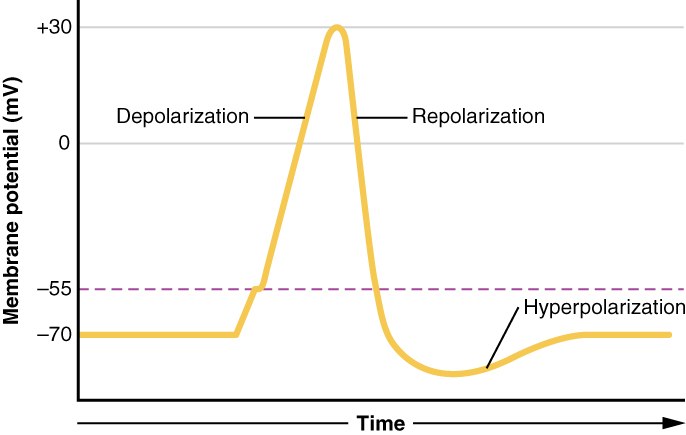
Kapag nakapahinga, ang loob ng isang axon ay may bahagyang negatibong charge kumpara sa labas: ang resting membrane potential, humigit-kumulang −70 millivolts. Ang charge na ito ay pinapanatili sa pamamagitan ng pagpapanatili ng karamihan ng mga sodium ion sa labas ng cell at karamihan ng mga potassium ion sa loob.
Kapag nag-fire ang nerve, ang pagkakasunod-sunod ay tumpak:
- Depolarisation. Ang mga voltage-gated sodium channel ay biglang bumubukas at ang mga sodium ion ay mabilis na pumapasok (in). Ang loob ay mabilis na nagiging positive, na pumapalo sa humigit-kumulang +30 millivolts. Ito ang action potential.
- Repolarisation. Nagsasara ang mga sodium channel at bumubukas ang mga voltage-gated potassium channel, na hinahayaang lumabas (out) ang potassium. Ang loob ay bumabalik sa negatibong resting value nito.
- Ang refractory (latent) period. Sa isang maikling sandali pagkatapos nito, ang bahagi ng membrane ay hindi maaaring mag-fire muli, gaano man kalakas ang stimulus, habang nagre-reset ang mga channel.
Ang refractory period na iyon ay may mahalagang tungkulin: dahil ang bahagi ng membrane na nasa likuran lamang ng sumusulong na signal ay pansamantalang hindi maaaring mag-re-fire, ang action potential ay maaari lamang maglakbay pasulong. Ito ang dahilan kung bakit ang mga nerve signal ay tumatakbo sa isang direksyon lamang sa kahabaan ng isang fibre sa halip na pabalik-balik.
Pagtawid sa puwang: mga synapse at ang motor end plate
Ang isang nerve fibre ay hindi pisikal na dumidikit sa kalamnan na kinokontrol nito. Kung saan nagtatagpo ang isang motor nerve at ang kalamnan, mayroong isang espesyalisadong junction, ang neuromuscular junction, na may maliit na puwang (ang synaptic cleft) sa pagitan ng dulo ng nerve at isang makapal at tinitiklop na rehiyon ng muscle membrane na tinatawag na motor end plate.
Ang electrical signal ay hindi direktang makakatawid sa puwang na iyon, kaya ito ay ginagawang isang chemical signal. Kapag ang action potential ay nakarating sa dulo ng nerve, pinupukaw nito ang pagpapalabas ng isang neurotransmitter na tinatawag na acetylcholine sa puwang. Ang acetylcholine ay lumulutang patawid at kumakapit sa mga receptor sa motor end plate, na nagbubukas ng mga channel na nagpapahintulot sa muscle membrane na mag-depolarise. Kung ang depolarisation na iyon ay umabot sa threshold, naglulunsad ito ng isang action potential sa kalamnan at nag-co-contract ang fibre. Pagkatapos ay mabilis na sinisira ng isang enzyme (acetylcholinesterase) ang acetylcholine, upang ang bawat nerve impulse ay makagawa ng isang malinaw na twitch sa halip na isang nagtatagal na twitch. Ang chemical relay na ito ang target ng ilang mga gamot na anaesthetic at ng mga kondisyon tulad ng myasthenia gravis.
Pagdama sa mundo: mga sensory receptor
Ang sensory side ay gumagana nang pabaligtad: ang mga espesyalisadong dulo ay nagpapalit ng isang pisikal na stimulus tungo sa mga signal ng nerve. Ang iba't ibang receptor ay naka-tune sa iba't ibang bagay:
- Ang mga Pacinian corpuscle ay nasa malalim na bahagi ng balat at tumutugon sa malalim na pressure at high-frequency vibration. Mabilis silang nag-a-adapt, na nagpaputok (firing) sa sandaling may magbago sa halip na tuloy-tuloy.
- Ang mga Meissner's corpuscle ay matatagpuan sa ilalim lamang ng ibabaw ng balat ng dulo ng daliri at palad at nakaka-detect ng light touch at low-frequency flutter, na sentro sa pino at mapanuring paghipo na ginagamit mo upang madama ang mga texture at humawak ng maliliit na bagay.
- Ang mga Free nerve ending ay mga hubad, hindi naka-encapsulate na mga dulo na nakakaramdam ng sakit, temperatura, at light touch. Sila ang pinakamaraming dulo sa balat.
- Ang mga Muscle spindle ay nasa loob mismo ng mga kalamnan at nakaka-detect ng stretch at haba, na nagbibigay ng feedback na impormasyon tungkol sa posisyon at paggalaw (proprioception), kung paano nalalaman ng utak kung nasaan ang iyong kamay nang hindi tumitingin.
Ang iba't ibang kalidad na maaari mong madama (tusok ng karayom, init, pag-vibrate ng telepono, posisyon ng iyong pulso) ay nakadepende nang malaki sa kung alin sa mga receptor na ito ang nagpaputok (firing) at kung gaano ito kabilis.
Mga Grade ng nerve injury
Gini-grade ng mga surgeon ang nerve injury base sa kung gaano kalalim ang pinsala, dahil ito ang nagtatakda kung paano, at kung, gagaling ito. Dalawang klasipikasyon ang ginagamit nang magkasama.
Ang mas luma at mas simpleng sistema ni Seddon ay may tatlong kategorya:
- Neurapraxia: ang pinakamild. Ang mga fibre ay may pasa o ang insulation ay lokal na nagulo, ngunit nananatiling intact ang mga axon. Ang conduction ay nahaharangan sa parteng iyon, gaya ng isang nakatiklop na hose, ngunit maayos ang istruktura. Ang paggaling ay karaniwang buo at relatibong mabilis kapag naalis na ang sanhi.
- Axonotmesis: ang mga axon mismo ay napunit, ngunit ang mga nakapalibot na connective-tissue tube ay nakaligtas. Ang mga fibre lampas sa pinsala ay namamatay at kailangang tumubo muli, kaya mabagal ang paggaling ngunit ang mga napreserbang tube ay nagbibigay ng landas na susundan ng mga bagong fibre, at ang outlook ay madalas na mabuti.
- Neurotmesis: ang pinakamalala. Ang nerve, kabilang ang supporting framework nito, ay ganap na nahati. Hindi ito gagaling nang kusa; kailangan ng surgical repair, at kahit dito ay hindi kumpleto ang paggaling.
Ang mas detalyadong sistema ni Sunderland ay hinahati ito sa limang grade, na tumutugma kay Seddon gaya ng sumusunod:
- Grade 1 = neurapraxia (conduction block lamang).
- Grade 2 = axonotmesis kung saan ang pinakaloob na tube (endoneurium) ay intact, na nagbibigay ng pinakamagandang prospect para sa regrowth.
- Grade 3 = ang inner tube ay nagulo rin, kaya ang mga tumutubong fibre ay maaaring maligaw ng direksyon; ang paggaling ay partial.
- Grade 4 = tanging ang outer sheath (epineurium) na lamang ang nananatiling intact; ang isang scar block ay karaniwang humaharang sa kapaki-pakinabang na paggaling nang walang surgery.
- Grade 5 = kumpletong paghati ng buong nerve, katumbas ng neurotmesis ni Seddon, na nangangailangan ng repair.
Sa madaling salita: mas maraming layer ang napunit, mas mabagal at hindi gaanong kumpleto ang natural na paggaling, at mas malaki ang posibilidad na kailangan ng surgery.
Wallerian degeneration at muling paglaki
Kapag ang isang axon ay naputol o napunit, ang bahagi nito lampas sa pinsala ay putol na ngayon mula sa cell na nagpapanatili rito na buhay. Sa mga sumunod na araw, ito ay nasisira sa isang maayos at programmed na proseso na tinatawag na Wallerian degeneration: ang naputol na axon at ang myelin nito ay binabaklas at nililinis ng mga Schwann cell at mga recruited immune cell (macrophages).
Hindi lamang ito simpleng paggiba; ito ay paghahanda. Ang mga Schwann cell na bumalot sa lumang fibre ay nabubuhay, dumarami, at pumipila sa mga hollow column na tinatawag na bands of Büngner, na sumusunod sa orihinal na ruta ng nerve. Ang mga column na ito ay nagsisilbing mga living scaffolding tube: naglalabas sila ng mga growth factor at pisikal na ginagabayan ang mga regenerating fibre pabalik sa kanilang mga target.
Mula sa site ng pinsala, ang natitirang dulo ng bawat axon ay nagpapadala ng isang growth cone na gumagapang pababa sa Schwann-cell tube nito sa bilis na humigit-kumulang isang millimetre bawat araw, hanggang sa maabot nito ang balat o muscle at muling kumonekta (reinnervation). Ito ang dahilan kung bakit napakahalaga ng isang malinis na repair, na ginawa nang maaga at tumpak: kailangang mapantay ang mga naputol na tube upang ang mga fibre ay muling makapasok sa mga tamang channel, at ang mga Schwann cell ay pinakamatulungin sa mga buwan kaagad pagkatapos ng pinsala; sa madaling salita, mayroon silang "best before" date. Pantayin nang maayos ang mga dulo at maabot sila sa tamang oras, at mas maraming fibre ang makakahanap ng daan pauwi.
Tingnan din
- Nerve tests and conduction studies — kung paano namin sinusukat kung ang isang nerve ay nag-aaconduct nang normal
- Carpal tunnel and nerve compression — isang karaniwang problema ng compressed-nerve sa pulso
- Tendon and nerve repair — kung ano ang kinapapalooban ng surgical repair ng isang naputol na nerve o tendon