Skip to content

Patients › Shoulder

Pinsala sa Acromioclavicular Joint (Shoulder Separation)

A shoulder separation from a fall on the point of the shoulder — grading, the bump that may remain, and when surgery is needed.
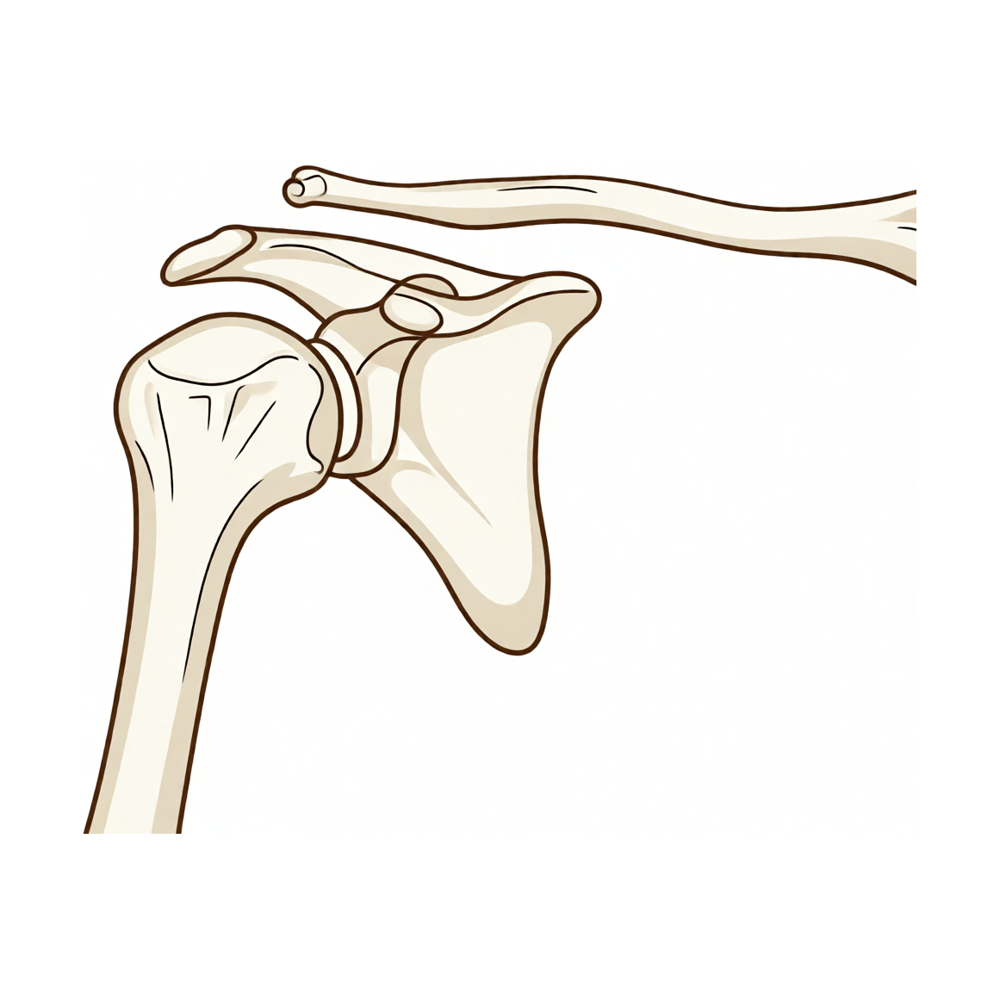
Ilustrasyon ng isang acromioclavicular joint separation, kung saan ang panlabas na collarbone ay naka-angat.
Isang pinsala sa AC joint (shoulder separation): ang panlabas na dulo ng collarbone ay nakaangat palayo sa shoulder blade. Root4(one) / Wikimedia Commons, CC BY 2.5

Ang pahinang ito ay isinalin ng makina at hindi pa nasusuri ng isang doktor. Ang bersyong Ingles ang siyang opisyal.

Ang iyong nararamdaman

Ang pinsalang ito ay halos palaging nagsisimula sa pagkahulog nang direkta sa dulo ng balikat: pagkahulog mula sa bisikleta, isang tackle o mabigat na kontak sa sports, o simpleng pagkatisod sa isang matigas na ibabaw. Agad na sasakit ang itaas na bahagi ng balikat, at sa susunod na isa o dalawang araw ay madalas na lumilitaw ang isang masakit na bukol o step mismo sa dulo, kung saan nagtatagpo ang iyong collarbone at ang balikat.

Ang bahaging ito ay masakit hawakan at masakit kapag itinataas ang braso, at ang pag-abot sa tapat ng iyong katawan o sa itaas ng ulo ay maaaring maging lalong hindi komportable. Kung pipindutin mo ang bukol, maaari itong maramdamang springy, na tila itinutulak pababa ang dulo ng collarbone at nararamdamang tumatalbog ito pabalik, na medyo katulad ng isang piano key. Maraming tao ang likas na kinakalong ang braso, dahil ang paghayaan itong nakalaylay ay humihila sa masakit na joint. Ito ang ibig sabihin ng mga tao sa "shoulder separation", at hindi ito katulad ng isang dislocated shoulder, kung saan ang ball ng balikat ay lumalabas sa socket nito.

Ano ang aktwal na nangyayari

Sa pinakataas ng iyong balikat ay mayroong isang maliit na joint kung saan ang panlabas na dulo ng collarbone (clavicle) ay nagtatagpo sa isang bony tip ng shoulder blade na tinatawag na acromion. Ito ang acromioclavicular (AC) joint. Pinagdurugtong ito ng mga ligament, kapwa ang mga nasa paligid mismo ng joint at isang set ng malalakas na ligament na medyo mas mababa (ang mga coracoclavicular, o CC, ligament) na nagsisilbing parang guy-ropes na nag-aangkla sa collarbone pababa.

Ang pagkahulog sa dulo ng balikat ay nagtutulak sa shoulder blade pababa habang nananatili sa puwesto ang collarbone, na nagdudulot ng strain o pagkapunit ng mga ligament na iyon. Kapag ang mga ligament lamang ng joint ang na-sprain, ang collarbone ay nananatili nang higit-kumulang sa puwesto. Kapag ang mas malalakas na guy-rope ligament ay napunit din, ang collarbone ay hindi na nahahawakan pababa at tumataas, na siyang lumilikha ng nakikitang bump at step.

Gino-grade ng mga surgeon ang mga pinsalang ito base sa tindi ng damage, gamit ang isang scale na tinatawag na Rockwood classification, I hanggang VI. Ang Grade I at II ay mga sprain na may kaunti o walang displacement; ang grade III ay nasa pagitan, na may kapansin-pansing bump ngunit ang balikat ay gumagana pa rin nang maayos; at ang mga grade IV hanggang VI ay ang mga high-grade injury, kung saan ang collarbone ay malubhang wala sa puwesto. Mahalagang malaman na ito ay ibang problema mula sa isang worn-out, arthritic AC joint (wear-and-tear sa loob ng maraming taon) at mula sa isang broken collarbone (na kapwa namin tinatalakay nang hiwalay).

Ano ang maaari naming gawin tungkol dito

Sa aming klinika, pinamamahalaan ni Dr Kieran Hirpara ang pinsalang ito sa pamamagitan ng pagkumpirma muna ng diagnosis gamit ang isang masusing assessment at imaging.

Ang mabuting balita ay karamihan sa mga AC joint injury ay hindi nangangailangan ng operasyon.

Ang mga low-grade injury (grades I, II at karamihan ng grade III) ay ginagamot nang simple. Ang paggamit ng sling para sa ginhawa sa loob ng ilang linggo ay nag-aalis ng hatak sa joint at hinahayaang humupa ang iritasyon. Kapag nabawasan na ang unang sakit, ang physiotherapy ay nagbabalik ng paggalaw at muling bumubuo ng mga kalamnan sa paligid ng shoulder blade at balikat. Karaniwang nababawi ng mga tao ang mabuti, at madalas ay kumpletong, function at nakakabalik sa trabaho at sports. Ang isang tapat na babala ay tungkol sa kosmetiko: kahit pagkatapos gumaling ng lahat, ang bukol sa itaas ng balikat ay madalas na nananatili nang permanente. Mukha itong iba kumpara sa kabilang panig, ngunit karaniwan itong hindi nakakahadlang sa paggana ng balikat.

Ang operasyon ay nakalaan lamang para sa mga pinsalang nangangailangan nito. Ibig sabihin nito ay ang high-grade injuries (grades IV, V at VI), kung saan ang collarbone ay malalang displaced, at ang mas maliit na grupo ng lower-grade injuries na nananatiling masakit, mahina o unstable sa kabila ng wastong rehab, lalo na sa mga taong gumagawa ng mabigat na manual o overhead work, o sa mga seryosong atleta. Ang isang operasyon ay muling binubuo ang mga napunit na ligament upang hilahin ang collarbone pabalik sa tamang posisyon nito at panatilihin ito habang ito ay gumagaling. Pinag-uusapan namin iyon nang hiwalay sa ilalim ng AC joint stabilisation procedure.

Ano ang dapat asahan

Para sa nakararaming tao na may low-grade injury, ang kinalabasan ay nakaka-reassure. Ang matalas na sakit ay humuhupa sa loob ng ilang linggo, at sa pamamagitan ng physiotherapy, unti-unting nababawi ng balikat ang lakas at range nito. Karamihan ay bumabalik sa kanilang mga normal na aktibidad at isport, habang tinatanggap na ang bukol ay maaaring maging permanenteng paalala ng pinsala nang hindi nililimitahan ang kayang gawin ng balikat. Maging ang ilang grade III injuries na mukhang malala sa simula ay gumagaling nang walang operasyon.

Ang mga pinsala na mas matagal gumaling ay ang mga high-grade, at ang mga low-grade na hindi basta-basta humuhupa. Dito, ang katanungan ay kung ang reconstruction ba ay magbibigay ng mas stable, mas malakas, at hindi gaanong masakit na balikat para sa mga demand na ibinibigay mo rito, at ang sagot ay nakadepende nang malaki sa iyong trabaho, iyong isport, at kung paano kumikilos ang balikat sa unang ilang linggo. Mayroong mabuting ebidensya na ang desisyong ito ay pinakamainam na gawin nang hindi nagmamadali, na binibigyan ang balikat ng sapat na panahon bago magdesisyon sa operasyon, habang hindi naman hinahayaang manatiling unstable ang isang malinaw na high-grade injury nang walang katiyakan.

Kailan dapat magpatingin

  • Isang pagkahulog sa dulo ng balikat na nag-iiwan nito na masakit, na may maselang bukol o "step" sa itaas, ay nararapat na masuri, kapwa upang matukoy ang grado ng pinsala at upang matiyak na walang bali sa collarbone.
  • Isang halata at nakaungos na bukol kung saan pakiramdam ay hinihila pababa ang braso: nagpapahiwatig ito ng mas mataas na grado ng pinsala na nangangailangan ng wastong pagsusuri.
  • Sakit o panghihina na hindi nawawala pagkatapos ng ilang linggo ng paggamit ng sling at physiotherapy, lalo na kung ikaw ay gumagawa ng mabibigat o overhead na trabaho o naglalaro ng sport.
  • Balat na banat na banat sa ibabaw ng bukol, pagbabago sa kulay ng balat sa ibabaw nito, o anumang pakiramdam na ang buto ay tumutulak nang malakas laban sa balat: ipasuri ito nang mas maaga.

Higit pang detalye

Advanced reading: the deeper science (optional)

Ang seksyong ito ay higit pa sa kailangan mo para sa iyong sariling mga desisyon sa paggamot. Ang pinsala sa AC joint ay karapat-dapat sa karagdagang pagbabasa dahil sa isang mismatch na nasa sentro ng bawat desisyon tungkol dito: ang operasyon ay maaasahang itinatama kung ano ang ipinapakita ng X-ray, at maaasahang hindi binabago kung paano magiging takbo ng paggana ng balikat.

Inaayos ng operasyon ang itsura, hindi ang kinalabasan

Ang mga high-grade separation ay mukhang nakakabahala sa film, kung saan ang collarbone ay kitang-kitang nakaangat mula sa shoulder blade, at intuitive na ang pagbabalik nito sa pwesto ay dapat na mas mabuti. Sa pagsasama-sama ng 954 na pasyente na may acute high-grade dislocations, walang klinikal na pagkakaiba sa functional outcome scores sa pagitan ng operative at non-operative management. Ang mga bagay na nagkaiba ay tumakbo sa magkabilang direksyon: ang non-operative group ay mas mabilis na nakabalik sa trabaho ngunit tumanggap ng mas hindi magandang cosmetic result, habang ang operasyon ay nakamit ang mas mabuting radiographic reduction [1].

Sa pagtutok sa Rockwood type III, ang grade kung saan ang argumento ay tunay na buhay, isang 2025 review ng 397 na pasyente ang nakatagpo ng walang makabuluhang pagkakaiba sa patient-reported o objective function, kung saan pinabuti ng operasyon ang joint reduction habang nagdagdag ng panganib ng surgical complications [2]. Isang mas maagang review ng 646 na mga balikat ang nakarating sa parehong konklusyon mula sa ibang anggulo: walang makabuluhang pagkakaiba sa huling arthritis o persistent pain, at may 14% recurrence rate sa surgical group [3].

Tatlong independiyenteng body of evidence, isang konklusyon. Ang deformity ay totoo, ito ay permanente kung walang operasyon, at ang pagtatama nito ay hindi nasusukat na nagbabago sa kung ano ang kayang gawin ng balikat.

Kaya ang desisyon ay tungkol sa bukol, hindi sa function

Ang reframing na iyon ang praktikal na halaga ng ebidensya. Kung ang tanong ay "pagbubuti ba ng operasyon ang paggana ng aking balikat", ang tapat na sagot ay hindi ito napatunayan. Kung ang tanong ay "tatanggalin ba ng operasyon ang step sa aking collarbone", ang sagot ay karaniwang oo, at para sa ilang tao, sa ilang trabaho at ilang sports, sapat na itong dahilan sa sarili nito.

Isa itong lehitimong dahilan upang operahan. Ito ay sadyang ibang dahilan mula sa inaakala ng karamihan na inaalok sa kanila.

Walang teknik ang nanalo, at may isa na mapapatunayang mas malala

Kapag nakapagdesisyon na na operahan, ang pagpili ng construct ay nakakakuha ng malaking atensyon at napakakaunting pagkakaiba. Sa 939 na pasyente, ang mga subjective outcome pagkatapos ng surgical treatment ay magkakatulad para sa lahat ng modality, ngunit ang hook plate at K-wire fixation ang may pinakamataas na complication rates, at ang modified Weaver-Dunn ang may pinakamataas na rate ng unplanned reoperation [4]. Sa paghahambing ng dalawang teknik na pinakamadalas gamitin ngayon sa 399 na pasyente, ang suture button ay nagbigay ng mas mabuting functional scores at mas mababang sakit kaysa sa hook plate, nang walang makabuluhang pagkakaiba sa operating time, complications o loss of reduction [5].

Ang mga reconstruction study ay tumuturo sa parehong direksyon. Sa 4,473 na pasyente, ang biological at synthetic reconstructions ay nagresulta sa mas mabuting functional scores kaysa sa osteosynthesis [6], at sa 1,020 na pasyente, ang anatomic reconstructions ang may pinakamahusay na performance, kung saan ang mga arthroscopic approach ay mas nakahihigit kaysa sa mga open approach [7].

Ang pattern ay ang mga modernong anatomic reconstruction ay magkakasama sa taas at ang mga lumang rigid implant ay napag-iiwanan. Sa loob ng modernong grupo, ang mga pagkakaiba ay sapat na maliit upang ang pamilyaridad ng surgeon ay maging isang makatwirang batayan sa pagpili.

Isa sa lima ay may iba pang nangyayari sa loob ng joint

Ang natuklasang ito ay mahalagang malaman dahil hindi ito nakikita sa mga film na ginagamit para sa diagnosis. Sa pagsasama-sama ng 860 na mga pasyenteng may surgically treated acute AC joint dislocations, humigit-kumulang isa sa lima ang may kaugnay na intra-articular lesion na nangangailangan ng karagdagang interbensyon, kadalasang labral o rotator cuff pathology, kung kaya't iginigiit ng mga may-akda ang arthroscopic inspection ng joint kahit na ang reconstruction mismo ay ginawang open [8].

Nagbibigay din ito ng paliwanag para sa nakakadismayang minorya ng mga kaso: ang balikat na nananatiling masakit pagkatapos ng isang technically sound reconstruction ay maaaring mayroon nang pangalawang pinsala sa simula pa lamang.

Mga Sanggunian

[1] Chang N, Furey A, Kurdin A. Operative versus nonoperative management of acute high-grade acromioclavicular dislocations: a systematic review and meta-analysis. J Orthop Trauma. 2018;32(1):1-9. https://doi.org/10.1097/BOT.0000000000001004

[2] Bianco Prevot L, Accetta R, Fozzato S, Moroder P, Basile G. Surgical vs conservative: what is the best treatment of acute Rockwood III acromioclavicular joint dislocation. EFORT Open Rev. 2025;10(3):141-50. https://doi.org/10.1530/EOR-2024-0077

[3] Longo UG, Ciuffreda M, Rizzello G, Mannering N, Maffulli N, Denaro V. Surgical versus conservative management of Type III acromioclavicular dislocation: a systematic review. Br Med Bull. 2017;122(1):31-49. https://doi.org/10.1093/bmb/ldx003

[4] Moatshe G, Kruckeberg BM, Chahla J, Godin JA, Cinque ME, Provencher MT, et al. Acromioclavicular and coracoclavicular ligament reconstruction for acromioclavicular joint instability: a systematic review of clinical and radiographic outcomes. Arthroscopy. 2018;34(6):1979-95. https://doi.org/10.1016/j.arthro.2018.01.016

[5] Wang C, Meng J, Zhang Y, Shi M. Suture button versus hook plate for acute unstable acromioclavicular joint dislocation: a meta-analysis. Am J Sports Med. 2019;48(4):1023-30. https://doi.org/10.1177/0363546519858745

[6] Saccomanno MF, Sircana G, Cardona V, Vismara V, Scaini A, Salvi AG, et al. Biologic and synthetic ligament reconstructions achieve better functional scores compared to osteosynthesis in the treatment of acute acromioclavicular joint dislocation. Knee Surg Sports Traumatol Arthrosc. 2020;29(7):2175-93. https://doi.org/10.1007/s00167-020-06217-9

[7] Sircana G, Saccomanno MF, Mocini F, Campana V, Messinese P, Monteleone A, et al. Anatomic reconstruction of the acromioclavicular joint provides the best functional outcomes in the treatment of chronic instability. Knee Surg Sports Traumatol Arthrosc. 2020;29(7):2237-48. https://doi.org/10.1007/s00167-020-06059-5

[8] Ruiz Ibán MA, Moreno Romero MS, Diaz Heredia J, Ruiz Díaz R, Muriel A, López-Alcalde J. The prevalence of intraarticular associated lesions after acute acromioclavicular joint injuries is 20%. A systematic review and meta-analysis. Knee Surg Sports Traumatol Arthrosc. 2020;29(7):2024-38. https://doi.org/10.1007/s00167-020-05917-6


Creative Commons BY-NC 4.0

CC Creative Commons licence
BY Attribution — you must credit the source
NC NonCommercial — not for commercial use

Attribution-NonCommercial 4.0 International


Creative Commons Corporation ("Creative Commons") is not a law firm and does not provide legal services or legal advice. Distribution of Creative Commons public licenses does not create a lawyer-client or other relationship. Creative Commons makes its licenses and related information available on an "as-is" basis. Creative Commons gives no warranties regarding its licenses, any material licensed under their terms and conditions, or any related information. Creative Commons disclaims all liability for damages resulting from their use to the fullest extent possible.

Using Creative Commons Public Licenses

Creative Commons public licenses provide a standard set of terms and conditions that creators and other rights holders may use to share original works of authorship and other material subject to copyright and certain other rights specified in the public license below. The following considerations are for informational purposes only, are not exhaustive, and do not form part of our licenses.

Considerations for licensors: Our public licenses are intended for use by those authorized to give the public permission to use material in ways otherwise restricted by copyright and certain other rights. Our licenses are irrevocable. Licensors should read and understand the terms and conditions of the license they choose before applying it. Licensors should also secure all rights necessary before applying our licenses so that the public can reuse the material as expected. Licensors should clearly mark any material not subject to the license. This includes other CC- licensed material, or material used under an exception or limitation to copyright. More considerations for licensors: wiki.creativecommons.org/Considerations_for_licensors

Considerations for the public: By using one of our public licenses, a licensor grants the public permission to use the licensed material under specified terms and conditions. If the licensor's permission is not necessary for any reason--for example, because of any applicable exception or limitation to copyright--then that use is not regulated by the license. Our licenses grant only permissions under copyright and certain other rights that a licensor has authority to grant. Use of the licensed material may still be restricted for other reasons, including because others have copyright or other rights in the material. A licensor may make special requests, such as asking that all changes be marked or described. Although not required by our licenses, you are encouraged to respect those requests where reasonable. More considerations for the public: wiki.creativecommons.org/Considerations_for_licensees


Creative Commons Attribution-NonCommercial 4.0 International Public License

By exercising the Licensed Rights (defined below), You accept and agree to be bound by the terms and conditions of this Creative Commons Attribution-NonCommercial 4.0 International Public License ("Public License"). To the extent this Public License may be interpreted as a contract, You are granted the Licensed Rights in consideration of Your acceptance of these terms and conditions, and the Licensor grants You such rights in consideration of benefits the Licensor receives from making the Licensed Material available under these terms and conditions.

Section 1 -- Definitions.

a. Adapted Material means material subject to Copyright and Similar Rights that is derived from or based upon the Licensed Material and in which the Licensed Material is translated, altered, arranged, transformed, or otherwise modified in a manner requiring permission under the Copyright and Similar Rights held by the Licensor. For purposes of this Public License, where the Licensed Material is a musical work, performance, or sound recording, Adapted Material is always produced where the Licensed Material is synched in timed relation with a moving image.

b. Adapter's License means the license You apply to Your Copyright and Similar Rights in Your contributions to Adapted Material in accordance with the terms and conditions of this Public License.

c. Copyright and Similar Rights means copyright and/or similar rights closely related to copyright including, without limitation, performance, broadcast, sound recording, and Sui Generis Database Rights, without regard to how the rights are labeled or categorized. For purposes of this Public License, the rights specified in Section 2(b)(1)-(2) are not Copyright and Similar Rights.

d. Effective Technological Measures means those measures that, in the absence of proper authority, may not be circumvented under laws fulfilling obligations under Article 11 of the WIPO Copyright Treaty adopted on December 20, 1996, and/or similar international agreements.

e. Exceptions and Limitations means fair use, fair dealing, and/or any other exception or limitation to Copyright and Similar Rights that applies to Your use of the Licensed Material.

f. Licensed Material means the artistic or literary work, database, or other material to which the Licensor applied this Public License.

g. Licensed Rights means the rights granted to You subject to the terms and conditions of this Public License, which are limited to all Copyright and Similar Rights that apply to Your use of the Licensed Material and that the Licensor has authority to license.

h. Licensor means the individual(s) or entity(ies) granting rights under this Public License.

i. NonCommercial means not primarily intended for or directed towards commercial advantage or monetary compensation. For purposes of this Public License, the exchange of the Licensed Material for other material subject to Copyright and Similar Rights by digital file-sharing or similar means is NonCommercial provided there is no payment of monetary compensation in connection with the exchange.

j. Share means to provide material to the public by any means or process that requires permission under the Licensed Rights, such as reproduction, public display, public performance, distribution, dissemination, communication, or importation, and to make material available to the public including in ways that members of the public may access the material from a place and at a time individually chosen by them.

k. Sui Generis Database Rights means rights other than copyright resulting from Directive 96/9/EC of the European Parliament and of the Council of 11 March 1996 on the legal protection of databases, as amended and/or succeeded, as well as other essentially equivalent rights anywhere in the world.

l. You means the individual or entity exercising the Licensed Rights under this Public License. Your has a corresponding meaning.

Section 2 -- Scope.

a. License grant.

1. Subject to the terms and conditions of this Public License, the Licensor hereby grants You a worldwide, royalty-free, non-sublicensable, non-exclusive, irrevocable license to exercise the Licensed Rights in the Licensed Material to:

a. reproduce and Share the Licensed Material, in whole or in part, for NonCommercial purposes only; and

b. produce, reproduce, and Share Adapted Material for NonCommercial purposes only.

2. Exceptions and Limitations. For the avoidance of doubt, where Exceptions and Limitations apply to Your use, this Public License does not apply, and You do not need to comply with its terms and conditions.

3. Term. The term of this Public License is specified in Section 6(a).

4. Media and formats; technical modifications allowed. The Licensor authorizes You to exercise the Licensed Rights in all media and formats whether now known or hereafter created, and to make technical modifications necessary to do so. The Licensor waives and/or agrees not to assert any right or authority to forbid You from making technical modifications necessary to exercise the Licensed Rights, including technical modifications necessary to circumvent Effective Technological Measures. For purposes of this Public License, simply making modifications authorized by this Section 2(a) (4) never produces Adapted Material.

5. Downstream recipients.

a. Offer from the Licensor -- Licensed Material. Every recipient of the Licensed Material automatically receives an offer from the Licensor to exercise the Licensed Rights under the terms and conditions of this Public License.

b. No downstream restrictions. You may not offer or impose any additional or different terms or conditions on, or apply any Effective Technological Measures to, the Licensed Material if doing so restricts exercise of the Licensed Rights by any recipient of the Licensed Material.

6. No endorsement. Nothing in this Public License constitutes or may be construed as permission to assert or imply that You are, or that Your use of the Licensed Material is, connected with, or sponsored, endorsed, or granted official status by, the Licensor or others designated to receive attribution as provided in Section 3(a)(1)(A)(i).

b. Other rights.

1. Moral rights, such as the right of integrity, are not licensed under this Public License, nor are publicity, privacy, and/or other similar personality rights; however, to the extent possible, the Licensor waives and/or agrees not to assert any such rights held by the Licensor to the limited extent necessary to allow You to exercise the Licensed Rights, but not otherwise.

2. Patent and trademark rights are not licensed under this Public License.

3. To the extent possible, the Licensor waives any right to collect royalties from You for the exercise of the Licensed Rights, whether directly or through a collecting society under any voluntary or waivable statutory or compulsory licensing scheme. In all other cases the Licensor expressly reserves any right to collect such royalties, including when the Licensed Material is used other than for NonCommercial purposes.

Section 3 -- License Conditions.

Your exercise of the Licensed Rights is expressly made subject to the following conditions.

a. Attribution.

1. If You Share the Licensed Material (including in modified form), You must:

a. retain the following if it is supplied by the Licensor with the Licensed Material:

i. identification of the creator(s) of the Licensed Material and any others designated to receive attribution, in any reasonable manner requested by the Licensor (including by pseudonym if designated);

ii. a copyright notice;

iii. a notice that refers to this Public License;

iv. a notice that refers to the disclaimer of warranties;

v. a URI or hyperlink to the Licensed Material to the extent reasonably practicable;

b. indicate if You modified the Licensed Material and retain an indication of any previous modifications; and

c. indicate the Licensed Material is licensed under this Public License, and include the text of, or the URI or hyperlink to, this Public License.

2. You may satisfy the conditions in Section 3(a)(1) in any reasonable manner based on the medium, means, and context in which You Share the Licensed Material. For example, it may be reasonable to satisfy the conditions by providing a URI or hyperlink to a resource that includes the required information.

3. If requested by the Licensor, You must remove any of the information required by Section 3(a)(1)(A) to the extent reasonably practicable.

4. If You Share Adapted Material You produce, the Adapter's License You apply must not prevent recipients of the Adapted Material from complying with this Public License.

Section 4 -- Sui Generis Database Rights.

Where the Licensed Rights include Sui Generis Database Rights that apply to Your use of the Licensed Material:

a. for the avoidance of doubt, Section 2(a)(1) grants You the right to extract, reuse, reproduce, and Share all or a substantial portion of the contents of the database for NonCommercial purposes only;

b. if You include all or a substantial portion of the database contents in a database in which You have Sui Generis Database Rights, then the database in which You have Sui Generis Database Rights (but not its individual contents) is Adapted Material; and

c. You must comply with the conditions in Section 3(a) if You Share all or a substantial portion of the contents of the database.

For the avoidance of doubt, this Section 4 supplements and does not replace Your obligations under this Public License where the Licensed Rights include other Copyright and Similar Rights.

Section 5 -- Disclaimer of Warranties and Limitation of Liability.

a. UNLESS OTHERWISE SEPARATELY UNDERTAKEN BY THE LICENSOR, TO THE EXTENT POSSIBLE, THE LICENSOR OFFERS THE LICENSED MATERIAL AS-IS AND AS-AVAILABLE, AND MAKES NO REPRESENTATIONS OR WARRANTIES OF ANY KIND CONCERNING THE LICENSED MATERIAL, WHETHER EXPRESS, IMPLIED, STATUTORY, OR OTHER. THIS INCLUDES, WITHOUT LIMITATION, WARRANTIES OF TITLE, MERCHANTABILITY, FITNESS FOR A PARTICULAR PURPOSE, NON-INFRINGEMENT, ABSENCE OF LATENT OR OTHER DEFECTS, ACCURACY, OR THE PRESENCE OR ABSENCE OF ERRORS, WHETHER OR NOT KNOWN OR DISCOVERABLE. WHERE DISCLAIMERS OF WARRANTIES ARE NOT ALLOWED IN FULL OR IN PART, THIS DISCLAIMER MAY NOT APPLY TO YOU.

b. TO THE EXTENT POSSIBLE, IN NO EVENT WILL THE LICENSOR BE LIABLE TO YOU ON ANY LEGAL THEORY (INCLUDING, WITHOUT LIMITATION, NEGLIGENCE) OR OTHERWISE FOR ANY DIRECT, SPECIAL, INDIRECT, INCIDENTAL, CONSEQUENTIAL, PUNITIVE, EXEMPLARY, OR OTHER LOSSES, COSTS, EXPENSES, OR DAMAGES ARISING OUT OF THIS PUBLIC LICENSE OR USE OF THE LICENSED MATERIAL, EVEN IF THE LICENSOR HAS BEEN ADVISED OF THE POSSIBILITY OF SUCH LOSSES, COSTS, EXPENSES, OR DAMAGES. WHERE A LIMITATION OF LIABILITY IS NOT ALLOWED IN FULL OR IN PART, THIS LIMITATION MAY NOT APPLY TO YOU.

c. The disclaimer of warranties and limitation of liability provided above shall be interpreted in a manner that, to the extent possible, most closely approximates an absolute disclaimer and waiver of all liability.

Section 6 -- Term and Termination.

a. This Public License applies for the term of the Copyright and Similar Rights licensed here. However, if You fail to comply with this Public License, then Your rights under this Public License terminate automatically.

b. Where Your right to use the Licensed Material has terminated under Section 6(a), it reinstates:

1. automatically as of the date the violation is cured, provided it is cured within 30 days of Your discovery of the violation; or

2. upon express reinstatement by the Licensor.

For the avoidance of doubt, this Section 6(b) does not affect any right the Licensor may have to seek remedies for Your violations of this Public License.

c. For the avoidance of doubt, the Licensor may also offer the Licensed Material under separate terms or conditions or stop distributing the Licensed Material at any time; however, doing so will not terminate this Public License.

d. Sections 1, 5, 6, 7, and 8 survive termination of this Public License.

Section 7 -- Other Terms and Conditions.

a. The Licensor shall not be bound by any additional or different terms or conditions communicated by You unless expressly agreed.

b. Any arrangements, understandings, or agreements regarding the Licensed Material not stated herein are separate from and independent of the terms and conditions of this Public License.

Section 8 -- Interpretation.

a. For the avoidance of doubt, this Public License does not, and shall not be interpreted to, reduce, limit, restrict, or impose conditions on any use of the Licensed Material that could lawfully be made without permission under this Public License.

b. To the extent possible, if any provision of this Public License is deemed unenforceable, it shall be automatically reformed to the minimum extent necessary to make it enforceable. If the provision cannot be reformed, it shall be severed from this Public License without affecting the enforceability of the remaining terms and conditions.

c. No term or condition of this Public License will be waived and no failure to comply consented to unless expressly agreed to by the Licensor.

d. Nothing in this Public License constitutes or may be interpreted as a limitation upon, or waiver of, any privileges and immunities that apply to the Licensor or You, including from the legal processes of any jurisdiction or authority.


Creative Commons is not a party to its public licenses. Notwithstanding, Creative Commons may elect to apply one of its public licenses to material it publishes and in those instances will be considered the “Licensor.” The text of the Creative Commons public licenses is dedicated to the public domain under the CC0 Public Domain Dedication. Except for the limited purpose of indicating that material is shared under a Creative Commons public license or as otherwise permitted by the Creative Commons policies published at creativecommons.org/policies, Creative Commons does not authorize the use of the trademark "Creative Commons" or any other trademark or logo of Creative Commons without its prior written consent including, without limitation, in connection with any unauthorized modifications to any of its public licenses or any other arrangements, understandings, or agreements concerning use of licensed material. For the avoidance of doubt, this paragraph does not form part of the public licenses.

Creative Commons may be contacted at creativecommons.org.