Patients › Rehabilitation
Eksisyon ng Distal Clavicle
Rehabilitation after isolated arthroscopic distal clavicle excision; combined cases follow the rotator cuff repair protocol.
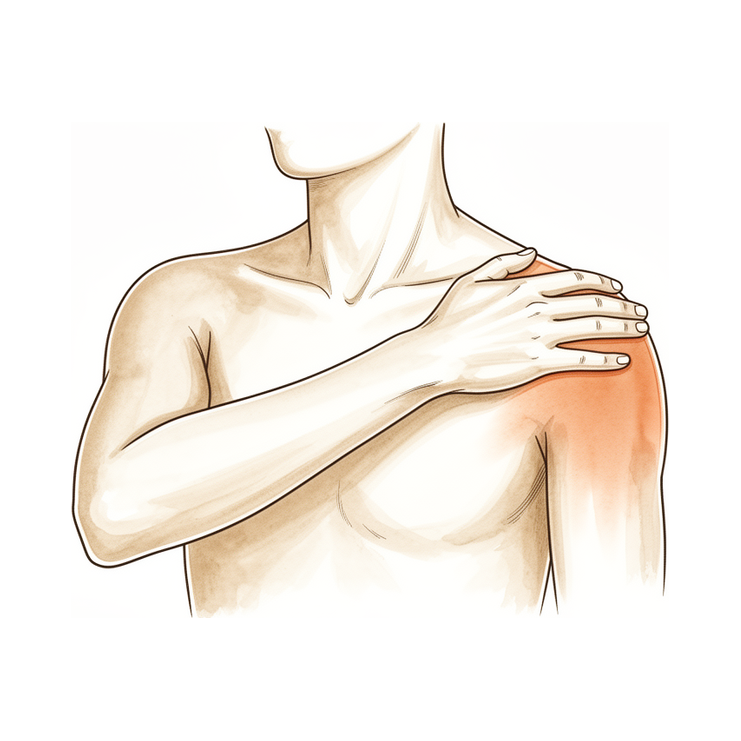
Ang protocol na ito ay nagsisilbing gabay sa iyong paggaling pagkatapos ng arthroscopic distal clavicle excision (tinatawag ding AC joint excision, o Mumford procedure) kasama si Dr Kieran Hirpara sa Mater Private Hospital Rockhampton. Ang bawat phase sa ibaba ay nagsisimula sa isang paliwanag sa simpleng Ingles tungkol sa mga pinakamahalagang bagay, na sinusundan ng structured protocol na isinulat para sa iyong physiotherapist; dalhin ang pahinang ito o ang PDF nito sa iyong unang pagbisita sa physiotherapy upang manatiling coordinated ang iyong rehabilitasyon. Ipapasa ka ng iyong physiotherapist sa mga phase base sa kung paano bumubuti ang iyong balikat, at hindi base sa kalendaryo.
Ang protocol na ito ay para sa isang isolated distal clavicle excision. Kung ang iyong operasyon ay kinabilangan din ng rotator cuff repair, sundin ang rotator cuff repair protocol sa halip, dahil ang inoperahang tendon ay nangangailangan ng mas mabagal na pace. (Ang distal clavicle excision ay karaniwan ding isinasabay sa subacromial decompression; ang protocol sa ibaba ay naaangkop din sa kasong iyon.)
Kung mayroon kang anumang alalahanin tungkol sa iyong sugat pagkatapos ng operasyon, makipag-ugnayan sa mga rooms. Madalas na nakatutulong ang pagkuha ng larawan ng sugat at pag-email nito para masuri.
Ano ang dapat asahan
Ang distal clavicle excision ay nagtatanggal ng ilang milimetro ng buto mula sa dulo ng collarbone, upang ang mga gasgas na surface ng AC joint (ang maliit na joint sa itaas ng iyong balikat) ay hindi na magkiskisan. Walang anumang inayos na kailangang protektahan habang gumagaling, kaya mabilis ang rehabilitasyon: ang sling ay para sa comfort lamang at karamihan sa mga tao ay hindi na ito ginagamit sa loob ng unang isang o dalawang linggo, ang paggalaw ay nagsisimula agad, at ang mga nailathalang protocol para sa operasyong ito ay pawang nagtutulak tungo sa maagang paggalaw sa halip na pahinga.
May dalawang bagay na espesipiko sa operasyong ito at humuhubog sa protocol:
- Ang pag-abot sa tapat ng iyong katawan ang pinakamabagal na gumagalaw. Ang mga cross-body (horizontal adduction) na paggalaw ay nag-compress sa area kung saan tinanggal ang buto, kaya madalas itong huling mga paggalaw na nagiging komportable. Sa simula, sadyang iniwasan ang mga ito, pagkatapos ay unti-unting ibinabalik.
- Ang mabibigat na pag-press ang huli. Ang mga ehersisyo na nagbibigay ng matinding load sa AC joint (bench press, dips at push-ups) ang mga huling ibinabalik, karaniwan ay pagkalipas ng tatlo hanggang apat na buwan. Karamihan sa iba pang mga aktibidad ay nababalikan bago pa iyon.
Ang paglalakbay sa isang sulyap:
- Phase I — Maagang paggaling at paggalaw — linggo 0–2
- Phase II — Pagbabalik ng iyong range — linggo 2–6
- Phase III — Pagpapalakas at pagbabalik sa aktibidad — linggo 6–12
- Phase IV — Pagbabalik sa buong aktibidad — linggo 12 pataas
Karamihan sa mga tao ay ginagamit na ang braso para sa mga magagaan na pang-araw-araw na gawain sa loob ng unang dalawang linggo, nakakabalik sa karamihan ng mga normal na aktibidad sa loob ng apat hanggang anim na linggo, at nakakabalik sa sports at mas mabibigat na trabaho sa pagitan ng walo at labindalawang linggo. Ang mga atleta sa mga repetitive overhead sports (paghagis, paglangoy, tennis) ay karaniwang mas matagal nang kaunti, sa range na dalawa hanggang apat na buwan.
Phase I — Maagang paggaling at paggalaw (Linggo 0–2)
Kieran Hirpara 4.0
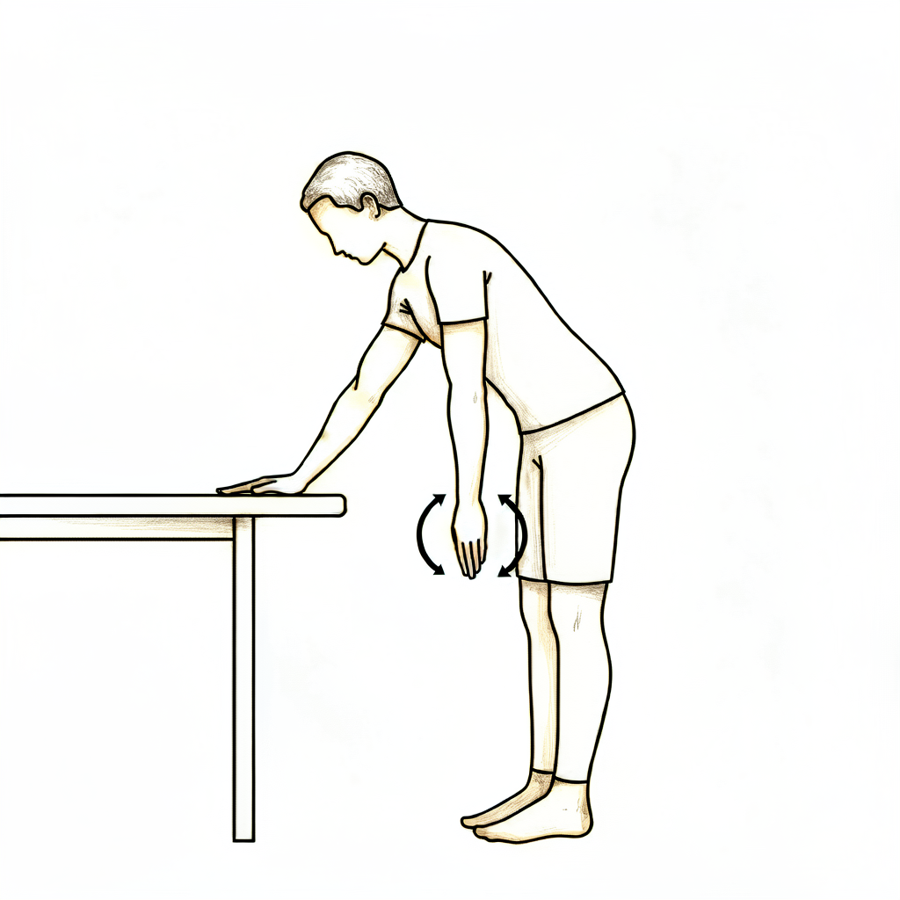
Ehersisyong pendulum
Yumuko pasulong mula sa baywang at hayaang nakabitin nang dahan-dahan ang inoperahang braso palayo sa katawan. Hayaang umugoy ang braso sa maliliit at relax na bilog — ang paggalaw ay nagmumula sa iyong katawan, hindi sa mga kalamnan ng balikat. Simulan ito mula sa unang araw at manatili sa antas na komportable.
Home program 3–5 beses araw-araw
Kieran Hirpara 4.0
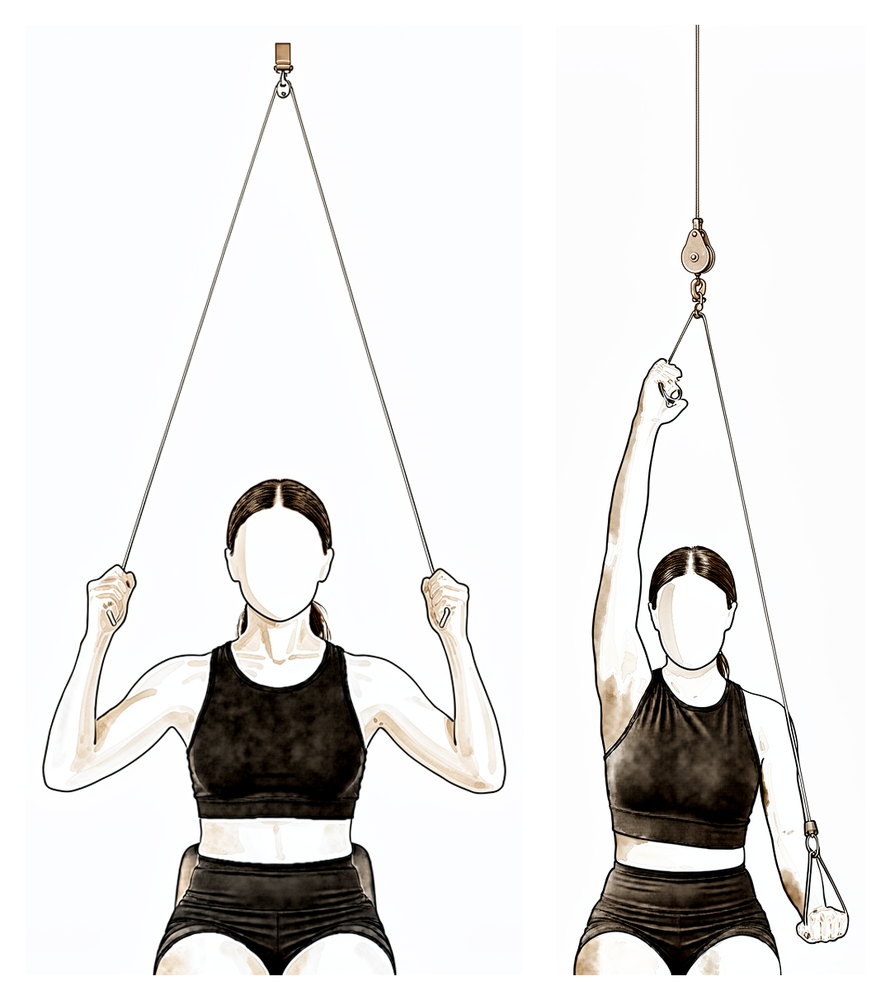
Pag-angat na may tulong ng pulley
Umupo sa ilalim ng isang over-door pulley habang humahawak ng handle sa bawat kamay. Hilahin pababa gamit ang mabuting braso upang maitaas ang inoperahang braso, hayaan itong manatiling relaxed, pagkatapos ay ibaba ito nang may kontrol. Gawin ito sa antas na komportable at unti-unting dagdagan ang taas ayon sa kakayahan.
Home program 3–5 beses araw-araw
Kieran Hirpara 4.0
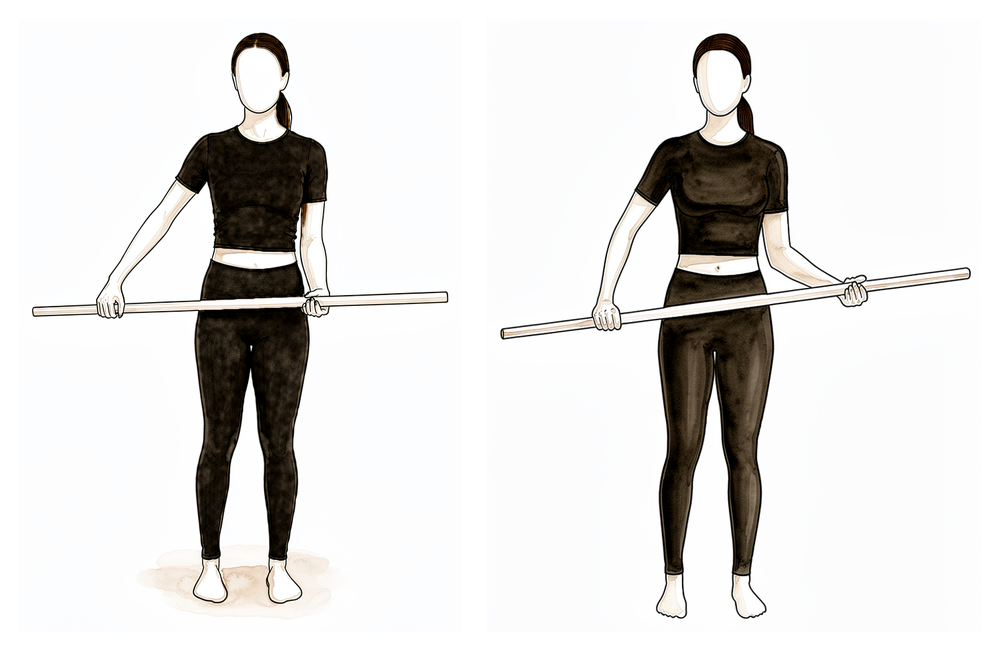
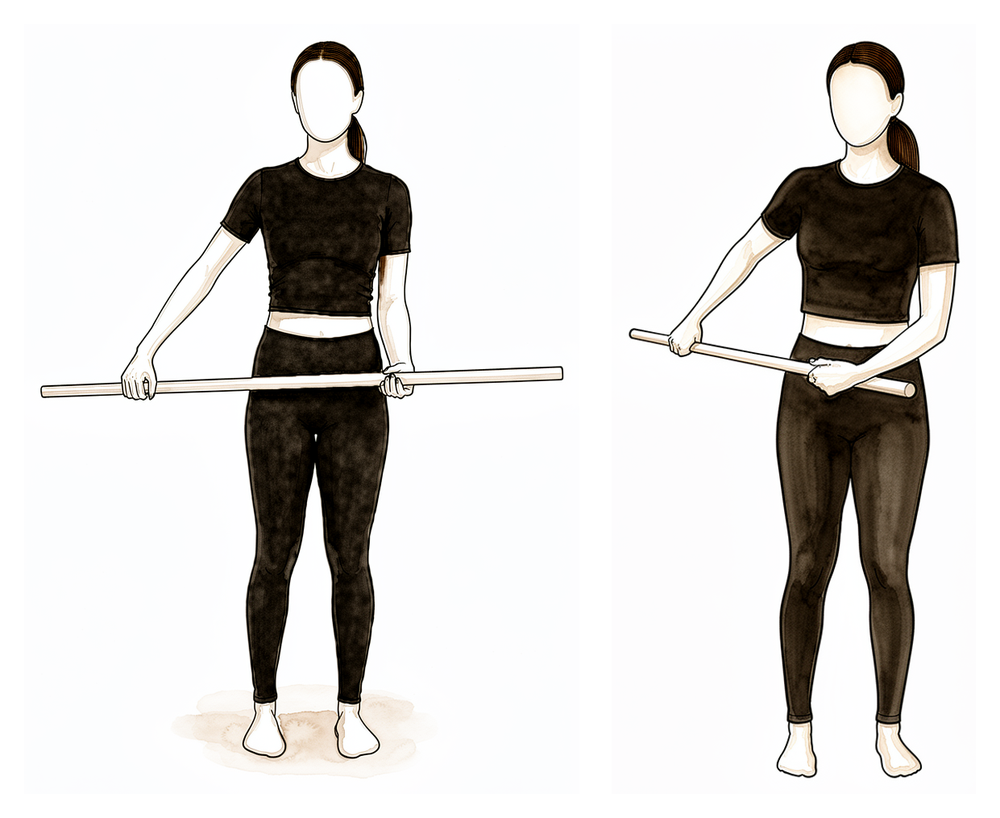
Wand-assisted external rotation
Humiga nang nakatihaya habang hawak ang isang tungkod o stick sa magkabilang kamay na ang mga siko ay nakabaluktot sa right angle at nakadikit sa iyong mga gilid. Gamitin ang maayos na braso upang dahan-dahang itulak ang forearm na inoperahan palabas, palayo sa katawan, pagkatapos ay ibalik ito. Panatilihing relax ang braso na inoperahan at hayaang ang stick ang gumawa ng trabaho.
Home program 3–5 beses araw-araw
Kieran Hirpara 4.0
Internal rotation sa likuran
Humawak ng stick o tungkod sa likod, kung saan ang operadong kamay ay nasa ibaba at ang maayos na kamay ay nasa itaas. Gamitin ang maayos na braso upang dahan-dahang hilahin ang operadong kamay pataas sa likod, pagkatapos ay ibaba ito. Gumalaw ayon sa iyong komportableng kapasidad — ang direksyong ito ay unti-unting babalik.
Home program 3–5 beses araw-araw
Kieran Hirpara 4.0
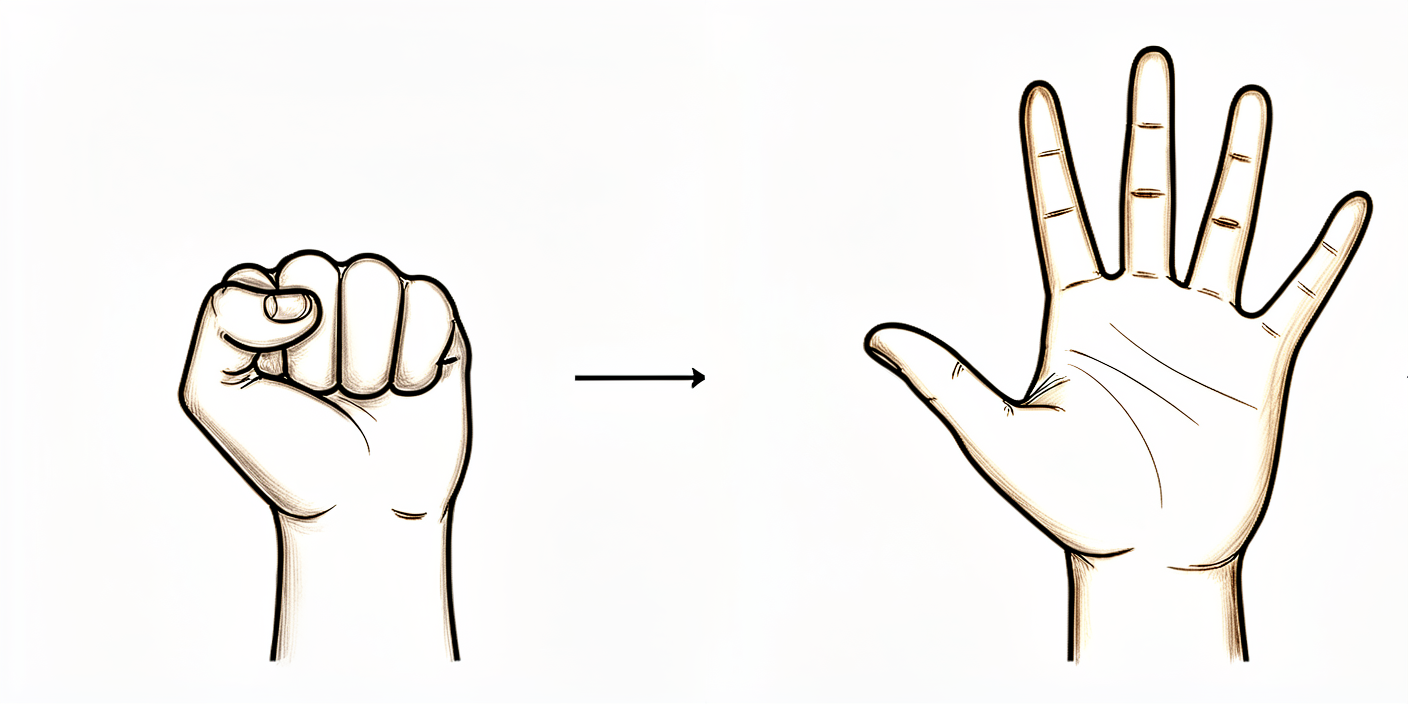
Pagpapalakas ng grip (kapit)
Gumawa ng isang buong kamao, pagkatapos ay iunat ang mga daliri. Maaaring pumiga ng isang soft ball o nakabilot na medyas para sa grip work. Panatilihing gumagalaw ang siko, pulso, at kamay mula sa unang araw.
Ayon sa gabay ng iyong physiotherapist
Kieran Hirpara 4.0
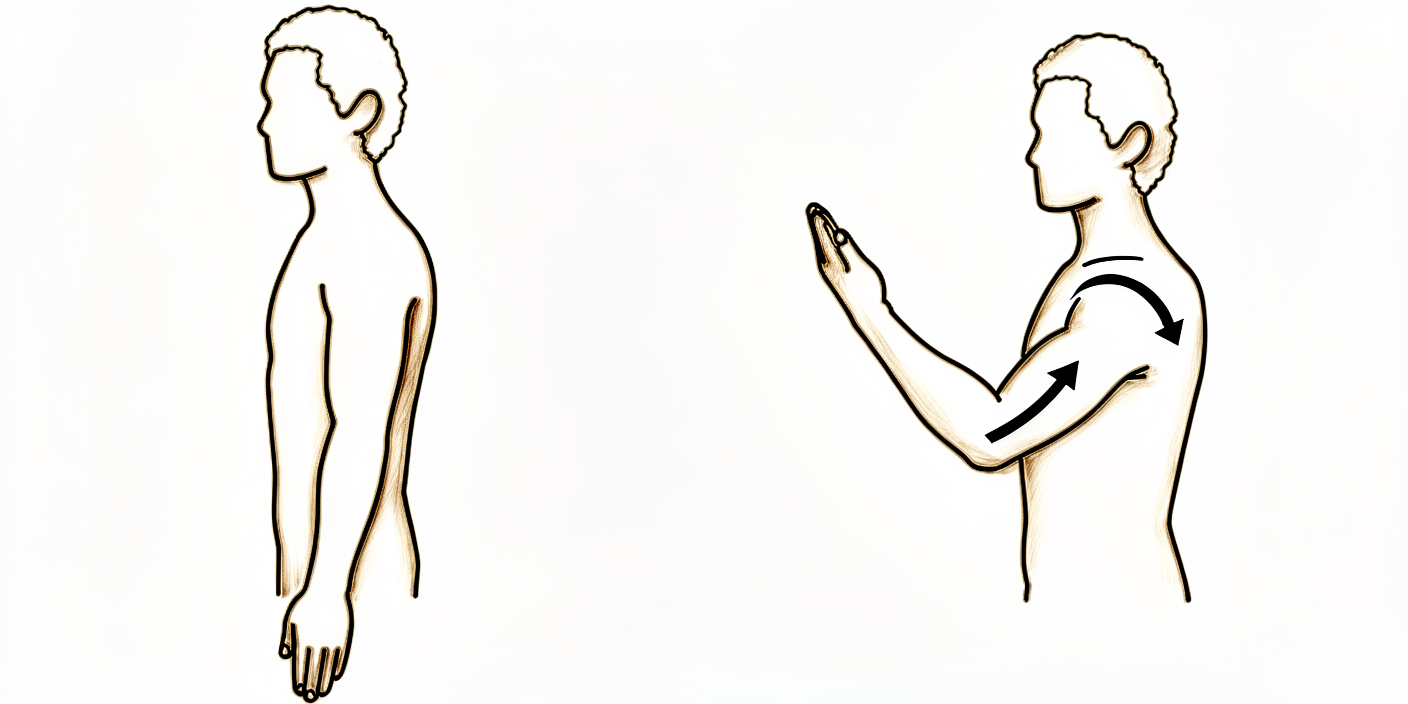
Pagbaluktot ng siko
Habang nakapahinga ang itaas na bahagi ng braso sa iyong tabi, itiklop ang siko hanggang sa kung saan ito komportableng makakarating, pagkatapos ay ituwid ito nang lubos. Siko lamang ang gumagalaw — panatilihing relax ang balikat. Panatilihing gumagalaw ang siko, forearm, pulso at kamay mula sa unang araw.
Ayon sa gabay ng iyong physiotherapist
Kieran Hirpara 4.0
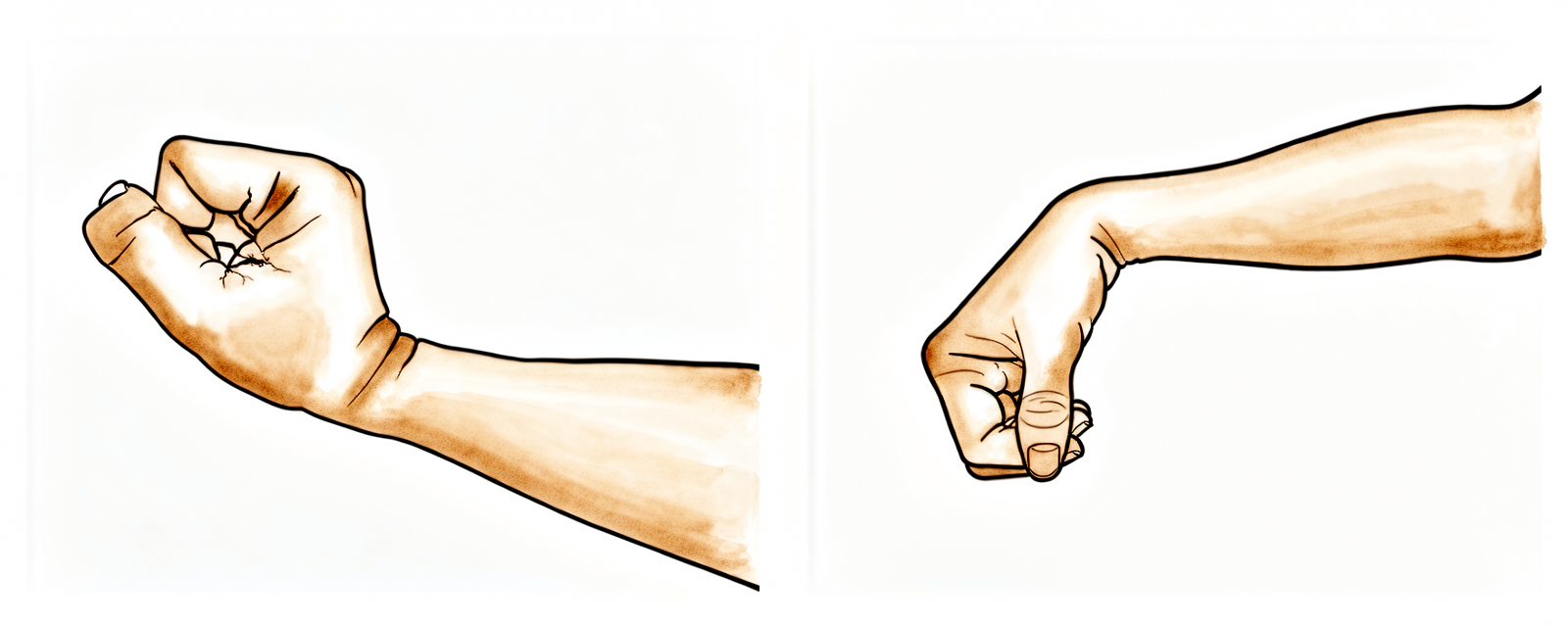
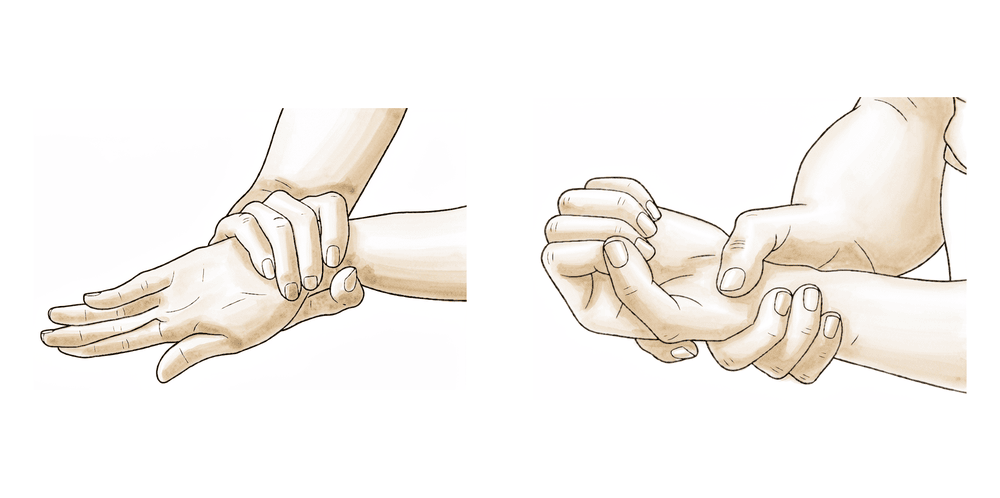
Paggalaw ng pulso
Panatilihing gumagalaw ang iyong pulso sa pamamagitan ng pagbaluktot nito pasulong, pabalik, at sa magkabilang gilid, habang ang braso ay wala sa sling. Ang pagpapanatiling gumagana ng buong braso mula sa unang araw ay nakatutulong upang kumalma ang balikat.
Ayon sa gabay ng iyong physiotherapist
Kieran Hirpara 4.0
Rotasyon ng forearm
Habang ang siko ay nakadikit sa iyong gilid at nakabaluktot sa isang right angle, iharap ang palad paitaas sa kisame at pagkatapos ay paibaba sa sahig. Panatilihing gumagalaw ang forearm mula sa unang araw habang nagpapahinga ang balikat.
Ayon sa gabay ng iyong physiotherapist
Kieran Hirpara 4.0
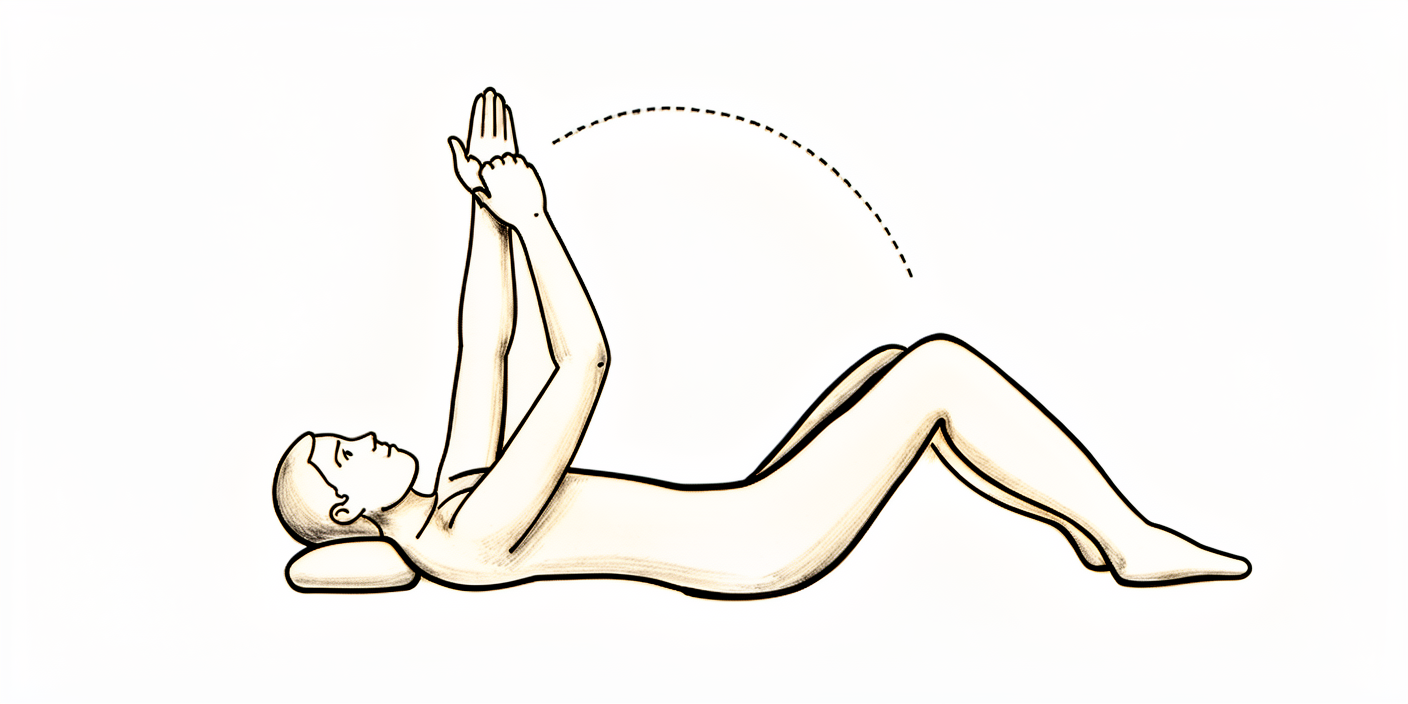
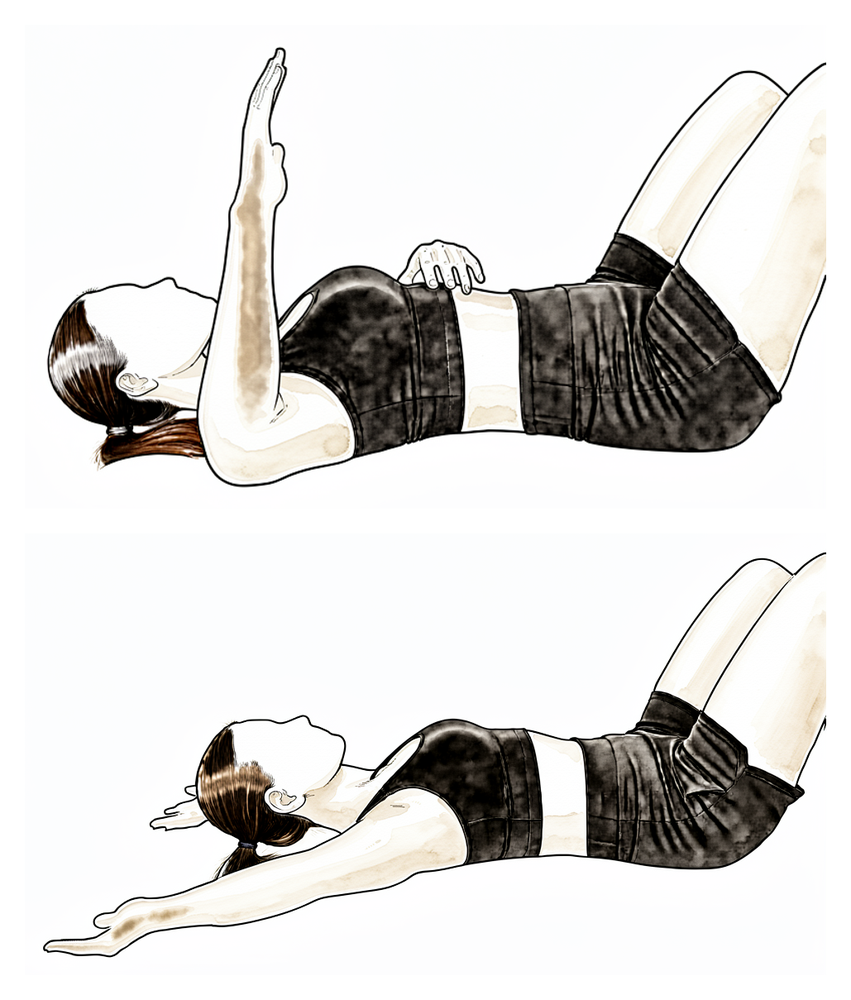
Tinutulungang forward elevation (nakahiga)
Humiga nang patihaya at gamitin ang iyong maayos na braso upang tulungang iangat ang inoperahang braso paitaas sa ibabaw ng ulo bilang isang banayad na stretch, pagkatapos ay ibaba ito pabalik habang tinutulungan pa rin ng maayos na braso. Ang paghiga ay nagpapahintulot sa gravity na tumulong at pinapanatiling relax ang mga kalamnan ng balikat. Gawin ito hanggang sa antas na komportable ka.
Home program 3–5 beses araw-araw
Kieran Hirpara 4.0
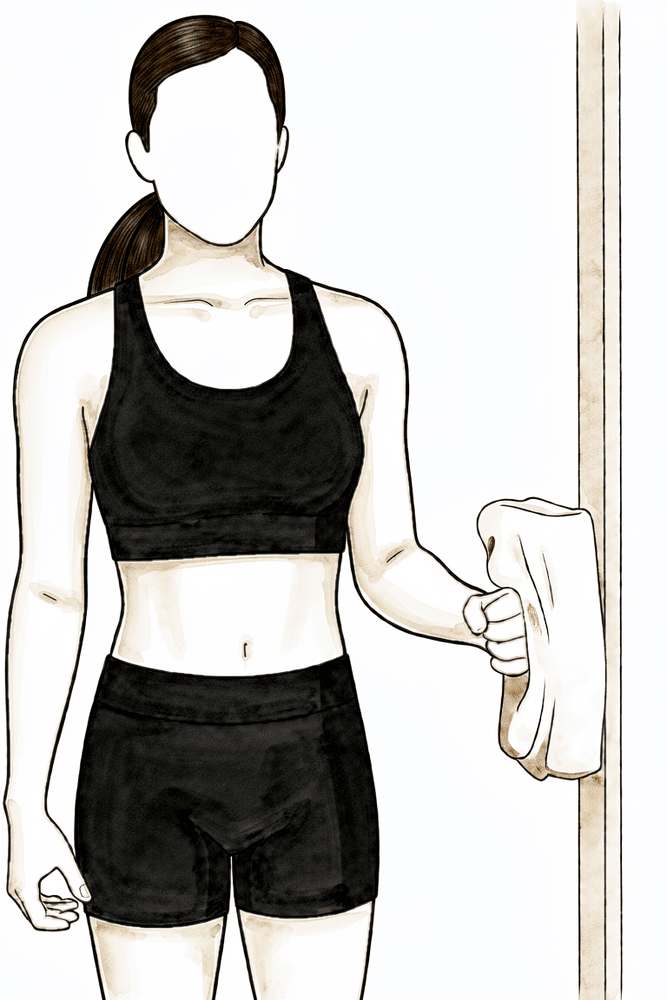
Isometric external rotation
Tumayo nang nakadikit ang iyong siko sa iyong gilid at nakabaluktot sa isang right angle, ang likod ng iyong kamay ay nakasandal sa pader o hamba ng pinto. Dahan-dahang itulak ito palabas nang hindi hinahayaang gumalaw ang braso, manatili sa posisyong ito ng ilang segundo, pagkatapos ay i-relax. Ito ay isang banayad na isometric lamang — dapat ay walang paggalaw at walang strain. Manatili sa antas na komportable.
Ayon sa gabay ng iyong physiotherapist
Kieran Hirpara 4.0
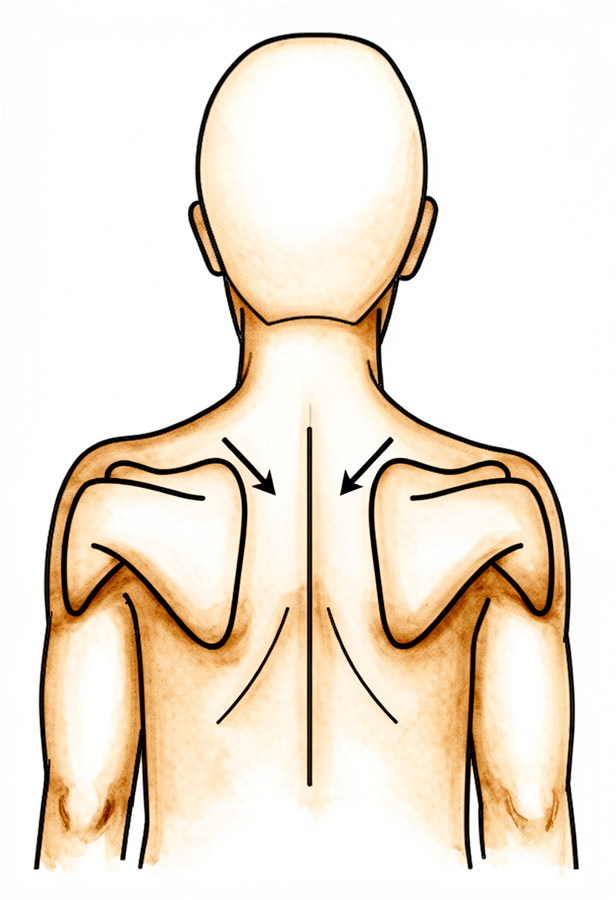
Pag-aayos ng scapula (Scapular setting)
Habang nakaupo o nakatayo nang tuwid, dahan-dahang hilahin ang iyong mga shoulder blade pabalik at pababa, palayo sa iyong mga tainga. Manatili sa posisyong ito ng ilang segundo, pagkatapos ay mag-relax. Ang tamang shoulder-blade rhythm mula sa simula ay nakatutulong upang mas maging epektibo ang natitirang bahagi ng programa.
Ayon sa gabay ng iyong physiotherapist
Ang unang dalawang linggo ay para sa pagpapakalma ng sakit at pamamaga habang pinagagalaw ang balikat. Gumamit ng ice nang regular: tatlo hanggang apat na beses sa isang araw ang karaniwan sa unang linggo o dalawa. Ang sling ay para lamang sa ginhawa: isuot ito hangga't nakakatulong, madalas na ilabas ang braso, at itigil ang paggamit nito sa sandaling komportable ka na nang wala ito. Maraming tao ang nakakahanap na pinaka-kapaki-pakinabang ito kapag nasa labas ng bahay, upang maiwasan na mabunggo ang braso. Huwag magmaneho sa loob ng hindi bababa sa anim na linggo pagkatapos ng anumang operasyon sa balikat, kahit wala na ang sling; bibigyan ka ng pahintulot ng iyong surgeon na magmaneho, karaniwan sa review sa ika-anim na linggo.
Magsimulang gumalaw agad: ang iyong siko, pulso at kamay ay dapat gumagalaw mula sa unang araw, kasama ang banayad na pendulum exercises at assisted shoulder movements (gamit ang iyong kabilang braso, isang stick o isang pulley upang tulungan ang inoperahang braso na itaas at ilabas). Inumin ang iyong mga painkiller bago ang iyong mga ehersisyo at bago ang mga appointment sa physiotherapy. Ang isang paggalaw na dapat iwasan muna ay ang pag-abot sa tapat ng iyong katawan patungo sa kabilang balikat.
Para sa iyong physiotherapist:
Mga Layunin
- Pakalmahin ang sakit at pamamaga
- Maagang range of motion: humigit-kumulang 140° ng forward flexion at 40° ng external rotation sa gilid sa pagtatapos ng phase
- Pagiging independent sa home exercise program
Pamamahala
- Sling para sa ginhawa lamang: unti-unting bawasan at itigil sa loob ng unang 1–2 linggo, ayon sa ginhawa
- Cryotherapy 3–4 beses araw-araw, lalo na pagkatapos ng ehersisyo
- Agarang active range of motion ng leeg, siko, forearm, pulso at kamay
- Pendulum exercises mula sa unang araw
- Passive at active-assisted shoulder range of motion ayon sa kaya: forward elevation, external rotation at behind-the-back internal rotation, gamit ang mga pulley, wand o cane, at supine gravity-assisted positions
- Scapular setting at periscapular range of motion; atensyon sa scapulohumeral rhythm mula sa simula
- Grip strengthening; banayad na shoulder isometrics ayon sa kaya ng sakit
- Analgesia bago ang mga ehersisyo at physiotherapy sessions
- Home program na isinasagawa 3–5 beses araw-araw
Mga Pag-iingat
- Iwasan ang cross-body (horizontal) adduction
- Walang resisted shoulder exercise maliban sa banayad na isometrics
- Walang pagbubuhat nang higit sa magagaan na gamit sa araw-araw; walang weight-bearing gamit ang braso (pagtulak paitaas mula sa upuan o kama)
- Walang pagmamaneho sa loob ng anim na linggo (nalalapat ito sa anumang operasyon sa balikat)
Mga Pamantayan para sa pag-usad
- Itinigil na ang sling at kumakalma na ang sakit
- Komportableng assisted elevation hanggang humigit-kumulang 140° at external rotation hanggang humigit-kumulang 40°
Phase II — Pagbabalik ng iyong range (Linggo 2–6)
Kieran Hirpara 4.0
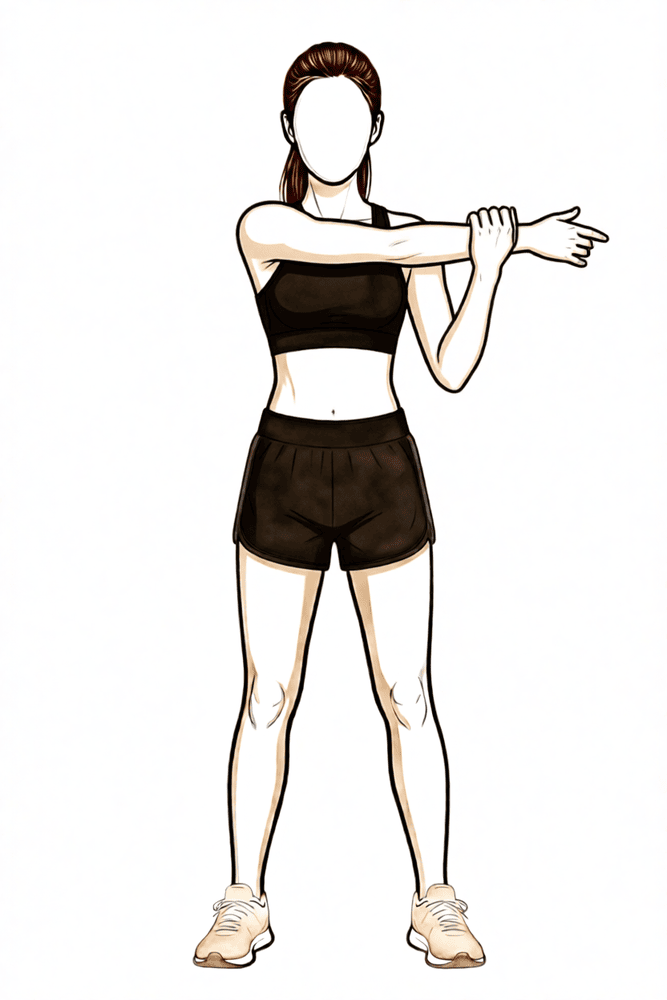
Cross-body stretch
Iposisyon ang inoperahang braso patawid sa iyong dibdib at gamitin ang kabilang kamay, na nakalagay sa itaas ng siko, upang dahan-dahang hilahin ito nang mas malayo patawid. Ibalik ito nang unti-unti, base sa iyong mga sintomas — ang ilang pakiramdam ng pagkurot sa dulo ng paggalaw ay karaniwan pagkatapos ng operasyong ito at nawawala sa paglipas ng panahon.
Ayon sa gabay ng iyong physiotherapist
Kieran Hirpara 4.0
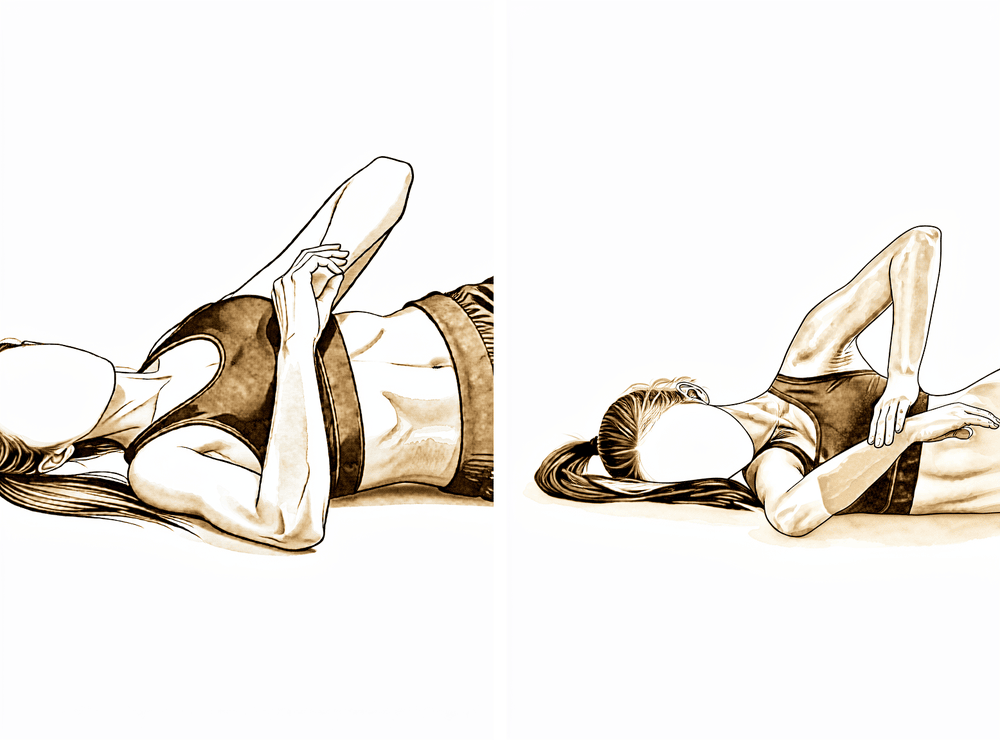
Sleeper stretch
Humiga sa panig na inoperahan na ang braso ay nakalawit sa harap at ang siko ay nakabaluktot sa isang right angle. Gamitin ang iyong malusog na kamay upang dahan-dahang itulak ang forearm pababa sa kama, hanggang sa makaramdam ng stretch sa likod ng balikat, pagkatapos ay luwagan ito. Ang banayad na posterior stretch na ito ay tumutulong upang maibalik ang kakayahang abutin ang likod. Mag-stretch hanggang sa makaramdam ng firm discomfort, hindi matalas na sakit.
Ayon sa gabay ng iyong physiotherapist
Kieran Hirpara 4.0
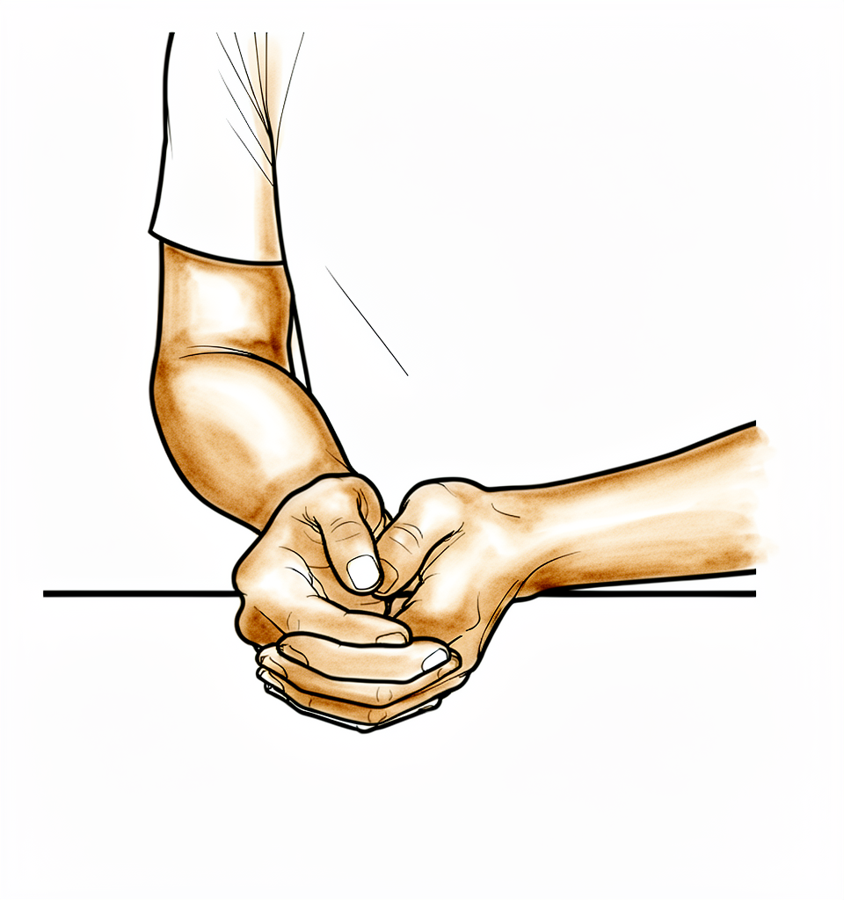
Band external rotation
Tumayo nang nakadikit ang iyong siko sa iyong tagiliran at nakabaluktot sa isang right angle, habang hawak ang isang elastic band na naka-angkla sa isang panig. Panatilihing nakadikit ang siko sa iyong tagiliran, i-rotate ang forearm palabas laban sa band, pagkatapos ay dahan-dahang ibalik. Magsimula kapag ang iyong paggalaw ay malapit na sa full range — gumawa ng mataas na repetitions na may light resistance.
Mataas na repetitions, mababang load; ayon sa gabay ng iyong physiotherapist
Kieran Hirpara 4.0
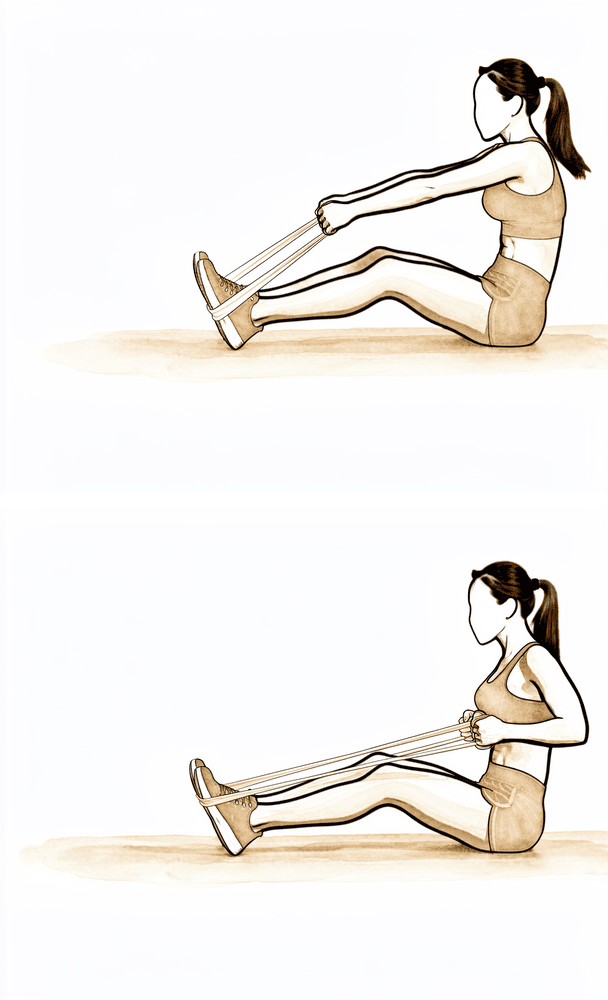
Low row
Humawak ng band na naka-angkla sa iyong harapan sa taas ng iyong baywang. Habang pinapanatiling medyo diretso ang braso, hilahin ito pabalik at pababa patungo sa iyong balakang, pigain ang shoulder blade pababa at pabalik, pagkatapos ay dahan-dahang ibalik. Binubuo nito ang mga kalamnan ng shoulder blade na nagpapatatag sa balikat habang bumabalik ang iyong lakas.
Mataas na repetitions, mababang load; ayon sa gabay ng iyong physiotherapist
Kieran Hirpara 4.0
External rotation sa 90/90 (nakahiga)
Humiga nang patihaya na ang braso ay nakalabas sa gilid sa taas ng balikat at ang siko ay nakatiklop sa isang right angle, na nakapatong sa isang unan. Dahan-dahang i-rotate ang forearm pabalik sa direksyon ng ulo hanggang sa kung saan ito komportable, pagkatapos ay ibalik ito nang may kontrol. Ibinabalik nito ang rotation sa nakataas na posisyon.
10 beses, ayon sa gabay ng iyong physiotherapist
Kieran Hirpara 4.0
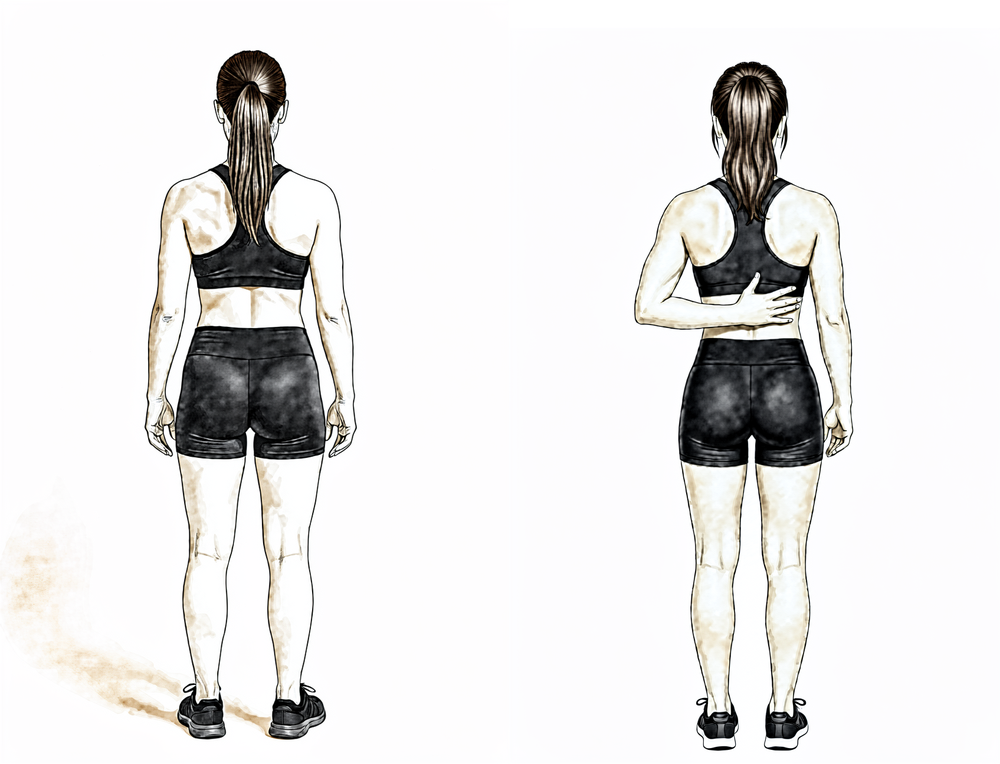
Pag-abot ng kamay sa likod
Habang nakatayo, ilagay ang likod ng iyong inoperahang kamay sa iyong ibabang bahagi ng likod at dahan-dahang i-slide ito pataas sa iyong spine hanggang sa kung saan ito komportable gamit ang sarili mong mga kalamnan, pagkatapos ay ibaba ito. Gumalaw lamang sa loob ng komportableng range at huwag itong pilitin.
Ayon sa gabay ng iyong physiotherapist
Sa pag-alis ng sling, ang phase na ito ay nagsasanay sa balikat tungo sa full movement sa lahat ng direksyon: assisted movements muna, pagkatapos ay gamit ang sariling lakas ng braso. Kapag ang iyong paggalaw ay malapit na sa full, magsisimula ang banayad na pagpapalakas ng rotator cuff at mga kalamnan ng shoulder blade gamit ang mga elastic band at light weights. Gamitin ang braso nang normal para sa mga pang-araw-araw na aktibidad, ngunit panatilihing katamtaman ang pagbubuhat (hindi hihigit sa humigit-kumulang 5 kg) at iwasan ang anumang bagay na umiipit o nagbibigay ng mabigat na load sa braso. Ang pag-abot sa tapat ng iyong katawan (reaching across your body) ay unti-unting ibabalik sa phase na ito ayon sa kakayahan; karaniwan ang pakiramdam ng kaunting pinching sa dulo ng paggalaw na ito at nawawala rin sa paglipas ng panahon. Maraming tao ang nakakahanap ng tulong sa paggamit ng heat bago ang stretching at ice pagkatapos, at ang mas magaan na lower-body exercise tulad ng paglalakad, exercise bike o jogging ay karaniwang nagpapatuloy mula sa ika-apat na linggo.
Para sa iyong physiotherapist:
Mga Layunin (Goals)
- Full, o near-full, active range of motion sa lahat ng planes sa pagtatapos ng phase
- Normalised scapulohumeral kinematics
- Simulan ang rotator cuff at periscapular strengthening kapag ang active range ay near full na
Pamamahala (Management)
- I-progress ang passive at active-assisted range of motion tungo sa active range sa lahat ng planes: flexion at scapular-plane elevation tungo sa full, external rotation sa gilid at sa 90° ng abduction ayon sa tolerance, internal rotation sa likod ng likod na may banayad na posterior capsular stretching
- Unti-unting ibalik ang cross-body adduction range, gabay ng mga sintomas
- Manual therapy at glenohumeral mobilisation ayon sa indikasyon
- I-progress mula sa isometrics tungo sa elastic-band rotator cuff at scapular stabiliser strengthening kapag ang active range of motion ay near full na: high repetitions, low load
- Heat bago at ice pagkatapos ng mga session ayon sa kagustuhan; analgesia bago ang mga ehersisyo
- Graduated return sa normal na pang-araw-araw na aktibidad; light lower-body conditioning (paglalakad, stationary bike, jogging) mula sa humigit-kumulang ika-4 na linggo
Mga Pag-iingat (Precautions)
- Panatilihing magaan ang pagbubuhat: humigit-kumulang 5 kg o mas mababa sa operated side
- Iwasan ang loaded end-range horizontal adduction at mga posisyon ng impingement
- Walang pressing exercises: bench press, dips, push-ups
- Ipagpaliban ang combined abduction–rotation (90/90) stretching kung ang balikat ay irritable
Mga Kraytirya para mag-progress (Criteria to progress)
- Full o near-full active range of motion nang walang makabuluhang discomfort
- Band strengthening ay tolerated nang walang flare-up ng sakit
Phase III — Pagpapalakas at pagbabalik sa aktibidad (Linggo 6–12)
Kieran Hirpara 4.0
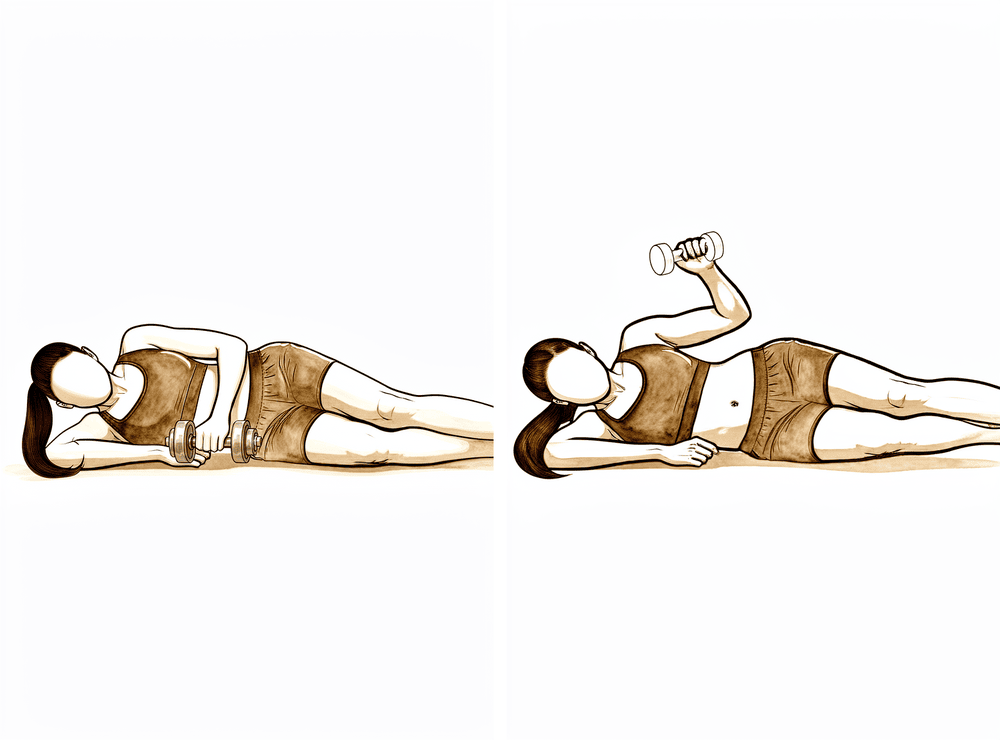
Side-lying external rotation na may weight
Humiga sa gilid na hindi naoperahan na ang siko ng itaas na braso ay nakatupi sa right angle at nakadikit sa iyong katawan. Habang humahawak ng magaan na pabigat, i-rotate ang forearm pataas patungo sa kisame, pagkatapos ay dahan-dahang ibaba. Ito ay pag-usad ng iyong pagpapalakas ng rotator cuff mula sa mga band patungo sa mga dumbbell.
2–3 set ng 8–15 repetitions, mababang load
Kieran Hirpara 4.0
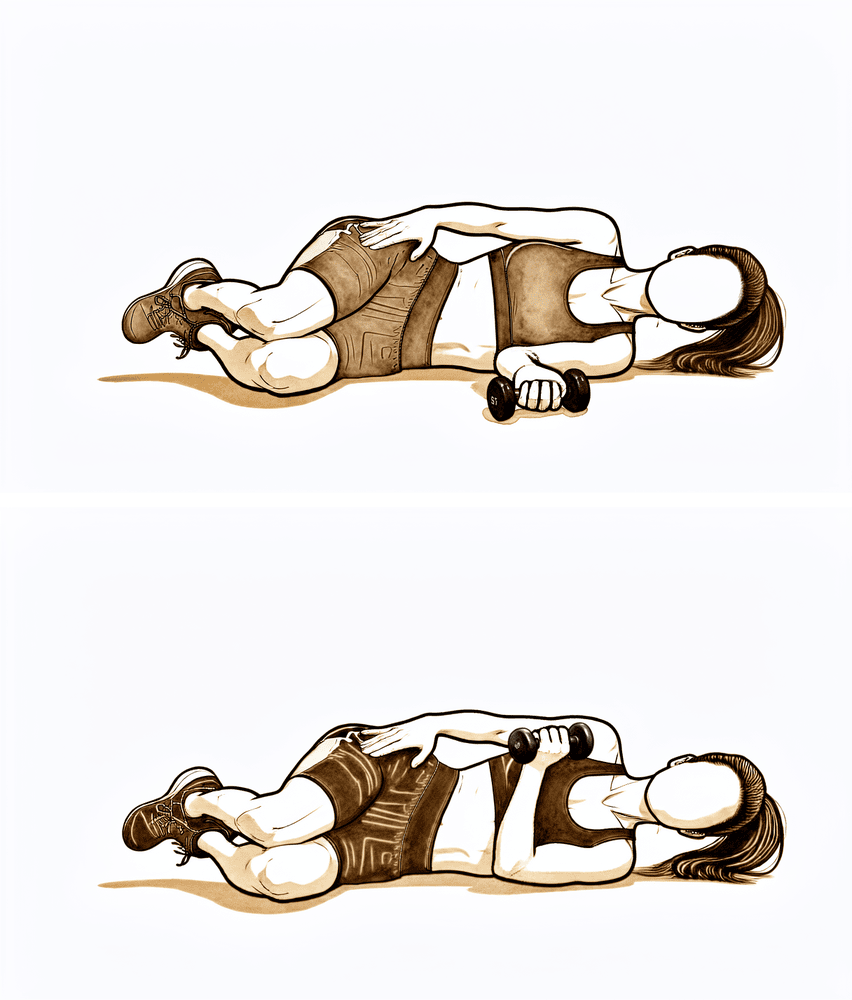
Side-lying internal rotation na may weight
Humiga sa panig na inoperahan na ang siko ay nakabaluktot sa right angle at nakadikit sa iyong katawan. Habang humahawak ng magaan na pabigat, iangat ang forearm patungo sa iyong katawan, pagkatapos ay dahan-dahang ibaba. Binabalanse nito ang pagpapalakas ng rotator cuff kasabay ng outward-rotation work.
2–3 set ng 8–15 repetitions, mababang load
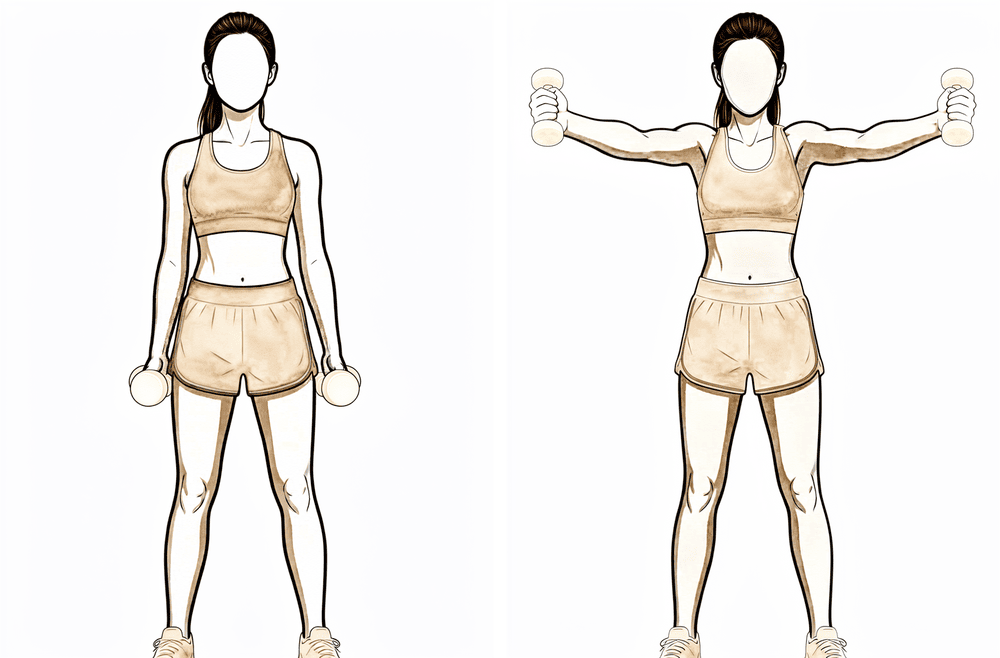
Kieran Hirpara 4.0
Full-can scaption
Tumayo nang may hawak na magaan na pabigat sa bawat kamay, ang mga braso ay bahagyang nakalabas sa iyong harapan sa anggulong humigit-kumulang 30 digri na may mga hinlalaking nakaturo pataas. Itaas ang mga braso hanggang sa taas ng balikat, pagkatapos ay dahan-dahang ibaba. Pinapalakas nito ang deltoid at rotator cuff nang magkasama sa isang komportableng mid-range.
2–3 set ng 8–15 repetitions, mababang load
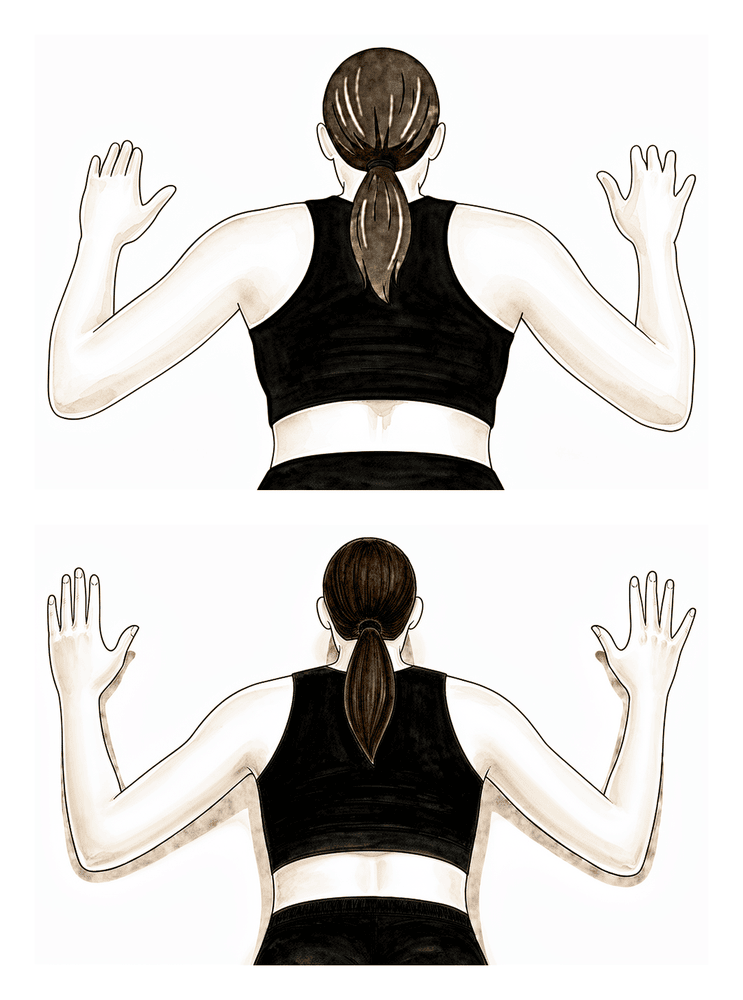
Kieran Hirpara 4.0
Prone W
Dapa nang nakaharap sa ibaba na ang mga braso ay nasa iyong mga gilid. Hatakin ang iyong mga siko pabalik at pababa patungo sa iyong mga balakang, na bumubuo ng hugis W, habang pinagdidikit ang iyong mga shoulder blade, pagkatapos ay dahan-dahang ibaba. Pinapalakas nito ang mga kalamnan sa ibabang bahagi ng shoulder blade na sumusuporta sa maayos na mekanika ng balikat.
2–3 set ng 8–15 repetitions
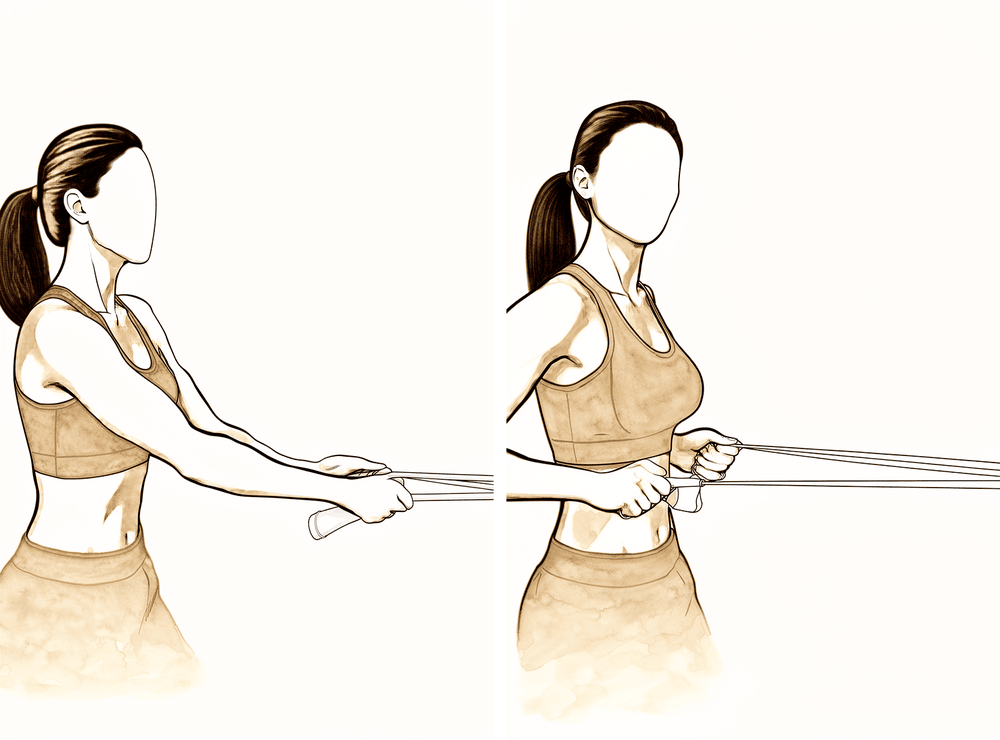
Kieran Hirpara 4.0
Standing row
Humawak ng band o magaan na pabigat sa iyong harapan at hilahin ito pabalik sa iyong katawan, habang hinihila ang siko sa iyong likuran at pinipiga ang shoulder blade papasok, pagkatapos ay dahan-dahang ibalik. Binubuo nito ang lakas ng mid-back at shoulder-blade na sumusuporta sa iyong balikat habang bumabalik ka sa iyong mga aktibidad.
2–3 set ng 8–15 repetitions
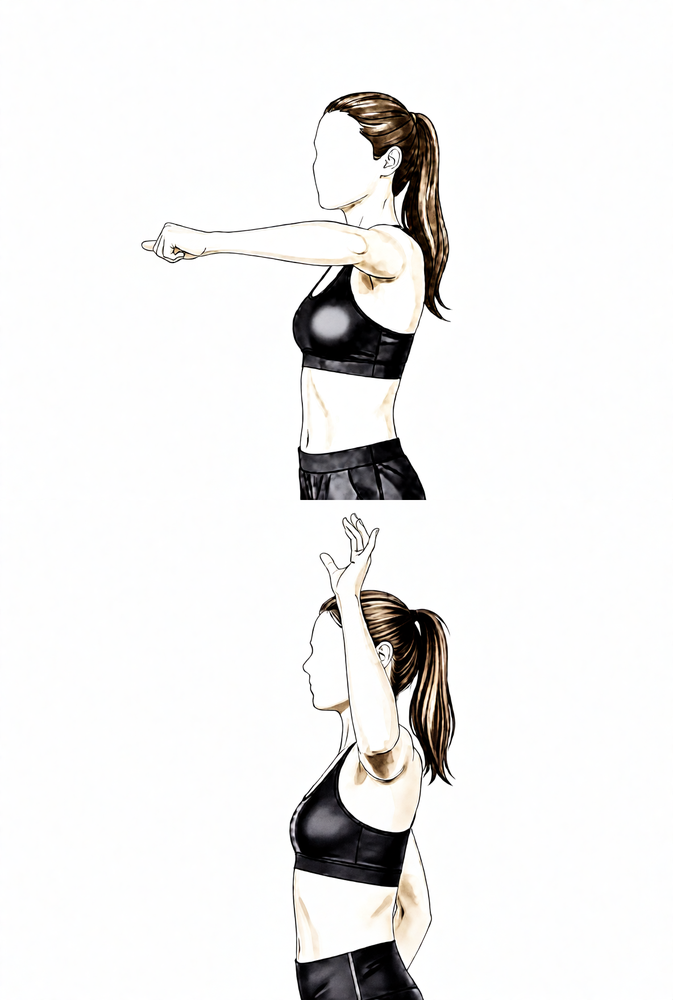
Kieran Hirpara 4.0
External rotation habang nakataas ang braso
Habang ang iyong braso ay nakalabas sa gilid sa taas ng balikat at ang iyong siko ay nakabaluktot nang 90°, i-rotate ang iyong forearm pataas at pabalik, pagkatapos ay ibalik ito nang may kontrol. Panatilihing swabe ang paggalaw at sa loob ng komportableng range. Sinasanay nito ang outward rotation sa nakataas na posisyon.
Gaya ng ginagabayan ng iyong physiotherapist — magaan at kontrolado
Sa pagbabalik ng buong paggalaw, ang atensyon ay nakatuon sa muling pagbuo ng lakas at pagbabalik sa iyong mga nakasanayang gawain. Ang resistance work ay uunlad mula sa mga band patungo sa mga dumbbell para sa rotator cuff, deltoid at mga kalamnan ng shoulder blade, at ang ehersisyo ay magiging mas functional: gym work, paglangoy, isang graduated throwing program para sa mga thrower, at isang staged return sa mga tungkulin sa trabaho at sport. Karamihan sa mga tao ay bumabalik sa sport at mas mabigat na trabaho sa phase na ito, sa pagitan ng humigit-kumulang walo at labindalawang linggo, na ginagabayan ng comfort at lakas sa halip na ng kalendaryo. Ang mga pressing exercise na pinaka-nagbibigay ng load sa AC joint (bench press, dips at push-ups) ang huling muling ipapakilala, simula sa magaan at mababaw.
Para sa iyong physiotherapist:
Mga Layunin
- Ibalik ang lakas, endurance at neuromuscular control ng shoulder girdle
- Graduated return sa mga tungkulin sa trabaho, recreational activity at sport-specific training
Pamamahala
- Progressive resistance para sa rotator cuff, deltoid at scapular stabilisers: bands patungo sa light dumbbells, karaniwang 2–3 sets ng 8–15 repetitions
- Magdagdag ng eccentric work, closed-chain exercise at, sa huling bahagi ng phase, plyometric drills kung may kaugnayan sa sport ng pasyente
- Functional at sport-specific training: paglangoy, interval throwing program para sa mga thrower, sport drills sa ilalim ng controlled conditions
- Graduated return sa buong tungkulin sa trabaho at sport, criteria-based
Mga Pag-iingat
- Huling muling ipakilala ang AC-loading presses (bench press, dips, push-ups): magsimula nang magaan, na may nabawasang range, at iwasang bumaba ang mga siko sa ibaba o sa likod ng linya ng katawan
- Ang progression ay nananatiling symptom-guided: ang isang irritable AC joint ay kumakalma sa pamamagitan ng maikling pagbawas sa load, hindi sa pamamagitan ng pagpilit
Mga Pamantayan para sa progression
- Buo at walang sakit na functional range of motion
- Walang sakit o tenderness sa operated area kapag may loading
- Lakas na papalapit na sa kabilang panig sa pagsusuri
Phase IV — Pagbabalik sa buong aktibidad (Ika-12 linggo onwards)
Kieran Hirpara 4.0
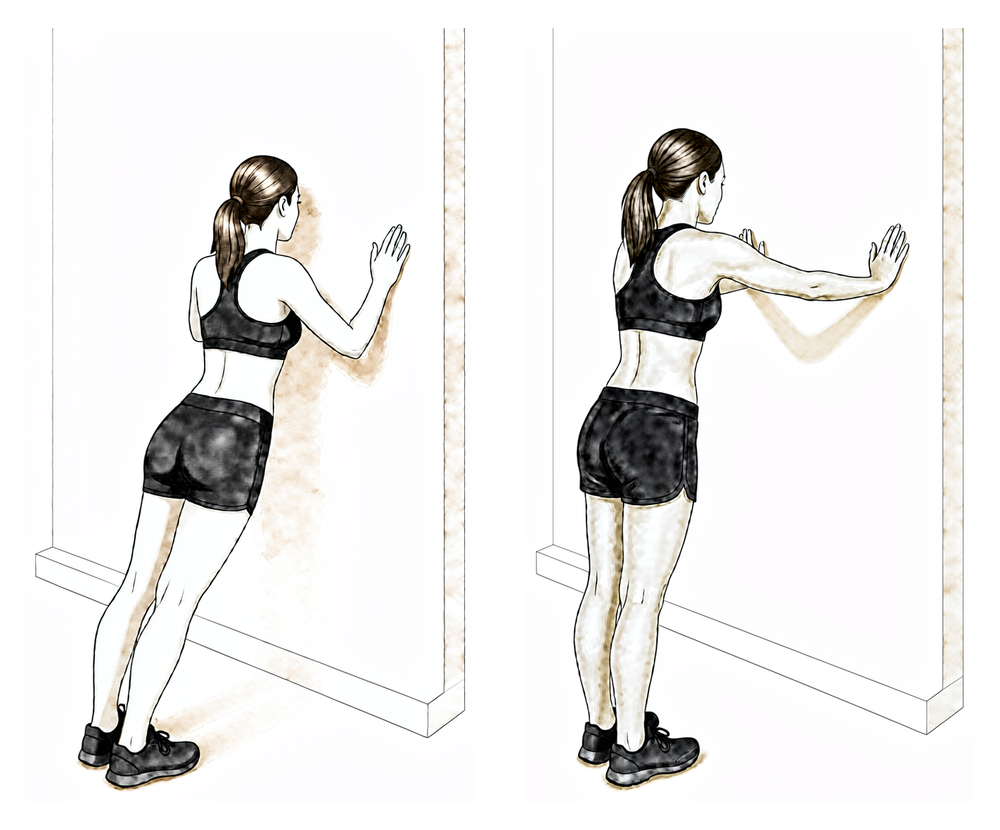
Push-up plus
Bahagi ito ng staged return to pressing, kaya ito ang huli. Magsimula nang nakasandal sa pader o mula sa mga tuhod na may mababaw na range, panatilihing hindi lumalagpas ang mga siko sa likod ng linya ng iyong katawan. Sa itaas ng bawat push-up, itulak nang bahagya pa upang mabilog ang itaas na bahagi ng likod, pagkatapos ay ibaba nang may kontrol. Dagdagan lamang ang lalim at load hangga't komportable ang AC joint — ang pagbabalik ng pananakit sa area ay nangangahulugang dapat bawasan ang intensity.
Ayon sa gabay ng iyong physiotherapist
Ang huling phase ay ang pagbabalik sa hindi limitado na aktibidad. Ang pang-araw-araw na buhay at karamihan sa mga sport ay karaniwang naibabalik nang mas maaga bago ang puntong ito; ang natitira na lamang ay ang pinakamabigat na antas ng loading. Ang pressing strength sa gym ay unti-unting ibinabalik, at ang pagbabalik sa dating performance sa bench press ay maaaring tumagal nang hanggang apat na buwan. Ang mga atleta sa mga repetitive overhead sports ay unti-unting ibinabalik sa loob ng humigit-kumulang dalawa hanggang apat na buwan mula sa operasyon. Ang buong pagbabalik sa sport at mabigat na trabaho ay kinukumpirma sa iyong follow-up review, base sa buong paggalaw, komportableng loading, at isang kasiya-siyang pagsusuri.
Para sa iyong physiotherapist:
Mga Layunin
- Hindi limitadong pagbabalik sa trabaho, gym, at sport
- Pagpapanatili ng shoulder girdle strength at mechanics sa long term
Pamamahala
- Isulong ang gym- at sport-specific conditioning ayon sa tolerance, kabilang ang progressive heavy pressing na may atensyon sa technique na naglilimita sa AC joint strain (controlled depth, ang mga siko ay hindi lumalampas sa likod ng body line)
- Kumpletuhin ang interval throwing at overhead-sport progressions kung naaangkop
Mga Pag-iingat
- Ang progression ay nananatiling symptom-guided: ang pabalik-balik na pananakit sa AC area sa isang partikular na lift ay hudyat upang i-adjust ang load o technique bago magpatuloy
Pagkatapos ng iyong protocol
Ang mga phase sa itaas ay hango sa mga nailathalang rehabilitation protocol para sa distal clavicle excision (Saint Louis University Department of Orthopaedic Surgery, University of Utah Sports Medicine, Sports Surgery New York, Palm Beach Orthopaedic Institute, OrthoVirginia at Specialty Physicians of Illinois), kung saan ang mga range ng linggo ay ipinahayag bilang tipikal sa halip na fixed. Ang iyong rehabilitation ay ginagabayan nang indibidwal ng iyong physiotherapist, katuwang ang practice, base sa kung paano nagpapagaling ang iyong balikat. Ang pahinang ito ay kasabay ng pangkalahatang payo sa paggaling ng practice; tingnan ang managing post-operative pain at wound care. Para sa operasyon mismo, tingnan ang distal clavicle excision.
Ang klinikal na ebidensya sa likod ng operasyong ito at ng rehabilitasyon nito (kabilang ang paghahambing ng open-versus-arthroscopic, kung gaano karaming buto ang tinatanggal at bakit, at ang mga nailathalang protocol na ginamit sa pahinang ito) ay binuod kasama ang mga kumpletong sanggunian sa seksyon ng ebidensya, na available bilang isang PDF mula sa itaas ng pahinang ito.
Evidence & references
This is the clinical evidence summary written for health professionals. It is technical, and it lists the research this page was built from. You do not need to read it to understand your treatment or to make a decision about it.
Distal Clavicle Excision (Mumford) — Surgical Rationale & Post-operative Rehabilitation
Topic scope: the evidence underpinning distal clavicle excision (DCE) — also called distal clavicle resection, AC joint excision, or the Mumford procedure — for the two main indications (acromioclavicular [AC] joint osteoarthritis and distal clavicular osteolysis, the "weightlifter's shoulder"), and the post-operative rehabilitation that follows. Covers open vs arthroscopic technique, direct vs indirect (bursal) approach, how much bone to resect, the iatrogenic-instability risk of over-resection, and the (consensus-based) phased rehab timeline.
Defining principle of the rehab here: DCE removes a few millimetres of worn bone from the end of the collarbone and repairs nothing that needs months of protection — provided the AC ligaments and superior/posterior capsule are preserved. So (like a debridement or subacromial decompression, and unlike a cuff repair, labral repair or AC-joint stabilisation) this is an early-motion pathway: a short sling for comfort only, movement from day one, strengthening as range returns. The single important caveat runs the other way: if the surgeon resects too much bone, or the stabilising AC ligaments/capsule are violated, the joint can become iatrogenically unstable — which is why technique (resection amount, ligament preservation) matters more here than the rehab calendar. The two operation-specific quirks the rehab respects are that cross-body (horizontal adduction) movement compresses the resected area and is the slowest to settle, and heavy pressing (bench press, dips, push-ups) loads the AC joint hardest and returns last.
A. THE OPERATION & ITS INDICATIONS
DCE removes the worn or eroded outer end of the clavicle so the acromion and clavicle no longer grind at the AC joint. Two indications dominate:
- AC joint osteoarthritis — degenerative wear, often with a history of prior AC injury or simply age-related change. Surgery follows failed non-operative care (activity modification, analgesia, AC joint corticosteroid injection).
- Distal clavicular osteolysis ("weightlifter's shoulder") — atraumatic, repetitive-microtrauma resorption of the distal clavicle seen in weightlifters and overhead athletes. Activity modification and rehabilitation are first-line; injection or surgery is reserved for refractory cases or athletes unwilling to stop loading [StatPearls 2023; Charron 1998].
DCE is frequently combined with subacromial decompression (for room/co-existing impingement) and the rehab is unchanged by that addition. If a rotator cuff repair is also performed, the slower protected cuff-repair pathway takes over.
B. EVIDENCE BY THEME
1. Open vs arthroscopic — equivalent long-term outcome, faster arthroscopic recovery
A randomised, prospective trial (Robertson et al., corpus, DOI 10.1016/j.jse.2006.10.006) and a systematic review (Pensak et al., Arthroscopy 2010) found similar long-term functional outcomes for open and arthroscopic DCE, with both arthroscopic techniques exceeding 90% good/excellent results. Across measures there was a trend toward earlier or better outcomes after arthroscopic treatment — less post-operative pain and a quicker return to daily activities — without a difference in the final result [Robertson RCT; Pensak SR 2010]. A second comparative cohort reached the same conclusion (corpus, DOI 10.1177/0363546511419633). Moderate (RCT + SR + cohort).
2. Direct vs indirect (bursal) arthroscopic approach — direct is faster
Among arthroscopic techniques, the direct (superior, top-down) approach permits a quicker return to athletic activity than the indirect/bursal approach, with equivalent long-term results — one comparison reporting a mean return to sport of ~21 days (direct) vs ~42 days (indirect) [Pensak SR 2010; arthroscopic-approach comparison]. Moderate.
3. How much bone to resect — and why over-resection is dangerous
This is the central technical controversy and the reason DCE rehab cannot be reduced to a calendar:
- The stabilising superior and posterior AC ligament/capsule runs from the anterior acromion to the posterior distal clavicle, and the coracoclavicular (trapezoid) ligament inserts on the clavicle undersurface roughly 22–25 mm from the tip [Renfree; capsule/ligament-insertion cadaveric study, corpus DOI 10.1016/j.arthro.2009.04.072; clavicular-strut cadaveric study, corpus DOI 10.1016/j.jse.2013.01.004].
- Anatomic work suggests as little as ~2.3–2.6 mm of resection can begin to violate the superior AC ligament [Renfree, via PMC6930955]; biomechanical models show AC joint anteroposterior translation increases after either open or arthroscopic excision, and stability falls as the resection lengthens [Blazar; resection-length biomechanical model, corpus DOI 10.1016/j.arthro.2007.07.004; DCE-vs-symmetric-resection biomechanics, corpus DOI 10.1177/0363546512469873].
- The practical consensus is to resect enough to abolish bony contact but no more — commonly quoted as ~5 mm (sufficient to clear contact in cadaveric models) up to ~8 mm, and not beyond ~8 mm, preserving the posterior/superior capsule and AC ligaments [PMC6930955; StatPearls 2023; resection-length biomechanics, corpus DOI 10.1016/j.arthro.2007.07.004].
- Over-resection or capsular violation can produce iatrogenic AC instability — a recognised (though uncommon) cause of persistent pain after DCE that may itself require ligament reconstruction [iatrogenic-instability case, PMC6930955; Painful Conditions of the AC Joint, corpus DOI 10.5435/00124635-199905000-00004].
Moderate (cadaveric/biomechanical + anatomic + expert consensus); exact safe threshold is debated.
4. Outcomes & return to activity
DCE is a reliable, high-satisfaction operation for the right indication — arthroscopic series report >90% good/excellent results [Robertson RCT; Pensak SR 2010]. For osteolysis in weightlifters, an arthroscopic-resection series reported return to sport at a mean of ~3 days and to the preoperative weight-training program at ~9 days, remaining asymptomatic and able to progress load beyond pre-operative levels at ~19-month follow-up [Charron, Am J Sports Med 1998, PMID 9548111]. Across the literature, most everyday activity returns within weeks and heavy pressing/overhead sport over ~3–4 months, consistent with the published rehab protocols. Moderate (cohort). A noted exception: worse ("poor") results cluster in patients with pre-existing post-traumatic AC instability or Workers'-Compensation claims [Pensak SR 2010] — DCE alone does not fix an unstable joint.
C. PHASED POST-OPERATIVE TIMELINE (isolated DCE ± subacromial decompression)
Week ranges are typical, not fixed — progression is criteria-based, guided by the physiotherapist.
| Phase | Window | Sling | ROM / use | Strengthening | Operation-specific notes |
|---|---|---|---|---|---|
| I — Early recovery & movement | Week 0–2 | Comfort only; weaned/discarded within 1–2 weeks | Elbow/wrist/hand + pendulums from day 1; passive + active-assisted shoulder elevation/ER/behind-the-back IR; scapular setting | Grip; gentle isometrics as pain allows | Avoid cross-body (horizontal) adduction — it compresses the resected area. No driving in the sling; no weight-bearing through the arm |
| II — Restoring range | Week 2–6 | Off | Progress assisted → active ROM to full in all planes; reintroduce cross-body adduction gradually (end-range pinching is common, settles) | Begin cuff + scapular band work once active range near full; lifting ≤ ~5 kg | Light lower-body conditioning (walk/bike/jog) from ~wk 4 |
| III — Strengthening & return | Week 6–12 | Off | Full functional ROM | Bands → dumbbells; functional + sport-specific; most return to sport/heavier work ~8–12 wk | Reintroduce AC-loading presses (bench/dips/push-ups) last — light, shallow depth, elbows not behind the body line |
| IV — Return to full activity | Week 12+ | Off | Full | Progressive heavy pressing; return to previous bench performance can take ~4 months; overhead athletes progressed over ~2–4 months | Symptom-guided — recurrent AC ache with a lift = adjust load/technique before progressing |
The phased structure is drawn from published surgeon/physiotherapy protocols (Saint Louis University; University of Utah Sports Medicine; Sports Surgery New York; Palm Beach Orthopaedic Institute; OrthoVirginia; Specialty Physicians of Illinois — see Citations). These are consensus/expert documents; no rehab RCT defines the optimal post-DCE regimen.
D. KEY CONTROVERSIES / EVIDENCE QUALITY
- How much bone to resect is the real debate, not the rehab. Too little leaves residual bony contact; too much risks iatrogenic instability. The safe window (~5–8 mm, capsule preserved) is supported by cadaveric/biomechanical and anatomic work, not by an RCT — exact thresholds vary by source. Moderate, technique-dependent.
- Open vs arthroscopic, direct vs indirect. Long-term outcomes converge; arthroscopic (and specifically the direct approach) recovers faster. Moderate (RCT + SR).
- Patient selection matters more than approach. Pre-existing AC instability and Workers'-Compensation status predict poorer results — DCE treats a worn/eroded joint, not an unstable one. Moderate.
- The rehab protocol itself is consensus. Phase timings come from surgeon patient-guidance protocols, not a rehab trial. Weak/consensus.
E. EVIDENCE STRENGTH FLAGS (summary)
- MODERATE (RCT / SR): open vs arthroscopic equivalence with faster arthroscopic recovery (Robertson RCT; Pensak SR 2010, >90% good/excellent); direct > indirect for return speed.
- MODERATE (cadaveric / biomechanical / anatomic): resection-length vs stability relationship and the iatrogenic-instability mechanism (resection-length model, corpus DOI 10.1016/j.arthro.2007.07.004; DCE-vs-symmetric biomechanics, corpus DOI 10.1177/0363546512469873; capsule/ligament insertions, corpus DOI 10.1016/j.arthro.2009.04.072).
- MODERATE (cohort): osteolysis-in-weightlifters return-to-sport (Charron 1998); high overall satisfaction; poorer results with pre-existing instability / WorkCover.
- WEAK / CONSENSUS: the post-operative rehabilitation protocol (surgeon patient-guidance documents; no defining rehab RCT); the exact "safe" resection threshold.
CITATIONS
RAG corpus (180,000+ Orthopaedic articles)
- Robertson WJ, et al. Arthroscopic versus open distal clavicle excision: comparative results at six months and one year from a randomized, prospective clinical trial. J Shoulder Elbow Surg. 2007. DOI: 10.1016/j.jse.2006.10.006
- Arthroscopic versus open distal clavicle excision (comparative cohort). Am J Sports Med. 2011. DOI: 10.1177/0363546511419633
- The biomechanical stability of distal clavicle excision versus symmetric acromioclavicular joint resection. Am J Sports Med. 2013. DOI: 10.1177/0363546512469873
- Arthroscopic distal clavicle resection: a biomechanical analysis of resection length and joint compliance in a cadaveric model. Arthroscopy. 2007. DOI: 10.1016/j.arthro.2007.07.004
- Analysis of the capsule and ligament insertions about the acromioclavicular joint: a cadaveric study. Arthroscopy. 2009. DOI: 10.1016/j.arthro.2009.04.072
- Acromioclavicular joint ligamentous system contributing to clavicular strut function: a cadaveric study. J Shoulder Elbow Surg. 2013. DOI: 10.1016/j.jse.2013.01.004
- Painful conditions of the acromioclavicular joint. J Am Acad Orthop Surg (JAAOS). 1999. DOI: 10.5435/00124635-199905000-00004
Literature (URLs)
- Pensak M, et al. Open versus arthroscopic distal clavicle resection (systematic review; >90% good/excellent, direct > indirect return). Arthroscopy. 2010. PMID 20434670. https://pubmed.ncbi.nlm.nih.gov/20434670/
- Charron KM, et al. Arthroscopic distal clavicle resection for isolated atraumatic osteolysis in weight lifters (return to sport ~3 d, training ~9 d). Am J Sports Med. 1998. PMID 9548111. https://pubmed.ncbi.nlm.nih.gov/9548111/
- Distal clavicular osteolysis (cause, activity-modification first line, ~8 mm resection preserving AC ligaments). StatPearls. 2023. https://www.ncbi.nlm.nih.gov/books/NBK582148/
- Distal clavicular augmentation with AC and CC ligament reconstruction in iatrogenic AC instability (~5 mm safe-resection guidance; Renfree ~2.3–2.6 mm violates superior AC ligament; trapezoid 22–25 mm from tip; Blazar AP-translation increase). PMC6930955. https://pmc.ncbi.nlm.nih.gov/articles/PMC6930955/
- A sports medicine clinician's guide to the diagnosis and management of distal clavicular osteolysis. PubMed. https://pubmed.ncbi.nlm.nih.gov/37294199/
- Distal clavicular osteolysis (review). Physiopedia. https://www.physio-pedia.com/Distal_Clavicular_Osteolysis
Published rehab protocols (patient-guidance — basis for the phase structure)
- Saint Louis University Dept of Orthopaedic Surgery. Subacromial Decompression / Distal Clavicle Excision Rehab Protocol. https://www.slu.edu/medicine/orthopaedic-surgery/sports-medicine/-pdf/shoulder-subacromial-decompression-and-distal-clavicle-excision.pdf
- Burks RT. Distal Clavicle Resection/Mumford Post-Op Protocol. University of Utah Sports Medicine. https://www.robertburksmd.med.utah.edu/pdfs/distal-clavicle-resection-mumford-protocol.pdf
- Sports Surgery New York. Arthroscopic Subacromial Decompression / Distal Clavicle Excision Rehab Protocol. https://www.sportssurgerynewyork.com/pdf/arthroscopic-subacromial-decompression-distal-clavicle-excision-rehab-protocol.pdf
- Hill B. Rehabilitation Protocol: Distal Clavicle Excision. Palm Beach Orthopaedic Institute. https://www.pboi.com/pdf/hill-pt-distal-clavicle-excision.pdf
- Eastwood D. Distal Clavicle Resection Therapy Protocol. OrthoVirginia. https://www.orthovirginia.com/wp-content/uploads/2022/09/Eastwood-distal-clavicle-resection-PT-protocol.pdf
- Mahylis JM. Distal Clavicle Excision Rehabilitation Protocol. Specialty Physicians of Illinois. https://jaredmahylismd.com/pdfs/distal-clavicle-excision-rehabilitation-protocol.pdf