Patients › Hand
Mallet Finger
Mallet finger causes fingertip drooping after extensor tendon injury; splinting is key, surgery occasionally needed.
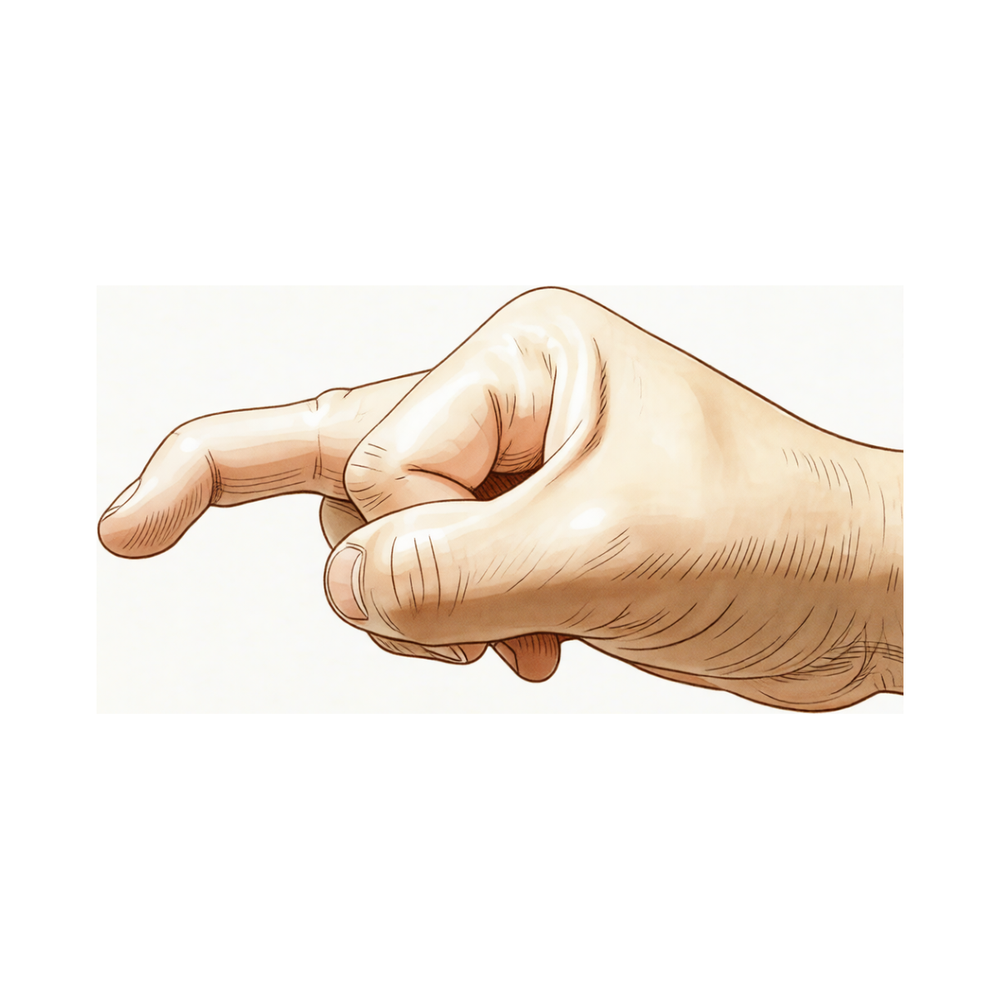
Ang iyong nararamdaman
Sa mallet finger, lumalaylay ang huling kasukasuan (joint) ng iyong daliri at hindi mo kayang ituwid ang dulo ng daliri nang mag-isa. Karaniwan ay nakakabaluktot pa rin nang normal pababa ang daliri. Nangyayari ang pinsala kapag napunit palayo ang tendon na nagtutuwid sa dulo ng daliri, kung minsan ay may kasamang maliit na piraso ng buto. Madalas itong sumusunod sa pagtama ng bola sa dulo ng nakatuwid na daliri, kaya ito ay karaniwang pinsala sa football.
Ang sakit ay nasa likod ng huling kasukasuan, sa ibaba lamang ng kuko. Karaniwang pinakamasakit ito sa mga unang araw matapos ang pinsala, kapag namamaga ang daliri at masakit kapag hinahawakan. Lumalala ito kapag ibinabaluktot ang dulo ng daliri. Kapag na-splint na ang daliri at pinananatiling tuwid, karaniwang humuhupa ang sakit. Ang mismong paglaylay ay hindi masakit, ngunit binabago nito kung paano gumagana ang daliri.
Nagiging mahirap ang mga pang-araw-araw na gawain na nangangailangan ng matatag na dulo ng daliri. Ang pagpulot ng maliliit na barya, pagsuot ng sinulid sa karayom, pagpihit ng maliit na susi o pagpindot ng mga button ay maaaring maging lampa dahil hindi lumalapat nang patag ang dulo ng daliri. Maaari ring maiba ang pakiramdam ng pagsusulat o paghawak ng telepono. Maaari ring bumaluktot paatras nang higit kaysa karaniwan ang gitnang kasukasuan ng daliri upang punan ang nakalaylay na dulo.
Napapansin ng ilang tao na mas malala ang hitsura ng daliri sa umaga, matapos hindi gumalaw ang kamay buong magdamag, at lumuluwag ito kapag sinimulan na nilang igalaw ito.
May ilang babalang palatandaan na nangangailangan ng mabilis na pagkilos. Kung ang iyong daliri ay naging mainit, mapula, namamaga at masakit, lalo na kung may lagnat, pumunta sa emergency department sa araw ding iyon. Kung may sugat sa balat sa ibabaw ng napinsalang kasukasuan, o kung halatang mali ang hugis ng daliri, pumunta sa araw ding iyon. Kung ang iyong daliri ay naging maputla, malamig, puti o asul, o kung bigla kang nawalan ng pakiramdam o galaw dito matapos ang isang pinsala, pumunta sa araw ding iyon. Kung ang mga sintomas ay hindi humuhupa, lumalala sa paglipas ng mga linggo, o pumipigil sa iyo na magtrabaho o gamitin ang iyong kamay, magpatingin sa iyong GP o humingi ng specialist review.
Ano ang aktwal na nangyayari
Sa likod ng dulo ng iyong daliri ay tumatakbo ang isang manipis na cord ng tendon, isang lubid ng mga hibla na nagdudugtong ng kalamnan sa buto. Ang pinakamababang mga hibla nito ay nakakabit sa huling maliit na buto ng daliri, sa ibaba lamang ng kuko. Kapag itinutuwid mo ang iyong daliri, hinihila ng cord na iyon ang buto. Sa mallet finger, naputol ang cord mula sa pinagkakabitan nito. Kung minsan, may kasama itong napunit na maliit na piraso ng buto.
Kapag hindi na nakakabit ang cord, wala nang nagpapanatiling nakaangat sa dulo ng daliri. Gumagana pa rin ang kalamnan na nagbabaluktot pababa sa dulo ng daliri, at dahil walang humihila sa kabilang direksyon, ito ang nananaig. Nananatiling nakalaylay ang dulo at hindi mo ito kayang ituwid nang mag-isa, bagama't kaya mo pa rin itong itulak nang tuwid gamit ang iyong kabilang kamay. Iyon ay dahil buo ang kalamnang nagbabaluktot at ang cord na nagtutuwid ay hindi.
Karaniwang nangyayari ang pinsala kapag ang nakatuwid na dulo ng daliri ay biglang napuwersang bumaluktot, halimbawa kapag nasabit ito sa bulsa o sa kumot habang umaabot. Maaari ring masangkot ang ibabaw ng kasukasuan (joint surface). Kung ang napunit na piraso ng buto ay sumasakop ng higit sa isang katlo ng ibabaw ng kasukasuan, o kung ang huling buto ay nadulas palabas sa linya, karaniwang inirerekomenda ang operasyon. Ang mas maliliit na piraso ay karaniwang ginagamot gamit ang splint lamang.
Maaaring may matirang kaunting paglaylay kahit naging maayos ang gamutan, at karamihan sa mga tao ay nakaka-adapt dito nang walang gaanong problema. Kung hindi gumana ang splint, ang operasyon ay isang opsyon, bagama't hindi pa malinaw na napatutunayan ang kalamangan ng operasyon.
Ano ang maaari naming gawin tungkol dito
Si Dr Kieran Hirpara, isang upper-limb surgeon sa Mater Private Hospital Rockhampton, ay itinutugma ang gamutan sa iyong partikular na pinsala. Ang ilang mallet finger ay gumagaling nang walang operasyon, at ang iba ay nangangailangan ng operasyon sa lalong madaling panahon, kaya mahalaga ang maagap na pagsusuri. Ang mga pasyente ay karaniwang nirerefer sa aming klinika ng kanilang GP; kung iminungkahi ng isang physiotherapist na magpatingin sa amin, kakailanganin mo pa rin ng referral mula sa iyong GP upang maging eligible para sa Medicare rebate. Sa klinika, kinukuha namin ang iyong history, sinusuri ang iyong daliri at nag-aayos ng X-ray kung kinakailangan. Ipinapakita ng X-ray kung may piraso ng buto na natanggal kasama ng tendon, gaano kalaki ang pirasong iyon, at kung ang huling buto ng daliri ay nadulas palabas sa linya.
Para sa karamihan ng mga pinsala, nagsisimula ang gamutan sa isang splint na pinapanatiling tuwid ang dulo ng daliri. Kailangang suot ang splint nang tuloy-tuloy sa loob ng 6 hanggang 8 linggo, dahil kahit ilang minuto ng pagbaluktot, gaya ng kapag naghuhugas ka ng kamay, ay maaaring sumira sa paggaling. Ang aming hand therapist, si Ruby Doolan sa Extend Rehabilitation, ang magkakabit ng iyong splint at gagabay sa iyong mga ehersisyo. Kayang gamutin ng isang hand therapist ang mga pinsalang ito nang kasinghusay ng isang surgeon, at napakakaunting problema sa balat ang dulot ng splinting. Kung nakalaylay pa rin ang iyong daliri pagkatanggal ng splint, ang karagdagang mga linggo ng splinting ay bahagi ng plano, hindi tanda na ito ay nabigo. Walang naidaragdag na pakinabang ang isang night splint (splint sa gabi) bukod pa rito. Kung naglalaro ka ng sport, kakailanganin mong iwasan ang sport na nagdulot ng pinsala habang naka-splint ang daliri. Kahit ang mga pinsalang hinayaan nang 2 hanggang 4 na linggo bago gamutin ay maaari pa ring gumaling nang maayos sa splinting.
Karaniwang inirerekomenda ang operasyon kapag ang napunit na piraso ng buto ay sumasakop ng higit sa isang katlo ng ibabaw ng kasukasuan, o kapag ang huling buto ng daliri ay nadulas palabas sa linya patungo sa palad. Paminsan-minsan din itong iniaalok para sa paglaylay na nananatili matapos ang splinting, o para sa lumang pinsala na hindi kailanman nagamot. Kung hindi gumana ang splint, ang operasyon ay isang opsyon, bagama't hindi pa malinaw na napatutunayan ang kalamangan ng operasyon. Pinapanatili ng operasyon sa lugar ang tendon o ang piraso ng buto upang muling makatuwid ang dulo ng daliri, at may sarili itong pahina.
Ano ang dapat asahan
Karamihan sa mga mallet finger ay gumagaling gamit ang isang splint. Mga kalahati ng mga pinsala ay gumagaling o malinaw na bumubuti sa splinting lamang. Pinapanatili ng splint na tuwid ang dulo ng daliri sa loob ng 6 hanggang 8 linggo, at gumagaling ang tendon sa posisyong iyon. Kung nakalaylay pa rin ang iyong daliri pagkatanggal ng splint, ang karagdagang mga linggo ng splinting ay bahagi ng plano sa halip na tanda na ito ay nabigo.
Malaki ang nakasalalay ang iyong paggaling sa pagsusuot ng splint nang eksakto ayon sa itinagubilin. Mas mabuti ang resulta ng mga taong sumusunod sa mga tagubilin sa splint kaysa sa mga nag-aalis nito. Kahit ilang minuto ng pagbaluktot ay maaaring sumira sa paggaling, kaya tuloy-tuloy na suot ang splint. Ang mga pinsalang ginamot sa loob ng dalawang linggo mula nang mangyari ay bihirang mag-iwan ng pangmatagalang kapansanan. Ang mga pinsalang hindi nagamot nang 2 hanggang 4 na linggo ay maaari pa ring gumaling nang maayos sa splinting, kaya ang naantalang pagsisimula ay hindi dahilan para sumuko.
Maaaring may matirang kaunting paglaylay kahit maayos ang gamutan. Maaaring hindi lumapat nang perpektong patag ang dulo ng daliri, at karamihan sa mga tao ay nakaka-adapt dito nang walang gaanong problema. Maliit lamang ang ginagampanan ng huling kasukasuan sa paghawak (grip), kaya ang maliit na permanenteng paglaylay ay karaniwang hindi kasinghalaga ng hitsura nito. Kung hindi gumana ang splinting, ang operasyon ay isang opsyon, bagama't hindi pa malinaw na napatutunayan ang kalamangan ng operasyon.
Kung pababayaan nang tuluyan, ang mallet finger ay karaniwang nananatiling nakalaylay. Hindi kusang muling kumakapit ang tendon nang walang tulong. Ang ilang tao ay namumuhay nang may paglaylay at nakakaraos nang maayos, habang ang iba ay nadidismaya sa lampang dulo ng daliri sa paglipas ng mga buwan. Kung ang iyong mga sintomas ay hindi humuhupa, lumalala sa paglipas ng mga linggo, o pumipigil sa iyo na magtrabaho o gamitin ang iyong kamay, magpatingin sa iyong GP o humingi ng specialist review.
Kailan dapat magpatingin
Karamihan sa mga mallet finger ay nagmumula sa pagtama ng bola sa dulo ng nakatuwid na daliri, madalas sa football. Lumalaylay ang dulo ng daliri at hindi ito tumutuwid nang kusa, na karaniwang sapat na upang magpatingin. Iba ang kilos ng ilang mas malalaking bali (fracture): maaaring nakatuwid pa rin ang dulo ng daliri kahit may natanggal na piraso ng buto, kaya ang masakit na daliring hindi humuhupa matapos mabagok sa dulo ay nararapat pa ring ipa-X-ray. Ang mga bony mallet injury ay karaniwang sumusunod sa pagkapuwersa ng daliri paatras, hindi pasulong.
May ilang palatandaan na nangangailangan ng mabilis na pagkilos. Kung ang iyong daliri ay naging mainit, mapula, namamaga at masakit, lalo na kung may lagnat, pumunta sa emergency department sa araw ding iyon. Kung may sugat sa balat sa ibabaw ng napinsalang kasukasuan, o kung halatang mali ang hugis ng daliri, pumunta sa araw ding iyon. Kung ang iyong daliri ay naging maputla, malamig, puti o asul, o kung bigla kang nawalan ng pakiramdam o galaw dito matapos ang isang pinsala, pumunta sa araw ding iyon. Kung ang mga sintomas ay hindi humuhupa, lumalala sa paglipas ng mga linggo, o pumipigil sa iyo na magtrabaho o gamitin ang iyong kamay, magpatingin sa iyong GP o humingi ng specialist review.
Higit pang detalye
Advanced reading: the deeper science (optional)
Ang seksyong ito ay higit pa sa kailangan mo para sa iyong sariling mga desisyon sa paggamot. Ang mallet finger ay karapat-dapat sa karagdagang pagbabasa dahil ang dalawang sitwasyon na karaniwang itinuturing na malinaw na indikasyon para sa operasyon — isang malaking fracture fragment, at isang nananatiling paglaylay pagkatapos ng splinting, ay hindi kasinglinaw ng kumpiyansang ginagamit sa pagpapahayag ng mga ito.
Parehong nagbibigay ng mabuting resulta ang mga gamutan, at walang nakakaalam kung nasaan ang hangganan
Ang isang systematic review ng surgical at non-surgical management ay nakarating sa isang konklusyon na hindi pangkaraniwang direkta: parehong humahantong sa mabuting clinical outcomes, at hindi sapat ang ebidensyang available upang matukoy kung kailan indicated ang surgical intervention [1].
Ang ikalawang bahagi ang mahalaga. Ang pagtatalo ay hindi tungkol sa kung gumagana ang alinman sa mga gamutan. Ito ay dahil ang threshold para sa pagpili ng surgery, ang punto kung saan ang fracture ay hinuhusgang masyadong malaki, o ang joint ay masyadong subluxed, ay nakabatay sa convention sa halip na sa comparative evidence.
Kung saan ang fragment ay kinasasangkutan ng higit sa isang katlo ng joint surface, o ang distal phalanx ay na-sublux, ang surgery ay karaniwang indicated, ngunit ang isang makabuluhang bentahe ng surgical management, kahit sa mga komplikadong kasong iyon, ay hindi pa malinaw na napatutunayan [2].
Gumagana ang splinting, at ang mahalagang numero ay kung gaano ito katagal
Mas konkreto ang ebidensya sa orthotic. Dalawa sa tatlong pag-aaral ang nakatagpo ng malaking effect size para sa orthotic intervention, na naglalaro mula 2.17 hanggang 12.12, na may inirerekomendang tagal ng immobilisation na 6 hanggang 8 linggo, at karagdagang mga linggo kung nananatili ang lag [3].
May dalawang praktikal na punto na kasunod. Ang una ay dapat panatilihin ng splint na diretso ang dulo ng daliri nang tuloy-tuloy, ang mga dulo ng tendon ay pinapanatiling magkadikit sa pamamagitan ng posisyon lamang, at ang ilang minuto ng flexion habang naghuhugas ay nag-uumpisa muli ng oras. Ang ikalawa ay ang "karagdagang mga linggo kung nananatili ang lag" ay bahagi ng protocol, hindi isang tanda ng pagkabigo.
Bakit madalas na katanggap-tanggap ang residual droop
Karaniwan ang maliit na permanenteng extension lag pagkatapos ng gamutan, at ito ay karaniwang compatible sa normal na paggamit ng kamay. Ang distal joint ay may relatibong maliit na kontribusyon sa grip, at karamihan sa mga tao ay nakaka-adapt sa ilang digri ng droop nang hindi ito napapansin sa aspetong functional.
Mahalaga ito kapag tinitimbang ang operasyon para sa isang hindi perpektong resulta, dahil ang pag-oopera sa joint na ito ay may kaakibat na kapalit: maliit ang fragment, manipis ang balat, at ang pin o wire fixation ng joint na may ganitong laki ay may mga panganib ng impeksyon, nail deformity, at joint stiffness na dapat itimbang laban sa isang cosmetic-to-mild functional gain. Dahil ang mga review sa itaas ay hindi makapagpakita ng kalamangan para sa operasyon kahit sa mga komplikadong kaso, ang pagtanggap sa isang modest lag ay isang pagpipiliang consistent sa ebidensya sa halip na isang kompromiso.
Ang depermidad na hindi mallet finger
Ang mallet finger ay isa sa pamilya ng mga closed extensor mechanism injuries, na nakikilala pangunahin sa kung saan sa tendon nangyayari ang pagkaputol, mallet sa dulo ng daliri, boutonnière sa gitnang joint, at sagittal band injury sa knuckle [4]. Madalas silang mapagkamalan sa isa't isa sa simula, kapag tinatakpan ng pamamaga ang pattern, at ang bawat isa ay may magkaibang posisyon ng splinting. Ang pag-splint sa boutonnière na tila ito ay isang mallet ay humahawak sa maling joint, kung kaya't mahalagang kumpirmahin ang diagnosis bago maglaan ng anim na linggo ng immobilisation.
Mga Sanggunian
[1] Lin JS, Samora JB. Surgical and nonsurgical management of mallet finger: a systematic review. J Hand Surg Am. 2018;43(2):146-163.e2. https://doi.org/10.1016/j.jhsa.2017.10.004
[2] Lamaris GA, Matthew MK. The diagnosis and management of mallet finger injuries. Hand (N Y). 2016;12(3):223-8. https://doi.org/10.1177/1558944716642763
[3] Valdes K, Naughton N, Algar L. Conservative treatment of mallet finger: a systematic review. J Hand Ther. 2015;28(3):237-46. https://doi.org/10.1016/j.jht.2015.03.001
[4] Lin JD, Strauch RJ. Closed soft tissue extensor mechanism injuries (mallet, boutonniere, and sagittal band). J Hand Surg Am. 2014;39(5):1005-11. https://doi.org/10.1016/j.jhsa.2013.11.018
Evidence & references
This is the clinical evidence summary written for health professionals. It is technical, and it lists the research this page was built from. You do not need to read it to understand your treatment or to make a decision about it.
Overview
- Most mallet finger injuries can be managed non-surgically with splinting [6].
- Surgery is occasionally recommended for acute or chronic mallet finger cases or for salvage of failed prior treatment [6].
- Mallet fingers can be cured or significantly improved in approximately 50% of cases by simple splintage [3, 9].
- After a mallet-finger injury treated within two weeks by either internal or external splintage, few patients have significant persistent disability [8].
- Both surgical and nonsurgical treatments of mallet finger injuries lead to excellent clinical outcomes [7].
- There was insufficient evidence from randomised controlled trials to establish the relative effectiveness of different custom-made or off-the-shelf finger splints used for treating mallet finger injury [15].
- The perforated mallet finger splint can produce consistently good results even in patients who would not tolerate a conventional splint [33, 34].
- Compliant patients have significantly better outcomes than noncompliant patients in the treatment for mallet finger injuries [22].
- Specialist hand therapists could treat mallet finger by themselves, providing that the patients fit the inclusion criteria for non-operative treatment [17].
- The authors propose to treat all cases of mallet finger with a dorsal glued splint except for stage IV mallet finger, which they treat with extra-articular pinning [1].
- Absolute indications for surgical intervention for mallet fingers in the pediatric population remain unclear [2].
- Simple surgery such as Kirschner wire fixation of the DIP joint or tenodermodesis is of benefit in most patients with mallet finger who fail to be cured by simple splintage [11].
- Delayed surgical management of bony mallet fingers demonstrated adequate functional outcome with minimal complications when compared with prior literature [4].
- Complication rates were low, suggesting that large-fragment mallet finger cases can be effectively managed conservatively [5].
- Surgery is generally indicated in the case of mallet fractures involving more than one-third of the articular surface as well as in all patients who develop volar subluxation of the distal phalanx [46].
- A significant advantage of surgical management even in complicated mallet fracture cases has yet to be clearly proven [46].
- The role of surgery for mallet fractures of the thumb remains unclear due to their uncommon nature and favorable radiographic findings [18].
- Primary surgical repair is the preferred treatment for mallet thumb, but conservative treatment should be the first choice if there is no skin wound or the conditions at first consultation are not appropriate for surgery [32].
- Central slip tenotomy is the best choice for mallet finger deformity because of the minimal amount of time required to return to function [14].
- The authors recommend the central slip release as an alternative to reconstruction in certain types of chronic mallet finger deformity [24].
- A safe and simple technique for chronic mallet fingers is proposed if deformity exceeds 30°, for patients untreated after the second month, or when splinting has failed [13].
- Today most authorities splint only the distal joint for mallet finger deformities [10].
Anatomy & Pathophysiology
Anatomy
- The extensor apparatus of the fingers includes the interosseous muscle, extensor digitorum communis tendon, lumbrical muscle, flexor tendon sheath, sagittal bands, transverse metacarpal ligament, interosseous hood, interosseous hood oblique fibers, extensor lateral band, extensor middle band, interosseous middle band, interosseous lateral band, oblique retinacular ligament, central extensor lateral, spiral fibers, transverse retinacular ligament, lateral extensor tendon, triangular lamina, and terminal extensor tendon [27].
- The terminal extensor tendon inserts onto the distal phalanx [27].
- The mallet finger deformity reflects the loss of normal extensor force transmission via the terminal tendon insertion onto the distal phalanx [41].
- The unopposed flexor digitorum profundus pulls the distal joint into flexion in mallet finger deformity [41].
- Displacement of the epiphysis of the distal phalanx can cause the digit to assume a mallet finger posture [27].
- Hyperextension of the phalanx usually affords satisfactory reduction of a displaced epiphysis in mallet finger [27].
Pathophysiology
- Mallet finger involves loss of continuity of the extensor tendon over the distal interphalangeal joint [28].
- Mallet finger results in a flexion deformity of the distal finger joint [28].
- Mallet finger may lead to an imbalance between flexion and extension forces more proximally in the digit [28].
- The mallet finger deformity is characterized by a loss of active distal interphalangeal joint extension with full passive range of motion evident [41].
- The usual mechanism of injury involves sudden passive flexion of the actively extended distal interphalangeal joint [41].
- Disruption of the terminal tendon may be entirely confined to the tendon or may involve an avulsed fracture fragment from the dorsal lip of the distal phalanx proximal articular surface [41].
- Because the avulsed fragment includes the terminal tendon insertion, the clinical appearance of soft tissue and bony mallet fingers is similar [41].
- The distal joint rests in flexion, a posture that cannot be actively changed in mallet finger [41].
- Full passive extension of the distal interphalangeal joint is possible in mallet finger [41].
- Mallet finger is due to a disruption of the extensor mechanism from its insertion at the dorsal base of the distal phalanx [57].
- Closed mallet injuries are usually from a sudden forced flexion of a previously extended distal interphalangeal joint [57].
- Mallet finger most commonly involves a closed rupture of the terminal tendon with or without associated fracture of the distal phalanx [91].
- Snagging the extending finger on a pants cuff, a bedsheet, or other object that suddenly flexes the extending distal interphalangeal joint is a frequent cause of mallet finger [91].
- A forceful hyperextension injury of the distal interphalangeal joint may result in a large fracture of the base of the distal phalanx involving one-third or more of the articular surface [91].
- Elderly patients with osteoarthritis of the distal interphalangeal joint may have mallet deformities that are not related to trauma [91].
- Individuals with hyperlax joints may have multiple pseudomallet swan neck postures that are unrelated to trauma [91].
- Open mallet injuries are uncommon [91].
- The most frequently involved digits in mallet finger are the small, ring, and middle fingers of the dominant hand [91].
- Mallet finger has a male predominance [91].
- Tendinous mallet fingers have been reported to occur from age 11 onward [91].
- In skeletally immature individuals, a transepiphyseal plate fracture may be seen in mallet finger [91].
- There may be a familial predisposition to mallet fingers [91].
- An epidemiologic survey of 24 members of a three-generation family revealed an unusually high incidence of mallet fingers [12].
- Twenty mallet fingers were found in seven family members by clinical examination, suggesting a familial predisposition to develop this deformity [12].
- Multiple mallet fingers occurred in the surveyed family, with a range of two to six per member [12].
- The term "mallet finger" refers to a disruption to the terminal extensor mechanism with a lack of full or active extension through the distal interphalangeal joint [53].
- The term "mallet finger" is a misnomer, as rarely do these digits actually resemble a mallet [53].
- Other descriptions for mallet finger injuries include "baseball finger," "cricket finger," and "drop finger" [53].
- The direction of force on the fingertip that results in a mallet fracture has yet to be determined [115].
- The precise mechanism of injury leading to different sizes of mallet fracture fragments might be difficult to delineate due to multiple variables, including tendon tension at the time of injury and the strain-rate-dependent mechanical properties of the affected bone and soft tissues [115].
- Distal interphalangeal joint subluxation is expected with a mallet fracture fragment involving more than one-half of the joint surface [115].
- The distal interphalangeal joint has a remarkable ability to remodel [115].
Classification
- The Doyle classification system describes four types of mallet finger injuries [119].
- In the Doyle classification, Type IV represents mallet fractures and is further broken into three subtypes according to the size of articular involvement [119].
- The Wehbe and Schneider classification describes DIP joint subluxation and epiphyseal and physeal injuries [119].
- In the Wehbe and Schneider classification, articular injuries are subdivided into type A (less than one-third), type B (between one-third and two-thirds), and type C (larger than two-thirds of the joint) [119].
- The Doyle classification is proposed to be modified to make it more encompassing and less prone to interobserver error [53].
- The modified Mallet classification demonstrated strong to excellent agreement and interrater reliability across face-to-face, live tele-assessment, and video-based conditions [113].
- The modified Mallet classification is suggested to be appropriate for remote medical follow-up [113].
- The interrater reliability of the Kellgren & Lawrence and OARSI classification systems for post-traumatic osteoarthritis in the distal interphalangeal joint after mallet finger fractures is considerably lower than initially assumed [102].
- There is a need for better randomized, prospective studies to separate the various types of mallet injuries and their treatments [31].
Clinical Presentation
- Mallet injuries can be classified into four types based on skin integrity and the presence or absence of bony involvement [28].
- The diagnosis of bony mallet finger is usually straightforward based on the patient’s history, typical findings observed on physical examination (i.e., drop finger deformity and lack of DIPJ extension) and identification of an avulsion fracture on lateral finger radiographs [66].
- Mallet finger is often associated with a dorsal fracture of the base of the terminal phalanx [67].
- In cases of mallet finger with fracture, the avulsed fragment is typically small [67].
- In cases of mallet finger with fracture, there may be hyperextension at the proximal interphalangeal joint [67].
- In some cases of dorsal basal fracture, the fragment is appreciably larger and widely separated but there is no dropping of the fingertip [67].
- In cases with a larger dorsal basal fragment and no dropping of the fingertip, there is no associated hyperextension at the proximal interphalangeal joint [67].
- In cases with a larger dorsal basal fragment and no dropping of the fingertip, there may be volar subluxation of the terminal phalanx [67].
- Bony mallet injuries are typically caused by hyperextension rather than hyperflexion [44].
- Mallet finger injuries are frequent in football [43].
- Mallet deformity accounts for a minority of sporting injuries [36].
- Multiple mallet fingers occurred in the surveyed family, with a range of two to six per individual [12].
Investigations
- A radiograph should be obtained to determine whether a fracture is present [41].
- If a fracture is present, a radiograph should determine whether the dorsal fragment is large and whether the distal phalanx is subluxed palmarward [41].
- The clinical appearance of soft tissue and bony mallet fingers is similar, with the distal joint resting in a flexion posture that cannot be actively changed [41].
- Full passive extension of the distal interphalangeal joint is possible in mallet finger deformities [41].
Treatment
Non-Operative Management
- Splinting of the distal interphalangeal joint for 6 to 8 weeks has yielded good results while minimizing morbidity in the majority of patients [28].
- Non-operative management of mallet fractures, regardless of fracture classification, joint congruence or pre-existing degenerate change in the DIP joint, is safe and yields predictably good outcomes in most patients [30].
- This study supports the rationale for nonsurgical treatment of closed and displaced mallet finger fractures with greater than one-third articular surface involvement [39].
- The author argues that mallet fractures can be treated by nonoperative methods, stating that nonoperative treatment provided good results without the need for manipulation, open or closed, and without the use of pins [99].
- Conservative management of tendinous mallet finger injuries that have been neglected for 2 to 4 weeks can be treated as well as those injuries in patients presenting within the first 2 weeks of injury with low long-term complication rates [38].
- A hand therapist can treat mallet finger injuries of type 1 as effectively as a surgeon, with a method of immobilisation that offers practically no complications regarding skin condition [86].
- A hand therapist can treat type 1 mallet finger injuries as effectively as a surgeon [97].
- The management of uncomplicated mallet fingers by the hand therapy team achieved satisfactory results, indicating that specialist hand therapists could treat mallet finger by themselves, providing that the patients fit the inclusion criteria for non-operative treatment [17].
- Supplemental night splinting does not improve the outcome of mallet finger in terms of extensor lag, disability, or satisfaction with treatment [52].
- There was insufficient evidence from comparisons tested within randomised controlled trials to establish the relative effectiveness of different, either custom-made or off-the-shelf, finger splints used for treating mallet finger injury [15].
- Conservative therapeutic management of acute, closed mallet finger is diverse and varied, with exercises and interventions supplementary to splinting commonly utilised [82].
- Mallet deformity accounts for a minority of sporting injuries, but excellent functional outcome can be achieved with splintage and avoidance of the causative sport while splinted [36].
- Two patients with closed mallet deformities of the thumb were treated conservatively with satisfactory results [19].
- The prevailing opinion of most authors is to treat a closed mallet thumb injury nonsurgically with splinting [111].
- A retrospective study examined the outcomes of acute bony mallet injuries treated with 4 weeks of static immobilization in a splint, followed by graduated mobilization [44].
- The clinical efficacy of the proposed method of elastic taping for the treatment of mallet finger injuries remains to be tested vigorously [76].
- The study recommends a simple splint as an alternative means of treating mallet finger [23].
Operative Management
- Surgery is occasionally recommended for acute or chronic cases or for salvage of failed prior treatment [6].
- It is concluded that simple surgery such as Kirschner wire fixation of the DIP joint or tenodermodesis is of benefit in most patients with mallet finger who fail to be cured by simple splintage [11].
- Although surgery is generally indicated in the case of mallet fractures involving more than one-third of the articular surface as well as in all patients who develop volar subluxation of the distal phalanx, a significant advantage of surgical management even in those complicated cases has yet to be clearly proven [46].
- The indications for surgical treatment of bony mallet injuries include dorsal fracture fragments of more than one-third of the joint surface on the lateral radiograph or volar subluxation of the main remainder of the distal phalanx [109].
- It is a challenging surgery performed in treatment of bony mallet finger [16].
- We propose this safe and simple technique for chronic mallet fingers if deformity exceeds 30°, for patients untreated (after the second month), or when splinting has failed [13].
- The method is a suitable alternative in patients with annoying chronic mallet finger who refuse arthrodesis or further conservative treatment [45].
- The method is simple and very effective for treatment of chronic mallet deformity [50].
- This method seems to be a new reliable alternative in the treatment of chronic mallet finger [55].
- Scar overlapping suture for treating chronic tendinous mallet finger in children is safe and effective [89].
Complications
- The complication rate after operative treatment of mallet fracture was 41% [117].
- The high complication rate after operative treatment of mallet fracture is likely attributable to anatomical factors such as thin extensor tendon and poor blood supply [117].
- Delayed surgical management of bony mallet fingers demonstrated minimal complications when compared with prior literature [4].
- Complication rates were low in large-fragment mallet finger cases managed conservatively [5].
- Conservative management of tendinous mallet finger injuries neglected for 2 to 4 weeks is associated with low long-term complication rates [38].
- A series of acute combined tendon and bone mallet fingers treated with pullout wire fixation and Kirschner wire stabilization reported no complications such as infection, nonunion, or nail deformity [59].
Recovery
Non-Operative Management
- Treatment by splintage produces a cure or improvement in half the patients studied [9].
- Most authorities splint only the distal joint for mallet finger deformities [10].
- The management of uncomplicated mallet fingers by a hand therapy team achieved satisfactory results, indicating that specialist hand therapists could treat mallet finger by themselves provided patients fit inclusion criteria for non-operative treatment [17].
- Conservative management of tendinous mallet finger injuries neglected for 2 to 4 weeks can be treated as well as those presenting within the first 2 weeks of injury with low long-term complication rates [38].
- Nonsurgical treatment is supported for closed and displaced mallet finger fractures with greater than one-third articular surface involvement [39].
- Large-fragment mallet finger cases can be effectively managed conservatively with low complication rates [5].
Operative Management
- The chronic mallet deformity was corrected in each of the 12 cases reported in a series using oblique retinacular ligament reconstruction [25].
- Tenodermodesis is a useful surgical procedure in cases of mallet fingers where conservative treatment has failed [49].
- Mallet finger injuries are frequent in football and difficult to treat during the competitive season, often requiring delayed treatment or internal splinting [43].
Key Evidence
- [L5] The authors propose to treat all cases of mallet finger with a dorsal glued splint except for stage IV mallet finger, which they treat with extra-articular pinning. [1] (10.5999/aps.2016.43.2.134)
- [L4] Absolute indications for surgical intervention for mallet fingers in this population remain unclear. [2] (10.1016/j.jhsa.2018.03.037)
- [L1] Mallet fingers can be cured or significantly improved in approximately 50% of cases by simple splintage. [3] (10.1016/0266-7681(88)90124-6)
- [L4] Delayed surgical management of bony mallet fingers demonstrated adequate functional outcome with minimal complications when compared with prior literature. [4] (10.1177/1558944719840749)
- [L4] Complication rates were low, suggesting that large-fragment mallet finger cases can be effectively managed conservatively. [5] (10.1186/s12891-026-09787-w)
- [L5] Most mallet finger injuries can be managed non-surgically with splinting, although surgery is occasionally recommended for acute or chronic cases or for salvage of failed prior treatment. [6] (10.1007/s11552-014-9609-y)
- [L4] Both surgical and nonsurgical treatments of mallet finger injuries lead to excellent clinical outcomes. [7] (10.1016/j.jhsa.2017.10.004)
- [L1] After a mallet-finger injury treated within two weeks by either method few patients have significant persistent disability. [8] (10.1016/s0072-968x(82)80011-9)
- [L1] Our study shows that treatment by splintage is worthwhile in cases of mallet finger, producing a cure or improvement in half the patients studied. [9] (10.1016/0266-7681_88_90124-6)
- [L5] Today most authorities splint only the distal joint for mallet finger deformities. [10] (10.1016/s0749-0712(21)00059-7)
- [L4] It is concluded that simple surgery such as Kirschner wire fixation of the DIP joint or tenodermodesis is of benefit in most patients with mallet finger who fail to be cured by simple splintage. [11] (10.1016/0266-7681(88)90127-1)
- [L4] [12] (10.1016/s0363-5023(88)80003-0)
- [L4] We propose this safe and simple technique for chronic mallet fingers if deformity exceeds 30°, for patients untreated (after the second month), or when splinting has failed. [13] (10.1016/s1297-3203(02)00008-2)
- [L4] Central slip tenotomy is the best choice for mallet finger deformity because of the minimal amount of time required to return to function. [14] (10.1016/s0363-5023(87)80205-8)
- [L1] There was insufficient evidence from comparisons tested within randomised controlled trials to establish the relative effectiveness of different, either custom-made or off-the-shelf, finger splints used for treating mallet finger injury. [15] (10.1002/14651858.cd004574.pub2)
- [L4] It is a challenging surgery performed in treatment of bony mallet finger. [16] (10.1177/1753193414553139)
- [L3] The management of these uncomplicated mallet fingers by the hand therapy team achieved satisfactory results, indicating that specialist hand therapists could treat mallet finger by themselves, providing that the patients fit the inclusion criteria for non-operative treatment. [17] (10.1016/s0266-7681(03)00220-1)
- [L3] The role of surgery for mallet fractures of the thumb remains unclear due to their uncommon nature and favorable radiographic findings. [18] (10.1177/1558944716672192)
- [L4] Two patients with closed mallet deformities of the thumb were treated conservatively with satisfactory results. [19] (10.1016/s0363-5023(86)80058-2)
- [L4] Compliant patients have significantly better outcomes than noncompliant patients in the treatment for mallet finger injuries. [22] (10.1016/s0894-1130(12)80037-8)
- [L2] The study recommends this splint as an alternative means of treating mallet finger. [23] (10.1136/emj.10.3.244)
- [L4] The authors recommend the central slip release as an alternative to reconstruction in certain types of chronic mallet finger deformity. [24] (10.1016/s0363-5023(78)80042-2)
- [L4] The chronic mallet deformity was corrected in each of the 12 cases reported in this series. [25] (10.1016/s0363-5023(84)80231-2)
- [L5] [28] (10.5435/00124635-200509000-00007)
- [L3] Non-operative management of mallet fractures, regardless of fracture classification, joint congruence or pre-existing degenerate change in the DIP joint, is safe and yields predictably good outcomes in most patients. [30] (10.1177/1753193421992986)
- [L4] Primary surgical repair is the preferred treatment for mallet thumb, but conservative treatment should be the first choice if there is no skin wound or the conditions at first consultation are not appropriate for surgery. [32] (10.1016/s0363-5023(86)80057-0)
- [L1] The perforated mallet finger splint can produce consistently good results even in those patients who would not tolerate a conventional splint. [33] (10.1016/0266-7681(86)90276-7)
- [L1] The perforated mallet finger splint can produce consistently good results even in those patients who would not tolerate a conventional splint. [34] (10.1016/0266-7681_86_90276-7)
- [L4] Mallet deformity accounts for a minority of sporting injuries, but excellent functional outcome can be achieved with splintage and avoidance of the causative sport while splinted. [36] (10.1054/jhsb.2000.0484)
- [L3] Conservative management of tendinous mallet finger injuries that have been neglected for 2 to 4 weeks can be treated as well as those injuries in patients presenting within the first 2 weeks of injury with low long-term complication rates. [38] (10.1016/j.jhsa.2014.06.140)
- [L4] This study supports the rationale for nonsurgical treatment of closed and displaced mallet finger fractures with greater than one-third articular surface involvement. [39] (10.1016/j.jhsa.2005.02.010)
- [L5] Mallet finger injuries are frequent in football and difficult to treat during the competitive season, often requiring delayed treatment or internal splinting. [43] (10.1016/j.hcl.2012.05.043)
- [L4] [44] (10.1177/17531934251382017)
- [L4] The method is a suitable alternative in patients with annoying chronic mallet finger who refuse arthrodesis or further conservative treatment. [45] (10.1016/0266-7681(89)90102-2)
- [L4] Although surgery is generally indicated in the case of mallet fractures involving more than one-third of the articular surface as well as in all patients who develop volar subluxation of the distal phalanx, a significant advantage of surgical management even in those complicated cases has yet to be clearly proven. [46] (10.1177/1558944716642763)
- [L4] Tenodermodesis is a useful surgical procedure in cases of mallet fingers where conservative treatment has failed. [49] (10.1016/s0363-5023(77)80095-6)
- [L5] The method is simple and very effective for treatment of chronic mallet deformity. [50] (10.1097/00130911-200403000-00006)
- [L1] Supplemental night splinting does not improve the outcome of mallet finger in terms of extensor lag, disability, or satisfaction with treatment. [52] (10.1007/s11552-013-9600-z)
- [L4] [53] (10.1016/j.jhsa.2022.10.013)
- [Paper] This method seems to be a new reliable alternative in the treatment of chronic mallet finger. [55] (10.1016/j.injury.2013.01.013)
- [L3] [57] (10.1016/0363-5023(94)90200-3)
- [L4] The study describes a surgical technique for acute combined tendon and bone mallet fingers and reports good to excellent long-term results with no reported complications such as infection, nonunion, or nail deformity in the series. [59] (10.1016/j.jhsa.2014.11.011)
- [L4] [66] (10.1016/j.hansur.2020.08.008)
- [L4] [67] (10.1016/0020-1383(81)90167-4)
- [L4] The clinical efficacy of the proposed method of elastic taping for the treatment of mallet finger injuries remains to be tested vigorously. [76] (10.1016/j.jht.2014.02.005)
- [L4] Conservative therapeutic management of acute, closed mallet finger is diverse and varied, with exercises and interventions supplementary to splinting commonly utilised. [82] (10.1177/1758998316664822)
- [L4] A hand therapist can treat mallet finger injuries of type 1 as effectively as a surgeon, with a method of immobilisation that offers practically no complications regarding skin condition. [86] (10.1177/175899830501000103)
- [L4] Scar overlapping suture for treating chronic tendinous mallet finger in children is safe and effective. [89] (10.1186/s13018-019-1106-0)
- [L4] A hand therapist can treat type 1 mallet finger injuries as effectively as a surgeon. [97] (10.1197/j.jht.2008.04.002)
- [L5] The author argues that mallet fractures can be treated by nonoperative methods, stating that nonoperative treatment provided good results without the need for manipulation, open or closed, and without the use of pins. [99] (10.1016/j.jhsa.2005.01.011)
- [L4] The interrater reliability of the Kellgren & Lawrence and OARSI classification systems for post-traumatic osteoarthritis in the distal interphalangeal joint after mallet finger fractures is considerably lower than initially assumed. [102] (10.1016/j.jhsa.2024.03.012)
- [L3] [109] (10.1177/1753193415581517)
- [L5] [111] (10.1016/j.jhsa.2013.02.001)
- [L3] The modified Mallet classification demonstrated strong to excellent agreement and interrater reliability across face-to-face, live tele-assessment, and video-based conditions, suggesting it is appropriate for remote medical follow-up. [113] (10.1177/17531934231196118)
- [L5] [115] (10.1016/j.jhsa.2008.04.014)
- [L4] The complication rate after operative treatment of mallet fracture was 41%, likely attributable to anatomical factors such as thin extensor tendon and poor blood supply. [117] (10.1054/jhsb.2000.0440)
- [L5] [119] (10.1177/1753193414554772)
References
[1] Review of Acute Traumatic Closed Mallet Finger Injuries in Adults. Archives of Plastic Surgery. 2016. DOI: 10.5999/aps.2016.43.2.134
[2] Outcomes of Splinting in Pediatric Mallet Finger. The Journal of Hand Surgery. 2018. DOI: 10.1016/j.jhsa.2018.03.037
[3] Mallet finger: A trial of two splints. The Journal of Hand Surgery: Journal of the British Society for Surgery of the Hand. 1988. DOI: 10.1016/0266-7681(88)90124-6
[4] Delayed Extension Block Pinning in 27 Patients With Mallet Fracture. HAND. 2019. DOI: 10.1177/1558944719840749
[5] Surgical versus conservative management of Doyle type 4c mallet finger: a comparative study. BMC Musculoskeletal Disorders. 2026. DOI: 10.1186/s12891-026-09787-w
[6] Current Concepts: Mallet Finger. HAND. 2014. DOI: 10.1007/s11552-014-9609-y
[7] Surgical and Nonsurgical Management of Mallet Finger: A Systematic Review. The Journal of Hand Surgery. 2018. DOI: 10.1016/j.jhsa.2017.10.004
[8] Mallet-Finger Injuries: A Prospective, Controlled Trial of Internal and External Splintage.. Hand. 1982. DOI: 10.1016/s0072-968x(82)80011-9
[9] Mallet Finger: A Trial of Two Splints. Journal of Hand Surgery. 1988. DOI: 10.1016/0266-7681_88_90124-6
[10] EXTENSOR TENDON INJURIES AT THE DISTAL INTERPHALANGEAL JOINT. Hand Clinics. 1995. DOI: 10.1016/s0749-0712(21)00059-7
[11] Mallet finger : Comparison between operative and conservative management in those cases failing to be cured by splintage. The Journal of Hand Surgery: Journal of the British Society for Surgery of the Hand. 1988. DOI: 10.1016/0266-7681(88)90127-1
[12] Epidemiologie study of the mallet finger deformity. The Journal of Hand Surgery. 1988. DOI: 10.1016/s0363-5023(88)80003-0
[13] Traitement chirurgical du doigt en maillet invétéré par accourcissement–suture du cal tendineux. À propos de 66 cas. Chirurgie de la Main. 2003. DOI: 10.1016/s1297-3203(02)00008-2
[14] Central slip tenotomy for chronic mallet finger deformity. The Journal of Hand Surgery. 1987. DOI: 10.1016/s0363-5023(87)80205-8
[15] Interventions for treating mallet finger injuries. Cochrane Database of Systematic Reviews. 2004. DOI: 10.1002/14651858.cd004574.pub2
[16] The treatment of bony mallet fingers using a triple K-wire fixation technique. Journal of Hand Surgery (European Volume). 2014. DOI: 10.1177/1753193414553139
[17] A Model for the Conservative Management of Mallet Finger. Journal of Hand Surgery. 2004. DOI: 10.1016/s0266-7681(03)00220-1
[18] Mallet Fractures of the Thumb Compared With Mallet Fractures of the Fingers. HAND. 2016. DOI: 10.1177/1558944716672192
[19] Conservative treatment of two cases of mallet thumb. The Journal of Hand Surgery. 1986. DOI: 10.1016/s0363-5023(86)80058-2
[22] The Impact of Cormpliance on the Rehabilitation of Patients with Mallet Finger Injuries. Journal of Hand Therapy. 1994. DOI: 10.1016/s0894-1130(12)80037-8
[23] The conservative treatment of mallet finger with a simple splint: a case report.. Emergency Medicine Journal. 1993. DOI: 10.1136/emj.10.3.244
[24] Chronic mallet finger: The use of Fowler's central slip release. The Journal of Hand Surgery. 1978. DOI: 10.1016/s0363-5023(78)80042-2
[25] Oblique retinacular ligament reconstruction for chronic mallet finger deformity. The Journal of Hand Surgery. 1984. DOI: 10.1016/s0363-5023(84)80231-2
[27] Campbell S Operative Orthopaedics 4 Volume Set. RECONSTRUCTION OF FINGER FLEXORS: SINGLE-STAGE TENDON GRAFT > CHRONIC MALLET FINGER (SECONDARY REPAIR).
[28] Mallet Finger. Journal of the American Academy of Orthopaedic Surgeons. 2005. DOI: 10.5435/00124635-200509000-00007
[30] The non-operative management of bony mallet injuries. Journal of Hand Surgery (European Volume). 2021. DOI: 10.1177/1753193421992986
[31] In_Reply_S0363502310000766. n.d..
[32] Conservative treatment for a ruptured extensor tendon on the dorsum of the proximal phalanges of the thumb (mallet thumb). The Journal of Hand Surgery. 1986. DOI: 10.1016/s0363-5023(86)80057-0
[33] A comparative controlled trial of a new perforated splint and a traditional splint in the treatment of mallet finger. The Journal of Hand Surgery: Journal of the British Society for Surgery of the Hand. 1986. DOI: 10.1016/0266-7681(86)90276-7
[34] A Comparative Controlled Trial of a New Perforated Splint and a Traditional Splint in the Treatment of Mallet Finger. Journal of Hand Surgery. 1986. DOI: 10.1016/0266-7681_86_90276-7
[36] Mallet Deformity in Sport. Journal of Hand Surgery. 2001. DOI: 10.1054/jhsb.2000.0484
[38] Soft-Tissue Mallet Injuries: A Comparison of Early and Delayed Treatment. The Journal of Hand Surgery. 2014. DOI: 10.1016/j.jhsa.2014.06.140
[39] Nonsurgical Treatment of Closed Mallet Finger Fractures. The Journal of Hand Surgery. 2005. DOI: 10.1016/j.jhsa.2005.02.010
[41] A Lange Medical Book Current Diagnosis Treatment In Orthopedics Fifth Edition. 9Hand Surgery > 3. Mallet Finger.
[43] Tendon Ruptures: Mallet, FDP in Football. Hand Clinics. 2012. DOI: 10.1016/j.hcl.2012.05.043
[44] Four-week splint with early mobilization protocol for the management of bony mallet injuries. Journal of Hand Surgery (European Volume). 2025. DOI: 10.1177/17531934251382017
[45] Abbrevatio: A new operation for chronic mallet finger. The Journal of Hand Surgery: Journal of the British Society for Surgery of the Hand. 1989. DOI: 10.1016/0266-7681(89)90102-2
[46] The Diagnosis and Management of Mallet Finger Injuries. HAND. 2016. DOI: 10.1177/1558944716642763
[49] A simplified technique for treating mallet fingers: Tenodermodesis. The Journal of Hand Surgery. 1977. DOI: 10.1016/s0363-5023(77)80095-6
[50] The Brooks and Graner Procedure for Treatment of Chronic Tendinous Mallet Finger Deformity. Techniques in Hand and Upper Extremity Surgery. 2004. DOI: 10.1097/00130911-200403000-00006
[52] A Prospective Randomized Controlled Trial Comparing Night Splinting with No Splinting after Treatment of Mallet Finger. HAND. 2014. DOI: 10.1007/s11552-013-9600-z
[53] Acute Mallet Finger Injuries—A Review. The Journal of Hand Surgery. 2023. DOI: 10.1016/j.jhsa.2022.10.013
[55] A new surgical treatment for mallet finger deformity: Deepithelialised pedicled skin flap technique. Injury. 2013. DOI: 10.1016/j.injury.2013.01.013
[57] Mallet finger: Results of early versus delayed closed treatment. The Journal of Hand Surgery. 1994. DOI: 10.1016/0363-5023(94)90200-3
[59] Pullout Wire Fixation Together With Distal Interphalangeal Joint Kirschner Wire Stabilization for Acute Combined Tendon and Bone (Double Level) Mallet Finger Injury. The Journal of Hand Surgery. 2015. DOI: 10.1016/j.jhsa.2014.11.011
[66] Reliability of subluxation and articular involvement measurements during the assessment of bony mallet finger. Hand Surgery and Rehabilitation. 2021. DOI: 10.1016/j.hansur.2020.08.008
[67] Mallet finger and fractures. Injury. 1981. DOI: 10.1016/0020-1383(81)90167-4
[76] A novel way of treating mallet finger injuries. Journal of Hand Therapy. 2014. DOI: 10.1016/j.jht.2014.02.005
[82] How do hand therapists conservatively manage acute, closed mallet finger? A survey of members of the British Association of Hand Therapists. Hand Therapy. 2016. DOI: 10.1177/1758998316664822
[86] Hand Therapist-led Management of Mallet Finger. The British Journal of Hand Therapy. 2005. DOI: 10.1177/175899830501000103
[89] Scar overlapping suture for treating chronic tendinous mallet finger in children. Journal of Orthopaedic Surgery and Research. 2019. DOI: 10.1186/s13018-019-1106-0
[91] Green S Operative Hand Surgery. CASE STUDY 5.2 Unusual Mallet Finger Presentation.
[97] Hand Therapist-led Management of Mallet Finger. Journal of Hand Therapy. 2008. DOI: 10.1197/j.jht.2008.04.002
[99] A Simple Fixation Method for Unstable Bony Mallet Finger. The Journal of Hand Surgery. 2005. DOI: 10.1016/j.jhsa.2005.01.011
[102] Rater Agreement of Post-Traumatic Osteoarthritis of the Distal Interphalangeal Joint 12 Years After a Mallet Finger Fracture. The Journal of Hand Surgery. 2024. DOI: 10.1016/j.jhsa.2024.03.012
[109] Clinical comparison of hook plate fixation versus extension block pinning for bony mallet finger: a retrospective comparison study. Journal of Hand Surgery (European Volume). 2015. DOI: 10.1177/1753193415581517
[111] Mallet Thumb. The Journal of Hand Surgery. 2013. DOI: 10.1016/j.jhsa.2013.02.001
[113] Interrater reliability of face-to-face, tele- and video-based assessments with the modified Mallet classification in brachial plexus birth injuries. Journal of Hand Surgery (European Volume). 2023. DOI: 10.1177/17531934231196118
[115] A Biomechanical Study of Distal Interphalangeal Joint Subluxation After Mallet Fracture Injury. The Journal of Hand Surgery. 2008. DOI: 10.1016/j.jhsa.2008.04.014
[117] Complications of Operative Treatment for Mallet Fractures of the Distal Phalanx. Journal of Hand Surgery. 2001. DOI: 10.1054/jhsb.2000.0440
[119] Mallet fingers with bone avulsion and DIP joint subluxation. Journal of Hand Surgery (European Volume). 2014. DOI: 10.1177/1753193414554772