Patients › Hand
Sakit na Dupuytren
Dupuytren’s disease causes palm thickening and finger contracture—options range from observation to needle aponeurotomy or surgical excision.
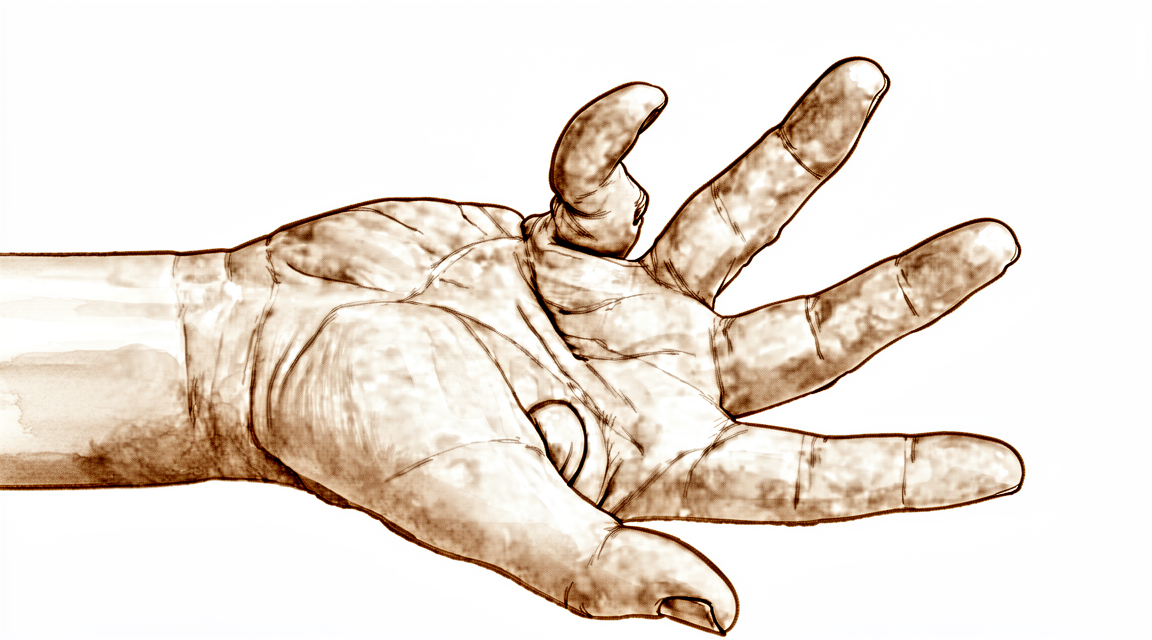
Ang iyong nararamdaman
Ang sakit na Dupuytren ay nagsisimula bilang isang maliit na bukol, o nodule, sa palad ng iyong kamay. Karaniwan itong hindi masakit, o bahagya lamang masakit kapag hinawakan sa simula. Sa paglipas ng panahon, maaaring mabuo ang isang matigas na cord sa ilalim ng balat ng palad, na tumatakbo patungo sa isa o higit pang mga daliri. Dahan-dahang humihigpit ang cord at hinihila nito pababa ang apektadong daliri patungo sa palad, kaya hindi na lubusang tumutuwid ang daliri. Ang ring finger at kalingkingan ang pinakamadalas maapektuhan.
Ang kondisyon ay progressive, ibig sabihin ay patuloy itong nagbabago sa paglipas ng panahon, ngunit magkakaiba ang bilis nito para sa bawat tao. Ang ilang tao ay halos walang napapansing pagbabago sa loob ng maraming taon. Sa iba, lumalala ang paghila sa loob ng ilang buwan. Maaaring una mo itong mapansin paggising, kapag ang daliri ay naninigas at mabagal tumuwid. Ang pagpagpag sa kamay ay makakatulong sa simula. Habang humihigpit ang cord, nagiging mahirap ang mga pang-araw-araw na gawain na nangangailangan ng patag na palad o malapad na pagkakahawak: ang paglalapat ng iyong kamay nang patag sa mesa, ang pakikipagkamay, ang paghawak sa manibela, ang paghawak sa martilyo o tennis racquet, o ang pagpasok ng iyong kamay sa bulsa o guwantes.
Ang pangunahing problema ay karaniwang hindi ang sakit. Ito ay ang pagkawala ng kakayahang buksan nang lubusan ang kamay, at ang pagkadismaya habang pinapanood ang isang daliri na bumabaluktot papasok. Ang pagbabalik ng function ng kamay ang pangunahing dahilan kung bakit nagpapagamot ang mga tao.
May ilang babalang senyales na nangangailangan ng mabilis na aksyon sa halip na paghihintay. Pumunta sa emergency department sa parehong araw kung ang iyong kamay ay naging mainit, mapula, namamaga at masakit, lalo na kung may lagnat, o kung ang iyong mga daliri ay naging maputla, malamig, puti o kulay asul, o kung bigla kang nawalan ng pakiramdam o paggalaw sa kamay. Magpatingin sa iyong GP o humingi ng pagsusuri ng isang espesyalista kung ang mga sintomas ay hindi humuhupa, lumalala sa loob ng ilang linggo, ginigising ka sa gabi, o pumipigil sa iyong magtrabaho o gamitin ang iyong kamay.
Ano ang aktwal na nangyayari
Sa ilalim ng balat ng iyong palad ay may isang layer ng matigas at nababanat na tissue na tinatawag na palmar fascia. Isipin ito bilang isang malambot na sapot ng mga fibre na nag-aangkla sa balat sa mas malalalim na bahagi ng kamay at tumutulong sa iyong palad na kumapit at humawak. Sa sakit na Dupuytren, nagsisimulang kumapal at humigpit ang sapot na ito. Ang mga cell sa tissue ay nagsisimulang gumawa ng sobrang collagen, ang fibre na karaniwang nagbibigay ng lakas sa fascia, at ang mga fibre ay humahanay sa direksyon ng paghila sa halip na manatiling nakakalat.
Habang tumatanda ang kumapal na tissue, umiikli ito at nagiging cord. Ang cord na iyon ang nakakapa mo sa ilalim ng balat ng iyong palad. Kumikilos ito tulad ng lubid na dahan-dahang hinihila papasok ng winch. Dahil nakaangkla ang cord sa daliri, hinihila nito ang daliri pababa patungo sa palad, una sa knuckle at pagkatapos sa gitnang joint ng daliri. Malusog ang mismong daliri at ang mga tendon nito. Ang problema ay ang umikling fascia na nagpapanatili ritong nakabaluktot.
Hindi pantay ang epekto ng cord sa bawat bahagi ng kamay. Walang gitnang banda ng fascia na ito ang hinlalaki, kaya bihirang maapektuhan ang hinlalaki. Ang ring finger at kalingkingan ay nasa bahagi kung saan pinakaaktibo ang sakit, kaya sila ang pinakamadalas maapektuhan.
Mainam na malaman ang ilang bagay tungkol sa kondisyong ito. Hindi lubos na nauunawaan ang eksaktong sanhi nito, at kinapapalooban ito ng mga komplikadong proseso sa antas ng cell. Ang pinsala o operasyon sa kamay, kabilang ang paulit-ulit na mechanical stress, ay nauugnay sa paglitaw ng kondisyon. Tinatanggal ng operasyon ang cord na nabuo na, ngunit hindi nito tinatanggal ang pinagbabatayang proseso ng sakit, kaya maaaring bumalik ang cord sa paglipas ng panahon. Ito ang dahilan kung bakit ang paggamot ay kadalasang ginagawa nang paunti-unti sa halip na isang beses lamang.
Kahit na-release na ang isang cord, nagpapatuloy pa rin ang mga pagbabago nang ilang panahon. Ang bahagi ng contracture na mas malapit sa palad ay umaayos sa loob ng hanggang anim na buwan. Ang bahaging mas malapit sa daliri ay maaaring hindi kailanman tuluyang mawala, at maaaring lumala muli kung patuloy itong humihila sa natitirang may-sakit na tissue.
Ano ang maaari naming gawin tungkol dito
Si Dr Kieran Hirpara, isang upper-limb surgeon sa Mater Private Hospital Rockhampton, ay nagsisimula sa mga opsyon na hindi gaanong invasive na angkop sa iyong kondisyon. Ang mga pasyente ay karaniwang nirerefer sa aming klinika ng kanilang GP; kung iminungkahi ng isang physiotherapist na magpatingin sa amin, kakailanganin mo pa rin ng referral mula sa iyong GP upang maging eligible para sa Medicare rebate. Sa iyong appointment, kumukuha kami ng history, sinusuri ang iyong kamay, at nag-aayos lamang ng imaging kung babaguhin nito ang plano. Ang sakit na Dupuytren ay karaniwang nasusuri mula mismo sa pagsusuri ng kamay.
Dahil dahan-dahang humihigpit ang cord, ang paggamot ay kadalasang ginagawa nang paunti-unti sa halip na isang beses lamang. Sa mga unang yugto, kapag malambot pa ang bukol at tumutuwid pa ang daliri, maaari lamang namin itong bantayan at tingnan kung paano ito kumikilos sa loob ng ilang buwan. Makakatulong ang hand therapy na mapanatiling gumagalaw at maayos ang paggana ng kamay habang tahimik ang sakit. Kung nagsimula nang bumaluktot ang isang daliri, mahalagang mapanatili itong naka-stretch at nakakagalaw, dahil habang mas matagal na hinahayaang lumala ang isang deformity, mas malaki ang posibilidad na maging permanente ang contracture.
Kapag hindi tumutuwid ang isang daliri, may mga procedure na nagre-release o nagtatanggal sa cord. Ang pinakahindi invasive ay ang needle release, kung saan ginagamit ang isang pinong karayom upang putulin ang cord sa pamamagitan ng balat. Maaari itong magbigay ng pangmatagalang pagbuti, kabilang sa mga kamay na may mas malalang sakit. Ang ilang cord ay maaari ding gamutin sa pamamagitan ng maliit na open release sa isang maikling hiwa. Kapag mas nakatatag na ang sakit, tinatanggal ng operasyon ang cord at ang apektadong fascia, ang layer ng tissue sa ilalim ng balat ng palad. Sa malalang sakit, ang pagtanggal sa apektadong balat at pagpapalit dito ng skin graft ay nagpapababa sa posibilidad na bumalik ang tissue. Pag-uusapan namin kung aling opsyon ang angkop sa iyong kamay, at magpapasya tayo nang magkasama.
Mahalaga ang timing. Ang operasyon ay karaniwang isinasaalang-alang kapag ang knuckle joint ay nakabaluktot ng 30 degrees o higit pa, o kapag may anumang baluktot ang gitnang joint ng daliri. Mas maagang ginagamot ang gitnang joint kaysa sa knuckle dahil lalo itong madaling maging permanenteng matigas sa nakabaluktot na posisyon. Ang pagtutuwid ng daliri ay nagpapabuti sa paggana ng kamay, at mas malaki ang ambag ng gitnang joint dito kaysa sa knuckle.
Pagkatapos ng alinman sa mga procedure na ito, napakahalaga ng hand therapy upang maging maayos ang paggana ng iyong kamay. Ang rehabilitation pagkatapos ng operasyon sa kamay ay kay Ruby Doolan sa Extend Rehabilitation. Si Ruby ay isang hand therapist: siya ang namamahala sa iyong therapy at gumagawa ng anumang splint na kailangan mo.
Ano ang dapat asahan
Ang sakit na Dupuytren ay kumikilos ayon sa sarili nitong bilis. Ang ilang tao ay halos walang napapansing pagbabago sa loob ng maraming taon, habang sa iba ay lumalala ang paghila sa loob ng ilang buwan. Hindi ito nawawala nang kusa, at hindi ito tumitigil kapag nabuo na ang isang cord. Ang bahagi ng contracture na mas malapit sa palad ay umaayos sa loob ng hanggang anim na buwan, ngunit ang bahaging mas malapit sa daliri ay maaaring hindi kailanman tuluyang mawala at maaaring lumala muli.
Malaki ang naitutulong ng pagtutuwid ng daliri sa paggana ng iyong kamay. Ang pagbabalik ng function ng kamay ang pangunahing dahilan kung bakit nagpapagamot ang mga tao, at ang pagwawasto sa deformity ay nagdudulot ng malaking pagbuti sa kung ano ang kayang gawin ng iyong kamay. Mas malaki ang ambag ng gitnang joint ng daliri dito kaysa sa knuckle, kaya ito mas maagang ginagamot.
Ang pagbalik (recurrence) ay bahagi ng natural na takbo ng sakit na ito, anumang paggamot ang piliin mo. Walang kasalukuyang paggamot ang nagpapatigil sa pinagbabatayang proseso; lahat sila ay tumutugon sa cord na nagawa na nito. Pagkatapos ng needle release, karamihan sa mga taong nagkakaroon ng recurrence ay nagkakaroon nito sa loob ng mga 2.3 taon. Pagkatapos ng operasyon upang tanggalin ang cord, humigit-kumulang isang-kapat ng mga tao ang nagkakaroon ng recurrence, sa karaniwan pagkalipas ng 3.7 taon. Kapag tinanggal ang apektadong balat at pinalitan ng graft, mas hindi malamang ang recurrence sa bahaging iyon. Kung bumalik nga ang sakit, posible itong gamutin muli, bagama't mas mahirap ang muling operasyon at mas mataas ang panganib nito kaysa sa unang operasyon.
Karamihan sa mga komplikasyon pagkatapos ng paggamot ay maaaring maayos sa maagang pangangalaga. Ang dalawang pinakamadalas talakayin ng mga hand surgeon ay ang recurrence at paninigas. Ang paninigas, lalo na sa gitnang joint ng daliri, ang dahilan kung bakit mahalaga ang maagang paggamot: ang isang joint na masyadong matagal na nakabaluktot ay maaaring maging permanenteng matigas sa posisyong iyon. Kung ang iyong kamay ay naging mainit, mapula, namamaga at masakit, lalo na kung may lagnat, pumunta sa emergency department sa parehong araw. Kung ang mga sintomas ay hindi humuhupa o lumalala sa loob ng ilang linggo, magpatingin sa iyong GP o humingi ng pagsusuri ng isang espesyalista.
Pagkatapos ng anumang procedure, napakahalaga ng hand therapy upang maging maayos ang paggana ng iyong kamay. Ang rehabilitation pagkatapos ng operasyon sa kamay ay kay Ruby Doolan sa Extend Rehabilitation. Si Ruby ay isang hand therapist: siya ang namamahala sa iyong therapy at gumagawa ng anumang splint na kailangan mo.
Kailan dapat magpatingin
Karamihan sa mga taong may sakit na Dupuytren ay nagpapagamot dahil unti-unting nawawala ang function ng kamay, hindi dahil sa sakit. Humingi ng pagsusuri ng isang espesyalista kung ang isang bukol o cord sa iyong palad ay lumalala sa loob ng ilang linggo, kung ang isang daliri ay hindi lubusang tumutuwid, o kung pinipigilan ka ng mga pagbabago na magtrabaho o gamitin ang iyong kamay. Ang kondisyon ay progressive, ngunit magkakaiba ang bilis nito para sa bawat tao, kaya mainam na ipasuri ang iyong kamay sa halip na maghintay kung hanggang saan ito aabot. Ang mga bata ay maaari ding magkaroon ng bukol sa palad o nakabaluktot na daliri, at kailangan din iyon ng pagsusuri. Kung nagpagamot ka na para sa trigger finger, bantayan ang iyong palad, dahil maaaring lumitaw ang bagong sakit na Dupuytren pagkatapos nito. Pumunta sa emergency department sa parehong araw kung ang iyong kamay ay naging mainit, mapula, namamaga at masakit, lalo na kung may lagnat, o kung ang iyong mga daliri ay naging maputla, malamig, puti o kulay asul.
Mas malalim na pagtalakay
Advanced reading: the deeper science (optional)
Ang seksyong ito ay higit pa sa kailangan mo para sa iyong sariling mga desisyon sa paggamot. Karapat-dapat ang Dupuytren's sa karagdagang pagbabasa dahil ang pagpili sa pagitan ng mga paggamot ay hindi talaga pagpili kung alin ang gumagana, kundi pagpili kung aling pattern ng pagbalik (recurrence) at panganib ang mas gusto mong harapin.
Ang basehan ng ebidensya ay mas mahina kaysa sa kumpiyansa sa paligid nito
Nararapat na magsimula rito. Isang pagsusuri sa Bone & Joint Journal ang nagkonkludo na nananatiling limitado ang ebidensya upang gabayan ang pamamahala ng Dupuytren's contracture, habang binabanggit na ang percutaneous needle aponeurotomy ay may tendensiyang magdulot ng mas mataas na kasiyahan ng pasyente na may mas kaunting adverse events [1].
Dapat nitong bawasan ang anumang matinding rekomendasyon na ibibigay sa iyo. Ang kondisyon ay karaniwan, ang mga gamutan ay matagal nang itinatag, at ang mga comparative trial na magbibigay-linaw sa katanungan ay sa malaking bahagi ay hindi pa nagagawa.
Ano ang aktwal na inaalok ng collagenase
Ang collagenase injection, na tinutunaw ang cord sa halip na pinuputol ito, ay mabilis na nagpabago sa praktis. Isang pagsusuri sa 2,675 na pasyente ang nakatagpo na ito ay ligtas at epektibo para sa pagpapabuti ng function ng kamay, kung saan karamihan sa mga adverse event ay minor at kusa ring nawawala [2].
Ang parehong pagsusuri ay naglalaman ng numerong mahalaga para sa pagtatakda ng ekspektasyon: 23% ng mga joints na matagumpay na nagamot ay muling nagkaroon ng recurrence [2]. Ang recurrence ay hindi isang treatment failure dito; ito ay ang natural history ng sakit na muling nagpapakita. Ang Dupuytren's ay isang biological na proseso sa palad, at walang kasalukuyang treatment ang nagpapatigil sa prosesong ito, lahat sila ay tumutugon sa cord na nagawa na nito.
Tapat na paghahambing ng mga panganib
Ang trade-off laban sa operasyon ay hindi na ang isa ay ligtas at ang isa ay hindi, kundi na magkaiba ang paraan ng kanilang pagkabigo. Sa paghahambing ng collagenase sa fasciectomy sa 8,809 na pasyente, ang mga adverse event na nakita sa collagenase at hindi naiulat pagkatapos ng fasciectomy ay kinabibilangan ng peripheral oedema, pananakit ng extremity at mga reaksyon sa injection-site [3].
Basahin iyan nang mabuti: ang mga iyon ay mga karagdagang problema, at ang mga ito ay karaniwang transient at lokal. Ang iniiwasan ng injection ay ang surgical wound sa palad, kasama ang mas mahabang recovery nito, panganib ng stiffness at peklat. Ang kapalit naman na inaalok ng operasyon ay ang mas kumpletong pagtanggal ng diseased tissue at, sa pangkalahatan, mas mahabang pagitan bago ang recurrence.
Kaya ang desisyon ay lehitimong personal. Ang isang pasyenteng hindi kayang maglaan ng ilang linggo ng limitadong paggamit ng kamay ay may matibay na dahilan upang mas piliin ang injection kahit alam na mas malamang ang recurrence. Ang isang mas batang pasyente na may aggressive disease ay maaaring makatwirang tumanggap ng isang mas malaking operasyon nang isang beses kaysa sa isang mas maliit na operasyon nang paulit-ulit.
Ang praktis ay nagbago bago pa man naging settled ang ebidensya
Sa pagitan ng pagpapakilala ng collagenase at sa mga sumunod na taon, ang paggamit nito ay tumaas sa malaking antas sa Estados Unidos kasabay ng pagbaba sa proporsyon ng mga pasyenteng sumasailalim sa fasciotomy at fasciectomy, kung saan ang edad ng pasyente at mga comorbidities ay nakaimpluwensya sa kung anong gamutan ang pinili [4].
Ito ay isang kapaki-pakinabang na konteksto kapag sinasabi sa iyo ng isang clinician kung ano ang "karaniwang ginagawa". Ang karaniwang ginagawa ay nagbago nang malaki sa loob ng isang dekada, batay sa ebidensyang inilalarawan ng mga review sa itaas bilang limitado, na isang dahilan upang itanong kung bakit ang isang partikular na opsyon ay inirerekomenda para sa iyo sa halip na ipagpalagay na ang kasalukuyang praktis ay sumasalamin sa settled science.
Mga Sanggunian
[1] Soreide E, Murad MH, Denbeigh JM, Lewallen EA, Dudakovic A, Nordsletten L, et al. Treatment of Dupuytren's contracture: a systematic review. Bone Joint J. 2018;100-B(9):1138-45. https://doi.org/10.1302/0301-620X.100B9.BJJ-2017-1194.R2
[2] Sandler AB, Scanaliato JP, Dennis T, Gonzalez Trevizo GA, Raiciulescu S, Nesti L, et al. Treatment of Dupuytren's contracture with collagenase: a systematic review. Hand (N Y). 2021;17(5):815-24. https://doi.org/10.1177/1558944720974119
[3] Peimer CA, Wilbrand S, Gerber RA, Chapman D, Szczypa PP. Safety and tolerability of collagenase Clostridium histolyticum and fasciectomy for Dupuytren's contracture. J Hand Surg Eur Vol. 2014;40(2):141-9. https://doi.org/10.1177/1753193414528843
[4] Lipman MD, Carstensen SE, Deal DN. Trends in the treatment of Dupuytren disease in the United States between 2007 and 2014. Hand (N Y). 2016;12(1):13-20. https://doi.org/10.1177/1558944716647101
Evidence & references
This is the clinical evidence summary written for health professionals. It is technical, and it lists the research this page was built from. You do not need to read it to understand your treatment or to make a decision about it.
Overview
Epidemiology and Prognosis
- Clinically important Dupuytren's disease is common in the general population, with a majority of diagnosed individuals undergoing treatment [8].
- Patients with Dupuytren disease have significantly higher mortality rates 20 years after diagnosis than the population without Dupuytren disease [3].
- Dupuytren disease is progressive, but the pace is unique to each patient [12].
- Dupuytren's contracture of the little finger has many different forms with different prognoses and needing different operations [2].
- Dupuytren's disease in women presents similarly to men with more severe PIP joint involvement but equivalent surgical outcomes regarding final contracture correction, recurrence, and complication rates [17].
Assessment and Staging
- An objective method of evaluating the lesions in Dupuytren’s disease allows accurate preoperative assessment and indicates the amount of improvement achieved by the operation [19].
- The hand is divided into five segments for assessment, each consisting of a finger and corresponding palmar zone [19].
- For each finger, the theoretical range of deformity is from 0 degrees (complete extension) to 200 degrees (contracture of the finger in the palm) [19].
- Six stages can be distinguished for the four fingers, with Stage 0 representing no lesion and Stage 4 representing total flexion deformity exceeding 135° [19].
- The presence of a PIP joint contracture of greater than 70 degrees has severe prognostic importance and is indicated by a ‘+’ after the digital letter (D+) in the assessment coding [19].
- Flexion contracture at the MP joints are more easily corrected than at the PIP [19].
- The thumb’s range of deformity is theoretically from 0 degrees to 160 degrees for the MP and IP joints, and from 0 degrees to more than 45 degrees at the level of the web [19].
Treatment Landscape and Evidence
- Currently there remains limited evidence to guide the management of patients with Dupuytren's contracture [13].
- The literature does not provide evidence in favor of a specific procedure for Dupuytren's disease due to inconsistencies in reporting complications as well as the lack of a standardized definition [5].
- Little agreement exists on treatment recommendations for common presentations of Dupuytren disease among international hand surgeons [9].
- Surgery remains the gold-standard treatment for progressive Dupuytren contractures, with limited palmar fasciectomy being the most common option [81].
- The best available published evidence indicates that surgical treatment in the form of partial or selective fasciectomy remains the most reliable and the most widely used method for treating Dupuytren's disease [47].
- There is low level of evidence that both surgical and nonsurgical treatments provide clinically important improvements for recurrent Dupuytren contracture [44].
- There are several procedural options for the treatment of Dupuytren disease [33].
- Many treatment options exist for Dupuytren contracture, each with its own complication profile [50].
- Dermofasciectomy appears to be a highly effective surgical intervention for advanced Dupuytren disease, offering substantial long-term benefits in terms of function and disease control [27].
- The recurrence rate in a series involving skin replacement for Dupuytren’s disease was 8%, a figure reported as better for disease control than standard approaches [89].
Surgical Considerations
- Patients with Dupuytren's disease of the hand may gain a significant functional benefit following surgical improvement or correction of the deformity [7].
- Primary surgery for Dupuytren's contracture can be performed safely on a day care basis provided that strict criteria are followed [14].
- Advanced Dupuytren's contracture can be treated by day care surgery, but the operations should be performed by surgeons who are skilled in hand surgery [28].
- Surgical treatment of Dupuytren's contracture was well-suited to day surgery, provided an individual judgement concerning suitability is made [62].
- Postoperative stiffness is significantly increased as related to recurrences and staging of the disease, but not to sex [20].
- The indications for arthrodesis in severe recurrent Dupuytren's contracture should be stringent, as only 2.8% of patients operated upon for Dupuytren's contracture required arthrodesis [57].
Non-Operative and Minimally Invasive Options
- Percutaneous needle fasciotomy (PNF) is a minimally invasive intervention with a brief recovery period [195].
- In the only randomized trial on PNF, the extension deficit had improved 6 weeks after the intervention with an average of 63% [195].
- In the short term, there was no statistically significant difference between the results of needle fasciotomy and limited fasciectomy if the contracture was less than 90° preoperatively [195].
- For more severe contractures, limited fasciectomy gave better results than needle fasciotomy [195].
- In experienced hands, the cumulative risk of complications is lower in needle fasciotomy than in limited fasciectomy [195].
- Long-term follow-up of a comparative study showed that the recurrence rate after needle fasciotomy is much higher than after limited fasciectomy, with a rate of 65% after 32 months [195].
- Three-year follow-up data of a randomized comparative study show a recurrence rate of 64% in the PNF group [195].
- Limited fasciectomy is indicated for contractures greater than 30° or painful nodules, with a reported 79% reduction of contracture and a recurrence rate of 41% in 5 years [200].
- Dermofasciectomy is indicated for recurrences or aggressive type in patients younger than 40, with a recurrence rate of 8.4% after 6 years [200].
- Clostridial collagenase is indicated for contracture associated with a palpable cord, with an 87% success rate (correction within 0–5° of full extension) and a recurrence rate of 19% after 2 years [200].
- Radiotherapy is indicated for disease in the initial phase, with mixed results regarding the delay of development of contractures in stage N and Tubiana I.2 [200].
Postoperative Management and Patient Perspective
- Hand therapy is crucial to the effective postoperative management of Dupuytren's contracture and the achievement of optimum hand function [32].
- Most complications following surgical treatment for Dupuytren's contracture can be well controlled and will resolve with appropriate early treatment [1].
- Patients with Dupuytren’s disease want a cure, but as there is no cure, the next best option is a treatment that improves the personal disease situation, such as getting fingers functional again, reducing pain, or reducing/stopping disease progression [46].
- The typical advice given to patients is to wait until they have a real problem and then have surgery, which is considered too simple by patient advocates who seek clear advice on the best treatment for their specific situation [46].
Anatomy & Pathophysiology
Normal Palmar Anatomy and Biomechanics
- The soft tissue of the fingers is mobile and flexible, overlaying fibrous tendon sheaths from the distal phalanges to the metacarpophalangeal joints [66].
- In the normal finger, soft tissue structures pressed together in flexion remain separated by cutaneous flexion creases, which are not stable formations or firm borders to subcutaneous processes [66].
- The palmar aponeurosis is only one part of a functional system of stiff subcutaneous connective tissue that facilitates different mechanisms of grip [105].
- The connective tissue framework between the dermis and musculature is a functional unit that varies with location, including the dorsum of the hand, cranial skin, palm, and fingers [105].
- The palmar fascia is elastic but only half as elastic as palmar skin, absorbing the majority of shear forces applied to the palmar skin via vertical septal fibers [165].
- The plantar fascia has a fixed bony origin and retains a unidirectional orientation, whereas the palmar fascia has a tendinous origin that stretches it to a greater degree and folds in flexion [165].
- Palmar cutaneous nerve branches from the proper digital nerves originate at approximately 19% of the distance from the A1 pulley base to the tip of the finger, or approximately one-fifth of the finger length [123].
- These palmar cutaneous nerve branches converge to form a "chevron shape" and serve a dense concentration of Pacinian corpuscles [122].
- The neurovascular bundles enter the subcutaneous tissue as they leave the space beneath the palmar aponeurosis, with Cleland fibers lying immediately deep to the nerves and arteries [124].
- Grayson fibers cover the arteries and nerves laterally in a crisscrossed configuration, coursing across the tendons to the skin of the contralateral side [124].
- In the flexed finger, digital neurovascular structures are folded into loops above the Cleland fibers, a position observable in many Dupuytren fingers [124].
Disease Pathogenesis and Cellular Biology
- Dupuytren's disease is a fibroproliferative disorder resulting in the formation of nodules and cords in the palmar fascia of the hand [23].
- The disease typically presents over three phases: a proliferative phase with nodular tissue, an involutional phase with myofibroblast alignment along stress lines, and a third stage with deposition of an acellular collagen-rich cord [48].
- Myofibroblasts are the important pathologic cells in the development of Dupuytren's disease [74].
- Myofibroblasts differ from fibroblasts by having actual bundles of contractile actin microfilaments arranged parallel to the long axis of the cell [125].
- Adjacent myofibroblasts connect via extracellular fibrils of fibronectin and act together to generate the contracted tissue seen in Dupuytren disease [125].
- Type III collagen is more prevalent in the extracellular matrix in Dupuytren disease [125].
- Transforming growth factor-β1, TGF-β2, epidermal growth factor, platelet-derived growth factor, and connective tissue growth factor have been suggested to play a role in initiating abnormal cellular proliferation [125].
- Increasing levels of mechanical tension influence fibroblast differentiation into myofibroblasts [125].
- The hallmark feature of Dupuytren's contracture is the localized deposition of excess and abnormal collagen within the palmar fascia, suggesting a perturbed balance of collagen remodeling [115].
- Genomic and proteomic studies indicate a shift in the balance of collagen remodeling in favor of net collagen deposition in Dupuytren's disease tissue [115].
- Dupuytren's disease may be regarded as a manifestation of aberrant wound healing responses, with tissue responses more exaggerated and/or prolonged than those seen in normal healing wounds [174].
- Fibroblasts monitor the degree of static and dynamic force through cell surface β1 integrins and Type I collagen fibrils, transmitting tension to the intracellular cytoskeleton to alter gene expression [174].
- Mechanical tension induces proliferation, transition to myofibroblasts, secretion of TGF-β, generation of contractile force, and increased thickness and stiffness of collagen fibrils in cultured fibroblasts [174].
- Decreased mechanical tension on myofibroblasts results in their disappearance via apoptosis, seen in the resolution phase of wound healing and late stages of Dupuytren's disease [174].
- In fibromatosis, a disorganized hypercellular fibroblastic nodule infiltrates the fibrofatty tissue over the palmar aponeurosis and fibrous tendon sheaths [76].
- Fibromatosis becomes established in the soft tissue of the fingers in its predominant compressed and shortened formation, creating an extension block rather than an active contraction [76].
- Nodular tissue in the stationary compartment of the mid-palm retains its nodular shape over the long term, while tissue in the mobile soft tissue of the fingers is subject to stress adaptation that transforms it into cord-like tissue [76].
- The specific local biomechanical conditions decisively influence the morphogenesis of the fibromatotic tissue mix and the clinical picture of the disorder [76].
- Neurovascular dystopia can be explained as neurovascular loops trapped over hypertrophic Cleland fibers [76].
- The expression of three key collagenases (MMP1, MMP13, and MMP14) is significantly raised in Dupuytren's disease nodules, as is the expression of the collagen biosynthetic enzyme ADAMTS14 [48].
- TIMP1 expression is significantly elevated in Dupuytren's disease nodules compared to normal palmar fascia [48].
- Contraction and fibrosis in Dupuytren's disease may result from increased collagen biosynthesis mediated by ADAMTS-14, elevated TIMP-1 blocking MMP-mediated collagenolysis, and contraction enabled by MMP-14-mediated pericellular collagenolysis [48].
- The expression level of MMP13 and MMP14 positively correlates with poor progression post-fasciectomy [48].
- Structural abnormalities in Dupuytren's cords include increased cross-linking, increased or altered collagen glycation, larger fibril diameter, and more closely packed fascicles with thicker sheaths [115].
- These structural changes result in increased stiffness (decreased elasticity) in the collagen fibrils relative to normal tissue [115].
- The end result of Dupuytren's biology is ischemic fibrosis and microvascular occlusion from endothelial fibroblast infiltration [157].
- Ischemia results in fibroblast proliferation, collagen deposition, and the appearance of myofibroblasts [157].
- Cells from Dupuytren's tissue respond to mechanical stretching forces more than cells from normal fascia [157].
- Mechanical tension increases both fibroblast proliferation and myofibroblast differentiation [157].
- Repetitive mechanical stress promotes collagen synthesis and deposition [157].
- Residual skin tension after fasciotomy increases the likelihood of early disease recurrence [157].
Clinical Presentation and Progression
- Palmar fascial disease may remain confined to the palm and not progress enough to cause digital flexion deformity [75].
- Palmar involvement usually precedes disease extension into the digits, but the disease can begin and remain in the digits [75].
- The ring finger is the most commonly involved digit, followed closely by the small, middle, and index finger, and lastly the thumb [75].
- The disease can be classified into early, intermediate, and late phases [75].
- The early phase entails skin changes including loss of normal architecture and skin pit formation [75].
- The intermediate phase consists of nodule and cord formation [75].
- The late phase is the end point of joint contracture [75].
- In the typical scenario, progressive contracture occurs from the ring to the small and lastly the middle finger, though this progression is not immutable [75].
- Ulmas et al. found a 52% prevalence of spiral nerve intraoperatively and 42% had palpable interdigital soft tissue mass [75].
- The existence of a soft tissue mass was specific (75%) but not sensitive (59%) for the presence of the spiral nerve [75].
- The lesion usually begins on the ulnar side of the hand at the distal palmar crease and progresses to involve the ring and little fingers [168].
- Metacarpophalangeal (MP) and PIP joint flexion contractures gradually develop, with severity depending on the extent and maturity of the fibroplasia [168].
- Lesions are more commonly painless, although some patients may complain of itching or minor discomfort [168].
- Nodules have been shown histologically to have neural entrapment, which may be the reason some individuals present with pain primarily [168].
- Ectopic Dupuytren disease deposits may occur in the medial plantar fascia (Ledderhose disease), penis (Peyronie disease), and over the PIP joints dorsally (knuckle pads) [168].
- Patients with these associated findings are considered to have a Dupuytren diathesis and are prone to a more progressive and recurrent form of the disease [168].
- Dupuytren contracture occurs 6 to 10 times more frequently in men than in women [168].
- The disease occurs significantly earlier in men (33 to 63 years old) than in women (46 to 70 years old) [168].
- The disease is most common in white northern European individuals, although it has been reported occasionally in blacks and rarely in Asians [168].
- The lesion has been reported to be more frequent and severe in individuals with diabetes mellitus or with epilepsy (42%) [168].
- The involvement is often bilateral (45%) but rarely symmetric [168].
- Mortality may be increased in men who develop the disease before age 60 [168].
- Hand trauma and the type of manual labor performed by an individual may be contributing factors to the disease [168].
- The presence of hemosiderin in these lesions suggests hemorrhage from tears, but the nondominant hand is affected as often as the dominant one, making trauma alone an unlikely cause [168].
- A single injury may precipitate the onset of the disease in genetically susceptible individuals [168].
- Surgical trauma, even release of a trigger finger in susceptible patients, may precipitate significant pretendinous cords, palmar thickening, and subsequent troublesome contractures [168].
- Excision of an isolated Dupuytren nodule, especially in younger patients, is rarely warranted as it is more likely than not a more significant lesion will ensue [168].
- A causal relationship between injury and Dupuytren disease may be assumed if consistent histologic changes occur within 2 years after a focal injury in women younger than 50 years and men younger than 40 without a strong diathesis [168].
- In patients with bilateral disease, the disease usually develops in the uninjured hand after age 40 years in men and 50 years in women [168].
- The disease seems to occur earlier and more frequently in some families, with a variable penetrance autosomal dominant pattern [168].
- Vascular insufficiency and cigarette smoking have been linked to Dupuytren disease as possible causative factors [168].
- The prevalence of Dupuytren's disease was significantly lower among Muslim men than among Serbian and Croatian men [31].
- The prevalence of Dupuytren's disease was far higher among those who stated that they suffered from diabetes mellitus [31].
- Changes were equally distributed in the right and left hands in women, while they were found more than three times as often in the right hands as in the left hands of men [31].
- The ring and little finger rays were most often affected, and the thumb and index finger rays least often [31].
- Dupuytren's disease was detected in a total of 775 finger rays, of which 608 were without contracture of the digit (stage 1) [31].
- The prevalence of Dupuytren's disease ranged from 17% for men between 50 and 54 years to 60% in the oldest men [31].
- The prevalence among women was lower than among men [31].
- Dupuytren's disease is a benign, progressive fibrosing disorder of the palmar fascias of the hand and fingers, which leads to the formation of nodules and cords, and may lead to disabling extension deficits of the finger joints [71].
- The reported prevalence of Dupuytren's disease varies from 3% to 42%, with the highest incidence in Caucasians, while it is rarely seen in Africans [71].
- Men are seven times more often affected than women, but in later life the incidence in women increases to the same as men [71].
- Some suggest that the disease symptoms are milder in women and therefore may remain unnoticed for a longer period [71].
- The clustering of Dupuytren's disease in families suggests a genetic influence on the onset of the disease [71].
- Multiple reports describe Dupuytren's disease as an autosomal dominant disease with varying penetrance [71].
- There are many sporadic (nonfamilial) cases of the disease that are not compatible with a Mendelian inheritance pattern [71].
- Recessive inheritance remains a viable hypothesis for Dupuytren's disease [71].
- Dupuytren's disease is considered to be one of the most common hereditary connective tissue disorders in Caucasians [71].
- Factors such as smoking, use of alcohol, antiepilepsy drugs, and medical conditions including liver disease and diabetes are associated with a higher prevalence of the disease [71].
- Dupuytren's Disease is most common among Caucasians living in or originating from North-West Europe [82].
- The prevalence in a country is strongly influenced by the origin of its population and varies from 0.5 to 25% [82].
- Men are most often affected after the age of 50, earlier than women, but by the ninth decade, the gender ratio is nearly 1:1 [82].
- There is a familial predisposition to DD, suggesting a genetic origin [82].
- Work from a consortium of Dupuytren study groups has revealed nine susceptibility loci and a role for the WNT-signaling pathway in the pathogenesis of the disease [82].
- The global prevalence of Dupuytren's contracture among Caucasians is estimated at 3–6% [74].
- Most patients are older than 50 years at presentation [74].
- Among patients with diabetes, the incidence of Dupuytren's disease has been estimated at 10.5%, although other reports suggest the incidence may be much higher [74].
- In patients with thyroid disease, the incidence for Dupuytren's disease has been reported to be 8.8% [74].
- Dupuytren's disease is a disabling fibrotic condition affecting the palmar fascia of the hand, described by Baron Dupuytren in 1831 [48].
- Incidence of DD is age, gender and genetically dependent [48].
- Individuals with a history of alcoholism, smoking and high blood cholesterol are also at a higher risk of developing DD [48].
- The disease is often familial, but the mode of inheritance is currently unknown [48].
- Dupuytren's disease is a fibromatosis of the palmer fascia of the hand and fingers, which often leads to flexion deformity of especially the ulnar fingers [82].
- Patients with digital contracture from DD may develop difficulty using their hands in daily activities [82].
- There is some correlation between DD and smoking, excessive alcohol consumption, male gender, diabetes mellitus, epilepsy, and possibly, performing heavy manual labor [82].
- The cause of DD is not yet fully elucidated [82].
- The exact genetic profile of Dupuytren's Disease is not yet fully unraveled [82].
- Dupuytren's contracture is effected by a multitude of complex processes at the cellular level and the exact relative contribution of each is unknown [67].
- Surgical treatment does not eliminate the disease process and recurrence is frequently noted [67].
- The pathogenesis of Dupuytren's disease remains largely unknown [71].
- The reason for the higher incidence of this disease pattern in the fingers compared with the thumb remains unknown while the pathogenesis of Dupuytren's disease is not fully comprehended [15].
- Dupuytren's disease may have common characteristics with wound healing but it is still fundamentally different [18].
- Regression occurs in Dupuytren's contracture [114].
- An alternative, more mechanical, theory of causation would be that paralysis results in an absence of forces across the Dupuytren’s disease [203].
- The overall extension of the finger was slightly improved by about 10° at each joint following a wasp sting [163].
- The disease affected the insertion of flexor carpi ulnaris at the wrist as well as the palm in a case of Dupuytren's disease affecting the wrist [39].
- The problem of PIP joint contracture is complex and structures on the side and dorsum of the finger are important, as well as those on the palmar aspect [102].
- The spiral nerve occurs most commonly with a proximal interphalangeal joint contracture of 30° and when the small finger is involved [193].
- The current ability to preoperatively identify normal structures and mechanically important cords is crude [64].
- The unpredictable anatomic changes involving neurovascular bundles remain a stumbling block for surgical approaches, particularly for minimally invasive techniques [64].
- An
Classification
Staging Systems and Definitions
- Dupuytren severity is multidimensional, involving biology, anatomy, correction, and recontracture [6].
- Anatomic severity refers to angular contracture severity and determines the likelihood of the finger being straight early after treatment [6].
- Biologic severity refers to disease activity persistence and determines the likelihood of fingers being straight late after treatment [6].
- Historic severity, specifically prior recontracture, is a risk factor for future recontracture [6].
- Initial angular correction depends on pretreatment angular contracture severity rather than biology [6].
- Greater pretreatment angular contracture severity lowers the chance that a corrective procedure will restore full extension [6].
- Failure to achieve complete correction increases the likelihood of some initial correction loss within a year of treatment [6].
- Greater angular contracture correlates with reduced grip strength, which is not improved by contracture release [6].
- Documentation of biologic severity should include family history of Dupuytren's disease in siblings or parents, gender, age of onset, current age, age of first treatment, bilaterality, number of digits involved, thumb involvement, presence of palm nodules, Dupuytren's disease nodes (DDNs), Ledderhose disease, Peyronie disease, and history of frozen shoulder [6].
- An objective method of evaluating lesions in Dupuytren's disease allows accurate preoperative assessment and indicates the amount of improvement achieved by operation [19].
- The Tubiana classification system categorizes total passive extension deficit of each ray into four stages: Stage I (0–45°), Stage II (46–90°), Stage III (91–135°), and Stage IV (136–180°) [178].
- The Tubiana classification system includes a Stage N for nodules, cords, skin retraction, and fixation without flexion deformity [185].
- The Tubiana classification system defines Stage I as an extension deficit of 11–45°, Stage II as 46–90°, Stage III as 91–135°, and Stage IV as >135° [185].
- The Tubiana and Michon classification system scores contracture in a complete finger regardless of the contribution of the metacarpophalangeal (MCP) or proximal interphalangeal (PIP) joint [191].
- The Tubiana and Michon classification system defines Stage 1 as contraction of 0–45°, Stage 2 as 46–90°, Stage 3 as 91–135°, and Stage 4 as over 135° [191].
- The Tubiana classification system does not distinguish between MCP and PIP joint contributions, meaning it cannot deduce whether a finger should be treated conservatively, minimally invasively, or with open surgery [191].
- A revised severity staging system that incorporates total flexion deformity and additional clinical risk factors provides a more objective and precise method for assessing Dupuytren's disease severity and may predict surgical outcomes [37].
- A clinical grading system for Dupuytren's contracture sorts patients into five broad surgical categories, taking into account predisposing factors, risk of recurrence, and sympathetic tone [104].
- Dupuytren staging can be conceptualized in three terms: assessment (measurable aspects), scoring system (quantification via numbers or variables), and classification (subdivisions into non-ordinal types) [41].
- Scoring systems for Dupuytren's disease fall into five proposed categories, including severity according to degree of contracture, detailed scoring of every digit, and systems that score severity or surgical results into arbitrary categories of excellent/good/fair/poor [41].
- Methods of assessment used in the study of Dupuytren's disease include degree of contracture or range of motion, disease type based on localization of pathologic fascia, histology, Dupuytren diathesis, hand function or disability, rate of recovery/time to return to work, recurrence and progression, and complications [41].
- The literature does not provide evidence in favor of a specific procedure for Dupuytren's disease due to inconsistencies in reporting complications and the lack of a standardized definition [5].
- There is no consensus on the most effective operation for primary Dupuytren's contracture [171].
- There is wide disparity in scoring systems, definition of recurrence, and recording of complications in studies of Dupuytren's disease treatment [171].
Histological Classification
- Histological staging is a reliable method for predicting recurrence of Dupuytren's disease, with Type I (proliferative) having the highest risk and Type III (fibrotic) the lowest [113].
- Histological staging was independent of features of Dupuytren’s diathesis [11].
- The clinical course and typical pathological features of Dupuytren's disease are divided into a proliferative phase (increased fibroblasts, nodule formation), an involutional phase (increased myofibroblasts in diseased fiber bundles leading to contracture), and a residual phase (collagenous fibers dominate in connective tissues) [185].
- Luck identified three stages of Dupuytren's disease: the proliferative stage (solitary or multiple soft nodules), the involutional stage (flexion contractures in the palm and fingers), and the residual stage (cord present with joint contractures and joint changes) [98].
- Iselin described five stages of Dupuytren's disease, with Stage 0 characterized by small nodules [98].
Anatomical and Clinical Variants
- Typical Dupuytren’s disease and Non-Dupuytren’s palmar fascial disease are two clinical entities that run different courses and do not share a similar prognosis [4].
- The affected tissues of typical Dupuytren’s disease and Dupuytren’s disease following acute injury show no histological difference [25].
- Dupuytren's disease of the hand is generally considered a disease of adults, but cases have been presented in children who developed the condition before the age of 13 years [10].
- The reason for the higher incidence of Dupuytren's disease in the fingers compared with the thumb remains unknown [15].
- Dupuytren's disease is a progressive condition of genetic origin with a multifactorial pathophysiology involving myofibroblast proliferation and altered collagen matrix composition [29].
- Dupuytren's disease is a deforming, fibrotic condition affecting the palmar fascia with a broad spectrum of involvement from slight thickening to widespread disease associated with severe digital contractures [98].
- Dupuytren's disease is characterized by the development of fibrotic nodules and cords within the palmar fascia and skin, which can lead to finger contractures [170].
- In Dupuytren's disease in isolation, stereotypical cords manifest while demonstrating normal adjacent skin free from the thickening and waxy changes found in limited joint mobility [170].
- The same glycosylation end products, which are more abundant in diabetic patients, are theorized to contribute to cross-linking of collagen and the development of the nodules and cords of Dupuytren’s contracture [170].
- Dupuytren's disease is a common fibroproliferative disorder with a worldwide prevalence of up to 32% [177].
- Dupuytren's disease was detected in 775 finger rays in a population study, with 608 rays without contracture (stage 1) [31].
- In a population study, the ring and little finger rays were most often affected by Dupuytren's disease, while the thumb and index finger rays were least often affected [31].
- Changes in Dupuytren's disease were found more than three times as often in the right hands as in the left hands of men [31].
- Changes in Dupuytren's disease were equally distributed in the right and left hands in women [31].
- There was no significant difference in the prevalence of Dupuytren's disease between smokers and nonsmokers, between those admitting to drinking alcohol and teetotalers, or between those living in urban areas and those living in rural areas [31].
- A meta-analysis showed a prevalence of 31% among diabetic patients, with an odds ratio of 3.9 for type 1 diabetes mellitus and 3.0 for type 2 diabetes mellitus when compared with the nondiabetic population [170].
- A systematic review found a strong association between higher A1c values and the development of Dupuytren’s disease in 27 of the 37 articles evaluated [170].
- A population-based study using International Classification of Diseases codes found that only 1.43% of diabetic patients also carried a diagnosis of Dupuytren’s, for an odds ratio of 1.08 compared with the rest of the study population [170].
- In a population-based study, odds ratios for Dupuytren's disease associated with hemoglobin A1c ranges were 1.19 for 7.0 to 7.9, 1.32 for 8.0 to 8.9, 1.46 for 9.0 to 9.9, and 1.36 for 10.0+ [170].
- All three groups with Dupuytren's disease in a study on alcohol and hepatic pathology had a tendency for the disease to occur towards the ulnar border of the hand, and in particular, the ring finger [158].
- There was no significant difference in the site of the disease between groups with Dupuytren's disease in a study on alcohol and hepatic pathology [158].
- Age-standardized incidence rates of Dupuytren's disease showed no significant differences across individual social classes [161].
- Cumulative incidence rates of Dupuytren's disease were significantly higher in the non-manual than in the manual occupational group beyond 65 years of age [161].
- The age-specific incidence of significant Dupuytren’s disease in men increased with age until 60–69, then declined, with a further increase and second peak at 80–89 [161].
- Consultation rates for Dupuytren's disease were no different across occupational social classes, with the exception of social class 5 (Unskilled), which had a significantly higher rate [161].
- The incidence rate of new cases of Dupuytren’s disease was 34.3 per 100,000 men in a survey population of 502,493 [161].
- Dupuytren's disease is progressive, but the pace is unique to each patient [12].
- Without any therapy, Dupuytren's disease progresses in about 30–50% within 5 years leading to functional deficiencies and requiring surgical correction [185].
- Dupuytren's disease starts usually in the fourth decade and peaks in the fifth to sixth decade with a male to female ratio of 3:1 [185].
- Two-thirds of patients with Dupuytren's disease may develop a bilateral affliction [185].
- A family background is more pronounced among female than male patients with Dupuytren's disease [185].
- The prevalence of Dupuytren's disease was highly age-dependent, ranging from 17% for men between 50 and 54 years to 60% in the oldest men [31].
- The prevalence of Dupuytren's disease among women was lower than among men [31].
- In a population study, the overall prevalence of Dupuytren's disease was 31% in men and 16% in women [31].
- In a population study, the prevalence of Dupuytren's disease at a diabetes clinic was 69% in men and 57% in women [31].
Clinical Presentation
General Characteristics and Epidemiology
- Dupuytren disease is a progressive condition of genetic origin with a multifactorial pathophysiology involving myofibroblast proliferation and altered collagen matrix composition [29].
- The prevalence of Dupuytren's Disease in different geographical locations is extremely variable, and it is not clear whether this is genetic, environmental, or a combination of both [108].
- Dupuytren's disease in patients from the Indian sub-continent, though uncommon, does occur and has essentially the same presentation, distribution and progression as amongst Caucasians [106].
- Dupuytren's disease is a rare entity in the black population, but its predisposing factors and clinical presentation are similar to that seen in white populations [59].
- Dupuytren's disease of the hand is generally considered a disease of adults, but nine children developed the condition before the age of 13 years [10].
- There was no sign of recurrence 27 months after surgery in a case of Dupuytren’s disease that was present at birth [63].
Demographics and Risk Factors
- Men are more likely to have the disease than women, and incidence increases with age [48].
- In a population study of individuals over 50, the prevalence of Dupuytren's disease was 31% in men and 16% in women [31].
- The prevalence of Dupuytren's disease was far higher among those who stated that they suffered from diabetes mellitus compared to non-diabetics [31].
- In patients with diabetes, the incidence of Dupuytren’s disease has been estimated at 10.5%, although other reports suggest the incidence may be much higher [74].
- If a patient has a palmaris longus tendon, then there is a highly significant chance of Dupuytren's disease developing in that hand (p < 0.001) [45].
Anatomical Distribution and Presentation
- The ring and little finger rays were most often affected by Dupuytren's disease, while the thumb and index finger rays were least often affected [31].
- In a surgical series of 153 patients, individual finger involvement was: small finger 46.7%, ring finger 27.3%, long finger 12.0%, index finger 6.4%, and thumb 7.5% [54].
- The disease was bilateral in 76.1% of patients in a surgical series of 153 patients [54].
- Dorsal Dupuytren's nodules are encountered only in Dupuytren's disease patients, especially among those with strong diathesis [58].
- Isolated Dupuytren’s contracture at the wrist is a rare condition that must be included in the differential diagnosis of patients presenting with a mass on the anterior aspect of the wrist, with or without neurological deficits [60].
- The disease affected the insertion of flexor carpi ulnaris at the wrist as well as the palm in a reported case [39].
- A case of severe and long-standing Dupuytren’s contracture presented with an ossified nodule encountered within the diseased tissue intraoperatively [68].
Clinical Progression and Staging
- Typically, DD presents itself over three phases: a proliferative phase showing nodular tissue, an involutional secondary phase characterized by alignment of myofibroblasts along the line of stress, and a third stage represented by the deposition of an acellular collagen-rich cord [48].
- In the early stages of the disease process, nodules form within the palm [74].
- As the condition progresses, collagen cords cause fingers to progressively flex at the metacarpophalangeal (MP) and proximal interphalangeal (PIP) joints, resulting in a fixed-flexion deformity of the fingers and an extension deficit [74].
- Anatomic severity (angular contracture severity) determines how likely the finger is to be straight early after treatment [6].
- Biologic severity (disease activity persistence) determines how likely fingers are to be straight late after treatment [6].
- Prior recontracture is a risk factor for future recontracture [6].
- Greater pretreatment angular contracture severity lowers the chance a corrective procedure will restore full extension [6].
- The revised severity staging system, which incorporates total flexion deformity and additional clinical risk factors, provides a more objective and precise method for assessing Dupuytren's disease severity and may predict surgical outcomes [37].
- A PIP joint contracture of greater than 70 degrees has a severe prognostic importance [19].
- The typical presentation of patients referred for surgery is a male patient, aged 60 or over with a contracture of the MCP and PIP of the small and ring fingers [95].
- Mean flexion contracture at the PIP joint of the ring and small fingers in a surgical cohort were 17.6° and 37.4°, respectively [95].
Associated Conditions and Triggers
- Criteria for recognition of Dupuytren’s contracture after acute injury include objective evidence of injury with no prior disease, injury within the same hand/wrist/forearm, disease appearing within 1 year of injury, and a single nodule or band appearing first in the palm [30].
- Disease following acute injury commonly remains limited to the part of the hand initially involved but may progress within the same hand or to the other hand [30].
- A case of rapid onset of Dupuytren’s disease was presented following acute flexor tenosynovitis [38].
- Patients with Dupuytren's disease may have associated conditions such as Ledderhose disease, Peyronie disease, and frozen shoulder, which are part of the biologic severity assessment [6].
- The physical exam for Peyronie's disease should include evaluation of the hands and feet for indications of systemic fibromatosis, such as Dupuytren’s contracture or Ledderhose Disease [118].
Functional Impact and Patient Experience
- The relationship between digital contracture and functional disability appears to be very weak or even absent [95].
- The DASH score may underestimate the actual functional impact of DD because it does not include difficulties commonly reported by patients like shaking hands, putting on gloves, applying face cream, or appearance-related concerns [95].
- The URAM scale provides the first patient-reported functional measure for Dupuytren's disease [43].
- Only one in five people with a first Dupuytren nodule will need a procedure within a decade of diagnosis [86].
- One in 10 Dupuytren nodules will resolve without any treatment [86].
- Fewer than one in 20 people with Dupuytren have the severe disabling version [86].
- Patients with diathesis don't progress any faster than those without diathesis [86].
- The best result from a procedure is when a joint bend is between 20 and 40 degrees [86].
- High-energy focused extracorporeal shockwave therapy relieved pain in Dupuytren's disease, with mean pain scores decreasing from 8.75 to 2.0 [72].
Investigations
Clinical Assessment and Staging
- An objective method of evaluating lesions in Dupuytren’s disease allows for accurate preoperative assessment and indicates the amount of improvement achieved by surgery [19].
- The Tubiana staging system divides the hand into five segments, each consisting of a finger and its corresponding palmar zone [19].
- Total deformity for each finger is measured by adding the individual flexion deformities of the metacarpophalangeal (MP), proximal interphalangeal (PIP), and distal interphalangeal (DIP) joints [19].
- The theoretical range of deformity for each finger is from 0 degrees to 200 degrees [19].
- Stage 0 indicates no lesion, while Stage N indicates a palmar or digital nodule without established flexion deformity [19].
- Stage 1 corresponds to a total flexion deformity between 0° and 45° [19].
- Stage 2 corresponds to a total flexion deformity between 45° and 90° [19].
- Stage 3 corresponds to a total flexion deformity between 90° and 155° [19].
- Stage 4 corresponds to a total flexion deformity exceeding 135° [19].
- A PIP joint contracture of greater than 70 degrees has severe prognostic importance and is indicated by a ‘+’ after the digital letter (D+) [19].
- Flexion contracture at the MP joints is more easily corrected than at the PIP joints [19].
- The revised severity staging system incorporates total flexion deformity and additional clinical risk factors to provide a more objective and precise method for assessing disease severity [37].
- The revised severity staging system may predict surgical outcomes [37].
- Isolated fifth digit involvement in Dupuytren's disease carries a bad prognosis due to a high recurrence rate of 17.2% and increased complication risk compared to other rays [167].
Imaging and Diagnostic Tools
- An 8-MHz Doppler tone assessment may be used to identify superficially displaced neurovascular bundles when Dupuytren cords lie beneath soft fleshy prominences [64].
- False-negatives are possible with 8-MHz Doppler tone assessment for identifying neurovascular bundles [64].
- MRI is probably most useful in identifying additional pathology such as flexor tendon bowstringing [64].
- MR assessment of Dupuytren’s disease is hindered by the resolution of current equipment, orientation issues due to multiplanar deformities, and lack of intraoperative availability [64].
- MRI may be helpful in providing a quantitative noninvasive measure of cellularity of affected areas, which is an index of biologic activity [64].
- The potential of MRI as a staging tool based on cellularity has not been investigated on a large scale [64].
Patient-Reported Outcomes and Disability
- The Disabilities of the Arm, Shoulder and Hand (DASH) outcome measure is the most commonly used patient-rated activity and participation questionnaire for Dupuytren’s disease [23].
- The DASH has demonstrated acceptable responsiveness with a wide range of hand conditions, including patients undergoing Dupuytren’s surgery [23].
- Engstrand et al. reported no significant correlation between DASH score and flexion contracture in 60 patients undergoing surgery [23].
- Degreef et al. found no significant correlation between DASH score and flexion contracture in 80 patients assessed before surgery [23].
- Zyluk and Jagielski found a weak correlation between total active extension and DASH score that was not statistically significant (Spearman correlation r = 0.26, p > 0.05) in 74 patients undergoing fasciectomy [23].
- The URAM scale provides the first patient-reported functional measure specifically for Dupuytren's disease [43].
Histology and Pathology
- Calcification within Dupuytren's tissue has been reported in two cases [166].
- Heterotopic ossification, specifically an ossified nodule within diseased tissue, has been encountered intraoperatively in severe and long-standing Dupuytren’s contracture [68].
Treatment
General Principles and Evidence Status
- Currently, there is limited evidence to guide the management of patients with Dupuytren's contracture [13].
- There is a wide range of treatment options for patients with Dupuytren’s contracture, but these options have not been compared to each other extensively [36].
- The best treatment for Dupuytren contractures continues to be debated, and best treatments remain uncertain [12].
- The standard intervention for Dupuytren's disease is surgical excision of the diseased tissue to release the contracted finger [23].
- There is debate regarding whether tissue excision should be minimal to ensure a quick recovery or radical to reduce the risk of recurrence [23].
- Dupuytren’s disease is not a surgical disease but a medical condition in need of a medicine [130].
- The ideal treatment is one which is quick to perform, has little risk of complications, allows early recovery of function with the least possible comorbidity, and provides the longest possible disease-free period [36].
- A specialist who has experience in different techniques is the best to advise the patient [36].
- Patients want a treatment that improves their personal disease situation, such as getting fingers functional again, reducing pain, or reducing/stopping disease progression [46].
- The typical advice given to patients is to wait until they have a real problem and then have surgery, which is considered too simple [46].
- Patients need clear advice on what treatment is best in their specific situation from the doctor who treats them [46].
Surgical Treatment
- Limited fasciectomy is considered the gold-standard treatment, satisfying in the short and long run for many patients, especially for those with a contracture of more than 60° [36].
- Surgical intervention for Dupuytren contractures achieves a high rate of full or almost full correction (75%) [151].
- Dermofasciectomy seems more appropriate for patients with a recurrence and for relatively young patients with fast progressing Dupuytren’s Contracture, although comparative research should provide evidence for this [36].
- Segmental aponeurectomy with Z-Plasty has a role in the management of Dupuytren's disease with flexion contracture predominantly involving the MCPJ [24].
- In a French national descriptive analysis from 2002 to 2009, aponeurectomy accounted for 85.2% to 90.0% of procedures related to the treatment of Dupuytren’s disease [101].
- Long-term follow-up of the open palm method revealed a significant rate of recurrence (32%) and extension (48%), as well as flexion loss at one or more joints in 41% of involved hands [34].
- There was a total absence of recurrence of Dupuytren's disease to the grafted area of the palm in a series using dermofasciectomy and full-thickness grafts [56].
- The recurrence rate in a series using skin replacement for Dupuytren’s disease was 8%, which is a much better figure for disease control than has been reported for standard approaches [89].
- Dynamic external fixation has an important role to play as part of the management of the patient with severe Dupuytren’s disease [142].
- The Jacobsen flap technique is considered an excellent method for treatment of severe Dupuytren’s disease of the little finger (Stage III–IV) [140].
- The mini-chevrons incision cutaneous approach appears to be a useful addition to the surgeon’s toolbox, promoting primary skin healing, functional recovery, and immediate postoperative quality of life [137].
Percutaneous Needle Fasciotomy (PNF)
- Percutaneous fasciotomy can produce lasting improvement in patients with Dupuytren's contracture and still has an important role in their overall management [135].
- Overall, PNF is less effective than limited fasciectomy (LF) as a treatment for Dupuytren’s disease, especially in cases with moderate to severe contractures [65].
- Needle fasciotomy is elegant because of its minimal invasive nature but has a high percentage of recurrence, especially in the younger age group [36].
- Needle fasciotomy is not ideal for relatively young patients with a fast progressing Dupuytren’s Contracture [36].
- At 3 months and 1 year, the outcomes of needle fasciotomy and collagenase injection are the same in Dupuytren's disease with predominantly metacarpophalangeal joint involvement [131].
- In a study by van Rijssen et al., the rate of recurrence following percutaneous needle fasciotomy was 85%, compared with 23.8% following limited fasciectomy [199].
- Recurrences following percutaneous needle fasciotomy were significantly earlier than those following limited fasciectomy [199].
Collagenase Clostridium Histolyticum (CCH)
- CCH is a safe, effective treatment to improve hand function in Dupuytren's contracture, with most adverse events being minor and self-resolving [119].
- The recurrence rate of CCH is comparable to other standard treatments, and the absence of long-term adverse events 3 years after initial treatment indicates that CCH is an effective and safe treatment for Dupuytren contracture [88].
- While initially effective, CCH may not provide durable contracture reduction, but remains a viable nonsurgical treatment for Dupuytren's disease [121].
- The role of the injection of collagenase is not yet fully elucidated [36].
Non-Operative and Adjunctive Treatments
- To date, there is no proven non-surgical method of treatment for Dupuytren’s disease [98].
- Many non-surgical techniques have been investigated including physical therapy, therapeutic ultrasound, steroid injections, splinting and vitamin E supplementation, but most have not been proven to be clinically useful [98].
- The role of radiotherapy is not yet fully elucidated [36].
- Radiotherapy is effective in the early stage of the disease but might also help after surgery [46].
- High-energy focused extracorporeal shockwave therapy relieved pain in Dupuytren's disease, with mean pain scores decreasing from 8.75 to 2.0 and tender scores from 8.50 to 2.50 [72].
- Hand grip strength did not show a statistically significant change after high-energy focused extracorporeal shockwave therapy (p=0.145) [72].
- The treatment of Dupuytren's disease is still surgical, although the goal of present research is to find an agent that will interrupt the pathological process [147].
- Numerous non-operative methods have been employed and enthusiastic claims have been made of their efficacy, but the definitive treatment when contracture warrants treatment is surgical [149].
- Hydrocortisone acetate injected into nodules has produced disappointing results, with the exception of several early-stage nodules which were rather soft and were actively growing [149].
- Patients with diathesis do not progress any faster than those without diathesis [86].
- There is no way yet to test whether local nodule treatments such as corticosteroid injections, radiotherapy, or anti-TNF injections prevent contracture over the long term [86].
- Biopsy or excision of nodules as an isolated procedure should not be performed unless there is a specific need to rule out a different diagnosis such as infection or malignancy, as biopsy alone can provoke disease progression [86].
- Regular follow-ups at 6- to 12-month intervals are recommended for patients with new Dupuytren but no contracture [86].
Postoperative Management and Therapy
- Supervised therapy remains an essential component of the treatment algorithm for Dupuytren's disease [156].
- A randomized trial comparing supervised hand therapy plus night extension orthosis or hand therapy alone found no differences for total active extension 3 months after surgical release [156].
- A randomized trial of 154 patients found no difference in total extension deficit, DASH, or patient satisfaction at 12-month follow-up between supervised hand therapy plus night extension orthosis or hand therapy alone [156].
- Routine prescription of nighttime extension splints is not indicated unless the patients present with a recurrence of contracture [156].
- A pragmatic, multi-centre, randomised controlled trial showed no difference between groups at 3, 6, 9 or 12 months follow-up regarding DASH, patient satisfaction and measured range of motion for night splinting after Dupuytren’s contracture release surgery [194].
- The study does not support the routine use of a night splint after Dupuytren’s contracture release surgery [194].
- There is scant and conflicting evidence in the literature supporting the benefits and risks of hand therapy following surgery for Dupuytren’s contracture [196].
- Currently lacking are level 1, evidence-based, randomized controlled studies for physical modalities or exercise protocols following surgery for Dupuytren’s contracture [196].
- Continuous passive motion has been reported to provide no benefit following surgery for Dupuytren’s contracture [196].
- Postoperative therapeutic orthotic use varies widely among hand surgeons and therapists, and may involve relaxed extension, aggressive extension, tension relieved, or no-tension protocols [196].
- There are neither verifiable indications nor risk/benefit analysis data to support routine splinting after any procedure for Dupuytren’s contracture [196].
- Splinting of the Dupuytren finger is a low-risk, low-cost treatment concept that opens up therapeutic options deserving greater attention in clinical practice and research [172].
- The splint with a silicone bed appears to be particularly important in the management of Dupuytren’s disease [172].
- Finger splinting may delay or prevent a recurrent flexion deformity in the finger [199].
- Splinting may lead to partial or complete resolution of an existing extension impairment [199].
- The splint may prevent the Dupuytren nodule from progressing to a finger contracture [199].
- Static night splinting as a non-surgical treatment for Dupuytren’s disease was found to halt progression of the clinical picture and improve initial range of motion in a pilot study of six patients [199].
- The prophylactic effect of the finger splint in preventing a flexion deformity following percutaneous needle fasciotomy is attributable to its maintaining the gap in the Dupuytren tissue created by surgery [199].
Complications
General Complications and Outcomes
- Dupuytren's disease in women presents with equivalent surgical outcomes regarding final contracture correction, recurrence, and complication rates compared to men [17].
Recurrence and Extension
- Recurrence of Dupuytren’s disease occurred in 23 of 75 patients after a mean follow-up period of 9.4 years [69].
- Long-term follow-up of the open palm method revealed a significant rate of recurrence (32%) and extension (48%) [34].
- Subtotal fasciectomy can be relied on to give long-term improvement, even though some recurrence of the disease in the region of the excision can be anticipated in approximately 63 per cent of patients [162].
- Subtotal fasciectomy is associated with spread of the disease to previously uninvolved fascia in 66 per cent of patients [162].
- Recurrence of Dupuytren's disease is a sequela due to the patient's hereditary diathesis rather than a surgical complication [139].
- The extent of the initial aponeurotomy does not reduce fibroblastic activity [139].
- Long-term overall reintervention and perceived recurrence following treatment of Dupuytren contracture affecting a single digit were higher with CCH treatment than surgical fasciectomy when comparing groups with similar baseline characteristics [94].
- The recurrence rate of collagenase Clostridium histolyticum (CCH) is comparable to other standard treatments, and the absence of long-term adverse events 3 years after initial treatment indicates that CCH is an effective and safe treatment [88].
- There was a total absence of recurrence of Dupuytren's disease to the grafted area of the palm following dermofasciectomy and full-thickness grafts [56].
- Extension of the disease to areas outside the graft was seen in only 19 of the 204 hands treated, which equated to 9.3% of the total hands treated between 1970 and 2005 [54].
- There was a 1% higher incidence of recurrence and extensions associated with re-contractures that occurred in the second part of the dermofasciectomy study series [54].
- For the entire cohort in a study of future intervention likelihood, the incidence of subsequent treatment was 42% with a mean follow-up of 5.3 years [150].
- Subsequent treatment on the contralateral hand occurred in 23% with a mean follow-up of 2.3 years [150].
- Subsequent treatment on the same digit occurred in 26% with a mean follow-up of 3.2 years [150].
- Subsequent treatment on a different digit of the same hand occurred in 10% with a mean follow-up of 3.6 years [150].
- Previous authors have reported a rate of recurrence between 2% and 47%, albeit using various definitions of recurrence [42].
- Not all bent fingers following surgery are recurrences of the disease causing contracture of the finger joint; deformity may persist if there is an extensor lag, joint stiffness or arthritis, or a complication, such as infection, swelling or CRPS Type 1 (Reflex Sympathetic Dystrophy, Algodystrophy), which results in excessive scarring of the palmar soft tissues [42].
Stiffness and Functional Deficits
- A review of 103 cases of hands operated on for treatment of Dupuytren's disease demonstrates the significant increase of postoperative stiffness as related to recurrences and staging of the disease, but not to sex [20].
- Long-term follow-up revealed flexion loss at one or more joints in 41% of involved hands following the open palm method [34].
- Fasciotomy in the palm only results in good immediate improvement of the contracture of the metacarpophalangeal joint, but progressive contracture of the proximal interphalangeal joint will eventually cause severe contracture in 72 per cent of patients so treated [162].
- It is essential that the patient understand before operation that no one can predict the degree and duration of stiffness that may occur after operation [162].
Wound Healing and Graft Complications
- In the early part of the dermofasciectomy series, occasional partial loss of the graft occurred because of the inability of immature capillaries nurturing the graft to withstand increased hydrostatic pressure created when a hand inadvertently assumed a dependent position [54].
- Since the mid-1970s, when bolster dressings were left on for 3 weeks, skin graft loss has been a rare occurrence [54].
- There were no infections except for an occasional suture abscess in the dermofasciectomy series [54].
- Decreased sensibility in the grafts was tested for and noted by many patients, but because the grafts were not in critical areas for sensibility, it was not a complaint [54].
- The color match and general appearance of the graft from the upper arm to the palm was satisfactory in 95% of patients [54].
- Hyperpigmentation was not uncommon in grafted areas but was mentioned and not a complaint [54].
- Occasionally, a light growth of hair was reported in the grafts, which was easily handled with a depilatory [54].
- There were no instances of a flare reaction in the dermofasciectomy series [54].
Other Complications
- A 2-year follow-up revealed no recurrence of the pilonidal sinus or Dupuytren’s disease in a case of a pilonidal sinus in a Dupuytren’s pit [80].
Recovery
- Postoperative stiffness is significantly increased in relation to recurrences and staging of the disease, but not to sex [20].
- The operation for segmental aponeurectomy brought a lasting correction of the contracture, with follow-up values in hands without progression being slightly better than immediate postoperative measurements [35].
- The incidence of recurrence at one year for segmental aponeurectomy was no higher than with other techniques [152].
- Long-term overall reintervention and perceived recurrence following treatment of Dupuytren contracture affecting a single digit were higher with collagenase Clostridium histolyticum (CCH) treatment than surgical fasciectomy when comparing groups with similar baseline characteristics [94].
- Initial angular correction depends on pretreatment angular contracture severity, not biology [6].
- Dupuytren's disease in women presents with more severe PIP joint involvement but equivalent surgical outcomes regarding final contracture correction, recurrence, and complication rates compared to men [17].
- The DASH score on disability is not reliable in Dupuytren’s disease because the score is not influenced by the specific impairment of the disease [97].
- The relationship between digital contracture and functional disability as assessed by DASH appears to be very weak or even absent [95].
- The PSFS is a valuable tool to set therapy goals and evaluate the progress over time in patients with Dupuytren's disease [214].
- A 2-year follow-up revealed no recurrence of the pilonidal sinus or Dupuytren’s disease in a case of pilonidal sinus in a Dupuytren’s pit [80].
Key Evidence
- [L5] Most complications following surgical treatment for Dupuytren's contracture can be well controlled and will resolve with appropriate early treatment. [1] (10.1016/s0894-1130(96)80040-8)
- [L4] Dupuytren's contracture of the little finger has many different forms with different prognoses and needing different operations. [2] (10.1016/0266-7681(84)90039-1)
- [L3] Patients with Dupuytren disease have significantly higher mortality rates 20 years after diagnosis than the population without Dupuytren disease. [3] (10.1177/1558944716660555kk)
- [L4] Typical Dupuytren’s disease and Non-Dupuytren’s palmar fascial disease are two clinical entities that run different courses and do not share a similar prognosis. [4] (10.1016/j.jhsb.2005.08.004)
- [L4] The literature does not provide evidence in favor of a specific procedure for Dupuytren's disease due to inconsistencies in reporting complications as well as the lack of a standardized definition. [5] (10.1016/j.hansur.2017.07.002)
- [L4] Patients with Dupuytren's disease of the hand may gain a significant functional benefit following surgical improvement or correction of the deformity. [7] (10.1308/003588406x83104)
- [L3] Clinically important Dupuytren's disease is common in the general population, with a majority of diagnosed individuals undergoing treatment. [8] (10.1177/1753193416687914)
- [L4] Little agreement exists on treatment recommendations for common presentations of Dupuytren disease in this sample of international hand surgeons. [9] (10.1016/j.jhsa.2017.08.023)
- [L4] Dupuytren's disease of the hand is generally considered a disease of adults, but this series presents nine children who developed the condition before the age of 13 years. [10] (10.1016/s0266-7681(96)80024-6)
- [L3] Histological staging was independent of features of Dupuytren’s diathesis. [11] (10.1177/1753193409103729)
- [L5] The best treatment for Dupuytren contractures continues to be fiercely debated; what is known is that Dupuytren disease is progressive, but the pace is unique to each patient, and best treatments remain uncertain. [12] (10.2106/jbjs.18.00282)
- [L2] Currently there remains limited evidence to guide the management of patients with Dupuytren's contracture. [13] (10.1302/0301-620x.100b9.bjj-2017-1194.r2)
- [L4] Primary surgery for Dupuytren's contracture can be performed safely on a day care basis provided that strict criteria are followed. [14] (10.1016/0266-7681(93)90156-a)
- [L4] The reason for the higher incidence of this disease pattern in the fingers compared with the thumb remains unknown while the pathogenesis of Dupuytren's disease is not fully comprehended. [15] (10.1016/0266-7681(86)90017-3)
- [L3] Dupuytren's disease in women presents similarly to men with more severe PIP joint involvement but equivalent surgical outcomes regarding final contracture correction, recurrence, and complication rates. [17] (10.1016/j.jhsa.2007.06.015)
- [L4] This review of 103 cases of hands operated on for treatment of Dupuytren's disease demonstrates the significant increase of postoperative stiffness as related to recurrences and staging of the disease, but not to sex. [20] (10.1016/0363-5023(90)90151-g)
- [Paper] It has a role in the management of Dupuytren's disease with flexion contracture predominantly involving the MCPJ. [24] (10.1016/j.otsr.2019.08.016)
- [L4] However, the affected tissues of typical Dupuytren’s disease and Dupuytren’s disease following acute injury show no histological difference. [25] (10.1016/j.jhse.2007.06.005)
- [L3] Dermofasciectomy appears to be a highly effective surgical intervention for advanced Dupuytren disease, offering substantial long-term benefits in terms of function and disease control. [27] (10.1016/j.jhsa.2025.02.007)
- [L4] Advanced Dupuytren's contracture can be treated by day care surgery, but the operations should be performed by surgeons who are skilled in hand surgery. [28] (10.1016/s0266-7681(97)80060-5)
- [L5] Dupuytren disease is a progressive condition of genetic origin with a multifactorial pathophysiology involving myofibroblast proliferation and altered collagen matrix composition. [29] (10.5435/00124635-201112000-00005)
- [Paper] [30] (10.1016/j.jhsb.2004.08.002)
- [L5] Hand therapy is crucial to the effective postoperative management of Dupuytren's contracture and the achievement of optimum hand function. [32] (10.1097/00130911-200006000-00012)
- [L4] There are several procedural options for the treatment of Dupuytren disease. [33] (10.1177/1558944718787281)
- [L4] Long-term follow-up revealed a significant rate of recurrence (32%) and extension (48%), as well as flexion loss at one or more joints in 41% of involved hands. [34] (10.1016/s0363-5023(86)80094-6)
- [L4] The operation brought a lasting correction of the contracture, with follow-up values in hands without progression being slightly better than immediate postoperative measurements. [35] (10.1016/s0266-7681(96)80195-1)
- [L4] The revised severity staging system, which incorporates total flexion deformity and additional clinical risk factors, provides a more objective and precise method for assessing Dupuytren's disease severity and may predict surgical outcomes. [37] (10.1007/s11552-007-9071-1)
- [L5] The authors present a case of rapid onset of Dupuytren’s disease following acute flexor tenosynovitis. [38] (10.1016/j.jhsb.2006.04.011)
- [L5] The disease affected the insertion of flexor carpi ulnaris at the wrist as well as the palm. [39] (10.1016/s0266-7681(05)80205-0)
- [Paper] [41] (10.1016/j.hcl.2018.03.006)
- [L3] [42] (10.1016/j.jhsb.2006.05.005)
- [L4] We provide the first patient-reported functional measure for Dupuytren's disease. [43] (10.1002/acr.20564)
- [L1] There is low level of evidence that both surgical and nonsurgical treatments provide clinically important improvements for recurrent Dupuytren contracture. [44] (10.1177/1558944721994220)
- [L4] If a patient has a palmaris longus tendon, then there is a highly significant chance of Dupuytren's disease developing in that hand (p < 0.001). [45] (10.1016/0266-7681(86)90162-2)
- [L5] The best available published evidence indicates that surgical treatment in the form of partial or selective fasciectomy remains the most reliable and the most widely used method for treating Dupuytren's disease. [47] (10.1016/j.jhsa.2008.05.027)
- [L5] Many treatment options exist for Dupuytren contracture, each with its own complication profile. [50] (10.1016/j.hcl.2018.03.007)
- [L4] There was a total absence of recurrence of Dupuytren's disease to the grafted area of the palm. [56] (10.1016/s0363-5023(87)80043-6)
- [L4] The indications for this procedure should be stringent, as only 2.8% of patients operated upon for Dupuytren's contracture required arthrodesis. [57] (10.1016/s0363-5023(87)80291-5)
- [L3] Dorsal Dupuytren's nodules are encountered only in Dupuytren's disease patients, especially among those with strong diathesis. [58] (10.1016/j.jhsa.2010.06.001)
- [L5] Dupuytren's disease is a rare entity in the black population, but its predisposing factors and clinical presentation are similar to that seen in white populations. [59] (10.1016/s0363-5023(96)80211-5)
- [L5] Isolated Dupuytren’s contracture at the wrist is a rare condition that must be included in the differential diagnosis of patients presenting with a mass on the anterior aspect of the wrist, with or without neurological deficits. [60] (10.1016/j.main.2014.04.002)
- [L4] Surgical treatment of Dupuytren's contracture was well-suited to day surgery, provided an individual judgement concerning suitability is made. [62] (10.1016/0266-7681(91)90052-p)
- [L5] There was no sign of recurrence 27 months after surgery in this case of Dupuytren’s disease that was present at birth. [63] (10.1053/jhsu.2001.22916)
- [L1] Overall PNF is less effective than LF as a treatment for Dupuytren’s disease, especially in cases with moderate to severe contractures. [65] (10.1016/j.jhsa.2006.02.021)
- [L5] [67] (10.1016/j.jhsa.2006.08.012)
- [L5] We present the case of a severe and long-standing Dupuytren’s contracture where intraoperatively an ossified nodule was encountered within the diseased tissue. [68] (10.1142/s2424835520720194)
- [L4] Recurrence of Dupuytren’s disease occurred in 23 of 75 patients after a mean follow-up period of 9.4 years. [69] (10.1016/j.jhsa.2005.05.008)
- [L4] [72] (10.23736/s1973-9087.18.05498-9)
- [L5] A 2-year follow-up revealed no recurrence of the pilonidal sinus or Dupuytren’s disease. [80] (10.1177/1753193413517368)
- [L4] Surgery remains the gold-standard treatment for progressive Dupuytren contractures, with limited palmar fasciectomy being the most common option. [81] (10.1016/j.jhsa.2011.03.002)
- [L4] The recurrence rate, which is comparable to other standard treatments, and the absence of long-term adverse events 3 years after initial treatment indicate that CCH is an effective and safe treatment for Dupuytren contracture. [88] (10.1016/j.jhsa.2012.09.028)
- [L4] The recurrence rate in this series was 8%, a very much better figure for disease control than has been reported for standard approaches for Dupuytren's disease. [89] (10.1016/s0266-7681(97)80061-7)
- [L4] Long-term overall reintervention and perceived recurrence following treatment of Dupuytren contracture affecting a single digit were higher with CCH treatment than surgical fasciectomy when comparing groups with similar baseline characteristics. [94] (10.1016/j.jhsa.2021.05.022)
- [L4] [98] (10.1177/175899830200700302)
- [L3] [101] (10.1016/j.otsr.2014.05.013)
- [L5] The problem is complex and structures on the side and dorsum of the finger are important, as well as those on the palmar aspect. [102] (10.1016/0266-7681(91)90024-i)
- [L4] The classification system has been used to sort patients with Dupuytren's contracture into five broad surgical categories and takes into account predisposing factors, risk of recurrence and sympathetic tone in the individual patient. [104] (10.1016/s0266-7681(98)80045-4)
- [L4] We believe that Dupuytren's disease in patients from the Indian sub-continent, though uncommon, does occur and has essentially the same presentation, distribution and progression as amongst Caucasians. [106] (10.1016/0266-7681(89)90009-0)
- [L4] The prevalence of Dupuytren's Disease in different geographical locations is extremely variable, and it is not clear whether this is genetic, environmental, or a combination of both. [108] (10.1007/s11552-008-9160-9)
- [L3] Histological staging is a reliable method for predicting recurrence of Dupuytren's disease, with Type I (proliferative) having the highest risk and Type III (fibrotic) the lowest. [113] (10.1177/1753193408103729)
- [L5] [114] (10.1016/s0266-7681(05)80273-6)
- [L2] CCH is a safe, effective treatment to improve hand function in Dupuytren's contracture, with most adverse events being minor and self-resolving. [119] (10.1177/1558944720974119)
- [L4] While initially effective, CCH may not provide durable contracture reduction, but remains a viable nonsurgical treatment for Dupuytren's disease. [121] (10.1007/s11552-013-9524-7)
- [L2] At 3 months and 1 year, the outcomes of needle fasciotomy and collagenase injection are the same in Dupuytren's disease with predominantly metacarpophalangeal joint involvement. [131] (10.1177/1753193415617385)
- [L4] Percutaneous fasciotomy can produce lasting improvement in patients with Dupuytren's contracture and still has an important role in their overall management. [135] (10.1016/s0266-7681(97)80281-1)
- [L5] Recurrence of Dupuytren's disease is a sequela due to the patient's hereditary diathesis rather than a surgical complication, and the extent of the initial aponeurotomy does not reduce fibroblastic activity. [139] (10.1016/s1297-3203(01)00034-8)
- [L4] We believe these results to be encouraging, and that dynamic external fixation has an important role to play as part of the management of the patient with severe Dupuytren’s disease. [142] (10.1016/s0266-7681(96)80229-4)
- [L5] The treatment of Dupuytren's disease is still surgical, although the goal of present research is to find an agent that will interrupt the pathological process. [147] (10.1016/0266-7681(91)90044-o)
- [L3] [150] (10.1016/j.jhsa.2026.05.004)
- [L5] Surgical intervention for Dupuytren contractures achieves a high rate of full or almost full correction (75%). [151] (10.1016/j.hcl.2018.04.002)
- [L2] The incidence of recurrence at one year was no higher than with other techniques, and the procedure is considered a valuable alternative operation for Dupuytren's contracture, particularly in elderly patients. [152] (10.1016/0266-7681(91)90048-s)
- [L5] [156] (10.5435/jaaos-d-20-00190)
- [L4] [158] (10.1016/0266-7681(92)90015-t)
- [L4] [161] (10.1016/j.jhsb.2003.08.012)
- [L4] [162] (10.2106/00004623-197658030-00016)
- [L4] Two cases are presented of calcification within Dupuytren's tissue. [166] (10.1016/0266-7681(87)90033-7)
- [L4] Isolated fifth digit involvement in Dupuytren's disease carries a bad prognosis, mainly due to the high recurrence rate (17.2% in this series) and increased complication risk compared to other rays. [167] (10.1016/s1297-3203(01)00036-1)
- [Paper] [170] (10.1177/15589447231219522)
- [L1] [171] (10.1177/1753193410376286)
- [L3] [177] (10.1177/1753193415601353)
- [L4] The spiral nerve occurs most commonly with a proximal interphalangeal joint contracture of 30° and when the small finger is involved. [193] (10.1016/s0363-5023(82)80020-8)
- [L5] An alternative, more mechanical, theory of causation would be that paralysis results in an absence of forces across the Dupuytren’s disease. [203] (10.1016/j.jhsb.2006.07.005)
- [L3] The PSFS is a valuable tool to set therapy goals and evaluate the progress over time in patients with Dupuytren's disease. [214] (10.1016/j.jht.2020.03.009)
References
[1] Complications Following Surgical Treatment for Dupuytren's Contracture. Journal of Hand Therapy. 1996. DOI: 10.1016/s0894-1130(96)80040-8
[2] Dupuytren’s Disease Arising from the Abductor Digiti Minimi. Journal of Hand Surgery. 1984. DOI: 10.1016/0266-7681(84)90039-1
[3] Dupuytren Disease Predicts Increased Cancer and Cardiovascular Mortality. HAND. 2016. DOI: 10.1177/1558944716660555kk
[4] Non-Dupuytren’s Disease of the Palmar Fascia. Journal of Hand Surgery. 2005. DOI: 10.1016/j.jhsb.2005.08.004
[5] Complications after treating Dupuytren's disease. A systematic literature review. Hand Surgery and Rehabilitation. 2017. DOI: 10.1016/j.hansur.2017.07.002
[6] Green S Operative Hand Surgery. Dupuytren Severity.
[7] Management of Dupuytren's Disease – Clear Advice for an Elusive Condition. The Annals of The Royal College of Surgeons of England. 2006. DOI: 10.1308/003588406x83104
[8] Prevalence and incidence of doctor-diagnosed Dupuytren’s disease: a population-based study. Journal of Hand Surgery (European Volume). 2017. DOI: 10.1177/1753193416687914
[9] Variation in Treatment Recommendations for Dupuytren Disease. The Journal of Hand Surgery. 2017. DOI: 10.1016/j.jhsa.2017.08.023
[10] Dupuytren’s Disease in Children. Journal of Hand Surgery. 1996. DOI: 10.1016/s0266-7681(96)80024-6
[11] Histological Staging and Dupuytren’s Disease Recurrence or Extension after Surgical Treatment: A Retrospective Study of 124 Patients. Journal of Hand Surgery (European Volume). 2009. DOI: 10.1177/1753193409103729
[12] Dupuytren Disease: Is Collagenase Better Than Needling?. Journal of Bone and Joint Surgery. 2018. DOI: 10.2106/jbjs.18.00282
[13] Treatment of Dupuytren’s contracture. The Bone & Joint Journal. 2018. DOI: 10.1302/0301-620x.100b9.bjj-2017-1194.r2
[14] Day Care Surgery for Dupuytren’s Contracture. Journal of Hand Surgery. 1993. DOI: 10.1016/0266-7681(93)90156-a
[15] Dupuytren's disease in the thumb: Two cases of a central cord. The Journal of Hand Surgery: Journal of the British Society for Surgery of the Hand. 1986. DOI: 10.1016/0266-7681(86)90017-3
[17] Results of Surgical Treatment of Dupuytren’s Disease in Women: A Review of 109 Consecutive Patients. The Journal of Hand Surgery. 2007. DOI: 10.1016/j.jhsa.2007.06.015
[18] Dupuytren S Disease And Related Hyperproliferative Disorders. 52. The Patient’s Perspective and the International Dupuytren Society > 52.2 A Personal History > 52.2.1 One Problem and Two Success Stories.
[19] Exam Of The Hand Wrist 2Ed. Aponeurotic lesions > Assessment of deformity in Dupuytren’s disease.
[20] Fasciectomy for treatment of Dupuytren's disease and early complications. The Journal of Hand Surgery. 1990. DOI: 10.1016/0363-5023(90)90151-g
[23] Dupuytren S Disease And Related Hyperproliferative Disorders. 40. Severity of Contracture and Self-Reported Disability in Patients with Dupuytren’s Contracture Referred for Surgery > 40.1 Introduction.
[24] Segmental aponeurectomy with Z-Plasty as a treatment option in Dupuytren's disease: A retrospective cohort study. Orthopaedics & Traumatology: Surgery & Research. 2019. DOI: 10.1016/j.otsr.2019.08.016
[25] Dupuytren’s Disease Following Acute Injury in Japanese Patients: Dupuytren’s Disease or Not?. Journal of Hand Surgery (European Volume). 2007. DOI: 10.1016/j.jhse.2007.06.005
[27] A Longitudinal Analysis of 281 Cases of Dermofasciectomy Efficacy in Advanced Dupuytren Disease Cases: A 20-Year Perspective. The Journal of Hand Surgery. 2025. DOI: 10.1016/j.jhsa.2025.02.007
[28] Day Care Surgery for Advanced Dupuytren’s Contracture. Journal of Hand Surgery. 1997. DOI: 10.1016/s0266-7681(97)80060-5
[29] Dupuytren Disease: An Evolving Understanding of an Age-old Disease. Journal of the American Academy of Orthopaedic Surgeons. 2011. DOI: 10.5435/00124635-201112000-00005
[30] Dupuytren’s Disease Secondary to Acute Injury, Infection or Operation Distal to the Elbow in the Ipsilateral Upper Limb – A Historical Review. Journal of Hand Surgery. 2005. DOI: 10.1016/j.jhsb.2004.08.002
[31] Dupuytren S Disease And Related Hyperproliferative Disorders. 16. The Epidemiology of Dupuytren’s Disease in Bosnia > 16.3 Results.
[32] Postoperative Management of Dupuytrenʼs Contracture. Techniques in Hand & Upper Extremity Surgery. 2000. DOI: 10.1097/00130911-200006000-00012
[33] Dupuytren Disease Management Trends: A Survey of Hand Surgeons. HAND. 2018. DOI: 10.1177/1558944718787281
[34] Surgery of Dupuytren's disease: A review of the open palm method. The Journal of Hand Surgery. 1986. DOI: 10.1016/s0363-5023(86)80094-6
[35] Long-Term Results after Segmental Aponeurectomy for Dupuytren’s Disease. Journal of Hand Surgery. 1996. DOI: 10.1016/s0266-7681(96)80195-1
[36] Dupuytren S Disease And Related Hyperproliferative Disorders. 5. Treatment for Dupuytren’s Disease: An Overview of Options > 5.7 Conclusions.
[37] Revised Tubiana's Staging System for Assessment of Disease Severity in Dupuytren's Disease—Preliminary Clinical Findings. HAND. 2007. DOI: 10.1007/s11552-007-9071-1
[38] Infection as a Trigger to the Onset of Dupuytren’s Disease. Journal of Hand Surgery. 2006. DOI: 10.1016/j.jhsb.2006.04.011
[39] Dupuytren's Disease Affecting the Wrist. Journal of Hand Surgery. 1996. DOI: 10.1016/s0266-7681(05)80205-0
[41] Comparative Outcomes of Dupuytren Disease Treatment. Hand Clinics. 2018. DOI: 10.1016/j.hcl.2018.03.006
[42] Dupuytren’s Contracture: An Audit of the Outcomes of Surgery. Journal of Hand Surgery. 2006. DOI: 10.1016/j.jhsb.2006.05.005
[43] Unité Rhumatologique des Affections de la Main (URAM) scale: Development and validation of a tool to assess Dupuytren's disease–specific disability. Arthritis Care & Research. 2011. DOI: 10.1002/acr.20564
[44] Outcomes of Management of Recurrent Dupuytren Contracture: A Systematic Review and Meta-analysis. HAND. 2021. DOI: 10.1177/1558944721994220
[45] The incidence of a palmaris longus tendon in patients with Dupuytren's disease. The Journal of Hand Surgery: Journal of the British Society for Surgery of the Hand. 1986. DOI: 10.1016/0266-7681(86)90162-2
[46] Dupuytren S Disease And Related Hyperproliferative Disorders. 52. The Patient’s Perspective and the International Dupuytren Society > 52.3 What Do Patients Want? (Generalization).
[47] Nonoperative Treatment of Dupuytren's Disease. The Journal of Hand Surgery. 2008. DOI: 10.1016/j.jhsa.2008.05.027
[48] Dupuytren S Disease And Related Hyperproliferative Disorders. 18. The Expression of Collagen-Degrading Proteases Involved in Dupuytren’s Disease Fibroblast-Mediated Contraction > 18.1 Introduction.
[50] Complications of Treatment for Dupuytren Disease. Hand Clinics. 2018. DOI: 10.1016/j.hcl.2018.03.007
[54] Dupuytren S Disease And Related Hyperproliferative Disorders. 26. Expanded Dermofasciectomies and Full-Thickness Grafts in the Treatment of Dupuytren’s Contracture: A 36-Year Experience > 26.3 Results.
[56] Dermofasciectomy and full-thickness grafts in the treatment of Dupuytren's contracture. The Journal of Hand Surgery. 1987. DOI: 10.1016/s0363-5023(87)80043-6
[57] Salvage of severe recurrent Dupuytren's contracture of the ring and small fingers. The Journal of Hand Surgery. 1987. DOI: 10.1016/s0363-5023(87)80291-5
[58] Dorsal Pads Versus Nodules in Normal Population and Dupuytren's Disease Patients. The Journal of Hand Surgery. 2010. DOI: 10.1016/j.jhsa.2010.06.001
[59] Dupuytren's contracture in the black population: A case report and review of the literature. The Journal of Hand Surgery. 1996. DOI: 10.1016/s0363-5023(96)80211-5
[60] Dupuytren's disease involving Guyon's canal. Chirurgie de la Main. 2014. DOI: 10.1016/j.main.2014.04.002
[62] Dupuytren’s Contracture: The Long-Term Results after Day Surgery. Journal of Hand Surgery. 1991. DOI: 10.1016/0266-7681(91)90052-p
[63] A congenital hand deformity: Dupuytren's disease. The Journal of Hand Surgery. 2001. DOI: 10.1053/jhsu.2001.22916
[64] Dupuytren S Disease And Related Hyperproliferative Disorders. 54. The Future of Dupuytren’s Research and Treatment > 54.4 Mechanical Measurements and Procedures > 54.4.4 Imaging.
[65] A Comparison of the Direct Outcomes of Percutaneous Needle Fasciotomy and Limited Fasciectomy for Dupuytren’s Disease: A 6-Week Follow-Up Study. The Journal of Hand Surgery. 2006. DOI: 10.1016/j.jhsa.2006.02.021
[66] Dupuytren S Disease And Related Hyperproliferative Disorders. 2. Palmar Fibromatosis or the Loss of Flexibility of the Palmar Finger Tissue: A New Insight into the Disease Process of Dupuytren Contracture > 2.2 The Skin Anchoring Fibers in the Normal and Diseased Hand > 2.2.1 The External View of the Soft Tissue of the Fingers.
[67] Factors in the Pathogenesis of Dupuytren’s Contracture. The Journal of Hand Surgery. 2006. DOI: 10.1016/j.jhsa.2006.08.012
[68] A Rare Finding in Dupuytren’s Disease - Heterotopic Ossification. The Journal of Hand Surgery (Asian-Pacific Volume). 2020. DOI: 10.1142/s2424835520720194
[69] The Complications of Dupuytren’s Contracture Surgery. The Journal of Hand Surgery. 2005. DOI: 10.1016/j.jhsa.2005.05.008
[71] Dupuytren S Disease And Related Hyperproliferative Disorders. 15. A Clinical Genetic Study of Familial Dupuytren’s Disease in the Netherlands > 15.1 Introduction.
[72] High-energy focused extracorporeal shockwave therapy relieved pain in Dupuytren's disease: a series of seven hands. European Journal of Physical and Rehabilitation Medicine. 2020. DOI: 10.23736/s1973-9087.18.05498-9
[74] Dupuytren S Disease And Related Hyperproliferative Disorders. 43. Injectable Collagenase (Clostridium histolyticum) for Dupuytren’s Contracture: Results of the CORD I Study > 43.1 Introduction.
[75] Dupuytren S Disease And Related Hyperproliferative Disorders. 1. Dupuytren’s Disease: Anatomy, Pathology, and Presentation > 1.3 Clinical Presentation > 1.3.4 Disease Progression.
[76] Dupuytren S Disease And Related Hyperproliferative Disorders. 2. Palmar Fibromatosis or the Loss of Flexibility of the Palmar Finger Tissue: A New Insight into the Disease Process of Dupuytren Contracture > 2.2 The Skin Anchoring Fibers in the Normal and Diseased Hand > 2.2.3 The Loss of Mobility in Fibromatosis.
[80] ‘An hairy palm’: a pilonidal sinus in a Dupuytren’s pit. Journal of Hand Surgery (European Volume). 2014. DOI: 10.1177/1753193413517368
[81] The Treatment of Dupuytren Disease. The Journal of Hand Surgery. 2011. DOI: 10.1016/j.jhsa.2011.03.002
[82] Dupuytren S Disease And Related Hyperproliferative Disorders. 5. Treatment for Dupuytren’s Disease: An Overview of Options > 5.1 Introduction.
[86] Green S Operative Hand Surgery. TREATMENT: THE DUPUYTREN PATIENT WITHOUT CONTRACTURE.
[88] Dupuytren Contracture Recurrence Following Treatment with Collagenase Clostridium Histolyticum (CORDLESS Study): 3-Year Data. The Journal of Hand Surgery. 2013. DOI: 10.1016/j.jhsa.2012.09.028
[89] Skin Replacement in Dupuytren’s Disease. Journal of Hand Surgery. 1997. DOI: 10.1016/s0266-7681(97)80061-7
[94] Limited Fasciectomy Versus Collagenase Clostridium histolyticum for Dupuytren Contracture: A Propensity Score Matched Study of Single Digit Treatment With Minimum 5 Years of Telephone Follow-Up. The Journal of Hand Surgery. 2021. DOI: 10.1016/j.jhsa.2021.05.022
[95] Dupuytren S Disease And Related Hyperproliferative Disorders. 40. Severity of Contracture and Self-Reported Disability in Patients with Dupuytren’s Contracture Referred for Surgery > 40.4 Discussion.
[97] Dupuytren S Disease And Related Hyperproliferative Disorders. 46. Highly Dosed Tamoxifen in Therapy-Resisting Dupuytren’s Disease > 46.3 Trial Design > 46.3.1 Standards for Clinical Trials in Dupuytren’s Surgical Outcome.
[98] The Use of Splinting as a Non-Surgical Treatment for Dupuytren's Disease: A Pilot Study. The British Journal of Hand Therapy. 2002. DOI: 10.1177/175899830200700302
[101] Hospitalization for Dupuytren's disease: A French national descriptive analysis, 2002 to 2009. Orthopaedics & Traumatology: Surgery & Research. 2014. DOI: 10.1016/j.otsr.2014.05.013
[102] Contracture of the Proximal Interphalangeal Joint in Dupuytren’s Disease. Journal of Hand Surgery. 1991. DOI: 10.1016/0266-7681(91)90024-i
[104] A Clinical Grading System for Dupuytren’s Contracture. Journal of Hand Surgery. 1998. DOI: 10.1016/s0266-7681(98)80045-4
[105] Dupuytren S Disease And Related Hyperproliferative Disorders. 3. Basic Thoughts on Dupuytren’s Contracture > 3.3 Functional Biomechanics of Palmar Fascia.
[106] Dupuytren's Disease in Patients from the Indian Sub-Continent Report of Ten Cases. Journal of Hand Surgery. 1989. DOI: 10.1016/0266-7681(89)90009-0
[108] Epidemiological Evaluation of Dupuytren's Disease Incidence and Prevalence Rates in Relation to Etiology. HAND. 2009. DOI: 10.1007/s11552-008-9160-9
[113] Histological Staging and Dupuytren's Disease Recurrence or Extension after Surgical Treatment: A Retrospective Study of 124 Patients. Journal of Hand Surgery (European Volume). 2009. DOI: 10.1177/1753193408103729
[114] Regression of Dupuytren’s Contracture. Journal of Hand Surgery. 1992. DOI: 10.1016/s0266-7681(05)80273-6
[115] Dupuytren S Disease And Related Hyperproliferative Disorders. 17. A Primer of Collagen Biology: Synthesis, Degradation, Subtypes, and Role in Dupuytren’s Disease > 17.4 Roles of Collagen in Dupuytren’s Disease > 17.4.1 Structural Role of Collagen (Imbalance in Collagen Remodeling).
[118] Dupuytren S Disease And Related Hyperproliferative Disorders. 51. Medical Management of Peyronie’s Disease > 51.2 Clinical Manifestations and Evaluation.
[119] Treatment of Dupuytren’s Contracture With Collagenase: A Systematic Review. HAND. 2021. DOI: 10.1177/1558944720974119
[121] Examining the Efficacy and Maintenance of Contracture Correction after Collagenase Clostridium Histolyticum Treatment for Dupuytren's Disease. HAND. 2013. DOI: 10.1007/s11552-013-9524-7
[122] Dupuytren S Disease And Related Hyperproliferative Disorders. 33. Palmar Cutaneous Branches of the Proper Digital Nerves Encountered in Dupuytren’s Surgery: A Cadaveric Study > 33.3 Results.
[123] Dupuytren S Disease And Related Hyperproliferative Disorders. 33. Palmar Cutaneous Branches of the Proper Digital Nerves Encountered in Dupuytren’s Surgery: A Cadaveric Study > 33.4 Discussion.
[124] Dupuytren S Disease And Related Hyperproliferative Disorders. 2. Palmar Fibromatosis or the Loss of Flexibility of the Palmar Finger Tissue: A New Insight into the Disease Process of Dupuytren Contracture > 2.2 The Skin Anchoring Fibers in the Normal and Diseased Hand > 2.2.2 The Internal View of the Soft Tissue of the Fingers.
[125] Aaos Comprehensive Orthopaedic Review 3. Dupuytren Contracture > II. Pathology.
[130] Dupuytren S Disease And Related Hyperproliferative Disorders. 54. The Future of Dupuytren’s Research and Treatment > 54.6 International Task Force > 54.6.1 Goals.
[131] One-year results of needle fasciotomy and collagenase injection in treatment of Dupuytren’s contracture: A two-centre prospective randomized clinical trial. Journal of Hand Surgery (European Volume). 2015. DOI: 10.1177/1753193415617385
[135] Percutaneous Fasciotomy for Dupuytren’s Contracture. Journal of Hand Surgery. 1997. DOI: 10.1016/s0266-7681(97)80281-1
[137] Dupuytren S Disease And Related Hyperproliferative Disorders. 27. Minimizing Skin Necrosis and Delayed Healing After Surgical Treatment for Dupuytren’s Contracture: The Mini-Chevrons Incision > 27.5 Conclusion.
[139] Traitement des récidives de la maladie de Dupuytren The management of recurrent Dupuytren's disease. Chirurgie de la Main. 2001. DOI: 10.1016/s1297-3203(01)00034-8
[140] Dupuytren S Disease And Related Hyperproliferative Disorders. 29. The “Jacobsen Flap” for the Treatment of Stage III–IV Dupuytren’s Disease at Little Finger: Our Review of 123 Cases > 29.5 Conclusion.
[142] Treatment of primary Dupuytren’s disease using dynamic external fixation. Journal of Hand Surgery. 1996. DOI: 10.1016/s0266-7681(96)80229-4
[147] Progress in Dupuytren’s Disease. Journal of Hand Surgery. 1991. DOI: 10.1016/0266-7681(91)90044-o
[149] Biochemical changes in the collagen of the palmar fascia in patients with Dupuytren's disease.. The Journal of bone and joint surgery. American volume. 1981.
[150] The Likelihood of Future Dupuytren Disease Intervention After Initial Treatment in the Same Digit, Another Digit, and Contralateral Hand. The Journal of Hand Surgery. 2026. DOI: 10.1016/j.jhsa.2026.05.004
[151] Fasciectomy for Dupuytren Contracture. Hand Clinics. 2018. DOI: 10.1016/j.hcl.2018.04.002
[152] Segmental Aponeurectomy for Dupuytren’s Disease: A Prospective Study. Journal of Hand Surgery. 1991. DOI: 10.1016/0266-7681(91)90048-s
[156] Current Concepts in the Management of Dupuytren Disease of the Hand. Journal of the American Academy of Orthopaedic Surgeons. 2021. DOI: 10.5435/jaaos-d-20-00190
[157] Dupuytren S Disease And Related Hyperproliferative Disorders. 39. Hand Therapy for Dupuytren’s Contracture > 39.5 Postoperative Management > 39.5.2 The “No-Tension” Program.
[158] The Association between Alcohol, Hepatic Pathology and Dupuytren’s Disease. Journal of Hand Surgery. 1992. DOI: 10.1016/0266-7681(92)90015-t
[161] The Role of Manual Occupation in the Aetiology of Dupuytren’s Disease in Men in England and Wales. Journal of Hand Surgery. 2004. DOI: 10.1016/j.jhsb.2003.08.012
[162] Treatment of Dupuytrenʼs contracture. Long-term results after fasciotomy and fascial excision. The Journal of Bone & Joint Surgery. 1976. DOI: 10.2106/00004623-197658030-00016
[163] Partial_Improvement_of_Dupuytren_Contracture_Following_a_Wasp_Sting_S0363502312002298. 2002.
[165] Dupuytren S Disease And Related Hyperproliferative Disorders. 54. The Future of Dupuytren’s Research and Treatment > 54.3 Cell Biology > 54.3.2 Disease Models.
[166] Calcification in Dupuytren's disease: A report of two cases. The Journal of Hand Surgery: Journal of the British Society for Surgery of the Hand. 1987. DOI: 10.1016/0266-7681(87)90033-7
[167] L'atteinte isolée du cinquième rayon dans la maladie de Dupuytren. Chirurgie de la Main. 2001. DOI: 10.1016/s1297-3203(01)00036-1
[168] Campbell S Operative Orthopaedics 4 Volume Set. EXCISION OF NECROTIC MUSCLES COMBINED WITH NEUROLYSIS OF MEDIAN AND ULNAR NERVES FOR SEVERE CONTRACTURE > DUPUYTREN CONTRACTURE.
[170] Incidence, Prevalence, and Outcomes of Hand Manifestations in Patients With Diabetes Mellitus: A Comprehensive Literature Review. HAND. 2024. DOI: 10.1177/15589447231219522
[171] The outcome of surgical treatments for primary Dupuytren’s disease – a systematic review. Journal of Hand Surgery (European Volume). 2010. DOI: 10.1177/1753193410376286
[172] Dupuytren S Disease And Related Hyperproliferative Disorders. 42. The Role of Static Night Splinting After Contracture Release for Dupuytren’s Disease: A Preliminary Recommendation Based on Clinical Cases > 42.4 Conclusions.
[174] Dupuytren S Disease And Related Hyperproliferative Disorders. 17. A Primer of Collagen Biology: Synthesis, Degradation, Subtypes, and Role in Dupuytren’s Disease > 17.4 Roles of Collagen in Dupuytren’s Disease > 17.4.2 Functional Role of Collagen (Mechanotransduction and Fibroblast Responses to Force).
[177] Skin involvement in Dupuytren’s disease. Journal of Hand Surgery (European Volume). 2015. DOI: 10.1177/1753193415601353
[178] Dupuytren S Disease And Related Hyperproliferative Disorders. 29. The “Jacobsen Flap” for the Treatment of Stage III–IV Dupuytren’s Disease at Little Finger: Our Review of 123 Cases > 29.2 Patients and Methods.
[185] Dupuytren S Disease And Related Hyperproliferative Disorders. 44. Long-Term Outcome of Radiotherapy for Early Stage Dupuytren’s Disease: A Phase III Clinical Study > 44.1 Introduction.
[191] Dupuytren S Disease And Related Hyperproliferative Disorders. 28. Skin Management in Treatment of Severe PIP Contracture by Homo- or Heterodigital Flaps > 28.1 Introduction.
[193] Prediction of the spiral nerve in Dupuytren's contracture. The Journal of Hand Surgery. 1982. DOI: 10.1016/s0363-5023(82)80020-8
[194] Dupuytren S Disease And Related Hyperproliferative Disorders. 41. Night-Time Splinting After Fasciectomy or Dermofasciectomy for Dupuytren’s Contracture: A Pragmatic, Multi-centre, Randomised Controlled Trial > 41.6 Bullet Points.
[195] Dupuytren S Disease And Related Hyperproliferative Disorders. 5. Treatment for Dupuytren’s Disease: An Overview of Options > 5.5 Surgical treatment > 5.5.3 Percutaneous Needle Fasciotomy or Aponeurotomy.
[196] Dupuytren S Disease And Related Hyperproliferative Disorders. 39. Hand Therapy for Dupuytren’s Contracture > 39.2 Problems Evaluating Therapy for Dupuytren’s > 39.2.3 Lack of Evidence.
[199] Dupuytren S Disease And Related Hyperproliferative Disorders. 42. The Role of Static Night Splinting After Contracture Release for Dupuytren’s Disease: A Preliminary Recommendation Based on Clinical Cases > 42.3 Discussion.
[200] Dupuytren S Disease And Related Hyperproliferative Disorders. 5. Treatment for Dupuytren’s Disease: An Overview of Options > 5.4 Literature of Treatment Options.
[203] Regression of Dupuytren’s Contracture Following a Cerebrovascular Accident. Journal of Hand Surgery. 2006. DOI: 10.1016/j.jhsb.2006.07.005
[214] Content validity and responsiveness of the Patient-Specific Functional Scale in patients with Dupuytren's disease. Journal of Hand Therapy. 2021. DOI: 10.1016/j.jht.2020.03.009