Patients › Shoulder
Bali sa Proksimal na Humerus
Proximal humerus fractures — Neer classification, sling management, and surgical options.
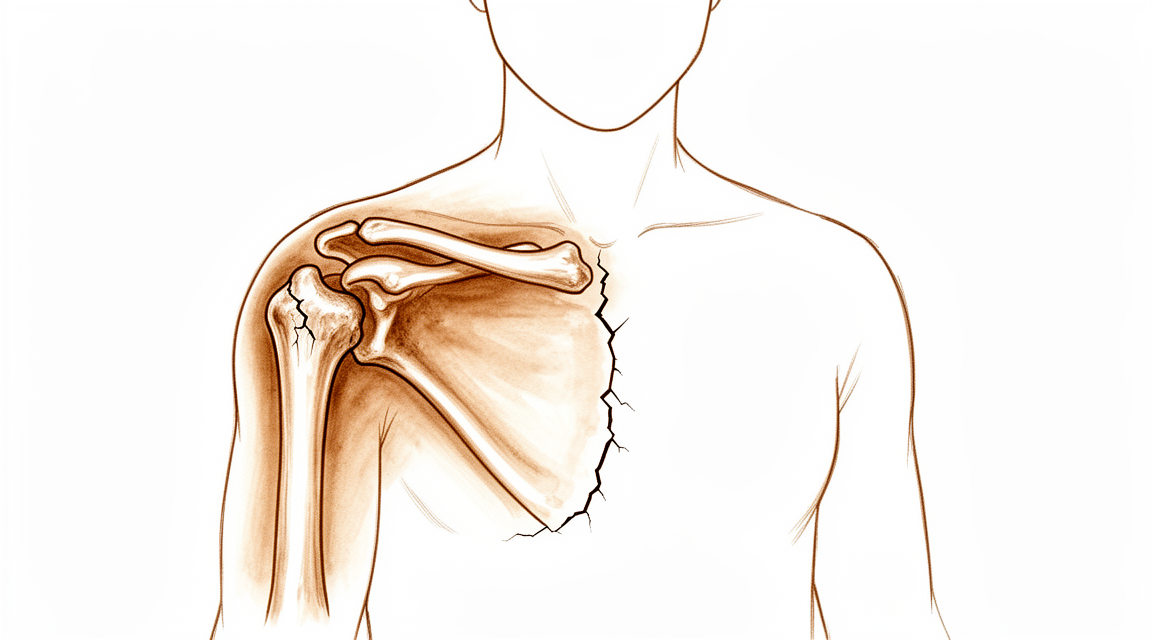
Ang iyong nararamdaman
Ang proximal humerus fracture ay isang bali sa itaas na bahagi ng buto ng braso, sa ibaba lamang ng balikat. Karaniwan itong nangyayari sa pagkatumba, kadalasan sa balikat mismo o sa nakaunat na braso. Biglaan ang bali, hindi dahan-dahan sa paglipas ng panahon.
Ang unang mararamdaman mo ay sakit sa itaas na bahagi ng braso at balikat. Kadalasan ay nagsisimula ito sa mismong sandali ng pagkatumba. Ang balikat ay maaaring mamaga at magkapasa sa susunod na isa o dalawang araw, at ang pasa ay maaaring kumalat pababa sa braso. Maaaring mukhang wala sa tamang hugis ang iyong braso kung nawala sa puwesto ang mga nabaling piraso. Malamang na ayaw mong igalaw ang braso, at nagiging mahirap ang mga simpleng bagay: ang pagbibihis, ang pag-abot sa loob ng aparador, ang pagbitbit ng shopping bag, o ang paggulong patagilid sa panig na iyon sa kama.
Ang sakit ay madalas na mas malala sa gabi sa mga unang araw, at maaaring mahirap makahanap ng komportableng posisyon. Masakit ang paggalaw ng braso sa simula. Sa mga unang linggo, habang nagsisimulang maghilom ang buto, karaniwang unti-unting humuhupa ang sakit. Ang balikat ay madalas na matigas na ang pakiramdam pagsapit ng panahong gumaan ang sakit, dahil hindi ito iginagalaw.
Karamihan sa mga bali na ito ay nangyayari sa mga babaeng lampas 70 taong gulang, at karaniwan ang mga ito sa mga butong naging manipis at marupok dahil sa edad (tinatawag itong osteoporosis). Kung nabalian ka na ng buto dati, o mabali mo ang butong ito, maaari itong magpahiwatig ng mas mataas na posibilidad ng isa pang bali sa hinaharap. Mabuting banggitin iyon sa iyong GP, na maaaring magsuri ng kalusugan ng iyong mga buto.
Ang ilang bali ay binubuo ng ilang piraso, at ang ilan ay nawawala sa puwesto. Inaalam ng iyong surgeon ang pattern mula sa pagsusuri at mga X-ray, kung minsan kasama ang CT scan, isang detalyadong scan na mas malinaw na nagpapakita ng buto. Karamihan sa mga bali na ito ay naghihilom nang walang operasyon, at nagdudugtong ang buto sa higit sa 90% ng mga kasong ginamot sa ganitong paraan.
Bantayan ang ilang palatandaan na nangangailangan ng pangangalaga sa parehong araw. Pumunta sa emergency department kung ang iyong kamay o mga daliri ay nagiging maputla, malamig, puti o asul, o kung bigla kang mawalan ng pakiramdam o galaw sa braso pagkatapos ng pinsala. Ganoon din kung may sugat ang balat sa ibabaw ng bali, o kung may nakalabas na buto.
Ano ang aktwal na nangyayari
Ang itaas na bahagi ng buto ng iyong braso ay hugis-bola na nakapatong sa isang mababaw na socket sa iyong shoulder blade. Maliit ang socket, humigit-kumulang isang katlo ng laki ng bola, kaya malayang gumagalaw ang joint ngunit umaasa ito sa soft tissue upang manatiling matatag. Apat na tendon ang bumabalot sa bola at dumidiin dito pababa habang ang mas malalaking kalamnan ang nag-aangat ng braso. Kapag nabali ang buto, nagugulo ang pagtutulungang iyon.
Karaniwang nangyayari ang bali dahil itinutulak ng puwersa ng pagkatumba ang buto ng braso laban sa socket, na mas matigas kaysa sa butong nakapaligid dito. Ang buto ay kumikilos na parang martilyong tumatama sa palihan, at nababali ito kung saan pinakamahina ang buto. Pagkatapos ay hinihila ang mga nabaling piraso ng mga tendon na nakakabit sa mga ito. Hinihila ng bawat tendon ang sarili nitong piraso sa sarili nitong direksyon, kaya ang ilang bali ay nauuwi sa ilang pirasong nawala sa puwesto.
Kahit na manatiling malapit ang mga piraso sa dapat nilang kinalalagyan, hindi gumagana nang normal ang balikat sa loob ng ilang panahon. Kailangan ng mga tendon sa paligid ng joint ng makikinis na ibabaw na madudulasan upang gumana, at ginagambala iyon ng pamamaga at ng nabaling buto. Ang mga lining sac na nagpapahintulot sa tendon na dumulas sa ibabaw ng buto ay maaaring kumapal at magpeklat, na isang dahilan kung bakit tumitigas ang balikat. Ang maagang paggalaw ng braso, kapag sinabi na ng iyong surgeon na ligtas na, ay tumutulong na limitahan ang pagpepeklat na iyon.
Naghihilom ang buto sa pamamagitan ng muling pagdudugtong, gaya ng nangyayari sa nabaling buto saanman sa katawan. Nabubuo ang bagong buto sa kabila ng bali at tumitibay sa loob ng mga linggo hanggang buwan. Kung may tendon na natanggal kasama ang isang piraso ng buto, naghihilom ang tendon habang dumudugtong pabalik sa puwesto ang pirasong iyon. Mapagpatawad ang balikat sa bahagyang baluktot na paghilom, dahil hindi ito joint na nagdadala ng bigat ng katawan at malaking bahagi ng trabaho ay ginagawa ng mga nakapaligid na kalamnan.
Ilang pattern ang nagbabago sa sitwasyon. Ang bali mismo sa base ng bola ay maaaring pumutol sa supply ng dugo nito, na nakaaapekto sa paghilom. Ang mga bali na mas mababa ay karaniwang hindi nakagagambala sa supply ng dugo. Kung ang mga piraso ay malubhang nawala sa puwesto o unstable, o kung ang bola mismo ay nabiyak, mas malamang na isaalang-alang ang operasyon.
Ano ang maaari naming gawin tungkol dito
Si Dr Kieran Hirpara, isang upper-limb surgeon sa Mater Private Hospital Rockhampton, ay itinutugma ang gamutan sa iyong partikular na pinsala. Ang ilang bali ay naghihilom nang walang operasyon, at ang iba ay nangangailangan ng operasyon agad pagkatapos ng pinsala, kaya mahalaga ang maagap na pagsusuri. Tinitingnan namin kung ilang piraso ang buto, kung gaano kalayo nawala sa puwesto ang mga ito, kung stable ang bali, at kung ano ang kailangang gawin ng iyong braso. Bahagi rin ng desisyong iyon ang iyong sariling kalusugan at kung gaano karaming sakit ang handa mong tiisin.
Marami sa mga bali na ito ang ginagamot nang walang operasyon, kabilang ang ilan kung saan nawala sa puwesto ang mga piraso. Ang non-operative care ay nangangahulugan ng isang sling upang mapanatiling hindi gumagalaw ang braso habang dumudugtong ang buto, hindi splint o cast. Hindi ito basta pag-iwan sa iyo: regular ka naming nakikita at sinusuri namin ang bali gamit ang paulit-ulit na X-ray upang matiyak na naghihilom ito sa katanggap-tanggap na posisyon. Kapag sinabi ng iyong surgeon na handa na ang buto, gagabayan ka ng isang physiotherapist pabalik sa paggalaw nang paunti-unti, una ang banayad na tinutulungang paggalaw, pagkatapos ay active na paggalaw habang tumitibay ang buto. Nagdudugtong ang buto sa higit sa siyam sa bawat sampung kasong ginamot sa ganitong paraan, at ang karaniwang tagal bago tuluyang maghilom ay 14 na linggo. May 7% na posibilidad na mabagal magdugtong ang buto o hindi ito magdugtong, at humigit-kumulang 5.6% ng mga taong ginamot sa ganitong paraan ang nangangailangan pa rin ng operasyon sa huli.
Inirerekomenda ang operasyon mula sa simula para sa ilang pinsala: mga baling malubhang nawala sa puwesto at unstable, mga bali kung saan nabiyak ang bola ng joint, mga fracture-dislocation kung saan lumabas din ang joint, at mga pinsala sa mga mas bata o mas aktibong tao na kailangang gumawa ng mas marami ang braso. Layunin ng operasyon na mapanatili ang mga piraso sa mas magandang posisyon habang naghihilom ang mga ito, o, para sa ilang malubhang pattern sa mga nakatatandang pasyente, na palitan ang joint. Sa ilang sitwasyon, tunay na pinagsasaluhan ang pagpili: maaaring posible ang non-operative care, ngunit ang sakit sa daan o ang huling posisyon ng balikat ay maaaring hindi katanggap-tanggap sa iyo. Pag-uusapan natin ang parehong landas bago magpasya ng anuman.
Alinmang landas ang piliin mo, magkatulad ang mga unang linggo. Mahalaga ang pagkontrol sa sakit sa simula, at tutulungan ka naming makahanap ng mga posisyon at simpleng paraan para makatulog ka at magawa ang mga pang-araw-araw na gawain. Pinoprotektahan mo ang braso habang naghihilom ang buto, at iniiwasan ang pagbubuhat at mga biglaang galaw. Nagsisimula ang physiotherapy sa tamang yugto para sa iyong pinsala, sa gabay ng iyong physiotherapist, at ito ang bahagi ng gamutan na pinakamarami kang kontrol.
Ang mga pasyente ay karaniwang nirerefer sa aming klinika ng kanilang GP; kung iminungkahi ng isang physiotherapist na magpatingin sa amin, kakailanganin mo pa rin ng referral mula sa iyong GP upang maging eligible para sa Medicare rebate.
Ano ang dapat asahan
Mabagal magdugtong ang buto. Para sa karamihan ng mga taong ginamot nang walang operasyon, ang karaniwang tagal bago tuluyang maghilom ay 14 na linggo, at nagdudugtong ang buto sa higit sa siyam sa bawat sampung kaso. Sa mga unang linggo, unti-unting humuhupa ang sakit, bagaman ang balikat ay madalas na matigas na ang pakiramdam pagsapit ng panahong iyon. Sa mga sumunod na buwan, gagabayan ka ng isang physiotherapist pabalik sa paggalaw nang paunti-unti, at bumabalik ang mga pang-araw-araw na gawain tulad ng pagbibihis at pagbitbit ng magagaang bagay habang tumitibay ang buto.
Kung sasailalim ka sa operasyon, magkatulad ang mga unang linggo: pagprotekta sa braso habang naghihilom ito, pagkatapos ay paunti-unting paggalaw kasama ang iyong physiotherapist. Maaaring abutin ng ilang buwan bago muling maging matatag ang pakiramdam ng balikat, at karaniwan ang paninigas sa daan. Pinapanatili ng operasyon ang mga piraso sa mas magandang posisyon habang naghihilom ang mga ito, ngunit may sarili itong mga panganib, kabilang ang mas mataas na posibilidad na mangailangan ng isa pang operasyon sa kalaunan. Para sa ilang malubhang pattern sa mga nakatatandang pasyente, layunin ng joint replacement ang mas magandang pangmatagalang resulta, bagaman ang paggaling mula sa replacement ay may sarili nitong proseso.
Ilang bagay ang mabuting malaman nang tapat. May posibilidad na mabagal magdugtong ang buto o hindi ito magdugtong, at ang ilang taong ginamot nang walang operasyon ay nangangailangan pa rin ng operasyon sa huli. Ang balikat na naghilom sa bahagyang baluktot na posisyon ay madalas na gumagana pa rin nang maayos, dahil hindi nagdadala ng bigat ng katawan ang joint at malaking bahagi ng trabaho ay ginagawa ng mga nakapaligid na kalamnan. Ang paninigas ang pinakakaraniwang reklamo sa alinmang landas, kaya mahalaga ang mga ehersisyo sa paggalaw.
Ang paggaling mula sa pinsalang ito ay karaniwang sinusukat sa mga buwan sa halip na mga linggo. Karamihan sa mga tao ay muling nagagamit nang komportable ang braso sa araw-araw, bagaman ang ilan ay naiiwang may paninigas o kirot na nagtatagal. Kung hindi humuhupa ang iyong mga sintomas, lumalala sa loob ng mga linggo, o pinipigilan kang gamitin ang braso, magpatingin sa iyong GP o humingi ng pagsusuri ng isang espesyalista.
Kailan dapat magpatingin
Humingi ng agarang pangangalaga kung malinaw na wala sa tamang hugis ang iyong braso pagkatapos ng pinsala, kung may sugat ang balat sa ibabaw ng bali, kung may nakalabas na buto, o kung ang iyong kamay o mga daliri ay nagiging maputla, malamig, puti o asul. Ang biglaang pagkawala ng pakiramdam o galaw sa braso pagkatapos ng pinsala ay nangangailangan din ng pagpunta sa emergency department sa parehong araw. Kung hindi mo makontak ang klinika, pumunta sa pinakamalapit na emergency department.
Magpatingin sa iyong GP o humingi ng pagsusuri ng isang espesyalista kung hindi humuhupa ang sakit, o kung ang pamamaga, paggalaw o paggamit ng braso ay hindi bumubuti linggo-linggo habang naghihilom ang buto. Ang mga sintomas na lumalala sa loob ng mga linggo, gumigising sa iyo sa gabi, o pumipigil sa iyong magtrabaho o gamitin ang braso ay nararapat ding ipasuri.
Higit pang detalye
Advanced reading: the deeper science (optional)
Ang seksyong ito ay lumalampas sa kailangan mo para sa iyong sariling mga desisyon sa paggamot. Ang bali sa balikat sa huling bahagi ng buhay ay karapat-dapat sa karagdagang pagbabasa dahil isa ito sa mga pinakamalinaw na kaso sa orthopaedics kung saan ang ebidensya at pang-araw-araw na praktis ay hindi nagkasundo, at kung saan ang paggamot na tila mas seryoso ay hindi ang nagbubunga ng mas mabuting braso.
Para sa karamihan ng mga nakatatandang pasyente, ang operasyon ay hindi nagpapabuti sa resulta
Paulit-ulit nang ginawa ang paghahambing. Sa pagsasama-sama ng 1,743 na pasyente, isang systematic review ang nagrekomenda ng non-operative treatment para sa average na pasyenteng lampas 65 anyos na may displaced proximal humeral fracture, na nagsasaad na ang pinagsama-samang epekto ng mga observational study ay tumugma sa mga randomised trial [1]. Isang mas naunang review ng 486 na pasyente ang nakakita na noon pa man na walang mapapatunayang pagkakaiba sa mga outcome sa pagitan ng mga fracture na pinamahalaan nang surgically at conservatively [2].
Ito ay counterintuitive, dahil ang X-ray ng isang displaced proximal humerus fracture ay mukhang nakakabahala. Ang buto ay nasa ilang piraso at malinaw na wala sa tamang posisyon. Ang instinct, ng pasyente at madalas ng clinician, ay ang isang bagay na kitang-kitang mali ay dapat itama.
Ang ipinapakita ng mga trial ay ang balikat ay di-pangkaraniwang mapagbigay sa hindi perpektong posisyon ng buto. Hindi ito isang weight-bearing joint, ang nakapalibot na cuff at deltoid ang gumagawa ng malaking bahagi ng trabaho, at ang mga fragment ay pinapanatili ng soft tissue na nagpapanatili ng blood supply sa mga ito. Ang isang balikat na gumaling nang bahagyang tabingi ay madalas na nagtatapos sa paggalaw at pakiramdam na halos katulad ng isa na inayos, at nararating ito nang walang sugat, implant, o ang mga panganib sa ibaba.
Binago ng pagsubok ang ebidensya at hindi ang praktis
Ito ang bahaging dapat pag-isipang mabuti. Ang PROFHER ay ang malaking randomised trial na sumubok sa operasyon laban sa non-operative treatment para sa mga displaced proximal humerus fracture at nakitang walang benepisyo ang pag-oopera [6].
Isang pag-aaral sa 116,868 na pasyente ang nagtanong kung ang praktis ba ay aktwal na nagbago matapos itong mailathala. Hindi ito nagbago: ang PROFHER ay hindi nagkaroon ng makabuluhang epekto sa mga rate ng operative treatment, na walang makabuluhang pagbabago sa rate ng operative treatment bawat taon [3].
Ito ay isang natuklasan tungkol sa medisina sa halip na tungkol sa iyong balikat, at ito ay isang makatwirang bagay na dapat malaman ng isang pasyente. Kung ikaw ay inaalok ng operasyon para sa fracture na ito, ang tamang tanong ay hindi kung ang operasyon ba ay kailanman nararapat, dahil kung minsan ay malinaw na nararapat ito, kundi ano ang partikular tungkol sa iyong fracture at iyong braso ang naglalagay sa iyo sa labas ng grupo kung saan hindi napatunayang nakakatulong ito.
Kapag pinili ang operasyon, nagbago na ang pamamaraan
Hindi nangangahulugan ang alinman sa mga nabanggit na hindi kailanman tama ang operasyon. Ang mga head-splitting fracture, fracture-dislocation, mga open injury at mga mas batang pasyente na may mataas na demand ay lahat magkakaibang sitwasyon.
Sa mga kaso kung saan isinasagawa ang operasyon sa isang matandang pasyente, ang larangan ay tiyak na lumipat patungo sa reverse total shoulder replacement. Sa pagsasama-sama ng 228,523 na mga pasyente, ang reverse total shoulder arthroplasty ay nagbigay ng mas mabuting functional outcomes at complication rates kaysa sa hemiarthroplasty, at isang mas paborableng revision profile kaysa sa plate fixation, sa mga matatandang pasyente na may mga fracture na ito [4].
Ang lohika ay ang reverse replacement ay hindi nakadepende sa paggaling ng mga tuberosity sa tamang posisyon, at ang paggaling ng tuberosity ay siya mismong hindi maaasahan sa isang osteoporotic shoulder. Inaalis nito ang variable na dahilan kung bakit naging unpredictable ang mga lumang operasyon.
Ano talaga ang naghuhula sa iyong paggaling
Hindi, sa kalakhan, ang pattern ng bali. Isang systematic review ng 4,323 na pasyente na sumuri sa mga biopsychosocial predictor ng paggaling ang nakatuklas na ang pre-operative functional status, kung gaano kahusay gumagana ang braso at ang tao bago ang pinsala, ang naghuhula sa functional recovery [5].
Mahalagang maunawaan ito nang tama. Hindi nito ibig sabihin na ang paggaling ay usapin lamang ng saloobin. Ibig sabihin nito, ang pinakamalakas na solong predictor kung saan ka hahantong ay kung saan ka nagsimula, na isang argumento para sa mga makatotohanang ekspektasyon, at para sa pagseryoso sa rehabilitasyon sa mga buwan kung kailan pakiramdam ay naninigas ang balikat at hindi kapansin-pansin ang pag-unlad.
Mga Sanggunian
[1] Beks RB, Ochen Y, Frima H, Smeeing DP, van der Meijden O, Timmers TK, et al. Operative versus nonoperative treatment of proximal humeral fractures: a systematic review, meta-analysis, and comparison of observational studies and randomized controlled trials. J Shoulder Elbow Surg. 2018;27(8):1526-34. https://doi.org/10.1016/j.jse.2018.03.009
[2] Nanidis TG, Majed A, Liddle AD, Constantinides VA, Sivagnanam P, Tekkis PP, et al. Conservative versus operative management of complex proximal humeral fractures: a meta-analysis. Shoulder Elbow. 2010;2(3):166-74. https://doi.org/10.1111/j.1758-5740.2010.00075.x
[3] Cheesman JS, Englert CH, Yang Q, Yoo JU, Nazir OF, Mirarchi AJ. Impact of PROFHER on trends in proximal humerus fracture treatment in the United States. Shoulder Elbow. 2025;18(3):476-84. https://doi.org/10.1177/17585732251359178
[4] Mekhail J, Mullan R, Cross JL, Jahagirdar O, Luo X, Salameh M. Outcomes of reverse total shoulder arthroplasty vs. other surgical fixation methods for proximal humerus fractures: a systematic review and meta-analysis. JSES Rev Rep Tech. 2026;6(2):100644. https://doi.org/10.1016/j.xrrt.2025.100644
[5] Varahra A, MacDermid JC, Szekeres M. A systematic review of biopsychosocial prognostic factors of recovery after a proximal humerus fracture. J Hand Ther. 2023;36(4):825-44. https://doi.org/10.1016/j.jht.2023.06.005
[6] Rangan A, Handoll H, Brealey S, Jefferson L, Keding A, Martin BC, et al. Surgical vs nonsurgical treatment of adults with displaced fractures of the proximal humerus: the PROFHER randomized clinical trial. JAMA. 2015;313(10):1037-47. https://doi.org/10.1001/jama.2015.1629
Evidence & references
This is the clinical evidence summary written for health professionals. It is technical, and it lists the research this page was built from. You do not need to read it to understand your treatment or to make a decision about it.
Overview
Non-Operative Management
- Non-operative management is associated with good outcomes in the majority of proximal humerus fractures in adults [1].
- Patients with proximal humerus fractures that would have normally necessitated surgical treatment showed favorable outcomes following nonsurgical treatment [2].
- Most proximal humeral fractures in elderly patients can be treated nonoperatively with good functional outcomes [10].
- Over the past decade, most older adults who sustain proximal humerus fractures continue to receive nonoperative treatment [6].
- Most one-part proximal humerus fractures are amenable to non-operative treatment with positive outcomes reported in the vast majority of cases [16].
- Most pediatric patients with proximal humerus fractures have favorable results, and complications are infrequent [17].
Operative Management
- Percutaneous treatment of selected proximal humeral fractures results in predictable union and good clinical results with a low rate of complications [32].
- Nail fixation for proximal humerus fractures is a very good technique if the indication is well defined [47].
- The selection of reverse total shoulder arthroplasty over other surgical options is a current, reasonable, and safe option to treat proximal humerus fractures, particularly in those with higher Neer grades and/or in older patients [55].
- Hemiarthroplasty and reverse prosthesis are indicated for complex proximal humerus fractures in patients no younger than 70 years of age [8].
- Patients with a proximal humerus fracture undergoing reverse total shoulder arthroplasty have significantly worse perioperative outcomes, including higher rates of complications, longer hospital stays, and higher costs, compared to patients with other indications [156].
Treatment Considerations and Evidence Gaps
- Treatment algorithms and outcomes following proximal humerus fractures in patients less than or equal to 60 years of age are distinctly different from that of a more elderly population [4].
- Both age and gender have an association with the definitive treatment patients received for proximal humerus fractures over the last decade [5].
- The available literature does not demonstrate a clear clinical benefit of operative treatment over nonoperative management of proximal humeral fractures in adult patients younger than 65 years [21].
- Evidence-based recommendations to guide treatment of proximal humerus fractures are lacking, and no good evidence exists whether surgery is clearly superior to nonoperative treatment [34].
- No single fixation method is a panacea for proximal humeral fractures; choice of implant and method should be selected according to individual patient and fracture pattern characteristics based on clearly defined indications and contraindications [51].
- Prospective clinical trials with longer-term follow-up are required for definitive assessment of the ideal fixation construct for surgical management of two-part proximal humerus fractures [24].
- Besides age, most randomized controlled trials on surgical management of proximal humerus fractures do not include patient-specific variables within their inclusion and exclusion criteria [23].
- There are conflicting opinions on what outcome measure is best to assess function following the treatment of proximal humerus fractures [11].
- The development of an evidence-based clinical protocol for the treatment of proximal humerus fractures is long overdue, requiring a thoughtful, all-inclusive, randomized multicenter trial to determine the best treatment options [60].
- Guidelines and treatment algorithms for native humerus fractures may not be generalizable for those of pathologic origin [70].
Outcomes and Complications
- Mortality at 1 year for fragility proximal humerus fractures is universally high regardless of risk factors [18].
- After surgical treatment, patients with pathologic humerus fractures had significantly higher complication rates compared with native humerus fractures [70].
Anatomy & Pathophysiology
Bony Anatomy
- The proximal humerus comprises four main parts: the humeral head, greater tuberosity (GT), lesser tuberosity (LT), and humeral shaft [76].
- The articular head of the proximal humerus is spherical with a diameter of 37 to 57 mm [76].
- The most superior portion of the articular surface of the humeral head averages 8 mm above the greater tuberosity [76].
- Humeral version averages 29.8 degrees, with a range of 10 to 55 degrees [76].
- The humeral head is inclined approximately 130 degrees with respect to the humeral shaft [76].
- The anatomic neck is located at the junction of the articular surface and the tuberosities [76].
- The surgical neck represents an indistinct region, or metadiaphyseal junction, below the tuberosities but above the humeral shaft [76].
- The greater tuberosity is located in a posterior-superior location with respect to the humeral shaft [76].
- The lesser tuberosity is located on the anterior aspect of the proximal humerus [76].
- The bicipital groove lies between the greater and lesser tuberosities and serves as a pathway for the long head of the biceps [76].
- The distal aspect of the bicipital groove is internally rotated with respect to the proximal portion [76].
- The glenoid is a convex structure of shallow depth shaped like an inverted pear [76].
- The acromion, coracoacromial ligament, and coracoid process form the coracoacromial arch, a rigid bony-ligamentous structure that imparts stability to the shoulder girdle [76].
- The humeral head averages 19° of retroversion and 41° of inclination (neck-shaft angle) [79].
- The proximal humerus has three centers of ossification: the humeral head (4 to 6 months), the greater tuberosity (1 to 3 years), and the lesser tuberosity (3 to 5 years) [79].
- The proximal humeral ossification centers fuse to the shaft at age 17 to 20 years [79].
- The humeral head is retroverted 30 degrees relative to the transepicondylar axis of the humerus [90].
- Head height is approximately 5.6 cm above the superior border of the pectoralis major tendon [90].
- The anatomic neck is directly below the humeral head and serves as an attachment for the shoulder capsule [90].
- The surgical neck is more distal than the anatomic neck and is more often involved in fractures [90].
- The transverse humeral ligament is an important stabilizer of the biceps tendon [90].
- The articular surface of the humeral head is essentially spherical, with an arc of approximately 160 degrees covered by articular cartilage [88].
- The radius of curvature of the humeral head is approximately 25 mm and is slightly larger in men than in women [88].
- The average neck-shaft angle is 45 degrees (±5 degrees), with a range of 30 to 50 degrees [88].
- The superior margin of the humeral head articular surface is normally superior to the top of the greater tuberosity by 8 to 10 mm [88].
- The distance from the lateral base of the coracoid process to the lateral margin of the greater tuberosity is called the lateral humeral offset [88].
- Proximal humeral retroversion is highly variable, ranging from 0 to 55 degrees depending on the method used for measurement [88].
- The glenoid cavity is a shallow socket, approximately one third the size of the humeral head [77].
- The neck-shaft angle measures an average of 135 degrees [77].
- The humeral head is retroverted an average of 30 degrees [77].
- The proximal humeral physis closes by 14 to 17 years of age in girls and by 16 to 18 years in boys [83].
- Humeral retroversion averages 65 degrees in infants and young children and gradually decreases, approaching adult values by 11 years of age [83].
- Eighty percent of subsequent humeral growth comes from the proximal humeral physis, accounting for approximately 40% of the growth of the entire upper extremity [83].
- The periosteum is thicker and stronger in the posteromedial portion of the proximal humerus compared to the anterolateral portion, which is often quite thin [83].
- The proximal humeral physis is irregularly shaped, with its apex located on the posteromedial portion of the proximal humerus [83].
Soft Tissue & Vascular Anatomy
- The greater tuberosity serves as the attachment site for the supraspinatus, infraspinatus, and teres minor tendons of the rotator cuff [76].
- The lesser tuberosity serves as the attachment site for the subscapularis tendon [76].
- The rotator cuff consists of four muscles: the subscapularis, supraspinatus, infraspinatus, and teres minor [77].
- The teres major is not a rotator cuff muscle [77].
- The infraspinatus and teres minor are external rotators, while the subscapularis is an internal rotator of the humerus [77].
- The deltoid and pectoralis major muscles, along with the rotator cuff, cause predictable displacement of fractures around the proximal humerus [77].
- The subscapularis originates from the anterior scapula and inserts anteriorly onto the lesser tuberosity [83].
- The greater tuberosity provides attachment superiorly and posteriorly for the supraspinatus, infraspinatus, and teres minor [83].
- The deltoid courses from the clavicle and acromion superiorly into a common tendinous insertion onto the lateral upper third of the humeral shaft [83].
- The pectoralis major inserts anteriorly onto the lateral wall of the bicipital groove and forms the roof of the distal continuation of the bicipital tunnel [83].
- The proximal humerus receives its blood supply from the anterior and posterior humeral circumflex branches from the third division of the axillary artery [76].
- The posterior humeral circumflex artery travels with the axillary nerve, enters the quadrilateral space posteriorly, and anastomoses with a branch of the anterior circumflex to supply the posterior cuff [76].
- The anterior humeral circumflex artery arises from the axillary artery at the inferior border of the subscapularis [76].
- The anterior humeral circumflex artery provides vascular inflow to the humeral head by way of its terminal anterolateral branch known as the artery of Laing (also known as the arcuate artery) [76].
- The ascending branch of the anterior humeral circumflex artery courses parallel to the lateral aspect of the long head biceps tendon and enters the humeral head at the interface of the bicipital groove and greater tuberosity [76].
- The major blood supply to the humeral head is through the ascending branch of the anterior humeral circumflex artery, which penetrates the head at the bicipital groove and becomes the arcuate artery [77].
- The anterolateral ascending branch of the anterior humeral circumflex artery provides the primary blood supply to the humeral head [79].
- The terminal intraosseous portion of the anterior humeral circumflex artery enters at the proximal aspect of the intertubercular groove as the arcuate artery [79].
- Quantitative assessment has shown that 64% of the humeral head blood supply arises from the posterior humeral circumflex artery [83].
- The brachial plexus and axillary artery lie anterior to the coracoid process of the scapula and humeral head [77].
- The axillary nerve circles the humeral neck just inferior to the glenohumeral joint as it courses posteriorly [83].
- The axillary nerve is a terminal branch coming off the posterior cord of the brachial plexus just proximal to the coracoid process [82].
- The axillary nerve passes beneath the conjoined tendon anterior to the subscapularis 3 to 5 mm medial to the musculotendinous junction and then adjacent to the inferior capsule before entering the quadrilateral space posteriorly [82].
- The axillary nerve splits into the anterior and posterior branches within the quadrangular space [82].
- The anterior and middle deltoid muscle receives sole innervation from the anterior branch of the axillary nerve [82].
- Posterior deltoid muscle innervation varies, with supply only from the anterior branch in 2.3% of cases, from the posterior branch in 8.5%, and from both branches in 89.1% [82].
- The posterior branch of the axillary nerve branches to supply the teres minor muscle and then terminates as the superior lateral brachial cutaneous nerve [82].
- The subacromial bursa separates the rotator cuff tendons from the coracoacromial arch, allowing them to glide [84].
- The subscapular bursa lies between the subscapularis tendon and the neck of the scapula and communicates with the joint cavity between the superior and middle glenohumeral ligaments [80].
- The subscapular bursa often houses loose bodies in the shoulder and is a region in which synovitis of the shoulder may be most intense [80].
- The rotator interval is defined medially by the base of the coracoid, superiorly by the supraspinatus tendon, and inferiorly by the subscapularis tendon [79].
- The rotator interval contains the coracohumeral ligament, the superior glenohumeral ligament, and the intra-articular portion of the long head of the biceps tendon [79].
- The tendons of the infraspinatus and supraspinatus muscles join approximately 15 mm proximal to their insertion and cannot be readily separated by blunt dissection [89].
- The infraspinatus and teres minor fuse near their musculotendinous junctions [89].
- The supraspinatus and subscapularis tendons join as a sheath that surrounds the biceps tendon at the entrance of the bicipital groove [89].
- The roof of the biceps sheath consists of a portion of the supraspinatus tendon, and a sheet of the subscapularis tendon forms the floor [89].
- The coracohumeral ligament is a thick band of fibrous tissue extending from the coracoid process along the surface of the capsule to the tuberosities between the supraspinatus and subscapularis tendons [89].
Pathophysiology & Biomechanics
- Stability and function of the glenohumeral joint are provided by the interaction of structures that promote a near global range of motion and purposeful function [76].
- External loads transferred to the shoulder girdle are initially offset by joint surface anatomy, joint volume, atmospheric pressure, and joint fluid cohesion and adhesion [76].
- Moderate and large loads are counterbalanced by the deltoid and rotator cuff and by the capsulolabral and bone structures, respectively [76].
- Proximal humerus fractures alter complex interactions of the shoulder girdle, resulting in pain, decreased range of motion and stiffness, and disability [76].
- Following a fracture of the proximal humerus, displacement of each "part" occurs in a predictable manner based on the deforming forces created by the tendinous insertions of the pectoralis major, subscapularis, supraspinatus, and infraspinatus [76].
- The subscapularis inserts on the lesser tuberosity and causes medial displacement [76].
- The supraspinatus and infraspinatus insert on the greater tuberosity and cause superior and posterior displacement [76].
- The pectoralis major inserts on the humeral shaft and displaces it medially [76].
- A fracture involving the anatomic neck is prognostically worse than fractures involving other regions of the proximal humerus with respect to the potential disruption of the vascular supply to the humeral head and the subsequent development of avascular necrosis [76].
- Injury to the arcuate artery may result in osteonecrosis of the humeral head [76].
- Additional extraosseous collateral branches can permit humeral head perfusion despite complete ligation of the arcuate artery [76].
- Fractures of the anatomic neck have a poor prognosis because of complete disruption of the blood supply to the head [77].
- Surgical neck fractures are common, and with these, the blood supply to the head is preserved [77].
- Displaced proximal humerus fractures can impede normal movement of structures passing underneath the coracoacromial arch, causing impingement and disruption of normal glenohumeral motion [76].
- In displaced and nondisplaced proximal humerus fractures, the subdeltoid and subacromial bursae can become thickened and fibrotic, forming adhesions that can limit normal glenohumeral motion [76].
- Early range of motion exercises after a fracture have been hypothesized to decrease the formation of such adhesions [76].
- The glenoid bone is generally harder and denser than the proximal humerus and acts as an 'anvil' on which the proximal humerus is impacted during injury [64].
- The combination of the direction of the blow to the humerus, quality of bone in the proximal humerus, and the pull of the soft tissues produces various types of fracture patterns [64].
- Medical comorbidities increase the risk for fracture and type of fracture sustained [64].
- Proximal humerus fractures are seen in a greater frequency in patients with a depleted neuromuscular response [64].
- The close anatomical relationship between the proximal humerus, axillary artery, and brachial plexus predisposes these structures to combined injury patterns that can threaten limb viability [43].
- The incidence of neurovascular injury is increased in fracture-dislocations [27].
- The axillary nerve is most commonly injured in proximal humerus fractures [27].
- An axillary nerve injury from proximal humeral fracture or fracture-dislocation would result in paralysis of the deltoid muscle and anesthesia over the “badge” region at the lateral proximal arm [77].
- The brachial plexus is prone to injury when the proximal humerus is injured in fractures or dislocations, or during traction [83].
- Adhesions in the humeroscapular motion interface can limit shoulder mobility, with examples including scarring after proximal humerus fracture trauma [82].
- The humeroscapular motion interface lies between the inner structures of the proximal humerus, rotator cuff, coracohumeral ligament, and biceps tendon sheath and the superficial layer of the acromion, deltoid, coracoacromial ligament, coracoid process, and conjoined tendon [82].
- Smooth, unrestricted motion at the humeroscapular motion interface is vital to shoulder mobility [82].
- The axillary nerve has an intimate relationship within the humeroscapular motion interface [82].
- Positioning the arm in abduction and internal rotation may help mitigate deforming muscular forces in proximal humerus fractures [132].
- Bone quality significantly impacts implant anchorage in osteosynthesis of proximal humerus fractures [144].
- Biomechanical changes associated with inferior tuberosity positioning after hemiarthroplasty may explain diminished function in patients with proximal humerus fractures [117].
- Anatomic reconstruction of tuberosity fragments produced results indistinguishable from normal shoulder controls in biomechanical studies [143].
- The double plate strategy can increase the stability of the medial column of the proximal humerus and enhance the overall biomechanical property of the repaired proximal humerus [153].
- Varus-displacing forces to the humeral head were superiorly reduced in settings utilizing a specific proximal anchoring point for intramedullary nailing [149].
- The Humerusblock NG allows for angular stable dynamic fixation of two-part proximal humeral fractures [161].
- Proper technique for internal fixation of the proximal humerus requires an understanding of osseous and neurovascular anatomy, with biomechanical studies showing that locked plating provides stable fixation [166].
- The biphasic plate concept is aimed at improving the biomechanics of locked plating [174].
- A biomechanically efficient nail without increased neurological risks can improve the pullout strength of the screws to provide more secure fixation of proximal humeral fractures [165].
Classification
Classification Systems and Reliability
- The Neer classification categorizes displaced proximal humerus fractures from two to four parts according to anatomic segments [169].
- In the Neer classification, displacement is defined as separation of a fragment greater than 1 cm or angulation of a fragment greater than 45° [169].
- Fracture lines in nondisplaced segments are not included in the Neer classification [169].
- The AO classification is based on the vascular supply of the articular segments [169].
- The AO classification is divided into three categories (A, B, C) of increasing severity, with each category further split into numerical subgroupings [169].
- Evaluation of classification systems for fractures of the proximal humerus using plain radiographs has yielded low interobserver reliability [41].
- The Mayo-FJD classification system for proximal humerus fractures allows high intraobserver and interobserver agreement using both radiographs and computed tomography [129].
- Reported mean kappa values for interobserver agreement on the AO classification have varied between 0.26 and 0.53 [173].
- Mean kappa values for interobserver agreement on the AO classification decreased from 0.53 for AO Types to 0.2 for AO Groups [173].
- Morphologic classification of proximal humerus fractures as the sole basis for treatment algorithms and surgical success should be scrutinized [59].
- Current diagnosis coding practices do not adequately capture the fracture complexity needed to conduct subgroup analysis for proximal humerus fractures [163].
Epidemiology and Demographics
- Proximal humerus fractures are osteoporotic injuries with increasing incidence due to aging populations [12].
- In a cohort of 688 patients, 49.2% of fractures were grouped into AO-OTA type A, 43.1% into type B, and 7.7% into type C [177].
- In a cohort of 688 patients, 24.3% of proximal humeral fractures were non-displaced or minimally displaced according to the Neer classification [177].
- In a cohort of 688 patients, 32.3% of proximal humeral fractures were two-part displaced according to the Neer classification [177].
- In a cohort of 688 patients, 30.9% of proximal humeral fractures were three-part according to the Neer classification [177].
- In a cohort of 688 patients, 6.9% of proximal humeral fractures were four-part according to the Neer classification [177].
- In a cohort of 688 patients, 5.6% of proximal humeral fractures were associated with a glenohumeral dislocation according to the Neer classification [177].
- There was no statistically significant association between gender and the AO-OTA classification or the Neer classification [177].
- There was no statistically significant association between the type of trauma and the AO-OTA classification or the Neer classification [177].
- There was no statistically significant association between the diagnosis of osteoporosis and the AO-OTA classification or the Neer classification [177].
- There was a statistically significant association between the AO-OTA and Neer classifications and age grouped by decades [177].
- There was a statistically significant association between the AO-OTA and Neer classifications and the type of treatment performed [177].
Clinical Evaluation and Imaging
- Accurate clinical evaluation, imaging, and classification are paramount for informed treatment decisions regarding proximal humerus fractures [12].
- The use of artificial intelligence can accurately detect and classify proximal humerus fractures on plain shoulder AP radiographs [69].
- The type of proximal humerus fracture depends on the amount and direction of applied force, the quality of bone, and the position of the shoulder at the time of injury [181].
- Neer defined significant displacement as greater than 1 cm of translation, or angulation greater than 45° for any of the major fracture fragments [181].
- The AO/ASIF group labeled valgus impaction injuries as Type C (C2.1, C2.2) fractures of the proximal humerus in their classification system [181].
Clinical Presentation
History and Mechanism
- The fracture results most commonly from an indirect mechanism, such as a fall on the outstretched upper extremity [27].
- Other indirect mechanisms, such as seizures or electrical shocks, are uncommon [27].
- Direct mechanisms from a blow to the shoulder occur much less frequently than the indirect mechanism [27].
- When obtaining a history from a patient with a suspected proximal humerus fracture, it is important to record the hand dominance, occupation, and mechanism of injury [27].
Physical Examination
- Gross deformity is not often appreciated because of the soft tissues surrounding the proximal humerus [27].
- Swelling and tenderness to palpation are typically present in patients with proximal humerus fractures [27].
- Ecchymosis extending distally along the extremity and along the chest wall is often present a few days following injury [27].
- Assessment of fracture stability is an important part of the examination [27].
- With one hand palpating the humeral head, the humeral shaft should be gently internally and externally rotated to assess stability [27].
- If the proximal and distal fragments move as a unit, the fracture is considered stable [27].
- A thorough neurovascular examination is crucial due to the close proximity of the brachial plexus and the axillary artery [27].
- Deltoid motor function and sensation over the lateral aspect of the shoulder should be assessed during the neurovascular examination [27].
Epidemiology and Risk Factors
- Proximal humerus fractures are now typically osteoporotic fractures in women over 70, with prevalence increasing due to an aging population in poor general condition [45].
- The incidence of proximal humerus fracture increased from 104.7/100,000 in 2008 to 124.7/100,000 in 2012 in women [115].
- The incidence of proximal humerus fracture increased from 45.3/100,000 in 2008 to 52.0/100,000 in 2012 in men [115].
- Proximal humerus fracture increased by 40.5% over the 5 year of study from 10,135 in 2008 to 14,238 in 2012 [115].
- The number of individuals 50 years or older in the general population increased 19.5% from 13,103,814 in 2008 to 15,657,674 in 2012 [115].
- The incidence of proximal humerus fracture in women (19.1%) was more increased than that in men (14.8%) from 2008 to 2012 [115].
- Combined fractures with femoral or vertebral fractures are associated with significantly higher mortality and morbidity compared with isolated proximal humerus fractures [130].
Complications and Prognosis
- Complications associated with proximal humerus fractures are varied and can be categorized as occurring at the time of initial injury, during operative management, or as delayed sequelae [13].
- Neurovascular injuries associated with proximal humerus fractures represent a rare yet clinically significant complication with potential for devastating functional outcomes [43].
- The multifactorial etiology of neurovascular injuries encompasses direct trauma from displaced fracture fragments and indirect injury due to the close anatomical relationship between the proximal humerus, axillary artery, and brachial plexus [43].
- Most nerve injuries, particularly involving the axillary nerve, demonstrate favorable outcomes with conservative management [43].
- Vascular injuries associated with proximal humerus fractures demand urgent multidisciplinary intervention to restore perfusion and prevent irreversible ischemia [43].
- Axillary artery injury associated with a proximal humerus fracture is a rare occurrence but can have profound consequences [131].
- There is a substantial mortality in patients with a proximal humerus fracture [14].
- Surviving patients with proximal humerus fractures frequently have persistent symptoms that can be predicted as early as after 1 year [14].
Investigations
Imaging Modalities and Protocols
- At least two X-ray views should be obtained for proximal humerus fractures: an anteroposterior view in the plane of the glenoid and an axillary projection with the arm in abduction [93].
- The recommended radiographic series for proximal humerus fractures is the Neer trauma series, consisting of an AP view, a lateral view in the scapular plane, and a Velpeau modified axillary view [95].
- The combination of the three views in the Neer trauma series allows evaluation of the shoulder joint in three separate perpendicular planes [95].
- The axillary view is important for evaluating the glenoid articular surface and the relationship of the humeral head anteriorly and posteriorly [95].
- Computed tomography (CT) is helpful for planning fracture surgery and shoulder joint replacement [93].
- On occasion, CT scanning may be necessary for detailing bony anatomy in proximal humerus fractures [95].
- CT imaging is frequently used to evaluate fractures of the shoulder [100].
- Magnetic resonance imaging (MRI) is useful to identify osteonecrosis of the humeral head or a bone tumour [93].
- MRI can identify labral tears and rotator cuff tears, although accuracy for these is enhanced by combining the scan with arthrography [93].
- MRI is the modality of choice for evaluating the rotator cuff, biceps, and subacromial/subdeltoid bursa [100].
- T2-weighted MRI provides better visualization of full thickness rotator cuff tears [100].
- Ultrasound is a simple and accurate test for identifying rotator cuff tears and calcific tendinitis [93].
- Ultrasound can be useful in guiding injections or barbotage [93].
- Ultrasonography is a low-cost alternative to MRI and arthrography for evaluating both skeletal and soft-tissue structures of the shoulder [100].
- Ultrasonography can provide immediate, real-time visualization of the rotator cuff, biceps tendon, and calcific deposits [100].
- Ultrasonography is highly operator dependent and is not as useful for evaluating labral tears or rotator cuff tears that are very small or larger than 3 cm [100].
- Zero-echo time (ZTE) MRI presents a viable alternative to CT in the evaluation of proximal humerus fractures [170].
Classification and Diagnostic Accuracy
- Evaluation of the classification systems for fractures of the proximal humerus with plain radiographs has yielded low interobserver reliability [41].
- Computed tomography scan was more specific than radiographs in the assessment of proximal humerus fracture sequelae [44].
- Convolutional neural networks (CNNs) proficiently rule out proximal humerus fractures on plain radiographs [190].
- ChatGPT-5 is highly inaccurate at identifying proximal humerus fractures on shoulder x-rays, characterizing fracture patterns, and providing accurate interpretations [207].
- The routine use of 3D-printed models may not be beneficial for classifying proximal humeral fracture patterns beyond the information gained from currently available imaging modalities [203].
- The use of 3D-printed models as the sole determinant for recommending surgical intervention should be avoided at this time [203].
Clinical Evaluation and Associated Injuries
- Accurate clinical evaluation, imaging, and classification are paramount for informed treatment decisions in proximal humerus fractures [12].
- Rotator cuff injuries can be expected with fractures of the tuberosities but can also result from strictly soft-tissue injuries such as shoulder dislocations [95].
- Evaluation of the integrity of the rotator cuff may be difficult in the acute setting [95].
- Ultrasound, MRI, arthrogram, or arthroscopy may be valuable in making a diagnosis of rotator cuff injury in the acute setting [95].
- Axillary artery injuries generally result from fractures or fracture-dislocations in which a medial bone spike injures or penetrates the axillary artery [95].
- The index of suspicion for axillary artery injury is high if the arm shows significant color differences compared with the uninjured arm [95].
- Pulses should be palpated and evaluated by Doppler studies when axillary artery injury is suspected [95].
- In addition to palpation and anteroposterior and lateral humeral x-ray, bilateral anteroposterior shoulders x-ray is suggested routinely to confirm the shoulder location in children with shoulder dislocation combined with proximal humerus fracture [205].
Treatment
Non-Operative Management
- In the vast majority of cases, proximal humerus fractures may be treated nonoperatively [3].
- A majority of patients with proximal humeral fractures underwent non-operative treatment [22].
- Nonsurgical treatment should have a more prominent role in the treatment of proximal humeral fractures [57].
- Approximately 80% of proximal humerus fractures are minimally displaced low energy injuries and are at low risk for future displacement, nonunion, or avascular necrosis, and have a high union rate with conservative management [65].
- Nonsurgical management of proximal humerus fractures decreased during the study period [110].
- There was no statistical difference in functional outcomes between non-displaced, 2-part and 3-part fractures of the proximal humerus treated non-operatively [114].
- Patients with non-operatively managed proximal humerus fractures continue to improve up to, and beyond 6 months post-injury [114].
- Non-operative treatment (NOT) involves a period of immobilization, such as an arm sling, followed by physiotherapy and exercise [116].
- Non-operative treatment is generally the accepted treatment option for minimally displaced fractures and often used also for people with displaced fractures [116].
- In a randomized controlled trial, there was no significant difference in clinical outcomes at 2 years between surgery and non-operative treatment in patients 60 years of age or older with displaced 2-part fractures of the proximal humerus [29].
- The ProFHER trial showed that conservative management is as effective as surgical intervention for displaced proximal humerus fractures [104].
- Prolonged sling use in conservatively managed displaced proximal humerus fractures can be associated with increased pain, stiffness, risk of falls, delayed return to function, and burden on healthcare systems [104].
- Supervised rehabilitation is comparable to a single advice session after nonoperative treatment of displaced proximal humerus fracture [126].
- Nonoperative treatment is recommended for the average elderly patient (aged > 65 years) with a displaced proximal humeral fracture [178].
- Proximal humerus fractures in children have tremendous potential for remodeling, making non-operative management the treatment of choice for most fractures [138].
Operative Management: Indications and General Principles
- Patients who have sustained an open fracture, vascular injuries, or those that have repairable neurologic injuries, are usually indicated for acute operative intervention [65].
- Operative fixation can provide stability if there is a need for any vascular or nerve repair procedures [65].
- Patients who have preexisting neurologic impairment on the side of injury resulting from a stroke or a traumatic spine injury, or who lead very inactive lifestyles, may not benefit from any acute intervention and can be managed nonoperatively [65].
- Patients who are medically unstable can be treated conservatively or treated in a delayed fashion once they are more physiologically stable [65].
- Consensus when managing proximal humerus fractures is limited to specific scenarios, whereas lack of consensus still exists in others [15].
- Surgical treatment of proximal humerus fractures remains far from straightforward, with unpredictable outcomes where factors associated with poor results include being a woman, four-part fracture dislocation, and absence of metaphyseal head extension [28].
- Delaying surgery for proximal humerus fracture is likely to increase inpatient morbidity, postoperative length of stay and non-routine discharge [167].
- The results of a prospective, randomized controlled trial will provide Level 1 evidence to guide decision-making in the treatment of proximal humerus fractures in the elderly population [103].
- Besides age, most RCTs on surgical management of proximal humerus fractures do not include patient-specific variables within their inclusion and exclusion criteria [23].
Operative Management: Internal Fixation (ORIF)
- The early, published results to date are encouraging in the treatment of three-part proximal humerus fractures [35].
- MIPO is a safe and effective option for the treatment of proximal humerus fractures, with good functional recovery and fewer complications, which are typically technique dependent [133].
- Although the less-invasive surgical procedure is a feasible treatment option in proximal humeral fractures with acceptable complications and considerable improvement during the first six months, a lengthy recovery time is required [140].
- Osteosynthesis of the proximal humerus in osteoporotic bone typically produces inferior results to that in younger subjects with better bone stock [109].
- In a study of the PlantTan Fixator Plate, there were no cases of infection, impingement, avascular necrosis or malunion in the population under 70 years of age [109].
- In a study of the PlantTan Fixator Plate, there was a significant proportion of patients with avascular necrosis and implant migration in the group over 70 years [109].
- Open reduction internal fixation (ORIF) is one of the common operative treatments for displaced and unstable fractures and those with more complex fracture patterns [116].
- In a network meta-analysis, the rank of treatments in terms of high Constant score was: RSA, ORIF, IN, NOT and HA [116].
- In a network meta-analysis, the rank for reduction in total incidence of complications was: RSA, NOT, HA, IN and ORIF [116].
- In a network meta-analysis, the rank for lowering the risk of additional surgery was: RSA, NOT, HA, IN and ORIF [116].
Operative Management: Arthroplasty
- Reverse total shoulder replacement is a promising treatment for geriatrics with three- and four-part proximal humerus fractures aiming for a better long-term functional outcome [26].
- The selection of RTSA over other surgical options is a current, reasonable, and safe option to treat proximal humerus fractures, particularly in those with higher Neer grades and/or in older patients [55].
- While the main potential advantage of the pyrolytic carbon head (PCH)—reduced glenoid erosion—will require further investigation with longer follow-up, this is the first study to demonstrate the safety and short-term outcomes of the PCH in treating proximal humerus fractures [61].
- These findings should be considered when treatment is selected for acute three- and four-part proximal humerus fractures [72].
- In a network meta-analysis, RSA had significantly the highest Constant score and lower total incidence of complications than ORIF, HA and IN [116].
- In a network meta-analysis, RSA resulted in a lower incidence of additional surgery than ORIF and IN [116].
- RSA had the highest probability for improving functional outcome and reduction in the total incidence of complications and requiring additional surgery among the five interventions for treating adults with displaced proximal humeral fracture [116].
- RTSA is an effective treatment option for selected patients with acute proximal humerus fractures [135].
- RTSA has shown to provide reproducible functional outcomes and is a good treatment option for elderly patients with 3-part and 4-part proximal humerus fractures [136].
- A meta-analysis demonstrates no significant differences in clinical outcomes or complication rates between standard components and fracture-specific components in RSA, suggesting comparable performance in the treatment of proximal humerus fractures [134].
Rehabilitation and Post-Treatment Care
- There is substantial variation in the literature regarding the optimal management for PHFs, with studies supporting nonoperative management, ORIF, and arthroplasty [127].
- The inconsistency between studies may in part be explained by heterogeneity in rehabilitation protocols, which are seldom evaluated [127].
- There is some evidence that early intensive mobilization yields similar outcomes compared to later or conventional mobilization after operative treatment (both plate fixation and hemiarthroplasty) and conservative treatment [127].
- It has remained unclear how other aspects of rehabilitation impact outcomes such as sling usage and timing of physical therapy [127].
- Participants allocated to nonsurgical treatment in the ProFHER trial were given a sling for the injured arm for as long as deemed necessary (3 weeks was suggested), followed by active rehabilitation [123].
- Rehabilitation care in the ProFHER trial was provided by physiotherapists in inpatient, outpatient, and community settings [123].
Complications
General Classification and Epidemiology
- Complications associated with proximal humerus fractures are categorized as occurring at the time of initial injury, during operative management, or as delayed sequelae [13].
- Proximal humerus fractures are typically osteoporotic fractures in women over 70, with prevalence increasing due to an aging population in poor general condition [45].
Mortality and Morbidity
- There is substantial mortality in patients with a proximal humerus fracture, and surviving patients frequently have persistent symptoms that can be predicted as early as after 1 year [14].
- The adjusted one-year mortality rate following a proximal humerus fracture was 13.05%, which is significantly higher than other upper extremity fractures but lower than hip fractures [68].
Non-Operative Complications
- The prevalence of nonunion after proximal humeral fracture is higher than previously reported, with most patients having a very low risk but a smaller subgroup at much higher risk [74].
Operative Complications: Osteosynthesis
- Fixation of proximal humerus fractures with proximal humerus locking plates is associated with a high rate of complications and reoperation [151].
- Selective Glenohumeral External Rotation Deficit (SGERD) is a new shoulder evaluation symptom identified as a sequela of post-ORIF deltoid adhesions after treatment of the proximal humerus fracture [71].
- Predictive models constructed using machine learning techniques demonstrated favorable discrimination and satisfactory-to-excellent performance in forecasting prolonged length of stay and serious adverse complications occurring within 30 days of surgical intervention for proximal humerus fracture [66].
- Percutaneous proximal humerus fixation offers less complications compared to other methods [158].
- After one-year, long-term follow-up of fixed proximal humerus fractures may be unnecessary for those without symptoms [48].
Operative Complications: Arthroplasty
- Hemiarthroplasty for the treatment of complex proximal humerus fractures yields variable long-term clinical outcomes and high rates of failure, with the majority due to greater tuberosity malunion or nonunion [63].
- Low arthroplasty survival is observed after treatment for proximal humerus fracture sequelae, as reported by the Nordic Arthroplasty Register Association [7].
- Hemiarthroplasty outcomes for acute proximal humerus fractures and fracture sequelae did not differ significantly, supporting the use of hemiarthroplasty in both settings with modest clinical outcomes [150].
- The main potential advantage of pyrolytic carbon head hemiarthroplasty—reduced glenoid erosion—will require further investigation with longer follow-up [61].
Pathologic Fractures
- After surgical treatment, patients with pathologic humerus fractures had significantly higher complication rates compared with native humerus fractures, suggesting that guidelines and treatment algorithms for native humerus fractures may not be generalizable for those of pathologic origin [70].
Recovery
Non-operative Management
- A multicenter randomized controlled trial found no significant difference in clinical outcomes at 2 years between surgery and non-operative treatment in patients 60 years of age or older with displaced 2-part fractures of the proximal humerus [29].
Operative Management
- Minimally invasive treatment of displaced proximal humeral fractures in patients younger than 70 years using the Humerusblock yields good midterm clinical and radiological results [37].
- The locking plate provides satisfactory functional outcomes after a mid-term follow-up in patients with displaced proximal humerus fractures [50].
- Double-plating of proximal humeral fractures yields good clinical mid- to long-term results in complex and highly unstable fractures [141].
- Timing of surgery did not impact outcomes of patients who underwent ORIF for proximal humerus fractures [206].
- Early operative intervention does not appear to decrease the rate of development of avascular necrosis after proximal humeral fracture [211].
Arthroplasty
- Long-term treatment with reverse shoulder arthroplasty (RSA) for displaced 3- or 4-part proximal humerus fractures provides better functional outcomes compared to nonoperative treatment, a difference attributed to the deterioration of functional outcomes of the nonoperative treatment over time [56].
- Functional outcomes of proximal humerus fractures treated with reverse shoulder arthroplasty improve with surgical experience, and outcomes become less variable after approximately 20 procedures [67].
- Patients in the proximal humerus fracture cohort were less likely to report persistent shoulder pain at all evaluated time points compared to the osteoarthritis cohort [201].
Prognosis and Complications
- Surviving patients with a proximal humerus fracture frequently have persistent symptoms that can be predicted as early as after 1 year [14].
- Post-traumatic osteonecrosis of the proximal humerus is a challenging problem commonly seen following multi-fragmentary fractures, affecting long-term functional recovery [147].
- If patients do not follow the usual course of improvement after a proximal humerus fracture from a superior traction mechanism, consideration should be given to associated superior labral tears that may require surgical intervention [210].
Follow-up and Assessment
Key Evidence
- [L4] Non-operative management is associated with good outcomes in the majority of proximal humerus fractures in adults. [1] (10.5312/wjo.v5.i5.685)
- [L4] Patients with proximal humerus fractures that would have normally necessitated surgical treatment showed favorable outcomes following nonsurgical treatment. [2] (10.1097/bte.0000000000000174)
- [L4] In the vast majority of cases, proximal humerus fractures may be treated nonoperatively. [3] (10.1155/2012/861598)
- [L4] Treatment algorithms and outcomes following proximal humerus fractures in patients less than or equal to 60 years of age are distinctly different from that of a more elderly population. [4] (10.1016/j.xrrt.2023.01.002)
- [L3] Both age and gender have an association with the definitive treatment patients received for proximal humerus fractures over the last decade. [5] (10.1016/j.jseint.2021.11.007)
- [L4] Over the past decade, most older adults who sustain proximal humerus fractures continue to receive nonoperative treatment. [6] (10.1016/j.jseint.2021.08.006)
- [L3] These results are pertinent when deciding on the treatment of proximal humerus fracture sequelae. [7] (10.1080/17453674.2020.1793548)
- [L4] They are indicated for complex proximal humerus fractures in patients no younger than 70 years of age. [8] (10.1016/j.otsr.2008.09.002)
- [L5] Most proximal humeral fractures in elderly patients can be treated nonoperatively with good functional outcomes. [10] (10.2106/jbjs.l.01293)
- [L4] Additionally, there are conflicting opinions on what outcome measure is best to assess function following the treatment of proximal humerus fractures. [11] (10.1007/s00264-017-3569-0)
- [L3] Our results suggest that there is a substantial mortality in patients with a proximal humerus fracture, as we have previously reported, and that surviving patients frequently have persistent symptoms that can be predicted as early as after 1 year. [14] (10.1080/17453670510041295)
- [L5] Consensus when managing proximal humerus fractures is limited to specific scenarios, whereas lack of consensus still exists in others. [15] (10.1016/j.jse.2024.12.005)
- [L5] Most pediatric patients with proximal humerus fractures have favorable results, and complications are infrequent. [17] (10.5435/jaaos-d-14-00033)
- [L3] Mortality at 1 year for fragility proximal humerus fractures is universally high regardless of risk factors. [18] (10.1016/j.jse.2022.03.006)
- [L1] The available literature does not demonstrate a clear clinical benefit of operative treatment over nonoperative management of proximal humeral fractures in adult patients younger than 65 years. [21] (10.1016/j.xrrt.2021.04.014)
- [L3] A majority of patients with proximal humeral fractures underwent non-operative treatment. [22] (10.1186/s12891-019-2812-9)
- [L2] Besides age, most RCTs on surgical management of proximal humerus fractures do not include patient-specific variables within their inclusion and exclusion criteria. [23] (10.1016/j.xrrt.2025.07.023)
- [L3] However, prospective clinical trials with longer-term follow-up are required for definitive assessment of the ideal fixation construct for surgical management of two-part proximal humerus fractures. [24] (10.1016/j.injury.2013.08.024)
- [L3] It is a promising treatment for geriatrics with three- and four-part proximal humerus fractures aiming for a better long-term functional outcome. [26] (10.1186/s12891-023-06669-3)
- [L5] [27] (10.1097/00132589-200212000-00003)
- [L5] Surgical treatment of proximal humerus fractures remains far from straightforward, with unpredictable outcomes where factors associated with poor results include being a woman, four-part fracture dislocation, and absence of metaphyseal head extension. [28] (10.1097/corr.0000000000002242)
- [L1] This trial found no significant difference in clinical outcomes at 2 years between surgery and non-operative treatment in patients 60 years of age or older with displaced 2-part fractures of the proximal humerus. [29] (10.1371/journal.pmed.1002855)
- [L4] Percutaneous treatment of selected proximal humeral fractures results in predictable union and good clinical results with a low rate of complications. [32] (10.1016/j.jse.2006.09.006)
- [L4] Evidence-based recommendations to guide treatment of proximal humerus fractures are lacking, and no good evidence exists whether surgery is clearly superior to nonoperative treatment. [34] (10.1016/j.ocl.2008.06.003)
- [L5] The early, published results to date are encouraging in the treatment of three-part proximal humerus fractures. [35] (10.1097/00132589-200206000-00007)
- [L4] Minimally invasive treatment of displaced proximal humeral fractures in patients younger than 70 years using the Humerusblock yields good midterm clinical and radiological results. [37] (10.1016/j.injury.2015.05.017)
- [L5] Evaluation of the classification systems for fractures of the proximal humerus with plain radiographs has yielded low interobserver reliability. [41] (10.1016/j.ocl.2008.05.002)
- [L5] [43] (10.1016/j.xrrt.2026.100825)
- [L2] Computed tomography scan was more specific than radiographs in the assessment of proximal humerus fracture sequelae. [44] (10.1177/17585732221150785)
- [L2] Proximal humerus fractures are now typically osteoporotic fractures in women over 70, with prevalence increasing due to an aging population in poor general condition. [45] (10.1016/j.otsr.2012.05.013)
- [Paper] Nail fixation for proximal humerus fractures is a very good technique if the indication is well defined. [47] (10.1097/bte.0b013e31817303af)
- [L3] After one-year, long-term follow-up of fixed proximal humerus fractures may be unnecessary for those without symptoms. [48] (10.1007/s00590-021-03099-6)
- [L4] The locking plate provides satisfactory functional outcomes after a mid-term follow-up in patients with displaced proximal humerus fractures. [50] (10.1007/s00590-010-0655-z)
- [L4] No single fixation method is a panacea for proximal humeral fractures; choice of implant and method should be selected according to individual patient and fracture pattern characteristics based on clearly defined indications and contraindications. [51] (10.1016/j.injury.2010.10.016)
- [L5] The selection of RTSA over other surgical options is a current, reasonable, and safe option to treat proximal humerus fractures, particularly in those with higher Neer grades and/or in older patients. [55] (10.1097/corr.0000000000002430)
- [L1] Long-term treatment with RSA for displaced 3- or 4-part proximal humerus fractures provides better functional outcomes compared to nonoperative treatment, a difference attributed to the deterioration of functional outcomes of the nonoperative treatment over time. [56] (10.1016/j.jse.2024.09.032)
- [L3] Nonsurgical treatment should have a more prominent role in the treatment of proximal humeral fractures. [57] (10.1016/j.jse.2011.01.025)
- [L2] Morphologic classification of proximal humerus fractures as the sole basis for treatment algorithms and surgical success should be scrutinized. [59] (10.1016/j.jseint.2022.02.006)
- [L5] The development of an evidence-based clinical protocol for the treatment of proximal humerus fractures is long overdue, requiring a thoughtful, all-inclusive, randomized multicenter trial to determine the best treatment options. [60] (10.1016/j.injury.2014.05.017)
- [L2] While the main potential advantage of the PCH—reduced glenoid erosion—will require further investigation with longer follow-up, this is the first study to demonstrate the safety and short-term outcomes of the PCH in treating proximal humerus fractures. [61] (10.1016/j.jse.2025.07.032)
- [L5] Hemiarthroplasty for the treatment of complex proximal humerus fractures yields variable long-term clinical outcomes and high rates of failure, with the majority due to greater tuberosity malunion or nonunion. [63] (10.1016/j.xrrt.2025.100616)
- [L5] [64] (10.1007/978-3-319-08951-5_2)
- [L4] [65] (10.1007/s12178-012-9130-2)
- [L3] Predictive models constructed using ML techniques demonstrated favorable discrimination and satisfactory-to-excellent performance in forecasting prolonged LOS and serious adverse complications occurring within 30 days of surgical intervention for proximal humerus fracture. [66] (10.1016/j.jseint.2024.02.005)
- [L4] Functional outcomes of proximal humerus fractures treated with reverse shoulder arthroplasty improve with surgical experience, and outcomes become less variable after approximately 20 procedures. [67] (10.1016/j.jseint.2021.07.008)
- [L3] The adjusted one-year mortality rate following a proximal humerus fracture was 13.05%, which is significantly higher than other upper extremity fractures but lower than hip fractures. [68] (10.1016/j.jse.2015.11.031)
- [L4] The use of artificial intelligence can accurately detect and classify proximal humerus fractures on plain shoulder AP radiographs. [69] (10.1080/17453674.2018.1453714)
- [L3] After surgical treatment, patients with pathologic humerus fractures had significantly higher complication rates compared with native humerus fractures, suggesting that guidelines and treatment algorithms for native humerus fractures may not be generalizable for those of pathologic origin. [70] (10.1016/j.jse.2020.10.024)
- [L4] These observations allow the identification of a new shoulder evaluation symptom: Selective Glenohumeral External Rotation Deficit (SGERD). [71] (10.1186/s12891-020-03634-2)
- [L4] These findings should be considered when treatment is selected for acute three- and four-part proximal humerus fractures. [72] (10.1016/s1058-2746(05)80020-5)
- [L3] The prevalence of nonunion after proximal humeral fracture is higher than previously reported, with most patients having a very low risk but a smaller subgroup at much higher risk. [74] (10.2106/jbjs.20.01139)
- [L1] The results of this trial will provide Level 1 evidence to guide decision-making in the treatment of proximal humerus fractures in the elderly population. [103] (10.1186/s12891-018-2223-3)
- [L4] [104] (10.1177/17585732241239011)
- [L4] [109] (10.1016/j.injury.2005.05.030)
- [L4] Nonsurgical management of proximal humerus fractures decreased during the study period. [110] (10.1016/j.jhsa.2020.03.022)
- [L5] [114] (10.1016/j.injury.2004.11.026)
- [L4] [115] (10.11005/jbm.2015.22.1.17)
- [L1] [116] (10.1371/journal.pone.0166801)
- [Abstract] These biomechanical changes may explain diminished function in patients with inferior tuberosity positioning after hemiarthroplasty for proximal humerus fractures. [117] (10.1016/j.jse.2007.02.027)
- [L1] [123] (10.1001/jama.2015.1629)
- [L1] [126] (10.1016/j.jse.2025.11.013)
- [L4] [127] (10.1177/17585732231182374)
- [L4] The Mayo-FJD classification system for proximal humerus fractures seems to allow high intraobserver and interobserver agreement using both radiographs and computed tomography. [129] (10.1016/j.jse.2023.02.035)
- [L3] Combined fractures with femoral or vertebral fractures are associated with significantly higher mortality and morbidity compared with isolated proximal humerus fractures. [130] (10.1016/j.jse.2025.04.013)
- [L5] Axillary artery injury associated with a proximal humerus fracture is a rare occurrence but can have profound consequences. [131] (10.1016/s1058-2746(98)90058-1)
- [L5] These findings suggest that positioning the arm in abduction and internal rotation may help mitigate deforming muscular forces in proximal humerus fractures. [132] (10.5397/cise.2022.00885)
- [L4] MIPO is a safe and effective option for the treatment of proximal humerus fractures, with good functional recovery and fewer complications, which are typically technique dependent. [133] (10.1016/j.aott.2016.10.003)
- [L1] This meta-analysis demonstrates no significant differences in clinical outcomes or complication rates between standard components and fracture-specific components in RSA, suggesting comparable performance in the treatment of proximal humerus fractures. [134] (10.1302/0301-620x.107b9.bjj-2024-1508.r2)
- [Abstract] RTSA is an effective treatment option for selected patients with acute proximal humerus fractures. [135] (10.1016/j.jse.2014.06.021)
- [L4] RTSA has shown to provide reproducible functional outcomes and is a good treatment option for elderly patients with 3-part and 4-part proximal humerus fractures. [136] (10.1097/bot.0000000000000607)
- [L3] Although the less-invasive surgical procedure is a feasible treatment option in proximal humeral fractures with acceptable complications and considerable improvement during the first six months, a lengthy recovery time is required. [140] (10.1186/s12891-015-0618-y)
- [Abstract] Double-plating of proximal humeral fractures yields good clinical mid- to long-term results in complex and highly unstable fractures. [141] (10.1016/j.jse.2022.01.036)
- [L5] In contrast, anatomic reconstruction produced results indistinguishable from normal shoulder controls. [143] (10.1067/mse.2001.113962)
- [L4] The paper reviews the biology and biomechanics of osteosynthesis for proximal humerus fractures, emphasizing that bone quality significantly impacts implant anchorage. [144] (10.1007/s00068-007-7089-2)
- [L4] Post-traumatic osteonecrosis of the proximal humerus is a challenging problem commonly seen following multi-fragmentary fractures, affecting long-term functional recovery. [147] (10.1016/j.injury.2015.06.026)
- [L5] Varus-displacing forces to the humeral head were superiorly reduced in this setting. [149] (10.1007/s00264-017-3498-y)
- [L3] Hemiarthroplasty outcomes for acute proximal humerus fractures and fracture sequelae did not differ significantly, supporting the use of hemiarthroplasty in both settings with modest clinical outcomes. [150] (10.1016/j.jseint.2022.10.009)
- [L4] Fixation of proximal humerus fractures with proximal humerus locking plates is associated with a high rate of complications and reoperation. [151] (10.1016/j.injury.2010.11.058)
- [L5] The double plate strategy can increase the stability of the medial column of the proximal humerus, and enhance the overall biomechanical property of the repaired proximal humerus. [153] (10.1186/s12891-024-08216-0)
- [Abstract] Patients with a proximal humerus fracture undergoing reverse total shoulder arthroplasty have significantly worse perioperative outcomes, including higher rates of complications, longer hospital stays, and higher costs, compared to patients with other indications. [156] (10.1016/j.jse.2015.05.005)
- [L4] This study explains positive experience with percutaneous proximal humerus fixation, suggesting it offers less complications compared to other methods, and encourages continuing the technique with longer term follow-up. [158] (10.1016/j.jse.2021.03.017)
- [L5] The Humerusblock NG allows for angular stable dynamic fixation of two-part proximal humeral fractures. [161] (10.1007/s00402-012-1503-x)
- [L3] Current diagnosis coding practices do not adequately capture the fracture complexity needed to conduct subgroup analysis for proximal humerus fractures. [163] (10.1016/j.jse.2023.08.022)
- [L5] The study introduces a biomechanically efficient nail without increased neurological risks to improve the pullout strength of the screws to provide more secure fixation of proximal humeral fractures. [165] (10.1016/j.clinbiomech.2015.12.005)
- [L5] Proper technique for internal fixation of the proximal humerus requires an understanding of osseous and neurovascular anatomy, with biomechanical studies showing that locked plating provides stable fixation. [166] (10.5435/jaaos-d-20-00558)
- [Abstract] Delaying surgery for proximal humerus fracture is likely to increase inpatient morbidity, postoperative length of stay and non-routine discharge. [167] (10.1016/j.jse.2014.11.011)
- [L5] [169] (10.21037/aoj-20-42)
- [L4] ZTE MRI presents a viable alternative to CT in the evaluation of proximal humerus fractures (PHF). [170] (10.1016/j.jseint.2024.08.111)
- [L2] [173] (10.1016/j.injury.2011.08.025)
- [L5] The biphasic plate concept is aimed at improving the biomechanics of locked plating. [174] (10.1016/j.injury.2020.04.032)
- [L4] [177] (10.1186/s13018-021-02551-x)
- [L1] We recommend nonoperative treatment for the average elderly patient (aged > 65 years) with a displaced proximal humeral fracture. [178] (10.1016/j.jse.2018.03.009)
- [L5] [181] (10.1097/01.blo.0000194675.64387.33)
- [L3] CNNs proficiently rule out proximal humerus fractures on plain radiographs. [190] (10.1302/0301-620x.106b11.bjj-2024-0264.r1)
- [L3] Patients in the proximal humerus fracture (PHF) cohort were less likely to report persistent shoulder pain at all evaluated time points compared to the osteoarthritis (OA) cohort, suggesting that symptom relief following treatment of traumatic pathology may differ fundamentally from that of chronic degenerative disease. [201] (10.1016/j.jsea.2026.100012)
- [L5] The routine use of 3D-printed models may not be beneficial for classifying proximal humeral fracture patterns beyond the information gained from currently available imaging modalities, and their use as the sole determinant for recommending surgical intervention should be avoided at this time. [203] (10.1097/corr.0000000000002017)
- [L5] In addition to palpation and anteroposterior and lateral humeral x-ray, we suggest adding bilateral anteroposterior shoulders xray routinely to confirm the shoulder location. [205] (10.1097/md.0000000000008977)
- [L3] Timing of surgery did not impact outcomes of patients who underwent ORIF for proximal humerus fractures. [206] (10.1016/j.jse.2025.02.019)
- [L4] This study demonstrates that ChatGPT-5 is highly inaccurate at identifying proximal humerus fractures on shoulder x-rays, characterizing fracture patterns, and providing accurate interpretations. [207] (10.1016/j.jseint.2025.101426)
- [L4] If patients do not follow the usual course of improvement after a proximal humerus fracture from a superior traction mechanism, consideration should be given to associated superior labral tears that may require surgical intervention. [210] (10.1016/j.arthro.2006.08.010)
- [L4] Early operative intervention does not appear to decrease the rate of development of avascular necrosis after proximal humeral fracture. [211] (10.1007/s12306-016-0425-0)
References
[1] Management of proximal humerus fractures in adults. World Journal of Orthopedics. 2014. DOI: 10.5312/wjo.v5.i5.685
[2] Clinical Results of Conservative Treatment of Severe Proximal Humerus Fractures Requiring Surgical Treatment in Old Patients. Techniques in Shoulder & Elbow Surgery. 2019. DOI: 10.1097/bte.0000000000000174
[3] Evaluation and Management of Proximal Humerus Fractures. Advances in Orthopedics. 2012. DOI: 10.1155/2012/861598
[4] Proximal humerus fracture management and outcomes are distinctly different for individuals 60 years of age or younger: a systematic review. JSES Reviews, Reports, and Techniques. 2023. DOI: 10.1016/j.xrrt.2023.01.002
[5] How age and gender influence proximal humerus fracture management in patients older than fifty years. JSES International. 2022. DOI: 10.1016/j.jseint.2021.11.007
[6] Trending a decade of proximal humerus fracture management in older adults. JSES International. 2022. DOI: 10.1016/j.jseint.2021.08.006
[7] Low arthroplasty survival after treatment for proximal humerus fracture sequelae: 3,245 shoulder replacements from the Nordic Arthroplasty Register Association. Acta Orthopaedica. 2020. DOI: 10.1080/17453674.2020.1793548
[8] Three or four parts complex proximal humerus fractures: Hemiarthroplasty versus reverse prosthesis: A comparative study of 40 cases. Orthopaedics & Traumatology: Surgery & Research. 2009. DOI: 10.1016/j.otsr.2008.09.002
[10] Proximal Humeral Fracture Treatment in Adults. Journal of Bone and Joint Surgery. 2014. DOI: 10.2106/jbjs.l.01293
[11] Orthopaedic surgeons’ opinions surrounding the management of proximal humerus fractures: an international survey. International Orthopaedics. 2017. DOI: 10.1007/s00264-017-3569-0
[12] 1. Clinical Evaluation, Imaging, and Classification of Proximal Humerus Fractures. 2011.
[13] 6. Complications of Proximal Humerus Fractures: Evaluation and Management. 2011.
[14] Long-term outcome of a proximal humerus fracture predicted after 1 year. Acta Orthopaedica. 2005. DOI: 10.1080/17453670510041295
[15] Consensus statement on the treatment of proximal humerus fractures: a Delphi approach by the Neer Circle of the American Shoulder and Elbow Surgeons. Journal of Shoulder and Elbow Surgery. 2025. DOI: 10.1016/j.jse.2024.12.005
[16] 2. Non-operative Management of Proximal Humerus Fractures: Indications, Protocols, and Outcomes. 2011.
[17] Evaluation and Management of Pediatric Proximal Humerus Fractures. Journal of the American Academy of Orthopaedic Surgeons. 2015. DOI: 10.5435/jaaos-d-14-00033
[18] Morbidity and mortality of fragility proximal humerus fractures: a retrospective cohort study of patients presenting to a level one trauma center. Journal of Shoulder and Elbow Surgery. 2022. DOI: 10.1016/j.jse.2022.03.006
[21] Analyzing outcomes after proximal humerus fractures in patients <65 years: a systematic review and meta-analysis. JSES Reviews, Reports, and Techniques. 2021. DOI: 10.1016/j.xrrt.2021.04.014
[22] Readmissions, revisions, and mortality after treatment for proximal humeral fractures in three large states. BMC Musculoskeletal Disorders. 2019. DOI: 10.1186/s12891-019-2812-9
[23] Randomized controlled trials investigating proximal humerus fractures lack consensus in inclusion criteria. JSES Reviews, Reports, and Techniques. 2025. DOI: 10.1016/j.xrrt.2025.07.023
[24] A comprehensive update on current fixation options for two-part proximal humerus fractures. Injury. 2014. DOI: 10.1016/j.injury.2013.08.024
[26] Rehabilitation progress following reverse total shoulder replacement and internal fixation for geriatric three and four-part proximal humerus fractures – a propensity score matched comparison. BMC Musculoskeletal Disorders. 2023. DOI: 10.1186/s12891-023-06669-3
[27] Decision Making for the Treatment of Proximal Humerus Fractures. Techniques in Shoulder and Elbow Surgery. 2002. DOI: 10.1097/00132589-200212000-00003
[28] CORR Insights®: What Factors Are Associated With Poor Shoulder Function and Serious Complications After Internal Fixation of Three-part and Four-part Proximal Humerus Fracture-dislocations?. Clinical Orthopaedics & Related Research. 2022. DOI: 10.1097/corr.0000000000002242
[29] Operative versus non-operative treatment for 2-part proximal humerus fracture: A multicenter randomized controlled trial. PLOS Medicine. 2019. DOI: 10.1371/journal.pmed.1002855
[32] Outcomes after percutaneous reduction and fixation of proximal humeral fractures. Journal of Shoulder and Elbow Surgery. 2007. DOI: 10.1016/j.jse.2006.09.006
[34] Open Reduction and Internal Fixation of Proximal Humerus Fractures. Orthopedic Clinics of North America. 2008. DOI: 10.1016/j.ocl.2008.06.003
[35] Operative Fixation of Three-Part Proximal Humerus Fractures. Techniques in Shoulder and Elbow Surgery. 2002. DOI: 10.1097/00132589-200206000-00007
[37] Midterm outcome and complications after minimally invasive treatment of displaced proximal humeral fractures in patients younger than 70 years using the Humerusblock. Injury. 2015. DOI: 10.1016/j.injury.2015.05.017
[41] Classification and Imaging of Proximal Humerus Fractures. Orthopedic Clinics of North America. 2008. DOI: 10.1016/j.ocl.2008.05.002
[43] Neurovascular Injuries Associated with Proximal Humerus Fractures: A Review of the Current Literature. JSES Reviews, Reports, and Techniques. 2026. DOI: 10.1016/j.xrrt.2026.100825
[44] Computed tomography improves the diagnostic accuracy but not the interobserver reliability of the Boileau classification of proximal humerus fracture sequelae. Shoulder & Elbow. 2023. DOI: 10.1177/17585732221150785
[45] Epidemiology of proximal humerus fractures managed in a trauma center. Orthopaedics & Traumatology: Surgery & Research. 2012. DOI: 10.1016/j.otsr.2012.05.013
[47] Nail Fixation of Proximal Humerus Fractures. Techniques in Shoulder & Elbow Surgery. 2008. DOI: 10.1097/bte.0b013e31817303af
[48] No change in outcome ten years following locking plate repair of displaced proximal humerus fractures. European Journal of Orthopaedic Surgery & Traumatology. 2021. DOI: 10.1007/s00590-021-03099-6
[50] Results of 131 consecutive operated patients with a displaced proximal humerus fracture: an analysis with more than two years follow-up. European Journal of Orthopaedic Surgery & Traumatology. 2010. DOI: 10.1007/s00590-010-0655-z
[51] New trends in fixation of proximal humeral fractures: A review. Injury. 2011. DOI: 10.1016/j.injury.2010.10.016
[55] CORR Insights®: Short-term Complications for Proximal Humerus Fracture Surgery Have Decreased: An Analysis of the National Surgical Quality Improvement Program Database. Clinical Orthopaedics & Related Research. 2022. DOI: 10.1097/corr.0000000000002430
[56] Long-term outcomes of reverse shoulder arthroplasty versus nonoperative treatment for 3- or 4-part proximal humerus fractures in elderly patients: results from a prior randomized clinical trial. Journal of Shoulder and Elbow Surgery. 2025. DOI: 10.1016/j.jse.2024.09.032
[57] Locking plate versus nonsurgical treatment for proximal humeral fractures: better midterm outcome with nonsurgical treatment. Journal of Shoulder and Elbow Surgery. 2011. DOI: 10.1016/j.jse.2011.01.025
[59] The reliability of the Neer classification for proximal humerus fractures: a survey of orthopedic shoulder surgeons. JSES International. 2022. DOI: 10.1016/j.jseint.2022.02.006
[60] Proximal humerus fractures: Is there more than one way to skin a cat?. Injury. 2014. DOI: 10.1016/j.injury.2014.05.017
[61] Pyrolytic carbon head hemiarthroplasty vs. cobalt-chromium head for proximal humerus fractures: a short-term follow-up study. Journal of Shoulder and Elbow Surgery. 2026. DOI: 10.1016/j.jse.2025.07.032
[63] Long-term outcomes of hemiarthroplasty for complex proximal humerus fractures: a systematic review of clinical studies with minimum 10-year follow-up. JSES Reviews, Reports, and Techniques. 2026. DOI: 10.1016/j.xrrt.2025.100616
[64] Nonoperative Treatment of Proximal Humerus Fractures. Proximal Humerus Fractures. 2014. DOI: 10.1007/978-3-319-08951-5_2
[65] Proximal humerus fractures. Current Reviews in Musculoskeletal Medicine. 2012. DOI: 10.1007/s12178-012-9130-2
[66] Preoperative factors predict prolonged length of stay, serious adverse complications, and readmission following operative intervention of proximal humerus fractures: a machine learning analysis of a national database. JSES International. 2024. DOI: 10.1016/j.jseint.2024.02.005
[67] Surgical learning curve in reverse shoulder arthroplasty for proximal humerus fractures. JSES International. 2021. DOI: 10.1016/j.jseint.2021.07.008
[68] Mortality after proximal humerus fractures. Journal of Shoulder and Elbow Surgery. 2016. DOI: 10.1016/j.jse.2015.11.031
[69] Automated detection and classification of the proximal humerus fracture by using deep learning algorithm. Acta Orthopaedica. 2018. DOI: 10.1080/17453674.2018.1453714
[70] Morbidity and mortality of surgically treated pathologic humerus fractures compared to native humerus fractures. Journal of Shoulder and Elbow Surgery. 2021. DOI: 10.1016/j.jse.2020.10.024
[71] Selective Glenohumeral external rotation deficit – sequelae of post-ORIF deltoid adhesions after treatment of the proximal humerus fracture. BMC Musculoskeletal Disorders. 2020. DOI: 10.1186/s12891-020-03634-2
[72] Late prosthetic shoulder arthroplasty for displaced proximal humerus fractures. Journal of Shoulder and Elbow Surgery. 1995. DOI: 10.1016/s1058-2746(05)80020-5
[74] Prediction of Nonunion After Nonoperative Treatment of a Proximal Humeral Fracture. Journal of Bone and Joint Surgery. 2021. DOI: 10.2106/jbjs.20.01139
[76] Rockwood And Matsen S The Shoulder. Shoulder and Elbow Specialty Clinic Workers’ Survey > ANATOMY.
[77] A Lange Medical Book Current Diagnosis Treatment In Orthopedics Fifth Edition. 2Musculoskeletal Trauma Surgery > SHOULDER AND ARM INJURIES.
[79] Aaos Comprehensive Orthopaedic Review 3. Anatomy of the Shoulder, Arm, and Elbow > I. Shoulder.
[80] Rockwood And Matsen S The Shoulder. Developmental Anatomy of the Shoulder and Anatomy of the Glenohumeral Joint > Bursae.
[82] Rockwood And Matsen S The Shoulder. Developmental Anatomy of the Shoulder and Anatomy of the Glenohumeral Joint > EDITOR COMMENTARY.
[83] Rockwood And Matsen S The Shoulder. Fractures, Dislocations, and Acquired Problems of the Shoulder in Children > FRACTURES OF THE PROXIMAL HUMERUS.
[84] Apley And Solomon S Concise System Of Orthopaedics And Trauma. DISORDERS OF THE ROTATOR CUFF.
[88] Campbell S Operative Orthopaedics 4 Volume Set. RECONSTRUCTIVE PROCEDURES OF THE SHOULDER AND ELBOW IN ADULTS > ANATOMY AND BIOMECHANICS.
[89] Campbell S Operative Orthopaedics 4 Volume Set. ANTERIOR CRUCIATE LIGAMENT RECONSTRUCTION WITH BONE-PATELLAR TENDON-BONE GRAFT > SHOULDER INJURIES > ANATOMY AND BIOMECHANICS.
[90] Miller S Review Of Orthopaedics. Genetics of musculoskeletal conditions and abnormalities are summarized in Table 1.27 > UPPER EXTREMITY > SHOULDER.
[93] Apley And Solomon S Concise System Of Orthopaedics And Trauma. INVESTIGATION.
[95] A Lange Medical Book Current Diagnosis Treatment In Orthopedics Fifth Edition. 2Musculoskeletal Trauma Surgery > FRACTURES AND DISLOCATIONS AROUND THE SHOULDER.
[100] Orthopaedic Knowledge Update 13 Ebook Without Multimedia. Shoulder Anatomy and Biomechanics, Clinical Evaluation, Imaging > Clinical Evaluation > Imaging.
[103] Open reduction internal fixation vs non-operative management in proximal humerus fractures: a prospective, randomized controlled trial protocol. BMC Musculoskeletal Disorders. 2018. DOI: 10.1186/s12891-018-2223-3
[104] How long is the arm immobilised after a conservatively managed displaced proximal humerus fracture and does early mobilisation effect complication rates: A systematic review. Shoulder & Elbow. 2024. DOI: 10.1177/17585732241239011
[109] Early experience with the PlantTan Fixator Plate for 2 and 3 part fractures of the proximal humerus. Injury. 2005. DOI: 10.1016/j.injury.2005.05.030
[110] Cost-Minimization Analysis and Treatment Trends of Surgical and Nonsurgical Treatment of Proximal Humerus Fractures. The Journal of Hand Surgery. 2020. DOI: 10.1016/j.jhsa.2020.03.022
[114] Proximal humerus fracture in the Osteoprotic bone: should one use a nail or plate device? - a biomechanical study. Injury. 2005. DOI: 10.1016/j.injury.2004.11.026
[115] Incidence and Mortality after Proximal Humerus Fractures Over 50 Years of Age in South Korea: National Claim Data from 2008 to 2012. Journal of Bone Metabolism. 2015. DOI: 10.11005/jbm.2015.22.1.17
[116] Effectiveness and Safety of Interventions for Treating Adults with Displaced Proximal Humeral Fracture: A Network Meta-Analysis and Systematic Review. PLOS ONE. 2016. DOI: 10.1371/journal.pone.0166801
[117] Biomechanical Assessment Of Inferior Tuberosity Placement During Hemiarthroplasty For 4-Part Proximal Humerus Fractures. Journal of Shoulder and Elbow Surgery. 2007. DOI: 10.1016/j.jse.2007.02.027
[123] Surgical vs Nonsurgical Treatment of Adults With Displaced Fractures of the Proximal Humerus. JAMA. 2015. DOI: 10.1001/jama.2015.1629
[126] Supervised rehabilitation comparable to single advice session after nonoperative treatment of displaced proximal humerus fracture: a randomized controlled trial. Journal of Shoulder and Elbow Surgery. 2026. DOI: 10.1016/j.jse.2025.11.013
[127] Rehabilitation protocols in proximal humerus fracture management: A systematic review. Shoulder & Elbow. 2023. DOI: 10.1177/17585732231182374
[129] The Mayo-FJD Classification System For Proximal Humerus Fractures: Intra And Interobserver Agreement. Journal of Shoulder and Elbow Surgery. 2023. DOI: 10.1016/j.jse.2023.02.035
[130] Combined proximal humerus fractures are associated with greater mortality and morbidity compared with isolated fractures: a retrospective cohort study. Journal of Shoulder and Elbow Surgery. 2026. DOI: 10.1016/j.jse.2025.04.013
[131] Axillary artery injury as a complication of proximal humerus fractures. Journal of Shoulder and Elbow Surgery. 1998. DOI: 10.1016/s1058-2746(98)90058-1
[132] Biomechanical investigation of arm position on deforming muscular forces in proximal humerus fractures. Clinics in Shoulder and Elbow. 2022. DOI: 10.5397/cise.2022.00885
[133] Minimally invasive plate osteosynthesis with PHILOS plate for proximal humerus fractures. Acta Orthopaedica et Traumatologica Turcica. 2020. DOI: 10.1016/j.aott.2016.10.003
[134] Standard compared with fracture-specific components in reverse shoulder arthroplasty for proximal humerus fractures. The Bone & Joint Journal. 2025. DOI: 10.1302/0301-620x.107b9.bjj-2024-1508.r2
[135] Reverse Total Shoulder Arthroplasty for Acute Proximal Humerus Fracture: Is There a Benefit in Using a Fracture-Specific Stem?. Journal of Shoulder and Elbow Surgery. 2014. DOI: 10.1016/j.jse.2014.06.021
[136] Reverse Total Shoulder Arthroplasty for a 4-Part Proximal Humerus Fracture. Journal of Orthopaedic Trauma. 2016. DOI: 10.1097/bot.0000000000000607
[138] 24. Proximal Humerus Fractures in the Adolescent Patient: Diagnosis, Management, and Complications. 2009.
[140] Mid-term results of a less-invasive locking plate fixation method for proximal humeral fractures: a prospective observational study. BMC Musculoskeletal Disorders. 2015. DOI: 10.1186/s12891-015-0618-y
[141] Three-Dimensional Measurement Of Bone Fragment Displacement In Proximal Humerus Fractures: A Computerized Analysis. Journal of Shoulder and Elbow Surgery. 2022. DOI: 10.1016/j.jse.2022.01.036
[143] Biomechanical effects of malposition of tuberosity fragments on the humeral prosthetic reconstruction for four-part proximal humerus fractures. Journal of Shoulder and Elbow Surgery. 2001. DOI: 10.1067/mse.2001.113962
[144] Biology and Biomechanics in Osteosynthesis of Proximal Humerus Fractures. European Journal of Trauma and Emergency Surgery. 2007. DOI: 10.1007/s00068-007-7089-2
[147] Post-traumatic osteonecrosis of the proximal humerus. Injury. 2015. DOI: 10.1016/j.injury.2015.06.026
[149] Biomechanical evaluation of straight antegrade nailing in proximal humeral fractures: the rationale of the “proximal anchoring point”. International Orthopaedics. 2017. DOI: 10.1007/s00264-017-3498-y
[150] Hemiarthroplasty for proximal humerus fractures and for fracture sequelae: did not differ in their outcomes. JSES International. 2023. DOI: 10.1016/j.jseint.2022.10.009
[151] A systematic review of locking plate fixation of proximal humerus fractures. Injury. 2011. DOI: 10.1016/j.injury.2010.11.058
[153] Biomechanical study of two different fixation methods for the treatment of Neer III proximal humerus fractures. BMC Musculoskeletal Disorders. 2024. DOI: 10.1186/s12891-024-08216-0
[156] Reverse Total Shoulder Arthroplasty Patients with a Proximal Humerus Fracture Have Significantly Worse Perioperative Outcomes than Other Indications: An Analysis of 5644 Cases. Journal of Shoulder and Elbow Surgery. 2015. DOI: 10.1016/j.jse.2015.05.005
[158] Revisiting Percutaneous Fixation for Proximal Humerus Fractures. Journal of Shoulder and Elbow Surgery. 2021. DOI: 10.1016/j.jse.2021.03.017
[161] The Humerusblock NG: a new concept for stabilization of proximal humeral fractures and its biomechanical evaluation. Archives of Orthopaedic and Trauma Surgery. 2012. DOI: 10.1007/s00402-012-1503-x
[163] ICD-10 diagnosis codes in electronic health records do not adequately capture fracture complexity for proximal humerus fractures. Journal of Shoulder and Elbow Surgery. 2024. DOI: 10.1016/j.jse.2023.08.022
[165] Anatomical and biomechanical evaluation of an intramedullary nail for fractures of proximal humerus fractures based on tuberosity fixation. Clinical Biomechanics. 2016. DOI: 10.1016/j.clinbiomech.2015.12.005
[166] Principles of Locking Plate Fixation of Proximal Humerus Fractures. Journal of the American Academy of Orthopaedic Surgeons. 2021. DOI: 10.5435/jaaos-d-20-00558
[167] Does the Timing of Surgery for Proximal Humerus Fracture Affect Inpatient Outcomes?. Journal of Shoulder and Elbow Surgery. 2015. DOI: 10.1016/j.jse.2014.11.011
[169] Locking plate fixation for proximal humerus fractures—when do I use a fibular strut?. Annals of Joint. 2020. DOI: 10.21037/aoj-20-42
[170] "Preliminary Study Of Integrating ZTE MRI In Proximal Humerus Fractures: Bridging The Gap Between CT And MRI". JSES International. 2024. DOI: 10.1016/j.jseint.2024.08.111
[173] Benefits and harms of locking plate osteosynthesis in intraarticular (OTA Type C) fractures of the proximal humerus: A systematic review. Injury. 2012. DOI: 10.1016/j.injury.2011.08.025
[174] Biphasic Plating – In vivo study of a novel fixation concept to enhance mechanobiological fracture healing. Injury. 2020. DOI: 10.1016/j.injury.2020.04.032
[177] Epidemiology of proximal humerus fractures. Journal of Orthopaedic Surgery and Research. 2021. DOI: 10.1186/s13018-021-02551-x
[178] Operative versus nonoperative treatment of proximal humeral fractures: a systematic review, meta-analysis, and comparison of observational studies and randomized controlled trials. Journal of Shoulder and Elbow Surgery. 2018. DOI: 10.1016/j.jse.2018.03.009
[181] Evaluation and Management of Valgus Impacted Four-part Proximal Humerus Fractures. Clinical Orthopaedics & Related Research. 2006. DOI: 10.1097/01.blo.0000194675.64387.33
[190] Detection, classification, and characterization of proximal humerus fractures on plain radiographs. The Bone & Joint Journal. 2024. DOI: 10.1302/0301-620x.106b11.bjj-2024-0264.r1
[201] Complication rates following total shoulder arthroplasty for osteoarthritis versus proximal humerus fracture: a propensity-matched cohort comparison of 9,190 patients. Journal of Shoulder and Elbow Arthroplasty. 2026. DOI: 10.1016/j.jsea.2026.100012
[203] CORR Insights®: 3D-printed Handheld Models Do Not Improve Recognition of Specific Characteristics and Patterns of Three-part and Four-part Proximal Humerus Fractures. Clinical Orthopaedics & Related Research. 2021. DOI: 10.1097/corr.0000000000002017
[205] Shoulder dislocation combined with proximal humerus fracture in children. Medicine. 2017. DOI: 10.1097/md.0000000000008977
[206] Delays beyond 5 days to surgery does not affect outcome following plate and screw fixation of proximal humerus fractures. Journal of Shoulder and Elbow Surgery. 2025. DOI: 10.1016/j.jse.2025.02.019
[207] Bot vs. doc—who is better at reading proximal humerus fracture x-rays?. JSES International. 2026. DOI: 10.1016/j.jseint.2025.101426
[210] SLAP Tear Associated With a Minimally Displaced Proximal Humerus Fracture. Arthroscopy. 2007. DOI: 10.1016/j.arthro.2006.08.010
[211] Rate of avascular necrosis and time to surgery in proximal humerus fractures. MUSCULOSKELETAL SURGERY. 2016. DOI: 10.1007/s12306-016-0425-0