Patients › General-Health
Cortisone at Corticosteroid Injections
What cortisone injections do, when they help, how long the effect lasts, and the risks of repeated injections for shoulder, elbow, wrist and hand conditions.
Ano ito
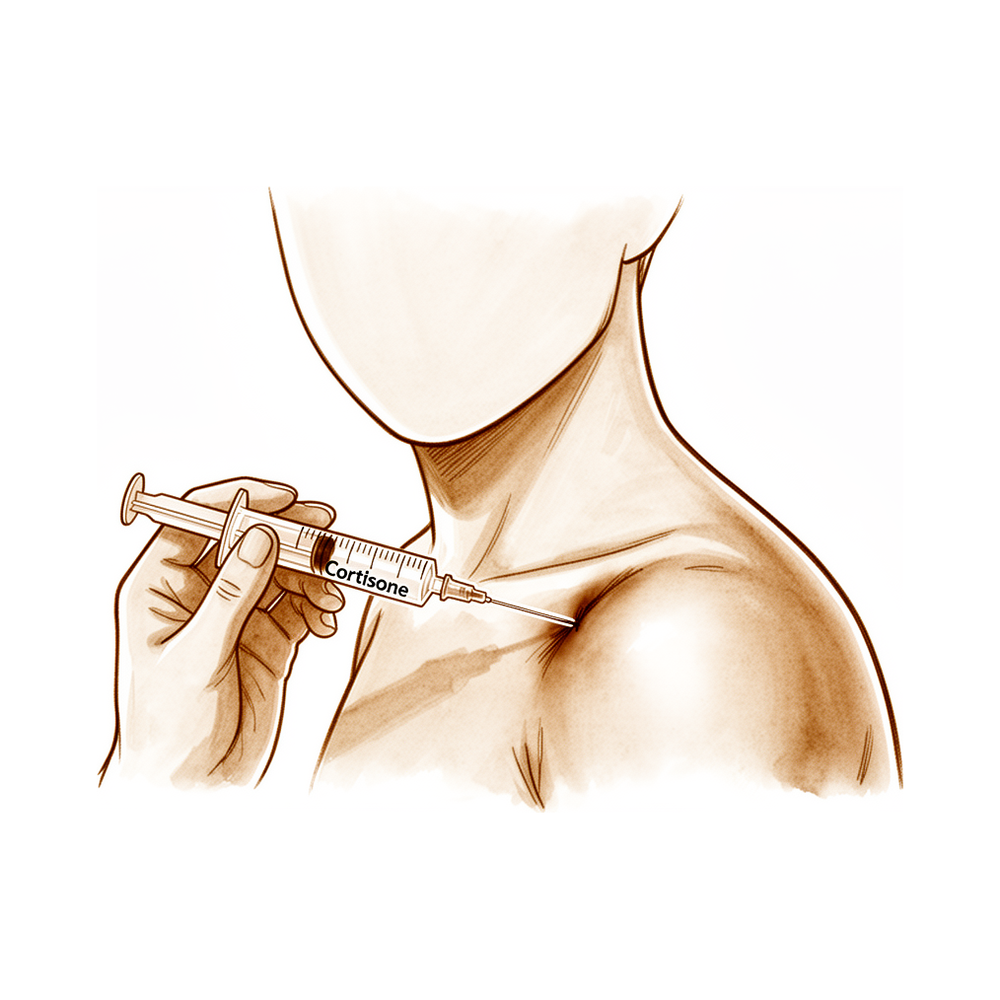
Ang cortisone injection ay isang iniksyon ng malakas na gamot na panlaban sa pamamaga, na tinatawag na corticosteroid, sa isang masakit na kasukasuan o tendon. Pinakakalma ng gamot ang pamamaga at pinagagaan ang sakit sa iisang lugar. Hindi ito painkiller na iniinom. Gumagana ito sa mismong lugar kung saan ito inilagay.
Maaaring ialok ng iyong doktor ang paggamot na ito para sa ilang problema sa kamay, pulso, siko at balikat. Kabilang dito ang trigger finger (isang daliring sumasabit o nala-lock), carpal tunnel syndrome (pagkaipit ng isang nerbiyo sa pulso), tennis elbow, arthritis sa puno ng hinlalaki, frozen shoulder at ilang ganglion cyst. Maaari rin itong gamitin pagkatapos ng ilang operasyon sa balikat, bagaman karaniwang hindi sa unang buwan pagkatapos ng operasyon [1].
Hindi inaayos ng iniksyon ang pinagbabatayang problema. Nagbibigay ito ng ginhawa habang naghihilom ang iyong katawan, o habang nag-eehersisyo ka o nagsusuot ng splint. Para sa carpal tunnel syndrome, halimbawa, maaari nitong pagaanin ang mga sintomas nang ilang panahon, ngunit karamihan ng tao ay kalaunang nangangailangan ng operasyon para sa pangmatagalang kontrol [2]. Para sa tennis elbow, maaaring mawala ang panandaliang ginhawa, at madalas na bumabalik ang problema pagkalipas ng ilang panahon [3]. Pag-uusapan ninyo ng iyong doktor kung angkop ang iniksyon sa iyong sitwasyon, o kung mas makatwirang unahin ang ibang opsyon tulad ng ehersisyo, splint o operasyon.
Gumagana ba ito?
Ang tapat na sagot: nakadepende ito sa kondisyong ginagamot.
Para sa ilang problema, mahusay na gumagana ang mga iniksyon. Para sa frozen shoulder, ang steroid injection sa kasukasuan ay nagpapagaan ng sakit, nagpapabuti ng paggana ng balikat at nagpapalawak ng saklaw ng galaw (range of motion) [4]. Para sa de Quervain disease (pamamaga ng mga tendon sa puno ng hinlalaki), makabuluhang bumuti ang sakit at ang mga klinikal na resulta pagkatapos ng iniksyon [5]. Para sa arthritis sa puno ng hinlalaki, magandang opsyon ang steroids dahil madali itong ibigay at mahusay itong gumagana [6], bagaman maaaring panandalian lamang ang benepisyo [7].
Para sa ibang problema, mas magkakahalo ang larawan. Para sa tennis elbow, maaaring magdulot ng panandaliang ginhawa ang mga steroid injection, ngunit madalas na nababaligtad ang ginhawang iyon pagkalipas ng anim na linggo, at madalas na bumabalik ang problema [3]. Ipinahihiwatig ng pananaliksik na hindi dapat gamitin ang steroids para sa karamihan ng taong nagkaroon ng mga sintomas ng tennis elbow nang wala pang 12 buwan [8]. Para sa carpal tunnel syndrome, nagbibigay ang mga iniksyon ng ligtas at epektibong ginhawa nang ilang panahon, ngunit karamihan ng tao ay kalaunang nangangailangan ng operasyon para sa pangmatagalang kontrol [2].
May ilang natuklasan na mabuting malaman bago mo piliin ang paggamot na ito. Para sa trigger finger, mas maagang pumalya ang isang uri ng steroid (betamethasone) kaysa sa isa pa (triamcinolone) [9]. Para sa rotator cuff repair, walang malinaw na palatandaan na pinapataas ng steroid injection ang panganib na muling pumalya ang repair o ng impeksyon [10]. Ang isang iniksyon bago ang operasyon sa rotator cuff, na ibinigay sa loob ng 1 taon bago ang operasyon, ay hindi nagpabago sa antas ng pagpalya, sa mga resultang iniulat ng pasyente, sa saklaw ng galaw o sa lakas [11].
Hindi perpekto ang ebidensya. Ang ilan sa mga natuklasang ito ay mula sa maliliit na trial o review, at may ilang kondisyon na limitado ang mapagbabatayang pananaliksik. Titimbangin ng iyong doktor ang ebidensya para sa iyong partikular na kondisyon at pag-uusapan ninyo kung malamang na makatulong sa iyo ang iniksyon, o kung mas makatwirang unahin ang ibang opsyon.
Ano ang mga panganib?
Karamihan ng tao ay nakapapansin lamang ng mga panandaliang epekto sa lugar ng iniksyon. Maaaring masakit ang iniksyon mismo, at ang pagdaragdag ng pampamanhid na gamot (lidocaine) sa steroid ay nagbabago kung gaano kasakit ang nararamdaman mo habang at kaagad pagkatapos ng iniksyon [12]. Maaaring hindi gaanong mahalaga ang pagkakaibang iyon sa pangmatagalan, ngunit mabuting itanong ito bago ang iyong iniksyon.
Maaari ring makaapekto ang steroid sa tisyu kung saan ito inilagay. Para sa tennis elbow, iniuugnay ng pananaliksik ang mga steroid injection sa pamumuo ng calcium sa malalambot na tisyu, at malamang na komplikasyon ito ng iniksyon mismo [13]. Para sa ilang taong ginamot para sa tennis elbow, ang isang steroid injection ay humantong sa mas hindi magandang pangmatagalang resulta at sa mas madalas na pagbalik ng problema pagkalipas ng 1 taon [14].
Maaaring umabot ang gamot lampas sa lugar kung saan ito iniksyon. Kung mayroon kang type 2 diabetes at hindi ka gumagamit ng insulin, maaaring pansamantalang tumaas ang iyong blood sugar dahil sa steroid injection sa balikat [15]. Kung mayroon kang diabetes at nagpapagamot para sa de Quervain disease, mas maliit ang tsansang gumana para sa iyo ang isang iniksyon kaysa sa mga taong walang diabetes, bagaman mukhang hindi nawawalan ng bisa ang mga susunod na iniksyon [16].
Ang ilang panganib na maaaring ikabahala mo ay pinag-aralan na at hindi natagpuan. Pagkatapos ng rotator cuff repair, walang natuklasang malinaw na ebidensya ang mga pag-aaral na pinapataas ng steroid injection ang panganib na muling mapunit ang repair o ng impeksyon [10]. Ang steroid injection bago ang operasyong carpal tunnel release ay hindi naiugnay sa mas mataas na antas ng malalim na impeksyon pagkatapos [17]. Natuklasang ligtas ang paulit-ulit na iniksyon para sa carpal tunnel syndrome, at hindi nito ginawang mas mapanganib ang operasyon sa hinaharap [18].
Mahalaga rin kung gaano kadalas maaaring ibigay ang iniksyon. Para sa trigger finger, walang natuklasang komplikasyon ang isang pag-aaral nang ibigay ang 4 mg na triamcinolone injection nang may pagitan na hindi bababa sa 1 buwan [19]. Para sa de Quervain disease, ang iniksyong nakatutok sa isang compartment ng tendon ay maaaring magpababa ng dosis ng steroid na ginagamit, na maaaring magbawas ng mga komplikasyon [20].
Tama ba ito para sa iyo?
Maaaring angkop sa iyo ang iniksyon kung ang iyong sakit ay nagmumula sa iisang malinaw na lugar, tulad ng trigger finger, arthritis sa puno ng hinlalaki o frozen shoulder. Para sa arthritis sa puno ng hinlalaki (wear-and-tear arthritis sa puno ng hinlalaki), pinapaboran ng pananaliksik ang mga steroid injection dahil madali itong ibigay at mahusay itong gumagana [6]. Kung mayroon kang carpal tunnel syndrome at hindi nagtagal ang bisa ng ibang iniksyon, natuklasang ligtas ang paulit-ulit na iniksyon, at hindi nito ginawang mas mapanganib ang operasyon sa hinaharap [18].
Maaaring hindi angkop sa iyo ang iniksyon kung ang iyong mga sintomas ng tennis elbow ay wala pang 12 buwan. Ipinahihiwatig ng pananaliksik na hindi dapat gamitin ang steroids para sa karamihan ng tao sa ganoong sitwasyon [8]. Para sa tennis elbow sa pangkalahatan, mas mahusay ang platelet-rich plasma (isang paggamot na gawa mula sa sarili mong dugo) kaysa sa mga steroid injection sa ika-6 na buwan, habang mas mahusay namang gumana ang steroids sa unang buwan [21].
Ang pagpili ay ginagawa ninyo nang magkasama ng iyong doktor. Titingnan nila ang iyong kondisyon, ang iyong mga sintomas at ang mga nasubukan mo na. Itanong kung ano ang layunin ng iniksyon, gaano katagal maaaring tumagal ang ginhawa, at kung mas makabubuti sa iyo ang ehersisyo, splint o operasyon. Detalyadong tinatalakay ng seksyon tungkol sa mga panganib sa itaas ang mga side effect, kaya basahin iyon bago ka magpasya.
Ang pinaka-importanteng punto
Maaaring sulit pag-isipan ang cortisone injection para sa isang malinaw na problema sa iisang lugar tulad ng frozen shoulder, de Quervain disease o arthritis sa puno ng hinlalaki. Asahan ang ginhawang maaaring totoo ngunit madalas ay panandalian, at alamin na para sa ilang kondisyon, tulad ng tennis elbow o carpal tunnel syndrome, maaaring mas makabubuti sa iyo sa pangmatagalan ang ibang paggamot o operasyon. Ang pinakamahalagang paalala: pinagagaan ng iniksyon ang mga sintomas, hindi nito inaayos ang pinagbabatayang problema.
Mga Sanggunian
[1] Corticosteroid Injections After Rotator Cuff Repair Improve Function, Reduce Pain, and Are Safe: A Systematic Review. Arthroscopy, Sports Medicine, and Rehabilitation. 2021. DOI: 10.1016/j.asmr.2021.10.010
[2] Corticosteroid Injection for Carpal Tunnel Syndrome. The Journal of Hand Surgery. 2008. DOI: 10.1016/j.jhsa.2008.06.023
[3] Mobilisation with movement and exercise, corticosteroid injection, or wait and see for tennis elbow: randomised trial. BMJ. 2006. DOI: 10.1136/bmj.38961.584653.ae
[4] Intra-articular Steroid Injection for Frozen Shoulder: A Systematic Review and Meta-analysis of Randomized Controlled Trials With Trial Sequential Analysis. The American Journal of Sports Medicine. 2016. DOI: 10.1177/0363546516669944
[5] Prospective randomized comparison of ultrasonography-guided and blind corticosteroid injection for de Quervain's disease. Orthopaedics & Traumatology: Surgery & Research. 2020. DOI: 10.1016/j.otsr.2019.11.015
[6] Efficacy of Intra-Articular Corticosteroid Injection for Nonsurgical Management of Trapeziometacarpal Osteoarthritis: A Systematic Review and Meta-Analysis of Randomized Controlled Trials. The Journal of Hand Surgery. 2024. DOI: 10.1016/j.jhsa.2024.02.001
[7] Intra-Articular Corticosteroid Injections to Manage Trapeziometacarpal Osteoarthritis—a Systematic Review. HAND. 2015. DOI: 10.1007/s11552-015-9778-3
[8] Stop injecting corticosteroid into patients with tennis elbow, they are much more likely to get better by themselves!. Journal of Science and Medicine in Sport. 2010. DOI: 10.1016/j.jsams.2009.09.009
[9] The Effect of Corticosteroid Type on Failure Following Primary Trigger Finger Injection. The Journal of Hand Surgery. 2026. DOI: 10.1016/j.jhsa.2026.03.011
[10] Do Corticosteroid Injections Before or After Primary Rotator Cuff Repair Influence the Incidence of Adverse Events? A Subjective Synthesis. Arthroscopy. 2020. DOI: 10.1016/j.arthro.2020.01.039
[11] Timing of corticosteroid injection within 1 year prior to rotator cuff repair was not associated with increased risk of repair failure. JSES International. 2026. DOI: 10.1016/j.jseint.2026.101632
[12] Corticosteroid Injection With and Without Local Anesthetic for the Treatment of Trigger Finger: A Randomized Clinical Trial. The Journal of Hand Surgery. 2025. DOI: 10.1016/j.jhsa.2024.05.016
[13] Association of steroid injection with soft-tissue calcification in lateral epicondylitis. Journal of Shoulder and Elbow Surgery. 2019. DOI: 10.1016/j.jse.2018.10.009
[14] Effect of Corticosteroid Injection, Physiotherapy, or Both on Clinical Outcomes in Patients With Unilateral Lateral Epicondylalgia. JAMA. 2013. DOI: 10.1001/jama.2013.129
[15] The effect of steroid injection into the shoulder on glycemia in patients with type 2 diabetes. JSES International. 2022. DOI: 10.1016/j.jseint.2022.05.016
[16] Effectiveness of Corticosteroid Injections in Diabetic Patients With De Quervain Tenosynovitis. The Journal of Hand Surgery. 2022. DOI: 10.1016/j.jhsa.2022.02.018
[17] Ipsilateral Preoperative Corticosteroid Injection and Timing Not Associated With Postoperative Deep Infection After Carpal Tunnel Release. Journal of the American Academy of Orthopaedic Surgeons. 2025. DOI: 10.5435/jaaos-d-25-00317
[18] The safety and cost of repeated corticosteroid injections for carpal tunnel syndrome. Journal of Hand Surgery (European Volume). 2025. DOI: 10.1177/17531934251396629
[19] Safety and Efficacy of Low-Dose Triamcinolone Injection without Injection Frequency Limitation for Trigger Finger. Journal of Hand Surgery Global Online. 2025. DOI: 10.1016/j.jhsg.2025.01.005
[20] Is a Steroid Injection in Both Compartments More Effective than an Injection in the Extensor Pollicis Brevis Subcompartment Alone in Patients with de Quervain Disease? A Randomized, Controlled Trial. Clinical Orthopaedics & Related Research. 2021. DOI: 10.1097/corr.0000000000002018
[21] Corticosteroid injections for the treatment of lateral epicondylitis are superior to platelet-rich plasma at 1 month but platelet-rich plasma is more effective at 6 months: an updated systematic review and meta-analysis of level 1 and 2 studies. Journal of Shoulder and Elbow Surgery. 2023. DOI: 10.1016/j.jse.2023.04.018
Evidence & references
This is the clinical evidence summary written for health professionals. It is technical, and it lists the research this page was built from. You do not need to read it to understand your treatment or to make a decision about it.
Overview
Efficacy by Condition
- Corticosteroid injections are effective in 57% of patients with trigger finger [10].
- Corticosteroid injections provide benefit by relieving pain and improving functional outcome scores in rotator cuff repair patients [3].
- Corticosteroids are a favorable option for the management of trapeziometacarpal osteoarthritis given their affordability, ease of administration, and efficacy [11].
- When corticosteroid injection is used to treat adhesive capsulitis, both intra-articular and subacromial injection sites can be selected [15].
Steroid Type and Dosing
- Betamethasone injections resulted in a significantly shorter time to failure than triamcinolone injections for primary trigger finger [1].
- Triamcinolone is supported as a more viable corticosteroid option for shoulder injection compared to methylprednisolone [4].
- An injection targeting the extensor pollicis brevis subcompartment alone in de Quervain disease can reduce the dose of steroids used, potentially decreasing complications [8].
- No complications were observed for 4 mg triamcinolone injections for trigger finger when administered at intervals of at least 1 month [12].
Safety and Timing
- Corticosteroid injections should be administered only after the first postoperative month following rotator cuff repair to minimize the potential risk for adverse events [2].
- An interval of at least three months is recommended between corticosteroid injection and shoulder arthroplasty [19].
- There were no conclusive data to suggest an increased risk of retear or infection with corticosteroid injection use based on a subjective synthesis of ranges [5].
Contraindications
- Corticosteroid injections should not be used to treat most patients with tennis elbow with symptom duration of less than 12 months [6].
How It Works
Efficacy and Outcomes by Condition
- Local corticosteroid injection provides greater clinical improvement in symptoms 1 month after injection compared with placebo for carpal tunnel syndrome [13].
- Local corticosteroid injection provides significantly greater improvement than oral corticosteroid for up to 3 months for carpal tunnel syndrome [13].
- Local corticosteroid injection does not significantly improve outcomes compared with anti-inflammatory treatment, splinting, or laser treatment beyond 8 weeks for carpal tunnel syndrome [13].
- Corticosteroid injections provide benefit by relieving pain and improving functional outcome scores after rotator cuff repair [3].
- The significant short term benefits of corticosteroid injection for tennis elbow are reversed after six weeks, with high recurrence rates [9].
- Combining a corticosteroid injection with exercise is not superior to exercise or no exercise for plantar fasciopathy [7].
Steroid Type and Dosing
- An injection targeting the extensor pollicis brevis subcompartment alone can reduce the dose of steroids used in de Quervain disease [8].
Safety and Complications
- No complications were observed for 4 mg triamcinolone injections when administered at intervals of at least 1 month for trigger finger [12].
- Local corticosteroid injection to the shoulder can create a significant, short-term increase in systemic glucose levels in patients with type 2 diabetes not treated with insulin [20].
- Serial saline solution injections are a promising, cost-effective, and low-risk treatment option for subcutaneous lipoatrophy and skin depigmentation following cortisone injection in the elbow [17].
Timing and Surgical Context
- Corticosteroid injections should be administered only after the first postoperative month to minimize the potential risk for adverse events following rotator cuff repair [2].
- Preoperative corticosteroid injection at all studied timepoints was not associated with an increased risk of postoperative deep infection after carpal tunnel release [16].
Contraindications and Cautions
- Corticosteroid injection for tennis elbow should be used with caution due to high recurrence rates after six weeks [9].
What the Evidence Shows
Trigger Finger
- Betamethasone injections resulted in a significantly shorter time to failure than triamcinolone injections [1].
- There is a statistically significant difference in pain during and shortly after injection when using a steroid with lidocaine versus steroid alone, but that difference may not be clinically relevant [27].
Lateral Epicondylitis (Tennis Elbow)
- The significant short term benefits of corticosteroid injection are paradoxically reversed after six weeks, with high recurrence rates, implying that this treatment should be used with caution in the management of tennis elbow [9].
- A single, blinded injection of corticosteroid medication was associated with poorer long-term outcomes and higher recurrence rates 1 year after receiving an injection in patients with unilateral lateral epicondylalgia [22].
- Corticosteroid injections for the treatment of lateral epicondylitis are superior to platelet-rich plasma at 1 month [18].
- Platelet-rich plasma is more effective than corticosteroid injections at 6 months for the treatment of lateral epicondylitis [18].
- Platelet-rich plasma is superior to corticosteroid injections at 3 months for the treatment of lateral epicondylitis [18].
Rotator Cuff
- Corticosteroid injections provide benefit by relieving pain and improving functional outcome scores in rotator cuff disease [3].
- There were no conclusive data to suggest an increased risk of retear or infection with corticosteroid injection use based on a subjective synthesis of ranges regarding rotator cuff repair [5].
- Timing of a single preoperative corticosteroid injection within 1 year of rotator cuff repair did not significantly affect failure rates, patient-reported outcomes, range of motion, or strength [26].
- Corticosteroids have better efficacy in short term for rotator cuff disease treatment compared to platelet-rich plasma [23].
- Platelet-rich plasma is more beneficial for longterm recovery in rotator cuff disease treatment compared to corticosteroids [23].
Shoulder (General)
- Intra-articular steroid injection is effective and safe for frozen shoulder, relieving pain, improving functional performance, and increasing range of motion [25].
Carpal Tunnel Syndrome
- Local corticosteroid injection provides greater clinical improvement in symptoms 1 month after injection compared with placebo [13].
- Corticosteroid injection is safe and effective for the temporary relief of carpal tunnel syndrome symptoms [24].
- Most patients with carpal tunnel syndrome will eventually require surgery for long-term control of their symptoms despite corticosteroid injection [24].
Thumb Carpometacarpal Joint
- Corticosteroids are a favorable option when considering the choice of intra-articular injection for the management of trapeziometacarpal osteoarthritis given their affordability, ease of administration, and efficacy [11].
- There is lack of robust evidence to support use of image guidance to improve accuracy and clinical effectiveness of steroid injection for thumb carpometacarpal joint osteoarthritis [14].
Plantar Fasciopathy
- Combining a corticosteroid injection with exercise is not superior to exercise or no exercise for patients with plantar fasciopathy [7].
Practical Considerations
Steroid Selection and Dosing
- An injection targeting the extensor pollicis brevis subcompartment alone in de Quervain disease can reduce the dose of steroids used, potentially decreasing complications related to steroid injections [8].
Timing and Frequency
- Corticosteroid injections after rotator cuff repair should be administered only after the first postoperative month to minimize the potential risk for adverse events [2].
Efficacy and Outcomes
- Corticosteroid injections provide benefit by relieving pain and improving functional outcome scores following rotator cuff repair [3].
- Combining a corticosteroid injection with exercise for plantar fasciopathy is not superior to exercise or no exercise [7].
- Corticosteroids are a favorable option for intra-articular injection in the management of trapeziometacarpal osteoarthritis given their affordability, ease of administration, and efficacy [11].
- Platelet-rich plasma has no advantage over steroid injections within the first month of treatment for lateral epicondylitis, but it is superior to steroids at both 3 and 6 months [18].
Safety and Complications
- There were no conclusive data to suggest an increased risk of retear or infection with corticosteroid injection use before or after primary rotator cuff repair based on a subjective synthesis of ranges [5].
- Corticosteroid and hyaluronic acid injections remain a safe treatment option regarding the risk of severe adverse events requiring hospitalization [21].
Imaging Guidance
- There is a lack of robust evidence to support the use of image guidance to improve accuracy and clinical effectiveness of steroid injection for thumb carpometacarpal joint osteoarthritis [14].
Key Evidence
- [L3] Betamethasone injections resulted in a significantly shorter time to failure than triamcinolone injections. [1] (10.1016/j.jhsa.2026.03.011)
- [L1] Corticosteroid injections should be administered only after the first postoperative month to minimize the potential risk for adverse events. [2] (10.1016/j.asmr.2021.10.010)
- [L4] Corticosteroid injections provide benefit by relieving pain and improving functional outcome scores. [3] (10.1016/j.arthro.2020.04.044)
- [L2] This study supports TA as a more viable corticosteroid option for shoulder injection. [4] (10.1016/j.jse.2023.05.023)
- [L3] There were no conclusive data to suggest an increased risk of retear or infection with corticosteroid injection use based on a subjective synthesis of ranges. [5] (10.1016/j.arthro.2020.01.039)
- [Paper] Corticosteroid injections should not be used to treat most patients with tennis elbow with symptom duration of less than 12 months. [6] (10.1016/j.jsams.2009.09.009)
- [L1] The results indicate that combining a corticosteroid injection with exercise is not superior to exercise or no exercise. [7] (10.1136/bjsports-2023-106948)
- [L1] An injection targeting the EPB subcompartment alone can reduce the dose of steroids used, perhaps thereby decreasing complications related to steroid injections. [8] (10.1097/corr.0000000000002018)
- [L1] The significant short term benefits of corticosteroid injection are paradoxically reversed after six weeks, with high recurrence rates, implying that this treatment should be used with caution in the management of tennis elbow. [9] (10.1136/bmj.38961.584653.ae)
- [L1] Corticosteroid injections are effective in 57% of patients with trigger finger. [10] (10.5435/00124635-200703000-00006)
- [L1] Given the affordability, ease of administration, and efficacy associated with corticosteroids, they are a favorable option when considering the choice of intra-articular injection for the management of TMC OA. [11] (10.1016/j.jhsa.2024.02.001)
- [L4] No complications were observed for 4 mg triamcinolone injections when administered at intervals of at least 1 month. [12] (10.1016/j.jhsg.2025.01.005)
- [L1] Local corticosteroid injection provides greater clinical improvement in symptoms 1 month after injection compared with placebo and significantly greater improvement than oral corticosteroid for up to 3 months, but does not significantly improve outcomes compared with anti-inflammatory treatment, splinting, or laser treatment beyond 8 weeks. [13] (10.1177/1753193413490848)
- [L4] However, there is lack of robust evidence to support use of image guidance to improve accuracy and clinical effectiveness of steroid injection for thumb CMCJ and warrants further research. [14] (10.1177/17589983261430876)
- [L1] When corticosteroid injection is used to treat adhesive capsulitis, both injection sites can be selected. [15] (10.1155/2019/1274790)
- [L3] Preoperative corticosteroid injection at all studied timepoints was not associated with an increased risk of postoperative deep infection, a divergence from existing literature. [16] (10.5435/jaaos-d-25-00317)
- [L4] Serial saline solution injections are a promising, cost-effective, and low-risk treatment option for subcutaneous lipoatrophy and skin depigmentation following cortisone injection in the elbow. [17] (10.1016/j.jseint.2020.08.009)
- [L1] PRP has no advantage over steroid injections within the first month of treatment, but it is superior to steroids at both 3 and 6 months. [18] (10.1016/j.jse.2023.04.018)
- [L1] Thus, an interval of at least three months is recommended between injection and arthroplasty. [19] (10.1177/17585732241261659)
- [L2] Local corticosteroid injection to the shoulder can create a significant, short-term increase in systemic glucose levels in patients with type 2 diabetes not treated with insulin. [20] (10.1016/j.jseint.2022.05.016)
- [L2] Corticosteroid and hyaluronic acid injections remain a safe treatment option regarding the risk of severe adverse events requiring hospitalization. [21] (10.1186/s12891-026-09752-7)
- [L1] A single, blinded injection of corticosteroid medication was associated with poorer long-term outcomes and higher recurrence rates 1 year after receiving an injection in patients with unilateral lateral epicondylalgia. [22] (10.1001/jama.2013.129)
- [L1] Current analysis showed that corticosteroids have better efficacy in short term, whereas PRP is more beneficial for longterm recovery. [23] (10.1016/j.jse.2023.01.037)
- [L5] Corticosteroid injection is safe and effective for the temporary relief of carpal tunnel syndrome symptoms, but most patients will eventually require surgery for long-term control of their symptoms. [24] (10.1016/j.jhsa.2008.06.023)
- [L1] Intra-articular steroid injection is effective and safe for frozen shoulder, relieving pain, improving functional performance, and increasing range of motion. [25] (10.1177/0363546516669944)
- [L2] Timing of a single preoperative corticosteroid injection within 1 year of rotator cuff repair did not significantly affect failure rates, patient-reported outcomes, range of motion, or strength, suggesting that one injection before repair does not strongly influence outcomes. [26] (10.1016/j.jseint.2026.101632)
- [L2] There is a statistically significant difference in pain during and shortly after injection when using a steroid with lidocaine versus steroid alone, but that difference may not be clinically relevant. [27] (10.1016/j.jhsa.2024.05.016)
References
[1] The Effect of Corticosteroid Type on Failure Following Primary Trigger Finger Injection. The Journal of Hand Surgery. 2026. DOI: 10.1016/j.jhsa.2026.03.011
[2] Corticosteroid Injections After Rotator Cuff Repair Improve Function, Reduce Pain, and Are Safe: A Systematic Review. Arthroscopy, Sports Medicine, and Rehabilitation. 2021. DOI: 10.1016/j.asmr.2021.10.010
[3] Corticosteroid Injections May Increase Retear and Revision Rates of Rotator Cuff Repair: A Systematic Review. Arthroscopy. 2020. DOI: 10.1016/j.arthro.2020.04.044
[4] Comparison of triamcinolone and methylprednisolone efficacy and steroid flare reaction rates after shoulder corticosteroid injection: a prospective interrupted time series study. Journal of Shoulder and Elbow Surgery. 2023. DOI: 10.1016/j.jse.2023.05.023
[5] Do Corticosteroid Injections Before or After Primary Rotator Cuff Repair Influence the Incidence of Adverse Events? A Subjective Synthesis. Arthroscopy. 2020. DOI: 10.1016/j.arthro.2020.01.039
[6] Stop injecting corticosteroid into patients with tennis elbow, they are much more likely to get better by themselves!. Journal of Science and Medicine in Sport. 2010. DOI: 10.1016/j.jsams.2009.09.009
[7] Does a corticosteroid injection plus exercise or exercise alone add to the effect of patient advice and a heel cup for patients with plantar fasciopathy? A randomised clinical trial. British Journal of Sports Medicine. 2023. DOI: 10.1136/bjsports-2023-106948
[8] Is a Steroid Injection in Both Compartments More Effective than an Injection in the Extensor Pollicis Brevis Subcompartment Alone in Patients with de Quervain Disease? A Randomized, Controlled Trial. Clinical Orthopaedics & Related Research. 2021. DOI: 10.1097/corr.0000000000002018
[9] Mobilisation with movement and exercise, corticosteroid injection, or wait and see for tennis elbow: randomised trial. BMJ. 2006. DOI: 10.1136/bmj.38961.584653.ae
[10] Corticosteroid Injections in the Treatment of Trigger Finger: A Level I and II Systematic Review. Journal of the American Academy of Orthopaedic Surgeons. 2007. DOI: 10.5435/00124635-200703000-00006
[11] Efficacy of Intra-Articular Corticosteroid Injection for Nonsurgical Management of Trapeziometacarpal Osteoarthritis: A Systematic Review and Meta-Analysis of Randomized Controlled Trials. The Journal of Hand Surgery. 2024. DOI: 10.1016/j.jhsa.2024.02.001
[12] Safety and Efficacy of Low-Dose Triamcinolone Injection without Injection Frequency Limitation for Trigger Finger. Journal of Hand Surgery Global Online. 2025. DOI: 10.1016/j.jhsg.2025.01.005
[13] Cochrane corner: local corticosteroid injection for carpal tunnel syndrome. Journal of Hand Surgery (European Volume). 2013. DOI: 10.1177/1753193413490848
[14] Guided steroid injection for thumb carpometacarpal joint (CMCJ) osteoarthritis: A scoping review. Hand Therapy. 2026. DOI: 10.1177/17589983261430876
[15] Intra-Articular versus Subacromial Corticosteroid Injection for the Treatment of Adhesive Capsulitis: A Meta-Analysis and Systematic Review. BioMed Research International. 2019. DOI: 10.1155/2019/1274790
[16] Ipsilateral Preoperative Corticosteroid Injection and Timing Not Associated With Postoperative Deep Infection After Carpal Tunnel Release. Journal of the American Academy of Orthopaedic Surgeons. 2025. DOI: 10.5435/jaaos-d-25-00317
[17] Serial saline solution injections for the treatment of lipoatrophy and depigmentation after corticosteroid injection for medial epicondylitis. JSES International. 2020. DOI: 10.1016/j.jseint.2020.08.009
[18] Corticosteroid injections for the treatment of lateral epicondylitis are superior to platelet-rich plasma at 1 month but platelet-rich plasma is more effective at 6 months: an updated systematic review and meta-analysis of level 1 and 2 studies. Journal of Shoulder and Elbow Surgery. 2023. DOI: 10.1016/j.jse.2023.04.018
[19] The safety of corticosteroid injection prior to shoulder arthroplasty: A systematic review. Shoulder & Elbow. 2024. DOI: 10.1177/17585732241261659
[20] The effect of steroid injection into the shoulder on glycemia in patients with type 2 diabetes. JSES International. 2022. DOI: 10.1016/j.jseint.2022.05.016
[21] Safety of intra-articular corticosteroid and hyaluronic acid injections: a 14-year population-based cohort study of 404,797 patients. BMC Musculoskeletal Disorders. 2026. DOI: 10.1186/s12891-026-09752-7
[22] Effect of Corticosteroid Injection, Physiotherapy, or Both on Clinical Outcomes in Patients With Unilateral Lateral Epicondylalgia. JAMA. 2013. DOI: 10.1001/jama.2013.129
[23] Comparison of the effects of platelet-rich plasma and corticosteroid injection in rotator cuff disease treatment: a systematic review and meta-analysis. Journal of Shoulder and Elbow Surgery. 2023. DOI: 10.1016/j.jse.2023.01.037
[24] Corticosteroid Injection for Carpal Tunnel Syndrome. The Journal of Hand Surgery. 2008. DOI: 10.1016/j.jhsa.2008.06.023
[25] Intra-articular Steroid Injection for Frozen Shoulder: A Systematic Review and Meta-analysis of Randomized Controlled Trials With Trial Sequential Analysis. The American Journal of Sports Medicine. 2016. DOI: 10.1177/0363546516669944
[26] Timing of corticosteroid injection within 1 year prior to rotator cuff repair was not associated with increased risk of repair failure. JSES International. 2026. DOI: 10.1016/j.jseint.2026.101632
[27] Corticosteroid Injection With and Without Local Anesthetic for the Treatment of Trigger Finger: A Randomized Clinical Trial. The Journal of Hand Surgery. 2025. DOI: 10.1016/j.jhsa.2024.05.016